Home Blog Page 1051

Women in Tech: How Email Expert Andrea Loubier is Leading the Email Revolution

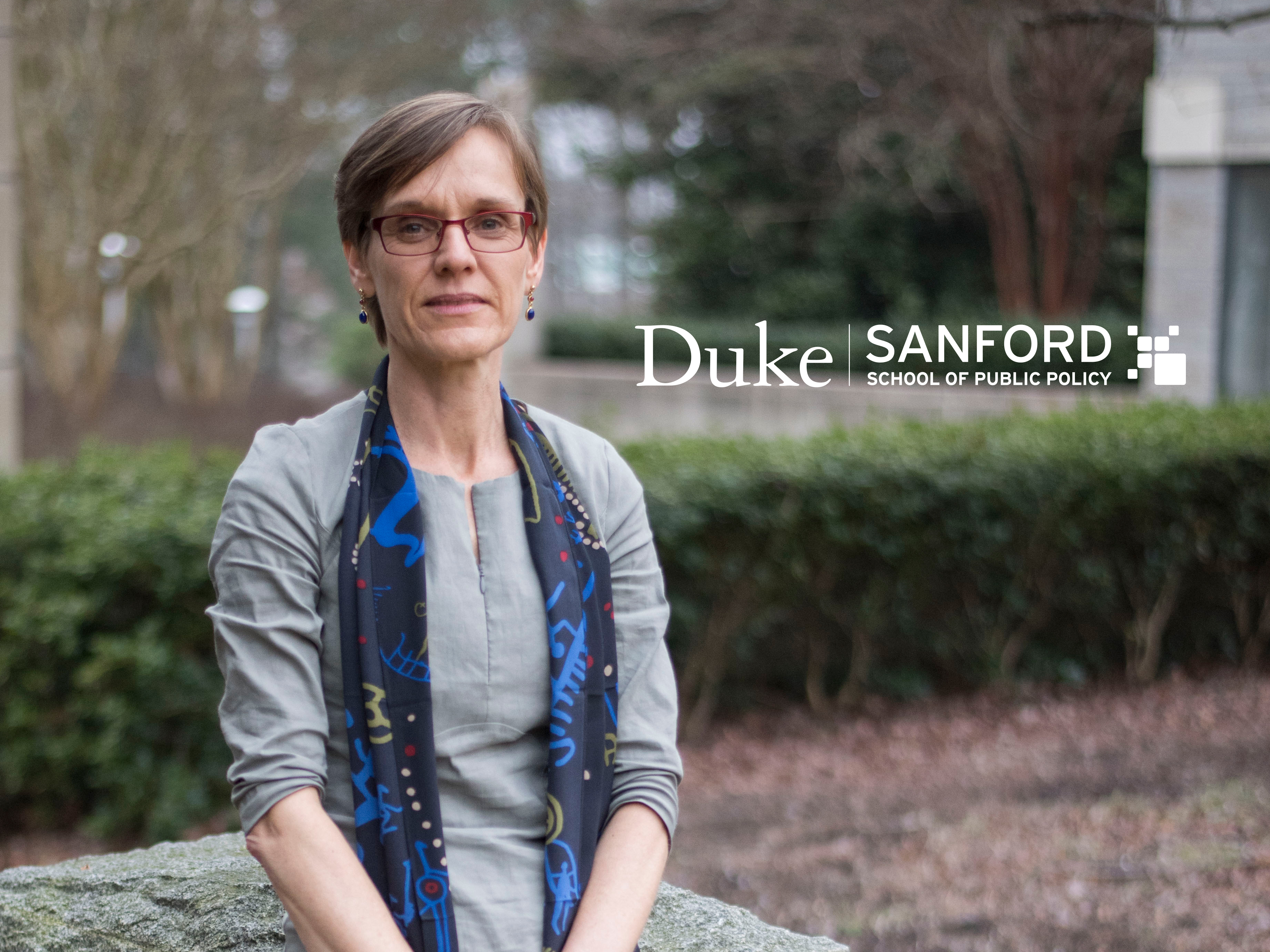
Interview with Mailbird CEO Andrea Loubier

Email communication plays a vital role in today’s highly digitised and complex business environment. However, being overwhelmed and frustrated by emails is inevitable. In our interview with Mailbird CEO Andrea Loubier, we talked about the occurring changes in today’s email world, on effective email management and how being a woman in the tech industry could be of advantage in navigating a company to be in the vanguard of technological innovation.

Before finding your niche in the technology sector, you were immersed in other industries. Could you tell us your career journey?

First corporate job out of college was with a market research firm. I was there for 6 years and worked my way up every year. I was very committed and dedicated to my role at that company. I worked very hard. The next job I had was with a software company, and up and coming one that was growing fast and I heard they treated their employees amazingly well. So I was there for one year before asking myself what I wanted to do next, and decided I wanted to work with technology and also gain some international business experience. So I packed up my life and moved to Bali, Indonesia, met my two co-founders for Mailbird and began to create a business and solution for millions around the world out of nothing. I always have a tendency to enter management roles, some say I have a type A personality. I like to plan, organise and execute.

Presently, you’re the CEO of Mailbird. What makes this executive role significant for you?

It’s significant because it gives me the feeling of ownership in what I put my life into, from the very beginning. It means I get to lead and be the person who represents the company and the brilliant people behind it at Mailbird.

Email is vital in modern business correspondence. What are the significant developments you have witnessed over the years? Is it fair to say that email platforms have indeed evolved?

Email is probably one of the greatest things that came from the invention and mass adoption of the Internet. It’s the best way to communicate cross boarders, fast and efficiently.

Email is probably one of the greatest things that came from the invention and mass adoption of the Internet. It’s the best way to communicate cross boarders, fast and efficiently. Over the years, it’s clear that people are becoming overwhelmed with managing information that comes through their inbox. So now you see many email platforms evolving with the increase of shared information to help people reduce the management of it, with smart features that automatically do things for you or simply make things faster by the milliseconds. That precious time is everything today, and email platforms are getting smarter, so people and businesses can spend their time efficiently. For our focus, we are looking to de-cluttering and unifying all those communication apps that are built on top of email into one unified platform with Mailbird. So you have all your email accounts from any provider, plus your other communication channels like Messenger, WhatsApp or even WeChat for those in China fully integrated into Mailbird’s unification platform.

From aspiration to fruition – now we have Mailbird. What’s the story behind Mailbird? Why is your company known as the Sparrow for Windows?

Myself and my two Danish co-founders, both named Michael, all expressed problems and our deep disdain for email. It’s stressful. I get too much of it. It’s not enjoyable to use. We saw Sparrow, a native email client for Mac only that provided a clean, stripped down, simple native Gmail experience in a nicer user interface. Nothing like Sparrow existed for Windows, and we believed we could take it a step further by supporting all email providers, and not just Gmail. Then the big differentiator and ideas started flowing, how email can evolve with all the new productivity and communication apps used across different generations and use cases, from personal to business, from grandparents to teenagers. A beautiful experience, fast and easy to use, smart unified email and communication platform that’s good enough for businesses and easy enough for the not-so tech savvy.

In reference to your experience, what are the greatest demands of consumers today and how should those things be addressed strategically?

With Mailbird, we focus on delivering the best-unified email experience to the world by ensuring emails are sent and received and interaction inside the Mailbird app is fast.

Consumer today demands speed, convenience and customisation. In all experiences a customer/consumer experiences with a brand, business, product or service those three things should be designed into that experience so the end user feels good and associates positive experiences with these businesses. With Mailbird, we focus on delivering the best-unified email experience to the world by ensuring emails are sent and received and interaction inside the Mailbird app is fast. We ensure that it’s easy to do repeat actions in Mailbird and all the core features you need make managing communication and information exchanges very easy and accessible from anywhere including making it convenient to use both email from any email provider and account and messages in Whatsapp accessibly convenient from one platform, again being Mailbird. Customisation is a key part of building a great user experience, and they can personalise Mailbird in such a way that fits them best, including layout and apps and how all functions are working and visuals are displayed.

With your knowledge of the email world, what do you think are the limitations with all email platforms?

It cannot replace face-to-face or real time communication. Emotions and tone are a big part of how we communicate, and because it’s easy for written/typed communication to easily be misinterpreted, it’s best to have a face to face discussion over a matter to ensure there is no misunderstanding. Otherwise, email is a wonderful tool for asynchronous communication, organising priorities and communicating to a large audience without having to have hundreds of thousands of people gather to hear you speak.

We all sometimes get preoccupied with our emails. How can we avoid that? What makes an efficient email management?

To avoid being totally consumed by email, the best tip is to ensure you schedule your time with email and limit it.

Yes, we all do. It happens, we are human. I believe more training should be done during education on information management via email or any online communication that occupies our lives if not managed. To avoid being totally consumed by email, the best tip is to ensure you schedule your time with email and limit it. This will force you to go through this process of filtering first, deleting and archiving or quick acknowledgements. Then prioritising those that need an immediate response. Next, create a task list from things that you need to execute from emails and ensure its prioritised as well by importance. Another strategy we advise email users is to create a task list the day before your next work day, and don’t check emails first when you start the day. Instead work on the first prioritised task in your list. Turn your messenger, internal chat apps and email off. If something is urgent, email is a secondary form of communication to a real time phone call or face to face meeting. Be sure to set expectations with those you work with, it helps to let them know how you structure your day to ensure the most productive use of your time and the best execution of prioritised tasks.

Apparently, innovation is crucial in any industry. In your line of business, how can you say that you’re at the frontier of innovation?

I believe innovation is a continuous journey that adapts and pivots with changes in human behaviour and new problems that develop with the rapid increase of technology use in our lives. Mailbird has innovated the email experience and use of technology by its unique features that provide new ways of managing the increase of information we need to process online today that come through our inboxes and other communication and productivity apps. We started with enabling people and businesses to manage an unlimited of email accounts from any email provider to be managed from one tool, finally. This was unified inbox. We added inbox clearing features like Snooze to ensure you clear things off your plate, in this case your inbox, and manage them at a more appropriate time rather than having it occupy your inbox. It’s clean inbox management, so you work with things that you need to, and remove things that you don’t need to deal with at that moment or day. The next step is unifying your apps and email inboxes further, with seamless integration and customisation of what you need to get things done, because everyone is different here, and this is why this is critical and a favoured differentiator for Mailbird against the competition out there. Soon we will unify further by making our platform available cross devices and operating systems. No more management of several different apps and tools, only one tool for all communication and productivity that is easily customised.


What do you think is the greatest obstacle that aspiring leaders/entrepreneurs need to grapple with? What advice can you give?

People have a tendency to focus on what is not possible rather than just starting with what is possible… Once you grasp the fact that entrepreneurs are not super humans, and that you need help to do things…the easier it is to start.

The first is just starting, again here people have a tendency to focus on what is not possible rather than just starting with what is possible. I made the decision to quit my job, move to Bali, and build my first tech company, Mailbird. I had never done any of these things before. If I didn’t know something I researched it and talked to people who have done it before. Once you grasp the fact that entrepreneurs are not super humans, and they don’t know everything, that you need help to do things…the easier it is to start. Another thing is not basing business decisions on assumptions, but hard data and validated research instead. Talk about your business early on, find all the small first steps to take right away, talk to people and get feedback and start building upon your idea for the business. Be prepared for big learnings, small adjustments and making calculated risks. Finally, don’t over think things too much…just start, and embrace the “learn as you go” process. Finally, find the right people to support you and the right tools, like Mailbird, to manage the intense flow of information you’ll need to manage when you start your first business. I also encourage more women to experience the greatest journey ever of starting a business, it’s exciting, empowering and repositions our world to accept diversity and recognise the value that women bring to the world.

You are a proof that women can indeed be on the forefront of technological endeavours. How was your experience? What are the advantages and drawback of female leadership in this kind of business?

It’s fantastic to be a woman in tech, and you don’t have to come from an IT background to do it either. I think that’s the first barrier that some might tell themselves, man or woman, when considering pursuing a technological endeavour, “I can’t because I didn’t study IT”. So many of us focus on what we cannot do, rather than what we can do. I guess it is human nature to be self-doubting, but somehow I made the decision to start an IT company, without a degree in programming or computer engineering, by focussing not on what I couldn’t do, but what I could. I can’t code, but I can find someone who can and I’m great with people so I will succeed in building an incredible team. I’ve worked in management, marketing and software companies (even though I wasn’t a computer engineer in these companies). You take what you can do, and that is how you do it. When I started Mailbird in Bali, Indonesia 5 years ago, I felt like I was the only female tech CEO in Asia, which was kind of cool. It was more the reactions of people when I told them I started an email software company, surprised that I, a woman was the lead in creating and building this business that is very tech heavy and tech focused. Advantages are there are opportunities that support women founders, drawback is people still not take you seriously enough because you are a women in a industry where you are the minority, which somehow ends up being associated with not being good at it. Lack of inclusion and assumptions about women in executive tech roles are a daily battle, simply because people are still getting used to this. What many don’t realise, are the major strengths that women can bring to the success of a company that other “typical”, male, technical executive’s lack, one being consumer focussed thinking women are still the dominant consumers in the world today. Women have a tendency to also be very skilled at building relationships, and the longer you run your business, the more you understand the importance of partnerships and relationships to help you succeed and grow.


In your journey toward the C-suite leadership, who/what were your greatest inspirations/motivations or influencers?

Companies like Sparrow, Uber, Airbnb and Facebook are obvious pioneers in fast growing companies. Those that motivated and influenced me most though were Jessica Mah, Hermione Way and Sheryl Sandberg. All amazing women who made a name for themselves in a male dominated industry of tech. Today I try to ignore the hyperbolic success of these unicorn tech startups, and consider the valuable steady, linear growth companies.

All leaders have their own impressive lifestyles that help them strengthen their inner selves. Could you share to us your daily routines that make you an incredibly successful CEO?

I travel a lot, and no matter where I am in the world, I see no boundaries for where I can accomplish great things. The location independent productivity lifestyle is one that has never been seen before. People are able to make money online now rather than relying on industrial 9 to 5 jobs. So no matter where I am, I will find a community of like-minded location independent entrepreneurs. I like to stay healthy and active to balance work and life with health as the pinnacle of my priorities, because if you aren’t in good health then everything else around you suffers. I have routines in how I work, I challenge myself every day and ensure I’m always available to my team across the globe. I set up a weekly meeting with teams in my company to ensure we communicate, solve any obstacles or tensions, and keep design and innovative thinking and learning at the forefront for development. I am also a coffee addict, my day never starts without a coffee. I make sure to take breaks, and although I might be flexible and work on weekends on public holidays when everyone else is off, I do make an effort to cut off completely from work. It’s all about balance for me.

Thank you very much, Andrea.

About the Interviewee

Andrea Loubier is a travel addict, who is obsessed with spicy food. A third culture kid who is crazy, passionate about entrepreneurial initiatives for women, improving the unification of online communication and building businesses from the ground up. Andrea is a thought leader for startups founded by brilliant women in Southeast Asia. She is the CEO of Mailbird.


The Economic Moral Hazards of the International Criminal Court – and the Philippines Withdrawal

By Dan Steinbock                                                 

As the Philippines is withdrawing from the International Criminal Court, ICC is blaming the Duterte government. In reality, the withdrawal is still another example of the erosion of the ICC’s credibility, its failure at judicial independence and gross bias against the emerging world.

In February, the ICC said it was investigating allegations that the Philippines president had committed “crimes against humanity” by facilitating extrajudicial killings and other rights abuses in the war against drugs. These charges, which have often relied on flawed data, have been pushed by two Duterte critics. Known for his coup efforts, controversial senator Antonio Trillanes has spent much time in Washington and Europe to gain support, while the obscure Jude Sabio has gained notoriety as a hit man lawyer. What’s not known is who funds the two and why leading Western media companies have bought their stories with hardly any source scrutiny.

Philippine polls indicate that more than 70 percent of Filipinos stand behind Duterte and are more satisfied with his government than any previous one.

In Manila’s view, the ICC can only investigate criminal cases if domestic courts are unable or unwilling to do so, and neither applies to the Philippines. Moreover, Philippine polls indicate that more than 70 percent of Filipinos stand behind Duterte and are more satisfied with his government than any previous one.

Yet in March, the controversial UN’s High Commissioner for Human Rights (HCHR), Prince Zeid Ra’ad al-Hussein, joined the ICC debacle saying that Duterte needed a psychiatric evaluation. During Zeid’s tenure, the HCHR has repeatedly been accused of efforts at domestic policy intervention, which impinges on state sovereignty. As Zeid played a central role in the founding of the ICC from the mid-90s to 2010, his statement triggered valid concerns in Manila about the institution’s neutrality.

The withdrawal of the Southeast Asia’s most rapidly-growing economy from the ICC would not be either the first or the last of its kind. The credibility of the ICC is under erosion. The case of the Philippines is just the latest nail in the coffin.

Targeting the poorest and the weakest

For a decade or two, the ICC has suffered from an odd inclination to go after the poorest countries in Africa, which has suffered the worst and longest from colonial massacres and plunder – and still does. The prosecution of President Uhuru Kenyatta led to the Kenyan parliament’s call for withdrawal from the ICC and the call on more than 30 African member states to withdraw their support.

The frustration led to a special African Union (AU) summit in 2013 in which Uhuru accused the ICC of being “a toy of declining imperial powers.”

ICC Prosecutor Luis Moreno Ocampo charged Uhuru as an indirect co-perpetrator in the violence that followed the 2007-08 Kenyan crisis. Uhuru is a popular, highly-regarded politician and the son of the famed anti-colonial leader Jomo Kenyatta. After a three-year juridical chaos, the ICC charges were dropped in March 2015 for lack of evidence. If the case undermined the ICC’s credibility, wasting resources and causing gratuitous political turmoil, why was Uhuru targeted?

Certainly, his political opposition hoped to benefit from his demise. It was led by Raila Odinga and his Orange Democratic Movement, which was reportedly named after the Ukrainian “Orange Revolution” as billionaire George Soros’s Open Society funded the pro-Odingakey NGOs, and Kenyan think-tanks to stop President Uhuru from the 2013 general election due to the ICC trials. As the ICC process began to penalize Kenya’s political leadership, economic growth almost halved to 4.6 percent in 2012 stabilizing thereafter but at a significantly lower level than in 2010.

In the past few years, many African leaders have reproached the ICC of “mishandling complex African issues,” and several countries, including South Africa, intend to withdraw from the ICC. In addition to President Uhuru, almost 40 individuals have been indicted by the ICC, including Ugandan rebel leader Joseph Kony, Sudanese president Omar al-Bashir, Libyan leader Muammar Gaddafi, Ivorian president Laurent Gbagbo, and Congolese vice-president Jean-Pierre Bemba.

Many cases suggest a pattern of sequence and orchestration: promising development, political destabilization in the name of “democratization,” financial speculation, new leaders, weaker development.

ICC’s compromised former prosecutor

Since fall 2017, even Ocampo’s ICC role has elicited questions. While his legal expertise is highly-regarded, his ties to Soros-supported organizations stem from the early 1990s, when Soros began to infuse funds into a real estate conglomerate (IRSA), a prominent backer of Ocampo’s NGO in Argentina. In the mid-‘90s, Ocampo began to work for Transparency International, a corruption watchdog that has been criticized for bias against developing countries, overseeing work on Latin America. A decade later, he participated in a roundtable by Soros’s Open Society called “Restoring American Leadership – the International Criminal Court.”

When the UN Security Council assigned Ocampo the task of investigating war crimes in Libya, which was soon hit by airstrikes of France, Britain, the US and other countries, Ocampo reportedly shared confidential information about ongoing investigations with a party to the conflict; the French foreign minister’s cabinet chief.

Ocampo indicted Gaddafi and his son Saif al-Islam for war crimes in 2011 before leaving his job at the ICC for a lucrative career in private practice. According to a French investigative website Mediapart, and a Spiegel team, he then agreed to a contract worth $3 million over three years, plus $5,000 a day, to “protect” and advice an influential Libyan oil billionaire Hassan Tatanaki who had close links with the Colonel Muammar Gaddafi and was deeply involved with the Libyan civil war; Ocampo used insider information to protect his client from possible prosecution by the ICC.

More recently, Tatanaki has been linked to a Libyan militia accused of extrajudicial killings and other rights violations. Reportedly, the contract was terminated after three months, with the ex-prosecutor earning $750,000. Yet, he used ICC employees to continue to carry out PR work for Tatanaki and was paid to do so, which was still another potential breach of the ICC’s code of conduct.

As the champion for transparency, Ocampo made millions of dollars in such deals routing monies to his offshore companies in several tax havens, as evidenced by the Panama Papers. Ironically, he used what he had learned about corruption to benefit from illicit capital flows. As he later said, he wanted to “make some more millions” because the ICC salary (€200,000) was inadequate for his needs.

Unsurprisingly, perhaps, the ICC secured its first verdict only in 2012, when Ocampo’s nine-year tenure at the ICC was about to end. Last fall, the ICC said that its current prosecutor Fatou Bensouda had asked Ocampo to “refrain from any public pronouncement or activity that may — by virtue of his prior role as ICC prosecutor — interfere with the activities of the office or bring it into disrepute.”

Who controls the ICC

Usually, economic power translates to political control. The ICC is not an exception. Yet, the ICC’s funding is not transparent. It is financed “primarily” by its member states. The contributions of each state are determined by the method used by the UN, which roughly corresponds with a country’s income. In 2017, the ICC’s budget was €145 million. About two-thirds came from only 10 countries, more than half from Europe’s former colonial powers and the rest from Japan, South Korea, and Canada.

Economic power translates to political control. The ICC is not an exception. Yet, the ICC’s funding is not transparent. The lack of transparency and accountability creates potential for gross moral hazard.

In the world economy, the EU accounts for about a fifth of the total; its funding of the ICC is thus three times its share of the global economy. Yet, according to the ICC, “additional funding is provided by voluntary government contributions, international organizations, individuals, corporations, and other entities.”

The lack of transparency and accountability creates potential for gross moral hazard. For instance, multinationals that have funded war lords in Africa to extract oil, gas, minerals and conflict diamonds might be particularly interested in targeting African politicians in the ICC.

Critics believe that as the ICC ignores the governments and focuses on their leaders, it may support flawed investigations that ignore the role of the governments while tacitly supporting regime change through new leaders. In some cases, prosecution of leaders in the ICC has made them less likely to peacefully step down. Also, success in investigations requires state cooperation, which the ICC mandate shuns and that can result in inconsistent and discriminatory selection of cases.

Unsurprisingly, the half a dozen countries that voted against the ICC Statute in 1998 included both the US and China. While President Clinton signed the Statute, he knew that it would never be ratified on Capitol Hill.

More recently, the US and Russia have said they no longer intend to become ICC members and thus have no legal obligations arising from their signature of the Statute. China’s view is that the ICC goes against the sovereignty of nation states.

Advanced economies’ court?

It was the Rome Statute of the International Criminal Court that led to the creation of the ICC in 1998. Nevertheless, its ability to investigate and prosecute is severely restricted by its mandate and, due to its creation in 2002 it can only prosecute crimes after that date. That conveniently suspends the worst genocides, crimes against humanity, war crimes and crimes of aggression – the four core international crime categories that the ICC claims to focus on.

Today, there are more than 120 state parties to the Rome Statute. Over 30 countries have signed but not ratified the statute, and there are more than 50 non-signatory countries. Let’s look more closely at the countries that are parties to the Rome Statute and those that aren’t.

The most populous middle-income economies remain outside the ICC. Only the smaller populations of high-income economies see the ICC as useful.

The overwhelming majority of the world populations have not joined the Rome Statute. The most populous middle-income economies remain outside the ICC. Only the smaller populations of high-income economies see the ICC as useful. Among the poorest economies, half have joined the ICC and another half hasn’t.  Many have been forced to adjust to major powers’ status quo (Figure 1a).

The economic story is even clearer. It has been very much in the interest of the high-income economies to join the ICC. Conversely, it has been very much in the interest of the less prosperous middle-income economies to stay away from the ICC, along with low-income countries (Figure 1b).

Figure 1 Parties and Non-Parties of the ICC:

High-, Middle- and Low-Income Economies, 2017

A. By Population (millions)

B. By Gross Domestic Product (GDP, $ millions)Sources: ICC, IMF.

In Asia, neither China nor India is a signatory. In Southeast Asia, both relatively wealthier countries (Singapore, Brunei, Malaysia) and emerging economies (Indonesia, Thailand, Vietnam, Myanmar, Lao) have not signed the Statute.

The simple reality is that, in the past two decades, the ICC’s credibility has deflated and its judicial independence has been compromised.

Cambodia did ratify the Statute in 2002, which may be currently contributing to elevated tensions in the country. The Philippines signed the Statute in 2000 but did not ratify it. That’s what most US partners did at the time emulating Washington’s stance. Yet, President Aquino did sign the Statute in February 2011, right before he aligned Manila’s foreign policy with President Obama’s security pivot to Asia geopolitically – but in contrast with almost all BRIC and ASEAN economies.

The simple reality is that, in the past two decades, the ICC’s credibility has deflated and its judicial independence has been compromised. Distressingly, it has shown gross bias against emerging and developing economies. A membership in such an international court is no litmus test for the advocacy for human rights in which the Philippines has a long history.

Featured Image: President Rodrigo Roa Duterte Graces Meeting Local Chief Executives from Luzon © ROBINSON NIÑAL JR./PRESIDENTIAL PHOTO

About the Author

Dr Dan Steinbock is the founder of Difference Group and has served as research director at the India, China and America Institute (USA) and visiting fellow at the Shanghai Institutes for International Studies (China) and the EU Center (Singapore). For more, see https://www.differencegroup.net/  

The original commentary was published by The Manila Times on March 20, 2018.

Everything Changes, Nothing Changes

Financial trading stock concept with businessman touching global network and data exchange to check worldwide market stock over cityscape night view

By Graham Vanbergen

Just by looking at the everyday scenario across today’s industries, one can deduce how globalisation quite significantly changed things over the years. And, with the immense potential of globalisation in disrupting the status quo, we are presently confronted with the question “what lies ahead for us all in the next ten years”?

In my article, “The duel between big tech and big government,” I pointed out that the world was a very different place just five years ago. People were not discussing how big data would be the number one traded commodity in the world, that artificial intelligence and automation would threaten our way of life or that a small number of transnational corporations would be potentially reshaping global politics.

We have come to believe, mistakenly, that the rules based international order and post Cold-War calm would prevail. Globalisation was the answer – humanity would collaborate and prosper in mutually beneficial trade.

When we look back over the last one hundred years we see dramatic change every twenty years or so and right now, the world is in the middle of its next great change.

Much to our dismay, the opposite is materialising. When we look back over the last one hundred years we see dramatic change every twenty years or so and right now, the world is in the middle of its next great change.

One hundred years ago this March, the First World War was raging in Europe. Germany had realised that their only remaining chance of victory was to defeat the Allies in the “Spring Offensive”. By August over one million American troops joined the counter-offensive and by November the German empire had collapsed. The world declared “never again”. Yet twenty years later in 1938, Europe was on the cusp of being torn apart once again in the bloodiest fight humanity had ever witnessed. Japan was to be the only nation to experience a nuclear attack by America.

Advance another twenty years to 1958, Datsun and Toyota went on sale in the U.S., the computer chip was invented and the first American satellite was launched from Cape Canaveral. The former was a signal of globalisation. The latter instigated profound change to how humanity would manage and reorganise itself.

The same year, the Peace symbol, now used by the Campaign for Nuclear Disarmament was created – twenty years later the world was in the midst of a terrifying Cold War that took humanity to the very brink of destruction.

In 1978, the first computer game, Space Invaders was a craze, Japanese car imports now account for half the U.S. import market and the first ever Cellular Mobile Phone went live. Globalisation is just about to move up a gear.

In 1998, the iMac desktop pc is launched, Google.com the domain name is registered, the European Central Bank is established and Osama Bin Laden makes his first global appearance.  The European Union expands with the entry of Cyprus and Czech Republic, Estonia, Hungary, Latvia, Lithuania, Poland, Romania, Slovakia and Slovenia. Globalisation is in high gear.

In 2007 America had already reached its high point for power and influence, so had the European Union and globalisation was now moving at its highest pace ever. But in 2008, the Lehman Brothers bankruptcy triggered the global financial crash; banks and systemically important institutions were bailed-out at extraordinary taxpayer cost. The illusion that central banks and governments were in control was shattered. Austerity is rolled out as the new financial ideology of the West.

The events of the above lead us to where we are today – half way through radically changing times.

Regionalism, anti-immigration, euro- scepticism and anti-globalisation are the driving forces of an ever growing angry and disgruntled electorate.

In 2018, the core weakness of the EU is now exposed for all to see.  The two former communist bloc countries of Poland and Hungary face the risk of becoming the EU’s first rogue states. Nationalist parties have caused power shifts in half of its member states – mostly those who joined 20 years earlier. Regionalism, anti-immigration, euro- scepticism and anti-globalisation are the driving forces of an ever growing angry and disgruntled electorate. Youth unemployment and inequality are set to divide the generations. The recent Italian elections embody all of the above.

Russia has emerged not as the superpower it once was but as a regional power player with renewed global ambitions and an invigorated confidence to protect its interests beyond its own borders.

China, an economy built on exports and modern economic reform, woos the West and then unexpectedly hands over dictatorial powers to it leader Xi Jinping, effectively resorting back to its historical dictatorial past.

In 2018, the U.S.A. seems to be accepting that it is unable to manage the power it had acquired over previous generations. Its influence is waning; the impending power vacuum it will create will be a dangerous time.

At this moment in time the world is in the midst of huge change defined by the dysfunction of an economic policy that imploded ten years ago. This moment has already recorded the slowest post-recession growth ever –  including that of the Great Depression, yet it is a period that is also defined by rampant inequality. Domestic political tension has moved the relative calm of social democracy just a decade ago towards social division and the emergence of hard right politics and extremism.

Gobalisation is decelerating as countries and regions centre their attention domestically, causing geo-political alliances to rapidly change.

Globalisation is decelerating as countries and regions centre their attention domestically, causing geo-political alliances to rapidly change.

Just as the fight for global resources, technical supremacy and political power continues with many geo-political ploys and pitfalls ahead, the fight for domestic control is yet to play out. One thing we can all be sure of, 2028 is going to be a radically different era to the one we have all known.

As we look back, inevitably, everything changes, but somehow nothing changes.

Graham Vanbergen’business career culminated in a Board position in one of Britain’s largest property portfolio’s, owned by one of the biggest financial institutions in the world. Today he is founder and contributing editor of TruePublica.org.uk and director of the Equity Research Centre that focusses on Britain’s housing crisis.

The Venezuelan “Petro” – Towards a New World Reserve Currency?

By Peter Koenig

As this article goes to print, Globovision TV quotes Venezuelan President Nicolas Maduro announcing the launch of a new cryptocurrency, the “Petro Oro”. It will be backed by precious metals. The launch of the new cryptomoney is scheduled for the next week. No details of quantities offered for sale are available at this point.


“I do not want to rush things, but we have a surprise regarding the petro and the gold, which will have the same dimension as it has been related to oil, but it is the theme of next week, the President says. The first public offering, the ‘Pre-sale’ of 38.4 million of the oil-backed “Petro” on 20 February, has raised US$ 735 million equivalent which is considered a great success.

Imagine an international currency backed by energy? By a raw material that the entire world needs, not gold – which has hardly any productive use, but whose value is mostly speculative – not hot air like the US dollar. Not fiat money like the US-dollar and the Euro largely made by private banks without any economic substance whatsoever, and which are coercive. But a currency based on the very source for economic output – energy.

The Petro is a largely government controlled blockchain currency, totally outside the reach of the US Federal Reserve (FED) and Wall Street.

On February 20, 2018, Venezuela has launched the “Petro” (PTR), a government-made and controlled cryptocurrency, based on Venezuela’s huge petrol reserves of about 301 billion barrels of petrol. The Petro’s value will fluctuate with the market price of petrol, currently around US$61 per barrel of crude. The Petro was essentially created to avoid and circumvent illegal US sanctions, dollar blockades, confiscations of assets abroad, as well as to escape illegal manipulations from Florida of the Bolivarian Republic’s local currency, the Bolívar, via the black-market dollars flooding Venezuela; and, not least, to trade internationally in a non-US-dollar linked currency. The Petro is a largely government controlled blockchain currency, totally outside the reach of the US Federal Reserve (FED) and Wall Street – and it is based on the value of the world’s key energy, hydrocarbons, of which Venezuela has the globe’s largest proven reserves.

In a first batch Venezuela released 100 million Petros, backed by 5.342 billion barrels of crude from the Ayacucho oil fields of Orinoco; a mere 5% of total proven Venezuelan reserves. Of the 100 million, 82.4% will be offered to the market in two stages, an initial private Pre-Sale of 38.4% of so-called non-minable ‘tokens’, followed by a public offering of 44% of the cryptomoney. The remaining 17.6 million are reserved for the government, i.e. the Venezuelan Authority for Cryptomoney and Related Activities, SUPCACVEN.

“Venezuela is the first nation to launch a cryptomoney, entirely backed by her reserves and her natural riches.”

When launching the currency, on 20 February 2018, Vice-president Tareck El Aissami declared, “Today, the Petro was born and we will formally launch the initial pre-sale of the Venezuelan Petro. Venezuela has placed herself in the vanguard of the future. Today is a historic day. Venezuela is the first nation to launch a cryptomoney, entirely backed by her reserves and her natural riches.” President Maduro has later affirmed that his country has already entered contracts with important trading partners and the world’s major blockchain currencies.

Can you imagine what this means? – It sets a new paradigm for international trade, for safe payment systems that cannot be tampered with by the FED, Wall Street, SWIFT, New York courts, and other Washington puppets, like the European Central Bank (ECB), the unelected European Commission (EC) and other EU-associated Brussels institutions. It will allow economic development outside illegal ‘sanctions’. The Petro is a shining light for new found freedom from a hegemonic dollar oppression.

What is valid for Venezuela can be valid for other countries eager to detach from the tyrannical Anglo-Zion financial system. – Imagine, other countries following Venezuela’s example, other energy producers, many if not most of whom would be happy to get out from under the Yankee’s boots of blood dollars inundating the world thanks to uncountable wars and conflicts they finance – and millions of innocent people they help kill.

Rumors have it, that in a last-ditch effort to salvage the faltering dollar, the FED might order the IMF to revert to some kind of a gold standard, blood-stained gold. – Of the 2,300 to 3,400 tons of gold mined every year around the globe, it is estimated that about a quarter to a third is illegally begotten, so called ‘blood’ gold, extracted under the most horrendous conditions of violence, murder, opaque mafia-type living (and dying) conditions, child labor, sexual enslavement of women, many of whom way under-age, abject poisoning of humans with heavy metals, mercury, cyanite, arsenic and more, contamination of surface and underground water ways, vast illegal deforestation of tropical rain forests – and more. That’s the legacy of gold, the MSM, of course, doesn’t talk about.

That’s what the west based its monetary system on until 1971, when Nixon decided to replace gold with the fiat dollar which then became de facto the world’s major reserve currency, albeit declining rapidly over the last twenty years. In desperation, Washington might want to apply another gold-based international norm to salvage the faltering dollar. Of course, a norm designed to favor the US, with the rest of the western and developing world destined to absorb the astronomical US debt.

Since the world’s major goldmining corporation and the illegal gold-digging mafia networks work hand-in-hand, smuggled gold works its way intricately into the dominium of shady traders, many of whom also deal with so-called white gold (drug powder), washing gold and drug-money simultaneously, thereby confounding and obscuring the origins of either. Eventually this illegal gold is purchased by major gold mining or refining corporations mixed with ‘legal’ gold, so that the illegal portion is no longer traceable.

Though not free from socio-environmental damage, petrol-energy may gradually convert into alternative sources of energy, like solar, wind and aquatic power or a combination of all of them.

Therefore, every ounce of gold that would back our money, the purchases of our livelihoods would be smeared in blood, in children’s abuse and death, in murdered and enslaved women and men, in poisoned water ways and in a contaminated environment. But the world wouldn’t go for it. No more. There are healthier and more transparent physical assets to back up international currencies, i.e. the Petro, backed by energy. Though not free from socio-environmental damage, petrol-energy may gradually convert into alternative sources of energy, like solar, wind and aquatic power or a combination of all of them.

What the world is to aim for is a monetary system based on each nation’s or group of nations or societies economic output. Today it’s the other way around – it’s the fiat money, designed by the Anglo-Zionist masters of finance, that defines economies. Thus, economies in our western world are prone to be manipulated by the rulers and their institutions – FED, IMF, World Bank, World Trade Organization (WTO) – that support the debt / interest-based monetary rules – they are purposefully maneuvered into booms and busts. With every bust, more capital is transferred from the bottom to the top, from the poor to an ever-smaller elite. The energy-based Petro is a first step away from this sham.

Imagine the Petro was to become the new OPEC currency! The world would need Petros, as it used to need US dollars to buy hydrocarbon energy. But Petros are blockchain-safe, less vulnerable for manipulation. They are not coercive, they are not made for blackmailing ‘unwilling’ nations into submission; they are not tools for violence. They are instruments of equitable production and trade. They are also instruments of protection from the fiat money abuses.

Source: TeleSUR / http://geab.eu/en/top-10-countries-with-the-worlds-biggest-oil-reserves/

The world’s ten largest hydrocarbon reserve holders have a capital base of 1.4 trillion barrels of crude. Not bad to start a worldwide cryptocurrency, based on energy, controlled by energy and by all those who will use energy – that might become a world reserve currency, at par with the Chinese economy- and gold-backed Yuan, but much safer than the fiat currencies of the US-dollar, Euro, British Pound and Japanese Yen.

The Petro, a secured cryptocurrency based on energy that everybody needs, might become the precursor for an international payment and trading scheme.

We are talking about a seismic paradigm shift. Its potential is unfathomable. The move away from the US-dollar hegemony might result in an implosion of the western monetary structure as we know it. It may stop the predator empire of the United States in its tracks, by simply decimating her economy of fraud, built on military might, exploitation and colonization of the world, on racism, and on a bulldozing scruple-less killing machine. The Petro, a secured cryptocurrency based on energy that everybody needs, might become the precursor for an international payment and trading scheme towards a more balanced and equitable approach to worldwide socioeconomy development.

Featured Image: Venezuelan President Nicolas Maduro’ s post on Twitter with the hashtag with his twitter account @NicolasMaduro

About the Author

koenig-webPeter Koenig is an economist and geopolitical analyst. He is also a former World Bank staff and worked extensively around the world in the fields of environment and water resources. He lectures at universities in the US, Europe and South America. He writes regularly for Global Research; ICH; RT; Sputnik; PressTV; The 21st Century; TeleSUR; The Vineyard of The Saker Blog; and other internet sites. He is the author of Implosion – An Economic Thriller about War, Environmental Destruction and Corporate Greed – fiction based on facts and on 30 years of World Bank experience around the globe. He is also a co-author of The World Order and Revolution! – Essays from the Resistance.

Ensuring Olympic Success – After the Games

South Korea’s 2018 Winter Games was located in Pyeongchang

By Dr. Dan Steinbock

As Olympic torch is moving toward emerging economies, it is time to come up with innovative solutions and appropriate cost controls to finance the games. In this commentary, Dr Steinbock assesses the rising economic costs and cost overruns of Olympic games, outlines the lessons and preconditions for economic success in the future and offers three generic Olympic scenarios that could guide Olympic planning in the foreseeable future. 
To avoid cost overruns, South Korea’s 2018 Winter Games was located in Pyeongchang, the smallest city to host the Olympics since Lillehammer 1994 in Norway. Nevertheless, South Korea is expected to spend $13 billion on the games; nearly double the $7 billion originally projected, which has again ignited public debate about Olympic cost overruns.

In 2022, Beijing will become the first city to host both Winter and Summer Olympics. Can the costs be contained?

Rising economic costs

Hefty price tags and cost overruns have become all too common in Olympic Games.

Hefty price tags and cost overruns have become all too common in Olympic Games. The $15 billion costs of London 2012 Summer Olympics (76% cost overruns) and the $22 billion Sochi Winter Olympics (289% cost overrun) contributed to heavy indebtedness in the pre-Brexit UK and economic erosion in Russia.

In Brazil 2016, costs were projected to be less than $5 billion, yet reportedly more than doubled amid economic, political and security challenges.

Moreover, the Olympic building frenzy has left too many cities with decaying stadiums and empty transit systems, as evidenced by Athens’s dilapidated venues and $11 billion in debt that contributed to the Greek debt crisis; and the recession that swept Nagano, Japan, after the 1998 Winter Olympics.

Nevertheless, there are positive examples as well. In the Los Angeles 1984 Summer Olympics, budget awareness showed that the games can generate actual profit.  Moreover, in summer games, only few hosts – including Beijing in 2008 – have managed to keep cost overruns reasonable. 

In the 2022 Winter Olympics, the estimated budget in Beijing will be $3.9 billion, less than one-tenth of the 2008 Summer Olympics financing. That illustrates the new objectives.

Preconditions for success

Cost control is the first economic precondition for Olympic success.

Cost control is the first economic precondition for Olympic success. In 1984, the L.A. Summer Olympics committee rejected the idea of new sporting structures and focused on modified and upgraded existing venues. Other success stories involve new structures that have been repurposed after the Olympics.

The second precondition is environmental sustainability. In 2014, the International Olympic Committee (IOC) introduced the Olympic Agenda 2020, which promotes sustainability and cost control to control economic and environmental damage. The quest for sustainability requires new competition venues to be built with renewable technologies, as well as energy saving and environmentally-friendly materials.

The third precondition rests on successful media deals to finance the games. In 1984, the L.A. Olympics sought to make the games a global TV event; an objective that was supported not just by Hollywood and the industry mecca, but efforts to sprinkle more than 40 venues throughout almost 500 square kilometers. It was Olympic branding that fostered continuity across very different locations.

Fourth, to promote sports economy, China is rolling out a national campaign to encourage 300 million people to participate in winter sports by 2022. The venues will be distributed in three zones which will foster winter sports in and around Beijing after the Olympics. If successful, this would be an important investment in long-term human capital: “Healthy mind in a healthy body,” as educators put it.

Fifth, Olympics can provide critical “seed funding” to local tourism in need for sustained investment. Even though Brazil’s Olympics suffered from cost overruns, it did attract a record 6.6 million international tourists. To avoid waste of resources, local governments and property developers should consider a sustained focus on local tourism and infrastructure, accommodations and environmental protection.

The final precondition involves a lasting legacy. Under a 1979 agreement, 40 percent of the surplus created in the 1984 L.A. Olympics would stay in Southern California. As the surplus amounted to $233 million, the local share was $93 million. Thanks to the great seed fund for the future, the LA84 Foundation has awarded more than $230 million in grants to youth organizations ever since 1984.

Olympic scenarios for the future

In the future, the probable scenarios for Olympic Games include three basic trajectories. In the Dead-End Scenario, the Olympics will continue as before in which case the historical pattern of soaring costs and cost overruns are likely to contribute to major economic losses, social divides and environmental damage.

In the Cost-Control Scenario, a track-record of successful planning, rigorous cost-control and ability to repurpose the Olympic facilities will play the key role. Despite noble goals, Pyeongchang 2018 failed to achieve such cost-consciousness. Beijing 2022 seeks success in such efforts.

Why not organize the games in multiple cities across borders? If countries seek scale economies through regional trade agreements, why couldn’t they celebrate sports regionally as well?

The Regional Scenario could be an option for smaller emerging economies. Today, Olympics take place in several cities but one country. Why not organize the games in multiple cities across borders? If countries seek scale economies through regional trade agreements, why couldn’t they celebrate sports regionally as well?

It is not the size of the stadium that matters but the audacity of our dreams in our quest for excellence.

About the Author

Dr. Dan Steinbock is the founder of Difference Group and has served as research director at the India, China and America Institute (USA) and visiting fellow at the Shanghai Institutes for International Studies (China) and the EU Center (Singapore). For more, see https://www.differencegroup.net/

The original, slightly shorter commentary was published by China Daily on February 22, 2018

The Philippine Dream Could Be Within the Reach

President Rodrigo Roa Duterte is flanked by lawmakers as he leads the Ceremonial Signing of the 2018 General Appropriations Act (GAA) and Tax Reform Acceleration and Inclusion (TRAIN) in Malacañan Palace on December 19, 2017. ALBERT ALCAIN/PRESIDENTIAL PHOTO

By Dan Steinbock  

If the government’s focus remains on inclusive economic development, the Philippines could become a bright spot in the global landscape.

Today, there is a huge gap between the Philippines as it is portrayed by many international observers and the country’s fundamental economic realities.

The Duterte win was the triumph of ordinary Filipinos. Accordingly, there is only one way for the government to succeed. It must deliver the country’s economic promise.

Unlike its predecessors since 1986, the Duterte administration has potential to do so – unless the year-long efforts at regime change by foreign interests in cooperation with domestic political opposition prove successful.


From fickle finance to long-term jobs and capital

The basic difference between the Aquino and the Duterte administration can be illustrated with their different objectives, as evidenced by IMF data. When the Aquino administration began its rule, portfolio capital inflows increased dramatically, along with other investment and derivatives. However, foreign direct investment flows were in the negative.

Such financial flows and derivatives reflect short-term interests by foreign financial interests. These flows are fickle, can cause dislocations and have little loyalty to markets they seek to exploit.

The contrast could not be greater with the Duterte administration. When it began its rule, foreign investment flows increased but portfolio and other financial investment dived.

Foreign direct investment (FDI) tends to reflect longer-term interest by multinational corporates. It brings jobs and capital and is far less erratic relative to financial flows. It seeks stability.

Initially, the Aquino administration promised to bring FDI into the Philippines, but since it was never able or willing to change the legislation accordingly, foreign capital has remained marginal in the Philippines until recently.

Historically, that amounts to lost opportunity costs over three long decades.


Investment-led infrastructure growth

The Tax Reform for Acceleration and Inclusion (TRAIN) seeks to create a more just, simple and effective system of tax collection. The wealthy will have a bigger contribution and the poor stand to benefit more from the government’s programs and services.

The BRIC-style agenda of the Duterte administration is gaining momentum. The most obvious signals are the ones analysts tend to emphasize. Domestic demand has proved solid. The growth rate of private consumption could remain close to 6% annually. Last year, remittances soared at record $28 billion, thus supporting consumption growth. 

In the foreseeable future, the government’s strong infrastructure push and tax reform plans are likely to maintain momentum. The Tax Reform for Acceleration and Inclusion (TRAIN) seeks to create a more just, simple and effective system of tax collection. The wealthy will have a bigger contribution and the poor stand to benefit more from the government’s programs and services.

Investment growth has potential to stay robust in medium-term, as long as the ”Build, Build, Build” program prevails, especially if the government can raise infrastructure spending to 5% of GDP.

Due to the growth momentum, energy prices and the infrastructure program, inflation could rise up to 4% in 2018. If the inflation trend prevails, which is likely, Bangko Sentral is likely to tighten policy rate from 3.5 to 4.0 by the year-end.

In the current year, the peso could soften from the current 51.40 up to 54.00 relative to the US dollar. However, as the dollar has not appreciated as much as initially expected and as the Chinese yuan has proved stronger than initially expected, the dual impact in Asia could reduce some of the currency pressures.


Toward FDI records, softer external balance

What about foreign direct investment (FDI)? Well, net flows of FDI totaled $7.9 billion from January to October 2017, reflecting confidence in the economy. In the coming years, FDI inflows are expected to rise by magnitude, as they should after three decades of missed opportunities by previous administrations.

In exports growth, the Philippines recently enjoyed a recovery. However, a sustained double-digit increase in imports and decline exports widened the trade deficit to what critics call a “record high” $4 billion in December. Nevertheless, these figures must be seen in the context: What they reflect is the huge infrastructure program, which is bound to increase demand for imports in the foreseeable future – they illustrate an investment in the future, not misguided priorities as often in the past.

Due to import growth, net exports may stay in the negative. Yet, for the full year 2017, total external trade actually grew 9.9%, exceeding the 5.8% growth in 2016. In the longer-term, the Philippines needs to push harder its exports growth. In this quest, it can follow the example of Japan in the postwar era, the newly-industrialized Asian tigers in the late 20th century and China more recently.

External balance will soften, but the critics’ stated fears are inflated. The 19.5%-debt service ratio remains below the international benchmark range of 20% to 25%. The foreign reserves ($81billion) are well above the IMF reserve adequacy metrics and relatively highest in the region. They are ten times bigger than monthly imports and five times bigger than short-term external debt.


From “people last” policies to expansion through inclusion

Due to the steep Philippines income pyramid, growth must be both accelerated and inclusive. In the Aquino years, the top of the pyramid gained, ordinary Filipinos came second. The political net effect was the Duterte election triumph.

Without adequate land reform in the postwar era and with weak job-creation in the past, job opportunities have been inadequate.

Since only a fraction of the population dominates most of the economy, nine Filipinos out of ten hold very little true economic power. Of these, two or three struggle to remain in the fragile middle class, while every fourth or fifth lives in abject poverty.

Without adequate land reform in the postwar era and with weak job-creation in the past, job opportunities have been inadequate. For decades, governments have coped with the challenge by exporting more than 10 million people. If the Philippines is to become a BRIC economy, that has to end. BRIC economies create jobs at home; they do not export them abroad.

Initially, the “people last” policy evolved almost half a century ago, when land reform failed, industrial takeoff was halted, and infrastructure modernization was suspended. As growth became exclusive, job creation began to linger.

The recent government blueprint for appropriate job creation through employment and entrepreneurship from 2017 to 2022 suggests that the administration seeks to overcome the challenge.

Now the strategic objective is to achieve full employment at 5% unemployment rate, which requires the creation of 7.5 million jobs, especially in key employment-generating areas, including manufacturing, food processing, construction, tourism, IT business process sector and retail trade.

The government is in the rich track, yet barriers remain high.


Toward “people first” growth

Brazil enjoyed strong BRIC growth but was also able to reduce the steep gap between the rich and the poor. That, too, is the goal of the Duterte administration.

Internationally, Duterte’s economic objectives are reminiscent of those in Brazil during President Lula’s golden years in the 2000s. In both cases, the highlight is on elevated growth through inclusion. Under his rule, Brazil enjoyed strong BRIC growth but was also able to reduce the steep gap between the rich and the poor. That, too, is the goal of the Duterte administration.

Indeed, in the Philippine economic pyramid, potential output could be far higher than it is today.  Despite the rhetoric of inclusion in the Aquino era, the Philippine labor participation rate has been around 61%. In view of the country stage of economic development, that should be far higher, as in Vietnam (78%), China and Thailand (69%), Indonesia (66%) and even Myanmar (65%).

The current rate is the net effect of decades of “people last” policies – the country’s economic promise remains strong.

Currently, the base case for economic growth is 6.5%-7% in 2018-19. There is structural potential for 7%-7.5%. But to be an upper-middle-income economy toward the end of the Duterte rule, the country’s economic growth must become more inclusive. It must become growth by, growth of and growth for ordinary Filipinos.

Featured Image: President Rodrigo Roa Duterte is flanked by lawmakers as he leads the Ceremonial Signing of the 2018 General Appropriations Act (GAA) and Tax Reform Acceleration and Inclusion (TRAIN) in Malacañan Palace on December 19, 2017. ALBERT ALCAIN/PRESIDENTIAL PHOTO

About the Author

Dr. Dan Steinbock is an internationally recognized strategist of the multipolar world. and the founder of Difference Group. He has served as at the India, China and America Institute (USA) , the Shanghai Institutes for International Studies (China) and the EU Center (Singapore). For more, see https://www.differencegroup.net/ 


The commentary features the highlights of Dr Steinbock’s highly-anticipated economic briefing at the Nordic Chamber of Commerce of the Philippines on January 31, 2018. It was released by The Manila Times on February 12, 2018

What it Takes for Chinese Companies to Succeed Abroad

Shanghai skyline at the Bund with Oriental Pearl Tower downtown Pudong panorama in China

By David De Cremer

International expansion is one of the keys to a firm’s success and stability. In this article, the author outlines how Chinese companies can become truly international in reference to the procedures and philosophies in place for one of China’s truly global companies, which is Huawei.

For several years now, the Chinese government is endorsing the ideas for their companies to “go out” or “go global”. The message of this endorsement is clear. It indicates that the second largest economy in the world means serious business and therefore global ambitions for its companies have moved centre stage. This ambition is further spurred via grandiose projects like the One Belt, One Road (OBOR) initiative that was launched at the end of 2014 by President Xi Jinping. This initiative focusses on motivating Chinese State and private companies to look overseas. Despite the fact that this kind of global ambition is frequently communicated by the Chinese government, critical observers do ask the question whether the true fully-functioning Chinese multinational company really exists. For example, it is still a difficult task for most Westerners – or even an impossible task – to name five global Chinese brands. Companies like Haier, Huawei, Alibaba and Lenovo are increasingly becoming household names in the West, but not all of them have achieved yet the status of a global company. In fact, most of these companies still operate predominantly in China. Of course, the fact that the Chinese market is the biggest worldwide makes that in terms of total revenue these predominantly operating local companies are doing comparatively well at a global level.

A problem with Chinese companies going abroad is that in the past they adopted predominantly a short-term focus by trying to acquire new technology and financial gains as quickly as possible. What to do with the acquired foreign company and its work force on the long-term was less of a concern to them. It made that Chinese companies did not really know how to operate in markets outside of China. As a result, negative stereotypes around the motives of Chinese companies going global quickly and firmly emerged. In fact, these stereotypes are still dominant in the mind of Western companies and governments. But things are changing. Uplifted by the ambition of the government to make China great again (see the interesting parallel with the language used by the current US president), China’s largest companies have become more sophisticated in their international ambitions and explorations. For example, the super star company Alibaba is very much aware that in order to grow further and succeed in gaining an international reputation they need to acquire a more global mindset. And this global mindset will be necessary because the founder of Alibaba, Jack Ma, has set very ambitious targets. He wants to see his company earn $1 trillion in gross value by 2020 and serve an astonishing number of two billion customers by 2036. Of course, any company is allowed to have inspiring dreams and goals, but actions do speak louder than words and Alibaba seems to have taken this wisdom seriously. Alibaba’s global footprint is steadily growing through investments being made in the neighbouring countries like in the India-based marketplace Snapdeal and in payment platforms in Thailand, South Korea and the Philippines. The real test, however, still lies in how Alibaba will fare when entering the European and US markets.

As mentioned earlier, Chinese companies may have moved from a short-term approach to a more long-term one, it does not mean that transforming a local Chinese company into a global giant has become easier. Because of the recent economic and political turbulence, the West is concerned more than ever about the fact that economic nationalism is on the rise in China. This observation makes that Chinese companies are looked upon as maybe not having at heart an open trading system. For example, the OBOR initiative is seen – because of its emphasis on developing infrastructure such as ports, roads, airports and railways – as primarily an economic rescue plan for China to deal with its overcapacity problem of, among others, steel, glass and cement.  The existence of these obstacles means that Chinese companies with global ambitions need to be well prepared and acting in proactive ways to shift a local mindset to a global one.

In the fiscal year of 2016 Huawei’s revenue reached CNY521.574 billion (US$75.103 billion) and CNY37.052 billion (US$5.335 billion) in net profit and most of this revenue comes from outside China making them a truly global performing company.

To study more closely the different steps Chinese companies need to include in preparing their organisation to enter the global market, I examined the procedures and philosophies in place for one of China’s truly global companies, which is Huawei. In the last decade, this telecom giant has succeeded in becoming a household name in Europe and Latin America (although it is still banned from doing business in the US).  The company was founded in 1987 by Ren Zhengfei and is an employee-owned company (about 98.5% of the company is owned by its employees). In the fiscal year of 2016 Huawei’s revenue reached CNY521.574 billion (US$75.103 billion) and CNY37.052 billion (US$5.335 billion) in net profit and most of this revenue comes from outside China making them a truly global performing company. To illustrate further the international nature of the company, as of Q3 2017, Huawei employs more than 32,000 international employees, working in over 160 countries. Over 19,000 Chinese employees work outside China. Having achieved such international reputation for a Chinese company requires continuous preparation and persistence to develop and train its work force to work and compete at a global level. Below, I will discuss several points on how Huawei approaches this challenge.

An important aspect of their (human) globalisation strategy concerns the way Huawei prepares Chinese employees when they are assigned to work in another country. The company usually prepares them in multiple aspects, including safety, health, language, customs paperwork, laws and regulations, local customs and etiquette.

1. The Use of Clear Policies and Processes

Working in a Chinese setting includes strong discipline and willingness to conform. Because teamwork is regarded in China as primarily following the instructions of leaders, Chinese employees often have difficulties to adapt to more Western management structures and ways of working. When arriving in a new country, Chinese employees therefore have many questions on how to proceed with their job and achieve success. A first barrier that international Chinese assignees thus face concerns the complex management structures, policies and lengthy work processes. It takes a lot of effort to figure these out. To address this pain point, Huawei has developed a comprehensive guide: Pre-departure Briefing and Guidelines for International Assignees from China. This guide provides all necessary information for Chinese employees to be assigned overseas, helping them better prepare themselves for the assignment.

2. The Use of a Language Proficiency Test

Companies investing in the language proficiency of their employees will lead to stronger and more committed relationships with clients.

Chinese companies do not have many staff on the payroll being multilingual and experienced in working in other countries. This makes that language is a barrier for international assignees. Wanda chairman Wang Jianlin identified this linguistic problem as a serious concern when he addressed students in Oxford. He said: “English is our greatest challenge. We have a lot of senior employees in Wanda. However, when going global in tourism, sports and entertainment, inadequacy in English is a huge challenge.”

Although many Chinese companies rely on the help of translators (as Western companies also do when entering the Chinese market), it is no secret that companies investing in the language proficiency of their employees will lead to stronger and more committed relationships with clients. Huawei proactively helps its employees improve their language proficiency and take on language assessment tests. The company will centrally register for recognised language tests (e.g. TOIEC) for its employees on a voluntary basis. The HR staff members then follow up on the assessment results to ensure that language will not be a problem for their international assignees. Furthermore, the company will also try to teach international employees in different locations the basics of Chinese in an effort of cultural exchange. As one Chinese employee told me, “When I was in Argentina, teams were composed of Chinese and Argentinean employees. We sat together to get to know each other, had our meetings together and visited customers together. The local employees taught us their customs, and we also had a Chinese language class for the local Argentinian team. In one of the teams I was the teacher as I am fluent in both Mandarin and Spanish.”

3. Training on Security, Laws and Regulations

As many Chinese companies, Huawei also has encountered the fear of Western companies that their Chinese counterpart will not adapt to foreign legal, regulatory, tax and political environments. Generally speaking, Chinese companies are usually met with suspicion and concerns about security as corporate governance is perceived as lacking or being limited in the eyes of the West. To deal with this, Huawei has developed an iLearning platform and topic-specific MOOC courses. Huawei employees can access these courses anytime they want to learn about cyber security, laws and regulations, and how to integrate into a diversified culture. Employees can also take exams for each of these courses. Each course has been assigned an instructor to provide timely support to learners. The test results are directly linked up with the international assignment process. Employees must pass required certifications to be eligible for an international assignment.

4. A Focus on Employee Health

Huawei believes that physical health is the prerequisite for everything they do. In fact, recently, its founder, Ren Zhengfei, has stressed the importance of Huawei as possessing organisational vitality to survive in the long term.1 This logic is actually the first line of the motto of Huawei University, which is “be healthy and strong”. The general idea is that physical exercise unites people. Huawei is thus concerned about the health of its international assignees and has taken three measures to address this issue. First, Huawei purchases business travel insurance for all international assignees to address their health problems during their assignments outside of China. Second, Huawei has all international assignees vaccinated and their health checked and prepares first aid kits for them. Third, in tough work environments (e.g. high altitude, tropical climate), Huawei provides high-quality accommodation and working environments for their employees and rents houses with screen doors and window screens to protect them from infections. The primary aim is to help their staff stay healthy in order for them to better focus on their career development in overseas offices.

5. A Focus on Cultural Assimilation

It is necessary to develop sophisticated and detailed procedures with the aim to help international assignees to adjust working with global standards while at the same time integrate in local cultures.

Another stereotype that exists includes the perception that Chinese companies have difficulties to escape their own national corporate culture and business practices. As a result, Chinese employees are perceived as not willing to integrate in local foreign cultures. As a response to this, Huawei tries to help international Chinese assignees integrate into a foreign culture in four ways. First, the company provides updated cultural guides and tips to help employees adapt to local culture quickly. Second, Huawei has administrative services available to all international assignees that might need help for living in a foreign country. Third, the company ensures that each international assignee will be assigned to a mentor who will help them adapt to their new workplace effectively. Fourth, to help international assignees understand their roles more clearly and improve their skills within that role, the company organises all kinds of contests within product lines. Finally, at the same time, Huawei also attempts to organise other activities to help international assignees better integrate into the local culture, including talks with new international assignees, welcome parties, visits to local facilities and so forth.

In conclusion, recent numbers show that Chinese companies are increasingly spending more money abroad than ever before. In this process of international expansion, the challenge remains for Chinese companies to prepare their work force to adopt a global mindset when it comes down to working and living in cross-cultural environments. For this reason, it is necessary to develop sophisticated and detailed procedures with the aim to help international assignees to adjust working with global standards while at the same time integrate in local cultures.

About the Author

David De Cremer is the KPMG Professor of Management Studies at the Judge Business School, University of Cambridge, UK, where he heads the Department of Organisational Leadership and Decision-Making. He is the author of the book Pro-active Leadership: How to overcome procrastination and be a bold decision-maker (2013) and co-author of “Huawei: Leadership, culture and connectivity” (2017).

Reference

1. De Cremer, D. (in press). Organisational Vitality: The Lifeline of Your Company. The European Business Review

Strategic ALM and Integrated Balance Sheet Management: The Future of Bank Risk Management

Finance, banking concept. Euro coins, us dollar banknote close-up. Abstract image of Financial system with selective focus, toned, double exposure.

 By Moorad Choudhry

The traditional approach to asset-liability management (ALM) practice in banks operated as a reactive process following product origination by the customer-facing business. In the Basel III era a more proactive approach to ALM is required, in order to manage the balance sheet from an effective viability and sustainability standpoint. The article describes proactive “Strategic ALM” discipline and its implementation process. 

Banks are by their nature risk taking institutions. This is a requirement of their business, because their corporate clients may wish to tailor their funding to meet the precise needs of their business, so as to achieve some certainty in this area, enabling them to focus on what they do best. Similarly, retail clients may wish to access banking products and services to meet their personal needs, such as purchasing a house or investing for a child’s education. To meet this demand, banks offer the lending terms, maturities, rate options, currency, optionality, and contingencies demanded by their clients, and take on the range of risks that such tailoring represents. Because banks have a wide range of clients with varying borrowing and deposit requirements, exposures may to some degree offset each other, but will not match completely in terms of timing, amount and currency. This is more evident as products become more complex and offer more alternatives.

Therefore a key area of focus for banks is managing their capital, funding, liquidity and interest-rate risk requirements. These all fall under the umbrella of the asset-liability management (ALM) discipline in a bank. When a bank borrows more than it needs, there can be inefficiencies in terms of capital use. This can also result in added interest rate risk, and a loss when lending on. However, failure to have sufficient funding results in the bank having to rely on central bank liquidity, poor market perception and loss of investors, which could ultimately lead to failure. Thus, ALM becomes the most important aspect of a bank’s risk management framework.

In this article we suggest that the discipline of ALM, as practised by banks worldwide for over 40 years, needs to be updated to meet the challenges presented by globalisation and Basel III regulatory requirements. In order to maintain viability and a sustainable balance sheet, banks need to move from the traditional “reactive” ALM approach to a more proactive, integrated balance sheet management framework. This will enable them to solve the multi-dimensional optimisation problem they are faced with at present.

The Origins of Asset-Liability Management (ALM) 

Historically, interest rates were stable and liquidity was readily available to banks in developed nations. Banks focussed primarily on generating assets to increase growth and profitability. However, in the 1970s changes in regulation, inflation, and geopolitics led to greater volatility and thus increased risk from asset and liability mismatches (see Figure 1).  This led to the development of Asset-Liability Management (ALM) as a formal discipline, where both sides of the balance sheet are integrated to manage interest rate, market, and liquidity risk. In essence however, this discipline remained reactive in nature, with Treasury and Risk having little or no input to the origination and deposit raising process.

Figure 1: US Treasury yields and US inflation historical levels

Source: St. Louis Fed.

Traditionally, ALM was defined by four key concepts:

• Liquidity, defined as

◦ Funding liquidity: the continuous ability to maintain funding for all assets
◦ Trading liquidity: the ease with which assets can be converted into cash

• Term structure of interest rates: the shape of the yield curve at any given time depends on interest rate expectations, liquidity preference, and supply and demand from different borrowers and lenders. ALM strategy would consider how changes to the shape of the yield curve in the short and medium term will impact the bank.
• The maturity profile of the banking book
• ALM would report and monitor the maturities of all asset and liabilities to measure and control risk
• Interest rate risk, essentially the risk of loss of net interest income due to adverse movements in interest rates or interest rate spreads.

In essence however, “ALM” as undertaken in all banks has always been a reactive process, and despite its name has rarely, if ever, managed to integrate origination policy across both sides of the balance sheet. As a discipline, such an approach is no longer fit-for-purpose in the era of Basel III.

The Strategic ALM Concept

Consider exactly how ALM is undertaken in virtually every bank today, irrespective of size, business model or location. A business line in a bank, following an understood medium-term “strategy” articulated either explicitly or implicitly (but in reality aiming usually simply to meet that year-end’s budget target), goes out and originates customer business, be this originating assets or raising liabilities. It will most likely have little interaction with any other business line, and only the formal review interaction with the Risk department. This is often described as creating a “silo mentality” in the organisation, and is typical of all but the very smallest banks. In some banks an individual business line may have practically zero interaction with Treasury. In this respect it will be similar to all other business lines.

Each of these business lines will proceed to undertake business, ostensibly as part of a grand strategy intertwined with other business lines, but in reality to a certain extent in isolation. The actions of all the customer-facing desks in the banks will then give rise to a balance sheet that must be “risk managed”. And the ALM part of this risk management process is then undertaken by Treasury, in conjunction with Finance and Risk.

There is little, or no, interaction between business lines and little, or no, influence of the Treasury function or the risk “triumvirate” of Treasury, Finance and Risk in the balance sheet origination process. In other words, ALM is a reactive, after-the-fact process. The balance sheet shape and structure is arrived at, if not by accident certainly not by active design and certainly not as the result of a process that integrates assets and liabilities origination. The people charged with stewarding the balance sheet through the economic cycle and market crashes have very little to do with creating the balance sheet in the first place. Does this represent best-practice risk management discipline, with separation of duties, four lines of defence, and so on? In a word, no. There is no problem with one department originating assets and another one managing the risk on them. The issue with the traditional approach to ALM is that the balance sheet that is arrived at often lacks a coherent shape, or logic, and this makes the risk management of it more problematic.

There is little, or no, interaction between business lines and little, or no, influence of the Treasury function or the risk “triumvirate” of Treasury, Finance and Risk in the balance sheet origination process. In other words, ALM is a reactive, after-the-fact process.

One would not wish to have a balance sheet that was composed overwhelmingly of illiquid long dated assets funded by wholesale overnight deposits, or a liabilities strategy that concentrated on raising wholesale or corporate funding that was treated punitively by Basel III liquidity requirements. Another example observed by the author involved the funding of trade finance assets (overwhelmingly very short term) by 10-year MTNs.1

In the era of Basel III, it is evident that balance sheet risk management must become more proactive. The shape and structure of the balance sheet must be arrived at because of an integrated approach to origination. What does this mean? Quite simply, the discipline of ALM must recognise that asset origination and liability raising has to be connected. For the ALM process to be fit-for-purpose for the 21st century, banks must transition and adapt from a traditional reactive ALM process to a proactive strategic ALM process.

Addressing the three-dimensional (3D) balance sheet optimisation problem

The market environment is creating a 3D optimisation challenge for banks, or at least those banks that are serious about competing and serious about being well-respected by customers and peers. This challenge requires banks to run optimised balance sheets in order to maximise effectiveness and stakeholder value; however when we speak of “balance sheet optimisation” we do not mean what it used to mean in the pre-crash era, basically working to maximise return on capital (RoC). Today optimising the balance sheet has to mean structuring the balance sheet to meet the competing but equivalent needs of Regulators, Customers and Shareholders. This is the 3D optimisation challenge that we speak of.

A bank’s risk management practice is an integral part of meeting this optimisation challenge. From the Board level downwards, policy must be geared towards achieving this goal, and strategic ALM is a vital part of the optimising process. However before we consider this let us refresh the regulatory aspects first. We will not cover the myriad requirements of Basel III capital, liquidity and leverage requirements here, which are discussed in depth in other publications. The essence of implementing the demands of Basel III as stipulated by regulators is that many bank’s business models will have to change, to ensure compliance. Figure 2 illustrates this in stylised fashion.

1. These illustrations are made to emphasise a point, but they are a few of the very many examples observed by the author at different banks over the years.

Figure 2: Mitigating the Impacts of Basel III

© Christopher Westcott 2014, 2017. Reproduced with permission


The inescapable conclusion since the bank crash of 2008 is that banks must manage their balance sheet more efficiently. This gives rise to the 3D optimisation problem. We articulate it thus:

1. Regulator requirements: banks must adhere to the capital, liquidity and leverage ratio requirements of their regulator. With only a handful of exceptions, this means meeting the demands of the Basel III guidelines. The larger the bank, and/or the more complex its business model, the more complicated and onerous this requirement becomes. Related stipulations such as the Fundamental Review of the Trading Book (FRTB) add to the regulatory demands imposed on banks. Every bank must meet its supervisory requirements;

2. Customer franchise requirements: this is not necessarily anything new. In a competitive world, any bank would always wish to meet the demands of its customers. In a more constrained environment this requirement becomes more urgent of course, and this gives rise to the challenge. For instance, a “full service” bank will wish to provide all the products that its customers may demand, and sometimes these products will not be the most optimum from the viewpoint of (1) above. To illustrate one case: the deposits of large corporate customers and non-bank financial customers are considered “non-sticky” under Basel III rules and so carry a greater liquidity cost for banks. From that perspective such deposits are not optimum from a regulatory efficiency view, but the bank must accept them if it wishes to satisfy this part of its customer base;

3. Shareholder requirements: this aspect is of course also not new. The shareholder has always demanded a satisfactory rate of return, and so all else being equal a bank will always want to maximise its net interest income (NII) and enhance or at least preserve its net interest margin (NIM) through changing economic conditions and interest rate environments. But of course the balance sheet mix that meets this objective will not necessarily be the one that is most efficient for (1) and/or (2) above. One example: from a NII perspective a bank will maximise its funding base in non-interest bearing liabilities (NIBLs) such as current accounts (“checking” accounts) or instant access deposit accounts, whereas the demands of Basel III liquidity will often call for an amount of contractual long-term funding, which is more expensive and thus inimical to NII.

We see therefore that the demands of each stakeholder are, in a number of instances, contradictory. To maximise efficiency a bank will need to work towards a balance sheet shape and structure that is optimised towards each stakeholder, and it is not a linear problem. Hence, the 3D optimisation challenge arises.

This illustrates unarguably the need for a new approach to balance sheet origination and the role of the ALM function. This we term “strategic ALM”.

Principles of strategic ALM practice

Strategic ALM is a single, integrated approach that ties in asset origination with liabilities raising. It works to break down “silos” in the organisation, so that asset type is relevant and appropriate to funding type and source, and vice versa. We define it as follows:

A business strategy approach at the bank-wide level driven by balance sheet ALM considerations

Strategic ALM addresses the three-dimensional optimisation problem of meeting with maximum efficiency the needs of:

• the regulatory requirements
• the NII requirements
• the customer franchise requirements

and must be a high-level, strategic discipline driven from the top down. It is by nature proactive and not reactive.

Implementing a strategic ALM process will make it more likely that the bank’s asset type(s) is relevant and appropriate to its funding type and source, and that its funding type and source is appropriate to its asset type. By definition then it would also mean that a bank produces an explicit, articulated liabilities strategy that looks to optimise the funding mix and align it to asset origination. Thus, strategic ALM is a high-level, strategic discipline driven from the top down.

Proactive balance sheet management (BSM) is just that, and not the “reactive” balance sheet management philosophy of traditional banking practice. Proactive BSM means the asset-side product line is managed by a business head who is closely aligned (in strategic terms) with the liabilities-side product line head. To be effective the process needs to look in granular detail at the product types and how they are funded/deployed; only then can the bank start to think in terms of optimising the balance sheet.

Implementing strategic ALM practice is not a trivial exercise, and can only be undertaken from the top down, with Board approved instruction (or at least approval). Hence we consider an essential prerequisite, which is the Board articulated risk appetite statement, followed by a look at the importance of ALCO.

Implementing Strategic ALM

The approach to implementing an effective strategic ALM practice has several strands. We describe each in turn.

Recommended Risk Appetite Statement

The Risk Appetite Statement is an articulated, explicit statement of Board appetite for and tolerance balance sheet risk, incorporating qualitative and quantitative metrics and limits. It becomes the most important document for Board approval. This may appear to be a contentious statement but it is self-evident when one remembers that the balance sheet is everything. The over-riding objective of every bank executive is to ensure the long-term sustainability and viability of the bank, and unless the balance sheet shape and structure enables this viability, achieving this objective is at risk.

Figure 3 shows a template summary risk appetite statement drafted by the author when he was Treasurer at a medium-sized commercial bank. This statement received Board approval. It is applicable to virtually all banking entities irrespective of their business model, although large multinational banking institutions will need to develop the list of risk metrics much further. It provides a formal guide on the desired Board risk appetite framework, including a description of each of the risk appetite pillars and the key measures that will be used to confirm on a monthly basis that the bank is within risk appetite.

Figure 3: Example Board risk appetite statement

© Moorad Choudhry 2011, 2017

As we see from Figure 3, for each of the measures identified an overall bank-wide “macro-tolerance” is set, which is then broken down into tolerances for individual business lines (e.g. Retail, Corporate). The range of quantitative limits is user-defined; for example, in the section on liquidity limits:

• a vanilla institution with no cross-border business may content itself with setting limits for the primary liquidity metrics such as loan-deposit ratio and liquidity ratios, as well the regulatory metrics such as LCR and NSFR;
• a bank transacting across currencies will wish to also incorporate FX exposure tolerance;
• a bank employing a significant amount of secured funding will wish to add asset encumbrance limits.

The Board risk appetite statement is the single most important policy document in any bank and should be treated accordingly. It requires regular review and approval, generally on an annual basis, or whenever changes have been made to the business model and/or customer franchise. It also should be updated in anticipation or in the event of market stress.

Armed with the Board risk appetite statement, which must be a genuine “working” document and not a list of platitudes, with specific quantitative limits, the implementation of a strategic ALM process becomes feasible. As well as the Board risk statement, the other ingredient that is required to make strategic ALM a reality is an asset-liability committee (ALCO) with real teeth. One cannot emphasise enough the paramount importance of a bank’s ALCO.

Given this, what is the most effective way to ensure above-satisfactory and effective governance from Board perspective?

Elements of Strategic ALM: paramountcy of ALCO

Consider the executive committees, below Board level, that are responsible for the strategic direction as well as the ongoing viability and sustainability of the bank. Which of them has responsibility for oversight of balance sheet risk? Perhaps it is one or more of the following:

• Executive committee (or “management committee”): this is the primary committee responsible for running the bank, chaired by the CEO;
• Risk management committee: chaired by the CRO, responsible for “managing” all the risk exposures the bank may face, from market and credit risk to technology risk, conduct risk, regulatory risk, employee fraud risk, etc.;
• Credit risk committee: chaired by the head of credit or the credit risk officer, this committee is responsible for managing credit policy including credit risk appetite, limit setting and credit approvals. As credit risk is the single biggest driver of regulatory capital requirement in banks (in some vanilla institutions representing 75%-80% of total requirement) it can be seen that the credit risk committee is also a balance sheet risk committee;
• ALCO: the asset-liability committee, a template Terms of Reference for which were described in the author’s text The Principles of Banking.

While all of these committees have an element of responsibility for the bank’s balance sheet, it is the ALCO that is responsible for this and nothing else. It alone has the bandwidth to discharge this responsibility effectively and to help ensure that the balance sheet shape and structure is long-term viable. The executive committee that is most closely concerned with balance sheet risk on a strategic and integrated basis (both sides of the balance sheet and all aspects of risk) is ALCO. Given this, what is the most effective way to ensure above-satisfactory and effective governance from Board perspective? We suggest that it is to ensure the paramountcy of ALCO, as illustrated in the organisation chart given at Figure 4.

Figure 4: Recommended bank executive committee organisation structure

© Moorad Choudhry 2011, 2017


The key highlight of the structure shown at Figure 4 is that ALCO ranks pari passu with the ExCo and that it also has an oversight role over the Credit Committee. The former ensures that balance sheet strength and robustness is always given equal priority with shareholder return, and the latter ensures that ALCO really does exercise control over the assets and liabilities on the balance sheet, as suggested in its name. For instance, it would be ALCO, and not ExCo or the Risk Committee, that would design, drive and monitor the bank’s early warning indicator (EWI) metrics, as it would be the committee with the required expertise and understanding of the balance sheet.

With this structure in place, implementing strategic ALM practice can become a reality.

Elements of Strategic ALM: integrated balance sheet origination

At its heart the objective of the strategic ALM process is to remove the “silo mentality” in place at banks in order to ensure a more strategically coherent origination process. This will help the bank to arrive at a balance sheet shape and structure more by design than by well-intentioned accident.

In the first instance, a bank’s liquidity and funding policy should not be concerned solely with its liabilities. The type of assets being funded is as important a consideration as the type of liabilities in place to fund those assets. For a bank’s funding structure to be assessed on an aggregate balance sheet approach, it must measure the quality and adequacy of the funding structure (liabilities) alongside the capital and asset side of the balance sheet. This gives a more holistic picture of the robustness and resilience of the funding model, in normal conditions and under stress. The robustness of funding is as much a function of the liquidity, maturity and product type of the asset base as it is of the type and composition of the liabilities.

Typical considerations would include:

• Share of liquid assets versus illiquid assets
• How much illiquid assets are funded by unstable and/or short-term liabilities
• Breakdown of liabilities:

◦ Retail deposits: stable and less stable
◦ Wholesale funding: secured, senior unsecured
◦ Capital: subordinated / hybrid; equity

As part of an active liabilities strategy, on the liability side ALCO should consider:

• Debt buy-backs, especially of expensive instruments issued under more stressful conditions at higher coupon;
• Developing a wide investor base
• Private placement programme
• Fit-for-purpose allocation of liquidity costs to business lines (FTP)
• Design and use of adequate stress testing policy and scenarios
• Adequate risk management of intraday liquidity risk
• Strong public disclosure to promote market discipline

On the asset side, strategic action could include:

• Increasing liquid assets as share of the balance sheet (although  liquidity and ROE concerns must be balanced)
• De-linking the bank – sovereign risk exposure connection

◦ The LCR HQLA does not have to be exclusively sovereign debt, but claiming a “shortage” of eligible assets is disingenuous: the HQLA can be exclusively cash

• Avoiding lower loan origination standards as the cycle moves into bull market phase
• Addressing asset quality problems.

◦ Ring-fence NPLs and impaired loans? (A sort of “non-core” part of the balance sheet that indicates you are addressing the problem and looking at disposal)

• Review the bank’s operating model. Retail-wholesale mix? Franchise viability? Comparative advantage?
• Limit asset encumbrance: this contradicts pressure for secured funding

In essence, as far as possible a bank’s balance sheet should aim to maximise those assets and liabilities that hit the yellow-shaded “sweet spot” shown in the Venn diagram at Figure 5, where the requirements of all three stakeholders are served. Of course, a “full service” commercial bank will still need to offer loan and deposit products that meet customer needs but may be less optimum from a regulator or shareholder requirement perspective. This is the nature of banking and must be accepted. Nevertheless for efficiency and optimisation reasons,the process of strategic ALM is still needed so as to ensure maximisation of the origination of assets and liabilities that cover off all three stakeholder needs, and minimisation of the origination of product types that meet the needs of just one or two stakeholders.

Figure 5: Product mix optimisation

© Moorad Choudhry 2011, 2017


We emphasise strongly one of the bullet points above, namely

Strong public disclosure to promote market discipline.

A bank that discusses the structure and strength of its balance sheet is assisting the industry as a whole, as regulators point to it (off the record, it is unlikely that a bank supervisor would make this point formally) as a benchmark and as its peers look to it when comparisons are made by analysts.

We present at Figure 6 a summary high-level asset-liability policy guide, to be followed as part of the strategic ALM process.

Figure 6: Summary of asset-liability policy guide

© Moorad Choudhry 2011, 2017

Conclusions

Bank assets and liabilities are inextricably linked. Banks cannot manage risk and return without considering both sides of the balance sheet at the same time and continuously throughout the business origination process. All areas of the bank must come together to understand interest rate and liquidity risks in setting and pursuing high level strategy.

Traditionally “ALM” meant managing liquidity risk and interest-rate risk. But this isn’t full “ALM” if what one wishes to manage is all the assets and all the liabilities from one integrated, coherent aggregate viewpoint. The balance sheet is everything – the most important risk exposure in the bank. Managing ALM risk on the balance sheet therefore is managing everything that generates balance sheet risk. Proactive ALM or what we call “Strategic ALM” is self-evidently best-practice in the Basel III environment, where one can’t expect to originate assets and raise liabilities in isolation from each other and still “optimise” the balance sheet.

ALM is an all-encompassing discipline and one that should be understood by all senior bankers, particularly the executive committee.

We have addressed a number of factors with respect to implementing strategic ALM, from a high-level standpoint. The correct approach to ALM discipline demands a keen appreciation and understanding of other related factors, including:

• product type and behaviour;
• behavioural tenor characteristics of assets and liabilities (something required to some depth now anyway with implementation of Basel III);
• relevant reference interest rate benchmarks;
• the Libor-OIS spread, the Libor term premium and determinants of the swap spread;

as well as other related aspects such as peer benchmarking and understanding net interest margin (NIM) behaviour. ALM is an all-encompassing discipline and one that should be understood by all senior bankers, particularly the executive committee.

In the Basel III era, in order to meet the 3D optimisation challenge faced by banks one must seek to achieve maximum balance sheet efficiency, and that calls for the risk “triumvirate” of Treasurer, CFO and CRO, operating through ALCO, to have a bigger influence in origination and customer pricing. This is now the future of risk management practice in banks. Without this approach, it will be difficult to optimise the asset-liability mix that addresses the “3D” problem of regulatory compliance, NIM enhancement and customer franchise satisfaction.


About the Author

Professor Moorad Choudhry lectures on the MSc Finance programme at University of Kent Business School. He was previously Treasurer, Corporate Banking Division at The Royal Bank of Scotland, and is author of The Principles of Banking.

Why We Need to Reform Financial Regulation

US president signing financial reform

By Markus Demary

The US Republican Party plans to repeal the Obama-era financial regulation. While their approach will bring regulatory relief to financial firms, it will also increase the risks of financial crises. Introducing regulatory relief through a small banking box would be a better way of making the financial system more efficient.

Reforming financial regulation from time to time is necessary. Existing rules do not effectively apply to new business developments and technologies and they might become inconsistent to global approaches to financial regulation. Alternatively, reforms are necessary for making the financial system more resilient to shocks. That is why it is necessary to scrutinise the existing regulation on a regular basis. This approach is pursued in the European Union with the public consultations on the bank capital requirements regulation, on the cumulated effects of financial regulation and on the creation of a Capital Markets Union. These are approaches – with industry and consumer advocates’ cooperation – to improve the existing regulatory system. The US Financial CHOICE Act, which passed the House of Representatives on June 8, 2017,1 represents a different approach, however, it is the replacement of the old regulatory system with a much older one.


A Small Banking Box is Worth Discussing

Still, the Financial CHOICE Act contains some valuable ideas worth discussing.2 Many experts have good reasons to be critical about the US response to the financial crisis of 2008 coded in the Dodd-Frank Wall Street Reform and Consumer Protection Act. For one, Dodd-Frank has raised the regulatory burdens for financial firms, it restricted the access to loans for households and it added a lot of complexity to the resolution process of failing banks.3 Regulation also made the European financial system more complex. Therefore, the European Union is discussing a so-called small banking box, which aims at decreasing the regulatory complexity for smaller banks. The lighter regulatory environment is based on the fact, that these banks are less exposed to the risks of the global financial system because of their focus is to finance their local community.

A small banking box might therefore be correct for these unintended consequences of Dodd-Frank.

Similar to the idea of a small banking box, the Financial CHOICE Act aims at providing regulatory relief to a subset of banks. While the subset consists of smaller and systematically insignificant banks in the small banking box, it is well-capitalised banks in the Financial CHOICE Act. Banks qualify for the lighter regulatory environment through the option of a “Capital Election”. Thereby, banks with an unweighted equity capital ratio (leverage ratio) of more than 10 percent would be able to switch to a less strict regulatory framework than Basel III. This approach is similar, but different from the idea of a small banking box because the lighter regulatory environment can also apply to larger banks. The “Capital Election” idea is based on the assumption that highly capitalised banks should be able to absorb losses without the need for regulatory intervention.4 While this might hold for smaller banks, it does not hold for larger banks that are highly interconnected with the rest of the financial system through their assets and liabilities. The lighter regulatory environment can reinforce risks to the financial system, if it will be applied to larger banks.

However, as long as banks are small and not too much interconnected to other parts of the financial system, a small banking box might reduce the compliance costs for these smaller banks without increasing the risks for the financial system. Many of the smaller banks cannot employ a large staff of experts to deal with complex regulations, but Dodd-Frank forced them to employ expensive experts or to shut down business, which needs a lot of regulatory knowledge. It is harmful for smaller banks that many of the existing regulations with all their complexity target larger banks, while they apply to all banks, independent of their size. A small banking box might therefore be correct for these unintended consequences of Dodd-Frank.

The small banking box makes sense from the microprudential point of view – that is, from the perspective of the single bank risk.5 However, it neglects the macroprudential view, i.e. the effects of herd behaviour on the financial system or cluster risks in banks’ balance sheets due to common risk exposures. That is where the Basel III equity capital regulation provides instruments to address such macroprudential risks. Addressing these risks is still important, but banks that operate exclusively in their local community might be overregulated under this approach. Therefore, the regulatory relief within the small banking box should not be based solely on the equity capital ratio of the banks, but on the absence of any systemic importance through size, interconnections or common risk exposures.

A small banking box without an assessment of the systemic unimportance of banks would undermine the macroprudential approach. It would then increase the risk that the banks operating under “Capital Election” would be heavily involved in real estate financing with non-recourse loans. In case of a debtor’s default, banks have only access to the property but not to the remainder of the borrower’s assets. Therefore, the US banking sector is more vulnerable to losses from bursting real estate bubbles compared to the European economies where non-recourse loans are less common.

Resolution Rules Need to be Reformed

The Financial CHOICE Act seeks to abolish the Orderly Liquidation Authority (OLA), based on the Dodd-Frank Act, as a resolution institution for failing banks. Instead, banks in distress should be liquidated via the normal bankruptcy code.6

In normal insolvency proceedings, for example in case of a failing non-financial firm, creditors use a judicially controlled process to decide on the resolution of the remaining assets. This way, the resolution measures are financed via the sale of assets of the company in distress.7 The liquidation of financial firms is more complex, because their assets and liabilities are connected to other parts of the financial system.8 Disruptions of the payment system, for example, will stop the economy from functioning smoothly. While this approach may be appropriate for smaller distressed banks, which are unconnected to other parts of the financial system, it is not suitable for the resolution of a major investment bank. The latter is very likely highly connected to other parts of the financial system through its assets and liabilities. A normal insolvency proceeding of a large investment bank would that way be impossible without repercussions and contagion effects on the financial system

The Financial CHOICE Act seeks to abolish the Orderly Liquidation Authority (OLA), based on the Dodd-Frank Act, as a resolution institution for failing banks.

Because of the impossibility of liquidating large banks without disruptions to the financial system via the bankruptcy code, creditors can expect that the government will protect them with public money. This will cause the ratings of these large banks to experience an upward bias. The decline of their refinancing costs is called the too-big-to-fail subsidy in the literature. There are estimates that this subsidy consists of a rating improvement of 2.2 rating notches on average.9

One expected effect of the resolution rules in Dodd-Frank is that the too-big-to-fail subsidy for large banks would be lower than under the bankruptcy code. This would also reduce the competitive advantage of larger banks over smaller banks because the latter do not profit from this implicit subsidy. Therefore, the abatement of the OLA is incompatible with a small banking box. A better approach would have been to restrict the OLA to large banks, while applying the bankruptcy code would stay at the centre of resolving failing smaller banks.

The OLA is needed because the very short maturities of an investment bank’s liabilities on the interbank market are highly interconnected. Freezing these liabilities could lead to liquidity shortages among creditors and even disruptions to the settlement of payments. However, repercussions on the financial system could also occur through the sale of assets on a large scale. This would cause the prices of comparable assets to fall, which then could lead to balance sheet losses at other banks.8 Therefore, the so-called systemically important functions of a major bank cannot simply be resolved in a bankruptcy process, but they must be in an orderly fashion over a longer period of time.

A restriction of the bankruptcy code for smaller and unconnected banks that qualify for a small banking box would be a more effective approach. Since the failure of these banks put only small risks onto the financial system, they can be liquidated without major repercussions on the financial system.

The Financial CHOICE Act Should Only Apply to Smaller Banks

The Financial CHOICE Act may be conclusive if it only applies to smaller banks, which are less connected to the other parts of the financial system. Although the Dodd-Frank Act is not perfect in all respects, it provides a regulatory framework that is able to mitigate macroprudential risks. Instead of rushing to repeal Dodd-Frank, Democrats and Republicans should better have aimed for a reform of the Dodd-Frank Act by applying a small banking box. A lighter regulatory environment for smaller banks operating on the local level would lessen their compliance cost and it would improve the financing of the economy without endangering the stability of the financial system.

Featured Image: US President Donald Trump signing an executive order on financial system regulation at the White House in Washington, Feb. 3, 2017. © Reuters

About the Author

Markus Demary is a Senior Economist in the research unit financial and real estate markets at the Cologne Institute for Economic Research (Institut der deutschen Wirtschaft Köln) and a lecturer for Behavioral Finance at Ulm University. Markus studied economics at the Rheinische Friedrich-Wilhelms-Universität Bonn and holds a doctoral degree from the Christian-Albrechts-Universität zu Kiel.


References

1. See Alan Rappeport, 2017, Bill to Erase Soöme Dodd-Frank Banking Rules Passes in House, The New York Times, June 8, 2017, https://www.nytimes.com/2017/06/08/business/dealbook/house-financial-regulations-dodd-frank.html
2. See HCFS – House Committee on Financial Services, 2017, The Financial CHOICE Act: Creating Hope and Opportunity for Investors, Consumers, and Entrepreneurs, A Republican Proposal to Reform the Financial Regulatory System, https://financialservices.house.gov/UploadedFiles/2017-04-24_Financial_CHOICE_Act_of_2017_Comprehensive_Summary_Final.pdf
3. See Markus Demary, 2017, The US Should Not Roll Back Financial Regulation, LSE Business Review, http://blogs.lse.ac.uk/businessreview/2017/09/06/the-us-should-not-roll-back-financial-regulation/
4. See Markus Demary, 2017, The US Should Not Roll Back Financial Regulation, LSE Business Review, http://blogs.lse.ac.uk/businessreview/2017/09/06/the-us-should-not-roll-back-financial-regulation/
5. See Markus Demary, 2017, The US Should Not Roll Back Financial Regulation, LSE Business Review, http://blogs.lse.ac.uk/businessreview/2017/09/06/the-us-should-not-roll-back-financial-regulation/
6. See Ben Bernanke, 2017, Why Dodd-Frank’s Oderly Liquidation Authority Should Be Preserved, https://www.brookings.edu/blog/ben-bernanke/2017/02/28/why-dodd-franks-orderly-liquidation-authority-should-be-preserved/ [abgerufen: 20.06.2017]
7. See Sabrina, Pellerin and John Walter, 2012, Orderly Liquidation Authority as an Alternative to Bankruptcy, Federal Reserve Bank of Richmond Economic Quartlerly, Vol. 98 (1), 1-31
8. See Sebastian Schich and Sofia Lindh, 2012, Implicit Guarantees for Bank Debt: Where Do We Stand?, OECD Journal: Financial Market Trends, Vol. 2012, Issue 1, S. 1-22
9. See Andrei Shleifer and Robert Vishny, 2011, Fire Sales in Finance and Macroeconomics, Journal of Economic Perspective, Vol. 25, No. 1, 29-48

Will the Chinese Rise Destroy Pax Americana in the Middle East?

By Timo Kivimäki

China has started to make its presence felt in the Middle East. Most commentators assume this to lead into the destabilisation of the already fragile region. This article will show, however, why China’s economic interests and identity will prevent it from dangerous intrusive political manipulation in the Middle East.

Competition for power and global dominance that often comes with it have often been belligerent in world history. This is particularly true during times of power transitions. Jia Qingguo and Richard Rosecrance1 have reminded that out of seven such hegemonic competitions,2 only the US-British hegemonic competition in the 1940s was peaceful. This makes many political scientists worried about the rise of China,3 not the least in the Middle East. Chinese new investments for 2017 in Saudi Arabia alone were worth more than US$70 billion. Furthermore, the country finished the construction of a major naval base in Djibouti. Should we be worried? Will China challenge US dominance in this precarious and dangerous region? Will the Chinese rise destroy Pax Americana in the Middle East?

China’s increasingly globalised economic interests has made it more interested in developing its global power. On 7 September 2013, President Xi Jinping initiated an ambitious global infrastructure plan later dubbed “One Belt, One Road”. The plan aims to create a physical infrastructure to support China’s economic interaction with the world. This vast infrastructure project has merged with the development of financial infrastructure that in turn supports the financing of global economic activities crucial for China’s growth.  China has also started ensuring, through military means, that its assets and trade routes are secure. The Chinese “logistics and fast evacuation base” in Djibouti is the first clear example of this tendency.

By competing China will undoubtedly challenge US commercial interests, and its growing financial infrastructure may eventually challenge the dollar’s position as the world’s reserve currency. But how will this affect politics and security? The United States will not intend to disrupt Chinese trading routes or harm Chinese investments.  Chinese security infrastructure is not there to attack US military interests. So, Chinese military installations should not be a direct threat to US security interests or US security order in the Middle East. Will Chinese political power turn US allies against the Pax Americana that harm the US interests in the expansions of democratic peace?

Will China Turn the Middle East Against Pax Americana?

China’s increasing activity in the region may change some of the rules of international relations, but many of the threats in current world politics literature stem from the fallacy of repeating history. The threat of China directly negatively impacting the expansion of the zone of liberal democracies is one of these unwarranted perceived threats.

When the US globalising economic interests in the 1940s required a more active international role, theorists pondered how the enhanced engagement of the US would affect the Pax Britannica. However, US globalising economic role did not require colonial expansion. Therefore, the US wanted to dissociate communism and anti-colonialism so that the anti-colonial popular sentiment would not push the third world into communism. Communist third world was not compatible with US economic interests, as the US needed the third world to engage in liberal economic interaction with the US and the West. History did not repeat itself: the US leadership did not turn out to be similar to the UK leadership.

Today, the world expects China to use its hard and soft power to influence the political system, culture, and world view of developing countries. This was what the US leadership required.

In the most recent presidential speech at the end of the party congress, President Xi Jinping repeated China’s anti-hegemonic stance: “no matter what stage of development it reaches, China will never seek hegemony or engage in expansion.”

China has strong global economic interests and especially its need for energy resources affects its international role. China has vast energy resources on its own, so the share of energy it imports is not particularly high (it was 15% in 2014 according to the World Bank). What makes China dependent on foreign energy, though, is the fact that its economy despite a slowdown is still growing rapidly – and its government is obsessed with continuing on this path. However, a trading partner does not need to be led by a communist party to trade with China. An open liberal state would probably be more open to economic interaction with China. Thus, while the United States needed to control domestic political developments in the world there is no reason why China should need that. Specialists of world politics that think this is necessary, are victims of the fallacy of repeating history.

If we interpret Chinese diplomacy and soft power from this angle, China’s policies seem to make much more sense than if we assume that China wants to repeat the American model of hegemony. The fact that China mainly needs energy resources and markets for its products means that its diplomacy is tuned to convincing the world, and especially energy producers, of the benefits of economic relations with China rather than convincing others of the virtues of Chinese political system. As a result, China has little soft power, that is power to attract, but there is still a generally favourable attitude towards trading with China. On average, China is 17% more popular in oil-exporting countries and 11% less popular in oil-importing countries. Clearly China has selected its friends, and made them willing to trade rather than change their political systems.4

Chinese rejection of intrusive influence into countries’ domestic policies is also in line with China’s policies as an anti-hegemonic power. The Five Principles of Peaceful Coexistence from 1954 emphasised this, while the Principles of Foreign Aid emphasise the same commitment to non-interference. Unlike the expectation of the global media, this has not changed even slightly in the recent years. In the most recent presidential speech at the end of the party congress a few months ago President Xi Jinping repeated China’s anti-hegemonic stance: “no matter what stage of development it reaches, China will never seek hegemony or engage in expansion.” Since China does not need to manipulate Middle Eastern political systems, and since doing so would contradict its international interest and identity, we should not assume Chinese intrusive hegemony in the Middle East. The world has changed, and China is not in the same position against the communist bloc as the United States was. Thus, we should not think China would repeat history and try to turn the Middle East against Pax Americana.

Will China Sabotage the Expansion of the Zone of Liberal Democratic?

Indirectly however, China’s increasing economic role in the Middle East will affect US economic power. China will not join US efforts to democratise the Middle East. Instead it may offer no-strings-attached economic options for the regional autocrats. In fact, this may be the appeal China has in the region. China may be popular exactly because it differs from the United States since it does not set political conditions to its cooperation. As Western critique against Saudi Arabia’s authoritarianism grows, high-profile visits and trade deals between Saudi Arabia and China tend to get more frequent. Could China, then, become a spoiler of Western pro-democracy critique, sanctions and interventions? Could this hamper democratic and peaceful progress in the Middle East and prevent the expansion of the liberal democratic peace there?

Sanctions are more effective in absence of countries that refuse to join them,5 and thus the rejection of interference in domestic politics does reduce the effectiveness of US-led democracy support. However, in a region with a lot of strategic interests, support of democracy has not been effective even without countries that sabotage such efforts. If we look at the post-World War II record of US support of governments, and compare the democracy scores by using Polity IV data, we can see that an average enemy of the United States in Muslim Middle East has been more democratic than an average US ally. Using the same data we can also see that changes towards democracy have more often reduced than increased US support while changes towards autocracy have more often increased than reduced US support.6 Furthermore, US’ military means to fight autocracies and protect civilians have neither helped the region or its democracy. Strong motives related to oil, support of Israel and resistance of communism and Islamism have pushed the interests of democracy to a secondary priority, and this, not Chinese respect of sovereignty of authoritarian states, has sabotaged progress.

China is therefore not a direct threat to Pax Americana in the Middle East. However, by offering an alternative, China may still challenge the American rules of diplomacy in the Middle East.

Counting from the Uppsala Conflict Data Program data on conflict fatalities and Systemic Peace Project’s State Fragility Index data, it is possible to calculate that also military interventions in autocracies have weakened state structures and increased the number of fatalities of conflict and autocratic repression. While democracies have been peaceful with each other, externally forced democratisation has not improved the state of democracy or contributed to liberal democratic peace. Disrespect for national sovereignty of Middle East states has not served the interests of peace or people in the region. The lack of respect for sovereignty of autocratic states has meant that in addition to national autocracy there is now a tendency to international autocracy, where operations are conducted regardless of the preferences of people who are affected by them. This is why not just Middle Eastern despots but ordinary people too, seem to consider relations with the sovereignty-respecting China more beneficial than with the United States. Opinion polls about civilians in countries like Iraq tend to show strong resentment to foreign military presence.7 External threat that ordinary people recognise and fear is one of the most effective ways for autocrats to consolidate their powers. In face of external aggression, there is a perception that the country needs national unity under a strong leader.  Hence, Chinese economic relations with no political strings attached may hamper some democracy-promoting projects in the Middle East, but not the progress of democratic peace itself.

China is therefore not a direct threat to Pax Americana in the Middle East. Its economic needs drive its policies in the region. Those needs do not require the manipulation of other countries. Thus, China is not going to intentionally turn the region against the United States. However, by offering an alternative, China may still challenge the American rules of diplomacy in the Middle East. The region is not used to a very strict adherence to the principles of sovereignty. This may change once China becomes more prominent in the region. Yet, the change of rules may not negatively affect the process towards democratic peace, in fact it may do the opposite. Not offering an external threat to consolidate authoritarian domestic order may be exactly what is needed for the natural process of democratisation and pacification of states.

Featured Image: Iranian President Hassan Rouhani and Chinese President Xi Jinping (R) review troops during a welcoming ceremony in the capital Tehran. Chinese President Xi Jinping arrived on January 22, 2016 in Iran on the third leg of a Middle East tour aimed at boosting economic ties with the region. © AFP

About the Author

Timo Kivimäki is Professor of International Relations, and Director of Research at the Department of Politics, Languages and International Studies at University of Bath. In addition to purely academic work, he has been a frequent consultant to the Finnish, Danish, Dutch, Russian, Chinese, Indonesian and Swedish governments.


References

1. Jia Qingguo and Richard Rosecrance, 2010, “Delicately Poised: Are China and the US Heading for Conflict”, Global Asia 4, no. 4, 72-81.
2. Spain versus Holland in the 16th century, Holland versus England in the 17th century, Britain versus France in both the 18th and 19th centuries, France and Britain versus Germany in the 20th century, Germany versus Russia in 1914, Soviet Union vs. Germany 1941, US vs. Great Britain 1940s, The Soviet Union versus the US 1950-1990.
3. John J. Mearsheimer, 2001, The Tragedy of Great Power Politics. (New York: W.W. Norton).
4. Andrew Kohut, June 23, 2014, “America’s Global Image Remains More Positive than China’s,” Pew Global Attitudes Project, July 18, 2013, http://www.pewglobal.org/2013/07/18/americas-global-image-remains-more-positive-than-chinas/; Timo Kivimäki, “Soft Power and Global Governance with Chinese Characteristics,” The Chinese Journal of International Politics 7, no. 4, 421-47, https://doi.org/10.1093/cjip/pou033.
5. Thomas J. Prusa, 2007, “Economic Sanctions Reconsidered, 3rd Edition, Gary Hufbauer, Jeffrey Schott, Kimberly Elliott, Barbara Oegg. Peterson Institute for International Economics”, September 2008, Journal of International Economics 76, no. 1,135-37, https://doi.org/10.1016/j.jinteco.2008.06.002; Gary C. Hufbauer et al., 2007, Economic Sanctions Reconsidered, Third Edition: Database (Washington D.C.: Peterson Institute for International Economics)
6. Timo Kivimäki, 2012, “Democracy, Autocrats And U.S. Polices”, Middle East Policy XIX, no. 1, 64-71; Timo Kivimäki, July 3, 2013, “The United States and the Arab Spring”, Journal of Human Security 9, no. 1, 15-26.
7. Murtaza Hussain, April 15, 2016, “Young Iraqis Overwhelmingly Consider U.S. Their Enemy, Poll Says”, Global Research, http://www.globalresearch.ca/young-iraqis-overwhelmingly-consider-u-s-their-enemy-poll-says/5520310; Sean Rayment, October 23, 2005, “Secret MoD Poll: Iraqis Supports Attacks on British Troops,” Telegraph, https://www.globalpolicy.org/component/content/article/168/37188.html.

EDITOR'S PICK OF THE WEEK

CFO's new mandate. CFO explaining the presentation

The Performance and Transformation Orchestrator: The CFO’s New Mandate in the Age of AI

By Terence Tse CFOs are evolving into AI-driven transformation orchestrators, balancing finance, technology, and strategy while upskilling teams, managing risks, and driving measurable business value. A key insight from this year’s AI for CFOs event, organized...

WISE DECISION MAKER GUIDE

POWER INFLUENCERS

Emerging Trends

The Future of Global Trade