There’s a lot of potential cash to be made in the world of stocks and shares, and especially for those who specialise in shorting stock. The idea of making big profits in a short time, without having to put in hours of hard manual work or actually do anything physical at all, the thrill of the pursuit and the win, the rewards for pitting your brain against the system and coming out on top, and then you get to do it all over again.
Stock shorting specialists play a key (and totally legal) role in the market, particularly by helping to stop stock prices being overinflated, and yes, it definitely seems like a glamorous world – one where huge rewards await those willing to take a few chances, and in many ways that is true, but shorting stock has an edge. It can leave you broken, cost you many thousands, and generally become your worst nightmare. That’s an unlikely outcome for an experienced short seller – although even the top performing people in this sector are always aware of and prepared for that possibility.
However appealing it sounds to those with little experience of the stock market, shorting stock is not something beginners should try, and here we look at the major reasons why we believe this is so.
Let’s start by looking at what shorting a stock involves, as running through the process helps to highlight the amount of hidden work, and risk, involved in what seems at first glance to be an almost casual way to make huge amounts of cash.
What does shorting a stock look like?
1. The first thing you need to do is open an account with a broker says Stockstotrade.com. It must be what is called a ‘margin account’, and if you already have an account you can easily arrange to have the margin agreement added to that. (A margin account is needed because it allows your broker to buy stocks on your behalf, using their cash.) Brokers are bound by law to ask some searching questions about your financial assets before they agree to authorise this. Basically, they want to know you are solvent and have assets as shorting stock can be a risky financial manoeuvre.
2. You do lots of research, looking for information which suggests particular stocks may be about to lose value, and then before they do you instruct your broker to borrow some on your behalf. Let’s say you borrow 1000 shares costing $10 each for $10,000, sell them immediately for $10,000, and put that cash into your exclusive margin account. (Obviously, you shouldn’t even think about using this money for anything other than this short stock transaction.)
3.If you have calculated things well the value of each stock shares and you then buy them back at a lower price, before handing them back to the dealer you borrowed from originally. So, let’s say your $10 stocks cost $5 when you bought them back you have spent $5,000 of the $10,000 made on the investment. After broker fees you will have quite a tidy profit indeed.
Where’s the catch?
There’s a saying that if something looks, sounds, or seems too good to be true it probably is – so is this the case with shorting stocks?
The short answer is no, but it is something which takes a lot of research, skill, nerve, patience and a safety pot of cash in reserve. Those who are new to the world of stocks and shares will find it very difficult to successfully short stocks until they have gained that in-depth understanding of how the entire sector works. Shorting a Stock is something you can learn to do, but it definitely needs commitment and time to gain experience. It’s definitely not a get-rich-quick scheme, and there’s plenty that can trip inexperienced people up.
Things which can go a problem when shorting a stock
• The shares you buy may buck the trend and recover, or even gain value. You still have to buy them back, even if they cost you more than you sold them for – leading to an automatic loss.
• Brokers fees and interest rates can be extremely high.
• If the shares pay dividends while you hold them this must be passed back to the person whose shares you ‘borrowed’ initially. If for some reason the dividend was lost during the buy/sell process you are personally responsible for finding that cash and paying it over.
• The potential for loss is unlimited. While value can only drop as far as zero there really is no ceiling for how high they can rise, and don’t fool yourself – they can swerve the trend and gain value despite every indicator being that they shouldn’t even be able to. Here the key factor which separates the newcomers from the accomplished short stockers is knowing when to cut those losses. If the price rises just a little it could easily be tempting to hold on and hope things turn downwards again, only to find the opposite happens and you end up out of pocket by many thousands. There’s no place for pride in the arena of short selling, so a clear ceiling for each deal must be in place from the start.
Other things beginners need to know
The market is not rational. It’s possible that your hours of research spent identifying an excellent possibility doesn’t pan out simply because the market doesn’t deem those particular factors as a financial threat or risk.
Some brokers are the type who will take action if a particular stock shorting scheme starts to go awry, but you should never rely on that. It’s vital that you closely monitor all of the short stocks you are dealing with, pretty much constantly.
Shorting stock isn’t something you can just wander into and make a fortune, but with the right attitude, effort, homework and patience it’s certainly possible to get skilled enough to make it work.
Business transformation expert, Rita Trehan, discusses the 7 actions that should be practised by CEOs and business owners to ensure their businesses prosper during periods of uncertainty.
It seems that uncertainty is “the new black” for businesses today, and it’s a fashion trend that needs to be put with last season’s stock.
A rising state of popularism within global macroeconomics, the apparent failing of current corporate governance, the threat of new entrants for established businesses highlight a stark reality. Companies must embrace uncertainty and position themselves for success by not looking at all the things that can erode their business, but instead by facing uncertainty from the vantage point that everything is possible and then seeking options, alternatives and solutions that position them for the new age of work.
In my opinion, there are a series of actions that can be pursued to ensure that businesses prosper and claim a stake in the future. Leading during periods of uncertainty requires paying attention to the following:
1. Focus and disciplined prioritisation
“If it’s not broken, don’t fix it” is a famous phrase for a reason. In a dynamic and constantly evolving world, leaders must be sure on what they need to focus on. Throwing time, energy and resources into an issue that frankly consumes energy, resources and cost but doesn’t create accretive value is wasteful and costly. Companies that turn their attention to enhancing the edges rather than tinkering with the core of their business are more likely to unleash potential and position their business for success.
If management can analyse and justify that the current system is working successfully, can understand why it is fruitful and can honestly say that it is beneficial for all parties involved, then it begs the question – why change it? In fact, focusing on big change may be more of a hindrance than a help.
On the other hand, being able to recognise when it is time to change is a skill that is invaluable. Change is not just inevitable, it is paramount for longevity, so if you are unable to identify when it is time to adapt or even innovate, then a business will not survive.
Complacency, or even innocent ignorance can make business leaders believe they won’t and can’t fail. Don’t fall into the trap of seeing everything through rose-tinted glasses. With change brings the possibility of a failed effort, but to continue with the cliché, failing to prepare is preparing to fail.
2.Keep monitoring the pulse of your stakeholders
A business simply cannot operate without its stakeholders, whether that be customers, investors or employees. Good businesses identify, prioritise and communicate effectively with their key stakeholders.
Seeking an effective method to actively engage with stakeholders will enable leaders to listen to the pulse of the organisation. It isn’t enough to simply talk to stakeholders, they need to feel listened to and valued at every step of the way. Creating clear opportunities for stakeholders to present their own viewpoints and ideas can help to ensure that everyone is on the same page and the spin-off – gems of knowledge that can lead to innovation and business growth.
Where businesses are switched on enough to already have good channels of communication, leaders need to stay tuned to how internal communications can be affecting team dynamics and morale.
During times of uncertainty, it’s critical to ensure decisions are made objectively and not with an emotional attachment to a business, an idea or an innovation.
In times of uncertainty, informal communication channels have the potential to spiral out of control being fuelled by fear, rumours and confusion where people are forced to make their own conclusions. CEOs and executives must ensure that they are delivering the correct message to keep stakeholders feeling up-to-date and at ease. This information can also be tapped into, creating fantastic insight for leaders to not only address issues and give advice but also to make informed, smarter decisions.
3.Willingness to flex
Flexibility and agility can often be overlooked, but as well as its necessity in being able to keep ahead of the curve, it has more benefit than just being seen as good risk assessment or crisis limitation.
Work environments that do not embrace change and flexibility may find their workforce losing motivation due to a sense of monotony. Boredom fosters unproductivity and an unproductive workforce is costly.
Discouraging flexibility dampens growth; meaning you’ll be left in the dirt whilst your competition blooms around you. Being able to adapt and change (whether it is deemed vital or not) gives businesses the option to seize an opportunity when it arises, instead of missing out due to being unprepared.
Not being adaptable also diminishes innovation within the workplace. Why would stakeholders offer an alternative, when they know there’s no capacity for change?
Don’t fall into the trap of seeing everything through rose-tinted glasses. With change brings the possibility of a failed effort, but to continue with the cliché, failing to prepare is preparing to fail.
Creating an open environment that facilitates innovation and creativity, that encourages all stakeholders to be less resistant to change increases a company’s flexibility. Allowing employees and stakeholders the freedom to experiment in a safe place where “no idea is a bad idea” can avoid a stalemate in inspiration. Reinforcing to stakeholders the idea that adaptability is good and that their opinions and ideas are welcome, will also give them the freedom to fail – and as we know some failures have changed the world forever (Post-It notes and even pacemakers!).
4.Fiscally Savvy
Business leaders, no matter the department or the business, should have a good knowledge on how to stay financially savvy. The financial success of a business is not the sole responsibility of the CEO. By encouraging management and in turn the wider workforce to be sensible and accountable for their expenditure at work, will ensure your business is staying financially and even economically responsible. Knowing where to invest and when to cut loose is critical for businesses in uncertain times. It takes courage to know when to stop investing in ideas or businesses that are not delivering, so using your financial resources wisely and prudently is key. During times of uncertainty, it’s critical to ensure decisions are made objectively and not with an emotional attachment to a business, an idea or an innovation.
Not being able to understand how decisions will affect cash flow is hazardous, especially in times of uncertainty. Great leaders should have the ability to quickly identify potential financial issues and be prepared to steer in another direction if problems arise.
5.Unwavering optimism
I’ve already mentioned how morale can be affected by people feeling left in the dark by a lack of internal communications, but there are also other strategies that can keep employees feeling optimistic, engaged and committed during uncertain times.
Reminding staff of “the bigger picture” and allowing people to feel like their work is contributing to something bigger than just their job role, will instil a sense of purpose to keep staff on track. Being transparent about what is needed and why and when changes are happening is key. The reality is that staying steadfast to a vision and purpose will give people a sense of reassurance.
Making employees and stakeholders feel appreciated is an easy way to keep morale high. There is a really simple way to do this – say thank you. If you can thank an employee on something specific, even better. It’s always a great feeling like you’ve done a great job. If it was a fantastic job, think about rewarding them and celebrate their accomplishments.
Showing employees that members of management are actually human and have the capability of caring will help them believe in you as people. Asking someone how their family is, wishing them a happy birthday or asking how their day is going, are all great ways to keep up happy discussions in the office and make staff feel valued.
Talking to your teams about the “why” they do what they do, rather than just the “how” can make a real difference.
6.Reinforce and connect to the Values
Company values should ignite inspiration in all stakeholders, as well as holding relevancy to both stakeholder and the company’s objectives. They should be embraced by all employees and communicated through every activity the company partakes in.
Creating a work environment that encompasses core principles that employees can believe in and connect with can help employees find more fulfilment in their work. Strong, honest values are easier to connect with and relate to, which should feed into work ethic.
In addition to keeping employees engaged, robust and real values can also attract new stakeholders that share the same values as your business – whether these are investors or partners that share your ethos, or customers who wish to buy into the same dreams.
7.Be visionary
Change is not just inevitable, it is paramount for longevity, so if you are unable to identify when it is time to adapt or even innovate, then a business will not survive.
To truly lead in times of uncertainty, leaders need to be able to look beyond their own business. As well as being able to analyse their own practices, business leaders need to stay true to a vision. This goes far beyond just planning. Foresight is required to have a view of where both the company and its market is heading. The vision is the potential the company could reach when accompanied by proper strategic planning to help bring it to realisation.
Vision is taking the time to form best practice and to constantly reflect upon and review the actions that have led you to your current point, in order to move forward and then ensure that your endpoint is where you actually want to be.
Creating a vision is an imperative first step for business planning. Once the vision has been set, the mission should be to move towards it with every step the business takes. However, as leaders, “tunnel-vision” should be avoided. That is to say that you should not be so set on your final vision that if for whatever reason it cannot be achieved, there is no way to make adjustments or to start parts of the process again.
In summary, there is no point in wasting time, energy and resources on what does not create value, but there is also no point in staying static when the world around us is so dynamic. Being ready and able to change when the time comes is vital. If you are resistant to change when it is required, then attempts to keep a business running efficiently is futile.
Remember to keep your stakeholders close and allow for as much two-way conversation as possible. Remember that your wider stakeholders may be the key to concepts that were not thought of previously and could be the diversification required to keep ahead of the curve (Stakeholder insight is such a fantastic resource that is often undervalued and overlooked!).
Encouraging employees to be flexible and creating environments that allow them to share their ideas can allow for innovation to cultivate and be harvested. Ensure that your employees are valued (saying thank you goes a long way!), happy and that they can connect with your company’s core values to strengthen your brand and help achieve your objectives together.
Rita Trehan is a renowned business transformation expert with over 20 years of experience, and a self-confessed workaholic and ideas junkie. Although she cut her teeth in the realm of HR, her ambition and imagination have driven her beyond such parameters to become the strategy guru, and often the energy, behind a host of successful CEOs worldwide. Rita is the CEO of Dare Worldwide, a business consultancy firm, and the author of ‘Unleashing Capacity’, a book that explores HR transformation. She also frequently speaks on the subject at events and conferences.
Looking for a way to drive sales and overcome the hassle of payment processing? Well, a good card reader can make all the difference. It won’t only make it easier for you to take card payments but it will also give your business an upper edge in today’s increasingly competitive market.
Whether you need an affordable card machine or one that you can readily integrate into your smartphone, the following card readers can work perfectly for you.
Sumup Card Reader
With affordable, flat-rate pricing, this card reader looks set to solve all your business needs. SumUp offers stellar customer support, a highly interactive interface, and reliable help.
Though very simple, this app has got everything you need. It’s packed with unique features such as SMS terminals plus virtual terminals. Whether you’re a beginner or a savvy business owner who needs to keep costs low, SumUp has got you covered. No monthly fees. Simple reporting. User-friendly app.
Izettle Card Reader
iZettle is the true definition of perfection. This award-winning card reader features a sleek design and flexible payment options. It makes it easier for you to accept chip, pin, and contactless payments from nearly all card types (including Android Pay as well as Apple).
Compared to other mobile card readers, iZettle is 25% faster. Its transfers are super-fast: money will hit your account within 48 hours. And the battery life is incredible, lasting around eight hours. Plus, you can use this card reader with receipt printers, barcode scanners, as well as cash drawers- or you could simply hook it up to your tablet or smartphone for much ease.
With ultra-low costs plus high-quality apps, the iZettle card reader is an incredible alternative to traditional payment processing methods. It’s a great investment for tech-oriented and budget-conscious businesses. Nimble design. Flat rate fee. Eight-hour battery life. That’s what iZettle offers.
Square Chip And Pin Machine
Square comes with action-packed features. Payment processing fees are ultra-low (only 1.75%). And the card machine is considerably cheap. You can accept mobile payments as well as digital receipts, which can really boost your business making it attractive to the most demanding clients.
This high spec device is easy-to-use and will definitely help you stand out as a forward-thinking business. Customers can key in their pins on your phone’s or tablet’s screen instead of tapping buttons on a keyboard/keypad. If you’re a small business owner who wants to keep costs low while still offering quality services, Square has got you covered. Prices are transparent, transaction rates are low and there are no monthly fees or lock-ins.
Worldpay Card Reader
Worldplay is a leading payments provider offering reliable countertop, mobile, as well as virtual card readers. All you need is to pick what’s right for you. Even more, there are numerous contract plans- from Pay Monthly to Pay As You Go, you got all the flexibility to choose what’s perfect for your small business.
The card reader is highly adaptable and even work without wifi. Thus, if you’ve unstable connections, Worldpay can be a lifesaver. It offers robust fraud protection plus complete PCI compliance.
Magtek 21040145 Sureswipe Reader
If you’re looking for a simple, affordable as well as versatile way to process payments, then look no further. MagTek is a powerful card reader that makes it easier and faster for you to receive payments using Mac, an existing POS terminal or a personal computer (PC). However, it’s important to note that the reader is meant for swipes only- not NFC or EMV payments. Still, SureSwipe is highly durable and flexible. It can upgrade to virtually all POS systems and no separate drivers are required.
The Bottom Line
Running a small enterprise means receiving payments on a daily basis. But nowadays, most people are moving away from traditional methods like cash or cheques. They prefer digital payments like debit and credit cards. But how do you accept these? The card readers mentioned above will make things simpler for you.
We all want to earn a bit of extra cash when we can. The good news is that with the innovations that have rolled out in recent decades, that’s more possible than ever. That’s because it allows anyone to make money from wherever they are. The first thing that comes to many people’s minds when talking about earning online is through investing. However, this comes with a certain level of risk not everyone appreciates. Here, we’re going to take a look at some methods you can earn money online without any investments.
Freelance Writing
This is a market that offers plenty of options. Most writers have a specific niche that they specialise in. One such niche you could try your hand at is academic writing. Jobs in this category might include writing a research paper abstract or helping with full essays. These jobs usually entail writing, editing, and even rewriting. Since students will always need academic help, there are plenty of potential clients out there.
Virtual Assistants
Virtual Assistants (VAs) have a similar job description to a traditional assistant. They might set up meetings, take care of incoming calls, and help with other day-to-day tasks. The only difference is that VAs can work remotely with their clients via messaging platforms, video chats, and calls. This is a great choice for those at home or traveling often. When traveling, you might run into complications with time zone differences.
Website Creator
A while back it was okay for a company to not have a website. Now, though, companies without one seem behind on the times. We’ve seen many retailers anymore fall behind because they didn’t take steps to keep up with the modern era. Blockbuster is usually the example most people go to. This can be easier seen than done for companies and entrepreneurs that don’t know how to start. If you know how to create a website, you can profit off of it!
Social Media Manager
Alongside a website, companies also need a social media presence. Yet, when some companies transition, they do so without much success. For those that have a knack for social media and how to get attention on those platforms, managing social media accounts might be the job they’re looking for.
Transcribers
While automatic transcription is available now, it isn’t always accurate. So, many potential clients are looking for someone to transcribe their work. This is most commonly used in videos and interviews. It can take a lot of time to transcribe longer pieces but it can also be quite lucrative.
Graphic Design
Graphic design is potentially one of the most well-paying remote jobs. In fact, many have dedicated college degrees to graphic design. If you have one of these degrees or even a natural knack for it, graphic design can be a great job to take on as part-time or full-time work.
Take Surveys
We’ve looked at a lot of jobs at this point that are high-paying or could be a part-time or even full-time position. If you’re just looking for a little extra cash in your downtime, taking surveys will help you pick up a few bucks from time to time. These are incentivised ways for companies to gather real-time marketing information.
Online Juror
Everyone hates jury duty but what if it came with a monetised compensation? Online jurors don’t weigh in on genuine court cases. Instead, they are usually hired by lawyers to run their cases by a jury before they take it to trial. These are also much shorter sessions than traditional jury duty.
Sell Arts and Crafts
There is a growing interest in handmade and artisan items. That means that anyone who has a knack for crafts or art of any kind can earn by selling what they create. Websites like Etsy are even dedicated to this practice.
Resume Writer
Writing resumes and cover letters can be one of the most intimidating parts of a job search. After all, how does someone compile their skills and sell themselves in such a small space? That being said, you can build a profitable practice constructing these pieces if you can separate yourself from the stiff competition in the market.
Conclusion
The world of online jobs is growing every day. So, there are a plethora of options if you are interested in jumping on the train. Better yet, you don’t need to commit any fund ahead of time to make a profit!
Business leaders and management thinkers worldwide would want to up their stand in such a competitive market, and what better way to improve one’s knowledge and connections but with further education. “Developing good, innovative business strategies requires management capability, frameworks, domain knowledge and high levels of external awareness, diverse perspectives, as well as trends and ideas from other industries. Executive education will certainly enhance the ability of executives to come up with forward-looking strategies in often untested area. I believe knowledge gained can only increase the probability of success,” said Mr. Jai Arya, Head of Executive Education and Advisor to the Dean (Corporate Outreach) at National University of Singapore (NUS) Business School.
Whether you want to be promoted (or going to be), discover new information, or your employer wants you to go for the opportunity, this is a great way for self-reflection and improvement to show your boss that you’ve got more than the company expects.
Asia thrives in excellent executive education programmes that build impact on executives that wish to improve their business strategies, apply better employee relationships, and manage their organisations well.
Philippines
The Asian Institute of Management (AIM) has been providing executive education programmes that are aligned with our mission to develop professional, entrepreneurial, and socially responsible Asian business and development leaders. They offer Open Enrolment Programmes (uses a range of learning methodologies that help build skills and knowledge efficiently and effectively) and Custom Programmes (offer customised training programmes to companies of any industry and size).1
The Ateneo de Manila University (ADMU) also offers unique executive courses that you can choose from and indulge in, such as Governance Courses that enable participants to have a critical understanding of the political, economic, and social dynamics in governance; Leadership and Management Courses that provide windows for interaction with emerging leaders in the public sector; Environment Governance and Climate Change Courses that develop its participants in thinking analytically and pragmatically about how the government, through its policies and laws, play their role in protecting citizens from damages brought by natural calamities and climate change; Policy Courses that focuse on transforming leaders in the formulation, implementation, and monitoring and evaluation of policy outcomes; Project Development and Management Courses that hope to integrate approaches and techniques in project planning and management aimed at developing and designing projects; and Local Economic Development Courses that utilise the LED Framework, concepts, and approaches towards building a socio-economic power base.2
Singapore
For 36 years, National University of Singapore has been annually offering Stanford – NUS Executive Programme in International Management, taking its participants in a unique opportunity to immerse in the cultures of two of the world’s most respected institutions: Stanford Graduate School of Business and NUS Business School. This two-week highly intensive program aims to bring out your expertise with current insights and knowledge of global and Asian business, and structure your knowledge in business management, strategy and leadership.3
NUS also offers various executive programmes in the fields of Accounting and Finance (e.g. CAMRI Graduate Certificate in Applied Portfolio Management), General Management (e.g. Indian School of Business (ISB) – NUS General Management Programme for Asia), Innovation and Transformation (e.g. Mergers and Acquisitions, Leading Transformational Change), Leadership (e.g. Emerging Leaders Programme, Leadership Development Programme) and Strategy (e.g. Managing Cross-Border Trade and Value Chains in Southeast Asia).4
“We also have long-running joint collaborations on the NUS-Chicago Booth Emerging CFOs for Asia programme, again distinguished by global knowledge and Asian perspectives,” Mr. Arya said.
The London School of Business and Finance (LSBF)’s designed their executive education programmes for business leaders and professionals who wish to adopt the latest skill requirements in the business world. LSBF offers Face-to-Face Programmes that are developed to give participants a strong foundation of the subject area, participants can take away the insights gleaned from the programme and apply to their daily work for peak performance, and are divided in 10 series that each presents the necessary knowledge to make your career grow: Service Excellence, HR & Performance Management, Accounting & Finance, Communication, Security & Intelligence, Banking & Finance, Personal Effectiveness Master, Management & Leadership, Logistics & Supply Chain, and Business Process & Innovation.5
Their Customised Programmes are based on the goals of delivering improved organisational results, demonstrating greater innovation, and solving problems creatively. Some of their customised programmes are Business Process Transformation, Writing and Presenting Effective Proposals, Discovering the Agile Digital Leader, Next Generation HR, Financial Modeling for Start-ups, Social Media for Business Success, and Cost Control and Optimisation.6
But for those who don’t have the time to get out of their seats and go outside, LSBF also offers an online programme called agileLearning, that allows professionals to browse through their more than 800 online courses and gives you the flexibility to learn anywhere, anytime.7
ESSEC Business School also offers unique tailor-made educational experiences that effectively suit the specific needs of organisations and individuals. One of their most sought after program is the Luxury Brand Management Executive Program, which is designed to keep you on the pulse, providing you with solid grounding in the concepts and foundations of luxury and premium branding, and the art of delivering luxury experience and luxury service to customers.8
For 36 years, National University of Singapore has been annually offering Stanford – NUS Executive Programme in International Management, taking its participants in a unique opportunity to immerse in the cultures of two of the world’s most respected institutions.
Another executive program is their ESSEC & Mannheim EMBA – Asia-Pacific that caters to up-and-coming leaders and professionals with the expertise to handle a variety of challenges often associated with leadership positions. It helps to identify a combination of Asian insights essential to consider while conducting business in the region and make sure that the program incorporates a broad range of courses to cover both soft skills and hard skills.9 Similarly, their open enrolment programmes are designed to keep top executives, managers, and government officials ahead of business trends.10
China
Tailored for senior level management, Peking University – HSBC Business School offers the Executive Master of Business Administration (EMBA) Degree Program, for professionals to not only learn scientific approaches in dealing with the financial and managerial demands of a managerial position while continuing to work full-time, but also take part in intensive classes for four days each month for the duration of the two-year program. It is conducted in Mandarin Chinese and attracts a wide variety of top businessmen and women from around Mainland China and Hong Kong.11
Cheung Kong Graduate School of Business (CKGSB) is unique in itself in offering programmes as it distributes programmes for individuals, companies and schools. Their Programmes for Individuals include: FinTech: Blockchain & Beyond which offers an opportunity to listen to and dialogue with the experts and the founders of blockchain companies from the US as well as from China;12China Start which is a 5-day immersion program, taking place in Shenzhen, Shanghai and Beijing, for global start-ups and growth companies to learn, network and pitch;13 Global Emerging Leaders (GEL) which is a select leadership development opportunity for entrepreneurs from American, Chinese and global family enterprises that prepares you for success as a next-generation business leader by connecting you with peers and innovators;14Pharmaceutical China Immersion Program which is a flexible five-day blended learning experience that takes place at the CKGSB campus in Beijing, China’s Food and Drug Administration Center in Beijing, and across a number of industry-specific sites;15Global Branding in the Digital Era which is a program in partnership with Yale School of Management, and WPP, the global leader in marketing services, guides CMOs and other C-suite executives from China, the US and elsewhere to build and lead customer-focused organisations for today’s digital era;16Global Capital Markets & Investment Selection which is an advanced finance program held in New York and designed along with INCAE, that combines sessions on firm evaluation, investment selection and portfolio management;17Sino-European 2nd Generation Family Business Leadership Program which is aimed at family business leaders of European and Chinese companies, provides a unique opportunity for a select European group to cooperate with an elite group of family business peers from China in addressing their respective markets, traditionally characterized by regulatory confusion, complexity and cultural remoteness;18 and Understanding China’s Next Move –– The Rise of China’s Innovation is an open enrollment for global leaders that provides a close-up view of China’s business landscape: the innovation, the entrepreneurship, the business enthusiasm.19
South Korea
If you’re a senior executive who is looking to learn new management theories, current business issues, and international casework, then KAIST Business School’s executive programmes are what you need. They offer the following: Advanced Innovative Management Program (AIM) which is targeted at CEOs and senior executives who want to lead in the global business environment; Advanced Program for Innovation & Change Management (AIC) which brings essential knowledge and expertise to mid and high level managers aiming to get promoted to higher levels; Global Leader Program (GLP) which is designed for expericned professionals who specialise in global business affairs, with one semester to be taken at KAIST while the other at the University of California – Irvine; Advanced Program for e-Government (AeG) focuses on carrying out IT-based innovation management and e-government initiatives; Advanced Management Program (AMP) for top level executives; General Management Program (GMP) for developing senior managers; and Global Business Program that provides not only theme-based lectures but also simulations and company site visits., which is a combination of an executive program and a customised management programme.20
International Data Corporation (IDC) gives CIOs, IT executive and Line of Business (LOB) leaders IT Executive Programmes (IEP) that contains research programmes that maximises the effectiveness of IT investments while identifying and capitalising on new opportunities. What’s unique about their programmes is that draws upon a global team of 1,300+ analysts (the largest global network of expert analysts in the industry) who are based in 54 offices around the globe, covering 110 countries, speaking 70 languages and able to assist IT organisation with innovating and optimising IT operations around the world.21
The premise of Executive Education is to learn in order to be more successful business people. Hence, the students require highly actionable insights,methodologies and strategies.
Japan
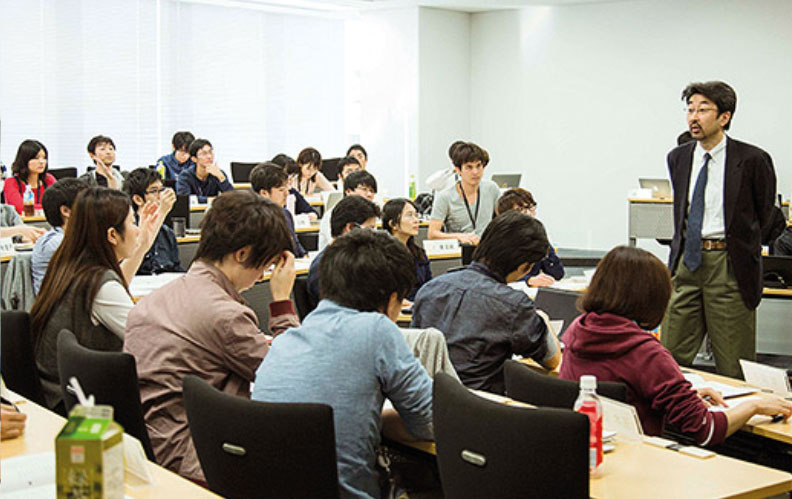
Keio Business School has five types of non-degree programmes for business executives and professionals and in-company seminars. Most of the classes in the executive programmes are conducted based on the case method. The five types of non-degree programmes are the following: Advanced Management Seminar, a nine-day intensive seminar for senior executives that has teaching staff consists of six to seven professors of Keio Business School, Harvard University, and other distinguished business schools abroad, and is held off-campus in summer, late July to Early August at Osaka; Middle Management Seminar, an 11-day general management program for middle management personnel, held off-campus campus twice a year, in September (Nagoya or Kyoto) and November (Izu-Shimoda); Global Competitiveness Seminar for Next Generation Business Leaders, an eight-day intensive seminar held at Hiyoshi campus for junior to middle managers who wish to have opportunities to contemplate on globalization in the field of interest; Issue Seminar, a course that focuses on specific issues such as the biotechnology-based business, management of technology, global strategy, and entrepreneurial ventures, and is conducted through the case method and lectures; and Weekend Seminar Management Development Intensive Program (MDIP), a program that mainly targets practitioners who have full-time jobs and no time to spare for attending the school curriculum during the weekdays.22
Image source: keio.ac.jp
Gain with World Class Management Education in Asia
As universities continue to develop and deliver executive education programmes, corporations are recognising the need to provide higher-level executive education programmes in partnerships with universities to expand the range of education programmes offered and to support the development of managers and future leaders for an operational focus and can be readily delivered by in-house trainers or competency-based training firms.23 Also, executive education programmes focus on a very different constituency than traditional MBA programmes do. Most standard MBA programmes are designed for young professionals, while executive education targets those in more advanced positions of leadership. Programmes tend to grant certificates rather than degrees, and they generally consist of short but intensive sessions.24 According to Mr. Arya, regular full-time MBA degree programmes are typically 1 to 2 years in duration. “They are great for early career professionals who are broadening their scope and analytical skills, in preparation for managerial roles or new careers and industries,” he said.
On the other hand, executive education programmes are typically short, 3 days to 2 weeks in duration, focused on specific development areas. “They are great for mid, senior and top management development at different points of their career. Many organisations also customise bespoke executive education programmes to meet strategic learning needs,” he added.
There are a number of ways for educational organisations to effectively differentiate themselves and thereby gain an important edge. Often a critical starting point is recognising what the participants are seeking. The premise is to learn in order to be more successful business people. Hence, the students require highly actionable insights, methodologies and strategies. They need information and processes that will empower them – if they make an appropriate effort to apply recent learnings – to more meaningfully contribute to the success of their companies. This in turn will, in many situations, make them more personally successful (e.g., wealthier).25
Mr. Arya explained that the most valuable, and perishable asset for executives is time.
“We have limited executive time in a year to invest, and we must invest it well to keep and sharpen the management team’s edge. Management education provides tools, best practices, solutions that can fast reach and enhance performance. It also provides a platform to learn from peers (and their successes and mistakes). Left unplanned, the tendency will be to under-invest. Progressive organisations and leaders will however, plan for one to two short programmes a year for high potential and loyal employees, longer, reflective program once every 2 to 3 years, and milestone programmes at key points of each manager’s career.”
Educational organisations are built on the notion of specialisation of knowledge, but the future innovation landscape requires a combination of deep expertise with equally deep forms of integration, which leads to the need for innovation that has economic consequence, and the education of innovation requires integrating them more closely into the learning process.26
There are emerging trends in this sector every year, depending on the needs of a company, or the preference of an executive. “Executive education trends tend to mirror real world trends that impact organisations. Disruption, technology, innovation, Artificial Intelligence (AI), FinTech, business analytics are some of the trending issues that leaders and senior managers need to understand and apply their intellect to,” Mr. Arya said.
He also mentioned that with the rise of the millennial working class and the capability in managing and nurturing them, business leaders and senior managers should possess such skills. Having less time at work to focus, learn and reflect on the issues, there are also trends towards new learning methods as well.
Variety can now be found within Asia and between each region around the world, when it comes to management education.
“With the rise of Asia, corporations from across Asia, Japan, US, Europe, Africa, and South America are now regularly turning to us for our expertise and for the Asia perspective. The discussions, learnings, challenges, debates, and case studies in our programmes are probably more representative of the environment that our participants face in Asia, doing business within Asia and with the world,” added Mr. Arya.
He also noted that a number of universities and business schools in Asia are now regularly represented at the top end of management education rankings by US and European publications.
Take the time to invest in management education programmes while leading your business to the top.
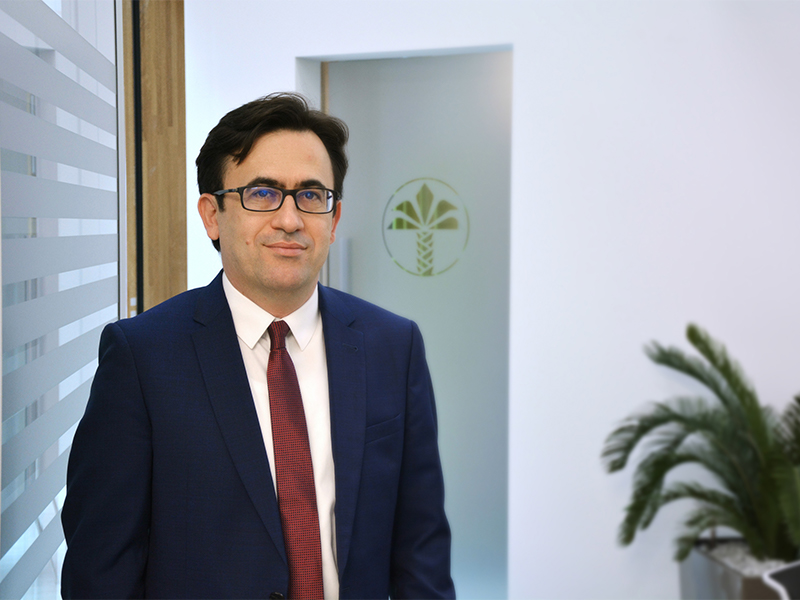
An Interview with Mr. Ahmet Kudsi Arslan, CEO and Chairman of the Management Board, KT Bank AG
As the first bank in Germany and the Eurozone to introduce comprehensive financial products and services according to the ethical, sustainable and transparent Islamic banking principles, KT Bank AG continues to be a pioneer and leader in Islamic finance. Today we sat down with the bank’s CEO and Chairman of the Management Board, Mr. Ahmet Kudsi Arslan, to talk about their journey to today’s success and how they carry on their mission to become the leading socially responsible and first choice house bank for the Muslim community as well as for all customers who are interested in ethical investments.
Good day, Mr Arslan! Thank you for spending time with us through this interview. You have been sharing your expertise with the Kuveyt Türk for almost two decades now. Can you share with us your professional journey – the positions you held with Kuveyt Türk along with the challenges in climbing up the ladder to success until you became the CEO of KTBank? And how does a successful person like you would jumpstart a busy day?
Thank you for having me, the pleasure is all on my side. My personal journey and career path are very much intertwined with that of Kuveyt Türk Participation Bank in Istanbul, and since then it’s been more than two decades. Kuveyt Türk is leading the Islamic banking market in Turkey for three decades. Its main shareholder is Kuwait Finance House, the most important financial institute with Islamic business model in the Gulf region.
I am with the group since I graduated in 1997 with a Bachelor of Science from the Middle East Technical University in Ankara. In September the same year, I joined my employer and gathered experience in different fields, including financial analysis, commercial and corporate marketing as well as branch management. From October 2009 until August 2013 I served as Corporate & Commercial Credit Manager and from September 2013 as Group Head of Wealth Management and Private Banking. Two years later I transferred to Germany to support KT Bank with its market establishment. KT Bank is a 100% subsidiary of Kuveyt Türk and the first bank in Germany and in the Eurozone, which introduced comprehensive financial products and services according to Islamic banking principles – a very exciting project. In January 2016, I was appointed as Deputy CEO of KT Bank and following that, in January 2017, I was made Board Member. Then, in April 2017, I was appointed as KT Bank’s CEO and Chairman of the Management Board. This is a role that I enjoy very much and gives me a lot of energy as I work on a pioneering project in a promising market. My motivation and love for my job are the ultimate jumpstarts for my busy days but if you are looking for a specific winning formula I would simply say – try some Turkish coffee!
Last October 2018, the Global Finance Award once again recognised the KFH GROUP in several categories, and KT Bank AG was acknowledged as the “Best Islamic Bank in Europe”. How important is this recognition for KT Bank AG?
As accolades like the Global Finance Award are happening on an international level with a lot of great publicity, we are delighted that our hard work as Islamic banking pioneers in Western markets has been recognised.
KT Bank AG was the first Islamic finance to open in 2004 in a country like Germany, which is home to one of the most competitive banking sectors in the world. Over the years, what have been the major challenges and barriers you have had to tackle?
Our market entry started with opening a representation office in Germany in 2004 followed by the granting of the financial services license from Germany, the third country deposit brokerage license in 2010 and resulted in the fully-fledged banking license in 2015 under German law for the provision of deposit and credit business in Germany. Kuveyt Türk had assumed a pioneering role in providing information about the ethical and socially responsible Islamic banking system in the German market from the very beginning. The duration of the licensing process was not surprising for the nature of such a trailblazing project in a foreign environment. The regulative implementation process was a challenge but we were supported all the way by the authorities and stakeholders who welcomed us with open arms. Yet the Islamic banking system had to be adapted to the legal framework in Germany, with all of its specific features and risks and we had to comply with all the regulatory, legal, and fiscal requirements applicable for conventional banks. The greatest challenge we faced in the process was the taxation. Germany does not provide an exemption or adaptation for our business model in that area. With regards to specific challenges, such as Islamic car purchase and real estate financing, we had to develop approaches to comply with the German legislation – e.g. our real estate financing products are set up in line with the model of the German civil-law association “Gesellschaft bürgerlichen Rechts” (GbR) to avoid double taxation.
What are the key factors of the Western market that affect Islamic banking and financial practice in Germany? How do you integrate these factors in making Islamic banking a universally ethical alternative to conventional banking in the country?
The Islamic economic law in general is based on justice and the economic well-being of society, with the market symbolising freedom and solidarity.
As a first mover in Germany and in the Eurozone, we have observed over time that European markets are becoming increasingly aware of the universally ethical qualities of Islamic banking’s Quran-based values, thus attracting value-conscious clients of all beliefs. We are in a constant exchange with business communities and scholars and also support scientific research in our area. It quickly became very clear that faith-based finance models, in general, are on the rise in the Western world. Our business model shows that profits and ethics are compatible. Not only the Muslim communities here, but also the European clientele is becoming increasingly aware of the contribution of our business model to the real economy. We as Islamic bankers in Germany are thus carving out our position within the conventional banking sector, shoulder to shoulder with the ethical banking segment and on the way to sustainable profitability.
KT Bank AG continuously develops state-of-the-art and unique Islamic banking products and services. Can you tell us more about your offerings and products that make you at par, or even superior compared to conventional banking?
Our multifaceted product portfolio for retail, corporate and institutional customers includes a wide range of Islamic financing and investment products and services and is continually advanced and developed. We provide current and participation accounts, real estate financing in Germany and in Turkey, savings plans, remittances to Turkey, instalment loans, instalment commercial finance, enterprise finance, and euro account services for institutional clients. Our products satisfy our standard for ourselves as pioneers, featuring brand-new concepts like our automated instalment payment solution Jetzz Card which substantially simplifies instalment shopping based on the Debit Mastercard. Our solid KT Participation Account provides our clients with the highest returns that can currently be obtained in the fixed-term deposit area in this country. We are also embracing the strive for digital maturity and are continually advancing our technological infrastructure, digital services, and online direct banking structure.
What practices or principles do you think the Western or the conventional banking system can learn from the Islamic banking system?
Our banking model prioritises unequivocal values over a narrow focus on profits and is guided by historical principles of an integral society that are 1,400 years old and still tremendously relevant today. The Islamic economic law, in general, is based on justice and the economic well-being of society, with the market symbolising freedom and solidarity. In pre-Islam times in the Middle East, a diversity of non-transparent and arbitrary sales agreements and purchase contracts existed. With the introduction of the pillars of Islam and the belief in an afterlife, economic and social responsibility grew. The new prohibition of interest, speculation and lack of transparency ensured that trading did not cause damage to society. The moral requirement for traders was a charitable and benevolent market participation. Islamic banking today implies interest-free, asset-backed banking on the basis of profit sharing with clients. Interest-bearing moneylending and high-risk trades are prohibited, as well as investing in businesses that provide goods or services considered contrary to Islamic principles, like those involving alcohol, pork, gambling, arms, and tobacco, among others. The Islamic model is thus a stable and ethical system that has proven to weather many storms, devoid of the repercussions of highly volatile financial instruments.
The Muslim community in Germany rose dramatically between 2010-2016. Research also shows that Islamic finance is spread to more than 60 countries all over the world, concentrated in countries/areas where most of the Muslim population thrives*. Do you think that Islamic banking and finance is just for Muslim-majority countries?
Not at all, and let me explain why we make a fine example to support that perspective. The introduction of Islamic banking in a country like Germany seemed to respond to needs arising out of the increased influx of Muslim immigrants within the last few years. Germany, with its current Muslim population of about 4.7 million, is, alongside France and the UK, classified as one of the predestined Western key markets for Islamic finance. Yet during our last four years of operational business development and analysis of the value-based methodology of Islamic banking, it became apparent that it does not only fulfil the requirements of the Muslim community, but also the ethical standards of the majority of German society. We have established the Islam-compliant finance model as a new field of socially responsible investment (SRI), which is in high demand after the financial crisis. We welcome clients from all religions and worldviews, backgrounds or nationalities. Within our client structure, 60 nationalities are represented; some of them are from European neighbouring countries.
The Islamic model is thus a stable and ethical system that has proven to weather many storms, devoid of the repercussions of highly volatile financial instruments.
At present, where does Islamic banking and finance stand in the Western world? Where do you see KT Bank AG five years from now?
Islamic banking is a business segment that is growing worldwide and has also been acknowledged by the finance ministers of the G20 states as a progressive alternative for Western economies. It is going to be integrated more into the global finance structure to foster a cultural change. KT Bank in five years will still be on a sustainable expansion path, including the steady growth of our client base, and pursuing the further advancement of our portfolio, branch services and digital environment.
Nowadays, it is very important to keep a healthy and positive working surrounding, how do you usually address work pressure and motivate yourself and your colleagues at work? And what is the one thing you always tell your employees?
We at KT Bank are in a very special position as the values of our company reflect our personal beliefs, so the level of motivation and identification with our tasks are extremely high which naturally supports a healthy working atmosphere and helps us to cope with the pressure. Now, not everybody who works at KT Bank is a Muslim, yet everybody at KT Bank appreciates the positive spirit of our faith and the resulting corporate culture of ethical integrity. We include our religious, ethical traditions in the corporate environment, from our office prayer rooms to our ecological company equipment. This continually supports our awareness of the bigger framework – that we are actually working on a very meaningful task.
And lastly, on a lighter note, what do successful people like you do after a hard day’s work?
I can recharge completely when I spend time with my family. I am also very fond of exploring my new home in Germany together with them.
Thank you very much, Mr. Arslan! It was a pleasure speaking with you.
Ahmet Kudsi Arslan is CEO and Chairman of the Management Board of KT Bank AG since April 2017, following his appointment as Board Member in January 2017 and holding the position of Deputy CEO since January 2016. Prior to these roles, he was part of KT Bank’s parent bank Kuveyt Türk Participation Bank in Istanbul for more than two decades and in several leading positions, such as Group Head of Wealth Management and Private Banking, and Corporate & Commercial Credit Manager. Other stations of his career at Kuveyt Türk, which he started in September 1997, include branch management and financial analysis.
The agriculture sector plays a historic and integral role in the socioeconomic development of the country – it has a significant contribution to the per-capita income of both industrialised and developing nations and has helped in shaping the early civilisation to progression. This article will trace how the policy and reform challenges in agricultural development have helped in restructuring the economic fabrics of the society, and why food security is a crucial contributing factor in the growth of both the regional and international economies.
I will discuss herein the impact of trade liberalisation (i.e., free trade) on the agricultural sector and also food security in the developing countries. The WTO (World Trade Organisation) entered into force in 1995 as the most powerful multi-lateral institution worldwide, not least because of bringing free trade into agriculture and its dispute settlement mechanism. It is understood that if a country, after for instance struggling with its internal finances, secures a bail-out from the IMF (International Monetary Fund), its obligations cease when it has repaid its loan in full, whereas once a country joins the WTO, in contrast, it will be locked into the organisation in perpetuity.
The WTO’s negotiations at Doha in 2001 were fundamentally flawed, as they were clearly designed to protect the interests of big corporations, especially those linked to agricultural commodities and based in the developed countries, while conferring very little benefit to farmers in the developing countries. Therefore, at the next WTO ministerial meeting, which is scheduled for June 2020 in Kazakhstan, it is important that developing countries propose reform within the WTO in order to protect their agricultural and industrial sectors and indeed their general interests.
The WTO’s trade liberalisation policy draws its theoretical support from David Ricardo’s ideas of ‘comparative advantage’ and ‘free market’ in order to achieve efficiency and cost reduction.6 ‘Market’ as a term, generally refers to a competitive environment and competition, but under capitalism it does not always mean this. Leon Walras defended the ‘advantage’ of the market, but unlike neo-liberal enthusiasts, he did not confuse the two. For Walras, capitalism only offers a non-optimal version of the market. The WTO is based on the argument that free trade favours the expansion of international trade and promotes the growth and well-being of trading countries. However, historically, there is no real evidence to support these propositions. Proponents of ‘free trade’ emphasise the idea that trade liberalisation leads to greater competition, which as a result achieves higher efficiency; however, historically, gains brought about by increases in productivity were much higher than those that could be obtained through competitive advantage. Moreover, relative prices are not determined by the market, but by the social conditions, i.e., beyond supply and demand, in which production operates.
In the developing countries, industrialisation was not a natural product of capitalist expansion but took place due to historical conditions created by the formal independence of these countries.
There is an urgent need to revisit the Uruguay Round Agreements, because some of the associated sections severely restrict the use of economic policy instruments which could be helpful in the promotion of late developers (i.e., developing countries) in terms of building their manufacturing sectors. The Doha Round largely sanctions an industrial and agricultural policy to favour those countries which are well advanced technologically and who are well equipped to compete in the global markets. This is the reason that late developer countries, such as the Germany and the USA, rejected ‘free trade’ policy during their early industrialisation period and found it an obstacle rather than a catalyst to building and modernising their economies.6 For example, in the 19th century both Friedrich List in Germany and Alexander Hamilton in the USA emphasised that the role of protectionist policy and industrial links with agriculture clearly show that no ‘one-size-fits-all’ prescriptions can work for all countries. The past tells us the connections between business elites, military power and development centred around the control of natural resources. Neo-classical economists (also known as mainstream) essentially failed to take into account the associated national social structures and international geopolitical aspects in their analyses.
In fact, in the developing countries, industrialisation was not a natural product of capitalist expansion but took place due to historical conditions created by the formal independence of these countries. During their struggles for independence, it was their stated goal to launch industrialisation in order to diversify their economies, save foreign exchange and to build self-sufficient economies. It was also viewed that such policies would lessen the burden on agriculture and raise incomes and employment.7; 10 At Doha negotiations, the WTO emphasised the idea that ‘agriculture and food production’ should be treated as any other form of production and be submitted to the rules of competition in deregulated and open markets. The free traders in agriculture argue that modern agriculture in Europe and North America is not only able to feed their own population, but also produces surplus for export. According to them, this should be repeated and emulated in the developing countries. Such arguments fail to consider that the European and North American agricultural models are almost impossible to adopt in the developing countries. When Europeans launched their modernisation of agriculture in the 19th and early 20th century, the available technology required labour-intensive efforts, while in the 21st century farming is far less labour intensive and does not absorb large numbers from the labour force due to the associated advancements in this same technology.
In order to be globally competitive, developing countries have to adopt modern technology and also to achieve economies of scale, meaning millions of peasants in the developing countries would be expelled from their lands, and for whom there are hardly any avenues of employment. Such adoption would simply mean a huge increase in the urban population and increased unemployment.8 In the 18th and 19th centuries, during the European transition from agriculture towards industrialisation, the surplus population emigrated from these countries to the Americas, Australia, New Zealand and South Africa. In the 19th century, there was extensive emigration of displaced peasants and workers from Europe, mainly to the New World, where they were party to essentially the largest land grab in history, eliminating the indigenous inhabitants and permanently seizing their vast lands and natural resources. They carried out unprecedented violence and, ultimately, genocide against the native populace. From Britain in the 19th century, the first nation to begin industrialising, on average nearly half the increment in population each year went on to emigrate to the ‘New World’, which carried on for nearly a century. For developing countries, at least at present, no such possibilities exist. This means that under WTO, trade liberalisation in the agricultural sector will lead to further exclusion and impoverishment of up to potentially 3 billion people, and will, of course, be ecologically disastrous.9
The deregulation policy is being imposed by international organisations such as the IMF, World Bank, and WTO where these organisations, in the name of good governance, are trying to shape the developing countries’ policies to create the most institutional environments favourable to allow them to open up to global markets.17 However, such policies would affect the possibilities of autonomous development in the developing countries by constraining the policy choices open to them and denying them the availability of the most important policy instruments used by the currently developed economies in their own initial phases of industrialisation and modernisation.11 For instance, TRIMS (Trade-Related Investment Measures) do not allow the use of local content specifications to increase linkages between foreign investors and local manufacturers or restriction on the outflow of capital by investors. Another WTO policy change includes TRIPS (Trade-Related Aspects of Intellectual Property Rights), which allows for further privatisation and concentration of knowledge into the hands of big corporations.20
The WTO must address real subsidies in agriculture rather than a theoretical construct as to the measure of support, which should also include the impact of subsidies in rich countries. Agricultural subsidies in the rich countries have been a problem for developing countries like India, South Africa and Ghana. In the developing countries, agriculture is highly dependent on weather, particularly rainfall. Because of this, agricultural production is open to fluctuation, which can make agricultural commodity prices volatile. This could lead to problems not only for consumers at times of shortage but also to small and medium farmers, who are resource-poor. During any period of food shortages, small and poor farmers have very little to sell to the market.
The WTO must address real subsidies in agriculture rather than a theoretical construct as to the measure of support, which should also include the impact of subsidies in rich countries.
In fact, unlike industries, agricultural production cannot take place throughout the entirety of the year, which means that prices can be lower during the harvest than the rest of the year. Small and medium farmers in the developing countries are often forced to sell their products soon after the harvest due to difficulties with storage, and the more practical fact that they need money to pay their debts. Government stockpiling with minimum price support is effective and helpful to farmers in terms of negating price fluctuations. This ensures that when there is an oversupply, then by government purchasing at remunerative prices it can safeguard farmers against lower prices and price fluctuations in the market. Furthermore, when there is a shortage in the market, then government can release food, so the prices and food security of the country is ensured. However, under WTO rules such stock holdings would be difficult to continue and farmers will be left essentially at the mercy of the markets.
Children and a herd of goats roaming over a dried-up rice field in the Bulacan province of the Philippines. Photo by Romeo Ranoco/ Reuters
Impact of trade liberalisation
Developing countries, with the exception of China, remain weak because they are marginal players in the global economy. For instance, India’s share of global trade is only 2.1%, but its strength lies in the size of its economy, US$ 2 trillion, currently growing at 7.5% annually.7 The last two decades have witnessed an increased dependence on food imports and a decline in food self-reliance, especially in the developing countries.
Agriculture subsidies were designed to minimise costs of production by providing inputs at lower prices than the market price. Many developed countries began to support the farmer to enhance production levels during the post-war period, and agricultural subsidies have become a tool for the developed countries to maintain supremacy in agricultural output.
Why do agriculture subsidies remain the most contentious issue in WTO meetings? Why do developed countries pressurise the developing countries to reduce subsidies?
The US and EU provide massive subsidies to their farmers and do not want to reduce them. According to the OECD, total world support to agriculture was about US$282 bn in 2016, which came down from $364 bn in 2012, and which was $337 bn in 1994. It also says that agricultural support has only marginally reduced in the developed countries. The global agricultural market is highly distorted due to huge subsidies and high tariffs. Developed countries’ markets like the US, EU, Japan and South Korea are highly protected in their respective agricultural sectors. Their average tariff rate figures could be misleading as a country can accord high protection for a few products while keeping average tariff rates low. Most developed countries support their farmers through subsidies rather than through import tariffs. As a result, this has resulted in the generation of a huge food surplus which, especially in the case of grain, is being dumped by selling at prices far below the cost of production. This is particularly true in sub-Saharan African countries, and is destroying their self-reliance in agricultural sectors. The WTO’s Agreement on Agriculture (AoA) will allow developed countries to continue subsidising of their own agriculture and big agrobusinesses, while preventing the farmers from developing countries from accessing even a small fraction of the subsidies.20
The last two decades have witnessed an increased dependence on food imports and a decline in food self-reliance, especially in the developing countries.
Modern capitalist agriculture currently includes both big land owners and business corporations, and these agro-corporations would like to gain greater market access for their products. They openly lobbied during the WTO’s negotiations at Doha in 2001. The peasantry occupies, in a global sense, more than half of the world’s population, and agricultural production is shared between these two groups in developed and developing countries. However, both groups are very different, and are entirely unequal in terms of size of operations, access to capital, and levels of efficiency. The capitalist farmers in North America, Latin America, Europe and Australia operate highly mechanised and capital-intensive agriculture, and each farmer’s productivity ranges between 10,000 and 20,000 quintals of cereal per worker per annum, while farmers in the developing countries in Asia and Africa have far less mechanised operations and production ranges from 100 to 500 quintals per farmer per annum.
Modernising agriculture
The WTO, IMF and World Bank support the capital-intensive solutions causing the current agrarian crises in the developing countries.10 They also extend support to increase cultivation of cash crops and export-led growth with the help of overseas investment in agriculture. These organisations ignore the fact that such policies will leave farmers in the developing countries increasingly vulnerable to global demands and price fluctuations. Such policies will also undermine any attempt to build food sovereignty and food security in the developing countries.
The policy essentially seems geared to remove the small farmers and landless people of the rural population and force them into cities in order to reduce the rural population, as occurred in the 19th and early 20th centuries in Europe. In the developing countries, on the pretext of modernising agriculture, the proponents of free trade in agriculture support such policy measures. As Dandekar(1994:29)2 argues, “to transform traditional subsistence agriculture into commercially viable agriculture, the surplus population must be withdrawn from agriculture, that is from current operations of cultivation and conditions must be created whereby capital from outside agriculture may flow into agriculture”.
Neoliberalism argues in favour of increased reliance on the market forces through economic development policies.11; 19 The crucial element in this is financialisation, which is the shift in emphasis of economic activity from industrial production towards the financial sector. Financialisation represents a much longer tendency toward the expansion of the size and importance of the financial superstructure in relation to the economic base. In fact, financialisation may lead to increased capital accumulation through a process of speculative expansion, but it could also contribute to the erosion of the entire economic and social order in the developing countries.12
Modern capitalist agriculture currently includes both big land owners and business corporations, and these agrocorporations would like to gain greater market access for their products.
Historically, enclosures in England forced direct producers from their means of production by the state; that is, people were forcibly removed, rather than removed through market forces, from whatever little access to social wealth they had. This policy was carried out in England in the 17th and 18th centuries by Acts of the British Parliament of enclosing commons lands. British colonies also witnessed largescale dispossession which resulted in large number of deaths. For instance, one might consider the British colony in Ireland during the English civil war, where local farmers were dispossessed and made into the tenants of English settlers. Soon after, land rents rose sharply and Ireland was forced to export wheat and animal products to Britain, while the tenants living under the burden of heavy rents mainly consumed potatoes. The great potato famine of 1846–1847 killed one million Irish out of the total population of 8 million, while during the famine, wheat and livestock products continued to be forcibly exported. Three million people died under British rule in the Bengal famine, in 1944, which is well known worldwide.
Britain’s colonies contributed over half of its total imports during the period from 1785 to 1810, and which never accounted for less than two-fifths thereafter. The commodity composition of Britain’s imports from South Asia and the West Indies shows that nearly two-thirds were comprised of food products by the end of the 18th century. This share increased to about 73% by 1815, before declining to just over three-fifths over the following two decades. Imports of raw materials increased sharply from one-fifth to more than two-fifths by the mid-19th century, but still remained below the 52% share of food products. In fact, food products from South Asia and the West Indies combined averaged as much as 32% of the total of ‘all’ imports into Britain during the last two decades of 18th century, which also coincided with the early phase of British industrialisation.19
According to the statistics, the imports from both the tropical colonies and Ireland trebled between 1785 and 1820. During the early phase of its industrialisation, the supply of food products from the colonies was crucial to Britain’s economic development and industrialisation. As Utsa Patnaik(2015:9)5 states, “By 1854-56, the value of imported primary products retained within the country was more than Britain’s domestic primary sector output value. But Britain could not have afforded to undertake such massive imports had they been from free, sovereign countries, because it lacked the ability to pay for them. The trade deficit with Asia and West Indies combined, ranged from nearly four to six percent of Britain’s GDP during the period of industrial revolution and adding the trade deficit with continental Europe raises the deficit 7 to 10 percent of GDP”.
In India, under colonial rule during the period 1900 to 1941, there was a 29% decline in food grain output per capita, while the market for export crops grew ten times faster than food grains. Indonesia, under the Netherlands, also witnessed a similar order of decline in rice output per head over same period, while sugarcane and rubber output were considerably increased.
In a number of countries which are net food exporters, substantial numbers of households suffer from malnutrition.
Historically, a pattern of global specialisation in the cultivation of agricultural commodities was initiated and forcibly imposed by today’s developed countries under colonial systems, which entailed their increasing dependence on primary imports from tropical countries. The basic reason for imposing such a pattern of specialisation lay in their permanently poor range of crop production, as dictated by climate, compared to the highly diversified productive capacity of tropical lands. The pressure on developing countries is enacted through international organisations such as the WTO, IMF and World Bank, urging them to remove all protection offered to their producers and engage in free trade.
The developed countries urge developing countries to give up domestic food security systems and import food grains from them.18 Trade liberalisation and food imports are not encouraged in order to prevent malnutrition and increase food consumption but to find markets for some developed countries who happen to have huge surpluses of agricultural commodities. Moreover, such policies are enacted when domestic demand is constrained by the deflationary neoliberal economic policies widely imposed on the developing countries.
Re-emergence of colonial period practices
After gaining independence from colonial rule, substantial improvements in food availability were registered as governments prioritised domestic food security over exports. In the present era of neoliberal reform and trade liberalisation, this process has been reversed, and indeed we can see the structural features of the colonial period re-emerging. Since the 1980s, many countries in Latin America, the whole of sub-Saharan Africa, and India from the 1990s, have seen declining grain output per head. Food imports have not compensated for the decline because whether imports are sufficient to meet the associated needs all depends on whether the purchasing power of poor populations can be maintained. If purchasing power is curtailed, then grain exports may be required even while the population is going hungry; the market responds not to hunger but to purchasing capacity. In the main, neoliberal policies involve not only free trade but also tight money and fiscal contraction, hence there is mass income deflation. We see declines in purchasing capacities, declines in food availability and worsening nutritional levels.
The developed countries urge developing countries to give up domestic food security systems and import food grains from them.
The so-called primitive accumulation, therefore, is nothing else than the historical process of divorcing the producer from their means of production. Primitive accumulation in the sense of appropriation of the resources of small farmers and producers could be seen as part of capital accumulation, namely in the sense of expansion through the reinvestment of profits. Rosa Luxemburg (1913), in her book Accumulation of Capital, noted the drive by capital to remove independent small farmers and producers not only within the Britain, but also in the colonies. She argued that capitalism needs external markets, and that it is not possible to sustain accumulation in the absence of colonies, i.e., external markets. This simply means that the development of capitalism and industrialisation involves the dispossession of small producers, notably the peasantry, after which a similar process can be expected from the industrialisation process in developing countries such as India.
Harvey has pointed out that capital can expand itself, through coercive forms of force and plunder, from the means of production which results in the separation of the direct producer from the means of production. This is the key feature of the entire history of capitalism. Under contemporary capitalism, Harvey argues accumulation takes place by dispossession, which helps the capitalists overcome the over accumulation crises by devaluing assets. Harvey (2003) emphasises accumulation by dispossession occurs in the context of the devaluation of capital through which capitalists respond to crises of over-accumulation. In the late 19th century, Karl Marx also identified and noted that during economic crises capital assets could be bought at lower prices, while at the same time higher unemployment compels workers to accept lower wages and as a result profitability is restored, which permits further accumulation. Harvey (2003:149-50) notes: “what accumulation by dispossession does it to release a set of assets (including labour power) at a very low (and in some cases zero) cost. Over accumulation capital can seize hold of such assets and immediately turn them to profitable use. [Accordingly] if capitalism has been experiencing a chronic difficulty of over accumulation since 1973, then the neoliberal project of privatisation makes a lot of sense as one way to solve the problem”.3
How can the surplus population from agriculture sector be absorbed into other sectors in the developing countries? This is only possible if the remaining sectors are not only growing quickly but also creating jobs and do not displace labour. In contrast to this, since 1991, India has adopted neoliberal reforms and their growth rates have risen, but these high growth rates have not been able to create additional employment and absorb the surplus labour from the agricultural sector. Moreover, in India, the proportion of labour engaged in the agricultural sector has seen as slow by steady decline, i.e., from 69.8% in 1971 to 64.9% in 1991, and to 54.6% in 2015. In contrast, the share of agriculture in GDP fell more sharply from 39.7% in 1971 to 29.5% in 1991 and further to 11% in 2015. Moreover, in India, Pakistan, Philippines and Sri Lanka, the relative wages of agricultural workers have declined due to the relative lack of employment opportunities being created in non-agricultural sectors. In contrast, other developing countries, such as China, Taiwan and Malaysia, have performed better in raising the incomes of agricultural workers due to rapid increases in employment possibilities in their non-agricultural sectors.13
Agrarian crisis in India
With the adoption of neoliberalism in India, the government has reduced its investment in irrigation and research extension services for agriculture. For the last two decades, the agrarian crisis has deepened, the origin of which lies in a number of policies such as trade liberalisation and cuts in government spending in agriculture sector, and also cuts in social services, such as education and health, and a greater emphasis on the reliance on private providers.14 On top of this, farmers have had to suffer the demonetisation of 2016 that took place soon after monsoon harvest season where, due to lack of finances, farmers were unable to sell their crops or buy the inputs to allow them to sow winter crops. The agrarian crisis is reflected in the increasing number of suicides, forced migration and in mass protests amongst farmers.
In short, neoliberal policies have given rise to increased cost of production while incomes have declined, which is the core issue behind mass protests by farmers in India.
The present agrarian crisis in India is grounded in the neoliberal economic policy reforms that have shaped India’s political economy since the early 1990s, and therefore it is crucial to examine this critically. Neoliberal reforms have led to a relative withdrawal of state intervention in the agricultural sector, such as through public investment in rural infrastructure and the removal of trade protection for agricultural commodities, resulting in a drastic cut in price subsides for inputs, while control over input and output prices has been removed.15 Financial liberalisation has led to a decline in the availability of institutional credits for farmers. In short, neoliberal policies have given rise to increased cost of production while incomes have declined, which is the core issue behind mass protests by farmers in India.
Soon after independence, India failed to implement radical land reforms which resulted in the continuation of rural inequality. The scope for further extending canal irrigation with the help of big dams is limited because they create huge negative externalities in the form of loss of forest land and displacement of people; however, there is further scope for rainwater harvesting and recharging ground water aquifers in India. Agricultural land is highly unequally distributed and neoliberalism has escalated this problem further. Nearly 40% of the agricultural workforce is wholly dependent on wage labour for their livelihoods, while the majority of cultivators have such small holdings that they need to supplement cultivation with wage labour. In India, it is estimated that about half of the total workforce is engaged in agriculture and roughly a third of this agricultural workforce consists of entirely landless labourers.
India’s population has increased rapidly since independence over the last seven decades, by a factor of 3.5 from 361 million to 1,300 million in 2018, while over the same period; its food grain production has risen five-fold from 51 million tonnes to nearly 255 million tonnes. India became self-reliant in terms of food production mainly through the adoption of the ‘green revolution’ in the 1970s through increased investment in irrigation, availability of credit and subsidised chemical fertilisers and pesticides which resulted in higher yields and output in certain crops. Moreover, the net sown area under cultivation increased between 1950 and 2015 by less than 18%. The gross irrigated area increased from 23 million hectares to 93 million hectares during the same period, which is a four-fold increase. Indian farmers are experiencing a deep crisis, while Modi’s government policy seems to be a fusion of neoliberalism and Hindutva (right-wing Hindu extremism), which basically is an authoritarian populism. Rural discontent is generated by agricultural stagnation, rising unemployment and state-sponsored land grabs. The Modi government has attempted to bring in a land acquisition bill which will allow the forcible acquisition of land from farmers and tribal people without proper compensation.
During the pre-neoliberal reform period in India, the state protected farmers from the vicissitudes of world’s market fluctuations. Inputs were subsidised, remunerative prices were provided through government procurement of crops and substantial investments in irrigation were undertaken. With the current move towards globalisation, it seems that the insulation of agriculture sector from global market price fluctuations is being systematically removed.
The squeeze on farmers’ incomes is mainly due to subsidies being cut and a reduction in availability of formal credit. As a result, small and medium farmers are forced to borrow from private money lenders. It also means the costs of production have risen sharply, while agricultural commodity prices have declined due to global price fluctuations. As a result, the profitability in agriculture has declined. India is the largest producer of wheat and the second-largest producer of rice. In 2017, production of wheat in India was about 96.6 million tonnes and consumption was almost the same, though India exported some 3 million tonnes from government stocks. In the same year, production of rice was 105 million tonnes and consumption was 103 million tonnes, but the country exported 11 million tonnes of rice, which was only possible due to the existence of stocks. However, for example, a large section of the population in India is food insecure due to high unemployment and poverty. Therefore, India cannot depend on the global market due to the various food-related problems faced by its society. India has a huge population, and during food shortages the country will need a huge amount of food which could push up the international prices, resulting in adverse consequences for Indian consumers.
Improving food security
Under the AoA, developing countries (including least developed countries or LDCs) have to remove non-tariff controls on agricultural products and convert these to tariffs. Developing countries are then required to progressively reduce these tariffs, while LDCs are exempt from this requirement. In many developing countries this has threatened the viability of small farms that are unable to compete with cheaper imports. Millions of small and medium farmers could be affected. The process has also increased fears of greater food insecurity in that the developing countries will become less self-sufficient in food. For many, food imports may not be an option due to the shortage of foreign exchange. Therefore, food sovereignty should prioritise the national economy and governments should empower peasants and families in terms of farmer-driven agriculture and improve the social and economic sustainability in the rural environment. These governments should ensure that the right to use and manage land, water, seed, livestock and bio-diversity are in the full control of the local communities producing the food. This also means new social relations of operations and greater equality between people and between countries.
Food sovereignty is a pre-condition to food security, and to implement it the developed countries should end the practice of dumping food and the wider use of food as a weapon of policy.
The particular strategy employed by individual countries to improve their food security status is one of the key factors in understanding the relationship between trade liberalisation and food security. Two broad options have been followed by countries attempting to achieve adequate levels of food security: food self-sufficiency, and food self-reliance. Food self-sufficiency means to increase food output with the help of domestic resources. While this approach implies the provision of sufficient domestic production to meet a substantial part of consumption requirements, it does not necessarily imply that all households in the country have access to all the food they require. In a number of countries which are net food exporters, substantial numbers of households suffer from malnutrition. Developing countries face a number of other risks associated with trade. Besides the declining terms of trade, a related problem is the volatility of world prices for the primary (especially agricultural) commodities they export.16 Furthermore, these prices are determined in markets that are beyond the influence of individual poor countries and typically affected by factors beyond their control. Related to this are supply side risks, especially the sensitivity of output to climatic variability. Droughts and excess rain that result in flooding can cause serious damage to agricultural output.
Workers harvesting corn from a commercial farm in Ethiopia. Photo by Barry Malone/Reuters
Food security is a basic human right, and this can only be realised in a system where food sovereignty is guaranteed. It is the right of each country to maintain and develop its own policy to produce food for its citizens. Food sovereignty is a pre-condition to food security, and to implement it the developed countries should end the practice of dumping food and the wider use of food as a weapon of policy. It is also the right of the people to define their own food requirements and to protect their food production and trade in order to achieve sustainable development. Such policies promote self-reliance in food production and people’s right to safe, healthy and ecologically sustainable production. As the Food and Agriculture Organization of the United Nations (FAO) states “the availability at all times of adequate world food supplies of basic foodstuffs to sustain a steady expansion of food consumption and to offset fluctuations in production and prices”(Cited in Patel, 2009:664)4
Neoliberal policies undermine the commitment to food security and in fulfilling the human rights mentioned in the Millennium Development Goals. The WTO emphasises market solutions to countries’ food crises, which are guided to protect global corporations and food businesses in which capital is dominant, and where food security has moved away from being purely about producing and distributing food towards being the nexus of concerns regarding social control, nutrition and public health. The understanding of food security is further elaborated in the declaration of the UN food submit “food security, at the household, national is achieved when all people, at all times, have physical and economic access to sufficient, safe and nutritious food to meet their dietary needs for an active and healthy life”.(Cited in Patel, 2009:665)4
The question of food security is clearly a very important issue in a highly populated country like India. Despite the increase in growth rates over the last 25 years, India has not addressed the basic issue of the need to ensure the food security of its populace. In fact, nutrition levels have remained the same, and per capita calorie consumption has in fact declined, which shows that the problem of hunger has not yet disappeared in India.
Food sovereignty should prioritise the national economy and governments should empower peasants and families in terms of farmer-driven agriculture and improve the social and economic sustainability in the rural environment.
There is an urgent need for policy change in order to transform industrial agriculture away from fossil fuel-based production and the overwhelming cultivation of cash crops for export towards an alternative agricultural paradigm that encourages local food production by small and medium farmers based on local resources and solar energy, primarily to improve nutritional levels and domestic consumption. This implies allowing peasants’ access to land, seed, water, credit and local markets, partly achieved through the creation of supportive economic policies, financial incentives, and market opportunities. As Altieri and Toledo (2011:588) argue “the diversification of farms in order to promote beneficial biological interactions and synergies among the components of the agroecosystem so that these may allow for the regeneration of soil fertility, and maintain productivity and crop protection. The core principles of agroecology include recycling nutrients and energy on the farm, rather than introducing external inputs; enhancing soil organic matter and soil biological activity; diversifying plant species and genetic resources in agroecosystems over time and space; integrating crops and livestock and optimising interactions and productivity of the total farming system, rather than the yields of individual species”.1
Since neoliberal economic reforms were adopted in a number of developing countries, the resultant cuts in public investment in agriculture and greater reliance on market forces have adversely affected productivity and farming income. A shift in land allocated with traditional food crops that were better suited to the local ecological and environmental conditions in favour of cash crops that largely rely on expensive inputs has become evident. Reversing such policies is essential, but this requires substantial public investment and public distribution to ensure both increased food output and delivery.
In conclusion, it is very important to re-emphasise the fact that food security is crucial to the developing countries, as it will protect rural employment and save foreign exchange. This is not only for reasons of sovereignty but also due to the fact that during the colonial period, their food production declined due to the metropolitan policy to expand production of cash crops which did not benefit the farmers in these countries, resulting in their per capita income remaining stagnant, while these countries witnessed repeated famines which killed millions of people and also increased indebtedness of the peasantry. Historically, cash crop cultivation has only ever benefited money lenders, planters and the colonial administration in terms of raising revenue and collecting high rents.
In order to revive the economy, it is crucial to understand that the obsession with exports and GDP growth is no longer feasible. Export-led growth is reaching its limits. We need to reverse this policy and introduce a new policy to address rising inequality, and unemployment. Therefore, food security must be given priority in the developing countries. The government should also play a crucial role in protecting small and medium farmers, and also in increasing public investment and productivity. Such measures should help to curb speculation by traders. Moreover, national food security should increase domestic food production so that a country with a large population, such as India, does not depend on food imports. This is strategically important for India as its entry into the world food market would affect global food prices. We also know that, in the past, the food has been used as a strategic weapon in international politics.
Kalim Siddiqui is an economist, specialising in Development Economics and International Economics. His work, which combines elements of international and development economics, economic policy, economic history and political economy, often challenges prevailing orthodoxy about which policies promote overall development in less developed countries.
References
1. Altieri, M.A. and V.M. Toledo. 2011. The Agrological Revolution in Latin America: Rescuing Nature, Ensuring Food Sovereignty and Empowering Peasants”, Journal of Peasant Studies, 38(3): 587-612.
2. Dandekar, V M. 1994. “Transforming Traditional Agriculture: A Critic of Professor Schutz” Indian Economy 1947-92, Vol 1: Agriculture, New Delhi: Sage, pp 96-126.
3. Harvey, D. 2003. The New Imperialism, Oxford: Oxford University Press.
4. Patel, R. 2009. “Grassroots Voices: Food Sovereignty”, Journal of Peasant Studies, 36 (3): 663-706.
5. Patnaik, U. 2015. “The Origin and Continuation of First World Import Dependence on Developing Countries for Agricultural Products”, Agrarian South: Journal of Political Economy, 4 (1): 1-21.
6. Siddiqui, K. 2018a. “David Ricardo’s Comparative Advantage and Developing Countries: Myth and Reality”, International Critical Thought, 8(3): 1-28, September. Taylor & Francis Group. ISSN: 2159-8282 (Print) 2159-8312. DOI:10.1080/21598282.2018.1506264.
7. Siddiqui, K. 2018b. “The Political Economy of India’s Economic Changes since the last Century” Argumenta Oeconomica Cracoviensia, No.19. ISSN: 1642-168X.
8. Siddiqui, K. 2017. “Globalization, Trade Liberalisation and the Issues of Economic Diversification in the Developing Countries”, Journal of Business & Economic Policy 4(4): 30-43.
9. Siddiqui, K. 2016. “International Trade, WTO and Economic Development”, World Review of Political Economy, 7(4):424-450, winter, Pluto Journals
10. Siddiqui, K. 2015a. “Agrarian Crisis and Transformation in India”, Journal of Economics and Political Economy 2 (1):3-22. ISSN: 2148-8347,
11. Siddiqui, K. 2015b. “Trade Liberalisation and Economic Development: A Critical Review”, International Journal of Political Economy 44(3):228-247.Taylor & Francis ISSN: 0891-1916. Print/1558-0970. DOI: 10.1080/08911916.2015.1095050.
12. Siddiqui, K. 2015c. “Foreign Capital Investment into Developing Countries: Some Economic Policy Issues”, Research in World Economy 6(2): 14-29. doi: 10.5430/rwe.v6n2p14
13. Siddiqui, K. 2012. “Developing Countries’ Experience with Neoliberalism and Globalisation”, Research in Applied Economics 4(4): 12-37, December.
14. Siddiqui, K. 2008. “Politics and Economics of Recent Global Food Crisis”, Klassekampen, (in Norwegian), July 17. http://www.klassekampen.no/
15. Siddiqui, K. 1999. “New Technology and Process of Differentiation: Two Sugarcane Cultivating Villages in UP, India”, Economic and Political Weekly, 34 (52): A39-A53, December 25. ISSN (Online) – 2349-8846.
16. Siddiqui, K. 1998. “The Export of Agricultural Commodities, Poverty and Ecological Crisis: A Case Study of Central American Countries”, Economic and Political Weekly 33(39): A128-A137, September 26. ISSN (Online) – 2349-8846.
17. Siddiqui, K. 1996. “The Debt Crisis – Need for a New Strategy”, The News, May 17.
18. Siddiqui, K. 1995. “Food Security and Sustainable Agricultural Development”, The Nation, 2 September.
19. Siddiqui, K.1994. “The Economic Philosophy of Neo-liberalism” The Nation, 20 September.
The author discusses the implications brought about by the failure of the U.S.-North Korea summit and its correlation to the actions that will be done by the U.S. government to establish global leadership.
The second summit between North Korea and the U.S. was a failure as it did not narrow the gap between the positions of the two countries. According to President Donald Trump, the timing of the hearing of Michal Cohen, Trump’s former personal attorney, before a House Committee, affected the outcome of the summit. While the timing of Cohen’s hearings was not necessarily an intentional plot to obstruct American compromises in Hanoi (it may have been that, though), it is possible to claim that the domestic pressures Trump must face make peace promotion and compromises very difficult for the U.S. The top adviser to the president of South Korea, Prof. Chung-in Moon, described1 Trump’s domestic pressures related to the second U.S.-North Korean Summit by saying that success in it could have caused “an uproar over a deal perceived as too conciliatory”
“The purpose of foreign policy is not to get along with other countries”, but rather “to shape the behaviour of others in ways that are consistent with your interests…” –Richard Hass
The situation where the president of the United States is being pushed to belligerence and toughness is unnatural. Normally, Americans, the media and the foreign relations’ bureaucracy try to tone down presidential temperament and demand the president to give peace a chance. Recently, however, President Barack Obama was forced to tolerate the continued existence of the illegal, violent detainment of prisoners of war in the Guantanamo Bay, while according to important media outlets Trump “became the president of the United States”2 only once he has conducted his punitive military operation against Syrian air force in April 2017. While peace demonstrators pressured President Nixon and his security political advisor, Henry Kissinger refused to implement his belligerent, aggressive order3 of a nuclear strike against North Korea in 1969, Trump must defend his efforts at “getting along” with other countries. According to a senior diplomat, Richard Haass, “the purpose of foreign policy is not to get along with other countries”4 but rather “to shape the behaviour of others in ways that are consistent with your interests…”
While developing good relations was considered the task of President Nixon, the exercise of aggressive dominant power is seen as the task of the United States under Trump. This orientation to international relations makes it very difficult for the American president to be constructive for world peace. It threatens America’s usefulness for global governance of stability in the world. South Korea’s presidential advisers have tried to make it easier for Trump to make compromises by designing a choreography that demonstrates success already at early stages of negotiation. Public photo events have been a highly visible part of this strategy of “frontloading peace dividend”. Still, it seems, making compromises is considered treacherous in the current American political culture. In this situation, Trump is left with the only option of demanding North Korea to do all the compromises and agree to a “final, fully verified denuclearisation”5, rather than accepting to exchange compromises in a gradual process. Naturally, this will not work in any negotiation process.
Only a gradual process towards better relations could build the trust needed for North Korean compromises. How else would North Korea feel safe enough to give up its nuclear second-strike capability if it still felt that the U.S. could strike first? How else could Kim Jong-un feel that his compromises could ease sanctions and reduce, rather than increase, the likelihood of a violent regime change in his country? If we look at systematic evidence6 of the experiences of economic pressure since 1914, we can see that even sanctions seem to work only if their sender is not perceived by their target as an enemy. Thus, for persuasion to work, Trump needs to develop better relations with North Korea. The two countries will need to get along well before North Korea can conclude that it no longer needs nuclear deterrence. Yet, this is precisely what the current American political culture cannot tolerate.
A leader that does not manage to address global problems, but instead, is a hindrance to solutions, will not be considered a global leader.
If the United States cannot be constructive in the Korean peace process, it fails its leadership role just as it has failed its leadership in the global effort to prevent climate change. A leader that does not manage to address global problems, but instead, is a hindrance to solutions, will not be considered a global leader. In this sense the power-centric, war-mongering culture that has contaminated American politics does not only threaten peace in Korea; it also threatens the American power position in the world. America cannot be great again, it cannot be a constructive force in the world, before its people, media and the political establishment allow American president to contribute to peace and let Trump try to get along with other nations.
Timo Kivimäki is Professor of International Relations, and Director of Research at the Department of Politics, Languages and International Studies at University of Bath. In addition to purely academic work, he has been a frequent consultant to the Finnish, Danish, Dutch, Russian, Chinese, Indonesian and Swedish governments.
As the fashion business grows and as the interminable need of human beings to respond to fast fashion continuously thrives, the clothing industry has become the second largest pollutants releasing industry in the world – it leaves tremendous amount of fashion carbon footprint that causes unimaginable harm to the environment. This article talks about how Zakat, a Moslem faith pillar will help shape not just the fashion world anew, but how it essentially helps restore harmony in how we perceive our roles as nature’s stewards.
Have you ever imagined where do our clothes come from and who made it in the first place? Does the process harm the environment and does the trade fairly compensate each actor? These questions are some reasons that initiate the idea of eco-fashion. This notion emerges alongside with the awareness of people to the fact that clothing is one of the most wastes that people produce. For instance, the average waste of Americans reaches up to 82 pounds of textile each year, which sums up to 11 million tons annually. Moreover, textile dyeing is the second largest polluter of clean water globally, after agriculture. In addition, the Tragedy of Rana Plaza has opened millions of eyes around the globe on how the capitalistic fashion industry has exploited workers in Bangladesh. It represents how the glamour and fancy fashion in the western world has shed blood and induced poverty in third world countries.
There are a lot of efforts taken to bring the pendulum on fashion industry toward a just economy and eco-friendly business. The True Cost, a documentary film, was one of the most staggering efforts that depict how fast fashion has bolstered a structural poverty and poisoned Mother Nature in underdeveloped countries. Another effort by Greenpeace under the Detox Campaign has pressured the fashion brands to eliminate toxic chemicals from their supply chain; nonetheless, there is still an urgent and genuine need to fix this situation especially in the underdeveloped countries where the impact is perceived the most and the lack of funds and awareness on this matter are explicit.
Zakat and eco-fashion embody the spirit of the moral economy as opposed to the market economy.
Regarding this, zakat actually could be an innovative financing facility to establish a just and eco-friendly fashion business. Zakat is one of the five pillars in Islam that requires Moslem to set aside 2.5% of their idle wealth for the less fortunate annually. The potential zakat fund in the Moslem-populated countries is imminent. For Indonesia alone, the potential zakat is up to 3.4% of its GDP. This fund can be channelled to promote eco-fashion socio-economic empowerment programme because zakat and eco-fashion have several profound alignments.
First, both zakat and eco-fashion embody the spirit of the moral economy as opposed to the market economy. Moral economy refers to a just and fair economy where economic activity is submerged into the social formation and determined by non-economic factors. In this sense, this system promotes mutuality and reciprocity in the community. It believes that the fulfilment of one’s utility function should respect others. In this context, eco-fashion clearly concerns on mutual benefit between the consumers and the producers. It endorses fair wages and fair trades in the fashion supply chain. It prohibits exploitative practises while fairly compensating the actors involved in the business process. Likewise, zakat represents the idea of sharing and moral economy, as it enables a wealth redistribution mechanism to the less fortunate to enable justice and harmony in the society.
Secondly, zakat and eco-fashion have a common moral filter for consumption and production. Both of them prohibit the single-minded pursuit of wealth creation and not allowing squandering consumption. They believe that the utilisation of resources by a private entity must align and recognise the public interest. They repel the excessive exploitation of public resources in the business process. In this framework, eco-fashion promotes the preservation of nature by prohibiting toxic chemical substance and reducing the consumption of water in the production process. It also advocates limited consumption by endorsing durable fashion, recycled fabrics, plant-based dyeing, and clothes sharing.
Having such noble commonalities, it is necessary to do community empowerment that is based on the spirit and model of zakat and eco-fashion.
Similarly, zakat as part of Islamic practice hinders spendthrift consumption (israf), wastage, and wrong or unethical production. The Quran and the history of the Prophets have abundant examples of how Islam perceived and respect nature and frequently elaborate how human has damaged the nature due to the greediness in business. Few of these examples are when Muhammad PBUH asks his companion not to overuse water for cleaning (thaharah), and when Prophet Sulaiman holds his soldier to give space for a kingdom of ant to cross a road while his army is on a parade for an expedition. In addition, Islam also prohibits any destruction to a tree in every combat and war.
Specifically on zakat, in regard to public resource consumption, the rate of zakat on agriculture is different based on the usage and impact on natural resources. The farm that depends on the rain for watering is penalised with higher rate than the farm that uses mechanistic irrigation. Moreover, the rate for mining is the highest one with up to 20% of the total wealth as it directly impacts the balance of the environment. Another point, zakat is aligned with the concept of limited consumption as zakat is only levied to wealth that is excessed of the basic needs. In this manner, Islam appreciates those who use durable goods for their daily activities by not penalising zakat on to those goods. The usage of durable goods will directly limit the use of natural resources and preserve nature. Moreover, zakat cannot be levied from unlawful wealth and business. The implementation of zakat induces people to not hoard their wealth but invest it into prospective and lawful business.
Zakat and Eco-Fashion Based Empowerment
Having such noble commonalities, it is necessary to do community empowerment that is based on the spirit and model of zakat and eco-fashion. BAZNAS, the Indonesia-zakat agency has started this initiative under the zakat community development program in three provinces namely: Ende, East Nusa Tenggara; Jirak, West Kalimantan; and Tuban, East Java. This program targets the poor by promoting eco-fashion as the core model of empowerment with two main products such as batik and weaving (tenun). There are three main interventions in this poverty alleviation program, such as capital support, production enhancement, and market penetration.
Eco-Fashion Week held in Jakarta, Indonesia in 2018.
The first intervention is capital support that channels zakat funds to the targeted zakat-eligible recipient community. Unlike the cash transfer program that gives money to individuals, this program channels funds to the targeted group who managed and utilised the funds based on their own aspirations and common goals. By having group intervention, this model shapes a social collateral among the group members that is considered as one of motivation source to push the member towards the goal of the program. The fund can be used to buy assets, tools, and raw materials for production and the group member supervises it. Second intervention is production enhancement that is not limited to the incremental production rate but also refers to capacity building and behaviour betterment of the community. In this context, BAZNAS, together with Sahabat Pulau and local BAZNAS provide training on eco-fashion production such as natural dyeing process, introduction of various contemporary patterns, and financial literacy. There is also one programme supervisor who guides, assists, and lives together with the community. In addition, this programme provides spiritual support to help the group members increase their knowledge and faith in Islam. The third intervention is market penetration by showcasing their product in several fashion events. There are at least two events that have been exposed in this product empowerment, namely the Eco-Fashion Week in Jakarta which was held last November 30 to December 2, 2018, and the 5th Indonesia’s Sharia Economic Festival in Surabaya which happened last December 11 to 15, 2018. During these events, the professional models on the catwalk wear the batik and weaving products. Some designers and fashion houses are also involved in the events to expand the network of the programme beneficiaries.
After three years, this zakat and eco-fashion programme will help achieve the poverty alleviation target and will bolster the emergence of sustainable communities as part of the Sustainable Development Goals.
Therefore, by implementing those interventions, it is expected that 75 families in this programme will be independent in three sectors. First, they will be economically independent by producing and trading the batik and weaving products. Second, it is expected that they can later form a local institution such as cooperation so that they can institutionally be independent. Having this institution is essential so that they will have legal standing to make contracts in a legal business and transactions and to raise their bargaining positions to the market and with the upper supplier. Lastly, it is hoped they will have behavioural betterment so that they become a community who knows how to run a business that sustains not only the nature, but also become a cohesive community who are solid in their faith. After three years, this zakat and eco-fashion programme will help achieve the poverty alleviation target and will bolster the emergence of sustainable communities as part of the Sustainable Development Goals.
This note argues that the logic underlying the open access order is not the only way of economic and human development in the contemporary non-Western world.
Douglass C. North, John Joseph Wallis, and Barry R. Weingast divide countries or regions into natural states and open access orders. Natural states solve the problem of violence by limiting to elite coalition groups any access to political organisations and activities and to economic organisations and activities. In this way, natural states maintain stability and make wide social interaction possible. As natural states have to implement greater rents or privileges to please the dominant coalition, it is less likely for these countries or regions to have a vibrant and dynamic economy, compared with countries or regions with open access orders.
An open access in the political sphere makes it difficult for the government, or any faction, to manipulate the open access order in the economy.
The open access order advocated by North and his colleagues requires that a country have open access to political organisations and activities, and, open access to economic organisations and activities. An open access in the political sphere makes it difficult for the government, or any faction, to manipulate the open access order in the economy. Similarly, open access to economic organisations and activities requires political organisations to consider the broad interest of society in order to gain political power to run a government.
This note argues that the logic underlying the open access order is not the only way of economic and human development in the contemporary non-Western world. Elsewhere, the author has used the case of India to show that it is mainly the open access in the economic sphere, and the development of the interconnected institutions that have generated considerable economic growth since the beginning of 1980s or particularly the 1990s. Evidence from Japan is to the same effect that it is open access in the economic sphere and institutional building related to the protection of property rights and contract enforcement, financial market, rule of law, and human resource accumulation that determine economic and human development. The case of Singapore similarly supports the claim that open access in the political sphere is not a necessary condition for economic and human development. The successful development story of Singapore is consistent with my position that successful economic and human development requires open access in the economic sphere and the interconnected institutions supporting open access in the economic sphere. Evidence of the past forty years from China similarly indicates that open access in the political sphere or competitive democracy is not a necessary condition for economic development. The case of Brazil from 1985 provides strong evidence that open access in both the political sphere and the economic sphere is not a sufficient condition to successful outcomes. This is true at least in the absence of interconnected institutions supporting the open access in the economic sphere.
Evidence of the past forty years from China similarly indicates that open access in the political sphere or competitive democracy is not a necessary condition for economic development.
If it is true that it is open access in the economic sphere and institutional building related to the protection of property rights and contract enforcement, financial market, rule of law, and human resource accumulation that determine economic and human development in the contemporary non-Western countries and regions, we still need to know why the West led the world in the past several centuries. Put in another way, why did elite democracy promote significant economic development in the West when other countries still possessed an agricultural economy.
Guanghua Yu is a professor of Law, teaching at the Faculty of Law in the University of Hong Kong. His specialised areas of teaching and research include Corporate Law, Contract Law, Constitutional Law, and Development. He graduated from the School of Law of York University and the University of Toronto.
By Danny Leipziger
China cannot continue to rely on exports to drive its growth, but what are the alternatives?
China ran a $1.2 trillion trade surplus last year, and despite admonitions from the IMF to rely...
The World Financial Review uses cookies to improve site functionality, provide you with a better browsing experience, and to enable our partners to advertise to you. Detailed information on the use of cookies on this Site, and how you can decline them, is provided in our Privacy Policy and Terms and Conditions. By clicking on the accept button and using this Site, you consent to our Privacy Policy and Terms and Conditions. ACCEPT
Privacy & Cookies Policy
Privacy Overview
This website uses cookies to improve your experience while you navigate through the website. Out of these cookies, the cookies that are categorized as necessary are stored on your browser as they are essential for the working of basic functionalities of the website. We also use third-party cookies that help us analyze and understand how you use this website. These cookies will be stored in your browser only with your consent. You also have the option to opt-out of these cookies. But opting out of some of these cookies may have an effect on your browsing experience.
Necessary cookies are absolutely essential for the website to function properly. This category only includes cookies that ensures basic functionalities and security features of the website. These cookies do not store any personal information.
Any cookies that may not be particularly necessary for the website to function and is used specifically to collect user personal data via analytics, ads, other embedded contents are termed as non-necessary cookies. It is mandatory to procure user consent prior to running these cookies on your website.