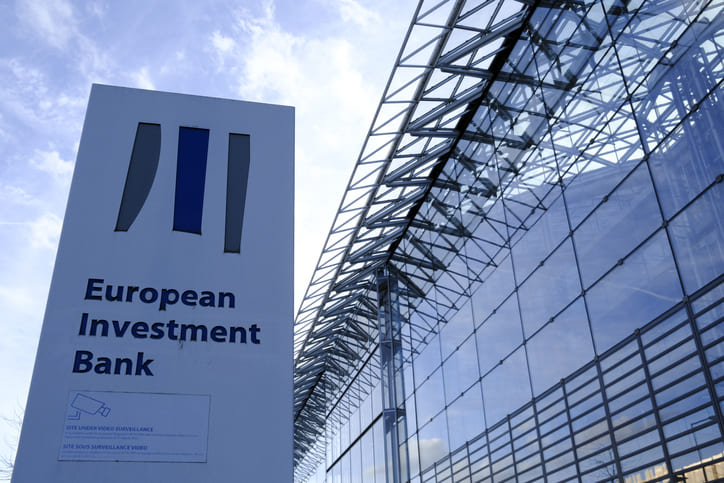
Viewed as one of the most ambitious European energy infrastructure projects this century, the Great Sea Interconnector (GSI), designed to connect Cyprus to the continental Europe energy grid, already enjoys substantial financial backing from a number of investors. But with costs, financing and geopolitical risks still under scrutiny, the European Investment Bank could now play a decisive role in moving the project towards its next phase.
For some time now, Cyprus has remained the only EU member state whose electricity system is not connected to the main European grid. This has left it unusually exposed to an isolated energy market while complicating the integration of growing renewable generation. For Cyprus, the geopolitical and commercial significance of the GSI cannot be understated. Indeed, Cypriot Energy Minister Michael Damianos has stated that “from a security of supply perspective”, the completion of the project is “a must”.
The core objective of the GSI, during its first phase, is to lay a section that will run almost 900 kilometres between Crete and Cyprus, transmitting up to 1,000 MW through a high-voltage direct-current connection at depths exceeding 3,000 metres.
This is energy ambition at scale, and European commitment and funding thus far has been able to match it. GSI has been repeatedly designated an EU Project of Common Interest and has received around €657 million from the Connecting Europe Facility (CEF). In April, the European Commission described it as a “project of strategic importance aimed at ending Cyprus’ energy isolation” and reiterated that it “strongly supports” its completion. The lingering question is how robust will the financial architecture behind the project be. With the European Investment Bank (EIB) entering the fold, the outlook appears positive.
More than a potential €1 billion loan
The EIB’s involvement is potentially substantial. Financing of up to €1 billion has been discussed for GSI, broadly equivalent to half of the project’s currently estimated €1.9-2 billion cost. That figure is significant because the EIB generally finances up to 50% of the investment cost of major projects. Greece and Cyprus approached the EIB earlier this year seeking a new due diligence assessment of GSI. In May, representatives of the Commission, the EIB, the two governments and project promoter IPTO met in Nicosia, where IPTO was given the green light to move ahead with a formal financing request following due diligence.
The assessment is intended to revisit the project’s technical and economic parameters. That matters because the headline cost has become increasingly contested. Cypriot Finance Minister Makis Keravnos warned in September that the eventual cost was likely to be significantly higher than the €1.9 billion currently cited, noting that additional expenditure such as insurance, storage and maintenance also needs to be taken into account.
Rather than weakening the case for EIB involvement, that uncertainty arguably makes independent due diligence more important. An EIB appraisal is not simply a political endorsement. Projects seeking financing are scrutinised by the Bank’s technical, economic and financial specialists before lending is approved. For GSI, the result could therefore provide an independent benchmark against which governments and private investors can judge its costs, revenues and risks.
The consequences are particularly important for Nicosia. Cyprus has been considering taking an equity stake of around €100 million in the project, but the government has made clear that its final decision will follow the EIB assessment. Energy Minister Michalis Damianos said in August that the government was awaiting the Bank’s conclusions before making that decision. “Whether the Republic of Cyprus will participate as a shareholder is something we will examine in due course,” he stated. A positive assessment could consequently have a multiplier effect: opening the way to EIB lending, helping Cyprus reach an investment decision and providing additional reassurance to other lenders and investors.
This would not be the first time the EIB has committed such significant funds to an energy infrastructure project. The bank funded the Bay of Biscay electricity interconnector between France and Spain to the tune of €1.6 billion, supplementing a €578 million CEF grant. The Bank has also supported the Celtic Interconnector between Ireland and France and, in April 2026, agreed €100 million in financing for Malta’s second electricity interconnector with Sicily. The underlying policy is consistent: connecting energy islands, improving security of supply and creating the grid infrastructure required to accommodate larger quantities of renewable electricity.
French investors provide added confidence
The EIB assessment also comes at a moment when GSI’s ownership structure has changed significantly. In August, French infrastructure investor Meridiam acquired a 66% stake in the GSI project company, with Greek transmission operator IPTO retaining 34%. The arrival of an experienced private infrastructure investor addresses one of the project’s longstanding challenges: assembling enough patient capital and specialist expertise around an infrastructure asset whose construction and operating horizons stretch over decades.
Meridiam has real experience in such projects, notably thanks to NeuConnect, the €2.8 billion electricity interconnector linking Britain and Germany. Meridiam is lead developer of the project, which involves a 725-km, 1.4 GW bidirectional HVDC connection between two of Europe’s largest electricity markets. NeuConnect reached financial close with a consortium of more than 20 banks and financial institutions, including the EIB. That experience is directly relevant to GSI: developing a technically complex cross-border electricity link, navigating multiple jurisdictions and regulators, assembling public and private financing, and managing an infrastructure asset over the long term.
Cyprus has consequently welcomed Meridiam’s arrival. Damianos described the participation of the French group as giving “tremendous new momentum” to the project. Greek Prime Minister Kyriakos Mitsotakis similarly called it a “strong vote of confidence”, adding that GSI would “put an end to Cyprus’ energy isolation and strengthen the energy security of the eastern Mediterranean and Europe’s resilience in the energy sector.” Meridiam’s investment does not, by itself, settle every question surrounding the project, and nor would an EIB loan.
GSI remains technically demanding, while maritime surveys have already been affected by geopolitical tensions in the Eastern Mediterranean. The European Commission itself has acknowledged that progress has been “hampered by a complex geopolitical context”.
But the project now has several of the ingredients required to manage those risks: substantial EU grant funding, Project of Common Interest status, strong political support from Brussels, an experienced infrastructure investor and the potential involvement of Europe’s largest multilateral lender.
The EIB’s conclusions will therefore carry weight well beyond the size of any eventual loan. A positive assessment would provide an independent institutional validation of GSI’s updated economics at precisely the moment when Cyprus must decide whether to invest and private financiers must judge whether the remaining risks are acceptable. For a project intended to connect Europe’s last electricity island to the continental grid, such institutional confidence could prove almost as important as the capital itself.
Disclaimer: This article contains sponsored marketing content. It is intended for promotional purposes and should not be considered as an endorsement or recommendation by our website. Readers are encouraged to conduct their own research and exercise their own judgment before making any decisions based on the information provided in this article.