Home Blog Page 1008

Problems with your mortgage payments? Don’t delay, take action now!

Although defaults on mortgage payments have been steadily falling since 2008, there were still almost 300,000 filings for foreclosure in the first six months of 2019.

If you are missing your mortgage payments, it’s best to face the issue head on, as keeping your home free from foreclosure is paramount. After all, it’s not just the effect of foreclosure on your housing situation, but also on your finances. A foreclosure will cause your credit rating to drop, which may make it difficult to buy again, or rent, for several years. 

Your two main choices? Renegotiate or amend the terms of your mortgage or sell your home.

The first step, though, is to contact your mortgage provider the moment you start missing mortgage payments. It’s actually in your lender’s best interest to help you avoid foreclosure, and many have ways which can help you get through temporary financial problems.

Another option is to speak with a counsellor at the Department of Housing and Urban Development, and get advice on your budgeting or credit card debt which may be affecting the ability to pay your mortgage.


 §  Agree with your lender to amend the terms of your mortgage

Revised payment plan

You may be able to negotiate a revised repayment plan with your mortgage provider. With your lender’s approval, your overdue amount, plus your regular mortgage payment, can be spread across a specified period, say, 3 to 6 months until you become current and continue payments as usual.

Permanent modification to loan

A loan modification involves a permanent restructuring of your existing mortgage so that mortgage payments will be more affordable. This may include changes to the interest rate, changing from a variable rate to a fixed interest rate, or extending the length of the loan term to reduce the monthly payments due.

Refinancing

By refinancing, you can obtain a better interest rate and more affordable monthly mortgage payments. Furthermore, if you have enough equity in your home, you may even be able to secure a cash-out refinance loan to help pay off more expensive credit card debt.

Forbearance Agreement

A mortgage forbearance agreement typically stipulates that the mortgage lender will not initiate foreclosure proceedings provided you agree to and follow a plan to become current on your loan repayments. Although payments may be deferred during the forbearance period, you will ultimately be responsible for making up missed payments, plus pay interest, taxes and insurance.


 §  If you have to sell your home

If it’s not possible to agree to changes to your mortgage loan and you have to sell your home, the three most common workout methods are:

Regular Sale

If you’re not yet behind on your mortgage and your home is worth more than the amount you owe, you can find a suitable realtor and list your property for sale as you normally would.

“Short Sale”

If the value of your home is less than the total due on your loan, the lender may allow you to sell the property for less than what is owed–a “short sale”. The lender will lose money but if they can recoup the majority of their loan, it is preferable to a foreclosure.

Deed in Lieu of Foreclosure

Here you hand over the property deed to your lender and are released from all obligations of the mortgage, thereby relinquishing your home and any value associated with it. This allows all parties to avoid a lengthy and expensive foreclosure.


 §  Be smart

A last few words of advice. Being in financial difficulties makes people vulnerable. Always be wary of anyone offering assistance in exchange for an upfront fee or making too-good-to-be-true claims that guarantee mortgage relief. And go with a trusted realtor if you have to sell!

The Strange War with WHO’s Battle Against COVID-19

Countries outside China have not sent adequate case reports to WHO in time, while media has suffered an ‘infodemic.’ Instead of battling COVID-19, WHO was targeted as international coverage has relied on the selective bias.


“We now have a name for the disease caused by the novel coronavirus: COVID-19,” tweeted WHO chief Dr. Tedros Adhanom Ghebreyesus on February 12. “WHO chief Tedros Adhanom Ghebreyesus. He added: “Having a name matters to prevent the use of other names that can be inaccurate or stigmatizing.”

Recently, this critical task has been complicated by misguided media coverage and attacks against WHO, China and people of Chinese descent rather than the virus.


Infodemic versus epidemic

Last Saturday, WHO Director-General Tedros Adhanom Ghebreyesus urged global leaders to stop stigma and hate amid the virus outbreak. His comments in Munich followed reports that people of Asian descent have faced discrimination amid virus fears. “We will all learn lessons from this outbreak,” he added, “but now is not the time for reclamations or politicization.”

At the end of January, the World Health Organization (WHO) declared the ongoing virus outbreak a “public health emergency of international concern” (PHEIC). It is a technical term, but an important one referring to “an extraordinary event which is determined to constitute a public health risk to other states through the international spread of disease and to potentially require a coordinated international response.”

As WHO made clear, the PHEIC was not motivated by China, but the possible effects of the virus, if it would spread to countries with weaker healthcare systems.

At WHO, the concern was compounded when terms, such as “virus outbreak,” “epidemic” and “pandemic,” got blurred even in reputable international media. orse, too many other dailies and social media deployed biased and racially-coded terms, such as “Chinese disease” and “Kung flu.” Tabloid hysteria contributed to ugly instances of xenophobia, even racism against people of Chinese and Asian descent, while leading to bullying in schools, colleges, even universities.

During the 14th century, the Black Death led people to burn Jews, Romani and other vulnerable minorities. Such prejudice should have no role in the early 21st century.

Nonetheless, it was this misinformation on a global scale that compelled the WHO to declare the COVID-19 an ‘infodemic” on February 2. To track and respond to myths and rumors, the WHO began to identify the most predominant virus rumors and false prevention measures. Since international media shunned responsibility for evidence-based factual discourse, WHO had to allocate its scarce resources to do the job.

Stunningly, it took until mid-February for some of the world’s largest technology companies – including Google, Amazon, and YouTube – to get together, when WHO hosted a Silicon Valley meeting to discuss how to tamp down on misinformation about the virus.

WHO’s Andy Pattison said the “tone is changing,” as Big Tech is now starting to step up to combat fake news about the virus. Even then, while Apple and ridesharing giants Lyft and Uber were invited, they did not attend. Yet, they should have done so. In the concurrent weeks, the struggle against COVID-19 has gone hand in hand with a battle against the WHO and its executives.


How WHO and its chief were targeted                        

Since late January, almost 380,000 people have signed an online petition to the UN for the WHO chief to resign because he allegedly “solely believes” Chinese outbreak data. In contrast to allegations, WHO chief Dr. Tedros has initiated a review process to study the causes of the virus, while stressing adherence to WHO guidelines regarding pandemics.

The smear campaign is an ugly déjà vu. In 2017, Dr Tedros, a high-level Ethiopian health executive, succeeded Margaret Chan as the chief WHO. While he was considered highly qualified for the job and an innovative reformer in Ethiopia, his candidacy was attacked at the last eve of the WHO election, when odd stories surfaced about an alleged cover-up of cholera epidemics in Ethiopia. Reportedly, the allegations came from Lawrence Gostin, a US law professor who advised the rival UK candidate (and has recently resurfaced as a critic of China’s virus struggle).

In the UN, the African Union dismissed the allegations as an “unfounded and unverified defamation campaign.” Yet, once again, the old smear campaign stories have been recycled in media.

When attacks against Dr. Tedros went nowhere, the international spotlight focused on WHO Infections Hazards Director Dr. Sylvia Briand when she stated in early February that “we are not in a pandemic.” In WHO’s view, COVID-19 was an epidemic, she said adding that Chinese authorities had “been very transparent with WHO and shared almost immediately the sequence of the virus as soon as they had it.” Then she became a target for criticism.

In international media, COVID-19 has been reported as something of a systemic challenge against Chinese leadership, Communist party, and its leader Xi Jinping personally. Hence the screaming headlines focusing on politics rather than urgent international cooperation to contain the threat.

Seeking to stay away from political intrigues, WHO’s pandemic declaration requires strong evidence and relies on a tested six-stage classification, which starts with the virus mainly infecting animals with a few cases of animals infecting people, then moves through the stage where the virus begins to spread between people, and ends with a pandemic when infections from the new virus have spread worldwide.

A disease is not a pandemic just because it is widespread or even if it kills people. It must be fatal, infectious and international. The last pandemic was the 2009 H1N1 flu outbreak (swine flu), which is estimated to have killed around 150,000 to 300,000 people around the world. In contrast, COVID019 has so far resulted in 5 deaths outside China, despite weeks of diffusion.


Countries outside China failed to provide adequate reports to WHO      

In the early 2000s, China’s efforts to control SARS were criticized as the disease spread internationally before the global outbreak was subdued. A decade later, the Chinese response to Avian influenza (H7N9) was significantly faster, broadly praised and the disease did not spread widely. With COVID-19, as Dr Tedros has stated, China should be credited with identifying the virus in “record time,” sharing its genetic sequence quickly, and flagging potential international spread.

Yet, there is a strange discrepancy in the international coverage of the COVID-19. This coverage has systematically focused on China’s alleged conduct, while ignoring the actual conduct of many other influential WHO member states.

This discrepancy prevails even today, despite the news bomb of February 4, when WHO chief Tedros said that it was not China, but countries outside China that had proved slow in sharing complete information about cases. WHO was particularly concerned about the fact that, even after almost a month of international crisis and global alert, it had received complete case reports for only 38% of the cases.

In other words, a whopping three of five member countries had failed to provide adequate information to WHO in a timely manner. Those reports were vital to the global organization so that it could assess the true international scope of the outbreak, while broadening and deepening containment efforts.

“I don’t think it’s because they lack capacity,” Dr Tedros stated pointedly about these WHO members. It would be ideal, he added, if WHO would receive the most up-to-date information, not just from China but the rest of the world.

It was only after Tedros’s public statement that some member states began to share data with WHO. Meanwhile, precious time had been lost.

Even though these lost opportunities could result in potential secondary COVID-19 outbreaks outside China, international media has not yet asked the tough questions about the belated international cooperation outside China.


Selective bias?

Instead of focusing on the need for international cooperation, international coverage has produced a series of headlines against the WHO. On February 5, a day after Dr Tedros had urged countries to provide complete case reports, Financial Times reported that the influential WHO emergency committee member and veteran professor John Mackenzie “hit out at Beijing’s ‘reprehensible’ response,” and “accused China of not reporting coronavirus cases fast enough.”

The charge was not publicly supported by other committee members, nor by WHO executives. Moreover, the FT neglected to mention that the highly qualified Mackenzie also serves in Australian government’s Indo-Pacific Centre for Health Security, which plays a role in the U.S.-led Indo-Pacific initiative aiming to contain China’s rise, and is the co-chair of a major NGO, whose key partners include Pentagon’s Defense Threat Reduction Agency (DTRA), which compete “against Chinese influence.”

The tone of international coverage, even in the reputable media, still hasn’t changed. On February 13, Wall Street Journal released a new front-page story, “WHO Criticized for Virus Response,” that broadened the WHO criticism. It relied in part on critical quotes by both Mackenzie and Lawrence Gostin, the China critic who had tried to undermine Tedros’s candidacy at WHO. Free media has a right to critical views, but not to the lack of relevant context. Like other interviewees, both were portrayed as independent, disinterested, neutral observers. Furthermore, all interviewees represented experts from the U.S. or its allies. Not a single major Chinese health expert was interviewed.

Recently, the pattern has been typical to even reputable international dailies. Such purposeful selectivity fosters an impression that legitimate expertise is limited mainly to the critics of WHO.


What next?

With COVID-19, there are now (2 pm Wuhan time, Feb 17) over 71,000 confirmed cases worldwide, while the number of deaths is nearly 1,800 and the number of recovered exceeds 11,000.

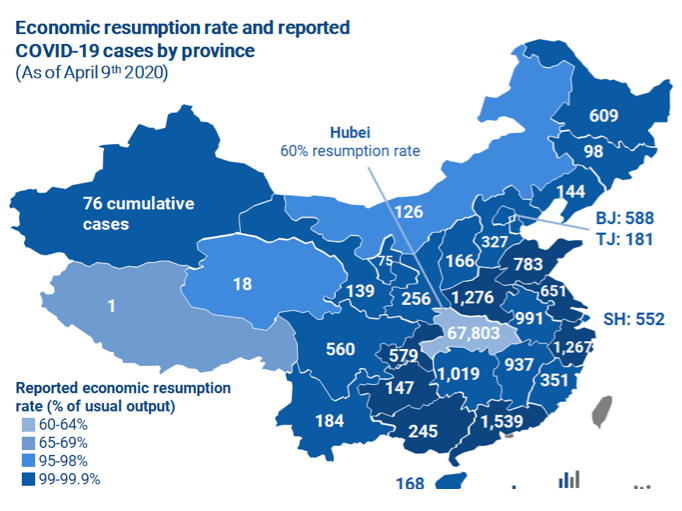
And yet, the number of the confirmed cases and deaths has remained barely 800 and 5, respectively, outside China. While these numbers will continue to climb, the low starting-point suggests that China’s costly and draconian measures may have saved many lives within and outside China.

Moreover, the pace of contagion is changing in China. The relative increase of the accumulated cases has decreased since mid-January. While the pace peaked at almost 100% after mid-January, it has declined to zero (Figure). With new cases, the trend is even more discernible.

Figure   Rising Accumulated Numbers, Falling Relative Rates

Daily Increase of Accumulated Cases, Jan 10 to Feb 15, 2020*

Source: DifferenceGroup. Data from China’s National Health Commission

* Starting from February 12th, confirmed include not just tested confirmed cases but clinically diagnosed cases (which allows the infected to access treatment faster while containing them from the rest of the population). Yet, the statistical “bump” has not changed the trend lines.

While the data could indicate a possible turnaround in the virus outbreak, viruses can zigzag. But assuming data integrity and current trends, we may be witnessing a crossroads – despite politicized international coverage.

In China, the mortality rate (deaths/cases) is now 2.5% (less than a fourth of SARS and only a fraction relative to MERS), with most cases still in Hubei and its capital Wuhan. Outside China, the risk is even lower, less than 0.6%; barely four times higher than seasonal flu.

Due to the initial complacency outside China, there is a critical caveat now, however. If these countries fail to identify, monitor and contain their cases, the probability of secondary virus clusters can still rise, even soar.

Moreover, stumbling won’t help. Last week, plans to roll out COVID-19 testing kits to public health laboratories hit a snag in the U.S. when some of the labs validating the tests of the Centers for Disease Control and Prevention (CDC) got inconclusive results when running it themselves.

As WHO chief Dr Tedros says, there still remains a “window of opportunity” to stop COVID-19 from becoming a broader global crisis. Throughout the ongoing virus outbreak, he has admirably sought to foster an international battle against COVID-19. “The virus is a common enemy,” he says. “Let’s not play politics here.”

At the current pace, the confirmed COVID-19 cases could exceed 100,000 in a week or two and global resources should be focused on avoiding secondary outbreak clusters outside China. It is the virus that international cooperation and coverage should attack – not the WHO.

About the Author

Dr. Dan Steinbock is an internationally recognized strategist of the multipolar world and the founder of Difference Group. He has served at the India, China and America Institute (USA), Shanghai Institutes for International Studies (China) and the EU Center (Singapore). For more, see https://www.differencegroup.net

What Are Unsecured Business Loans And How Do They Work?

Business owners will often reminisce about how difficult it was for them to provide the funding necessary to start their business. Funding is one of the most common challenges that aspiring entrepreneurs usually face early on.

However, acquiring capital nowadays is much easier than ever. With the abundance of lending entities flourishing online and offline, as well as government-issued grants, almost everyone has access to funding. One very popular method that business owners across the world resort to is unsecured business loans. 

Unlike regular-secured loans, unsecured loans do not require the borrower to pledge a collateral. This makes the risk of unpaying tolerable, especially for business owners who cannot afford to be put in situations of potentially losing any assets to repay their lenders. Let us dig deeper below to get a better understanding of what unsecured business loans are and how they work:

What are Unsecured Business Loans?

Unsecured business loans are quite lucrative for both the lender and the borrower. Lending parties get the chance to “invest” their capital and collect the cost of their lending by charging borrowers relatively high monthly interest payments compared to secured loans. 

Borrowers acquire the risk-free almost instant capital to invest in the business, which will help in generating profits and accordingly paying off the unsecured business loan. It is a hassle-free win-win situation for everyone.

In business, companies are all looking for opportunities that would benefit their operations and, ultimately, their bottom line. With unsecured business loans, they can achieve everything they want and more than they initially thought.

How to Acquire Unsecured Business Loans?

Given how attractive the “collateral-free” aspect of unsecured loans is, many new up and coming business owners are highly interested in them. With the vastly growing numbers of small businesses in strong economies like that of Australia, non-bank lenders are multiplying to cater for their funding needs.

Finance professionals at https://www.ebroker.com.au/ are using their expertise in this field to connect legitimate independent lenders with small business loan seekers, in order to bridge an otherwise growing gap. Without the help from these professionals, a small business may struggle to acquire the capital they desperately need for their company’s operations to continue seamlessly.

If you are looking into finding an unsecured loan to purchase new equipment for your personal business, be wary of sketchy websites and find a trustworthy agent to connect you with the right lender. Do some research about the available options before signing any documentation, and listen to the advice from others that went through a similar process.

What Affects Unsecured Loans Entitlement?

Just like any kind of loan, the lender needs to do some kind of assessment to decide whether a borrower is worth the lending risk or not. If your business is swamped with debt and your credit score is bad, you will find it hard to qualify for an unsecured business loan.

Since there is no collateral, lenders look at your books to decide whether to provide you with the loan. Bad history with repaying your debts to other lenders will act as a red flag and scare away your potential unsecured loan lender.

However, even in this tough situation, you can turn things around for your own good. You can consider finding a cosigner: someone with a better credit score who will be held responsible on your behalf in case of defaulting.

Another option is to lower the amount you are asking for to better match your current credit situation. Even when the company doesn’t get the total amount they were expecting, they can still prove to the lender that they can pay back the loan as agreed upon to raise their credit rating and win back some of the lender’s goodwill, which might lead to future loans.

What If You Are Unable to Repay the Unsecured Business Loan?

Now that you have acquired the unsecured loan and used the capital to reinvest in your business or to get you out of a cash flow crisis, what happens if you cannot afford to repay your unsecured loan?

In the absence of collateral, your lenders cannot put their hands on any assets to get their money back. Lenders in such cases will start with increasing your monthly interest payment in order to make up for your defaulting, which will further worsen your credit score.

This will negatively affect your chances of acquiring loans in the future, but that is not the only downside. If you continue to default, unsecured loan lenders will eventually go to court suing you or your company, forcing you to sell your assets in order to repay your debt. 

Before putting the company at more financial risk, business owners should consider all their options carefully and only borrow the amount they need for a project they are currently working on. Borrowing a higher sum will result in larger repayments, which businesses may struggle to make if they are not responsible for their spending.

Are Unsecured Business Loans Worth the Risk?

The short answer is yes. Just because it is more attainable and seemingly risk-free, does not negate the fact that it is still a loan after all. If you’re seeking a relatively fast and easy way of acquiring funds, an unsecured business loan is the answer.

Just bear in mind the higher interest rates you are going to incur and that you completely understand that your whole business will be at stake in case you default. You should clarify any confusion by requesting that the lender explain everything in detail so that there are no misunderstandings in the long run. Remember, the loan’s purpose is to assist the company, not to jeopardize it.

Considering the nature of your business and its level of maturity, you can make the right decision regarding whether or not to apply for an unsecured business loan. Financial experts will advise going for an unsecured loan when your business is established enough to survive the brutal price of unpaying an unsecured loan. You need to do your research and try to find an in-between deal that you can afford should things go south. 

Why You Should Check The Reliability Of Your Energy Supplier

Having a reliable energy supplier can save you piles of cash, especially if you have a central heating or cooling system in your home. When your bills pile up, they can cost you as much as you pay for rent or mortgage, which can significantly impact your lifestyle and savings. 

With a trustworthy energy supplier, you can save hundreds, and sometimes thousands, on an annual basis. You don’t have to keep your heat low in the winter months for lower bills; all you have to do is double-check whether your current supplier is worth it, or whether you need to look for an alternative. 


Here’s Why You Should Always Check The Reliability Of Your Energy Supplier

Better Deals 

Double-checking whether your current supplier is your best option comes down to what deals your supplier offers you, compared to other deals. Residential homes should always pay less than commercial offices when it comes to energy plans. Browse different suppliers online, you can find them on websites like Electricityrates. Even if another supplier is only two cents less expensive than another, this can pile up at the end of the month and can save you tons of money on an annual basis.

While you do your research, you should also check any hidden terms and conditions. Some suppliers don’t offer a fixed unlimited plan and have fair usage policies that can burn a hole through your wallet if you run a lot of home appliances. Check with your current supplier if you tend to exceed your fair usage policy, and see if there are any unlimited packages that you can sign up for.


Dual Fuel Tariff Plans

Having a single supplier for your gas and electric needs is always a smart idea. This can help limit the number of bills that you receive in the mail, and make it more convenient for you to pay a single bill to the same supplier. On the other hand, having a dual tariff plan can help you in saving more money, seeing as most companies will offer you discounts as a loyal customer. Contact your service provider, and check whether they offer compelling duel tariff plans. 

If you think you need to change energy suppliers, never rush this decision. While having a dual plan is a smart choice, switching companies may cost you more money than you would save. Some suppliers will compel you to pay hefty fees if you decide to dissolve your contract without notice. Discuss your concerns with your current supplier, and see if you can land yourself any deals or discounts before you make the choice to switch to another company.


Customer Service

While saving up on bill costs is usually the first concern that comes to mind, customer service can play an integral part in how efficient your supplier is in meeting your needs. If you run into any issues with your power supply, you’ll need swift customer service that doesn’t leave you on hold or call you back the next day. A reliable supplier provides swift and efficient customer service and will prioritize your requests in times of need. 


Efficiency

Some small businesses offer very compelling plans, but you should always bear in mind that you get what you pay for. New companies will try to lure in more customers with unrealistic prices, but these plans are usually temporary, and are used as a marketing means to attract more clients. That said, newer companies may not provide you with an efficient power supply. 

Aside from periodic power cuts, which can be obvious to clients, fluctuating electricity supply is rarely noticeable, and can damage your home appliances. The primary issue with low-quality energy supply is that customers never notice what the issue is, and may never suspect that their energy supplier is the root of the problem. If your current provider is a little on the pricey side, but supplies you with stable power, don’t let newer companies tempt you with their plans and discounts.  

Finding the right energy supplier can save you a lot of hassle and money. A reliable supplier will offer you different energy plans depending on your consumption level, and may also offer you discounts if you have a dual tariff plan with them. Efficiency is also an important factor of whether your energy supplier is worth it since frequent power cuts can damage your home appliances in the long run. If you believe that you need to change suppliers, contact your current provider to discuss how you can dissolve your contract with minimal fees. 

6 Factors You Need to Consider While Selecting the Best Mutual Funds to Invest In

Mutual funds are a great platform to invest in. It is basically a collective puddle of money in which you can play the role of an investor and put in your contribution. After that, the money is invested according to the goals of the fund. Moreover, the fund can be invested in bonds, stocks, gold, money market instruments, and other similar assets. Fund managers or money managers are responsible for operating this fund and generate growth. Well-managed and good performing funds are generally the best mutual funds which one must target to invest in.

Investing in mutual funds comes with a lot of advantages such as:  

  • Mutual funds are very easy to understand and it does not require any sort of experience of economics or financial market. Even if there are many things to know about mutual funds before investing, it is still much easier to understand compared to other financial products.
  • Mutual funds have much broader market exposure and one mutual fund can be invested in multiple investment securities. It helps in diversifying into separate mutual funds. According to Mutual funds Canada, there are over 5,000 mutual funds available in Canada.
  • It is very affordable compared to other financial products.
  • You do not have to worry about growing your investments as there are specialized teams who will do it for you.
  • It comes in various types and categories, which allows the investor to choose the most suitable policy.

Invest in mutual funds and watch your money grow. SOURCE: outlookindia.com

There are a plethora of mutual funds that you can choose from but with that, there are some factors as well that you should follow to get the best mutual fund.

Here are six factors that you need to consider while selecting the best mutual funds to invest in:

1. Identifying the fund type:

If you want to get the best mutual fund then your goal for growth can be achieved by capital appearance. A long term capital appearance can be a great option for you if you are planning to meet a long-term goal and you are ready to deal with a fair amount of risk. Higher the level of risk, higher the return you will get in the future. The tenure holding such type of funds should be more than five years. However, an income fund will be more suitable for you if you are looking for current income from your funds. These funds mostly have less risk and volatility.

2. Identify your goal:

Before you select any mutual fund scheme, make sure to have a clear perspective of what you want to achieve with the return that you will enjoy in the future. Many people have big goals but they invest less, which brings less return and the investor fails to meet the destined goals. Moreover, you should also be clear about how much risk you can take to achieve your goal. If you want to get high returns then you have to increase the level of risk. If that is not the case then you can bear less risk.

3. How much fee you need to pay:

There are various mutual fund schemes available in the market and the fees can be different for the same returns. So make sure to compare them and get the best mutual fund scheme for yourself. In addition to that, when you select a mutual fund scheme, make sure to read all the documents to prevent yourself falling prey to any sort of hidden charges. As we all know that these companies are able to make money through different charges. So make sure you are transparent to each and every charge.

4. Size of the fund:

After you are clear with your goals, you should choose the size of the fund accordingly, in which you want to invest. However, the size of the fund sometimes matters less in pursuit of your goals. In some cases, even small funds can satisfy big goals. However, if the risks are less then you might have to invest a big amount in order to get better returns.

5. Experience of the fund manager:

When you want to get the best mutual fund then make sure you are opting for the best fund manager as well. When you invest in mutual funds, you do not actually take care of its growth but the same is catered by a fund manager. So, you should look for a fund manager who has enough knowledge and experience in the mutual fund market.

6. Expense ratio:

It is another important factor that you should consider if you are planning to get the best mutual fund scheme. This factor should be considered when you are investing in an equity fund. Higher expense ratio will surely affect you directly.

Even if some mutual funds come with higher market risks, they offer better returns at a less cost. If you have a lump sum amount of money then investing it in mutual funds will undoubtedly be a great idea. However, before selecting a mutual fund scheme, you should consider the factors mentioned above so that you are able to get the best mutual fund for yourself.

5 Tips to Help You Thrive in a One-Person Business

These days, you don’t need a whole team of specialists to run a thriving company. Instead, you can make money at home and build a powerful future for yourself, just by launching a one-person business.

The rise of the digital world and internet companies means that anyone can start selling online, or even launch a business as a freelancer. The good news is that there are things that you can do to better prepare yourself for success.

Here are some tips that will help you to thrive in your new one-person business.


1. Do Your Research

Launching a business requires a lot of research. First things first, you’ll need to know how much you’re going to have to spend to launch your business. That means finding out what you need to get your company off the ground. If you’re a freelance video designer, for instance, you might need some basic software, a desk, and a computer to get you started.

If you don’t have the money for all of those things already, you’ll need to research potential companies that might be willing to give you a loan. Since business loans can be notoriously difficult to apply for, it may be better to opt for a different type loan, depending on how much you need.

2. Find Something you’re passionate about

Running a business can be a fun experience, but it’s also a lot of hard work. There are going to be times when you’re terrified about your finances, and not sure whether you can afford to keep your company going for another month. When these worrying occasions happen, it’s important to make sure that you’re doing something that you feel passionate about.

Your passion in your business will help you to stay focused and committed to your goals when the going gets tough. It also means that you’re going to have more fun in your job, which is a good thing. Most self-employed people work a lot of long hours.

3. Don’t be Afraid to Network

Sometimes, it’s not what you know in business that matters most – but who you know. Building the right network of experts to help you accomplish your goals and find new clients could make it a lot easier for you to find sources of income. Additionally, your network will also act as a crucial source of support when you need guidance and assistance to help you overcome difficult patches in running your company.

Visit local events where you can come face to face with other people in your landscape that have been through similar experiences to you. It might also be worth joining social media groups and forums online, to help you meet new people who aren’t in your immediate area.

4. Be Committed to Learning

The business landscape is constantly changing, no matter which industry you decide to get involved in. Because of this, you need to be willing to learn and adapt at the same rate as your company. Committing yourself to consistent learning, such as taking business management courses, will help you to overcome the little challenges that come along when you start to grow your company. It could mean that you can quickly learn how to use new software that will make your business more efficient, for instance, or that you know how to track down sources of income when your existing revenue dries up.

Being committed to learning also means that you might be able to develop extra skills that make you more desirable in your chosen marketplace. For instance, an online writer could also learn how to create videos and make graphics to give their clients a wider range of services.


5. Have a Backup Plan

Finally, no matter how passionate you are about your business, and how much work you put into making it a success, there’s no guarantee that everything’s going to go according to plan. Sometimes, businesses don’t work out. You might find that after a couple of years, you start to lose more money than you earn. When that happens, you need a backup plan that will allow you to quickly leave your venture behind and try something new.

If you do find that your business starts to fail – for any reason, it’s important not to beat yourself up about it. As upsetting as a failed company can be, it’s crucial to remember that you’ve made the effort to pursue your dreams. If nothing else, the experiences that you got will help to guide you in your future life choices.

Real Estate Investment: Where to Start

One of the most common things you’ll hear when it comes to investing is, “Investing in real estate.”  They all make it sound easy and fun but they don’t tell you how to go about it. They make it sound as if it’s as easy to just buy a house and resell it.  There’s a lot of things to consider if you plan on investing in real estate.

Financial Stage

The first step when you are considering investing in real estate is to know where you stand financially.  Knowing how much financial flexibility you have is key to knowing what opportunities and investment options are available to you for you to be able to invest at a comfortable rate without having to go too far into debt.

Investing Strategies

There are plenty of options to consider when going into real estate investment.  And as much as you’d like to diversify and fill your portfolio with multiple goals, plans, and strategies, you have to start somewhere.  Will you take an active role or not? Are you investing alone, with a partner or more in say a peer-to-peer method? This type of method allows more diversifying and less money, perfect entry into real estate, but may not give you that full control feel.  There are many options out there, and you can always adjust as your income changes over time.

Activeness

When deciding your investing strategies, you’ll also want to decide if you’ll become an active investor or passive investor.  Your investments may not only be limited to your financial ceilings, but you may dedicate your time into being more active in your investments and in doing so, can safeguard yourself a bit better as you will know where the details of where your money is being put to use.

Know Your Market

The market you choose can make a huge difference in the results towards your success.  You want to have as much knowledge about the market you’re investing in. A good starting point is your immediate area for that very reason.  You’ll be able to really sell the location with talking points with specific knowledge of the area you are comfortable with. If prices start to look too high in your vicinity, leaving the area a couple hours away may give you better, more affordable and profitable prospects.  Looking at smaller niche markets can also be profitable if you remain in cities with high market prices.

When analyzing the market of your choice, there will be key factors to look out for that you’ll want to have a good knowledge of the following.

  • Jobs in the area
  • Population size and demographics
  • Rent and price of other local listings
  • Education
  • Crime and safety
  • Convenience and distance of necessary needs like grocery stores and clinics
  • Public transport
  • Neighborhood aesthetics

Investment Targets

Once you know the area and niche you’d like to invest in, you can set a more specific target of the type of investment you’re looking for.  This would involve things like the type of property you’ll be looking into (house, condo, apartment, how many rooms, surrounding neighborhoods, amenities, size, etc.) as well as the price range of the place you are looking to invest.

Build Your Team

You’re going to need a team of people when looking into real estate investments.  This can and will range in terms of size and what each team member’s role is, but all will play an important part.  The people you will have within your circle will be partners, mentors, advisors, lawyers, accountants, home contractors, etc.  Make sure you have built, and continue to build, a team that you can rely on and trust.

Financing and Payments

You’ll need to learn what the best method of financing will be for you as you continue real estate investing. Advanced training, like Entry Education finance courses, can help you with this. There are many options from bank loans to private lenders, so you may have to adjust how you finance as you move from project to project, as different factors may influence which method works best.  And as much as you are getting on your loans , you’ll need to be prepared to put some money down in case anything were to happen. In such a scenario, you have to be prepared through your savings, ready to liquidate assets to cover costs, or communicate with business partners and investors from your circle.

Due Diligence

Once you are prepared financially, and have your targets, you can start treasure hunting for your big real estate investment.  Opportunity doesn’t always knock, you have to be the one out there going door-to-door, and you might just have to do that literally.  Make use of that circle you’ve built, don’t be afraid to use every resource you have. The best deals to be had are the ones not everyone is willing to work for.  

As you move through your real estate investing career, have patience and structure.  Stay organized as there will be a lot to handle, but remember to be patient.  It takes time to build a home, it takes just as much time to buy and sell it too.

How Billing Can Be Made Hassle-Free

The process of billing clients or suppliers has always been an issue for most businesses. Some of the old methods have been tedious and annoying, which is why it’s best to utilize the easy, quick billing methods that save time and increase productivity. You need to invest in these new automated tools and subscription management software methods that can make it a hassle-free task.

Here are the different ways for you to achieve just that when it comes to billing. 


Proper Optimization for Billing Times

Many companies don’t realize that delays in transactions occur because they’re sending their invoices at the wrong time; this can hinder the billing process significantly and you will lose a lot of time. You need to ask yourself when’s the best time to have them sent out, and the answer depends on what type of projects you’re working on and how to get people to pay you faster. Some companies take the monthly approach to send them out, where you send your invoices out on the first day of each month. 

Other companies send out their invoices weekly or fortnightly; you will need to choose the weekends as the best time if that’s your plan. The main purpose here is to optimize your billing times based on your plan. You will see some excellent results and receive payments faster and improve your cash flow by at least a week. 


Save Time With Templates 

Generating invoices can take time, precious time that can be used to do something better for the good of the company. Not only does it take a long time, but it also increases your chances of mistakes or unsent invoices. This is why the templates from Digital-Invoice-Template.com can be generated in a few minutes or less to send to your clients with minimal mistakes, getting your payments back a lot quicker than other methods. You can customize it all to make it relate to your company, making sure it has every detail written correctly. You will save a lot of time and your staff can focus on their other duties which will benefit your company, making things run smoothly. The process won’t be a hassle to deal with at all.


Minimal Errors Is Key

When invoices are received with errors or missing information, it means payments will not be made and the process will have to delay the continuation of any pending projects because of it. Not to mention that there will be a lack of trust between your company and its clients, making you do whatever it takes to build that confidence in them again. You need to start reducing the number of people needed for producing quotes; this can be done through helpful billing software programs that can compile all the information and data needed automatically. You need these automated features to get the right quotes, costs, billable times, and a lot more. The software makes minimal mistakes and can get everything for you done with just a click of a button, making the process completely hassle-free.


The Features of The Perfect Billing System

The best system put in place will have automatic reminders sent to your suppliers or clients. This helps speed the process along and you will receive payments faster. Also, when your system starts generating informative reports that are easy to read, you’ll have an easier time accepting the payments securely and efficiently. Proper software would have recurring payments, making you not repeat the same process multiple times; this saves time and effort.

We are living in a digital world, so this system must be synced to all your devices and not just your office computer. This allows you to manage things quite effectively and you will be notified quicker regarding any issue or reminders. It will keep you on track of everything so you won’t get lost; having the ability to track invoices, names, payments, transactions, and due dates can make everything easier and cost-effective. The whole process won’t seem tedious or difficult to manage anymore.

You can say goodbye to delays or mistakes thanks to these modern methods. Every company should adapt and change if they want to compete properly and survive. Getting past the problems that come with the billing process can mean a lot to your company’s operations. People will be billed faster and you will get paid on time, making projects carry on without any setbacks and your business can grow and get new prospects. In this day and age, all companies need to shift to automated billing because of their immense benefits. 

Why You Need to Hire a Life Insurance Advisor

We are living in a world where anything could happen, good or bad. It’s important to have various insurances that can protect you, your family, and your assets. You have plenty to choose from, but the most common one is life insurance. There may be some doubts that make people not consider hiring a life insurance advisor, but it would be very beneficial. 

There would be no point in just saying it directly, so here are some reasons why you should hire one:


They will be reliable 

If you’re in the process of researching and checking different policies, it would be great to have someone that has all the information you need and is just a phone call away. Finding someone in the insurance field that is eager to help and shows reliability can be a great benefit to you. 

They can be easy to find whenever you want to ask questions and they will be there to answer everything. Every field is hindered if finding representatives to talk to about concerns or to get some information is difficult, but that wouldn’t be the case if you found an advisor that will always make time for you whenever you need assistance. You can rest assured that they would guide you to a safer life.


They have vast knowledge

Not only do they have lots of experience with customers and how to deal with them, but they can also direct you toward the right policy that is best for you. Even if it isn’t related to life insurance and you’re interested in other policies related to home insurance, they will still know a lot of information that you need for home insurance options that can prove beneficial to you in case something bad happens. The idea behind both insurance types are similar because they both focus on protecting people; this protects your home and if someone got injured inside it, while, life insurance protects the people you leave behind when you pass away. 

They can explain the conditions of when you’d get paid, whether it was because of damages, loss of property from theft, or extreme disasters, physical injuries because of negligence, and a lot more. They would clarify and make a case for the importance of this type of policy along with your life insurance, helping you keep your loved ones safe and protected. The agent would give you the best advice on what to get and how to get it for a fair price.


Honesty is key

When your advisor shows integrity, it can make you trust them more and you’d consider their advice a lot more often. The honesty the agent shows you means they care about your well-being more than getting you to sign a policy; they would tell you that life insurance isn’t the only policy needed. Even though it’s not their department, they would still recommend that you’d get health insurance.

They would explain how it can work well with life insurance because it would cover parts of medical bills and visits to the doctor, saving you a lot of money in the process. This helps you keep some of that for later for your children’s inheritance. Your advisor can assure you that their policy would keep your children safe, but they will still be honest enough to teach you how to save money through other insurance policies.


The technicalities behind payments and legal aspects

This is another amazing benefit you can gain if you hire an insurance advisor; it’s not just enough that they know how to guide you in purchasing the best policies, they also explain to you how the payment process works and what other legal aspects you should consider. A good agent will tell you about the taxes involved and prepare you for it, making you know beforehand and keep you in the loop on how the system works. Your advisor would explain how it’s put in place to match your financial situation, so they would never put you in a position where you can’t pay. They would give you payment plans that you can live with.

The idea behind hiring a life insurance advisor depends on your situation and financial state; you might benefit from specific policies while others might prove less beneficial. You just have to figure it out with the help of your insurance advisor, whether it’s for life insurance or anything else. You need an agent that can go above and beyond to help, giving you all the information you need and explain it all to make it simple for you. 

How Does a DWI Negatively Impact Your Life?

Most people understand that a DWI charge is not good news – but many underestimate the ways in which a conviction will negatively impact their lives.

The only way to ensure that a DWI charge does not end up affecting your finances, your freedom, and your career is to ensure that a good DWI lawyer gets you off the charges, such as the attorneys at Trey Porter Law.

While penalties do vary from state to state in the U.S., be prepared for the following negative consequences.


A real possibility of jail time

While first offenders are unlikely to serve jail time, you may be forced to spend a day or two behind bars, depending on the state you are arrested in.

Increasingly harsher penalties mean that offenders are taught a lesson with a mandatory one or two days (often at the weekend) in prison.

For repeat offenders (even for a second offense), a custodial sentence is more likely and even mandatory in some states. It could mean weeks or months behind bars – more if there are aggravating circumstances. This is why it is important to spot the signs of alcohol abuse early on and get the necessary help.


A hefty fine

A DWI conviction will almost certainly come with a hefty fine to pay (in addition to court costs), regardless of the state you’re charged in.

Even for a first-time offense, this can be thousands of dollars – maximums and minimums usually apply.

However, with aggravating circumstances such as damaged property or a child being in the car, these fines will be higher.


Loss of driver’s license

In some states, your driver’s license may be suspended while you’re still on the side of the road talking to the arresting officers – if you refuse a field sobriety test, for instance.

Whether or not that happens, a conviction will certainly see the loss of your license for at least a year – perhaps more. Again, the length of the driving ban is likely to increase with the number of DWI convictions.

Some states offer a “hardship license”. This allows you to drive to work or school even if your license is revoked or suspended – but with very limited driving privileges. 


Use of an ignition device

The ignition “interlock” device is a popular tool used by the courts to prevent people from operating a vehicle while under the influence of alcohol.

Even first-time offenders can be ordered to install it.

The device conducts an alcohol breath test and ensures that if you have been drinking you cannot drive the vehicle. Additionally, if alcohol is detected, the authorities will be alerted and you may face more problems.

Note that you will be liable for the considerable fees associated with installing the device.


Paying for probation 

Probation is preferable, of course, to a jail sentence.

However, some people don’t realize that the costs of probation (for instance, the monthly administrative and supervisory costs) must be met by the defendant. 

This is another cost to be borne as a result of a DWI.


Drink-driving awareness education

Often, as part of a more lenient sentence handed down by the judge, people convicted of DWI are ordered to attend drink-driving awareness classes.

Most states also require people to attend classes in alcohol and drug education before their license and driving privileges are returned. 

You must pay for these classes out of your own pocket and they may last for many hours in total – again impacting your finances and your freedom.


Your employment prospects

Even a DWI charge can result in consequences with your employer. 

If you are convicted, it is almost certain to impact your working life – whether you commute to work or rely on a vehicle to perform your job (traveling salesman, delivery driver, etc.).

For others, the negative reputation that may come with a DWI conviction can be difficult to bear and cause stress for you as an employee.

You may also have to disclose your DWI as a criminal conviction on future job applications –severely jeopardizing your chances.

 

Educational prospects

Higher education institutions may check criminal records before awarding scholarships. 

If you have a DWI showing on your record (particularly if there is more than one), it can preclude you from earning a scholarship even if you are a star student – or it can even mean you lose the scholarship you have already been awarded.


The higher cost of auto insurance

An SR-22 is a special insurance policy for people classed as “high-risk”. 

As a DWI offender, you will be classified in this bracket, meaning your premiums will be considerably higher (double or triple), adding again to the long-term financial burden of a DWI.

This insurance will usually be required for three years and your choices of policies may be very limited.


A potential civil lawsuit

If your DWI caused death or injury to another party, there is the real prospect of a civil lawsuit in addition to the criminal charges and the feelings of guilt you must live with.

This can have further life-changing consequences, requiring payment of damages and a lengthy court process that can negatively impact your life in many ways.


Short and long-term impact on your life

The fallout from a DWI conviction is serious and can be catastrophic in some cases.

It can impact your immediate future and further ahead too, affecting not only you but those around you. 

The mounting expenses, restrictions of freedom, and detrimental effects on your career make it essential to seek an experienced attorney as soon as possible after being charged with DWI in the U.S. 

EDITOR'S PICK OF THE WEEK

CFO's new mandate. CFO explaining the presentation

The Performance and Transformation Orchestrator: The CFO’s New Mandate in the Age of AI

By Terence Tse CFOs are evolving into AI-driven transformation orchestrators, balancing finance, technology, and strategy while upskilling teams, managing risks, and driving measurable business value. A key insight from this year’s AI for CFOs event, organized...

WISE DECISION MAKER GUIDE

POWER INFLUENCERS

Emerging Trends

The Future of Global Trade