Home Blog Page 1071

Youth and US Elections: About Way More than Just the Horserace

By Peter Levine and Abby Kiesa

A lasting impact of electoral engagement can deepen the civic life of communities. New research suggests that being involved with others on solutions to social problems contributes to young people to flourishing and achieving their potential.

As Election Day 2016 drew closer, news and conversations about the election focused even more narrowly than usual on the horserace and party politics, rather than, for instance, effective solutions to public problems and public deliberation about issues. Listening to the news, you may have thought that the only reason to care about youth electoral participation was to know what candidates they would support. But don’t let that fool or distract you − youth civic participation is about more than just who wins elections.

An election is a good opportunity to think about how young people are engaged in our public life generally. Participation in elections is one example of a civic engagement activity which includes actions that people take to address public problems. Other activities include news engagement, discussion of public issues and policy advocacy. Decades of research has shown that people who engage have built long-term habits and skills.¹ Engagement early in life fuels later engagement, thus creating the foundation for strong democratic participation. Additionally, emerging research shows that civic engagement isn’t only a civic good but also brings other individual and community-level benefits such as skill development, wellbeing and community and economic resilience.

Youth Electoral Engagement

 Elections are one way that communities address public problems. Elections create opportunities for community forums and town hall events with candidates, information about referenda and ballot initiatives, canvassing in communities, and of course, ultimately voting.

There are an enormous number of ways that young people can engage in activities related to an election. These activities provide the above development opportunities, as well as a potential gateway to new ways of engaging:

Discussion about referenda/initiatives/candidates
• Sharing information/curation
• Media creation related to election issues/topics
• Watching news/media about referenda/initiatives/candidates
• Encouraging others to register and/or vote
• Volunteering on a campaign
• Election judge/poll worker
• Voter registration
• Voting

Through electoral participation, young people can learn important lessons and skills to carry into other areas of engagement.

 Through a range of different programs and activities, organisations engage or support the civic development and leadership of young people. Through electoral participation, young people can learn important lessons and skills to carry into other areas of engagement. Here are a couple of highlights from 2016:

 •Unconvention²

 Our home, the Jonathan M. Tisch College of Civic Life hosted a satellite event that is part of a larger initiative called the “Unconvention”. An initiative of several major broadcast outlets, including Public Radio International, this is a series of events and conversations for millennials around the globe to discuss the issues and results of the US election. Research regularly finds that discussion among youth about elections increases the likelihood that youth will participate in other ways.

 •Mikva Challenge Primary trips & Great Electoral Race

 During the 2016 primaries, Mikva Challenge, an organisation that teaches civic skills and knowledge through action-based pedagogies, combined teaching about US elections with trips to states with primaries and caucuses going on. Youth involved in Mikva from around the country (and chaperones) worked on campaigns for a candidate of their choice. As Mikva Challenge staff shared, “The students discovered that actually knocking doors and making calls is entirely different than just talking about it. Engaging voters reveals young people’s persuasive skills, gives them confidence in their own voices, and allows them to see the impact of their work first-hand.”³ Additionally, Mikva has created the Great Electoral Race,4 a team-based competition curriculum based on learning about elections, candidates and displaying civic skills.

Over a decade’s worth of research has helped to illuminate what facilitates youth voting and electoral engagement and what can act as a barrier. We know that youth are more likely to vote when their household growing up was engaged,5 when people reach out to them to discuss the election or give them concrete information about when where and how to vote, and when they experience high quality civic education in the high school classroom.6 In fact, data indicates that when more youth are contacted by major political parties, youth turnout goes up (see graph below).

  figure


During the 2012 election cycle, our work for the Commission on Youth Voting and Civic Knowledge7 found that no one intervention we researched outperformed the influence of the household and community a young person grew up in. As a result, to change the culture of communities to encourage youth participation, many community stakeholders need to be involved, including civic organisations, unions, schools, local businesses and local government.

Emerging Research on Benefits to Engagement

A lasting impact of electoral engagement can deepen the civic life of communities. However, the civic activities of a community, such as youth electoral participation, are more tied into social and economic systems than is often portrayed and can lead to increased social and economic benefits for individuals and communities. Young people develop important skills, attitudes, agency and networks of contacts to name a few, which can be taken into other venues and settings.

Skill Development

Working on community issues requires more than doing; civic engagement requires skills to be effective. Depending on the project or issue, a range of skills may be needed for effectiveness: communication, analysis or other critical thinking skills, or the ability to organise and manage a group.8 These “21st century skills” are more likely to be developed through high-quality, interactive civic education.9 There’s a great deal of overlap between these skill areas and skills that employers indicate they are looking for.10 For example, iCivics’ Drafting Board uses civic content to teach persuasive writing skills. Our experimental evaluation of the tool found that youth who engaged with the civic content through the tool were more likely to score higher on persuasive writing.11 As a result, both youth civic education and engagement contribute not only to youth civic development, but also to young people’s development for other areas of their life as well.

New research suggests that being involved with others on solutions to social problems contributes to young people to flourishing and achieving their potential.

 For many years, advocates have been encouraging schools to move from a knowledge-driven civics curriculum to one based on skill development. Developing effective skills for dialogue may be particularly important in today’s political culture. The American Psychological Association (APA) reported that in their 2016 poll about politics at the workplace, those workers between 18 and 34 were more likely to say that political discussions created stress and that it influenced their “work performance.”12

Well-Being

Skills are not the only area of individual development. Research has begun to investigate whether young people’s sense of contentment, meaning and motivation are increased through participation in civic life. New research suggests that being involved with others on solutions to social problems contributes to young people to flourishing and achieving their potential.13 Our colleagues at the Tisch College of Civic Life at Tufts University investigated whether consistent or increased civic engagement was more likely to be related to flourishing than disengagement or decreased engagement. Whether or not it’s a voter registration drive, a discussion group or an advocacy campaign, civic engagement activities, young people can find something deeper as well.

Community and Economic Resilience

The Rockefeller Foundation explains the purpose of their initiative on resilience as “helping cities, organisations, and communities better prepare for, respond to, and transform from disruption.”14 Youth engagement brings more time and energy to public problem solving. Elements of the City Resilience Framework,15 include attention to inclusivity and building connections between people, which civic engagement does. Young people also bring new perspectives to issues that would not be included otherwise. Early youth engagement also increases the likelihood of adult participation in community problem-solving.

Emerging research also suggests that there is a direct connection between a community’s civic engagement and economic resilience. Research done by one of us and a colleague found that during the US economic downturn during 2006-2010, a state’s unemployment was strongly correlated with the level of civic engagement in the state.16 Specifically, we found that the number of nonprofits and the level of social cohesion were the most significant indicators affecting economic resilience. The specific potential impact of youth engagement is something that we are investigating through a grant from the W.T. Grant Foundation.

 This emerging data, as a result, suggests that institutions such as governments, schools, news outlets, and parties ought to encourage practices like deliberation and activism during elections. Similar investments have been made for community service. By creating a federal agency for national and community service, instituting service requirements in some schools, school districts, and colleges, and building up a whole network of service programs and centers, we have been able to raise the youth volunteerism rate since the 1980s. Similar investments in youth electoral engagement are steps towards sustaining democratic participation and, as we’ve explained here, other individual and community benefits.

Featured image: On Tuesday, September 27th, 2016, organisations and volunteers from all over the country will celebrate National Voter Registration Day. Photo courtesy: nonprofitvote

About the Authors

peter-webPeter Levine, PhD is the Associate Dean for Research and Lincoln Filene Professor of Citizenship & Public Affairs at Tufts University’s Jonathan M. Tisch College of Citizenship and Public Service. He is the author of We Are the Ones We Have Been Waiting For: The Promise of Civic Renewal in America (Oxford University Press, 2013) and six previous books. 

abby-webAbby Kiesa, MA is Director of Impact at CIRCLE (Center for Information and Research on Civic Learning and Engagement), based at Tufts University’s Tisch College of Citizenship and Public Service. In addition to conducting research, such as providing leadership for CIRCLE’s election efforts, Abby also serves as liaison to practitioner organisations across the country to maintain a conversation between research and practice.

References
1. For examples of this work see Plutzer (2002), Kirlin (2003) and Thomas & McFarland (2010).
2. http://www.92y.org/unconvention
3. http://civicyouth.org/guest-post-developing-youth-skills-before-and-after-election-day/
4. http://www.mikvachallenge.org/great-electoral-race/
5. Commission on Youth Voting and Civic Knowledge (2013) “All Together Now: Innovation and Collaboration for Youth Engagement”.
6. ibid
7. http://civicyouth.org/commission-on-youth-voting-and-civic-knowledge-releases-report/
8. http://civicyouth.org/commission-on-youth-voting-and-civic-knowledge-releases-report/8 For a sample list of skills used in civic life see Kirlin (2003) and CIRCLE Special Report on Civic Skills and Federal Policy (2010).
9. Torney Purta, Judith and Wilkenfeld, Britt S. (2009). “Paths to 21st Century Competencies Through Civic Education Classrooms: An Analysis of Survey Results from Ninth Graders.”
10. http://blogs.wsj.com/economics/2016/08/30/the soft skills employers are looking for/

11. http://civicyouth.org/icivics drafting board module boosts students writing skills/
12. http://www.apaexcellence.org/assets/general/2016 politics workplace survey results.pdf
13. http://www.bttop.org/news events/assessment spotlight tufts university tisch college citizenship and public service
14. https://www.rockefellerfoundation.org/our work/topics/resilience
15.
http://assets.rockefellerfoundation.org/app/uploads/20140410162455/city-Resilience-Framework-2015.pdf

The Tropical Oil Crops Revolution – A More Sustainable Future?

By Derek Byerlee, Walter Falcon, and Rosamond Naylor

The rise of soybeans and oil palm in the tropics has attracted massive private and state investments, offering significant opportunities for tropical regions to develop their economies but often at the cost of clearing forests and savannas. This article discusses how the tropical oil crop revolution can provide better and more sustainable development.

Agricultural revolutions that transform global food systems and agricultural landscapes occur infrequently. Yet, since 1990 global production of oil crops in the developing world has almost tripled, expanding at a faster rate than cereals during the green revolution of 1965-85. Like the green revolution, this new revolution largely involves two crops – in this case, oil palm and soybeans – expanding mostly in the tropics. In a remarkably short time frame of about two decades soybeans and oil palm have become among the most important crops in world agriculture due to their contributions to food, feed, and fuel supplies. Their rise has taken place within a globalising world where the products of one region are consumed largely in another. Oil crops and their products now rank first (soybean products) and third (palm and palm kernel oil) in world agricultural trade with wheat products occupying second place.

Oil crops have attracted massive investments of private and state capital, opening up sparsely populated regions in the tropics and creating a host of dynamic industries in emerging economies, such as oil milling, intensive livestock, biodiesel, and oleo-chemicals. Most visibly, they have been among the major drivers of change in land use in the tropics, where their production has converted huge tracts of forest, savannah, and pastures into highly productive farmland, often at the cost of increased greenhouse emissions and loss of biodiversity.


chart1

chart2


A Perfect Storm

A host of factors aligned on the demand and supply sides to produce a “perfect storm” for growth of tropical oil crops.

First and foremost, demand expanded rapidly for both protein meal and vegetable oils. As consumers in emerging economies became richer, they greatly increased their consumption of livestock products and the associated demand for protein meal for feed, as well as for vegetable oils for cooking and processed foods.

Second, the rising demand for vegetable oils was further fuelled – both literally and figuratively – when the biodiesel industry took off. This industry, driven by policies mandating the use of biodiesel as a transportation fuel in several countries, has accounted for about one-third of the increase in global vegetable oil demand since 2003.

Easy access to land and capital, along with the availability of productive technologies, made oil crops very profitable and promoted their expansion.

Such dramatic increases in demand could not have been satisfied without equivalent drivers on the supply side. In Brazil, cheap land became accessible with the construction of new highways and ports, and new technologies allowed soybeans to grow well in its tropical savannahs. In Southeast Asia, even cheaper land became available for oil palm as governments made large concessions of forested and degraded land available to private companies.

The era of market liberalisation and privatisation starting in the late 1980s brought a surge of private capital, often foreign, to develop new supply chains, especially during the commodity boom from 2007-14. State capital, often subsidised, was also available to the oil crop sector through national development banks. Easy access to land and capital, along with the availability of productive technologies, made oil crops very profitable and promoted their expansion.

The supply and demand sides were brought together by global trade liberalisation and integration. As countries joined the newly created World Trade Organization, imports of vegetable oils and soybeans were liberalised almost everywhere, and trade exploded. Producers in a handful of exporting countries were linked to distant consumers and rapidly emerging new industries by investments in roads, ports and larger ships that facilitated trade at a relatively low cost. The most dramatic changes occurred in China and India. China’s liberalisation of soybean imports made it by far the world’s largest importer of soybeans (mostly supplied by Brazil), and India’s liberalisation of vegetable oil imports made it the world’s largest importer of vegetable oils (largely supplied by Indonesia).

Finally, the extraordinary success of the two dominant commodities, palm oil and soybeans, came from massive substitution of these products for traditional sources of vegetable oil. For example, palm oil replaced virtually all of the coconut oil used in food in Indonesia and soybean meal replaced waste materials and byproducts in animal feed in China.


The Winners and Losers

As with all periods of rapid economic change, the revolution in oil crops has had its winners and losers. The availability of cheap, plentiful vegetable oil has been important for improving food security in extremely poor populations by increasing their energy and fat intake. However, for richer households, consuming more vegetable oil sometimes poses health risks that are possibly even greater for palm oil due to its high level of saturated fats.

The revolution undoubtedly produced enormous economic benefits by creating new industries and transforming sparsely settled areas into dynamic growth poles with new towns and service providers along the value chain. Smallholders sometimes participated strongly in this growth, as in Indonesia (oil palm) and India (soybeans). However, local communities without secure land tenure often lost livelihoods as outside investors usurped their land rights.

Oil crops have also created millions of new jobs in Southeast and South Asia, regions with extensive poverty. Although labour rights have received less attention than land rights, millions of labourers in oil palm cross international borders illegally and are sometimes subject to employment abuse and poor living conditions.

The massive changes in land use associated with tropical oil crops have had high environmental costs in terms of GHG emissions and biodiversity losses. These costs have been exacerbated by the use of fire to clear land, where oil crops have replaced tropical forest. Recent analyses conclude that oil palm and soybeans, together with beef, pulp, and paper are the four key commodities contributing to GHGs from land-use changes, which in turn account for about 15 percent of global GHG emissions.

The Future Will Not Be Like The Past

Alarmists predict that oil crops will consume the remaining tropical forests. For a number of reasons, our analysis sees growth in demand for tropical oil crops sharply slowing by 2050 (by as much as two thirds).

Africa missed out on the oil crop revolution but is poised to take centre stage in the coming decades.

First, growth in demand for biofuel feedstocks cannot maintain the rapid pace of the past decade. This tapering off will be most apparent in the EU, the major consumer of biodiesel today, especially as it approaches the regulated maximum of renewable transport fuels that can be provided from foodstuffs. Some tropical countries, notably Brazil and Indonesia, are likely to compensate in part for the EU slowdown, but in our view neither India and China (the two most populous countries) nor sub-Saharan Africa will become significant producers of biodiesel, given their high dependence on imported vegetable oils. Second, the use of vegetable oils for food will also grow more slowly than in the recent past – in Asia, population growth will be slower and the effects of rising incomes will diminish as consumers in middle-income countries have already reach high levels of vegetable oil consumption. Third, the use of protein meal for feed is subject to a similar slowdown as China’s meat consumption levels off.

On the supply side, the biggest wild card is land availability for expanding oil palm in Asia and Africa, especially as environmental regulations tighten and current users gain more secure rights to their land. Whether this expansion is on forested or degraded land, the transaction costs of accessing large tracts of land surely will rise. However, in our view, the area covered by oil crops does not have to expand greatly to meet future demand, which can be supplied largely through intensification of existing crop land and only a modest expansion in area. Although there will be no dramatic yield jumps, since yield gaps for oil crops in the major producers (except smallholders) are already low relative to gaps in yields of other major staples, steady progress is possible through genetic gains in yield. In addition, sufficient degraded land is available to accommodate area expansion, provided land governance and incentive systems can be developed to steer the expansion onto degraded lands and away from areas of natural vegetation with high carbon stocks and biodiversity values.

Africa as the New Frontier

Africa missed out on the oil crop revolution but is poised to take centre stage in the coming decades. With rapid population and income growth, the region’s demand for vegetable oils and protein meal is expanding rapidly. On the supply side, Africa has the land and labour to meet that demand and perhaps become a significant exporter.

Oil palm, a traditional African crop, requires a judicious combination of improvements in the local supply chains of smallholders and small-scale processors with injections of outside capital, technology, and market expertise through private investors. The current emphasis on investment in large plantations is unlikely to be sustainable, given the complexities of African land markets and land rights.

Soybeans, a new crop in much of Africa, will inevitably expand with the attendant environmental costs of converting savannah and woodland to crop agriculture. Again, the focus should be on small and medium producers through contract farming and outgrower schemes to supply domestic and regional markets.

Even so, investors are exerting considerable pressure to gain access to land for tropical oil crops in Africa. The last large tract of tropical rainforest in the Congo basin has been protected from deforestation and timber extraction by the lack of infrastructure, but the steady extension of roads throughout Africa and better links to global markets pose a significant threat to these forests.

Better Prospects for Sustainability

We aspire to win-win outcomes for sustainable development, but as pragmatists we understand that the real world entails messy trade-offs. We are cautiously optimistic that the future expansion of the oil crop sector can be managed more sustainably. The much slower projected expansion will, in itself, make such costs more manageable. Some signs also point to convergence among global consumers, private actors, civil society, and local governments in finding ways to minimise the trade-offs between economic benefits and social and environmental costs.

A big challenge will be supporting smallholders in adopting sustainable practices and certifying their production, given the high transaction costs and skill requirements required.

Brazil, the major soybean producer, has made the most progress. Brazilian soybeans have contributed little to deforestation in recent years, although expansion into savannah and woodland continues, albeit more slowly, and is possibly displacing cattle farming to the Amazon frontier. As we write, a parallel story is unfolding in Indonesia, where major global traders have made strong commitments to achieve zero deforestation, zero use of peatlands and no exploitation of local communities. However, a difficult and uncertain path lies ahead when it comes to implementing these commitments on the ground in Indonesia.

The best bet to improve sustainability in the short to medium run involve full implementation of the commitments by palm oil traders through upgraded certification systems to enforce standards to help clean up supply chains. The performance-based contracts under the UN-negotiated agreement on Reduced Emissions from Deforestation and Degradation (REDD+) also provide important incentives to governments to support such commitments. On the social side, we see major new opportunities for smallholders to take advantage of the growing infrastructure of roads, mills, and logistics, as they have already done in Sumatra, Indonesia. A big challenge will be supporting smallholders in adopting sustainable practices and certifying their production, given the high transaction costs and skill requirements required.

In the long run, private standards, trader commitments, and moratoria cannot substitute for better land and forest governance. But where there is a will, new tools allow stakeholders to monitor land users and changes in land use in real time, and they can quickly identify and expose transgressors. These tools, together with growing concern about climate change and biodiversity loss, are shining a spotlight on tropical oil crops and global trade in their products – a spotlight that companies and states alike can no longer ignore. Ultimately, however, it is the local players, including local communities, who implement policies on the ground. They are the ones who must be convinced that the sector’s sustainable development is good business for them and for the future.

About the Authors

byerlee-web Derek Byerlee is a Visiting Scholar at the Center on Food Security and the Environment, Stanford University, Adjunct Professor in the Global Human Development Program, Georgetown University, and Editor-in-Chief of the Global Food Security journal.

falcon-webWalter P. Falcon is Farnsworth Professor of International Agricultural Policy (Emeritus) and Senior Fellow at Stanford University.


roz-webRosamond L. Naylor is the William Wrigley Professor of Earth Systems Science and the Director of the Center on Food Security and the Environment at Stanford University.

Their book, The Tropical Oil Crops Revolution: Food, feed, fuel and forests, was published by Oxford University Press in October, 2016.

Political Corruption – Them and Us

By Tunde Olupitan

Is it really a wonder that the vast majority of people feel disenfranchised, frustrated and far removed from the system? One wonders if there is a different rule for holders of political office and the rest of us.

This year we have seen a fair bit of political corruption, scandals and double standards, and one wonders if there is a different rule for holders of political office and the rest of us.

In September Keith Vaz’s scandal hit the headlines with recordings of his rendezvous with rent boys in his private love nest. Keith Vaz has been the subject of a few unethical behaviours during his time as an MP, but he always managed to survive. This time there was no escape. He resigned his post and one hopes that he is now consigned to the dustbin of history where he truly belongs.

But when the scandal broke, some in the media were quick to come to his aid. They reminded us that soliciting for rent boys was firstly not illegal and secondly was his personal affair and publishing the material constituted a breach of his privacy. That breach we were told trumps any questions we may have about his judgement notwithstanding his chairmanship of the House of Commons Select Committee that was looking at vice and drugs. It was therefore not surprising that Keith Vaz even contemplated the possibility of setting his lawyers after the newspaper that published the recordings.

And in October, another scandal broke. Baroness Scotland, Secretary General of the Commonwealth since 1 April 2016 was faced with questions about paying some consultants exorbitant fees for services rendered. This comes less than 10 years after her “maidgate” when she was fined £5,000 for employing an illegal immigrant as her housekeeper. No one knows if she even paid the poor woman anything near the going rate, or whether she was just thoroughly exploited by Baroness Scotland who was then the Attorney General of this great nation. She paid the fine, apologised and continued as the Attorney General. No doubt she will survive this one, as there does not appear to have been any laws broken, it could be unethical, but who cares about ethics these days? That is for the little people.

Private citizens on the other hand are held to higher standards, lives are ruined by the simplest infraction.

Across the pond, things are no different. The two presidential candidates have skeletons jangling in the closet, allegations abound about the Clintons’ foundation, paid speeches, Bill Clinton, deleted emails etc. And Donald Trump’s unsavoury views about women, questions about his business dealings and his university remain in the air. But no laws have been broken, not yet anyway. And the show goes on.

Private citizens on the other hand are held to higher standards, lives are ruined by the simplest infraction. Professionals lose their right to practice or have been seriously censored for deleting or misplacing documents. Ordinary people have been sent down for life for a third felony, and lose their rights to vote for the convictions for the lowest criminal offences. And yet we have two people with questionable histories standing for the presidency of the most powerful nation on earth.

Is it really a wonder that the vast majority of people feel disenfranchised, frustrated and far removed from the system? Is it a surprise that, in this climate, populist politicians who have stepped into the breach with their extreme views successfully hijack the confidence of the people while promising things that they cannot deliver? Is it a surprise that people feel “what the hell do you have to lose by trying something new?”*

*Donald Trump in Louisiana, September 2016

Featured image courtesy of: Getty Images

About the Author

Tunde Olupitan is the Managing Editor Europe & Americas for The European Financial Review, The European Business Review and The European Law Review.

Why Trump Won – And What’s Next

By Jack Rasmus

US real estate billionaire, Donald Trump, is president-elect. In an age when 97% of all GDP-national income gains since 2010 have accrued to the wealthiest 1% – of which Trump is one – how could American voters come to elect Trump? How could they vote for a candidate that they simultaneously were giving a ‘negative rating’ of 60% to 80%?  That fundamental question will ever haunt this election.

What the election shows is that American voters in electing Trump wanted “anything but the above” Obama policies of the previous eight years, policies which were just extensions of the neoliberal regime established in the 1980s in the US since Reagan.  And voters didn’t care about the political warts, past or present, of Trump. They just wanted something different. They wanted to “stick their thumb in the eye” of the ruling political elites (of both parties). 

The voters’ message was: “you, the political elite, have hurt and harmed us these past eight years. You have ignored us and left us behind while ensuring your wealthy friends recovered quickly and well from the 2009 crash. We have experienced great anxiety and insecurity. Now have a taste of that yourself!”

What his win, in spite of all that conventional political wisdom of what it takes to win an election, reflects is that the equation of politics is changing in the US as the people, the “masses” to use jargon of prior times, are entering the political arena as a political force.

Trump’s campaign gaffs, his personal character, his missteps and outrageous “off the cuff” statements, his lack of any government experience, only enhanced the view that he was not just another elite politician. His lack of TV ad spending, absence of a so-called “ground game” organisation to turn out the vote, his having lost all three TV debates according to pundits and the press, his lack of “field organisation” and a poorly run Republican Party convention – all that was irrelevant. What his win, in spite of all that conventional political wisdom of what it takes to win an election, reflects is that the equation of politics is changing in the US as the people, the “masses” to use jargon of prior times, are entering the political arena as a political force.

And that fact is not just revealed in Trump’s election. It was evident in Britain’s recent “Brexit” referendum to leave the European Union. It will next be reflected in Italy’s vote this coming December, in which political elite proposals for political reform to give them more power will also be rejected. It will reflect thereafter in the increasingly likely election of the far right “national front” in French elections next year. And could further reflect in German elections thereafter, in which that country’s long standing and presumably untouchable political leader, Angela Merkel, may also be over-turned.

Obama’s Vanished Coalition

Trump’s election can be traced to the shift in key groups of voters who had supported Obama in 2008 and who gave Obama his “one more chance” to do something in 2012, and who were deeply disappointed when he failed to do so since 2012.  At the forefront of these groups was the white non-college educated working class, especially those concentrated in the great lakes industrial states in that geographic “arc” from Pennsylvania to Wisconsin. This group not only turned from Democrats but turned to Trump – as they had in 1980 as the so-called “Reagan Democrats” – in response to another economic crisis of the 1970s during which they were also abandoned by the Democratic Party. Clinton 2016 thus lost key swing states of Pennsylvania, Wisconsin, Ohio, Iowa, and Michigan that helped put Obama “over the top” a second time in those states.

Another important voter group that delivered for Obama in 2012 and did not for Clinton in 2016 in similar percentages were Latinos. They voted by a margin of 44% for Obama 2012, but only 36% for Clinton. Apparently, Trump insults of Latinos were less important than Obama deportation policies in recent years. Women voters were supposed to vote overwhelmingly for Clinton, but white women aged 45 and over did not. And 75 million millennials, 34 and under, were driven away by Clinton and the Democratic Party’s treatment of the Sanders campaign during the primaries and by offering no solution to the hopeless scenario of insecure, low pay service jobs in exchange for record student debt. In short, white non-college educated workers abandoned the Democrats, while other groups simply “stayed home” and did not vote in the numbers they previously had in 2012.

Somehow over recent years the Democrats, once a party purporting to represent workers, abandoned them to free trade, to low paid insecure service jobs, and to the wholesale privatisation of retirement and healthcare systems in America. What was begun under Bill Clinton, expanded under George W. Bush, was allowed to accelerate under Obama. Democrat leaders instead came to envision themselves as the “corporate light” party, agreeing to extending and expanding George Bush tax cuts for the rich and their corporations, free money interest rates, and focusing instead on educated suburbanites as their prime voter base.

The Origins of Trump’s Victory – Or, It’s Still the Economy Stupid!

The root of the Trump victory lies in the history of the past eight years and the deep failure of the Democratic Party – and its now lame-duck president, Barack Obama – to ensure that Main St. America recovered from the economic crisis of 2007-09 and not just the wealthiest 1% and their corporations.

Hillary Clinton was not defeated so much by Trump, but by the failed performance of the Obama administration the past eight years, and her obvious inability to separate herself clearly from policies associated with the past eight years and to offer an alternative more radically different – as Trump clearly did.

We hear today from pundits and talking heads, who just yesterday were declaring that Hillary Clinton was a “shoe-in”, that the election has been a reaction of the “have nots” – i.e. those left behind. That’s true. The Trump victory is clearly another expression of the global wave of working class and non-elite reaction against the political elite, their parties, and the so-called neoliberal policy “Establishment”. But “left behind” what?

The data show clearly that US corporate profits more than doubled after 2009. The US Dow stock market tripled in value. Bond market prices accelerated to record levels. And returns from derivatives and other forms of financial speculation, conveniently kept opaque from public scrutiny, no doubt surged to record levels as well. 

Hillary Clinton was not defeated so much by Trump, but by the failed performance of the Obama administration the past eight years, and her obvious inability to separate herself clearly from policies associated with the past eight years and to offer an alternative more radically different – as Trump clearly did.

The record US corporate profits alone were generously distributed to stock and bond shareholders – the 5% and especially 1% of wealthiest US households: since 2010 more than $5 trillion has been distributed in stock dividend payouts and stock buybacks alone in the US and in the past two years at a rate of more than $1 trillion a year.  And to ensure that the corporations and wealthiest 1% got to keep most of that distributed income, corporate and investor taxes under Obama since 2009 were cut by more than $6 trillion – extending the Bush tax cuts and then some. And all that’s not counting other forms of capital incomes earned by the wealthiest 1%.

Augmenting this historic massive profits gains and income redistribution favouring the 1% and corporate America, US businesses have had access to trillions of dollars more in virtually free money, made possible by the US central bank’s policies of quantitative easing and zero bound interest rates. In each of the last three years corporations “borrowed” $2 trillion a year by issuing corporate bonds. They then hoarded the cash instead of investing and creating jobs.  The zero rates also accelerated real estate property prices benefitting the wealthiest. Since 2009, commercial real estate property has boomed in price, as has high end residential housing.

And what did the “have nots” get since 2009?  Stagnant wage gains. Low paid service jobs – often part time, temp, contract, and “gig” – in exchange for the higher paid jobs they lost. And tens of millions of young millennials with little hope of anything better for decades to come. The near zero rates for eight years engineered by the Federal Reserve, in turn meant 50 million retirees – grandpa and grandma – earned no interest income whatsoever for the past eight years and still don’t. Meanwhile, more pensions collapsed and medical costs rose. The “have nots” got to deal instead with 13 million home foreclosures and trillions of dollars of home values “under water” as they say, where the home value is less than the mortgage. And millions of homeowners still struggle with that.  Mortgage companies and banks were quickly “bailed out” by the Obama administration by 2010, but millions of small homeowners were “left behind” and still are.

During the last eight years no bankers went to jail for their actions after 2009 and have steadily chipped away at any remnants of financial regulation. Big tech companies continued to hoard trillions of dollars of their cash overseas in subsidiaries to avoid paying taxes, while bringing hundreds of thousands of skilled tech workers every year into the US (legal immigration) on H1-B and L-1 visas to take prime jobs that should have gone to US workers. Big Pharmaceutical companies continued to price gouge, causing thousands to die as a consequence of unaffordable prescription drugs.  Millions of college students accrued more than a trillion dollars in debt. Latino minorities were deported in record numbers, breaking up thousands of families; police militarisation and violence repressed African-Americans in the inner cities; unchecked fracking poisoned water supplies and air; and the country’s infrastructure continued to rot from the inside out at an accelerating rate.

By not fundamentally breaking from this destructive economic and political legacy – the legacy of Obama and neoliberalism itself since 1980 – Clinton all but ensured her fate and abandoned the field to Trump on the real issues. Trump didn’t even have to offer specifics of what he’d do different; just the impression that he somehow would reverse the policies quickly and in some way.

After previous administrations failed to privatise health care in the US, Obama succeeded with the Affordable Care Act – aka “Obamacare”. At a cost of nearly $1 trillion a year, covering less than 15 million of the former 50 million uninsured, Obamacare redistributed income to provide subsidies to those covered. In exchange the subsidised who bought Obamacare policies got super-high deductible, low coverage, health insurance. Health insurance companies in turn got tens of millions new customers guaranteed and paid for by taxpayers, and then continued to game the system for more profits. Obamacare became less a health care system reform act than a health insurance company subsidy act. It was the logical consequence of Obama’s withdrawal of the “public option” and Democrats’ refusal to even allow debate on extending Medicare for all. It will be repealed very shortly.

Not least, the Obama administration championed an acceleration of free trade deals that promised to send even more jobs offshore, after having pledged to oppose free trade when he was first elected. Bilateral trade deals were signed by him, TPP and TTIP (Europe) pushed, and the worst effects of NAFTA and CAFTA were ignored. Obama not only became the greatest deporter of immigrants in US history, as H1-B legal immigration was expanded by several hundreds of thousands.

In foreign policy, the US continued its constant wars in the middle east that were never won or ended, as Obama promised. Hillary herself was the prime instigator of the Libyan fiasco, a proponent of more direct military intervention in Syria, and probably supported the coup in Ukraine behind the scenes. All that did not win her votes, especially among millennials. American voters have become sick and tired of the incessant war policies of the administration.

By not fundamentally breaking from this destructive economic and political legacy – the legacy of Obama and neoliberalism itself since 1980 – Clinton all but ensured her fate and abandoned the field to Trump on the real issues. Trump didn’t even have to offer specifics of what he’d do different; just the impression that he somehow would reverse the policies quickly and in some way.

What’s Next: The Immediate Consequences of Trump’s Election

• Contrary to predictions of financial collapse, the Trump victory has already meant a big gain in stock markets, as corporations and investors prepare for what they believe will be further big tax cuts quickly.  After more than $10 trillion in business-investor tax cuts since George W. Bush in 2003 to the present, trillions more are coming, and fast.
• The fate of the TPP is also now questionable – unless of course some way is arranged to push it through Congress rapidly in a lame duck session before Trump is sworn in as president in January, and providing he turns a blind eye to that (which is likely).
• The US Supreme Court will now become even more conservative and for decades to come, as Trump delivers on appointing “two, three” Antonin Scalia-like nominees to the court. It is unlikely Democrats in the Senate can successfully oppose that until 2018.
• Racist elements at the grass roots will be greatly heartened by the Trump victory. As will militarised police forces. More clashes with immigrant and minority citizens on these issues will almost certainly grow in the period ahead.
• Obamacare will be repealed in toto in early 2017. Tens of millions will be left back where they were in 2008. Health care premiums and drug prices will surge still further.
• Dodd-Frank financial reform will also disappear, as weak as it was. Bankers will escalate their policies of financial speculation creating more financial instability. 
Consumer financial protections will be rolled back.
• Environmental policies will be rolled back. The EPA will be gutted and reduced to a token function in the government. Recent global climate deal in Paris will now unravel.

Trump made his billions by simply providing his name to properties and assets that he himself doesn’t not even own.  We may soon see a political form of this celebrity economic strategy.

• Infrastructure spending by government will be on the table, passed by a Republican Congress in exchange for further massive corporate tax cuts. Infrastructure spending will be insufficient and will not significantly boost US growth and jobs.
• An immigration bill will pass, but will prove harsh and harmful for immigrants from Latin America. H1-B and L-1 visas will expand, bringing more skilled foreign workers to the US to take high paying US jobs.
• In foreign policy areas, NATO policies of the US will shift.  Europe will reconsider Russian sanctions. The recent Iran deal will get a “new look”. A US-Russia deal on Syria will be explored. More Asian countries, like the Philippines, will consider closer ties to China as US influence wanes in Asia.

Of course, all the above shifts and changes are based on the assumption that Trump’s campaign positions and promises will actually translate into domestic and foreign policy changes. That may not happen. It may have been all campaign rhetoric. Time will tell. Watch whether the US political and economic elites in the immediate weeks again can successfully manoeuvre Trump into appointing their kind to the key policy implementation roles in a Trump administration – as they did with Obama and other neoliberal presidents before. My guess is that they will, for the real power in US politics lies with the elites behind the political parties and their formal political institutions.

Trump made his billions by simply providing his name to properties and assets that he himself doesn’t not even own.  We may soon see a political form of this celebrity economic strategy.

US Neoliberal policy may not change fundamentally in a Trump regime; just its appearance. Neoliberalism formed under Reagan-Clinton-Bush imploded in 2007-09. Obama has not been able to fundamentally restore it in its original form. A new form of Neoliberalism will now be attempted – a form even more harsh than before.

US voters may come to realise that their “rebellion against the political elite” cannot be achieved through either wings of the single party of that elite – whether Republicans or Democrats. The rebellion will have to move outside the neoliberal political party structure. That may be the next major political lesson to be learned.

Featured image courtesy: newyorker.com

About the Author

jack_rasmus-webJack Rasmus is the author of  ‘Systemic Fragility in the Global Economy, Clarity Press, 2015. He blogs at jackrasmus.com. His website is www.kyklosproductions.com and twitter handle, @drjackrasmus.

Rio 2016: Human Rights And Sustainability After The Olympics Party

By Jorge Knijnik

Being a host of the Olympics brings in an opportunity of diverse communities’ social engagement. With the help of friends,1 the author discusses the Olympics’ implications for Brazil’s human rights development and its most vulnerable communities.

A bankrupt city.2 Broken environmental promises.3 Street violence.4 Zika. Faulty venues. Poor public transport. As the Rio 2016 Olympics approached, dark clouds surrounded the mega event, casting shadows on the feasibility of the summer competitions.

As the Games began and the International Olympic Committee’s (IOC) powerful media army started to promote the amazing performances of top level sportspeople, immunity from their images’ “narcotic” effects was no longer possible. Billions of people around the world watched the competitions in real time. In Rio, if you didn’t call a “favela” (slum in Brazil within urban areas) home, living under the National Forces occupation and having your basic human rights violated on a daily basis; if you had not been evicted from your precarious home to make way for the Olympic circus; and if you had the means to attend the Games, you could be among the Olympic crowds, cheering and partying on the stands.

Despite the human rights violations, as paradoxical as this can be, the sports competitions were also an arena for genuine demonstrations of national culture and pride, community resilience, political protests and the hope of peace.5

Sports mega events, such as the Olympics, are a contradictory and complex phenomena that affect countries, cities, and their citizens’ social lives in multiple ways. Focused political, cultural, economic and environmental questions are necessary to achieve a broader and sustainable6 understanding of these events.7 In this article I address the implications of the Games for the human rights agenda in Brazil, outlining the post-Games political consequences for the most vulnerable Brazilian communities.

Considering Brazil’s MERCOSUL (the sub-regional South American countries’ bloc) leadership in the past decade, and taking into account Brazil’s role as an active leader and the largest advanced democracy within the BRICS8 – the geopolitical bloc of Brazil, Russia, India, China and South Africa – have the Games marked the beginning, or the end, of a more democratic era for Brazilian citizens?

In spite of its, so-called, political neutrality, the Olympic Movement has always been surrounded by political controversies: boycotts by groups of countries, religious polemics, civil rights protests, gender issues, just to cite a few. Remarkably, though, the Olympic Movement brings, ingrained in its fundamental principles, the promotion of a “peaceful society concerned with the preservation of human dignity”;9 the same human dignity that appears in the very first article of the 1948 Universal Declaration of Human Rights (“All human beings are born free and equal in dignity and rights”). The connection is clear: the human rights civil agenda is embedded in the Olympic Games political sustainability; the Games should be more than branding, and actively promote human rights. The Olympic Charter states that, “practice of sport is a human right. Every individual must have the possibility of practising sport, without discrimination of any kind… such as race, colour, sex, sexual orientation, language, religion, political or other opinion, national or social origin, property, birth or other status”.

Reality is more ambiguous than the best intents of the Olympic charter. The obscure aspects of sports mega events — power struggles, money disputes, corruption in upper echelons — have been well researched;10 so too, have the atrocities these events bring to host cities, by stimulating child prostitution11 and evicting people from their houses.

Examples of these disruptions could be seen during prelude to the Rio Games, when thousands were evicted from their homes (conservatively estimated at 77,000), to make room for the 2016 Olympic circus and the construction of new sports venues and accommodation.12 In clear contempt for human dignity, and the housing rights of the most vulnerable populations, the Games’ organisers expelled them from their already poor housing conditions under physical, moral and political violence. Some communities like the Vila Autodromo tried to resist through self-organisation and to fight the Olympic city plans, and violence towards them.13

Questions remain. Why the IOC, an organisation that makes billions of dollars with their mega events, has not acted to mitigate these communities’ suffering, negotiating with them or at least offering them decent new housing? Or is the “dignity” in the Olympic Charter just another variant of “greenwashing” by the Olympic Movement regarding the “sustainable” environmental principles of the IOC?14

These violent acts not only contradict the Olympic Charter, they deepen the social divide of a city that has been historically marked by social exclusion.

In 2009 Rio de Janeiro was finally rewarded with the Olympic and Paralympic Games, after hosting the 2007 Pan American and Para Pan American Games. Rio became the first South American city to host the world’s largest multisport event. Although the key for Rio’s successful Olympic bid, the Pan Games were marked by controversies: budgetary concerns regarding wasted sport facilities and construction equipment; widening Rio’s social divide; and gentrification and privatisation of Rio’s heritage areas.15

Notwithstanding these human rights violations and political abuse of vulnerable communities – which must not be condoned – Brazil’s political aims in hosting these mega events must also be viewed through the lens of its growing global ambitions and influence in the past decade, with connections to the BRICS’ goals too. This geopolitical transnational bloc has been a protagonist of the most recent moves that have placed sports mega events at the centre of the global power chess game. As the BRICS countries sought renewed spaces for their diplomatic and economic ventures, these events became one of the most powerful strategies to attract global attention, to propagate their political ambitions, social achievements, and to reach new markets. Hence BRICS countries have hosted several sports mega events in a ten-year period: Beijing 2008; Delhi 2010; South Africa, 2010; Sochi, 2014; Russia, 2018; Brazil, 2013 and 2014; and, of course Rio 2007 and Rio 2016.

Rio presented its bid to host the 2016 Games in 2007, just after the Pan-American Games. It was the third time that the city bid for the Olympics, but that was a different moment in time; Brazil enjoyed constant economic growth; its social policies (such as the “Bolsa Familia” program)16 drew international acclaim; progressive strategies were being developed to address Brazil’s 1988 democratic Constitution requirements, and to expand economic, political and social rights to further social inclusion of marginalised communities. The country’s social advancements, its growing global influence, and its leadership in the MERCOSUL and BRICS were crowned by its hosting of the 2014 FIFA World Cup and the 2016 Olympic Games. Brazil was at the centre of the sports world.

These social and political changes were not universally accepted by several and conflicting social actors, both within and outside the country. On the one hand, international competitors17 were not positive about Brazil’s growth; on the other, and despite the tireless work of several official governmental human rights boards such as the National Truth Commission,18 the political and judicial system of the country failed to incriminate and prosecute those involved with the systematic kidnapping, torturing and killing of opponents during the military dictatorship (1964-1985).19 Failure to effectively ban these repressive forces from society meant that they started to regroup with conservatives, and supported by international interests, aimed to block the social advancements. Clashes with social progressives wanting more expansion in marginalised groups’ recently acquired social rights, were inevitable.

As the economic bonanza, that was Brazil in the past decade, started to decline, and the sports mega events were underway, the country became immersed in continuing political turmoil. It began prior to the 2013 Confederations Cup with daily street demonstrations in the main cities, continued through the 2014 FIFA World Cup and 2014 Brazil’s federal elections, and culminated in the elected President Dilma Roussef being ousted from office between the Rio Olympic and Paralympic Games. The legally dubious process of Roussef’s impeachment was internationally acknowledged as a soft coup d’état.20

With ongoing internal crises, the approach to the Rio 2016 Games saw many people around the globe, and most of all IOC officers, very concerned about the ability of Rio and Brazil to successfully host the mega event, and achieve a model for future sustainable Games. Brazilians were apprehensive that failure in the Games organisation would humiliate them on the world stage. International media broadcasts enhanced those fears as a global audience anticipated the Games Opening Ceremony.

Nevertheless, the Rio Games did take place and insiders’ reports are nearly unanimous in saying that they achieved much more than was expected.

Brazilians who attended both the Rio Olympics and Paralympics were not only relieved, they were genuinely proud of their country’s achievements in the international arena. They were pleased by Brazil’s capacity to deliver, well-organised, very entertaining and festive mega events. The opening and closing ceremonies, the parties in the stands and on Rio’s streets, were evidence, in Brazilians’ eyes, that the country can compete, on an international level, and even better other 1st World contenders for international events. As well, the Rio Paralympic Games placed a strong spotlight upon the needs of those with a disability, and the quest for accessibility and inclusion, for nearly a quarter of Brazil’s population.21

Where to from here for Brazil? As stated before, the Rio Olympics and Paralympics were symbolically associated with extraordinary progress in terms of human rights and social development in Brazil – the Bolsa Familia program had allowed 40 million people to step little farther away from the poverty line. What has not been considered is that human rights violations cannot be erased from history. The denial of the housing rights of thousands of vulnerable people during the Games’ preparations, and the reality that Brazil, during its short social advancements period, could not prosecute and jail the perpetrators of the horrendous crimes of the military dictatorship, came at a price. It signalled the conservative political forces that they could regroup, destabilise the incipient social improvements in the country, and finally oust the democratically elected president.

The outcomes of this abrupt process are already seen everywhere in Brazil. The new federal government has moved quickly: to close federal units that represented the vulnerable groups like the ministries for women’s rights and social inclusion; to implement severe attacks on workers’ rights’ legislation; to suspend, for several decades, the funding of public education and health; and, most of all, to increase the neoliberal agenda of privatisation of public assets. This is a conservative agenda that will see human rights’ decline across the country in the next few years. Hence, the Rio Olympics that was to be the peak of a social advancement process for the country, became, for Brazilians, the end of an era of democratisation and growing social and political rights.

The prospects for human rights and social inclusion for the country in the post-Olympics are not bright but there are some encouraging signs. One of the most important political outcomes of the Games was the enhanced visibility that Brazilian sports communities and sport culture enjoyed: the attentions were on top athletes and para-athletes, but the great work of social projects, that have sports as their catalyst, including sports for people with disabilities, was very well acknowledged during the Olympics and Paralympics. These social projects were driven by Brazilians who, as shown by the Vila Autodromo community resistance against the Olympic eviction, have already demonstrated their incredible resilience. This may be the only way forward for them in the face of the sustained attack on human rights. Brazilians need to harness the creativity, the power to fight back, and the skills to self-organise, of the culturally diverse communities across the country.

The parallel between the Olympic Games and Brazil’s historical process is clear: it is not possible to “greenwash” history and sweep it under the carpet. The IOC must develop not only clear guidelines but it must also act to effectively guarantee the dignity for every community involved in the games, especially the vulnerable populations; Brazil must face its violent past if the country wants to build an authentic and sustainable democracy, where human rights are a priority for the whole political and social system.

Só a luta muda a vida.

Featured Image courtesy: Sonya Christian’s Blog

About the Author

Dr. Jorge Knijnik (@JorgeKni) was born in Porto Alegre, Brazil. He will launch in 2017 his monograph World Cup Chronicles: 31 Days that Rocked Brazil (Commonground) and he has recently published Embodied Masculinities in Global Sport (FIT, with Daryl Adair) and Gender and Equestrian Sports: Riding around the World (Springer, with Miriam Adelman). Dr. Knijnik was presented with the ‘Building the Gender Equality’ prize by the Brazilian Research Council and UNESCO. He is currently with the Centre for Educational Research and the Institute for Culture & Society at Western Sydney University (NSW, Australia). His written works can be accessed at http://uws.academia.edu/JorgeKnijnik Author’s photo courtesy of: Sally Tsoutas.

References

1. With thanks to Marilia Carvalho and Jane Gibbs.
2. Wortstall, Tim. “Hosting Olympics Bankrupts Another Place: Rio De Janeiro Declares Financial Disaster”. Forbes, 18th June 2016
3. Brokes, Brad and Barchfield, Jenny. “Olympic Teams to Swin, Boat in Rio’s Filth’. Associated Press, 30th July 2015.
4. ‘The deadly side of the Rio 2016 Olympic Games’, available at https://www.amnesty.org/en/latest/campaigns/2016/06/deadly-side-rio-olympics-2016/
5. Bond, C., Phillips, M. G., & Osmond, G. (2015). Crossing Lines: Sport History, Transformative Narratives, and Aboriginal Australia. The International Journal of the History of Sport, 32(13), 1531-154
6. James, Paul, with Magee, L, Scerri, A & Steger, M 2014, Urban sustainability in theory and practice: circles of sustainability, Routledge, London.
7. Sustainability that actually is essential for the IOC’s Agenda 2020, that aims to support “Olympic Games organisers to integrate and implement sustainability measures that encompass economic, social and environmental spheres” in their bids. Despite its concerns about economic and social aspects of the event, environment remains as the Agenda 2020’s main focus.
8. Goldman Sachs economist Jim O’Neill coined the term BRIC (Brazil, Russia, India and China) in 2001 to the group the countries that he predicted would be the economic powers by 2050. Later on the S was added for South Africa. In 2015, though, he retracted to his thesis stating that these countries would not form a group of powerhouses in 2019, mainly due to the fall of Brazil and Russia. http://www.businessinsider.com.au/the-brics-could-ditch-russia-and-brazil-2015-1?r=US&IR=T
9. International Olympic Committee, Olympic Charter, 2 August 2016.
10. Simson, V., & Jennings, A. (1992). Dishonored Games: Corruption, Money & Greed at the Olympics. SP Books.
11. Sutton, Candace. ‘The road near the Rio Olympic village where girls as young as nine work as prostitutes’. News.com.au, 24 July, 2016.
12. Robertson, Cerianne. “Popular Committee Launches Final Human Rights Violations Dossier Ahead of Rio 2016 Exclusion Games”. Rio on Watch.org, 10th December, 2015.
13. Tabot, Adam. Vila Autódromo: the favela fighting back against Rio’s Olympic development. The Conversation, 13/01/2016.
14. Boykoff, J., & Mascarenhas, G. (2016). The Olympics, Sustainability, and Greenwashing: The Rio 2016 Summer Games. Capitalism Nature Socialism, 27(2), 1-11.
15. Curi, Martin, Jorge Knijnik and Gilmar Mascarenhas. The Pan American Games in Rio de Janeiro 2007: Consequences of a sport mega-event on a BRIC country. International Review for the Sociology of Sport, 46(2), 140-156, 2011.
16. Rivera Castiñeira, B., Currais Nunes, L., & Rungo, P. (2009). The impact of conditional cash transfers on health status: the Brazilian Bolsa Familia Programme. Revista Española de Salud Pública83(1), 85-97.
17. Nassif, Luis. Xadrez da teoria do golpe e do capitalism de desastre. Jornal GNN, 26/09/2016
18. This Commission has been diligently working in reparation for the victims of the dictatorship and their families as well as in unveiling clandestine cemeteries across Brazil where the repressive forces buried the corpses of their victims.
19. Dassin, J. (1998). Torture in Brazil: A Shocking Report on the Pervasive Use of Torture by Brazilian Military Governments, 1964-1979, Secretly Prepared by the Archiodese of São Paulo. University of Texas Press.
20. Greenwald, Glen. “Is It A Coup? What Is Happening in Brazil is Much Worse than Donald Trump”. Democracy Now, March 2016.
21. Tracey Dickson, Jorge Knijnik and Simon Darcy. ‘Grotesque spectacle’? Rio has a long way to go to become more accessible. The Conversation, 19/9/2016

Could India and Pakistan Go to War?

By Michael Kugelman

A shooting war is unlikely, but covert activities are a strong possibility.

On the morning of September 18, four men identified by India as members of the Pakistani terror group Jaish-e-Mohammed (JeM) stormed an Indian Army base in the town of Uri in India-administered Kashmir and killed 18 troops.

Just a few hours later, a video surfaced on social media that quickly went viral in India.

In the video, an Indian soldier, standing in a bus and surrounded by other troops, energetically recites a violently anti-Pakistan poem. He warns that Pakistan will pay for its attempts to hurt India, and he identifies the names of Pakistani cities that could be destroyed. His fellow troops join him in belting out the poem’s main refrain: “Pakistan, hear this loud and clear: If… war breaks out you will be obliterated. Kashmir will exist but Pakistan won’t.”

Many Indians were singing a similarly bellicose tune in the hours immediately following the Uri attack. Some members of India’s notoriously hawkish media corps openly called for war on Pakistan. A top television news anchor, Arnab Goswami, implored India to “cripple” Pakistan and “bring them down to their knees”. Prominent print journalist Minhaz Merchant declared, “Let guns now talk with Pakistan.” The Indian government got in on this jingoistic act as well. “For one tooth, the complete jaw. So-called days of strategic restraint are over”, a top official with the ruling BJP party, Ram Madhav, posted on Facebook.

Pakistan, meanwhile, responded with its own flurry of angry rhetoric. In a corps commanders conference on September 19, Army Chief Raheel Sharif declared that his country was “fully prepared to respond to the entire spectrum of direct and indirect threats” from India. Pakistan, he vowed, “will thwart any sinister design against [the] integrity and sovereignty of the country”. He was even more direct on September 23, vowing that the Army will defend “each and every inch” of the country “no matter what the cost”.

The good news is that the terrifying prospect of an India-Pakistan shooting war – two nuclear-armed nemeses locked in conflict – is highly unlikely. The bad news is that a more shadowy war, marked by covert activities, is quite possible, if not inevitable.

The Uri attack came at a time of deep crisis in India-Pakistan relations. India is still smarting from an earlier attack on a military base in India, in the town of Pathankot in Punjab state in January, which it also blamed on JeM – a group with close ties to Pakistani intelligence. In March, Pakistan claimed to have arrested an Indian spy in the insurgency-riven province of Balochistan. Meanwhile, India has responded to recent uprisings in Kashmir, a Muslim-majority Indian state claimed by Pakistan, with characteristically brutal shows of force that have contributed to nearly 90 deaths in the unrest, outraging Pakistanis.

In the days leading up to the Uri assault, India and Pakistan were waging a nasty war of words, with Islamabad excoriating India for its abusive acts in Kashmir and accusing it of committing terrorism in Pakistan, and New Delhi lambasting Pakistan for its brutal tactics in Balochistan. On the very night before the Uri attack, Pakistani Defense Minister Khawaja Asif threatened in a television interview to use nuclear weapons against India if Pakistan’s “defence and survival” were endangered.

All this saber-rattling prompts a troubling question: Could the two countries go to war?

The good news is that the terrifying prospect of an India-Pakistan shooting war – two nuclear-armed nemeses locked in conflict – is highly unlikely. The bad news is that a more shadowy war, marked by covert activities, is quite possible, if not inevitable.

The main deterrent to a hot war on the subcontinent is nuclear weapons. Pakistan refuses to adopt a no-first use policy, meaning that it could conceivably respond to India’s use of conventional military force with a nuclear strike. This means that for India, any substantive military action against Pakistan – and even modest uses of force such as targeted airstrikes – would be dangerously risky. To avoid crossing any nuclear red lines, Indian military actions would need to be very modest and targeted – thereby hampering efforts to degrade and destroy terrorist compounds, Pakistani military facilities, or whatever India’s desired target may be. And yet such actions could still prompt Pakistani responses – such as the sponsoring of terror attacks in India.

The main deterrent to a hot war on the subcontinent is nuclear weapons. Pakistan refuses to adopt a no-first use policy, meaning that it could conceivably respond to India’s use of conventional military force with a nuclear strike.

The two countries have fought three major wars, but they all occurred before 1998, when both nations became declared nuclear weapons states. A fourth war occurred in 1999, but it was a limited conflict, with Pakistani soldiers infiltrating into Kashmir and fighting Indian troops for two months before withdrawing back across the border. According to Bruce Riedel, a former top US official on South Asia, US President Bill Clinton successfully pressured Pakistan to withdraw its troops – after the CIA concluded that Pakistan was preparing to deploy and possibly use nuclear weapons.

Another reason a hot war is unlikely is that India has limited capabilities to wage one. Research by South Asia security analysts George Perkovich and Toby Dalton, drawing on interviews with Indian military officials, concludes that the “surface attraction” of limited airstrikes is “offset significantly, if not equally, by risks and inadequacies.” Additionally, it contends that “there is vast room for improvement” in intelligence collection capacities. It also asserts that India’s capabilities to stage joint air and land operations are wanting. “Even at the level of exercises,” Perkovich and Dalton write, “the Indian Army and Air Force have not inspired each other’s confidence in their capacity to conduct effective combined operations in realistic warfare conditions.” In effect, India’s military has more than sufficient numbers – only the militaries of the United States and China have more than its 1.3 million active personnel – but less than sufficient capacity.

Not surprisingly, India has signalled its hesitation to retaliate militarily to the Uri attack. Indian military commanders have reportedly counselled the government against any “rash” use of force. Indian Law Minister Ravi Shankar Prasad declared that any Indian response “will be done with full diplomatic and strategic maturity”. That’s a far cry from the jaw-for-a-tooth rhetoric emanating from New Delhi immediately after the attack.

One more reason India may hesitate to use military force in retaliation to Uri is that it lacks sufficient evidence to tie Pakistan to the attack. Indian journalist Shivam Vij recently pointed out that a widely believed and reported claim in India – that the Uri terrorists had Pakistani markings on their weapons – actually lacks conclusive proof and has not been confirmed by New Delhi.

All this said, something has to give. India’s government campaigned on a pledge to take a tougher line against Pakistan. New Delhi’s anti-Pakistan rhetoric has grown increasingly shrill in recent weeks, and many Indians are unhappy that their government did not retaliate against Pakistan after the Pathankot attack. For India’s Hindu nationalist government, passivity in the face of Pakistani provocation is an increasingly precarious position – and could prove politically damaging.

To be sure, covert operations, while not as dangerous as full-scale conflict, could nonetheless be highly destabilising for the subcontinent.

To this end, there’s good reason to believe India could in due course launch a campaign of covert operations in Pakistan – mainly in the form of lightning strikes across the border to take out Pakistani terrorists. Several Indian media accounts have suggested this war has already begun, with one report claiming Indian Special Forces crossed into Pakistan and killed 20 terrorists. The accuracy of the report, however, has been disputed, particularly given that Pakistan has said nothing about such a raid.

For India, covert activities inside Pakistan would have numerous advantages. They would allow, in some cases, for plausible deniability. They would fall short of any nuclear red lines. They would require less capacity and coordination than large-scale military action. And they would be less risky overall. Additionally, New Delhi could receive indirect support from Washington. Deepening US-India cooperation could provide opportunities for Washington to share more intelligence about the location and activities of Pakistani terrorists. Additionally, India is keen to secure drones from the United States. Such an acquisition would dramatically enhance its surveillance capacity, and, if the unmanned craft are armed, strengthen its ability to stage covert airstrikes as well.

To be sure, covert operations, while not as dangerous as full-scale conflict, could nonetheless be highly destabilising for the subcontinent. Pakistanis already accuse India of waging covert war in Pakistan, from colluding with the Pakistani Taliban to collaborating with Baloch separatists. A wave of attacks on Pakistani troops or an assassination campaign against terrorists – regardless of whether there is clear evidence of Indian complicity – could lead to Pakistan-sponsored terror attacks in India. Given that Pakistan’s conventional forces are vastly outnumbered by India’s, it depends on asymmetrical tactics – such as providing support to anti-India terror groups – along with its nuclear umbrella to keep India at bay.

With India scaling up its security cooperation with Afghanistan and launching a new transport corridor project in Iran, it will be increasingly visible in the broader region and therefore more vulnerable to assaults on its nationals and interests many miles from home.

The uptake? Even limited, covert uses of force are fraught with considerable risk.

Featured image courtesy of: Adam Jones/Flickr

This article was first published on The Diplomat on 24 September 2016.

About the Author

kugelman-webMichael Kugelman is the senior program associate for South Asia at the Woodrow Wilson International Center for Scholars in Washington, D.C.


US 2016: Fight for Leadership Begins After the Election

By Dan Steinbock

After the bizarre 2016 election, Washington faces a slate of investigations and a gridlock. Internationally, threats include new Cold War(s). Depending on the outcome, the election could even be contested.

If Hillary Clinton wins, she will flash her broad smile like Alice in the Wonderland, with Vice President Tim Kaine, Bill and Chelsea on her side. The conventional story will be that her victory built on her egalitarian economic policy, gender concerns, international relations, strong defence policy and good ties with Europe and Japan.

But that’s just the facade – a carefully orchestrated result of an estimated $6.6 billion elections, her $700 million campaign financing, good ties with super PACs, skilfully manoeuvred electoral college, shrewd PR, collusion with nation’s leading media organisations, and a long series of political miscalculations by Donald Trump.

Americans will vote on November 8. However, the battle will ensue soon thereafter. The winner will face a split Congress, a divided Democratic Party, and badly-fragmented Republican party. To defuse their meltdown, Republicans are likely to challenge Clinton every step of the way. And the election could – and perhaps should – be contested.

Lawsuits, Investigations, Special Prosecutors

Last July, FBI Director James Comey closed the Clinton probe and decided not to pursue charges, which resulted in broad criticism. Recently, Comey re-opened the case following a discovery of new emails. The disclosure allowed the FBI to reopen a criminal investigation only days before the election. It took place against the stated opposition of the Department of Justice (DOJ) but reflected the frustration of FBI agents over Comey’s previous decision not to prosecute Hillary Clinton. Ultimately, the debacle may undermine or boost the Clinton campaign.

To defuse their meltdown, Republicans are likely to challenge Clinton every step of the way. And the election could – and perhaps should – be contested.

Yet, the FBI activities are just the latest twist in a bizarre reality show, which has potential for a flood of lawsuits, congressional investigations and special prosecutors. In addition to the Benghazi and FBI debacles, these efforts are likely to include some 50,000 emails from Wikileaks, particularly those of John Podesta, Clinton campaign manager and chair of the Center of American Progress (CAP), which is very close to the White House.

The questions will centre on Clinton’s private email server; her special assistant Huma Abedin and her ex-spouse (who is under FBI investigation for “sexting” with underage girls); the many lucrative pay-for-play allegations about Hillary Clinton’s office and Bill Clintons’ speeches; the Clinton Foundation and the alleged coordination between the Democratic National Committee, the Clinton campaign and various big money lobby groups (super PACs), including mega financiers, such as George Soros – and recruited groups, such as the notorious “Democracy Partners”, to incite violence and chaos in Trump rallies.

These events were then recorded by mainstream media, which is now in trouble as well. As a CNN talking head, Donna Brazile, currently DNC chair (her predecessor was fired – though belatedly – for bias against presidential candidate Bernie Sanders and for Clinton), shared questions of the CNN town hall debate with Clinton in advance. Reportedly, her campaign also gave leaks to CNN before other media, which subtle collusion. In turn, Google had a strategic plan to help democrats win the election by tracking voters via smart phones. And other media debacles are under scrutiny as well.

The system has been effective. According to a recent Suffolk University/USA Today poll, most Americans believe that the media wants Clinton to win.

Washington’s Post-Election Gridlock

Republicans want investigations about the role of the State Department, the DOJ and the FBI, even President Obama, due to a “cover-up to protect Hillary Clinton”, as the Republican National Committee (RNC) chairman Reince Priebus says. Speaker Paul Ryan has promised “aggressive oversight work” of a “quid pro quo” deal between the FBI and the State Department over emails. As chair of the House Oversight Committee, Jason Chaffetz is pushing for a slate of “new hearings.”

House Republicans are demanding a special prosecutor to investigate the Clinton Foundation for possible conflicts of interest. There is enough evidence, says former New York City mayor and Trump supporter Rudy Giuliani, for a RICO case against the Foundation as a “racketeering enterprise”. In the 1970s, RICO was used to prosecute the Mafia and organised crime figures. More recent cases range from Gambino and Lucchese crime families to the 80’s junk bond king Michael Milken, Catholic sex abuse cases and Los Angeles Police Department.

Assuming that markets perceive a Clinton victory as signal for continuity (which is no longer certain), the Fed is expected to hike rates in December.

In the past three months, Republicans have issued some 20 subpoenas and over 50 letters of inquiry probing Clinton. New ones will be fuelled by tens of thousands of Clinton emails courtesy of Wikileaks. It doesn’t really help that, as Secretary of State, Clinton wanted to silence both Julian Assange and Wikileaks and once stunned her colleagues by asking: “Can’t we just drone this guy?”

Assuming that markets perceive a Clinton victory as signal for continuity (which is no longer certain), the Fed is expected to hike rates in December. If not, the ultra-low rates will continue to pave way to asset bubbles. In order to overcome secular stagnation, America needs structural reforms that Clinton is neither willing nor able to execute. In the 1980s, the Congress legislated some 700 laws annually. After three decades of political polarisation, that figure has plunged close to 300.

Currently, the Senate and the House are under Republican control. The Democrats have a good chance of taking over the Senate. If Congress remains divided after the election, Clinton must rely on limited legislation and executive action. But if Democrats could control the Senate and the House, She could push for immigration reform, and expansion of Social Security. A Democratic Senate could make Chuck Schumer the majority leader; in the House Nancy Pelosi could take over. The former is a trade hawk who favours retaliation; the latter is a human rights advocate who backs liberal social plans; and Hillary Clinton is the architect behind US pivot to Asia.

In Beijing, such political consolidation could mean triple pressures in defence, trade and US views of human rights; unless the Congress remains divided, or returns to Republican fold after the 2018 mid-term election. Or, what’s now likely, Clinton will fail to achieve any political consolidation and a gridlock is the benign scenario.

In economy, Clinton will push for infrastructure spending for some $275 billion in the course of a decade. But the bill should be paid with tax revenues, which could lead to Republican opposition. In the financial sector, Clinton will support greater oversight of “shadow banking”, moderate enforcement of financial regulation and increasing attention to high drug prices. Since she is for tougher anti-trust policy, America has seen record mergers and acquisitions activities in the past few months – including a record level of Chinese M&As in the US.

Clinton’s economic program will resolve neither America’s income polarisation nor its sovereign debt burden, which will soon exceed $20 trillion (107% of GDP). In the absence of bipartisan, credible and medium-term debt program, the challenges are likely to deteriorate in the coming years.

Trade policy is the real test of Clinton’s international engagement. During her campaign, she often said that she would block the US-led Trans-Pacific Partnership (TPP). “I oppose the TPP now, I’ll oppose it after the election, and I’ll oppose it as president.” If she sticks to her stance, it would alienate TPP allies in Asia, particularly Japan and Vietnam. If she could rely on a united Congress, she would be in a better position to flip-flop, again.

New Sanctions, Cold War(s), Nuclear Threats

Historically, when the White House has failed to unite America through economic policy, rearmament has been the second-best option. In Washington’s foreign policy establishment, President Obama’s replacement with the more hawkish Hillary Clinton would be welcomed with relief. In contrast to Obama, she has called for stepped-up military action to deter President al-Assad’s regime and Russian forces in Syria, whereas Obama’s advisers warn that “you can’t pretend you can go to war against Assad and not to go war against the Russians.”

Yet, Clinton wants new sanctions against Russia, despite increasing nuclear threats. According to Pew research, the confidence of Russians on American media has collapsed. It is now less than 1%. Strategic distrust between the two nations is now far lower than during the Cold War.

If Clinton would implement her geopolitical pledges, including a no-fly zone in Syria, it could require the use of 70,000 soldiers and a monthly cost of $1 billion. That would increase the probability of real, perceived or accidental US-Russian friction. Under Hillary Clinton,” warns Green Party candidate Jill Stein, “America could very quickly slide into nuclear war with Russia.”

In Southeast and East Asia, Clinton would talk more about currency manipulation, but hold on to existing US alliances, push harder for the US pivot, cooperate more with India and exhibit greater military assertiveness in the contested South China and East Asia seas.

Barely a week ago, the Center of American Progress hosted what some saw as a preview of Clinton’s Middle East policy, concluding that the next president should double down on support for the Gulf States, including Saudi Arabia, but ramp up action against Iran. Former acting CIA Director and Clinton foreign policy advisor Mike Morell called escalation of sanctions. That, in turn, would undermine the nuclear deal between Iran, Obama and the EU – but it would emulate neoconservative objectives that led to the Iraq War.

After years of military interventions, the last thing that the Middle East and North Africa need is more destabilisation, which economist Jeffrey Sachs attributes in part to Clinton’s policies. The latter could endanger China-led economic development in the region, add to migration crises and terror threats in the EU and the US – and has already killed jobs and reduced remittance flows to South and Southeast Asia. To Sachs, Clinton “is the candidate of the war machine”, noting that she supported the regime change act in 1998 that paved way for the Iraq War in 2003, which she also supported. Her record extends from Libya to Syria, Ukraine and Georgia. The interventionism has also resulted in civil wars and famines in Africa.

Clinton supports hawkish security policies advocated by both the Democratic “liberal internationalists” and the Republican “neoconservatives”.

Clinton supports hawkish security policies advocated by both the Democratic “liberal internationalists” and the Republican “neoconservatives”. Last summer, the Clintonites’ Center for a New American Security (CNAS), a successor of the neoconservatives’ New Project for the American Century a decade ago, published its report on “Extending American Power”, as a kind of a transition memo for Clinton. The bipartisan panel of contributors include Victoria Nuland, former adviser of Dick Cheney and Clinton who had a key role in US efforts at regime change in Ukraine; Michele Flournoy, co-founder of CNAS and one potential candidate for the next Secretary of Defense; James Rubin, a Clinton States Department veteran; and Robert Kagan, Nuland’s husband, a neoconservative visionary and a proponent of a “New American Empire”.

As, the goal would be to rely increasingly on the use and threat of military force, it would require an increase in Pentagon spending of up to $1 trillion over the next decade. Unsurprisingly, the major CNAS donors feature the leading Pentagon contractors, including Lockheed Martin, Raytheon and Boeing, which also support Clinton’s campaign.


Global Risk

Half a year ago, I warned that, in the absence of appropriate integrity and transparency, the US 2016 election is a global risk, which “could undermine US economic rebound and the lingering global economic recovery”. That risk prevails and has grown stronger – as evidenced by uneasy volatility indicators, declines of S&P 500 and other harbingers of financial instability.

For weeks, both Trump and Clinton have been building legal cases and armies of lawyers for the possibility of a contested election. In spring, this was still a distant theoretical option. Now it is one credible scenario.

Whatever happens after the US 2016 election, the struggle of Washington, by Washington and for Washington is about to lead to a new era that will be economically more uncertain, politically more divisive, and strategically risky.

A short version of this commentary, which has been expanded and updated, was released by South China Morning Post on November 1, 2016.

About the Author

dan-steinbock-webDan Steinbock is the founder of the Difference Group and has served as the research director at the India, China, and America Institute (USA) and a visiting fellow at the Shanghai Institutes for International Studies (China) and the EU Center (Singapore). For more information, see http://www.differencegroup.net/

India, China Face Trade Choices

By Dan Steinbock

In the coming years, China and India must decide whether their bilateral ties will be based on economic cooperation, political facilitation and strategic trust or economic walls, political barriers and strategic containment.


In early October, militants attacked an Indian army camp in Indian-administered Kashmir, killing a soldier. In this contested region, the two nuclear powers, India and Pakistan, have occasionally been close to devastating military friction. In the mid-October BRICS Summit, India’s Prime Minister Narendra Modi called Pakistan “mother-ship of terrorism”.

However, fringe groups went further and a unit of the Indian right-wing Hindu nationalist organisation, Vishwa Hindu Parishad, torched a pile of 200 Chinese-made electronics in West Bengal. For now, opportunistic political attacks remain marginal but there are concerns that determined fringes could aim higher. In turn, these efforts are compounded by past mistrust on the quality of some Chinese goods, and deliberate hoaxes.

Today, China is India’s largest trade partner. However, New Delhi has a huge trade deficit with China, which many Indians also perceive as the key partner of Pakistan.

How serious are these threats to boycott, ban and embargo Chinese products by Indians?

Avoiding Economic Mistakes

Despite recent calls against Chinese products, China has currently a dominant position in many sectors and Chinese investments are sought and welcomed by companies of all sizes across the vast India. Exports from China are estimated at $2.3 trillion (of which a fourth is accounted by electronic equipment), up over 20 percent since 2011.

Industry and bilateral lobbies see strong trade relations as vital to both nations but hope and expect that trade will grow more balanced over time. But official trade and investment cooperation remains fairly new between New Delhi and Beijing. While Chinese are concerned for potential trade barriers, Indians fear that overcapacity challenges could pave way for dumping by China.

Affordable but quality products made in China can provide immense consumer welfare.

Nevertheless, banning or boycotting Chinese products would be the wrong thing in the wrong time. It would harm India economically, politically and strategically.

Economically, it would hurt India more than China, especially over time. In development, India is now where China was some 10-15 years ago. It needs aggressive modernisation, industrial expansion, infrastructure investment and inclusive urbanisation to lift hundreds of millions of people from abject poverty. In this quest, affordable but quality products made in China can provide immense consumer welfare.

The potential of a great takeoff has existed for decades; it can only be realised through focus on economic reforms at home and peaceful external relations regionally. As long as this promise is unrealised, India is likely to continue to suffer from periodical balance of payments challenges.

When China launched its reforms, Deng Xiaoping did not foster “Made in China” campaigns. First, China had to learn to manufacture things that had adequate quality and were affordable. Today, the mainland is in a different position, but it took several decades. Slogans do not make competitiveness; productivity does.

In fall 2014, Modi’s government launched the “Make in India” initiative to encourage multinational and national companies to manufacture their products in India. Last year, India also became the top destination globally for foreign direct investment (FDI), surpassing both the US and China.

Nevertheless, India’s trade deficit with China has soared in the past few years and exceeded $51 billion in 2015. While India should be vigilant against deficits, protectionism won’t help, and could turn against the manufacturing initiative.


Favouring Investment Against Politics

Politically, bans or boycotts would slow progress in bilateral relations. Moreover, the timing couldn’t be worse.

In the past, China was mainly the recipient of foreign direct investment (FDI). However, in the past few years, Chinese multinationals have not only expanded domestically but initiated broad-scale internationalisation. As a result, Chinese outward FDI now exceeds their investments at home.

In the regional neighbourhood, that’s a once-in-a-lifetime opportunity and – even more importantly – an effective way to learn more about Chinese manufacturing.

Furthermore, China’s huge Road and Belt (B&R) initiative has potential to serve as a catalyst for the kind of infrastructure investment that India needs and that’s provided by the new emerging-economy multilateral banks (Asian Infrastructure Investment Bank, the BRICS New Development Bank).

The accumulation of Chinese products in India today is not a win-lose proposition. It could mean the accumulation of Indian products in China in the future. But while Chinese products became known for their cheap prices a decade or two ago, they were shunned initially until they proved their competitiveness in price and quality – as once was the case with Japan, Korea, and Taiwan.

In each case, it was the gradual opening of the economy that facilitated positive change – not new walls.


Beware of Strategic Miscalculations

Strategically, bans or boycotts could foster the perception in Beijing that Indian trade policy is subject to the US pivot in Asia, as the US and India remain the largest sources of trade remedy probes against Chinese goods, respectively.

In China, there is some unease about New Delhi, particularly vis-a-vis Washington. While India’s primary defence contractor is Russia, New Delhi has a central role in the US pivot to Asia, particularly among those who see India as the South Asian front of containment.

In turn, Chinese-Pakistan ties are longstanding. What is now fuelling this relationship is the China-Pakistan Economic Corridor (CPEC), a portfolio of projects under construction at an estimated $50+ billion. The goal is to rapidly expand and upgrade Pakistani infrastructure. The CPEC is seen as an extension of China’s B&R initiative. In Pakistan, it is expected to create 700,000 jobs directly in 2015-30 and to add 2-2.5 percent to its annual economic growth.

While the focus of China-Pakistan cooperation is economic, it has strategic aspects as well. But the foundation of the bilateral ties is predicated on economic development.

Naturally, India enjoys proud independence in foreign policy. In the past, periods of non-alignment highlighted this autonomy and efforts at South-to-South cooperation. Today, India shows interest in strategic cooperation with Japan, Australia and other countries that figure centrally in the US pivot to Asia, which may account for some caution in China.

However, the appropriate way to build bilateral strategic trust is increasing economic, political and strategic cooperation – not new barriers.


Keeping Eye on the Prize

Despite political and strategic differences, both China and India can greatly benefit from bilateral and multilateral cooperation, as evidenced by the BRICS activities, the AIIB, and the BRICS NDB.

In this cooperation, perhaps still another aspect could be, at least over time, a purposeful effort to the China-India Economic Corridor. It might be something to discuss and develop in bilateral summits – and something that would complement existing regional initiatives in which the two already work together.

The appropriate way to build bilateral strategic trust is increasing economic, political and strategic cooperation – not new barriers.

From India’s standpoint, there is another multilateral area that could prove even more vital, particularly in the short-term. China is currently leading the G20; Beijing seeks to foster globalisation against protectionism. In the coming years, that is critical to India.

Between the 1980s and 2008, China benefited greatly from global economic integration, through foreign investment and export-led growth. That will be even more vital to India, which must industrialise and urbanise at a time, when major advanced economies suffer from secular stagnation and emerging economies can no longer benefit from export-led growth as they have in the past.

Indeed, any new protectionist barriers between China and India would only result in a tit-for-tat responses that ultimately would impair economic progress in both nations – while benefiting the perceived and tacit adversaries of the two nations.


This commentary was originally released by China.org, China’s official government portal, on November 1, 2016.

About the Author

dan-steinbock-web Dan Steinbock is Guest Fellow of Shanghai Institutes for International Studies (SIIS). This commentary is based on his SIIS project on “China and the multipolar world economy”. For more about SIIS, see http://en.siis.org.cn/ ; and Dr Steinbock, see http://www.differencegroup.net/
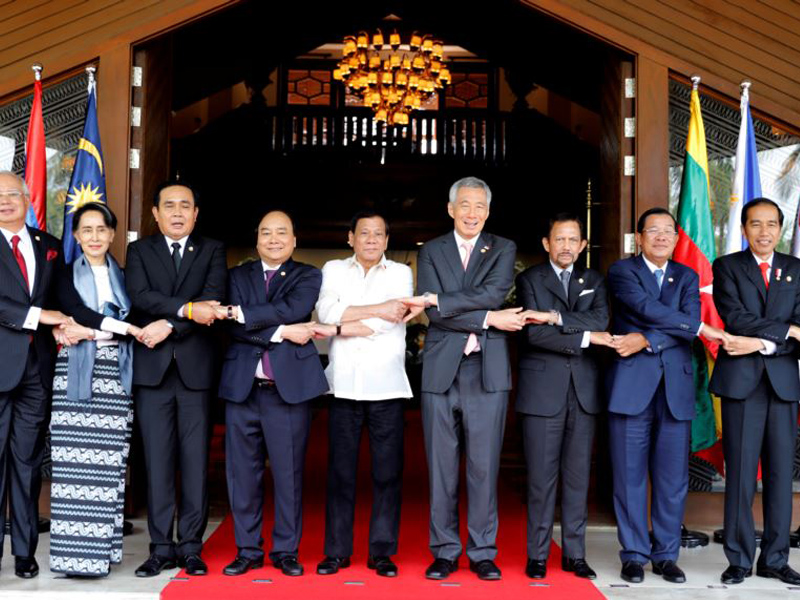
 

«America Has Lost» in the Philippines

By Pepe Escobar

We are plunged at the heart of arguably the key 21st century hotspot in Asian geopolitics. Philippine President Rodrigo Duterte’s game-changing «America has lost» is just a new salvo in arguably the key 21st century geopolitical thriller.


«Your honors, in this venue I announce my separation from the United States… both in military and economics also».

Thus Philippines President Rodrigo «The Punisher» Duterte unleashed a geopolitical earthquake encompassing Eurasia and reverberating all across the Pacific Ocean.

And talk about choosing his venue with aplomb; right in the heart of the Rising Dragon, no less.

Capping his state visit to Beijing, Duterte then coined the mantra – pregnant with overtones – that will keep ringing all across the global South; «America has lost».

And if that was not enough, he announced a new alliance – Philippines, China and Russia – is about to emerge; «there are three of us against the world».

Predictably, the Beltway establishment in the «indispensable nation» went bananas, reacting as «puzzled» or in outright anger, dispersing the usual expletives on the «crude populist», «unhinged leader».

The bottom line is that it takes a lot of balls for the leader of a poor, developing country, in Southeast Asia or elsewhere, to openly defy the hyperpower. Yet what Duterte is gaming at is pure realpolitik; if he prevails, he will be able to deftly play the US against China to the benefit of Filipino interests.


«The springtime of our relationship»

It did start with a bang; during Duterte’s China visit, Manila inked no less than $13 billion in deals with Beijing – from trade and investment to drug control, maritime security and infrastructure.

Beijing pulled out all stops to make Duterte feel welcomed.

President Xi Jinping suggested Manila and Beijing should «temporarily put aside» the intractable South China Sea disputes and learn from the «political wisdom» of history – as in give space to diplomatic talks. After all, the two peoples were «blood-linked brothers».

Duterte replied in kind; «Even as we arrive in Beijing close to winter, this is the springtime of our relationship,» he told Xi at the Great Hall of the People.

China is already the Philippines’ second-largest trade partner, behind Japan, the US and Singapore. Filipino exports to these three are at roughly 42.7 percent of the total, compared to 22.1 to China / Hong Kong. Imports from China are roughly 16.1 percent of the total. Even as trade with China is bound to rise, what really matters for Duterte is massive Chinese infrastructure investment.

What this will mean in practice is indeed ground-breaking; the China-led Asian Infrastructure Investment Bank (AIIB) will definitely be involved in Philippine economic development; Manila will be more involved in promoting smooth China-ASEAN relations in all sorts of regional issues (it takes the rotating chair of ASEAN in 2017); and the Philippines will be more integrated in the New Silk Roads, a.k.a. One Belt, One Road (OBOR).

Three strikes; no wonder the US is out. And there’s even a fourth strike, embedded in Duterte’s promise that

he will soon end military cooperation with the US, despite the opposition of part of the Filipino armed forces.

Watch the First Island Chain

The build-up had already been dramatic enough. On the eve of his meeting with Xi, talking to members of the Filipino community in Beijing, Duterte said, «it’s time to say goodbye» to the US; «I will not ask but if they (the Chinese) offer and if they’ll ask me, do you need this aid? [I will say] Of course, we are very poor».

The bottom line is that it takes a lot of balls for the leader of a poor, developing country, in Southeast Asia or elsewhere, to openly defy the hyperpower.

Then the clincher; «I will not go to America anymore … We will just be insulted there».

The US was the colonial power in the Philippines from 1899 to 1942. Hollywood permeates the collective unconscious. English is the lingua franca – side by side with Tagalog. But the tentacles of Uncle Sam’s «protection» racket are not exactly welcomed. Two of the largest components of the US Empire of Bases were located for decades in the Philippines; Clark Air Force Base and Subic Bay Naval Base.

Clark, occupying 230 square miles, with 15,000 people, was busy to death during the Vietnam War – the main hub for men and hardware in and out of Saigon. Then it turned into one of those Pentagon «forward operating» HQs. Subic, occupying 260 square miles, was as busy as Clark. It was the forward operating base for the US 7th Fleet.


Already in 1987, before the end of the Cold War, the RAND corporation was alarmed by the loss of both bases; that would be «devastating for regional security». Devastating» in the – mythical – sense of «defending the interests of ASEAN» and the «security of the sea-lanes».

Translation; the Pentagon and the US Navy would lose a key instrument of pressure over ASEAN, as protecting the «security of the sea-lanes» was always the key justification for those bases.

And lose they eventually did; Clark was closed down in November 1991, and Subic in November 199

It took years for China to sense an opening – and profit from it; after all during the 1990s and the early 2000s, the absolute priority was breakneck speed internal development. But then Beijing did the math; no more US bases opened untold vistas as far as the First Island Chain is concerned.

The First Island Chain is a product, over millennia, of the fabulous tectonic forces of the Ring of Fire; a chain of islands running from southern Japan in the north to Borneo in the south. For Beijing, they work as a sort of shield for the Chinese eastern seaboard; if this chain is secure, Asia is secure.

For all practical purposes, Beijing considers the First Island Chain as a non-negotiable Western Pacific demarcation zone – ideally with no foreign (as in US) interference. The South China Sea – which in parts is characterised by Manila as the Western Philippine Sea – is inside the First Island Chain. So to really secure the First Island Chain, the South China Sea must be free of foreign interference.

And here we are plunged at the heart of arguably the key 21st century hotspot in Asian geopolitics – the main reason for the Obama administration’s pivot to Asia.

China is already the Philippines’ second-largest trade partner, behind Japan, the US and Singapore.

The US Navy so far counted on the Philippines to oppose the proverbial, hyped up «Chinese aggression» in the South China and East China seas. The neocon/neoliberalcon industrial-military complex fury against «unhinged» Duterte’s game-changer is that containing China and ruling over the First Island Chain has been at the core of US naval strategy since the beginning of the Cold War.

Beijing, meanwhile, will have all the time needed to polish its strategic environment. This has nothing to do with «freedom of navigation» and protecting sea-lanes; everyone needs South China Sea cross-trade. It’s all about China – perhaps within the next ten years – being able to deny «access» to the US Navy in the South China Sea and inside the First Island Chain.

Duterte’s game-changing «America has lost» is just a new salvo in arguably the key 21st century geopolitical thriller. A Supreme Court justice in Manila, for instance, has warned Duterte that, were he to give up sovereignty over the Scarborough Shoal, he could be impeached. That won’t happen; Duterte wants loads of Chinese trade and investment, not abdicate from sovereignty. He’d rather be ready to confront being demonised by the hyperpower as much as the late Hugo Chavez was in his heyday.


This article was first published on the Strategic Culture Foundation website on 25 October 2016.


About the Author

escobar-webPepe Escobar is an independent geopolitical analyst, writer and journalist.


Behind The 3rd US Presidential Debate – What’s Coming in 2017

By Jack Rasmus

What the 3rd US presidential debate reveals beneath the surface is in 2017 and beyond what’s in store is more military adventures, more limits on civil liberties, a growing loss of legitimacy by the US political elite and their parties in broad segments of the US population, deeper splits and more internecine conflict within the political class and each of their two parties, a growing potential for new forms of independent politics, and more instability within the US political system.


The 3rd US presidential debate held October 19, 2016 between Donald Trump and Hillary Clinton was perhaps the most critically important of the three presidential debates – not so much for what was said, or even how it was said, but for what it portends for US policy in the post-election period regardless which candidate is elected in November.

The 3rd debate began with a reasonably rational discussion covering topics of Supreme Court appointments, 2nd amendment gun rights, abortion and then immigration – each subject revealing the deep differences in positions between the candidates. But then, as in the 1st and 2nd debates, it quickly exploded.

As the debate addressed the topic of immigration, Trump noted that Barack Obama was the biggest deporter of undocumented Latinos in US history – a fact which Clinton has consistently avoided, he charged. Trump then referred to the recent Wikileaks revelations, where Clinton declared she was in favour of “open borders” throughout the western hemisphere and Trump suggested her “open borders” remark referred not only to more free trade but also more cross border labour immigration as well.

The Wikileaks revelations have been a consistent hot “third rail” in the US election and the debates. The revelations have served as a multi-edged sword against Clinton. By revealing her “open borders” remark they contradict Clinton claims that she opposes the Trans Pacific Partnership trade treaty or free trade, while simultaneously suggesting she would accept more immigration to the US as part of a broad hemisphere free trade deal. Wikileaks further touches another Clinton political “raw nerve”: her emails cover-up. And they also reveal Clinton’s cynical “dual communications strategy”, in which she consciously says one thing to bankers and big business and another to the US public. The Wikileaks revelations are thus a kind of strategic lynchpin for the Trump campaign in the election, raising multiple issues on which Clinton is vulnerable.

It was not surprising therefore that, almost on cue when Wikileaks was first raised by Trump in the 3rd debate, Clinton angrily went on the offensive and diverted the discussion from the revelations. Her offense-defense was to redirect the debate to an attack on Wikileaks itself. From Wikileaks suggesting free trade, open immigration, email cover ups, and double talking to bankers and voters discussion was diverted to Wikileaks as Russian hacking of senior Democrat party leaders, Wikileaks as Russian vehicle to disrupt US elections, and from there to Russian aggression in Syria, demonising Putin as war criminal, and then demonising Trump by association as a friend of Putin.

In redefining the Wikileaks debate, Clinton’s words and her visual countenance response revealed a deep anger. How dare any country interfere with US elections. How ironic, given the US’ long and consistent interference in other countries’ elections. Clinton’s comments reflected the US elite’s growing frustration with Russia’s recent military offensive and gains in Syria. Clinton’s counter-attack on Wikileaks then set up the segway to Putin as the cause of continuing war in Syria, Putin as Saddam Hussein incarnate, Putin as the source of subversion of US democracy, and, then in turn, to Trump as the buddy of Putin and therefore, by association, all the above as well.

Wikileaks was clearly the nexus point of the 3rd debate. Clinton declared Wikileaks “the most important issue tonight”, charging Trump with “willing to spout the Putin line”, declaring “you continue to get help from him” (Putin) and that “you are his favorite in this race”. Trump countered with the charge Putin has outsmarted her and Obama at every foreign policy turn and that’s why she, Clinton, is trying to attack him by a desperate attempt to associate him with Putin.

The debates reveal that, if elected, Clinton and the US war faction are likely to engage in new military adventures in the middle east, in particular in Syria.

The even more disturbing quote from Clinton in the exchange, however, was her repeated call, first raised in the 2nd debate, to establish “no fly zones” in Syria. When the debate moderator noted that US generals have said such zones would likely lead to war with Russia, Clinton suggested “no fly” would correspond to “safe zones” on the ground. But “no fly” was necessary to confront Putin and Russia in Syria. “We have to up our game” there, she concluded.

The debates reveal that, if elected, Clinton and the US war faction are likely to engage in new military adventures in the middle east, in particular in Syria. Or perhaps try to counter Russia with a more assertive military challenge in the Baltics, Eastern Europe or the Ukraine as a bargaining chip with Russia in Syria. The 2nd and 3rd presidential debates indirectly reveal something is afoot in that regard, no matter what the outcome of the election in November, but especially if Clinton is elected.

The debates also reveal a new offensive is brewing, indeed already underway, to shut down Wikileaks and to further restrict free speech and civil liberties. Already, Wikileaks’ internet connection at the Ecuadoran embassy in London has been cut. Concurrently, in recent days British banks have indicated they will no longer service the accounts Russia TV in the UK. This is a “shot across the bow” to Russia media as well. A similar move is likely in the US for Russia TV soon after the elections. US government and US banks have initiated similar financial disruption tactics against Latin American progressive media, as the US renewed neoliberal offensive in Latin American continues to deepen. And should Trump lose the US election, it is likely his voice too will be muffled, if not “silenced”, in US media.

That muffling is especially true should Trump refuse to abide by the election outcome in the S Another Trump “verbal bombshell” in the 3rd debate was his refusal to say whether he would accept the outcome of the US election if he were defeated. Before the debate, Trump also continually raised the charge the election was being “rigged”.

That view of media bias and election manipulation resonates with much of the US voting electorate, especially his base of at least 40% of hard core pro-Trump voters. The charge of “rigging” and potential to refuse to accept the election results may prove a “game changer” in US elections. It reflects the deep distrust by broad segments of the US populace of the political elites in the US and their two parties. That distrust is not going away after the election, but will take new forms of protest in 2017 and beyond.

For there is clearly a rebellion underway against the “political class” in the US. That rebellion is not yet reflected in independent political organisation and opposition. It is still being expressed through and within the two wings of the Corporate Party of America – Republicans and Democrats. But that may break down, should Trump lose and the US economy continue to falter in 2017. What the debates reflect is growing disenchantment with the two parties’ organisational cocoon. A “rebellion within” those two wings could evolve post-November easily and quickly to a challenge “from outside”.

Neither candidate has the millennial vote, now the largest population segment. Millenials may in the end vote for “none of the above”.

Should he lose, Trump will almost certainly launch a new political party. A Trump new party initiative could also stimulate something similar on the left in the US. Bernie Sanders’ millennials are still clearly not in the Clinton corner, despite their erstwhile leader having thrown in with Clinton. The election may come down to whether, in the 8-9 swing states, Trump can turn out more non-college educated white workers than Clinton can turn out educated urban professionals, women, suburbanites, and Latino-African Americans.

Neither candidate has the millennial vote, now the largest population segment. Millenials may in the end vote for “none of the above”. Clinton is trailing well behind Obama for the millennials. Trump too is losing their support, at least among the better educated. Polls show only 54% of the under-35 years old group is currently at all interested in the election. And that will not soon change.

Third party candidates, Jill Stein of the Green Party and Gary Johnson of the Libertarians, are polling 22% of likely voters aged 18 to 29. According to a Harvard University survey this past summer, a third of Americans aged 18-29 support Socialism, while not even half back Capitalism. For them, the economy is the main issue and that is going to get worse in 2017 and beyond, not better, regardless who wins in November.

In summary, apart from all the personal mudslinging and the occasional, tangential references to real issues in the debates, what the 3rd – and indeed all three debates – reveal beneath the surface is in 2017 and beyond what’s in store is more military adventures, more limits on civil liberties, a growing loss of legitimacy by the US political elite and their parties in broad segments of the US population, deeper splits and more internecine conflict within the political class and each of their two parties, a growing potential for new forms of independent politics, and more instability within the US political system.

This article was first published on CounterPunch on 21 October 2016

jackrasmus_webJack Rasmus is the author of Systemic Fragility in the Global Economy, Clarity Press, 2015. He blogs at jackrasmus.com. His website is www.kyklosproductions.com and twitter handle, @drjackrasmus.


EDITOR'S PICK OF THE WEEK

CFO's new mandate. CFO explaining the presentation

The Performance and Transformation Orchestrator: The CFO’s New Mandate in the Age of AI

By Terence Tse CFOs are evolving into AI-driven transformation orchestrators, balancing finance, technology, and strategy while upskilling teams, managing risks, and driving measurable business value. A key insight from this year’s AI for CFOs event, organized...

WISE DECISION MAKER GUIDE

POWER INFLUENCERS

Emerging Trends

The Future of Global Trade