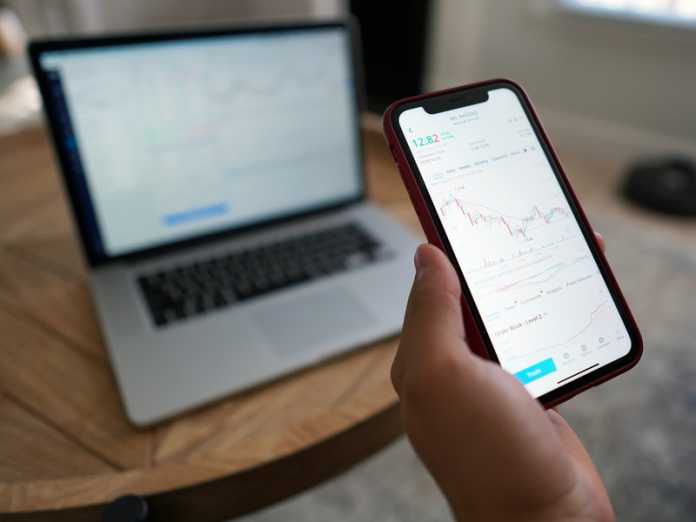
In today’s modern world, many investors have access to different trading instruments, such as stocks and forex. Primarily, stocks, also known as equity, refer to the security that represents the ownership of a part of a corporation, whereas forex, also called as foreign exchange, refers to the market wherein currencies are being traded.
However, if you’re looking to invest in any one of these, you may need to consider several factors to ensure you make the best choice when it comes to trading. Luckily, this article will show you how trading forex is different from trading stocks.
Market
One of the main differences between trading forex from trading stocks is the market. First and foremost, trading forex is usually done over the counter, which means that the transaction takes place over a traditional exchange. Also, the forex market facilitates trading, which can happen all around the world during various business hours and trading sessions of different countries.
On the other hand, for the stock market, the trading is done at a centralized stock exchange at different times and with different variables. Unlike forex trading, which can be done 24 hours a day and five days a week, stocks can be traded in particular trading hours only.
Liquidity
Generally, a market that accommodates high-volume trading has high liquidity. And, when there’s high liquidity, trading in such a market comes with low transaction costs and tighter spreads (the difference between the buy and sell price). This is another main difference of trading forex from stocks.
In most cases, trading forex major pairs have lower spreads and transaction costs than the stock market. This is one of the reasons why it’s more advantageous to enter into the forex market than the stock market.
Commission
When trading forex, most brokers don’t charge commission, but they charge a margin on the spread. However, when trading stocks, traders will have to pay the difference between the buy and sell price (spread) and a commission intended to the stock broker. That said, it’s clear that the costs in trading forex are more transparent than trading stocks.
On the other hand, if you want to make sure you’re dealing with honest and trustworthy online brokers for commission and other cost purposes, reading some reviews from reliable sites, like ForexToStocks, can be the best thing you can do. That way, you can avoid those bad apples who’ll more likely suck money from you in the long run.


Manner In Which They’re Traded
Another major difference between trading forex and stocks is the way they’re traded. For instance, when you trade forex, you’re buying one currency, while selling the other. When you trade stocks, you choose either to buy or sell the shares in the stocks, which means selling and buying aren’t done simultaneously.
In addition, with forex, speculation or the trading of a currency involving a high risk is typically done when you expect the rise or fall of one currency as against the other currency involved. On the other hand, with stocks, you usually purchase stocks when you believe the share price of a particular stocks will increase.
Costs Of Entry
When it comes to the cost of entry, trading forex requires a much smaller capital than trading stocks. This means that even if you don’t have much money, you can still start trading in the forex market. However, with stocks, you should have a considerable amount of capital before you can begin trading. Because of this, many investors, whether amateurs and professionals, usually see forex as the easiest way to get started with trading.
However, when it comes to profits, trading in both markets can bring in large profits, but they can also cause losses to the point that all your invested capital can be wiped out.
Focus Of Trading
Another main difference that you should know between forex and stocks is the focus of trading. For instance, with forex, you’ll have to focus on eight major currencies used in trading. With stocks, you’ll need to focus on a thousand, which means a wider focus is required before you can get started with stocks trading.
Hence, if you want to invest in a trading instrument that isn’t difficult to keep an eye on, then, forex can be an excellent option.
Conclusion
In this day and age, there’s a huge amount of people who are interested in learning how to trade stocks and forex. However, you should understand that these two financial tools are vastly different from each other, as well as come with different risks.
While there are some stock investors who also invest in forex markets, for the most part, the choice of whether or not to invest on either of the two types of markets can be very daunting, especially to a first-time investor. Therefore, learning about these markets before you get started will go a long way in helping you make a more informed decision and minimize your risks.
You may find the idea amusing; however, life Insurance for senior citizens is a brilliant way to ensure your family has no expenses to bear at the time of the funeral.
Besides that, there is a guarantee your family won’t have to burden clearing debts when you are not around. This type of insurance is also known as whole life insurance and has become a popular choice rather amongst responsible senior citizens.
Most companies do not allow general life insurance policies to the seniors given the age factor, and hence a senior life insurance policy could provide a great sense of possible security despite the old age.
Why Might Senior Life Insurance be a Good Investment?
In most cases, a senior citizen might have taken care of all related financial matters. However, in other scenarios where there might be someone from the family dependent on the senior member or maybe the home loan is still pending, senior life insurance policies prove to be a smarter investment choice.
This could be a gift to your family, so they don’t have to pay the huge expenses incurred at the time of the funeral. Such Life insurance policies ensure a smooth transition without having anyone bear the burden you once imagined yourself bearing.
Why Should You Keep an Eye on the Premium Offered?
Similar to the stock market, premiums for life insurance policies vary. They are different from person to person based on factors such as age, health, and lifestyle.
Most likely, midlands care, the premium amount for a senior citizen in good health would always be higher than a younger citizen considering people in their old age possess a greater risk of death.
However, there would be some relief in the premium amount if a senior citizen is in better health comparatively. This is the reason we recommend opting for a life insurance policy when you are younger and healthier. You would have a less premium amount to pay.
Having said, most companies offer affordable premiums and let you take advantage of the associated benefits, maybe not yourself, but your family would definitely be benefitted.
Are There Any Qualifying Criteria One Needs to Consider?
Most insurance policies have criteria one need to fulfill in order to qualify to avail of the benefits of an insurance policy. Similarly, there are some levels of qualification required to purchase a suitable plan for senior life insurance.
As mentioned earlier, senior life insurance is whole life insurance, and you could certainly choose either standard life insurance or a guaranteed acceptance.
While in a standard life insurance policy, you would be required to answer medical questions to gather information related to paramedical, when opting for guaranteed life insurance, you would be asked even lesser questions.
Consider a policy with paramedical writing if you think you are healthy and possess no previous medical records. By doing so, one could save on their premium amount you might have to pay less!
You should ideally be carefully comparing the offered premiums by different insurance companies. There are some who offer relief in premium amounts and ensures stress-free life coverage.
Certain criteria changes from a company to a company, the location often plays an important role in deciding on the acceptable premium amount. Hence, we recommend considering options and not limiting yourself to one insurance company.
Benefits of Senior Life Insurance
Additional Support to Your Spouse
While most couples take vows to keep each other happy in a marriage, senior life insurance could prove to be extraordinary support to the spouse who has survived.
As per the data available, on average, it costs from $7000 to $12,000 to arrange for a funeral. You might want to take that burden off! Hence, we recommend opting for a senior life insurance plan for a stress- free transition for your spouse and family.
Let Your Family Not Bear the Burden of Pending Loans
There might be chances of you failing to pay off the debts while you are healthy and alive. In such cases, if under some unfortunate circumstances, you happen to die prior to clearing your debts, you would most certainly be bothering your family with the financial stress.
Hence, we encourage you to consider senior life insurance option if you are uncertain about your near future financial stability. It is always a good idea to hope for the best to happen while preparing you for the worst.
Benefits of Non-Taxable Withdrawals
Senior life insurance is a type of whole life insurance. Hence, similar to general scenarios where you are eligible to withdraw a certain amount of money from your whole life insurance, senior life insurance holds an equal cash value.
This is mostly the accumulated sum of premium paid and is, in fact non-taxable upon withdrawal. Another convincing reason to opt for a senior life insurance plan!
It Is for Your Family
Just like any other type of life insurance, even this one is for your family more than it is for you. Amidst the mourning, they would be relieved to know you have got your funeral expenses covered, or your children won’t have to spend their lives clearing your debts even while you are not around.
Investing in senior life insurance is a win-win situation, and we highly recommend utilizing your money to ensure your family’s betterment.
Conclusion
Anyone who has dependents should consider buying life insurance. Senior life insurance is suitable for responsible senior citizens who would like their family not to be burdened with any future expenses that are otherwise not related to them.
While most senior citizens have had term life insurance, which they chose to drop for fair reasons, there is provided an equal opportunity to the citizens who are too old to get a general term or permanent life insurance policy.
It is recommended to reach out to a broker in case of confusion. The experts tend to know better and also guide you in the best possible manner.
Better money habits are great for any business, but when you’re a servicing company working on the frontlines with customers, parts, suppliers and equipment, even the simplest issue can run up a large bill.
If you’re looking for top methods to save money, read on.
Use Employees More Wisely: Think About How Many Tasks One Employee Can Accomplish
A lot of money can be spent on a very large servicing team. While all employees are necessary within an effective servicing company, that doesn’t mean you can’t save money on employee wages by thinking more sensibly.
For example, could one more experienced employee fulfill a task that would usually take two less experienced employees to complete? Can you limit the number of employees out in the field by utilizing better training and developing each individual’s skillsets so that more work can be achieved more effectively be a smaller working team? Would it be more sensible to invest in better training than it would be to hire employees to fulfill one, very specific role?
Make sure you’re always getting the best of out your employee’s, for their own development as well as that of your business, in a cost-effective way.
Use Tracking Software: Implement Better Organization and Keep Track of All Jobs in a Better Way
Keeping track of your maintenance tasks and important jobs means avoiding making costly mistakes. To best keep track of everything and make sure that everything is as it should be, you should think about using work order software to keep everything organized. The more organized you are, and the more efficiently you track your servicing schedule, the less likely it is to need to spend money on rectifying mix-ups or mistakes.
Encourage Contracts with Customers: Build Customer Loyalty and a Regular Maintenance Schedule to Better Plan for Costs and Income
Having regular servicing contracts with your customers not only encourages a more dependable flow of income, but it helps to keep costs in check. When maintaining customer requirements on a regular, set basis, you’re able to plan more effectively, use your time more wisely, and plan ahead for the best cost-effective solutions for your long-term customer contracts. This can help to keep costs down, as well as avoid last-minute expenses.
Improve Communication: Make Sure Every Team Member Can Communicate Effectively and Complete Their Job in the Allotted Time
Lack of communication doesn’t just result in more shoddy workmanship — it can cost money, too. Suppose a lack of communication leads to problems and mistakes. In that case, it may take extra money to fix it for your customer or pay extra wages for employees who need to work overtime to rectify any problems that have occurred.
Improving your communication not only benefits the business as a whole but works to ensure everything is running smoothly in line with your planned budget and helps to avoid issues that may cost money to correct.
Take Away
Money can easily be saved when your business is thinking more productively and employing better organization. Better money habits can be achieved when costly mistakes are avoided.
As the COVID-19 epicenter has moved from the Americas to India and poorer economies and G20 countries remain severely affected, the world economy faces secondary waves, more virulent strains and must cope with lost years.
Recently, President Trump tested positive for COVID-19, which initiated contact tracing in the infected White House. The debacle followed nine months of failed pandemic leadership, neglect of basic public-health procedures, premature exits from the lockdowns and earlier-than-anticipated secondary waves.
Loyal to his style, Trump returned to the White House too early, perhaps determined to continue his new life as the world’s most powerful super-spreader.
The failed leadership has been accompanied by huge collateral damage, as evidenced by the spread of COVID-19 in the U.S. and the scarred economy.
In early October, United States had almost 8 million accumulated confirmed cases. It was followed by India and Brazil with 7 million and 5 million cases, respectively. Without deceleration, the worldwide cases could soar to 55-60 million and deaths to 1.3 to 1.7 million by the year-end.
And these are the confirmed figures. The projected estimates are far higher.
Every 10th worldwide infected
According to new estimates by the World Health Organization (WHO), some 10 percent of the world’s population may already have had the new coronavirus. If that’s true, consider the implications: Since world population is 7.8 billion, that estimate translates to 780 million, whereas the current estimate of the confirmed cases is less than 40 million.
China contained its outbreak in the 1st quarter. As the US and Western Europe failed to do so, the epicenter spread to both. In the summer, the epicenter continued to linger in the US and the Americas. And today, COVID-19 cases and deaths are -resurging across Europe, Southeast Asia and the Mediterranean. In Africa and Western Pacific, the situation is more subdued for now (although low testing inflates optimistic scenarios).
If countries fail to slow down the acceleration of new COVID-19 cases, the past three quarters could still be a prelude to much worse, especially if the epicenter will move from the United States and the Americas to developing economies, even as secondary waves are sweeping across old epicenters.
In the first week of October, India had the highest numbers of new cases globally (almost 560,000 in the first week of October), followed by the US (300,000) and Brazil (190,000). Meanwhile, surges of secondary waves have occurred in Argentina and Colombia, France, UK, Russia and Spain (50,000 to 100,000 in each).
In the process, G20 economies have been severely affected. As the world is about to face new and potentially more virulent strains, world economy is coping with lost years, as evidenced by the much-earlier-than-anticipated resurgences and secondary waves (see BOX).
In early February 2020, Dr Steinbock projected the deceleration of cases in China and the rebound of its economy by the 2nd quarter. In early March, he predicted severe contractions in the United States and Western Europe in the 2nd quarter, while outlining scenarios for both global recovery and global depression. The present commentary is based on Dr Steinbock’s report The Tragedy of More Missed Opportunities (August 7, 2020), with updated data. It focuses on the estimated COVID-19 human costs and economic damage in the world’s largest advanced, emerging and developing countries. For the full report: https://www.differencegroup.net/covid19-report2. For Dr Steinbock’s interview on the central findings of the new report, see https://www.differencegroup.net/covid19-report2-interview. His prior COVID-19 report (April 30, 2020) focused on the outbreak in China and the belated mobilization and containment failure in the US and Western Europe.
COVID-19 damage in US and Americas
By early October, the confirmed accumulated cases in the US amounted to almost 8 million; that’s half of all cases in the Americas. To understand the full magnitude of the pandemic devastation in America, think of US states as independent economies.
Today, as adjusted to the size of population, US states continue to account for a whopping 22 of the 25 most-virus affected major economies worldwide (Figure 1).
Figure 1 COVID-19, World Economies and US States*
* Total confirmed cases / 1 million people (Oct 6, 2020) Sources: Worldometer; Difference Group
The top-25 ranking has room for only three sovereign countries (Chile, Peru and Brazil); all in Latin America, but none among the top-15. Even Brazil ranks only last in the list behind Utah, Rhode Island and Oklahoma. The poorest top-ranked US states, such as Louisiana and Mississippi, and those with the highest median age, including Florida, barely make the headlines. And India isn’t even in the list.
Like the US, Western Europe lost weeks in belated COVID-19 mobilization. But unlike the US, it has fought the virus more effectively thereafter. Unlike the US, most European economies have stronger health systems, universal healthcare and more comprehensive social support systems, which ensure a better cushion against the adverse public-health and economic damage, at least initially.
In contrast, the Americas, with its poorer economies and weaker health systems, has taken a severe hit. In Brazil, the Bolsonaro government initially ignored science-based evidence, shunned early mobilization and public-health imperatives. Today, Brazil still has the third-highest number of confirmed COVID-19 cases in the world.
In the pandemic second-tier of Latin America, the key countries (Colombia, Peru, Argentina and Mexico) each had some 770,000 to 900,000 confirmed cases in early October. At population-adjusted level, Chile’s pandemic has been one of the worst worldwide. In turn, US spillovers have contributed to the pandemic crisis in Mexico and certain other Latin American countries.
There is nothing inevitable about the pandemic crisis in the Americas, however. The US has five times more (population adjusted) confirmed cases than Canada, which suggests that appropriate precautions can work, despite evelated risks in the regional neighborhood.
Why policy mistakes in G20 compound human costs and economic damage worldwide
In fall 2020 and spring 2021, some countries will face secondary COVID-19 waves from a position of strength. These are countries that have managed to bend the epidemic curve. Their cumulative cases are decelerating and they have lower positivity rates (percentage of people who test positive for the virus of those overall who have been tested).
Other countries must struggle with the new waves from a position of weakness. These are countries that have failed to bend the curve. Their cumulative cases continue to accelerate and they tend to have higher positivity rates.
Collectively, the G20 economies account for 90% of the gross world product, 80% of world trade, and two-thirds of the world population. What happens to G20 countries will affect the entire world – unfortunately that includes the pandemic.
Until recently, severe epidemic outbreaks were typically confined into poorer economies because more prosperous countries relied on science-based public-health policies. The COVID-19 case has been very different.
As some of the leading G20 countries mobilized against the outbreak belatedly and ineffectively, their policy mistakes have contributed to massive human costs and economic damage. To gain a more realistic picture of the consequent threats, let’s use population-adjusted data, linear scale and focus on those economies in which cases are still accelerating and positivity rate remains high (Figure 2).
Source: European CDC, Difference Group, Oct 6, 2020
Currently, the primary risk group involves the United States and the Americas, particularly Brazil and Argentina. While the positivity rates have decreased from peak levels in the US, total cases and deaths continue to increase, as a result of repeated policy mistakes, premature exits from the lockdowns and violations of appropriate public-health guidance.
Regionally, the Americas is followed by South Africa, Russia and Western Europe, including France, UK, Italy, Germany, as well as Turkey. In Australia, China and Japan, the cases remain significantly lower.
In India and certain countries in Southeast Asia – the Philippines and Indonesia –positivity rates remain high. Yet, population-adjusted numbers are lower than in most advanced economies. Despite huge aggregate levels, India, for instance, remains behind Mexico and at par with Canada.
In Japan, the true spread of the virus has been under-reported because of low testing, which in population-adjusted terms remains below that of Mongolia and Guatemala, or about 4% of that in the UK.
In contrast, China managed to contain the pandemic within a month or two, which has minimized human costs and economic damage in the mainland. South Korea’s early performance was successful. But more recently it has not been able to avoid secondary waves, thanks to far-right Christian cult churches and the kind of conservative pandemic “denialism” that has infected much of the advanced West..
A new mutation, severe regional consequences
In late summer, a “more infectious” COVID-19 strain was found in tested samples in Quezon City (Metro Manila) and Malaysia, which, in turn, has attributed the strain to cases imported from India and the Philippines. This development was anticipated in my report, and it requires aggressive vigilance.
Here’s why: Not so long ago, a mutation was discovered in the protein that permits SARS-CoV-2 to enter cells, possibly making it easier for the virus to spread. The implications are unsettling. The original samples of the novel coronavirus out of Wuhan, China, were a variation that scientists call the “D” clade. Before March 1, over 90% of viral samples taken from patients were from D variation. Since March, however, a new “G” variation has been dominant (Figure 3).
Figure 3 Potential Transition of the Dominant Pandemic Form
Source: Korber, Bette et al. 2020. “Tracking Changes in SARS-CoV-2 Spike.” Cell, July 3; Steinbock, Dan. 2020. The Tragedy of More Missed Opportunities, Aug 7.
Though not conclusive yet, evidence suggests there has been a global transition from the D to the G variation. Worse, the G strain appears to increase COVID-19 infectivity. If, as the researchers hypothesize, the G variation first intensified in Europe, it deployed the global transportation hubs to migrate across the Atlantic to New York City, which then seeded many of the outbreaks in the rest of the US.
Here’s another unsettling implication associated with the global transition from D to the G variation. It could make the pandemic burden of developing economies more challenging than currently anticipated. That could occur after normalization in the US and Europe, when quarantines, lockdowns and travel restrictions are phased out in the West.
Due to proximity and regional spillovers from the US, the G variation has been dominant in South America since March-April. Perhaps for similar reasons – proximity with Europe – it has also dominated infectivity in Africa.
In Asia and Oceania, the less-infective D has been more dominant. Yet, continued case acceleration and G variation dominance in several major countries and regions, coupled with the proliferation of secondary waves could change the status quo – for the worse.
Worse-than-anticipated economic damage
As I have argued since April, the original IMF baseline scenario (World Economic Outlook, April 2020) was not adequately realistic because it ignored the fragile economic landscape that preceded the pandemic. Unfortunately, the same goes for the IMF’s next baseline case (WEO, June 2020), which expected a V-shaped recovery to ensue in 2021. Worse, the disastrous 2nd quarter results, which I projected in March, indicate that structural economic scarring will cast a longer shadow over more countries than currently anticipated.
Measured by GDP per capita (purchasing power parity, PPP), the adverse impact has been drastic and translates to lost years; as defined by years of regression in per capita income, even in the world’s largest economies.
Instead of the expected 1-2% growth, high-income economies now suffer from the worst recession since the Great Depression. The outcome will not be the initially-hoped V-shaped recovery. Most face 5-7 years of lost progress. In some cases, debt-taking downplays impending, new debt challenges (e.g., Japan, US). Indeed, the coronavirus contraction is likely to trigger a series of debt crises in several advanced countries, which will have spillover effects in weaker economies.
The United States is a case in point. As its national debt already exceeds $27 trillion, US federal debt-to-GDP ratio has soared to 138%, according to US Debt Clock; that’s more than the ratio of Italy. But unlike Italy, the US remains a global anchor economy. And unlike the pre-euro Italian lira, US dollar remains a global reserve currency. What will go wrong in America will affect the rest of the world.
In the upper middle-income economies, most have already lost 5-7 years of progress. Prior to COVID-19, Argentina had been struggling with neoliberal legacies, while in Brazil the soft coup against the Lula-Rousseff administrations has penalized living standards since the mid-2010s. In these two major countries, the lost years are twice as many as among their peers. The only exception in this group – in fact, in all these groups – is China, which may avoid lost years, even if per capita income growth will decelerate in the short-term.
Despite strong structural growth potential, many lower middle-income economies are likely to be heavily penalized by the pandemic effects. Yet, there is great variety. Though the best performers have lost 3-4 years (India, Kenya, Philippines, and Vietnam), the worst ones may have lost a decade (Nigeria).
Among the low-income economies, the best economic performers initially expected growth rates of 6-7% in 2020 (Ethiopia, Mozambique, Uganda). After the devastation of the global pandemic, they are more likely to see their growth prospects halve in the ongoing year. Moreover, Afghanistan, Congo DR and Yemen continue to cope with civil wars, foreign invasions and legacies of corruption. At the same time, the pandemic threatens to push millions of children into malnutrition.
Preparing for new secondary waves
Despite the lost years in all income groups, the key question is how quickly countries can restore their pre-coronavirus rate of growth in per capita incomes. And that depends critically on their ability to effectively contain the pandemic.
Unfortunately, de-globalization will further undermine prospects for global recovery, due to new protectionism and trade wars. These challenges will be compounded by the expanded US wars in trade, technology and finance. While China is the first target, others – Germany and the EU, Japan and South Korea and so on – will follow in due time.
A Democratic Biden administration could alleviate the negative public-health and economic consequences. Conversely, Trump’s second term could accelerate the path to a multiyear global stagnation or global depression, and a dollar crisis.
If the Democratic campaign proves stronger than anticipated, an “October Surprise” could be likely. Such a scenario is defined as a major news event deliberately created or timed to influence the outcome of the US presidential election. In the US postwar history, embattled Republican campaigns have seized such scenarios to win the presidency, even at the cost of the national interest (e.g., Nixon in 1972, Reagan in 1980). Similarly, the Trump White House seems intent to win re-election at any cost, even a military conflict with China.
The global pandemic effects can only be overcome through multilateral international cooperation across all political differences. In the absence of such cooperation, those effects will compound negative scenarios. The COVID-19 -associated human costs and economic damage will not go away anytime soon and could get much worse.
Historical precedents are instructive. Between 1918 and 1920, the Spanish flu infected an estimated 500 million people; every third person in the world at the time. The death toll amounted to 17 to 50 million. Yet, it was the second wave that proved far more deadly than the first.
Old lessons should underscore the importance of multilateral cooperation and proactive vigilance until effective vaccines and therapies are widely available.
If we still haven’t learned the lesson of the second wave, we may be forced to learn it over a new crisis – an extended pandemic and multiyear global depression.
Dr. Dan Steinbock is an internationally recognized strategist of the multipolar world and the founder of Difference Group. He has served at the India, China and America Institute (USA), Shanghai Institutes for International Studies (China) and the EU Center (Singapore). For more, see https://www.differencegroup.net/
Handling finances can be quite challenging. You might be familiar with the basic financial tasks of saving and keeping some money aside for future investments. There are still methods to get ahead with financial jobs.
If you are looking to discover various financial options, it might be useful to hire a financial advisor. This professional will advise and assist you with numerous economic and expenditure services. Take a look at the below-given reasons to benefit from the services provided by a financial advisor. This will also assist you in determining whether certain financial investments are appropriate for your future.
1.Advice on Insurance Concerns
A professional financial advisor will assist you in the selection of a suitable insurance policy. In fact, insurance concerns are amongst the top reasons that people seek the assistance of financial advisors. The choice of life insurance policies can be quite tricky since these contain fine prints. Not everyone is capable of grasping the complexities of life insurance policies. It can become overwhelming for some to select the right insurance policies. This is where one might seek the assistance of a financial advisor. They will take up your burden and go through all legal jargon for you beforehand. This will give you an edge while selecting an insurance policy that fits into the requirements of your life.
2. Better Savings
Another top reason to acquire a financial advisor’s services is to better understand how you can start saving your money. This comes especially handy when you are a spendthrift and in a dire need to save cash. Many financial advisors have extensive experience in economic divisions. This means that you are more likely to acquire loads of knowledge by hiring Nashville Financial Advisor. Before hiring a professional advisor, though, you might want to run a background check on their reputation and customer reviews. It is crucial to assess the financial expert’s reputation and background before seeking their assistance regarding your assistance.
3.Better Investment Decisions
If you have money and looking for projects and ideas to invest in, hiring a financial advisor is highly recommended. Investing in real estate is also a good option for establishing a great future. However, such investment projects come with their own set of risks. There is always the possibility of suffering from losses while venturing on investment endeavors. That being said, if you opt for availing the services of a professional financial advisor, they will provide you with a better insight into financial matters. They will also assist you in making the best decisions that will benefit you in the long term. Your financial advisor will tell you all the pros and cons of investment while advising you on particular options that need to be avoided at all costs. Suppose you opt to hire a professional advisor. In that case, you are more likely to avoid high-risk investments while yielding to the best projects that will serve you in the long run.
4.Reach your Goals
A professional advisor will assist you and your family in reaching your financial objectives. If you have the money and a dream, the only way to make your dream come true is to have a pathway. Suppose you do not have the money but a specific goal, then you will need to save money so that you can have a particular purpose achieved. Such plans do not necessarily revolve around the more significant investments, such as launching new products in the market or setting up your own plaza.
You might be trying to save some extra cash to buy your dream car, spend on an upcoming engagement, or investing in your dream house. Whatever the specific goal is, it is recommended to get some professional insight and financial strategy on setting enough savings aside for future plans. Your financial advisor can provide you with sufficient information on what you require and which direction to go regarding your funds and savings.
Final Thoughts
The services of a financial advisor can be invaluable for making effective money decisions. Their advice will also make you feel confident and secure about your future investments. An uncertain future can be terrifying. The professional advisor will help you in effectively controlling your finances.
The emergence and the spread of Covid-19 and the subsequent categorization of it as a pandemic has wreaked global chaos as businesses were brought to a screeching halt.
However, this has not slowed down the interest that African countries have shown in cryptocurrency.
There have been record-breaking levels recorded in the peer-to-peer, otherwise referred to as just P2P, trading of Bitcoin in Africa in the past few months.
Data from analytics have shown more than $14 million in Bitcoin which has been traded across P2P platforms including LocalBitcoins and Paxful. In addition to this was Bitcoin skyrocketing in Africa in the build-up towards the Bitcoin halving says Louis Schoeman from Forexsuggest.com
There have been numerous reports and statistics that have indicated a steady rise in Bitcoin trading across the African continent. Covid-19 has left a path of destruction in its wake resulting in high inflation rates, weak currencies, and subsequent uncertain economic situations.
These factors along with the young, more digitally orientated, and growing population in African countries are the driving forces behind steady increases in cryptocurrency trading in Africa.
Key factors to consider
Bitcoin is decentralized and cannot be manipulated or controlled by any government, central bank, or anyone in particular, for that matter. Monetary systems are facing constant control with regards to taxations, inflations, and other factors.
There are some key factors that may be the determinants whether Africa is going to become the new frontier of cryptocurrency when looking at the conditions in various African countries and how cryptocurrency trading is liberating individuals from economic situations.
Inflation
Africa is greatly characterised by high inflation rates in addition to negative interest rates. There are numerous Africans who have turned towards cryptocurrency as protection against inflation.
Bitcoin’s value is predominantly derived from speculative interest as a hedge. Africans view Bitcoin as a hedge against inflation due to its deflationary and controlled money supply in addition to its use as a potential primary means of exchange.
Zimbabwe, South Africa, South Sudan, Nigeria, Burundi, Egypt, Kenya, and Ghana are the African countries who have seen a surge in cryptocurrency trading in recent years not only as a hedge against inflation, but to have access to other benefits of trading cryptocurrencies.
Out of all the African countries trading cryptocurrency, South Africa, Nigeria, Ghana, and Kenya remain the countries that make up the majority of Bitcoin traders in Africa.
Financial inclusion
There is a great need for adequate and widely accessible financial services in many African countries which have been another main reason for the growth of cryptocurrency trading in Africa.
There is, however, a boom in mobile financial and payment solutions in Africa with Kenya in the lead with the most advanced financial sectors in addition to a mobile penetration rate of around 91%.
The trade in cryptocurrency allows for borderless trade across numerous countries and in addition, it is low-cost and has faster remittance payments than which is currently available.
Final Thoughts
Due to high inflation rates and a lack of development in financial sectors, amidst numerous other factors, Africa is currently the frontier for cryptocurrency. Cryptocurrency trading is steadily increasing in countries across the African continent with no sign of a decrease or a halt.
Some people will read this title, disagree and move on. The fact that you have made the effort to read on a little further suggests that, even though you might have some misgivings, you’re intrigued by the arguments involved.
This is exactly the reaction I had when I came across this question while reading up on a new blockchain. The question was part of the company’s description of its own regulated blockchain and it’s one that, at least initially, attracted and repelled me in equal measure.
The blockchain in question is L3COS, which claims to be the world’s first regulated blockchain-based operating system. If it is the first time you’ve heard of regulated blockchain, that’s why. L3COS describes itself as politically centralized but architecturally decentralized. It differentiates itself from permissioned blockchain by saying that it provides its controlling power with full authority over the system, whereas an authority in a permissioned blockchain only controls permission to access.
Clearly, regulated blockchain is an evolution from what exists already but the question of why blockchain should be regulated still needs to be answered.
L3COS answers this question in two parts. Firstly, it describes how blockchain has traditionally been associated with cryptocurrencies and these have been used in a whole host of illegal activities, including terrorism, blackmail, cyber crime and money laundering.
For advocates of cryptocurrencies, this sort of statement might make your blood boil. You will probably argue that the vast majority of cryptocurrency is not used for criminal gain but rather to support new and innovative, free-market financial services. While it’s certainly true that everyone involved in Decentralised Finance or DeFi isn’t a criminal, it can’t be denied that cryptocurrencies are used in some illegal activities. Wherever you sit on the scale of this argument though, it’s not the whole argument that L3COS makes for regulated blockchain.
The second part focuses on the recent emergence of stablecoins. In states that new digital assets, such as Libra by Facebook, “pose a threat to national financial stability”. Its rationale for this argument is broken down into the following three strands:
They are regulated by private corporations and not by a government that is accountable to its electorate and citizenry.
They are backed by a concrete physical asset, which itself can be volatile and so pass on that volatility.
They may not be interoperable with other stablecoins or any other payment systems.
It goes on to state that a Central Bank Digital Currency is a viable alternative to these private stablecoins and that, through L3COS, “a nation’s financial authority is able to create their own CBDC which comes with all the relevant and required digital infrastructure”.
Essentially therefore, the argument for why blockchain should be regulated centres on the need to involve the government in order to ensure national financial stability. The first strand of the supporting argument is probably the most compelling. After all, is it right for private corporations to regulate money rather than elected governments?
When you think of it in these terms, the argument for a regulated blockchain does seem to be quite strong. Firstly, none of us know anything other than government controlled money. Furthermore, you’d have to go back a very long way in history for that not to be the case. There’s no doubt that government control of money has had its ups and downs but do we really want to handover that responsibility to unelected private corporations?
A regulated blockchain that is controlled by governments and that powers a CBDC would, of course, have many implications that need to be considered in their own right, just as the emergence of stablecoins does. However, when you consider its potential role as a bulwark to slow the flow of money control into the hands of private companies, maybe the answer to whether blockchain should be regulated isn’t as obvious as you first thought.
It may seem like a simple job but purchasing car insurance has its challenges. If you’re a first-time buyer or want to change your plans, you need to know to make the right decisions. When purchasing any kind of insurance, there are some papers you have to sign and some agreements you have to make. Not to mention a full market of scammers ready to put you down with unlawful documents or unjust costs.
Getting car insurance may be necessary by the law, but it is not a child’s play. You have to be attentive and get the best car insurance in Ontario. For this reason, the below mentioned are some common mistakes people usually make when purchasing car insurance to help you make the best choice for yourself:
Settling on the First
The first rule of shopping is to never settle on the first deal you see. It is essential to always window shop as different insurance providers can offer different rates for added benefits. When it comes to car insurance providers, you can see a variation in pricing and quality. You add some benefits as well as drop some to get a favorable price to your budget. For this reason, it’s always helpful to have a few options to compare and get an offer that can satisfy your needs. Or you can go to an auto insurance providers’ comparison site to compare them in one place.
Not Asking the Right Questions
Things like overall cost, monthly fees, coverages, insurance span, and several others are decided when purchasing the right insurance. Not asking these questions related to these things and just going with whatever the provider offers can put you with an insurance that is either overpriced or underwritten. Both these circumstances can be harmful to the insurance of your car in a situation it suffers from an accident.
Filling out the Forms Incorrectly
When signing up for a car insurance policy, it’s always wise to read the fine print carefully and fill out truthfully. This form can serve as legal evidence of a car accident with your involvement if not filled with the right information. Your license and insurance can also be evicted, and you could serve a penalty. However, many people fill out the forms wrong, not knowing the consequences, and often get in trouble. Even if you have a past record of an accident or speed driving, you must enter the information truthfully down to the basics and drive securely knowing you have coverage.
Not Bundling Polices
If you didn’t know, there are probably several ways of getting discounts on your car insurance policy, and one of them can be bundling different policies. This means that you can ask the car insurance company to take care of all your insurance joined to property or health and give you a bundled sum.
This cost will be several times lesser than your various policies with different vendors. For this, you can either choose the new frim supplying car insurance to handle all other or use your previous vendor to provide car insurance.
Other ways can be asking the provider for a discount or getting multiple car insurance of different family members that drive with one for cuts.
Getting Too Much Vehicle
There can be a thing called buying too much car when it comes to car insurance. Not calculating the sots of insurance on the vehicle before buying it can make you pay a lot more in insurance than others. For this reason, you must always get a quote from different companies in the car you’d like to buy. Different car types like sports, classic, average, high performance/maintenance, or electric vehicles will amount to varying amounts in insurance. Choosing a more sustainable car can put you in for a discount, unlike a high maintenance car that takes a lot of fuel and needs several repairs after an accident.
Entrepreneurs are an important part of our economy — they offer new twists on old products and innovative services often making our everyday lives more convenient. As a potential new business owner getting your brand off the ground takes time and dedication, not to mention the financial hurdles you have to keep an eye out for.
We’re breaking down the essential tips any new business owner needs to know to successfully build their brand.
Create a Budget Blueprint
New business owners often underestimate the costs necessary to build a successful business. Strategically budgeting and sticking to your plans is necessary in order to avoid becoming financially drained. Having a financial blueprint before you even begin is your best bet. There are a number of templates available for small business owners, equipped with the links and tools you’ll need to keep your business-related finances on track.
Look at Lending Options
Striking out on your own comes with its own set of financial challenges — if you find yourself with irregular cash flow, there are ways to unburden yourself. Rather than the traditional lending options, consider looking at a payday loan as an alternative.
Companies like this grant you access to short-term assistance and need only supply basic information such as employment history and banking information. The right lender will help sidestep any hurdles to help you find temporary financial relief, and many companies will help you understand your borrowing options, so that you don’t fall behind in payments. Remember to only use loans like this for short term emergencies and not long-term financial planning.
Grow Your Capital
Steady cash flow is essential to keeping your business afloat. If you have a healthy amount of capital you can invest in long-term growth tactics like hiring more staff or expanding your office space. Lack of capital is a common hurdle for small business owners, but there are ways to overcome hurdles and build capital. If you don’t have enough savings to fund the entire operation yourself, consider applying for a business credit card — you can likely acquire a zero or low interest card which will allow you to borrow money when needed without hindering your credit.
Expect the Unexpected
With any new business there are bound to be unforeseen expenses — this could range from damaged equipment to inventory shortages, additional permits or licenses, or perhaps even needing to hire a small temporary staff. Building an emergency response fund into your quarterly budget is recommended to keep the financial stress at bay and allow you to focus your attention on building your clientele.
The general rule is setting aside three to six months of expenses, so you’re prepared should you need to use these funds to cover an unexpected cost. You’ll want to assess your potential risks and decide how much to set aside that feels realistic.
You might decide to increase your prices in order to set aside extra funds, or trim your office expenses to the bare necessities. The more you adapt your business, the more prepared you’ll be for any financial hurdle that comes your way. Follow these tips and your business will continue to grow and thrive.
The article discusses recent global economic changes and will largely focus on two of the worlds’ largest economies, namely China and the United States. The present superpower i.e. the United States has failed to come up with a solution to the challenges posed by the last four decades of rapid expansion of the Chinese economy. The Chinese population is 1.45 billion, more than four times larger than the US population, and any changes in its economy and the living conditions of its people are bound to have a global impact.
China is an ancient civilization. The Chinese selection process of the party leadership and government administration is based on a meritocracy, which is based on their very long experience and heavily influenced by their Confucian philosophy. The Qing Empire accounted for a third of the world’s wealth in 1810. For more than two thousand years China dominated the world economy; however, it is only for the last two hundred years the West has dominated the world economy, especially after the first Opium war in 1942, which was led by Britain against China. (Siddiqui, 2009) Understanding history is very important regarding why some countries are poor and some are rich. Respect for sovereignty is crucial for a country’s economic development. In order to achieve socio-economic development and cooperation among countries is very important. To achieve global economic prosperity and to improve the environment, cooperation among countries is crucial, which means multilateral cooperation. But how can multilateralism be strengthened?
In Donald Trump’s trade war with China, it appears that the US has made a mistake by opposing China on all major fronts. For instance, the US opposes China’s ‘One Belt and One Road’, including the China and Pakistan Economic Corridor CPEC project, which it sees as a threat to its interests in South Asia and in the rest of the world. (Siddiqui, 2019a) It seems that the US has no economic strategy to deal and engage with China.
We will discuss here the historic conflict between nations in ancient Greece and try to examine them in light of the present context between the US and China. Tensions have grown enormously in the last few years in the South China Sea, where the US (along with Australia and other neighbouring countries) is trying to create a war-like situation. The US is trying to humiliate China, however, rather than initiating a military show down and encircling China, it should compete in technological development.
Let us look more broadly, for instance, when a rising power (China) threatens to displace an existing power (the US), how can things potentially develop in terms of their relationship? For example, when Germany’s economy grew faster than Britain’s in the 1900s, it rapidly rose as an economic power in first decade of the 20th century. Germany’s potential of emerging as an economic superpower created fear in Britain and France, which led to World War I in 1914 and again World War II in 1939. Thucydides’ Trap explains why conflict can happen and how it can be defused. According to Thucydides in ancient Greece, why countries go to war is because of three factors: fear, honour and interest. Thucydides’ Trap refers to the theory that “when one great power threatens to displace another, war is almost always the result“. Thucydides was an ancient Greek historian who was born in Alimosin 460 B.C. and died in 411 B.C. He is known for his book The History of the Peloponnesian War which analyses in detail the key reasons behind the war between Sparta and Athens in the 5th Century B.C. He described that the primary cause of the Peloponnesian War was the “growth in power of Athens, and the alarm which this inspired in Sparta”. Thucydides traces the development of Athenian power through the growth of the Athenian empire in the years 479 B.C. to 432 B.C. This is known as Thucydides’ Trap. The question is how to avoid such possibilities for war between two global economic powers.
Source: IMF, World Economic Outlook, October 2018.
During the post-war period, the GDP’s of West Germany and Japan grew faster than the US, and similar trends were observed in labour productivity as well. Both these countries’ economies expanded and began to challenge the US in many consumer and manufacturing goods. Since the 1980s the Chinese economy has grown even faster than ever experienced in the past and its contribution to global output has risen dramatically. (Siddiqui, 2020a) For instance, we can measure in terms of the Purchasing Power Parity (PPP), which is one popular macroeconomic analysis metric to compare economic productivity and standards of living between countries. The PPP compares different countries’ currencies through a “basket of goods“. In 2004, the Chinese GDP was a quarter of the US’s, its economy rose to become equal to the US in 2014. In PPP terms and it is expected that the China’s GDP will be 40% larger that the US by 2024. Figure 1 shows China and US GDP growth rates measured in PPP from 1980 to 2020. (IMF, 2018)
During the post-war period, the GDP’s of West Germany and Japan grew faster than the U.S.
Additionally, the Chinese economy contributed just 2.8% of the global GDP in 1980, but rose to 18% by 2018, which was one of the most phenomenal increases ever witnessed in history. China’s share in global GDP as percentage of world GDP has risen sharply since 1980s as indicated in Figure 2.
Source: The World Bank, 2019.
II. Changes in the Living Conditions
Since 1989, the living conditions of half of the US population have declined and the average real incomes of the bottom 50% of the US population have deteriorated in real income terms. By contrast, during the same period, the majority of China’s population has seen sharp improvements in their real incomes and living conditions. They have greater access now to education, health, and housing than at any time in their past history. Under such circumstances, the US is asking Chinese people to stand up against their government in support of political pluralism and democracy; it seems that the US ruling elites are very naïve. Of course, Chinese people are aware of the examples of failures of democracy and contraction of the economies in post-1990s Russia and Latin America.
Why was it that even the Chinese Communist Party’s bureaucratic apparatus was much quicker to change? It seems that once the party decided, it ordered its mass of organisations and party members to fully devote themselves to achieving its goals. Thus, the party was not simply a spectator, but rather was seen as a part of the system to achieve the government’s stated objectives (Siddiqui, 2015a; also see 2015b).
Since the adoption of the pro-market policy in 1978, China has gradually opened its economy to trade and foreign investment. China has also sustained the world’s fastest growing economies, with a real annual GDP growth of average 10% up to 2018, a growth described by the World Bank as “the fastest sustained expansion by a major economy in history”. Obviously, this growth of the Chinese economy has enabled the country to double its GDP every eight years and helped to raise about 800 million people out of poverty. As a result of consistently fast GDP growth over four decades, the country has become the world’s largest economy on the basis of purchasing power parity: a top manufacturer, trader and holder of foreign exchange reserves. Moreover, China is now a major commercial partner of the US, besides being the US’s largest trading partner; it is also the largest foreign holder of the US Treasury Securities, which funds US Federal debts and keeps interest rates low in the US.
China is launching a new growth model that relies less on exports and Western markets, and more on domestic consumption and markets in developing countries.
Despite the fact that the Chinese economy has slowed from GDP growth rates of 14.2% in 2007 to 6.5% in 2019, and during theCovid-19 set back of the 2020, the IMF predicts that it will continue to grow to 5.5% by 2024. China is launching a new growth model that relies less on exports and Western markets, and more on domestic consumption and markets in developing countries. The government has recently increased huge investments in R&D and efforts are being made to make innovation a top priority in economic planning through various government initiatives such as “Made in China 2025”, where it intends to modernise the manufacturing sector and become a major global player in this sector and high tech.
Since Deng Xiaoping launched economic reforms in China in 1978, the people have seen rising incomes, an expansion of employment and improvement in their living conditions. The Chinese key goal seems to be to bring back past glory. Moreover, the Chinese are aware of their national humiliation following two armed conflicts in the mid-19th century. The first Opium War (1839-42) between Britain and Chinese armed forces, and the second Opium War (1856-60) when Britain and France jointly attacked China, and finally in 1860, the plundering and burning of the Chinese Imperial Summer Palace. The Chinese defeat marked the signing of unequal treaties that facilitated the weakening of the Chinese sovereignty and the collapse of the Qing Empire.
Source: https://thenextrecession.wordpress.com./
In 1980, China invited foreign capital, but kept them under controlled capital outflows. As a result, the Chinese economy grew rapidly, along with a rise in employment, productivity and investment, and trade ratio to GDP. Figure 3 indicates investment to GDP in percentage from 1980 to 2018 for advanced economies and Chinese economies. China has more than doubled its total investment to GDP in its economy compare to advanced economies. It also successfully diversified its economy by moving the people from agriculture to expanding the manufacturing sector. China witnessed enormous growth in the last four decades and the country has successfully moved towards industrialisation and urbanisation and at present most of its export consists of manufactured goods. (Siddiqui, 2015c and also see 2015d)
In contrast to rapid China’s economic expansion during the post-reform period, Russia launched pro-market economic reforms, including capital liberalisation, deregulation and privatisation of state enterprises a decade later. But unlike China, Russia did not follow capital control, which resulted in a lot of capital outflows from the country, also known as capital flight, and boosted corruption and money laundering. As a result of the adoption of neoliberal economic reforms also known as ‘shock therapy’ in Russia in the early 1990s, the GDP shrank by 25%, living conditions and life expectancy also reduced sharply. The country suffered de-industrialisation and began to rely on exports of natural resources such as oil and gas.
III. China’s GDP Growth Since 1980s
Prior to the initiation of economic reforms and trade liberalization nearly 40 years ago, China maintained policies that kept the economy very poor, stagnant, centrally controlled, vastly inefficient, and relatively isolated from the global economy. Since opening up to foreign trade and investment and implementing free-market reforms in 1978, China has been among the world’s fastest-growing economies (Siddiqui, 2015a).
With the maturing of the Chinese economy, GDP growth has slowed significantly, from 14.2% in 2007 to 6.6% in 2018, and that growth is projected by the International Monetary Fund (IMF) to fall to 5.5% by 2024.
The Chinese government has slowed down its growth, which is seen as normal during this phase of its economic development. This recent growth model of China relies on scaling down fixed investment and exports, whilst placing more emphasis on boosting domestic consumption and innovation as new factors to promote economic growth. It can be surmised that such policy reforms are required in order to avoid hitting the “middle-income trap” when countries achieve a certain economic level however, afterwards begin to see a decline in their GDP growth rates because of the failure to adopt new sources of economic growth via innovation.
However, currently the Chinese government has made innovation a top priority in its economic planning through a number of policy initiatives, such as “Made in China 2025,” a plan announced in 2015 to upgrade and modernize China’s manufacturing in 10 key sectors through extensive government assistance in order to make China a major global player in these sectors. However, such measures have raised concerns in the US that China intends to use industrial policies to decrease the country’s reliance on foreign technology and to dominate global markets. (Siddiqui, 2020b)
IV. Growing Concerns in the US
In 2017, the Trump Administration launched a Section 301 investigation of China’s innovation and intellectual property policies and found that China’s rapid growth of economy was harmful to U.S. economic interests. It subsequently raised tariffs by 25% on US$250 billion worth of imports from China, while China increased tariffs, ranging from 5% to 25% on US$110 billion worth of US imports. Such measures have adversely affected and reduced bilateral trade since 2019. By mid-2019, Donald Trump announced a further rise in tariffs on many more products from China. Obviously, the escalating trade conflict between the US and China could have adverse consequences for the Chinese economy.
China is currently the United States’ largest merchandise trading partner, its third-largest export market, and its largest source of imports.
Moreover, the high rate of growth in China for the last four decades has resulted in a substantial increase in bilateral commercial ties with the US. According to the US trade statistics, total trade between the two countries grew from US$5 billion in 1980 to US$670 billion in 2019. China is currently the United States’ largest merchandise trading partner, its third-largest export market, and its largest source of imports. Many U.S. companies have extensive operations in China in order to sell their products in Chinese and overseas markets by taking advantage of low wages. Their operations in China have helped many US corporations to take advantage of low wages, remain internationally competitive and earn higher profits. Figure 4 shows a sharp rise in China’s trade and the important element was that exports were larger than imports.
Source: World Trade Organisation (WTO) and China’s Customs Department.
China has emerged as a major global economic power. For example, it ranks first in terms of economic size on the basis of PPP in value-added manufacturing, merchandise trade, and holding foreign exchange reserves. It is also important to highlight that value added manufacturing proportion has risen faster than other major manufacturers such as US and Japan (see Figure 5) (Siddiqui, 2015c). Figure 6 shows that China has maintained positive current account balance while US is in negative. China’s growing global economic influence and trade surplus will have significant implications for the US. While China is a large and growing market for U.S. multinational companies, the growth of Chinese businesses is seen by the US as against its economic interests.
Source: The World Bank, 2019
Source: IMF (2019)World Economic Outlook database. https://www.imf.org/en/News/Articles/2019/08/09 na080919-chinas-economic-outlook-in-six-charts
China has emerged as a major global economic power. For example, it ranks first in terms of economic size on the basis of PPP in value-added manufacturing, merchandise trade, and holding foreign exchange reserves. It is also important to highlight that value added manufacturing proportion has risen faster than other major manufacturers such as US and Japan (see Figure 5) (Siddiqui, 2015c). Figure 6 shows that China has maintained positive current account balance while US is in negative. China’s growing global economic influence and trade surplus will have significant implications for the US. While China is a large and growing market for U.S. multinational companies, the growth of Chinese businesses is seen by the US as against its economic interests.
However, the emergence of China as a major economic power has raised concerns among many US policymakers. (Siddiqui, 2018a) Some claim that China uses unfair trade practices, such as flooding US markets with cheap consumer goods by under valuing its currency and subsidising local producers. Such practices threaten jobs and incomes in the US. While others argue that China’s growing use of industrial policies to promote and protect certain domestic industries, and its refusal to take action against widespread infringement and theft of US intellectual property rights (IPR) in China, thus undermines free competition. (Siddiqui, 2018b) Moreover, while China has become a large and growing market for US exports, its trade and investment policy limits opportunities for US companies to sell in the Chinese market.
The Chinese government views a growing economy as vital to maintaining social stability. However, China faces a number of major economic challenges that could dampen future growth, including distortive economic policies that have resulted in overreliance on fixed investment and exports, rather than increasing domestic consumption, subsidies for state-owned firms, a weak banking system, widening income gaps, growing environmental problems and so on. The government has stressed that it will address these issues and increase the role of the market in the economy, boost innovation, encourage consumer spending and combat corruption.
In recent years China has become increasingly involved in outwards investments and building greater economic ties to establish a contract to access the supply of raw materials for its growing industries, especially in Africa and Latin America. It has also launched giant projects, especially in infrastructure development. China’s ‘One Belt and One Road’ initiative represents a grand strategy by China to finance infrastructure throughout Asia, Europe, Africa, and Latin America. If successful, China’s economic initiatives could significantly expand export and investment markets for China and increase its influence globally.
China has emerged as the world’s largest manufacturer according to the World Bank. The statistics show the gross value added of manufacturing in China, the US, and Japan expressed in US$ in 2006 and 2016. Gross value added data reflect the actual value of manufacturing that occurred in the country (i.e., they subtract the value of intermediate inputs and raw materials used in production). In 2016, the value of China’s manufacturing on a gross value added basis was 49.2% higher than the US level. In recent years, the manufacturing sector has played a considerably more important role in the Chinese economy than it does for the US. In 2016, China’s gross valued added manufacturing was equal to 28.7% of its GDP, compared to 11.6% for the US.
During 1980 for example, on crucial developmental indicators such as literacy rate, China had 65%, whereas the Indian literacy was still only 44% for the same period. China promoted industrialisation and the export of low-priced manufactured products during the Cold War. Then in the mid-1970s, the US was very keen to use the ‘Chinese Card’ against the Soviet Union. Additionally, to combat rising demands for wages in the West, and to raise profits of the over-accumulated petrodollar deposited in the Western Banks found globalisation and foreign investment a very attractive policy. Moreover, throughout the East Asian countries, foreign direct investment and export-led growth became the “success model of growth”, soon afterwards, China also these adopted these policies and negotiated good terms with foreign companies during the height of the Cold War.
China adopted a pro-market policy, but still the state was always to provide a helping hand, wherever it was desired. A similar economic policy approach was followed in the 1950s in Japan and later on in the 1960s by South Korea. Moreover, carrying out land reforms in both countries ended land monopolies and broke the power of rural elites. Alongside this, mass availability of free primary education and basic healthcare promoted welfare and reduced gender inequality. The very early land reforms carried out in South Korea and Taiwan, and earlier in Japan, and of course in China in a very different way, boosted agriculture production, increased rural household incomes, land productivity and reduced rural inequality dramatically. The rapid industrialisation achieved in East Asia, and also more recently in China, successfully diversified the economy and thus lessened the burden on the agricultural sector.
China adopted a pro-market policy, but still the state was always to provide a helping hand, wherever it was desired.
It seems that Deng Xiaoping was confident enough to believe that China would not be overwhelmed or undermined by the West. Some researchers also stress that Deng Xiaoping believed in ‘free market’ capitalism. I think he was a pragmatist and nationalist, who was willing to try different techniques to achieve economic development in China. His main concern was to improve the performance of the Chinese economy and the living conditions of its people. Deng had a background as Communist Party leader, and experience in the military. His economic thinking was never explicitly expressed in a coherent way. In 1978 he set out an agenda for the country, which included prioritising domestic stability and modernising the economy through economic reforms. He initiated economic reforms which included inviting foreign capital and technology in a few regions of China to modernise the economy and businesses, and increase productivity and exports. Deng called it “Socialism with Chinese Characteristics”.
V. Conclusion
The phenomenal economic transformation of the Chinese economy which has unfolded over the last forty years or so was unseen before in human history. Understanding this turn in global economic history is particularly important since the country suffered two centuries of Western domination since the 1820s. The incredible downfall of China in the second-half of the 19th century until the mid-20th century is attributed essentially to the ravages of colonialism and imperialism that characterised that whole period. China suffered deindustrialisation and repeated famines particularly because of the colonial trade policies imposed by Britain and followed by long periods of war.
China’s rapid transformation from a poor developing country to a major economic power within four decades has been spectacular. From 1978, when China introduced pro-market economic reforms, until the end of 2018, its real GDP grew at an average annual rate of nearly 10%. China is no longer simply a regional economic power, but in recent years has emerged as a global economic power, especially after the 2008 global financial crisis, when China decided to increase investment at domestic front, and more recently, set itself up as a champion and supporter of globalisation against the protectionist policies of the US.
China also has launched and financed ‘One Belt and One Road’, which is a massive global investment project in infrastructure to boost trade and economic growth. (Siddiqui, 2019a) Recent Chinese overseas investment in infrastructure is a long-term investment, unlike the US whose investment is in the financial sector, both short-term and speculative. (Siddiqui, 2019c) Since the 1980s, in the US and the UK the role of industrial capital has shrunk, while the role of financial capital has increased. (Siddiqui, 2019b; also see 2020c) Recently, China has confronted Covid-19 and brought under control in a short period, whilst the US and UK are still struggling to bring under control. (Siddiqui, 2020d) In the middle of the pandemic racial tension and violence broke out in many major US cities against the police brutalities.
Finally, China has no history of attacking other countries and interfering in their internal matters. While the US since the 1950s had just done opposite, interfering in many of the developing countries and often being involved in invading Latin American and Middle Eastern countries in the recent past. I hope that growing tension between US and China will not escalate further and become like Thucydides’ Trap. We must learn from history, because unlike ancient Greece, both economic giants are nuclear powers and any war could endanger our whole planet.
Dr. Kalim Siddiqui is an economist, specialising in International Political Economy, Development Economics, International Trade, and International Economics. His work, which combines elements of international political economy and development economics, economic policy, economic history and international trade, often challenges prevailing orthodoxy about which policies promote overall development in less developed countries. Kalim teaches international economics at the Department of Accounting, Finance and Economics, University of Huddersfield, U.K.. He has taught economics since 1989 at various universities in Norway and U.K.
Siddiqui, K., (2020a). “A Comparative Political Economy of China and India: A Critical Review”, chapter 3, pp. 31-58, in Young-Chan Kim (Edi.) China-India Relations: Geo-Political Competition, Economic Cooperation, Cultural Exchange and Business Ties, Cham, Switzerland:Springer Nature Switzerland AG. ISBN: 103030444244. ISBN: 139783030444242.
Siddiqui, K., (2020b). “The US Dollar and the World Economy: A critical review”, Athens Journal of Economics and Business. 6(1): 21-44. https:doi:10.30958/ajbe/v6i1.
Siddiqui, K., (2020c). “A Perspective on Productivity Growth and Challenges for the UK Economy”, Journal of Economic Policy Researches, 7(1): 1-22.
Siddiqui, K. (2020d). The Impact of Covid-19 on the Global Economy, World Financial Review, May-June, pp.25-31.
Siddiqui, K., (2019a). “One Belt and One Road, China’s Massive Infrastructure Project to Boost Trade and Economy: An Overview”, 9(2): 214-235. International Critical Thought. Taylor & Francis Group, Routledge. https://doi.org/10.1080/21598282.2019.1613921
Siddiqui, K., (2019b). “The US Economy, Global Imbalances under Capitalism: A Critical Review”, Istanbul Journal of Economics, 69(2): 175-205, December. ISSN 2602-4151.
Siddiqui, K., (2019c). Financialisation, Neoliberalism and Economic Crises in the Advanced Economies World Financial Review, May-June, pp.22-30.
Siddiqui, K., (2018a). “U.S. – China Trade War: The Reasons Behind and its Impact on the Global Economy”, The World Financial Review, November/December, pp.62-68. ISSN 1756-3763.http://www.worldfinancialreview.com/?p=36411.
Siddiqui, K., (2018b). “Capitalism, Globalisation and Inequality”, World Financial Review, November/December, pp. 72-77. ISSN 1756-3763. http://www.worldfinancialreview.com/?p=36382
Siddiqui, K. and P. Armstrong, (2017a). “Capital Control Reconsidered: Financialization and Economic Policy”, International Review of Applied Economics 32(6): 1-19, March. DOI.org/10.1080/02692171.2017.1375464.
Siddiqui, K., (2017b). “Austerity as a Tool of Fiscal Consolidation: Theoretical and Empirical Perspective”, in edited by S. Owsiak, Public Finance and the New Economic Governance in the European Union, pp.116-166, Warsaw: Wydawnictwo Naukowe WN SA. ISBN 978-83-01-19812-1.
Siddiqui, K., (2015a). “Perils and Challenges of Chinese Economic Development”, International Journal of Social and Economic Research, 5 (1): 1-56. ISSN: 2249-6270. DOI: 10.5958/2249-6270.2015.00001.X.
Siddiqui, K., (2015b). “Foreign Capital Investment into Developing Countries: Some Economic Policy Issues”, Research in World Economy, 6(2):14-29. DOI: 10.5430/rwe.v6n2p14.
Siddiqui, K., (2015c). “Political Economy of Japan’s Decades Long Economic Stagnation”, Equilibrium Quarterly Journal of Economics and Economic Policy 10(4):9-39. DOI: http://dx.DOI.org/10.12775/ EQUIL.2015.033.
Siddiqui, K., (2015d). “Challenges for Industrialisation in India: State versus Market Policies”, Research in World Economy 6(2):85-98. ISSN 1923-3981. https://DOI.org/10.5430/rwe.v6n2p85.
Siddiqui, K., (2009). “The Political Economy of Growth in China and India”, Journal of Asian Public Policy 1(2):17-35, March. Routledge, Taylor & Francis. ISSN 1751-6234. DOI: 10.1080/17516230902734528.
By Terence Tse
CFOs are evolving into AI-driven transformation orchestrators, balancing finance, technology, and strategy while upskilling teams, managing risks, and driving measurable business value.
A key insight from this year’s AI for CFOs event, organized...
The World Financial Review uses cookies to improve site functionality, provide you with a better browsing experience, and to enable our partners to advertise to you. Detailed information on the use of cookies on this Site, and how you can decline them, is provided in our Privacy Policy and Terms and Conditions. By clicking on the accept button and using this Site, you consent to our Privacy Policy and Terms and Conditions. ACCEPT
Privacy & Cookies Policy
Privacy Overview
This website uses cookies to improve your experience while you navigate through the website. Out of these cookies, the cookies that are categorized as necessary are stored on your browser as they are essential for the working of basic functionalities of the website. We also use third-party cookies that help us analyze and understand how you use this website. These cookies will be stored in your browser only with your consent. You also have the option to opt-out of these cookies. But opting out of some of these cookies may have an effect on your browsing experience.
Necessary cookies are absolutely essential for the website to function properly. This category only includes cookies that ensures basic functionalities and security features of the website. These cookies do not store any personal information.
Any cookies that may not be particularly necessary for the website to function and is used specifically to collect user personal data via analytics, ads, other embedded contents are termed as non-necessary cookies. It is mandatory to procure user consent prior to running these cookies on your website.