By Imran Khalid
Beijing’s tariff-battered electric fleet is being reengineered into a distributed reserve of energy and compute-an asset the West still mistakes for a trade problem.
At the World Economic Forum’s Summer Davos in Dalian this June, CATL chairman Robin Zeng offered a line that slipped past most headlines: buy an electric car, he told delegates, and you acquire not just cheaper miles but a “personal token factory.” Behind the quip sits roughly $1.5 billion his company has committed to artificial-intelligence infrastructure since April-capital that turns a throwaway phrase into a documented industrial bet. China’s forty-million-strong EV fleet, it turns out, was never only about mobility.
An old idea, scaled to a nation
Twenty-five years ago, screensavers on home computers quietly crunched radio signals in the search for alien life. The SETI@home project worked because millions of machines sat idle most of the day, and pooling that dead time produced a supercomputer nobody had to build. The hardware already existed and already drew power; it simply needed coordinating.
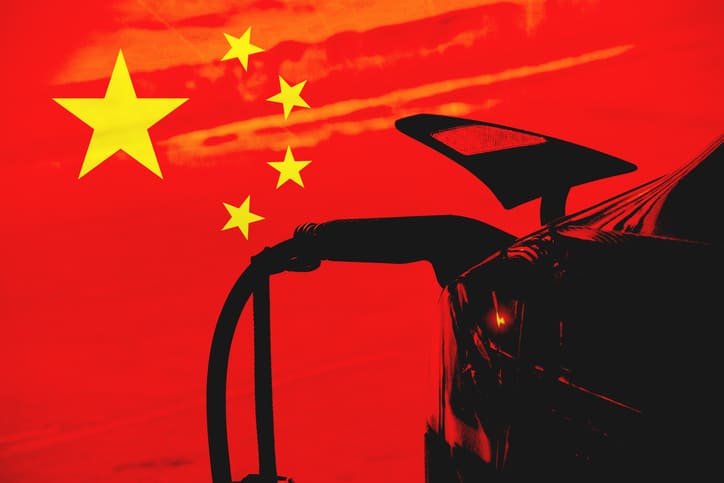
China is now running that logic at national scale, with a twist no dorm-room project could manage: the idle machines are cars. Electric models now account for more than half of new passenger sales in China, and the fleet on the road has passed forty million-each parked, by Zeng’s reckoning, roughly twenty-three hours a day and carrying a large battery and a bank of increasingly capable processors. His phrase, “token factory,” captures the idea of harnessing those dormant chips to generate the computational tokens that feed large language models, without pouring a single additional slab of data-centre concrete. He was not alone in Dalian: CATL’s chief manufacturing officer pressed the same image, and Tsinghua’s Ya-Qin Zhang argued that cheap green power and a long-planned smart grid are precisely why China can turn out low-cost tokens at all.
Flows, stocks, and a debate aimed at the wrong target
For most of the past decade, the West has read Chinese EVs like an income statement: a flow of exports to be measured, taxed, and, where necessary, blocked. Brussels imposed countervailing duties; Washington layered on its own. The premise was a competitive flood; the response was to build walls against the current.
That reading audits the wrong ledger. What China has quietly assembled is not a flow but a stock. Electrification began years ago as an energy-security manoeuvre by a country that imports most of its oil and has watched fuel supply lines turn into instruments of pressure-LONGi’s chairman reckoned the switch spared China around $110 billion in avoided oil and gas imports last year alone. The aim was a transport system powered by electrons the state could generate at home; the byproduct was a vast, networked inventory of batteries on wheels. Inventory is a balance-sheet item, not an income-statement one, and this one keeps compounding even as global goods trade slows to a crawl.
The car as a two-way node
The bridge from parked asset to productive infrastructure carries an unglamorous name: vehicle-to-grid, or V2G, which lets a plugged-in car push stored power back into the network at peak demand. China moved this from concept to policy in 2024; it now runs demonstration projects across nine cities and aims for some 5,000 bidirectional stations inside a national charging network of 28 million points by 2027. Officials project that 100 million bidirectionally linked EVs by 2030 could free up around a billion kilowatts of flexible capacity, and early trials already pay drivers as much as $200 a month to sell power back.
Zeng’s contribution is to see that the same plug can move more than electricity. A car wired to return power can also return computation-electrons one way to steady the grid, inference the other to feed the AI economy. That matters because the appetite is enormous: the International Energy Agency expects data centres to roughly double their power draw by 2030, with China and the United States together accounting for the bulk of the growth. The vehicle stops being a product depreciating in a garage and becomes a node that earns its keep: an asset working one hour in twenty-four is dead weight on a balance sheet, but one monetised while it sits rewrites the arithmetic of ownership.
Capital, not just conviction
Visions are cheap; balance sheets are not. What separates Zeng’s Dalian line from ordinary conference futurism is the money CATL has already moved, and moved in a deliberate stack. In April it paid about 4.1 billion yuan-roughly $600 million-for a 49% interest in the controlling shareholder of Zhongheng Electric, a leading supplier of the high-voltage direct-current systems that feed data centres run by Alibaba, Tencent, Baidu and ByteDance. In May, an affiliated fund agreed to pay up to $942 million for as much as 38.1% of VNET Group, a deal expected to close late this year that would make it the operator’s largest shareholder. Then came a commitment of about $740 million to DeepSeek’s $7.4 billion first funding round-alongside founder Liang Wenfeng and Tencent, CATL ranks among the lab’s largest outside backers.
Line the deals up-storage at the base, power conversion, data-centre capacity, frontier models at the summit-and the method is the same patient vertical integration that made CATL dominant in transport batteries. The company now tells investors it expects storage to supply half of global sales by 2030, up from about a quarter, and Zeng has valued the data-centre opportunity at ten times the EV-battery business. It already runs AI systems that bid for cheap grid power, trimming its own energy bill by roughly thirty percent.
What the reserve is for
None of this is frictionless. Skeptics note that repeatedly cycling a car battery to serve the grid can shorten its life, that automotive chips are not built for sustained AI workloads, and that the bidirectional charging standards remain unfinished. Zeng himself concedes that CATL’s sodium-ion answer to lithium dependence is three to five years away from the scale AI demand requires. The token factory is a direction of travel, not a finished machine-yet similar doubts once trailed China’s high-speed rail and solar build-out, and the state has long shown an appetite for absorbing early inefficiency in pursuit of returns that compound over decades.
It is tempting, in Western capitals, to file all of this under strategic threat and move on. The worry is not baseless: assets that serve driving, grid stability and AI at once concentrate dependence, and a compute layer inside forty million private cars raises real questions about data, security and control. But treating the story only as a threat obscures the more consequential fact-China is dissolving the wall between its power grid and its compute grid and doing it with capital rather than slideware.
The implications are practical. For investors, it argues for treating energy storage and grid hardware as AI-infrastructure plays, not sleepy industrials; for policymakers, it suggests duties aimed at the car keep missing the asset behind it. Asked what single thing he would tell governments, Zeng chose cooperation over geopolitical arithmetic-a self-interested plea, perhaps, but one worth weighing on its merits. The forty million cars resting in China’s driveways are not stranded assets; they are a reserve-and the sharper question is no longer whether it exists, but who learns to read it first.
About the Author

Imran Khalid is a geostrategic analyst, international affairs columnist, and a Senior Fellow at Foreign Policy In Focus (FPIF) based in Washington, D.C. His work focuses on global trade architecture, and international security.