Home Blog Page 20

AI is Making the One-Person Creative Studio a Reality

A futuristic robot hand engages with a digital screen showcasing vibrant abstract art in a sleek modern office setting, highlighting innovation and creativity.

By Dr. Gleb Tsipursky

A creative director stares at a blank page at 8:07 a.m., coffee cooling beside a half-finished brief. Ten years ago, that page would have pulled in a crowd: copy, art, strategy, maybe a junior team to feed the room. Today, the room can fit in a laptop, and the first sparks arrive in seconds.

A massive new experiment from the University of Montreal points to a clear turning point: generative AI now beats the average person on certain creativity tests, even with older models such as GPT-4 that are over a year out of date. The implication for creative work feels immediate.

Older Models Already Match The Average Brainstorm

Creative leaders already tune humans by context and constraint. They will tune models the same way.

GPT-4 already performs strongly on structured idea-generation tasks, and the study’s scale makes that point hard to dismiss. Researchers compared leading systems to more than 100,000 people and found that some models exceeded average human scores on divergent linguistic creativity, using the Divergent Association Task. In plain terms, a machine can now produce plenty of original-feeling options on demand, especially when the task rewards variety and semantic distance.

That is exactly what many professionals ask for during early-stage ideation: names, angles, taglines, hooks, framing, counterpoints, and starting structures. An older model can flood the table with options, then your judgment selects the few that fit brand voice, audience reality, and business constraints. That workflow already compresses hours into minutes, and it shows up in everyday behavior. My recent LinkedIn poll, which captures more recent models, illustrates that reality: 70% of respondents reported their primary use case for gen AI as research, analysis, and brainstorming.”

The key shift for leaders sits inside that word “primary.” When brainstorming and related creative activities become the dominant use case, the tool is no longer a novelty. It becomes part of the operating system for creative work. Teams that once depended on a large volume of human draft labor start to depend on orchestration: prompt craft, iteration discipline, and a sharp creative brief. Indeed, the University of Montreal study showed that with better prompting and directions for the model, its creative output substantially improves. Creative leaders already tune humans by context and constraint. They will tune models the same way.

Newer Models Become True Creative Partners

Assistants generate options after direction. Partners push back, reframe, and expand the search space with you. Newer models move toward partnership because they sustain longer threads, track intent more reliably, and generate richer alternatives across formats. The study extends beyond word lists into creative writing tasks such as haiku, plot summaries, and short stories, and it still finds AI matching or exceeding average human work in some cases. That matters for professional output because modern creative rarely lives in a single lane. A campaign needs narrative, product truth, performance variants, visual direction, and platform adaptations.

Partnership also changes the emotional rhythm of creative work. The hardest part often involves momentum: the dead zone between the brief and the first compelling direction. A model that can generate ten plausible campaign territories, then remix the best three into sharper versions, keeps the creator moving. You provide taste, ethics, positioning, and audience empathy. The model provides relentless iteration. That pairing raises the “creative watts” per person.

The study also underscores a ceiling for older models where top human creativity stays ahead, especially on richer work like poetry and storytelling. In practice, that ceiling becomes a map of where human advantage concentrates. The premium shifts toward high-level concepting, tonal mastery, and the ability to connect a brand to culture with precision. Those skills resemble direction more than production. As models improve, the human role grows more like a showrunner than a room full of scriptwriters.

This is where staffing changes show up. A single creative lead equipped with multiple AI collaborators can cover territory that once required several specialists for first drafts. The work still calls for humans, yet the leverage per human rises. Fewer people can ship more finished creative, and that reality ripples through agencies and in-house studios.

The Creative Org Chart Shrinks And The Bar Rises

The Mad Men image of a packed room has always been partly theater. The real engine has been a small number of people who frame the problem well, spot the surprising angle, and shape the final artifact. AI makes that truth operational. Instead of assembling a full room to generate breadth, one person can simulate breadth through multiple model “personas,” each tuned to a role: contrarian strategist, emotional storyteller, ruthless editor, and audience advocate. The new creative team becomes a human lead plus an ensemble of AI brainstorming partners.

The study’s top-line pattern supports this future: average performance rises, yet peak human creativity stays distinctive, especially among the most imaginative participants. For professional readers, that translates into a simple career equation. Routine ideation and first-pass drafting become abundant. Taste, originality, and synthesis become scarce. Scarcity drives value.

AI can generate abundance; it cannot own accountability. The creative leader owns the call.

Organizations will respond with new process design. A creative lead can run tighter loops: brief, generate, evaluate, refine, test, and ship. Fewer handoffs reduce drift. Brand consistency improves because the same director guides more output. Speed increases because iteration happens in minutes. Budget reallocates from headcount toward talent density, tooling, and review.

The practical challenge becomes governance: quality control, originality standards, and responsible use. Partnership demands a stronger brief, clearer constraints, and sharper review instincts. It also demands a human who understands audience reality, business goals, and brand stakes. AI can generate abundance; it cannot own accountability. The creative leader owns the call.

Creative work is entering an era of compression. Older models already handle much of the early ideation workload, and newer models accelerate toward true partnership. That combination boosts creative productivity so dramatically that a smaller number of creatives can cover more ground, with higher expectations for judgment and originality. The future looks less like a crowded bullpen and more like a single high-leverage creator running an AI-powered studio, shipping better ideas faster and setting a new standard for what “creative capacity” means.

About the Author

Dr. Gleb TsipurskyDr. Gleb Tsipursky was named “Office Whisperer” by The New York Times for helping leaders overcome frustrations with Generative AI. He serves as the CEO of the future-of-work consultancy Disaster Avoidance Experts. Dr. Gleb wrote seven best-selling books, and his two most recent ones are Returning to the Office and Leading Hybrid and Remote Teams and ChatGPT for Leaders and Content Creators: Unlocking the Potential of Generative AI. His cutting-edge thought leadership was featured in over 650 articles and 550 interviews in Harvard Business ReviewInc. MagazineUSA TodayCBS NewsFox NewsTimeBusiness InsiderFortuneThe New York Times, and elsewhere. His writing was translated into Chinese, Spanish, Russian, Polish, Korean, French, Vietnamese, German, and other languages. His expertise comes from over 20 years of consultingcoaching, and speaking and training for Fortune 500 companies from Aflac to Xerox. It also comes from over 15 years in academia as a behavioral scientist, with 8 years as a lecturer at UNC-Chapel Hill and 7 years as a professor at Ohio State. A proud Ukrainian American, Dr. Gleb lives in Columbus, Ohio.

Top US Intelligence Official Resigns, Challenges Basis of Iran War

US Intelligence Official Resigns

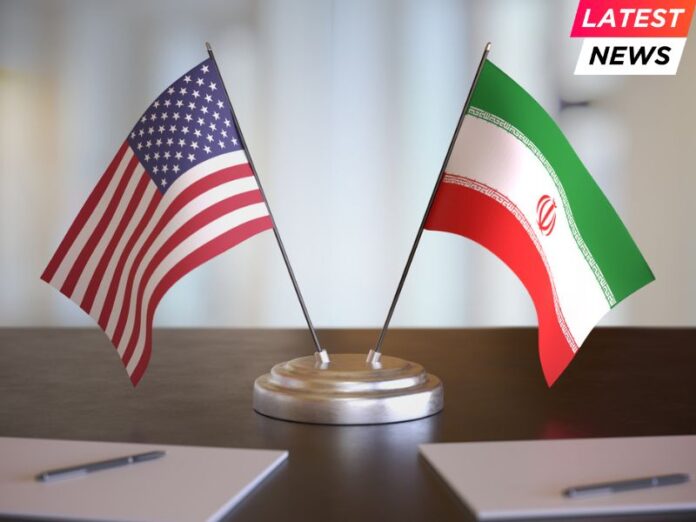
A senior intelligence official in the United States stepped down this week, openly disputing the government’s justification for its war with Iran.

Joe Kent, director of the National Counterterrorism Center, announced his resignation and said he could not support the ongoing conflict. In his statement, he argued that Iran did not pose an imminent threat, directly contradicting claims made by President Donald Trump and his administration.

Kent’s exit marks one of the most high-profile internal criticisms of the war so far. His remarks have renewed debate in Washington over the intelligence used to justify military action. Lawmakers and analysts have already raised concerns about whether the threat assessment was overstated.

Before resigning, Kent met with Vice President JD Vance and Director of National Intelligence Tulsi Gabbard to explain his position. Despite the meeting, he proceeded with his decision and made his objections public.

Trump dismissed Kent’s stance shortly after the announcement, calling his views weak on national security. The administration has maintained that it acted to prevent potential attacks, although some defense briefings reportedly suggested Iran would not strike unless provoked.

The resignation highlights growing divisions within political circles over the conflict. While many Republican voters continue to support the war, several prominent voices have begun to question its rationale. Kent’s departure adds pressure on the administration to further explain its strategy and the intelligence behind it.

Related Readings:

Iran’s Supreme Leader Calls to Keep Strait of Hormuz Closed

Israel Strikes on Iran: Global Leaders React

How to Make Custom T-Shirts Look Professional

Custom T-Shirts - logo and design of T-shirt

Starting a brand is hard enough without your merch letting you down. Whether you’re a solo founder outfitting your team, a small business owner building brand identity, or an event planner putting logos on shirts for a fundraiser, the decisions you make upfront determine whether your shirts build credibility or quietly damage it.

Most people jump straight into design without understanding costs, print methods, material choices, or timelines. That’s how you end up with a box of shirts you can’t hand out. This guide walks you through how to make your own shirts the right way, from blank selection to proof approval, so you get professional results on your very first order.

Why Custom Shirts Are a Real Business Decision

Branded apparel is a visual signal. Investors, clients, and event attendees form impressions quickly. A pixelated logo on flimsy fabric says something about your standards whether you intend it to or not.

The same logic that applies to a pitch deck applies here. Every detail counts. Getting your shirts right from day one means lower costs, less waste, and a finished product that works for your brand.

Who Is This Guide For?

This guide is for small business owners, startup founders, event planners, nonprofits, and brand creators placing their first shirt order. It covers fabric, design file specs, printing methods, costs, and timelines so you go in knowing exactly what to expect and what questions to ask.

If you’ve been confused about print methods, unsure what 300 DPI means, or worried about minimum order quantities, this guide answers all of it in plain terms.

Step 1: Define Your Purpose Before You Design Anything

Are Your Shirts for Business, Events, or Personal Use?

Business shirts need consistency and durability because they will be worn repeatedly and seen by clients. Event t-shirts need visual punch that photographs well. Merch shirts have more creative room. Your use case shapes every decision that follows, including fabric weight, print method, and order quantity.

A restaurant putting staff in branded uniforms needs washfast colors and pre-shrunk fabric. A nonprofit running a 5K needs bold front chest prints that read fast in photos. A startup handing out company swag needs a shirt people will actually wear again. Define the goal first, then design around it.

Step 2: Choose the Right Blank T-Shirt

Fabric Types and Why They Matter for Print Quality

The garment blank you print on affects how the design looks, how long the print lasts, and how the shirt wears. Ringspun cotton gives a smooth surface that holds ink cleanly. A cotton-polyester blend resists shrinkage. Tri-blend fabric is lightweight and soft. GSM fabric weight, or grams per square meter, tells you how heavy or light the shirt feels.

For most business use, 160 to 180 GSM hits the right balance. Bella+Canvas 3001 and Gildan 5000 are industry-standard blanks. They’re consistent, widely available, and print-tested at scale.

When ordering for groups, build a size distribution before you check out. Skipping this step is one of the most common and most avoidable first-order mistakes. Most adult groups lean heavier on mediums and larges.

Step 3: Create a Design That Looks Professional

Use the Right Design Tools

Canva’s online t-shirt maker is the most accessible starting point for beginners. Adobe Illustrator is the industry standard for vector artwork. If you already have a logo, get the vector source file before uploading anything to a printer. A JPEG won’t print cleanly at large sizes.

Typography, Color Theory, and Placement

Use bold, clean sans-serif fonts. Avoid decorative fonts that lose legibility on fabric. For color, think in terms of contrast, light ink on dark shirts and dark ink on light shirts. CMYK is the color profile used in professional printing. If your brand uses Pantone colors, match them by number to avoid color mismatch.

Placement options include front chest print, back print, left chest logo, and sleeve print. Most business shirts use a left chest logo for a clean, professional look. For events or merch, a full front design gives maximum visibility.

Design File Specs: Resolution, Format, and Bleed

Your design file needs to be at 300 DPI minimum. Low-resolution files produce pixelated designs, one of the most common beginner mistakes. Save your artwork as a PNG with a transparent background, an SVG, or a print-ready PDF. Vector artwork is always preferred because it scales to any size without quality loss.

Step 4: Pick the Right Printing Method

The right print method depends on your order size and design complexity.

Method Best For Min. Order Avg. Cost/Shirt
Screen Printing Bulk, simple designs 24+ units $5 – $10
DTG Printing Complex, full-color designs 1 unit $15 – $25
Heat Transfer / HTV At-home, small batches 1 unit $3 – $8
Sublimation All-over print, polyester only 1 unit $12 – $20

Screen printing uses mesh screens with plastisol ink per color layer and delivers durable results at scale. DTG, or direct-to-garment, prints digitally onto the fabric and handles photographic designs with no minimum order. Heat transfer vinyl and iron-on transfers using a Cricut machine give you an at-home printing option for small runs. Sublimation only works on polyester but covers the full garment surface. Embroidery adds a premium finish for logos on polos or structured caps.

For first-time business orders under 24 units, DTG is the safest starting point. Above that, with a simple design, screen printing brings your cost per unit down significantly.

Step 5: Find a Reliable Printing Partner

Ask for samples before committing to a large order. Check customer reviews for print quality and color accuracy. A reputable printing company will offer free proof approval before production starts. Never skip that step.

Standard production runs 5 to 7 business days. Shipping adds 2 to 5 days on top of that. For any event order, budget at least two full weeks from order to delivery. Red flags include printers who won’t send proofs, vague pricing, or no satisfaction guarantee. Services like Printful, Bonfire, and VistaPrint are reliable starting points for online orders.

Step 6: Approve Your Proof Before Anything Prints

Always review a digital mockup before approving production. Tools like Placeit and Printful’s mockup generator show exactly how your design sits on the shirt, including scale, placement, and color against the fabric. Check everything: alignment, spelling, color accuracy, and file resolution. Once you approve, changes cost money.

How to Care for Your Shirts So They Last

Wash printed shirts inside out in cold water. High dryer heat breaks down ink faster than anything else. For screen-printed shirts, air drying extends print life and color preservation. These aren’t optional suggestions. They’re how you protect the investment you made in professional print quality from the start.

Ready to Place Your First Order?

You now have a clear path from idea to finished product. You know which fabric holds ink best, which printing method fits your order size, what your design file actually needs to look like, and how to vet a printing partner before you spend a dollar.

The difference between shirts that look professional and shirts that sit in a closet comes down to these decisions. Make them carefully, and your first order becomes your best brand asset. When you’re ready to take the next step with custom t-shirts that represent your brand the way it deserves, look for a printer that offers free proofs, a satisfaction guarantee, and transparent pricing from the start.

Good shirts don’t just look sharp. They tell people your brand means business.

Frequently Asked Questions

How much does it cost to make custom t-shirts?

Screen printing runs $5 to $10 per shirt at 24+ units. DTG costs $15 to $25 for small runs. Cost per unit drops with higher quantities across all methods.

What’s the minimum order?

DTG, heat transfer, and sublimation have no minimum. Screen printing typically requires 12 to 24 pieces to justify setup costs.

What file format do I need?

SVG or vector PDF is best. PNG at 300 DPI with a transparent background is also accepted by most printing services.

What’s the difference between screen printing and DTG printing?

Screen printing uses physical ink screens and works best for bulk orders with simple designs. DTG prints digitally and handles complex, full-color artwork at any quantity.

Can I print shirts at home?

Yes. A Cricut machine or heat press with heat transfer vinyl lets you produce shirts at home for small batches or single pieces.

Are there eco-friendly options?

Yes. Water-based inks, organic cotton blanks, and OEKO-TEX certified materials are available through several printing services.

European Defence: The Mirage of a New Maginot Line

European defence

EU plans to develop a so-called “drone wall” across NATO’s eastern flank were recently thrown into doubt due to an on-going power struggle between national governments, the NATO alliance and the European Commission. Though such efforts can only be lauded, they must not be advanced so much as to ignore the development of offensive capabilities.

With Russian sabre-rattling continuing along NATO’s eastern flank, the European Union had begun developing a “drone wall” along the borders of members facing Russia (Finland, Estonia and Latvia).

Part of the Eastern Flank Coalition (which includes Baltic States and Poland), the Drone Defence Initiative has been conceived to provide defensive weapons to destroy drones as well as a new command-and-control network. We do not have the capability to detect [drones], or it is very limited. Our radars see aircraft, they see missiles, but they do not see very precisely drones that fly very, very low,” explained Andrius Kubilius, commissioner of defence and space for the European Commission. Indeed, the EU appeared ready to commit significant communication and financial resources to these efforts.

But the initiative has exposed tensions over who should lead, fund and control Europes next line of defence. The strategic question raised by this renewed focus is not whether such defensive systems are useful—they are—but whether Europe is again at risk of mistaking visible fortifications for a comprehensive military posture. The debate echoes a familiar historical warning: the Maginot Line was not a failure because it was poorly designed, but because it became a substitute for a balanced strategy.

A politically attractive shield

The appeal of the drone wall is easy to understand. Persistent surveillance drones, low-cost interceptors and layered air defence systems respond directly to lessons drawn from Ukraine, where cheap drones and missiles have transformed the battlefield. They are comparatively affordable, highly visible to voters, and politically easier to justify as defensive” investments. According to the European Commissions own overview of future defence initiatives, “air and missile defence, drones, and space systems” are at the forefront of Europe’s industrial push in the framework of the Readiness 2030 programme.

In this regard, a joint declaration issued at the Eastern Flank Summit in Helsinki in December 2025 called for accelerated work on shared surveillance, early warning and drone defence capabilities, framing them as urgent responses to an increasingly hostile security environment, and calls for “immediate prioritisation of the EUs Eastern Flank through a coordinated and multi-domain operational approach.”

It is also, in political terms, a good” kind of spending. It promises protection of territory and critical infrastructure, it is easier to present as a European public good, and it is comparatively legible to voters. Kubilius even emphasised the manageable headline cost, with preliminary estimates indicating that it would cost one billion euros for a drone wall covering Poland and the Baltic statesIts not tens of billions or hundreds of billions.

A modern Maginot Line? 

Historical analogies are often misused in defence debates, but the Maginot Line remains instructive when treated with nuance. Frances interwar fortifications performed their intended task: German forces largely avoided frontal assaults in the sectors they covered. The strategic failure lay elsewhere, notably in the lack of sufficient investment in mobile armoured forces, air power and operational concepts capable of taking the fight to the enemy. 

A recent War on the Rocks analysis explicitly warned against drawing simplistic conclusions, arguing that Europes emerging lines of defence are not Maginot 2.0” in technical terms, but could become strategically equivalent if they crowd out investment in offensive capabilities. It describes the Eastern Flank initiative at looking to create a “digital shield” designed to limit the human cost, but outlines how some critics see this as “technological fantasy”.

The risk is increasingly visible in current budgetary choices. Germanys decision to invest heavily in US-made Patriot systems and Israeli Arrow 3 interceptors—alongside IRIS-T—strengthens short-term protection but does little to advance Europes defensive base. These purchases amount to billions of euros flowing outside the EU while European manufacturers struggle to secure comparable political backing.

Does Europe have a DPS blind spot?

The imbalance becomes most visible in the field of deep precision strike (DPS). Long-range conventional strike capabilities are a central component of modern deterrence, allowing states to hold adversary logistics, command centres and critical infrastructure at risk well beyond the frontline. They complicate adversary planning, provide escalation control options, and reduce reliance on allies by offering sovereign response capabilities. Yet compared with the political momentum behind drone defence and air shields, DPS remains largely absent from EU-level narratives.

At the political level, awareness is nevertheless clearly present. Andrius Kubilius draws on the “Ukrainian experience” to argue that any Eastern European defence initiative must include deep-strike capabilities “in order to be ready to carry out deep-strikes into enemy territory in the case of enemy invasion.” In other words, even within the wall” narrative, the logic is not purely defensive: it assumes that denying and neutralising drones is only one layer of a wider posture that must also include the capacity to impose costs at distance.

A collective response to this concern has moreover been sought through the European Long-Range Strike Approach (ELSA), but progress has been slow and timelines extend well into the 2030s. Political ownership remains diffuse, and the project has not been elevated to flagship status, with the unexpected exception of President Macron’s address to the French armed forces on January 15.

The Land Cruise Missile (LCM) is one of the projects identified under ELSA, carried by a European manufacturer, MBDA, and technologically mature, which could offer Europe a sovereign alternative to US-supplied cruise missiles. In capability terms, it directly addresses the gap Kubilius identifies. Politically, however, it remains discreet, lacking any sort of prioritization. The same goes for other, less advanced, ELSA initiatives, such as hypersonic missile being developed by the UK and Germany. Similarly, while competing systems such as the US ERAM might be acquired by European states for Ukraine, promising European initiatives like the Franco-Italian-British Stratus programme seem absent from ELSA, without clear support from its sponsoring governments, despite the urgency of the needs. This raises questions about the coherence of the policies pursued by the participating countries.

The imbalance of having a shield without a sword 

However, Eastern European member states have become more and more vocal as they urge Brussels to increase defence spending. Back on December 16, 2025, heads of state and governments from the Eastern flank called for what Finnish Prime Minister Petteri Orpo described as “concrete measures”, with the group announcing a “coordinated operational approach” in areas such as “ground combat capabilities, drone defence, air and missile defence, border and critical infrastructure protection, military mobility and counter mobility as well as strategic enablers.” 

The persistent problem is that debates over EU defence funding are unfolding under ever tightening fiscal constraints. Defensive systems, with their visible protective logic, fit that profile. Analytical commentary from the European Leadership Network reflects the same logic. In arguing for scaling low-cost defensive technologies such as counter-drone systems, the piece frames them as a rational response to lessons from Ukraine; effective, affordable and rapidly deployable. 

Indeed, deterrence rests on the adversary’s belief that aggression will impose unacceptable costs. Europe faces a problem of balance. Today, offensive strike capabilities remain fragmented and politically uneasy. History’s lesson is clear: defence alone is never enough. Europe’s security depends on convincing adversaries that aggression will cost more than they can bear. 

The Blueprint of a Pivot: How Max Vollmer Scaled a $125M Development Platform

Max Vollmer
Courtesy/Copyright of Max Vollmer

In 2020, the chances of Max Vollmer becoming a major player in Florida real estate seemed statistically impossible. He was 23, living in a small room in Oregon, looking at a bank balance of exactly $76. As an international student-athlete at the University of Oregon, he was legally prohibited from taking a traditional job, and his wife, Kaitlin, had just been let go from her server gig as the first COVID-19 lockdowns rolled in.

Most would look for a loan or a plane ticket home. Vollmer looked for a loophole. He spent his nights reading up on real estate wholesaling—a high-churn business model that requires almost zero capital but an absurd amount of cold-calling. He started making a hundred calls a day to homeowners, facing constant rejection and hostility. Thirty days later, though, he closed his first deal, bringing in a $45,000 assignment fee.

More than a lucky break, this became the start of Vollmer’s obsession with vertical integration. He didn’t spend the money, though. He put every dollar back into the business, eventually closing 165 wholesale deals across eight states before he even finished his degree.

Max Vollmer
Courtesy/Copyright of Max Vollmer

High Performance as a Business Model

Vollmer’s background as a world-class decathlete for Germany and Nike is often cited as the root of his work ethic, but the real link lies perhaps in his ability to handle technical complexity. The decathlon is a brutal two-day test of ten different disciplines. You can’t win by being a specialist; you have to be good enough at all of them to prevent a total collapse in your standings.

When Vollmer moved from wholesaling into the fix-and-flip market, he found himself managing 35 employees and up to seven renovations at a time. It was chaotic to say the least. He was dealing with the standard headaches of the industry: contractor disputes, missed inspections, razor-thin margins. He soon realized relying on third parties for construction and design was a fundamental weakness in his chain.

To address this, Vollmer created a vertically integrated firm that brought those functions in-house. Today, his platform includes Vollmer Real Estate Investments for strategy, Cepheus Homes for construction, and Arvaya Designs for the design and management side of things. By controlling the entire stack—from the very first land acquisition to the final interior staging—he killed the middleman overhead that typically eats away a developer’s profit.

The $125 Million Florida Pipeline

The results of this internal restructuring can be seen in Vollmer’s current pipeline, which includes  61 to 65 residential units with an estimated resale value of $115 to $125 million. His focus has now turned to high-growth Florida markets like Tampa, St. Petersburg, and Sarasota.

A major part of this is the Rosemary project in Sarasota’s Rosemary District. This $24 million development consists of 12 luxury townhomes designed for a certain type of modern buyer who craves downtown walkability as well as high-end wellness-focused amenities. The units will range from 2,075 to 2,333 square feet and include private rooftop terraces decked out with outdoor kitchens and options for cold plunges or saunas.

To fund the project, Vollmer arranged a $5.5 million preferred equity investment from Plutus Capital Partners in early 2026. Plutus, a firm backed by heavy-hitting family offices like the DeBartolos and the Shahs, looks not only for good real estate but also for operators with good systems. Matt Gough, CEO of Plutus, noted that Vollmer’s track record—over 30 successful development projects in just three years—was what made the real difference.

Handling the Burden of Scale

As a developer grows, the work itself tends to shift from sourcing deals to managing people and capital. This is perhaps where many entrepreneurs go wrong; they just can’t resist being the operator. Vollmer had to learn how to delegate without losing the quality control that built his reputation.

Today, Vollmer’s taken up a practice of meditative visualization to handle the pressure. It’s less about achieving some kind of zen state; he sees it as a tactical tool to remove himself from the noise and make clearer-headed decisions on land acquisitions or partnership terms. Vollmer knows that if he’s reactive, he’s already lost the advantage.

The Purpose of Permanence

For Vollmer, the most grounded part of his current strategy comes from his personal life. The birth of his daughter, Sofia, totally changed his timeline. He stopped chasing transactional income and started focusing on building the kinds of permanent assets that contribute to a city’s fabric. Vollmer likes to think of this as optional freedom, so to speak—to build a business that can run on its own so he can choose how he spends his time rather than being a slave to the next closing.

That $76 moment in Oregon was pretty impactful, but the real story is what happened afterward. Vollmer’s story is at bottom about the years of compounding discipline and the refusal to outsource the hard parts of the business. And for the investment community watching the Florida landscape, Vollmer perhaps represents a new generation of developers: one who values the system as much as the site.

The photos in the article are provided by the company(s) mentioned in the article and used with permission.

From Rap Battles to Nepal’s Top Job: Balendra Shah’s Rise

Balendra Shah’s Rise From Rapper to Nepal’s Prime Minister

KATHMANDU, Nepal — Balendra Shah, the rapper who once railed against Kathmandu’s corruption, is poised to become Nepal’s next prime minister. The 35-year-old, widely known as Balen, captured the hearts of young voters who grew up streaming his underground rap, turning his music into a political movement.

Shah’s Rastriya Swatantra Party (RSP) secured the largest mandate in Nepal’s modern electoral history, following nationwide elections triggered by youth-led protests that toppled the previous government. Shah is expected to take office in the coming days after the formal declaration of results.

“Because of Balen, this nation is happy, tears of joy are flowing,” said supporter Sakchyam Sangraula at a celebration in Damak, Jhapa district.

Born in 1990 to an Ayurvedic doctor and a homemaker, Shah studied structural engineering in Nepal and India while building his rap career. His lyrics highlighted systemic inequality and corruption, earning him a devoted following.

As Kathmandu’s mayor, Shah led clean-up drives, demolished illegal structures, and live-streamed council meetings for transparency. He also drew attention for his provocative stances toward India and China, asserting Nepal’s sovereignty in disputed territories.

Shah’s ascent reflects a generational shift in Nepalese politics. After months of protests against corruption and social media blackouts, young voters propelled him from cultural icon to national leader.

On the streets of Kathmandu, supporters celebrate, hoping Shah will honor his promises. “We trusted you, now you should not play with our trust,” said Aayush Bhattarai, reflecting the optimism and pressure surrounding Nepal’s youngest prime minister.

Related Readings:

Protests - Donald Trump

Nepal protesters

Close up of wooden judge gavel over the american

Resources Ignite Gen AI Innovation

Generative AI innovation

By Dr. Gleb Tsipursky

The future of your business hinges on your ability to embrace and effectively utilize Generative AI (Gen AI). To do so requires fostering an innovative culture of experimentation with this powerful technology. Yet it’s not simply a matter of encouraging your employees. It demands concrete investments in time, tools, and support to overcome challengesand manage risks effectively. Without these crucial resources, even the most enthusiastic teams will struggle to unlock Gen AI’s transformative potential. It’s akin to giving a master chef the finest ingredients but no kitchen – the potential is there, but the means to realize it are absent. This is about shaping the future of your industry.

The Currency of Gen AI Innovation: Time

Time is arguably the most precious commodity in the realm of Gen AI experimentation. In today’s fast-paced business environment, employees are often consumed by daily tasks, leaving little room for creative exploration. This constant pressure stifles innovation.

Without these crucial resources, even the most enthusiastic teams will struggle to unlock Gen AI’s transformative potential.

To counter this, organizations must intentionally carve out dedicated time for Gen AI exploration. This could involve structured “innovation hours,” focused “hack days,” or intensive project sprints where teams can temporarily set aside their routine responsibilities and immerse themselves in Gen AI initiatives. This echoes the approach of companies like Google, which famously allowedemployees to dedicate 20% of their time to personal projects, resulting in groundbreaking innovations like Gmail and AdSense.

While a 20% model may not be feasible for all organizations, even smaller, dedicated time blocks—a few hours per week or periodic “innovation sprints”—can have a profound impact. These periods offer employees the mental space and freedom to brainstorm, test, and refine ideas without the constraints of daily pressures, signaling that creativity and experimentation are integral components of the work week.

Equipping Gen AI Innovation for Success: Tools and Technology

Beyond time, access to advanced tools and technologies is paramount for successful Gen AI experimentation. The efficacy of these experiments often depends on a robust technological foundation, encompassing cloud computing platforms, scalable data storage, high-quality datasets, and sophisticated machine learning environments. Without these resources, teams may encounter obstacles in scaling their experiments or fully exploiting the capabilities of Gen AI solutions.

For instance, cloud-based platforms like Amazon Web Services (AWS), Microsoft Azure, and Google Cloud provide the necessary computational power to execute complex AI models. Data also plays a crucial role. Access to high-quality, well-organized, and diverse datasets is a prerequisite for training effective AI models. Organizations must invest in robust data infrastructures—including data lakes, real-time data pipelines, and data governance frameworks—to ensure that experimentation with Gen AI yields optimal results. Ensuring that data is readily accessible, ethically sourced, and meticulously curated empowers teams to experiment with AI models in meaningful and scalable ways.

Moreover, organizations should consider leveraging synthetic data, which can be generated to simulate real-world data, especially when working with sensitive or limited data sources. In addition to infrastructure, providing cutting-edge tools and software specifically designed for AI development is crucial. These might include platforms for natural language processing (NLP), automated machine learning (AutoML) tools, or AI-driven analytics platforms.

By equipping teams with such tools, organizations enable them to focus on solving business challenges, rather than spending excessive time and effort setting up complex systems from scratch. Access to pre-built AI modules or open-source AI libraries can significantly accelerate the pace of experimentation, reducing the technical barriers that might otherwise slow innovation. Furthermore, collaboration platforms such as GitHub, Slack, or Microsoft Teams can be used to streamline the sharing of ideas and foster teamwork during Gen AI projects.

The Power of Support: Mentorship, Training, and Expertise

Support, encompassing mentorship, training, and access to external expertise, is equally critical to the success of Gen AI experimentation. Gen AI is a rapidly evolving field, with new breakthroughs, methodologies, and best practices constantly emerging.

To keep pace, organizations must invest in continuous learning and upskilling for their teams. This can take various forms, including internal training programs, external workshops, conferences, or partnerships with educational institutions and industry experts. Leaders should encourage employees to take advantage of these opportunities to deepen their understanding of Gen AI, as well as adjacent fields like data science, AI ethics, and advanced analytics.

Mentorship is another powerful tool. By pairing employees experimenting with Gen AI with more experienced data scientists or AI specialists, organizations create a structure for knowledge transfer that can accelerate learning. Mentors can offer guidance on best practices, troubleshooting, and emerging trends, helping teams navigate the complexities of AI projects more effectively.

Mentorship can also reduce the fear of failure by providing reassurance and support during difficult phases of experimentation. For example, if a team is struggling to get a machine learning model to perform as expected, a mentor with experience in model tuning or feature engineering can offer valuable insights that might take the team in a new, more successful direction.

In addition to internal support, collaboration with external experts can be invaluable. For many organizations, the technical complexity of Gen AI can present a steep learning curve. Partnering with third-party consultants, industry leaders, or AI research firms can provide access to expertise that would otherwise be difficult to develop internally. External partners can offer fresh perspectives, introduce cutting-edge methods, and help steer AI experiments toward best-in-class solutions.

Additionally, learning from case studies of other organizations that have successfully implemented Gen AI can provide critical insights and lessons that may guide experimentation efforts and help avoid common pitfalls. For instance, consider consulting studies by McKinsey and other organizations on best practices for Gen AI deployment.

When employees feel supported in their experimentation efforts—whether through mentorship, training, or external collaboration—they are more likely to take bold, innovative risks. A supportive environment with psychological safety empowers teams to challenge assumptions, push the boundaries of what is possible, and remain resilient in the face of setbacks. It enhances employees’ confidence in tackling complex AI problems, knowing that they have the necessary resources and guidance to succeed. A culture that emphasizes continuous learning and offers access to expert knowledge increases the likelihood that experimentation will lead to innovative solutions rather than dead ends.

Finally, the allocation of sufficient financial resources is essential to sustain experimentation with Gen AI. Investing in AI initiatives can be costly, whether in terms of infrastructure, personnel, or external partnerships. To ensure the success of Gen AI experimentation, organizations must budget for the acquisition of AI tools and technologies and the potential for trial and error. AI experiments can take time to yield results, and it is essential that teams have the financial runway to continue experimenting without the constant pressure to deliver immediate outcomes. Providing long-term investment in AI projects demonstrates leadership’s commitment to Gen AI as a strategic priority and reassures teams that they have the backing necessary to take risks and innovate.

Client Case Study: Mid-Size Manufacturing Firm

Recently, I consulted with a mid-sized manufacturing company struggling to optimize its supply chain. They faced frequent disruptions, leading to production delays and increased costs. I worked with their leadership to implement a structured Gen AI experimentation program.

To ensure the success of Gen AI experimentation, organizations must budget for the acquisition of AI tools and technologies and the potential for trial and error.

First, we allocated dedicated “innovation sprints,” one week per quarter, where a cross-functional team focused solely on Gen AI solutions for supply chain management. Second, we invested in a cloud-based machine learning platform and provided training on relevant AI tools and techniques. Third, we partnered with a data analytics firm to help curate and prepare their supply chain data for AI model training.

The results were clear. After six months, the company developed a Gen AI model that could predict potential supply chain disruptions with 92% accuracy, compared to their previous 73% rate using their old methods, allowing them to proactively mitigate risks much more effectively. This resulted in a 15% reduction in production delays and a 10% decrease in inventory holding costs.

The Future of Gen AI Innovation

The landscape of Gen AI is dynamic, constantly evolving with new discoveries and applications emerging at a rapid pace. For organizations truly committed to harnessing its power, the journey of experimentation is not a one-time project, but rather an ongoing process of learning, adaptation, and refinement. By investing in the necessary resources and fostering a culture that embraces experimentation, businesses can position themselves at the forefront of this transformative technology, ready to capitalize on the opportunities that lie ahead.

About the Author

Dr. Gleb TsipurskyDr. Gleb Tsipursky was named “Office Whisperer” by The New York Times for helping leaders overcome frustrations with Generative AI. He serves as the CEO of the future-of-work consultancy Disaster Avoidance Experts. Dr. Gleb wrote seven best-selling books, and his two most recent ones are Returning to the Office and Leading Hybrid and Remote Teams and ChatGPT for Leaders and Content Creators: Unlocking the Potential of Generative AI. His cutting-edge thought leadership was featured in over 650 articles and 550 interviews in Harvard Business ReviewInc. MagazineUSA TodayCBS NewsFox NewsTimeBusiness InsiderFortuneThe New York Times, and elsewhere. His writing was translated into Chinese, Spanish, Russian, Polish, Korean, French, Vietnamese, German, and other languages. His expertise comes from over 20 years of consultingcoaching, and speaking and training for Fortune 500 companies from Aflac to Xerox. It also comes from over 15 years in academia as a behavioral scientist, with 8 years as a lecturer at UNC-Chapel Hill and 7 years as a professor at Ohio State. A proud Ukrainian American, Dr. Gleb lives in Columbus, Ohio.

How the US/Israel War Against Iran Undermines Global Economic Prospects

Chess made from USA, Iran and Israel flags on a white background with soft reflection

By Dan Steinbock             

The chaotic conditions created by the US/Israeli war against Iran are now in an escalatory phase. The reverberations will be severe worldwide.

Expresso: U.S. President Donald Trump is scheduled to visit Beijing for a high-stakes summit with Chinese President Xi Jinping at the turn of April. Will the trade talks be threatened by the Middle East War?

By destabilizing the entire region, the US/Israeli War poses a risk not only to China, but the entire world, particularly to the energy importers in the Global South.

Despite its current energy sufficiency, this crisis poses huge risks to the US as well, due to elevated energy prices, the likely return of stagflation, the billion-dollar daily bill for the attacks and rapidly-rising debt. Hence, the Pentagon’s reported request to ask Congress for an additional $50 billion to fund the war with Iran, on top of a $1.5 trillion budget request.

Ironically, the Iran war may strengthen Beijing’s bargaining position in the trade talks. China may seek to leverage its response to the US strikes to secure a more durable truce.        

US and Israel, different goals    

E: China is sending a special envoy Zhai Jun to the Middle East to de-escalate the situation. Is Operation Epic Fury, as it is known in the US, intended to continue until the objectives defined by Trump and Israel regarding Iran are achieved?

Deliberate targeting of civilians and civilian infrastructure represents a gross violation of international law and war crimes.

China’s envoy will seek a path to de-escalation. This has long been the consistent Chinese stance. But the US stance, and certainly the view of Prime Minister Netanyahu, suggests that hostilities will prevail until Iran’s military capacity is dismantled or the regime capitulates. After all, the two began the war when the peace talks in Oman were about to succeed.

Neither President Trump nor the Israeli government have clearly stated the objectives for their massive attacks. Furthermore, their strategic objectives are divergent. The US administration’s objective seems to be to dismantle the Iranian leadership and gain control of Iran’s massive untapped energy reserves. Whereas PM Netanyahu has long sought to fragment Iran as a nation (see my The Fall of Israel, 2024).

Operation Epic Mistake? 

Operation Epic Fury is Israel’s “Operation Roaring Lion” disguised. It reflects the interests of the Netanyahu government, which has a rationale for the endgame. By contrast, the US administration has alienated most Americans and even its MAGA base. This is why Iran’s leaders call the US/Israeli operation “the Epic Mistake.”

There have already been thousands of deaths and tens of thousands of injured in Iran, with 3.2 million people displaced in Iran and 800,000 in Lebanon. Amid the fog of war, Israel seeks to extend its obliteration doctrine – one that I describe in The Obliteration Doctrine (2025) – from Gaza and South Lebanon to Iran.

The US/Israeli strikes violate Article 2(4) of the UN Charter, which prohibits the use of force against the territorial integrity of another state. According to Amir Saeid Iravani, Iran’s ambassador, US/Israeli airstrikes have destroyed or damaged nearly 10,000 civilian locations, including homes, schools, and healthcare facilities. Deliberate targeting of civilians and civilian infrastructure represents a gross violation of international law and war crimes.

Meanwhile, in the occupied Palestinian territories, terror reigns in Gaza, while ethnic cleansing is deployed in the West Bank to create “new facts on the ground.”

Few short-term gains, huge long-term losses          

E: With the problems in the Strait of Hormuz and risks in the Red Sea, who will be the main beneficiaries of this energy crisis regarding critical supplies to China and Asia?

With the disruption in the Strait of Hormuz, the primary short-term beneficiaries may feature those energy exporters—Russia, the US, possibly Turkmenistan, Kazakhstan, and Australia—that can bypass Middle Eastern chokepoints through pipelines or alternative maritime routes.

In the long-term, all stakeholders will lose. There are no winners in trade wars, cold wars, and unwarranted hot wars. And this war against Iran could have far, far worse long-term implications than the proxy wars in Ukraine and Gaza. If President Trump presumed it would be Venezuela déjà vu, the awakening will be brutal.

Worse, Trump’s order to bomb 90 military targets in Kharg Island, the heart of Iranian oil industry, and his threat to target Iran’s oil facilities “next time” have drastically raised the stakes in the Gulf.

Is it still too early, as the IMF Managing Director says, to assess the impacts of this war on 2026 growth and inflation forecasts?

The early damage has already occurred. The long-term impact on will depend on the conflict’s duration and whether it escalates into a wider regional war. Things won’t get better until they get worse.

Dire but divergent impact on Asia       

E: Which regions or sectors in Asia are more fragile and likely to be most affected in terms of growth and inflation? Or are the fundamentals in Asia resilient to this shock, particularly in China and ASEAN?

The year 2026 will likely see increasing economic divergence in Asia. Technology-driven economies could remain resilient. Those reliant on traditional manufacturing face intense competition and trade policy pressures. In turn, commodity-dependent economies reliant on oil imports will be hit from all sides.

Thailand, Indonesia, and the Philippines are likely to underperform. Those countries with a “China+1” strategy (e.g., Vietnam, Malaysia, Thailand) cope with new risks and higher operating costs.

However, export-dependent advanced manufacturing economies such as Taiwan, Singapore, Korea, and Malaysia could remain resilient, driven by AI-related demand, advanced electronics, and FDI.

Impact on China’s prospects 

The Iran shock poses an economic threat to China, primarily through a surge in oil prices. Beijing imports 90% of Iran’s crude and 50% of its total energy from the Middle East. With the disrupted routes in the Strait of Hormuz, the conflict is forcing higher shipping costs.

But unlike the West, China has also long prepared for the Iran crisis. To a degree, its large oil stockpiles and shift to electric vehicles can help insulate the economy from supply disruptions.

E: Can China can maintain the political goal of a growth of 4.5-5% for 2026? Will the dynamics of its internal market accommodate the problems in imports and exports?

The internal market’s ability to accommodate or offset trade problems is the primary economic challenge for 2026. Amid a long property slump, it faces elevated trade headwinds (US tensions, Iran war), cautious consumption, structural rebalancing toward high-tech (AI, green energy) and services.

A longer global energy crisis would pose a global challenge. The longer this war is allowed to continue, the more the future prospects of all major economies will be penalized.

Severe hits in Asian markets     

E: In the exchange markets, Asia was the most ‘injured’ last week with a collapse particularly at Seoul and significant lows in Tokio. Thailand and Taiwan. Why?

In the past two weeks, the MSCI AC Asia Pacific Index has declined by 8.6%. That’s 2.5 times more than the MSCI World Index. The sharp decline is driven mainly by a perfect storm of regional energy dependencies and a sudden reversal in technology sector momentum.

When the US/Israel Iran attack led to the closure of the Strait of Hormuz, the skies darkened in Asia. South Korea, Japan, and Thailand import nearly all their crude oil and natural gas through this chokepoint.

Global shipping traffic through the region has already plunged. A full month of closure would exhaust “just-in-time” inventories for electronics and automotive sectors in Asia and Europe.

Brent prices peaked near $120 on Monday, March 9; the largest surge in a single week in modern records. The release of emergency reserve releases buys time, but if that time is not well-spent, the prices will soar again.

Brent crude oil scenarios are dictated by the status of the Strait of Hormuz. Even base-case is now around $95-$100 per barrel. A prolonged disruption would result in Brent averaging at $110-$140. A sustained blockade would push prices above $150.

What happens in Asia won’t stay in Asia       

E: What could be the combined effect of this Middle East war with the new global 10% tariff framework (possibly 15% still this year)?

The combined effect of the Middle East conflict and a global 10–15% tariff framework could morph into a highly damaging supply shock, at the worst historical moment.

In a geopolitical and trade “dual shock,” inflationary pressures and growth stagnation hit simultaneously from two different directions. The longer the duration of the crisis, the more corrosive the stagflation impact would be.

The longer the duration of the crisis, the more corrosive the stagflation impact would be.

Worse, what happens in Asia won’t stay there. Since emerging economies in Asia account for some 60% of global growth, anything that undermines their economic expansion will penalize the already-dire global prospects.

This is a short/updated version of Dr Steinbock’s Q&A with Expresso, a leading Portuguese weekly, along with economist Barry Ehrenreich and other international experts, on March 9 and 12, 2026.

About the Author

Dr Dan SteinbockDr. Dan Steinbock is an internationally recognized strategist of the multipolar world and the founder of Difference Group. He has served at the India, China and America Institute (USA), Shanghai Institutes for International Studies (China) and the EU Center (Singapore). For more, see https://www.differencegroup.net


Can Companies Today Remain Profitable Without Hiking Prices?

Companies Today Remain Profitable Without Hiking Prices

By Jerry Haar

Corporations can enhance profitability without hiking prices and all the while maintain and even boost quality. How companies respond does not depend upon a nation’s fiscal and monetary policy but on corporate leadership. It’s up to firms alone to do the right thing, for their customers and shareholders.

Sir Isaac Newton’s “Universal Law of Gravitation” states that whatever goes up must come down. Obviously, Sir Isaac has not been to the grocery store lately.

In early 2026, evidence suggests that many companies are indeed raising prices above the current rate of inflation. While the official inflation rate sat at approximately 2.4% to 2.7% as of early 2026, multiple reports indicate that businesses across various sectors have implemented price hikes in the high single-digit or even double-digit percentage points.

Adobe Digital Price Index online prices posted largest monthly increase in a dozen years in January, driven by high prices for electronics computers, appliances, furniture and bedding. Specific examples include video streaming and rental subscriptions jumping 30% year-over-year, computers and hardware increases (Dell and HP have confirmed price increases of 15% to 20% for 2026, citing global memory chip shortages) while health care, insurance and electricity have surged as has dining out (4.6%). Beef prices have increased by double digits and instant coffee 24%.

More than half of small business leaders said they planned price increases in the next 3 months according to December survey of 600 entrepreneurs by Vistage Worldwide. The key factors driving this trend include “tariff pass-throughs”. Companies like Levi Strauss and McCormick & Co. have cited new import tariffs as a primary reason for increasing prices by amounts that exceed the general inflation rate. Another is rising operational costs. Significant jumps in health insurance premiums (up to 14%) and labor costs have pushed businesses to raise their own rates to maintain margins. Then there are corporate profit margins. `A 2024 FTC report found that some grocery retailers used rising costs as an opportunity to further hike prices and increase profits, with revenues outpacing costs by more than 6% to 7% in recent years.

Whether corporations are responsible for “greedflation”—defined as firms using the cover of inflation to hike prices and expand profit margins beyond what is necessary to cover higher costs—is a subject of intense debate among economists, politicians, and researchers, with evidence suggesting a significant role in certain sectors but dispute over its overall impact on inflation.  macroeconomic policy that had led spending to explode, forcing up all prices in the medium-term.

Whatever the case, the larger question is: Can a company remain profitable today without raising prices? The answer, in many instances, is “yes.” Examples abound. Take consumer product companies. They can avoid raising prices and even improve quality. One way is through operations efficiency, with food and CPG manufacturers lowering ingredient, manufacturing and logistics costs through better sourcing and process improvements. Supply chain optimization is yet another way. Tight inventory management and better forecasting free up room to absorb inflation without lowering quality.

Additionally, retailers and brands are using analytics and AI to fine-tune promotions, discounts and channel strategies rather than across the board price hikes. Product and packaging innovation to increase perceived value is yet another way. Companies are innovating formats and packaging to deliver more uses per unit or a better experience at similar cost. For example, Lush, the British cosmetics retailer, introduced solid shampoos and conditioners that are more compact, reducing packaging and typically provide more washes per bar than many liquid equivalents, boosting value while supporting premium positioning. In addition to lower packaging and shipping costs, not to mention more uses per unit, Lush’s strong sustainability credentials resonate with the firm’s customer profile.

Other notable firms that focus on improving value and quality at lower prices include IKEA, Dell, Lands’End, Mint Mobile, Honda, Toyota, Aldi and Patagonia. These firms realize as Benjamin Franklin asserted: “The bitterness of poor quality remains long after the sweetness of low price is forgotten.”

While corporations are generally profit-maximizers, evidence suggests that in the post-pandemic, high-inflation environment, some corporations with high market power engaged in opportunistic pricing, contributing to higher and more persistent inflation than would have occurred otherwise.

The above examples clearly illustrate that corporations can, indeed, enhance profitability without hiking prices and all the while maintaining and even boosting quality. How companies respond does not depend upon U.S. fiscal and monetary policy but on corporate leadership. It’s up to corporations alone to do the right thing, for their customers and shareholders.

About the Author

JerryJerry Haar is a business professor at Florida International University and a fellow at both the Baratta Center for Global Business Education at Georgetown University and New York University’s Development Research Institute. He is also a member of the International Executive Resources Group.

Will Africa Test Check or Speed Beijing’s Plans to Globalise the Yuan? 

yuan globalisation

By Barbara Kelemen

China is utilising Africa as a strategic testing ground for yuan internationalisation to challenge US dollar dominance and potentially bypass Western sanctions. While lower transaction costs benefit African debt management and international trade, the strategy faces risks from the yuan’s limited convertibility, domestic Chinese economic imbalances, and escalating US-Sino geopolitical tensions.

As part of efforts to expand its economic influence worldwide and strengthen its financial resilience, China is seeking to internationalise the yuan,  increasingly using Africa as a testing ground for the ambitious strategy.

Attempting to vie globally with the US dollar is risky for Beijing as it could undermine its own economic model and restructure power dynamics in the country.  Broader adoption of the yuan as a settlement currency might also leave China’s African partners – governments and companies alike – facing economic headaches. 


China has long-standing, substantial economic ties with Africa, which, for Beijing, makes the region an optimal testing ground for its currency strategy.  China is a significant lender and major trading partner for several countries on the continent. Its engagement is in part driven by a desire to source African commodities, such as critical minerals and agricultural products, but it is also credited with overseeing massive infrastructure development. The latter is linked to China’s ‘Belt and Road’ strategy to establish interconnecting business and transport corridors around the world.

While China’s economic ties with Africa have benefited a good number of African countries, many are paying back expensive dollar-denominated loans and local companies are using often-scarce dollars to import Chinese goods. So, for African governments and local commercial entities, it makes financial sense to step up use of the yuan, as its trading and interest costs are lower.

Challenging the dollar

Internationalisation of the yuan is a direct challenge to the primacy of the dollar and, by extension, US economic dominance. For a long time, the idea that the yuan could compete with the dollar as part of an alternative financial system has been dismissed by economists, and it continues to be so as we are nowhere near a point where the yuan could displace the dollar as the world’s primary reserve currency.

Greater adoption of yuan would lead to increased demand and therefore appreciation pressures. But China has traditionally kept the value of its currency low for two principal reasons, one financial and the other socio-political. Strong currency could undermine China’s manufacturing-based economic model that depends heavily on producing relatively cheap goods for developed and developing markets. At the same time, a stronger yuan would tilt domestic economic power away from exporters and manufacturers to importers and consumers. That might upset a carefully-managed balance between sectors of the economy – disruption which, in turn, could lead to domestic tensions.

Cautious approach to yuan globalisation

While a transfer of financial muscle from certain economic groups to others might be inevitable, there are limits to the pace at which it can proceed, as there is an entrenched belief in China that any kind of change is bad if it happens too quickly and threatens the functioning of the state.

China, however, seems prepared to manage such risks in order to achieve its broader strategic goals. Internationalisation of the yuan would enable it to wield substantially more economic influence worldwide. At the same time it would also make China more resilient by creating an alternative system to circumvent potential Western sanctions. And what we have been seeing over the last year or so is that China has taken steps, albeit gradual, to begin this process.

African testing ground

With its moves to promote yuan adoption in Africa, an attempt is now underway to see how direct yuan competition with the dollar might play out, not least in China. Over the past year, a number of countries, notably Kenya, have been considering or have recently converted their dollar-denominated debt to China into yuan. And the Bank of Zambia confirmed this year that it now allows mining companies to settle mining royalties in yuan.

But there is a downside to all of this. While debt-for-currency swaps could enable countries to manage their debt burden more effectively, the yuan’s limited convertibility is an issue and the IMF has warned about risks around fluctuations in the yuan’s exchange rate.

At the moment, Beijing has zero-tariff deals with dozens of African countries (which come into effect in May 2026). With some domestic industries already concerned that they will be squeezed out of their own home markets by a flood of cheap Chinese goods, yuan adoption would probably exacerbate this effect by reducing transaction costs. There is also a risk that states focused on yuan-denominated trade with China will find it harder to pursue stuttering African economic integration, especially since central to the process is the use of local African currencies via cross-border payments systems.

Prospects for western investors

For multi-nationals with commercial interests in Africa, the gradual adoption of the yuan also has costs and benefits, but decision-makers should be able to adjust their business strategies to mitigate the former.

On the plus side, multi-national subsidiaries in Africa importing Chinese components might see lower transaction costs, as they will not have to convert local currency into dollars and then into yuan. These subsidiaries may also be able to access more convenient yuan-denominated loans to expand domestically and regionally, and would also gain from any Chinese financing of local logistical infrastructure.

Yet while there are opportunities, there is significant risk for multi-nationals operating in Africa. With the increasingly adversarial nature of US-Sino relations, corporates exporting to America from countries deemed by Washington to be too closely engaged with China might find themselves subject to higher US tariffs and other economic restrictions. So business strategies need to take particular heed of the elevated political risks of commercial ties with African countries deep within the Chinese economic sphere of influence. 

It’s too early to say whether China’s efforts to expand yuan usage in Africa will persuade it to accelerate the process on the continent and extend it to other regions. In the relatively short time the African test has been underway, the signs are that it is proceeding well. But associated problems, for Beijing and its partners, are more likely to be felt over a longer period of time, as yuan adoption in Africa works through local economies and China itself. Chinese officials will be closely monitoring this, very much aware that while they are eager to expedite the experiment, they must be alert to unintended consequences.

About the Author

Barbara KelemenBarbara Kelemen is Associate Director for Geoeconomics and Global Risks at Dragonfly from Dow Jones, based in New York. She specialises in geopolitics, trade, security, and markets, with expertise in political risk and macroeconomics. Previously Head of Asia at Dragonfly, she is a CEIAS research fellow and has published widely on China and global affairs.

EDITOR'S PICK OF THE WEEK

CFO's new mandate. CFO explaining the presentation

The Performance and Transformation Orchestrator: The CFO’s New Mandate in the Age of AI

By Terence Tse CFOs are evolving into AI-driven transformation orchestrators, balancing finance, technology, and strategy while upskilling teams, managing risks, and driving measurable business value. A key insight from this year’s AI for CFOs event, organized...

WISE DECISION MAKER GUIDE

POWER INFLUENCERS

Emerging Trends

The Future of Global Trade