Gold is often described as if it has a single, universal price. Financial news tickers quote one number, updated by the second, and that number anchors how most people imagine the market works. For institutions trading unallocated metal in the wholesale market, it is a fair approximation. For the individual buying a coin or a small bar, it is close to a fiction.
What retail buyers actually face is a two-tier market. There is the spot price, the wholesale reference, and then there is the retail price, which includes a premium that varies by product, by seller, by payment method, and by the mood of the market on a given week. The distance between those two tiers is where most of the cost, and most of the confusion, lives.
Spot is a reference, not a receipt
The spot price reflects the value of a notional ounce in the deep, liquid wholesale market. No private buyer transacts there. To own physical gold, you buy a manufactured product: a minted coin, a refined bar, a fractional piece. Each carries a premium over spot that covers fabrication, distribution, dealer margin, and the cost of moving insured metal through a supply chain.
That premium is not a fixed surcharge. It behaves like its own small market, responding to demand, product scarcity, and supply-chain friction. In calm periods it compresses. When retail demand surges, it can widen sharply even as the spot price holds steady, which means two buyers purchasing “an ounce of gold” weeks apart can pay materially different totals for the same metal.
The premium ladder
The most consistent pattern in retail gold is the inverse relationship between unit size and premium. Fixed per-unit costs of fabrication, assaying, packaging, and secure transport are spread across more metal in a larger bar, so the percentage premium falls as the unit grows. A small fractional coin can carry a premium several times that of a large bar containing the identical purity of gold. The difference is entirely manufacturing and logistics, not the metal itself.
Sovereign coins, privately minted bars, and collectible issues each sit at different rungs of this ladder. A buyer focused only on the spot price has no way to see the ladder at all, and tends to default to whichever product a familiar seller happens to promote.
Fragmentation and information asymmetry
The retail bullion market never developed a single transparent venue. Dealers price independently. Some quote a premium over spot, some quote a flat figure, and some reveal shipping and payment-method surcharges only at checkout. The result is genuine dispersion: the same product can carry meaningfully different all-in costs across reputable sellers at the same moment.
This is a textbook information asymmetry. The seller knows their full cost structure; the buyer usually sees one quote at a time and lacks an easy way to compare like with like while the spot price moves underneath them. In most markets, that kind of opacity quietly transfers value from the less-informed party to the better-informed one. Gold is no exception.
Why it matters for allocators
For anyone treating gold as a deliberate allocation rather than a one-off curiosity, the premium is the part of the cost they can actually control. The spot price is set by global markets and is identical for everyone. The premium is negotiable in practice, simply by comparing sellers and product types, and it applies again in reverse at sale, when dealers buy back at or below spot. Minimising it on entry, and understanding the buy-back spread on exit, is one of the few levers a private buyer holds.
The practical response is to treat retail gold the way one would treat any fragmented market: compare on a like-for-like, all-in basis rather than trusting a single quote. Resources that let buyers compare live gold bullion prices across sellers, normalised by product and inclusive of the costs that usually hide until checkout, turn an opaque exercise into an informed decision. The aim is not to chase the lowest figure from an unknown vendor, but to see the real spread among reputable ones.
The takeaway
Gold’s reputation as a simple, transparent asset is only half right: the metal is simple, but the market for owning it physically is not. A single quoted price masks a layered structure of premiums, product tiers, and seller dispersion that determines what a buyer actually pays.
Understanding that structure does not require expertise, only the willingness to look past the ticker. The spot price tells you what gold is worth in the abstract. What it costs to own is a separate question, and answering it well is the difference between buying gold and buying it efficiently.
The office lights are on, but plenty of seats stay empty. Employees have heard the policy, nodded at the talking points, and then organized their week around what helps them live well. That quiet opt-out shows up in badge data and calendar behavior, and it is reshaping how leaders must think about performance, loyalty, and space. The gap between formal rules and lived practice is not a blip. It is the new baseline.
Fresh evidence from the JLL Workforce Preference Barometer 2025 shows why. Structured hybrid is now standard: 66% of office workers report clear expectations for on-site days and 72% say they view those rules positively. Yet compliance does not match sentiment. JLL’s regional picture ranges from 74% in the U.S. to 85% in Europe, including those who exceed the target.
Look closer at attendance under specific rules and the fragmentation becomes obvious. Where companies require one to two office days, 7% go in less than required. Under three to four days, 18% attend fewer days than mandated. With full-time RTO, 17% come in less than the target.
When the norm has shifted to control over hours, rigid time windows feel arbitrary, so employees quietly re-optimize.
Who drives noncompliance? JLL’s segmentation points to younger managers and technologists who feel empowered and mobile, often with caregiving duties and long commutes. Paradoxically, many work in high-amenity offices, but their decisions track personal constraints rather than perks. That empowerment links directly to retention risk, which aligns with broader labor signals. In January 2025, a Pew Research survey found that among employees whose jobs can be done remotely, 46% say they would be unlikely to stay if remote work were removed.
The biggest force behind noncompliance is not defiance. It is values. JLL reports work-life balance as the top on-the-job priority in 2025, even overtaking salary, and that shift now shows up across independent datasets. The 2025 Workmonitor from Randstad, based on 26,000 workers in 35 countries, found work-life balance outranking pay for the first time in the survey’s history. Employees still chase higher pay when switching employers, but when deciding how to work and whether to stay, balance comes first.
As Tsvetelina Nasteva, Manager of Human Resources and Talent Acquisition Specialist, CasinoReviews.net, said in her interview, “In talent acquisition, we feel this shift before it ever reaches a dashboard — candidates who once opened with salary questions now ask how much say they’ll have over their own schedule, and when an employer leads with a rigid attendance rule, we watch strong applicants quietly step back.”
Time control, not place, is now the currency. JLL shows a widening “flexibility gap”: 57% of employees believe flexible hours would improve life quality, while only 49% report access. Broader datasets converge on this point. The Global Survey of Working Arrangements continues to track persistent hybrid patterns and a durable preference for time autonomy. A 2025 working paper on the global persistence of work from home underscores that remote and hybrid are stabilizing features of post-pandemic labor markets rather than temporary accommodations. When the norm has shifted to control over hours, rigid time windows feel arbitrary, so employees quietly re-optimize.
Burnout raises the stakes. Nearly 40% of global office workers report feeling overwhelmed or exhausted in JLL’s survey, and the pattern is consistent with other sources. The American Psychological Association’s Work in America 2024 report flags psychological safety and mental health pressures across U.S. workplaces. The World Health Organization’s definition of burnout as an occupational phenomenon highlights how chronic workplace stress corrodes performance. Meanwhile, Gallup’s 2024 wellbeing analysis points to declining thriving rates and sharper engagement drops among managers, the very cohort many companies most want in the office for mentorship. When leadership treats attendance as a proxy for commitment, it misdiagnoses the problem and heightens attrition risk among high performers carrying the heaviest load.
The productivity story no longer supports blanket mandates, either. A six-month randomized controlled trial at Trip.com involving 1,612 professionals found that hybrid work improved job satisfaction and reduced quit rates by roughly one-third without harming performance or promotions. Public summaries from Stanford’s Work Trend analysis and SIEPR’s research brief reinforce the retention and performance neutrality of well-designed hybrid models. When the most rigorous experiments show that hybrid preserves output and improves loyalty, it becomes harder to argue that attendance itself is the lever that matters.
The path out of the stalemate starts with personalization. Career stage and life context change how an employee receives the same rule. The best approach is to tailor expectations by life circumstances. Segmenting requirements for new parents, mid-career managers with care duties, and late-career specialists builds legitimacy without lowering standards. It reframes flexibility as a performance system, not a set of exceptions.
Next, make office time valuable. The hybrid winners choreograph presence around activities that travel poorly over video: apprenticeship, decision sprints, and social rituals that renew trust. Employees will commute for sessions that enhance skill and network density. But they balk at days filled with solitary tasks or noisy floors that defeat focus. JLL’s data show almost 40% of employees believe their office experience should improve, with location, ergonomics, and food quality prominent pain points. That insight harmonizes with market-level occupancy realities: even as companies push harder on attendance, weekly utilization still plateaus around half-full in major metros, suggesting workers self-triage travel for days that matter. Leaders should treat acoustics, ergonomic stations, healthier food options, and extended access hours as baseline utilities, not perks.
The real story is not a binary fight over place; it is a negotiation over time, energy, and meaning.
Finally, measure what you actually want. Replace badge-counting with outcomes and contribution. Align recognition with impact and community behaviors, not chair time. Where noncompliance clusters among high performers, build retention pathways that protect both performance and dignity. That can include flexible hours, short-notice leave for caregivers, and remote learning options that keep advancement unblocked. Microsoft’s ongoing Work Trend Index tracks how teams combine AI tools with hybrid rhythms to preserve velocity; the lesson is simple: technology supports results, but human design earns trust. When managers receive training to discuss workload, energy, and recognition openly, they identify burnout early and redirect teams before disengagement hardens into attrition.
Return-to-office debates often mistake noise for signal. The real story is not a binary fight over place; it is a negotiation over time, energy, and meaning. JLL’s 2025 barometer shows acceptance of policy coexisting with widespread noncompliance, and independent surveys and occupancy data confirm that employees now optimize for well-being. Leaders who chase attendance with stricter rules will keep losing ground with the very people they most want to retain. Leaders who design around time autonomy and purpose will rebuild trust, stabilize teams, and get better performance. Win that design contest, and the seats you need filled will fill themselves.
The US–Iran war reshaped the Middle East, exposing US dysfunction and highlighting regional security vulnerabilities. Dr Kalim Siddiqui argues that economic fallout and rising global living costs have intensified criticism of Israeli policies, while many regional states seek greater economic engagement with Iran. The conflict also created opportunities for China to expand Belt and Road partnerships and strengthen regional ties through economic and trade cooperation.
I. Introduction
The Trump administration’s approach to Iran was characterised by a combination of maximalist rhetoric and a preference for rapid, decisive military action. President Trump reportedly sought a swift regime-change operation, anticipating that the Iranian government would collapse under sustained pressure. According to various sources, Israeli officials assured him that the campaign could be concluded within days—a surgical strike that would decapitate Iran’s leadership and trigger a domestic uprising (The Guardian, 2026).
Beyond these geopolitical realignments among states, the human and economic toll of this conflict has been devastatingly universal.
This assessment proved profoundly mistaken. Four months after the outbreak of major hostilities between US, Israel and Iran, the anticipated quick victory has failed to materialise. Instead, the conflict has deepened and expanded, drawing much of the region into a broader war. The closure of the Strait of Hormuz—through which roughly one-fifth of global oil supplies and substantial volumes of liquefied natural gas had passed before the crisis—has severely disrupted global energy markets. Ships traffic through the strait has fluctuated between just two and sixteen ships per day, a dramatic decline from the more than one hundred ships that typically transited daily before the conflict. The resulting disruption has driven up oil and gas prices, fuelled global inflation, and imposed significant economic costs on billions of consumers worldwide.
Rather than securing a rapid victory, the United States (US) has become entangled in a prolonged and costly conflict. The enhanced influence of the Islamic Revolutionary Guard Corps (IRGC) in Iran’s post-war political order has heightened anxieties among Gulf states. With many of the IRGC’s more pragmatic leaders killed during the war, the likelihood of more radical and confrontational factions gaining influence has increased. Far from collapsing, the Iranian regime has consolidated its position by mobilizing anti-imperialist and nationalist sentiment, adopting an even more defiant and militarised posture (Siddiqui, 2026a).
Contrary to the aggressive expansionism that many critics argue has characterised Israeli policy for decades, Iran has not sought regional hegemony through conventional military conquest. Instead, Iran’s strategy of cultivating and supporting regional resistance networks has largely functioned as a form of forward defence—a deterrent posture designed to safeguard its borders and strategic interests rather than a project of territorial expansion. Assertions that Iran’s regional activities constitute a covert campaign of imperial domination are often analytically problematic and insufficiently supported by the available evidence (Siddiqui, 2026a).
Among the Gulf Cooperation Council (GCC) states, a more pragmatic approach is emerging. Although these governments remain reluctant to accept overt Iranian political predominance, they have shown an increasing willingness to accommodate and engage with Iran’s growing economic influence. This gradual rapprochement reflects a strategic calculation that economic interdependence offers a more sustainable foundation for regional stability than perpetual zero-sum competition. Scholarly studies suggest that economic integration, institutional cooperation, and pragmatic mediation—particularly by states such as Qatar and Oman—provide viable mechanisms for reducing tensions and preserving economic stability in a region increasingly shaped by sanctions, energy market volatility, and asymmetric warfare.
This regional transformation is further complicated by the evolving nature of the US’ commitment to the Middle East. US foreign policy in the region remains highly susceptible to pressure from organized interest groups, with lobbying networks serving as important channels of influence. If US’s primary objective is to attract investment and promote economic growth, the Gulf monarchies already make a substantial positive contribution to US power (Siddiqui, 2025a). They are significant investors in emerging US high tech and represent lucrative markets for the US corporations. Moreover, the operating costs of US military installations in the Gulf are largely borne by host governments, effectively subsidizing US force projection across the region (The Economist, 2022).
By contrast, the economic rationale underpinning the US–Israeli alliance remains more contested. Supporters argue that US assistance to Israel should be viewed as a strategic investment rather than conventional foreign aid. The annual $3.3 billion in military assistance is often described as modest relative to overall US defence spending, with most of the funds returning to the US through purchases of US military equipment, thereby supporting domestic defence industries and employment. Israel is also credited with contributing significant innovations in areas such as avionics, cybersecurity, and missile defence, leading proponents to characterize the relationship as mutually beneficial rather than one-sided.
From a political economy perspective, however, the net benefits of this asymmetrical partnership remain subject to debate. Critics argue that the strategic and diplomatic costs associated with unconditional support for Israel—including recurrent demands for diplomatic backing and the geopolitical tensions generated by regional conflicts—may outweigh the economic and technological gains. These costs become particularly salient when such tensions contribute to instability in global energy markets and impose broader economic burdens on the international system.
II. The Global Economic Fallout
Beyond these geopolitical realignments among states, the human and economic toll of this conflict has been devastatingly universal. Over the past three months, the war has inflicted severe economic pain across the globe, with the cost of living surging precipitously in virtually every nation. Consumers worldwide have borne the brunt of this shock, as sharp spikes in oil and gas prices have cascaded through supply chains, driving up the prices of food, transport, and essential goods (The Guardian, 2026).
The crisis surrounding the Strait of Hormuz has been particularly consequential. Prior to the latest escalation, the strait carried approximately one-fifth of global oil supplies—around 20 million barrels per day—as well as substantial volumes of liquefied natural gas. During the conflict, maritime traffic fluctuated between just two and sixteen vessels per day, a dramatic decline from the more than one hundred ships that typically transited the waterway each day before the crisis. This disruption drove up oil and gas prices, strained global supply chains, and significantly increased transportation and insurance costs worldwide.
The broader economic repercussions have been severe. Global growth projections have been revised downward, with the United Nations Conference on Trade and Development (UNCTAD) forecasting growth of just 2.5 per cent in 2026, well below pre-pandemic trends. Across Asia, the economic outlook has deteriorated rapidly as inflationary pressures have intensified. In Pakistan, inflation rose from 7.3 per cent in March to more than 12.6 per cent in May. At the same time, several Asian currencies weakened against the US dollar, while borrowing costs increased as investors reassessed geopolitical and economic risks.
The International Labour Organization (ILO) has warned that the crisis represents “a slow-moving and potentially long-lasting shock that will gradually reshape labour markets.” Under one scenario modelled by the organization—in which oil prices remain approximately 50 per cent above their early-2026 average—global working hours could decline by 0.5 per cent this year and by 1.1 per cent in 2027, equivalent to the loss of roughly 14 million and 38 million full-time jobs, respectively. Real wages could also fall by as much as US$3 trillion globally by 2027.
The implications for food security are equally alarming. According to the World Food Programme, if oil prices remain near US$100 per barrel through mid-2026, an additional 45 million people worldwide could fall into acute food insecurity, adding to the nearly 320 million people already experiencing hunger since the beginning of the year. In Somalia alone, approximately 6 million people are currently facing severe food shortages, with children under the age of five among the most vulnerable. By the end of 2026, a further 2.5 million people are expected to be unable to afford basic food necessities.
Trump political appeal is closely tied to economic performance and economic nationalism; such developments represent a serious political challenge. Rising energy prices and the resulting cost-of-living pressures are eroding household purchasing power and fuelling public dissatisfaction. Viewed in this context, the administration’s apparent recalibration of its Middle East policy may be understood less as an ideological shift than as a pragmatic response to mounting economic costs and strategic constraints.
III. The Strategic Logic of Israeli Objectives
An important but frequently overlooked dimension of the relationship is the asymmetry of power between the US and Israel. Israel remains heavily dependent on US military assistance, economic support, intelligence cooperation, and diplomatic backing. Its military advantages are reinforced by a continuous flow of US weapons systems, technological assistance, and logistical support.
The US, by contrast, possesses substantially greater economic, military, and diplomatic resources. Its economy is many times larger than Israel’s, its military capabilities are global in scope, and its diplomatic reach remains unmatched. This disparity suggests that US possesses significant leverage should it choose to employ it. The central question is therefore not whether the US has the capacity to influence Israeli behaviour, but whether domestic political considerations permit the full exercise of that influence.
Potential instruments of leverage include conditioning military assistance, reducing diplomatic protection in international forums, limiting intelligence cooperation, or signalling that political support is not unconditional. The relative absence of such measures reflects political calculations and institutional constraints rather than a lack of material capability.
For decades, Iran has been viewed by analysts as the sole regional actor capable of imposing meaningful constraints on Israeli military superiority and limiting its strategic flexibility. By leveraging a constellation of resistance forces—including Hezbollah, Hamas, and the Houthis—Iran has built a layered network of influence that grants it strategic depth and repeatedly complicates Israeli regional calculations (Siddiqui, 2026a).
From this vantage point, neutralizing Iran’s deterrent capabilities has become a central pillar of Israeli regional strategy. Critics contend, however, that this push is driven less by immediate security concerns than by a broader ambition for uncontested regional supremacy—an aspiration some associate with expansionist visions linked to the concept of a “Greater Israel.”
For these critics, Israel’s objective extends far beyond degrading Iran’s military infrastructure or halting its nuclear progress. The ultimate aim, they argue, is to fracture Iran as a coherent state—reducing it to a condition reminiscent of post-invasion Iraq, post-Gaddafi Libya, or war-torn Sudan: riven by ethnic and sectarian divisions, paralyzed by internal strife, and incapable of projecting power beyond its borders. Such a weakened Iran would pose no threat to Israeli dominance and would serve as a stark warning to any regional actor considering resistance to the US-led order
This vision has been articulated with increasing clarity by Israeli officials. Defence Minister Israel Katz, for instance, stated in February 2026 that Israel was “determined” to ensure Iran never recovers, advocating for a “Libya model” in which Iran would be “completely destroyed, without a central government, weakened, disintegrated, with no capability to threaten the region or the world”.
Crucially, Israel has consistently sought to position the US as the executor of this project. Rather than bearing the full cost of a direct confrontation, Israeli strategy has been to leverage The US military and financial power to achieve its objectives. The logic is straightforward: the US possesses the military capacity to effect regime change and the economic heft to sustain a prolonged campaign, while Israel, constrained by its smaller population and geographic vulnerability, cannot absorb the same level of casualties or international opprobrium.
IV. The Divergence of US and Israeli Interests
For Trump, the political calculus has shifted. A prolonged war with mounting casualties and economic costs does not serve his domestic agenda. The promised quick victory has not materialized, and the electoral implications of a quagmire are becoming impossible to ignore.
Israel, however, views the situation through an entirely different lens. For Israeli decision-makers, the current window of opportunity—in which the US is militarily engaged and Iran is under maximum pressure—represents a historic chance to achieve the long-sought objective of permanently neutralizing the Iranian threat. Israel therefore seeks to prolong the conflict, to deepen the destruction, and to ensure that Iran emerges not merely defeated but destroyed as a functional state. As Defence Minister Katz has made clear, the Israeli goal is not a negotiated settlement but the complete disintegration of Iranian statehood (The Guardian, 2026).
This divergence creates a dangerous dynamic. The US, seeking an exit, finds itself constrained by its alliance commitments and the inertia of military engagement. Israel, seeking escalation, continues to press for more aggressive action, knowing that it lacks the capacity to achieve its objectives without The US support. The result is a protracted conflict that serves Israeli strategic interests while imposing mounting costs on the US and the global economy—a classic case of a smaller ally exploiting a larger patron’s commitments to pursue its own maximalist agenda.
Perhaps the most notable recent development has been the administration’s changing rhetoric toward Israel. President Trump has moved from near-unconditional support toward a more openly critical posture, while Vice President JD Vance has emerged as one of the administration’s most prominent voices advocating a reassessment of the relationship. Vance has questioned aspects of Israeli regional policy, criticised the continuation of certain military deployments, and argued for a more balanced approach to regional diplomacy.
This position carries considerable political risks. For decades, strong support for Israel has been a defining feature of mainstream Republican foreign policy. Any departure from that consensus is likely to encounter resistance from influential political constituencies and lobbying organizations. Vance’s willingness to embrace such a position therefore suggests that elements within the administration view the broader economic and strategic consequences of regional instability as increasingly serious.
The speed of this rhetorical shift has been striking. Positions that would have been politically difficult to imagine within a Republican administration only months earlier are now being voiced publicly by senior officials. Expressions of frustration with Israeli policy and suggestions that US support may not be limitless indicate a growing reassessment of long-standing assumptions. Moreover, economic pressures and strategic considerations are playing an increasingly important role in shaping the administration’s approach to the region.
There is a growing and palpable conviction among populations worldwide that Israeli policy is fundamentally misaligned with the broader interests of ordinary people. The widespread, graphic documentation of civilian casualties—particularly the killings of children and non-combatants—has catalysed a moral reckoning. These images, disseminated instantly across digital platforms, have pierced traditional media filters and galvanised public opinion across diverse cultural and political contexts.
Critically, this popular discontent is increasingly reflected within elite intellectual and strategic circles. A significant and growing cohort of academics—including Jeffrey Sachs, John Mearsheimer, Trita Parsi, Ilan Pappé, and others—as well as foreign policy analysts and prominent media figures such as Tucker Carlson and Ana Kasparian, have begun openly challenging prevailing Zionist narratives.
Scholarly analyses increasingly frame the recent Israel–Iran war not as an isolated event, but as “a sharp symptom of long-standing global contradictions” rooted in imperialism, colonialism, and competition within global capitalism (Siddiqui, 2025b). From this perspective, Israel is viewed as “a vehicle of primitive accumulation in Middle East,” advancing the imperatives of global capitalism through settler-colonial expansion and dispossession while simultaneously intensifying the enduring contradictions of imperialist rivalry (Siddiqui, 2018).
V. Implications for Regional Order
The long-term implications of this dynamic are chaos and instability in the region. If Israel succeeds in its objective of reducing Iran to a failed state, the regional balance of power would be fundamentally transformed. The elimination of Iran as a countervailing force would leave Israel as the unchallenged military hegemon in the Middle East, with no regional power capable of constraining its actions. This would likely embolden further Israeli expansionism, whether through settlement construction in the West Bank, annexation of territory, or military action against other perceived threats.
However, the costs of such an outcome would be immense. The disintegration of Iran—a country of over 95 million people with a rich historical heritage and significant economic potential—would create a humanitarian catastrophe on a scale not seen since the wars in Syria and Yemen. It would also generate a power vacuum that extremist groups, regional militias, and external powers would rush to fill, perpetuating instability for decades to come. The refugee flows, the collapse of regional trade, and the continued disruption of energy supplies would impose costs not only on the Middle East but on the entire global economy (The Guardian, 2026).
Moreover, the destruction of Iran would not eliminate resistance to Israeli hegemony. History suggests that the elimination of one adversary merely creates space for others to emerge. The underlying grievances that animate opposition to Israeli policy—the displacement of Palestinians, the occupation of Arab lands (Siddiqui, 2024a), the perceived injustice of the regional order—would persist, finding new expression in different forms. The cycle of violence would continue, albeit in new configurations (Siddiqui, 2024a).
Talks between Iran and the US in Switzerland have stalled. Iran has reaffirmed the closure of the Strait of Hormuz, citing continued Israeli strikes in southern Lebanon as the immediate trigger. The closure—already responsible for disrupted energy markets and global inflationary pressures—is presented by Iran as a direct response to Israeli military actions rather than as unilateral escalation (The Financial Times, 2026).
At the heart of the diplomatic deadlock lies a single, non-negotiable issue for Iran: the withdrawal of Israeli forces from southern Lebanon. This condition is explicitly laid out in the memorandum of understanding underpinning the negotiations. From Iran’s perspective, no meaningful progress—whether on reopening the Strait, reviving the JCPOA, or reconstructing Iran—is possible without a binding commitment to Israeli withdrawal.
The post-war reconstruction of Iran presents a particularly revealing lens through which to examine the political economy of the region. The Memorandum of Understanding (MOU) demands of over $300 billion for reconstruction and economic development of Iran, to be undertaken with regional partners.
The US shares this objective in principle. US would like to see Israeli forces depart southern Lebanon, recognizing that their continued presence obstructs regional stability and complicates US-Iranian relations. However, the gap between US preference and Israeli action has widened. If Israel resists—as its recent rhetoric and military posture suggest—President Trump faces a stark choice: compel Israeli compliance or accept the collapse of negotiations and the perpetuation of a conflict inflicting mounting costs on the global economy.
There is no viable alternative. Maintaining the status quo—Israeli forces entrenched in southern Lebanon, the Strait closed, and Iran under maximum pressure—would be a strategic and economic disaster. The costs are already visible: disrupted energy supplies, soaring inflation, and a global economy teetering on the brink of recession. To allow this to persist is simply not an option.
VI. Trade, Development, and Regional Cooperation
As the US economy grapples with deepening crises—soaring public debt, widening trade and fiscal deficits, rising inequality, and falling profitability (Siddiqui, 2025c) – the US is increasingly ill-positioned to fund developmental projects in the Middle East. The previous US model for the region hinged on exporting arms and luxury goods while strategically maintain conflicts and tensions to drive further weapons sales. This approach has visibly failed (The Economist, 2022).
China’s Built and Road Initiative (BRI), by contrast, has grown sharply. Figure 1 tracks the steady rise in Chinese investments and construction projects over the years. Saudi Arabia and the UAE have been key partners throughout, but after 2020, Saudi Arabia clearly emerged as the dominant hub for Chinese companies in the region.
Over a recent 12-month period, Chinese investments and construction contracts in the region totalled $39.4 billion, heavily concentrated in energy and resource-backed infrastructure deals, particularly in Saudi Arabia and the UAE. A central BRI objective is the promotion of regional trade and economic development. Rather than pursuing bilateral arrangements, China deploys the BRI as a hedging instrument, engaging the region collectively. Since 2009, China has surpassed the US as the largest exporter to the Middle East—a telling indicator of its growing economic footprint (Kamel, 2018).
China’s engagement in the Middle East differs from the Western development model that has shaped the region since the 1960s. Rather than emphasizing political influence, China has focused on trade, infrastructure development, and regional economic integration. Through the BRI, China has generated positive economic spillovers for both developing and developed countries without pursuing a strategy of containment. BRI infrastructure and development projects have transformed previously neglected regions by improving connectivity, investment opportunities, and economic capacity (Siddiqui, 2019).
Figure 1: Investment and Construction Projects in the Middle East by China, 2012-2022 (billion $).
The development of energy, trade, investment, and digital infrastructure enables countries to address their economic challenges according to their own priorities. Drawing on more than four decades of economic reform and opening-up, China has developed a distinctive model of political economy that offers valuable lessons for other developing nations. In the Middle East, the BRI has helped unlock economic potential and strengthen local capacities. As demands for new approaches to development intensify, China’s growing role in the region provides an important case for reassessing conventional development paradigms and the geopolitical implications of great-power competition. Xi Jinping’s 2022 visit and the Gulf states’ embrace of the BRI offer particularly useful examples of these evolving dynamics.
The 2008–2009 global financial crisis marked a turning point in China-Gulf relations. As the Financial Times notes, the symbiotic relationship between Gulf oil producers and fast-growing Asian economies—led by China—is increasingly displacing the Western-dominated business landscape of the Middle East.
The Industrial and Commercial Bank of China established its presence in the Dubai International Financial Centre in 2008, followed by the Agricultural Bank of China—China’s second-largest bank—in November 2012. Between 2013 and 2019, Chinese investment in the Middle East reached US$93.3 billion, concentrated in energy (US$52.8 billion), real estate (US$18.4 billion), transport (US$18.6 billion), and utilities (US$5.9 billion).
President Xi Jinping’s visit to Saudi Arabia in 2022 marked a significant milestone in China–Gulf relations. As a result of the visit, 34 agreements covering green energy, information technology, and infrastructure were signed between Chinese and Saudi companies. At the broader China–GCC level, bilateral trade reached US$230 billion, and both sides agreed to pursue a free trade area and establish a joint investment council to deepen economic cooperation. Key outcomes of the inaugural China–GCC Summit included support for the Global Development Initiative, the Global Security Initiative, and the 2023–2027 Action Plan for Strategic Dialogue.
Figure 2 charts the trajectory of crude oil exports from Gulf Cooperation Council countries to China between 2006 and 2022. The trend is unmistakably upward, underscoring the deepening energy relationship. Saudi Arabia, the UAE, and Kuwait emerge as the pivotal suppliers, together dominating China’s Gulf oil imports across the entire decade.
China’s trade with the Middle East, Russia, and Central Asia expanded rapidly, reaching approximately US$774 billion in 2024. As Figure 3 illustrates, China’s trade with the Middle East has surged since 2001—from near-negligible levels to surpassing both the US and EU by 2023—making the region a vital trading partner. This growth reflects deepening ties driven by strategic initiatives, complementary economic interests, and shifting geopolitics.
China has overtaken the US as the Middle East’s largest trading partner. While bilateral trade between China and the region has grown steadily—bolstered by the Belt and Road Initiative and rising energy demand—US trade has remained stagnant at roughly half that volume. The Gulf relationship is particularly significant: by 2025, China-GCC trade had reached approximately US$300 billion, with China as the Gulf’s top crude oil buyer and a growing source of investment as Gulf states diversify beyond hydrocarbons (The Economist, 2022; Siddiqui, 2019).
Recent US-Iran tensions have delivered a major shock to the Gulf, challenging two pillars of regional stability. The first is the Gulf’s economic model—built on stability, favourable tax regimes, flexible regulations, and a dynamic business environment. The second is the traditional oil-for-security arrangement, underpinned by the US military presence. Missile and drone attacks during the conflict exposed vulnerabilities in this security architecture, prompting Gulf states to reassess the reliability of the US as their principal security guarantor.
China economic footprint in the Gulf countries has expanded substantially through trade, investment, and infrastructure development, creating a level of engagement that is difficult for regional governments to ignore. Following President Xi Jinping’s visit to Riyadh and the China–GCC Summit, relations evolved into a broader strategic partnership. Although Chinese investments initially focused on energy and port infrastructure, the changing geopolitical environment is encouraging both sides to pursue deeper economic integration across a wider range of sectors (The Economist, 2022).
The future of China–Gulf economic relations is likely to centre on three key areas where Chinese technological capabilities complement Gulf capital and development ambitions. The first is green energy. China dominates global solar manufacturing, accounts for the majority of electric vehicle production, and has rapidly expanded exports of renewable energy technologies. For Gulf states pursuing economic diversification and energy transition strategies, partnerships with Chinese firms such as BYD, Geely, and Changan offer access to advanced technologies for modernising power grids and transportation systems (Siddiqui, 2024b).
China’s approach in the Middle East emphasises stability, development, and economic cooperation. Its role in facilitating the 2023 restoration of diplomatic relations between Iran and Saudi Arabia demonstrated its growing diplomatic influence and preference for dialogue-based conflict management. Alongside its 25-year cooperation agreement with Iran, China has expanded economic partnerships with Saudi Arabia, the United Arab Emirates, Qatar, Kuwait, Oman, and Bahrain, particularly in energy, telecommunications, infrastructure, and technology. Chinese companies have also played a prominent role in major development projects in Egypt. Through the BRI, China has strengthened economic ties across the region while supporting national development and reform agendas (Cheung, 2023).
The Gulf states’ Western political-economic model rested on an oil-for-security bargain with the US: security guarantees and military protection in exchange for oil exports, Western arms purchases, luxury goods, and substantial investments in Western financial markets and real estate.
This arrangement is now under mounting pressure. Geopolitical shifts and regional conflicts have eroded trust in external security commitments (Siddiqui, 2025d), driving Gulf states to broaden their strategic and economic partnerships. The recent US-Iran war has been a particular catalyst, prompting a fundamental reassessment of the security architecture.
Concurrently, Gulf governments have recognized that hydrocarbon dependence, arms imports, and overseas asset accumulation cannot sustain long-term prosperity. Industrialization, infrastructure development, and economic diversification have accordingly risen to the top of policy agendas.
Economic vulnerabilities have compounded these pressures. While oil wealth once reduced the imperative for diversification, the post-2014 oil price slump exposed the risks of overreliance on a single commodity. Fiscal strains have since compelled several Gulf states to draw on sovereign wealth funds and fast-track economic reforms.
Saudi Arabia’s Vision 2030 became the clearest expression of this shift. Rather than relying primarily on oil exports and overseas investments, Gulf states increasingly sought to diversify their sources of income through industrialisation, infrastructure development, technology, renewable energy, tourism, and manufacturing. In this context, China emerged as an attractive partner. Through trade, investment, technology transfer, and the Belt and Road Initiative (BRI), China offered a development-oriented model focused on infrastructure, industrial capacity, and long-term economic transformation (Cheung, 2023).
As a result, Gulf states are gradually transitioning from an economic model centred on oil exports and financial investment abroad toward one emphasising domestic development, economic diversification, and strategic cooperation with emerging partners in the East. China’s expanding role in this process reflects broader changes in the regional and global balance of economic power.
A key feature of the BRI is its focus on regional connectivity. Historically, colonial powers concentrated on controlling maritime trade routes while leaving many neighbouring states poorly connected by land-based infrastructure. As a result, economic integration across parts of the Middle East remained limited despite geographical proximity. China’s infrastructure strategy seeks to address these gaps through transport corridors, ports, railways, industrial zones, and digital networks that facilitate trade and regional cooperation.
The emergence of a more multipolar regional order has further strengthened China’s position. Unlike the US, whose regional engagement has often been closely linked to security concerns, China’s interests are primarily economic. China maintains extensive energy, trade, and investment relationships with both Gulf states and Iran and therefore has strong incentives to promote stability rather than regional confrontation. Improved relations between Iran and its Gulf neighbours create favourable conditions for trade, infrastructure development, and cross-border investment, all of which support China’s long-term economic interests (Cheung, 2023).
At the same time, countries such as Iran have shown increasing interest in deeper economic and technological cooperation with China, viewing Chinese expertise in infrastructure, manufacturing, and advanced technologies as valuable for their own development goals. As US influence in the region faces growing challenges, China has gained additional opportunities to expand its economic role. The result is the gradual emergence of a new regional framework in which economic integration, infrastructure connectivity, and development cooperation increasingly complement, and in some areas reshape, the traditional security-centred order that dominated the Middle East for decades.
VII. Historical Foundations of the Chinese Relations with the Middle East
Historically, Arab countries maintained close cultural, technical, and trade links with China, facilitating a rich exchange of goods, ideas, and technologies that benefited both regions. The Tang Dynasty (c. 670–750)—often regarded as China’s golden age—exemplified this interconnectedness. During this period, papermaking reached unprecedented sophistication, while the capital, Chang’an (modern Xi’an), emerged as the world’s largest city, with a population estimated between 800,000 and one million. With China’s total population approaching 50 million, the empire’s economic and demographic strength enabled it to project influence deep into Central Asia and secure key sections of the Silk Road—routes that likewise connected it to the Arab world and beyond.
At the same time, the Umayyad Caliphate (661–750) expanded from the Iberian Peninsula in the west to Transoxiana and the Indus River in the east. Following the Abbasid takeover in 750, the Chinese and Islamic empires met on the frontiers of Central Asia. Traditional accounts of the Battle of Talas (751), fought in present-day Kyrgyzstan, claim that Chinese prisoners—including papermakers—were captured by Muslim forces. However, as Jonathan Bloom notes, this connection may be more legend than established fact (Bloom, 2001).
A more consequential episode in Sino-Islamic relations came during the An Lushan Rebellion (755–763). After rebels seized Chang’an in 756, forcing Emperor Xuanzong to flee, the Tang court reportedly sought assistance from the Abbasid Caliph Abu Ja’far al-Mansur. Muslim sources state that thousands of Arab troops helped the Tang recapture the capital. Some are said to have settled in China, contributing to the origins of the Hui Muslim community. During this period, Muslim merchants continued to travel to China, where Islam was generally tolerated by the Tang authorities (Friedrichs, 2019).
While the Umayyads relied heavily on Egyptian papyrus for administration, paper gradually replaced it under the Abbasids, particularly after Baghdad was founded by al-Mansur in 762. The first major paper mill was established there in 794 during the reign of Harun al-Rashid, followed by others in Basra, Raqqa, and Hama. By the ninth and tenth centuries, Baghdad and Basra had become major centres of book production and trade, with many scholars also working as booksellers, copyists, and translators. (Friedrichs, 2019).
Under Caliph al-Ma’mun (r. 813–833), Baghdad emerged as the leading center of scientific and philosophical inquiry. Through the House of Wisdom, manuscripts from across the known world were collected, translated, studied, copied, and disseminated. This institution preserved and expanded knowledge from Greek, Persian, Indian, and other intellectual traditions.
The spread of paper and the growth of Silk Road networks accelerated an extraordinary era of cultural and scientific exchange. At the House of Wisdom, Muhammad ibn Musa al-Khwarizmi combined Greek mathematics with Indian numerals, laying the foundations of algebra and giving rise to the term “algorithm.” Medical works from Greece and Persia were translated and expanded by scholars such as Ibn Sina (Avicenna), whose Canon of Medicine remained a standard text throughout the Islamic world and medieval Europe for centuries. Advances in cartography likewise integrated Greek, Persian, and Chinese traditions (Friedrichs, 2019).
China’s relations with the Middle East are deeply rooted in history. The ancient Silk Road facilitated extensive trade, cultural exchange, and scientific collaboration between both communities. Many Arab traders settled in China, and a significant number of Chinese converted to Islam, some of whom contributed to Chinese military and administration.
Bloom (2001) provides a comprehensive analysis about introduction of paper and immense impact on Islamic civilization. It traces paper’s journey from its invention in China to its spread through the Islamic lands and eventual transmission to Europe, arguing that paper was a crucial agent for the dissemination of information and transformed medieval life.
The Abbasid world’s largest library was founded in Baghdad in 991 by the Persian minister Sabur ibn Ardashir and contained more than 10,000 volumes. Yet the most celebrated library of the age stood in Córdoba under the Umayyad Caliph al-Hakam II (r. 961–976). According to Bloom, it housed some 400,000 books, with a catalogue filling forty-four volumes. Even if these figures are exaggerated, the collection far exceeded any contemporary library in Christian Europe. Open to Muslim, Jewish, and Christian scholars alike, it became a vibrant center of learning and debate. Similar institutions later emerged in Fatimid Egypt (Bloom, 2001).
This history challenges modern theories of an inevitable “clash of civilizations.” The intellectual exchanges linking China, the Islamic world, and Europe demonstrate that civilizations can coexist, cooperate, and enrich one another. Despite periods of political conflict and instability, medieval Muslim societies generally regarded knowledge as a source of power, progress, and human flourishing—a principle championed by thinkers such as al-Farabi.
The transmission of papermaking from China to the Islamic world, and later to Europe, was one of history’s most transformative developments. As Jonathan Bloom’s Paper Before Print illustrates, paper became the medium through which ideas travelled, knowledge accumulated, and a global renaissance took shape.
Words alone are insufficient; economic and military cooperation with the genocidal Israeli regime must end. Without the credible exercise of leverage, Israel has no reason to alter its course.
At present, scholars attribute China’s popularity in the Middle East to a combination of historical and social factors. The region’s fraught legacy with Western colonialism contrasts sharply with China’s self-presentation as “an all-time friend and development partner.” Simultaneously, China’s remarkable economic trajectory offers “a welcome alternative to the so-called US consensus.” Its non-interventionist stance has been instrumental in making the Belt and Road Initiative broadly acceptable across the Middle East.
VIII. Conclusion
The US–Iran confrontation and Israel’s ongoing war on Gaza—now in its third year—have laid bare Western double standards for the world to see. The devastation in Gaza has severely undermined the perceived legitimacy of the Western-led international order. The contrast is stark: swift, decisive Western action to uphold international law in Ukraine stands in sharp relief against a hesitant, muted response to the humanitarian catastrophe in Gaza. Despite rhetorical condemnations, the West continues to enable Israel’s territorial expansion. Words alone are insufficient; economic and military cooperation with the genocidal Israeli regime must end. Without the credible exercise of leverage, Israel has no reason to alter its course.
The stakes could hardly be higher—not merely prolonged conflict, but a potential global downturn marked by surging energy prices, broken supply chains, and rising food insecurity. For a president focused on economic growth, this calculus is increasingly impossible to ignore.
Durable peace requires accountability under international law, equal rights, and dignity for both Jewish and Palestinian peoples. These are not optional ideals but essential prerequisites for long-term stability. The status quo—entrenching discrimination, denying Palestinian rights, and relying on military force over diplomacy—is unsustainable. A just settlement demands an end to asymmetrical power relations and a commitment to human rights, democracy, and self-determination for all (Siddiqui, 2024a).
Yet the current trajectory is one of deepening entanglement. The US depends on Gulf countries for military and economic partnership; while propping up an Israel whose policies generate recurrent global crises. As Gulf states deepen ties with Iran and international criticism mounts, the US faces a stark choice: continue alienating key partners while absorbing mounting costs, or adopt a balanced approach that respects regional autonomy, reflects shifting realities, and prioritises broader stability. Only the latter offers a sustainable path.
Global economic crisis is already visible—higher energy costs, inflation, and supply-chain strains affecting billions. International bodies warn of a 1973-style cost-of-living crisis, threatening vulnerable economies (Siddiqui, 2026b).
Compounding this, Israel aims to eliminate Iran as a regional counterweight, using US power to do so, while the Trump administration’s hope for rapid regime change in Iran has failed. US and Israeli interests have rarely diverged so sharply: the US seeks an exit; Israel pursues a decisive victory. That dynamic is unsustainable. With rising Chinese economy, and better performance of other emerging economies, the US faces new challenges as in the form of multipolarity.
The US cannot indefinitely bear substantial economic and geopolitical costs for policies that increasingly serve Israel’s agenda. A fundamental reassessment—weighing strategic benefits against mounting liabilities—is overdue. Without it, the cycle of conflict will persist, and the opportunity for a more resilient, equitable regional order in the Middle East will slip away. The choice is clear: continue toward deeper instability, or recalibrate US influence to pursue de-escalation and a more resilient regional order.
Dr. Kalim Siddiquiis an economist specializing in International Political Economy, Development Economics, Trade and Economic Policy. Since 1989, he has been teaching economics at various universities in Norway and the UK. Dr. Siddiqui’s research interests encompass a wide range of topics, including political economy, international trade, and economic history, South Asia, and emerging economies. He has presented papers at international conferences across numerous countries, reflecting his global engagement in the field. His scholarly pursuits span six broad domains: Political Economy, Development Economics, Economic History, Economic Policy, Globalization, and International Trade. Dr. Siddiqui has made significant contributions to research in areas such as trade policy, globalization, and political economy. His work has been published in chapters of edited books and articles published in peer-reviewed journals. For inquiries, Dr. Siddiqui can be reached at: [email protected]
References
Bloom, J.M. (2001) Paper Before Print: The History and Impact of Paper in the Islamic World, Yale University Press.
Cheung, G.C.K. (2023) “China’s Belt and Road Initiative: The Economic Footprints in the Middle East vs. Geopolitical Dimensions with the United States” East Asian Policy 15(01): 60-73, April.
Friedrichs, J. (2019) “Explaining China’s Popularity in the Middle East and Africa” Third World Quarterly, 40 (9).
Kamel, M.S. (2018) “China’s Belt and Road Initiative: Implications for the Middle East” Cambridge Review of International Affairs, 31(1).
Siddiqui, K. (2026a) “US-Iran Conflict: Oil Volatility and Global Economic Crisis”, World Financial Review, May.
Siddiqui, K. (2026b) “The United States, the Petrodollar, and Multipolarity: Strategic Intervention in an Age of Monetary Decline” World Financial Review, January.
Siddiqui, K. (2025a) “The United States’ Future in an Imperial Mirror: Lessons from Britain, Spain, Abbasids, Rome, and Beyond” World Financial Review, November.
Siddiqui, K. (2025b) “Decolonisation and Economic Sovereignty: The Bandung Conference and the Making of the Global South” World Financial Review, June.
Siddiqui, K. (2025c) “The Reasons Behind the Decline of the United States Economy” World Financial Review, May.
Siddiqui, K. (2025d) “Geopolitics and the Persistence of Global Uneven Development: A Critical Analysis” World Financial Review, July.
Siddiqui, K. (2024a) “Palestine, Imperialism and the Settler Colonial Project” World Financial Review, February/March.
Siddiqui, K. (2024b) “China’s Growth Miracle and Development Strategy Since the 1980s” World Financial Review,
Siddiqui, K. (2019). “One Belt and One Road, China’s Massive Infrastructure Project to Boost Trade and Economy: An Overview” International Critical Thought. 9(2):214-235.
Siddiqui, K. (2018). “Imperialism and Global Inequality: A Critical Analysis” Journal of Economics and Political Economy, 5(2): 266-291.
The Economist (2022) “The Gulf Looks to China”, 7 December, London.
The Financial Times (2026) “US and Iran conduct tense peace talks in Switzerland” 22 June, London.
The Guardian (2026) “What lessons will Iran’s new leadership draw from the 110-day war?” 20 June, London.
Raleigh’s active mix of commuters, universities, medical centers, state offices, and growing neighborhoods means an injury can quickly affect work, treatment, transportation, and family routines. When someone is hurt by another party’s actions, the question is not only what happened but also how fully the harm can be documented and valued. Maximizing compensation requires a careful look at medical needs, lost income, long-term limitations, insurance pressure, and the local legal rules that may shape recovery.
Injured people often need guidance that turns scattered records and stressful conversations into a clear, well-supported claim. Raleigh injury law firm can help build that foundation by identifying losses, protecting key facts, and pushing for a result that reflects the real impact of the injury. With steady legal support, clients can make informed decisions while pursuing the financial recovery they need to move forward.
Fast Case Setup
Early action often shapes the entire claim. Bruising fades, skid marks disappear, and witnesses forget small details that later matter. A law firm usually starts by gathering records, preserving scene evidence, and listing every loss, including treatment charges, lost earnings, physical pain, and likely future care, so the case reflects the full impact rather than a narrow snapshot.
Fault First
Compensation starts with liability. Counsel collects crash reports, photographs, video footage, repair records, and witness statements to show what happened. Strong factual proof reduces room for an insurer to shift blame or question causation. That step is especially important in North Carolina, where even slight fault by the injured person can block recovery. Solid early evidence gives the claim a stable base before negotiations begin.
Medical Proof
Clinical records do far more than confirm office visits. They show tissue damage, nerve irritation, restricted motion, surgical recommendations, medication use, and the expected course of recovery. Lawyers arrange those materials into a timeline that lets an adjuster, mediator, or jury follow the injury from first symptoms onward. Organized proof also helps answer claims about prior conditions, delayed onset, or breaks in treatment that insurers often use to cut value.
Wage Loss
Lost income reaches past a missed paycheck. Some people cannot return to overtime shifts, physically demanding duties, contract projects, or the same earning path they held before the event. A firm documents that loss through payroll data, tax filings, employer letters, and physician work restrictions. Clear numbers matter here. Precise support turns a broad complaint into a measurable demand that better reflects what the injury has taken away.
Human Damage
The hardest losses rarely appear on a bill. Persistent headaches, interrupted sleep, reduced grip strength, anxiety during travel, and pain with ordinary movement can alter family routines and daily confidence. Those effects need detail, not vague language. Lawyers often use symptom journals, therapy notes, caregiver observations, and real examples from home life. Concrete descriptions help show how the body and mind changed after trauma, which supports fairer valuation.
Insurance Pressure
Insurance carriers are trained to control payout. Quick calls, selective record reading, and early low offers are common tactics after a serious injury. An experienced firm answers with a well-supported demand package, complete exhibits, and a clear explanation of liability and damages. Preparation affects leverage. If the file looks thin, offers usually stay low. When the evidence shows trial-ready work, the bargaining range often moves higher.
State Rules
North Carolina law can sharply limit an otherwise valid claim. The state applies contributory negligence, which means a small share of fault may bar recovery entirely. Most personal injury cases also face a three-year filing period. Lawyers watch those deadlines and wording issues closely because a minor error can erase compensation. Careful case framing from the start helps protect the client from preventable legal damage later.
Trial Leverage
Many claims end in settlement, yet better settlements often depend on real courtroom readiness. Defense lawyers and insurers watch whether plaintiff counsel can question experts, present medical proof clearly, and explain pain-related losses to a jury. That reputation affects bargaining power long before trial. Preparation also improves witness selection, exhibit planning, and case theme development. A credible trial path can raise value even if no verdict is ever reached.
Steady Contact
Strong representation also requires regular communication. New symptoms, added diagnoses, billing errors, and work restrictions can affect value if someone misses or reports them late. Lawyers who stay in close contact can update records before gaps create doubt. Clients also benefit from plain guidance about timing, offers, and treatment issues. Clear communication keeps the case accurate and helps every decision rest on current, usable information.
Conclusion
Maximum compensation does not come from a short demand letter or a quick phone call. It comes from careful proof of fault, thorough medical support, documented income loss, and firm pressure on the insurance carrier. Strong counsel also guards against North Carolina rules that can defeat a claim after one small mistake. For injured people, that disciplined approach matters because fair payment usually follows preparation, persistence, and credible trial readiness.
Real estate has long been one of the most effective ways to build long-term wealth, but many investors spend years acquiring properties without giving enough thought to how those assets will be protected, transferred, or taxed in the future. A strong portfolio can create income for decades, yet poor planning can leave heirs facing unnecessary taxes, legal expenses, and family disputes.
The good news is that real estate owners have access to several tools that can help preserve wealth across generations. Trusts, strategic tax planning, and thoughtful ownership structures can work together to protect assets while making future transitions much smoother. Whether someone owns a single rental property or an extensive portfolio, understanding these strategies can help turn real estate success into lasting financial security.
Why Estate Planning Matters for Real Estate Owners
Many property owners focus heavily on acquisition and management but delay estate planning until later in life. That approach can create problems when properties pass to children, grandchildren, or other beneficiaries. Real estate often represents a significant portion of a family’s net worth, making it important to determine how those assets will be transferred and managed.
Trusts can help avoid probate, maintain privacy, and provide clear instructions regarding property ownership. Depending on the structure, trusts may also offer asset protection benefits and simplify the transfer process after the owner’s death. Investors who own multiple properties frequently use trusts to reduce administrative complications and create continuity for future generations. Estate planning also provides an opportunity to address issues such as property management responsibilities, succession planning, and long-term family goals. Rather than forcing heirs to make difficult decisions during stressful circumstances, a well-crafted plan creates a roadmap that everyone can follow.
Using Real Estate to Focus onbuilding generational wealth
For many families, real estate serves as more than an investment. It becomes a vehicle for building generational wealth through appreciation, rental income, and long-term ownership. Unlike many assets that may fluctuate significantly over time, income-producing properties can provide both cash flow and growth potential. Families who successfully transfer real estate often share one common trait. They view their properties as part of a broader legacy rather than a short-term investment. This perspective encourages thoughtful planning around ownership structures, tax obligations, and succession strategies.
Trusts can play an important role in that process by allowing future generations to benefit from property ownership while maintaining oversight and structure. Parents and grandparents may establish specific guidelines regarding property management, distributions, or future sales. These arrangements help preserve the value of the portfolio while reducing the likelihood of disputes among beneficiaries. Real estate can also teach financial responsibility. When younger generations become involved in managing rental properties, evaluating investments, and understanding cash flow, they gain valuable skills that extend beyond the properties themselves.
Tax Strategies Investors Should Understand
Taxes influence nearly every major real estate decision. Investors who understand available tax strategies often retain more capital for future investments and wealth preservation. One frequently discussed strategy involves 721 exchange and real estate planning.
A 721 exchange allows certain property owners to contribute real estate into an operating partnership in exchange for partnership interests. This structure can provide diversification opportunities while deferring capital gains taxes that might otherwise be triggered through a traditional sale. While the strategy is not appropriate for every investor, it illustrates how advanced planning can help preserve wealth and create flexibility.
Investors should also pay attention to depreciation, cost segregation studies, installment sales, and other tax-efficient approaches that may reduce current tax burdens. Working with qualified legal and tax professionals can help ensure that strategies align with both financial goals and regulatory requirements. Tax planning becomes especially important when preparing properties for eventual transfer to heirs. Decisions made years before a transfer occurs can have a significant impact on future tax outcomes. The earlier those conversations begin, the more options investors typically have available.
Choosing the Right Structure for Long-Term Success
There is no universal solution for every investor. Some families benefit from revocable trusts that provide flexibility and probate avoidance. Others may use irrevocable trusts, limited liability companies, family partnerships, or combinations of multiple structures.
The right approach depends on factors such as portfolio size, family circumstances, tax objectives, and long-term goals. What works well for one investor may create unnecessary complexity for another. That is why planning should focus on the specific needs of the property owner rather than a one-size-fits-all strategy.
The most effective plans often balance simplicity with protection. A structure should be easy enough to maintain while still providing meaningful benefits for asset preservation and future transfers.
Real estate can create substantial wealth, but preserving that wealth requires planning beyond property acquisition. Trusts, tax strategies, and carefully designed ownership structures help families protect assets, reduce unnecessary costs, and create a smoother path for future generations. Thoughtful preparation today can help ensure that valuable real estate holdings continue benefiting a family for years to come.
When dropshipping entered mainstream business vocabulary a decade ago, it was almost always discussed in the context of low-cost, low-risk categories: apparel, gadgets, novelty items. The appeal was obvious. A retailer could test a product, a niche, even an entire business idea, without committing capital to inventory. What received far less attention was a structural limitation built into that early version of the model: it worked because the products involved were small, cheap to ship, and forgiving of the occasional damaged or delayed parcel.
Furniture breaks every one of those assumptions. It is bulky, expensive to move, and unforgiving of error: a buyer who orders a dining table and receives it three weeks late, or with a cracked leg, does not simply request a refund and move on. They leave a review, and they do not return. For most of dropshipping’s history, that risk profile kept furniture on the margins of the model, served mostly by retailers willing to hold their own inventory and absorb the logistics themselves.
What changed is not demand, it is infrastructure
The case for furniture dropshipping in 2026 does not rest on a sudden surge in consumer appetite for buying sofas online. That appetite has been building steadily for years, driven by buyers increasingly comfortable furnishing entire homes from a screen, provided the photography, reviews, and return policy give them confidence. What has actually changed is the supply side: a small number of suppliers have built logistics networks specifically engineered for bulky, fragile, high-value goods, rather than adapting infrastructure designed for lighter categories.
This distinction matters more than it might initially appear. A supplier that adds furniture to a catalog built for apparel or electronics is solving a different problem than one that designs warehousing, packaging, and carrier relationships around oversized items from day one. dropXL, an authorized distributor of vidaXL products, is a useful illustration of the latter approach: a catalog of more than 90,000 furniture, garden, and home products, supported by dedicated warehouses across Europe, the United States, the United Kingdom, Australia, Japan, and the UAE, built around the specific demands of shipping heavy, breakable goods reliably.
Why this is a B2B story, not just a retail one
It is tempting to read furniture dropshipping purely as a retail trend, a new way for small online stores to sell sofas. The more interesting story is what it represents for B2B e-commerce more broadly: a growing class of suppliers and manufacturers choosing to monetize their logistics capability directly, rather than only through traditional wholesale or retail-brand channels. Becoming an authorized dropshipping distributor allows a supplier to capture demand generated by thousands of independent retailers without competing, store by store, on consumer marketing.
For manufacturers and distributors evaluating this shift, the calculation is straightforward. Building or buying the warehousing and fulfillment capability to serve furniture dropshipping reliably is a significant investment, but it converts what used to be a wholesale relationship, selling pallets to a handful of large retail partners, into a much larger and more diversified base of smaller, independent sellers, each absorbing their own marketing risk while the supplier captures volume.
A global pattern, not a regional one
This shift is not confined to any single market. European and North American suppliers have moved first, largely because furniture e-commerce matured earliest there, but the underlying logic, separating product ownership and logistics from customer acquisition, applies anywhere retail is digitizing quickly. In markets like India, where e-commerce infrastructure and warehousing capacity have expanded rapidly in recent years, the same dynamic is likely to repeat: suppliers who invest early in category-specific logistics for bulky goods will capture a disproportionate share of the dropshipping retailers who follow.
The Gulf region offers another instructive data point. Warehousing and last-mile logistics capacity in markets like the UAE have expanded considerably in recent years, supporting a furniture e-commerce segment that, until recently, depended heavily on long shipping lead times from manufacturing hubs in Asia. Suppliers that have already established regional warehousing there are positioned to serve a wave of independent retailers who have no interest in managing freight forwarding themselves.
The risk that does not go away
None of this removes risk from the equation, it relocates it. A retailer running a furniture dropshipping business is still fully exposed to its supplier’s operational performance: a single late shipment or poorly packaged delivery lands on the retailer’s reputation, not the supplier’s balance sheet. The businesses succeeding in this category are not necessarily the ones with the best marketing, but the ones that chose a supplier built specifically for bulky, high-value goods, with warehouse coverage close enough to the end customer to make delivery times competitive with conventional furniture retail.
For boards and executives evaluating a supplier relationship in this category, the relevant due diligence questions are less about catalog size and more about operational depth: how many warehouses does the supplier actually operate, what is the real, measured delivery time rather than the advertised one, and how does the supplier handle damage claims and returns on oversized goods. These are unglamorous questions, but in a category defined by high unit value and low tolerance for error, they matter more than almost any other variable in the relationship.
The takeaway for 2026
Furniture dropshipping is not a niche curiosity anymore. It is a live demonstration of where B2B e-commerce is heading: more specialization on the supply side, more risk and capital intensity absorbed by suppliers who can do it efficiently, and a retail layer that increasingly competes on customer experience and marketing rather than on logistics it never had the capital to build in the first place. For executives weighing where to allocate capital or build new distribution channels, the furniture category is no longer an exception to the dropshipping model. It is becoming one of its clearest proof points.
Alan Greenspan, the former chairman of the U.S. Federal Reserve who led the central bank from 1987 to 2006, has died at the age of 100.
His wife, NBC News correspondent Andrea Mitchell, said Greenspan died at home from complications related to Parkinson’s disease. During nearly two decades at the Fed, he worked under four U.S. presidents and became one of the most recognizable figures in global finance.
Greenspan took over as Fed chairman just weeks before the stock market crash of October 1987. He later oversaw the economic expansion of the 1990s and the technology boom that transformed much of the U.S. economy. Traders and analysts often tried to read between the lines of his speeches for hints about where interest rates might go next. In 1996, he used the phrase “irrational exuberance” to describe rising stock prices, a comment that drew widespread attention at the time.
After he stepped down, some economists said the Fed kept rates too low in the early 2000s, which they believe contributed to the housing bubble that later collapsed. Others pointed to the long stretch of growth and relatively low unemployment during his tenure. In retirement, Greenspan continued to comment on economic issues in interviews, books, and public appearances.
For a long time, compliance was treated as a supplementary or adjacent consideration in finance. It was obviously important, but it was not fully baked into the DNA of the profession itself. Finance rewarded quantitative rigour, modelling sophistication, and analytical precision, while legal knowledge was often treated as a support function accessed when required rather than a competency developed internally.
Legal knowledge gaps are no longer acceptable in environments where financial and legal considerations overlap constantly. Understanding where those gaps create the greatest operational and professional consequences has become increasingly important for finance professionals at every level of leadership.
Where the Legal Knowledge Gap Manifests Most Consequentially
Contract Law and Commercial Transactions
In many cases, finance professionals encounter the most consequential knowledge deficits in the context of contract law and commercial transactions. Every significant financial transaction is governed by contractual documentation, and finance professionals who cannot interpret that documentation accurately become dependent on legal counsel for analysis that experienced peers can often assess independently.
That dependency slows decision-making, increases transaction costs, and limits negotiating effectiveness. It also reduces the finance professional’s ability to identify commercially significant risks during live transactions. Lawyers reviewing documentation through a purely legal lens are not always positioned to assess the operational or financial implications of specific clauses within the broader commercial structure of a deal.
Several areas of contract law carry particularly significant financial implications. Representations and warranties create binding assurances that can produce substantial liability exposure if inaccurate. Indemnification provisions and limitation of liability clauses shape post-transaction risk allocation, while conditions precedent and closing conditions determine whether transactions proceed and under what circumstances.
Material adverse change provisions also carry significant importance during periods of economic disruption or operational instability. Payment structures, collateral arrangements, and security provisions influence liquidity exposure, enforcement risk, and recovery priorities. Finance professionals who understand how these provisions function within commercial agreements are better positioned to negotiate effectively and engage actively with legal counsel throughout the transaction process.
Historically, finance professionals worked alongside lawyers to review the legal dimensions of transactions. That still takes place, but there is now greater value placed on ensuring the finance professional understands the legal structure well enough to participate actively in strategic discussions rather than relying entirely on external interpretation. Legal literacy unlocks both speed and accuracy in commercial transactions.
Financial Regulation and Compliance
It is in the area of financial regulation and compliance that finance professionals face the highest level of personal exposure. Securities law, banking regulation, anti-money laundering requirements, market abuse rules, fiduciary obligations, and disclosure standards increasingly impose accountability not just on organisations but on the individuals responsible for oversight and execution.
This trend toward individual accountability has accelerated considerably over the last two decades. SEC enforcement priorities, FCA accountability standards, and governance expectations associated with Basel III all reflect a broader regulatory environment focused on personal responsibility for compliance failures and weak internal controls.
The practical implications are substantial. Finance professionals who understand the legal basis of the regulatory frameworks governing their work are better positioned to identify emerging risks before they become enforcement issues. They are also more capable of designing compliant operational processes, engaging constructively with legal and compliance teams, and exercising informed judgment in situations where regulations leave room for interpretation.
Professionals who treat regulation as solely the responsibility of legal departments or compliance teams operate with significantly greater exposure. Modern accountability frameworks are specifically designed to prevent senior professionals from insulating themselves behind delegation structures or organisational complexity.
If a finance professional does not understand the regulatory environment they occupy, the consequences are no longer limited to operational inefficiency or reputational damage. Licensing issues, financial penalties, enforcement actions, and personal legal liability are increasingly realistic outcomes for serious compliance failures.
Corporate Governance and Fiduciary Duties
The legal knowledge gap becomes even more consequential once finance professionals move into senior leadership positions. CFOs, finance directors, controllers, and senior finance officers occupy roles governed by substantial fiduciary obligations to shareholders, creditors, and in some jurisdictions employees and pension stakeholders.
The legal framework governing those obligations is more demanding than many finance professionals fully appreciate. Understanding disclosure obligations, directorial duties, governance standards, and liability exposure associated with financial misstatements is essential for professionals operating at senior levels of the finance function.
This environment has become significantly more scrutinised following several major corporate governance failures over the last two decades. Regulators and prosecutors are increasingly willing to pursue individual accountability for finance function failures that historically may have been managed primarily at the corporate level.
Senior finance professionals are now expected to exercise independent judgment on issues carrying substantial legal implications. Legal counsel advises, but leadership remains responsible for the decisions ultimately being made. Finance professionals who lack a working understanding of the legal framework governing their obligations operate with limited situational awareness in an environment defined by increasing regulatory scrutiny.
Why Graduate Finance Education Doesn’t Always Close the Gap
Even at the graduate level, finance education often addresses legal topics only at the survey level. There is usually enough instruction to create awareness of major legal frameworks and regulatory concepts, but not enough to develop the working legal literacy required for senior finance leadership.
The level of legal understanding necessary to evaluate transaction documentation critically, assess regulatory risk independently, or navigate personal liability exposure is substantially greater than what most finance programmes are designed to provide. Professionals exploring graduate finance career paths frequently discover that technical finance expertise alone does not fully prepare them for the legal dimensions of executive decision-making.
The legal knowledge gap often remains manageable at junior and mid-level positions because legal support is readily available and personal exposure tends to be relatively limited. It becomes significantly more consequential at senior levels, where finance professionals are expected to exercise independent judgment on matters carrying major legal implications and where leadership roles involve far greater personal accountability.
Finance professionals address this gap through several different approaches. Some pursue formal legal education alongside their finance background. Others develop legal literacy through structured self-study, targeted professional development, and deliberate engagement with legal counsel during transactions and governance matters.
Increasingly, organisations themselves are recognising that legal literacy reduces operational risk and improves decision-making quality inside the finance function. Cross-functional competency development is becoming more valuable as financial and legal responsibilities continue to overlap.
What Finance Professionals Can Do to Close the Gap
Structured Legal Education
Formal legal education remains the most comprehensive path available for finance professionals seeking deeper legal literacy. Professionals operating at the intersection of finance and law — particularly in M&A, financial regulation, private equity, restructuring, governance, or compliance-intensive leadership — often benefit substantially from developing formal legal reasoning and analytical capabilities alongside their finance expertise.
The earliest stages of legal study are usually the most demanding because they require professionals to adopt entirely different analytical frameworks. Legal reasoning, statutory interpretation, case analysis, and structured argumentation reshape how professionals evaluate transaction risk, governance obligations, and regulatory exposure.
Resources discussing legal education for finance professionals frequently emphasise the importance of foundational legal analysis in developing practical professional judgment.
Formal legal education is not the only option available. Many finance professionals pursue more targeted educational pathways focused on financial regulation, tax law, governance, or commercial transactions without committing to comprehensive legal qualification. These approaches often provide practical legal depth while remaining more manageable from both a cost and time perspective.
The objective is not to transform every finance professional into a practising lawyer. The objective is to develop enough legal literacy to recognise risk, engage intelligently with legal counsel, and make informed decisions in environments where financial and legal considerations overlap constantly.
Deliberate Cross-Functional Development
Finance professionals who do not pursue formal legal education can still develop meaningful legal literacy through deliberate engagement with the legal work connected to their responsibilities.
That process often begins with participating actively in contract reviews, governance discussions, and regulatory processes rather than simply receiving conclusions from legal teams. Professionals who ask lawyers to explain the reasoning behind recommendations and who seek to understand how legal risk allocation affects financial outcomes generally develop stronger working legal literacy over time.
The most productive approach is usually strategic rather than broad. Finance professionals should prioritise the legal frameworks most directly connected to their specific role and industry environment. For some professionals, that means focusing on securities regulation and disclosure obligations. For others, it may involve transaction documentation, tax exposure, employment law considerations, or governance standards affecting finance leadership.
Professionals who approach this development strategically generally make faster progress toward the working legal literacy senior finance roles increasingly require. Cross-functional competency development improves both professional effectiveness and long-term marketability in environments where legal and financial systems continue to become more interconnected.
Conclusion
The legal knowledge gap affecting finance professionals is largely a structural feature of finance education and career development. That structure made sense in a less complex regulatory and transactional environment where legal and financial responsibilities operated with greater separation.
That environment no longer exists. Finance professionals now operate under heightened regulatory scrutiny, within increasingly sophisticated transaction structures, and alongside accountability frameworks that create substantial personal exposure for governance and compliance failures.
Upskilling can reduce both personal and professional risk. Some educational pathways require substantial investments of time and money, while others are considerably more accessible. Regardless of the approach taken, the skills developed while closing the legal knowledge gap carry direct professional value.
Finance professionals who invest in legal literacy improve their ability to evaluate transactions, navigate regulation, engage with counsel, and exercise informed judgment in leadership positions. They also position themselves more effectively inside a profession facing constantly shifting standards and increasingly complex oversight expectations.
The finance professionals most prepared for the next decade will likely be those who understand that financial and legal systems are becoming more intertwined rather than less. Developing legal literacy is quickly becoming part of the operational reality of senior finance leadership.
The real test of 2026 is not whether the government can control the Senate or outmaneuver its rivals. The issue is no longer its falling popularity, but its plunging political legitimacy.
President Marcos Jr.’s approval and satisfaction ratings have fallen to their lowest levels since he entered office.
Surveys place his satisfaction rating near record lows, with dissatisfaction exceeding satisfaction nationally. Public trust has weakened markedly.
Governments rarely lose public confidence because of a single controversy. Rather, support erodes when citizens begin connecting multiple frustrations into a single narrative.
Here’s the Philippine version: a government elected on promises of stability, prosperity and unity now faces mounting doubts about economic management, governance and strategic direction.
Economic plunge
The Philippine economy entered 2026 with substantial expectations. Instead, it delivered colossal disappointment.
The Philippine economy entered 2026 with substantial expectations. Instead, it delivered colossal disappointment.
First-quarter GDP growth slowed to only 2.8 percent, substantially below expectations and far below the growth rates that Manila once celebrated as evidence of an emerging Asian success story. Investment growth weakened, household consumption lost momentum, and confidence indicators deteriorated.
The inflation problem has returned with force. April inflation surged to 7.2 percent, driven by food, transport and energy costs. To laboring Filipinos that make most of the nation, that’s a nightmare. Since the energy crisis will linger, the Philippines could see years of progress in poverty reduction, education and living standards eroded by the economic fallout, as the UNDP recently warned.
The central bank has responded with renewed tightening warning that inflationary pressures could remain elevated for an extended period. Read: today’s nightmare can morph into tomorrow’s hell.
For ordinary Filipinos, macroeconomic statistics translate into everyday hardship. Rice, electricity, transport and fuel costs have all become more burdensome. Real wages are struggling to keep pace.
Families that briefly escaped poverty during the post-pandemic recovery are increasingly vulnerable to falling back into it.
The Philippines remains among Asia’s most import-dependent economies for fuel. External shocks immediately become domestic inflation.
The government’s own energy-conservation measures earlier this year underscored how exposed the country remains to global disruptions.
For decades, policymakers promised energy security, industrial upgrading and reduced vulnerability. Yet the country remains trapped in a cycle where international crises rapidly become domestic economic crises.
The result is a dangerous combination: slowing growth, elevated inflation and rising insecurity.
For many Filipinos, the promised economic future appears increasingly distant.
Consent by the elites, not by the Filipinos
Against this backdrop, the administration’s political strategy appears increasingly focused on elite consolidation rather than consensus persuasion.
The emerging Senate re-realignment has strengthened presidential influence over legislative processes. Critics see the Malacañang’s invisible hand and oligarchic power plays behind the “takeover of the Senate.”
Supporters describe this as necessary governance. Critics see something else: a gradual concentration of effective autocratic political power through coalition management, patronage networks and economic dependencies.
Such developments are not unique to the Philippines. Across many democracies, weakened public support often encourages governments to rely more heavily on institutional control than on broad public consensus.
The danger is that political victories can create strategic illusions. A government may dominate legislative institutions while simultaneously losing public confidence.
Control of committees, leadership positions and congressional majorities can produce short-term policy wins. They cannot by themselves restore declining trust, lower inflation or generate investment.
Political arithmetic is not economic performance.
Selective prosecution and political persecution?
Nothing illustrates the credibility challenge more clearly than the controversy over flood-control corruption.
For years, Filipinos have witnessed recurring floods, damaged infrastructure and allegations of waste involving billions of pesos in public spending. The public demand for accountability is both legitimate and necessary.
But when investigations appear selective, when prosecutions target political opponents while allies remain untouched, and when media attention focuses more on personalities than institutional failures, citizens begin questioning whether justice is being pursued or merely performed.
The risk is the emergence of what critics increasingly describe as “show trials”: highly visible proceedings that generate political headlines but fail to address systemic problems, again and again.
The public understands that corruption is not confined to one administration, one party or one political family. It is structural. That’s why the critics say, what must change is structural, not merely personal – and they are right.
But if investigations become instruments of factional warfare rather than impartial accountability, the result will not be institutional reform. It will be deeper popular cynicism.
And cynicism is among the most corrosive forces in any democracy.
Speaking peace, preparing conflict
The Philippines also faces growing contradictions in foreign policy. Official rhetoric continues to emphasize peace, stability and international cooperation.
When people believe elites no longer represent them, governments live on borrowed time.
Yet, coupled with the extensive military cooperation with Washington, the Marcos Jr government agreed to a Comprehensive Strategic Partnership with Prime Minister Sanae Takaichi. And Japan’s most far-right leadership in decades has its own strategic plans for Manila.
As evidenced by Manila’s lost bid for a non-permanent seat on the UN Security Council, international observers no longer take the Malacañang peaceful rhetoric at face value.
Manila’s alignment with Washington undermined the neutrality it was selling. The government’s Comprehensive Strategic Partnership with Japan’s most far-right leadership in decades highlighted the discrepancy.
Typically, an Australian think-tank depicted the loss with President Marcos Jr’s photo and the byline: “America’s deputy sheriff” loses the UN Security Council bid.
Manila is becoming progressively entangled in conflicts not of its own making.
Contradictions no longer containable
The Philippines seeks foreign investment while operating in an environment of growing geopolitical uncertainty. It promotes economic development while devoting increasing political attention to security issues. It advocates regional stability while participating in dynamics that many observers believe are contributing to regional polarization.
Investors value stability, predictability and peace. Escalating geopolitical tensions tend to undermine all three.
When people believe elites no longer represent them, governments live on borrowed time.
The original commentary was published by The Manila Times on June 22, 2026.
Dr. Dan Steinbockis an internationally recognized strategist of the multipolar world and the founder of Difference Group. He has served at the India, China and America Institute (USA), Shanghai Institutes for International Studies (China) and the EU Center (Singapore). For more, see https://www.differencegroup.net
The United States and Iran resumed talks in Switzerland on Sunday as both sides worked to build on last week’s interim peace agreement. U.S. Vice President JD Vance led the American delegation, while Iranian Parliament Speaker Mohammad Bagher Ghalibaf represented Tehran. Officials from Pakistan and Qatar also joined the discussions as mediators.
The talks come just days after new tensions emerged over the Strait of Hormuz. Iran warned ships to stay away from the key oil shipping route and suggested it would remain restricted until certain conditions were met. The U.S. rejected those claims, saying the waterway remains open and that commercial traffic continues to move through the area.
Iran linked its position to ongoing Israeli military operations in Lebanon and accused Washington of failing to fully uphold parts of the ceasefire framework. Meanwhile, the U.S. said it is closely monitoring the situation and remains focused on keeping the route open. President Donald Trump also indicated that the administration considers the strait open for shipping traffic.
Despite the disagreement, both sides signaled that they want negotiations to continue. The discussions are expected to focus on Iran’s nuclear program, regional security, and the future of the ceasefire. Vance said progress is being made, while International Atomic Energy Agency chief Rafael Grossi urged all parties to give diplomacy every chance to succeed before the 60-day deadline expires.
By Danny Leipziger
China cannot continue to rely on exports to drive its growth, but what are the alternatives?
China ran a $1.2 trillion trade surplus last year, and despite admonitions from the IMF to rely...
The World Financial Review uses cookies to improve site functionality, provide you with a better browsing experience, and to enable our partners to advertise to you. Detailed information on the use of cookies on this Site, and how you can decline them, is provided in our Privacy Policy and Terms and Conditions. By clicking on the accept button and using this Site, you consent to our Privacy Policy and Terms and Conditions. ACCEPT
Privacy & Cookies Policy
Privacy Overview
This website uses cookies to improve your experience while you navigate through the website. Out of these cookies, the cookies that are categorized as necessary are stored on your browser as they are essential for the working of basic functionalities of the website. We also use third-party cookies that help us analyze and understand how you use this website. These cookies will be stored in your browser only with your consent. You also have the option to opt-out of these cookies. But opting out of some of these cookies may have an effect on your browsing experience.
Necessary cookies are absolutely essential for the website to function properly. This category only includes cookies that ensures basic functionalities and security features of the website. These cookies do not store any personal information.
Any cookies that may not be particularly necessary for the website to function and is used specifically to collect user personal data via analytics, ads, other embedded contents are termed as non-necessary cookies. It is mandatory to procure user consent prior to running these cookies on your website.





 Dr. Gleb Tsipursky
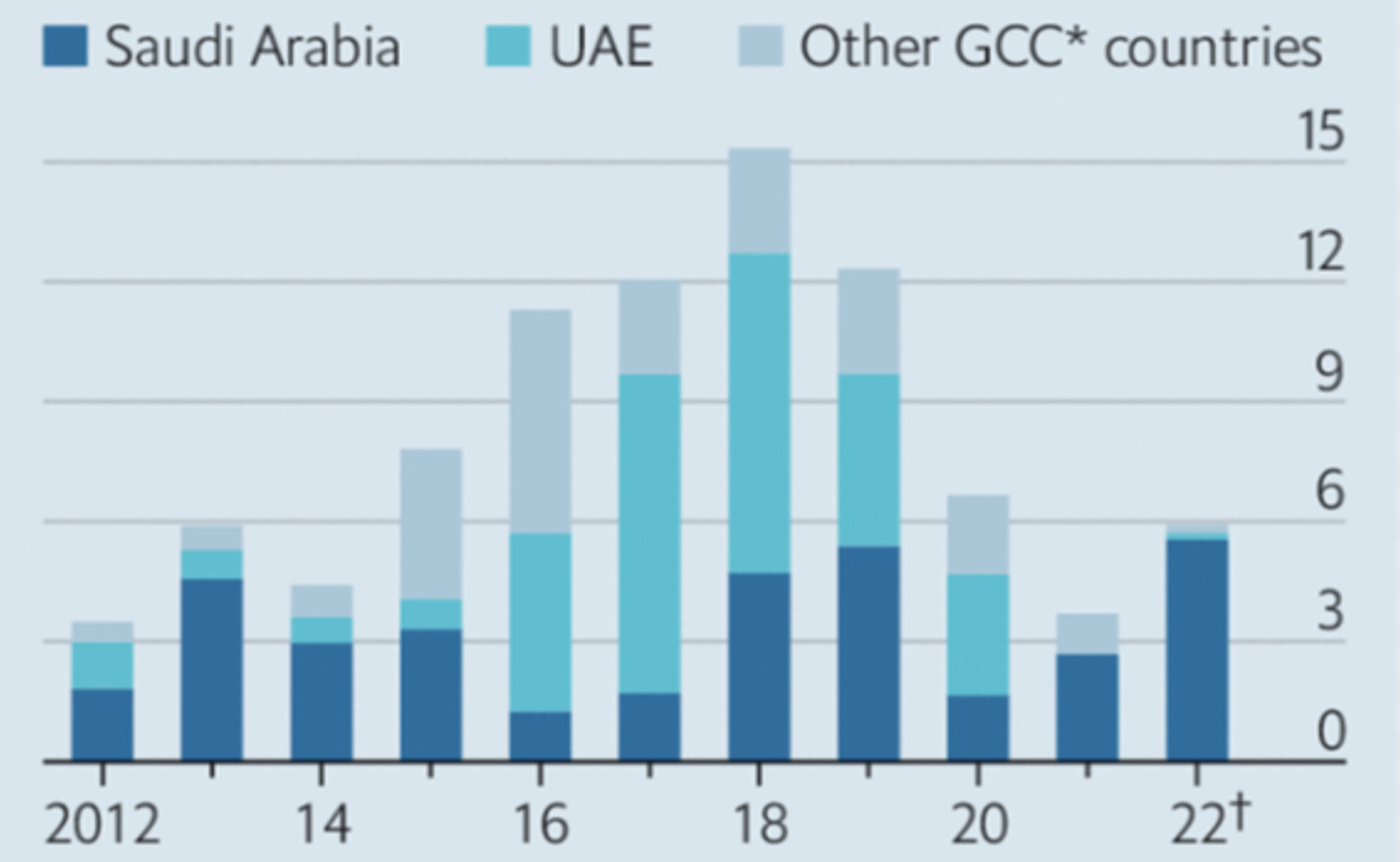
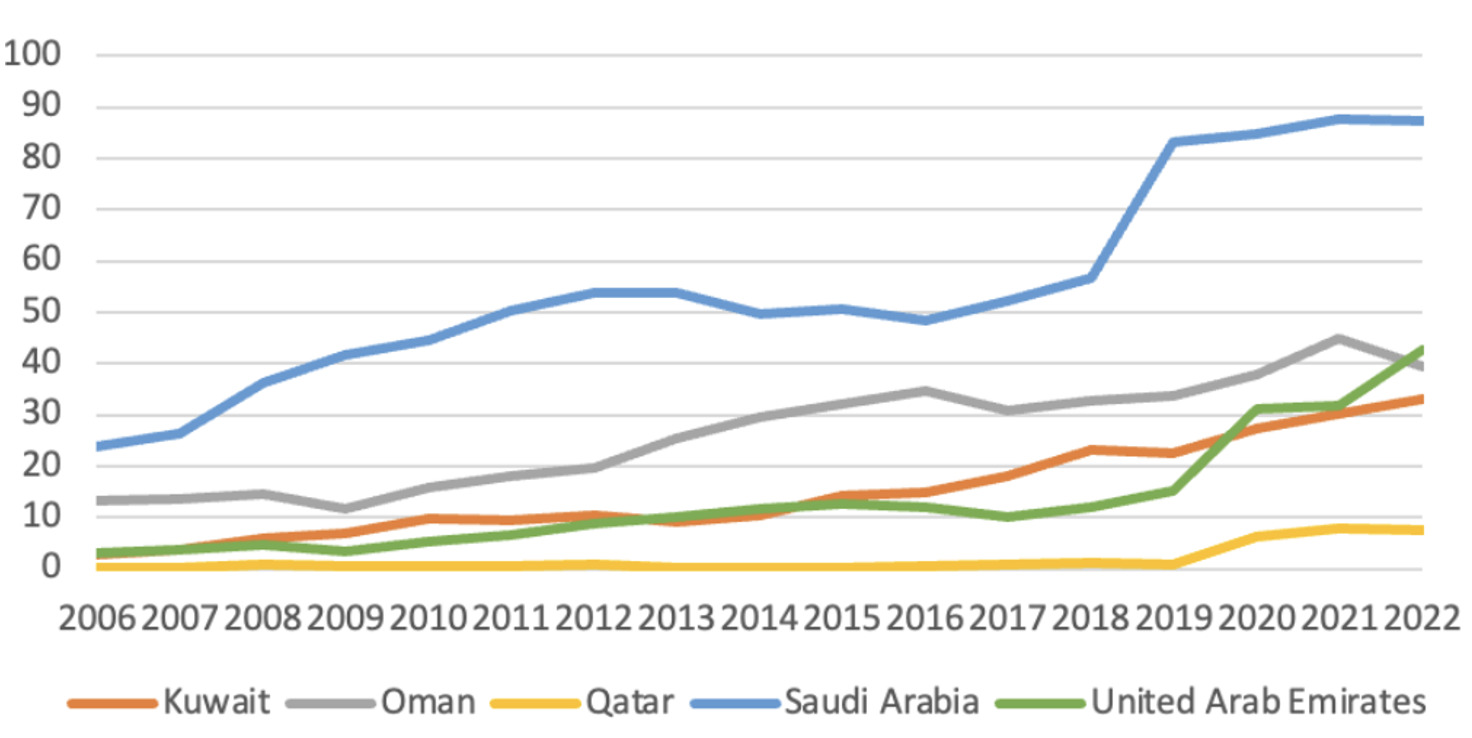
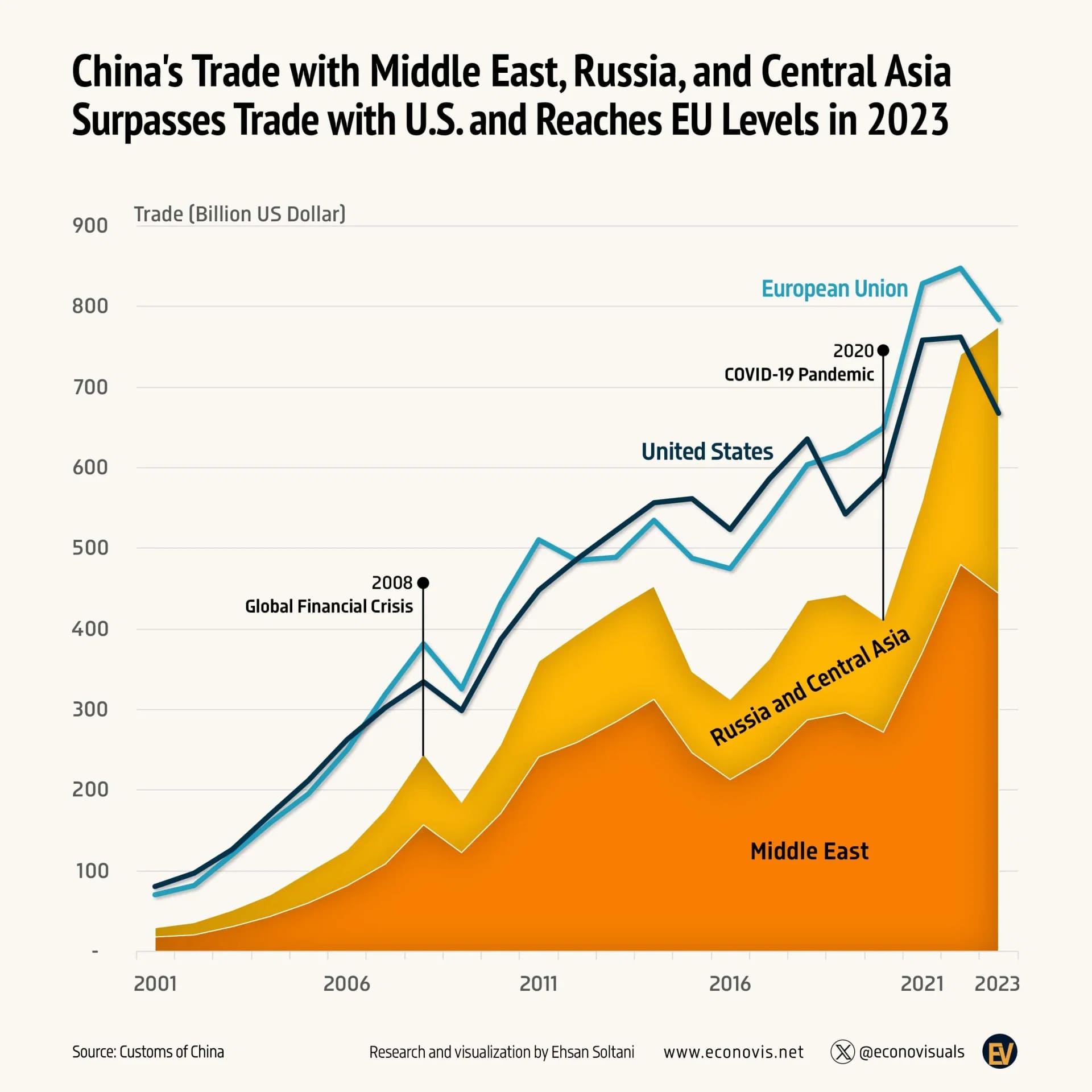
 Dr. Kalim Siddiqui








 Dr. Dan Steinbock