The UK would be the first state to leave the EU but it is most likely that the European Commission, the executive arm of the EU, will do the negotiating on behalf of the remaining 27 member states.
Asia Won’t Be Spared from the Brexit Waves

Amid secular stagnation, Europe’s challenges have increased dramatically in the past few years, while new risks – particularly Brexit – have potential to trigger negative chain reactions, says Dan Steinbock.
Duterte’s Global Impact

From the Editors
On 1st July 2016, Rodrigo Duterte will begin his term as the President of the Republic of the Philippines.
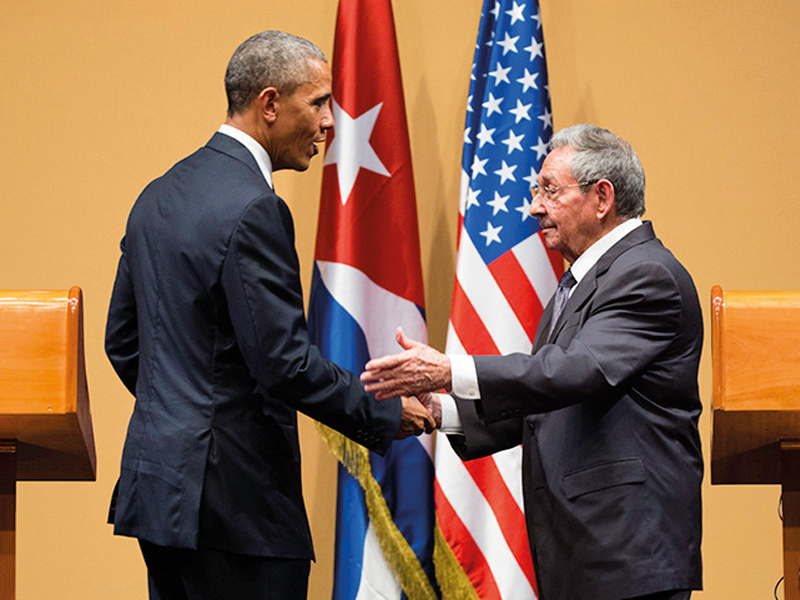
“Without Haste But Without Pause”: Cuba-US Relations in the Age of Obama
By John M. Kirk and Stephen Kimber
This article analyses the significance of the March 2016 visit to Cuba by President Barack Obama, assesses changes in the bilateral relationship since December 17, 2014 (when Presidents Castro and Obama announced the resumption of diplomatic relations after 53 years of hostility), and considers the challenges ahead.
Active Investing? That’s So Twentieth Century

The movement to passive investing has been unrelenting. Investors may harbour doubts that the markets are perfectly efficient, but they increasingly act as though they are, and index funds have become their investment of choice. The twentieth century, however, was a different story. The markets were rife with inefficiencies and a number of savvy investors made great profits by exploiting those inefficiencies. But in the process, market anomalies were eliminated – to the point where most investors now feel confident that securities accurately reflect value and they increasingly allocate their money among passively managed index funds.
The New Tyranny: A Preface to the 2016 Elections in the United States

Democracy in the United States has been replaced by a rival form of government premised upon the power of wealth. Not to be confused with mere corruption, plutocracy is an official system of rule built upon new interpretations of political speech, equality, and representation. The power of plutocracy rests upon public ignorance of and acquiescence to the profound transformation described in the pages that follow, perhaps the next American trend to sweep the globe.
Donald Trump is the Presidential Candidate the Republican Party Deserves

Republicans have had no problem using bigotry, often in subtle ways, to win elections. White supremacy is a well-established part of Republican Party political strategy. Donald Trump is the presidential candidate the Republican Party deserves. After years of stoking the fires of xenophobia, nationalism, and racism, they now have a frontrunner whose only brilliance lies in his ability to seize the populist anxiety Republicans themselves have cultivated.
Why Have Politicians Abandoned Economic and Financial Policies to Non-Elected Bankers?

Since 1999, non-elected bankers have been in charge of economic policy in the US and other countries, with questionable results. Are we on the verge of a new financial crisis?
Turkey Faces A Fateful Crossroad
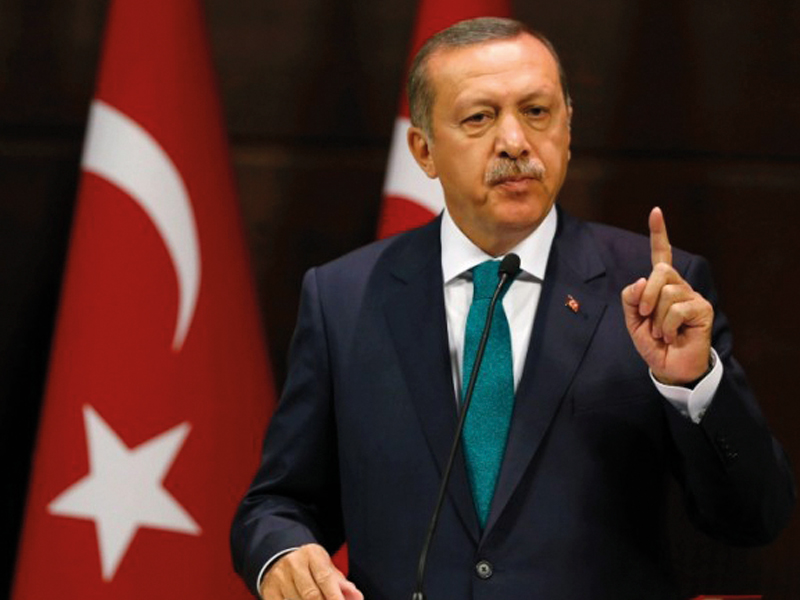
Turkey’s strength has thus far been its ability to project itself as a country that has found a balance between a democratic form of government and Islam as the state religion. Serious questions are being raised as to whether Turkey can, in fact, offer a model of Islamic democracy with constitutional checks and balances necessary to preserve the democratic principles of the state. Turkey’s continued rise to prominence or its decline will depend on the preservation of that balance.
Anti-Corruption Drive – Critical to Future, International by Nature

No inclusive growth is conceivable without success in Nigeria’s anti-corruption drive. Today, that struggle is increasingly global.
EDITOR'S PICK OF THE WEEK

China’s Challenging Search for a New Model of Economic Growth
By Danny Leipziger
China cannot continue to rely on exports to drive its growth, but what are the alternatives?
China ran a $1.2 trillion trade surplus last year, and despite admonitions from the IMF to rely...