By Jack Rasmus
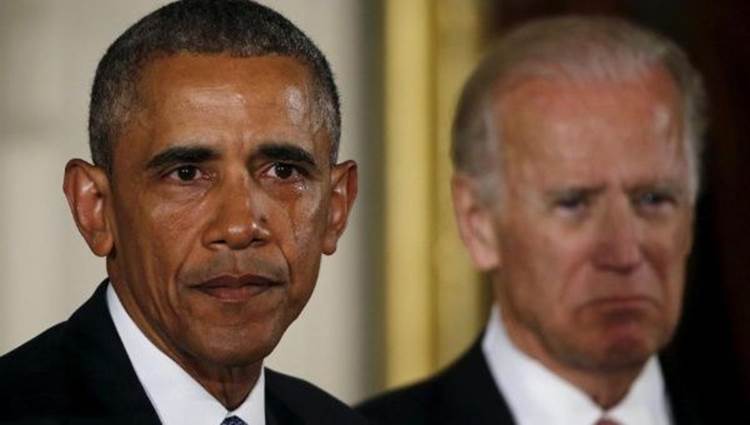
President Barack Obama’s farewell address to the nation last night was a strange and disappointing attempt that failed to replicate the hope, energy, and optimism of his first 2008 address to the nation.
Instead of celebrating the unity of all those who joined to put him in office, the mood was downbeat, with Obama warning listeners that the country had become more divided than ever during his intervening years in office, that democracy was threatened on many fronts – cultural, legal, and economic – and that the people to whom he was speaking, and throughout the United States, now had the task to take up the fight to protect what’s left and restore it, for clearly, he had not been able to do so.
At times the fire of hope, dominant in his 2008 victory speech, briefly returned. Obama declared, referring to 2008 and 2012, that “maybe you still can’t believe we pulled this whole thing off”. But what exactly was pulled off? What was accomplished that was so great is hard to know. But he apparently thinks something was.
During the speech he listed a series of accomplishments that represent, in his view, the high marks of his presidency: As he put it, he “reversed the Great Recession, rebooted the auto industry, generated the longest job creation period in US economic history, got 20 million people health insurance coverage, halved US dependency on foreign oil, negotiated the Iran nuclear proliferation deal, killed Osama Bin Laden, prevented foreign terrorist attacks on the U.S. homeland, ended torture, passed laws to protect citizens from surveillance, and worked to close GITMO.”
Sounds good, unless one considers the facts behind the “hurrah for me” claims.
The auto industry was rescued, true, but auto workers wages and benefits are less today than in 2008 and jobs in the industry are still below 2008 levels. So, too, are higher paid construction jobs. Half of the jobs created since 2008 include those lost in 2008-2010, and the rest of the net gains in new jobs since 2010 have been low-paid, no benefits, part-time, temp/“gig” service jobs that leave no fewer than 40 percent of young workers under 30 today forced to live at home with parents. More people are working two and three part-time jobs than ever before. Five million have left the workforce altogether, which doesn’t get counted in the official employment and unemployment rate figures. If one counts part-time workers, temps and those who’ve left the labor force or not entered altogether, the jobless rate is not today’s official 4.9 percent but 10 percent of the workforce. That’s 15 million or more still, and after eight years. Meanwhile, those who do have jobs are victims of the great “job churn”, from high to lower wage, from a few, if any, benefits to none at all.
As for ending the Great Recession, the question raised is for whom it ended and what constitutes an end. The US economy grew after 2009, but at the slowest rate of growth historically, post-recession, since the 1930s.
But he did end the great recession for the wealthy and their corporations. Corporations have distributed more than US$5 trillion in stock buybacks and dividends to their shareholders since 2010, as corporate profits more than doubled, as stock and bond markets tripled in value, and as more than US$6 trillion in new tax cuts for corporations and investors (beyond the US$3.5 trillion George W. Bush provided) were passed on Obama’s watch. Not to be outdone by Obama and the Democrats, Trump and the Republican Congress are now about to pass another US$6.2 trillion for investors and businesses, to be paid for in large part by tax hikes for the rest of us and the slashing of education spending, Medicare, Medicaid, health care, housing, and what’s left of the U.S. social safety net.
In his farewell address, Obama also cited how the country “halved its dependency on foreign oil”. True enough, at the cost of environmental disasters from Texas to the Dakotas to Pennsylvania, as oil fracking replaced Saudi sources, in the process generating irreversible water and air contamination in the U.S. In foreign policy, he noted he signed the Iran deal, but left out mentioning that during his administration the U.S. set the entire Middle East aflame with failed policy responses to the Arab Spring, with Hillary’s coup in Libya, to support of various terrorist groups (including al-Qaida) in Syria and to the arming of the Saudis to attack Yemen.
Looking farther east, Obama’s foreign policy outcomes are no better. The US is still fighting in Afghanistan 16 years later – the longest war in US history – as the Afghan government now collapses again in a cesspool of corruption and graft. And the US is still engaged in Iraq. A related consequence of the failed U.S. Middle East policy has been the destabilisation of Europe with mass refugee migrations that have been only temporarily suspended by equally massive payoffs to Turkey’s proto-fascist Erdogan government (which also blames the U.S. for the recent failed coup there, by the way).
Other failures on the Obama foreign policy front must include the US militarisation of the Baltic states and Eastern Europe following Obama’s inability to rein in Hillary’s US State Department neocons in 2013-14, who made a mess out of their US-financed coup in the Ukraine in 2014. That debacle has driven the US and Russia further toward confrontation, which perhaps Hillary and the neocons may have wanted in the first place (along with a US land invasion of Syria at the time which, in this case, Obama to his credit resisted).
And what about Obama’s much-heralded “pivot to China”? On his watch, China’s currency achieved global reserve status, that country launched a major trade expansion, and a government-established pan-Asian investment bank. The collapse of the US-sponsored Trans-Pacific Partnership will also mean a China-Southeast Asia TPP-style trade agreement, which was already well underway.
On the domestic front, Obama’s legacies must include the most massive deportation of Latinos in US history on his watch, nothing but words spoken from the comfort of the White House about police and gun violence and Black lives murdered on the streets of the US and the rollback of voting rights across the country. And let’s not forget about Barack the great promoter of free trade, signing bilateral deals from the very beginning of his administration, and then the TPP – all of which gave Trump one of his biggest weapons during the recent election.
The media and press incessantly refer to the 2010 Obamacare Act and the 2010 bank regulating Dodd-Frank Act as two of his prime achievements. But Obamacare is about to implode because it failed to control health care costs, which now amount to more than US$3 trillion of the US total GDP of US$19 trillion – the highest in the developed world at nearly 18 percent of GDP (compared to Europe and elsewhere, which spend on average 10 percent of their GDP on health care). The 8 percent difference, more than a trillion per year, goes to the pockets of middle-men and paper pushers like insurance companies, who provide not one iota of health care services.
In his address, Obama touted the fact that on his watch, 20 of the 50 million uninsured got health insurance coverage, half of them covered by Medicaid which provides well less than even “bare bones”, provided one can even find a doctor willing to provide medical services. The rest covered by Obamacare mostly got high deductible insurance, often at an out-of-pocket cost of US$2,000-$4,000 per year. Thus, ten million got minimal coverage while the health insurance industry got US$900 billion a year, which is what the program costs. No wonder the health insurance companies did not oppose such a windfall. Obamacare is best described therefore as a “health insurance industry subsidy act”, not a health care reform act.
Obama will be remembered for scuttling his own program in 2010 by unilaterally caving in to the insurance companies and withdrawing the “public option” while his party refused to even allow a discussion about expanding Medicare to all – the only solution to the continuing US health care crisis. In the wake of Obamacare’s passage, big pharmaceutical companies have also been allowed to price gouge at will, driving up not only private health insurance premiums but Medicare costs as well, and softening up the latter program for coming Republican-Trump attacks.
As for Dodd-Frank, that’s been known as a joke for some time, providing no real controls on greedy bankers and investors who were given five years after its passage in 2010 to lobby and pick it apart, which they’ve done. The one provision in Dodd-Frank worth anything – the Consumer Protection Agency – is about to disappear under Trump. And for the first time in US economic history, no banker or investor responsible for the 2008 crash went to jail on Obama’s watch.
So much for Obamacare and banking reform as his most notable “legacies”.
The true legacies that will be remembered long term will be the accelerating rate of income inequality, the real basis for the growing divisions in America, and the near collapse of the Democratic Party itself.
Under Obama, the wealthiest 1 percent accrued no less than 97 percent of all the net national income gains since 2008, as stock markets tripled, bond markets and corporate profits doubled, and US$5 trillion was passed through to investors as US$6 trillion more in their taxes were cut. Under George Bush, the wealthiest 1 percent of households accrued 65 percent of net national gains. Under Clinton 48 percent. So the rate accelerated rapidly during Obama’s term. Apart from talking about it, Obama did nothing during the last 8 years to abate, let alone reverse, the trend.
The other true legacy will be the virtual implosion of the Democratic Party itself during his administration. As the leader of a party, one would think ensuring its success in the future would be a priority. But it wasn’t. On his watch, nearly two-thirds of all state legislatures and governorships – and countless court positions – have been captured by the Republicans. To be fair, the Democratic Party has been in decline for decades. It has won at the presidential level only when the Republicans split their vote, as in 1992 when Ross Perot challenged George H.W. Bush, and when George W. crashed the entire US, and much of the global, economy in 2008.
Obama and the Democrats had a historic opportunity to turn the country in a progressive direction for a decade or more, as Roosevelt did in 1932 and then 1934 by bailing out Main St. with another New Deal. But Obama chose to double down in 2010 on bailing out Wall Street and the big corporations with another US$800 billion tax cut, leaving Main Street behind. Unlike FDR in 1934, who swept the midterm elections that year, gaining a Congress that would pass the New Deal in 1935, Obama doubled down on more for investors, corporations and the 1 percent. He paid dearly for that in 2010, losing control of Congress. US voters gave him one more chance in 2012, but he again failed to deliver. The result is a Democratic Party “debacle 2.0” in 2016, leaving a Democratic Party in shambles. That, too, will be remembered as his longer-term legacy.
Returning to his farewell address, the affair was a poorly rehearsed caricature of his 2008 inaugural, during which so many had so much hope for change, but ended up with so little in the end. Like a touring theatre troupe putting on its last performance blandly, eager to change into street clothes and get out of town. True, the Republicans played hardball and blocked many of his initiatives, but Obama did little to fight back in kind. If he was a community organiser, he was from the most timid in that genre. He kept extending a hand to the Republican dog that kept biting it at every overture. He wanted everyone to unite and pull together. But in politics, winning is not achieved by reasoning with the better nature of one’s opponents. That’s considered weakness, and the biting thereafter is ever more vicious.
But perhaps Obama’s greater political error was he never went to the American people to mobilise support, instead sitting comfortably within the Oval Office of the White House and enjoying the elite circus that is “inside the beltway” Washington. He never put anything personal or physical on the line. And that does not an organiser make. He repeatedly talked the talk, but never walked it. The results were predictable, as the Republican hard-ballers – McConnell, Ryan and crew – threw him beanballs every time he came up to bat. He struck out, time and again, calmly walking back to his White House dugout every time.
So farewell, Barack. Your speech was a nostalgic call to your hometown fans in Chicago to go out and organise for US democracy because it’s now in deep “doo-doo”. Take up where I left off, your message? Fair enough. Do what I failed to accomplish, you say? OK. See you at the country club, buddy, after your lunch with Penny Pritzker, the Chicago Hilton Hotels billionaires, who put you in office back in 2008.
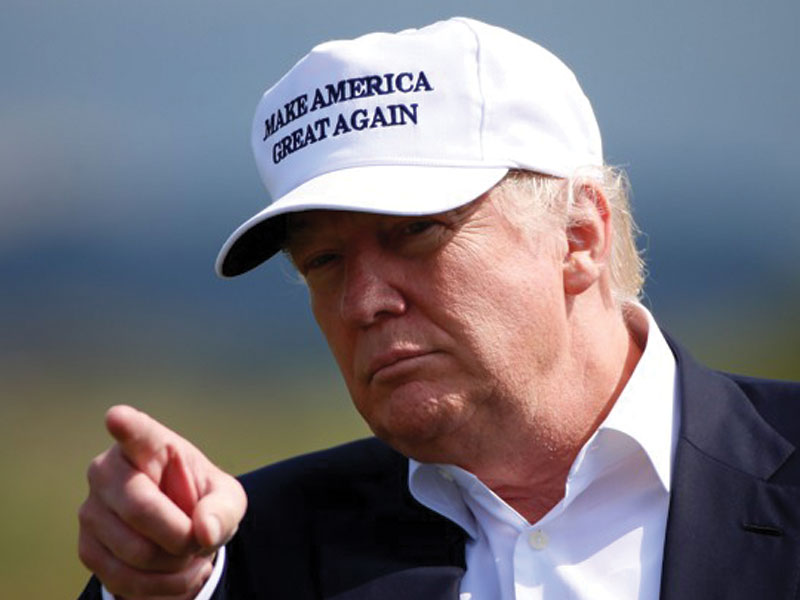
And now the United States changes one real estate wheeler-dealer for another, this time one who takes the direct reins of government. And he’s Obama’s legacy as well.
About the Author
 Jack Rasmus is the author of Systemic Fragility in the Global Economy, by Clarity Press, 2016, Looting Greece: An Emerging New Financial Imperialism, by Clarity Press, October 2016, and the forthcoming Central Bankers at the End of Their Ropes, Clarity Press, March 2017. He blogs at jackrasmus.com. His website is jackrasmusproductions.com. His twitter handle is @drjackrasmus.