Home Blog Page 1039

Venezuela – A Risk to Dollar Hegemony – Key Purpose Behind “Regime Change”

By Peter Koenig


After the new coup attempt – or propaganda coup – Venezuela lives in a state of foreign-imposed insecurity. The failed coup was executed on 30 April by Juan Guaidó, the self-proclaimed and Washington-trained and endorsed “interim President”, and the opposition leader, Leopoldo López, who was hurriedly freed from house arrest by Guaidó with a couple of dozens of armed-to-the-teeth defecting military, who apparently didn’t quite know what they were up to. Because, when all was over after a few hours, most of them asked to be re-integrated into their military units – and, as far as I know, they were readmitted.

These are Washington’s puppets and “coup-makers”. When one sees that the so-called coup was defeated in a mere few hours, without any Venezuelan military interference, one wonders whether this was really planned as a coup, or merely as a “public relations” coup, for the media to ‘recharge’ their narrative of Maduro dictatorship, of a suffering people, of famine, of lack of medication and medical supply – all due to the Maduro government’s mismanagement of Venezuela’s natural riches, the lie-slander we have been used to for the last several years.

For sure, the Venezuelan people are suffering. According to a CEPR report sanctions have killed some 40,000 Venezuelans. And this, not because of President Maduro’s squandering of Venezuelan resources, but because of a brutal, merciless outside interference, principally from the United States and to a lesser degree from Washington’s European vassals. If you listen to the ceaseless drumbeat for war against Venezuela and her democratically elected President Nicolas Maduro, by Pompeo, Bolton, Pence, and Trump – you can only wonder and shake your head – what pathological and schizophrenic world we are living in? – And – are we all sick to the bone, that we tolerate it, that nobody of and in power – other than Russia and China – say ‘Halt’ to this deadly fiasco?


This article by Eric Zuesse, including leaked documents from Pentagon’s southern command, SOUTHCOM, will give the non-believers plenty of reasons to change their minds: https://www.globalresearch.ca/u-s-government-plan-dated-23-february-2018-coup-venezuela/5676380 

These western heads of state and their chosen minions do not have the guts or political courage to say ‘STOP’. — They could, if they had any conscience left.

Western humanity has reached an abject state of mental disease. We allow the slaughter of tens of millions of people by the United States and its NATO allies, in US-provoked wars and conflicts around the world, indiscriminate killing for resources and monetary dominion. But we follow the same killer nation in accusing a quiet, peace-loving, fully democratic country, like Venezuela, to be utterly trampled on and punished with the most horrific monetary and economic sanctions – all illegal, by any standards of law – and our western “leaders” know it all.

These western heads of state and their chosen minions do not have the guts or political courage to say ‘STOP’. — They could, if they had any conscience left. These so-called leaders (sic) of vassal states, they have it all in their sovereign power – they could together decide that enough is enough, separate themselves from the Washington horrors and form a real European Union, a union to say no to the tyrant, a union that is capable of calling its own sovereign shots – decide its own destiny, a destiny of alliance with peaceful countries like Venezuela, Cuba, Russia, China, Iran and more – basically all those that have decided not to bend to the dictate of Washington.

Why don’t they? Have they been bought, or received death threats if they dare to deviate? – All is possible – even likely, because it is unfathomable that the leaders, the political heads of all those 28 EU countries are hell-bent to believe the lies being propagated day-in and day-out, drip-by-miserable drip. It is not possible.
—–

Back to Venezuela. 
The western public at large must never be too long without devastating smear-news about a regime the empire wants to “change”. It is clear that the nefarious pair in Venezuela, Guaidó-López, followed strict Washington instructions. Guaidó would never dare to do anything without prior approval and directives from his masters in Washington.

Despite threats after pompous threats and false accusations and failed coup attempts, President Maduro holds on to a solid backing of six million voters who supported him, more than two-thirds of those who went to the ballots, on 20 May 2018. He also has the solid support of the military, who have a revolutionary integrity and conscience unknown to the west. And not least, he has the support of Venezuela’s solid allies, Russia and China.

Nevertheless, the United States will not let go. Why do they risk everything – even a devastating war?

Well, there are several reasons. First, you may think, “It’s the Oil, stupid!” – And second, the turbo-capitalist, neoliberal turning-to-neofascist US will not tolerate a socialist state in what they still consider their ‘backyard’. – Well, all of this is true. Venezuela has indeed the world’s largest hydrocarbon reserves – and it is conveniently close to The US’s Texas refineries.

The US dollar remains the key reserve currency in the world, though rapidly fading.

However, the key reason for Washington forcing ‘regime change’ is that Venezuela has stopped selling her hydrocarbon in US dollars, and, may, therefore, become a risk for the US-dollar hegemony around the globe. That is a punishable violation for the empire. At least two heads of state were assassinated because they dared to abandon the unwritten and unlawful, but nevertheless US-imposed rule to sell their oil and gas in US-dollars, Saddam Hussein of Iraq and Muammar Gaddafi. Both had started trading their oil in other than US-dollar currencies – and were strong advocates for others to do likewise.

Some three years ago, Venezuela started selling her oil and gas in other currencies than the US-dollar, a cardinal sin.

Global dollar hegemony, meaning the full control of economies throughout the globe – a control that is rapidly fading – can only be maintained by a world flooded by dollars and with a monetary system that is entirely controlled by the FED and its associated American banks, by an international transfer system, SWIFT, that channels every dollar to be moved between countries, whether it is the US or any other country – through a US bank, in either New York or London. That still being the case, the US dollar remains the key reserve currency in the world, though rapidly fading. And second, through the obligatory trading of commodities – like hydrocarbon energy – ONLY in US-dollars. The latter also allows the empire to print as many dollars as it needs to keep the world economy under control – and punish those that do not want to bend to Washington’s rule, with sanctions and confiscation of assets abroad, because — all transactions are controlled by the US banking system.

First, the dollar as a reserve currency, is fading rapidly, as ever fewer countries entrust their reserves to a largely recognized ‘fake’, fiat and debt-based currency, the US-dollar. They convert their dollar reserve holdings gradually into other assets, i.e. gold, or the Chinese Yuan which has become high in demand over the last few years. Logically, because China is already known as the undisputable strongest economy in the world, hence, the Chinese currency has a special reserve standing. However, the mainstream media do not report on this.

Second, with a growing number of countries that do no longer respect the Washington imposed US-dollar rule for hydrocarbon trading – the demand for dollars decreases rapidly – a direct confrontation to the United States’ dollar hegemony over the world. Russia and China have years ago stopped trading in US dollars, not only hydrocarbons, but everything. India and Iran have started doing the same. Other countries will follow – and Venezuela, one of the vanguards with the world’s largest oil reserves – should, therefore, not be allowed to become a model for other nations. The Trump Administration and its Wall Street masters will do what it takes to stop Venezuela from abandoning the dollar.

Venezuela’s transgression in shedding the dollar for oil trading – and for trading in general – amounts to a serious threat to the dollar hegemony and must be suffocated. That’s what these coup attempts are all about. If they succeed, the dollar-currency collapse could be postponed for a bit, and taking possession of the oil reserves would be the icing on the cake.

Hence, regime change and taking over the vast oil assets are of the order – with war, if necessary – “all options are on the table” – all under the blatantly fakest pretexts of “humanitarian intervention” and bringing back democracy – when the world knows that anywhere the US intervenes, democracy is abolished. In fact, what the US has managed – and wantonly so – is kill any democracy that ever existed.

Under these circumstances, Venezuela’s transgression in shedding the dollar for oil trading – and for trading in general – amounts to a serious threat to the dollar hegemony and must be suffocated. That’s what these coup attempts are all about. If they succeed, the dollar-currency collapse could be postponed for a bit, and taking possession of the oil reserves would be the icing on the cake.

What’s left after the dollar dominance over the world is gone, once the key tool, economic sanctions, for manipulating nations into doing the bidding of the emperor is no longer effective? – A broken US economy, one that already today depends heavily on the war and weapons industry – in fact, for over 50% of US GDP, when all associated manufacturing and services are counted. What’s left is the overwhelming firepower of that belligerent warmongering and war-dependent nation, with which the US and NATO could pull the rest of the world into oblivion.

That’s what’s at stake with any nation that wants to kick the petrodollar. Also, Iran, of course. But both Iran and Venezuela have strong protection from Russia and China – two countries that freed themselves from the fangs of the dollar system years ago. And they are offering a bright future with viable Eastern monetary alternatives, mostly based on the Chinese Yuan and other currencies linked to SCO (Shanghai Cooperation Organization) members.
Venezuela – Venceremos!


Featured image by DIANA SANCHEZ/AFP

About the Author

Peter Koenig is an economist and geopolitical analyst. He is also a water resources and environmental specialist. He worked for over 30 years with the World Bank and the World Health Organization around the world in the fields of environment and water. He lectures at universities in the US, Europe and South America. He writes regularly for Global Research; ICH; RT; Sputnik; PressTV; The 21st Century; TeleSUR; The Saker Blog, the New Eastern Outlook (NEO); and other internet sites. He is the author of Implosion – An Economic Thriller about War, Environmental Destruction and Corporate Greed – fiction based on facts and on 30 years of World Bank experience around the globe. He is also a co-author of The World Order and Revolution! – Essays from the ResistancePeter Koenig is a Research Associate of the Centre for Research on Globalization.


The Philippines Emerges as New Bitcoin Hub

Bitcoin has been welcomed as a completely new concept in financial transactions as well as investment and trading, but it has recently seen a decline in its upwards trajectory. Despite this turn, the Philippines is defying current trends and seems to be warming up to Bitcoin even more. So, why is the flagship cryptocurrency steadily gaining ground in the Southeast Asian country?


The Philippines Approves 29 Crypto Exchanges

Cryptocurrencies have generated many heated discussions in recent years, with avid supporters celebrating a new paradigm and critics worrying about their impact on the ‘real’ economy. No other altcoin has made headlines as Bitcoin has – the cryptocurrency that started it all. In 2017 particularly, Bitcoin saw a wild ride as its value went from under $1000 in January 2017 to more than $11,000 in November. Prices then fell back to roughly $9,000 for a bit, before skyrocketing to a whopping $15,000 and more at the beginning of December. However, its value dipped in 2018, and the coin was never able to replicate that meteoric rise.

For some analysts, it was precisely that wild fluctuation that led investors away, as people started fearing that the so-called ‘Bitcoin bubble’ would soon burst. Others credit the advent of several other new cryptocurrencies for that decline – new altcoins that were inspired precisely by Bitcoin’s success. Whatever the reason, the digital currency has seen better days. Yet, the Philippines have gradually emerged as a haven for the cryptocurrency. As voanews.com reports, while significant markets in the East and Southeast Asian region, like China, are cracking down on Bitcoin trading, the Philippines’ regulatory authorities have authorised no less than 29 cryptocurrency exchanges in the country.


Why Is Bitcoin Gaining Ground?

This makes it a very welcoming ground for crypto coins, especially after it suffered a 70% drop in its value in 2018, according to the same source. This success could be attributed to a variety of factors, including the fact that, as voanews.com explains, 70% of Filipinos do not have a bank account. This makes digital currencies an appealing alternative. Trading in digital coins has evolved out of web-based networks into various forms of social trading platforms, just like earlier forms of similar online communities that provided a platform for traders to test the waters and develop their own style. When the first cryptocurrency exchanges were set up, the landscape was unregulated – and for many, that was part of its charm.

Against this setting, Bitcoin and other digital coins have emerged as an interesting path for tech-savvy Filipinos, especially younger generations. Newer companies, including startups, are eager to use Bitcoin for their initial coin offerings (ICOs) when looking for funding, which has helped the cryptocurrency market take off. Cryptos are not only embraced by the government, private companies and consumers, but by the financial industry as well; for instance, the Union Bank of the Philippines has recently announced it would install a Bitcoin ATM in one of its branches. Investing in the cryptocurrency market seems to have provided a big boost for the small country’s fintech industry.

If the trend continues, we might even be looking at the next Southeast Asian cryptocurrency hub in the making, with the Philippines attracting wider crypto interest in the region.


Currency Exchange Tips On How to Exchange Currency on Holiday

By Justin Rampono

Your bags are packed, and now you’re ready to go. You’ve finally headed off that plane for a holiday. But there’s one thing left for you to do: have enough foreign currency in that country that you are going to. You are still confused as to whether or not it is best to change some money now in your local country or wait until you reach your destination and have some cash changed there instead. If anything, you have your credit card to keep you going before you change some money anyway.

To end these confusing thoughts in your mind, here are some tips on how best to exchange your currency while on a holiday:


1. Get cash out from an ATM the moment that you arrive

If you really did not get the chance to change some foreign currency before you left, you have two options at the airport:

• You can go to the currency exchange centre of the airport

• You can get some cash out from your ATM account

Currency experts suggest for you to go for the latter option, which is to take out some money from your ATM account. As much as possible, avoid changing money at the currency exchange kiosks of the airport that you are arriving in, as these kiosks often have extremely low rates and high charges.

Watch this video to learn more about why you should never exchange money at airport kiosks:

When you exchange your local money for foreign currency exchange in Sydney, for example, there is no way that you can avoid fees and costs. However, taking cash out from your ATM account will still most likely end up cheaper than going to a currency exchange kiosk. To be sure, however, be sure to check the following with your local bank before leaving:

• Conversion rate

• Fees and other charges for ATM withdrawals in a foreign country

To make the most out of your charge or fee per transaction, make one significant cash withdrawal from your ATM upon your arrival rather than small but frequent cash withdrawals.


2. Exchange foreign currency at your local country before you leave

Naturally, before your trip, you will already have planned out how much cash you will be bringing with you. As you save up for your trip, give some time as well for you to exchange foreign currency at your local country before you leave. Doing so is still the safest and most hassle-free option for you to go for. 

You can choose to buy foreign currency from the following institutions in your local country:

• Currency exchange centres, such as Travelex

• Banks

• Credit unions

As much as possible, do make it a habit to exchange foreign currency at your local country first before travelling, for example, check the currency exchange Sydney. When you do so, you can achieve the following:

• You have enough local money with you to pay for a taxi, or other contingencies, just in case they do not accept credit card payments

• You will most likely be charged with lower fees and a better exchange rate at your local country

The last thing that you would ever want to experience is all the unnecessary stress, especially at the early stages of your trip.


3. Have some cash as well for any stopover countries

If you have any long layovers or stopovers between your home country and your country of destination, it comes in highly recommended if you can have a little foreign currency of that stopover country as well. When your layover is long, chances are you will be stopping over restaurants to buy drinks and a meal, and, surprisingly, not all of these kiosks accept card payments, too. 

Although it is common in airport kiosks to accept card payments, it is still better for you to have some cash on hand for your meals and in case of any minor emergencies. It will cost you more if you will be forced into changing some cash in a currency change kiosk at the airport or, worse if you find out that all the currency exchange booths are already closed.


4. Have your credit card ready for travel

If you are a credit card holder, before you even start your travel, be sure to inform your bank that you might be using your credit card in the country that you are headed to. When you do so, you are sure that you do not get locked up out of your credit card. Do ask as well about the foreign transaction fees of your credit card and the conversion rate.

If you are a frequent traveller, currency exchange experts suggest for you to apply for credit cards that have no foreign transaction fees, as this is one way for you to save on currency exchange costs throughout your holiday.


Conclusion

Currency exchange is an ever-changing battle between economies, politics, and other world trade issues. Hence, you have to be wary about when and how you change your hard-earned cash for any other foreign currency. Going on a holiday is an exciting time of your life, as it is like a reward after all the hard work that you have done. However, vacationing also doesn’t mean that you have to settle for paying unnecessary costs. There are still numerous ways for you to get the best deals out of every expense that you will incur while on vacation. These tips will gladly help you with how best to exchange currency when travelling so that you get to enjoy your holiday even more with lesser financial woes.

About the Author

Justin Rampono is the director of The Currency Shop, a comparison site for exchange rates.


What a Drug Lawyer and Attorney Must know About Arrests and Warrants

Arrest and warrants for drug-related cases can be devastating. They can be frightening on the side of the accused. However, with a competent drug lawyer, you can easily maneuver and get acquainted. Remember, a suspect is innocent until proven guilty. So, getting an experienced drug lawyer can be the best option. Plus, a drug lawyer must equip themselves with the necessary skills to defend accused drug offenders. Among other things, a drug lawyer must know what the law says regarding arrests and such warrants for drug offenders. With that in mind, here are things a drug lawyer should know when it comes to warrants of arrest.

 

False Arrests

Any drug attorney should know the rules regulating arrests. He/she should be familiar with arrest procedures and what to do when it comes to false arrests. Remember, false arrests lead to false imprisonments—which can be extremely taunting on the side of suspects. A drug attorney should know how to file lawsuits related to false arrests or false imprisonments. Hire a Criminal Law Firm Berlof & Newton, P.C. for all your drug-related offices.


Warrants of Arrest

Any drug attorney should be familiar with arrest procedures—including how arrest warrants are issued. He/she should be able to read through the arrest warrants, authenticate if they are genuine, and know how to defend his/her client. For instance, any drug suspect must be told the reason for the arrest. Remember, even private citizens can carry out arrests. So, the main thing here is knowing the reason for arrests and who issued the arrest warrant.


General Arrest Procedures

A drug attorney should know common arrest procedures. This will help him/her defend the client better. For instance, an officer who is intending to arrest your client should produce an authentic budge—clearly showing the type of agency he/she is working for.


Arrest Pursuant to Warrants

A warrant of arrest is legally binding. It must be respected. They should be embodied in official documents. Plus, any warrant of arrest must be issued from a court of law or any official government body. So, a drug attorney should familiarize himself/ herself with these matters.


A Valid Arrest Warrant

As a drug lawyer, you should know how to determine if the warrant of arrest of your client is valid or vague. Generally, a warrant of arrest is considered valid upon the fulfillment of the following conditions:

• It has a valid court name. It should be officially stamped by that court issuer.
• It should have the official names of the accused—i.e. the person being arrested
• It should indicate the drug offense allegedly committed


Jurisdiction

Does the court issuing the warrant of arrest has the mandate to do so? Without jurisdiction, that warrant of arrest is null and void. Therefore, any drug attorney should know how to determine if the court issuer has the jurisdiction to issue that warrant of arrest.


The Bottom-Line

The legal field is not that straightforward. It involves so many factors—especially when it comes to drug-related offenses. Therefore, any drug lawyer should brush there skills and know how to better defend their clients. The above is all you need to know concerning arrest warrants when it comes to drug offenses.


Why Beginners Should Not Try Shorting a Stock

There’s a lot of potential cash to be made in the world of stocks and shares, and especially for those who specialise in shorting stock. The idea of making big profits in a short time, without having to put in hours of hard manual work or actually do anything physical at all, the thrill of the pursuit and the win, the rewards for pitting your brain against the system and coming out on top, and then you get to do it all over again.

Stock shorting specialists play a key (and totally legal) role in the market, particularly by helping to stop stock prices being overinflated, and yes, it definitely seems like a glamorous world – one where huge rewards await those willing to take a few chances, and in many ways that is true, but shorting stock has an edge. It can leave you broken, cost you many thousands, and generally become your worst nightmare. That’s an unlikely outcome for an experienced short seller – although even the top performing people in this sector are always aware of and prepared for that possibility.

However appealing it sounds to those with little experience of the stock market, shorting stock is not something beginners should try, and here we look at the major reasons why we believe this is so.

Let’s start by looking at what shorting a stock involves, as running through the process helps to highlight the amount of hidden work, and risk, involved in what seems at first glance to be an almost casual way to make huge amounts of cash.


What does shorting a stock look like?

1. The first thing you need to do is open an account with a broker says Stockstotrade.com. It must be what is called a ‘margin account’, and if you already have an account you can easily arrange to have the margin agreement added to that. (A margin account is needed because it allows your broker to buy stocks on your behalf, using their cash.) Brokers are bound by law to ask some searching questions about your financial assets before they agree to authorise this. Basically, they want to know you are solvent and have assets as shorting stock can be a risky financial manoeuvre.

2. You do lots of research, looking for information which suggests particular stocks may be about to lose value, and then before they do you instruct your broker to borrow some on your behalf. Let’s say you borrow 1000 shares costing $10 each for $10,000, sell them immediately for $10,000, and put that cash into your exclusive margin account. (Obviously, you shouldn’t even think about using this money for anything other than this short stock transaction.)

3.If you have calculated things well the value of each stock shares and you then buy them back at a lower price, before handing them back to the dealer you borrowed from originally. So, let’s say your $10 stocks cost $5 when you bought them back you have spent $5,000 of the $10,000 made on the investment. After broker fees you will have quite a tidy profit indeed.


Where’s the catch?

There’s a saying that if something looks, sounds, or seems too good to be true it probably is – so is this the case with shorting stocks?

The short answer is no, but it is something which takes a lot of research, skill, nerve, patience and a safety pot of cash in reserve. Those who are new to the world of stocks and shares will find it very difficult to successfully short stocks until they have gained that in-depth understanding of how the entire sector works. Shorting a Stock is something you can learn to do, but it definitely needs commitment and time to gain experience. It’s definitely not a get-rich-quick scheme, and there’s plenty that can trip inexperienced people up.


Things which can go a problem when shorting a stock

• The shares you buy may buck the trend and recover, or even gain value. You still have to buy them back, even if they cost you more than you sold them for – leading to an automatic loss.

• Brokers fees and interest rates can be extremely high.

• If the shares pay dividends while you hold them this must be passed back to the person whose shares you ‘borrowed’ initially. If for some reason the dividend was lost during the buy/sell process you are personally responsible for finding that cash and paying it over.

• The potential for loss is unlimited. While value can only drop as far as zero there really is no ceiling for how high they can rise, and don’t fool yourself – they can swerve the trend and gain value despite every indicator being that they shouldn’t even be able to. Here the key factor which separates the newcomers from the accomplished short stockers is knowing when to cut those losses. If the price rises just a little it could easily be tempting to hold on and hope things turn downwards again, only to find the opposite happens and you end up out of pocket by many thousands. There’s no place for pride in the arena of short selling, so a clear ceiling for each deal must be in place from the start.


Other things beginners need to know

The market is not rational. It’s possible that your hours of research spent identifying an excellent possibility doesn’t pan out simply because the market doesn’t deem those particular factors as a financial threat or risk.

Some brokers are the type who will take action if a particular stock shorting scheme starts to go awry, but you should never rely on that. It’s vital that you closely monitor all of the short stocks you are dealing with, pretty much constantly.

Shorting stock isn’t something you can just wander into and make a fortune, but with the right attitude, effort, homework and patience it’s certainly possible to get skilled enough to make it work.


How to Lead During Periods of Uncertainty

By Rita Trehan

Business transformation expert, Rita Trehan, discusses the 7 actions that should be practised by CEOs and business owners to ensure their businesses prosper during periods of uncertainty.

It seems that uncertainty is “the new black” for businesses today, and it’s a fashion trend that needs to be put with last season’s stock.

A rising state of popularism within global macroeconomics, the apparent failing of current corporate governance, the threat of new entrants for established businesses highlight a stark reality. Companies must embrace uncertainty and position themselves for success by not looking at all the things that can erode their business, but instead by facing uncertainty from the vantage point that everything is possible and then seeking options, alternatives and solutions that position them for the new age of work.

In my opinion, there are a series of actions that can be pursued to ensure that businesses prosper and claim a stake in the future. Leading during periods of uncertainty requires paying attention to the following: 

1.  Focus and disciplined prioritisation

“If it’s not broken, don’t fix it” is a famous phrase for a reason. In a dynamic and constantly evolving world, leaders must be sure on what they need to focus on. Throwing time, energy and resources into an issue that frankly consumes energy, resources and cost but doesn’t create accretive value is wasteful and costly. Companies that turn their attention to enhancing the edges rather than tinkering with the core of their business are more likely to unleash potential and position their business for success.

If management can analyse and justify that the current system is working successfully, can understand why it is fruitful and can honestly say that it is beneficial for all parties involved, then it begs the question – why change it? In fact, focusing on big change may be more of a hindrance than a help.

On the other hand, being able to recognise when it is time to change is a skill that is invaluable. Change is not just inevitable, it is paramount for longevity, so if you are unable to identify when it is time to adapt or even innovate, then a business will not survive.

Complacency, or even innocent ignorance can make business leaders believe they won’t and can’t fail. Don’t fall into the trap of seeing everything through rose-tinted glasses. With change brings the possibility of a failed effort, but to continue with the cliché, failing to prepare is preparing to fail.

2. Keep monitoring the pulse of your stakeholders

A business simply cannot operate without its stakeholders, whether that be customers, investors or employees. Good businesses identify, prioritise and communicate effectively with their key stakeholders.

Seeking an effective method to actively engage with stakeholders will enable leaders to listen to the pulse of the organisation. It isn’t enough to simply talk to stakeholders, they need to feel listened to and valued at every step of the way. Creating clear opportunities for stakeholders to present their own viewpoints and ideas can help to ensure that everyone is on the same page and the spin-off – gems of knowledge that can lead to innovation and business growth.

Where businesses are switched on enough to already have good channels of communication, leaders need to stay tuned to how internal communications can be affecting team dynamics and morale.

During times of uncertainty, it’s critical to ensure decisions are made objectively and not with an emotional attachment to a business, an idea or an innovation.

In times of uncertainty, informal communication channels have the potential to spiral out of control being fuelled by fear, rumours and confusion where people are forced to make their own conclusions. CEOs and executives must ensure that they are delivering the correct message to keep stakeholders feeling up-to-date and at ease. This information can also be tapped into, creating fantastic insight for leaders to not only address issues and give advice but also to make informed, smarter decisions.

3. Willingness to flex

Flexibility and agility can often be overlooked, but as well as its necessity in being able to keep ahead of the curve, it has more benefit than just being seen as good risk assessment or crisis limitation.

Work environments that do not embrace change and flexibility may find their workforce losing motivation due to a sense of monotony. Boredom fosters unproductivity and an unproductive workforce is costly.

Discouraging flexibility dampens growth; meaning you’ll be left in the dirt whilst your competition blooms around you. Being able to adapt and change (whether it is deemed vital or not) gives businesses the option to seize an opportunity when it arises, instead of missing out due to being unprepared.

Not being adaptable also diminishes innovation within the workplace. Why would stakeholders offer an alternative, when they know there’s no capacity for change?

Don’t fall into the trap of seeing everything through rose-tinted glasses. With change brings the possibility of a failed effort, but to continue with the cliché, failing to prepare is preparing to fail.

Creating an open environment that facilitates innovation and creativity, that encourages all stakeholders to be less resistant to change increases a company’s flexibility. Allowing employees and stakeholders the freedom to experiment in a safe place where “no idea is a bad idea” can avoid a stalemate in inspiration. Reinforcing to stakeholders the idea that adaptability is good and that their opinions and ideas are welcome, will also give them the freedom to fail – and as we know some failures have changed the world forever (Post-It notes and even pacemakers!).

4. Fiscally Savvy

Business leaders, no matter the department or the business, should have a good knowledge on how to stay financially savvy. The financial success of a business is not the sole responsibility of the CEO. By encouraging management and in turn the wider workforce to be sensible and accountable for their expenditure at work, will ensure your business is staying financially and even economically responsible. Knowing where to invest and when to cut loose is critical for businesses in uncertain times. It takes courage to know when to stop investing in ideas or businesses that are not delivering, so using your financial resources wisely and prudently is key. During times of uncertainty, it’s critical to ensure decisions are made objectively and not with an emotional attachment to a business, an idea or an innovation.

Not being able to understand how decisions will affect cash flow is hazardous, especially in times of uncertainty. Great leaders should have the ability to quickly identify potential financial issues and be prepared to steer in another direction if problems arise.

5. Unwavering optimism

I’ve already mentioned how morale can be affected by people feeling left in the dark by a lack of internal communications, but there are also other strategies that can keep employees feeling optimistic, engaged and committed during uncertain times.

Reminding staff of “the bigger picture” and allowing people to feel like their work is contributing to something bigger than just their job role, will instil a sense of purpose to keep staff on track. Being transparent about what is needed and why and when changes are happening is key. The reality is that staying steadfast to a vision and purpose will give people a sense of reassurance.

Making employees and stakeholders feel appreciated is an easy way to keep morale high. There is a really simple way to do this – say thank you. If you can thank an employee on something specific, even better. It’s always a great feeling like you’ve done a great job. If it was a fantastic job, think about rewarding them and celebrate their accomplishments.

Showing employees that members of management are actually human and have the capability of caring will help them believe in you as people. Asking someone how their family is, wishing them a happy birthday or asking how their day is going, are all great ways to keep up happy discussions in the office and make staff feel valued.

Talking to your teams about the “why” they do what they do, rather than just the “how” can make a real difference.

6. Reinforce and connect to the Values

Company values should ignite inspiration in all stakeholders, as well as holding relevancy to both stakeholder and the company’s objectives. They should be embraced by all employees and communicated through every activity the company partakes in.

Creating a work environment that encompasses core principles that employees can believe in and connect with can help employees find more fulfilment in their work. Strong, honest values are easier to connect with and relate to, which should feed into work ethic.

In addition to keeping employees engaged, robust and real values can also attract new stakeholders that share the same values as your business – whether these are investors or partners that share your ethos, or customers who wish to buy into the same dreams.

7. Be visionary

Change is not just inevitable, it is paramount for longevity, so if you are unable to identify when it is time to adapt or even innovate, then a business will not survive.

To truly lead in times of uncertainty, leaders need to be able to look beyond their own business. As well as being able to analyse their own practices, business leaders need to stay true to a vision. This goes far beyond just planning. Foresight is required to have a view of where both the company and its market is heading. The vision is the potential the company could reach when accompanied by proper strategic planning to help bring it to realisation.

Vision is taking the time to form best practice and to constantly reflect upon and review the actions that have led you to your current point, in order to move forward and then ensure that your endpoint is where you actually want to be.

Creating a vision is an imperative first step for business planning. Once the vision has been set, the mission should be to move towards it with every step the business takes. However, as leaders, “tunnel-vision” should be avoided. That is to say that you should not be so set on your final vision that if for whatever reason it cannot be achieved, there is no way to make adjustments or to start parts of the process again.

In summary, there is no point in wasting time, energy and resources on what does not create value, but there is also no point in staying static when the world around us is so dynamic. Being ready and able to change when the time comes is vital. If you are resistant to change when it is required, then attempts to keep a business running efficiently is futile.

Remember to keep your stakeholders close and allow for as much two-way conversation as possible. Remember that your wider stakeholders may be the key to concepts that were not thought of previously and could be the diversification required to keep ahead of the curve (Stakeholder insight is such a fantastic resource that is often undervalued and overlooked!).

Encouraging employees to be flexible and creating environments that allow them to share their ideas can allow for innovation to cultivate and be harvested. Ensure that your employees are valued (saying thank you goes a long way!), happy and that they can connect with your company’s core values to strengthen your brand and help achieve your objectives together. 

About the Author

Rita Trehan is a renowned business transformation expert with over 20 years of experience, and a self-confessed workaholic and ideas junkie. Although she cut her teeth in the realm of HR, her ambition and imagination have driven her beyond such parameters to become the strategy guru, and often the energy, behind a host of successful CEOs worldwide. Rita is the CEO of Dare Worldwide, a business consultancy firm, and the author of ‘Unleashing Capacity’, a book that explores HR transformation. She also frequently speaks on the subject at events and conferences.

5 Best Card Readers For A Small Business

Looking for a way to drive sales and overcome the hassle of payment processing? Well, a good card reader can make all the difference. It won’t only make it easier for you to take card payments but it will also give your business an upper edge in today’s increasingly competitive market.

Whether you need an affordable card machine or one that you can readily integrate into your smartphone, the following card readers can work perfectly for you.


Sumup Card Reader

With affordable, flat-rate pricing, this card reader looks set to solve all your business needs. SumUp offers stellar customer support, a highly interactive interface, and reliable help.

Though very simple, this app has got everything you need. It’s packed with unique features such as SMS terminals plus virtual terminals. Whether you’re a beginner or a savvy business owner who needs to keep costs low, SumUp has got you covered. No monthly fees. Simple reporting. User-friendly app.


Izettle Card Reader

iZettle is the true definition of perfection. This award-winning card reader features a sleek design and flexible payment options. It makes it easier for you to accept chip, pin, and contactless payments from nearly all card types (including Android Pay as well as Apple).

Compared to other mobile card readers, iZettle is 25% faster. Its transfers are super-fast: money will hit your account within 48 hours. And the battery life is incredible, lasting around eight hours. Plus, you can use this card reader with receipt printers, barcode scanners, as well as cash drawers- or you could simply hook it up to your tablet or smartphone for much ease.

With ultra-low costs plus high-quality apps, the iZettle card reader is an incredible alternative to traditional payment processing methods. It’s a great investment for tech-oriented and budget-conscious businesses. Nimble design. Flat rate fee. Eight-hour battery life. That’s what iZettle offers.


Square Chip And Pin Machine

Square comes with action-packed features. Payment processing fees are ultra-low (only 1.75%). And the card machine is considerably cheap. You can accept mobile payments as well as digital receipts, which can really boost your business making it attractive to the most demanding clients.

This high spec device is easy-to-use and will definitely help you stand out as a forward-thinking business. Customers can key in their pins on your phone’s or tablet’s screen instead of tapping buttons on a keyboard/keypad. If you’re a small business owner who wants to keep costs low while still offering quality services, Square has got you covered. Prices are transparent, transaction rates are low and there are no monthly fees or lock-ins.


Worldpay Card Reader

Worldplay is a leading payments provider offering reliable countertop, mobile, as well as virtual card readers. All you need is to pick what’s right for you. Even more, there are numerous contract plans- from Pay Monthly to Pay As You Go, you got all the flexibility to choose what’s perfect for your small business.

The card reader is highly adaptable and even work without wifi. Thus, if you’ve unstable connections, Worldpay can be a lifesaver. It offers robust fraud protection plus complete PCI compliance.


Magtek 21040145 Sureswipe Reader

If you’re looking for a simple, affordable as well as versatile way to process payments, then look no further. MagTek is a powerful card reader that makes it easier and faster for you to receive payments using Mac, an existing POS terminal or a personal computer (PC). However, it’s important to note that the reader is meant for swipes only- not NFC or EMV payments. Still, SureSwipe is highly durable and flexible. It can upgrade to virtually all POS systems and no separate drivers are required.


The Bottom Line

Running a small enterprise means receiving payments on a daily basis. But nowadays, most people are moving away from traditional methods like cash or cheques. They prefer digital payments like debit and credit cards. But how do you accept these? The card readers mentioned above will make things simpler for you.


10 Simple Ways to Make Money Online Without Any Investments

We all want to earn a bit of extra cash when we can. The good news is that with the innovations that have rolled out in recent decades, that’s more possible than ever. That’s because it allows anyone to make money from wherever they are. The first thing that comes to many people’s minds when talking about earning online is through investing. However, this comes with a certain level of risk not everyone appreciates. Here, we’re going to take a look at some methods you can earn money online without any investments.

Freelance Writing

This is a market that offers plenty of options. Most writers have a specific niche that they specialise in. One such niche you could try your hand at is academic writing. Jobs in this category might include writing a research paper abstract or helping with full essays. These jobs usually entail writing, editing, and even rewriting. Since students will always need academic help, there are plenty of potential clients out there.

Virtual Assistants

Virtual Assistants (VAs) have a similar job description to a traditional assistant. They might set up meetings, take care of incoming calls, and help with other day-to-day tasks. The only difference is that VAs can work remotely with their clients via messaging platforms, video chats, and calls. This is a great choice for those at home or traveling often. When traveling, you might run into complications with time zone differences.


Website Creator

A while back it was okay for a company to not have a website. Now, though, companies without one seem behind on the times. We’ve seen many retailers anymore fall behind because they didn’t take steps to keep up with the modern era. Blockbuster is usually the example most people go to. This can be easier seen than done for companies and entrepreneurs that don’t know how to start. If you know how to create a website, you can profit off of it!

Social Media Manager

Alongside a website, companies also need a social media presence. Yet, when some companies transition, they do so without much success. For those that have a knack for social media and how to get attention on those platforms, managing social media accounts might be the job they’re looking for.

Transcribers

While automatic transcription is available now, it isn’t always accurate. So, many potential clients are looking for someone to transcribe their work. This is most commonly used in videos and interviews. It can take a lot of time to transcribe longer pieces but it can also be quite lucrative.

Graphic Design

Graphic design is potentially one of the most well-paying remote jobs. In fact, many have dedicated college degrees to graphic design. If you have one of these degrees or even a natural knack for it, graphic design can be a great job to take on as part-time or full-time work.

Take Surveys

We’ve looked at a lot of jobs at this point that are high-paying or could be a part-time or even full-time position. If you’re just looking for a little extra cash in your downtime, taking surveys will help you pick up a few bucks from time to time. These are incentivised ways for companies to gather real-time marketing information.


Online Juror

Everyone hates jury duty but what if it came with a monetised compensation? Online jurors don’t weigh in on genuine court cases. Instead, they are usually hired by lawyers to run their cases by a jury before they take it to trial. These are also much shorter sessions than traditional jury duty.

Sell Arts and Crafts

There is a growing interest in handmade and artisan items. That means that anyone who has a knack for crafts or art of any kind can earn by selling what they create. Websites like Etsy are even dedicated to this practice.

Resume Writer

Writing resumes and cover letters can be one of the most intimidating parts of a job search. After all, how does someone compile their skills and sell themselves in such a small space? That being said, you can build a profitable practice constructing these pieces if you can separate yourself from the stiff competition in the market.

Conclusion

The world of online jobs is growing every day. So, there are a plethora of options if you are interested in jumping on the train. Better yet, you don’t need to commit any fund ahead of time to make a profit!

Get That Wow Factor with Asia’s Top Executive Education Programmes

Business leaders and management thinkers worldwide would want to up their stand in such a competitive market, and what better way to improve one’s knowledge and connections but with further education. “Developing good, innovative business strategies requires management capability, frameworks, domain knowledge and high levels of external awareness, diverse perspectives, as well as trends and ideas from other industries. Executive education will certainly enhance the ability of executives to come up with forward-looking strategies in often untested area. I believe knowledge gained can only increase the probability of success,” said Mr. Jai Arya, Head of Executive Education and Advisor to the Dean (Corporate Outreach) at National University of Singapore (NUS) Business School.

Whether you want to be promoted (or going to be), discover new information, or your employer wants you to go for the opportunity, this is a great way for self-reflection and improvement to show your boss that you’ve got more than the company expects.

Asia thrives in excellent executive education programmes that build impact on executives that wish to improve their business strategies, apply better employee relationships, and manage their organisations well.

Philippines

The Asian Institute of Management (AIM) has been providing executive education programmes that are aligned with our mission to develop professional, entrepreneurial, and socially responsible Asian business and development leaders. They offer Open Enrolment Programmes (uses a range of learning methodologies that help build skills and knowledge efficiently and effectively) and Custom Programmes (offer customised training programmes to companies of any industry and size).1 

The Ateneo de Manila University (ADMU) also offers unique executive courses that you can choose from and indulge in, such as Governance Courses that enable participants to have a critical understanding of the political, economic, and social dynamics in governance; Leadership and Management Courses that provide windows for interaction with emerging leaders in the public sector; Environment Governance and Climate Change Courses that develop its participants in thinking analytically and pragmatically about how the government, through its policies and laws, play their role in protecting citizens from damages brought by natural calamities and climate change; Policy Courses that focuse on transforming leaders in the formulation, implementation, and monitoring and evaluation of policy outcomes; Project Development and Management Courses that hope to integrate approaches and techniques in project planning and management aimed at developing and designing projects; and Local Economic Development Courses that utilise the LED Framework, concepts, and approaches towards building a socio-economic power base.2

Singapore

For 36 years, National University of Singapore has been annually offering Stanford – NUS Executive Programme in International Management, taking its participants in a unique opportunity to immerse in the cultures of two of the world’s most respected institutions: Stanford Graduate School of Business and NUS Business School. This two-week highly intensive program aims to bring out your expertise with current insights and knowledge of global and Asian business, and structure your knowledge in business management, strategy and leadership.3

NUS also offers various executive programmes in the fields of Accounting and Finance (e.g. CAMRI Graduate Certificate in Applied Portfolio Management), General Management (e.g. Indian School of Business (ISB) – NUS General Management Programme for Asia), Innovation and Transformation (e.g. Mergers and Acquisitions, Leading Transformational Change), Leadership (e.g. Emerging Leaders Programme, Leadership Development Programme) and Strategy (e.g. Managing Cross-Border Trade and Value Chains in Southeast Asia).4

“We also have long-running joint collaborations on the NUS-Chicago Booth Emerging CFOs for Asia programme, again distinguished by global knowledge and Asian perspectives,” Mr. Arya said.

The London School of Business and Finance (LSBF)’s designed their executive education programmes for business leaders and professionals who wish to adopt the latest skill requirements in the business world. LSBF offers Face-to-Face Programmes that are developed to give participants a strong foundation of the subject area, participants can take away the insights gleaned from the programme and apply to their daily work for peak performance, and are divided in 10 series that each presents the necessary knowledge to make your career grow: Service Excellence, HR & Performance Management, Accounting & Finance, Communication, Security & Intelligence, Banking & Finance, Personal Effectiveness Master, Management & Leadership, Logistics & Supply Chain, and Business Process & Innovation.5

Their Customised Programmes are based on the goals of delivering improved organisational results, demonstrating greater innovation, and solving problems creatively. Some of their customised programmes are Business Process Transformation, Writing and Presenting Effective Proposals, Discovering the Agile Digital Leader, Next Generation HR, Financial Modeling for Start-ups, Social Media for Business Success, and Cost Control and Optimisation.6

But for those who don’t have the time to get out of their seats and go outside, LSBF also offers an online programme called agileLearning, that allows professionals to browse through their more than 800 online courses and gives you the flexibility to learn anywhere, anytime.7

ESSEC Business School also offers unique tailor-made educational experiences that effectively suit the specific needs of organisations and individuals. One of their most sought after program is the Luxury Brand Management Executive Program, which is designed to keep you on the pulse, providing you with solid grounding in the concepts and foundations of luxury and premium branding, and the art of delivering luxury experience and luxury service to customers.8

For 36 years, National University of Singapore has been annually offering Stanford – NUS Executive Programme in International Management, taking its participants in a unique opportunity to immerse in the cultures of two of the world’s most respected institutions.

Another executive program is their ESSEC & Mannheim EMBA – Asia-Pacific that caters to up-and-coming leaders and professionals with the expertise to handle a variety of challenges often associated with leadership positions. It helps to identify a combination of Asian insights essential to consider while conducting business in the region and make sure that the program incorporates a broad range of courses to cover both soft skills and hard skills.9 Similarly, their open enrolment programmes are designed to keep top executives, managers, and government officials ahead of business trends.10

China

Tailored for senior level management, Peking University – HSBC Business School offers the Executive Master of Business Administration (EMBA) Degree Program, for professionals to not only learn scientific approaches in dealing with the financial and managerial demands of a managerial position while continuing to work full-time, but also take part in intensive classes for four days each month for the duration of the two-year program. It is conducted in Mandarin Chinese and attracts a wide variety of top businessmen and women from around Mainland China and Hong Kong.11

Cheung Kong Graduate School of Business (CKGSB) is unique in itself in offering programmes as it distributes programmes for individuals, companies and schools. Their Programmes for Individuals include: FinTech: Blockchain & Beyond which offers an opportunity to listen to and dialogue with the experts and the founders of blockchain companies from the US as well as from China;12 China Start which is a 5-day immersion program, taking place in Shenzhen, Shanghai and Beijing, for global start-ups and growth companies to learn, network and pitch;13 Global Emerging Leaders (GEL) which is a select leadership development opportunity for entrepreneurs from American, Chinese and global family enterprises that prepares you for success as a next-generation business leader by connecting you with peers and innovators;14 Pharmaceutical China Immersion Program which is a flexible five-day blended learning experience that takes place at the CKGSB campus in Beijing, China’s Food and Drug Administration Center in Beijing, and across a number of industry-specific sites;15 Global Branding in the Digital Era which is a program in partnership with Yale School of Management, and WPP, the global leader in marketing services, guides CMOs and other C-suite executives from China, the US and elsewhere to build and lead customer-focused organisations for today’s digital era;16 Global Capital Markets & Investment Selection which is an advanced finance program held in New York and designed along with INCAE, that combines sessions on firm evaluation, investment selection and portfolio management;17 Sino-European 2nd Generation Family Business Leadership Program which is aimed at family business leaders of European and Chinese companies, provides a unique opportunity for a select European group to cooperate with an elite group of family business peers from China in addressing their respective markets, traditionally characterized by regulatory confusion, complexity and cultural remoteness;18 and Understanding China’s Next Move –– The Rise of China’s Innovation is an open enrollment for global leaders that provides a close-up view of China’s business landscape: the innovation, the entrepreneurship, the business enthusiasm.19

South Korea

If you’re a senior executive who is looking to learn new management theories, current business issues, and international casework, then KAIST Business School’s executive programmes are what you need. They offer the following: Advanced Innovative Management Program (AIM) which is targeted at CEOs and senior executives who want to lead in the global business environment; Advanced Program for Innovation & Change Management (AIC) which brings essential knowledge and expertise to mid and high level managers aiming to get promoted to higher levels; Global Leader Program (GLP) which is designed for expericned professionals who specialise in global business affairs, with one semester to be taken at KAIST while the other at the University of California – Irvine; Advanced Program for e-Government (AeG) focuses on carrying out IT-based innovation management and e-government initiatives; Advanced Management Program (AMP) for top level executives; General Management Program (GMP) for developing senior managers; and Global Business Program that provides not only theme-based lectures but also simulations and company site visits., which is a combination of an executive program and a customised management programme.20

International Data Corporation (IDC) gives CIOs, IT executive and Line of Business (LOB) leaders IT Executive Programmes (IEP) that contains research programmes that maximises the effectiveness of IT investments while identifying and capitalising on new opportunities. What’s unique about their programmes is that draws upon a global team of 1,300+ analysts (the largest global network of expert analysts in the industry) who are based in 54 offices around the globe, covering 110 countries, speaking 70 languages and able to assist IT organisation with innovating and optimising IT operations around the world.21

The premise of Executive Education is to learn in order to be more successful business people. Hence, the students require highly actionable insights,methodologies and strategies.

Japan

Keio Business School has five types of non-degree programmes for business executives and professionals and in-company seminars. Most of the classes in the executive programmes are conducted based on the case method. The five types of non-degree programmes are the following: Advanced Management Seminar, a nine-day intensive seminar for senior executives that has teaching staff consists of six to seven professors of Keio Business School, Harvard University, and other distinguished business schools abroad, and is held off-campus in summer, late July to Early August at Osaka; Middle Management Seminar, an 11-day general management program for middle management personnel, held off-campus campus twice a year, in September (Nagoya or Kyoto) and November (Izu-Shimoda); Global Competitiveness Seminar for Next Generation Business Leaders, an eight-day intensive seminar held at Hiyoshi campus for junior to middle managers who wish to have opportunities to contemplate on globalization in the field of interest; Issue Seminar, a course that focuses on specific issues such as the biotechnology-based business, management of technology, global strategy, and entrepreneurial ventures, and is conducted through the case method and lectures; and Weekend Seminar Management Development Intensive Program (MDIP), a program that mainly targets practitioners who have full-time jobs and no time to spare for attending the school curriculum during the weekdays.22


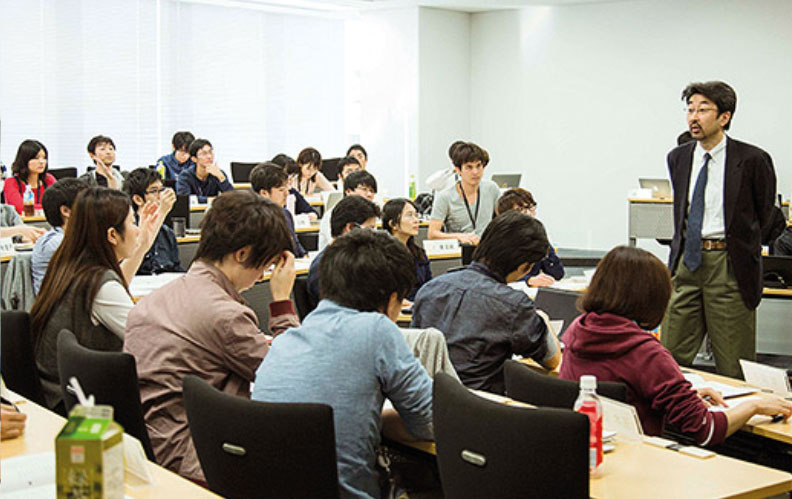
Image source: keio.ac.jp


Gain with World Class Management Education in Asia

As universities continue to develop and deliver executive education programmes, corporations are recognising the need to provide higher-level executive education programmes in partnerships with universities to expand the range of education programmes offered and to support the development of managers and future leaders for an operational focus and can be readily delivered by in-house trainers or competency-based training firms.23 Also, executive education programmes focus on a very different constituency than traditional MBA programmes do. Most standard MBA programmes are designed for young professionals, while executive education targets those in more advanced positions of leadership. Programmes tend to grant certificates rather than degrees, and they generally consist of short but intensive sessions.24 According to Mr. Arya, regular full-time MBA degree programmes are typically 1 to 2 years in duration. “They are great for early career professionals who are broadening their scope and analytical skills, in preparation for managerial roles or new careers and industries,” he said.

On the other hand, executive education programmes are typically short, 3 days to 2 weeks in duration, focused on specific development areas. “They are great for mid, senior and top management development at different points of their career. Many organisations also customise bespoke executive education programmes to meet strategic learning needs,” he added.

There are a number of ways for educational organisations to effectively differentiate themselves and thereby gain an important edge. Often a critical starting point is recognising what the participants are seeking. The premise is to learn in order to be more successful business people. Hence, the students require highly actionable insights, methodologies and strategies. They need information and processes that will empower them – if they make an appropriate effort to apply recent learnings – to more meaningfully contribute to the success of their companies. This in turn will, in many situations, make them more personally successful (e.g., wealthier).25

Mr. Arya explained that the most valuable, and perishable asset for executives is time.

“We have limited executive time in a year to invest, and we must invest it well to keep and sharpen the management team’s edge. Management education provides tools, best practices, solutions that can fast reach and enhance performance. It also provides a platform to learn from peers (and their successes and mistakes). Left unplanned, the tendency will be to under-invest. Progressive organisations and leaders will however, plan for one to two short programmes a year for high potential and loyal employees, longer, reflective program once every 2 to 3 years, and milestone programmes at key points of each manager’s career.”

Educational organisations are built on the notion of specialisation of knowledge, but the future innovation landscape requires a combination of deep expertise with equally deep forms of integration, which leads to the need for innovation that has economic consequence, and the education of innovation requires integrating them more closely into the learning process.26

There are emerging trends in this sector every year, depending on the needs of a company, or the preference of an executive. “Executive education trends tend to mirror real world trends that impact organisations. Disruption, technology, innovation, Artificial Intelligence (AI), FinTech, business analytics are some of the trending issues that leaders and senior managers need to understand and apply their intellect to,” Mr. Arya said.

He also mentioned that with the rise of the millennial working class and the capability in managing and nurturing them, business leaders and senior managers should possess such skills. Having less time at work to focus, learn and reflect on the issues, there are also trends towards new learning methods as well.

Variety can now be found within Asia and between each region around the world, when it comes to management education.

“With the rise of Asia, corporations from across Asia, Japan, US, Europe, Africa, and South America are now regularly turning to us for our expertise and for the Asia perspective. The discussions, learnings, challenges, debates, and case studies in our programmes are probably more representative of the environment that our participants face in Asia, doing business within Asia and with the world,” added Mr. Arya.

He also noted that a number of universities and business schools in Asia are now regularly represented at the top end of management education rankings by US and European publications.

Take the time to invest in management education programmes while leading your business to the top. 


References

1. https:// www.aim.edu / programs / executive – education – programs
2. http://www.ateneo.edu / aps / asog / executive _ education / executive _ courses
3. http://executive – education . nus . edu/programmes/20 – stanford – nus – executive
4. http://executive-education.nus.edu/programmes
5. http://www.lsbf.edu.sg/programmes/executive – education/face/
6. http://www.lsbf.edu.sg/programmes/executive – education/customised/
7.  http://online.lsbf.edu.sg/individual/
8.  http://www.essec.edu/en/pages/about-essec -asia-pacific/executive-education-asia-pacific/luxury-brand-management-executive-program/
9. http://executive-education.essec.edu/en/program /embas-en/emba-asia-pacific-en/program/
10. http://www.essec.edu/en/pages/about-essec – asia -pacific/executive-education-asia-pacific/digital -transformation/
11.  http://english.phbs.pku.edu.cn/academics/EMBA/
12. http://english.ckgsb.edu.cn/content fintech – blockchain -beyond
13.  http://english.ckgsb.edu.cn/content/china-start
14.  http://english.ckgsb.edu.cn/content/gel
15.  http://english.ckgsb.edu.cn/content/pharmaceutical – china – immersion – program
16.  http://english.ckgsb.edu.cn/content/global – branding – in – digital – era
17.  http://english.ckgsb.edu.cn/content/global – capital – markets – investment – selection
18.  http://english.ckgsb.edu.cn/content/sino – european – 2nd – generation – family – business  -leadership – program
19.  http://english.ckgsb.edu.cn/content/understanding-china%E2%80%99s-next-move-rise-china%E2%80%99s-innovation
20.  https://www.business.kaist.edu/programs/0205 21.  https://www.idc.com/kr/prodserv/iep
21.  http://www.kbs.keio.ac.jp/en/seminar/
22.  Lindsay Ryan, The Growing Role of Executive Education In University-Corporate Partnerships, https://digitalcommons.kennesaw.edu/cgi/viewcontent.cgi?article=1045&context=jee
23.  Katherine Noyes, What’s missing from executive education: women, http: // fortune.com / 2015 /0 4 / 16 / executive – education – women /
24.  Russ Alan Prince and Bruce Rogers, How Executive Education Organizations Can Gain a Competitive Advantage, https://www.forbes.com/sites/russprince/2012/09/21/how-executive-education-organizations-can-gain-a-competitive-advantage/#6b2707b12601
25.  Abby Ghobadian and VK Narayanan, The vital role of management education, https://www.ft.com/content/1858250a-0b6f-11e4-9e55-00144feabdc0

Nurturing a Successful Business Through a Stable and Ethical System

An Interview with Mr. Ahmet Kudsi Arslan, CEO and Chairman of the Management Board, KT Bank AG

As the first bank in Germany and the Eurozone to introduce comprehensive financial products and services according to the ethical, sustainable and transparent Islamic banking principles, KT Bank AG continues to be a pioneer and leader in Islamic finance. Today we sat down with the bank’s CEO and Chairman of the Management Board, Mr. Ahmet Kudsi Arslan, to talk about their journey to today’s success and how they carry on their mission to become the leading socially responsible and first choice house bank for the Muslim community as well as for all customers who are interested in ethical investments.

Good day, Mr Arslan! Thank you for spending time with us through this interview. You have been sharing your expertise with the Kuveyt Türk for almost two decades now. Can you share with us your professional journey – the positions you held with Kuveyt Türk along with the challenges in climbing up the ladder to success until you became the CEO of KT Bank? And how does a successful person like you would jumpstart a busy day?

Thank you for having me, the pleasure is all on my side. My personal journey and career path are very much intertwined with that of Kuveyt Türk Participation Bank in Istanbul, and since then it’s been more than two decades. Kuveyt Türk is leading the Islamic banking market in Turkey for three decades. Its main shareholder is Kuwait Finance House, the most important financial institute with Islamic business model in the Gulf region.

I am with the group since I graduated in 1997 with a Bachelor of Science from the Middle East Technical University in Ankara. In September the same year, I joined my employer and gathered experience in different fields, including financial analysis, commercial and corporate marketing as well as branch management. From October 2009 until August 2013 I served as Corporate & Commercial Credit Manager and from September 2013 as Group Head of Wealth Management and Private Banking. Two years later I transferred to Germany to support KT Bank with its market establishment. KT Bank is a 100% subsidiary of Kuveyt Türk and the first bank in Germany and in the Eurozone, which introduced comprehensive financial products and services according to Islamic banking principles – a very exciting project. In January 2016, I was appointed as Deputy CEO of KT Bank and following that, in January 2017, I was made Board Member. Then, in April 2017, I was appointed as KT Bank’s CEO and Chairman of the Management Board. This is a role that I enjoy very much and gives me a lot of energy as I work on a pioneering project in a promising market. My motivation and love for my job are the ultimate jumpstarts for my busy days but if you are looking for a specific winning formula I would simply say – try some Turkish coffee!

Last October 2018, the Global Finance Award once again recognised the KFH GROUP in several categories, and KT Bank AG was acknowledged as the “Best Islamic Bank in Europe”. How important is this recognition for KT Bank AG?

As accolades like the Global Finance Award are happening on an international level with a lot of great publicity, we are delighted that our hard work as Islamic banking pioneers in Western markets has been recognised.

KT Bank AG was the first Islamic finance to open in 2004 in a country like Germany, which is home to one of the most competitive banking sectors in the world. Over the years, what have been the major challenges and barriers you have had to tackle?

Our market entry started with opening a representation office in Germany in 2004 followed by the granting of the financial services license from Germany, the third country deposit brokerage license in 2010 and resulted in the fully-fledged banking license in 2015 under German law for the provision of deposit and credit business in Germany. Kuveyt Türk had assumed a pioneering role in providing information about the ethical and socially responsible Islamic banking system in the German market from the very beginning. The duration of the licensing process was not surprising for the nature of such a trailblazing project in a foreign environment. The regulative implementation process was a challenge but we were supported all the way by the authorities and stakeholders who welcomed us with open arms. Yet the Islamic banking system had to be adapted to the legal framework in Germany, with all of its specific features and risks and we had to comply with all the regulatory, legal, and fiscal requirements applicable for conventional banks. The greatest challenge we faced in the process was the taxation. Germany does not provide an exemption or adaptation for our business model in that area. With regards to specific challenges, such as Islamic car purchase and real estate financing, we had to develop approaches to comply with the German legislation – e.g. our real estate financing products are set up in line with the model of the German civil-law association “Gesellschaft bürgerlichen Rechts” (GbR) to avoid double taxation.

What are the key factors of the Western market that affect Islamic banking and financial practice in Germany? How do you integrate these factors in making Islamic banking a universally ethical alternative to conventional banking in the country?

The Islamic economic law in general is based on justice and the economic well-being of society, with the market symbolising freedom and solidarity.

As a first mover in Germany and in the Eurozone, we have observed over time that European markets are becoming increasingly aware of the universally ethical qualities of Islamic banking’s Quran-based values, thus attracting value-conscious clients of all beliefs. We are in a constant exchange with business communities and scholars and also support scientific research in our area. It quickly became very clear that faith-based finance models, in general, are on the rise in the Western world. Our business model shows that profits and ethics are compatible. Not only the Muslim communities here, but also the European clientele is becoming increasingly aware of the contribution of our business model to the real economy. We as Islamic bankers in Germany are thus carving out our position within the conventional banking sector, shoulder to shoulder with the ethical banking segment and on the way to sustainable profitability.

KT Bank AG continuously develops state-of-the-art and unique Islamic banking products and services. Can you tell us more about your offerings and products that make you at par, or even superior compared to conventional banking?

Our multifaceted product portfolio for retail, corporate and institutional customers includes a wide range of Islamic financing and investment products and services and is continually advanced and developed. We provide current and participation accounts, real estate financing in Germany and in Turkey, savings plans, remittances to Turkey, instalment loans, instalment commercial finance, enterprise finance, and euro account services for institutional clients. Our products satisfy our standard for ourselves as pioneers, featuring brand-new concepts like our automated instalment payment solution Jetzz Card which substantially simplifies instalment shopping based on the Debit Mastercard. Our solid KT Participation Account provides our clients with the highest returns that can currently be obtained in the fixed-term deposit area in this country. We are also embracing the strive for digital maturity and are continually advancing our technological infrastructure, digital services, and online direct banking structure.

What practices or principles do you think the Western or the conventional banking system can learn from the Islamic banking system?

Our banking model prioritises unequivocal values over a narrow focus on profits and is guided by historical principles of an integral society that are 1,400 years old and still tremendously relevant today. The Islamic economic law, in general, is based on justice and the economic well-being of society, with the market symbolising freedom and solidarity. In pre-Islam times in the Middle East, a diversity of non-transparent and arbitrary sales agreements and purchase contracts existed. With the introduction of the pillars of Islam and the belief in an afterlife, economic and social responsibility grew. The new prohibition of interest, speculation and lack of transparency ensured that trading did not cause damage to society. The moral requirement for traders was a charitable and benevolent market participation. Islamic banking today implies interest-free, asset-backed banking on the basis of profit sharing with clients. Interest-bearing moneylending and high-risk trades are prohibited, as well as investing in businesses that provide goods or services considered contrary to Islamic principles, like those involving alcohol, pork, gambling, arms, and tobacco, among others. The Islamic model is thus a stable and ethical system that has proven to weather many storms, devoid of the repercussions of highly volatile financial instruments.

The Muslim community in Germany rose dramatically between 2010-2016. Research also shows that Islamic finance is spread to more than 60 countries all over the world, concentrated in countries/areas where most of the Muslim population thrives*. Do you think that Islamic banking and finance is just for Muslim-majority countries?

Not at all, and let me explain why we make a fine example to support that perspective. The introduction of Islamic banking in a country like Germany seemed to respond to needs arising out of the increased influx of Muslim immigrants within the last few years. Germany, with its current Muslim population of about 4.7 million, is, alongside France and the UK, classified as one of the predestined Western key markets for Islamic finance. Yet during our last four years of operational business development and analysis of the value-based methodology of Islamic banking, it became apparent that it does not only fulfil the requirements of the Muslim community, but also the ethical standards of the majority of German society. We have established the Islam-compliant finance model as a new field of socially responsible investment (SRI), which is in high demand after the financial crisis. We welcome clients from all religions and worldviews, backgrounds or nationalities. Within our client structure, 60 nationalities are represented; some of them are from European neighbouring countries.

The Islamic model is thus a stable and ethical system that has proven to weather many storms, devoid of the repercussions of highly volatile financial instruments.

At present, where does Islamic banking and finance stand in the Western world? Where do you see KT Bank AG five years from now?

Islamic banking is a business segment that is growing worldwide and has also been acknowledged by the finance ministers of the G20 states as a progressive alternative for Western economies. It is going to be integrated more into the global finance structure to foster a cultural change. KT Bank in five years will still be on a sustainable expansion path, including the steady growth of our client base, and pursuing the further advancement of our portfolio, branch services and digital environment.

Nowadays, it is very important to keep a healthy and positive working surrounding, how do you usually address work pressure and motivate yourself and your colleagues at work? And what is the one thing you always tell your employees?

We at KT Bank are in a very special position as the values of our company reflect our personal beliefs, so the level of motivation and identification with our tasks are extremely high which naturally supports a healthy working atmosphere and helps us to cope with the pressure. Now, not everybody who works at KT Bank is a Muslim, yet everybody at KT Bank appreciates the positive spirit of our faith and the resulting corporate culture of ethical integrity. We include our religious, ethical traditions in the corporate environment, from our office prayer rooms to our ecological company equipment. This continually supports our awareness of the bigger framework – that we are actually working on a very meaningful task.

And lastly, on a lighter note, what do successful people like you do after a hard day’s work?

I can recharge completely when I spend time with my family. I am also very fond of exploring my new home in Germany together with them.

Thank you very much, Mr. Arslan! It was a pleasure speaking with you.

*https://www.gfmag.com/topics/blogs/islamic-finance-just-muslim-majority-nations

Executive Profile

Ahmet Kudsi Arslan is CEO and Chairman of the Management Board of KT Bank AG since April 2017, following his appointment as Board Member in January 2017 and holding the position of Deputy CEO since January 2016. Prior to these roles, he was part of KT Bank’s parent bank Kuveyt Türk Participation Bank in Istanbul for more than two decades and in several leading positions, such as Group Head of Wealth Management and Private Banking, and Corporate & Commercial Credit Manager. Other stations of his career at Kuveyt Türk, which he started in September 1997, include branch management and financial analysis.

EDITOR'S PICK OF THE WEEK

CFO's new mandate. CFO explaining the presentation

The Performance and Transformation Orchestrator: The CFO’s New Mandate in the Age of AI

By Terence Tse CFOs are evolving into AI-driven transformation orchestrators, balancing finance, technology, and strategy while upskilling teams, managing risks, and driving measurable business value. A key insight from this year’s AI for CFOs event, organized...

WISE DECISION MAKER GUIDE

POWER INFLUENCERS

Emerging Trends

The Future of Global Trade