By Xiangming Chen
A Preamble
I published my first article “China and Latin America” in The European Financial Review in 2012 to launch this magazine’s “China & the World Series”. Since its official inauguration in 2013, the Belt and Road Initiative (BRI) has turned “China and the World” into a globally significant topic of public attention, academic research and policy debate. The topic has stayed constantly and prominently in the headlines, only magnified by the US-China trade war over the past year and a half, and generated a large and growing body of published scholarship and media commentary. Through 13 articles published in this series thus far with a variety of co-authors, including a number of undergraduate students at Trinity College in Connecticut, I have taken the reader to see China’s presence and influence in all regions of the world. More importantly, I have attempted to shed light on “China and the World” by drawing meaningful connections between local and regional development and transformation deep inside China and their echoes and extensions across varied places and boundaries around the world. The article below takes the trans-local dimension of “China and the World” further by tracing how China has evolved from a follower to a leader in building special economic zones (SEZs) within its boundaries earlier on and extending this experience and expertise to other developing countries more recently.
Special economic zones (SEZs) have been used as an important national development instrument around the world for the past several decades. China stands out not only in having created the largest number and variety of SEZs but also in building some SEZs in other developing countries. In this article, I first trace the evolution of SEZs into both distinctive and overlapped types over the past four decades, showing how SEZs have changed and continued in their own existence and in roles in fostering development. Second, I focus on China’s transition from a national follower to a global leader in creating the world’s largest number of SEZs, diversifying its SEZs domestically and extending them internationally. Finally, I draw critical lessons from China’s development experience with SEZs for developing countries.
An Age-old Story Through the 21st Century
The Economist (4 April 2015) dated the first free trade zone (FTZ) to ancient Phoenicia about 3,000 years ago. Keller Easterling (2012) traced it to the Roman port of Delos in the Aegean Sea, which flourished in the first century B.C. From the FTZ-like Hanseatic League during the 13th to 17th centuries, we could fast-forward to find the first modern zone, created at Shannon airport in Ireland in 1959. This was followed by South Korea and Taiwan using export processing zones (EPZs) in the 1960s and early 1970s to jump-start their export-oriented industrialization. China raised the SEZ approach to development to a new level in 1980 when it established four SEZs (Shenzhen, Zhuhai, Shantou, Xiamen) along its southeast coast which were much larger than the earlier EPZs and sited in or near existing cities.
From an estimated 500 in 1995, the number of SEZs has risen to 5,400 zones operating in 147 countries (UNCTAD, 2019). Given the large numbers and varied types of SEZs, their success varies widely. China is a global leader in SEZ development having operated the largest number and most varied types of SEZs with overall success. By comparison, SEZs in India and Africa have generally not done as well, for various reasons such as weak infrastructure connections, excessive bureaucracy, and resistance to land acquisition (ADB, 2015; UNDP, 2015). Timing of establishment and governance structure loom among other determining or facilitating factors that shape the differential performance of SEZs. I update my early typology of SEZs (Chen, 1995) to a dynamic view on the new SEZ landscape today.
Table 1 shows four types of SEZs over three broad stages. Free manufacturing zones (FMZs) mark industrial upgrading from the takeoff of labour-intensive and export-oriented manufacturing to knowledge-intensive innovative manufacturing. Since hosting much earlier services such as warehousing for duty-free goods in FTZs, free service zones (FSZs) have diversified over time into broader coverage of more modern and high-end services such as logistics. While overlapping somewhat with FSZs, sector-specific zones (SSZs) have a shorter history and feature more specialized economic functions and activities that increasingly herald the future. Cross-border and extra-territorial SEZs are the newest type, of the largest geographical scope, and truly border-intensive and transnational in function. This table aims to remap SEZs as subnational units of economic development with varied roles onto the development ladder of climbing or sliding national economies based on shifting comparative advantages.

China’s Experience with SEZs
China’s experience with SEZs has largely tracked the global trend over the last four decades, with Shenzhen being the most successful and well-known case. As Table 2 shows, the first two types of zones started in the 1980s, a few years apart from each other, with the economic and technological development zones (ETDZs) launched in 1984. All the early ETDZs built by the 14 established coastal industrial cities were sited some distance away from the central cities as greenfield development projects. They were similar to Shenzhen in that the new location and construction would keep the zones less connected and thus influenced by the old system. While both the SEZs and ETDZs experienced their transitions through industrial upgrading, China unleashed a wave of high- and new-technology zones (HNTZs) across much of the national economic space starting around 2000, although an earlier variation called high-tech industrial development zone started in the 1990s. The fourth type, heralding a new phase of China’s SEZ development that reflects its more open economy, appeared with the official unveiling of the Belt and Road Initiative (BRI) in 2013.

While starting out as a SEZ for low-end and labor-intensive manufacturing SEZ around 1980, Shenzhen in the early 1990s entered a new stage of development characterized increasingly by more capital- and technology-intensive manufacturing in response to rising land and labour costs and worsening environmental degradation. The focus during this stage was on Shenzhen to become a center for high- and new-tech manufacturing, finance services and logistics. In 2003, a cultural industry focus was added. In 2009, Shenzhen added a new focus on becoming an international innovation center. The successful Shenzhen model has recently been extended to China’s far western cities of Kashgar and Horgos in Xinjiang (Chen, 2018).
Focused more on industrial innovation a few years ago, Shenzhen designed a set of very generous financial incentives for attracting R&D labs of national, provincial and municipal grades ranked by a sliding scale of importance and prestige, as well as labs set up by multinational corporations. National- and provincial-level labs, especially those certified as “excellent”, would each receive financial support of up to RMB10 million ($1.5 million), while each municipal level lab would be granted 5 million RMB ($750,000). Shenzhen would also provide 5 million RMB for offsetting the cost of constructing each of these labs. In addition, Shenzhen has built new R&D lab spaces that are available to new-tech firms without rent for the first two years and at a discount of half of the rent for the next three years. These new incentives have fuelled the dense emergence and rapid expansion of high- and new-tech firms that have placed Shenzhen at the forefront of global technological innovation today (Chen and Ogan, 2017).
By 2009, China had approved 54 HNTZs occupying a total area of 962 sq kms. Although this is only 1/10,000 of China’s total territory, it produced 10.4% of China’s total industrial output that year.
Except for Shenzhen’s singular success, China’s experience with SEZs varies broadly. Despite their shorter histories than the SEZs and ETDZs, the HNTZs have since around 2000 become quite productive, in parallel with China’s overall effort to move to higher valued-added manufacturing and knowledge industries (Table 2). By 2009, China had approved 54 HNTZs occupying a total area of 962 sq kms. Although this is only 1/10,000 of China’s total territory, it produced 10.4% of China’s total industrial output that year. Of these HNTZs, 16 produced over 20% of their cities’ total output, up from eight that did so in the previous year (Yu, 2011). Productive as they are, some HNTZs have run into the land bottleneck and acquired some surrounding areas without administrative approval by the higher authorities. In some cases, the areas around the originally approved HNTZs have been developed into residential and commercial zones, which has pushed up land prices. This has restricted and diluted the original purpose and focus of building high- and new-tech industries.
This process also reflects another critical factor in China’s SEZ success – local leadership. Most of the zones of various types are led by a vice mayor or Party secretary of the cities where the zones are located. These leaders tend to do quite well early on because they can leverage and utilize the autonomy granted to the zones and their new momentum, with some institutional separation from their municipal administrative anchor. Some of the leaders were innovative and led the HNTZs to varied levels of success. However, as these zones have become more integrated with their host cities through mixed-use development and inertia, some of their leaders have become more conservative and content with the status quo. The leadership factor exposes a fundamental dilemma facing China’s SEZs. Since they are not special political zones and ultimately governed indirectly by the larger system, they carry a strong built-in limit for sustaining their vitality.
Partly pressured by its domestic overcapacity in cement and steel, as well as the overall saturation of the construction market, China has begun to build a variety of SEZs abroad as part of the infrastructure-led development strategy under the BRI.
Pushing SEZs Overseas
Partly pressured by its domestic overcapacity in cement and steel, as well as the overall saturation of the construction market, China has begun to build a variety of SEZs abroad as part of the infrastructure-led development strategy under the BRI. In 2014, a Chinese company started constructing Forest City, a private, gated, luxury mega-development for 700,000 people on four reclaimed islands in Malaysia’s Johor state near Singapore. But this project has been halted since the second election of Prime Minister Mahathir, who is more critical and cautious about China’s heavy investment in Malaysia. In the meantime, Alibaba has helped Malaysia launch the Duty-Digital Free Trade Zone (DFTZ), a warehousing facility close to Kuala Lumpur’s international airport. The DFTZ is designed to serve as a regional logistics hub to help small and medium-sized businesses better connect to global commerce. These cases mark the most recent phase of China’s SEZ development featuring a “go global” strategy (see the lower right corner of Table 2). It is a logical extension of China’s cumulative strength and experience in building SEZs at home and provides new opportunities for countries that are relatively late in coming to SEZs. These countries can learn useful lessons from China’s uneven success with SEZs that may or may not transfer easily and successfully to other contexts. I present two sets of cases in Laos and Ethiopia respectively below.
A China-Laos economic cooperation zone
China’s extension of SEZ development to Laos has taken place between the Chinese border city of Mohan in Yunnan Province and the Lao border town of Boten. In 2015, the governments of China and the Laos signed the Agreement for Joint Construction of the China–Laos (Mohan-Boten) Economic Cooperation Zone (ECZ) as the BRI gained momentum into Southeast Asia. While this bilateral plan was predated by the establishment of the Boten SEZ in 2009 directed by the Lao government, little had happened through 2015. The ECZ became China’s way to jump-start and scale up the Boten SEZ by building a new and much larger city where the Boten zone is located, on the Lao side of the border. The construction has been undertaken by Haicheng, a private real estate development company based in Kunming. The signing of another joint development master plan for the ECZ in 2016 accelerated the construction, with the vision and goal of turning the zone into a comprehensive and integrated city for 300,000 people characterized by four functions: international commerce and finance; duty-free logistics; culture, education and health care; and tourism and vacation. It recalls Shenzhen’s functional expansion into a real city from its early years of industrial dominance.
The Boten ECZ offers a set of familiar financial incentives according to the Boten SEZ and other SEZs. These include: 1) the exemption of import duties for all goods and materials used, sold and served in the zone; 2) tax reduction or exemption for 2-10 years for factories in the zone; and 3) tariff-free exports to third countries and qualification for most-favoured-nation status relative to advanced economies. The ECZ also benefits from being located at the crucial cross-border point of the China-Laos Railway and at the connecting hub for both rail and road lines linking China, Laos and Thailand that will eventually extend to Malaysia and Singapore. It also serves as the distribution and connective hub for cross-border trade and tourism. Moreover, the ECZ, in the heart of four concentric circles with travel radiuses of one to seven hours, allows easy and quick access and travel to a number of major cities and their hinterlands that span the connected adjacent border regions of China, Myanmar, Laos, Thailand and Vietnam (see Map 1).

The ECZ’s ultimate success is most likely to depend on the completion and operation of the China-Laos Railway that runs by the Mohan-Boten border zone. Although the idea for the China-Laos Railway project germinated in 2010, the official agreement was not signed until November 2015 and ground for construction broken in Vientiane in December 2015. The line starts in Kunming and travels southward to Jinghong and Mohan until it enters the Laos through the Lao border city of Boten. It will then move past Luang Prabang and Vang Vieng before arriving in the Lao capital of Vientiane. Designed to carry both passengers and cargo, the railway will run at an average speed of 160 kilometers per hour, which qualifies it as a high- to medium-speed train, and 60% of the line will be bridges and tunnels.1 The Lao government expects roughly 4 million Lao passengers a year to use the railway’s 420-km route through the country at first, with the figure growing to 6.1 million passengers in the midterm and 8.1 million passengers in the long run.2 This is a rather optimistic scenario.
The China-Laos case reflects the dominance of Chinese state capital and a narrower focus on cross-border transport infrastructure in the China-Laos Railway, although the new China-Laos ECZ in Boten is being built up rapidly as a hub for anchoring cross-border regional development. It is also too early to gauge the prospect of manufacturing-oriented SEZs being built and planned near some stations of the China-Laos Railway such as the China-Laos cooperative Saysettha Development Zone (SDZ) located only 1.5 km from the railway’s terminal station of Vientiane. Laos’ SEZs are expected to host labour-intensive industries, some of which have left China for Southeast Asia due to its more expensive labour and land and upgrading to high-tech manufacturing in new zones. Being built by Yunnan Construction and Investment Holding Group Co., a large SOE specialized in construction from Yunnan, to host more than manufacturing to include logistics, commerce and other associated functions of a new city, the SDZ is larger version of the Mohan-Boten ECZ and also stands to benefit from being on the outskirts of Laos’ capital of Vientiane (see Map 1).
Building industrial parks in Ethiopia
Powered by the same internal push of high production costs, Chinese companies, both state- and privately-owned, have brought SEZs to Africa, Ethiopia in particular. The establishment of an SEZ in Ethiopia was reportedly linked to Chinese economist Lin Yifu, a former chief economist for the World Bank, who had convinced former Ethiopian Prime Minister Meles Zenawi of the value in SEZs (Pairault, 2019). The then Prime Minister called for Zhang Huarong, Founder and CEO of Huajian Group, a huge shoemaker based in the southern Chinese city of Dongguan and a major global shoemaking center, to open a factory in Ethiopia. Three months later, in 2011, Huajian entered the Eastern Industrial Park (EIP) and began producing footwear for giants such as Nine West, Guess and, later, Ivanka Trump’s fashion line (before it closed later).3 Located 35 kms southeast of Addis Ababa in the town of Dukem, EIP is Ethiopia’s first industrial park and has helped spearhead the country’s export-oriented industrialization since 2011 when it was built with Chinese investment and is currently owned by the Jiangsu Qiyuan Group, a private Chinese investor (Zhang et al, 2018). Dukem is located on the Addis Ababa-Djibouti highway and the Addis Ababa-Djibouti Port railway, which was built by China with a loan of $3 billion from the Export-Import Bank of China and started operation on January 1, 2018. This rationale is similar to building SEZs along the China-Laos Railway discussed earlier. Like land-locked Laos, 95% of Ethiopia’s trade passes through Djibouti and accounts for 70% of the activity at the Port of Djibouti. Now shoes made by Huajian’s factory in EIP can be easily shipped by rail for export to the US and European markets. After opening a second factory in 2016 in an industrial park of its own near Addis Ababa, Huajian now employs over 7,000 local workers (see Photo 1) and churns out 5 million pairs of shoes for export every year, earning $31 million in foreign exchange earnings for Ethiopia in 2017 alone.4

In 2019, Huajian stepped up further in cooperating with Ethiopia on manufacturing by acquiring the right to operate Ethiopia’s Jimma Industrial Park (JIP) for 40 years. Located in Oromia Regional State in western Ethiopia and 350 kms from Addis Ababa, JIP was constructed by China Communications Construction Company (CCCC) with an investment of $61 million. Stretched on 75 hectares of land with 35 hectares already developed, JIP aims to attract clothing and shoe factories. Huajian has already taken the lead in leasing 9 factory buildings covering 39,000 sq meters and committed to invest $100 million to build more shoemaking facilities. This production plan is expected to create 12,000-15,000 jobs. Huajian also plans to develop the other 40 hectares in JIP to build a coffee-processing plant taking advantage of being in Ethiopia’s coffee-growing region and add other agricultural production activities that may create additional jobs through larger and more varied exports.5
China has recently further strengthened its role in building industrial parks for Ethiopia by agreeing to start building a new, $300 million industrial park before the end of 2019. Located in Adama city, 99 kms southeast of Addis Ababa in central Ethiopia, this industrial park, which will focus on equipment manufacturing, is funded at 85% through Chinese government concessional loans while the remaining 15% will come from the Ethiopian government. This park follows from the first Adama industrial park, which was built by China Civil Engineering Construction Corporation (CCECC) at a cost of $146 million and inaugurated by Ethiopian Prime Minister Abiy Ahmed in October 2018. The two parks combined can create around 25,000 jobs as an important part of Ethiopia’s grand plan to transform its largely agrarian economy into an industrialized one by 2025.6
China’s has recently further strengthened its role in building industrial parks for Ethiopia by agreeing to start building a new, $300 million industrial park before the end of 2019.
China’s Impact and Lessons
Global SEZ development over the past four decades (Table 1) has been accompanied and reflected by China’s own SEZ development for a comparable period of time (Table 2). Around 1980, China adopted the main elements of the early generation of EPZs through its experimental version of SEZs, crystalized in Shenzhen. China then expanded the “learned” SEZs geographically to scale up export-oriented manufacturing based on its low-cost labour and land advantages by building physical and transport infrastructure for all forms of SEZs. As China upgraded its low-cost manufacturing, heavily concentrated in industrial zones in the coastal region, towards the end of the 1990s, it created more SEZs in its inland and border regions and began to “export” SEZ development, notably to Laos and Ethiopia. Starting out as a follower or learner of SEZs with its adaptations, China has recently become a global leader in developing SEZs.
Regarding China’s own SEZs, two main policy lessons can be drawn. The first lesson, of a positive nature, has to do with a national government commitment to using SEZs of various kinds and locations to achieve multiple goals: driving industrialization, creating jobs, promoting exports, inducing technology transfer and innovation, and stimulating broader regional development to reduce spatial inequality. The second lesson, with an undesirable twist, pertains to many local governments competing to build identical SEZs and ending up with wasteful investment, unfair competition and partial failure. The combination of these two lessons points to the critical importance of vertical and horizontal policy coordination and operational sensitivity in creating truly needed SEZs for clear and achievable development goals from and beyond most favourable locations.
The Chin-Laos (Mohan-Boten) SEZ, being built by a regional private Chinese company under a bilateral agreement at the national level, offers two quick lessons, one likely positive and one potentially negative. First, taking the form of an integrated city in a border region like Shenzhen with a large scale and diverse activities, this SEZ is capable of stimulating broad regional development in northern Laos where development has lagged. The potential downside of heavy Chinese involvement poses a risk that this zonal development will produce exclusive spaces only for Chinese investors, workers, and residents while marginalizing Laotian citizens. This scenario is likely since the Chinese private development company is also heavily involved in local governance. In this kind of large-scale development driven by a powerful outsider, local “others” can be excluded and lead to the erosion of political and territorial sovereignty and governance of Laos or other countries hosting China-built SEZs.
China’s venture to build SEZs in Africa invokes two other policy lessons that harken back to its domestic experience. The first lesson reinforces the two-sided trend that SEZs can continue facilitating economic development and that the successful aspect of China’s SEZs can be transferred to other developing countries with necessary adjustments. The growing number of special manufacturing zones in Ethiopia built by China have shown expected results in inward investment, job creation and exports. This contradicts earlier studies that had showed the China-sponsored SEZs in Africa to be largely unsuccessful (UNDP, 2015). Secondly, with multiple actors including the state and private firms involved, China-built SEZs in Ethiopia point to the challenges such as ensuring high-level political commitment and support for effective inter-ministerial collaboration and integrating SEZ programs into national development strategies and plans. These features not only define China’s more successful SEZs but also reflect Ethiopia’s commitment to using them to accelerate industrialization.
At this critical time for evaluating China’s growing role in the global economy, we are only beginning to understand China’s leadership in global SEZ development. In spite of China’s success with SEZs at home, often inflated by the singular prominence and reputation of Shenzhen, we should be cautiously optimistic that certain elements and practices of China’s SEZs may be adapted to some developing countries, either inter-country policy mobility or China-foreign cooperation zones. As this potential grows from the further implementation of the BRI, it alerts us to fully assess the policy lessons of China’s SEZs that can inform and foster sustainable economic development through South-South cooperation.
This article was adapted from the author’s recently published much longer paper “Change and Continuity in Special Economic Zones: A Reassessment and Lessons from China,” Transnational Corporations 26 (2): 49-74 (2019).
About the Author
 Xiangming Chen served as the founding Dean and Director of the Center for Urban and Global Studies at Trinity College in Connecticut from 2007 to 2019. He has been Paul E. Raether Distinguished Professor of Global Urban Studies and Sociology at Trinity College and a distinguished guest professor at Fudan University, Shanghai. He has published extensively on urbanization and globalization with a focus on China and Asia and conducted policy research for the World Bank, the Asian Development Bank, UNCTAD and OECD.
Endnotes
1. “China, Laos sign railway deal”, Zhao Lei, The China Daily, 14 November 2015; http://www.chinadaily.com.cn/business /2015-11/14/content_22456633.htm.
2. “Laos and China come to terms on loan interest rate for railway project”, Radio Free Asia, 4 January 2016; http://www.rfa.org/english/news/laos/laos-china-come-to-terms-on-loan-interest-rate-for-railway-project-01042016163552.html.
3. “Employed by China,” Jenni Marsh, CNN, August, 2018; accessed from https://edition.cnn.com/interactive/2018/08/world-china-africa-ethiopia -manufacturing-jobs-intl/.
4. “Chinese firm signs agreement to manage Ethiopian industrial park,” Xinhua, May 31, 2019; accessed from http://www.xinhuanet.com/english/2019-05/31/c_138103636.htm.
5. “Huajian takes over management of Ethiopia’s state-owned Jimma Industrial Park and plans to build shoemaking and coffee-processing plants,” Sina.com, June 5, 2019; accessed from http://www.timedg.com/2019-06/05/20836228.shtml.
6. “Ethiopia, China to partner to build new 300 million USD industrial park,” Xinhua, August 13, 2019; accessed from http://www.xinhuanet.com/english/2019-08/13/c_138304130.htm.
References
ADB (Asian Development Bank). 2015. Asian Economic Integration Report 2015: How Can Special Economic Zones Catalyze Economic Development? Manila: Asian Development Bank.
Chen, Xiangming. 1995. “The Evolution of Free Economic Zones and the Recent Development of Cross-National Growth Zones.” International Journal of Urban and Regional Research 19 (4): 593-621.
Chen, Xiangming. 2018. “Globalization Redux: Can China’s Inside-Out Strategy Catalyze Economic Development Across Its Asian Borderlands and Beyond.” Cambridge Journal of Regions, Economy and Society 11(1): 35-58.
Chen, Xiangming, and Taylor Lynch Ogan. 2017. “China’s Emerging Silicon Valley: How and Why Has Shenzhen Become a Global Innovation Center.” The European Financial Review (December/January): 55-62.
Easterling, Keller. 2012. “Zone: The Spatial Softwares of Extrastatecraft.” Places Journal, June. Accessed 25 May 2019. https://doi.org/10.22269/120610.
Pairault, Thierry. 2019. “China in Africa: Phoenix Nests versus Special Economic Zones”, Working Papers hal-01968812, HAL.
UNCTAD. 2019. World Investment Report 2019: Special Economic Zones. New York and Geneva: United Nations. UNDP (United Nations Development Programme). 2015. Comparative Study on Special Economic Zones in Africa and China. Working Paper No. 6, jointly with the International Poverty Reduction Center in China.
Yu, Liang. 2011. “Land Constraints on the Development of High and New Technological Development Zones.” Science and Technology Forum 206 (3): 49-53.
Zhang, Xiaodi, Dejene Tezera, Ciyong Zou, Ciyong Zou, Jie Zhao, Eneyew Abera Gebremenfas, and Jaidev Dhavle. 2018. Industrial Park Development in Ethiopia Case Study Report. Inclusive and Sustainable Industrial Development Working Paper Series WP 21. United Nations Industrial Development Organization. New York: United Nations.




























































Trump’s Deja Vu Wartime Playbook
By Jack Rasmus
History repeats itself, as they say. But in the age of American empire, not just twice. Or even three times. But with disturbing regularity.
The past half century shows two things about how America goes to war:
First, it creates a provocation based on a lie. Second, it then makes its target adversary an ‘offer they can only refuse’, as the final justification for US military action once the adversary rejects the unacceptable offer.
Here’s how it has worked in the past half century–a playbook to war that Trump is now clearly following in the case of Iran with his recent ordered assassination of that country’s general and government diplomat.
As for the initial provocations based on a lie:
1. In 1964 there was the infamous ‘Tonkin Gulf’ incident that provided then president Johnson the cover to escalate US involvement in Vietnam. Later Pentagon documents made public revealed the alleged attacks on US ships off Vietnam by North Vietnamese patrol boats was a total fabrication. 58,000 US and 2 million Vietnamese deaths later, the evidence came out that it was all a hoax.
2. Then there was the 1991 Gulf War. The convenient provocation that turned out to be a lie once again was the Bush administration claim that Iraq was killing babies in incubators in Kuwait. That too turned out to be false, propagated by a family member of the Kuwaiti royal elite who stood before US cameras showing the broken incubators. The US media of course did not properly identify her, instead depicting her as a concerned woman protesting the deaths of premature babies. The US media flooded the American evening news to create final public support for the subsequent US invasion. After the invasion of Kuwait and Iraq forces it was revealed it was all a staged event. Also revealed afterward was how the Bush Sr. administration, through the US ambassador, had told Saddam Hussein, that the US would not intervene if Saddam invaded Kuwait in the first place.
3. In 2001 immediately after 9-11 events in the US the excuse for invading Afghanistan was that the Taliban government in power at the time had assisted Bin Laden in attacking New York and Washington. It later came out the Taliban had nothing to do with planning or launching the attacks of 9-11. And little was said in the weeks, after 9-11 and preceding the US invasion of Afghanistan, that 18 of the 20 or so terrorists who flew the planes into the Twin Towers in New York and the Pentagon were in fact Saudi Arabian Wahhabi sect terrorists aided and supported by the Saudi government. Saudis in the US at the time of 9-11 were quickly flown out of the US by a plane arranged by the George W. Bush administration. Who left on the US aided flight is still publicly unknown to this day. The US ‘unacceptable offer’ to the Taliban was the demand it turn over Bin Laden and all his supporters in Afghanistan–i.e. something impossible without the Taliban provoking its own internal civil war.
4. Then we have the 2003 decision by Bush Jr. invading Iraq. Now the cover lie was that Iraq had weapons of mass destruction, having amassed ‘yellow cake’ uranium material with which to make a nuclear weapon. That too proved totally false after the fact. After the US invasion, nothing remotely representing weapons of mass destruction could be found anywhere despite intense US military efforts to discover such. But in the run-up to war in 2002-03 the lie provided the cover to start the war. And the US demand that Saddam allow US military personnel to roam free anywhere in Iraq–i.e. accept the invasion without resistance–constituted the ‘unacceptable offer’ that the US bet Saddam would reject.
All these lies as bases for provocation represent the standard approach by the US when it wants to go to war. The provocations are then followed by extending an unacceptable ‘offer they cannot accept’ to the targeted adversary. The unacceptable offer is the signal the US has already decided to go to war and is setting up a pretext to justify military action. By refusing the unacceptable offer, the adversary thus gives the US no alternative but to commence the military action.
In the case of the 2nd Gulf War the unacceptable offer was the US demand that US forces be allowed to enter Iraq, roam free unannounced wherever they wanted, and inspect all military bases and other government institutions without interference. In the first Gulf War, it was the similar demand that Saddam pull out all his forces from Kuwait, redeploy far from its borders, and permit US coalition inspectors into Iraq. In Vietnam, it was the Vietcong should disband and both it and North Vietnam should accept a permanent two-state solution, forever dividing North and South Vietnam.
In all cases the US way to war is to make an offer it knows will be refused so that it appears further negotiation or diplomatic efforts are fruitless. Thus only military action is left.
Trump’s Deja Vu Provocation
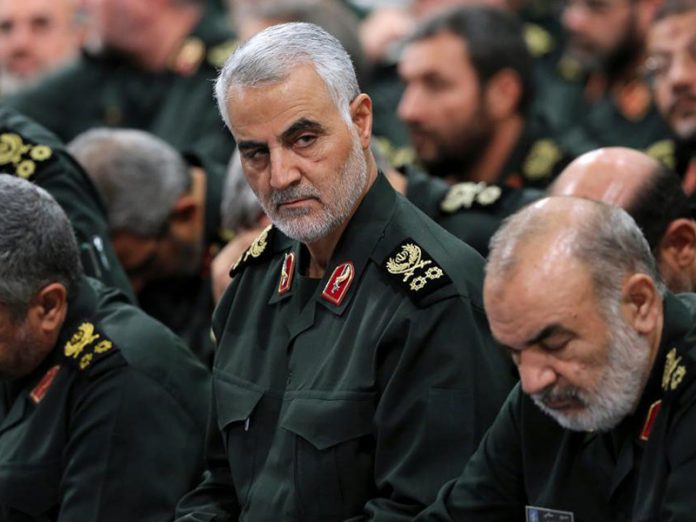
Trump’s recently ordered assassination of Iran’s senior military leader (who was also a senior Iranian diplomat, Soleimani, is being justified by the Trump administration based on claims that Soleimani and Iran were planning widespread terrorist actions that would have killed scores, if not hundreds, of Americans, if he weren’t assassinated. But no evidence of such a threat is being produced by Trump or his government to date. Evidence of the threat was noot even given to members of Congress, after the fact over this past weekend, as Trump post-hoc gave Congress an initial briefing on the action already taken. According to the War Powers Act, and well established precedent, Trump was required to consult Congress before the action, not after. And it has been leaked, though not picked up much by the US press, that that post-hoc briefing was considered seriously insufficient by many members of Congress in attendance.
Evidence lately is leaking out that Trump and his neocon foreign policy radical advisors have been planning the assassination at least since late December, and probably earlier. The Trump administration has been escalating its provocations since at least then. A mercenary US contractor was killed and the US compound in Baghdad was ‘attacked’ by protestors. That in itself was insufficient to launch the assassination provocation. For that, we now have the story of imminent threat to hundreds of Americans that Soleimani and Iran were planning.
In the case of Vietnam there at least was something tangible, in the false photos of the Tonkin Gulf incident. In the first Gulf War they flooded the US media with pictures of broken baby incubators. In 2003 we had then ambassador Colin Powell showing the United Nations his fake placards of installations in Baghdad where ‘yellow cake’ might be stored. Now with Trump all we get is to believe his claim widespread terrorist operations against the US were being planned. Claims from an administration already notorious for its lying, fake news, and fantasy tweets.
What’s Trump’s ‘Unacceptable Offer’?
Events in the days and weeks ahead (surely not months) will reveal what will be Trump’s ‘unacceptable offer’.
Following the assassination, Trump is now clearly waiting on Iran to take some kind of military action against US forces first. The US will use that attack by Iran as an excuse to reciprocate, which is what it apparently has decided to do in the first place back in late December. Since December Trump has been clearly engaged in escalating acts of provocation. The US is betting on Iran falling into the trap–a trap it can hardly avoid given its domestic politics and international commitments.
But in the current domestic US political climate, Trump cannot take military action first. He is prevented by the War Powers Act from doing so. He is also engaged in a domestic political fight over impeachment. A violation of the War Powers Act could potentially add another article of impeachment for violating the War Powers Act law. So he needs to provoke further military action by Iran. That will enable him to actually use the War Powers Act to reciprocate militarily against Iran, and remain still within the War Powers Act. For the Act permits the president to ‘protect US forces’ immediately and later come back to Congress for justification of the action. Trump will launch an attack on Iran should the latter attack US forces, and he’ll then argue his response was protected by the War Powers Act and not a violation of it.
Trump’s latest tweets identifying Iranian targets, including cultural targets, are also designed to threaten and infuriate Iran and get them to attack US forces first. Iran has already indicated it considers the assassination an ‘act of war’. Having said such, for it to do nothing would be politically unacceptable. Iran has publicly declared, however, its targets would be only US military. The likeliest military targets are in Iraq. Once Iran makes the next move, and where, and how, will define what Trump America’s ‘unacceptable offer’ as a prelude to war might well be.
The provocation (assassination of Soleimani) has been made. The US ‘unacceptable offer’ may not be long in coming.
Postscript On the Origins of War in the Period of Late American Empire
The past half century shows that America’s wars are more often than not precipitated by its presidents and their bureaucrat-intellectual advisors. The reasons are some combination of ideology, over-estimation of US power (and under-estimation of adversaries), and decisions by politicians to divert attention from domestic troubles, economic or political, to buttress their political standing or re-elections.
In the case of LBJ in the 1960s, it was clearly ideological in part. LBJ was obsessed with not losing Vietnam on his watch, as Truman ‘lost China’ on his, as he often said. Stop communism and the ‘domino theory’ was widely held by politicians and bureaucrats alike. LBJ was also surrounded by bureaucrat-intellectuals who believed US military power was omnipotent. How could jungle guerrillas in pajamas and sandals dare to resist US military might! Like the Japanese attack on the US in 1941, the thinking was to overwhelm them (guerrillas or USA) with a massive initial force and attack and they’d sue for peace and negotiate. The war would be short. But the USA in 1965 made the same miscalculation as did the militarists in Japan in 1941.
In 1991 the domestic political scene clearly played a role. The US had just experienced a deep financial crisis and a recession in 1990-91. The first Gulf War was a convenient distraction, and a way for then president George Bush Sr. to hopefully boost his re-election bid in 1992–by boosting the economy with war spending and by wearing the mantle of war victor.
In 2003 George W. Bush faced a similar economic and re-election dilemma. The recovery from the 2001 recession was weak. Military spending in Afghanistan was limited. There was no clear military victory. While US forces took over Kabul, the Taliban simply slipped away into the mountains to fight another day. The US economy began to weaken noticeably in 2002 once again. Bush and his neocon advisors had identified and targeted what they called an ‘Axis of Evil’ of countries that were not willing to abide by its rules of American global empire. The countries were: Libya, Iraq, Syria, and North Korea. Except for the latter, they were all easy military targets. Moreover, little evidence of ‘defeat’ of terrorists post 9-11 called for a necessary military action before the 2004 elections. Invading Iraq in 2003 would also boost the US economy in 2004. Bush Jr. would enter the 2004 race with a military-spending boosted economy and with military victory under his belt. Once again, distraction from domestic problems and/or boosting re-election were the main determinants–along with neocon-ultra conservative ideological rationalization for military action.
Something of a similar scenario exists today with Trump. Despite Trump hyperbole on the economy, deep weaknesses exist and threaten to emerge more full blown in an election year. Trump’s trade wars have produced little economic gain after two years. Domestic politics have left Trump with a pending impeachment hanging over his head, and unknown developments about his personal finances, deals made with foreign powers, and failures to deliver in foreign policy nearly everywhere.
Precipitating a war in his final year in office–should impeachment move forward and the economy move backward–is a card Trump the reckless, high risk taker, convinced of his own personal ego and superiority is very likely to play. He is clearly setting the stage for his big bet: will war with Iran boost his re-election plans and re-energize a weakening economy? Or will it lead to his political demise–as in the case of Johnson or Bush Sr.?
Which road will Trump take? (Which has he already decided to take?). Given the nature of his pre-war provocation in the recent assassination–and Iran’s apparent decision to take Trump’s bait–the odds are great that Trump is ‘rolling the dice’ and willing to engage in a risky military adventure. The ‘unacceptable offer’ when it comes will not be difficult to identify. It appears just a matter of time, and more likely sooner rather than later.
Trump’s imminent military adventure holds little in strategic gain for the USA, and great possible loss globally politically as well. But Trump has always been most concerned with his own personal interests, in this case his political re-election. He will, as he already has, sacrifice US long term interests. Trump is about Trump. And nothing else. Americans will not be made safer but less so. So too the world. And before it’s all over, political instability as we enter the current 2020s decade may well precipitate economic instability on a scale not yet seen.
About the Author