When Japan’s new prime minister Sanae Takaichi took office, she pledged to focus on economic improvement. After her Taiwan comments, new missteps could prove costly to Japan, the region, even the world.
On October 21, Sanae Takaichi, the president of the ruling Liberal Democratic Party (LDP), was voted in as the 104th prime minister of Japan; the first woman selected for the nation’s highest post.
Barely a month later, in her first parliamentary address, Takaichi, 64, stated that Japan could become militarily involved in a conflict between China and Taiwan. That sparked a diplomatic crisis as Japan’s relations with China plunged to lowest in years.
Yet, this crisis has been long in coming. Takaichi needs a geopolitical spat to steer attention away from Japan’s secular economic challenges.
Political slide to hard right
Instead of a continued partnership with the centrist Komeito party, Takaichi launched her coalition with the center-right Nippon Ishin party. With the end of the 26-year coalition with Komeito, the LDP took a turn to hard right.
The effective goal of Takachi is to mainstream Nippon Kaigi and cement a deeper military partnership with the U.S.
Initially, Takaichi’s cabinet enjoyed some of the highest approval ratings (65%-85%) of any Japanese government in the last two decades, with strong support among young and middle-aged respondents. The Japanese see as the administration’s national priority in tackling inflation (84%), economic stimulus (64%), social security (53%) and security (47%). Bread and butter issues supersede military issues by far.
Only a minority of Japanese (17%) approved of Hagiuda Koichi, who had previously been involved in a slush fund scandal, being appointed as executive acting secretary general. After Abe’s assassination, ties between the LDP and Unification Church came under scrutiny and Hagiuda had intimate ties with the controversial Church.
Moreover, both Takaichi and Hagiuda are members of the Nippon Kaigi, Japan’s largest far-right and ultranationalist non-governmental organization. It seeks to change the postwar Tokyo Tribunal’s view of Japanese history, restore the divine status of Japan’s emperor and undermine gender equality. It champions official visits to Japanese war criminals’ Yasukuni Shrine and denies the forced prostitution of the “comfort women” in World War II.
Nippon Kaigi has a significant presence in the Japanese parliament and six prime ministers have been its members. The effective goal of Takachi is to mainstream Nippon Kaigi and cement a deeper military partnership with the U.S.
Structural economic woes
Last week, Japan’s cabinet approved a $135 billion stimulus package to address rising living costs and boost economic growth by strategic investments in semiconductors and artificial intelligence.
For months, Takaichi had called for “responsible proactive fiscal policy.” However, it is not clear how she plans to balance fiscal prudence with still more spending. In both absolute and relative terms, Japan holds the largest debt burden globally amounting close to $10 trillion; more than double the size of its economy.
The high debt-to-GDP ratio has not caused a collapse because much of the debt is held by domestic investors and interest rates remain low. While the ratio has been decreasing since the Covid-19 pandemic, Takaichi’s stimulus policies could reverse the trend.
Furthermore, years of fiscal stimulus, social welfare spending, an aging and shrinking population, coupled with stagnation compound the debt burden.
Japan General Government Gross Debt to GDP (%)
Source: Ministry of Finance, Japan
By increasing national debt, Takaichi’s stimulus could lead to higher interest rates and a weaker yen. That would trigger inflation, which could erode the effectiveness of the stimulus, a loss of investor confidence, even capital flight, with negative global spillover effects.
The LDP’s lingering contradiction
Early signs reflect rising unease in the Japanese markets. These worries are mirrored by rising Japanese government bond yields. Recently, the yield on benchmark 10-year JGBs hit 1.835%, the highest since summer 2008. Similarly, the yen briefly softened to 157.90 against the dollar amid fiscal fears and receding expectations for an imminent BOJ rate hike.
In the Japanese markets, these worries are mirrored by rising Japanese government bond yields. Recently, the yield on benchmark 10-year JGBs hit 1.835%, the highest since summer 2008. Similarly, the yen briefly softened to 157.90 against the dollar amid fiscal fears and receding expectations for an imminent BOJ rate hike.
U.S. dollar / Japanese yen
Assuming erosion in fiscal and monetary credibility, yen depreciation is likely to foster rising prices. In that case, the effectiveness of the stimulus package could be undermined, which would compel Takaichi cabinet to demand more stimulus – which, in turn, would further penalize medium- to long-term economic and financial market stability.
This is the basic contradiction that the Abe cabinets managed to contain: the stated effort to achieve sound economic fundamentals versus the nagging need for continuous stimulus packages to revive the stagnant economy. Worse, Takaichi cabinet’s starting point is more fragile, as evidenced by the weakening yen.
As the Takaichi cabinet has stressed the importance for policy coordination with the Bank of Japan (BOJ), the central bank may find it challenging to raise interest rates in December, even despite inflation at 3% in October. The “coordination” between the two could contribute to adverse pent-up effects in the coming months.
Rising inflation is the last thing Takaichi needs. It is the greatest concern of those who elected her.
Japan’s inflation rate
Source: Ministry of Internal Affairs & Communications, Japan; author
Takaichi’s ultraconservative profile
Born into a dual-income middle-class family, Takaichi grew of age in a very conservative home. Independent and enterprising, she studied in the university and worked in the U.S. as a congressional fellow for Democratic congresswoman Pat Schroeder.
Upon return to Japan, she created a career and visibility as a presenter for TV Asahi starting her political career in the early 1990s. Though running as a liberal, she switched to the LDP after election.
By the early 2010s, Takaichi was championed by the LDP leader Shinzo Abe. To profile her patriotism, she often visited the war criminals’ Yasukuni shrine. As a cabinet minister in 2011, she even allowed herself to be photographed with Kazunari Yamada, the leader of Japan’s small neo-Nazi party.
By the mid-decade, she was seen as a promising new LDP leader. But it was only her third leadership bid that made her Japan’s first female prime minister.
To Takaichi, American deterrence is vital to Japan’s hard right. That’s why she used her recent visit at the US Yokosuka Naval Base to vow to bring the US–Japan alliance into a “golden age.”
The stated effort to achieve sound economic fundamentals versus the nagging need for continuous stimulus packages to revive the stagnant economy.
Cognizant of Takaichi’s ultraright credentials, Chinese leader Xi Jinping did not send a congratulatory telegram on the day Takaichi assumed her post. But in the subsequent Japan-China summit, the two agreed to promote a “mutually beneficial relationship based on common strategic interests.”
But after Takaichi’s Taiwan comments, those hopes have deflated.
Three scenarios
Today, Takaichi faces three major scenarios.
Measured de-escalation. In this scenario, she will seek to ease tensions through diplomatic dialogue. Japan is not just heavily reliant on Chinese tourism, seafood exports, and rare earth minerals. Beijing is Tokyo’s largest trading partner. In 2024, China’s share of Japan’s total trade exceeded 20%, with 17.6% of Japan’s exports and 22.5% of its imports going to or coming from China. De-escalation would help mitigate the current economic pain. This would likely be supported by the U.S., which advocates regional stability. Yet, de-escalation is not motivated by Takaichi’s ideology, but by Japanese voters’ bread-and-butter priorities.
Protracted instability. The current status quo will linger, marked by underlying tensions and occasional flare-ups, without a full resolution. China would continue its economic pressure, while Takaichi would seize the opportunity to legitimize increased defense spending and closer alignment with the US thus sparking the odds for further escalation in regional confrontation. As the spat broadens, Japan’s GDP will take a prolonged hit while adverse spillover concerns surge in the markets.
Full-blown escalation. A more volatile scenario would mean a further breakdown of diplomatic ties and increased military posturing. China could engage in enhanced naval activities in disputed waters. Takaichi would take an even more decisive position on Taiwan and commit to military coordination with the U.S., thus crossing one redline after another. But as Ukraine and Gaza suggest, the Trump White House prefers to regionalize conflicts. Nonetheless, heightened risk of confrontation would cause Japan’s GDP to plunge drastically, which would undermine the fiscal stimulus, alienate her voter constituencies, penalize business and investor confidence risking capital flight.
The next weeks are critical. China’s decision to take the spat to the UN forces Takaichi on a diplomatic defense. But new missteps could accelerate both the geopolitical and economic slide.
This is an abbreviated version of the original commentary published by China-US Focus on Nov. 28, 2025.
Dr Dan Steinbock, an expert of the multipolar world, is the founder of Difference Group and has served at the India, China and America Institute (US), Shanghai Institute for International Studies (China) and the EU Center (Singapore). For more, see https://www.differencegroup.net/
A true generative AI (Gen AI) learning culture transcends mere training programs, and should weave a deep appreciation for growth and development into the organizational DNA. This means creating an environment where learning is continuous, integrated into daily operations, and viewed as essential for both individual and collective success. Such a culture fuels curiosity, innovation, and adaptability, which are crucial traits for traversing the current complicated business world, particularly in creating a learning culture around the rise of technologies like Gen AI.
5 Key Elements for Learning Culture That Fulfills Gen AI Promise
Several key elements are crucial for cultivating a robust learning culture, especially one designed to empower organizations to leverage the transformative potential of Gen AI.
1. Gen AI learning initiatives must be strategically aligned with the organization’s overarching goals.
Simply introducing Gen AI tools without a clear understanding of how they contribute to business objectives will likely result in limited adoption and minimal impact.
For instance, if a marketing team aims to personalize customer experiences, Gen AI learning programs should focus on natural language processing for content creation, sentiment analysis for understanding customer feedback, and AI-powered personalization engines.
This connection between Gen AI learning and tangible business outcomes motivates employees and demonstrates the value of their development.
This connection between Gen AI learning and tangible business outcomes motivates employees and demonstrates the value of their development.
When employees see a clear link between mastering Gen AI and the organization’s strategic objectives — such as increased efficiency, innovative product development, or improved customer satisfaction — they are more likely to engage fully in the learning process. This alignment creates a sense of purpose and direction, making Gen AI learning more meaningful and motivating, while managing risks.
2. Leadership must champion Gen AI learning from the top down.
Active participation in Gen AI workshops, public support for Gen AI initiatives, and open discussions about the potential and ethical considerations of Gen AI send a powerful message that continuous improvement in this critical area is a priority at all levels.
When leaders actively participate in Gen AI learning initiatives, perhaps by exploring prompt engineering techniques or discussing the implications of large language models, it demonstrates that learning is not just an expectation for employees but a shared value.
This visible commitment from leadership encourages employees to follow suit, as they see that Gen AI learning is valued at all levels of the organization.
3. Gen AI learning should be a shared and collaborative experience.
Creating opportunities for employees to learn from each other through peer-led Gen AI workshops, cross-departmental Gen AI project teams, and internal Gen AI hackathons supports a sense of community and shared purpose.
This collaborative approach enhances learning by allowing employees to share Gen AI knowledge, discuss challenges related to implementation, and learn from diverse perspectives. Learning about Gen AI should not be a solitary activity but rather a shared journey where employees can support and learn from each other.
4. Providing easy access to relevant Gen AI resources is essential.
This includes online courses on prompt engineering, fine-tuning, and model deployment, as well as access to documentation, research papers, and industry best practices related to Gen AI.
Internal wikis or knowledge bases dedicated to Gen AI can serve as central repositories for information, code snippets, and reusable prompts. Regular knowledge-sharing sessions, perhaps focused on specific Gen AI tools or applications, empower employees to learn at their own pace and find the information they need.
These resources provide a platform for employees to ask questions, share insights, and access information relevant to their roles and development within the context of Gen AI.
5. Acknowledging and celebrating Gen AI learning achievements reinforces the value of continuous development in this critical area.
This can range from simple shout-outs for innovative Gen AI use cases to formal awards ceremonies recognizing teams that have successfully implemented Gen AI solutions. Recognizing and celebrating successes and milestones in Gen AI learning is an effective way to reinforce the value of continuous education.
These celebrations do more than just reward those who have made significant strides in their Gen AI learning; they also highlight the organization’s commitment to growth and development in this vital technological area.
Case Study: Fulfilling Gen AI Promise at a Healthcare Provider
As a consultant specializing in organizational development and Gen AI implementation, I recently partnered with a regional healthcare provider facing the challenge of integrating Gen AI into their operations. Their existing training programs were fragmented and lacked strategic alignment with the potential of Gen AI. My role was to guide them in building a sustainable Gen AI learning culture.
My approach began with a thorough needs assessment, interviewing employees at all levels to identify skill gaps and learning preferences related to Gen AI. Based on the assessment, we developed tailored Gen AI learning paths for different roles.
Medical practitioners received training on using Gen AI for diagnostic support and personalized treatment plans, while administrative staff focused on using Gen AI to automate administrative tasks and improve patient communication.
We integrated Gen AI learning into daily routines through on-demand training modules accessible via the company intranet and dedicated “Gen AI exploration days.”
I worked closely with senior leaders to ensure their active participation in Gen AI workshops and strategic discussions. The CEO and other executives participated in prompt engineering workshops and discussed the ethical implications of using Gen AI in healthcare, demonstrating their commitment. We established Gen AI learning circles and an online forum to facilitate knowledge sharing and collaboration on Gen AI-driven projects.
Finally, we implemented a system for recognizing Gen AI learning achievements through digital badges and quarterly awards ceremonies showcasing innovative Gen AI applications.
Over 12 months, the healthcare provider experienced significant improvements. Employees across roles became more proficient in using Gen AI tools, leading to more efficient operations and higher-quality patient care.
Staff time devoted to admin tasks shrank by 33%, with more focus on higher-level projects. Diagnostic accuracy improved by 18%, and diagnostic efficiency by 24% due to enhanced understanding of AI-driven diagnostic tools.
Building a sustainable Gen AI learning culture is not a one-time initiative but an ongoing process.
Leadership’s visible commitment and the alignment of Gen AI learning with strategic goals fostered a culture of continuous improvement in this crucial area. The collaborative environment facilitated by Gen AI learning circles and online forums led to the development of innovative patient care solutions powered by Gen AI.
Key Takeaways Regarding Promise of Gen AI Learning
Building a sustainable Gen AI learning culture is not a one-time initiative but an ongoing process. Leaders must prioritize Gen AI learning by making it a strategic priority and allocating resources accordingly.
They must also lead by example by actively participating in Gen AI learning activities and championing development programs related to this technology. Fostering collaboration by creating opportunities for employees to learn from each other about Gen AI is also crucial.
Finally, leaders must measure the impact of Gen AI learning by tracking the effectiveness of initiatives and making adjustments as needed.
By embracing these principles, organizations can create a culture where Gen AI learning is not just valued but also drives innovation, adaptability, and long-term success in the age of intelligent machines.
At a recent tech event we same a similar pattern across all booths—from mobile apps to ecommerce applications, partner integrations and microservices. All of them are at some or the other level dependant on APIs. As systems scale, the number of endpoints, versions, and environments explodes.
Manual checks and adhoc scripts can’t keep pace without risking quality, speed, or both. That’s why the market for automated API testing solutions has grown from a nice to have to essential engineering infrastructure asset.
For teams exploring design stage and contract first testing, we’ll talk about how top functional testing tools enable virtualization and AI assisted automation without turning this into a product pitch.
Why should you automate your API tests (with data)
Complexity and scale are up: More services and dependencies drive more interfaces to validate. The API testing market is projected to surpass $3B by 2030 on sustained double digit growth—reflecting long term adoption of automation across engineering teams.
Late defects are expensive: The cost to fix a bug rises steeply later in the SDLC. Research teams have documented orders of magnitude it increases from design → dev → staging → prod, driven by diagnosis time, rework, hotfixes, and customer impact as quoted by NIST overview.
AI is helping, but needs a platform: Capgemini’s World Quality Report 2023–24 states that organizations using AI in testing report material reductions in test creation and maintenance effort—when those capabilities are pushed in platforms and processes, not used as one off scripts.
What to look for in API automation testing tools (buyer’s checklist)
Protocol breadth: REST is table stakes; enterprise teams often need SOAP, GraphQL, and WebSockets. gRPC is increasingly common in microservices.
Contract alignment: Ability to Import OpenAPI/Swagger. Validate request/response against schema. Detect contract drift early.
Auth and security: Built in support for API keys, OAuth 2.0, JWT; negative tests for unauthorized/forbidden access; basic security assertions.
Data handling: Parameterization from CSV/JSON/DB; synthetic data generation for edge cases.
CI/CD and governance
Pipeline fit: Ability to integrate with GitHub Actions, GitLab, Jenkins, Azure DevOps; merge gates on test/policy failures; artifacts you can archive.
Reporting and analytics: Step level diagnostics, historical trends, flake tracking, SLA/SLO views for latency and error rate.
Scale: Parallel/distributed execution for large suites; headless runners; containerized agents.
Enterprise controls: RBAC, audit logs, secrets management, versioning of tests/specs.
Ease of use and collaboration
Nocode/‑lowcode‑: To save time teams need the ability to skip code and directly click to‑ ‑test so QA, BAs, and PMs can contribute—without waiting on an SDET.
Environment management: Teams should have the ability to make easy switches across Dev/Staging/Prod without copying tests.
Reusability: Rewriting test cases takes up a lot of time so if a tool can offer the ability to copy components, libraries, and test templates it will make things a lot easier.
Intelligence and resilience
AI test generation: From specs and traffic—cover happy paths, negative inputs, and data driven variants.
Self healing suggestions: When a field name or schema changes, propose a fix (or auto apply with review).
Impact analysis: After code changes, point to the smallest test subset that matters (speed without blind spots).
Tool landscape: Strengths at a glance
The market for API testing automation tools is rich. Here’s a neutral review to help you position your shortlist.
Postman
Strengths: API exploration, collaboration, collections/environments; ubiquitous across dev teams.
Trade-offs: Automation at enterprise scale can become script heavy; governance/testing depth may need addons.
ReadyAPI/SoapUI
Strengths: Deep SOAP, contract/security testing; mature for legacy/enterprise estates.
Trade-offs: Heavier UX/licensing; steeper learning curve for new teams.
Katalon
Strengths: Combined UI + API automation with low-code; good for mixed skill teams.
Trade‑offs: Broad suite can feel heavy if you only need API.
BlazeMeter
Strengths: Performance testing heritage; functional API testing + monitoring; solid for SLO/SLA focus.
Trade-offs: Functional authoring features improving; best fit when reliability under load is primary goal.
Strengths: The automated testing platform pushes contract first + virtualization to enable earlier testing; AI automates end-to-end flows and test generation; functional + performance in one place.
Tradeoffs: Best leveraged by teams adopting contract-driven workflows and CI discipline. The only tool to offer end-to-end API testing.
When it comes to qAPIs Automap feature it’s one of the fastest and simplest when it’s compared to older tools in the market. From moving API validation and test creation earlier—around the contract (OpenAPI) and running tests the desired outcome can be achieved in a matter of minutes.
How to Identify the Right Tool Stack for your API Collection
Generally speaking, the tech stack you have with your space will have some setbacks. Try to identify the real paint points and fetch tools that can replace those problems and save your time at the same time.
Lets say I’m using qAPI, make sure that the collection is accessible or download it so it can be tested. We recommend qAPI because it’s an easy-to-use, quick to load automated functional testing tool. Start by:
1. Importing your API collection to validate your spec
Load OpenAPI/Swagger into your tool. Confirm required fields, data types, enums, and auth scheme.
2. Generate tests (qAPI generates test cases automatically for you)
Auto‑create tests for:
Happy path per endpoint
Missing required fields; wrong types; out of range values
401/403 for missing/invalid tokens
405/415 method/content‑type errors
3. Chain a simple workflow
Build Login → Create User → Get User.
4. Parameterize
Add a CSV with roles, regions, and invalid inputs (e.g., non‑ASCII names; negative quantities; very long strings).
5. Run in CI/CD
Example (GitHub Actions) pseudo YAML:
on: pull_request
Steps:
checkout
set up runner
run: api-tests –env=staging –report= junit.xml
if: failures > 0 → fail the PR
6. Nightly performance tests
Run 100–500 virtual users against your critical workflow (auth → cart → promo → checkout) to track regressions in p95 latency and error rate.
Pro tip: If your tool supports virtualization, spin up a mock API from the spec on day one. That unblocks frontend/QA and lets you author tests before the backend exists.
Best practices that consistently pay off
Make the contract a product: Treat OpenAPI as the single source of truth; require contract reviews before implementation.
Test real journeys, not just endpoints: Cross endpoint flows (auth → action → readback) expose integration bugs unit tests miss.
Shift right, too: Pair early functional automation with small, frequent performance smokes (e.g., 100–500 VUs) and production monitors.
Track the right KPIs: Flake rate (<3–5% target), mean time to diagnose (MTTD), defect escape rate, p95 latency vs SLOs, coverage across critical endpoints.
Automate maintenance: Use impact analysis and self healing suggestions to keep suites healthy as contracts change.
How platforms like qAPI support contract first and shift left (brief, neutral)
If you want to start testing at development stage qAPI helps with:
API virtualization: Create a live, interactive mock from a schema so frontend/QA can build/test in parallel on day one.
AI Automap: Automatically chain endpoints into end-to-end flows (auth tokens and IDs passed forward; assertions scaffolded).
Test generation: Positive, negative, and data driven cases from specs and validated journeys.
One place for functional + performance: Build once, reuse for load tests against the same journeys.
Autofill of API data points: Faster setup; realistic inputs.
Impact based regression: Run the smallest set of tests needed per change.
FAQs
Q1: What’s the difference between API functional and performance testing?
Functional testing checks correctness—status codes, schema, business rules—across endpoints and workflows. Performance testing validates behavior under load (latency, throughput, error rates) so you know if SLAs/SLOs hold at realistic traffic.
Q2: How do I prevent contract drift across teams?
Center everything on OpenAPI/Swagger. Require review + approval for changes, regenerate tests on contract updates, and gate merges on contract violations in CI.
Q3: Do I need both OpenAPI and Postman collections?
You can work with either, but OpenAPI tends to be better for contract validation and auto generation. Collections are great for exploration and examples. Many teams use both.
Q4: Where should API tests run in CI?
A common pattern: smoke tests on PRs; full functional suite on merge; nightly performance smoke and weekly heavier load tests. Alert on SLO breaches.
Q5: How do I pick latency/error SLOs?
Start with user visible thresholds (e.g., p95 < 300 ms for critical reads; p95 < 800 ms for write workflows) and historical data. Iterate based on real usage and business impact.
Offer a non gated PDF/Google Sheet the host can provide:
Journey coverage: auth → action → readback per critical flow
Performance targets: p95 latency, acceptable error rates per endpoint/workflow
CI gates: PR smoke, merge checks, SLO alerts
Data privacy: masking/anonymization guidance for test data
Conclusion
Automated functional testing tool is now a prerequisite for building reliable software at scale. The biggest gains come when you move testing earlier—around the contract—and give teams a virtual API to build and test against from day one. That’s how you cut idle time, prevent drift, and find issues when they’re cheap to fix.
Use the buyer’s checklist to evaluate API automation testing tools objectively, adopt a contract first workflow, and measure what matters. If your roadmap includes design stage testing, look at platforms that combine virtualization, AI assisted test generation, and functional + performance in one place—whether that’s your current stack or a tool like qAPI.
A new pedagogical methodology is emerging in business education, forcing a fundamental question: Can you teach someone how to be creative, and how would you even grade that?
For decades, the path to business leadership was guided by a principle of analytical certainty, where comprehension of spreadsheets, financial models, and data-driven protocols defined the essential competencies for aspiring executives. However, the rise of AI is systematically automating analytical tasks, thereby displacing the relevance of this traditional foundation. In response, business schools are redirecting their curricula to prioritize the human competencies expected to define future leadership skills such as, creativity, empathy, ethical reasoning, and resilience. The challenge, however, is how do you design a syllabus for creativity? How do you issue a grade for empathy? This new pedagogical push is forcing institutions to confront a contradiction at the core of modern education, in an attempt to preserve what makes us human, are they trying to turn it into an algorithm?
The New Curriculum: From Case Studies to Improv Classes
Imagine walking into a classroom at a business school. You expect to find students in suits, hooked over laptops, debating the numbers in quarterly earnings report. Instead, you find a circle of future executives on their feet. One student, her face expressed with theatrical frustration, slams an imaginary fist onto a table. “This is unacceptable!” she declares. Facing her, a classmate embodying the ‘manager’ takes a breath, his mind racing as he searches for a response. His only instruction: “Yes, and…”. In the classroom environment there are no spreadsheets, no PowerPoint slide decks, just the raw, volatile energy of human interaction. The scene unfolding before you is far from a simple acting exercise. While it may look like a drama club rehearsal, this is, in fact, a deliberate pedagogical experiment in leadership development at the University of Pennsylvania’s Wharton School. The skills being developed here, spontaneous thinking, deep listening, and seamless collaboration, are becoming the new foundation of management. In a world reshaped by AI, the ability to navigate the unscripted moments of human interaction is now deemed as crucial as constructing a flawless financial model.
This new focus includes a creation of courses with titles like “Leading with Empathy,” “Design Thinking for Complex Problems,” and “The Art and Science of Creativity.” At Stanford’s Graduate School of Business, programs send students to museums like the San Francisco Museum of Modern Art to practice observation and interpretation, arguing that understanding abstract art builds the cognitive flexibility needed to see business challenges from new angles.
Instead of multiple-choice exams, students write reflective essays about leadership challenges, build “innovation portfolios,” and get peer feedback on teamwork. This allows for grading students on the robustness and originality of their creative process instead of the success of their ideas. This shift towards qualitative assessment is a top trend identified by the AACSB, the primary accrediting body for business schools.
The AI Paradox: Using the Machine to Teach Humans
Leading business schools are experimenting with AI as a tool to strengthen distinctly human skills. AI-powered pitch training platforms now leverage machine learning and natural language processing to analyze tone, clarity, body language, and verbal patterns, delivering insights not readily apparent to human observers. These algorithms, trained on massive datasets of pitching examples, generate insights across multiple dimensions including clarity, emotion, and momentum.
New AI tools guide students through entrepreneurship principles while keeping human judgment front and center, allowing them to pressure-test go-to-market strategies and product ideas. Business schools are converging around four key competencies for the AI era: critical thinking and judgment, emotional intelligence and empathy, creative problem-solving, and ethical reasoning. Yet critics worry this approach trivializes profound human qualities. Some educators argue that technology may render specific skills obsolete, and that learning content represents a commodity accessible to anyone. The concern is whether creativity and empathy can truly be taught through structured pedagogy, or if some qualities remain best “caught, not taught.”
The shift reflects a broader recognition that as AI becomes ubiquitous, technology alone won’t provide differentiation. Research has identified that work dependent on human characteristics such as empathy, judgment, and hope is less likely to be replaced by machines. As one student reflected: “I came to this module expecting to learn how to use AI tools. I left understanding how to think with them”.
The Central Question: Grading the Soul?
This debate cuts to the heart of business education’s identity. Advocates argue that while empathy itself may be intangible, organizations can assess whether candidates identify emotional needs of colleagues, take meaningful action, and achieve positive outcomes in workplace interactions. Assessment rubrics interpret expectations so students can focus on work instead of guessing what instructors want.
The business case is captivating. According to GMAC’s 2023 Corporate Recruiters Survey, 81% of recruiters identify interpersonal skills as important, more than any other kind of skills. As one recruiter noted, “Everyone coming out of business school seems to have the technological familiarity we require. Soft skills, like communications and people skills, tend to make the difference”. Some now ask candidates to describe times they “failed with empathy,” seeking graduates who can articulate and apply these qualities in corporate contexts.
Yet critics fear that quantifying the human diminishes it. Applying abstract descriptions of “poor” work to individual students can have an objectifying effect, especially if rubric descriptions lack emotional sensitivity. Can creativity truly be captured in learning outcomes, or are we cultivating “creativity technicians” rather than visionaries?
According to McKinsey, 87% of organizations already face skill gaps or expect to within a few years, particularly in communication, empathy, and problem-solving. AI will handle repetitive, data-heavy tasks, but human creativity, perception, and emotional intelligence will continue to drive innovation.
The era of STEM supremacy may be ending, but the dawn of the “Creativity Quotient” raises a profound question: In trying to future-proof leaders against the rise of machines, are business schools programming the humanity out of them, or democratizing soft skills once reserved for those lucky enough to find the right mentor? The answer will define both business education and the nature of leadership for decades to come.
Dr. George Sammouris Associate Professor at Princess Sumaya University for Technology, Jordan. His expertise includes data analytics, business intelligence, and e-learning. He serves on editorial boards and accreditation committees, mentors universities in AACSB accreditation, and has published widely while leading quality assurance and academic development initiatives in higher education.
A catastrophic fire ripped through a vast housing estate in Hong Kong, killing at least 94 people and leaving dozens unaccounted for in what authorities say is the city’s deadliest disaster in decades. The blaze tore through multiple towers in the Wang Fuk Court complex in Tai Po, where many of the more than 4,000 residents were older adults.
Several apartments continued burning into early Friday morning, more than a full day after flames first erupted. Emergency crews said extreme heat inside the buildings delayed rescue attempts and prevented firefighters from reaching people trapped on higher floors. A man was pulled alive from the 16th story on Thursday, according to public broadcaster RTHK, but many others remain missing.
The cause of the fire is under investigation. The complex was undergoing renovation and wrapped in bamboo scaffolding and safety netting, a common construction practice in Hong Kong. Officials are examining whether flammable materials, including polystyrene panels blocking windows in several units, fueled the spread of the blaze.
Authorities said at least seven of the estate’s eight residential blocks were affected. Firefighters confronted simultaneous multi story fires after scaffolding at the first building ignited and flames leapt from tower to tower. More than 800 fire personnel, 128 trucks and 57 ambulances were deployed.
Derek Armstrong Chan, deputy director of the Hong Kong Fire Services, said rescue efforts took “longer than expected” because the inferno was “much worse” than crews initially believed. By early Thursday morning, fires in three buildings had been extinguished, but scattered flames remained in others.
Police arrested three men on suspicion of “gross negligence” after investigators traced flammable polystyrene boards found at the scene to a construction company. Fire Services Director Andy Yeung said the discovery was “unusual,” adding that the materials were “extremely inflammable.”
The blaze has devastated the community. Officials confirmed that among the dead was a 37 year old firefighter, Ho Wai ho, who succumbed to injuries sustained while battling the flames. More than 100 people were injured, including at least 11 firefighters.
Hundreds of residents are now displaced in a city where housing shortages are already severe. Chief Executive John Lee announced that each affected household will receive 10,000 Hong Kong dollars, and the government will assign “one social worker per household” to support survivors.
“I don’t doubt many elderly, cats and dogs are still in there,” said a resident surnamed Ho, who fled his apartment immediately after hearing the fire alarm.
The scale of the tragedy has raised urgent questions about building safety, renovation oversight and Hong Kong’s longstanding reliance on bamboo scaffolding. While the technique is deeply rooted in local culture, experts have increasingly warned about its combustibility and durability. In March, Hong Kong’s Development Bureau said half of new public projects must use metal scaffolding to align with standards in “advanced cities,” prompting backlash from some residents who view bamboo scaffolding as cultural heritage.
The disaster has also placed political pressure on both local and mainland authorities. Hong Kong operates under a semi autonomous system but has come under tighter control from Beijing since 2019, when pro democracy protests swept the city. Chinese leader Xi Jinping expressed condolences and called for “all out efforts” to reduce casualties and losses.
Lee said he was “saddened” by the scale of the tragedy, offering “deep condolences to the families of the deceased and those who were injured.”
The fire is likely the deadliest in Hong Kong since World War II and has shocked a city known for strict building codes and a strong safety record. Investigators are now working to determine how a blaze in one tower escalated into a multi building catastrophe that engulfed a community in minutes.
The Italian Engineering & Construction company positions itself at the center of the European steel transition with new contracts for zero-emission plants.
The global steel industry is at a turning point. Decarbonization is no longer an option but a strategic necessity that is reshaping the entire sector. In this highly innovative scenario, an Italian company, OM Siderurgica, is positioning itself as a key engineering partner for the transition.
The company, specializing in the Engineering & Construction of material handling systems for steel mills, recently announced the acquisition of contracts worth over 10 million euros linked to the global “Green Steel” transformation program. These projects—which include feeding systems for CDRI (Cold Direct Reduced Iron), ferro-alloys, and additives in the primary EAF (Electric Arc Furnace) in Germany, large-scale conveyor lines in Sweden, and new slag treatment plants in Italy—mark a decisive step for the company into the heart of the new sustainable steel industry.
An Engineering Legacy Projected into the Future
Founded on know-how that dates back to 1964, OM Siderurgica has established itself as a benchmark in the design and supply of “turnkey” plants. Although steelmaking remains its primary market, the company also operates successfully in the mining, cement, glass, food, chemical, and recycling sectors.
The company’s strength, as shown in its company profile, lies in its ability to combine solid professionalism with highly efficient equipment, managing the entire supply chain: from design and installation to start-up and after-sales service.
The Vision of CEO, Pierluigi Tomasi
To understand this strategic evolution, we spoke with the CEO of OM Siderurgica, Engineer Pierluigi Tomasi.
Mr. Tomasi, OM Siderurgica has a long history. How has the company evolved to meet today’s sustainability challenges and position itself as a partner for the green transition?
“The sensitivity to move towards more environmentally friendly products, even in steelmaking, in addition to following a general direction set by the European Community in the last decade, is based on our long-standing presence in different industrial fields, such as food, chemical, or mining, where these concerns were already mandatory since the last century. Therefore, the acceleration required by the steel industry found us ready and culturally prepared. This applies to both material handling and our dedusting and fume abatement systems”.
At the Center of the “Green Steel” Transformation
The focus is clear: the present and future of OM Siderurgica are linked to the green transition. The steel industry is responsible for a significant share of global CO2 emissions, and the push for carbon neutrality is leading to the replacement of traditional coal-fired steel mills with plants powered by hydrogen or based on Electric Arc Furnaces (EAF) using pre-reduced raw materials (like DRI).
This is where OM Siderurgica’s expertise becomes crucial. The company designs and builds the complex handling and feeding systems necessary for these new production processes, which demand a different level of precision and technological reliability compared to traditional plants.
The company has secured significant contracts. Can you describe the specific role OM Siderurgica plays in facilitating low-impact steel production?
“Our role is that of recognized specialists, capable of ensuring the distribution and feeding of the mineral, DRI, and HBI mixes required for the casting of new Green technologies with absolute precision, both in volume and weight. This means being involved by our partners in the necessary engineering teams two or three years before supply and installation.
After this phase, the process moves on to the supply of absolutely reliable and heavy-duty machines and plants, complete with automation capable of following the rhythms dictated by the project’s casting cycle like clockwork, without ever deviating from the strict tolerances of the recipes that the new technologies require.
It also means ensuring zero material loss in the complex feeding routes, using techniques for both bulk material transport and fine powders for direct injection into the furnace via pressurized lances. At the same time, controlling dust dispersion from transport with our abatement technologies, even in Atex environments, therefore with varying degrees of explosiveness or hazard. All this, while optimizing the total installed electrical power, thanks to both the high energy efficiency of our solutions and the advantages of smarter automation”.
Circular Economy: Turning Waste into Resources
For OM Siderurgica, sustainability doesn’t stop at reducing emissions. A fundamental pillar of its technological offering is the treatment of slag, an unavoidable by-product of the steelmaking process. Following a “Zero Waste” philosophy, the company designs plants that transform what was once costly waste into a resource.
Through crushing, screening, and magnetic separation processes, OM plants recover the valuable ferrous component to be reintroduced into the production cycle. The remaining inert material is valorized as high-quality aggregate for bituminous conglomerates, cement, or road subgrades.
Beyond emissions, steelmaking generates tons of slag. How central is the circular economy to your business model?
“The circular economy linked to slag recycling is definitely the most important heritage of our long history. OM, born in the 60s, developed, especially in its first 30 years, a very complete Know How in the extraction and processing of natural aggregates. The move into Steelmaking and the other sectors where we are active today began in the 80s, but OM’s technology for crushing, separation, screening, and washing of inert materials has never stopped.
Therefore, for about two decades, a large part of this DNA has been applied to the processing, I would say ‘ennobling’, of artificial aggregates produced as slag from steel plants, obviously with greater attention to the chemical-physical characteristics and the environmental risks involved. These are plants we supply on a turnkey basis, and they include all necessary phases, up to the training of end-users and/or support during their first months of production”.
Innovation in the DNA: From 3D Plants to Pneumatic Systems
To manage projects of this complexity, OM Siderurgica‘s technical office has been operating for decades with the most modern engineering systems, as seen, for example, in this 3D Material Handling System Plant.
The company has developed specific technologies for every need of the production cycle, including pneumatic conveying systems (for powdery materials, essential for environmental control) and complete dedusting plants. This approach, combined with a solid organizational structure and forecasts for revenue growth, positions the company as a solid actor ready for future challenges.
Looking to the future, what are the next technological frontiers for OM Siderurgica?
“In the last five years, our engineering investments and technological developments have primarily focused on new steel mills in Europe and the United States that had the advantage of being ‘born from Zero’ with all specifications for low-emission final production, and therefore where the Vision was clear from the beginning and not hindered by potential compromises. An ideal situation from an engineering and budget perspective. These have always been large new settlements.
But these new productions will not be sufficient to meet global steel demand before they are all completed and operational, so for at least the next ten years they will continue to coexist with the old generation steel mills. I believe our task is to intervene in the most sustainable way possible in these old plants as well, introducing, with a revamping philosophy, all or many of the new solutions designed for ‘Green Steel’ plants. And this, believe me, will be the real challenge due to the difficulties of adapting existing systems.
We hope that policymakers will support these efforts by smaller or at-risk-of-obsolescence steel mills with appropriate economic support (bonuses) for the sector. Also because converting new virgin land into new industrial poles would be a very ‘Gray’ Green”.
The global push for “Green Steel” is not just about furnace chemistry; it’s about the entire infrastructure that feeds them. As major producers invest billions to move away from coal, the technological challenge shifts to internal logistics: handling new materials like DRI and managing slag in a circular way. It is in this complex engineering arena, and its integration with new production processes, that the real game for the future of sustainable steel will be played.
President Donald Trump’s warm welcome for New York City Mayor elect Zohran Mamdani at the White House last week left analysts debating the meaning behind the unusually cordial exchange. To longtime observers of Trump, the interaction reflected the president’s instinctive embrace of charismatic figures. Others saw a moment that bridged political divides or simply a meeting between two men from Queens. But for many South Asians, the encounter revealed something more familiar.
They recognized an immigrant son of the Indian diaspora relying on a deeply ingrained skill that surfaces in tense exchanges with paternalistic elders. The Times of India captured that sentiment, noting that “Desis have found Mamdani’s polite smile, respectful head tilt and general mollifying of Trump kick in a very particular muscle memory.” Journalist Kedar Gadgil echoed that view, writing on LinkedIn that it reflected “the desi art of letting the elder talk while quietly keeping the steering wheel of our own intent.”
Actor and singer Yamuna Meleth said the moment illustrated “Desi training,” describing how children of immigrants learn to blend respect with quiet defiance. CNN reached out to Mamdani’s team for comment, but regardless of whether his demeanor was rooted in upbringing, preparation or timing, South Asian viewers saw something unmistakable in his reserved smile and measured tone.
Meleth compared Mamdani’s approach to enduring unsolicited advice from aunties and uncles while learning to let comments “go in one ear and out the other.” The key, she said, is “letting them gas you up and to let them think that they have something to do with your success.”
During the meeting, Mamdani deflected questions designed to highlight his differences with Trump. When asked if New York City loved the president, he shifted the focus to affordability while acknowledging voter frustration over the cost of living. Trump appeared pleased, telling reporters, “Some of his ideas really are the same ideas that I have,” and later adding, “I want him to do a great job, and we’ll help him do a great job.”
Mamdani faced criticism from some on the left for engaging with Trump, but others praised his ability to ease tensions without ceding ground. Supporters argued that he undercut attempts to brand him as a “communist jihadist” and helped temper speculation about potential National Guard deployment to the city.
Gadgil likened Mamdani’s approach to a dance that South Asians master with experience. “Eventually you start leading without the other person realizing that you were following just a moment ago,” he said. Therapist Afshana Haque noted that his strategy mirrored how many navigate intrusive questions from elders about marriage or career choices while remaining polite. She said such moments require considerable emotional energy but can also be powerful tools for operating across cultures.
The contrast with Trump’s confrontational meetings with other leaders was striking. His February session with Ukrainian President Volodymyr Zelensky devolved into a shouting match, while an encounter with South African President Cyril Ramaphosa ended with false accusations. Some analysts argue that Trump’s upbeat tone with Mamdani reflected political self interest at that moment.
Still, for many South Asians, Mamdani’s approach felt deeply recognizable. They saw a practiced skill at work, one that blended cultural nuance, restraint and strategic communication in a way that kept the conversation steady while leaving Trump believing he was leading it.
Is going to war a biological necessity in order to pursue feuds against those whom we dislike? Or could it just be a regrettable invention imposed by sociological inevitability? Will there ever be an end to all wars? Joseph Mazur explores the issues around these difficult questions.
When wasteful war shall statues overturn,
And broils root out the work of masonry,
Nor Mars his sword nor war’s quick fire shall burn
The living record of your memory.
– William Shakespeare: Excerpt from “Not marble nor the gilded monuments” (Sonnet 55)
Why do we think the world is in a bleak and dark place? If we study war, we should know that from the time of the Trojan War (yes, there was a nonfictional war going at or near the time when Homer wrote an epic poem about a violent war including gods, victims. and victors) to the end of the bloodiest wars of the twentieth century, the world has never been as peaceful is it is today. Hey, you say, what about the wars in Ukraine, Gaza, and Sudan? They are so bloody and cruel. Those are wars we know from a wide range of media outlets that highlight those wars. Yes, they are brutal and ugly. They are wars we watch in real time and, by watching, we feel uncomfortable because we are seeing our own species killing our own species. And there are plenty of ongoing armed conflicts to choose from – 48 and counting. But when we assess the long historical list of wars, we find that the number of deaths from combat is enormous compared with those that are ongoing today. Though the numbers are high, the number killed in wars and conflicts is continuously dropping. When the number of civilian deaths from three wars in this century has passed 71,200 in Gaza, over 13,883 in Ukraine, and over 3,384 in Darfur, we sense those numbers to be high; however, compared to wars before 1945, they are not.[1] They are far too high for this century, a century that brings us together through instant human communication connections. At the dawn of this century, humans have come closer to each other than ever before. Besides witnessing live news reports from battlefields that make us numb to killing, there are also concerns about high death numbers, since we are far more attached to each other than we have been for centuries. Though our geographical coordinates are far apart, our online news, music, film, and information communication connections are closer than ever.
Though the numbers are high, the number killed in wars and conflicts is continuously dropping.
Something happened after the deaths of Hitler and Stalin that turned the world out of the darkness of brutal violence in war and peace into a bright possibility that rational nations – at least in the most highly developed countries – are shifting from being barbarous to humane, not fully humane but at least more humane than ever before. The present constant daily news shows widespread suffering and deaths from homicides, explosions, political nastiness, and the gruesome pictures of wars, so we tend to think the world is shifting from being humane to barbarous. When we study the history of barbarism from ancient human societies to the present day, we begin to see how far we have come from slavery, pogroms, lynchings, human sacrifice, death penalties, execution by torture, genocide, known political assassinations, confrontations with human rights violations, and war brutality. Er… hold on… we still have slavery and human trafficking, but none sanctioned as they were before by responsible governments. All those horrors of humanity that shaped the history of our existence are now publicly and governmentally condemned, at least by the advanced countries, even those under authoritarian rule.
According to Steven Pinker, Johnstone Family Professor at Harvard University, “Violence has been in decline over long stretches of history, and today we are probably living in the most peaceful moment of our species’ time on earth.” [2] He began his article in the New Republic in 2007 with an example of how far we have come from the sadism of the 16th century, when cat burning was a popular form of entertainment in Paris. He quotes the British and Polish historian Norman Davies, saying, “[T]he spectators, including kings and queens, shrieked with laughter as the animals, howling with pain, were singed, roasted, and finally carbonized.” We don’t do cat-burning anymore in advanced countries, and it would be unthinkable in most of the world, at least not with kings and queens laughing at roasting felines.
The word “probably” is used by Pinker to pitch a moment of acceptance to his point. It may be misleading, because the number of wars is now close to 48, higher than ever, because weapons can be quickly and easily sold and shipped to almost any group with purchasing power. The number of wars does not translate into the number of violent actions nor the number of deaths. We kill in large numbers, yes, but those numbers do not compete with the history of war-related deaths, century by century. The decline of violence over long stretches of history is valid when we consider the pre-World War II long list of wars and violent actions; however, numerous counter-studies disagree and call Pinker’s view an exaggeration. [3]
Pinker’s article was published 18 years ago, since when much has changed. Still, think of the violence and discord that our parents and grandparents lived through in the past century – world hunger during the great depression, violent race- and religion-inspired segregations, the damaged reputations caused under McCarthyism (such as my father’s), and a world war that was responsible for an estimated 70 to 85 million deaths (not counting the Korean and Vietnam Wars).
Approximate World Totals from 1939 – 1945
Go back one more century, and war violence is not much better. Approximately 37- 45 million people died fighting in wars, not including civilians. [4] There is no accuracy for these numbers, but given a million more or less, it is an indication that past wars had high death numbers.
Wars of the 19th Century Jason Lyall, “Project Mars”[5]With these numbers that we see before us, we must ask the question: who are we as humans who didn’t mind burning cats in the 16th century, and yet we now kill our own species without physically seeing who we kill? In the 17th century, 5 to 8 million people died during the Thirty Years’ War from starvation and disease. It is impossible to compare past or future wars to the atrocities of the 18th century, when death numbers were astounding for civilians because of the slave trade and revolutionary wars. Several million Africans died in transport. Add the slave trade to the casualties attributed to the American and French revolutionary wars, the many wars of succession and insurrections, and the number of deaths for that century appears to be close to 18 million. By such casualty numbers, we must wonder who we are and why we are so vicious.
Who are we and where did we come from?
I saw them behaving in… dark, aggressive, brutal ways, even a kind of primitive war. Therefore, I believe that aggression is innate. And we’re born with a tendency to become aggressive, just as chimps are. Chimps see a stranger from a neighboring community, and they get all excited, and their hair stands out, and they reach out and touch another, and they’ve got these faces of anger and fear, and it catches, and the others catch that feeling that this one male has had, and they all become aggressive. So, it’s contagious.
– Jane Goodall, in Famous Last Words
Who were the creatures behaving in dark, aggressive, brutal ways? Why, chimpanzees, of course. But those chimps share 98.7 per cent of DNA with us, and so, Goodall says, we humans have propensities of aggressive, brutal behavior. Just like chimps, we forcefully protect our territory by fighting. “Well,” she says, “we get, interestingly, two types of alphas. One does it all by aggression. And because they’re strong and they fight, they don’t last very long. Others do it by using their brains, like a young male will only challenge a higher-ranking one if his friend, often his brother, is with him. And… you know, they last much, much longer.” [6]
Human aggressiveness is not a recent swerve from a state of being dovish, though the evidence of chimp behavior is documented in Goodall’s papers. In a previous TWFR article, I included two military historians who agreed with Goodall – William Hovgaard and Friedrich Adams Julius von Bernhardi. Hovgaard was an academic, whereas von Bernhardi was a Prussian general. “War is a biological phenomenon,” Hovgaard wrote, “being part of the struggle for existence common to all organic beings in the wild state of nature.” He saw war as an instinct for control over defending and controlling resources and lands that provide the subjectively best possible living conditions. Von Bernhardi wrote that war “is a biological necessity … the natural law, upon which all the laws of Nature rest, the law of the struggle for existence.” [7] He felt that the primordial impulse would always be with us, along with the good, bad, and acceptable human urges that brought us to this stage of existence. Within the question of biological necessity, though, there would be a group of necessities emanating from points of evolutionary struggle for either survival or ambitions of power that drives the lust for territorial expansions.
The cultural anthropologist Margaret Mead had a different angle. In her article “Warfare Is Only An Invention—Not A Biological Necessity,” she begins by asking the question, “Is war a biological necessity, a sociological inevitability, or just a bad invention?” But soon she answers that war is simply an invention, like “writing, marriage, cooking our food instead of eating it raw, trial by jury or burial of the dead, and so on.” [8] As a cultural anthropologist, she knew so much more clearly than we do that not all cultures bury their dead, and that there are cultures that know no war. Her example is the Inuit, amiable people with no characteristics of warfare aggressiveness, even when they are faced with hunger and threats of annihilation. To take another example, consider the pygmy people, hunters and gatherers of the Andaman Islands in the Bay of Bengal in the Indian Ocean, or Australian Aboriginals who search the desert outback for water holes, wanderers with no permanent homes. Like the Inuit, they are not mild or weak, and though many are troubled and tempestuous, as a culture, they do not fight wars. Yet if we look for wars among indigenous peoples, especially those like the Inuit who in the past owned no land, you might find rare and short defensive wars. Mead brings evidence that war is an invention based on examples witnessed 85 years ago that have significantly changed, but her point remains, for it is timeless. If war is a cultural invention, it has the potential to disappear, to be replaced by alternative inventions in favor of turning armed conflicts into sympathetic, constructive treaties.
Whenever we ask questions about how wars start and end, a new question arises: why is it that every time one war ends, another begins? Some leaders must calculate the odds of the inevitable surrender versus victory and calibrate the cost and price of infrastructure destruction and the morals of killing and wounding. Without expectations, and mistakes that are sometimes uncorrectable or uncontrollable, or plans for closing a war, the planners should plan not to start. That puts the above questions squarely within the moral principles and ethical dilemmas of societal behavior. Now, please do not take that as a naïve position suggesting that leaders balance moral and ethical decisions before going to war.
Whenever we ask questions about how wars start and end, a new question arises: why is it that every time one war ends, another begins?
They should. Some do, but most don’t. Yet some know that the goals of war are to balance arguments with concessions and settlements that bring peace and prosperity to both sides. “Otherwise,” as I wrote in my previous TWFR article, “we will always be at war with one another; of the 195 countries that share the resources of this one planet, some will be winners that eventually become losers, and losers that later become winners in a cycle of power changes that continues until the sun becomes a white dwarf.” [10]
From natural greed to habitual hostility
Is the inevitability of frequent, persistent wars in any way connected to human genetic systems of ambition or a cultural invention? Or is it simply a psychological mind growth that starts from biological survival instincts – acquisition of food or shelter – that move to aggressive tactics for material gain and then to habitual hostility? Acquiring food and shelter emboldens the notion of wealth, and that wealth ultimately emboldens one in the search for power. Along the mind-growth journey, hunting for food turned into growing selfish desires. Some humans take that path; most do not. But soldiers are those with mind growth that turn to serve, and some of them turn to lead. A duke is by ilk, heritage, and position one who needs an army to secure his dukedom, for there are always neighboring princes who never have enough territory or resources to be satisfied. And so, the power grows and, hence, so do armies.
Mead told us that all cultural inventions have evolutionary roots, whether they involve abrasive solutions to conflicts or concessionary resolutions to arguments. That does not mean that some wars are predetermined and inevitable. There are some allies that are so linked to each other that war between them would never be accepted, though “never” is a strong word. Recall that at the turn of the 19th century, many of the sovereigns of 17 European states were cousins and semi-allies, and yet some fought against each other in 1914. It’s hard to imagine the US invading Canada, Denmark invading Norway, or Spain invading Portugal, though any one of those aggressions could happen.
For the answer to the title question, we should know how international wars start. The answer is simple and not so simple: when one nation, in dispute with another, cannot resolve counter-issues through compromises, or detente breaks, war is the answer. The not-so-simple answer is that sometimes disputes are rather ambitious contests of power that do not yield to resolution. Looking back over the centuries, kings, dukes, and mad, overconfident leaders had only bellicose solutions to unsolvable problems. Armed conflicts were their answer. And so, some wars started through psychopathic opportunism and others through a cockiness of previous war achievements. In past centuries, high-ranking soldiers saw advances in war as a social celebration of heroism with a chance of acceptance in nobility; if they survived the battlefield without losing a limb, they could go to formal balls wearing stripes, medals, epaulets, and uniforms of splendid colors to show glory that spurred longing for more wars.
War is a gamble but, unlike chancing games where losers are compelled to gamble again in more risky ways, the suffering of defeat is so destructive that either revenge (as was the case of Germany in 1933 or the US-led invasion of Afghanistan in 2001) brings on another chance at war or one of the parties becomes pacifist (as was the case of Japan after WWII following the dishonor of its defeat).
Accidents and misunderstandings
Aside from the common causes of war, there is the question of miscalculations, misunderstandings, and accidents that arise either on the battlefield or in preparation for armed conflict. Without clear communications with potential enemies, an accident, such as might arise from US and China war-exercises close to the Taiwan Strait, could lead to war.
We are at a crossroads of international law that, for me, brings in an imagined scenario, along with the hope that a US war with a neighboring country will not happen. In February 2025, just a month into his second term in office as president, Donald Trump said, “I’d like to see Canada become our 51st state.” That’s a somewhat benign comment because it will never happen. Trump uses such provocative comments as diversions from the critical news of his catastrophic policies. But then, just a month later, he linked that statement to another: “We need [Greenland] really for international world security. And I think we’re going to get it.” Trump sees only cooperation or conflict. “One way or the other, we’re going to get it.” We have not heard much about that threat lately, likely because he is so busy destroying his own country with tariffs, ending foreign aid, attacking climate science, health security, and foreign aid, deportations of people seeking better lives, autocratic restrictions on free speech, and blundering into a military action against neighbors in the Caribbean and the Pacific by murdering Venezuelans and Colombians. Will Trump take Greenland by force? Will he militarily attack Venezuela and Colombia as a foil for taking over other places closer to home after trying to end far-away wars? “One war ends for another to start” has been the principal military wisdom for millennia. So, we must imagine and reason the sanity of stopping wars in Europe and the Middle East and insanely attacking neighbors, drug trafficking or not, that have not threatened the security of the United States.
The US now has over 750 military bases in 80 countries and territories, 38 of which are in Europe alone. With that “level of military supremacy and its secure international order, it has prevented explosive conquests and national border skirmishes that could threaten the realignments of states and territories.” If we dig for a reason why the US has so many bases, we come to the wishful thinking of deterrence, a notion that has been positive for 80 years. However, the war in Ukraine has set a new precedent: Russia is trying to upset the balance of power in Europe. If the West accedes to the transfer of the Donbas region of eastern Ukraine as Putin wishes, deterrence will end – then what? I suspect the possible next step would be to go for more. The Donbas is not enough. Soon after concessions, we should be watching what will happen to Moldova, a relatively small independent country that is not a member of NATO. Latvia, Lithuania, and Estonia are members, but that does not mean Putin will not try to go after one of those smallish states. Nuclear powers might be deterrents, but they could also be timid and rational enough to calculate the odds and calibrate the cost of how far they would go to test the balance of concessions of territory over a nuclear winter. The American political scientist John Joseph Mearsheimer, a proponent of the “offensive realism school of analysis of world affairs,” tells us that most great powers act rationally and are “likely to react violently to perceived threats to their security.” [11] Mearsheimer claims that NATO is to blame for Russia’s invasion of Ukraine: “NATO’s expansion into Russia’s sphere of influence in Eastern Europe and the Baltics, including its overtures to Ukraine,” is the cause of the war in Ukraine. That might happen; however, the flip of that claim is that those Eastern Bloc states – living through 45 years under Soviet control – courted NATO for protection, believing that non-NATO members would not survive their independence.
Deterrence can become the problem. Not every leader comes with military smartness. That is why smart leaders have advisors who spend their time devoted to analysis of military futures for ending wars, not perpetuating them.
The US National Defense budget for 2026 is expected to be over a trillion dollars, so the Pentagon could modernize weapon systems, missile defense, F-47, and the B-21 bombers. It follows a trend of budget boosting. Such escalating expenses are the basics of why wars can be blamed on the institution of military spending and war preparation. The entire world’s annual military budget is over $2 trillion. With that amount of expense dedicated to death and destruction, the economy pots for humanitarian resources that could serve the needs of the world are drained. With budgets expressed in numbers having 12 zeros, the lure of war becomes immeasurable, so war itself becomes, perhaps not inevitable, but surely boosted by a tailwind that thrusts the decree to go to war closer to the brink.
Stronger than the tailwinds against humanitarian needs, there are the gale forces of arms production, sales, and trade from people and companies that benefit from wars, the arms dealers, manufacturers, politicians, and public investors. Wars are driven partly because profitable weapons industries have a powerful influence. The industries themselves do not encourage the start of wars, but their profits and shareholders, some with lobbying power, do. When military agencies are pumped with unfathomable funds, the temptation is to buy weapons. Once those weapons are stocked, there is a push to use them, because the drivers of arms dealing – very influential people – want to show off their products in battlefield performance.
Once those weapons are stocked, there is a push to use them, because the drivers of arms dealing want to show off their products in battlefield performance.
Do some leaders have a propensity for aggression and thereby have a need to thrash their opponents, or are they simply part of a hawkish human culture? It is a difficult question that has a weak answer. Some people and corporations favor toughness in disputes, others in compromises, and still others bicker in greed, religion, orthodoxy, ideology, or simply revenge. When it comes to self-defense, there is no choice other than bargaining or fighting. Or is it simply the madness of nature? To that, there is no straightforward answer.
So, will there ever be a time when there are no more wars?
Till the war-drum throbb’d no longer, and the battle-flags were furl’d
In the Parliament of man, the Federation of the world.
There the common sense of most shall hold a fretful realm in awe,
And the kindly earth shall slumber, lapt in universal law.
—Alfred, Lord Tennyson, Excerpt of “Locksley Hall”
Two answers. Both are frightening.
At some point, individual geopolitical economies will implode, leaving a few dominant nations or perhaps just one. We see this happening now, with China and the US in a technology race, and we can be sure that others will attempt to either move in that direction or become dependent on the winners. Referring to that race, Vladimir Putin in 2017 asserted, “The one who becomes the leader in this sphere [AI] will be the ruler of the world,” to which Elon Musk retorted, “AI is a fundamental risk to the existence of human civilization.”[12] Essentially, there will be one or very few independent governments without the need for aggression against other powers. Surely those governments (or the sole winning one) will be deeply totalitarian with a need to control its civilians through surveillance and lockdowns. China already has over a billion surveillance cameras – one for every 2.4 citizens – installed on streets, offices, and housing complexes. [13]
With that security, China, like most other authoritarian countries, does have a relatively small civil unrest problem, but nothing like so many other countries without such a massive, dense social surveillance climate. In a race for allies that could support threats for the sake of deterrents after building a massive army that every other country, including the United States, will be frightened of, it aims to alter the control of technology by its AI superiority, control, and dominance of 17 rare-earth minerals. This is not hyperbole. We do not know how the technology race will turn out, but several distinguished political historians, economists, fiction writers, scientists, diverse characters, and even US presidents believe that global governance of a universal state living in uninterrupted peace is inevitable.[14] Is that fantasy or omen?
Such a warning would put us in a Huxleyan world that accepts the kind of citizen custody that ignores rights and mandates the silence of wishes. There is no doubt that such a revised social contract will be hard to accept. Any global government will eventually become a hegemonic kleptocracy, unless the highly unlikely happens: a philosopher king takes the throne. Highly unlikely? Yes, anyone with virtue, truth, knowledge, reason, and justice, benevolently caring for civilian well-being, someone insulated with high integrity and honesty, would not take a job that torments one with the wisdom that power leads to corruption. History lists dead benevolent leaders, a list so small that the odds of another appearing are no better than that of a messiah.
We are now in a situation of having nine countries possessing nuclear weapons. In the next half-century, that number will grow. Moreover, there will be rogue states and terrorist groups that will gain possession of some lower-grade nuclear weapons, bought or stolen. Suppose that the Treaty on the Non-Proliferation of Nuclear Weapons (NPT), a treaty aiming to prevent the spread of nuclear weapons, is not fully ratified by all nuclear states. Suppose nuclear weapons spread. What then are the risks concerning deliberate attacks or miscalculations, and accidents?
Effects of a nuclear_war Future_of_Life_Institute [15]Nuclear Winter Future_of_Life_Institute
The Hibakusha help us to describe the indescribable, to think the unthinkable, and to somehow grasp the incomprehensible pain and suffering caused by nuclear weapons. [16]
– Jorgen Watne Frydnes, the chairman of the Norwegian Nobel Committee, referring to the 2024 Nobel Peace Prize to Nihon Hidankyo’s global impact through sharing their story of the atomic bombing.
Either by accident or by the power of an insane leader, a nuclear bomb will be used again. “Someday, we will wake to the news that half a million people in one city will either be dead or severely burned, causing anger that will surely turn to revenge. And what will be the plan? To quickly retaliate against the retaliator and jump into the chaos of the moment?” [17] A 2010 simulation experiment estimates that after a nuclear war, a global climate disorientation will happen and last at least five years, likely nine. If such a war gets out of control, two years later, the number of fatalities from radiation exposure and the number of civilians starving would wipe out most of the world population: “Global food insecurity and famine from reduced crop, marine fishery, and livestock production due to climate disruption from nuclear war soot injection.” [18]
Graph showing how The Doomsday Clock’s minutes to midnight changed throughout the years. Public Domain
Today, every inhabitant of this planet must contemplate the day when this planet may no longer be habitable. Every man, woman and child lives under a nuclear sword of Damocles, hanging by the slenderest of threads, capable of being cut at any moment by accident or miscalculation or by madness. The weapons of war must be abolished before they abolish us. [20]
– Excerpt from President John F. Kennedy’s address before the United Nations General Assembly, September 25, 1961.
At the time of Kennedy’s warning, the Doomsday Clock, set by the Bulletin of the Atomic Scientists, was showing 7 minutes from midnight. Today it is at 89 seconds to midnight. That clock is a metaphorical prediction, based on collected nuclear-advanced information that warns about the possible nuclear threats to global existence. The smallest atomic war will bring enormous destruction to life and infrastructure, but any nuclear war will undoubtedly escalate to unintended devastating consequences that could cause billions – not millions – of deaths and casualties, along with famine and a sunless black winter that will cool the earth enough to hinder habitation and likely procreation.
What then? Likely, after the cycle of warfare madness ends, if enough humans remain alive, there will be a chance to reboot civilization with a wiser, more experientially suffered understanding of how war devastates humanity. Then, for that short, short time before humans inevitably again fall into the cycle of aping Goodall’s chimp contagious dark aggression, there will be no wars.
Joseph Mazuris an Emeritus Professor of Mathematics at Emerson College’s Marlboro Institute for Liberal Arts & Interdisciplinary Studies. He is a recipient of fellowships from the Guggenheim, Bogliasco, and Rockefeller Foundations, and the author of eight acclaimed popular nonfiction books. His latest book is The Clock Mirage: Our Myth of Measured Time (Yale).
Notes
[1]Estimates vary widely but the information I give comes from the Human Rights Office of the United Nations High Commissioner.
[3] Arquilla, John. December 3, 2012. Rational Security The Big Kill.Sorry, Steven Pinker, the world isn’t getting less violent. Foreign Policy
[4] Bastian Herre, Lucas Rodés-Guirao, and Max Roser (2024) – “War and Peace” Published online at OurWorldinData.org. Retrieved from: https://ourworldindata.org/war-and-peace
[5] Jason Lyall, Project Mars (2020) – with major processing by Our World in Data. “Civil wars” [dataset]. Jason Lyall, “Project Mars” [original data].
[6]Famous Last Words (Netflix Original); An interview with Brad Fulchuk, American television writer.
[7] Barbara W. Tuchman, The Guns of August (Toronto: Presidio Press, 2004) p. 12-13.
[8] Margaret Mead’s article was initially published in 1940 in the American Anthropological Association by Asia Vol. 40 Issue 8, pp 402-405 (which I could not find), but the full piece is now available in: Richard K. Betts, Conflict After the Cold War (New York: Routledge, 2005) pp. 244-48.
The vaping industry in 2025 reflects a remarkable transition from a trend-driven niche to a stable and professional sector grounded in technology, safety, and user satisfaction. Over the past decade, vaping has steadily evolved, guided by both consumer awareness and technological innovation. This year marks a turning point, where the focus has shifted entirely toward refining the experience, improving standards, and prioritizing long-term trust between manufacturers and consumers.
One of the key factors influencing this transformation is the growing dominance of nicotine salts. Compared to traditional freebase nicotine, this formulation provides smoother vapor, faster absorption, and a more natural satisfaction that closely resembles traditional smoking. Its chemistry allows for a lower pH level, reducing irritation and enabling users to enjoy higher nicotine concentrations without harshness. As a result, nicotine salts have redefined expectations and paved the way for smaller, more efficient pod systems that deliver consistency and ease of use.
The modern vaper in 2025 is better informed and more selective. Instead of impulsive purchases, consumers now seek verified information, lab-tested products, and clear ingredient transparency. This demand has encouraged companies to adopt stricter manufacturing protocols and publish independent quality certifications. The industry has effectively matured, moving beyond flashy marketing toward accountability and evidence-based performance.
Technology remains the driving force behind this progress. Advanced chipsets inside today’s devices automatically regulate voltage, temperature, and airflow to ensure a balanced vapor output. Some systems even monitor puff frequency and adjust settings dynamically to optimize flavor and longevity. Battery improvements have also played a major role—charging times are shorter, capacities are larger, and overall efficiency has reached unprecedented levels. Together, these innovations make vaping more reliable and predictable than ever before.
Regulatory evolution has had a major impact as well. Across the European Union and other developed markets, the introduction of unified safety standards has raised the bar for compliance. Every stage of production—from ingredient sourcing to packaging—must now meet traceability and labeling requirements. This ensures that consumers can make informed choices and trust the authenticity of the products they use. Rather than stifling the market, these regulations have actually strengthened it, rewarding companies that value integrity over shortcuts.
Sustainability is another defining theme of 2025. As environmental concerns grow, the shift away from disposable vapes toward refillable systems has accelerated. Manufacturers are adopting recyclable materials, biodegradable packaging, and modular designs that extend the lifespan of devices. Many brands have introduced return or recycling programs to minimize waste and encourage responsible use. This eco-conscious direction not only benefits the planet but also appeals to a generation of consumers who value ethics as much as performance.
The rise of specialized online retailers has further supported this responsible transformation. Instead of unverified third-party listings, consumers now turn to curated stores offering tested and certified products. Trusted platforms like VapeVibe exemplify this new approach, combining product expertise with transparency and customer support. Their focus on compliance and authenticity represents the standard that the modern vaping industry is striving to maintain globally.
Flavor innovation continues to evolve in parallel with technology. Rather than producing excessive sweetness or artificial notes, today’s e-liquids aim for balance and realism. The use of nicotine salts enhances this precision by preserving flavor profiles even at lower wattages, allowing subtle nuances to emerge. This development caters to a mature audience that values refined, natural-tasting experiences rather than novelty.
Looking ahead, the next frontier of vaping lies in personalization and data integration. Smart devices capable of tracking consumption and providing tailored feedback are already being tested. Artificial intelligence and connected apps could soon enable users to control nicotine intake with greater precision, making vaping safer and more efficient.
In conclusion, vaping in 2025 represents a sophisticated ecosystem built on science, transparency, and responsibility. The popularity of nicotine salts, combined with advancements in sustainability, technology, and regulation, has set a new global benchmark. The industry’s direction is clear: toward refinement, reliability, and respect for the consumer. The result is a more sustainable, informed, and forward-looking market that continues to evolve with purpose rather than hype.
Most often, people leave home for work or travel unaware that a single moment of negligence could drastically change their lives in an instant. Catastrophic car crashes and construction site accidents are not only human tragedies that come with expensive hospitalizations—they are unfortunate events whose impacts resonate significantly with families, workplaces, communities, and the country’s economy. We have witnessed cases firsthand where a single collision or job-site fall left survivors unable to return to their previous line of work, forcing their households to adjust to sudden income loss and lifelong care needs.
While policymakers often discuss safety in terms of regulation and compliance, the deeper reality is that they still fall short of tackling the far-reaching consequences of these preventable incidents—most notably how they drain productivity, destabilize households, and strain the public systems. This article seeks to frame car and construction accidents not just as safety failures but as a national economic liability that demands coordinated, as well as preventive and justice-oriented reform.
These statistics are not just mere numbers—they underline the deadly cost of existing gaps in safety awareness and risk management. Even when victims are fortunate enough to survive, their lives may still be severely impacted. Whether on the highway or a job site, those who make it through usually suffer injuries like orthopedic trauma, whiplash, traumatic brain injuries, nerve damage, internal bleeding, or multiple fractures that demand extensive treatment and rehabilitation. Consequently, many deal with chronic pain, reduced mobility, disfigurement, cognitive impairment, or other psychological disorders, which impact their day-to-day survival. This trend suggests a critical need to strengthen education, training, and proactive preventive measures to reduce the frequency as well as the severity of these tragedies.
When Catastrophic Accidents Lead to Household Fallout
When catastrophic injuries or wrongful deaths occur, the impact reaches far beyond the hospital—it also affects almost all aspects of a household, particularly as these events often lead to unexpected financial burdens. The latest Economic Well-Being Report has already indicated that about 37% of Americans struggle to shoulder a $400 emergency expense, which suggests that a large chunk of the population struggles when confronted by sudden challenges. In that context, the financial toll of a severe accident—which frequently requires months or even years of expensive rehabilitation, home modifications, and ongoing medical care—can drive many families to the brink of collapse.
The financial toll of a severe accident—which frequently requires months or even years of expensive rehabilitation, home modifications, and ongoing medical care—can drive many families to the brink of collapse.
In most cases we have handled, the loss of a primary income is often the first blow. For instance, a construction worker or a car driver who suffers paralysis after a fall or collision may definitely lose wages during a specific period. Yet beyond this, they may also face long-term financial security issues as missed mortgage payments, as well as drained savings and unpaid medical bills, begin to accumulate. At the same time, spouses or family members may step into caregiving roles to take care of their recuperating loved one. Unfortunately, this may force them to surrender their career or reduce work hours, which further narrows the household’s income stream. Also aggravating this problem are insurance policies that deny coverage for home modifications, mobility equipment, or extended in-home care.
Over time, these pressures do not just strain households—they also erode community stability. When affected families are left with no other choice but to drain their savings or take on debt, they also reduce their spending power and increase their reliance on public assistance, thereby weakening their local economy. At this point, one family’s tragedy can escalate into a shared economic burden.
The Economic Repercussions of Catastrophic Accidents
Besides their human toll, catastrophic injuries likewise carry drastic economic consequences that span across various sectors and communities. This is because when workers or motorists are suddenly removed from the labor force after getting injured, productivity drops, household spending declines, and worse, local economies begin to feel the strain. As per the 2023 report posted by the National Safety Council (NSC), motor-vehicle crashes alone cost the US economy as much as $513.8 billion. This amount accounted for lost wages, administrative and legal fees, property damage, medical expenses that are usually drawn from employees’ health insurance, and employers’ uninsured costs. In the same year, work injuries—including those construction-related—also added roughly $176.5 billion, much of which was absorbed by foregone revenues and hospital expenses.
The rippling effects of these accidents are unmistakable. Permanent disability or death erases years of potential earnings, reduces tax contributions, and increases dependence on public aid. And for industries like construction and manufacturing—where skilled labor drives local commerce—a single serious accident can trigger a domino effect as project delays, cost overruns, and employment disruptions affect their operations.
The Strain on Public Health and Emergency Systems
We have seen how every catastrophic accident sets off a chain of consequences that burdens the nation’s healthcare infrastructure. Based on the latest count, at least 5.1 million motor vehicle-related injuries were medically consulted in 2023, while 260,000 individuals were harmed in construction site accidents. These figures illustrate not only the scale of human suffering but also the financial weight shouldered by hospitals, insurers, and public health systems alike.
This issue has been particularly evident in rural and semi-urban communities where trauma units and rehabilitation facilities are very limited. In such areas, patients are usually transported long distances just to receive proper treatment; however, such situations typically result in higher medical costs and delayed care. This strain is also compounded by insufficient trauma surgeons, critical care nurses, and rehabilitation specialists. In fact, each time we work with trauma facilities in these regions, we witness how overextended staff and inadequate resources make recovery more challenging for patients and their families. To cope with this, healthcare providers are often forced to divert their funding and attention from preventive programs to crisis response. And though such a move provides temporary relief to their exhausted workforce, this shift can drive an increase in medical expenses for everyone and worsen inequities in our healthcare system.
Shifting Pressure on the Insurance System
Car and construction accidents continue to place mounting pressure on regional insurance systems. In areas with particularly high incident rates or where employers or individuals have a history of frequent claims, premiums for health, disability, and workers’ compensation coverage often grow steeply. Such an escalation consequently yields financial stress affecting businesses—especially smaller firms—as it limits their capability to expand, hire additional staff, or invest in safety upgrades. True to this, nearly one-third of small businesses discontinued their employee health coverage from one year to the next, mainly due to the skyrocketing cost of insurance premiums.
Meanwhile, insurers have tightened claim standards, which leads to more frequent claim denials and settlement offers that fall short of covering the actual costs of recovery. When this occurs, the financial burden automatically shifts to those who should not absorb it. Families are forced to deplete savings to pay medical bills, while public programs as well as healthcare systems are likewise compelled to cover emergency care, long-term rehabilitation, and several other uncompensated costs. As a result, such situations create a collective financial strain—further exacerbating inequality and undermining trust in institutions meant to provide protection.
Building Resilient Communities After Catastrophic Injuries
Legal advocacy is also a central element in this ecosystem of resilience. In handling cases involving catastrophic injuries, we could attest how personal injury and wrongful death litigation hold negligent parties accountable.
Communities that successfully navigate the aftermath of catastrophic injuries do so not by chance but through deliberate and purposeful strategies. They invest in infrastructure and workplace safety as well as strong safety nets for affected families. Although these initiatives require upfront resources, they yield long-term benefits through reduced healthcare costs, stronger workforce productivity, and the ability to attract businesses and maintain economic stability.
Legal advocacy is also a central element in this ecosystem of resilience. In handling cases involving catastrophic injuries, we could attest how personal injury and wrongful death litigation hold negligent parties accountable—whether the harm comes from a reckless driver, a construction contractor cutting corners, or an insurer denying rightful claims. This is because when families secure fair compensation, the money flows back into the local economy as they can already support medical care, caregiving, and housing needs. At the same time, the settlements and verdicts they achieve send a strong message to businesses and industries that negligence carries real consequences.
Making Safety a Policy and Economic Priority
The path forward strongly requires a fundamental shift in how we view safety. As such, we should recognize this matter as a vital economic investment and not just a mere regulatory obligation. By doing so, we can prevent more car and construction accidents and eventually save billions in healthcare costs, preserve workforce capacity, and maintain the stability of families and communities. At this point, policymakers have a critical role to play, particularly in coordinating efforts across transportation, labor, and healthcare sectors to establish a unified framework for injury prevention.
Ultimately, prioritizing human life is the most rational economic policy of all. This is especially true given that the cost of negligence is not only limited to immediate injuries or fatalities—it also undermines household stability, diminishes workforce productivity, and strains public services. By integrating safety into economic planning and policy design, governments and communities can reduce preventable injuries, protect families, and strengthen the resilience of industries.
Safeguarding Financial Stability After Catastrophic Injuries
The truth is that recovering financially from severe accidents or wrongful deaths often hinges on having the right legal guidance. Without proper representation, families can face significant financial strain, especially when insurance companies undervalue claims or refuse coverage for long-term care.
So, if you or a loved one suffers injuries in a catastrophic car crash or construction site accident, seeking assistance from experienced personal injury attorneys is crucial. They can help navigate complex claims as well as negotiate fair settlements needed for ongoing medical care, intensive rehabilitation, necessary home modifications, and even compensation for missed earnings. Essentially, with the proper legal support, families have a greater chance of securing financial stability—all while focusing on recovery and managing other long-term challenges following these life-altering events.
O’Brien & Zehnder Law Firmhas been advocating for accident injury and wrongful death victims in Elk Grove and nearby Sacramento County communities for the past 26 years. Led by award-winning attorneys John O’Brien and Grant Zehnder, the firm combines compassionate client support with aggressive legal representation to secure full compensation for medical care as well as lost wages and other long-term recovery needs.
By Danny Leipziger
China cannot continue to rely on exports to drive its growth, but what are the alternatives?
China ran a $1.2 trillion trade surplus last year, and despite admonitions from the IMF to rely...
The World Financial Review uses cookies to improve site functionality, provide you with a better browsing experience, and to enable our partners to advertise to you. Detailed information on the use of cookies on this Site, and how you can decline them, is provided in our Privacy Policy and Terms and Conditions. By clicking on the accept button and using this Site, you consent to our Privacy Policy and Terms and Conditions. ACCEPT
Privacy & Cookies Policy
Privacy Overview
This website uses cookies to improve your experience while you navigate through the website. Out of these cookies, the cookies that are categorized as necessary are stored on your browser as they are essential for the working of basic functionalities of the website. We also use third-party cookies that help us analyze and understand how you use this website. These cookies will be stored in your browser only with your consent. You also have the option to opt-out of these cookies. But opting out of some of these cookies may have an effect on your browsing experience.
Necessary cookies are absolutely essential for the website to function properly. This category only includes cookies that ensures basic functionalities and security features of the website. These cookies do not store any personal information.
Any cookies that may not be particularly necessary for the website to function and is used specifically to collect user personal data via analytics, ads, other embedded contents are termed as non-necessary cookies. It is mandatory to procure user consent prior to running these cookies on your website.




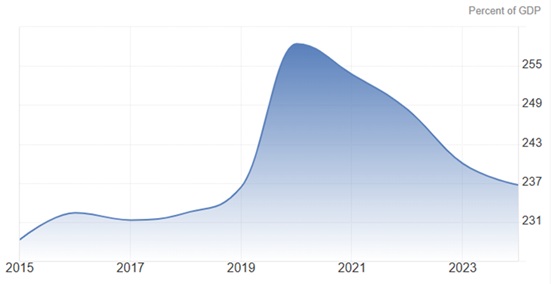
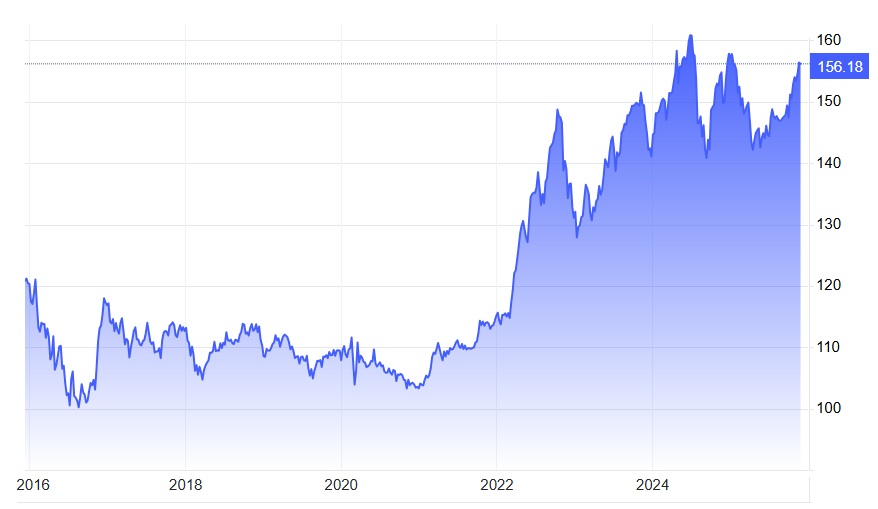
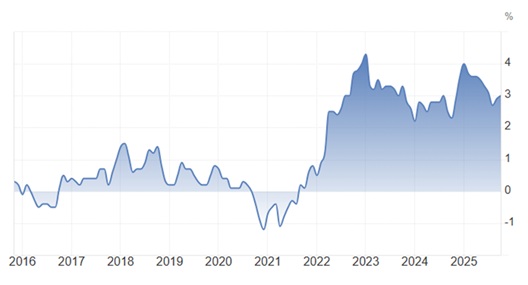
 Dr Dan Steinbock, an expert of the multipolar world, is the founder of Difference Group and has served at the India, China and America Institute (US), Shanghai Institute for International Studies (China) and the EU Center (Singapore). For more, see https://www.differencegroup.net/
 Dr. Gleb Tsipursky PhD

 Dr. George Sammour









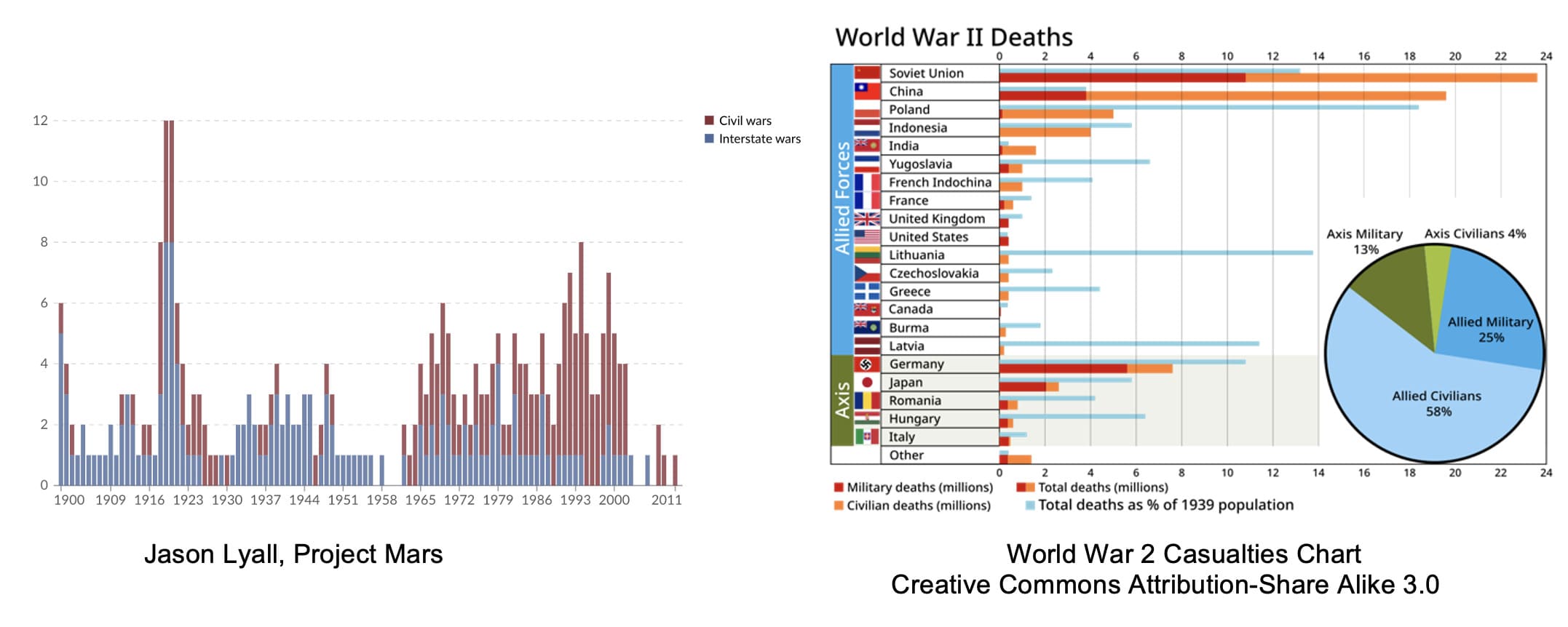
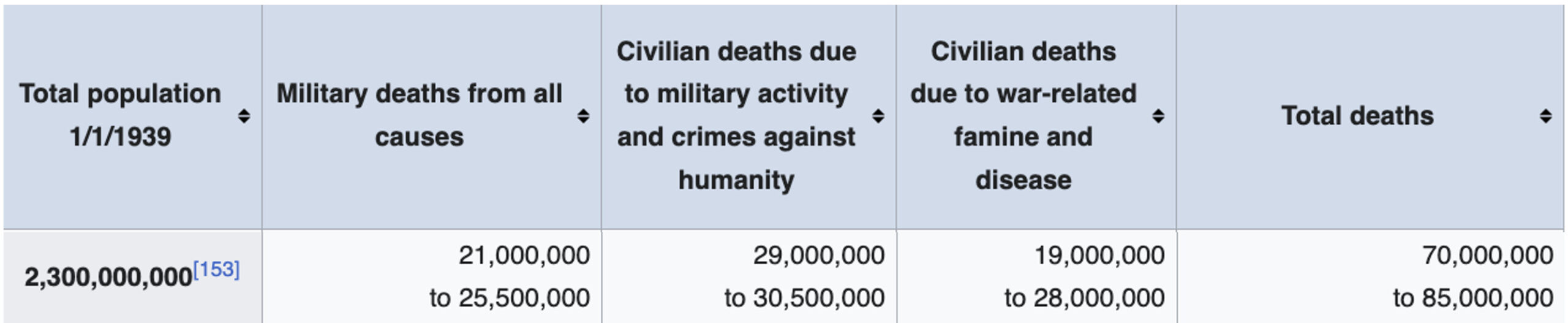
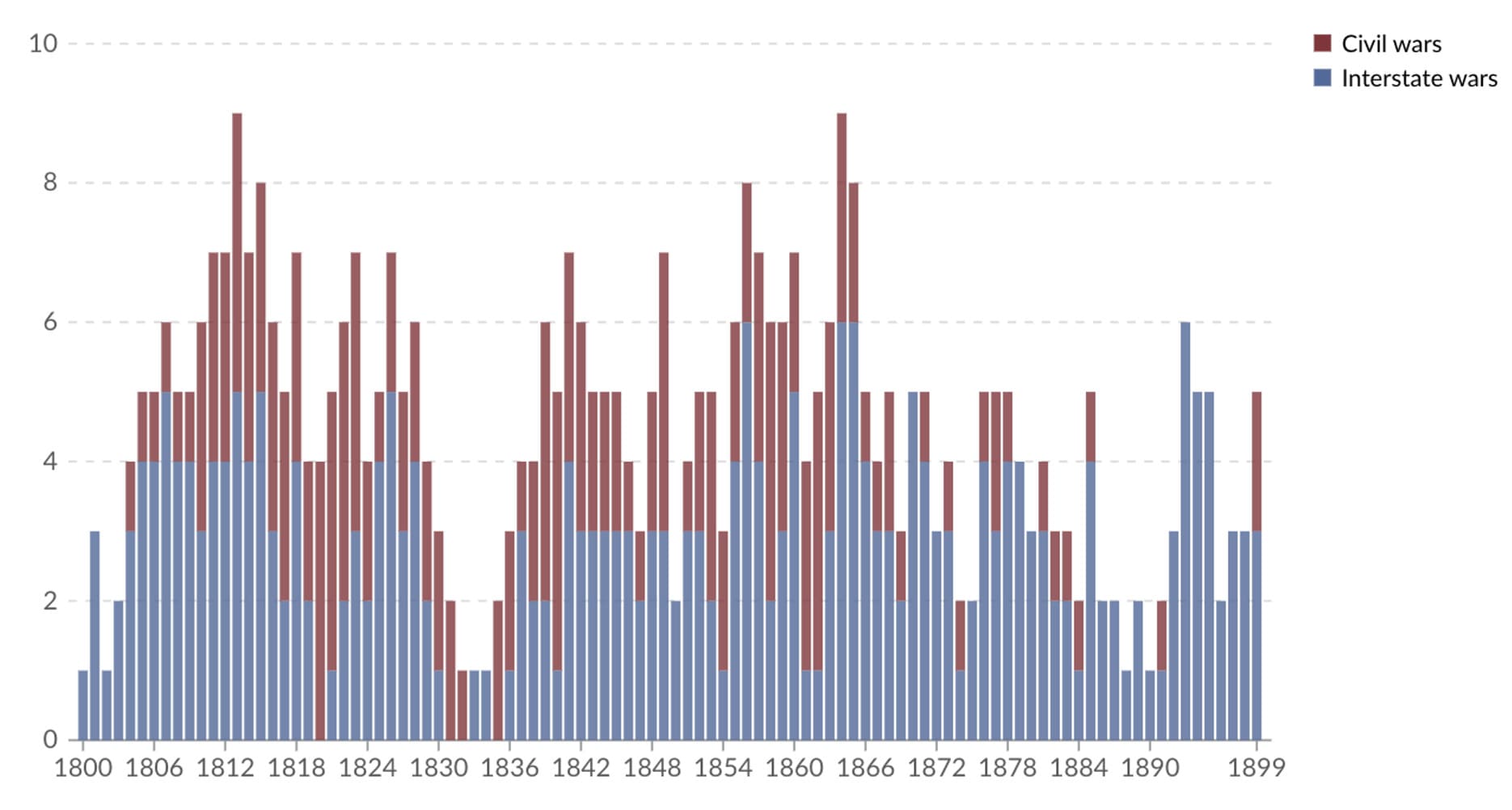


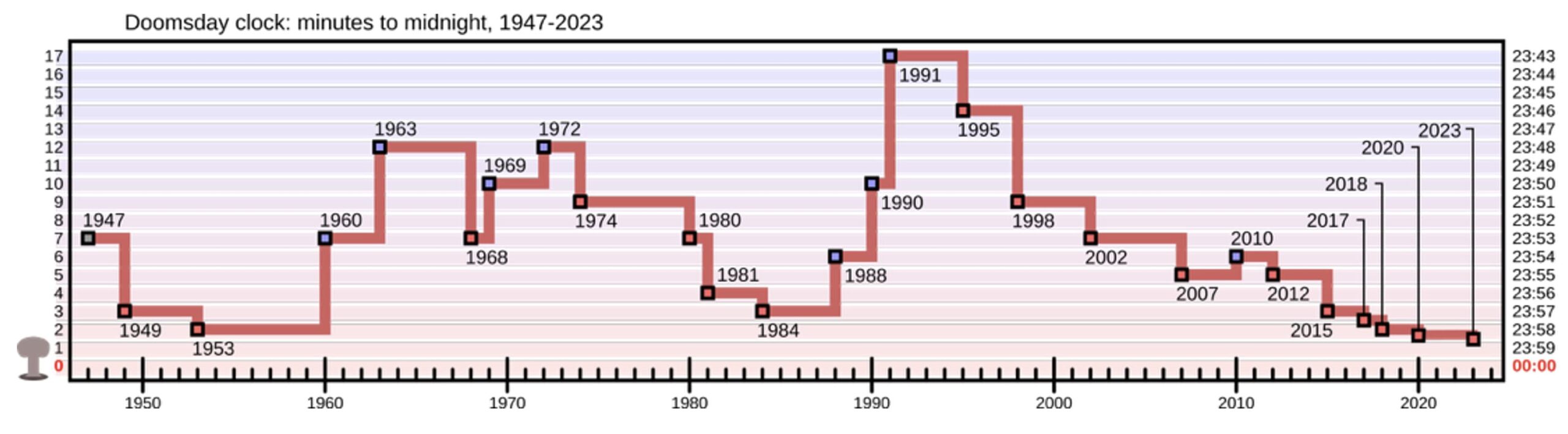
 Joseph Mazur