Home Blog Page 1071

Business As Usual

From the Editors

In January 2017 a new president will be sworn in who will continue with President Obama’s South East Asia pivot policy with the objective of confronting China. That a US and NATO war with China is inevitable is evidenced by the over 400 US bases surrounding China which, as Pilger points out, are supposed to act as a noose around China, presumably designed to choke China’s regional aspirations.

Mr Trump, has already demonstrated to the world that he intends to continue President Obama’s brand of invidious international relations that employs the most refined rhetorical ethic to disarm perceived opponents in global international relations. His call with President Tsai of Taiwan was intended to give a clear signal to China that it’s business as usual, and President Xi should not expect any improvement in tensions over the South China Sea.

President Tsai was elected with the support of US and European NGOs whose agenda was to help elect a pro-United States leader in Taiwan. The Taiwan government is obviously aware that there will never be any hope of the creation of any independent state that is recognised by the main land. China regards Taiwan as a breakaway province. China and the Taiwanese regime both know that China will not invade and Taiwan will not declare independence.

A government in Taiwan led by President Tsai that is willing to work within the parameters of United States foreign policy and enrich Taiwan’s pro-independence elites whilst offering itself as a willing pawn to the United States bid to retain hegemony in the South China Sea is a policy that may rapidly denude President Tsai’s power base, because it will further impel China to cultivate powerful friends within Taiwan who want regional peace and who will be better funded than President Tsai was during the last Taiwan presidential elections by the United States and other NATO actors and their favoured NGOs who act as the United State’s agents of discontent and change.

China simply has more money to invest in its own political agenda and more at stake in Taiwan than any other non-regional player. The bottom line is that China will not invade Taiwan. Should China ever decide to go ahead and invade Taiwan the United States will do nothing. You can bet on it.


Featured image courtesy of: CNN.com

The Coming War on China

By John Pilger


When I first went to Hiroshima in 1967, the shadow on the steps was still there. It was an almost perfect impression of a human being at ease: legs splayed, back bent, one hand by her side as she sat waiting for a bank to open. At a quarter past eight on the morning of 6 August, 1945, she and her silhouette were burned into the granite. I stared at the shadow for an hour or more, unforgettably. When I returned many years later, it was gone: taken away, “disappeared”, a political embarrassment.

I have spent two years making a documentary film, The Coming War on China, in which the evidence and witnesses warn that nuclear war is no longer a shadow, but a contingency. The greatest build-up of American-led military forces since the Second World War is well under way. They are in the northern hemisphere, on the western borders of Russia, and in Asia and the Pacific, confronting China.

The great danger this beckons is not news, or it is buried and distorted: a drumbeat of mainstream fake news that echoes the psychopathic fear embedded in public consciousness during much of the 20th century.

Like the renewal of post-Soviet Russia, the rise of China as an economic power is declared an “existential threat” to the divine right of the United States to rule and dominate human affairs.

To counter this, in 2011 President Obama announced a “pivot to Asia”, which meant that almost two-thirds of US naval forces would be transferred to Asia and the Pacific by 2020. Today, more than 400 American military bases encircle China with missiles, bombers, warships and, above all, nuclear weapons. From Australia north through the Pacific to Japan, Korea and across Eurasia to Afghanistan and India, the bases form, says one US strategist, “the perfect noose”.

A study by the RAND Corporation – which, since Vietnam, has planned America’s wars – is entitled, War with China: Thinking Through the Unthinkable. Commissioned by the US Army, the authors evoke the cold war when RAND made notorious the catch cry of its chief strategist, Herman Kahn — “thinking the unthinkable”. Kahn’s book, On Thermonuclear War, elaborated a plan for a “winnable” nuclear war against the Soviet Union.


Today, his apocalyptic view is shared by those holding real power in the United States: the militarists and neo-conservatives in the executive, the Pentagon, the intelligence and “national security” establishment and Congress.

The current Secretary of Defense, Ashley Carter, a verbose provocateur, says US policy is to confront those “who see America’s dominance and want to take that away from us”.

For all the attempts to detect a departure in foreign policy, this is almost certainly the view of Donald Trump, whose abuse of China during the election campaign included that of “rapist” of the American economy. On 2 December, in a direct provocation of China, President-elect Trump spoke to the President of Taiwan, which China considers a renegade province of the mainland. Armed with American missiles, Taiwan is an enduring flashpoint between Washington and Beijing.

Like the renewal of post-Soviet Russia, the rise of China as an economic power is declared an “existential threat” to the divine right of the United States to rule and dominate human affairs.

“The United States,” wrote Amitai Etzioni, professor of international Affairs at George Washington University, “is preparing for a war with China, a momentous decision that so far has failed to receive a thorough review from elected officials, namely the White House and Congress.” This war would begin with a “blinding attack against Chinese anti-access facilities, including land and sea-based missile launchers… satellite and anti-satellite weapons”.

The incalculable risk is that “deep inland strikes could be mistakenly perceived by the Chinese as pre-emptive attempts to take out its nuclear weapons, thus cornering them into ‘a terrible use-it-or-lose-it dilemma’ [that would] lead to nuclear war.”

In 2015, the Pentagon released its Law of War Manual. “The United States,” it says, “has not accepted a treaty rule that prohibits the use of nuclear weapons per se, and thus nuclear weapons are lawful weapons for the United States.”

In China, a strategist told me, “We are not your enemy, but if you [in the West] decide we are, we must prepare without delay.” China’s military and arsenal are small compared to America’s. However, “for the first time,” wrote Gregory Kulacki of the Union of Concerned Scientists, “China is discussing putting its nuclear missiles on high alert so that they can be launched quickly on warning of an attack … This would be a significant and dangerous change in Chinese policy … Indeed, the nuclear weapon policies of the United States are the most prominent external factor influencing Chinese advocates for raising the alert level of China’s nuclear forces.”

Professor Ted Postol was scientific adviser to the head of US naval operations. An authority on nuclear weapons, he told me, “Everybody here wants to look like they’re tough. See I got to be tough … I’m not afraid of doing anything military, I’m not afraid of threatening; I’m a hairy-chested gorilla. And we have gotten into a state, the United States has gotten into a situation where there’s a lot of sabre-rattling, and it’s really being orchestrated from the top.”

I said, “This seems incredibly dangerous.”

“That’s an understatement.”

In 2015, in considerable secrecy, the US staged its biggest single military exercise since the Cold War. This was Talisman Sabre; an armada of ships and long-range bombers rehearsed an “Air-Sea Battle Concept for China” – ASB — blocking sea lanes in the Straits of Malacca and cutting off China’s access to oil, gas and other raw materials from the Middle East and Africa.

It is such a provocation, and the fear of a US Navy blockade, that has seen China feverishly building strategic airstrips on disputed reefs and islets in the Spratly Islands in the South China Sea. Last July, the UN Permanent Court of Arbitration ruled against China’s claim of sovereignty over these islands. Although the action was brought by the Philippines, it was presented by leading American and British lawyers and could be traced to US Secretary of State Hillary Clinton.

In 2010, Clinton flew to Manila. She demanded that America’s former colony reopen the US military bases closed down in the 1990s following a popular campaign against the violence they generated, especially against Filipino women. She declared China’s claim on the Spratly Islands – which lie more than 7,500 miles from the United States – a threat to US “national security” and to “freedom of navigation”.

Handed millions of dollars in arms and military equipment, the then government of President Benigno Aquino broke off bilateral talks with China and signed a secretive Enhanced Defense Co-operation Agreement with the US. This established five rotating US bases and restored a hated colonial provision that American forces and contractors were immune from Philippine law.

The election of Rodrigo Duterte in April has unnerved Washington. Calling himself a socialist, he declared, “In our relations with the world, the Philippines will pursue an independent foreign policy” and noted that the United States had not apologised for its colonial atrocities. “I will break up with America,” he said, and promised to expel US troops. But the US remains in the Philippines; and joint military exercises continue.

In 2014, under the rubric of “information dominance” – the jargon for media manipulation, or fake news, on which the Pentagon spends more than $4 billion – the Obama administration launched a propaganda campaign that cast China, the world’s greatest trading nation, as a threat to “freedom of navigation”.

In 2014, under the rubric of “information dominance” – the jargon for media manipulation, or fake news, on which the Pentagon spends more than $4 billion – the Obama administration launched a propaganda campaign that cast China, the world’s greatest trading nation, as a threat to “freedom of navigation”.

CNN led the way, its “national security reporter” reporting excitedly from on board a US Navy surveillance flight over the Spratlys. The BBC persuaded frightened Filipino pilots to fly a single-engine Cessna over the disputed islands “to see how the Chinese would react”. None of these reporters questioned why the Chinese were building airstrips off their own coastline, or why American military forces were massing on China’s doorstep.

The designated chief propagandist is Admiral Harry Harris, the US military commander in Asia and the Pacific. “My responsibilities,” he told the New York Times, “cover Bollywood to Hollywood, from polar bears to penguins.” Never was imperial domination described as pithily.

Harris is one of a brace of Pentagon admirals and generals briefing selected, malleable journalists and broadcasters, with the aim of justifying a threat as specious as that with which George W Bush and Tony Blair justified the destruction of Iraq and much of the Middle East.

In Los Angeles in September, Harris declared he was “ready to confront a revanchist Russia and an assertive China …If we have to fight tonight, I don’t want it to be a fair fight. If it’s a knife fight, I want to bring a gun. If it’s a gun fight, I want to bring in the artillery … and all our partners with their artillery.”

These “partners” include South Korea, the launch pad for the Pentagon’s Terminal High Altitude Air Defense system, known as THAAD, ostensibly aimed at North Korea. As Professor Postol points out, it targets China.

In Sydney, Australia, Harris called on China to “tear down its Great Wall in the South China Sea”. The imagery was front page news. Australia is America’s most obsequious “partner”; its political elite, military, intelligence agencies and the media are integrated into what is known as the “alliance”. Closing the Sydney Harbour Bridge for the motorcade of a visiting American government “dignitary” is not uncommon. The war criminal Dick Cheney was afforded this honour.

Although China is Australia’s biggest trader, on which much of the national economy relies, “confronting China” is the diktat from Washington. The few political dissenters in Canberra risk McCarthyite smears in the Murdoch press. “You in Australia are with us come what may,” said one of the architects of the Vietnam war, McGeorge Bundy. One of the most important US bases is Pine Gap near Alice Springs. Founded by the CIA, it spies on China and all of Asia, and is a vital contributor to Washington’s murderous war by drone in the Middle East.

In October, Richard Marles, the defence spokesman of the main Australian opposition party, the Labor Party, demanded that “operational decisions” in provocative acts against China be left to military commanders in the South China Sea. In other words, a decision that could mean war with a nuclear power should not be taken by an elected leader or a parliament but by an admiral or a general.

This is the Pentagon line, a historic departure for any state calling itself a democracy. The ascendancy of the Pentagon in Washington – which Daniel Ellsberg has called a silent coup — is reflected in the record $5 trillion America has spent on aggressive wars since 9/11, according to a study by Brown University. The million dead in Iraq and the flight of 12 million refugees from at least four countries are the consequence.

The Japanese island of Okinawa has 32 military installations, from which Korea, Vietnam, Cambodia, Afghanistan and Iraq have been attacked by the United States. Today, the principal target is China, with whom Okinawans have close cultural and trade ties.

There are military aircraft constantly in the sky over Okinawa; they sometimes crash into homes and schools. People cannot sleep, teachers cannot teach. Wherever they go in their own country, they are fenced in and told to keep out.

A popular Okinawan anti-base movement has been growing since a 12-year-old girl was gang-raped by US troops in 1995. It was one of hundreds of such crimes, many of them never prosecuted. Barely acknowledged in the wider world, the resistance has seen the election of Japan’s first anti-base governor, Takeshi Onaga, and presented an unfamiliar hurdle to the Tokyo government and the ultra-nationalist prime minister Shinzo Abe’s plans to repeal Japan’s “peace constitution”.

The resistance includes Fumiko Shimabukuro, aged 87, a survivor of the Second World War when a quarter of Okinawans died in the American invasion. Fumiko and hundreds of others took refuge in beautiful Henoko Bay, which she is now fighting to save. The US wants to destroy the bay in order to extend runways for its bombers. “We have a choice,” she said, “silence or life.” As we gathered peacefully outside the US base, Camp Schwab, giant Sea Stallion helicopters hovered over us for no reason other than to intimidate.

Across the East China Sea lies the Korean island of Jeju, a semi- tropical sanctuary and World Heritage Site declared “an island of world peace”. On this island of world peace has been built one of the most provocative military bases in the world, less than 400 miles from Shanghai. The fishing village of Gangjeong is dominated by a South Korean naval base purpose-built for US aircraft carriers, nuclear submarines and destroyers equipped with the Aegis missile system, aimed at China.

A people’s resistance to these war preparations has been a presence on Jeju for almost a decade. Every day, often twice a day, villagers, Catholic priests and supporters from all over the world stage a religious mass that blocks the gates of the base. In a country where political demonstrations are often banned, unlike powerful religions, the tactic has produced an inspiring spectacle.

One of the leaders, Father Mun Jeong-hyeon, told me, “I sing four songs every day at the base, regardless of the weather. I sing in typhoons — no exception. To build this base, they destroyed the environment, and the life of the villagers, and we should be a witness to that. They want to rule the Pacific. They want to make China isolated in the world. They want to be emperor of the world.”

I flew from Jeju to Shanghai for the first time in more than a generation. When I was last in China, the loudest noise I remember was the tinkling of bicycle bells; Mao Zedong had recently died, and the cities seemed dark places, in which foreboding and expectation competed. Within a few years, Deng Xiopeng, the “man who changed China”, was the “paramount leader”. Nothing prepared me for the astonishing changes today.

China presents exquisite ironies, not least the house in Shanghai where Mao and his comrades secretly founded the Communist Party of China in 1921. Today, it stands in the heart of a very capitalist shipping district; you walk out of this communist shrine with your Little Red Book and your plastic bust of Mao into the embrace of Starbucks, Apple, Cartier, Prada.

Would Mao be shocked? I doubt it. Five years before his great revolution in 1949, he sent this secret message to Washington. “China must industrialise.” he wrote, “This can only be done by free enterprise. Chinese and American interests fit together, economically and politically. America need not fear that we will not be co-operative. We cannot risk any conflict.”

The world is inexorably shifting east; but the astonishing vision of Eurasia from China is barely understood in the West.

Mao offered to meet Franklin Roosevelt in the White House, and his successor Harry Truman, and his successor Dwight Eisenhower. He was rebuffed, or willfully ignored. The opportunity that might have changed contemporary history, prevented wars in Asia and saved countless lives was lost because the truth of these overtures was denied in 1950s Washington “when the catatonic Cold War trance,” wrote the critic James Naremore, “held our country in its rigid grip”.

The fake mainstream news that once again presents China as a threat is of the same mentality.

The world is inexorably shifting east; but the astonishing vision of Eurasia from China is barely understood in the West. The “New Silk Road” is a ribbon of trade, ports, pipelines and high-speed trains all the way to Europe. The world’s leader in rail technology, China is negotiating with 28 countries for routes on which trains will reach up to 400 kms an hour. This opening to the world has the approval of much of humanity and, along the way, is uniting China and Russia.

“I believe in American exceptionalism with every fibre of my being,” said Barack Obama, evoking the fetishism of the 1930s. This modern cult of superiority is Americanism, the world’s dominant predator. Under the liberal Obama, winner of the Nobel Peace Prize, nuclear warhead spending has risen higher than under any president since the end of the Cold War. A mini nuclear weapon is planned. Known as the B61 Model 12, it will mean, says General James Cartwright, former vice-chairman of the Joint Chiefs of Staff, that “going smaller [makes its use] more thinkable”.

In September, the Atlantic Council, a mainstream US geopolitical thinktank, published a report that predicted a Hobbesian world “marked by the breakdown of order, violent extremism [and] an era of perpetual war”. The new enemies were a “resurgent” Russia and an “increasingly aggressive” China. Only heroic America can save us.

There is a demented quality about this war mongering. It is as if the “American Century” — proclaimed in 1941 by the American imperialist Henry Luce, owner of Time magazine — has ended without notice and no one has had the courage to tell the emperor to take his guns and go home.


This article was first published on counterpunch on 2 December 2016.

About the Author

johnpilger-webJohn Pilger has been a war correspondent, author and documentary film-maker. He is one of only two to win British journalism’s highest award twice, for his work all over the world. He received the United Nations Association Peace Prize and Gold Medal, and the prestigious Sophie Prize for ‘thirty years of exposing deception and improving human rights’.

For his documentary films, he has won an American television academy award, an Emmy, and a British Academy Award, a BAFTA, and the Royal Television Society Award for documentary films.

His 1979 documentary, the epic Cambodia Year Zero is credited with alerting the world to the horrors of the Pol Pot regime. Year Zero is ranked by the BFI as among the ten most important documentaries of the 20th century. His Death of a Nation, about East Timor, had a similar impact in 1994. He has made 58 documentary films. He is the author of numerous best-selling books, including Heroes and A Secret Country, The New Rulers of the World and Hidden Agendas.

“John Pilger unearths, with steely attention to facts, the filthy truth and tells it as it is” – Harold Pinter.

“John Pilger’s work has been a beacon of light in often dark times. The realities he has brought to light have been a revelation, over and over again, and his courage and insight a constant inspiration.” – Noam Chomsky.


The South China Sea and Philippine National Interest and Security

By Roland Simbulan

The ideal strategic goal is for the Philippines to enjoy the friendship of the US, Japan and China and not be a pawn in their inevitable conflicts – such as how the South China Sea dispute is being used as the US’ disguised pivot in Asia.


Like China, we are an Asian country, which is rich in natural resources. But compared to China we are just a small country, and an archipelagic country endowed with rich resources, being the object of big powers fighting each other in order to gain control of our land and its natural wealth. We have been under the Spanish empire as a colony for almost four centuries. The Dutch, and the British wanted to oust the Spaniards and incorporate us in their own empires. Then came the Americans who offered to help our Revolutionary fathers in freeing us from the Spanish yoke, only to betray the proffered “friendship”, fought our Revolutionary Army for Independence, and annexed us to the emerging American Empire. General Gregorio del Pilar, in whose honour Fort del Pilar, home of the Philippine Military Academy in Baguio City was named, fought and died fighting the new American colonialists, perhaps the first US Visiting Forces in this part of the world. The first US “visiting forces”– 126,000 US troops according to American historians – invaded and defeated our Army of the First Republic of the Philippines led by General Emilio Aguinaldo.

Today, we are still the “bone of contention” of Big Powers, such as the United States and Japan including China, an emerging world power challenging US hegemony in this part of the world.

There are many dimensions to the South China Sea issue, but again the most important dimension to understand is to see it first of all through the security prism of the various stakeholder countries. For the US, the Philippines and Japan, altering the US-dominated status quo in the South China Sea threatens their conservative perception of “national security”. For China, NOT altering the status quo will potentially threaten China’s security in terms of its trading routes and key arteries for its supplies of energy and raw materials, as these will always be at the mercy of the ballistic submarines of the US Navy.

For the long future, there can only be more competition for resources and the question is whether it can be kept peaceful. We know that the great powers of the past achieved their aims through direct colonialism, wars of conquest, and inter-imperialist wars. China has propounded “peaceful development”, or “peaceful rise”, and “new type of great-power relationship” – to use their words precisely because, subjectively, it wants to avoid the old pattern of great-power conflicts and wars. To this day, unlike US and NATO, China’s diplomacy has tended to avoid overseas military conflicts or military intervention in other countries, and engages mostly in economic competition, using its accumulated financial clout to successfully win its bids for mining concessions in Afghanistan, or oil contracts in Iraq, for example. China’s leaders are certainly aware of the costly lessons of colonialism and wars, of which China itself is a victim. Hopefully, China can exercise more effective leadership so that its army of corporations and entrepreneurs expanding overseas will be guided by best practices (though there have been complaints in Africa as well as in the Philippines, as in the tainted NBN-ZTE contract during the former Pres. Gloria Macapagal-Arroyo’s administration).


China’s dependence on economic competition and not on military muscle is good for peaceful global competition.

Overall, the entry of China into the global market for resources is good for the resources-owning countries. China’s dependence on economic competition and not on military muscle is good for peaceful global competition. Whether other great-powers will allow China to rise peacefully or to control a greater share of the world’s resources, is something China alone cannot answer. The laws of international politics exist, and China itself will continue to build its national defence to redress the military imbalance with other powers and protect its economic lifelines when the need arises. That China itself was long a victim of Western imperialism and never, even at the height of its power in the past, engaged in territorial conquest beyond its historical domain, seems to provide a basis for optimism, but we can never really tell, because any government or party can change its colour. The lesson of the first socialist state, the Soviet Union, bears this out.


China’s Interest in the South China Sea

The South China Sea has oil and other resources, which are certainly important, but even more important is that it is a strategic zone of defence for China. China’s military planners will not lightly give it up. By and large, China is maintaining the status quo. They have the superior force to take over the disputed islets if they want to, while in the case of Scarborough Shoal, they probably believe we were the disruptive “revisionist” force with our first use of a military vessel to intimidate their fishermen. But they will maintain their sovereignty claims because they are important legal and political grounds for opposing the use of the sea lanes “within their jurisdiction” (within their Exclusive Economic Zone) for military threats against China. They support freedom of navigation but I think they want a say on military passage through their “claimed” seas – the Hainan spy plane incident and subsequent skirmishes with US Navy ships approaching sensitive Chinese areas need to be reviewed.

China’s strategy of handling disputes with the Philippines will be a function of its overall strategy of dealing with the United States. China is already suspicious that the disputes with the Philippines have heated up simultaneous with the US pivot in Asia. But in handling the Philippines, China will strike a balance between not unnecessarily provoking the US, but also trying to send a firm message to the US. This reminds me of the example of the Netherlands’ sale of a submarine to Taiwan, which led China to severing of diplomatic relations with the Netherlands – I think relations were downgraded because of this. But a more massive US arms sale to Taiwan did not provoke a similar retaliation. The point here is that China is capable of “teaching a lesson” to a lesser power as a way of transmitting their message to the master, the US, without provoking the US, that it might be in our interest to avoid being in a position of such a “lesser power.”


Engaging China on our Territorial and Maritime Disputes

There is increasing perception in the Philippines that China’s unilateral claim in South East Asia through its 9 dash line covering the Spratlys, Baja de Masinloc, Ayungin, and reclamation activities which has now been rejected by the UNCLOS Hague Arbitration Tribunal are all manifestations of China’s big power aggression. Some say it is establishing its own hegemonic “sphere of influence” especially among its immediate neighbours in South East Asia. Provocation breeds counter provocation. There is the US Asia Pivot, and Japan is also reacting because its major trade routes for its vital imports such as oil and gas are on the Sea Lanes in the South China Sea. China is flexing its muscles through what is perceived as aggressive behaviour in the South East Asian waters and in the Pacific, which may be a prelude to future confrontation and conflicts.

The South China Sea being, above all, a security issue, China will react to Philippine actuations according to whether they threaten or enhance its security. China had increasing perception that the Philippines is actively aligned with the US and Japan to confront China militarily, enhanced by the US’ Asian pivot.


Foreign Relations and our National Interest

Now, where should we stand in these big-power quarrels? We must, in accordance to our 1987 Constitution, defend our sovereignty and territorial integrity from all big powers seeking hegemony and control over the West Philippine Sea (US, China and Japan). We have the following options:

Being a junior partner/follower of one of the competing powers will make our country a possible target of attack in a future conflict;

We can embark on an independent, patriotic posture. This means not allowing ourselves to be employed or used as a pawn in this big power struggle for resources in the region.

Our country is small compared to the US and China, but we also have strong points. China and the US are economically and militarily strong but they also have their weak points. Our strongest point is the God-given gift that we are strategically located in the region embraced on the western side by the South China Sea.

How then, should we take advantage and not squander our strong point? I argue that the best answer is an INDEPENDENT FOREIGN POLICY, a policy that swears friendship to all and enmity to none, a policy that gives primacy to our national interests independent of the conflict between Big Powers, a policy that above all, refocuses our effort on the most urgent issue, which is accelerated economic growth, on which all other sources of national strength depend. Our South East Asian neighbours – Indonesia, Malaysia, Singapore, Thailand, Vietnam, etc., though some of them also have territorial and maritime disputes with China, are focusing on economic growth and have good experience in this regard. But we can do better.

I know that the Chinese are trying to win us over to their side in their strategic competition, struggle and quarrel with the United States for a dominant position in the world. But, let us ask, why have we already surrendered our sovereignty to the other dominant big power, which supplies and arms us with already obsolete ships and aircraft – instead of state of the art for our external defence capability – to ostensibly “modernise” our armed forces?

But we must assert and assert our sovereign rights and our independence, not a witting or unwitting pawn of either Big Power. We can study well and learn from the experience of our smaller neighbour, Vietnam, in dealing both with China and the Soviet Union who were at odds with each other, to gain and to uphold their country’s independence and higher interests. The Socialist Republic of Vietnam, with whom China shares land borders, taught China and all big power bullies a lesson. That smallness in size of economic and military strength is not necessarily an invitation to be pushed around. We must develop and have our own capability to defend what is ours.

What President Duterte is really breaking is the unequal Philippine-US relations, it does not mean severing ties, but in fact, improving relations through mutuality and more respect with traditional allies.

The ideal strategic goal is for the Philippines to enjoy the friendship of the US, Japan and China and not be a pawn in their inevitable conflicts. If China can be made to realise that we mean genuine friendship, that our relations with the US, Japan or other powers are not directed against China, then the conditions will be improved for the eventual resolution of our disputes. For China’s leaders, the most important starting point is strategic trust and friendship. Once that is established, the nitty-gritty of legal, technical, and other detailed negotiations will eventually fall into place. Even China’s foreign policy scholars in their think tanks realise that if China continues to take a very hard line position with the Philippines on the South China Sea issue, it will only push the Philippines further to the United States which will complete the transformation of the Philippines into an American aircraft carrier directed against China under the Enhanced Defense Cooperation Agreement (EDCA).

For especially with a “good neighbour” policy with China, we will have to deal with it in trade negotiations, economic negotiations, and in other bilateral relations that will lead to shared prosperity in the region. The potential for cooperation is still there now under the new administration of President Rodrigo Duterte, and it should grow.

For the Philippines, bilateral talks will produce urgently needed economic boosts without giving up on sovereign or maritime claims that will no doubt take time to resolve (i.e. Vietnam-China took 30 years to sort out land border disputes, China-Russia took 40 years). Highly productive economic engagements will help bridge our domestic public opinions and build the mutual trust necessary for the final resolution of disputes.

For China, bilateral talks will enhance their security because negotiations will immediately lower the political temperature, reduce the level of threat, and maybe reduce the rationale for the US military pivot, the US military presence in the Philippines and even the EDCA which is easier to scrap because it is a mere Executive Agreement that was never ratified by the Philippine Senate.

The time for real diplomacy and direct negotiation has indeed arrived, with the recent high level state visit of Philippine President Duterte to China last Oct. 18-21, 2016. The Duterte administration is most qualified to handle the job in a manner that has prevented escalation of the dispute into war.

All signals point to early economic harvests for the Philippines as a result of the recent Duterte state visit. A bilateral commission can immediately negotiate/launch provisional joint development projects. Another bilateral commission can handle maritime disputes. All these are now possible.

The discussion of provisional arrangements of economic cooperation is good while more ticklish issues can be resolved later. Talks can start with concrete development projects in immediate time frames pending the final resolution of disputes and without prejudice to our sovereign rights or national interests.

The Hague ruling is both a challenge and an opportunity, but it will also test our maturity as a nation, and that if we handle the challenge well with a sense of urgency, we will achieve a situation where the Philippines enjoys good relations with China, while maintaining traditional and close friendship with the US, Japan and other partners. What President Duterte is really breaking is the unequal Philippine-US relations, it does not mean severing ties, but in fact, improving relations through mutuality and more respect with traditional allies. We will improve terms in agreements so that we really benefit and have more advantages and reciprocity. To break the pattern of what I call shameless negotiated subservience! This message is not just for the US, but for China as well.

Our vision for the Philippines is to become a respected independent nation in the region, politically and economically, but if we play by the old rules of alliances and confrontation, then the opportunity will be lost, and no benefit in terms of genuine security nor economic prosperity will be gained.


About the Author

simbulan-webRoland G. Simbulan is Professor in Development Studies and Public Management at the University of the Philippines. He is author of 8 books on Philippine-US security relations and Philippine foreig policy, and was Senior Political Consultant at the Philippine Senate. He is currently Vice Chair of the Center for People Empowerment in Governance (CenPeg), a public policy think tank in the Philippines.


The Rise and Crash of Hillary Clinton

By Tunde Olupitan

Hillary’s journey has been fuelled by a blind ambition for power. And while efforts were made by her propaganda machine to imbue her campaign with some passion, some humanity, women’s issues, black lives matter, Hillary Clinton herself could not deliver.


During the course of the 2016 presidential race, Hillary Clinton confirmed what people had suspected for a long time, she is all ambition, blind ambition and no passion.

Hillary’s journey has been fuelled by a blind ambition for power. It is impossible to find anything that one can say Hillary is passionate about, except of course her relentless pursuit of power. And while efforts were made by her propaganda machine to imbue her campaign with some passion, some humanity, women’s issues, black lives matter, Hillary Clinton herself could not deliver. Nothing rang true. Her so called passion for women’s issues is under cut by her hostile stance towards the women who accused her husband of improprieties in the 1990’s. Her so called passion for black people is undermined by her support for, campaigning and lobbying for her husband’s crime and social security reform acts in the 1990s. Her promise that she wants to be the president of all of America does not extend to those she has put in a “basket of deplorables”. She did not care for them, she forgot that her husband’s deregulation of the financial markets, contributed to homelessness, joblessness, loss of pension, and the deplorable state in which swaths of American voters now find themselves. They are in deplorable states because the new Democratic Party abdicated its own mission to take care of the poor. She and her husband fashioned a new Democratic Party, which had no conscience, no passion and no loyalty to the poor, the deplorables as she described them. Apologies are not enough to right those wrongs.

Hillary’s problem started a long time ago, her wagon was hitched from start to finish to that of her husband, Bill Clinton. She was not a passive, stay-at-home, bake cookies, host tea party type of first lady. She was one of his biggest supporters, she lent her voice to many of his laws and policies. In return the Clinton connection brought her many rewards too, a Senate seat in New York City, a bid for the presidency in 2008, a Secretary of State slot under the Obama administration and another shot at the presidency in 2016. And not just that, her friends in high places are the ones that benefited from her husband’s largess, the bankers, the big corporations and the media conglomerates who threw their weight behind her campaign and propped her up throughout the whole journey.

This is 2016, and the mood has changed. The MSM no longer monopolise the news. The Internet is all pervasive.

In preparation for her second bid for the White House she embarked on a revisionist agenda with the help of her husband who hit the campaign trail apologising for the excesses of his regime and trying to distance her from those excesses. Her email debacle and FBI investigations, her misadventures in Libya and Iraq, made her the most unsafe candidate in the running for the Democratic ticket. These and the fact that she is one of the most disliked candidates in recent times did not deter her from believing that she could win this thing. With the mainstream media behind her, they believed they could make all these go away. They gave her a whole lift up and went about a character assassination of anyone who stood in her way. Her main message in the end was the Trump tapes which were released by her media partners during the Presidential debates. But she could not keep the skeletons in her cupboard jangling louder and louder.

She could not see beyond what she wanted. This is 2016, and the mood has changed. The MSM no longer monopolise the news. The Internet is all pervasive. Wikileaks is still leaking. The poor people also have eyes and ears and they can read too. Poor people are fed up. After many years of recession, robbed of their homes and livelihood, they felt left out, they wanted change. They recall that the Clintons did not do anything for them, and apologies were simply not going to do it this time around.

Hillary was blind to all these, standing opposite Donald Trump, she believed that the presidency was hers to take. She was wrong. In the words of Niccolo Machiavelli, “He who blinded by ambition, raises himself to a position whence he cannot mount higher, must fall with the greatest loss.” Hillary Clinton came crashing down. She lost to an opponent less qualified than her, who throughout this campaign had been ridiculed by the media as inept, racist, sexist you name it. Hillary Clinton would have done better if she had retired to that glorified place giving succour to the poor and abused women, she would have been a welcome champion. Let’s hope she will accept the message from the American people with grace – they said it once, they have said it again, they just don’t want President Hillary.


Featured image courtesy of: Getty Images

About the Author

Tunde Olupitan is the Managing Editor Europe & Americas for The European Financial Review, The European Business Review and The European Law Review.

“Taming Trump”, Key Republican Appointments: What a Trump Presidency Might Look Like

By Jack Rasmus

In the weeks since the November 8 US presidential election, the dim outlines of what a Trump presidency might look like are beginning to appear. Trump continues to retreat on several fronts from his campaign “right populist” positions, while doubling-down on other radical positions he previously proposed during the campaign. How to make sense of his apparent evolving policy divergence?


One the one hand, Trump appears to moving closer to traditional Republican party elite positions on big reductions of taxes on corporate-investor elites and on delivering long standing elite demands to deregulate business; at the same time he appears to be moderating his position with regard to that third top priority of the US neoliberal elite – i.e. free trade – as he back-peddles rapidly from his campaign attacks on trade and free trade agreements.

Trump appears to moving closer to traditional Republican party elite positions

At the same time Trump appears to be doubling down on his campaign’s radical social policy issues like immigration (promising to immediately deport or jail 3 million), taking a harder line position on law and order and civil liberties (declaring those who burn the flag should lose their US citizenship or go to jail), reaffirming his intent to privatise education services (by appointing a hard liner as Education Secretary who strongly favours charter schools and school vouchers), attacking environmental programs and protestors (calling for restoration of the Keystone pipeline), while showing early signs of moving closer toward Congressional Republican elite leaders, like Paul Ryan, and Ryan’s radical proposal to replace current Medicare with a federal ‘voucher’ system that would freeze the amount Medicare would pay doctors and hospitals as health care costs continued to escalate.


Areas Still Vague: Infrastructure Spending and Foreign Policy

Less clear than Trump’s above policy bifurcation are what policy positions he will take on fiscal and monetary matters.

Trump campaign promises of more government spending on “infrastructure” still remain too vague. Will that mean more oil and gas pipelines and coal mining? More tax cuts to construction companies? More direct subsidies to businesses? And how much “spending” is involved? Early indications are the infrastructure program may be mostly tax credits for businesses – and in addition to his massive corporate-investor tax cuts also planned.

Trump in the past has called for $1 trillion. (Clinton had called for a $250 billion program over five years. That $50 billion was just about the amount the US now provides in subsidies to agribusiness). And so far as infrastructure spending’s impact on the US economy, $50 billion a year is insignificant. $1 trillion and $100 billion a year over ten years, Trump’s campaign proposal, might have some effect on US GDP. But GDP growth does not necessarily translate into benefits in income to all – as the last eight years has clearly shown as 97% of all GDP-income gains under Obama have gone to the wealthiest 1% households. Nor will infrastructure spending likely translate much into job creation – and could especially result in little positive impact on jobs if infrastructure spending is composed mostly of tax cuts, business subsidies, and high capital-intensive projects that may take years to realise. It is highly unlikely Trump is talking about a 1930s-like “public works program”. It’s more likely to be the federal government writing checks to big construction companies, pocketing nice profit margins in the process.

Trump’s influence over monetary policy in general—and interest rates in particular—will be even more minimal.

The US elites will strongly oppose any Trump attempts, as promised during the election, to “reform” the US central bank, the Federal Reserve.

And the Federal Reserve’s interest rate hike cat is already out of the bag. Long term rates have been already rising rapidly and will continue to do so, as will the US dollar in turn, as the two – rates and the dollar – are highly correlated. And the Federal Reserve is clearly on track to raise short term rates soon.

The question is whether the rise in interest rates – short and long term – will discourage investment, thus hiring and job creation, in those industries not directly affected by infrastructure spending? Will the negative effect of rate rises on investment and job creation be greater than the positive effect of infrastructure spending? Will those negative effects emerge sooner than the positive from infrastructure investment? And will the rising dollar associated with the rate hikes further reduce manufacturing exports and jobs in that sector? The dollar rise has already stagnated manufacturing output and employment. Further increases will almost certainly result in a contraction of manufacturing exports and jobs.

“Yes” is probably the answer to all the above, which means Trump job creation net effects during his first two years in office may not materialise. Moderate at best job creation from delayed infrastructure spending could be more than offset by job loss from rising rates and the US dollar.

The other major Trump policy area that still remains vague is foreign policy. It is not clear as yet what Trump’s true positions will be on NATO and China. But the US elite are intent on bringing him around to their positions and will exert extreme pressure on Trump in order to do so. They have already begun to do so. They will not let up on the pressure.

Trump’s intent is to become more militarily aggressive against ISIS in the middle east, and possibly “partnering” with Russia to do so. That latter possibility is currently causing fits with US elites behind the scene. Backing off from NATO military deployment provocations in eastern Europe, the US-NATO current policy, while looking favourably on Europe’s backing off of economic sanctions against Russia, may also become Trump policy.


Trump’s Big Three Cabinet Appointments

Whether that foreign policy redirection occurs under Trump is now playing out in backroom manoeuvrings within the Trump administration with regard to key Trump cabinet appointments involving departments of State, Defense, and remaining national security positions. The elite want Romney. Populist right forces in the Trump camp do not. And behind the appointment issue is whether a Secretary of State position under Trump becomes a mere figurehead to Trump foreign policy decided in the White House by Trump and his close aides like General Flynn and others.

The US elite want Romney and they want their Secretary of State to have independence. Should Romney get the appointment here, it will signal they have prevailed. The result will be a bifurcation on foreign policy directions in the Trump administration which will ultimately break down at some point.

Obama’s recent “tour” of NATO countries should be viewed as an effort by US elites to try to ensure NATO allies that Trump’s campaign proposals targeting NATO will not be the final position of the Trump regime. The Obama tour was in part at least to hold NATO allies’ hands and ask them to be patient—i.e. the elite will bring Trump around to reality. Be patient. We will eventually ‘tame’ Trump is no doubt the message. After Europe, Obama scurried back to Asia, attending the APEC economic summit, and providing no doubt similar assurances to US allies there that Trump would ‘come to his senses’ as cooler elite heads advised him.

Trump appears to have just appointed General (nicknamed “mad dog”) Mattis. Petraeus, a more establishment figure under consideration is out; or maybe Petraeus decided himself that hitching a ride on a Trump administration was not the greatest career restoration move. But the Mattis appointment still leaves the direction of a Trump administration’s policies on NATO, Russia, or Asia up in the air.

The third key cabinet appointment is Secretary of the Treasury. Here Trump’s transition team initially appeared to favour the CEO of the biggest US bank, Chase’s Jaime Dimon. Treasury secretaries in recent decades, under US Neoliberalism since Reagan, have always been heads of some big financial institution. And in recent decades, the Treasury Secretaries have repeatedly been alumni of the big investment bank, Goldman Sachs. And so too is Mnuchin, continuing the trend of the wheeling-dealing ‘shadow banking’ sector still dominating the Treasury.

Together with Wilbur Ross, appointed to Commerce Secretary, also a “shadow banker” and former Private Equity Firm owner, the Mnuchin-Ross team will determine banking and economic policy in the Trump administration. Their initial target will no doubt be dismantling what’s left of the skeleton of the Dodd-Frank banking regulation bill.


Trump “Free Trade” Policy

Trade as a policy has both foreign policy and economic dimensions. The US elite is now facing a major challenge, having temporarily lost the TPP and with the Europe TTIP in trouble, given a year of intense political instability on the horizon in Europe. They will focus on just keeping the prospects alive temporarily. In the meantime, the thrust is to prevent the deterioration of NAFTA, CAFTA, and other bilateral free trade deals signed under Bush and Obama. The objective will be to stop Trump from making any changes in NAFTA in the short term, and ensuring whatever changes after is cosmetic and token in the longer term.

Taming Trump may prove more difficult with regard to Free Trade, however, compared to getting Trump to implement US elite objectives on matters of tax cuts and deregulation. Trump’s positions during the election were strongly anti-Trade. It played a key role in his election victory, and clearly in the key states of Pennsylvania, Michigan and Wisconsin. It will be more difficult for him to renege and about-face on the trade issue. Taming Trump will prove more difficult.

But here’s how it nonetheless may develop:

Reversing the worst effects of NAFTA cannot be done in the short term. The elites have many ways to slow and block his efforts. Some token renegotiation of NAFTA will eventually take place, resulting in minor adjustments. In the meantime, however, Trump can gain publicity and placate his base on this issue by achieving ‘victories’ discouraging specific companies to abandon plans to relocate to Mexico or abroad. Recent events involving Ford Autos and the Carrier company are examples of what may be the Trump short term policy direction with regard to trade.

As for other multilateral free trade treaties, Trump has declared he would stop the TPP, Transpacific Partnership Asia-US free trade deal. But that was already dead in Congress. And the US-Europe counterpart to the TPP, the TTIP, is impossible in 2017 with the accelerating upheaval in European politics and coming unraveling of the Eurozone after next week elections in Italy and Austria, and with elections in France, Netherlands and Germany on the agenda in 2017.
What will Trump’s longer term free trade policy look like? It is important to understand that Trump is not against free trade. He opposed multilateral programs, which were at the centre of US neoliberal elite objectives.

Trump’s free trade policy will be to negotiate country-by-country free trade deals. Renegotiating free trade will make it appear as if he’s dismantling it. But the process will take a longer time, certainly not in the first year or two. The US elite can probably live with that. Their task in ‘taming Trump’ is to ensure he does not take precipitative action against current free trade deals, that he puts off such action, and settles into a longer term bilateral renegotiating policy. In the meantime, it will be more highly visible personal actions like the Ford and Carrier deals, to make it appear he is doing something on the matter.

What that all means is that except for token company examples like Ford and Carrier, free trade deals will continue. The US elite will get to continue their Neoliberal policy priority of free trade, just in another form that emphasises slow, token changes to existing agreements and bilateral new free trade agreements. But free trade bilaterally is still free trade. And job losses and wage compression, the two major consequences of free trade deals, will continue. It’s just free trade in another form.

Trump is betting that the lack of job creation, from a retreat from is promises to ‘bring back jobs’ lost to trade, will be offset by job creation from infrastructure spending. Meanwhile, he can and will claim he is saving jobs by talking down Ford, Carrier, and other companies. Alongside this, bilateral free trade deals will go forward.


Massive Tax Cuts and Business Deregulation

The other two major priorities of the US elite are big corporate-investor tax cuts and deregulation. Here Trump has signalled he is in full agreement with the elite. No need to ‘tame’ Trump here. These policies will be forthcoming almost immediately in the new Trump regime.

Trump has proposed to cut corporate taxes even more than the Ryan-Republican Party faction in Congress. From the current 35% corporate rate, Trump proposed reducing it to 15% while Ryan and friends to 20%. Both are in agreement to reduce the top income tax rate for their wealthy friends, from current 39.6% to 33%. The Capital gains tax, now 23.8%, is scheduled for a cut to 20% by Trump and 16.5% by Congress. Both Trump and Ryan plan to abolish the Estate Tax, reducing taxation on estates worth $7 million (now the threshold) altogether. Both are strong proponents of allowing big US multinational corporations in Tech, Pharma, Banking and others to ‘repatriate’ $2.5 trillion in taxes they have been hoarding in profits offshore to avoid paying the US 35% rate to a low of 10%. The 4.8% surtax on the wealthiest to help fund Obamacare will also certainly disappear. Also notable is that net taxes on the middle class will rise under both plans, and the countless loopholes for investors will continue.

It should be noted that this massive tax cut package amounts to $4.3 trillion, according to Trump. But according to the Tax Policy Center research group, it will reduce federal revenues by $6.2 trillion. The wealthiest 1% would realise a 13.5% cut in their taxes, while the rest of all households would have a 4.1 % rise in their taxes.

This $4.3 or $6.2 trillion follows a $5 trillion tax cut agreed to by Obama, Democrats and Republicans in Congress that took place in early 2013 as part of the then phony ‘fiscal cliff’ crisis. That followed a $800 billion tax cut pushed by Obama at the end of 2010, in which Obama continued the previous Bush tax cuts for another two years and then some. That followed a preceding $300 billion tax cut in Obama’s 2009 initial recovery program. And all that came after George W. Bush’s estimated $3.4 trillion in tax cuts in 2001-04, 80% of which accrued the wealthiest households and businesses. So under Bush-Obama, taxes for the rich and their corporations totaled approximately $9.5 trillion, and now Trump-Ryan propose another $4.3-$6.2 trillion minimum, running the total up to more than $15 trillion.

And corporations and their lobbyists won’t wait for the tax cut legislation. They are already pressing for a Trump reversal of Obama administration measures over the past year to slow the rampant ‘tax inversion’ scams by big multinational tech, pharma and banks, that have been avoiding taxes by shifting their company headquarters offshore on paper. Corporations have avoided paying hundreds of billions of dollars in US taxes in just the past three years by means of ‘inversion’ scams. Trump doesn’t have to wait for Congress, for him to open the floodgates allowing massive corporate tax avoidance through unlimited ‘inversions’ once again. Big business lobbying arms, like the Business Roundtable, American Bankers Association, and National Association of Manufacturers are reportedly already demanding Trump lift all restrictions on ‘inversions’.

Trump and Ryan-Congress are no less in synch on the third policy priority of US elites – deregulation. Like corporate-investor tax cutting, Trump and the US elite are on the same page when it comes to deregulation. High on this agenda will be slicing the Affordable Care Act (Obamacare). Trump will not need to repeal it and won’t. It will be given a “death by a thousand cuts” and allowed to collapse. Already in big trouble as a program unable to control health insurance costs or prescription drug price gouging, ACA provisions like mandatory insurance purchases and the 4.8% surtax on the wealth to help pay for the subsidies are likely to go quickly. A similar major deregulation will be the Dodd-Frank banking regulation act, which has already had much of its provisions defanged since its passage in 2010. A main target will be the Consumer Financial Protection Agency.

To gain public awareness of his pledges to deregulate, Trump will immediately in 2017 repeal, however, as many Obama Executive Orders as possible. Receiving the brunt of this will be immigration provisions, like the Dream Act, and numerous Environmental regulations. Trump’s EPA head will no doubt immediately reverse the regulations involving the industrial plant pollution proposals not yet or just recently proposed. In Labour matters, overtime pay rules and private pension rules are targets as well. Trump will immediately in 2017 reverse all the regulations he possibly can by Executive Order. That includes the Dream Act for youth of immigrants in the first 100 days, and new Executive Orders giving new powers of detention and arrest to border and police officials. Efforts by cities and universities to provide sanctuary to undocumented immigrants will result in immediate harsh financial and other actions against those same. Recent minimal rulings by the National Labor Relations Board favouring union workers and institutions will be quickly reversed as well.

The US elite, in Congress and beyond, will tolerate much of this deregulation, as well as a significant assault on immigration, law and order, policy repression of ethnic communities, deportations, limits on civil liberties, cuts in social programs, and privatisation proposals across the board involving education, Medicare, and healthcare. Their priority is passage of policy in the areas of tax cuts, deregulation, and delaying any potential actions that might endanger existing free trade agreements.

Getting Trump to back off his campaign promises—i.e. his right wing populism—in areas of foreign policy and trade redirection are also elite priority issues. Trump has never needed ‘taming’ on tax and deregulation issues.

And he will be allowed to proceed with elements of his right wing populism that involve attacks on environment, law and order, civil liberties, and immigration—so long as the latter involves low paid undocumented immigration from Latin America and does not interfere with the 500,000 high paid tech jobs legally given to Chinese and Indian immigrants on H1-B and L-1/2 visas. And so long as he doesn’t proceed so fast that it precipitates excessive social unrest. Go slow, he will be told. Nothing too extreme. And ensure that taxes, deregulation, trade and foreign policy are priority and are concluded first.

The US elite will abandon Trump if he doesn’t play ball on taxes, deregulation, going slow on Trade, and if he upsets long-standing foreign policy directions too radically. They will let him run amuck on issues of immigration, civil liberties, law and order, environment, and privatising of social programs. So how might that elite ‘tame trump’ if and when necessary? The preparations just in case are already underway. They include the following:


How To Tame Trump

There are at least six ways by which they can, and are now preparing, to control him.

1. Trump Business Conflicts

Trump has 111 businesses in 18 countries. It is not possible to even put these in a blind trust, as previous presidents have done with their business interests. The elite will gather all the incriminating evidence they can to reveal his conflicts of interests, if necessary, at some point. They will threaten Trump quietly first to reveal and proceed against him and, if he doesn’t respond in their favour on some issue or policy, start the process of undermining his reputation and credibility in the media and with public opinion. Keeping the heat on will be mainstream media like the New York Times, Washington Post, and major broadcast TV sources. It won’t be difficult to dig up the dirt.

2. Trump Foundation

Like the Clinton Foundation, as with foundations of many of the super wealthy, the Trump Foundation is a source of potential major scandal. Incriminating or even insinuating investigations will be undertaken quietly, and then publicly if necessary.

3. Nepotism Charges

Trump has already shown a preference for family member involvement in his administration. That opens him to criticism of nepotism. That becomes the nexus for alleging Trump using the presidency to enrich himself indirectly through his family connections.

4. Trump’s Tax Returns

Trump may not have released his returns during the campaign, and probably for good reason. Few in the wheeling-dealing commercial real estate sector are squeaky clean when it comes to tax avoidance and even fraud. The worse of his tax matters will be quietly passed on to the New York Times and other media. They can be revealed at the appropriate juncture, if Trump doesn’t ‘play ball’ with the elite on matter of policy the latter consider strategic.

5. Attacks on Trump Appointees and Family

Trump can be damaged and undermined by attacking his appointments and family members. Favourite targets will be radicals like Steve Bannon of Breitbart who has been brought into the Trump White House as advisor. Trump’s son-in-law may prove another favourite target. So might even be his appointed national security adviser, General Flynn. Already major feature pieces on Bannon have appeared in the Times and media. The media continues to keep alive Flynn’s alleged pro-Russia views and contacts. Meanwhile, talking heads experts continue to appear on the mainstream press TV shows like CNN, MSNBC, CBS and others continuing the press the election themes of Trump’s character limits and dangerous personal traits. The elite will keep these issues of Trump judgment and volatility before the public, until Trump comes around and adopts US elite policies, especially on foreign policy, trade, and other matters.

6. Violations of Law

Trump’s proclivity to engage in tweets may yet get him in serious legal trouble. So too may any precipitous incitement of radical elements and actions that result from his public statements. Or any premature over-reaching Executive Orders.


From “Faux Left” to “Faux Right” Populism

In 2008 Barack Obama ran for president based on a program that in some ways was clearly populism. Entering the president primary race late, in early 2008, Obama’s advisers vaulted him to the nomination six months later by employing a strategy that consistently was to the left of the other Democrat candidates, Hillary Clinton and John Edwards. Obama appeared the popular left candidate. Many voters were sufficiently misled. Immediately after elected, however, Obama proceeded to appoint advisers and cabinet members who were clearly representatives of the banking industry and business interests in general. Neoliberal policies were given a “left cover”, as Obama then ruled from the “centre-right” on key matters of economic policy of primary interest to the elite – i.e. bailing out the banks, rescuing big businesses from bankruptcy, ensuring the stock and bond markets boomed, pressing for free trade deals, going slow and minimalising banking regulation, ensuring healthcare reform did not include the ‘public option’ or even consider Medicare expansion, and turning over US jobs and trade policy to figures like Jeff Immelt, CEO of General Electric. Mortgage companies were given preference over bailing out homeowners facing foreclosure and ‘negative equity’. Latinos were deported in record numbers, students allowed to accumulate more than $1 trillion in debt, job creation involved mostly low paid, contingent service work, pensions were allowed to collapse, senior citizens’ savings evaporate while investors enjoyed eight years of near zero interest rates, and progressive labor legislation was quickly shelved.

What started as a hope of a resurrected left populism quickly and progressively decayed into a comprehensive program that delivered 97% of all income gains to the wealthiest 1% households.

Voters chose a black president in 2008 because they wanted change. They didn’t care about his race. They didn’t get it. In 2016 they now voted again – for change. Those voters did not become racist in the past eight years, even though the candidate they just voted for indicated in many ways he himself was racist and misogynist, to name but a few of his apparent character faults. Those voters who in 2008 chose a “left populism” that turned out to be false, chose in 2016 a “right populism”. But what they will get is not populism but another disappointment.

Like the Obama regime, the Trump regime will retreat to a neoliberal US elite regime. It will be a “Neoliberalism 2.0”. An evolved new form of Neoliberalism based on the continuation of pro-investor, pro-corporate, pro-wealthy elite economic policies – with an overlay of even more repressive social policies involving immigration, law and order, privatisations, cuts in social programs, more police repressions of ethnic communities, environmental retreat, limits on civil liberties, more insecurity and more fear. This is the new form of Neoliberalism, necessary to continue its economic dimensions by intensifying its forms of social repression and control.

We predict Trump will concede to elite neoliberal policies on Trade and Foreign Policy eventually, as he already is about to do with regard to elite policy preferences on taxation and deregulation. If he does not, elite interests are waiting in the wings, gathering the evidence and ammunition to attack Trump more directly if necessary, should he not comply. So long as he plays ball with them, they’ll just hold their ammunition at the ready. They will lock and load, and cock the hammer, taking aim and give a warning.

Trump will respond. He will come around to their demands. After all, he has more personally to even lose than did Obama. Faux left is replaced by faux right in American politics.


This article was first published on JacRasmus.com 1 December 2016 and Global Research 02 December 2016

About the Author
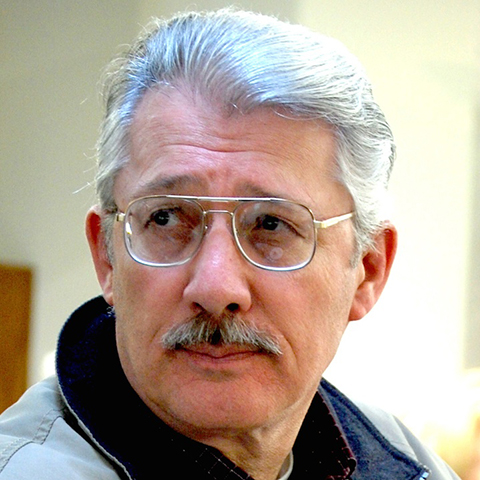
jack_rasmus-webJack Rasmus is the author of Systemic Fragility in the Global Economy, by Clarity Press, 2016, Looting Greece: An Emerging New Financial Imperialism, by Clarity Press, October 2016, and the forthcoming Central Bankers at the End of Their Ropes, Clarity Press, March 2017. He blogs at jackrasmus.com. His website is jackrasmusproductions.com. His twitter handle is @drjackrasmus.

 

Abe’s Political Restoration Belies Economic and Geostrategic Challenges

By Craig Mark

Despite Prime Minister Shinzo Abe’s political success in Japanese politics, Japan’s economy remains to be stagnant. This article discusses the impact of Abe’s political comeback in restoring Japan’s economic growth and overcoming its geostrategic challenges.


Introduction

Japan’s Prime Minister Shinzo Abe led his conservative Liberal Democratic Party (LDP) to another decisive victory in the Upper House elections held last July, making him one of the most politically successful leaders of the democratic world in recent times. In office since December 2012, the LDP (with its ruling coalition partner the Komeito Party, and aligned independents) can now effectively command a two-thirds majority vote in both Houses of the Diet, Japan’s parliament. The win in the Upper House of Councillors was a particular vindication for Abe, since he was driven to step down from his first term as Prime Minister in 2007, after barely a year in office, when the scandal-ridden LDP suffered a harsh Upper House election defeat. But despite Abe’s latest political success, the stagnant Japanese economy remains a stubborn obstacle that defies the efforts of the government’s policy approach, marketed as “Abenomics”.


Abenomics Redux

Following the July election, Abe announced a ¥28 trillion (US$270 billion) stimulus package in August, based around infrastructure spending, and more targeted welfare spending, in the latest series of ongoing efforts to boost economic growth and reverse deflationary stagnation. The package also includes record defence spending, which has been raised in every year of Abe’s government, to reach ¥5.16 trillion for FY2017.1 While this further deepens Japan’s public debt, now approaching 230% of GDP, the effect of continuous stimulus spending has at least recently kept the economy out of recession, as Abenomics rejects the failed path of austerity. Growth for the June 2016 quarter was only 0.2%, with the annualised growth rate at 0.7%. The CPI fell -0.5% for August, the sixth monthly decline in a row, showing the danger of the return of entrenched deflation.2

Abenomics can do little to solve Japan’s structural demographic problem of an aging and declining population. Abe’s government has expressed its aim to increase the prominence of women in the workforce, but they continue to face chauvinistic cultural barriers in many areas of employment. The proportion of women returning to work after having their first child has only just now exceeded 50% for the first time, while only 2.65% of men took paternity leave in FY2015. Income inequality in Japan continues to worsen, as around one in six Japanese children live in poverty, particularly in families headed by single mothers.3

Tax credits for families and plans for more child care places are part of the Abe government’s strategy to lift the fertility rate from 1.4 to 1.8 by 2025, but this is overly ambitious, as are the inflation and economic growth rate targets of 2% each by 2020. The negative interest rates implemented by the Bank of Japan (BoJ) since January shows the desperation of its monetary policy. Its Quantitative Easing (QE) of around ¥80 trillion per annum may expand yet again, to try and reduce the yen. The BoJ has so far bought up to ¥450 trillion worth of assets, particularly government bonds.4


Karōshi and Other Failures of Corporate Japan

Corporate Japan bears considerable responsibility for the sluggish state of the economy, by sitting on huge cash reserves. Utilising these massive cash deposits to raise base wage rates, and offer permanent, full-time jobs is key to restoring sustainable growth and inflation, as this would give workers more security and higher spending capacity, and so boost aggregate demand. Abe has been urging companies to do so, most recently in his policy speech opening the autumn session of the Diet. He called for a minimum raise of 25 yen per hour in the upcoming spring wage negotiations with labour unions, but large corporations have generally been reluctant to grant even such a minuscule increase. It will require vigorous reform of labour laws to impel businesses to improve wages, conditions and overall job security for workers; the first Cabinet white paper on karōshi, death from overwork, considered a fifth of Japanese workers are at risk. The unemployment rate was 3.1% in August, but this fairly low level is mainly due to the shrinking pool of available labour in the smaller and older populace, rather than due to any robust economic activity.5

If QE fails to prevent the yen’s value going much beyond parity with the US dollar, such a hit to the competitiveness of Japanese exports would threaten another recession. Japan has recently enjoyed record tourist numbers, especially from China, but a rising yen could threaten this current boom. The electronics industry in particular has recently faced a series of accounting scandals and foreign takeovers, continuing its relative decline, with increased competition from Korean, Taiwanese and Chinese firms. The agricultural sector also faces greater competition, and will be hoping the multilateral Trans-Pacific Partnership (TPP) trade agreement does not go ahead. Legislation to ratify the TPP is due to be introduced in the upcoming Diet session, but this could be moot, if the TPP is blocked in the US Congress. Abe still strongly backs the TPP, if for no other reason than its aim to strengthen America’s geopolitical position in the Pacific to contain a rising China increasing its economic and military strength.

Abe will also continue to press for conclusion of preferential trade agreements with the US and the EU by the end of 2016, although these deadlines could also very well slip by. Japan was at least able to complete an economic partnership agreement with Australia in 2014. The automobile industry remains one of its strongest sectors, and innovations in the IT industry, in areas such as robotics and biomedicine, also have great future potential. However, corporate Japan, with its aging and overwhelmingly male management, still badly needs invigoration overall from younger and more diverse leadership.

The Abe government is also determined to restart Japan’s nuclear reactors, despite widespread public opposition in the wake of the 2011 Fukushima disaster. Abe has been accused by his previous mentor, former Prime Minister Junichiro Koizumi, of lying about the safety of the ongoing clean-up of the wrecked and contaminated Fukushima Daiichi power plant, following the massive Tohoku earthquake and tsunami on March 11, 2011. Abe has been accused of being in the thrall of the nuclear power industry, traditionally one of the influential core corporate support bases for the LDP. This is despite the immense potential of Japan’s renewable energy industry, particularly in wind and thermal power.


Abe Abroad

In support of the export of nuclear technology overseas, amongst other industries, Abe has been one of Japan’s most travelled Prime Ministers. In his visits to Europe, America, and Australia, he has particularly promoted Japanese exports, investment and development aid to emerging markets in Central Asia,6 the Middle East, Latin America, Africa and South East Asia. There have been some notable setbacks though. Japan failed to secure tenders to build a high-speed rail in Indonesia, losing out to China; and submarines in Australia, losing to France.

In support of the export of nuclear technology overseas, amongst other industries, Abe has been one of Japan’s most travelled Prime Ministers.

Abe’s active foreign policy feeds into his desire for a more assertive defence policy posture, largely aimed at deterring China. Japan’s Self-Defense Forces (SDF) are increasing their tempo of training exercises with the US and Australian military, including naval patrols in the contested South China Sea. Japan is supplying patrol boats to Vietnam and the Philippines, and SDF jet fighters are frequently scrambled to intercept both Chinese and Russian military aircraft encroaching on Japanese airspace.7 SDF missile defences are also often alerted against potential nuclear missile tests by North Korea. The territorial dispute over the Senkaku Islands (claimed as the Daioyus by China), administered by Japan in the East China Sea, remains a potentially dangerous flashpoint, as China continues to send fishing and patrol vessels into its surrounding waters.

In September 2015, the Abe government passed controversial legislation to reinterpret Article 9 of the constitution, to allow the SDF to exercise collective self-defence. More robust rules of engagement for SDF peacekeeping forces in South Sudan are now being implemented, with troops for the next deployment training for a potential combat role, to protect civilians or UN personnel if they come under attack. A new cross-ministry intelligence service is also being expanded. Abe is using the Diet session following the July Upper House election to debate and pursue legislation for even greater constitutional change. Abe and the LDP are determined to press ahead with discussion of its 2012 draft revised constitution in the Diet’s constitutional commissions. They face criticism from the main opposition Democratic Party (DP), the Japanese Communist Party (JCP) and human rights lawyers and academics, that the draft pares back individual civil rights, and grants the government excessive emergency powers. The government will also consider special legislation which would permit Emperor Akihito to abdicate, allowing the frail 84-year old monarch to fulfil his carefully expressed desire to step down from his duties before his death.


The Rise of Renho

The recently elected new leader of the DP, Renho Murata (universally known just as Renho), has sworn to defend the constitution from the Abe government’s proposed amendments. As well as confronting gender bias, being the first female leader of the DP, Renho has also battled prejudice over her parentage, with her father being Taiwanese. Renho and the DP will repeat the strategy attempted in the July Upper House election of coordinating their election campaigning with the smaller opposition parties, particularly the JCP, despite the previous lack of success of such tactics.

In her first major speech to the Diet as Opposition Leader, Renho aggressively attacked Abe’s administration, accusing it of mere sloganeering, while the policies of Abenomics have failed to end deflation and restore growth. She also criticised the performance of the Government Pension Investment Fund, which has suffered a loss of ¥10 trillion over the past fiscal year. Despite such bold beginnings, Renho faces a formidable challenge in rebuilding the demoralised DP into an alternative governing party which can successfully market its appeal to the public with a credible policy agenda. It remains to be seen if she can make any inroads against the prodigious majorities the LDP luxuriously enjoys in both Houses of the Diet.

Renho’s struggle against Abe may last longer than expected. Abe was originally scheduled to step down as Prime Minister by September 2018, when his second three-year term as LDP president expires. However, the LDP’s Headquarters for Party and Political System Reform Implementation has already begun the process of extending terms for the party leadership, which will allow Abe to remain in office beyond 2018. The likely options being discussed by the LDP’s reform committee are either to allow renewal for an extra third term, or remove presidential term limits altogether.8 The LDP hierarchy is aiming to finalise a decision by the end of the year, to be confirmed at the 2017 party conference in March, in time for the scheduled 2018 Lower House election. Such developments will severely annoy and disappoint various LDP faction leaders, who have already been positioning themselves as potential successors to Abe, such as Foreign Minister Fumio Kishida, and Population and Regional Revitalisation Minister Shigeru Ishiba. The hawkish Defense Minister Tomomi Inada, a prominent member of the ultranationalist Shinto organisation Nippon Kaigi (as is Abe and most of his Cabinet), has openly supported the term extension proposal, hoping to eventually succeed Abe as Japan’s first female Prime Minister.


Conclusion

Going early in 2017 would allow Abe to preside over the 2020 Tokyo Olympics (and the preceding 2019 Rugby World Cup), as the next Lower House elections would then be due by 2021, at the latest. When Abe said “See you in Tokyo!” at the closing ceremony for the Rio Olympics, it seems he really meant it.

However, speculation has already emerged among LDP circles over whether Abe will call an early snap election for the Lower House as soon as January 2017, despite the LDP’s ruling coalition already enjoying a two-thirds majority. Abe may thus yet again deploy his favoured strategy of going to an early election, as he did in December 2014, to take advantage of a still weak and unready opposition, under its new untested leader Renho. Going early in 2017 would allow Abe to preside over the 2020 Tokyo Olympics (and the preceding 2019 Rugby World Cup), as the next Lower House elections would then be due by 2021, at the latest. When Abe said “See you in Tokyo!” at the closing ceremony for the Rio Olympics, it seems he really meant it.


About the Author

portrait-photoDr. Craig Mark is Assistant Professor at the School of Information Environment, Tokyo Denki University. He has also taught Politics and International Relations at Kwansei Gakuin University in Japan, and Macquarie University and the University of New South Wales, in Sydney, Australia. He is the author of The Abe Restoration: Contemporary Japanese Politics and Reformation.


References

1. Cabinet Public Relations Office, ‘Press Conference by Prime Minister Shinzo Abe’, Wednesday, August 3, 2016, Speeches and Statements by the Prime Minister, Prime Minister of Japan and His Cabinet, at: http://japan.kantei.go.jp/97_abe/statement/201608/1218775_11013.html
2. Bank of Japan, ‘Financial and Economic Statistics Monthly’, September 23, 2016, at: https://www.boj.or.jp/statistics/pub/sk/data/sk4.pdf
3. The Japan Institute for Labor Policy and Training, “Recent Statistical Survey Reports”, July 2016, at: http://www.jil.go.jp/english/estatis/esaikin/2016/documents/e201607.pdf
4. Bank of Japan, ‘Introduction of “Quantitative and Qualitative Monetary Easting with a Negative Interest Rate” ‘, January 29, 2016, at: https://www.boj.or.jp/en/announcements/release_2016/k160129a.pdf
5. Ministry of Internal Affairs and Communications, ‘Labour Force Survey, Monthly Results’ August 2016, at: http://www.stat.go.jp/english/data/roudou/results/month/
6. Cabinet Public Relations Office, ‘Diplomatic Relations’, Prime Minister of Japan and His Cabinet, at: http://japan.kantei.go.jp/97_abe/diplomatic/index.html
7. Ministry of Defense, ‘Statistics on Scrambles during the First Quarter of FY2016’, Joint Staff Press Release, July 5, 2016, at: http://www.mod.go.jp/js/Press/press2016/press_pdf/p20160705_02.pdf
8. Liberal Democratic Party of Japan, ‘Rules for election of President’, at: https://www.jimin.jp/english/the-president/rules/index.html


Headaches of Empire: Brexit and the United States

By Binoy Kampmark

The case for Britain’s exit from Europe has been treated as a dramatic blow against the imperium’s three main concerns on the continent: its own, fragile economic recovery, the broader trade agenda spearheaded with the EU, and matters of security.


President Barack Obama, like other leaders who were taking the gruel of Brexit for his breakfast serving, did not react well to Britain’s referendum result of June 23. Over time, he has been unduly chiding in his manner, reproachful about the affairs of another country in how it would vote on its relationship with the European Union.

In April, Obama warned British voters that a trade deal with the United States would be a rather tough thing to achieve from outside the European Union. This trend followed that of warnings to other countries, such as Greece, who had flirted with the idea of leaving the zone. The cudgel used on this occasion, as previously, was that of economic consequences. Leave, and observe… “It could be five years from now, 10 years from now before we’re actually able to get something done.”1

Whatever pretence the United States maintains about the equal order of states, sovereignty and its “special relationships”, traditional imperial values are powerful. Much of this has seeped sufficiently into the body politic of the US to make anything that seems like rebellious fracture in Europe seem dangerous.

The case for Britain’s exit from Europe has been treated as a dramatic blow against the imperium’s three main concerns on the continent: its own, fragile economic recovery, the broader trade agenda spearheaded with the EU, and matters of security.


Economic Fears

The economic aspect got a jolt when the collaring markets, ever the deities to be worshipped by major capitals of the globe, did their stuff in wiping off $2 trillion in value in twenty-four hours. “I must say,” conceded Vice President Joe Biden, “we had looked for a different outcome. We would have preferred a different outcome.” Never spook the markets, goes such wisdom, especially with daft notions of democratic practice. The incentive of the money maker, and that of the practising democrat, never go together.

The result left Obama having to insist that not much would change in the US-UK relationship, much of it initiated by a concern to soften market shocks. During a trip to Silicon Valley a day after the vote, the president was trying to minimise its rocky effects. “Yesterday’s vote speaks to the ongoing changes and challenges that are raised by globalisation.” The vote was far more than that, a vortex opening up before Europe’s broader troubles.

Hillary Clinton, then presumptive Democrat nominee for the White House, also had the element of economic disturbance on her mind. The American economy, she was asserting, might suffer because of the British result. “Our first task has to be to make sure that the economic uncertainty created by these events does not hurt working families in America” (The Guardian, Jun 24).

Top US officials were also mooting the point that a British exit from the EU would be something of a stab to US financial stability, an assessment that did not resist a moralising undertone. Janet Yellen, chair of the Federal Reserve, could see very little good coming out of a popularly mandated departure. In testimony before the US Senate committee on banking, housing and urban affairs, Yellen spoke in sombre terms about a “shift” in investor sentiment with a vote against the EU from the British electorate. “A UK vote to exit the European Union could have significant economic repercussions.”2

Another spoiler for the Obama administration lies in the chances to get the much vaunted yet problematic Transatlantic Trade and Investment Partnership Act between the EU and the United States done by January next year. Things already seemed rather mucked given the growing hostility to the deal on both sides of the pond. It has dawned on some European lawmakers that the TTIP is less a citizen’s charter than that of a corporation’s.

Obama’s insistence has been to stand by previous statements that Brexit would lead to a banishment of Britain to the back of the negotiating queue. Trade deals were to be done with the entire bloc, not with each disagreeable state. Europe, in other words, had to negotiate with one voice.

Obama’s insistence has been to stand by previous statements that Brexit would lead to a banishment of Britain to the back of the negotiating queue.

White House spokesman Eric Schultz reiterated the point immediately after the vote. “Obviously, the president stands by what he said and I don’t have an update of our position.”3 Bad children who openly disregard the wishes of their teachers tend to find themselves at the back of the classroom in chastened defeat.


Security Fears

As for the security agenda, Britain’s suggested exit from the European institutional family is being treated as the disengagement of a valuable, pro-US partner on the continent. Fanciful observations have been made that Washington will look with keener interest to Berlin and Paris, refocusing their security concerns within the bloc.

Senator Ben Cardin of Maryland on the Senate Committee on Foreign Relations struck a note about preserving the alliance: “We… maintain our trans-Atlantic consensus on how to deal with a resurgent Russia and the growing threat of ISIS.”4  

For decades, having Britain in European arrangements for the United States was tantamount to Rome having faithful Greeks oiling its foreign policy. This extension was also global, resulting in costly gambles in Iraq in the war of 2003. The difference there was that the Anglophone Greeks were not quite as informed as they should have been.

The point about such a connection between well worn sage of empire and sprightly upstart buck had been made by former British Prime Minister Harold Macmillan during the North Africa campaigns of the Second World War. The orientation of power during the conflict against Nazi Germany had changed, shifting its axis across the Atlantic: the United States would be setting the terms; Britons would become the modern Greeks of future US administrations, the wise advisors in the face of a new supreme power. “We… are Greeks in this American empire… We must run the Allied Forces HQ as the Greeks ran the operations of the Emperor Claudius” (Sunday Telegraph, Feb 9, 1964).

Sensing an aspect of this strategic facet of US-European relations unravelling, the Mayor of Moscow Sergei Sobyanin sensed that Russian-EU relations would alter after the fact. With confidence, he suggested that Britain’s exit from European arrangements meant one less voice on the anti-Russia bandwagon. “Without the UK, there will be nobody in the EU to defend sanctions against Russia so zealously.”5  

Other European countries had been less than enthusiastic to impose sanctions on the Kremlin in light of its policies towards Ukraine and the annexation of Crimea. Not Britain, egged on by Washington. The issue has been deemed critical to differences between the way the European Union handles global matters to that of the United States, which retains a customary military posture towards matters of crisis. As Robert Kagan would argue, the gentle approach of the EU was paradisiacal in its approach, a Pollyanna view of the world; the US had it down pat with ideas of traditional power plays.6

Andrei Klepach, deputy chairman of the Russian State Development Bank Vneshekonombank (VEB), went so far as to make a prediction at this potential, rapturous detachment from the European bloc. Brexit might well provide changes for “good potential for growth in the value of securities” that would benefit the Russian economy.7 That is very unlikely to transpire in any genuine sense.

Commentators in Britain have also noted the prospect of internal unravelling of the UK, an aspect that has worried a range of US strategic planners. Scotland, whose voters solidly backed Britain staying in the union, may well seek another referendum over independence.

As Nicola Sturgeon, the Scottish First Minister has firmly stated, the Scots voted one way, the English and Welsh, another. Strategically, Scotland, being home to the UK nuclear submarine fleet, complicates things further. A potential UK break-up is in the offing.


The Imperial Motive

There remains a conspicuous fear in the US Republic that civilisation tends to be a centralising endeavour. The point was noted in rather negative fashion by the historian Brooks Adams in The Law of Civilization and Decay (1895), who saw matters in eccentrically biological terms of energy and dissipation. One important point could be gleaned from this: the subject can become the prisoner of purely economic considerations.

The hegemon dictates the measures to be taken, even if they may be cushioned by promises of good relations and a false sense of autonomy.

Smaller states only matter if they are wedged into a series of locking agreements and arrangements with an overseeing, essentially directing hegemon. The hegemon dictates the measures to be taken, even if they may be cushioned by promises of good relations and a false sense of autonomy.

While Donald Trump has been dismissed as a loud lunatic on this subject, amongst others, his statements about the way Obama behaved on Britain’s referendum were relevant. Was it the business of a US president to tell the British voter how to go about his or her business? No.

A close ally of empire, and the US project in Europe, had flown the coop. That, however, still remains a statement of opinion rather than practice. More will need to be done to implement the result, by which then a second referendum may well have taken place. Britain is hardly going to be getting away that easily.


About the Author

Kampmark_Picture[1]Dr. Binoy Kampmark was a Commonwealth Scholar at Selwyn College, Cambridge. He lectures at RMIT University, Melbourne.

Email: [email protected]


References
1. http://www.theguardian.com/politics/2016/apr/24/leave-campaign-obama-trade-warning-eu-referendum
2. Remarks available at: http://www.federalreserve.gov/newsevents/testimony/yellen20160621a.htm
3. http://www.euronews.com/2016/06/25/obama-stands-by-back-of-queue-warning-on-post-brexit-uk-trade-deal/
4. http://www.reuters.com/article/us-britain-eu-usa-biden-idUSKCN0ZA24G
5. https://twitter.com/@MosSobyanin
6. https://www.amazon.com/Paradise-Power-America-Europe-World/dp/1400034183
7. http://www.themoscowtimes.com/arts_n_ideas/news/article/russia-reacts-to-brexit-referendum/573389.html


Burma/Myanmar – Towards Peace? Elections, Civil War, and Inter-Faith Conflicts

By Mikael Gravers

In August 2015, the government of President U Thein Sein signed a nationwide ceasefire agreement with 8 ethnic armed organisations. However, serious problems remain and continue to be obstacles for genuine peace and democracy as well as for alleviating poverty. The article outlines and analyses some of the main problems in the current transition.


After the National League for Democracy’s (NLD) victory at the 2015 elections, the first civilian government since 1962 has initiated a peace process in order to end 67 years of civil war, provided justice and improved the livelihood of Myanmar’s 52 million people. Even with a genuine ceasefire agreement, the country faces an uphill struggle to leave its status as a least developed country. Democracy, a transparent justice system and economic development rests on ending Myanmar’s many inter-ethnic and religious conflicts.

While the international media has focus on Daw Aung San Suu Kyi and her victory, the army has escalated its armed offensive in the Shan and Kachin States and resumed fighting a Karen splinter group of the Democratic Karen Benevolent/Buddhist Army) displacing thousands of civilians. This increased fighting took place while the NLD government convened the first session of its much-heralded 21st Century Panglong peace conference in the capital Naypyitaw. Aung San Suu Kyi, the army chief and 17 armed ethnic organisations (EAO) participated.

The failure of democracy was not only rooted in an internal power struggle amongst Burman politicians and the army, but also in the colonial rule’s use of identity politics –   a divide and rule with emphasis on ethnic differences.

The 21st century Panglong conference refers to a famous conference in 1947 in a small town in the Shan State between ethnic leaders and Burman politicians led by General Aung San, Aung San Suu Kyi’s father and Burma’s national hero. Since 1923, the British colonial rule had separated the ethnic hill areas in a Frontier Area Administration and limited Burman admission. Churchill’s cabinet had planned to maintain the frontier area as a dominion. Many of the non-Burman ethnic groups in Burma hoped for some kind of autonomy after having remained loyal to the Empire during the war. This was bitterly opposed by Aung San who in Panglong promised they could have “full autonomy in internal administration”, democratic rights, and economic assistance.1 There was also a discussion of a federal constitution and of future secession of ethnic states. However, the 1947 constitution never became genuine federal. Dissatisfied EAOs such as Karen National Union, began armed struggle for independence in 1949 amidst a Communist insurgency. Other groups took up arms. In 1961, the civil government made Buddhism the state religion to the consternation of Christians and Muslims. This law, ethnic insurgency and fear of secession were the main reasons for the military coup in 1962.

The failure of democracy was not only rooted in an internal power struggle amongst Burman politicians and the army, but also in the colonial rule’s use of identity politics – a divide and rule with emphasis on ethnic differences. Moreover, colonial rule applied customary laws to religious communities, Christian, Muslim, Hindu, Buddhists. Aung San Suu Kyi is facing this complex historical legacy. Since 1948, there has been at least 40 different EAOs including splinter groups. A rough estimate tells that EAOs can muster about 100,000 men, the army 400,000. Myanmar is a highly militarised country.


The EAO’s now insist on being termed ethnic nationalities in order to claim right to self-rule within a federation. They insist on a federated army in which their forces are under their own (ethnic) command. However, they have dropped the demand for right to secession.

At the Panglong 21st century meeting, the army had excluded three EAO’s who are at war with the army: The Kokang (ethnic Chinese); the Ta’ang National Liberation Army (ethnic Palaung) and the Arakan National Army (ethnic Rakhine trained by the Kachin Independent Army). The army demanded they cease fighting and lay down weapons.

In 2014, a Nationwide Ceasefire was signed by eight EAO’s among these the KNU and DKBA.2 The major EAOs, Kachin, Mon, Shan and the big United Wa State Army did not sign. However, as soon as delegates arrived, tension rose. Nametags for EAO’s delegates did not have EAO military rank. The Wa delegation came late, were erroneously downgraded to observers and walked out.3

Myanmar does not want international facilitators. However, Ban Ki Moon opened the meeting and China sent an envoy from its Ministry of Foreign Affairs. China has supplied the Wa, the Kokang and probably other EAO’s with weapons on the border. China is constructing several huge dams in Burma and has substantial economic interests along the border in order to get electricity, while only 1/3 of the Myanmar population has electricity. China is a crucial player in the peace process.

Panglong however, has huge symbolic meaning to all people in Myanmar. While the agreement of 1947 was vague, the spirit of Panglong, i.e. the democratic and peaceful dialogue is celebrated as Aung San Suu Kyi did in her opening speech 31 August: “The Panglong spirit that enabled us to implement, through unity and cooperation, the hopes of all our peoples for freedom, is equally essential now in the 21st century”. She agrees with EAOs on a federal constitution. However, the parties may have difficulties when it comes to the details. Aung San Suu Kyi and EAO’s also agree to maintain the present 14 states and regions, but when it comes to special areas, already carved out for three smaller ethnic groups, it may create new conflicts because the ethnic groups live intermingled. The Karen for example, live in the Irrawaddy Delta, in Yangon and in the Karen, Mon, Shan, and Kayah states. An ethnic territorial demarcation is likely to generate new conflicts. Some EAOs already have conflicts over constituencies and areas.4

Local EAO elites and their armed followers often have their own agenda and interests in business (plantations), natural resources (mines, gemstone, timber), “taxation” and recruits. Thus, a future peace agreement will have to deal with these interests which are tied to the possession of arms. This combination also makes it more difficult to enter a process of disarming. There is an obvious risk that some of these armed persons may turn into criminal gangs if they are not integrated in a federal army, police force, or provided other opportunities. Drug trade is an increasing problem along the western borders.5

Civil society organisations (CSO) concerned with religion, human rights, women/gender refugee, culture and other subjects are also important actors in the peace process. They represent the civil populations concerns and grievances. Together with ethnic political parties they form important fulcrum for a successful peace process.

The Panglong conference may have problems in accommodating all these voices and their complex interests. Nevertheless they are crucial voices.

Civil society organisations (CSO) concerned with religion, human rights, women/gender refugee, culture and other subjects are also important actors in the peace process.

The main obstacle, however, to a federation is the army who wants to maintain the present constitution. The army emphasises demobilisation, disarmament, and reintegration (DDR). The ethnic armed forces could be integrated in the army as the present Border Guard Forces among the Karen. However, this is fiercely opposed by the EAOs, who want to keep their arms and control their forces. Interestingly, their civil society organisations such as women’s organisations agree that weapons are necessary at least ten years after a genuine peace.6


Changing the Constitution and Mistrust

The army has 25% of the seat in the two chambers of parliament and a paragraph demands more than 75% of all representatives to change the constitution. The army fears that a federation may endanger what they perceive national unity among the “135 indigenous ethnic groups” and fragment the Union of Myanmar. Thus the “spirit from Panglong” needs to overcome a climate of mutual distrust and fear, which is still so prevalent in the time of transition from military rule. During interviews over the years, this author has registered a deep and widespread fear and mistrust. For example, Karen informants would say they never trust Burmans – “they have a crooked hart” – “they always cheat us” – “we cannot live together”. This deep skepticism also includes NLD although many Karen actually cooperate with Burmans in daily life.7

How do we understand this mistrust? The long civil war has not only accumulated experiences of violence and victimhood amongst all parties over several generations; it has also deepened the perceived feelings of ethnic incompatibilities and distrust. This historic schism is not overcome by a Panglong conference, as Daw Suu Kyi also admitted. Thus, a federal constitution may not be a wise construction before peace has ruled for a generation. Increased and genuine political autonomy in the ethnic states and their parliaments seems a much more realistic option – while avoiding augmented ethnic boundaries.

While the conflicting parties meet and talk, the army moves its troops into EAO territory, open schools and offices. The EAO’s consider this as a conquest. The army also takes over EAO check points where the ethnic organisations collect “road taxes”. The EAOs continue to tax their constituencies and recruit young men – sometimes by force. Those who suffer are civilians, fed up with the unending war, who sometimes have to pay two or three different armies.

The main problem is the ingrained identity politics focusing on ethnic differences. The problem can be illustrated by a recent pre-Panglong meeting of ethnic youth from all groups. As soon as delegates arrived they started a discussion about Muslims in the Burman delegation. Some delegates argued they were not indigenous people (taing yin tha) according to the law from 1982 on citizenship which lists “135 Myanmar indigenous ethnic groups”. Most Muslims are not recognised as indigenous, that is with ancestors living in Burma before British conquest began in 1824. They are thus not full citizens and should not participate in the meeting. “People of mixed blood” were also not accepted by some delegates. The Muslims left the event in fear of a becoming involved in a conflict. All identity cards contain data on religious belonging and ethnicity – including a mixed origin. This categorisation is clearly a colonial heritage from the days of administration by ethnic lines and customary laws.


Anti-Muslim Monks

The problems of ethnic categorisation came to a fore in 2012 when anti-Muslim Buddhist monks reacted after a case of rape and communal violence between Muslims and Buddhists in Rakhine State. Nationalist monks formed an association for the protection of Buddhism and race known by its acronyms Ma Ba Tha.8 The rhetoric became virulent and more riots occurred. Ostensible, these riots and the dissemination of propaganda videos, stickers and other material was organised. There has been suspicion that military officers supported the movement. In 2015, Ma Ba Tha managed to get 4 laws “protecting race and religion” enacted by the parliament under the military government and supported by the former President U Thein Sein. The laws demand that people who convert or marry persons from other denominations get permission from the authorities. One law prescribes three year between births – all laws are directed against Muslims who were seen as a danger to Buddhism, race, the economy and as enemies of the nation.9   The Muslim “Rohingya” in the Rakhine State are now excluded from citizenship. They are termed “Bengalis” and illegal immigrants although many may have lived in Burma for generations. The term Rohingya cannot be used anymore and provoke fierce reactions. A government formed a committee headed by Kofi Anan, former UN general secretary, in order to solve the crisis. However, he was met with strong opposition from local nationalist Buddhists. Although Ma Ba Tha campaigned against Aung San Suu Kyi and supported the military party (USDP) before elections this did not impact the result. The government is now promulgating a law against hate speech and Ma Ba Tha seems to loose support.

As of November 2016, the army is conducting a major operation near the border to Bangladesh against “Muslim Rohingya militants” after 9 police officers were killed in an ambush. The area is sealed off by the army but many are believed killed, displaced and arrested.


Development and International Investments

The civil war and military rule have contributed to the economic decline and make foreign investments difficult. However, Myanmar badly needs sustainable and responsible investments besides development aid. It takes time to improve infrastructure, to reform the justice system, and to enhance educational capacity. However, Myanmar has a substantial residue of human resources and competent, hard-working people, which can compensate somehow for other inadequacies. Nevertheless, laws from colonial time are still used and corruption is prevalent. Forced labour and trafficking are other serious problems, which the government now addresses.

A new land law means that land held without legal papers is classified as vacant. Such land has often been claimed by officers or people with army relations. Sometimes foreign interests are involved. This widespread land grabbing has caused anger and is perceived as a sign of the general lack of justice. Being involved in a trial or a lawsuit often involves substantial bribes to officials. Thousands of cases involving claims to land are being scrutinised by the new government.

During Aung San Suu Kyi’s visit to the USA in September, President Obama announced that Myanmar will enter USA’s preferential trade scheme. Sanctions against export of arms are still in place. The Minster for Finance and Planning has announced an update of company and investment laws assisted by the Asian Development Bank. He invites investment in labour intensive manufacture.

Obviously, there are many difficulties for foreign investments and trade. However, close cooperation with locals, meticulous research and respect for religions, cultures and environment provide a basis for future success. International involvement can help Myanmar solve the problems. However, remember that people in Burma are wary of anything smelling of “neo-colonial” attitudes and lack of respect for culture. Ethnic groups often consider development projects and foreign investments as a Burman Trojan horse, which will exploit their resources. In Myanmar, history is not just the past – but deeply influences the perceptions of the present.


About the Author

mg-fotoMikael Gravers is Associate Professor, Anthropology, Aarhus University, Denmark. He has conducted fieldwork in Thailand and Burma since 1970. He has worked amongst Buddhist and Christian Karen and in Buddhist monasteries. He is the author of Nationalism as Political Paranoia in Burma. London, Curzon, 1999 and edited Exploring Ethnic Diversity in Burma, Copenhagen, NIAS Press 2007. In 2014, he co-edited Burma/Myanmar – Where Now? NIAS Press, Copenhagen, with Flemming Ytzen. He is currently a senior researcher in the Danish funded research project Everyday Justice and Security in the Myanmar Transition in collaboration with Danish Institute of International Studies (DIIS) and Anthropology, Yangon University.

References

• The country’s official name since 1948 in Myanmar derived from an old word, Mranma, which is the origin of the colloquial word Bamar or Burma in English. The military government changed the colloquial use to Myanmar in 1989 – an act aimed at erasing colonial heritage. The opposition continued to use Burma.

1. On the Panglong conference , see Matthew Walton 2008. “Ethnicity, Conflict, and History in Burma. The Myth of Panglong. Asian Survey, Vol. 48,6: 889-910.
2. On the nationwide ceasefire, see Centre for Development and Ethnic Studies 2016: The significance of NCA. www.cdses.org.mm, 26 September.
3. See Myanmar Times 1 August, 2016, Fiona Macgregor and Thu Thu Aung:” Conceptions of Ethnic, religious identity vex Panglong youth summit”. www.mmtimes.com/index.php/national-news/21561-civil-society-readies-
4. See Myanmar Times 5 October. www.mmtimescom/index.php/national-news/22901-wa-and-mongla.The USWA has invaded the Mongla (Akha and Chinese) territory.
5. See Karen News September 28.www.karennews.org/2016/09/armed-conflict-promoting-drug-use-in-ethnic-areas.html/
6. On DDR, see Kyed, Helene M and M. Gravers 2015 “What are the future Options for Non-State Armed Groups in the Myanmar Peace Process?” Stability, Vol. 4, 1-20.
7. On nationalism and ethno-nationalism in Burma’s history, see M. Gravers 1999. Nationalism as Political Paranoia. London, Curzon/Routledge.
8. On the anti-Muslim monks, see The Review of Faith & International Relations Vol.13,4. Special issue on Myanmar. M. Gravers 2015. “Anti-Muslim Buddhist Nationalism in Burma and Sri Lanka – Religious Violence and Globalized Imaginaries of Endangered Identities”.” Contemporary Buddhism Vol. 18, 1: pp.22; M. Gravers 2016. On Buddhist monks, Nationalism and Violence – Correspondence. Contemporary Buddhism, Vol. 19, 2 (November 2016).
9. Muslims constitute 4,3 % of Myanmar’s 52 million. However, about one million Muslims in Rakhine were not counted during the 2014 census.


Keeping Inequality on a Short Leash: Whose Task?

By István György Tóth

Inequality in general is growing, but recent research shows ups and downs, with considerable cross-country variation. How is the growth of inequality being tackled and whose responsibility is it to handle its consequences?


In 1997, Anthony Atkinson, a supremely authoritative scholar of inequality, published an article entitled “Bringing Income Distribution in from the Cold”.1 He intended to warn that the dispersion of incomes and the dimensions of inequality should be at the forefront of economic and social research, assuming that the ambition is to have a more thorough understanding of macroeconomic and societal dynamics. Since then, inequality has in fact “assumed” (or actually, “resumed”) a central place in political debate (especially since the Great Recession shocks and the aftermath austerity packages), in academic research (the recent Handbook of Income Distribution, which summarises research published over the past decade and a half, runs to 2,200 pages),2 and in general public interest (French economist Thomas Piketty’s book, whose title recalls Marx’s “bestseller” treatise from the nineteenth century, sold in its millions all around the world).3

Research on inequality is burgeoning; graduates fill big auditoriums at top universities and elsewhere; philanthropists donate large sums to new research centres on major university campuses in New York, London, Paris and elsewhere in the developed part of the world. The OECD, a major think tank maintained by rich countries’ governments, devotes one of its flagship publications to monitoring inequality around the more fortunate part of the globe.4 Within this environment of rich international comparative research on inequality, projects that aspire to a value-added element or a “unique selling point” have to be specific on research questions, methods and target audiences.

And precisely that has been the aspiration of those researchers who have collaborated on the EU-sponsored GINI project (the title is a play on words; it reduces the full name – Growing Inequalities’ Impacts – to an acronym that recalls the Gini coefficient, probably the most widely used inequality index).5 The project amassed long-term data (spanning three decades between 1980 and 2010) on a sizeable number of countries (30 detailed case studies were presented at the end), in order to identify manifest and latent trends and to inform a number of analytical papers on the relationships between various inequality-related variables. The core research team (led by Professor Wiemer Salverda of Amsterdam University) has produced two thick volumes published by Oxford University Press, summarising the causes, characteristics, trends and potential consequences of changing inequalities in the country groupings under scrutiny.6


Inequality Spells

All too often, the term “inequality” is routinely qualified with epithets such as “large” and “growing”. However, using longer-term time series, one can identify fluctuations (such as the much-debated Kuznets curve, an inverted U-shaped figure that describes the assumed relationship between development and inequality and that is named after Simon Kuznets), long-term trends (Piketty recently detected a global rise in inequality since the Second World War), jumps (such as the dramatic increase in inequality in post-communist countries after the systemic change), stagnation or no change (some continental welfare states, for example, do not seem to have witnessed any major changes in traditional inequality measures in the 2000s). There are, therefore, spells of inequality growth and inequality decline as well, and there is considerable variation across countries.

And this has been shown by GINI (see Table below). While the basic trend in inequality was upwards across the countries included in the analysis – the whole range of Gini coefficients was higher at the end of the period (from 0.228 to 0.373) than at the start (from 0.20 to 0.33) – this growth in inequality was far from uniform. In certain countries (such as Austria, Belgium, France, Italy, Ireland and Slovenia), the level of inequality remained largely unchanged or else fluctuated around the same level; whereas in others, a substantial increase took place. The most dramatic widening of the dispersion was experienced in some transition countries (Bulgaria, Estonia, Lithuania, Latvia, Romania and Hungary) and, to a lesser but still significant extent, in the Nordic countries (most notably Sweden and Finland). In some of these countries, the increase was sudden and large (e.g. in the Baltic States, Bulgaria and Romania); in others it built up gradually over time (the Nordic group and the Netherlands). The pattern of change in inequality sometimes even pointed downwards. Shorter or longer spells of decline were observed in, for example, Estonia, Bulgaria and Hungary, following sometimes quite sharp increases.


Regime Shifts

An important message of GINI is that, in the longer run, countries can move between inequality regimes. The stealthy increase in inequality in Finland and Sweden during the 1990s and the 2000s casts doubt on one of the key identity elements of the Scandinavian welfare states, previously branded as the most equal in the developed world. Also, some transition countries – such as the Baltic States, Romania or Bulgaria – witnessed very large changes that moved their inequality levels between different ranges during the sample time frame.


table


Multiple Causes of Inequality

Meanwhile other literature emphasises that innovation and creativity are vital in the interests of greater economic prosperity; in this respect, inequality-inducing rewards are essential for pioneers operating on the technological front line.

We should not be fatalistic, and simplistic interpretations must be replaced by thorough analysis: careful separation of drivers, dimensions, causes, consequences, proxy phenomena and underlying trends is essential. First and foremost, an analysis of trends and episodes highlights the multifaceted nature of inequality, as well as the underlying multi-causality. Actually, the notion of “causality” is in itself elusive. A growing body of social science literature identifies the negative effects that inequality has on social cohesion, political order and economic efficiency as well. Meanwhile other literature emphasises that innovation and creativity are vital in the interests of greater economic prosperity; in this respect, inequality-inducing rewards are essential for pioneers operating on the technological front line. Causality between inequality and economic growth, therefore, may go in either direction. Furthermore, as Angus Deaton, winner of the 2015 Nobel Prize for economics, has shown in the case of health and mortality data, disequalising trends may naturally be followed by equalisation, as technological innovations filter down from the top to the middle and then to the bottom of society.8

GINI found that rising inequality may be attributed to rising earnings dispersion in the first half of the observation period, and in the second half to reduced state redistribution and a shift from labour to capital. In addition to the broad narratives offered in the literature (about the inequality-increasing role of international trade and technological progress), the GINI conclusions also emphasise the role of structural imbalances related to international relations and the global distribution of capital, as well as of ideological changes that shape policy orientations. While earnings inequality largely correlates with educational differences, the apparent decline in educational inequality in many countries has not been accompanied by a decline in earnings differentials. Part of the explanation for this may lie in the rising importance of on-the-job learned skills in defining incomes and in the functioning of lifelong learning institutions.


Social Impacts

As regards to the social impact of inequality change, a number of apparently trivial assumptions were not totally confirmed by the various analytical papers devoted to specific problems. While income inequality (partially by definition) correlates with relative poverty, little or no association was found between inequality and deprivation. Similarly, while inequality certainly does figure in a range of factors behind a shift in crime rates, the overall decline in violent crime during an era of rising inequality requires further explanation. Subverting popular belief about the damaging effect of inequality on social trust, carefully designed multivariate analyses have failed to show any strong relationship between the two factors. Further studies are also needed to show how, and via what causal chains, inequality affects personal health and happiness in society.

Inequality is inevitable and is a natural corollary of development.

Without going any further into the successful and unsuccessful research attempts to link inequality to various other social ills, the general conclusion is that much depends on the functioning of social institutions. Up to a point, inequality is inevitable and is a natural corollary of development. However, beyond that point – and depending on the relative weight of actually operating inequality drivers (supply of and demand for skilled labour; the balance between competition and monopoly for economic actors; openness and social closure in societal relations; transparency and corruption in public expenditure; flexibility and security in labour markets; tendencies towards inclusion and exclusion in education, health, housing, etc.) – inequality may represent inadequate allocation or waste of human potential; fragmented, diverging societies; and, in a broader sense, worse overall living conditions.

This also calls for reconsideration of what we think of as “causes” and “consequences” in relation to inequality and its impact. The actual functioning of institutions that generate and modify earnings distribution (labour market institutions, both active and passive), that facilitate the reproduction of human capital (access to and efficiency of the education and health systems) and that promote the transmission of inequality (wealth inheritance was shown to play a major role in how parents’ financial position influences children’s future lives) depends on the actual social structure and reproduction (and vice versa).


Institutions Matter

The question, therefore, is: do we have the proper institutions and mechanisms to correct for the potentially harmful, socially and economically inefficient negative effects of “excessive” inequality? One might think of the conflict-absorbing and reconciliation capacity of democracies, but research also shows that inequality – especially of the type that undermines the legitimacy of collective decision-making mechanisms – may lead to selective under-representation in the democratic processes, leading, in turn, to less potential for the corrective capacities of the political systems.

And this brings us to the final (policy) question: on whom should we rely in terms of policies to tackle inequality? Some suggest the taxman: if (they argue) we want a lower level of inequality, we need higher and more progressive taxes. Piketty even suggests global arrangements to prevent international mobility of tax avoidance by the super-rich. Atkinson, among the 15 points contained in his new book on inequality,9 calls for a broader range of actions: from deliberate attempts by the polity to understand and influence the effects of technological change to making better use of competition policies, trade unionism and interest reconciliation between industrial partners. Also, the development and extension of various tax/transfer policies is suggested as a major part of a complex strategy. In order to build more inclusive societies, there is therefore a need for cooperation across a broad range of professions: as well as the taxman, the competition officer should be involved, together with stakeholders in inclusive education and health policies. And there is a clear role for social researchers, who seek both to understand how inequality is generated and maintained in a modern society and to translate their findings into feasible policy proposals.


About the Author

authorIstván György Tóth, PhD in Sociology, is Director of the Tárki Social Research Institute, an independent, Budapest-based think tank that specialises in applied research and consultancy. He has directed and co-directed a number of comparative research projects on social structure and inequalities in Hungary and in Europe more generally.


References
1. A.B. Atkinson,“Bringing Income Distribution in from the Cold”, Economic Journal,107(1997), pp.297–321.
2. A.B. Atkinson and F. Bourguignon, Handbook of Income Distribution (2 Volumes), Elsevier B.V., North Holland, 2015.
3. T. Piketty, Capital in the Twenty-First Century, Harvard University Press, Cambridge, MA, 2014.
4. For the most recent series, see OECD, In It Together: Why less inequality benefits all, OECD Publishing, Paris, 2015.
5. The value of the Gini measure ranges from a hypothetical zero (when the distribution of income is perfectly equal between the members of society) to 1 (when all income in society is concentrated in the hands of one person, leaving nothing for the others). A distribution with a Gini in the range of 0.2 is highly equal; above 0.35, Ginis reflect unequal societies.
6. W. Salverda, B. Nolan, D. Checchi, I. Marx, A. McKnight and H.G. van de Werfhorst, Changing Inequalities and Societal Impacts in Rich Countries: Analytical and comparative perspectives, Oxford University Press, Oxford, 2014; and B. Nolan, W. Salverda, D. Checchi, I. Marx, A. McKnight and H.G. van de Werfhorst, Changing Inequalities and Societal Impacts in Rich Countries: Thirty countries’ experiences, Oxford University Press, Oxford, 2014.
7. I.Gy. Tóth, “Revisiting Grand Narratives of Growing Income Inequalities: Lessons from 30 country studies”, in B. Nolan et al., Changing Inequalities and Societal Impacts in Rich Countries: Thirty countries’ experiences, Oxford University Press, Oxford, 2014, pp. 11–47.
8. A. Deaton, The Great Escape: Health, wealth and the origins of inequality, Princeton University Press, Princeton, NJ, 2013.
9. A.B. Atkinson, Inequality: What can be done? Harvard University Press, Cambridge, MA, 2015.


No Way Out: Mandatory Trade Secret Protection Laws in International Arbitration

By Charles H. Camp, Anna R. Margolis & Camellia H. Mokri

The World Trade Organization’s member countries are required to include trade secret protections in their respective laws. With that in mind, this article discusses why a State must be critical in every contract it enters with another State.


As of today, 164 of the 195 countries in the world are members of the World Trade Organization (the “WTO”). Each of the WTO member countries are required to provide trade secret protections under their respective laws.

According to a policy statement by the United States Patent and Trademark Office1 (“USPTO”),

“Trade secrets consist of information and can include a formula, pattern, compilation, program, device, method, technique or process. To meet the most common definition of a trade secret, it must be used in business, and give an opportunity to obtain an economic advantage over competitors who do not know or use it.”

The United States complies with its international legal obligation to provide trade secret protection as a WTO member, as well as a party to the Agreement on Trade Related Aspects of Intellectual Property Rights (“TRIPS”), by having each of the states within the United States enact the Uniform Trade Secrets Act (“UTSA”) – something which virtually every state has done.2

According to the USPTO official policy statement,3

“As a member of the World Trade Organization (WTO) and a party to the Agreement on Trade Related Aspects of Intellectual-Property Rights (TRIPS), the United States is obligated to provide trade secret protection. Article 39 paragraph 2 requires member nations to provide a means for protecting information that is secret, commercially valuable because it is secret, and subject to reasonable steps to keep it secret. The US fulfils its obligation by offering trade secret protection under state laws. While state laws differ, there is similarity among the laws because almost all states have adopted some form of the Uniform Trade Secrets Act. The language of the Uniform Trade Secrets Act is very similar to the language in TRIPS.”

The obligations of the 164 WTO states to provide trade secret protection – a virtually worldwide public policy requiring trade secret protection – make trade secret protection laws “mandatory rules of law” (or “mandatory rules”) that cannot be contracted out of by parties to international contracts requiring disputes to be resolved through international arbitration.

In other words, parties’ freedom to contract is not unlimited.4 Instead, the parties’ choice of governing law may be overridden by mandatory rules, i.e., rules of law that “cannot be derogated from by way of Contract.”5

A mandatory rule of law has long been defined as:


“[A]n imperative provision of law which must be applied to an international relationship irrespective of the law that governs that relationship. To put it another way: mandatory rules of law are a matter of public policy (ordre public) and moreover reflect a public policy so commanding that they must be applied even if the general body of law to which they belong is not competent by application of the relevant rule of conflict of laws. It is the imperative nature per se of such rules that make them applicable. One is thus led to conclude that there is an ‘approach to mandatory rules of law’ different from the classical method of conflict of laws. In matters of contract, the effect of a mandatory rule of law of a given country is to create an obligation to apply such a rule, or indeed simply a possibility of so doing, despite the fact that the parties have expressly or implicitly subjected their contract to law of another country.”6

The mandatory rules of a country must be applied where relevant acts are conducted or undertaken with that country or otherwise have a close contact with that country.7 This principle is recognised by Rome I,8 Rome II,9 United States law,10 international bodies such as the International Chamber of Commerce (“ICC”),11 and leading commentators.12

The principle is also consistent with Article 41 of the ICC Rules of Arbitration (the “ICC Rules”), which provides that the tribunal shall make “every effort to make sure that the award is enforceable at law”13 – and, to that end, that the award does not violate the national public policy of jurisdictions with a close connection to the parties and the underlying dispute.14

Consequently, an international arbitral tribunal must apply the mandatory law of a State other than the seat of the arbitration (which often govern disputes when the parties have not otherwise chosen), where (i) the law in question is mandatory in the State where it is enacted; and (ii) the conflicts of law rules applicable in the arbitration would provide for application of the foreign law (save for the parties’ purported choice of law).15

In disputes involving United States’ parties, the UTSA encapsulates the public policy interest of providing robust deterrents to trade secret misuse. In a landmark United States Supreme Court case, Mitsubishi Motors Corp. v. Soler Chrysler-Plymouth, “the public interest in vigilant enforcement of the antitrust laws through the instrumentality of the private treble-damage action….”16 was a driving factor in the determination that United States antitrust laws overrode the choice of law provisions of the contract at issue. The United States Supreme Court held that such laws were mandatory:

United States’ courts have repeatedly emphasised the strong public interest in protecting trade secrets and have applied the UTSA even in the face of a contrary choice of law clause.

“[I]n the event the choice-of-forum and choice-of-law clauses operated in tandem as a prospective waiver of a party’s right to pursue statutory remedies for antitrust violations, we would have little hesitation in condemning the agreement as against public policy.17

Similarly, the UTSA provides for treble damages as a powerful deterrent to trade secret misuse, and should be determined to be mandatory by analogy to the Mitsubishi decision involving statutory antitrust laws.

United States’ courts have repeatedly emphasised the strong public interest in protecting trade secrets and have applied the UTSA even in the face of a contrary choice of law clause.18

Indeed, as noted above, parties’ freedom to contract is not without limits, one general limitation being that mandatory rules of a country must be followed where relevant acts are conducted or undertaken within that country.19 This principle is supported by the drafting history of the ICC rules. The 1980 draft of the law applicable to international contracts, submitted by the working group of the Commission on Law and Commercial Practices of the International Chamber of Commerce (ICC Draft Recommendations) considered that arbitrators would often apply mandatory rules. The draft considered two alternative provisions, first that:

“[E]ven when the arbitrator does not apply the law of a certain country as the law governing the contract he may nevertheless give effect to mandatory rules of the law of that country if the contract or the parties have a close contact to that country and if and in so far as under its law those rules must be applied whatever be the law applicable to the contract. On considering whether to give effect to these mandatory rules, regard shall be had to their nature and purpose and to the consequences of their application or non-application.”

Second, that:

“[E]ven when the arbitrator does not apply the law of a certain country as the law governing the contract he may nevertheless give effect to mandatory rules of the law of that country if the contract or the parties have a close contact to that country in question especially when the arbitral award is likely to be enforced there, and if and in so far as under the law of that country those rules must be applied whatever be the law applicable to the contract.”

Both draft provisions reflect a deference to mandatory rules where acts or conduct takes place in a jurisdiction in which mandatory rules exist to govern that conduct.20

Article 21 of the ICC rules provides that: “[t]he parties shall be free to agree upon the rules of law to be applied by the arbitral tribunal to the merits of the dispute. In the absence of any such agreement, the arbitral tribunal shall apply the rules of law which it determines to be appropriate.”21

In Europe (including the United Kingdom), the EU regulation known as “Rome II”22 governs choice of law of non-contractual claims where there is no choice of law agreement between the parties. Prior to the signing of the Rome II, most European states followed the principle of lex loci delicti commissi (the place where the harmful act was committed). Rome II fundamentally changed that position. Under Rome II, choice of law questions are resolved by its Article 4(1), which provides that:

“[T]he law applicable to a non-contractual obligation arising out of a tort/delict shall be the law of the country in which the damage occurs irrespective of the country in which the event giving rise to the damage occurred and irrespective of the country or countries in which the indirect consequences of that event occur.”

Non-contractual breach of confidence claims fall within Article 6(2) of Rome II, because it exclusively affects the interests of the victim of the trade secret misappropriation, not the collective interests of consumers more widely. This is generally the case with commercial breach of confidence claims.23 For that reason, the governing law must be determined pursuant to the terms of Article 6(2), which provides that “Article 4 shall apply.”

As explained above, Article 4 of Rome II determines the applicable law no matter whether (i) the parties were not free to choose the applicable law or (ii) the parties, in fact, made no choice of law.

Article 4 of Rome II provides as follows:

  1. Unless otherwise provided for in this Regulation, the law applicable to a non-contractual obligation arising out of a tort/delict shall be the law of the country in which the damage occurs irrespective of the country in which the event giving rise to the damage occurred and irrespective of the country or countries in which the indirect consequences of that event occur.

  1. Where it is clear from all the circumstances of the case that the tort/delict is manifestly more closely connected with a country other than that indicated in paragraphs 1 or 2, the law of that other country shall apply. A manifestly closer connection with another country might be based in particular on a pre-existing relationship between the parties, such as a contract, that is closely connected with the tort/delict in question.24

It is not possible – and, indeed, from a public policy perspective, should not be possible – to shield oneself from liability for misappropriation of trade secrets through creative drafting of choice of law or limitation of liability provisions in a contract.

In sum, it is critical when entering into a contract with a party from another State to consider the fact that, despite any express agreement of the parties to apply a certain State’s laws to any disputes that may arise out of the contract, whether such disputes are contractual, tortious or statutory in nature, trade secret protection laws – mandatory rules of law – will have application to such disputes. In other words, given the virtual worldwide protection trade secrets enjoy, it is not possible – and, indeed, from a public policy perspective, should not be possible – to shield oneself from liability for misappropriation of trade secrets through creative drafting of choice of law or limitation of liability provisions in a contract.


About the Author

camp_charles_liCharles H. Camp has taught International Negotiations at George Washington University Law School for over ten years and is an international lawyer based in Washington, D.C. with over thirty years’ experience representing foreign and domestic clients in international litigation, arbitration, negotiation, and international debt recovery. After practicing at large, international law firms for twenty years, Mr. Camp opened the Law Offices of Charles H. Camp, P.C. in 2001 to focus exclusively on complex, international commercial disputes.


margolis_anna_liAnna R. Margolis, a graduate of the George Washington University Law School, is an associate at the Law Offices of Charles H. Camp, P.C. Her practice focuses on international arbitration and litigation, including complex international and domestic commercial disputes. Ms. Margolis has worked extensively on litigation matters in the regions of South America and Asia.


mokri_camellia_liCamellia H. Mokri, is an associate at the Law Offices of Charles H. Camp, P.C., practicing in the area of international dispute resolution, including international arbitration and litigation. Ms. Mokri focuses on commercial disputes and jurisdictional matters involving foreign sovereigns. Prior to joining the firm, Ms. Mokri, a graduate of New York Law School, was with UBS in New York.


References

1. Trade Secret Policy, United States Patent and Trademark Office, https://www.uspto.gov/patents-getting-started/international-protection/trade-secret-policy (last visited Oct. 25, 2016).
2. As of 25 October 2016, only Massachusetts and New York have not yet enacted the UTSA, something they both are expected to do during 2016. See Legislative Fact Sheet – Trade Secrets Act, Uniform Law Commission, http://www.uniformlaws.org/LegislativeFactSheet.aspx?title=Trade%20Secrets%20Act (last visited Oct. 25, 2016).
3. Trade Secret Policy, United States Patent and Trademark Office, https://www.uspto.gov/patents-getting-started/international-protection/trade-secret-policy (last visited Oct. 25, 2016).
4. Y. Derains and E. Schwartz, A Guide to the ICC Rules of Arbitration 239 (2d ed. 2005).
5. N. Blackaby and C. Partasides, Redfern and Hunter on International Arbitration, para. 3.128 (6th ed. 2015).
6. P. Mayer, Mandatory Rules of Law in International Arbitration, 2 Arb. Int’l 274, 274-275 (1986).
7. M. Baniassadi, “Do Mandatory Rules of Public Law Limit Choice of Law in International Commercial Arbitration,” 10 Int’l Tax & Bus. L. 59, 83-84 (1992).
8. Regulation (EC) No 593/2008 of the European Parliament and of the Council of 17 June 2008 on the law applicable to contractual obligations (“Rome I”), Art. 9.
9. Regulation (EC) No 864/2007 of the European Parliament and of the Council of 11 July 2007 on the law applicable to non-contractual obligations (“Rome II”), Art. 14(2).
10. See Restatement (Second) Conflict of Laws §187 (1988 Revision).
11. Draft Recommendations of the ICC Commission on Law and Commercial Practices (1980), cited in O. Lando Conflict-of-Law Rules for Arbitrators, in H. Kötz, et al. (eds.), Festschrift Für Konrad Zweigert 157, 176 (1981) (“Even when an arbitrator does not apply the law of a certain country as the law governing the contract he may nevertheless give effect to mandatory rules of the law of that country if the contract or the parties have a close contact to that country and if and insofar as under its law those rules must be applied whatever be the law applicable to the contract. On considering whether to give effect to those mandatory rules, regard shall be had to their nature and purpose and to the consequences of their application or nonapplication.”).
12. G. Born, International Commercial Arbitration, p. 2715 (Vol. 2, 2014); N. Blackaby and C. Partasides, Redfern and Hunter on International Arbitration, paras. 3.128-3.130 (6th ed. 2015).
13. ICC Rules, Art. 41.
14. M. Baniassadi, “Do Mandatory Rules of Public Law Limit Choice of Law in International Commercial Arbitration,” 10 Int’l Tax & Bus. L. 59, 65-66 (1992).
15. G. Born, International Commercial Arbitration, p. 2715 (Vol. 2, 2014); C. Brower, “Arbitration and Antitrust: Navigating the Contours of Mandatory Law,” 59 Buff. L. Rev. 1127, 1143-1144 (2011).
16. Mitsubishi Motors Corp. v. Soler Chrysler-Plymouth, 473 U.S. 614, 653 (1985) (internal citations omitted).
17. Id. at 637, n. 19 (emphasis added).
18. See Mintel Learning Tech., Inc. v. Beijing Kaiti Ed. & Tech. Dev. Co., No. C-06-7541 PJH, 2007 U.S. Dist. LEXIS 103180, at *28, *29-30 (N.D. Cal. 2007) (“A forum has a significant interest in protecting the intellectual property of its citizens and businesses from infringement by foreign defendants … the questionable choice of law clause which defendants allege supplements the original agreement matters little with regard to California’s compelling interest in defending its citizens”); see also Magnecomp Corp. v. Athene Co., 209 Cal. App. 3d 526, 540 (Cal. Ct. App. 2d Dist. 1989) (“California has manifested a strong interest in providing a forum for its resident for causes of action arising from misappropriation of trade secrets by its enactment of the Uniform Trade Secrets Act”).
19. 2 Henry Batiffo and Paul LaGarde, Droit International Privé 277 (1987).
20. See H. Grigera Naón, Choice of Law Problems in International Commercial Arbitration 159 (1992) (“[T]he limits on the parties’ choice of law stipulations are to be found in the mandatory national norms (lois de police and self-applying lois d’applcation necessaire) which directly claim application, because of their substance and purposes, to international disputes and in the fraude a la loi doctrine. The latter doctrine is understood as preventing the parties from choosing a law leading to avoidance of the prohibitive provision of all the national legal orders objected connected with the transaction”); see also Mitsubishi at n. 19 (“We . . . note that in the event the choice-of-forum and choice-of-law clauses operated in tandem as a prospective waiver of a party’s right to pursue statutory remedies for antitrust violations, we would have little hesitation in condemning the agreement as against public policy.”)
21. ICC Rules, Art. 21(1).
22. Regulation (EC) No 864/2007 of the European Parliament and of the Council of 11 July 2007 on the law applicable to non-contractual obligations (“Rome II”).
23. See Innovia Films Ltd v Frito-Lay North America, Inc [2012] EWHC 790 (Pat) at para. 110; Conductive Inkjet Technology Ltd v Uni-Pixel Displays Inc [2013] EWHC 2968 (Ch) at para. 125; and T. Aplin, Gurry on Breach of Confidence, para. 23.70 (2d. ed. 2012).
24. Rome II, Art. 4 (emphasis added).


EDITOR'S PICK OF THE WEEK

CFO's new mandate. CFO explaining the presentation

The Performance and Transformation Orchestrator: The CFO’s New Mandate in the Age of AI

By Terence Tse CFOs are evolving into AI-driven transformation orchestrators, balancing finance, technology, and strategy while upskilling teams, managing risks, and driving measurable business value. A key insight from this year’s AI for CFOs event, organized...

WISE DECISION MAKER GUIDE

POWER INFLUENCERS

Emerging Trends

The Future of Global Trade