Home Blog Page 1058

BRICS – Potential and Future in an Emerging New World Economy

By Peter Koenig

The article is based on an interview with Tashreeq Truebody, Radio 786, South Africa. Peter Koenig elaborates on the potential of BRICS in the new emerging global economy where western supremacy would be a thing of the past.


Questions

1. Global Economy and BRICS

Peter Koenig

Let’s put the BRICS in perspective: The BRICS are of course Brazil, Russia, India, China and South Africa. Together they make up for almost 50% of the world population and close to one third of the world’s economic output, or GDP.

This alone would make them fully independent from the western economy, from the western, what I call, fraudulent dollar-based monetary system. And it will happen – it will happen sooner than the world believes. However, with the current political structure of the BRICS, the relative lack of political and economic coherence, safe for Russia and China, this for the moment is just theory.

If you allow me, let’s backtrack a bit in history, to where the term BRIC came from, and who coined it. At the beginning, South Africa was not yet member of the association. In 2001, shortly after the 9/11, in 2001, the chief economist of Goldman Sachs, Jim O’Neill, invented the term BRIC – as he was forecasting that these emerging economies, spread throughout the world, Brazil, Russia, India and China – would overtake the so-called western economy by 2041. The forecast was later revised several times, all the way to 2032 – and now, there is, I believe no formal forecast, but it could easily happen by 2025, or earlier, especially with the new Oil-for-yuan and gold exchange market soon to be opened in Shanghai. Many predict this to be the end of the petro-dollar, and the end of the dollar hegemony.

By 2011, the five countries, Brazil, Russia, India and China – plus South Africa were the five fastest growing emerging markets, and in April 2013, South Africa was added to the BRIC group – to make it formally the BRICS.

Then strangely and formidably the four BRIC countries realised their potential and took things in their own hands. That’s how dynamics work – often totally unpredictably. For sure, Goldman Sachs and their Chief economist had no clue that this would create the western monetary and economic system’s most daunting adversary.

The first BRIC summit was held in Russia in June 2009. That was the formal conference to create the BRICS. 

By 2011, the five countries, Brazil, Russia, India and China – plus South Africa were the five fastest growing emerging markets, and in April 2013, South Africa was added to the BRIC group – to make it formally the BRICS.

This just as a little historic introduction – to show that the impetus for the BRIC(S) came actually from a most unlikely western source – Goldman Sachs.

In the meantime, the BRICS are struggling with another reality. For the BRICS to be an effective alternative to the western economy, or the western monetary system, they need a unified political vision, as well as a coherent and unified economic development approach, one that distances itself from the western dollar-euro based system. Unfortunately, today this is not so. But that doesn’t mean it will not happen. Personally, I believe it will. It may just take longer than the majority of the world may have liked.

Both Brazil and India are totally in the hands of Wall Street, the World Bank and the IMF. In the case of India, you will recall last fall’s deadly monetary fiasco, when PM Narendra Modi decided to cancel more than 80% of the countries circulating cash currency, and as an interim step to replace it with other bills and eventually digitalise the Indian economy.

It is not known how many poor Indians perished, those with no access to bank accounts, those who have no alternative means to pay for food. Uncountable small businesses failed – an important impact on the Indian economy. More, much more inhuman was the impact on the poor average Indians. But – Modi followed the dictate of the west, of Wall Street and the IMF –  with a programme to test digitalisation in a large emerging economy, implemented by USAID. – How much trust does India under Modi as a BRICS member deserve?

And Brazil under neoliberal Temer, who is under accusation of corruption; he has literally handed his country’s economy to the sharks of Wall Street, the IMF and the WB. So, when Temer and Modi stood there holding hands with the other three BRICS members in Xiamen, China on 4th and 5th September – it looked to me like a club that was united only by name.

Yet, the theme of this 9th BRICS Conference was “BRICS: Stronger Partnership for a Brighter Future”. – I truly hope this objective will be achieved. And it very well may – over time. It is important to approach such an event in a positive and forward-looking spirit.

Perhaps it was along the same philosophy, that ahead of the September summit in Xiamen, President Putin said something crucial, but highly political and highly diplomatic: It is important that our group’s activities are based on the principles of equality, respect for one another’s opinions and consensus. Within BRICS, nothing is ever forced on anyone. When the approaches of its members do not coincide, we work patiently and carefully to coordinate them. This open and trust-based atmosphere is conducive to the successful implementation of our tasks.” 


2. Understanding Industrialisation/Development and the BRICS Bank.

PK

Let’s start with the BRICS development bank, now called New Development Bank (NDB). It emerged as an idea from the Durban BRICS summit in March 2013 and was formally created in 2014, and signed as a Treaty in July 2015.

Under the Agreement the BRICS Development Bank, as it was first called – now the NDB, they set up a “reserve currency pool” of US$ 100 billion. Each of the five-member countries was to allocate an equal share of the US$ 50 billion start-up capital, to be expanded later to the US$ 100 billion.

Contributions per country were, Brazil, $18 billion, Russia $18 billion, India $18 billion, China $41 billion and South Africa $5 billion. The problem is that the initial capital and the Contingency Reserve Arrangement (CRA) of US$ 100 billion was set up in US dollars.

How can they break loose from the western dollar-based monetary system, if their contribution is dollar based?

Contributions per country were, Brazil, $18 billion, Russia $18 billion, India $18 billion, China $41 billion and South Africa $5 billion. The problem is that the initial capital and the Contingency Reserve Arrangement (CRA) of US$ 100 billion was set up in US dollars.

Also, South Africa and Brazil are heavily indebted – in US dollars. South Africa’s current debt is today above 50% (US$ 153 billion) of GDP which stands just below 300 billion.

To comply with their contribution to the dollar-denominated CRA, Brazil and SA may have to borrow from where? – Wall Street, or the IMF, as the CRA is a dollar reserve fund. This puts these countries even more into a dollar bondage, in the hands of the FED and the Bretton Woods Organizations – instead of freeing them from this predicament.

As a parenthesis, South Africa’s interest on foreign debt of $153 billion was about US$ 5 billion (2016). Foreign debt is almost 52% of SA’s GDP of close to US$ 300 billion. The US$ 5 billion debt payments are higher than the country’s spending on tertiary education (about R60 billion/US$ 4.6 billion equivalent). This is also a good reason to detach from a debt-based monetary system – and, as originally was planned by the BRICS – migrate towards a BRICS own monetary and international payment system – similar to the one already introduced to the world by China – the Chinese International Payment System (CIPS).

On Industrialisation – the NDB will certainly help boost industrialisation within each of the BRICS countries, but also among the BRICS countries – and even outside the BRICS nations, as trade will increase.

At present the NDB has approved seven investment projects in the BRICS countries, worth around $1.5 billion. This year, the NDB is to approve a second package of investment projects worth $2.5 to $3 billion in total.

Although it is not clear what precisely these projects entail, the original idea for the NDB was to support infrastructure and energy projects within the BRICS countries. There is a big need for infrastructure and independent energy production. Of course, infrastructure and energy development, means also industrialisation and trade.


3. Economic Diversification 

PK

A solid BRICS cooperation, as well as an own development bank, will most likely attract – and through the NDB leverage – new investments. This was one of the goals discussed during the Xiamen summit. The amount of which is difficult to predict, but Indian PM Modi has talked about an expected 40% increase over the next few years. But even if India or any BRICS country receives foreign investments, it will be difficult to discern which investments are directly related to the new BRICS strength, as so fervently expressed in Xiamen.

More important is the diversification of investments, as well as the related trade. There are currently several countries on a – what shall I call it – “wait list” – to become members of the BRICS. For example, South Korea and Mexico (both are OECD members), Indonesia, Turkey, Argentina, have been mentioned.

Trade between emerging and developing markets has already been increasing more rapidly than “globalised average trade” for which WTO imposes the rules. I could imagine that trade – and, thus, diversification – between BRICS countries, or better even, an enlarged BRICS block, could really boom. It would be a sort of “globalisation” with most trade barriers removed, of a peace-oriented economy, one that strives for the well-being of the people, rather than an elite – and of course, an economy that does not work for the war industry, as does the western dollar-based economy.

For that reason, it will be important that the BRICS detach themselves from the western dollar-based economy and eventually have their own currency. At the Xiamen summit, this was discussed in some ways. 

The five members have agreed to “promote and develop BRICS Local Currency Bond Markets and jointly establish a BRICS Local Currency Bond Fund, as a means of contribution to the capital sustainability of financing in BRICS countries, boosting the development of BRICS domestic and regional bond markets.”

This comes pretty close to what the Euro was before it became Fiat money, i.e. it was the European Currency Unit (ECU) that then converted into the virtual Euro, before in January 2002, the Euro became paper and dollar like Fiat money.

By now we know that the US drove this European currency effort – establishing the euro as the foster child of the US dollar – totally unsustainable as a unitary currency of a group of countries that have no common political interests and goals, that have no common Constitution. Their only common denominator is NATO, their permanent drive for war. It was clear from the beginning that such a project will be doomed to fail.

Hopefully – and I trust, the BRICS will learn a lesson from this failed exercise, and only with a strong bond that includes political, economic and defence long-term goals, a common currency can flourish.

In Xiamen, the BRICS also established the Strategy for “BRICS Economic Partnership and initiatives related to its priority areas such as trade and investment, manufacturing and minerals processing, infrastructure connectivity, financial integration, science, technology and innovation, and Information and Communication Technology (ICT) cooperation, among others.” All this for sustainable, balanced and inclusive global growth.

This Strategy already is indicative for a different development and monetary approach than was the one that laid the cornerstone for the European Union.


4. Trade Between BRICS and the Dollar

PK

This will be interesting to see emerging. In the medium term, I see a full integration between the countries of the Shanghai Cooperation Organisation (SCO) and the BRICS. Several countries are already today members of both associations; for example, Russia and China, recently also India joined the SCO. The SCO also comprises most of central Asia, the former Soviet Republics, and also new Iran and Pakistan. The SCO has already a common long-term objective, in economic development, political vision, as well as defence strategy.

During the recent Eastern Economic Forum (EEF) in Vladivostok, President Putin and President Xi announced cementing of the fusion between the Eurasian Economic Union (EUAU) and the new “Silk Road”, also called “One Belt One Road” (OBOR), or for short “OBI” – the One Belt Initiative.

Since OBI is largely driven by SCO, i.e. by China, this also means that the countries of the Eurasian Economic Union are part of SCO. Imagine, the economic power of the entire group SCO, EAEU and BRICS… Western supremacy will be a thing of the past.

This means worldwide trading – but without the dollar hegemony, without an economic and monetary systems that allows Washington to impose “sanctions” – outrageous and illegal punishments on countries that refuse to follow their dictate. Its high time that this high crime stops. And that we reinstate international law – which today is completely “bought” by Washington.

Imagine, the economic power of the entire group SCO, EAEU and BRICS…. Western supremacy will be a thing of the past.

Today it is clear to most progressive and forward-looking economists that the future is the east; the west has practically committed suicide with its constant wars for greed and dominance and disrespect for the very peoples that foot the western empire’s war bills.


5. BRICS Development Bank vs. World Bank

PK

Yes, the original idea was – and I hope still is – that the BRICS New Development Bank will be able to compete with the WB and the IMF. In other words, by applying non-neoliberal economic policies and with loans that do not impose austerity – which, as we know, is devastating for economic development – but will promote peoples’ based development – aiming at a more just income and wealth distribution.

This is not yet the case.

As mentioned before, the problem is that the BRICS bank’s initial capital and the Contingency Reserve Arrangement (CRA) of US$ 100 billion was set up in US dollars.

Also, as said before, South Africa and Brazil are heavily indebted – in US dollars, an existing bondage that is difficult to break. But not impossible!

The same is true for the Chinese Asian Infrastructure and Investment Bank (AIIB), whose capital of currently also US$ 100 billion is also dollar denominated, and of which about US$ 18 billion is paid in.

It is very likely that the NDB and the AIIB will work together in the future – and jointly break the stranglehold of the WB and the IMF.

In order to do so, they both need to totally break loose from the dollar economy – which is about to happen, perhaps soon, with the enactment of the Chinese Petrol exchange in Shanghai, where trading will NOT be in US dollars but in gold-convertible Yuan.

A possible solution is an SCO-BRICS currency basket, similar to the IMFs Special Drawing Rights (SDR) basket which currently consist of 5 currencies – the US-dollar, British Pound, Euro, Yen and since October 2016 also the Chinese Yuan. This may start out as a virtual currency for external trade, while each country preserves her own monetary system.

It looks like a brighter future is ahead.


The article is based on an interview with Tashreeq Truebody, Radio 786, South Africa

Featured Image: The leaders of BRICS nations meet in 2015. Photo: Xinhua

About the Author
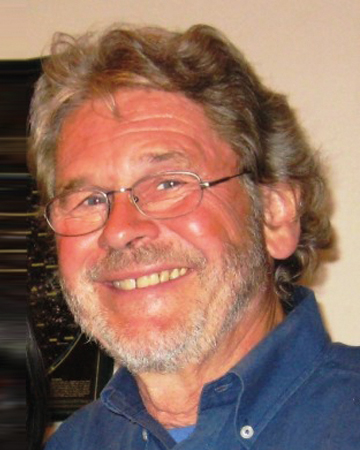
koenig-webPeter Koenig is an economist and geopolitical analyst. He is also a former World Bank staff and worked extensively around the world in the fields of environment and water resources. He lectures at universities in the US, Europe and South America. He writes regularly for Global Research, ICH, RT, Sputnik, PressTV, The 4th Media, TeleSUR, TruePublica, The Vineyard of The Saker Blog, and other internet sites. He is the author of Implosion – An Economic Thriller about War, Environmental Destruction and Corporate Greed – fiction based on facts and on 30 years of World Bank experience around the globe. He is also a co-author of The World Order and Revolution! – Essays from the Resistance.

Will Catalonia’s Fate Reverberate Through The European Union?

By Georgia Monaghan and Amy Maguire

Catalonia is claiming self-determination in the form of independence from Spain. This assertion of independence has implications for the integrity of the Spanish state. Unsurprisingly, Spain’s response has been resistant and repressive. The Catalan case also raises concern around Europe regarding the potential precedent effect for other secessionist movements. 


Catalonia’s Push for Self-determination

On 1 October 2017, the Catalan regional government held a referendum on independence. The referendum seemed to point to majority Catalonian support for self-determination in the form of secession from Spain. Forty per cent, or over two million eligible Catalans, voted, with 90% of voters supporting independence.

Yet the significance of this result is contested. The referendum was marred by violence and repression. Catalan emergency officials estimated that 761 Catalan civilians and 12 police were injured during the referendum, during which Spanish police forcibly obstructed voting and attacked civilians with batons and rubber bullets. The shocking scenes may have discouraged some Catalans from attempting to vote.

On the other hand, six of ten eligible Catalan voters abstained from participating in the referendum. An alternative reading of this low turnout is that many regarded the referendum as a stunt, and ignored it in preference to remaining within Spain.

The validity of the referendum has also been brought into question. The vote did not adhere to democratic conventions, such as the requirement for a minimum threshold of votes. Further, there have been accusations of voter fraud following evidence that some Catalans cast multiple votes.

Regardless, it is apparent that the Spanish state was determined to suppress the referendum, and Spanish authorities used excessive force to disrupt the vote. In defiance of Madrid, Catalan President Carles Puigdemont proceeded to declare independence on 19 October. The Spanish central government responded by stating its intention to invoke article 155 of the Constitution.1 That move, while unprecedented, would suspend Catalonia’s autonomy and give full governance power to the central authority in Madrid.

The Drive for Independence and Spain’s Response

For Puigdemont, the referendum signalled that Catalans

have sent a message to the world: we have the right to decide our future, we have the right to be free and we want to live in peace.2

Catalonia has historically maintained a distinct cultural and political identity from Spain. Many Catalans identify as Catalonian rather than Spanish. In a 2013 poll, the Catalan Center for Opinion Studies found that approximately 60% of Catalans felt distinctly separate from Spain and wanted independence.3 Catalans have maintained their culture, language and identity, despite pressure from Spain to integrate, especially during the Franco dictatorship.

Despite co-existing with Spain for centuries, Catalonia has retained autonomous control over various aspects of public life. The 1979 Statute of Autonomy, formed under the 1978 post-Franco Spanish Constitution, formalised this arrangement by permitting Catalonia devolved government in the areas of education, welfare and health care.

It is clear that Spain’s response to the 1 October referendum was not an isolated instance of state opposition to Catalonia’s secessionist movement.

It is arguable that recent efforts by Madrid to centralise control, curtail regional autonomy and capitalise on the strength of Catalonia’s economy gave renewed impetus to the Catalan separatist movement. For example, the state budget for Catalonia was reduced by 6.5% between 2003 and 2015, with 20% of Spain’s total GDP coming from Catalonia in 2015.4 Meanwhile, in 2010, the Spanish Constitutional Court struck down an expanded version of the Statute of Autonomy that gave Catalonia greater autonomy and granted it the title of a “nation”.5

In this context, it is clear that Spain’s response to the 1 October referendum was not an isolated instance of state opposition to Catalonia’s secessionist movement. Indeed, in March 2017, the then Catalan leader, Artur Mas, was found guilty of disobeying the Constitutional Court by holding a symbolic referendum in 2014. Mas was banned from holding public office for two years.

In response to the current referendum, Madrid has dissolved the Catalan government and sacked Puigdemont. Madrid claims that Puigdemont could run for re-election on 21 December. However, if Spanish prosecutors succeed in charging him with rebellion, an offence punishable with imprisonment, Puigdemont may not be free to run. The Court has already called for the arrest of two pro-independence leaders, Jordi Sanchez and Jordi Cuixart, for alleged sedition. Catalans have condemned Spain for taking “political prisoners”.

Madrid’s position is that the pro-independence leaders have overstepped the democratic boundaries of the constitution that permits Catalan autonomy within the Spanish state. Madrid argues that a unilateral vote of independence is at odds with the requirement for democratic participation of all Spaniards in decision-making regarding constitutional change. This was emphasised by a 2010 Constitutional Court decision, which upheld the “indissoluble unity of the Spanish nation”. The Constitutional Court has declared the 1 October referendum illegal.


Catalonia as a Potential Precedent

While Catalonia’s fate is uncertain, the future of the European Union (EU) is also in turmoil. EU member states are watching anxiously, fearing Catalan independence will inspire other separatist movements. This concern was apparent in the EU’s muted response to the voter intimidation and abuse meted out to Catalans by the Spanish police in October.

Puigdemont had called for the EU to help mediate the conflict between Spain and Catalonia. However, on 19 October, European Council President, Donald Tusk, ruled out any assistance from the EU in resolving the dispute. Leaders of the EU’s member states, such as Emmanuel Macron of France, declared the referendum illegal and promised support for Spain. Antonio Tajani, head of the European Parliament, further warned that “nobody in the European Union” would recognise Catalonia as a sovereign state if it declared independence.7

Meanwhile, though, a number of burgeoning secessionist movements throughout Europe are closely observing Catalonia’s efforts. Such movements include those in the Basque Country (which spans territory in northern Spain and south-western France), Bavaria (Germany), Scotland (United Kingdom), the Veneto and Lombardy regions (Italy), Corsica (France) and the Faroe Islands (Denmark).

Like Catalonia, many of these regions have distinct histories, culture and political identities. As Stefano Valdegamberi, deputy of the Veneto parliament, said in 2016, Venetians “have a very long history, very important history, identity, and they want it to be recognised”.8 Many of these regions also have a separate language.

Typically, as for Catalonia, dominant states have constructed constitutional frameworks that would invalidate any attempt to exercise self-determination through referenda or unilateral declarations of independence.

Further, many secessionist movements have gained impetus over the past decade following the 2008 global financial crisis. Some of the regions that are home to independence movements, like Catalonia, contribute disproportionately to their state’s GDP. They also economically supported the rest of the country through the financial crisis. For example, the Venetian independence movement argues that the rest of Italy’s debt weighs the Veneto down.

However, secessionist movements across Europe face significant obstacles. Typically, as for Catalonia, dominant states have constructed constitutional frameworks that would invalidate any attempt to exercise self-determination through referenda or unilateral declarations of independence.

One exception is the Faroe Islands, which are planning a valid independence referendum for April 2018. In contrast, the German Supreme Court confirmed in January this year that “there is no room under the constitution for individual states to attempt to secede”. Consequently, a Bavarian declaration of independence is unconstitutional under German law.9

In such circumstances, the onus is on the nation state to reach agreement with the secessionist entity and permit opportunities for the free and fair expression of popular views. This occurred between the United Kingdom and Scotland in the form of the Edinburgh Agreement, which permitted Scotland to undertake its 2014 independence referendum. This agreed solution bypassed the constitutional settings, which prohibit a unilateral declaration of independence by Scotland.

While the 2014 referendum did not deliver the necessary vote in favour of independence, Scottish First Minister Nicola Sturgeon regards the question of Scottish self-determination as live and continuing. Sturgeon has said that Catalonia’s agitation for independence and the advent of Brexit give impetus to the Scottish independence movement.10


Legal Considerations for Europe

As a collective right, self-determination empowers a group of people to “freely determine their political status and freely pursue their economic, social and cultural development”.11 In some cases, a self-determination claimant group will assert the right in the form of secession to form an independent state. The key obstacle in such a case will be resistance from the state that the new entity seeks to separate from.

In the awake of Catalonia’s referendum, it is clear that force and suppression are never the answer. Madrid’s repressive response will entrench opposition to the centralisation of power and generate social division.

Such efforts at secession can expose a failure of the nation-state model. As Bavaria Party Leader, Florian Weber, argued, “the larger the political unit, the less chance individuals have of being heard”.12 Where central governments fail in adequately promoting the aspirations of all citizens, especially those of regional minority groups with distinct identities, agitation for secession will sometimes result.

In order to deter secession, states might consider adopting more flexible constitutional arrangements, to promote rather than limit regional autonomy while also building a shared sense of belonging to the nation state. Such an outcome might be on the cards for Lombardy, which held an independence referendum on 22 October. Unlike Catalonia, the Italian region intends to remain within Italy and use the referendum outcome to leverage a better economic deal and greater autonomy from Rome.

In the wake of Catalonia’s referendum, it is clear that force and suppression are never the answer. Madrid’s repressive response will entrench opposition to the centralisation of power and generate social division. It is clear that negotiation and respect for the right to self-determination are essential to ensure a peaceful resolution.


Featured Image: Pro-independence supporters hold a European Union flag during a rally in Spain © Francisco Seco AP

About the Author

Georgia Monaghan has a Bachelor of Business (Distinction)/Bachelor of Laws (Hons Class I) from the University of Newcastle, Australia. Georgia is a Research Assistant in the University of Newcastle Law School, specialising in human rights law. Her interests include international human rights, ethical value chain governance (particularly in the area of ethical fashion) and international labour law.

Dr. Amy Maguire is a Senior Lecturer at the University of Newcastle Law School. Amy’s research and teaching span a range of topics in public international legal scholarship, including self-determination, climate change and human rights, indigenous rights, the rights of refugees, capital punishment and international criminal law. She is a featured columnist for The Conversation.


References

1. Spanish Constitution 1978.
2. https://www.theguardian.com/world/video/2017/oct/02/catalan-leader-opens-door-to-unilateral-declaration-of-independence-video
3. https://www.washingtonpost.com/news/monkey-cage/wp/2017/10/11/the-myth-of-massive-support-for-independence-in-catalonia/
4. http://www.bbc.com/news/world-europe-29478415
5. https://www.theatlantic.com/international/archive/2017/10/catalonia-referendum/541611/
6. https://www.bloomberg.com/news/articles/2017-10-18/political-prisoner-or-jailed-politician-it-s-catalan-feud-spin
7. https://www.usnews.com/news/business/articles/2017-10-19/the-latest-catalonia-threatens-to-declare-independence
8. https://www.rt.com/news/369576-veneto-italy-minority-bill/
9. https://www.washingtonpost.com/news/worldviews/wp/2017/01/04/a-german-court-has-shut-down-hopes-for-a-breakaway-bavaria/?utm_term=.2b2da2fa8ade
10. http://www.bbc.com/news/uk-scotland-scotland-politics-41550906
11. UN General Assembly, International Covenant on Civil and Political Rights, 16 December 1966, United Nations, Treaty Series, vol. 999; UN General Assembly, International Covenant on Economic, Social and Cultural Rights, 16 December 1966, United Nations, Treaty Series, vol. 993.
12. http://www.telegraph.co.uk/news/worldnews/europe/germany/11088451/Bavaria-Party-inspired-by-Scots-in-bid-for-German-secession.html

Lessons from a Bank-Free Investment: Peer to Peer Lending, Risks, and Returns

By Nicholas Read and Anthony Mahler

Bonus time is approaching for many executives. So what’s the best way to put that money to work for you? The options are myriad, but the rise of peer to peer lending presents an interesting new alternative. After 20 years investing in properties and learning how to use predictive software algorithms to place measured bets on the share market, Australian medical entrepreneur and armchair investor Anthony Mahler started investing in P2P lending platforms in 2016. This is what he learned after the first 12 months.


Peer to peer lending (P2P) allows investors to deploy capital in a broad suite of loan structures that previously only banks like https://instabank.no/lan-til-oppussing and large financial institutions could service. Various P2P lending internet platforms match the needs of borrowers and investors by giving them a way to deal directly with each other, thus eliminating the role of a bank. 

My involvement has been principally as an investor although I took the opportunity as a borrower on one occasion to check out how the other side of a platform operates. I experienced a degree of customer satisfaction that I’ve never experienced with a bank.

An interest in P2P lending was sparked when I was looking for an alternative passive investment not strongly correlated to equities or bonds. The idea of enjoying the fruits of a lender with regular interest payments being delivered without much work was very appealing. Until then, most of my wealth was achieved with hard work in running businesses and developing properties. Returns of 15-25% per annum were achievable but with much stress, hard work and risk.

Initially I had reservations. I was concerned about whether there was adequate regulation of the platforms, what level of risk existed for fraudulent losses, and the actual capital risk of the investments. I saw this new type of lending was poorly regulated or completely unchecked in some countries. For example, Ezubao in China allegedly defrauded investors of over $8 billion USD, and I didn’t want to become another statistic for amateur investing gone wrong.

I investigated further. My criteria for investment were: transparency of operations, financial strength of the platforms, website functionality, liquidity of investments, asset backing of loans, loss protections, diversification (loan types, geographic regions and currency) and returns.

My criteria for investment were: transparency of operations, financial strength of the platforms, website functionality, liquidity of investments, asset backing of loans, loss protections, diversification and returns.

I found many vendors in Australia’s burgeoning fintech industry, as well as in Europe. To diversify risk, I decided to spread my loans between players in both regions.

Most P2P lenders are also the loan originators. They seek investor capital to finance their loan books. Many types of loans are catered for by P2P lending and each have different appeal. For liquidity, I like investing in invoice financing and short term personal loans. For asset security, mortgages appealed to me, and to a lesser extent, car loans.

In Australia where I’m based more than half my time, my preferred P2P lender is MarketLend. They are a business loan provider that allows investors to participate in each loan individually. You can choose businesses to invest in based on their financials, size, market segment etc. The returns are based on risk of default, with net returns ranging from 9-18%. Some loans are insured by a third party insurer thereby largely eliminating default risk. The loans are generally on 6-12 month terms, which offers considerable liquidity.

There are other providers in Australia, including Society One, RateSetter, and Thin Cats. Each have different appeal. RateSetter is one of the fastest growing due to its risk minimising strategy. It funds a separate trust account from borrowers to provide for future losses. It has thereby prevented any loss to investors of its loans of over $100 million in Australia. The short term loan I took with RateSetter was easy to set up and quite competitive compared to bank loans.

Its parent company in the UK has been in operation for over a decade and has loaned over £800 billion without a penny of loss to investors. This is very impressive, though the safeties in place are reflected by a lower rate of return. Five year loans in Australia return approximately 9% p.a.

For global diversification I have invested funds in the Latvian based platform Mintos. This operates as a pure broker between investors and loan originators. It allows diversification of loan types and regions, but the loan security is dependent on the strength of the loan provider as well as the individual borrower. This is one of the platforms I learned to trust most of all.

The loans I have backed have been spread over various geographies, from Latvia to Spain, and a variety of loan types. Numerous loan originators on this platform take over all loans that age over 60 days, and absorb the default costs. This provides investors with great security on the actual returns they can expect to achieve.

Loan originators provide up to date financial information on the platform so investors can assess their financial strength. I have found Mintos to be wholly transparent about all loan information. As an investor you can download the entire loan book each day. Alternatively all loans are tabulated by originator, loan type and state of the loan. They have processed over 300 billion Euro in loans with only 60,000 Euro of bad debts. As you can loan as little as 10 Euro in any one loan it is easy to diversify risk of loss. My returns on their platform always range from 12-18%.

How have my investments fared over the past year? The spectrum of rates of return have been 10-18% with an average return of over 13% across all platforms and loan types. Two of my loans are in default (representing 0.25% of total loans made) but both are conservative leveraged mortgages so my absolute losses will be minimal.

I am very happy with these returns, because by nature I am risk averse. The vast majority of my loans are protected from default loss so my rates of return are lower than the absolute amount that can be achieved in P2P lending. I would tolerate a default rate of 1-3% per annum to achieve my 10% targetted return but at this stage it appears defaults will represent a fraction of this.

A strength I see in P2P lending is the ability to diversify investment capital away from the more volatile equity and tepid bond markets.

A strength I see in P2P lending is the ability to diversify investment capital away from the more volatile equity and tepid bond markets. Long term, I will limit these investments to 10% of my portfolio. Currently I invest approximately 20% of my assets in P2P lending as, having proven its safety and returns, I have become something of a bull. As the world catches up I expect rates of return to diminish. The relatively asymmetric risk/reward may only be on offer for the next few years.

Some risks I see in the P2P lending system include the fact that the industry is still new, and its rigour in a downwards economic cycle has yet to be tested. Also, outside of a few countries, regulatory frameworks aren’t yet sufficiently in place to patrol these services, which may create some risk. Diversifying across multiple platforms can reduce this.

If you missed the Internet boom and can’t get on the property ladder, you can make a start in P2P lending for as little at $10. Spread your risk around. Be consistent. Make your money work for you. Get a passive income for retirement. It could be a smart move for you as it has been for me.


Disclaimer: The author has active investments in Mintos and Marketlend and has previously borrowed money from RateSetter.

About the Author

Nicholas Read is a researcher and bestselling sales author, who was formerly Executive Director of Ernst & Young’s revenue growth advisory practice following a career in sales and management. His sales coaching methods have been deployed to more than 40 countries, helping clients win more than £20B more than forecast.

Anthony Mahler is Co-Founder of Omega Health in Australia, and has been investing in property, shares and alternative trading for 20 years.

Post 19th National Congress of CPC: China is Ready to Redefine the Global Economic Order

By Yu Xiong and Senmao Xia 

The shift in global leadership has been brewing for quite some time now. In this article, the authors elaborate on the UK-China partnership and how it has been working to balance the global economy. Ultimately, the authors illustrate how UK can aid China in redefining the global economic order.


In October 2017, the 19th National Congress of Communist Party of China (CPC) clarified China’s newest strategy of achieving a full modernisation by 2035 and becoming a global leading power by 2050. This congress once again stressed the importance of open and globalisation in realising China’s vision. In the same month, the US confirmed it will withdraw from United Nation Educational, Scientific and Cultural Organization (UNESCO) by the end of 2018. This is a newest move to show the US’s “America First” policy, after the US decided to pull out of Paris Climate Agreement in August and Trans-Pacific Partnership (TTP) in January this year. Many voices within the US strongly oppose globalisation as a lot of ordinary people find it hurt their interests. Some American politicians accuse other countries of free-riders as they think these countries benefit from globalisation but leave global responsibilities to the US. In recent years, the US pays more attention to its domestic issues and leaves more global responsibilities to other countries.

China contributed to around 30% of the global economic growth in the last five years, while the US’s contribution was less than 20%, according to the data of International Monetary Fund (IMF).

The world is experiencing a significant shift between two global powers. Although the US is still the largest economy, the gap between the US and China is diminishing rapidly. China contributed to around 30% of the global economic growth in the last five years, while the US’s contribution was less than 20%, according to the data of International Monetary Fund (IMF). When the US is concerned about globalisation, China spares no effort in contributing to globalisation. China’s president XI Jinping publicly welcomed all countries to ride on China’s development in his speech in World Economic Forum (WEF) in 2017.

Britain is a visionary country and was good at taking advantage of the shift of world economic orders in the last several hundred years, so is this time. In fact, UK has been trying to play an irreplaceable role in facilitating China to change the governing institutes of global economy, introduce a new global innovation-spillover pattern, as well as endorse the “created-in-China”.

With the strong support of Britain, China has been taking two approaches, or “walking on two legs” in a Chinese saying, to change global economic governing bodies. One traditional way is to gain more voice in traditional international institutes, such as IMF, World Bank (WB) and so on. The other newer approach is to push new global initiatives, e.g. One Belt One Road (OBOR), supported by China-led global institutions, such as, Asian Infrastructure Investment Bank (AIIB) and Silk Road Fund (SRF). To accelerate the internationalisation of China’s currency-RMB, UK not only pushes London to become the one of the biggest offshore centres for RMB, but also was the first major country to support RMB to join IMF’s Special Drawing Right (SDR). Further, although being regarded as the most closed ally with the US, who opposes AIIB, UK still determinedly became the first major western power to announce its participation to AIIB in 2015, which directly resulted more countries to follow. Also, UK actively supports OBOR while the US is still hesitated about its stance on the initiative proposed by China.

UK and China have been working to balance the global economy by introducing a new innovation-spillover path. UK owns top research capabilities in the world and has many prestigious research institutes. Nevertheless, the relatively limited domestic demand forces British companies to seek overseas emerging markets to further develop and commercialise the research outputs. At the same time, China owns the largest market in the world but needs more innovation to upgrade its domestic industries. UK-China technology and business collaboration will lead innovations and new products to first emerge in the Asia and Europe, which will enable more countries to participate in innovation and share the economic outputs. This is different from the old global innovation-spillover pattern where the US designs industrial standards and is usually the first market to commercialise innovation and launch new products, and then other countries gradually follow up. In this pattern, the US occupies the biggest share of the global economic cake. The new innovation-spillover path will enable China to accelerate its transfer from a factor-driven growth model to an innovation-driven one, which is important for China to overcome middle-income trap and maintain a long-term high growth rate. Meanwhile, it will help British research institutes gain more R&D funding, cultivate more world-level British companies.

UK-China technology and business collaboration will lead innovations and new products to first emerge in the Asia and Europe, which will enable more countries to participate in innovation and share the economic outputs.

In addition, UK has been acting as a gateway to endorse created-in-China, e.g. technological standards and brands, in global markets. Chinese economy is experiencing an upgrading from made-in-China to created-in-China. Recent years have witnessed more Chinese companies became global leaders in some industries, e.g. nuclear power and high-speed railway, but they still find it hard to be accepted by global markets, especially the western ones. Some experts attributed this to the disparate technological standards across countries and “historical prejudice”. Britain is not only renowned for its high threshold in the introduction of products & services, but also shares similar legal systems and technological standards with some western countries. Therefore, the endorsement of British market will be a springboard for the created-in-China to get the recognition by more overseas countries, especially the western markets. China’s national “going-out” strategy encourages Chinese investments to bring the created-in-China to overseas markets. In the period of Brexit, UK needs more foreign investments to boost its economy and further develop manufacturing industries, which is what China can offer. A recent case is the involvement of China Guangdong Nuclear Power Group in UK’s Hinkley Point power station programme.

In the period of Brexit, UK needs more foreign investments to boost its economy and further develop manufacturing industries, which is what China can offer.

UK would be the best partner of China in the West, said the former prime minister David Cameron. The present chancellor Philip Hammond calls China a natural partner of UK, especially in the post-Brexit era. In fact, the collaboration between UK and China is a win-win strategy. UK will get more leadership in the newly established global economic order, which will help Britain to keep and strengthen its global influence. At the same time, UK can share with China much wisdom in governing the global affairs, considering UK is one of the only two countries that have the experience of leading the world after the industrial revolution. Therefore, with the UK’s support, China will be more powerful to redefine the global economic order. UK-China’s ever more closed comprehensive collaboration, called golden age, has become a model for the rest of the world to follow, especially for those western countries who have not yet been clear on how to work with China and how to adapt to the upcoming new global economic order.

Featured Image:  The 19th National Congress of the Communist Party of China (CPC) October 18, at the Great Hall of the People in Beijing. © Photo/Xinhua

About the Authors

Professor Yu Xiong is the Chair of Technology and Operations Management in Newcastle Business School of Northumbria University. He has been advising the Department of Business, Energy and Industrial Strategies (BEIS) in the UK about innovation collaboration with China, via his role as a core member of the China UK Innovation Expert Group run by the BEIS. In China he was appointed to be a member of the International Affairs Committee, Chinese People’s Political Consultative Conference in Chongqing (Chinese provincial parliament). He is also a committee member of the All China Youth Federation, and win the prestigious May 4th Medal presented by Chongqing Government.

Dr. Senmao Xia, School of Leadership and Strategy, Faculty of Business and Law, Coventry University, Coventry, UK. He participated in several influential research projects funded by Department for Business, Energy & Industrial Strategy (BEIS, UK) and Ministry of Science and Technology (MoST, China). Senmao is a guest editor of Technovation (ABS 3*/SSCI/SCI) Special Issue and the anonymous reviewer of several high-quality journals.

China’s New Leadership: 2017-2022 Leaders, Grand Strategy and Policies

By Dan Steinbock

After the 19th Congress, Xi’s China is preparing for a new roadmap domestically and internationally. This is Dr. Dan Steinbock’s in-depth analysis of China’s critical changes that will shape the world economy until 2022 – and beyond.


As the 19th National Congress of the Chinese Communist Party (CPC) opened in Beijing, General Secretary Xi Jinping delivered a report about “building a moderately prosperous society” for a new era. In his speech, Xi offered a blueprint for China’s development for the next 5-15 years.

Afterwards, the Congress unveiled the new leadership team who will be ultimately accountable for Beijing’s evolving grand strategy and its execution that will shape China and the world in the next five years.


Leadership Transition: From 5th Generation to 6th Generation

China’s first leadership – from 1949 to mid-70s – featured Mao Zedong, his foreign affairs expert Zhou Enlai and half a dozen other core leaders. These were mainly Communist revolutionaries born around 1886 and 1907; that is, during an era of imperial disintegration, colonial divisions, and the nascent efforts at Chinese Republic.

The current Xi-Li Administration came to power at the 18th Party Congress in 2012. Most of these leaders were born around 1945-55 and educated at elite Chinese universities. They comprised fewer engineers but more managers and finance majors, including business executives. They grew up during the years of Cultural Revolution, but built their lives amid economic reforms and opening-up. They were more professional, share a more international outlook and remain determined to shape a new China for the 21st century.

Five years ago, Western media far too often portrayed the Xi-Li team as hard-core conservatives who would reject economic reforms. In contrast, I argued on CNBC in New York City that this was a gross misperception that reflected poor understanding of China’s actual past and potential future. “China,” I argued, “is moving toward liberal reforms, but such changes require tough hands.”

In 2012, China did not opt for leaders who had a reputation for rhetorical eloquence but poor performance. Instead, China’s new leadership featured tough doers who were known for getting things done. Such leaders are necessary to transcend entrenched interests and to move China toward the post-industrial society. That’s what the Xi-Li team initiated in the past half a decade and it is likely to complete by 2022. That is when the 6th generation will take over- Chinese leaders born in the 1960s and thus with no personal experience of the Cultural Revolution.

Half a decade ago, I argued on CNBC that the 2017 leadership would also consist of tough hands but ones that would be determined to achieve a more open and transparent China, with liberal market doctrines but socialist long-term objectives. And that’s precisely what hundreds of millions of Chinese TV viewers saw as Xi introduced the other six Standing Committee members at a press conference, which was broadcast live.

After three decades of dramatic industrialisation, Xi’s first team began the transition to post-industrial society in 2012, which his second team is likely to complete.

The address ensued after Xi’s name had been added to the Party constitution, which puts him on a part with late paramount leaders Mao Zedong and Deng Xiaoping. Indeed, each of these leaders exemplifies critical phases in China’s postwar history. It was Mao who made possible a sovereign China and peace that allowed the first efforts at industrial take-off. But China’s industrial revolution did not materialise until Deng took over in the 1980s. After three decades of dramatic industrialisation, Xi’s first team began the transition to post-industrial society in 2012, which his second team is likely to complete.

The full line-up of the new Politburo and its ultimate leadership Standing Committee includes Party General Secretary Xi Jinping (born in 1953), who accounts for China’s grand strategy, and Premier Li Keqiang (1955), an economist who did his PhD on the restructuring of Chinese big businesses and is exceptionally well-equipped to execute the impending reforms.

Who are the new Chinese leaders?


Wang Yang: Liberal Voice

Wang Yang (1955) is one of Li Keqiang’s four vice-premiers who is expected to become chairman of China’s top political advisory body, the People’s Political Consultative Conference. While Wang is perceived as one of the most “liberal” members of Chinese leaders, that’s only a part of the story. He grew up in an urban working-class family in Anhui, a landlocked, agricultural and poorer province in eastern China.

Starting as a food processing factory hand, Wang joined the CPC in 1975, served as an instructor in the local Party School and went on to study political economics in the Central Party School in 1979, right at the dawn of Deng Xiaoping’s economic reforms.

After the local Communist Youth League (CYL), he became deputy head of the National Development and Reform Commission (NDRC) in the late 1990s, deputy secretary general of the State Council in 2003-5, and Party Secretary in Chongqing. He began to modernise the megacity of more than 30 million people, and became Party Secretary of Guangdong, another critical stepping stone.

Credited with pioneering the Guangdong model of development, exemplified by private enterprise, economic growth and a greater role for civil society, Wang began to diversify Guangdong’s economy away from manufacturing already in 2007 to develop Shenzhen into an innovation hub for China’s new economy. He also became an outspoken critic of corruption and nepotism and went against the “princelings”; the prosperous descendants of early revolutionaries who had not earned their own wealth.

In the past half a decade, Wang has overseen several portfolios in the Li administration and often accompanied Xi and Li on trips abroad. Unlike many of his peers, Wang is known for offhand dry humor. During the 2013 US-China Dialogue, he compared the bilateral relations with a marriage. China and the United States should not “choose the path of a divorce,” he said adding, “like that of Wendy Deng and Rupert Murdoch, it is just too expensive.” Wang is among those Chinese leaders who could follow Xi or Li in the 2020s.


Zhanshu: Security and Foreign Affairs Specialist

Li Zhanshu (1950) is one of Xi’s right-hand men and his chief of staff. Well before the 19th Congress, Li stood a good chance of becoming chairman of China’s parliament, the National People’s Congress.

Like Xi and Wang, Li belongs to the generation that lived through the Cultural Revolution. In fact, his very name personifies the tragedy of his parents’ generation. Born in Hebei province, Li got his name from the phrase “a letter home from the battlefield” in remembrance of his uncle’s last letter before he was killed in 1949 while fighting the Nationalists. Another of his uncles who fought in the Chinese Civil War sufferred crippling injuries, while still another died in Japanese captivity. He also lost his grandfather during the Cultural Revolution.

As Director of the CCP’s General Office and the chief of its National Security Commission, Li is one of the key members of the Politburo. Like Wang, he joined the CPC in 1975. After studies in the night school, he was promoted to Party Secretary of Wuji County, while Xi Jinping served as party chief of the neighbouring county.

Li’s career took off fast in the provincial leadership and he became the Vice Governor of Heilongjiang in 2004. Regarded as a rising star, Li was elected to the Politburo in 2012. Li has also played a key role in foreign affairs. He facilitated a strong relationship between China and Russia. In 2015, Xi sent Li as his “special representative” to meet with President Putin in Moscow. Li would also pave the way to Xi’s meetings with other foreign guests, including the 2015 state visit to the US.


Zhao Leji: New Anti-Corruption Chief

Formerly head of the CPC’s organiSation department and its personnel chief, Zhao Leji (1957) will replace the smart and tough hands-on anti-corruption tsar Wang Qishan to become his successor as the head of the Central Commission for Discipline Inspection (CCDI).

Zhao has been a member of the CCP Politburo and its Central Committee Secretariat since 2012. He has also served in Xi’s important economic reform steering committee. Like Xi, Zhao went to the countryside to perform manual laboUr on a commune during the later years of the Cultural Revolution. He joined the Party in 1975, entered Peking University and studied philosophy until 1980 but moved to Quinghai School of Commerce to oversee the Communist Youth League (CLY) wing. Within the CPC, this branch has stressed not just growth but equity.

In the early 1990s, Zhao entered the provincial government and was elevated Party Secretary of his hometown Xining at only 42. A decade later, he became party chief of Qinghai, where his tenure was marked by rapid economic growth, even by Chinese standards. He also took a softer but smart approach on ethnic minority issues and environmentally-conscious investment projects.

As Zhao took over his parents’ home province Shaanxi, he oversaw dramatic economic growth that soared to 15 percent in 2008. By 2012, he became a member of the Central Committee and a candidate for promotion into the Standing Committee in 2017. Zhao’s appointment signals great trust in his capabilities. Xi expects much from China’s anti-corruption leader who must have great integrity, high execution ability and be untouchable.


Han Zheng: Shanghai’s Chief

Han Zheng (1954), the Shanghai party chief, will become the executive vice-premier. Born in Shanghai, Han was not sent to the countryside. He began his career as a warehouse labourer toward the end of the Cultural Revolution and joined the CPC in 1979

After serving as an administrator in a chemical equipment company and a municipal chemical engineering college, he oversaw the party organisation at the Shanghai Greater China Rubber Shoe Factory, and caught the eye of the then Shanghai mayor Zhu Rongji, the popular, tough and fearless, liberal CPC boss who would serve as China’s premier at the turn of the century. That’s when Han’s career took off.

Han served as Mayor of Shanghai from 2003 to 2012; a critical period of rapid growth, booming property markets, and the Expo coming out party. Thereafter he was promoted to Shanghai’s party secretary, the top political job in the city. As Han arrived after the dismissal of Chen Liangyu over corruption probes during the Shanghai pension scandal, he led the municipal task force to crack down on corruption. That’s also when Xi Jinping was sent to Shanghai in 2007 and the two got to know each other.

Han developed a mainly positive image in Shanghai for his openness and transparency, and for his modern and international outlook. If Beijing is a bit like Washington DC, the nation’s political centre, Shanghai is more like New York City, China’s global and financial hub, while Guangdong province is becoming known as the mainland’s Silicon Valley. All three are today so critical for China’s future that their CPC leaders are natural candidates to the Politburo and its Standing Committee.


Wang Huning: “Chinese Kissinger”

The Xi team will also include Wang Huning (1955), the CPC’s top party theorist and director of the Central Policy Research Office who is expected to be in charge of ideology, propaganda and party organisation. In the West, Wang has occasionally been portrayed as a stuffy party propagandist in the old Soviet style. Nothing could be further from the reality.

A born Shanghainese, Wang started his French studies in the mid-70s, but was soon enrolled in International Politics at Fudan University and began to conduct research for the Shanghai Academy of Social Sciences (SASS). In 1985, at just 30, he became the youngest law professor in Fudan’s history.

By the 1990s, Wang was noticed by Shanghai’s CPC leaders, while Chinese scholars got to know him through his textbooks, such as Logic of PoliticsAmerica against America, Introduction to New PoliticsAnalysis of Modern Western Politics, and Analysis of Comparative Politics.

In the CPC, Wang represents continuity and change. He is one of the key theorists behind the ideological stances of three administrations: the “Three Represents” by Jiang Zemin (which opened the CPC to more diverse constituencies, including business people); the “Scientific Development Concept” by Hun Jintao (which began the quest for greater balance amid income polarisation); and the “Chinese Dream” by Xi Jinping (which reflects the transition from poverty reduction to the emerging middle classes).

Moreover, Wang has served as Xi’s key foreign policy aide, particularly during his international trips, which has earned his nickname as “China’s Kissinger”.


Xu and Zhang: The Leaders of the World’s Largest Military

During the 19th Congress, the second vice-chairman Xu Qiliang was elevated to replace the retiring 70-year old Fan Changlong as the first chairman of the powerful Central Military Commission that oversees the military. He will be seconded by General Zhang Youxia, a long-time Xi ally.

Born in Shangdong province, Xu Qiliang (1950) comes from a military family, learned piloting in 1966 and joined the CPC a year later. As reforms took off, Xu became chief of staff at the Air Force Shanghai headquarters in the mid-80s. A decade later, he was promoted to chief of staff of the PLA Air Force. Today, he is vice chairman of the Central Military Commission.

In turn, Zhang Youxia (1950) is a general in the PLA and member of the Central Military Commission. A son of a military family as well, he is one of the few serving generals in China with war experience. He joined the army in 1968 at just 18 years. A decade later, he participated in the border clashes of 1979 between China and Vietnam, and the 1984 Battle of Battle of Vị Xuyên.

In 2011, Zhang was promoted to General. Before the 18th CPC Congress, the PLA leadership went through a wholesale re-shuffle, which led Zhang to director of the Equipment Development Department and a member of the Central Military Commission. He is Xi’s trusted ally and the two hope to create a more modern, professional and capable Chinese military.

Other Major Politburo Leaders 

There is also a select group of major CPC leaders who are members of the Politburo but not in the Standing Committee. Guangdong party chief Hu Chunhua, Xi’s possible successor, and the president’s protégé, Chongqing party chief Chen Miner will join the Politburo, which is one rank lower the Politburo Standing Committee.

Chen Min’er (1960) is one of the Party’s younger rising stars. He serves as the Party Secretary of Chongqing, after the ouster of his corrupt predecessor Sun Zhengcai. By 2002, he was on the provincial Party Standing Committee, and served as Vice Governor of Zhejiang in 2007-12, working under then-Zhejiang party secretary Xi Jinping. As Party Secretary of Guizhou since 2015, Chen has promoted Xi’s policies, including the fight against corruption. As Party Secretary of Chongqing, Chen can still make his mark in the next CPC Congress in 2022.

In 2012, Hu Chunhua (1963) was appointed Party Secretary in Guangdong where he became known as a low-profile but action-oriented leader. Emulating best practices of Hong Kong’s Independent Commission Against Corruption, Hu fought graft, while cracking down drug trafficking and prostitution. He is seen as one of the key leaders of the “sixth generation” in 2022.

It is these members of the Standing Committee and the Politburo that are expected to implement the new grand strategy and policies.

One of the most interesting names in the Central Committee is Liu He (1952), Xi Jinping’s trusted economic adviser. Despite his current ministerial-level rank, Liu’s international profile is higher than many other senior officials because of his close ties to Xi. In the 1990s he met Singapore’s strong man Lee Kuan Yew who told him to pay attention to urbanization. “It’ll change everything,” Lee said. “He was right,” adds Liu. A Harvard-trained economist, he is seen as the mastermind behind Xi’s macroeconomic policy. Liu has also accompanied the president on many of his overseas trips.

Another key name of the Central Committee is Yang Jiechi (1950), China’s former US ambassador, Foreign Minister and member of the inner circle of the State Council as director of the Foreign Affairs Leading Group. He is one of the key architects of China’s foreign policy.

Other major leaders include Ding Xuexiang (1962), one of Xi’s political aides who comes from Shanghai but followed Xi to Beijing, and journalist politician Wang Chen (1950), whose career moved from the People’s Daily to the State Council. With her trade union background, Sun Chunlan (1950) is one of China’s leading female CPC chiefs. Still others feature the party chief of Jiangsu province Li Qiang (1959); CPC Secretary of Tianjin Li Hongzhong (1956); current Minister of Supervision Yang Xiaodu (1953), who also plays a role in the anti-graft CCDI; the CPC chief of Xinjiang Chen Quanguo (1955) who has had a key role in fostering development while containing separatism.

In turn, Guo Shengkun (1954) is not only the current Minister of Public Security but also chief of Aluminum Corp. of China, a major state-owned enterprise. Huang Kunming (1956) serves as the deputy chief of CPC’s Propaganda Department. Coming from Zhejiang, Guo Jinlong (1955) has attracted attention as Xi’s close ally but also his use of social media and creative approaches to governance. Finally, Party Secretary of Liaoning Li Xi (1956) has served as alternate member of the CPC since 2007.

It is these members of the Standing Committee and the Politburo that are expected to implement the new grand strategy and policies.


Roadmap to Post-industrial China

In the 1980s, Deng Xiaoping launched the economic reforms and opening-up policies that created the foundation for Chinese revival. In the 1990s, Jiang Zemin’s “Three Represents” opened the Party to more people, including business people. In the 2000s, Hu Jintao’s “scientific development concept” sought to crystallise the key aspects of the quest for a harmonious society through development.

Nevertheless, these doctrines rested on the foundation of Deng’s legacy of industrialisation, which had first been ignited in Mao’s 1950s and re-ignited with the 1960s “Four Modernizations” in agriculture, industry, defence as well as science and technology. But it was only Deng’s tough execution that made those modernisations possible after the Cultural Revolution and its tumultuous aftermath – followed by economic reforms and opening-up policies.

So from the 1980s to the early 2010s, China’s growth rested on investment and net exports. That was China as the “world factory” of low costs and cheap prices. It was a world historical performance of double-digit growth. Yet, it would also be – toward the early 2010s – China of overcapacity and local debt; China that grew with foreign capital and domestic imitation, amid deep income polarisation and great damage to the environment.

It was when Xi Jinping and Li Keqiang took charge in the early 2010s, that the new transformation began with huge, pent-up force. With Xi as President and Li as Premier, a progressive transition would ensue. From Deng to Hu, Chinese policies built on industrialisation. In the Xi decade, these policies are driving transition to the post-industrial society.

In the Xi decade, development is not seen as a win-lose struggle between man and nature, but as a quest for an ecological civilisation that China promotes through the Paris Accord – with or without the Trump administration.

In the past half a decade, China has begun a massive rebalancing of the economy toward innovation and consumption. The new China is represented by rising costs and prices, but also by more indigenous innovation and premium domestic brands. It is China of supply-side reforms and restructuring, painful but necessary transitions across industry sectors and geographic regions, particularly in the Northeast’s “Rust Belt”. It is China where excessive debt is no longer sanctioned and where deleveraging has begun.

That highlights the importance of the rule of law, and the struggle against corruption by both “tigers and flies”; the only effective way to put people first. Internationally, “sinologists” have tried to attribute the anti-graft struggle to political consolidation, as if the goals had more to do with political posturing than ordinary Chinese welfare. That is a misperception. China is decisively moving toward the rule of law, via its anti-corruption struggle.

In the Xi decade, development is not seen as a win-lose struggle between man and nature, but as a quest for an ecological civilisation that China promotes through the Paris Accord – with or without the Trump administration.

In the new China, prosperity is no longer seen as the conspicuous privilege of few, but as the moderate goal for many. It is a nation in which the Chinese Dream means a moderately prosperous society and the eradication of poverty. The new China is a strong sovereign state that will never again allow internal disintegration or foreign intrusions.

In Xi’s China, direct investment is no longer a foreign monopoly. Now Chinese capital is moving across borders and contributing to modernisation not just in China and emerging Asia – but increasingly across the world.


From Growth to Social Equity and Environmental Protection

The 19th CPC Congress will complete China’s transition from industrialisation to post-industrial society. In his report, President Xi set the tone for the party’s medium-term policy agenda. In this view, China has entered the “new normal” of the international environment with its “uneven and inadequate development” at odds with “people’s ever-growing demand for a better life”.

New policies must address this contradiction, with greater economic policy focus on quality and equality of development than before. In the past, development translated to economic growth. Today, the deceleration of economic growth goes hand in hand with greater investments in social equity. That means broader and less uneven coverage of pension and health care insurance nationwide; basic public services; rejuvenation of rural areas through land and fiscal reforms; appropriate scaling of farming operations, increased spending on high school education and vocational training; more affordable housing; and extended rural land leases.

In view of macroeconomic policy objectives, this medium-term agenda rests on what might be called Xi’s axiom: “Development is the foundation and key to addressing all problems.” These goals include the target to achieve “a moderately prosperous society” by 2020, which rests on the doubling of GDP per capita between 2010 and 2020. This is no longer a dream but the reality, if China’s growth remains around 6.8-6.3 percent until the end of the 2010s – in other words, despite growth deceleration that is typical of post-industrialisation.

Xi’s blueprint suggests that environmental protection will become as important as economic growth in the coming years. That means development of new technologies in green manufacturing and clean energy; cleaning up air, water and soil pollution; developing green finance; emissions-reduction per targets; the establishment of a new national natural resource management and ecological supervision agency, plus tighter environmental rules, and accordingly deeper impact on certain key sectors and companies.


China as Responsible International Stakeholder

Internationally, the new China promotes more inclusive global governance creating institutions that look more like the world they pledge to serve.

If the US-led Bretton Woods, Marshall Plan and North American Treaty Organization (NATO) defined the divisions of the Cold War; China promotes international cooperation, assistance and peaceful development in the 21st century. While Washington made its economic aid conditional to membership or support of the NATO, Beijing does not require membership in the Shanghai Cooperation Organization (SCO) as a precondition to participation in Beijing-led international initiatives.

Today, globalisation proceeds through the One Belt and One Road (OBOR) initiative, supported by the BRICS New Development Bank (NDB) and the Asian Infrastructure Investment Bank (AIIB); multilateral development banks that represent the interests of emerging and developing nations – not just those of advanced economies.

The progress has been stunning. In 1980, Chinese GDP per capita, adjusted to purchasing parity, was barely 2.5 percent of the US per capita income. When Xi became CCP’s General Secretary in 2012, Chinese per capita income had increased tenfold to 23 percent of the US per capita income.

China will be also ever closer to the new milestone; the moment when the size of China’s economy will surpass that of the United States and the consequences will reverberate across the globe.

As the new Xi roadmap will be executed across China, per capita income could climb to 35 percent of the US per capita income in 2022. In relative terms, that corresponds to US living standards in the early 1990s and those in Western Europe in late 90s. In advanced economies, such progress took two centuries; in China, just four decades.

At the end of the new leadership’s mandate in the early 2020s, China will be also ever closer to the new milestone; the moment when the size of China’s economy will surpass that of the United States – just as the US once left behind British Empire in the late 19th century – and the consequences will reverberate across the globe.

That’s the China Xi envisioned in his long speech at the 19th Party Congress. That’s his Chinese Dream – one that we all will know better by the early 2020s.


Featured Image: China’s President Xi Jinping (C) and other new Politburo Standing Committee members (L-R) Wang Huning, Li Zhanshu, Han Zheng, Li Keqiang, Wang Yang and Zhao Leji attend a meeting with the media at the Great Hall of the People in Beijing, China October 25, 2017. © REUTERS

About the Author

Dr. Dan Steinbock is Guest Fellow of Shanghai Institutes for International Studies (SIIS), see http://en.siis.org.cn/. The commentary is part of his SIIS project “China in the Era of Economic Uncertainty and Geopolitical Risk”. For his global advisory activities and other affiliations in the US and Europe, see http://www.differencegroup.net/

The Iran Dilemma – The Tyrant Has Spoken

By Peter Koenig


The tyrant, of course, is Donald Trump. He launched tirade after tirade, and keeps launching them, insult after insult, lies after lies after miserable lies at the Government of Iran – about Iran not fulfilling the conditions of the Nuclear Deal. The typical mass indoctrination of the western world through the presstitute mainstream media. Goebbels might smile in his grave, how well the neolibs or neo-Nazis have learned from the Nazis of his time – and perfected this science of deceit in the last 50 years. Fortunately, the counter culture, the truth seekers have also become more sophisticated. More people are waking up to the truth every day.

This Nuclear Deal was an agreement reached after 9 years of meticulous, often perilous and at times for Iran demeaning and offending negotiations. But Iran endured, because Iran’s negotiators, notably the Foreign Minister Javad Zarif, knew what they were talking about, namely that Iran had never any plans to develop nuclear weapons, but using the enrichment process for the production of nuclear power. This was, by the way, confirmed by all 16 US security agencies. To no avail. The media all but ignored it. The announcement received little coverage by the MSM and was soon shoved under the carpet by the massive wester lie-propaganda.

Iran knew that justice was on her side – the agreement concluded in Vienna, Austria, on 14 July 2015 between the 5 + 1 (the five permanent members of the UN Security Council, China, France, Russia, UK, the United States plus German), as well as the European Union with the so called Joint Comprehensive Plan of Action (JCPOA). Of course, this was under Obama’s Presidency, and Obama was not as friendly to Netanyahu as is Trump, who is through his family closely interlinked with the Master Zionist of the Zionists, Mr. Bibi Netanyahu.

President Trump wants to cancel the Nuclear Deal. He has said this from the very beginning of his Presidency. And lately he started new outbursts of false accusations against Iran. Now that the entire world is against him, wanting to adhere to the nuclear agreement, including some Republican members of Congress – all of the five signatories, even the otherwise vassal EU, they all say that Iran is fully complying with the agreement, and they will stick to the deal. The International Atomic Energy Agency (IAEA) in Vienna has also confirmed that Iran is fully compliant with the rules of the terms of the accord.

Since it is now difficult for Mr. Trump or any of his handlers to pretend that Iran has failed the agreement, Trump has changed his language. He, and some of his most ridiculous stooges say now that Iran is infringing on the “spirit” of the agreement, as if Trump even knew what spirit and spirituality means.

The only National Security Threat to virtually ALL the nations of the globe, minus Israel, is the only rogue state we know – the United States of America.

He, the tyrant, keeps insulting and hammering down on the Government of Iran all the same – spreading lies which even Iran’s enemies know are lies: Iran is spreading and funding terrorism in the region, and the world, they are [military] threat to the region – and they are even a “National Security Threat” – 12,000 km away from Washington. Imagine, one of the most peaceful countries in the world. The only National Security Threat to virtually ALL the nations of the globe, minus Israel, is the only rogue state we know – the United States of America.

So, for now The Donald has retracted from his strong statement of cancelling the Nuclear Deal and said simply he will not “certify” it, whatever that means. Because “cancelling” by the US alone is simply another outrageous arrogance of Washington’s. The US is a mere signatory among 5+1 and the EU. So, cancelling is legally impossible. For now, he has relegated the “Issue” – the Trump problem, that is – to Congress to come up with a solution – i.e. more sanctions on Iran or – else?

Iran is beyond sanctions. Iran is already part of the new economic system – the one emanating from the Shanghai Cooperation Organization (SCO), led by China and Russia, and detached from the dollar hegemony. Therefore, slandering Iran, threatening Iran with war and sanctions or both, is one big bluff – and Trump, Netanyahu’s puddle, believe the world will go for it.

More likely, Trump’s handlers want the Donald to create more confusion, spread chaos. Since the Iran “issue” was delegated to Congress to handle, Trump is again verbally firebombing North Korea, threats after threats. And dangerously provoking military games on DPRK’s sea and land borders. More sanctions are not enough, because by now everybody knows they don’t work. How can Washington impose sanctions on China and at the same time hope China will uphold the sanctions the US is imposing on the DPRK? North Korea’s economy is tied at the tune of 90% to China. Not to mention that “sanctions” – by now the hearing or reading of the mere term is laughable – imposed on China and Russia are totally meaningless, useless, toothless.

Both countries are trading with the world since quite a while outside of the fiat dollar system, using instead yuans and rubles convertible into gold. That’s the new currency standard offered to the world. The west can take it or leave it. It’s like jumping on the fast train that has already left the Shanghai station, racing through Eurasia towards Europe, called the OBI – the One Belt Initiative, President Xi’s answer to the western economy of fraud, that will lay the tracks for a new and peaceful economy, possibly for the next few hundred years. I have said it many times before, and will keep repeating it, the future is in the east; the west is passé. It is committing suicide, greed, war and lie-driven auto-destruction. Iran, India, Pakistan are already members of the SCO, others, including NATO Turkey, are vying to join and be no longer vulnerable to US imposed sanctions and sledgehammer policies.

How can Washington impose sanctions on China and at the same time hope China will uphold the sanctions the US is imposing on the DPRK?

Even far-away Venezuela has decided to trade her hydrocarbon resources with China in gold-convertible yuans. Hence, Venezuela is detaching herself from the dollar economy, freeing herself from the financial and economic shackles of Wall street, the FED and the Bretton Woods Institutions. Venezuela is a beacon illuminating a new economy for South America, as well as an example of a solid democracy, as demonstrated by this past weekend’s regional fully transparent elections to elect governors and state legislators – a new path to follow by other Latin American countries, who are still enslaved and trampled by the dictate of Washington.

So – why is Trump letting off his steam, showing off in such ridiculous brinkmanship? A piece of theatre for a public that is afraid to see the light? – Outbreaks of aggressive rants against Iran, North Korea, Syria, Venezuela and lately again Cuba – who is next? It’s like a dance of death – a final ritual that may end up in total nuclear annihilation or implode by its own weight, because those deep dark forces behind The Trump love life too much to let it be destroyed by their overdose of thrill.

Photo Source: http://edition.cnn.com/2017/10/11/politics/iran-trump-reliability-north-korea/index.html 

About the Author

koenig-webPeter Koenig is an economist and geopolitical analyst. He is also a former World Bank staff and worked extensively around the world in the fields of environment and water resources. He lectures at universities in the US, Europe and South America. He writes regularly for Global Research, ICH, RT, Sputnik, PressTV, The 4th Media, TeleSUR, TruePublica, The Vineyard of The Saker Blog, and other internet sites. He is the author of Implosion – An Economic Thriller about War, Environmental Destruction and Corporate Greed – fiction based on facts and on 30 years of World Bank experience around the globe. He is also a co-author of The World Order and Revolution! – Essays from the Resistance.
Who Will Be the Next Fed Chief – And Why It Matters

By Dan Steinbock

Janet Yellen’s term is ending at the Federal Reserve. With new appointments, President Trump can indirectly shape US monetary policy for years to come – for better or worse. 


Serving as the “epitome of calm”, Fed chief Ben Bernanke responded to the global financial crisis by cutting the federal funds rate to zero and initiating rounds of quantitative easing (QE) soon thereafter.

When Janet Yellen replaced Bernanke in 2014, US economy had begun the exit from zero-interest-policy-rates (ZIRP) but not balance sheet normalisation.

As Yellen’s term will end on February 2018, President Trump will soon select the next Fed chief and several new members of the Fed Board. Consequently, Trump will indirectly shape US monetary policies for years to come.

Not surprisingly, Trump has been assisted by Vice President Mike Pence, who has met with outside advisers – including Heritage Foundation economist Steve Moore, conservative economist Larry Kudlow and former President Ronald Reagan economic adviser Art Laffer – to assess the criteria for the next Fed leader.

Trump’s current shortlist features half a dozen viable candidates. In line with his “America First” approach, Trump is likely to ignore the international implications of the next Fed chief. Nor has he any interest in the Phillips curve that has influenced Yellen’s monetary stance.

Instead, Trump is likely to choose a candidate that will not prove too independent and who will prioritise Main Street, not Wall Street – and one that will support his proposed fiscal expansion.


Monetary Hawks

The Fed has a dual mandate to maintain stable prices and full employment. Monetary “hawks” tend to stress prices at the expense of jobs, whereas “doves” tend to focus on jobs at the expense of prices.

Both Yellen and Bernanke are academic experts of the Great Depression. As a Keynesian economist and monetary dove, Yellen has been cautious with the pace of normalisation. The Fed shortlist features several Wall Street insiders who have been seen as frontrunners. Such assessments underestimate Trump’s suspicions about Wall Street.

Kevin Warsh is a “hard money hawk” with close ties to Wall Street. Married with the $2 billion heiress Jane Lauder, his father-in-law is Ronald Lauder, a longtime friend of Trump. After serving as Morgan Stanley’s M&A executive, Warsh was President Bush’s director of the National Economic Council. At just 35 years old, he became the youngest appointment in the Fed.

Like Greenspan, Warsh is an ultimate free-market advocate. In 2007, less than a year before the rescue of Bear Stearns, he argued that financial innovation made the system safer. During and after the 2008 crisis, Warsh served as a governor of the Fed and its primary liaison to Wall Street. As US economy fell into deflation, he kept predicting that inflation would rise.

If Warsh is a monetary hawk, Taylor is a monetary conservative.

More recently, Trump met Stanford’s John B. Taylor, an accomplished academic of monetary economics. Taylor believes that the global crisis was caused by flawed macroeconomic policies in the US and elsewhere. Under Alan Greenspan, the Fed created “monetary excesses”. Interest rates were kept too low for too long, which led to the housing boom.

Unlike Bernanke and Yellen, Taylor has long cautioned the Fed should move away from quantitative easing measures and opt for a more stable monetary policy. If Warsh is a monetary hawk, Taylor is a monetary conservative.

Gary Cohn is Trump’s Director of the National Economic Council and his chief economic advisor. Unlike Warsh and Powell, Cohn is a registered Democrat. As former president and COO of Goldman Sachs, he is considered aggressive and arrogant. But unlike his rivals, he supports reinstating the Glass-Steagall legislation, which would separate commercial and investment banking.

Monetary Doves

After law school, Fed governor Jerome Powell worked as an associate for an investment bank and private equity giant Carlyle Group. He served as an assistant secretary and undersecretary of the Treasury under President George H.W. Bush.

Unlike his rivals, Powell is not a PhD-trained economist, but his grasp of monetary economics is highly regarded. He has solid Republican credentials and is seen to represent institutional continuity. He is believed to be Treasury Secretary Steven Mnuchin’s preferred candidate and Trump’s current favourite. Unlike Warsh or Taylor, Powell believes in a more dovish monetary stance.

Trump could also opt for the incumbent Fed chief Janet Yellen. While in the past he has criticised some of Yellen’s actions and her Democratic legacies, he has also announced that he is a “low interest rate person” like Yellen.

Job growth is no longer accompanied with wage growth.

Yellen continues to believe in the modern Phillips curve, which sees an inverse relationship between unemployment and inflation. Historically, a short-run trade-off between unemployment and inflation reflected the postwar Keynesian era when rates climbed from 2% in the 1950s peaking at 20% in early 80s. In the past three decades, rates have shrunk to zero, however.

In light of the Phillips curve, decreased unemployment should go hand in hand with higher rates of inflation. Since unemployment rate is only 4.2%; that should translate to rising inflation. Yet, that has not been the case. Job growth is no longer accompanied with wage growth.


Fiscal Expansion vs Fed’s Normalisation

In his Crippled America (2015), Trump argued that “our airports, bridges, water tunnels, power grids, rail systems; our nation’s entire infrastructure is crumbling, and we aren’t doing anything about it”. As a result, fiscal expansion – a $1 trillion dollar infrastructure plan – is a central tenet of the Trump agenda.

To raise capital, Trump has hoped to create an infrastructure fund supported by government bonds, similar to “Build America Bonds”.

When Trump first developed his infrastructure plan, interest rates were close to zero. But as the Fed is normalising – about to hike up the rates and exiting from quantitative easing – the plan will be a lot more expensive to execute.

“If we raise interest rates and if the dollar starts getting too strong, we’re going to have some major problems”, Trump warned already in summer 2016. That is now the reality. He can no longer rely on the Fed to ease and thus to monetise the debt issuance. Conversely, aggressive infrastructure modernisation could slow rate increases, or keep them lower.

Moreover, the Fed’s rate hikes tend to strengthen the dollar, while Trump’s debt tsunami would weaken it. Despite the rhetoric of normalisation and strong dollar, Trump needs low rates and weak dollar, while the Fed is raising rates and boosting the dollar.


The Role of Equities and Bond Yields

Trump cannot mitigate the realities of normalisation, but he can slow its pace by selecting a monetary dove. In this view, neither Warsh nor Taylor will do. The former would make Trump’s fiscal expansion prohibitively costly; the latter’s penchant for conservative stability would undermine infrastructure debt-taking.

That leaves Cohn, Powell and Yellen. However, Cohn and Yellen are Democrats, Powell is not.

After a September report that Trump had met with Warsh, stocks fell slightly before recovering, while Treasury bonds saw a significant sell-off and yields rose. It was foretaste of the kind of yield pricing that would undermine Trump’s fiscal expansion.

From the White House’s standpoint, a monetary hawk would hurt equities while boosting bond yields. In this view, the appointment of Powell – or even Yellen – would mean continuity, support equities while keeping bond yields low (Figure 1).


Figure 1: Rates, Normalisation and Successor Trajectories


That would be in line with Trump’s fiscal plans.


Featured Image: Janet Yellen with the former Fed chairs Ben Bernanke, center, and Paul Volcker. Donald Trump said he would most likely replace her as Fed chairwoman if he became president. © Andrew Renneisen/Getty Images

About the Author

dan-steinbock-webDan Steinbock is the founder of the Difference Group and has served as the research director at the India, China, and America Institute (USA) and a visiting fellow at the Shanghai Institutes for International Studies (China) and the EU Center (Singapore). For more information, see http://www.differencegroup.net/

Living the Intelligent Life by The World Financial Review

Supercalifragilisticexpialidocious! Keep it light. Take time to read. #LivingTheIntelligentLife

Get a chance to receive a FREE digital subscription of TWFR for a year! Like, Comment and Share on our FB Page or below!

How To Fight Corruption in the Philippines

Interview with Dr. Dan Steinbock

Despite opposition, President Duterte’s Anti-Corruption Commission is vital in light of Philippine history and international experience. To be effective, the anti-corruption agency must be independent.


On October 4, President Duterte signed Executive Order 4 creating the Presidential Anti-Corruption Commission (PACC). The Commission is mandated “to directly assist the President in investigating and/or hearing administrative cases primarily involving graft and or corruption against all presidential appointees.”

Opposition has renounced the PACC as “unconstitutional”, “redundant” and “afflicted with congenital infirmity.” While some critics have expressed legitimate concerns, others may have a more self-interested agenda.

The fact remains that the Philippines ranks 101st in the current Corruption Perceptions Index (CPI); well behind China, India and Indonesia.

Yet, the fact remains that the Philippines ranks 101st in the current Corruption Perceptions Index (CPI); well behind China, India and Indonesia. Clearly, there is a reason for a strong and different anti-corruption initiative. The former is critical for effectiveness; the latter is vital because other efforts have failed.

In light of historical and international evidence, the effort to raise living standards in the Philippines is not viable without a broad and deep anti-corruption initiative.


Historical Realities

When the Ramos era ended in the late 1990s, average Philippine per capita income was about $3,100, which meant 112th rank in the world.  In the corruption index, its score (3.3) was one of the lowest worldwide.

During the Estrada rule, per capita income grew to $3,600 but, after a hopeful start, the country fell further in the Index. In the Arroyo era, per capita income climbed to more than $5,500 but corruption remained widespread and got worse in the subsequent political turmoil.

In 2010, President Aquino began his term with a stated anti-corruption campaign. Barely three years later, the Inquirer cited his speech at the World Economic Forum: “Anti-corruption program [is] now bearing fruits.” In May 2016 – at the eve of the presidential election – the Rappler headlined: “PH anti-corruption drive most improved,” relying on consultant experience of 16 countries.

Yet, in light of the global corruption index, Aquino’s mid-term showed only slight improvement as the Index initially climbed to the Estrada-era level, only to fall further back at Ramos-era figures. So after two decades and much talk about progress, the Philippines corruption score was where it had been in the late 1990s – as if nothing had happened (see Figure).

Corruption moved to an entirely new level as drugs proliferated from shantytowns to chic clubs as the Philippines became a transshipment hub for drug syndicates operating in East Asia and cooperating with Mexico’s Sinaloa cartel.

If anything, corruption moved to an entirely new level as drugs proliferated from shantytowns to chic clubs as the Philippines became a transshipment hub for drug syndicates operating in East Asia and cooperating with Mexico’s Sinaloa cartel. When Duterte warned about the coming of a “narco-state” during his campaign, that was bypassed as political propaganda until abundant evidence became available about the spread of narco-money.

Corruption, poverty, illicit finance and bribery tend to go hand in hand.

Figure. Corruption and Slow Progress in Per Capita Incomes

International Experience

Today, Singapore is one of the world’s most attractive destinations, clean and wealthy, known for its strict rule of law.  Yet, in the postwar era, corruption was rampant in the city-state.

In 1952, the British colonial government created the Corrupt Practices Investigation Bureau (CPIB) at the Attorney-General’s Chambers. Yet, not much happened until Singapore attained self-government in 1959, when Prime Minister Lee Kuan Yew moved the CPIB into his office so that it would be independent from the police force and other government agencies.

Today, Singapore ranks 5th in the global corruption index; well ahead of Canada, Germany, and the UK.

Hong Kong learned from Singapore. In the 1970s, it was still widely considered one of the most corrupt cities in the world.  Reforms came only after huge protests, which led to the launch of the Independent Commission Against Corruption (ICAC), with wide investigative and executive powers and answerable to only the Governor Hong Kong, unlike the old police Anti-Corruption Branch.

Today Hong Kong is 15th in the corruption index; before Japan, US and France.

Upon taking office in the early 2010s, China’s President Xi Jinping pledged to crack down on “tigers and flies.” The anti-corruption campaign has been executed largely under the direction of Central Commission for Discipline Inspection (CCDI), and its smart and tough secretary Wang Qishan, along with corresponding judicial and military bodies. The CCDI has gone after both high-level officials and lower-level civil servants; from former military leaders, such as Xu Caihou and Guo Boxiong, and former politburo member Zhou Yongkang to Chongqing’s former party chief Bo Xilai.

As of 2016, the Chinese campaign had ‘netted’ over 120 high-ranking officials, including about a dozen high-ranking military officers, several senior executives of state-owned companies, and five national leaders.


The Lessons

Ordinary people appreciate anti-corruption initiatives. Today, one of the most popular TV dramas in China is “In the Name of People.” Its plot revolves around a prosecutor’s effort to unearth corruption in a present-day fictional Chinese city.

But there are other common denominators in successful anti-graft campaigns. In each case – Singapore, Hong Kong and China – many talked a lot about corruption. Yet, anti-corruption struggle became effective only when leaders executed a truly independent campaign against graft.

In each case, critics initially accused the anti-corruption campaign for political purges, personal vendettas and economic destabilization. In reality, the latter often proved to be a pretext for an effort by corrupt officials not to get caught and to retain looted funds and illicit economic privileges.

In each case, too, not much success was achieved until truly untouchable officials took charge of the campaign, while reporting directly and only to the nation’s leader.

The Philippines is no different. After two decades of anti-graft rhetoric, an effective initiative requires independent leadership that must target both “tigers and flies,”” and report directly to the country’s chief executive.

In the long-term, corruption, left unpunished, will doom all branches of government, including state, society and church, even police and military – as evidenced by the recent Philippines history as well.
In the long-term, corruption, left unpunished, will doom all branches of government, including state, society and church, even police and military – as evidenced by the recent Philippines history as well.

What the Philippines needs is a tough but humane, independent but responsive, broad but deep anti-corruption initiative. Without such a campaign, even rapid growth will only mean polarization and poverty to most Filipinos.

The original commentary was released by The Manila Times on October 9, 2017

Featured Image: President Rodrigo Roa Duterte presides over the 19th Cabinet Meeting in Malacañan Palace on October 4, 2017. KARL NORMAN ALONZO/PRESIDENTIAL PHOTO

About the Author

dan-steinbock-webDan Steinbock is the founder of the Difference Group and has served as the research director at the India, China, and America Institute (USA) and a visiting fellow at the Shanghai Institutes for International Studies (China) and the EU Center (Singapore). For more information, see http://www.differencegroup.net/

The Trump-Goldman Sachs Tax Cut for the Rich

By Jack Rasmus

It seems that one of the agenda of the Trump administration is to make sure that the rich keeps getting richer, the poor stays where they are, while the middle class joins the latter. This is what the Trump-Goldman Sachs Tax Cut will ensure through the redistribution of wealth from the masses to the rich. Dr. Jack Rasmus’ analysis is a must read.


Trump has introduced his long awaited Tax Cut, estimated between $2.0 to $2.4 trillion. Like so many other distortions of the truth, Trump claimed his plan would benefit the middle class, not the rich – the latest in a long litany of lies by this president.

Contradicting Trump, the independent Tax Policy Center has estimated in just the first year half of the $2 trillion plus Trump cuts will go to the wealthiest 1% households that annually earn more than $730,000. That’s an immediate income windfall to the wealthiest 1% households of 8.5%, according to the Tax Policy Center. But that’s only in the first of ten years the cuts will be in effect. It gets worse over time.

According to the Tax Policy Center, “Taxpayers in the top one percent (incomes above $730,000), would receive about 50 percent of the total tax benefit [in 2018].” However, “By 2027, the top one percent would get 80 percent of the plan’s tax cuts while the share for middle-income households would drop to about five percent.”

By the last year of the cuts, 2027, on average the wealthiest 1% household would realise $207,000, and the even wealthier 0.1% would realise an income gain of $1,022,000.

When confronted with these facts on national TV this past Sunday, Trump’s Treasury Secretary, Steve Mnuchin, quickly backtracked and admitted he could not guarantee every middle class family would see a tax cut. Right. That’s because 15-17 million (12%) of US taxpaying households in the US will face a tax hike in the first year of the cuts. In the tenth and last year, “one in four middle class families would end up with higher taxes”.
The US Economic Troika

The Trump Plan is actually the product of the former Goldman-Sachs investment bankers who have been in charge of Trump’s economic policy since he came into office. Steve Mnuchin, the Treasury Secretary, and Gary Cohn, director of Trump’s economic council, are the two authors of the Trump tax cuts. They put it together. They are also both former top executives of the global shadow bank called Goldman Sachs. Together with the other key office determining US economic policy, the US central bank, held by yet another ex-Goldman Sachs senior exec, Bill Dudley, president of the New York Federal Reserve bank, the Goldman-Sachs trio of Mnuchin-Cohn-Dudley constitute what might be called the “US Troika” for domestic economic policy.

The Trump tax proposal is therefore really a big bankers tax plan – authored by bankers, in the interest of bankers and financial investors (like Trump himself), and overwhelmingly favouring the wealthiest 1%.

Given that economic policy under Trump is being driven by bankers, it’s not surprising that the CEO of the biggest US banks, Morgan Stanley, admitted just a few months ago that a reduction of the corporate nominal income tax rate from the current 35% nominal rate to a new nominal rate of 20% will provide the bank an immediate windfall gain of 15%-20% in earnings. And that’s just the nominal corporate rate cut proposed by Trump. With loopholes, it’s no doubt more.


The Trump-Troika’s Triple Tax-Cut Trifecta for the 1%

That’s because 15-17 million (12%) of US taxpaying households in the US will face a tax hike in the first year of the cuts. In the tenth and last year, “one in four middle class families would end up with higher taxes”.

The Trump-Troika has indicated it hopes to package up and deliver the trillions of $ to their 1% friends by Christmas 2017. Their gift will consist of three major tax cuts for the rich and their businesses. A Trump-Troika Ta Cut “Trifecta” of $ trillions.

1.The Corporate Tax Cuts

The first of the three main elements is a big cut in the corporate income tax nominal rate, from current 35% to 20%. In addition, there’s the elimination of what is called the “territorial tax system, which is just a fancy phrase for ending the fiction of the foreign profits tax. Currently, US multinational corporations hoard a minimum of $2.6 trillion of profits offshore and refuse to pay US taxes on those profits. In other words, Congress and presidents for decades have refused to enforce the foreign profits tax. Now that fiction will be ended by officially eliminating taxes on their profits. They’ll only pay taxes on US profits, which will create an even greater incentive for them to shift operations and profits to their offshore subsidiaries. But there’s more for the big corporations.

The Trump plan also simultaneously proposes what it calls a “repatriation tax cut. If the big tech, pharma, banks, and energy companies bring back some of their reported $2.6 trillion (an official number which is actually more than that), Congress will require they pay only a 10% tax rate – not the current 35% rate or even Trump’s proposed 20% – on that repatriated profits. No doubt the repatriation will be tied to some kind of agreement to invest the money in the US economy. That’s how they’ll sell it to the American public. But that shell game was played before, in 2004-05, under George W. Bush. The same “repatriation” deal was then legislated, to return the $700 billion then stuffed away in corporate offshore subsidiaries. About half the $700 billion was brought back, but US corporations did not invest it in jobs in the US as they were supposed to. They used the repatriated profits to buy up their competitors (mergers and acquisitions), to pay out dividends to stockholders, and to buy back their stock to drive equity prices and the stock market to new heights in 2005-07. The current Trump “territorial tax repeal/repatriation” boondoggle will turn out just the same as it did in 2005.

2. Non-Incorporate Business Tax Cuts

The second big business class tax windfall in the Trump-Goldman Sachs tax giveaway for the rich is the proposal to reduce the top nominal tax rate for non-corporate businesses, like proprietorships and partnerships, whose business income (aka profits) is treated like personal income. This is called “the pass through business income provision.

That’s a Trump tax cut for unincorporated businesses – like doctors, law firms, real estate investment partnerships, etc. 40% of non-corporate income is currently taxed at 39.6% (the top personal income tax rate). Trump proposes to reduce that nominal rate to 25%. So non-incorporate businesses too will get an immediately 14.6% cut, nearly matching the 15% rate cut for corporate businesses.

In the case of both corporate and non-corporate companies we’re talking about “nominal” tax rate cuts of 14.6% and 15%. The “effective” tax rate is what they actually pay in taxes – i.e. after loopholes, after their high paid tax lawyers take a whack at their tax bill, after they cleverly divert their income to their offshore subsidiaries and refuse to pay the foreign profits tax, and after they stuff away whatever they can in offshore tax havens in the Cayman Islands, Switzerland, and a dozen other island nations worldwide.

For example, Apple Corporation alone is hoarding $260 billion in cash at present – 95% of which it keeps offshore to avoid paying Uncle Sam taxes.

For example, Apple Corporation alone is hoarding $260 billion in cash at present – 95% of which it keeps offshore to avoid paying Uncle Sam taxes. Big multinational companies like Apple, i.e. virtually all the big tech companies, big Pharma corporations, banks and oil companies, pay no more than 12-13% effective tax rates today – not the 35% nominal rate.

Tech, big Pharma, banks and oil companies are the big violators of offshore cash hoarding/tax avoidance schemes. Microsoft’s effective global tax rate last year was only 12%. IBM’s even less, at 10%. The giant drug company, Pfizer paid 18% and the oil company, Chevron 14%. One of the largest US companies in the world, General Electric, paid only 1%. When their nominal rate is reduced to 20% under the Trump plan, they’ll pay even less, likely in the single digits, if that.

Corporations and non-corporate businesses are the institutional conduit for passing income to their capitalist owners and managers. The Trump corporate and business taxes means companies immediately get to keep at least 15% more of their income for themselves – and more in “effective” rate terms. That means they get to distribute to their executives and big stockholders and partners even more than they have in recent years. And in recent years that has been no small sum. For example, just corporate dividend payouts and stock buybacks have totalled more than $1 trillion on average for six years since 2010! A total of more than $6 trillion.

But all that’s only the business tax cut side of the Trump plan. There’s a third major tax cut component of the Trump plan – i.e. major cuts in the Personal Income Tax that accrue overwhelmingly to the richest 1% households.

3. Personal Income Tax Cuts for the 1%

There are multiple measures in the Trump-Troika proposal that benefits the 1% in the form of personal income tax reductions. Corporations and businesses get to keep more income from the business tax cuts, to pass on to their shareholders, investors, and senior managers. The latter then get to keep more of what’s passed through and distributed to them as a result of the personal income tax cuts.

The first personal tax cut boondoggle for the 1% wealthiest households is the Trump proposal to reduce the “tax income brackets” from seven to three. The new brackets would be 35%, 25%, and 12%.

Whenever brackets are reduced, the wealthiest always benefit. The current top bracket, affecting households with a minimum of $418,000 annual income, would be reduced from the current 39.6% to 35%. In the next bracket, those with incomes of 191,000 to 418,000 would see their tax rate (nominal again) cut from 28% to 25%. However, the 25% third bracket would apply to annual incomes as low as $38,000. That’s the middle and working class. So households with $38,000 annual incomes would pay the same rate as those with more than $400,000. Tax cuts for the middle class, did Trump say? Only tax rate reductions beginning with those with $191,000 incomes and the real cuts for those over $418,000!

But the cuts in the nominal tax rate for the top 1% to 5% households are only part of the personal income tax windfall for the rich under the Trump plan. The really big tax cuts for the 1% come in the form of the repeal of the Inheritance Tax and the Alternative Minimum Tax, as well as Trump’s allowing the “carried interest” tax loophole for financial speculators like hedge fund managers and private equity CEOs to continue.

The current Inheritance Tax applies only to those with estates of $11 million or more, about 0.2 of all the taxpaying households. So its repeal is clearly a windfall for the super rich. The Alternative Minimum Tax is designed to ensure the super rich pay something, after they manipulate the tax loopholes, shelter their income offshore in tax havens, or simply engage in tax fraud by various other means. Now that’s gone as well under the Trump plan. “Carried interest”, a loophole, allows big finance speculators, like hedge fund managers, to avoid paying the corporate tax rate altogether, and pay a maximum of 20% on their hundreds of millions and sometimes billions of dollars of income every year.


Who Pays?

As previously noted, folks with $91,000 a year annual income get no tax rate cuts. They still will pay the 25%. And since that is what’s called “earned” (wage and salary) income, they don’t get the loopholes to manipulate, like those with “capital incomes” (dividends, capital gains, rents, interest, etc.). What they get is called deductions. But under the Trump plan, the deductions for state and local taxes, for state sales taxes, and apparently for excess medical costs will all disappear. The cost of that to middle and working class households is estimated at $1 trillion over the decade.

Trump claims the standard deduction will be doubled, and that will benefit the middle class. But estimates reveal that a middle class family with two kids will see their standard deduction reduced from $28,900 to $24,000. But I guess that’s just “Trump math”.

The general US taxpayer will also pay for the trillions of dollars that will be redistributed to the 1% and their companies. It’s estimated the federal government deficit will increase by $2.4 trillion over the decade as a result of the Trump plan. Republicans in Congress have railed over the deficits and federal debt, now at $20 trillion, for years. But they are conspicuously quiet now about adding $2.4 trillion more – so long as it the result of tax giveaways to themselves, their 1% friends, and their rich corporate election campaign contributors.

The general US taxpayer will also pay for the trillions of dollars that will be redistributed to the 1% and their companies.

And both wings of the Corporate Party of America – aka Republicans and Democrats – never mention the economic fact that since 2001, 60% of US federal government deficits, and therefore the US debt of $20 trillion, are attributable to tax cuts by George W. Bush and Barack Obama: more than $3.5 trillion under Bush and more than $7 trillion under Obama. (The remaining $10 trillion of the US debt due to war and defence spending, price gouging by the medical industry and big pharma driving up government costs for Medicare, Medicaid, and other government insurance, bailouts of the big banks in 2008-09, and interest payments on the debt).


The 35-Year Neoliberal Tax Offensive

Tax cutting for business classes and the 1% has always been a fundamental element of Neoliberal economic policy ever since the Reagan years (and actually late Jimmy Carter period). Major tax cut legislation occurred in 1981, 1986, and 1997-98 under Clinton. George W. Bush then cut taxes by $3.4 trillion in 2001-04, 80% of which went to the wealthiest households and businesses. He cut taxes another $180 billion in 2008. Obama cut another $300 billion in his 2009 so-called recovery programme. When that faltered, it was another $800 billion at year end 2010. He then extended the Bush tax cuts that were scheduled to expire in 2011 two more years. That costs $450 billion each year. And in 2013, cutting a deal with Republicans called the “fiscal cliff” settlement, he extended the Bush tax cuts of the prior decade for another ten years. That cost a further $5 trillion. Now Trump wants even more. He promised $5 trillion in tax cuts during his election campaign. So the current proposal is only half of what he has in mind perhaps.

Neoliberal tax cutting in the US has also been characterised by the “tax cut shell game”. The shell game is played several ways.

In the course of major tax cut legislation, the elites and their lobbyists alternate their focus on cutting rates and on correcting tax loopholes. They raise rates but expand loopholes. When the public becomes aware of the outrageous loopholes, they then eliminate some loopholes but simultaneously reduce the tax rates on the rich. When the public complains of too low tax rates for the rich, they raise the rates but quietly expand the loopholes. They play this shell game so the outcome is always a net gain for corporations and the rich.

Since Reagan and the advent of neoliberal tax policy, the corporate income tax share of total US government revenues has fallen from more than 20% to single digits well below 10%. Conversely, the payroll tax has doubled from 22% to more than 40%. A similar shift within the personal income tax, steadily around 40% of government revenues, has also occurred. The wealthy pay less a share of the total and the middle class pays more. Along the way, token concessions to the very low end of working poor are introduced, to give the appearance of fairness. But the middle class, the $38 to $91,000 nearly 100 million taxpaying households foot the bill for both the 1% and the bottom. This pattern was set in motion under Reagan. His proposed $752 billion in tax cuts in 1981-82 were adjusted in 1986, but the net outcome was more for the rich and their corporations. That pattern has continued under Clinton, Bush, Obama and now proposed under Trump.

To cover the shell game, an overlay of ideology covers up what’s going on. There’s the false argument that “tax cuts create jobs”, for which there’s no empirical evidence. There’s the claim US multinational corporations pay a double tax compared to their competitors, when in fact they effectively pay less. There’s the lie that if corporate taxes are cut they will automatically invest the savings, when in fact what they do is invest offshore, divert the savings to stock and bond and other financial markets, boost their dividend and stock buybacks, or stuff the savings in their offshore subsidiaries to avoid paying taxes.

All these neoliberal false claims, arguments, and outright lies continue today to justify the Trump-Goldman Sachs tax plan – which is just the latest iteration of neoliberal tax policy and tax offensive in the US. The consequences of the Trump plan, if it is passed, will be the same as the previous tax giveaways to the 1% and their companies: it will redistribute income massively from the middle and working classes to the rich. Income inequality will continue to worsen dramatically. US multinational corporations will begin again to divert profits, and investment, offshore; profits brought back untaxed will result in mergers and acquisitions, dividend payouts, and financial markets investment. No real jobs will be created in the US. The wealthy will continue to pump their savings into financial asset markets, causing further bubbles in stocks, exchange traded funds, bonds, derivatives and the like. The US economy will continue to slow and become more unstable financially. And there will be another financial crash and great recession – or worse. Only this time, the vast majority of US households – i.e. the middle and working classes – will be even worse off and more unable to weather the next economic storm.

Nothing will change so long as the Corporate Party of America is allowed to continue its neoliberal tax giveaways, its tax cutting “shell games”, and is allowed to continue to foment its ideological cover up.

Featured Image: US President Donald Trump with Gary Cohn, the Chief Economic Advisor to President Donald Trump & Goldman Sachs Ex-President © projectrepublictoday.com

About the Author

Dr. Jack Rasmus is author of the just published book, “Central Bankers at the End of Their Ropes?: Monetary Policy and the Coming Depression”, Clarity Press, August 2017, and the previously  published “Looting Greece: A New Financial Imperialism Emerges”, October 2016, and “Systemic Fragility in the Global Economy”, January 2016, also by Clarity press. More information is available at Claritypress.com/Rasmus. For more analyses on the Trump and neoliberal taxation, listen to Dr. Rasmus’s Alternative Visions, on the Progressive Radio Network at http://alternativevisions.podbean.com. He blogs at jackrasmus.com and his website is http://kyklosproductions.com.


EDITOR'S PICK OF THE WEEK

CFO's new mandate. CFO explaining the presentation

The Performance and Transformation Orchestrator: The CFO’s New Mandate in the Age of AI

By Terence Tse CFOs are evolving into AI-driven transformation orchestrators, balancing finance, technology, and strategy while upskilling teams, managing risks, and driving measurable business value. A key insight from this year’s AI for CFOs event, organized...

WISE DECISION MAKER GUIDE

POWER INFLUENCERS

Emerging Trends

The Future of Global Trade