Home Blog Page 1029

How To Get The Most Out Of An Internship

An internship is a good opportunity to get a feel of the office environment. College students and fresh graduates are fortunate to have this chance of preparing for their actual work and eventual employment. Because an internship can be considered as a stepping stone to the path of actual employment, some individuals may develop a mindset that it is something to bear and not enjoy. However, internships can actually give many benefits and perks. These benefits are something that could not be realized if you just count down the days until your internship is over.


Gain Company and Industry Knowledge Early

As early as your final college years or fresh out of graduation, you can gain as much knowledge as you want about the company you are working for. Don’t limit yourself to your assigned department. Get acquainted with employees from other departments and try to learn how your work in your assigned department differs from theirs and which areas can you also find common ground.

Get to learn the most out of the company you’re working for. Learn about its organizational structure, the company’s culture and what it takes to succeed in the industry. Of course you have your own ideals for your preferred career path, and you can determine if the company you have an internship with is the right one for you or one that can help you find the right one.


Be An Asset to The Company

Even if you don’t have experience yet, you can still contribute to the company you are having in internship with. For some businesses such as an LLC, setting up an internship program is a wise move that can be geared to benefit both the company and the intern. Be sure to pay attention to the structure of responsibilities that you are assigned with, and accomplish them at the designated deadline or even earlier. Not only will you gain commendation from the company, you are also helping the company accomplish some of its essential tasks. The key is always doing your best and treating each assignment as an opportunity for learning and growth.


Broaden Your Skills and Widen Your Knowledge

Your learning doesn’t stop within campus walls, you take it with you anywhere you go. Now that you are venturing into office space and getting familiar with the office culture, get your hunger for knowledge work to your advantage. No matter what type of assignments you are assigned with, there is learning involved and knowledge gained from them, which are different from the ones learned in the classroom. If you have learned important skills and new knowledge, it can be helpful to jot them down in a journal. You can also track the accomplishments you have made during your internship.

Familiarize the tasks you are assigned with, and don’t be afraid to try out other tasks or assignments. The more tasks you get to handle, the more confident you’ll emerge from your internship. Also, these tasks you have handled can make great additions in empowering your resume.

There are actually many ways of making your internship experience worthwhile and rewarding. Always keep a mindset for learning even if you are outside of your classroom. Your internship outlook can affect your prospects for employment so make it positive and promising one. Think of it as your warm-up session before your actual venture into the race for your career advancement.

Five Tips That Will Help You Succeed As A Forex Trader

The foreign exchange market, commonly known as the forex market, is currently the largest and most liquid financial market. Due to its nature, the forex market provides endless opportunities to traders and allows new avenues to be explored by regular and irregular traders, alike, every day.

Regardless of your level of experience, succeeding at forex trading will always remain your primary goal. However, while forex trading can lead to big bucks, it also involves a lot of risks. Hence, if you really want to be successful, not only should you know how to trade as a beginner, but you should know how to manage risks, too.

Due to the number of aspects involved with forex trading, it’s essential to have as many tricks under your sleeve as possible. So, here are five tips that’ll help you become a successful forex trader:

Take Your Time To Learn About The Market

There’s no point jumping into the field if you know nothing about it. It’s vital to gain as much knowledge about the market before you even think of making money at forex. Just like any other skill, forex requires a solid education that teaches you multiple things, including:

• How currency pairs work
• How to analyze the forex market
How to read and understand large volumes of data
How to use trading instruments and identify trading signals

Apart from theoretical and technical knowledge, education in forex trading will also teach you how to manage your stress and control your emotions in stressful situations. This part is significant since impulsive decisions based on your feelings can lead to huge mistakes.

Pick Your Broker Carefully

It doesn’t matter how skilled you are as a trader; if you end up choosing the wrong broker, all your efforts will go down the drain. It’s vital to take out considerable time to explore different brokers and look into their legal status and their policies. Additionally, you should check reviews and recommendations to determine whether other traders had a good experience or no.

There are multiple factors that you need to keep in mind to evaluate different forex brokers. Apart from being legitimate, a forex broker should ideally offer a demo account and have a top-notch trading platform. Moreover, the quality of a broker’s offering depends on the spreads, which is the difference between the buying and selling prices of a currency.

An excellent forex broker to consider is Oanda. Not only does the platform offer a wide range of features for all kinds of traders, but Oanda spreads can easily compete with significant forex firms. Additionally, the platform is transparent about its current and historical spreads and also issues a warning to traders when spreads can widen in times of high volatility. Make sure you go through an Oanda forex review to see if it is the best forex broker you could ever higher.

Use Trends To Your Advantage

Forex trading is exceptionally dependent on trends, which is the probability of a price to move in a particular direction over some time. Experienced traders know how crucial it is to be able to spot trends. Trends assist you in your decision making by helping you exit a trade at the right time.

By focusing on trends, traders can identify profitable trends and know which points of entry and exit are favorable. Hence, recognizing patterns is something every trader should aim to master. While depending on trends entirely is not wise either, it’s still better to be able to read them.

Don’t Focus Too Much On Losses And Learn From Them Instead

Risk-taking is at the very core of forex trading so you should never risk more than you can afford. Similarly, losses are inevitable in forex trading, and no forex trader has never experienced failure at any point in their trading career.

Don’t fret over the minor losses you’ve made in the past and, instead, focus on improving your trades in the future. Additionally, there should always be a limit to how much you can afford to lose. Traders commonly follow the 2 percent rule where they risk no more than 2 percent of their capital on any single trade. 

Focusing too much on losses can sometimes lead to impulsive decision-making when you want to recover those losses. Such rash decisions can result in even more losses, leading to a cycle of poor choices.

Record Your Trading Activities And Analyze Them Regularly 

Both beginners and experienced traders alike should record their trades in a trading journal. Maintaining a trading journal can lead to many benefits, including:

• Allowing you to monitor your performance
• Showing you how consistent you are with your trading techniques
   and strategies
Helping you assess winning and losing trades
Keep track of any decisions based on your emotions

Since your trading journal is personal, it depends on you how you create it. Successful traders regularly evaluate their choices to determine what they should and shouldn’t do. 

Conclusion

The five tips listed above will definitely help you become a successful forex trader by adding structure to your trading and helping you focus on the right aspects. It’s vital to explore all of the tips and incorporate them into your daily trading activities. 

The forex market is, undoubtedly, competitive. However, with the right mindset and dedication, you’re bound to succeed as long as you don’t look for the easy way out. 

Have you tried any of these tips above? What other tips can help one become a successful forex trader? Let us know in the comments below!

Houthi Attack on Saudi Oil Fields – a False Flag?

By Peter Koenig

On Saturday morning, September 14, 2019, a few drones – were they drones or long-range missiles? – hit the Saudis most important two oil fields, set them ablaze, apparently knocking out half of the Saudi crude production – but measured in terms of world production it is a mere 5%. Could be made up in no time by other Gulf oil producers – or indeed, as the Saudis said, by the end of September 2019 their production is back to ‘normal’ – to pre-attack levels.

The financial reaction was immediate. Saudi stocks fell, the oil prices rose, then settled and later fell again. It was an immediate reaction of major banks’ algorithmic speculation with about 10,000 operational hits a second. A trial for larger things to come?

The Yemeni Shiites, the Houthis, immediately claimed credit for the attack, saying they sent some ten “suicide drones” to the major Saudi oilfields and processing center. US Secretary of State, Mike Pompeo, immediately and without a shred of evidence blamed Iran for the ‘terror attack’ – immediately more economic sanctions were imposed on Iran (Trump proudly said, the most severe ones ever put on a country), for an occurrence they had nothing to do with. – The Saudis, as if confused, held off on accusations. And as of this day, they refrain from accusing Iran. And this despite the fact that there is no love left between SA and Iran which would make blaming Iran a easy feat.

Here is the thing: Pompeo was never clear from where the attack was launched. He just blamed Iran. He then later, following Qanbar’s statement, joined the chorus, also saying the attack was launched from Iraq, that it was not originating from Yemen.

Also immediately following the attack, a high Iraqi Government official assured that the attack was launched from Iraqi soil, not from Yemen. But shortly thereafter Iraqi officials vehemently denied that they had anything to do with this attack. Yet, the launch location Iraq was “confirmed” by the leading Iraqi analyst based in the US, Entifadh Qanbar, President and Founder of the Future Foundation. The Asia Times says, he follows closely developments in his home country, and he has many associates feeding him with information that has proved more than once to be accurate. [Apparently], his information about the attack coming from Iraq is backed by prior history and by Pompeo’s clear declaration.


Here is the thing: Pompeo was never clear from where the attack was launched. He just blamed Iran. He then later, following Qanbar’s statement, joined the chorus, also saying the attack was launched from Iraq, that it was not originating from Yemen. Later the location was further defined as close to the Iranian border, from a “territory held by Iran sympathizing rebels”. No matter what, Iran remains the villain.

The Asia Times further reports, [It] is growing more certain that the attacks on the Khurais oil fields and the Abqaig oil processing center in Saudi Arabia were launched from southern Iraq and not from Yemen by the Houthis. This was made clear by Secretary of State, Mike Pompeo, who said: “There is no evidence the attacks came from Yemen.”

If it all sounds like a big fabricated confusion, it’s because it is a big fabricated confusion. Iran is singled out; fingers pointing to Iran (except, miraculously those of Saudi Arabia), like a sledgehammer hitting Iran, again and again. – The mainstream media loves it. Today, a week after the attack, most nobody remembers the Houthis claiming responsibility – it was Iran. Period. The media blitz won.

But let’s look at this more carefully. The Saudis have about a 70-billion-dollar annual military budget, an armada of US missile defense systems – quite a sizable budget for a country that is studded with US military bases, receives permanent US military and logistics support, technical advice and on the ground defense systems – plus bombs and missiles delivered from the US, UK and France. How come the US-UK-France backed Saudi defense was unable to detect this, albeit, sophisticated drone (missile?) attack? Some say, too sophisticated for the Houthis? – Doesn’t that raise some questions?

Who wins? – Yes, the table is turning and the Houthis are now on the winning side. And they clearly have taken strength. Yemen has lost tens of thousands of people, including thousands and thousands of children through bombs, famine and diarrheal diseases, including a massive cholera epidemic, in an unjust and unprovoked war that started in early 2015, carried out by Saudis as a proxy for the Washington and Pentagon handlers.

The biggest winner may be Washington. They have a new devastating blame on Iran – more sanctions, more justification to launch a direct confrontation against Iran – possibly through Israel, or the NATO forces.

Many of the debris of weapons you find on the ground in Yemen say ‘Made in USA’ – which would lead you to conclude that America is at war with Yemen, not the Saudis. Yemen occupies a strategic geographic and geopolitical location and must not be ruled by a people-friendly government, let alone by a socialist leaning government, as the Houthis are. Besides, Yemen may have huge deep off-shore oil reserves.

Isn’t it logical that the Houthis hit back to defend themselves to eventually reach an end to the war and its indescribable atrocities? – Isn’t it weird that the misery and tens of thousands of Yemeni deaths in an unjust and purely criminal aggression instigated by the US, carried out by Riyadh and lasting already for more than 4 years, that this monstrous aggression pales in the mainstream media, as compared to two blazing Saudi oil fields?  Doesn’t that say a lot about our programed to the core western brains, our sense of humanity, what’s left of it?

The biggest winner may be Washington. They have a new devastating blame on Iran – more sanctions, more justification to launch a direct confrontation against Iran – possibly through Israel, or the NATO forces; the “neutral” international killing machine – an amalgam of spineless Europeans and Canada, who love to dance to the tunes of Washington – hoping to get some crumbs of the loot at the end of the day, before the empires falls.

But there is more. Almost unrelated, but if you look closer the dots click and connect. And that’s where the ‘false flag’ comes in. It is indeed very possible that the attack, by drones or missiles was launched out of Iraq – either directly by US forces, or by US-trained terrorist groups. The US has countless military bases in Iraq. A false flag, i.e. an attack at one of the major energy resources the world still uses to economically survive – hydrocarbons – will definitely enhance the planned ‘new’ economic crisis that is ‘over-due’ and has begun trickling down the melting pillars of western social infrastructure – unemployment on the rise (the real figures), to hit the western world in full swing in 2020 and counting – a financial crisis sustained by astronomical energy prices – what better scenario to shuffle more wealth from down to up, from the poor to the rich? – This attack on the Saudi oil fields may be just the beginning of more to come. Wall Street is trained in capitalizing on “crisis oil”.

In parallel with this Houthi or non-Houthi attack, according to many economists’ assessments – a crisis worse than 2008 / 2009, has indeed already been launched, as worldwide GDP growth is already slowing way beyond expectations. The year 2020 and the following years, may perhaps go down in history as the worst economic downturn since the Great Depression of the 1930s. It may also be the last one under the current western fiat money system.

But how to construct the crisis? The dollar hegemony is faltering rapidly – trust in the US economy is in freefall. The smart heads of neoliberal thinking, FED, IMF, ECB, are at a loss of finding the ‘right solution’ – but yes, the principle of looting the poor for the benefit of the rich must go on. In the last ten years, enough hard and social capital has been accumulated – social welfare, pensions, health services, public education and infrastructure, social and physical – for the kleptocrats to shuffle some trillions upwards, and let the working class start from scratch again. The example Greece is a demonstration in a crystal ball. The IMF, ECB and European Commission (EC) are to be proud of their achievement.

There is confusion and uncertainty. The FED just lowered the interest rate by 0.25% down to a range of 1.75% – 2%, with Chairman Jerome Powell’s incoherent explanations, clearly under pressure from President Trump, who wants to be reelected next year – hoping to defer a major crisis. At the same token, the lead interest in other western countries, are adjusted to reflect the FED’s decision. In Switzerland, where the Swiss Franc is one of the assets of refuge in cases of crisis, the Central Bank just decided to leave interbank rates at minus 0.75%, in line with other western central banks.  Listening to central bankers, there is not going to be any significant change in low or minus interest rates in the foreseeable future. An economic aberration if ever there was one!

People – bank on it! Borrow and invest at no cost like there is no tomorrow. Help building the bubble of debt – when it bursts, you know what happens – and burst it will. It’s just a matter of time.

Yet, there seems to be an indecision – indicating a major dollar crisis is looming, but nobody quite knows how ‘major’ and how it will pan out and where; quite unusual for these heads of wisdom, running the financial globe’s kingdom.

Madame Christine Lagarde, changing ship from the IMF to the ECB (European Central Bank), theoutgoing Governor of the Bank of England, Mark Carney, and the former New York Federal Reserve Bank chiefBill Dudley, hinted that the United States might have to give up her dollar dominance, the backbone for her world hegemony – and let it be replaced by a kind of Special Drawing Rights (SDR), in which the dollar might still have a dominant role, but, albeit, it would no longer be seen as a untrustworthy fiat Ponzi scheme.

A major attack on a couple of Saudi oil fields is an ideal reason for letting oil prices skyrocket. It could make for an ideal ‘false flag’; a win-win for Washington.

The decadent dollar would be hidden among the other currencies of the basket, presumably the British Pound, the Euro, the Japanese Yen and the Chinese Yuan – if the pattern of the current IMF SDR basket was to be followed. The hegemonic power of the dollar might be hidden, so that the world’s “worries” vis-à-vis the western dollar dominated economy, could be at least partially and temporarily mitigated (see Will the IMF, Federal Reserve, Negative Interest Rates and Digital Money Kill the Western Economy? https://www.globalresearch.ca/will-the-imf-the-federal-reserve-negative-interest-rates-and-digital-money-kill-the-western-economy/5689200)

What does all that have to do with the Yemeni attack on the Saudi oil fields?

Everything.

The reduction of the Saudi crude production – cut in half, though amounting only to 5% of world production – would under normal circumstances hardly affect significantly the world petrol price – unless it becomes the subject of speculation, which it obviously will, a justified “high risk” speculation. Goldman Sachs, JP Morgan and others are experts in the matter, doing the bidding for the FED, IMF, ECB, BIS – the western instruments behind the dollar system – let it milk as much as it can, before biting the dust – letting it shuffle as much as it can from the bottom to the top, as is usual for a manufactured economic crisis. Mind you, they ALL are and have been manufactured for at least the last 100 years.

While the uncertainty about (western) global interest rates prevails – a major attack on a couple of Saudi oil fields is an ideal reason for letting oil prices skyrocket. It could make for an ideal ‘false flag’; a win-win for Washington: sustaining the manufactured economic crisis with an attack on major oil fields (maybe the first of others to come) – and – a good new reason to blame Iran – another good reason to go to war with Iran. But will the Trump Administration dare?

In today’s world, economic progress is still measured in linear GDP output which, in turn, depends largely on available (and affordable) energy. Once the hydrocarbon damage or shortage is known or predictable in term of escalating oil prices – pundits claim it could exceed the100 dollar mark, decisions on how to deal with interest rates are much easier. Combine this with ongoing trade wars, real wars in the Middle East and elsewhere, economic strangulations left and right, regime change efforts, refugee issues – you have the perfect scenario for the next crisis.

To this you may add the Soros-driven massive around-the-globe climate hype, but I mean a ferocious climate propaganda machine, the highly publicized “Greta Crowd”, the “Friday for Future” school strike movement, and more, much more, prompting a special UN Climate Conference – 23 September. As Carla Stea from Global Research pointedly asks: Has the UN become a Wall Street Asset? (https://www.globalresearch.ca/united-nations-becoming-public-relations-asset-wall-street/5689620).

All of this with the specific objective of collecting enormous sums of special ‘climate taxes’, for everything that moves and that our usual climate “scientists” are connecting with global warming, or more politically correct “climate change”. There is talk about the revival of some kind of the infamous “carbon fund”. Most of day-in-day-out manipulated westerners will happily pay the extra “fee” to clear their minds of ‘guilt’ and go on with life. Never mind, that climate change is a natural phenomenon and is primarily nature-driven, as Mother Earth has done for the four billion years of her existence.

This fits well with the attacks on the Saudi oil fields – who knows, others may follow – as the destruction, or disruption of the flow of vital hydrocarbon energy resources serves the Bigger Picture – bringing about a major worldwide economic depression. And by now, we know, that every recession-depression brings more misery to the poor and makes the rich richer.

So, ‘cui bono’ – is as usual the western corporate military and financial elite. Therefore, a false flag attack on the Saudi Oil fields – of course with the Saudis in collusion, is not as far-fetched as one might believe at first glance. Last Saturday’s attack may be just the first one of a serious of misdeeds on the Middle Eastern oil industry – to drive oil prices up – a solid support to the well-prepared financial crisis.

This is first-rate economic terrorism. The dollar may survive a few years longer, while the children of Yemen, Syria, Afghanistan, Sudan, Iraq, Venezuela, Cuba, Nicaragua – you name it – will continue to be exposed to man-made misery no end. – Let’s stop this criminal western shenaniganism now! – Let’s disconnect our economies from the west, of those who are aware and awaken, and turn to the East, where the future is.


About the Author

Peter KoenigPeter Koenig is an economist and geopolitical analyst. He is also a water resources and environmental specialist. He worked for over 30 years with the World Bank and the World Health Organization around the world in the fields of environment and water. He lectures at universities in the US, Europe and South America. He writes regularly for Global Research; ICH; RT; Sputnik; PressTV; The 21st Century; TeleSUR; The Saker Blog, the New Eastern Outlook (NEO); and other internet sites. He is the author of Implosion – An Economic Thriller about War, Environmental Destruction and Corporate Greed – fiction based on facts and on 30 years of World Bank experience around the globe. He is also a co-author of The World Order and Revolution! – Essays from the Resistance.
Peter Koenig is a Research Associate of the Centre for Research on Globalization.

First published by the New Eastern Outlook – NEO

Very special Ks: kamishibais, from “kokusaku” to “kyokan”, ie from war propaganda to sharing the same feelings

By Megumi Bailey and Géraldine Enjelvin

A centuries-old Japanese storytelling tradition is being revived for modern audiences. Meet kamishibai – from kami, meaning paper and shibai, meaning play or theatre – an ancient art form that many librarians, nursing-homes and schools use in many countries throughout the world. How and why has it evolved? What is the appeal?


In todays’ manufacturing environment, line managers and workers are familiar with kamishibai boards, also referred to as T-card systems. However, the Japanese word kamishibai (from “kami” meaning paper, and “shibai” meaning theatre) finds its origins in the twelfth century, in Japan’s art of pictorial storytelling or “etoki”: picture scrolls or “emaki” were used by Buddhist monks as tools to preach to audiences of often illiterate villagers.


In Japan: from entertainment kamishibai…

Around Japan’s Edo period (1603-1868), the standing picture style or “tachie” became popular entertainment as a street performing business. It is, however, in 1923-1929, in Tokyo, during the period of the Great Kanto Earthquake and the Great depression, that the current style of flat picture kamishibai or “hirae kamishibai” gained widespread popularity. Many unemployed became itinerant kamishibai storytellers or “gaito kamishibaiya”, who affixed their approximately A4/A3 size wooden stage or “butai” to the back of their bicycle. To draw children’s attention and gain a loyal following, they used wooden clappers and sold sweets and savoury snacks. Kamishibai storytellers did, and still do, reveal pictures one by one- hence kamishibai being somewhat closer to comics than traditional story books because pictures are more sequential. In the 1930s, street kamishibai storytellers used inexpensive techniques; they produced simple images drawn or painted on paper. At that time, kamishibai stories were generally extremely light-hearted, crude and/or mythical tales, presented in episodes with cliff-hangers and illustrated with glaring, garish colours to attract their young audience’s attention. The edibles sold were equally crude, often prepared in unhygienic conditions. As such, kamishibai became a byword for tackiness that was frowned upon by many (especially the police and government officials, eg the Ministry of Education), as it sought to exploit children.


…to military propaganda or “kokusaku” kamishibai

That same government, however, saw in kamishibai’s wide appeal, low cost and portability the ideal mass medium they could easily adapt to influence and indoctrinate both children and adults, not only in Japan but also in Asian countries under Japanese Occupation- hence the production of “colonial kamishibai”. Above all, the government wanted to capitalise on kamishibai’s (perhaps) key attribute: its power to elicit a strong and pleasant sense of togetherness or “kyokan”, as the members of the audience experience similar feelings. Hence, in the Japanese government’s hands, kamishibai became a powerful pro-war propaganda tool. Although most kamishibai’s patriotic narratives asked audiences to help the country in any possible way and be prepared to die for the “nation-family”, some were somewhat educational. Their pictures showed how to build resistant bomb shelters, what to do during air raids (eg how to put out resulting fires) etc. The government’s military propaganda strategy was so successful that it led to a tenfold increase in kamishibai publications compared with the pre-war period – when only recreational kamishibai were created.


… to educational or “kyoiku” kamishibai

Japanese educators also saw great potential in kamishibai – as evidenced in the resulting national education guidelines issued by the government in 1948. Inspired by Christian missionaries’ Gospel kamishibai stories which were first published in 1933, Gozan Takahashi initiated, in the late 1940s, the use of kamishibai as a two-way communication and interaction tool (between a performer and their audience), which distinguishes it from traditional picture-books and makes it a multimodal device. He also favored uncluttered pictures. He founded a kamishibai publishing firm called “Zenkosha” to disseminate his stories aimed at kindergarten and nursery schools. Although street kamishibai as a recreational tool was re-introduced after the devastation of World War Two, criticisms from both officials and non-officials about its immoral use and its lingering sense of tawdriness, added to the advent of household television in the 1950s, led to its demise as an entertainment tool.


Kamishibai is also known as a “storybox theatre”, and the latter acts as a frame for the pictures, thereby intensifying their power and facilitating the audience’s concentration when listening.

Today in Japan

In 1967, the Ministry of Education limited the use of kamishibai to Early Years Foundation Stage (EYFS) schools, its rational being that little formal research had conducted into the impact of kamishibai in education. As a result, nowadays, kamishibai stories are predominantly, but not exclusively, used in EYFS education. They cover a wide array of topics, from folktales to academic subjects such as science, through to more contemporary questions such as the environment, tolerance, peace, etc.

Kamishibai is also known as a “storybox theatre”, and the latter acts as a frame for the pictures, thereby intensifying their power and facilitating the audience’s concentration when listening. Similarly, sliding pictures in and out at different speeds together with half-revealing them, then pausing for dramatic effect, constitute techniques conducive to better focus and concentration. Additionally, for some years now, kamishibai, have been used in a participatory style: the audience is not (only) a quiet, passive recipient. Kamishibai storytellers may read a commercially published story whilst, now and then, interacting with the audience and incorporating their perspectives. In higher schools, older participants can be instructed to collaborate to create a kamishibai storyline and its storyboards, then to perform in front of an audience. Such scaffolding learning activities not only enhance social competences but also foster a confidence-boosting feeling of empowerment. This is exactly what pupils from Mikawa Junior High School in Nagasaki experienced in 2017 after listening to Hiroyasu Tagawa’s first-hand experience as an atomic bomb survivor. It is worth noting that whilst some tsunami, nuclear plant or Nagasaki/ Hiroshima survivors’ stories are also passed onto younger generations via kamishibai created by artists who have listened to survivors’ own memories (eg Never again, a “Peace through kamishibai” story available in 17 languages), others are the creations of the survivors themselves, eg Yoshi Tabata, who outlived the March 1933 tsunami, Hiroshi Suenaga, who survived the Nagasaki bombing on 6 August 1945, Yoko Oka who survived the Fukushima disaster in March 2011 and Mieko Matsuno, who survived the March 2011 tsunami. Not

unexpectedly, some kamishibai stories (such as Matsuno’s) also provide children with easy-to-understand information about self-protection in the event of natural disasters such as earthquakes and tsunamis.

Unsurprisingly, establishments other than EYFS schools use kamishibai as pedagogical tools. Foreign language schools, such as Kanda College of Foreign Languages in Tokyo, use them as their key theme for projects with partner institutions abroad. Some non-profitable organisations (NPOs) use them to establish and maintain cross-cultural links with other countries. For example, Niigata N Net set up a volunteer group in 2009 called “Dream Bridge” to produce multilingual kamishibai to be used as a recreational and learning tool by early years educational institutions in places as diverse as Sri Lanka, Madagascar, South Africa etc.

Other Japanese organisations focus on the transmission of culture between generations. For example, Hyogo Prefectural Museum of Archaeology (HPMA) has facilitated the production of kamishibai stories designed, and used, to raise visitors’ awareness of ancient culture. Similarly, via community support projects, several NPOs, eg Green Leaf, aim to transmit endangered indigenous dialects to younger generations through kamishibai. In 2009, 8 Japanese dialects featured in the UNESCO’s Atlas of the World’s Languages in Danger ; hence, for example, Tora Mistuhashi makes and performs kamishibai to spread understanding of Ainu culture and tradition.

Like any other countries, Japan is changing and some changes may not be for the best. One issue arising from almost constant exposure to digital media is that human contact diminishes, especially amongst the young. Some educators believe this may delay speech development at EYFS, hence kamishibai have been adapted and tailored to meet the needs of individual children who present specific developmental and learning disorders. Another challenge is Japan’s ageing demographic. Since the turn of the century, care homes for the elderly have increasingly turned to participatory style kamishibai. The latter not only fosters the warmth of human interaction, but also provides stimulation that proves extremely useful when senile dementia and other age-related symptoms set in. Stories based on the past, either of a serious or light-hearted nature, are helpful in triggering conversations linked to personal experiences at different stages in life.

Admittedly, there has been a revival of street kamishibai storytellers in recent years, but their numbers are nowhere near those in the 1920s. Some, like Tokyo Kirara-za, a volunteers’ kamishibai troupe, do perform in hospitals, orphanages and schools for the physically and mentally handicapped but predominantly present their stories outdoors, in

front of families. Many adults in the audience admit to harbouring fond childhood memories of kamishibai stories, but could it also be that kamishibai “appeal to the yearning of many people today for a time when life moved at a gentler pace” in Japan?


Kamishibai elsewhere

A single Internet search will yield a myriad of examples to support the claim that, although non-Japanese people, often thanks to Pokémon in the late 1990s, may have become familiar with Japanese manga well before they heard of kamishibai, the latter story-telling medium has been embraced by other peoples. The manga and anime market is big business worldwide; hence, given the contributions made by Kamishibai to the comics genre, some readers became aware of kamishibai via manga.

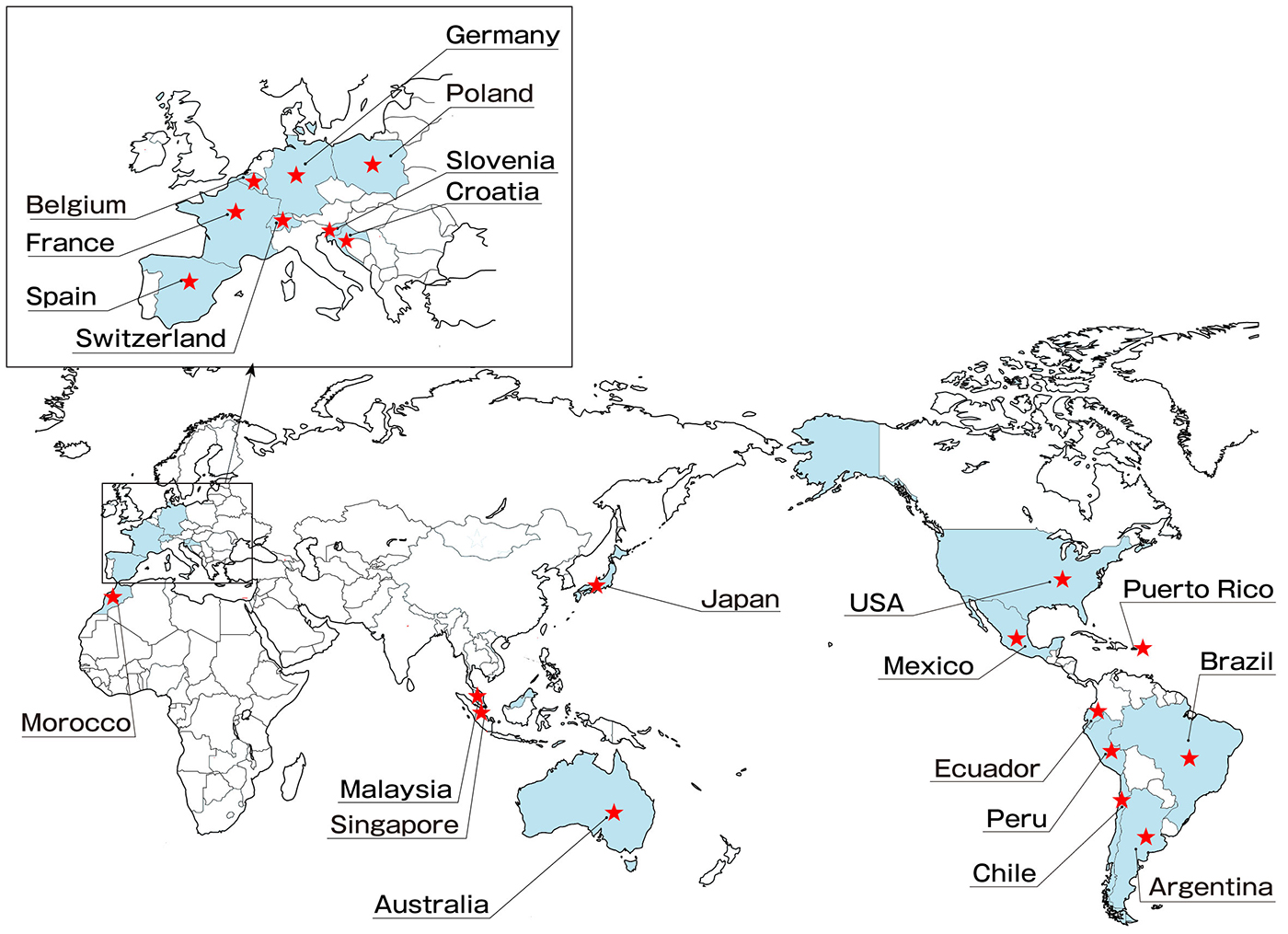
Although, between 23 May and 26 August 2019, the British Museum in London staged the largest manga exhibition ever held outside Japan, a glance at the map of events organised worldwide for World Kamishibai Day on 7 December 2018 reveals that England does not feature on the list of participants and the same conclusion may be drawn from the list of speakers at the Kamishibai International Symposium in May 2018 in Slovenia.

Kamishibai also constitutes an ideally versatile and user-friendly tool for intercultural projects between pupils from two countries.

One of the first scholarly articles on educational kamishibai published in English outside of Japan is dated March 2003 and was written by an American author, Lee Gretchen, who was teaching English abroad: “Kamishibai, a vehicle to multiple literacies”. However, kamishibai really grew in popularity worldwide after the publication, in 2005, of Japan-born Allen Say’s book entitled Kamishibai Man; the French version came out a year later. Since then, the worldwide appeal of kamishibai has undeniably grown. An International Plurilingual Kamishibai competition was launched in 2018 by a French educational organisation called DULALA (meaning From One Language to Another) which is officially accredited by the French Ministry of Education and seeks to promote bilingualism/plurilingual education for all children. South America has been hosting an International Festival of Kamishibai for a few years and several countries hold their own kamishibai festivals, targeting both children and adults, eg Slovenia and Croatia. Kamishibai stories can be purchased online in France, Belgium, Spain, Germany, Canada, South America, etc. The target audience is not only pre-school children but also pre-teenagers. Some stories are available in up to four languages (especially French, Spanish, Dutch, Hugarian, Italian, German); some come in three levels of difficulty and with companion audio CDs. Kamishibai stories, especially for educational purposes, constitute a flourishing market and fee-paying kamishibai workshops aimed at parents, librarians, (trainee) nursery, primary and secondary school teachers, speech-therapists, people working in leisure centres, care-homes for the elderly, etc. run in many countries, eg Italy, France, Spain, Peru. Kamishibai are actively used in classrooms and libraries for children’s literacy development; their use is even encouraged by the Chilean Ministry of Education. As both learners and tutors focus on the pictures and narratives instead of each other, kamishibai stories also facilitate a non-confrontational, non-awkward approach to address human problems, including diversity, gender awareness (in Italy), sex education (in India), obesity etc.. Kamishibai also constitutes an ideally versatile and user-friendly tool for intercultural projects between pupils from two countries.

Finally, the use of kamishibai as a therapeutic tool should not be ignored. It is used with addicts presenting mental health issues, with people presenting specific learning difficulties and/or autism.


Conclusion

In 1985, Sakuramoto, a Japanese author wrote: “because kamishibai is a simple and straightforward integrated art form, […] it can be used extremely effectively as a teaching tool for winning hearts and minds […]. Many years of putting this idea into practice confirm it”. Indeed, and whether it serves as a pedagogical medium or for entertainment, whether in Japan or elsewhere, this ancient art form somehow remains both relevant and strangely reassuring in the face of today’s fast-changing world.

About the Authors 

Throughout her life, Japan-born and bred Megumi Bailey has been involved in Early Years Foundation Stage education through her family-run schools. After teaching science in Japanese high schools, she moved to the UK. Since 2001, she has been teaching Japanese at the University of York on the Languages For All programme.

Géraldine Enjelvin has been a university lecturer in England for over 25 years. She has trained primary foreign languages teachers and currently teaches French to undergraduates at the University of York. Her 2018 publication on kamishibai led to her June 2019 hands-on workshop at York Festival of Ideas with Megumi Bailey.

New Drunk Drinking Laws In Canada Can Drive You Crazy

Under the updated law, known as C-46, which became effective in December, police can stop any driver, anyplace, in any way, shape or form and request their example. Besides, you could get referred to regardless of whether you haven’t driven a vehicle in two hours.

“The bill makes it an offense to have a BAC (blood liquor fixation) or BDC (blood medicate focus) of 100 mg of blood inside a couple of hours after driving,” Joanna Baron, a criminal lawyer and national chief of the Runnymede Society, let me know. “You could ride at 6:00 pm with a BAC of zero, get back home, have a beverage at 6:30 pm, and be captured in your home at 8:00 pm.”

These drunk driving Canada laws now can either make the things good for the citizen or vice-versa.


Sincere goals, Bad Policy

Canadian experts are shielding C-46, calling attention to that traffic fatalities are the main source of death and damage in Canada.

“I accept these changes will bring about fewer street passings and less Canadian families crushed by the impacts of a disabled driver,” said David Taylor. Common libertarians are less intrigued. Aristocrat said C-46 dissolves the assumption of honesty and is “obviously illegal.”

“Drinking and driving is a scourge and prompts silly passings in Canada, as in the United States,” Baron stated, “however the administration’s authoritative reaction is a stunning infringement of fundamental common freedoms unwarranted by proof.”


Other Canadian lawyers communicated comparative concerns.

“This is an extreme takeoff from past law, which protected individuals against warrantless pursuits without reasonable justification,” said Toronto-based criminal guard lawyer Michael Engel, soon after the law passed.

What Might Enforcement Resemble?

You drive your family to an eatery. Your better half wishes to drive so you can have a couple of lagers, which you do. Somebody who saw you drive to the eatery is worried since little youngsters are with you. They call the police, who arrive and oversee a breathalyzer.

As per the law, criminal specialists state, police could refer to you on the off chance that you bombed the moderation test. It would be occupant on you to demonstrate in court that you never had a drop of liquor before landing at the eatery.

“In the event that [the police] come and discover you at the eatery they can remove you from the café in spite of the reality you’ve been drinking at the café, perhaps you weren’t going to drive away,” Paul Doroshenko, a Vancouver criminal legal advisor who works in alcoholic driving cases, revealed to Global News. “It is significantly dumb, so a great many people expect it can’t be. However, that is the thing that the law is currently, you will witness it—I promise it.”

Taylor added that the “two-hour rule” got passed to avoid “certain guards in alcoholic driving cases,” which appears another method for saying it’s simpler for the state to win indictments when natives don’t have fundamental common freedoms.

History recommends that minorities get most influenced by the extended police powers.


Other Canadian pundits concurred that police would be bound to target minorities.

All things considered, before Americans get excessively energized, they should realize that Taylor safeguarded Canada’s two-hour decide by pointing out that 16 U.S. states have such laws, resolutions that have been maintained by U.S. courts.

It is driving while alcoholic is an impractical notion and genuine wrongdoing. It ought to get indicted all things considered, however not by stripping natives of social equality and stacking the deck in support of the state.

Misconceptions that Consumers have about Loans

The startups are facing a lot of problems in understanding the complexity of personal loans. The situation is getting difficult for startups and banks, as well. Therefore, Smart Loan will explain about the misconceptions that people have about loans in this article. Thus, you’d be able to make an informed decision if you are facing financial problems. So, let’s take a look at the misconceptions the consumers have about loans.


Misconception 1: No Loan for Consumers with poor credit history

Many people avoid applying for loans when they have a poor credit history believing that their application won’t be approved. There is no doubt that the applicants need to have a strong credit score to get their loan application approved. But some lending institutions have different eligibility requirements. The reason why lending institutions reject the application of borrowers who have poor credit rating is that they aren’t sure about whether they will repay the loan or not.

And based on the past experiences, the lending institutions have now designed tough rules and regulations for the borrowers. Therefore, many borrowers cannot get their application approved because of the poor credit rating. But some banks might agree upon providing you with a loan even if you have a poor credit rating. However, they will charge a higher interest rate for providing this service.


Second Misconception: The interest rates are the same for all lenders

The interest rates may vary based on the terms and conditions of the lending institution you’ve selected. The lending institutions consider several factors when determining the interest rate for the borrower. The personal situation of the borrower is carefully examined. The lenders will take a look at your debt balance, credit score, and your income to decide the interest rate.

And if you’re thinking of going for the loan with the lowest interest rates, you might be a mistake because these loans have their consequences. It’s your responsibility to figure out all the important factors of a loan. Sometimes, the borrower will be asked to join the insurance program to get the loan. And it will increase your costs in the long run. However, the banks will earn some profit from these payments.


Third Misconception: Longer Tenure Comes with Higher interest rates

Usually, the interest rates increase when you increase the term of your loan. However, you can decrease your rate to get interest rates according to your requirements. Moreover, things will become easier if the loan doesn’t have any prepayment penalties. You need to make the larger monthly payments if you want to decrease the interest rates in the long run. Usually, the students can take advantage of this facility as it’s associated with the college or student loans.

The lenders provide you with the facility to make the full payment when you’ve become financially stable. Thus, you’d be able to get rid of the stress as soon as you want.


Conclusion

The reason why you need to understand these misconceptions is that they can be a hurdle for the decision-making process. You’d now be able to get a car loan or home loan without having to be worried about these misconceptions. Make sure that you only borrow the amount that you need.

Who else loves a slow broadband connection?

When was the last time you heard someone say that they would absolutely love to have a slower broadband connection installed and pay over the top for it too? No one right? And for good reason. Nobody likes a pricey connection with slow speeds as it is not only frustrating, it is an absolute waste of money.

If you’re not happy with your connection, then don’t wait around for them to better their service or lower their prices. If you’re anything like me then you want the best speeds you can possibly get your hands on, and you want to have it on a bargain. So what do you do?


Do your Research!

You roll your sleeves and get down to research the best alternatives you have based on your needs and your area as well as your budget. You check out all the different broadband providers, make a list of their packages and compare them side by side to see who will give you the best deal. Check out whether you want broadband or broadband + TV connection, your desired speed and then see if they have any special offers going on.

 You’ll also have to run these offers as per your postcode as some providers and some offers may not be available as per your area. The reviews are also definitely worth a look as different providers have their own unique advantages too. For example, if you are looking for top speeds then Virgin maybe your guy and if you’re more inclined towards TV then SKY will definitely be one of the top contenders.


Do you have the time?

But here is the thing, doing all of that, is easier said than done. Whilst it is an ideal way to compare and make an informed decision, this is going to be extremely time-consuming. There are over 14 popular broadband providers and each of them has different deals going on at all times. Shortlisting, comparing and then reading their reviews will take days, if not weeks. So let’s just stick to that crawling connection eh?

No! Not at all. You deserve better! We deserve better. And this is why, fortunately for us, there are comparison websites that do exactly what we’ve described here and provide a wealth of information, in easy to understand formats, at the push of a few buttons.

This naturally saves us time and a lot of effort that we would have to do manually.


Conclusion

But now there are so many comparison websites to choose from, right? Well, let us make it easier for you. Based on personal experience and a few key factors that we considered in evaluating the top utility comparison websites, especially when it comes to broadband providers, we can give our recommendation.

Usave Broadband is our personal favourite when it comes to comparison websites as it considers all providers and gives you the latest deals based on your choices. Simply put in your postcode and your preferences and let USave do the rest.


Seven Negative Effects a Bad Credit Score Can Cause in Your Life

Many people know so little about their credit score until they try to acquire a loan to finance their new business or buy a big asset like a home or car. This score helps lenders evaluate your trustworthiness and credit risk. The three-digit number that normally ranges from 300 to 850 helps them determine whether you are eligible for a credit card, mortgage, or some other types of loans, and the interest rate you should pay for it.

Generally, the greater the number, the more reliable you seem to lending institutions. The lesser your score, the riskier you appear to lenders. However, this three-digit number influences more than just lending decision, it can also determine whether you qualify for a rental house and even who may be ready to be in a relationship with you. Let’s now look at seven ways a bad score can negatively impact your life.


1. Future Borrowing Becomes a Hassle

Before approving a card application or loan, most lenders will check your rating and evaluate your history. Regardless of how badly you need to get money, the odds of approval are low if you have a poor rating. The lending agencies want to confirm your repayment capability and capacity before trusting you with their money. It is advisable to understand your financial rating before borrowing and start working on improving it if it has dropped significantly.


2. Unfriendly Loan Terms

We can’t entirely rule out the possibility of obtaining a loan with a poor score. Although qualifying for unsecured financing could be extremely difficult, people with a bad rating can get secured bad credit loan $5000 from some lenders. However, the terms will be unfavorable. The lower your rating, the higher the interest rate the creditor will charge you. Even if you get an approval, chances of obtaining a huge sum will be slim because you are a risky debtor.


3. It Could Prevent You from Renting Your Favorite Apartment

Landlords nowadays are looking for tenants who have decent profiles. If yours isn’t that fine, your potential landlord could reject your rental apartment application. Various studies and surveys have revealed that your financial history and rent-to-income ratio are the two most important factors that landlord check when they go through an application. If you seem untrustworthy and inconsistent with bills payment, property managers will think twice before allowing you to be their tenant.


4. Finding a Well-paying Job May Be Hard

Many hiring managers and recruiting agencies now incorporate creditworthiness checks into the application process. A decent profile is a representation of your accountability in managing your finances. The assumption is that if you are irresponsible with your finances, you won’t take your job seriously as well. Financial agencies and government institutions are likely to base their hiring decision on applicants’ credit. An applicant with a good rating will have high chances of getting the job.


5. Possible Relationship Problems

Whether you fail to reveal your financial profile or disclose it from day one, a poor rating is likely to bring some trouble for you. Although your profile doesn’t really combine with your partner’s after marriage, his or her profile can have an impact on your capability to be eligible for new instruments like home and car funds, especially if you are filing a joint application. For instance, assume you have an outstanding profile and your partner’s isn’t that great. When you jointly apply for home financing, the creditor will review both profiles and evaluate your family’s total financial risk. Despite your risk being low to suit the lender’s eligibility requirement, you are likely to part with a bigger down payment or greater interest rate together compared to if you were taking out the loan by yourself. Such situations can cause tension and hostility in your personal relationship.


6. Creditors Can Take Tough Legal Actions against You

When you consistently fail to pay bills or an unsecured financial instrument, creditors will alert you concerning the repayment. If you continuously ignore their reminders and decline to repay, lenders might notify you of their intention to take legal action against you. Although you will have an adequate notice period, a court case can make the issue worse and reduce your borrowing prospects in the future. It is important to negotiate with the lender and settle the matter out of court before it gets out of hand.


7. Getting a New Business off Ground May Be Difficult

If you are planning to set up a new business and you have limited funds, you will certainly need to raise more money. With a poor rating, it will be difficult to borrow from banks, non-banking finance institutions, and online lenders. Creditors will delay or decline to approve your business loan application due to your negative past monetary activities. You must pay off outstanding payments or clear any other undesirable issues with the relevant scoring bureaus to improve your chances of qualifying for a business funding.


Final Thoughts

Poor credit history doesn’t necessarily mean that you were completely reckless. Perhaps you were hit by a medical emergency or unanticipated expenditure, leaving you in a tight financial situation. The good news is that you can change your situation by taking tactical measures to resolve the bad credit. Remember improving your score isn’t an overnight task – it takes time, hard work, and personal commitment. You must embrace smart money management practices and remain patient throughout the entire period.


The Simple Guide To Reducing The Bounce Rate On Your Website

When looking to decrease your bounce rate, it is important to look at the optimisation of your site as well as the content that is being written as this can all lead to people clicking off of your webpage. Whether you are optimising for SEO or you decide to opt for PPC, there are a number of ways that you can begin to optimise the site and maintain a healthy session time. In this article, we will be looking into how reducing the bounce rate on your site could be harming your website’s rankings.

 

Optimise Website Design

When looking to improve your bounce rate, it is important, to begin with, the website. If your website is outdated and does not operate properly, this could be one of the causes of the bounce rate. By redesigning the website, you are then able to fully customise it to ensure that it is fit for purpose. Whether this is changing the colour theme to a range of colours that are much more inviting or redesigning the homepage to be more visual rather than pages of text, this can all help to reduce the bounce rate and increase session time when visiting your website.


Decrease Loading Time

Another way to reduce the bounce rate is to ensure that your website takes less than 5 seconds to load. A recent study has shown that 40% of people will abandon a website if it takes more than 3 seconds to load with just a one-second delay potentially resulting in a 7% reduction in the number of conversions that your business could gain. Due to this significant reduction in potential conversions, it is important to prioritise site speed and ensure that it is as quick as possible as this could affect inbound marketing strategies.


Improve Content Readability

When creating new content, we tend to prioritize the readability of the content, but what about the content that is already on the site? Whether this is a few changes over the course of the year, or a dedicated content team working on refreshing the content on your site, this can all help to reduce the bounce rate whilst providing potential customers with the information that they need when visiting your web page. This is crucial as this will help to increase session time as well as boost the E.A.T score for your website.


Avoid Pop-ups

Though it may seem tempting to use a number of pop-ups to keep people on your site, this could actually be harming your website with an increase in the bounce rate. If there are a number of pop-ups that are preventing people to read content, this can lead to people clicking off of your website and finding information elsewhere. In order to combat this, it is important to keep pop-ups to a minimum for important information such as offers and cookie policies as this will help to provide the audience with additional information rather than being a hindrance.


Keep Meta Descriptions Interesting

When creating numerous meta descriptions it can be difficult to think of new and creative ideas to increase the clickthrough rate and entice the reader. However, it is vital that you keep both the meta description and the content as interesting as possible in order to encourage your target audience to read your content and engage with you. By keeping the meta description interesting, you are then capturing the attention of your target audience from within the Google search results and encouraging them to click.

Where to Look for Penny Stocks

For beginners in the trading world, penny stocks can be an exciting concept. We all love the idea of spending a small amount of money on a handful of shares, only to discover that the company that we’ve invested in has tripled in size overnight. We can hope that the nature of low-cost shares means that you could potentially spend a few cents on a position and use it to make millions for your future.

However, the unfortunate truth is that the majority of penny shares probably won’t amount to much. To achieve incredible success in the penny stocks market, you need a combination of great timing, exceptional luck, and a fantastic trading strategy. Low-cost shares are highly speculative thanks to their large bid-ask spreads, low liquidity, and small-capitalization options. However, some people genuinely can achieve incredible results by trading in this area. If you think that you’re ready to give it a try, here’s how you can find something to invest in.


Stick to Reliable Trading Forums

The most important thing to remember when trading in penny stocks, is that there are multiple places you can go to find your shares – but not all of them are reputable. For instance, some of the best and most risk-free securities are available on major exchanges like NYSE and the Nasdaq market. These stocks are safer than their counterparts, because they’re held accountable to specific listing standards.

On the other hand, a lot of beginners in the investing market make the mistake of spending all of their money on trades that happen outside of the major stock exchanges. You can get some great deals on over-the-counter trading boards and pink sheets forums. However, these locations are also not subject to as many listing rules as their counterparts. There are no registrations required with the SEC when you list a company with the pink sheets, which means that there’s always a risk that an investor could end up being scammed out of their cash. To keep your risk levels to a minimum, it’s best to start off by investing mainly in the stocks you find on major exchanges. You can ask your broker for help choosing the options that are suited to your risk and trading strategy.


Choosing the Right Broker

The stockbroker that you pick to assist with your penny trading strategy will also play a fundamental role in your investment future. Brokers are the people who provide the infrastructure and technology you need to buy and sell positions in the stock market. Choose the right broker, and you’ll not only have access to all the right exchanges and forums, but you’ll also have the option to ask for additional guidance and support when you need it most. Many brokerage companies can offer insights into things like market behavior and industry changes, which could help you to make more informed decisions when you’re building your investment strategy for the first time. Always start your trading strategy with a broker that you can trust.

EDITOR'S PICK OF THE WEEK

CFO's new mandate. CFO explaining the presentation

The Performance and Transformation Orchestrator: The CFO’s New Mandate in the Age of AI

By Terence Tse CFOs are evolving into AI-driven transformation orchestrators, balancing finance, technology, and strategy while upskilling teams, managing risks, and driving measurable business value. A key insight from this year’s AI for CFOs event, organized...

WISE DECISION MAKER GUIDE

POWER INFLUENCERS

Emerging Trends

The Future of Global Trade