Home Blog Page 943

The Worldwide Growth of Electric Vehicles

The global market for electric-powered vehicles has been booming in recent years. This year was a tremendous win for Elon Musk, co-founder of Tesla, the renowned manufacturer of electric vehicles. In a stunning growth in personal wealth, Musk’s fortune quadrupled since the beginning of 2020, and he has surpassed Bill Gates to make him the second-richest person in the world. This stunning achievement is due to the huge surge of Tesla sales that have enabled Musk to earn over $80 billion in 2020.

Growth in worldwide electric vehicle sales

Looking at the overall prevalence of electric cars on the road in the last ten years, the numbers are remarkable. Worldwide, there were only about 17,000 EVs on the road in 2010. By 2019, this number exploded to over 7 million, with nearly half of them in China. There were a total of nine countries that had 100,000 electric vehicles operating on their roads last year.

Tesla is not the only company that is enjoying a rising trend in sales of electric vehicles (EVs). Even though overall car sales were sluggish in the last two years, electric plug-in car sales have continued to rise. In 2019, over two million plug-in passenger vehicles were sold worldwide by various car manufacturers. The Model 3, produced by Tesla, holds a commanding lead this year with more than 160,000 units sold. Other notable car models include the Renault Zoe, Nissan Leaf, and Hyundai Kona EV.

The sharp rise in EV sales in recent years is due to advancements in battery technology that has enabled cars to run farther on a single charge. Government regulations that are aimed at reducing carbon emissions have also played a role in the shift of sales from gas-powered to electric cars. Younger consumers gravitate toward companies that demonstrate ethical practices and green initiatives, and this sector of the market has been influential in the market trends for EVs.

Charging equipment sales rise with the number of EVs

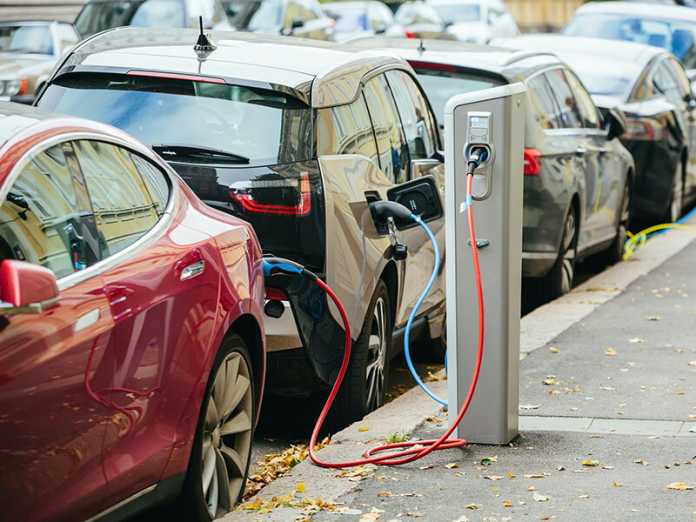
With a surge in the numbers of EVs on the world’s roads, there is a growing demand for EV charging stations. Consequently, there has been a similar growth in sales of private chargers and public electric vehicle charging stations. Overall, the number of chargers in the worldwide EV market grew to over 7 million by 2019. Private charging equipment comprises the vast majority of this product rather than public stations. This is mainly due to cost advantages and incentives provided by manufacturers.

Public charging stations comprised 12% of global chargers in 2019, and most of these were not high-speed units. Although EV vehicle growth slowed overall in 2019 compared to the year-to-year growth in previous years, the growth of public chargers increased by an impressive 60%. China is currently leading the rest of the world in providing public charging stations. These are well-suited to the dense urban environments in many parts of the country.

Growth in vehicles other than cars

Since electric scooters began to emerge in 2017, the industry grew impressively. The same is true for electric-powered bicycles and mopeds. These “micro-mobility” vehicles are currently being sold in more than 50 countries and 600 cities across the globe. One-quarter of vehicles that are either two-wheel or three-wheel can be found in China. Many of these are light commercial vehicles for delivery companies or public authority organizations.

Another growing electric vehicle sector is buses. There are currently over half a million electric buses in service around the world. Most of these can be found in China. Some of the city bus systems in China are fully electric. The motive for this is to improve the air quality in densely populated cities. The largest electric bus fleet outside of China is in the City of Santiago de Chile.

The recent growth of electric vehicles is largely due to objectives to combat climate change and find sustainable solutions to cut down on fossil fuel usage. These vehicles are also important for addressing problems in areas where air pollution has become severe. Governments are imposing tax regulations based on CO2 emissions, and toll-road discounts are also good incentives for consumers to switch to electric vehicles. As the market transitions more toward electric-powered cars, mass production can enable car companies to sell at lower prices that will entice more consumers to buy EVs in the near future.

The Difference Between Casino Games and Betting

There are various ways people have fun. There are also multiple ways people make money. Casino games and betting happens to be one of the many ways people can have fun and even make money on the side.

Both casino games and betting date years back. During their inception, players stormed in troops to physical casinos and betting shops to play. Technological advancements have seen casino gaming and betting get even more popular. 

Now, you can easily place your wagers online. Players are always looking to get the best online casino bonus and great betting odds when playing online. Casino gaming and betting have become staples in the lives of many. 

However, there have been many questions on the two. Are they the same? Are they different? What is the difference? These are questions every player should know the answers to, but that’s not often the case. 

The good news is that the post will address all of these questions. 

Casino Games

Let’s start with casinos. Casino games are a form of gambling. Gambling is merely staking money on an event. The whole point of gambling is to win by correctly predicting a future event. This principle applies to casino games too.

There are several different casino games today. But the peculiar feature about all of them is that players stake money on something that has not happened yet. It may be a specific combination after spinning a wheel or the kind of card your opponent has. They are all forms of gambling. 

One thing you must note about casino games is that they are usually down to luck. Players make guesses that may go in either of two ways – win or loss. It’s that simple. You either win or lose. 

There are online casinos today that try to raise the chances of winning with different features and bonuses.  However, сasino games are usually down to luck, with the players having little or no control of the result. 

Consider it this way. When you spin the wheel in a slot, you have no control of the combination you get. The result is entirely randomized. At least, in good online casinos. The same applies to many casino games.

Betting

Betting is a form of gambling too. Now, you may be thinking, ‘didn’t we also say this for casino games?’ Yes, we did. And we’re saying the same for betting too. The focus is usually on the difference between betting and casino games, but they both share one similarity: they are both forms of gambling.

Betting is an activity between two parties. When you bet with a betting company, you predict the result of a future event and place your bet. The betting company sets the odds on which you place your bet. As you can see, there are two parties involved. 

It doesn’t always have to be betting companies, though. You can bet on basically anything with a friend or colleague. But betting always involves two parties in an agreement. The terms of the bet are always set beforehand. While there are different things people bet on, the most popular today is on sports. You must have heard of sports betting before. 

What you must know about betting is that it isn’t as reliant on luck as casino games. However, with sports betting, your knowledge comes in very handy. You can increase your chances of winning with good analytical skills. 

Difference Between Casino Games and Betting

Let’s drift back to the multimillion-dollar question we seek to answer. Casino games and betting are both gamblings. That bit should be clear by now. Still, there are some inherent differences between the two.

Let’s consider some of them below.

1. Degree of Luck

Both casino games and betting rely on luck. However, the degree differs. Casino games are almost always down to luck. In good casinos, the games are usually randomized. No amount of analysis will increase your winning chances in many casino games.

This is not the case with betting. You can increase your winning chances with the right analysis. It makes sense when you think of it. Many more factors are in play in betting, especially sports betting. 

A factor like weather can influence the result of the event. In football, the type of game is also another factor. Games between rivals are usually more keenly contested. So, the chances of more fouls and bookings increase. These factors rarely affect casino games.

2. Broadness of Bets

Placing bets on sports is usually broader than casino games. How do we mean? In betting, you typically have the opportunity to bet on several different possible outcomes. You can bet on particular events.

Let’s go back to football betting. You can bet on the winners of the tie. You can bet on the number of goals a team will score. You can go further and bet on the exact minute a team will score. The more specific your bet is, the better the odds. But your winning chances are also lower.

In casino games, you rarely have the option to bet on such a large variety of outcomes.  

3. Variety of Games

There is far more variety in casino games than betting. Seriously, there are thousands of different casino games. Some companies even make several variations of the same game. 

The opportunity for such innovation is limited in betting.

Conclusion

Casino games and betting are both forms of gambling. But there are differences between them. One of the most pressing is the degree of luck. The variety of games also differ between the two. 

Luckily, there are many online platforms to play both, but online casino games are far more popular than online betting.

A New Sphere of Sukuk: Linking the Pandemic to the Paris Agreement

By Greget Kalla Buana and Khairunnisa Musari

The number of reported COVID-19 cases is approaching 50 million across the globe, and the death toll has passed a million. Not only does it bring about severe health issues, but also economic, social and political instability. However, the environmental perspective seems to be a different story.

Apart from the pandemic, 2020 also marks the entry into force of the Paris Agreement, an accord within the United Nations Framework Convention on Climate Change (UNFCCC), signed five years ago in Paris. Adopted by 197 countries, this agreement was to tackle climate change and its negative impacts by means of mitigation, adaptation and finance, with the main objective of limiting global temperature rise to below 2 degrees Celsius.

Being among countries that have ratified the agreement, Indonesia is required to prepare, communicate and maintain successive Nationally Determined Contributions (NDCs) that it intends to achieve. Indonesia’s NDC outlines the country’s transition to a low-carbon and climate-resilience future and the commitment to reduce 29 percent of its greenhouse gas emissions, representing a reduction of up to 41 percent against the business-as-usual scenario, subject to the availability of international support for finance, technology transfer and development, and capacity-building.

So what is the connection between the pandemic and the agreement?

The World Economic Forum has cited 11 visualisations from NASA’s Global Modeling and Data Assimilation showing the dramatic knock-on effect of lockdowns, quarantining and travel restrictions on air quality in China, South Korea, Italy and India. There has been a sharp drop in carbon dioxide (CO2) levels in the most polluted capitals due to the shutdown of factories, industries and transportation.

The pandemic is predicted to result in a record annual decline in carbon emissions of almost 8 percent, as reported in the International Energy Agency’s Global Energy Review. Global energy demand, especially for coal, oil and gas, falls by 6 percent, which is comparable to India’s total energy demand as the world’s third-largest energy consumer, and is equivalent to seven times the decline in the aftermath of the 2008 financial crisis, and the biggest shock since the Second World War.

In a similar shift, the air quality in Jakarta was moderate, according to the air quality index at the time the first wave of large-scale social restrictions (PSBB) was implemented. The city’s air quality used to have an index of 160 and, hence, was classified as “unhealthy”.

Indeed, miraculously, a decrease in the concentration of nitrogen dioxide (NO2) has changed the environmental conditions during the pandemic, as happened in Paris, Madrid and Rome, according to observations from the European Space Agency’s Copernicus Sentinel-5P satellite. It also detected plummeting levels of NO2 across China following the economic slowdown.

Looking at the bright side, it is undeniable that the pandemic has generated ‘positive’ outcomes with regard to the impact of climate change. In addition to misery, hardship and suffering, COVID-19 has also given rise to clear water and blue skies.

The pandemic and climate change both call for a “flattening of the curve”. The question remains, when the pandemic is over and humans get back to normal, will climate change worsen again? It depends on how societies adopt new habits to jointly address the two crises at once.

Innovative financing through Sukuk

In line with Sustainable Development Goals (SDGs), a financing gap stands in the way of implementing the Paris Agreement. An estimated US$1.6-3.8 trillion annually between 2016 and 2050 is needed to achieve the transition to low carbon. This figure refers to supply-side energy system investment alone (IPCC, 2018).

Attracting sufficient funding is one thing, but getting that funding to where it is supposed to be is something else. There must be a step change to pull money back into real economies – innovative financing. To this end, the drive for a green economy and green financing is echoed in many countries, including Indonesia.

In this context, the government of Indonesia committed to applying mainstream green economy principles to development planning in order to promote the SDGs, including taking steps towards the implementation of green financing for the banking industry through the Financial Services Authority (OJK).

The government allocated IDR728 trillion (~US$51 billion) for mitigation and adaptation actions in 2015-19 (NDC, 2017). However, with projected financing standing at IDR1,065 trillion (~US$75 billion) (TNC, 2017), there is a gap in finance. In response to this, a sovereign Green Sukuk was issued in 2018-20 with a total of US$2.75 billion, the proceeds of which are leveraged to finance a list of eligible green projects in nine sectors, such as renewable energy, climate resilience for disaster-prone areas, and waste and waste energy management.

The very first sovereign Green Sukuk issued in the world has opened the doors to more participation from investors – those whose intention is to generate financial returns and those who are impact-oriented. The nature of sukuk indicates partial ownership by its holders over underlying assets or projects, which are backed by the government, making this kind of Islamic instrument more favourable. Unlike the regular variant, the Green Sukuk entails an annual impact-measurement report. This mechanism is suited to the concept of impact investment, which considers social and environmental impacts as its benchmarks.

Despite being innovative, the three greens (economy, financing and instrument) exclude certain sectors from their framework, which triggers new constructs, one of which is the blue economy.

The World Bank defines blue economy as the sustainable use of ocean resources for economic growth, improved livelihoods and jobs, while preserving the health of the ocean ecosystem. Going beyond conservation, fisheries or aquaculture, the blue economy also covers tourism, mining, transportation and marine infrastructure development, some of which have been hit by COVID-19.

The blue economy equally plays an important role in reducing carbon. Having said this, the notion of blue carbon – carbon produced underwater and stored in oceans and coasts – for lowering global emissions has not been widely discussed. Using the same approach as the green framework, a Blue Sukuk for the marine and fisheries sectors has begun to be considered in Indonesia, where the Blue Financial Framework is being eagerly pushed forward.

Law No. 19/2008 on Indonesian Sovereign Sukuk (SBSN) clarifies that an object and/or state-owned property that has economic value can be used as the basis for the issuance of SBSN, meaning that natural resources (land, sea, air) are considered to be prospective underlying assets. The aerospace sector requires further exploration. In reality, the aviation industry and information and communication technology each contributed a minimum of 2 percent carbon emissions, according to the Air Transport Action Group and the International Telecommunication Union.

A country’s air territory is the domain of flight traffic. In recent years, air transportation has shown its concern about climate-related subjects by initiating zero-carbon flights. In addition, the radio-frequency spectrum and electromagnetic waves from transmitters, radars and satellites propagate through the air. Thus, airspace is a strategic resource.

Identical to Green and Blue Sukuk, the aforementioned areas of airspace and their development have the potential to be underlying assets and projects for the issuance of White Sukuk, strengthening the air sectors and associated industries.

Is it still worth exploring, if not many people feel directly connected to airspace? Let’s take a look at the work-from-home arrangements that have been set up in the course of the COVID-19 pandemic.

Currently, the world is facing a new equilibrium because of physical and social restrictions. Nearly all activities are carried out remotely. In this particular case, technology becomes crucial. The pandemic has demonstrated the importance of telecommunications infrastructure in keeping governments, business, societies and individuals in operation. Humans are highly dependent on technology as a source of information and as a tool for distance learning and working from home.

Although they experienced a significant stock market correction during the pandemic, listed companies in the Asia Pacific regional telecommunications sector are projected to remain resilient, with minimal impact on performance, since the public interest for data and information access continues to increase. The sector has proven its essential nature in serving domestic economies in a connected world and, hence, boosting investor appetite for infrastructure funds.

In the near future, the surge in demand for the Internet will trigger the application of microwave spectrum technology through such innovations as direct-broadcast satellites, wireless networks, and the emerging 5G to support high-speed connectivity and data-intensive applications. No fewer than 98 percent of people in Indonesia rely on mobile data to connect to the Internet.

This phenomenon points to the possibilities of White Sukuk in entering the market. With the support of a fatwa from the National Sharia Board of the Indonesian Council of Ulama (DSN-MUI) and government regulations, the issuance of White Sukuk is feasible. Notwithstanding the national economic downturn, this breakthrough helps maintain fiscal and monetary sustainability by optimising local resources and supporting the deepening of an inclusive Islamic financial market.

Three sectors have been severely hit by COVID-19, namely tourism, transportation and agriculture. The issuance of the three-coloured sukuk is attainable in order to finance post-pandemic recovery.

Islamic finance is confronted with the challenge of offering liquidity instruments that can be utilised at any time of disaster or any other emergency situation. Innovation in the area of sukuk is expected to answer this challenge.

About the Authors

Greget Kalla Buana is an Islamic finance specialist who graduated as a Master of Islamic Finance and Management at Durham University, United Kingdom. His work experience has always been in the Islamic finance sector, such as Dompet Dhuafa, the Islamic Banking Department of the Indonesia Financial Services Authority, and the United Nations Development Programme.

Khairunnisa Musari is an Assistant Professor of the Department of Islamic Economics in the Postgraduate Program, State Institute for Islamic Studies (IAIN) of Jember. She is a Secretary II of the Indonesian Association of Islamic Economist (IAEI) for East Java Province, a General Secretary of the Indonesian Economist Association (ISEI) of Jember, and a Member of the Expert Board of the Islamic Economic Society (MES) of Lumajang.  

The Most Comprehensive Predictions Guide to 2021

By Graham Vanbergen

The year 2020 will inevitably be etched into our memories no matter how forgettable we want it to be. It was a year that saw our use of the word ‘pandemic’ skyrocket by more than 57,000 per cent. Its effects were seismic across the world, not just for public health but for economies.  The impact that Covid-19 has had on our families, communities and businesses cannot be understated. As we lead into 2021, the effects of it, which will still be dominating our lives, will be truly transformative in so many ways. One thing we can say with confidence – big change is coming. Here are the trends and predictions for 2021.

Geopolitics of vaccines

Throughout 2020, there was a global effort to find a vaccine and a Herculean effort was made in developing them. But it didn’t take long before political arguments broke out as soon as the first became available. The shift from development to distribution has already caused geopolitical problems, even amongst allies – and ‘vaccine diplomacy’ will become as important as anything as 2021 unfolds.

On March 16, the first dose of US biotech firm Moderna’s vaccine candidate was administered in the US. On the same day, just hours earlier, the first dose of a Chinese Covid-19 vaccine was given to volunteers in Wuhan. China has around a dozen different vaccines being trialled – four in advanced stages with two developed by the state-run China National Pharmaceutical Group, or Sinopharm. Because of China’s large domestic population, China-developed vaccines currently make up a fairly small portion of global pre-orders of more than 7 billion confirmed purchases for Covid-19 vaccines – most of which have been for the candidates from Pfizer, Moderna, and AstraZeneca. But expect that to change as China gears up.

The big advantage to the British and Chinese vaccines is that they focus on technologies that were well known, well-tried that won’t require as much cold storage capacity as mRNA vaccines from Pfizer and Moderna. This will likely be the chosen route for developing countries, especially those with hot climatic conditions as they will be able to support importing and then distributing them successfully.

The faster countries get vaccinated, the faster their economies recover, the faster governments can concentrate on moving ahead of competitors. Make no mistake – the focus of vaccine sales, distribution and diplomacy could easily get a bit dirty. Vaccine desperation will set in half way through the year, and the public will become angry with the slow pace of distribution. Expect to read stories about expensive private sales and counterfeits.

Economic Recovery

In 2021, economies around the world will start to recover. However, there will be many companies and organisations that will collapse or give up as debt consumes them. The year will see local lockdowns come and go as Covid attempts to grab as many victims as possible. The rush will be to vaccinate as many before the winter starts again.

Some countries will do better, some worse. The lack of planning and foresight will determine how quickly life returns to something we can call normal. Governments will be forced into keeping businesses on some form of life-support in order to keep unemployment to a minimum, which will sharply increase anyway. There will be an inevitable and widening of the gap between companies with strong and weak balance sheets. Banks will play a starring role in the collapse of companies just as they will with individuals.

Irrespective of stories that the economy is picking up fast – restructuring some business debt will be difficult as banks realign their policies and criteria to their own forecasts that have now dramatically changed. One result of this will be rising acquisitions and mergers. Some will happen as cash-rich firms take out their weakened competition – others because the fit enhances a more rapid recovery.

From a global perspective, large transnational businesses, especially tech-related, will end up being dragged into a rising geopolitical battleground. But they and many smaller organisations will also suffer from activist shareholder attacks just as employees and consumers demand that they take a far greater role in responsibility towards the climate crisis and become not just more socially responsible but think about their impact on the local community. People have become tired of political failure and are now wanting to work for companies that take these responsibilities seriously.  Many companies will be forced to take action. You’ll be hearing a lot more about ‘ESG’ or ‘Environmental, Social, and Corporate Governance’. It refers to the three central factors in measuring the sustainability and societal impact of an investment in a company or business.

In addition, the top 3,000 global companies paid a median tax rate of 22 per cent last year, when it was 33 per cent a decade earlier. Taxpayers will demand that the burden of paying for Covid and the recovery programmes also falls on them – given how much money has gone into propping up their businesses. Many companies will repay Covid loans quickly in fear of public resentment affecting consumer sentiment or brand image.

In Britain, £38billion was lent out by the government in ‘bounce back loans’ to 1.6 million small and medium-sized businesses – all of which were given a 100 per cent taxpayer guarantee. The first repayments are expected in May 2021. However, 40 per cent of banks expect a large percentage of these debts to go bad immediately. Will the government write-off the debt, convert them into longer-term grants or instruct thousands of insolvency practitioners to recover the money? Most of these government-backed initiatives will be scrutinised in 2021 as the focus moves from public health to economic recovery and the question of managing the national debt.

Life-changing

There are a number of game-changing events that has forced everyone to re-evaluate how they live their lives from here. Covid-19 has dramatically accelerated technology and its implementation. It has also caused the world to pause and stare at the planet – that for a moment appeared to start recovering a little. In this moment, many people now see that the climate emergency is a life-threatening crisis. They also see that the fourth industrial revolution is as inevitable. It’s a difficult moment to absorb the impact of both but we know that the world has changed forever and that we have to change with it. This acceptance will now drive expectation.

  • Before 2020, those that could afford it would catch a plane and find a sun-kissed beach thousands of miles away. And whilst some of that will continue, it will not recover to what it was. Tourism will inevitably move towards the rise of staycations and flexcations that will change the landscape of the holiday industry. Covid-19 has brought with it a strong desire for more seclusion from the masses. Camping, eco-homes, mobile homes, rented and holiday homes will be in great demand. Instead of the traditional two-week holiday, micro-breaks will be just as important. This may well be driven by the desire not to disconnect from work for two weeks as unemployment and work insecurity rises. Connectivity will be crucial to these leisure decisions.
  • Another permanent output of 2020 will be how work/life balance, working from home and flexibility drives choices. For instance, property ownership in towns and villages outside of major cities will continue to change how the entire property market shapes up in the years ahead.
  • Smart home technology will now become the norm. However, instead of just playing a bit of music and answering some questions, they will start to be focused on providing more convenience as well as safety, security and peace of mind.
  • Video-conferencing will become as normal as online shopping. It will be the same with remote working and distance learning. This change will permeate through healthcare services such as telemedicine, which will become more common than face to face appointments with your doctor. Access to senior medical consultants will increase in the same way.
  • Cloud-based systems will enable healthcare providers to access patient data anywhere, enabling telehealth. Expect companies like Amazon and Alphabet (Google) to start offering some services, that will be seen as a quick, low-cost no-frills but functional service.
  • People will no longer put up with the intrusiveness of the tech industry where their ability to track our most private of interactions rises due to being at home more and having more tech delivered services. Employers will want home PC’s to be more secure (more below). Expect people to demand more privacy and governments to act as the behaviour of the tech giants such as Facebook and Google over the last decade catches up and penalises them. This could take the form of forced break-ups, more fines and laws focused against their ruthless abusive business models.
  • One other result of having an airborne disease attack the world is that personal hygiene such as hand washing, sanitizing and to some extent even wearing masks (depending on where you live) will continue in 2021. However, this could have a more lasting effect – just as they have in East Asian countries where these events are more common.
  • Vaccine passes will be requested by all manner of companies, especially the travel industry, entertainment venues and sporting events.

Brexit and Boris

Economists know Brexit, especially a no-deal Brexit will be very bad news for Britain. So do business leaders and the money markets. There are no economic experts predicting this will go well – not one. The reality of this ideology is soon to be realised. At the time of writing, the outcome of negotiations has still not been determined.

Either way, it is anticipated that Brexit will cause many problems that in themselves individually may not appear that difficult, but combined may well prove to be ‘challenging’.

Boris Johnson has inextricably tied his political career onto the gamble that Brexit is – so for him and his cabinet, the next few weeks will determine their future.

In saying all that, the betting is on Johnson leaving office sometime in 2021. That being the case, Britain, known globally for political stability will have had more Prime Ministers than Italy – a country that has had nine PM’s in the last ten years.

Scotland will vote in May in general elections. Nicola Sturgeon’s SNP will win on a ticket of Scottish independence. A referendum will be demanded – and then denied by Westminister. Expect division and rapidly rising nationalism. Northern Ireland’s debate over unification with Ireland will rise quickly to the top of the political agenda. Brexit will be seen as the vehicle that broke the union, albeit Scottish independence is probably 5 to 10 years away.

In 2015, a British passport was the most powerful in the world according to the Passport Index. As a direct result of the EU referendum in 2016, it fell to No17 in the world. With the union falling apart its decline will continue. The top three most powerful passports today are Germany, Sweden and Finland. That looks set to stay.

Planning

Undoubtedly, 2020 was a year for the policy-makers. They have an unprecedented, albeit short window to exploit to push on with country changing projects with straplines such as ‘build back better’ and the ‘great reset.’ This will include the final acceptance by just about all developed economies that the climate crisis now has to be taken seriously and that action speaks louder than words. All manner of changes are coming – from the electrification of cars to carbon offsets, from plastic-eating enzymes to solar geoengineering.

It has to be said though that academics and analysts have warned of the danger of a pandemic for years. They will now attempt to get policymakers to take other very serious and neglected risks into account. For years, cyberwarfare, biotech and nuclear terrorism have been high on the list of threats along with antibiotic resistance. They have all moved up the agenda and will help to shape the world order.

The pandemic has been a wake-up call to all countries that anything can happen – and planning is the key. With geopolitical allies currently in a reshuffle, planning for future threats and opportunities is something you’ll be hearing a lot more of.

New World Order

The pandemic has shone a light on the failures of not just overall leadership, but of politics in general. We should not forget that when it came to global leadership, not only did the likes of Trump, Bolsinaro and Boris Johnson set a dreadful example in a crisis – the G20 held just one emergency meeting throughout the entire year, while the G7 thought a one-hour Zoom call was befitting of a global crisis.

In 2021 – all of the emphasis in the West will be about patching up relations between old post-war allies. The presidency of Joe Biden will be crucial in 2021 as it will set the mood and tempo of a crumbling rules-based international order that has taken its biggest battering. The Summit of the G20 Heads of State and Government will be held in Rome on October 30th and 31st, 2021. And the G7 is expected to take place in the UK.

The Paris climate treaty and Iran nuclear deal are high on the agenda but will anything really come of attempting to reverse the damage laid out by Donald Trump. On January 22  2021, the Treaty on the Prohibition of Nuclear Weapons will come into force. But will it matter? And will countries now feeling less secure actually stand by their promises anyway?

More likely is the tech and trade battle between East and West will take centre stage and that the USA and EU will combine their efforts to contain China and Russia. Indeed, it will become the focal point of diplomatic, political and economic planning throughout 2021. Britain’s once global influence will decline in this atmosphere of the battle between the super-powers.

Biden will not end the trade or tariff war between the USA and China. It is also true to say that many countries from Africa to South-East Asia will be doing their utmost in avoiding picking sides as the tension continues to rise.

One thing Biden will not do is deliver the type unity to America he promised – just as much as any promises Boris Johnson has made to do the same fails as well.

Roaring 20’s?

Many are predicting that when the pandemic has been arrested and economies emerge, there will be a resurgence of human contact to something like that of the ‘roaring 1920s’ or the ‘summer of love’ of 1967. This is unlikely as the vaccine will not have delivered it benefits by the summer. In addition, people’s behaviour has not only changed but the collective memory will be permanently imprinted with the scars of what Covid really did. That scarring won’t be fully realised until the backend of 2021. It may well drive far more in the way of cultural change than anything. Family and community will be higher on the social agenda. Looking after one another may well stay because many have learned it was a good thing to do when the crisis hit – and it would be bad to simply let that community spirit slip away again.

One thing that may well look a bit like a ‘summer of love’ will be gathering in public spaces like parks as the winter is replaced with warmer weather. The 3,600 per cent increase in sales of thermal under-clothing in the UK only goes to show that there is still a strong desire to be together, no matter what the challenge … or the weather!

It seems strange to say this right now but people, especially Millennials, will go back to the cities as soon as they can. Old businesses will die, new ones will emerge and cities will slowly become revitalised again.  One outcome may well be that they become even more chic and hip again as the old is replaced by the new. Given new investment going into some travel companies and buyers with cash snapping up hotels that folded, holidays and travel will undoubtedly change and it won’t be as dire as being predicted just a month or so ago. Travel patterns will start to reshape and it will obviously take a few years to work out models that can make a profit. Business travel will never fully recover.

Tech and AI

Algorithms: The ability of cyber-criminals to poison AI algorithms or the data used to train algorithms will slowly become mainstream news. AI will make all sorts of decisions that will affect our lives. International hackers will use ever increasingly smart tools, even AI built ones, to infect and cause damage to these new technologies in a festering global architecture of technical animosity between superpowers.

Passwords: 2021 will be the tipping point for passwords as they are faded out with new services demanding biometric data for authentication.

Cyber-insurance: Many individuals, households and organisations will pay for cybersecurity insurance. Cyber-risk exposure has increased so substantially by home-working that cyber insurance will emerge as a key way to combat the potential fallout from successful attacks next year. Expect to see this advertised as an additional benefit on some insurance policies.

Commanding Voice: The use of voice-enabled devices to enable purchasing has increased faster than any other type of connected commerce in the last year. However, brands are losing their identity with voice-enabled systems. 2021 will see a surge in brands creating their own voice profiles to increase memorability across devices and platforms.

Fallout

We shouldn’t forget throughout all of this that aside from the death toll inflicted – it is anticipated that the pandemic will cause 150 million people to fall into extreme poverty.

China – will economically recover far faster than America or the West collectively. However, its handling of the crisis from the start will, for decades, be viewed with great suspicion in the West. In addition, the people of western democracies now view China as something to be more fearful of than they did. The same goes for Russia with its never-ending hacking and cyber attacks. Tolerance for these two countries, in particular, has reached its limits.

NATO of Trade: The result of this tolerance limit will be some sort of collective Western deal being hammered out in the years ahead, something like a NATO of trade. That discussion in 2021 will lay the foundations of the rules-based international order as far as the West is concerned. Some countries in Asia and the Middle-East may well be forced to decide which side they are on. What makes this all the more urgent is the West’s incompetence to combat Covid-19, which has only speeded up the economic and political power shift to the East Asia region. Don’t forget China’s Belt and Road initiative has gobbled up $6trillion to date and its various vaccines are about to be sold (via forgivable debt) and delivered by China into countries that cannot afford Western ones. This is why it’s called ‘vaccine diplomacy’ and China will benefit from it more than any country in the world.

Public Anger: As devastated economies emerge from the wreckage – public anger will grow (especially in America, Britain and some parts of Europe), which will continue to destabilise civil society if not handled well. In Britain, this will be made much worse by the ideological decision to implement both Brexit and a new form of austerity. The attempt to raise money from the middle classes to pay down the national debt, whilst allowing criminal banking operations, offshoring, tax-havens and illegal tactics by the rich and powerful to not pay their share, will intensify social division and animosity towards the government.

EU Recovery: The EU will turn on the taps from the European Recovery Fund. Brexit will have taught every member state that leaving would be economically risky and so a more conciliatory approach will work in their collective favour. Yes, they will have disagreements to deal with, but the EU may well get stronger, not weaker for the experience of Covid. It will take years to work out how to pay down its own debts and this may well also play to its advantage.  The main drivers of any major problems that emerge will likely be from Italy (unsustainable debt), Spain (low economic recovery) and France (2022 elections).

Inequality: Sociologists, psychologists and economist almost unanimously agree that the pandemic will widen the inequality gap between the rich and poor. This is in part due to the fact that the crisis has caused more household unemployment. Very disrupted schooling in poorer households will disadvantage the children of Covid far more than those in wealthier households. The average loss of schooling to January 2021 has now reached 7 months. For black students that is now 10 months and to the poorest households 12 months. By 2025/6 inequality will be much more widespread in Western countries, mainly due to unemployment and stagnating wages. Widening educational gaps exacerbate the problem.

Climate Crisis: After decades of baby-steps to combat the growing climate emergency, 2021 is the year that the global challenge against that crisis starts to take shape. Over 70 per cent of adults believe action needs to be taken before it’s too late – this alone providing the political will to make serious policy changes. Europe has a plan to become the first carbon-neutral continent and this will be aided by new technologies alongside a desire to fund new employment due to the pandemic. Countries will quickly follow this model, not wanting to be left behind.

Final Sting in the Covid Tail

When all is said and done, the 2020 Covid-19 crisis that hit the world has another long-lasting sting in its tail. It has, of course, caused a deep recession but this one won’t be like previous recessions. There’s nothing economically cyclical about it and it wasn’t caused by overblown asset prices or ‘exuberance’ in the markets.

Trillions have been spent supporting the global economy and much of it will vaporise in unpayable or unsustainable debt, which will inevitably cause a credit crunch.  Many economists do not believe this to be the case – just as they didn’t see the financial crisis looming. A large part of the problem is that corporate debt across the world is higher now than it was in 2007. In addition, very high percentages of bank lending in many countries is on residential and commercial property (in Britain, it is over 75 per cent) and there’s a growing question about how far governments can go with propping up property markets. Even before the pandemic, household debt in Britain and America had never been higher. There is a very strong possibility of financial contagion between banks as non-payable debt soars.

During 2021, grace periods and repayment holidays will come to an end and the bell will toll for debts to be repaid. Banks will reset lending policy during 2021 and a liquidity crunch will set the tone for 2022. 

Other Forecasts

Homeworking: The world has become incredibly dependent on technology and cloud computing, which is triggering a rise in cybercrime and, as a result, positioning cybersecurity as a hot topic for organizations everywhere. The result – ‘zero trust architectures’ – that is the ‘moat and wall’ between employer and employee as more home-working creates security threats. New encryption and confidential computing systems will quickly emerge (source).

Entertainment: The shift from single transactions to subscription-based recurring revenue bundles accelerates. Amazon Prime showed the way, and Apple One — a new convert — adds both hardware (iPhones, Macs) and ad-free search to its services bundle. Video streaming is just Disney Plus’ beginning. Netflix ultimately sees the light and adds new benefits — perhaps MoviePass-like unlimited theatre tickets — to create higher-priced subscription tiers that stem its history of cash flow negativity. Virtual engagement, which enables unlimited performances and interactions from a single location in a single day (even homes), goes beyond live streaming. Personalized Cameo messaging and game-changing “Fortnite” immersive concerts point the way (source).

Employment: There will be more support for upskilling and personal growth, flexibility will become the norm as businesses start to rethink nine to five working hours, more businesses will recognise the value of hiring freelancers, and there will be more support to help employees manage their wellbeing (source).

Work worries: Hatred of Zoom will rapidly increase. Job losses will force many unemployed workers to change careers as their industry remains troubled and they can’t find any work in their old field. Company loyalty decreases as employees feel no connection at all now that they work from home. Expect to have 3-8 interviews before a job offer as employers remain nervous when they do not meet you in person and make candidates go through several extra interviews and online assessments before deciding. Boomers will retire early and overall work-related burnout will soar as people suffer from job-loss worries, work from home challenges, isolation, and feeling overworked, taking their toll on their mental health (source).

Property Prices: Don’t bother even attempting to work this one out. Initially, it’s dependent on the government extending its stamp duty holiday. But then again, a tax raid on investment instruments and there are a few of them, might threaten the stability of the market. Will market-distorting interventions like  ‘Help to Buy’ continue? In the light of insecure jobs, will lenders tighten up lending criteria? Some experts are predicting price rises, some the opposite. For instance, Jackson Stopps says prices will increase on average by 2 per cent (source), Estate Agent Today says it will fall by about the same (source). On the other hand, Property Wire says “prices are going off with a bang” (source) but Property Industry Eye says the “market will run out of steam” (source).

Internet of Things: Automation via IoT-enabled devices will also continue to grow in the massive fulfilment centres that dispatch inventory to shops. Contact-free payment methods will also become increasingly prevalent as we progress further towards the “cashless society” that has been predicted to arrive for some time now. The “smart city” concept has been growing in popularity over recent years, with IoT technology used to monitor traffic on road networks, use of public transport, footfall around pedestrianised areas, and usage of civic amenities such as recycling centres and refuse collection (source).

Forecasting the future is usually regarded as being a bit of a ‘mug’s game’ – and many political and economic commentators now steer well clear of it. However, this year is different. Analysis of trends driven by a crisis, a lack of choice or by need is making predictions for 2021 a lot easier.

About the Author

Graham Vanbergen is a publisher, author (Brexit – A corporate Coup D’Etat), communications strategist and journalist.

What children can teach governments about making graphs

By Craig Anderson, Emily Granger, Dr Lucy Teece and Maria Dunbar

Thanks to the COVID-19 pandemic, the year 2020 has been dominated by data. But with great amounts of data comes great responsibility to communicate it properly. Unfortunately, the accurate and clear communication of complex information has been an area where many have fallen short this year. The UK government in particular has been criticised for the graphs used in its coronavirus briefings.

How can we do better? Adults could learn a thing or two from children about how to make graphs that people can easily read and understand.

As part of Maths Week England, we challenged primary school children to create graphs about the things that were important to them. We received more than 75 entries of amazing charts relating to sport, sweets, toys, pets and almost everything in between.

Many of the graphs were so beautiful, colourful, and informative that we thought they could be used to teach media organisations and government bodies a few lessons about displaying data.

Here we present some of the children’s excellent examples to provide a list of dos and don’ts when it come to graph making.

Do: label your axes and provide a scale

The main purpose of a graph is to provide a clear, concise and accurate representation of your data. An important, but often overlooked, part of this is making sure that your graph actually tells your reader what they are looking at. Producing a graph without proper labels is a bit like building a car without an engine – it might look good, but it’s not going to get you anywhere.

Nine-year-old TaoHai used Lego to produce an excellent representation of the population of each of the world’s continents. The y-axis (vertical axis) is very easy to understand – each large check mark on this axis represents one billion people.

In contrast, the graph in this story by the Press Association uses a line graph to display the number of global COVID-19 cases and deaths in which neither axis has a labelled scale, This makes it impossible to interpret the lines. Another issue with this plot is that it tries to put both cases and deaths on the same numerical scale, despite them being an order of magnitude apart.

Don’t: hide the origin

If you’re using a bar chart to compare a set of values which are quite close together, it can be tempting to start the numerical scale at a number other than zero in order to highlight their differences more clearly. However, this can often be misleading – making the numbers seem smaller than they actually are.

Farhan, aged eight, compared the speed of their favourite cars from the computer game “Asphalt 8”. The lowest speed is 290.1km/h, but they nonetheless opted to draw each of the bars from zero – ensuring that the relative differences in size can be compared fairly.

example, the graph in this video from Balkan TV station N1 shows the proportions of mask-wearing in different regions of Croatia (mask wearers in blue).

At first glance, you might think that more than half of the people in each region do not wear masks, but when you look more closely at the actual figures provided, you realise that the scale on the x-axis has started at 75% rather than 0%.

This case is likely just a misguided attempt to differentiate between the regions, but many unscrupulous graph makers use this technique in order to deliberately mislead.

Do: keep it simple

The whole point of providing people with a graph is that it’s easier to digest than lots of big tables of numbers. A well-designed graph will allow the reader to glance at it and immediately understand the key take-home point. If your graph is too cluttered or provides too much information, then it’s going to confuse the reader.

Our school children did a good job of following this important rule. Most of the entries focused on presenting the count of a single variable, which left the reader in no doubt as to the main findings of their investigation. Holly, aged 10, raided the treat cupboard to count the frequency of each type of chocolate in a standard box of Celebrations. You can immediately tell that there are more Milky Ways than anything else.

Compare this to the slide below from the English Chief Medical Officer’s press conference on October 31. There is an overload of information here – we’re being asked to compare positive test rates in nine different regions of England across five different age groups over 24 days.

This plot also breaches another golden rule of presenting data by having a series of numbers on the graph which are too small to read.

Don’t try to reinvent the wheel…

When statistics is taught at school, we tend to focus on tried and tested data visualisation techniques such as bar graphs, line graphs and pie charts. These classical methods are popular and have stood the test of time for a reason – they’re clear, simple to produce and easy to understand. Of course, there is always room for innovation.

Professional statisticians tend not to recommend pie charts much in general because they can tend to lead to less exact interpretations compared to a bar chart. But we will make an exception for nine year-old Elise, who took the concept of a pie chart literally to display their friends’ and family’s favourite types of jam.

The main reason the pie chart worked is that it was still straightforward to understand the information being conveyed. That isn’t always the case though, as we can see from this BBC visualisation, which tries to use an animated flower to count COVID-19 deaths.

…but rules exist to be broken

Ultimately, however, each individual graph is judged on its own merits, and sometimes you can break some of the rules and still produce something fantastic.

Our competition winner was 10-year-old Lola, who constructed a wonderful 3D infographic displaying her daily exercise over a five-day period.

The beauty of this entry is that it is both simple and complex simultaneously – the lollipop sticks provide a straightforward representation of steps and exercise time, but for those who want to dig deeper, the actual data is also included elsewhere.

The article was first published in The Conversation

About the Authors

Craig Anderson is a Lecturer in Statistics, University of Glasgow. He graduated with an Honours degree in Statistics from the University of Glasgow, and then achieved his PhD in Statistics within the same department under the supervision of Dr Duncan Lee and Dr Nema Dean. The title of his thesis was “Identifying Boundaries in Spatial Modelling”. After completing his PhD, he spent two years in Australia working as a Postdoctoral Research Fellow at the University of Technology Sydney, working with Professor Louise Ryan as part of the ARC Centre of Excellence for Mathematical and Statistical Frontiers (ACEMS). He has now returned to the University of Glasgow as a Lecturer in Statistics. 

Emily Granger is a research fellow in medical statistics at the London School of Hygiene and Tropical Medicine. Her research is on estimating the effects of different treatments in people with cystic fibrosis.

Dr Lucy Teece is a Research Fellow in Medical Statistics in the Department of Health Sciences at the University of Leicester. Her research interests include prognostic modelling, survival analysis using competing risks, and the analysis of large electronic health records data. Lucy is an active member of the Royal Statistical Society and currently serves on the committee for both the Young Statisticans Section and the East Midlands Local Group, as well as on the RSS Council and is an RSS Statistical Ambassador.
 

Maria Dunbar is a PhD candidate in Statistics, University of Zürich. She is a public health researcher seeking to improve the health of large numbers of people at once. Experienced in infectious disease modelling and environmental epidemiology through working at the World Health Organization, Public Health England, and the European Centre for Disease Prevention and Control. I work on the Swiss national science foundation-funded project SUSPend: Impact of Social distancing policies and Underreporting on the Spatio-temporal spread of COVID-19.

Flexible working: lessons from the great work-from-home mass experiment

By Jane Parry

For years, politicians and employers alike have talked up the promise of flexible working. And it looked like change was happening.

Last year, the UK government announced a consultation around whether flexible work should not just be available, but become employees’ default option in its annual Queen’s Speech. But 2020 rapidly became a hugely different year in Westminster and flexible working rights seemingly ground to a halt at the political level.

In the end it took the COVID-19 pandemic, with its attendant government-enforced lockdowns, for working from home to sit at the centre of an unanticipated global experiment and to become the catalyst for a real discussion about flexible work.

The changes set in place this year have radically highlighted how employees’ diverse commitments and characteristics affect their work on a daily basis. And employers have taken vast strides in appreciating how well-managed flexibility keeps workforces productive. Working arrangements that reflect these differences and keep all staff motivated and working to their best effect will play a key role in organisations’ survival and ultimately the UK’s financial recovery.

But in this new world of work, organisations cannot afford to let flexible working arrangements remain a perk reserved for their their higher-level staff after the pandemic.

Unequal privilege

Before the pandemic, we knew that flexible work was an unequal privilege in organisations – that you were more likely to get it if your work was highly valued, or if you had a sympathetic manager. Organisations had found that an accepted opposition to flexible work requests was that certain jobs simply couldn’t be done remotely. And so many much-needed flexible work requests faltered.

Now this thinking has been disproved. We have seen that most formerly office-based jobs can be performed from home.

Our research suggests that many people even think they are more productive away from the distractions of the office – incredible as this seems, considering that lockdown offered no normal working from home conditions. Children and very often partners were at home too, competing for space and time.

Yet productivity gains are borne out by the organisational evidence from lockdown. Our Work after Lockdown survey, which I carried out with colleagues, found that nine out of 10 people felt that they got more – or at least as much – done at home as they had in their offices. Seven out of 10 people who responded to our survey want to continue to work from home at least part of the week after offices reopen.

It will therefore be difficult for the managers who had been so suspicious of working from home to reinforce standard business hours now that they have seen their employees going over and beyond their role expectations for month after month.

We now find ourselves on the cusp of change. There is a desire for action and as organisations start to seriously engage for the first time in hybrid working, it’s becoming evident that this is not a binary discussion about whether work is performed in or outside of organisations. More important is how employees schedule their time and key to this is engaging with a much broader range of flexible working arrangements that reflect people’s different circumstances.

For so long, flexible work has lagged because organisations had not bought into its business case. Now, with the kind of looming recession that no one could have foreseen, the benefits of flexible work are very clear in the ability to help managers deal with complex working arrangements, maximise productivity and hold onto their skilled workforces when they will be most needed to weather the storm.

Sustaining productivity gains

It will be vital that flexible work is deployed in ways that are mutually beneficial to employees and employers. With workforce wellbeing at a low ebb during lockdown (our survey respondents scored 47.5 out of 100 on The World Health Organisation’s wellbeing index), it is critical that employers respond quickly.

The Organisation for Economic Co-operation and Development’s review of the evidence collected from member countries in recent years concluded that remote workers’ wellbeing is important in sustaining productivity gains.

Lockdown has made managers more aware than ever of staff diversity, with different home circumstances, styles of working and personality characteristics. Managers got more creative with their fixes and in the process developed a more sophisticated sense of workforce needs.

One of the key recommendations driven by the first wave of findings in our ESRC-funded research is that the right to flexible work should be extended to all employees from the start of their contracts. This will help employers keep their valued staff working effectively through the next challenging period of recession, whilst also negotiating a new relationship with the EU.

The article was first published in The Conversation

About the Author

Jane Parry is a Lecturer in Organisational Behaviour and HRM, University of Southampton. She is a sociologist of work, and am particularly interested in what work means to people, how this changes over the lifecourse, and inequalities in people’s experiences of work.

Her PhD looked at how Welsh coalmining communities had responded to the labour market restructuring which followed the 1984/85 Miners’ Strike, and prompted a long-standing interest in occupational attachments and how these shift and interact with unpaid work. In the 2000s She worked in the Employment Group at the Policy Studies Institute, focusing on disadvantage and evaluations of labour market programmes. More recently She have been looking at age-friendly workplaces, and the changing working needs of older workers.

She is currently leading the ESRC/UKRI project Work After Lockdown, which looks at organisational learning around the crisis-driven working from home under COVID-19. She is currently a Parliamentary Academic Fellow undertaking a project on careers after parliamentary internships.

Top 5 Outdoor Leisure Activities For Families To Try Out In 2021

Introduction

Taking time out for family activities is something that just seems impossible. Overworked parents (professional work pressures), overburdened kids (school work), and too little time have come to define our existence. In fact, we are so busy with our lives, that even our partners or kids do not know what we are up to.

While the pandemic has brought everyone under the same roof, the pressures have not ceased to exist. Family members are all relegated to time in front of computer screens all day long. Parents are working remotely, while kids are availing of online education.

According to family counsellors and other health experts, it is high time, families intentionally and consciously make out time for themselves. This time should be spent engaging with productive and fun-filled healthy leisure activities.

Why Family Leisure Activities are Important in 2021?

We all know how the year 2020 has not been a great year for the human race. We have lost so many of our fellow beings to the COVID-19 pandemic. With so much negativity, uncertainty, and fear taking a hold of our lives, it is important that we distract ourselves with some family time.

Many experts state that staying indoors for so long has taken a toll not only on our mental well-being but on our physical selves as well. They suggest that families should plan some physical leisure activities in 2021, albeit with all the necessary safety precautions in place.

This is not only going to help in the release of positive hormones but also allow the bonding between family members to increase. In the following section, we are going to outline five great family leisure activities for you to try out in 2021.

List of 5 Fun-Filled Family Activities to try in 2021

1. Swimming-

Swimming is definitely a complete family activity, which helps in overall physical development. If you or your kids do not know how to swim, maybe getting private swimming lessons from Swimhub can help you do something which is fun and an important life skill. Learn to swim for kids is a good way to get the family together and so something that is entertaining and exciting.

2. Hiking-

If you want your kids to develop a love for the natural outdoors, hiking can be a great alternative. Hiking allows kids to appreciate natural beauty as well as develop physical stamina and endurance. You can also teach them things like using a compass, setting up a tent, learning how to cook with basic essentials, and a whole lot of other positive things. During hiking, it is best to use hiking hydration packs to have a sufficient water supply without the hassle of having to carry a huge water bottle on you.

3. Kayaking-

In the last few years, many families have taken to kayaking as a fun and healthy outdoor leisure activity. You can go for this, especially if you live in and around natural water bodies. However, knowing how to swim should be an important precursor to going kayaking. This can also be made more fun by combining it with some sport fishing and swimming in the lake.

4. Cycling-

The health benefits of cycling have been known to us for the longest time. However, what we did not know is how cycling is a great way for the entire family to bond together. With global warming and climate change being a harsh reality of our times, maybe cycling can encourage our kids to look for healthier and more eco-friendly alternatives to transportation.

5. Camping-

We have already mentioned that parents can teach their kids a lot about being self-sufficient in external conditions when hiking. Well, camping can also be a great way to spend some quality time. There are so many great campsites where families can spend the weekend, getting in touch with natural surroundings. Campfires, marshmallows, etc. make for great family time.

The Final Word

It is important that parents take the lead and invest in spending time with their children. This will not only be helpful in creating a positive bond but also allow families to overcome the depressing issues related to the pandemic. Can you add some more leisure activities, which families can do in the comments section below?

Top 10 Credit Cards in the US and Their Benefits

Credit cards are also one of the most versatile and reliable financial tools to manage your personal finances. They can offer you the flexibility in paying-off large purchases and investments, improve your credit score and history and provide instant access to cash in times of emergencies.

Financial troubles caused by overspending and poor credit card management may bring you to a year of debt. However, these problems can be avoided by reading thoroughly fine prints and understanding applicable fees, interest rates, discounts, and rewards, to say the least. When used responsibly and with discipline, credit cards offer many positives. 

Is it your first time getting a credit card? Or maybe, you’re on the lookout for something more flexible and easier on the pocket? Well, you might want to check out the top credit cards in the country and the benefits you can enjoy. Read on to learn more.

Simplicity (Citibank)

This is one of the best credit cards. By issuing such a card, you get rid of credit interest and transfer fees for the first 18 months. With such the best credit cards it is very convenient to pay off debts on other credit cards. As a matter of fact, the debt runs up crazy interest when buying goods and services on credit.

With this best credit card, you can get an account with a $12,000 limit. The card came in handy as some customers lost their jobs. The best US credit cards including Simplicity are enjoying great success. Approximately $5,000 can be spent on redeeming other cards, another $4,000 goes to move to a state where citizens are going to find work. You can even consider a payday loan affiliate program if you manage to find great leads.

Benefits:

  • no annual maintenance fee;
  • no late fee;
  • no penalty in the form of sharply increasing interest.

Capital One Venture Rewards Credit Card

This card is included in the list of the best credit cards in the USA. Capital One accumulates 2 points on every dollar spent. This is a good card when customers are going to spend a lot of money. They don’t need the points but don’t mind getting them as a bonus.

Venture Card is the best credit card often offered to those who travel a lot. Thus, the accumulated points can be used to pay for flight miles.

The Capital One Venture Card offers only 2 points per dollar. At the same time, with Capital One, you don’t pay any international transaction fees. As a general rule, cards without cashback offer the best financing conditions while cards with a refund function have the best interest.

Benefits:

  • sign-up bonus;
  • flexible redemption of rewards;
  • high-rate of remuneration;
  • no foreign transaction fees.

Platinum Credit Card (Capital Bank)

The Platinum Credit Card from Capital One is popular and one of the best credit cards in the United States. There is no annual fee for its use. In any case, the bank will refund the money if the card is stolen or lost. But a customer must report it in time. The best credit cards do not charge transfer fees. You are given access to a credit rating system so you can monitor your income. This best card was originally intended to restore credit score. Keep in mind that if you already have two or more Capital One cards, you won’t be able to take one more card.

Benefits:

  • additional guarantee on purchased goods;
  • car rental insurance;
  • traveling insurance;
  • 27/7 travel and driving assistance;
  • refund of the price difference (if you find the same product cheaper in 60 days).

Secured MasterCard Credit One

This is one of the best credit cards for those who have been overdue or denied credit in the last 3 months. To get this best card, you must leave a security deposit of $49 to $200 at the bank. More is possible depending on the hardness of your case. This money ensures the bank if you do not repay the loan again. If you pay on time with the best credit cards, you will receive your deposit back one year after the card closes.

The initial credit limit is $200. It can be raised if you voluntarily put more money on the deposit. The interest rate on this card is 24.99% per year. There is no annual fee. You can raise the limit if you pay five months on time, but people often complain that it doesn’t grow.

Benefits:

  • rewards and signup bonus;
  • no annual fee;
  • option to switch to an unsecured account.

Blue Cash Everyday (American Express)

Many customers are attracted to these best credit cards. Blue Cash offers an exclusive bonus at the very beginning of the card purchase. Let’s say you spend $1,000 in the first three months and get more than $150 later. Interest on this card is 0% for the first 15 months.

Another nice bonus, the best credit card, implies a 3% cash return on the first $6,000 spent in stores and large shopping centers. This means that you can save at least $180.

Moreover, the Blue Cash Everyday Card has no hidden fees during the promotion period. But it is very important to close the card before the first 15 months.

Benefits:

  • introductory annual period on purchases;
  • leading cashback rewards;
  • bonus offer for beginners.

Chase Sapphire Preferred

This is the best credit card if you want to travel. It simplifies the purchase of air tickets, booking hotels, going to restaurants, excursions. All this turns into a cash refund. Back in the States, travelers receive a $2,000 refund and almost pay off the trip.

Benefits:

  • registration bonus;
  • permanent travel rewards;
  • decent annual fee;
  • additional bonuses.

American Express Platinum Best Credit Card

American Express Platinum credit card is one of the best deals in the world. Residents of Eastern Europe, Africa, and Latin America can only dream of such an offer. The use costs $450 annually and numerous benefits more than compensate for this amount. In particular, you are not charged a single cent in interest if you cover the balance in full each month. In addition, you get great discounts on the purchase of air tickets. You can pay with a card anywhere in the world and not overpay for goods and services.

Benefits:

  • new cardholders are ensured with bonuses;
  • high reward rate on certain travel purchases;
  • no foreign transaction fees;
  • lounge access;
  • airline fees credit.

Amazon Prime Store Card (Synchrony Bank)

This is one of the best credit cards. The card is intended for users with a premium account. The Amazon card allows you to pay for goods on credit without interest. The card gives 6 months of credit on purchases with a price of $149 or more. There may be a year of credit on purchases over $599 and two years of credit for select items.

Benefits:

  • Welcome Bonus;
  • Amazon gift card instantly upon approval;
  • Bonuses at restaurants, petrol stations, and pharmacies;
  • The reward on all other purchases;
  • No annual credit card fees;
  • No commission on foreign transactions;
  • Refund up to 20%.

Capital One Quicksilver Credit Card

If you are looking for more coverage, Capital One offers the Quicksilver credit card that comes with card fraud insurance. This best card offers 1.5% cashback. In the first 9 months, the annual rate is zero, and then 23.24%. In the first 9 months, there is also no commission on the balance transfer. The annual fee is $39. The limit is increased after 5 months of timely payments.

Benefits:

  • card fraud insurance;
  • attractive offer with the average cashback;
  • no commissions at first usage;
  • no risks.

SavorOne Cash Rewards (Capital One)

This is the best and most requested card with zero APR in 15 months and many other bonuses. You get 3% Cash Back on food and entertainment purchases, 2% on shopping. The card is best if you like to order food at home through special phone applications.

Benefits:

  • annual fee $95;
  • sign-up bonus is provided;
  • earn a one-time $300 cash bonus within the first 3 months from account opening;
  • cash-back rewards.

Conclusion

These credits cards are just some of the options available. Especially when dealing with your finances, it is always advisable to research and compare credit card products so you can choose what matches your needs, lifestyle, and financial capacity. And once you get your credit card, remember to use it responsibly to avoid unnecessary stress.

How to Write a Real Estate Blog People Want to Read

Gone are the days when real estate agents were locally engaged. They would make phone calls and arrange meetings all the time. They still do that, but the Internet era imposes another standard for a real estate agent to become successful: an impeccable online presence. Having a great blog is part of the process of creating a personal brand.

All home buyers and real estate investors have questions. They ask their agents for answers, but they perform an online search before doing that. This is your chance to attract clients by giving them the information they need. Blogging is an important aspect of your content marketing campaign.

There’s a problem: there are too many real estate blogs on the web. Since the visitors have so much choice, they will give you about 15 seconds before deciding if they should read the post or bounce. How do you make them stay?

Tips for Writing a Readable Real Estate Blog

1. Write on Topics that Attract Your Target Audience

A successful blogger always thinks from a reader’s point of view. This is not some kind of essay that you used to write as a college student. You’re not taking topics that are mandatory for education. Instead of waiting for someone to assign you a complex research topic, you should focus on questions that home buyers have.

Here are a few examples that will help you create a content schedule:

  • What are the most modern housing trends at the moment?
  • What local businesses can I count on when renovating and decorating a home?
  • How can I find the most children- and dog-friendly neighborhoods in the area?
  • Is the local school district good?
  • How can I maintain my new home with minimum effort and finances?

As a real estate agent, you should provide information that’s universally useful. But your focus remains on the local target audience, so make sure to include such topics. 

2. Create a Blogging Calendar

People want to read blogs that are active.

You may launch the perfect evergreen post that will get thousands of hits. Then what? If you don’t keep publishing content, the readers will simply forget about your site. They will turn to your competitors, and you don’t want that.

Frequency is the key to a readable blog. You don’t have to publish long-form posts all the time. You can break them up into a few chapters, which will hold the attention of your audience for an extended period of time. What if you cannot write a post by the schedule? You have two options: postpone it, but still write it; or do what you used to do when you couldn’t write a college essay on time: hire Edubirdie. A professional writer can take your instructions and deliver the content by your deadline.



When you develop a regular blogging schedule, you create a habit for your audience. They will visit your website each week, looking for something new. You’ll attract more new visitors thanks to the increased activity, but you’ll keep the loyal ones returning as well. 

3. Be Unique!

If you take some time to go through a few real estate blogs, you’ll notice an industry trend: paraphrasing. Their authors check what the most popular bloggers in the industry publish, and they choose the same topics. Instead of writing unique content, they paraphrase it from a few websites, with the intention to avoid direct plagiarism.

Readers notice. They need unique topics, or at least an original approach to a well-known matter. You have to base the blog posts on your own research and experience. Paraphrasing someone else’s content without referencing it is unacceptable. Your target audience has already seen those popular posts; they want something fresh and you have to provide it. 

Make the Blog Useful!

Remember the main rule for efficient blogging: each post should provide solutions for a particular issue that your audience faces. Based on that standard, you’ll choose topics that attract your audience. You’ll be able to create a content schedule that keeps your blog active, and you’ll always deliver unique content to grab the interest of your target audience.

Real estate blogging is fun when you do it the right way. Great posts will attract lots of attention to your website, where information about your brand is also served. If a reader likes what they see, they will contact you for further collaboration.

About the Author

Robert Everett enjoys blogging so much that he loves writing about it, too. He maintains three successful websites, and shares tips with novice bloggers. This is Robert’s philosophy of life: if you start a project, you have to commit to it in the long term.

Top Strategies Politicians Use to Build a Following

Everyone has a strong opinion towards politicians, different parties, and everything involving the government. Whatever your stance is, understanding how ambitious individuals seeking a position in public office inspire a following is worth investigating. There is a lot to learn from famous politicians like Rich Stanek. As a former mayor of Chicago and presidential candidate in 2012, Rich Stanek has had plenty of experience. He had nearly 40 years in law enforcement, including 12 years as the Sheriff of Hennepin County. In his new book, “Learn from the Famous: How America’s Leaders Made It to the Top,” Stanek offers advice on how to use past mistakes as learning experiences and become a successful politician.

Hollywood might exaggerate the tactics that aspiring political candidates implement, but they are surprisingly close to the truth. Of course, with the advent of the internet, it is easier than ever to analyze which strategies work, and why. Here is a quick look at some of the methods that politicians use to build an impressive following.

Social Media

You likely already know that social media presence is essential for any campaign, political or not. However, it is not so much about which platforms a candidate uses, but more about how they take advantage of them.

One example, with the name redacted, involves a politician that took a chance at streaming content. They host weekly live chats on Instagram and stream video games on Twitch about once a month. Of course, these two methods have an exact target audience, young adults.

Text Message Campaigns

An estimated 5 billion people own cell phones around the world. That is slightly more than 70% of the population. Even though social media and internet-based methods of reaching out to an audience work fine, politicians are not looking for specific people; candidates want to reach everyone, as they are only looking for votes.

This is where text messaging kicks in. With a guide for political campaign SMS marketing, politicians can engage with every demographic. It is not perfect as it does not offer the same level of interaction you would find with some alternatives. However, this strategy still gets the job done and can even turn into a source of additional campaign funding if appropriately implemented.

The Right Vocab

Words are as much of a tool as anything else. They communicate meaning, of course, but are often left open to interpretation. This is why it’s essential to articulate properly and choose words carefully. Politicians know this and ensure they pick the right terminology when communicating with an audience.

The right vocabulary can inspire trust and move people. One example, where the name is redacted, is a popular figure that speaks their mind with no hesitation. This person often uses simple language and tends to repeat themselves, primarily when referring to high import topics.

These qualities of speech make it easy for people from all walks of life to understand precisely what is being said and trust the person that is speaking. You cannot gain a following if people do not comprehend what it is that you are saying.

Politics is Complicated

Politicians have used these strategies for quite some time now. While some date back farther than others, they are all useful in modern politics. Of course, there are plenty of other tactics to consider, but these stand out the most, and are considered tried and tested.

EDITOR'S PICK OF THE WEEK

CFO's new mandate. CFO explaining the presentation

The Performance and Transformation Orchestrator: The CFO’s New Mandate in the Age of AI

By Terence Tse CFOs are evolving into AI-driven transformation orchestrators, balancing finance, technology, and strategy while upskilling teams, managing risks, and driving measurable business value. A key insight from this year’s AI for CFOs event, organized...

WISE DECISION MAKER GUIDE

POWER INFLUENCERS

Emerging Trends

The Future of Global Trade