Home Blog Page 803

In Banking, Sustainability is the New Digital. Now what?

In Banking, Sustainability is the New Digital

By Christof Innig

This year´s reporting season has brought sustainability and environmental, social and governance (ESG)-related efforts to the forefront of international banks’ annual reports, including their future outlooks and bold pledges. The message is clear: banks are emerging as a major force in reaching the UN´s Sustainable Development Goals (SDGs). We’ve seen changes in the C-suite, too. Most organizations have created new executive-level roles, such as chief sustainability officers, and are responding to calls from increasingly invested boards. With pressure to act coming from all sides, the banking industry has reached a green inflection point. 

At Accenture, we’re seeing the banking sustainability imperative take on new urgency. In daily conversations with our clients, we’re observing massive changes in banks’ attitudes toward ESG. Banking leaders are currently placing a strong emphasis on the “E”, the environmental and climate risk component. Some of the largest global financial services institutions, such as HSBC and Santander, have pledged net zero emissions by 2050. They will measure emissions not only from their own operations and supply chains but, even more important, from their financed emissions. Often referred to in their lending and investment books as scope 3, these can be up to 1,000 times greater than their own emissions. In the US, the Big Six investment firms have promptly followed suit

The banking industry has reached a green inflection point. 

The sustainability conversation isn’t a new one (the Paris Agreement was signed in 2016), so why the sudden urgency? In a word: pressure. Banks are feeling it from all sides. They’re facing scrutiny from the general public, regulators, employees, clients and investors, with each group motivated by slightly different interests. 

The general public expects the financial services industry to be the catalyst when it comes to achieving the UN’s SDGs. They demand transparency and accountability beyond pure economic indicators. Meeting the targets set out in the Paris Agreement will require a new contract between the banking industry and society. We predict the changes necessary will require between $5 – 7 trillion in investment funding. And that’s just the first wave of requests from the public. 

Regulators and central banks now understand that climate change poses a profound, immediate and existential threat to the global economy. It follows that it’s a systemic risk for the financial services industry. Banks can no longer ignore or deny climate change science, nor the catastrophic financial and systemic costs that will come with it. As such, those bodies are increasing pressure on banks to address the sustainability imperative and to do so straightaway. The tone from the top has changed from offering advice and recommendations to mandating disclosures and actions around capital requirements, stress tests, risk modelling, disclosures and KPIs (e.g., green asset ratios).  Increasingly, banks are building these requirements into their own policy, compliance and risk management frameworks. 

Scrutiny and pressure from employees and clients are motivated by a slightly different interest. Our research shows 64% of talent won´t take a job with a company that doesn´t have a strong sustainability and environmental policy, and private and commercial clients now pick and choose banks with strong ESG profiles. 

Finally, pressure comes from the investor community and activist groups. Institutional investors have already urged some banks to be more ambitious—in both the short and mid-term—in reducing exposure to fossil fuel assets and have filed resolutions at annual general meetings. Given the massive disruption ahead, investors will also expect banks to explore new growth and revenue opportunities. 

For their own operations, banks have no alternative but to lead by example when it comes to sustainability rigor. In particular, they will need to look into their supply chain, which represents between 30 – 50% of their total cost base. We expect third party risk management to become more complex. 

Banks have been slower than some other industries to join the sustainability effort. But the momentum towards sustainable banking is only increasing—and will continue to build over the next decade. At this green inflection point, we see five areas where banks can accelerate their sustainability journey: 

1. Sustainable banking strategy.

Define your sustainability strategy and develop an action plan to deliver on it. Conduct a thorough analysis and chart a course toward becoming a “responsible bank.” Determine the business model and technology required to capitalize on the opportunity and define your value proposition to your clients. Examine your organization’s culture for ways to embed positive initiatives that recognize, reward and promote sustainability across the enterprise. This comes down to governance and change management. Embed sustainability into the right governance and start training all people now on the new way forward. 

2. Risk and regulatory compliance.

ESG regulation is evolving at high pace and scrutiny is already moving beyond climate change and will further address the social and governance aspects. Some regulatory requirements are already in force, such as climate stress tests and sustainability disclosures. Filtering lending books against taxonomies will come next. Banks should try to get ahead of the regulatory curve. Managing ESG-related risk exposures is not only about regulatory reporting but should be seen as a paradigm shift for end-to-end risk management frameworks and policies. Bolster your data capabilities with intelligent tools to help collect, validate, and analyze ESG data and ensure you turn data to insights to actions. 

3. Sustainable product offerings.

Banks are already seeking the competitive edge in the green funding market with innovative green products like bonds, sustainable mortgages and sustainability-linked loans. This will spark a chain reaction across multiple industries to adopt sustainability. At the moment, banks are feeling pressure, but ESG-linked products—on both the lending and the investment sides—can be a competitive advantage. Banks will need products and processes to support green initiatives, but those solutions must be efficient when it comes to process frameworks and technical architecture. Seek out advisory support from your ecosystem partners to assist with the required policy, process and technology changes. 

4. A smart target operating model for sustainable banking. 

Accenture sees a clear influence of ESG on banks’ target operating models, including front and back offices. Sustainable finance decisioning and monitoring, ESG client due diligence, investment advice and supply chain finance are just a few of the already known use cases—there’s actually a plethora of them. With ESG frameworks and taxonomies still being too volatile, and available data like ESG ratings not coherent enough or available for all clients, we expect to see massive efforts by cohorts of ESG analysts. A smart operating model for sustainability combines strong operational discipline, work orchestration and governance. It makes the most of intelligent outreach to existing clients with digital channels supported by an integrated ecosystem of data suppliers to help manage the efforts. ESG data should become an integral part of client lifecycle management, building upon the KYC and AML checks and capabilities which are already part of it. 

5. Green IT.

Become operationally efficient by moving applications, data and infrastructure to the cloud, delivering a one-two punch for stakeholder value by reducing carbon emissions and operations costs. When approached from a sustainability perspective, cloud migration can reduce global carbon emissions by 59 million tons of CO2 per year. Accenture research calculates this reduction represents a 5.9% reduction in total IT emissions. That’s the equivalent of taking 22 million cars off the road—a massive reduction that can help us meet our collective climate change commitments. 

This is a moment of critical importance. The challenge is real and the work ahead is complicated. But it’s work that we must get right. Banks that visualize and execute their sustainability agendas now will have first-mover advantage in the race to meet—and even exceed—their sustainability goals. It’s time to get to work. 

In my next blog post, I’ll discuss the complexity of ESG due diligence and the data challenge when it comes to banking sustainability. 

Accenture can help you achieve your sustainability goals with tried-and-tested solutions. Contact me to discuss how. 

About the Author 

Christof Innig

Christof Innig leads Accenture´s Global Sustainability Group for Banking. He works with leading financial services clients and partners globally on value-led transformation initiatives and programmes. He is passionate about helping banks embed sustainability and ESG into every part of their value chain, and is a strong ambassador for technology and innovation as true enablers for meaningful change in the industry.

Central Asia Prepares for Taliban Takeover

central asia

By Gavin Helf, Ph.D. and Barmak Pazhwak 

As U.S. and NATO forces drew down their military presence in Afghanistan this Summer, the country’s northern neighbors witnessed Taliban fighters swiftly overrun most of the rural parts of northern Afghanistan, establishing control over nearly all of the 1,500-mile border between Afghanistan and Turkmenistan, Uzbekistan and Tajikistan. This all happened in a matter of weeks — along with the Taliban’s capture of key border posts with Iran and Pakistan — and represents a major shift in the geostrategic context for Central Asia. The reactions of the great powers, the Taliban and the Central Asians themselves to these developments have come equally swift. How might these shifts change the calculus for conflict and cooperation between Central Asian states and between the great powers with an interest in the region? 

The Taliban Surge 

The pace of military developments and the rapid collapse of northern districts  took many, including military planners in Afghanistan and Central Asia, off guard. In some bordering districts, Afghan military personnel and civilians were forced to cross the border and seek safety in Tajikistan or Uzbekistan under immediate Taliban military pressure. The effort appeared coordinated, and some have speculated that it is part of an attempt to preemptively seize northern districts that were a primary source of armed resistance during the Taliban’s rule. 

The Taliban did not fire on or threaten Central Asian forces on the border. On the contrary, they appear to have simultaneously launched a diplomatic charm offensive aimed at reassuring their neighbors. Delegations from the Taliban’s political office visited Moscow, Tehran and Ashgabat in recent weeks in a bid to reassure these countries of their respect for their territorial integrity with a commitment to keep the war within the borders of Afghanistan. They even appeared to reassure China that they would  ignore the suppression of Muslim Uyghurs  in Xinjiang in exchange for China’s support in rebuilding Afghanistan.  

Reactions from Central Asia 

The frontline states of Turkmenistan, Uzbekistan and Tajikistan all reacted with a demonstrative flexing of military muscle, shoring up border security. The Taliban’s relationship with Central Asia, particularly Turkmenistan and Uzbekistan, goes back many years. In fact, Turkmenistan kept its consulate in Herat open during the Taliban’s rule in the late 1990s. While Uzbekistan has been very active in support of the U.S.-led Afghan peace process, Foreign Minister Abdulaziz Kamilov in a June interview reminded everyone that “Uzbekistan was the first country to establish direct contacts with the leaders of Taliban,” which many observers viewed as the country adopting a more conciliatory approach to the insurgent group. Despite Tajikistan’s harsh stance on politicized Islam at home, the Tajik government appears to have softened its stance on the Taliban in recent weeks. 

In August Tajikistan accepted a small number of Afghan refugees and reportedly set up tent camps for hundreds of fleeing Afghans. They also requested support for dealing with refugees from the Russia-led Collective Security Treaty Organization (CSTO) in anticipation of more refugee flows across their border. Uzbekistan and Turkmenistan, on the other hand, have been very cautious in opening up their borders for refugees with the Uzbek authorities even turning back Afghan military personnel who escaped to Uzbekistan after their bases were overrun by Taliban fighters.  

All of these countries will be reluctant to allow refugees in on a large scale. State capacity has been stretched thin because of COVID, which is now resurgent as the delta variant continues to spread across South and Central Asia, adding further stress on a region dealing with high levels of poverty and unemployment. At least on the surface, the Central Asian response is to watch the walls, limit the exposure and keep the lines of communication open.  

The Powers That Be 

Beyond the problems on the border, however, a major shift is underway in the roles of the United States, China and Russia in the region. The United States continues to actively pursue a diplomatic solution, but given the Taliban momentum on the ground, the group’s openness to a negotiated settlement seems unlikely. With U.S. and NATO forces withdrawing, the United States has left a power vacuum others will seek to fill or be drawn into.  

Russia has reasserted its hard military commitment to protect its CSTO treaty allies in Central Asia from any military threat coming from Afghanistan while  actively opposing U.S. efforts to place troops “over the horizon” in Central Asia. Moscow has also publicly engaged with the Taliban, seeking and receiving assurance that they will not allow Afghanistan to become a security problem for Russia and Central Asia.  In essence, Moscow is asserting its own over-the-horizon role on security issues without an explicit position on the resolution of Afghanistan’s internal problems. It is also explicitly encouraging the United States to leave the neighborhood. 

China has also stepped up its engagement with frontline states. Chinese Foreign Minister Wang Yi launched a high-profile tour of Turkmenistan, Uzbekistan and Tajikistan this month on the way to a summit of the Shanghai Cooperation Organization (SCO). The Taliban effort to sing Beijing’s song on the plight of the Uyghurs suggests that they want to leverage China’s and the SCO’s long-standing commitment to non-interference in the domestic affairs of other states to allow the militant group to consolidate their gains in Afghanistan.  The CSTO member countries all agreed in mid-September to both deny Afghan refugees entry into their countries and to deny access to “foreign” military forces, a balance between Central Asian and Russia interests.  

What to Watch 

Here are three issues that will shape the trajectory of the Afghan conflict and Central Asian states response to it: 

  • Northern militias: One open question is how involved Central Asian states will be in ethnic dynamics across the border, given the  rise of local militia groups across the country to resist the Taliban, many of which were active during war with the Soviet Union and fought against the Taliban in the 1990s. All three frontline states have ethnic Afghan brethren. In the past, Tajikistan and Uzbekistan provided financial and even military support to local Tajik and Uzbek leaders in northern Afghanistan to fight the Taliban. This includes factions loyal to Abdul Rashid Dostum, an ethnic Uzbek, and the militias aligned with the son of late mujahedeen and Northern Alliance leader Ahmad Shah Massoud, an ethnic Tajik. Central Asian states will likely take their lead from Russia on this but most likely would be reluctant to be drawn into an Afghan civil war. 
  • The poppy trade: The last time the Taliban took power they declared and  successfully enforced a ban on poppy cultivation. In the joint statement of the Taliban’s political office and the Russian Foreign Ministry in Moscow after their recent meeting the  Taliban agreed to “eradicate drug production in the country.” While this will not have an immediate impact on the drug trade and Taliban finances since there should be enough stockpiles of opium and other products, it will boost the Taliban’s legitimacy, ease Western apprehension and help warm up relations with northern neighbors, including Russia. It could, however, have a significant long-term impact on organized crime and corruption in Central Asia, which has been a source of toxic political interference and conflict in the region. 
  • Regional dynamics: An important open question is how this will impact relations between Central Asian states. Over the past few years as the older generation of leadership passes in Central Asia there has been a tendency for the countries to work together as a bloc and to balance great power influence. A strong countervailing trend, however, is the simultaneous increase in nationalist and nativist political rhetoric in the region. The latter demonstratively broke out into the first organized military clash between Central Asian states last April in a social-media-fueled conflict between Kyrgyzstan and Tajikistan. Tajikistan has turned to the CSTO for help on its border with Afghanistan and the on-going trouble on the border with Kyrgyzstan has been put on the back burner, it seems. It remains to be seen how the reconfiguration of great power influence and the common threat of the Taliban will play into these regional dynamics. 

Living with the Taliban Again 

One Uzbek acquaintance of one of these authors noted: “We lived with the Taliban as neighbors before, we can adjust again.” While a politically negotiated settlement between the Taliban and Afghan government would be a desirable endgame for Afghanistan, the autocratic statesmen of Central Asia may be content to live with a contained Taliban-led theocracy in Kabul, especially if it behaves itself outside its own borders. 

Central Asian leaders have no particular interest in maintaining the status quo in Afghanistan and have no motivation for supporting the weak, fragmented and corrupt government in Kabul that is neither in peace with itself nor able to provide peace and security in the country. An Afghanistan engulfed in civil war would pose serious security and economic challenges to Central Asia. A descent into chaos could return Afghanistan to a hub for jihadist and criminal organizations that would greatly destabilize the entire region and impede any progress on South-Central Asia economic connectivity, trade and transit. 

The Taliban, on the other hand, have tried to position themselves to be for a centralized and strong government in Afghanistan — something that the Central Asian leaders are very familiar with. As long the Taliban are willing and able to fight the Islamic State group and eliminate or contain other transnational violent extremist groups such as al-Qaida and the remnants of the Islamic Movement of Uzbekistan; secure their borders; and provide for safe passage of goods and trade between Central and South Asia, Central Asian states are likely to adjust to working with them again. Time will tell. 

The article was first published on The United States Institute of Peace website. 

About the Authors

Dr. Gavin Helf

Dr. Gavin Helf is a senior expert on Central Asia for the U.S. Institute of Peace where he works on Kazakhstan, Kyrgyzstan, Tajikistan, Turkmenistan, and Uzbekistan.  Before joining USIP, Dr. Helf worked as a senior democracy and governance advisor in the USAID Asia and Middle East bureaus, covering democracy promotion and countering violent extremism portfolios. From 2007-2009 he worked at USAID Iraq, managing and helping design much of the democracy and governance, community peace-building, and civilian assistance portfolios there during “the surge.” 

Barmak Pazhwak

Barmak Pazhwak is a senior program officer working on Afghanistan and Central Asia for the United States Institute of Peace. Previously, Pazhwak worked at the United Nations Development Program, where he was the senior international adviser to the minister of Rural Rehabilitation and Development, government of Afghanistan. Before that, he was director of program development and faculty with Southwestern University and Global College in Tucson, Arizona, where he developed the international development curriculum and taught courses. 

Britain’s Scramble Out of Kabul; the Moral and Strategic Cost

Britain’s Scramble Out of Kabul

By Professor Michael Clarke

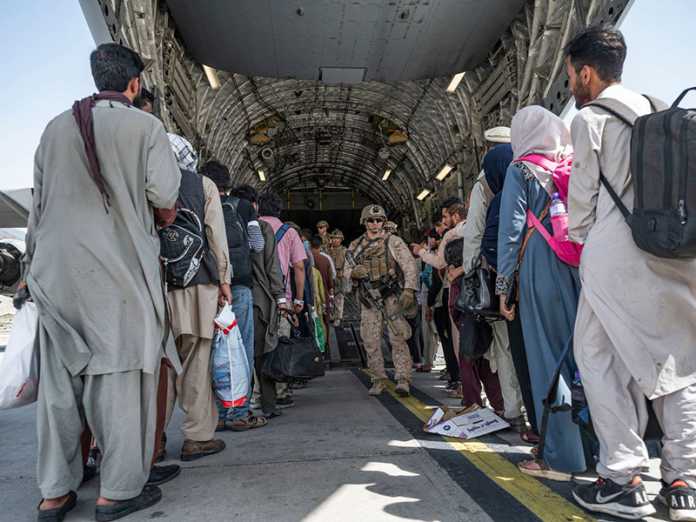
The process of western withdrawal from Afghanistan in August and the scenes at Kabul airport as western allies were ushered out of the country to comply with Taliban demands were about as bad as these processes ever get; inhumane, incoherent and incomplete. It marked a straight strategic failure for the United States and – as its closest ally – for Britain.   

The Realities of Failure

It leaves Afghanistan a worse security problem for the west than before the intervention of 2001; a Taliban government now more dominant across the country than in the 1990s, with terrorist and warlord groups already baked into the mix, and a western alliance much less inclined collectively to stand up for itself than twenty years ago. 

The American-led Afghan policy had been steadily failing since 2012. But that retrievable failure was turned into a disaster by President Trump’s foolish negotiating strategy with the Taliban, and then into a presentational catastrophe by President Biden’s decision just to cut and run. Like other western partners, Britain had no choice but to cut and run with it, and now fully shares in the international ignominy and the betrayal of those Afghans who were persuaded to believe in western policy. 

Even more than the US, Britain has little else to offer Afghanistan than a prayer for the weak and a cheer for the brave. Except that now the weak are the brave, and the world watches to see if those elements of Afghan civil society that were nurtured over twenty years and who trusted us are capable of standing up to the Islamo-fascism of the Taliban – the girls in school, the small businesses, the journalists, the lawyers and doctors, the sports teams. If so, then they will be doing it with no more help than our good wishes. 

The British government tried to put a brave face on the situation, but in the US, Chairman of the Joint Chiefs of Staff, General Milley was quite straightforward in the assessment he offered to Congress at the end of September: ‘The war was a strategic failure’, he said, ‘there’s a cumulative effect to a series of strategic decisions that go way back’. 

Milley’s remarks were a recognition that the strategic failure in Afghanistan was a long-term one; a collision of aspirations with some hard realities. Whether the final withdrawal could have been handled differently, the strategic failure goes much deeper than in the events of 2021 and it cannot  be shrugged off as just one botched operation.  

For a country like Britain, that long-term failure throws up some significant strategic challenges which further emphasise the reality that we have not just been living through an era of change, but more likely a change of era. The outcome in Afghanistan has pin-pointed it.     

Strategic Costs

In March the British government produced the ‘Integrated Review’ – its strategic judgement on how Brexit had propelled a ‘global Britain’ orientation for the future. The review was explicit in naming China and Russia – in their own distinctive ways – as Britain’s chief strategic adversaries for the future. These are the two major powers who have gained the most geopolitical advantage from the Afghanistan situation. US influence across Central Asia has effectively ended; western economic and political ideals are in retreat and troubled countries like Afghanistan, Pakistan, Bangladesh or Turkmenistan have little choice but to lean on China, both for political support and essential financial assistance if the IMF and western powers try to boycott the Taliban government. Beijing talks with Taliban leaders predated the fall of Kabul by some time. Taliban leaders were reportedly clear that they understood China’s need for reassurance that the East Turkestan Islamic Movement, whom China blames for its terrorist attacks in Xinjiang province, would not be tolerated by Kabul.  

And on China’s plus side, Afghanistan is estimated to have something from $1 trillion to $3 trillion in natural resources, including precious stones, chromite ore, platinum, lithium and uranium, not to mention great hydro-electric power potential. China can easily pursue its mining interests in the country and it now has a major opportunity to strengthen its Belt and Road Initiative network across the region. A Peshawar-to-Kabul motorway would be a key element that would create an Afghan/Pakistan core to its BRI ambitions centred on the growth of Gwaidar port and the link to Tashkurgan, just inside Xinjiang on the border with Afghanistan. China will press for Afghanistan formally to join the China-Pakistan Economic Corridor (CPEC), notwithstanding fierce Indian opposition to it. The only possible upside for western powers is that, though China will hardly care about human rights and gender outrages in a Taliban Afghanistan, it will nevertheless be in Beijing’s interests to prevent outright instability across its BRI routes, and Beijing is likely to be cautious in the way it exploits the emerging political and economic vacuum across the region. 

There are geopolitical gains in the region for Russia as well. With US and western influence effectively removed, Moscow will more easily be able to re-engage with the Central Asian autocracies – even exploit their growing resistance to Chinese influence – as part of President Putin’s efforts to win back regional influence that was intrinsic across the territories of the old Soviet Union. Certainly, a reordering of regional priorities is on the cards as Russia, China, Iran, Pakistan and India all consider the longer-term implications of the western retreat. 

For Britain, there is also a more local strategic downside in its loss of credibility as a political mentor to Pakistan, in particular. In Islamabad, Prime Minister Imran Khan claims to be vindicated in his long-standing opposition to western intervention in Afghanistan and his vocal opposition to the US-led ‘War on Terror’. A recent Gallup poll in Pakistan found 55% of respondents were reportedly ‘happy’ that the Taliban were back in control in Afghanistan, and Islamabad made a big diplomatic statement – warmly approved by Imran Khan – in sending ISI Director General, Lt. Gen Faiz Hameed for discussions with Taleban leaders in Kabul less than a week after it fell into their hands. 

Imran Khan hopes to develop Pakistan’s role as a ‘strategic bridge ‘in South Asia – helping to ‘engage’ and ‘incentivise’ Taliban leaders to follow international norms, while pushing for international recognition of the Taliban government.  He wants to create a new relationship with China. He has seen a spike in his domestic popularity as a result of western defeat in Afghanistan and Khan is now rated as having an excellent chance of re-election in 2023. Though Britain traditionally had a better and more sympathetic relationship with Pakistan than did the US, it will be difficult for London to hold onto this as the strategic wheel continues to turn across south and central Asia. 

There may be some strategic compensation for Britain in a greater willingness in India to reach out to other strategic partners as New Delhi is ever-more alarmed at the growth of Chinese influence. There was, for example, a broad welcome for AUKUS – the Australia, US and British defence pact – announced in September. But this has a long way to go before it makes much strategic difference to any of the partners, and India will be looking for deeper commitments to its security than countries the size of Britain or Australia can provide. AUKUS can only ever be one part of a much larger security architecture in the Indo-Pacific that will, in any case, leave Britain having to make finely balanced judgements between extended security for partners in the region against Chinese bullying and its own economic well-being as a highly globalised economic actor in Europe.    

Failure Also Comes Home

Though the Afghanistan war was never directly related to British security in Europe and the North Atlantic, the longer-term strategic effects of the evacuation and the fall of Kabul may nevertheless be felt most keenly by Britain in its own home region.  

On one side, the behaviour of the Biden Administration indicates that its advertised ‘foreign policy for the middle classes’ is an expression of a more enlightened version of President Trump’s ‘America First’ approach. Biden’s US may believe in bolstering its international alliances everywhere, but its approach is proving to be as ‘transactional’ as at any time since the end of the Clinton Administration in 2001. Being on the wrong end of unilateral US decision-making over Afghanistan and then the announcement of the AUKUS pact, the Europeans felt they might as well have been dealing with the Trump Administration. It was not an auspicious start to a new transatlantic relationship and as a former NATO Secretary General observed, both Afghanistan and AUKUS simply underlined the fact that Europe was not America’s primary security concern any more.  

And while Britain may bask in the privileged reflection of the AUKUS pact for a while, it is abundantly clear that it was merely a facilitator of this Washington/Canberra technological rethink and that Britain must still deal with the serious political fall-out from AUKUS within the European neighbourhood that matters most to its own security. 

While on the other side of the equation, Russia is evidently emboldened by the Afghan failure in its dealings with Europe and across the Mediterranean. Western democracies have taken a big credibility hit in the eyes of the autocracies and the uncommitted of the world. It may result in more challenges to the status quo as the West’s adversaries test the resolve of a wounded US to uphold its ‘western values’ when its own hard interests are not directly at stake. It is not difficult to envisage circumstances in areas such as Southeast Europe, the Eastern Mediterranean or East Africa, where old challenges will intensify or new challenges arise.  

Recent history in Iraq, Syria, Libya and now Afghanistan indicates that the going is getting tougher for Western democracies, and particularly for the European ‘middle powers’ as they try to maintain a liberal democratic status quo. Their ‘hard power’ is a diminishing national asset for them all and is evidently failing in a world where a renewal of great power rivalry has put the emphasis back on strong national economic and military resources. The European middle powers must respond more than ever with their ‘soft power’ assets – the attractiveness and natural magnetism of their societies – to help shape the global environment to their best strategic advantage.  

Afghanistan became a spectacular western failure in trying over twenty years to apply both hard and soft power for a consistent political purpose. And after all the anger, the guilt, the cynicism and the weasel words at the final tragedy of Kabul, this should be something the British policy establishment might reflect on as the problem of combining soft and hard power becomes far more critical to national security – and a lot closer to home. 


About the Author 

Professor Michael Clarke

Professor Michael Clarke is the former Director General of the Royal United Services Institute. His latest book, published in November, is Britain’s Persuaders: Soft Power in a Hard World (I.B.Tauris/Bloomsbury) 

How to Cash Out Your Bitcoin through Sports Betting

Bitcoin

Cryptocurrency is now a popular option with sports betting. Since cryptos were introduced to the world in 2009 through the Bitcoin whitepaper, they have grown faster than expected. Although cryptocurrencies have had tremendous growth, they are not accepted everywhere. Luckily there are several ways that you can convert bitcoin into fiat currency.

Wondering how to cash out Bitcoin? Well, look no further as this article outlines a number of ways in which you can convert bitcoin into cash.

Using Bitcoin for Sports Betting

Betting with cryptocurrencies, especially Bitcoin, has gained popularity in the sports betting industry. This is probably because it comes with its perks. Some of the benefits include easier deposits, fast withdrawals, reduced transaction fees, top-notch security, elimination of third parties and access to more online sportsbooks. Bonuses and promotions are some of the best approaches used by gaming platforms and you will thus find punters searching for top-rated no deposit bonus sportsbooks with juicy offers.

If you are placing bets using bitcoin, you are probably ahead of the curve as a punter. However, if you have not braced the new norm well, it is time you begin paying attention as using bitcoin for withdrawals and deposits at online sportsbooks is the wave of the future. Cashing out bitcoin can help you withdraw large amounts.

Convert Bitcoin via Cryptocurrency Exchange

One of the easiest methods to cash out Bitcoin is through an online cryptocurrency exchange. With this method, the third-party exchange makes it easy to sell your Bitcoin for EUR, USD, MYR, GBR or other fiat currencies.

To begin, you need to find an exchange that supports your country. For instance, some of the places you can sell your bitcoin in the USA include Coinbase, Bitstamp, BlockFi and Paybis in Australia, Independence Reserve and China, Huobi.

For this method to work, first, you need to sign up and complete the verification process. Secondly, you need to deposit or buy bitcoin into your account and finally cash out your bitcoin via PayPal or bank transfer.

The method is simple and secure; unfortunately, it is not the fastest way as it can take up to 5 days depending on your country and the platform you are using to get your money.

Selling your Bitcoin Using LocalBitcoins

This is a peer-to-peer Bitcoin exchange that was founded in 2012. LocalBitcoins is a platform that makes it possible for direct trading between potential buyers and sellers. The platform serves more than 1.35 million people across 249 countries.

LocalBitcoins is most preferred because individuals only deal directly with buyers and no intermediaries are involved. In addition to this, the platform also offers escrow services to protect both bitcoin sellers and buyers.

Other than this, you can decide how much you want to sell your Bitcoin for as well as request any payment method that you like. Examples of payment options you can choose from consist of Payoneer, bank transfer, PayPal and Western Union.

Keep in mind that even though you can trade directly with other people, it is vital to conduct transactions through peer-to-peer platforms to resolve any disputes, provide escrow, and mediate transactions.

Get Cash with a Bitcoin ATM

If you do not prefer to involve yourself in ID verification processes and lengthy sign-up, then getting cash from a physical ATM is the best choice. Bitcoin ATMs allow you to convert bitcoin into cash easily.

Like the standard ATMs allow you to withdraw your currency, Bitcoin ATMs allow you to buy bitcoins with fiat money and sell your bitcoin for local cash.

With more Bitcoin ATMs coming up, it is much easier to find a bitcoin ATM near you. You can use Coin Radar to find the nearest Bitcoin ATM. However, it is crucial to bear in mind that not all machines are the same. Each machine offers different fees, buy or sell limits and some supported cryptocurrencies.

Unfortunately, this method only supports small transactions as the ATMs have deposit and withdrawal limits between $1000 to 10,000. Another drawback of this method is that it involves high transaction fees.

However, if you need to cash out bitcoins, a fast Bitcoin ATM is the most feasible option.

Utilize Your Bitcoins Using Bitcoin Debit Card

A bitcoin debit card is an option that won’t turn bitcoins into cash. However, it will allow you to utilize your bitcoins the same way you use your standard debit card.

By loading your bitcoins into your debit card, they will be converted into fiat money such as EUR, USD, AUD or more. Having a bitcoin debit card makes it possible to spend your bitcoins by buying or paying for anything both online or offline, provided they accept MasterCard or VISA.

Apart from that, you can withdraw cash at an ATM anywhere in the world only if VISA/ MasterCard are accepted. Some of the well-known bitcoin debit cards consist of Crypto.Com and Wirex Visa.

Crypto.com gives cardholders Visa debit cards with no annual fees that you can top up with cryptocurrency or fiat money. This debit card allows you to earn rewards of 1-8% in regard to the amount you have spent on your wallet the past six months.

Wirex Visa, on the other hand, supports more than 150 forms of currency; therefore, you can make international purchases without exchange fees or additional charges.

Bitcoin Money

Since the invention of cryptocurrency in 2009, Bitcoin has gained popularity in sports betting. However, not all places accept cryptocurrency as a method of payment. Luckily, you can convert bitcoin into your local currency through converting bitcoin via cryptocurrency exchange, selling to LocalBitcoins, withdrawing from bitcoin ATMs and using Bitcoin debit card.

Is Sports Betting a Good Investment?

Chance to Make Cash

You probably understand there are different forms of investments if you have been in the investment world for a while now. You can either decide to go for low-risk investments involving fixed-term bonds and cash deposits or choose high-risk investments like shares and stocks where you have no guarantee that your capital will increase.

Sports betting is also another form of investment that has seen rapid development due to technological improvements. Not only does it offer entertainment value and convenience, but it is also easy to start and allows investors to realize both positive and negative returns, making it ideal for risk-takers.

However, you have to consider the risks so that you can get reasonable returns. This article outlines a few strategies that can help you make an informed decision in your sports betting investment and some of the benefits of this form of investing.

Make Use of Data-Driven Investment Strategies

Most investors get into sports betting thinking their knowledge of sports is adequate for making smart investments. Unfortunately, it doesn’t work like this. You require statistical data on the previous matches so that you can make the correct predictions. You can also factor in other elements like weather conditions during the game, coaches’ comments, and slight injuries in coming up with a data-driven investment strategy. You must also ensure that you use a site or sports betting app with awesome reviews to avoid being scammed.

Place Value Bets

Most investors assume since sports betting involves luck and chance, all it takes is to place the bets randomly. This is not the right approach as it doesn’t increase your chances of winning.

On the other hand, value bets allow you to profit from sports betting by wagering in undervalued markets. However, the fact that the general public prefers a specific side does not guarantee it is the winning side.

Manage Your Bankroll

Are you aware of how much you are going to make in each bet? Ensure that you always strive to earn more than your wager. Manage your bankroll by ensuring that you do not lose more than what you are making.

The unit and percentage of bankroll are the two variations that you should keep your eyes on. The unit makes sure that you are using fixed amounts for your wager. On the other hand, the percentage allows you to balance your risk against the potential wins associated with each bet you place.

Be Consistent

If you want to make money through sports betting, you need to be consistent. You cannot be successful in betting if you only do it once in a while. Furthermore, the more you bet, the more experience you get after learning more betting strategies.

Convenience

There are lots of hobbies out there. Unfortunately, you can’t play them all the time. This is because some games are costly, and thus you can’t afford to engage in them all the time. Luckily, sports betting is an affordable pastime that you can enjoy any day and time. Apart from that, you have the option of playing at online or land-based casinos and still get the benefits that the game offers. Sports betting, therefore, allows you to make a bet at any time regardless of your location, provided you have access to the internet.

Easy to Start

You are required to follow specific rules and adhere to scheduled times when playing various games. This is always a challenge if your schedule is too tight or you lack the resources. The most pleasing thing about sports betting is that you don’t need any financial commitment before staking. All you need might be only $5 to begin staking. With this amount of money, you can bet from time to time.

Provides Entertainment

Most sports betting sites provide immense entertainment to bettors; that’s why most people invest in sports betting. Nothing is thrilling, interesting and fun, like a game that involves real money. Regardless of the team, you place your wager on, the main agenda will be supporting it and wishing it wins. However, you are advised not to place all your emotions on betting and thus be ready for any outcome.

Chance to Make Cash

Another great advantage that sports betting holds is that it provides an opportunity to make money. Any amount of cash you use when betting can earn you some profit as long as you bet on a reputable site and use the right strategies. When betting, however, you need to be patient and accept losses as this allows you to control your emotions.

Bikers

With the rapid advancements in technology, there has been incredible growth in the sports betting industry. Not only does it provide entertainment, easy start-up and convenience, but it also provides an opportunity to make money. As an investor, however, you need to follow the right strategies so that you can enjoy great returns if you invest in sports betting. 

The Sports Business Venture

Motorsports

Sports betting was estimated to have generated $388.3 billion in 2020 and has been growing over the years due to the advancement in technology. In this era, you can place bets with independent bookmaking agents within your area or even go beyond the borders. As a punter, however, the preference of who you place your bets with is yours. But there are a few basic things to keep in mind before you get started.

Choosing the right sportsbook is crucial, just like some of the bets that you decide to place. Picking the right site improves your chances of winning and your general experience. To help you make the right decision, here are a few ways to choose the right sports betting website.

Read Online Reviews

Reading third-party reviews and talking to fellow punters is an ideal way to begin. This allows you to know what players are saying about the bookmaker. Feedback, comments from current customers and online reviews will help you settle for the best Offshore Sportsbooks if you want to experience something new.

Find reviews that contain information like deposit options present, bonuses present, sports covered and user experience. This will help you pick the right betting site as you will be having real insight regarding the site.

Customer Support

The finest betting sites provide customer services all the time, and they respond promptly to all the queries once contacted by customers. Customer support services might seem unnecessary in your first days as a punter. But as you grow into sports betting, that’s when you realize the need for customer service.

Customer support allows you to gain the required information so that you can place the bets accordingly. If the services are lacking, there are higher chances that you will be misinformed. As a punter, pay attention to customer support and confirm it is working efficiently before making your choice.

Bonuses Available

Sportsbook agencies normally use strong bonuses so that they can entice gamblers. Bonuses can boost your winnings. Therefore, as a punter, when choosing a bookmaker, bonuses and free bets should be on your top list.

You might receive welcome bonuses when you sign up on a particular site. Once a member, you will continue receiving other types of bonuses and promotions. If you benefit from bonuses and promotions, you should consider betting sites that offer them more regularly. However, it is also important to make sure that you read the terms and conditions of the bonuses.

Most bonuses have certain restrictions and requirements that you must fulfill before you are allowed to claim any winnings. Read the terms and conditions in the fine print when you receive any promo or bonus.

Betting Options

Most people normally think of sports betting when choosing a bookmaker. It is best to have an open mind as there are other betting alternatives that are offered by other websites.

These alternatives consist of race books, casinos, poker rooms, and lottery and sports contests. It is important to note that the quality of these products varies from one provider to the next. Before committing to any sportsbook, factor in first what you are looking for in terms of betting action.

Conduct your Research

Choosing the right sportsbook is the dream of every punter. Although conducting your own research is the hardest way of finding the right sports betting sites as it is time-consuming and it is impossible to get all the info you require.

However, as a punter, it is critical you find as much as you can about the site and ensure that you do it correctly so that you do not pick the wrong website. There are a bunch of unreliable betting sites, but if you do your homework, you are definite that you will choose a trusted site. The last thing you need is a bad experience on a site where you are investing real money.

Track Sports

Compatibility

When choosing a betting site, you ought to make sure that it is compatible with your devices. Ensure that the site is compatible with your computer, mobile devices, iPad or even tablet.

It would be best if you also made sure that the site is compatible with you. As a punter, you need a website that you can navigate easily and find what you are looking for without any hassle. In case you find yourself experiencing some difficulty navigating through the site it would be wise to find another sports betting site.

With the growth of the sports betting industry, choosing the right sportsbook has become quite a hassle.  However, factoring in crucial elements such as customer support, online reviews, sites compatibility, betting options and conducting your research can help you choose the right betting site that will improve your betting experience and improve your winning chances.

How Tourists Can Buy Marijuana in Santa Ana California

How Tourists Can Buy Marijuana in Santa Ana California

Californians have been able to purchase marijuana for medical use since 1996. On January 1, 2018, they gained the right to buy it recreationally too. While you’re likely familiar with the laws requiring 21+ to purchase cannabis legally. . There are limits on how much tourists can purchase, but it’s worth remembering that medical marijuana is still legal in California, so you can always get it if you get a prescription. Here are some details on actually purchasing weed products at a dispensary in California.

Marijuana in California

California made marijuana officially legal under state law. A new recreational cannabis marketplace opened for business at that moment, with hundreds of licensed pot shops opening their doors to serve consumers 21 and older. Anyone with an ID proving they are of legal age can now buy up to an ounce of weed flowers, eight grams of concentrate or edible cannabis products, and unlimited weed-infused soaps and lotions. But don’t expect a free-for-all in which anyone can walk into any store and buy up to an ounce of cannabis without showing any I.D. or being required to purchase a santa ana marijuana product alongside their flower.

Search online for a “recreational cannabis dispensary.

Where can I buy recreational cannabis? Each city has its own laws which govern whether or not you can purchase cannabis in their city. It’s best to speak with people who live or work in the area, especially someone who works at a dispensary. Google is another good resource for finding out if there are any dispensaries in your area.

If you’re 21 or older, it will be easier for you to find a recreational marijuana dispensary that serves both recreational and medical clients. Retail dispensaries are open to the general public—but before showing up at one, check online to verify that it is open.

Buying Weed in California: Bring I.D. and cash

If you’re planning on visiting Santa Ana or another city where weed is made legal, here’s what you need to know before buying an eighth (a popular measure of weed).

First off, anything consumed in public can still be illegal, so don’t light up in the middle of the street. Second, don’t forget your ID. A state-issued piece of identification is required to enter the dispensary. And it doesn’t have to be a driver’s license. Your passport, student or employee identification card, or even a Social Security card will be accepted by most dispensaries. For security purposes, most will need to see your ID before you are allowed in. A Lesser record will not do you any favors if you are caught.…

Lastly, Bring cash. Legal pot in California may not accept credit cards.  That’s because pot shops operate on a cash-only basis since federal law prohibits banks and credit card companies from doing business with the industry.

Buying Weed in California: How much can I buy?

California is home to some of the best marijuana on the planet. Whether you’re looking to buy weed for recreational or medicinal purposes, your trip to this vast state won’t be complete without smoking some dank California cannabis. But there are both restrictions and suggestions on where, when, and how much you should smoke. Purchasing cannabis in California is different from buying any other product or service, so you should educate yourself on the ins and outs of purchasing it legally.

You can buy up to 28.5 grams of any cannabis product, but weed currently costs more per gram than other products. Flowers are sold at about $10-$15 per gram, depending on the dispensary. Then you have concentrates like oil and wax, which are stronger but generally cost between $15-$30 per half gram. Kief, which is the most potent part of weed or hash, may be sold in bulk or individually.


According to the law, California dispensaries may sell you up to 8 grams of concentrates (including edibles, which contain concentrates). However, many dispensaries sell in 1 gram increments. So if you need less than 8 grams, but more than 1 gram — this is where your salesperson can help influence sales.

Buying Weed in California: Budtenders are there to help!

Once you prove your age and state residency, a budtender will guide you through the various strains of cannabis available.

In most dispensaries, the budtenders have been trained to talk you through the various products and tell you what they consider to be the best strain or blend for your particular needs. In general, they’d rather help you than just ring up a sale

Buying Weed in California: Some basic cannabis knowledge goes a long way

One of the more confusing parts of using cannabis is deciphering the various labelling systems for cannabis products. After all, there is no universal standard for cannabis testing or naming conventions. You can’t simply choose something because it sounds good; some knowledge is necessary.

Cannabis strains are primarily known by their type, or “family.” Sativa strains are generally associated with cerebral effects, which are ideal for daytime use. Indica strains are linked with body-centered effects, which are best suited for evening use. Hybrids are a combination of both sativa and indica that produce unique highs.

Takeaway

California is one of the most beautiful and influential states; even their laws are ahead of the curve. If you’re planning on traveling to California soon and want to visit a recreational marijuana dispensary, make sure to keep those handy tips in mind. You’ll not just enjoy your stay but make sure not to catch any form of trouble.

6 Things That Make A Good Trading Strategy

Trade

If you want to become a profitable online trader, it is imperative that you have an effective trading strategy. There are different types of assets you can trade online, and you need to conduct proper planning to keep losses at a minimum. If you are still a beginner, you may be in a hurry to make money, but things aren’t always that simple. There are many things you need to know in order to achieve your goals. Here are 6 things that make a good trading strategy.  

• Trading Plan

First and foremost, you must create a trading plan which is essentially a written set of rules or blueprint that specifies each trader’s entry, money management, and exit. In short, this is a comprehensive decision-making tool for the activity, and it helps you choose what to trade, when to do so, and how to conduct it. Before you risk your money, it is easier to test your idea; this is known as backtesting. You can achieve this by utilizing technology to access historical data to check if it is viable. When backtesting shows positive results, you can develop a plan that you can use in real trading.

As the saying goes, when you fail to plan, then you are planning to fail. Without a solid plan, you may not be able to achieve anything meaningful. Make sure you create a trading plan that suits your needs and also outlines all the measures you can take to ensure success in your endeavor. While you can use someone’s plan as an outline, remember their approach to trading and attitude toward risk could differ significantly. Therefore, your plan must clearly state your motivation and what you want to achieve from trading. You must also include the time commitment you are willing to make in your plan. 

The other purpose of a trading plan is that it helps you outline your trading goals and risk management rules that will help protect your investment. You should identify the markets you want to venture into in your trading. A plan is effective since it outlines your strategy regarding how you intend to enter and exit trades. For instance, you can decide to buy and hold forex and sell at an appropriate time when the price increases. A good trading plan will help you make meaningful decisions and avoid using your emotions when you undertake your trade.  

• Study The Markets

One thing you should know from the onset is that you must stay abreast of the latest news about financial markets. Access information about any other kind of trade you wish to pursue. You can use the details of your trading plan to determine the market you are interested in. For instance, a stock trading plan and forex trading plan are different, so you should first try to evaluate your expertise regarding markets and asset classes. Try to learn as much as you can about the specific type of investment you want to make. Consider other aspects like market volatility, market opening, and closing, and calculate the potential profit you can make from a specific trade. 

You can use technology to your advantage if you want to access information and take advantage of the different tools used to evaluate the markets. For instance, you can choose the best website that provides reviews and the best education about online trading. Professional brokers at www.binaryoptions.com explain that with the right trading tool, you can access guides for beginners, get free trading signals, and learn profitable binary options strategies. When you gain trading knowledge from experts, you can increase your chances of trading profitably. Experienced traders and analysts are committed to providing true information that can help beginners and experienced traders to stay on course. 

You need to remain focused on learning new things every day to improve your knowledge about the markets. This is an ongoing process that helps you research and understand facts that will sharpen your instincts. World politics, economic trends, and news events are some of the things you must stay abreast with since they can impact the markets in different ways. You must know that the markets are dynamic and subject to changes. It is essential to use technology to your advantage to analyze the markets so that you are able to make informed decisions. If you keep current with all the products and details, you will enjoy better rewards from your efforts. 

• Treat Trading Like Business

You must treat trading as a full-time business, not a hobby if you want to be successful. Remember that for you to begin your first trade, you invest some money, so this is not different from any other type of business. To safeguard your business, you must approach trading seriously and not view it as something you simply do for fun. You will lack the real commitment to learning if you take trading as a hobby. To trade viably, you must bear in mind that trading does not provide a regular paycheck. Therefore, if you are serious, it is crucial that you develop a positive attitude to help you achieve your objectives. 

It is critical to set realistic goals which are attainable to avoid frustration when you begin your trade. When you are in business, you should know that you are bound to incur expenses, taxes, losses, and face uncertainty and risk. As a trader, you need to research and strategize since you are a small business owner. This will help you maximize your business potential if you have achievable goals in place. 

The markets are dynamic, so it is imperative to focus on the big picture when you trade. Losing is part of the game, and it must not deter you when things don’t go the way you expect them to. Your emotions will not impact your trading performance heavily once you accept that losses and wins are common and part of the business. You are likely to encounter several risks that can affect your trade. This is the main reason why you must set realistic goals to keep your trading in perspective. You must earn a reasonable amount of money over time. If you treat trading as a get-rich-quick scheme, you may be setting yourself up for failure. This is not an overnight event where you can expect to become a millionaire from your initial trade. 

• Determine the Capital to Use for Trading

Another important thing that can help you make a good trading strategy is to determine the amount of money you can set aside for trading. Never put yourself in a position where you risk more money than you can get if you want to avoid stress. Even if you are a professional trader, you can lose your trading capital since the whole exercise involves a lot of risks. Try to use a demo account to familiarize yourself with how trading functions before you use your real money. You will also learn how to use the trading platform and understand different fixtures that are designed to help you navigate all the variables that can affect your trade. 

You need to learn to protect your trading capital. This can be possible if you exercise financial discipline and train yourself not to take unnecessary risks. Instead, you should do everything that can help you protect your business and only risk money that you can afford to lose. Keep the money in your account until a certain period when you think that it is now expendable. The other thing you must not do is allocate trading money for other purposes like paying your mortgage or any other needs. 

Losing money is often stressful, and this can be worse if you risk all that you have. Raising other capital can be a great challenge. Analyze the trends prevailing in the market first to make an informed decision. As indicated earlier, you must know about the markets and other factors that can affect trade. This can go a long way in helping you avoid making costly mistakes that can affect your entire business.  

• Know When to Stop Trading

Another important rule that can make you a better trader is knowing when you should stop trading. You can use the stop-loss feature which involves a predetermined amount of money you are willing to lose in each trade. This limits the level of risk you are likely to experience since your trade will automatically stop when it reaches a certain amount. The money in your account will not be affected, and this can give you peace of mind. Knowing that you can only lose a specific amount in any trade will help you prevent huge losses. Trading without a stop loss is not a good idea, even though it can lead to a winning trade at times. 

The other important thing you must know is how to exit the trade with a profit. This may not be easy, but you can do it if you exercise financial discipline. Additionally, if your trading plan is ineffective or you have realized that you are an ineffective trader, you must exit the trade. If your plan is characterized by more heavy losses than anticipated, there is no reason to continue with the trade. Your marketing plan may fail to meet expectations due to factors like volatility or changing markets. If you do not see any chance of recovery in the market, it will be a good idea to opt-out and save your money.

When you exit your initial trade, you must maintain your business principles and try to venture into a different market. You must re-evaluate your plan to make necessary changes that can help you start again on a free page. Some traders become ineffective as a result of failing to follow their trading plans. You must take a break if you feel that you are not in good form instead of continuing to risk your money. 

• Evaluate performance

When you start trading, you must constantly revisit your trading plan to check if everything is in order. Always monitor the risks to be able to evaluate your performance. The market prices are constantly changing, so you need to keep pace with all the changes to ensure that you do not record terrible losses. If you are still a novice, you should take on lower-risk trades to have a feel of how the markets function. This will also help you assess your potential for making profits and make necessary adjustments. As you master the art of trading, you can take more risks to increase your chances of gaining bigger profits.

Trading

You must select the risk-reward ratio you are comfortable with to ensure that your trade is profitable. At times, you may realize that you lose more times than you win, but you can still enjoy consistent profits. This depends on the amount of risk you are willing to take. If you have a higher risk-reward ratio, it means the profits you are likely to generate are double the loss you can make in each trade. While determining your ratio for risks and rewards, try to be realistic and deal with attainable figures. 

You must try to access the latest news updates on different events that can affect trade in various ways. For instance, you must follow the market trends to determine the direction of trade, so that you can make an informed decision. You can also detect the risks you are likely to face, and this can help you change tactics before you risk your money. Compare your current performance to previous performances to see the areas that may need attention in your plan. It also is a good idea to seek advice from professional traders to ensure that you do the right thing.   

Trading different things online can allow you to generate passive income over an extended period. To achieve your goals, you need to understand each of the above rules and know how they can work together to help you establish a viable business. The entire exercise requires hard work, patience, and discipline if you want to increase your chances of success in this competitive area.

Home Renovation & Insurance- Facts You Must Know

Home Renovation

Buying a home is a great thing, but you cannot stop there. At some point, you will have to consider a renovation project – from new living room flooring in Brisbane to laundry renovations in Perth. The benefits of renovation extend beyond enhancing your living space with aesthetics and functional features. It can also add value to your property. However, it is easy to focus on the project itself and forget about upgrading your insurance. The truth is that renovation may increase your insurance rate or even reduce it. So you must review your home insurance policy during the project and take the necessary steps. Here are some facts you must know about the upgrades that can affect your home insurance.

Expanding your space

As your family grows, adding square footage to your living space becomes imperative. You may want to build an additional dwelling unit or add an extra floor. In any case, expanding your space may increase your home insurance rates depending on the increase in square footage. You may also consider a different type of coverage for the new addition. For example, water backup coverage is ideal when you build a basement with a new carpet.

Kitchen or bathroom upgrades

Kitchen or bathroom remodeling are popular renovation projects that add value to your property. Adding quality features like custom cabinets and new countertops makes it essential to extend coverage. The idea is to ensure its adequacy so that you need not worry about rebuilding or repairing your upgraded features if something goes amiss. Your insurance agent can help you determine new coverage, especially when consulting a reliable general contractor connecticut. You may even qualify for a discount with features like new electrical or plumbing systems.

Building a pool

A swimming pool is an excellent feature that brings luxury to your living space. But it makes sense to understand the implications it has on your insurance premium. You can Read more on what Home insurance covers and what it doesn’t cover first. Typically, it will not include a swimming pool because its case is different. A standard policy often includes liability coverage for medical costs for injuries to a person on your property. A pool owner must get a higher liability coverage than usual because the chances of premises injuries and lawsuits run high. When venturing into pool installation Brisbane, it’s advisable to engage with insurance specialists who can tailor coverage to specifically address the associated risks. By consulting these experts, you can ensure adequate protection against liabilities that may arise from owning and operating a pool on your property. 

Adding a home office

The concept of a home office is popular these days as gig jobs and remote work are common. But you may need an additional insurance policy after investing in a home office. Regular policies do not provide sufficient protection for equipment for home-based businesses. Even if you have one, do not expect the coverage to be enough to safeguard your supplies, inventory, or specialized machinery. You may bolster the existing home insurance policy or buy an additional business policy to cover everything. 

Roof replacement 

A roof replacement is an ideal project that ensures more safety and adds value to your living space. Even better, it cuts down your insurance premiums, making it a worthy investment for any homeowner. Likewise, upgrading your HVAC system and installing security alarms can also reduce your premium bills. You get extra benefits if you live in areas prone to hurricanes, storms, and thefts. Aluminum guttering could  help your living space as well.

A renovation project can have a far-reaching impact on your home insurance. Before starting with the project, you must consider this factor for better planning and timely coverage upgrades. 

Coinrise – Helping Customers Achieve Their Financial Independence?

Coinrise logo

What is Coinrise? 

Coinrise is a provider of trading and investing services, headquartered in Canada but serving a global audience, aiming to ensure anyone can get involved in the financial industry with the proper tools. The brand uses its expertise accumulated over the years and helps customers take control over their finances, facilitating access to services such as crypto trading, private growth & VC, and private equity. 

Committed to helping people succeed, Coinrise has been providing new features along the way and continues to do so, as financial markets are constantly changing and opportunities arise in different sectors. 

Coinrise Trading Benefits

Firstly, it would be fair to emphasize there are many benefits to trading with Coinrise, including the list of comprehensive products, state-of-the-art trading technologies, fast trade execution, advisory services, and dedicated customer support. 

After working with individual investors and corporates for a long time, the company acquired enough expertise to know how trading infrastructure should be structured, so that anyone can start trading from the comfort of their place, at the office, or while on the go. 

Coinrise trading benefits
Source: https://www.coinrise.ca/benefits/


An increasing number of people view the Coinrise crypto offer as appealing since they can buy derivatives tracking tens of cryptocurrencies. At the same time, with investing services also part of its list, the company ensures ample diversification capabilities. 

Coinrise Trading Platform

To ensure beginners don’t find it hard to trade, as well as to ensure that experienced traders can use a wide array of trading tools, Coinrise designed its unique platform, now offering TradingView charts, risk management tools, and a simple user interface. 

Coinrise Trading Platform
Source: https://www.coinrise.ca/trading/

The platform can be accessed via a browser and does not require any installation. Greater flexibility is thus ensured, as traders can access their accounts at any point and on any type of device. This is a platform operating smoothly on a smartphone or tablet, just like it does on a PC or laptop. 

Coinrise Account Selection

Traders come to the market with different needs and to satisfy them all, Coinrise offers no less than 6 different account types. The Mini account is a low-cost solution available for a very small initial deposit. It comes with competitive commissions and raw spreads, and it is ideal for scalping or high volume trading. 

But even if at this point traders can trade at their will, things are taken even further when it comes to Silver, Gold, Platinum, Diamond, or VIP accounts. Coinrise unlocks a higher welcome bonus, 1-on-1 education courses, weekly managed sessions, trading alerts and other useful benefits. 

Coinrise Bottom Line

Only when they are fully equipped with the right tools, can traders get involved in the financial markets and use all the opportunities arising to their advantage. Coinrise turns out to be a provider where services are well-diversified across a wide range of markets and that transpires into more potential benefits for customers. 

Things are not overcomplicated with Coinrise, as traders can easily open an account, fund it, and then proceed by using the trading platform to look for trade setups. Those with little knowledge can use the educational resources associated with their account type.

EDITOR'S PICK OF THE WEEK

CFO's new mandate. CFO explaining the presentation

The Performance and Transformation Orchestrator: The CFO’s New Mandate in the Age of AI

By Terence Tse CFOs are evolving into AI-driven transformation orchestrators, balancing finance, technology, and strategy while upskilling teams, managing risks, and driving measurable business value. A key insight from this year’s AI for CFOs event, organized...

WISE DECISION MAKER GUIDE

POWER INFLUENCERS

Emerging Trends

The Future of Global Trade