Home Blog Page 794

The Influence of Popular Apps On Today’s Generation and How Different Generations Are Using Them

Social Media

The most popular apps have been a significant influence on today’s generation. These apps have affected and influenced the daily lives of many and the interactions between people. From dating to social media, these apps are changing how we communicate with one another in ways no one could’ve imagined just a few years ago.

According to Gravitee’s live app downloads, the most downloaded apps so far this year include Tik Tok, Facebook, Instagram, WhatsApp, Telegram, and many more. Even though the majority of users of these apps are between 18 and 34 years old, there’s still a significant number of older individuals who enjoy using social media sites such as Facebook for entertainment purposes.

Let’s have a look at the most popular apps of the year and how they are influencing society:

The Social Media App: Facebook

Facebook has changed the way we interact with each other. It’s made us more connected with a global friends network where you can connect with people from all over the world and see what activities they’ve been up to.

The popularity of Facebook won’t be stopping anytime soon either since revenue rose 35% to $29 billion in the 3 months ending in September compared to the same period last year (2020). 

Advertising revenue is largely responsible for the majority of Facebook’s income and that rose by 33% to $28.3 billion too. 

The Entertainment App: YouTube

YouTube is one of the most popular entertainment apps today because it allows users to upload videos that inspire others as well as provide them with advice on how to handle tough situations that occur in their lives. 

YouTube’s impact on today’s society is that it provides people with entertainment. People can watch videos and see what others are doing or talking about so they don’t feel as though they have to go out of their way in order to experience such emotions, actions, and interactions with other human beings.

The Communication App: WhatsApp

WhatsApp is one of the most popular communication apps today because it allows people to communicate with one another through texts and phone calls. WhatsApp provides a way of communication between humans that doesn’t require them to pay money or anything like that. It simply requires them to have the internet and a phone, which is widely available today.

The Fashion App: Pinterest

Pinterest is one of the most popular fashion apps today because it provides users with a place where they can share, organise, and discover creative ideas for their own personal style as well as what might be in style at that moment. 

It has impacted society by providing people with a platform where they can express and share ideas about their own personal style as well as the styles of others without having to pay for anything or worry about censorship. Pinterest provides us with an opportunity to discover new fashion trends, styles, etc.

How are Different Generations Using apps?

Different generations have different preferences when it comes to picking the right app for them, and understanding these demographic nuances will help marketers get more out of building engaging marketing campaigns that can appeal to each generation. 

According to a report presented by Marketing Dive, the mobile apps usage trend among different generations are as follows:

1. Generation Z (Ages 6-23)

Generation Z is the largest consumer group of mobile apps in terms of numbers, which make them an important target for a business like YouTube and Netflix. The most popular apps among this generation are Tik Tok, Snapchat, and Youtube – especially the longer format of the videos.

Gen Z spends 6-9 hours of their time consuming social media. Marketers need to use highly visual ad formats to engage this consumer group. 

2. Millennials/Generation Y (Ages 24-38)

Millennials use mobile apps for entertainment, social media, and networking. Their most commonly used apps are Facebook, Gmail, and Amazon. As a consumer group, Millennials are easy to convince. 

They want products that make their life easier and they don’t care much about the price of it, as long as it’s useful for them. According to studies, Millennials spend at least 4 hours of their time on smartphones.

3. Generation X (Ages 39-53)

Generation X is comprised of busy professionals and families.  They use their mobile devices for communication, health, parenting, entertainment, travel, and lifestyle inspirations. This generation also shows interest in online shopping and buying.  However, this consumer group prefers personal interactions rather than visual stimulation.

Reports show Gen Xers spent 2.5 hours daily using their favourite mobile apps.

4. Baby Boomers (Ages 54-72)

The Baby Boomer generation consists of experienced and influential consumers who have the highest purchasing powers. They use their mobile devices for communication, social media, online banking, news/sports updates, travel inspiration, and eCommerce. 

This generation also shows interest in technology such as driverless cars or artificial intelligence. Reports show Baby Boomers spend about an hour daily using their favourite mobile apps.

Conclusion

The most downloaded apps of the year show some insight into what today’s generation is interested in. We’ve seen how the app market has transformed in the past decade. 

It’s likely that technology will continue to evolve and change as new generations come up with ways of using technology, apps, social media platforms, etc. The bottom line is this- marketers and app developers need to be able to adapt their strategies for each generation if they want success!


Resolvly Shares 4 Ways to Improve Your Finances in the New Year

Personal FInances

Around this time, those of us in the habit of forming New Year’s resolutions often start planning—or at least thinking about—the life changes we’d like to make. Especially given the state of the world in the last couple of years, improving personal money situations is a common goal. But where to start? In this post, Resolvly LLC takes a look at areas of finance many want to improve and how to act.

1. Set a Personal Budget

Most people understand the need to manage monthly expenses, yet many put off creating a personal budget. Sure, it’s not the most fun thing to do, but it’s a great way to track where your money goes each month and a powerful tool for saving money.

Take a monthly approach. Begin by calculating your income. Then list all of your regular monthly expenses—rent or mortgage, utility bills, car payments, credit payments, groceries, and so forth. Refer to your online checking and credit statements if you need help.

Subtract these expenses from your income, and you’ll see how much you’ll have for more discretionary expenses (i.e., clothing and entertainment). This makes it easier to set spending limits. 

2. Re-Budget Your Retirement Fund Contributions

If you’re permanently employed, you might have a retirement fund like a 401(k) or IRA. Many choose to have a regular paycheck deduction that funnels straight into the account, with their employer matching employee contributions. This is basically free money for your retirement.

Set up your monthly retirement contribution to get as close to the IRS’s annual maximum as you can (and count it against your monthly budget). This is a painless and straightforward way to sock away more money for the future.

3. Micromanage Your Credit

You might shrink back a little when you see the word “micromanage” since it calls to mind images of an overbearing boss hovering over your cubicle. But when it comes to personal credit, a micromanager is the best role you can take. A healthy credit score is vital to opening up financial and life opportunities.

Commit to paying at least the minimum due every month. Consider keeping credit purchases at a level where you can pay them off in full every month. Check your credit score three times a year. The three major agencies allow you to check your score without penalty once every year, so stagger your schedule to take advantage of that provision. 

4. Guard Against Identity Theft

Identity theft is, unfortunately, here to stay. Bad actors can wipe out your credit record in one fell swoop. But you can protect your finances against criminal activity.

Along with checking your credit reports regularly, consider signing up with a service that monitors your credit account for fraudulent activity. Both paid and free credit monitoring services check the dark web, scanning for your personal information and alerting you if it encounters a potential problem. 

Get Resolvly On Your Side

Resolvly LLC is a Florida lawyer referral service that finds bar-approved attorneys who resolve consumer debt issues. We help you find practical and legal ways to cut or even vacate unsecured debts, from credit cards and private student loans to business debt and medical bills. Contact us to learn more.

When Survival is on the Line, Can Rebels be the Solution?

creative

By David De Cremer

In times of crisis, companies have no choice other than to face themselves in the mirror and ask what is needed to survive. Such existential questions usually bring about change to ensure that survival on the longer term is achieved. However, too often, under those circumstances, we see organizations retreat and stick to the status quo. Indeed, the default for most organizations is to fall back to what is known and avoid taking risks. In other words, rather than changing one’s ways of acting and working, companies seem to prefer to sit out a crisis. This strategy regretfully hurts too often the resource that companies need the most, which, are its human resources. Rather than investing in people’s resilience, well-being and understanding to deal with crisis events, and as such fostering a work climate where an agile and creative mindset exists, budgets for training, counselling, and coaching are suspended. This is unfortunate, because this way a crisis will not be used as a learning experience for the company and its employees – learning experiences that will be helpful on the short and long term to help a company grow and adjust where needed. Sir Winston Churchill already mentioned in the mid-1940s “never let a good crisis to waste”, and this has since then repeated often by many leaders, most notably by Rahm Emanuel who was advisor to US President Obama and later mayor of Chicago.  

Deciding to play it safe and not having the intention to change anything may at first sight sound comfortable and risk avoiding, but it’s a strategy that may be the riskiest one, especially so on the long term. Crisis situations have in common that once the crisis is over, the business environment will have undergone changes and most likely adopted new ways of working. If one then failed to adopt a mindset to move forward and adapt, companies will find themselves falling behind. Unfortunately, fighting against the human tendency to adhere to the status quo is one of the most difficult things to do for humans (Samuelson & Zeckhauser, 1988). It requires indeed an attitude that allows oneself to leave behind what’s familiar and known and replace those comfortable feelings for uncertain ones. People do not like uncertain situations and will do whatever is needed to keep situations organized, structured and manageable (Epstein, 1999). However, a crisis demands employees willing to challenge traditional ways of looking at your business. People who are willing to break protocol and show nonconformity in their behaviour, with the goal to adapt and bring new perspectives to deal with a changing environment. Recent research has referred to these kind of employees as “rebels.” Those rebels are the ones who are curious and keep asking questions to challenge the status quo to arrive at new strategies and ways of working (Gino, 2018). As such, rebels have become a particular kind of employee to hire if one truly wants to build a work culture where smart ideas are launched to break traditional decision-making and rules that prevent companies from moving forward (Cohan, 2018). It must be noted that not everyone can be a rebel immediately, but most of us do have the potential to be rebels. As such, an important responsibility for organizational leaders in the future may be to support this kind of thinking and actively create a recruitment policy that is on the look-out for those kinds of individuals.  

Crisis situations have in common that once the crisis is over, the business environment will have undergone changes and most likely adopted new ways of working.

Of course, the ability to act and think like a rebel – with the aim to contribute positively to the agility of the company! – requires a mindset that is to some extent culturally determined. In fact, this mindset may be preferred more in Western countries than in Asian ones. In Asia the boundaries between being seen as a rebel or a criminal – in both rule-breaking actions and attitudes – may sometimes seem fuzzy. Indeed, in many Asian countries, traditions matter and the old are respected, so, resistance to change may be relatively high. In line with this observation, in 2021, The Economist noted that a Chinese aphorism teaches that “the young should never go to Sichuan, and the old should never leave.” This rule tries to keep the young away from life’s temptations and instead commit to hard work – without little immediate rewards – to eventually be successful. Today’s younger generation in China, however, is challenging this rule and seems to abandon the expectation to work overtime, deliver the highest quality of work possible and staying focused on and committed to the employer. Instead, they are slacking off from this demanding tradition and have even referred to it as a “silent” form of rebellion (Yan, 2021).   

So, does it seem that rebellious acts may be on the rise in Asia, and if so, will companies in the East see the value of this kind of attitude for their business? One company that – out of necessity – has signalled that they like to see more rebels within their company is Huawei. Huawei is a Chinese telecom giant founded in 1987 by Ren Zhengfei in the city of Shenzhen (Tao, De Cremer, & Chunbo, 2017). The company employs more than 190 000 employees worldwide and has been involved in a tensed relationship with the US especially since the daughter of the founder, Men Wanzhou, who was the company’s CFO, was arrested in Vancouver in December 2018 (on 24 September 2021, prosecutors in the New York federal court communicated that she would be released). An international warrant, issued by the US government, charged Meng and Huawei with bank and wire fraud in violation of American sanctions on Iran. The then-president Donald Trump did not only issue this international warrant, but also dragged especially the Chinese technology company into the trade war that he started with China, making that Huawei became blacklisted by many Western countries (De Cremer, 2020). This has impacted Huawei negatively as can be seen in the revenue of the company of the company in the first quarter of 2021, which dropped with 16.5% compared to their 2020 revenues (Browne, 2021).  

The reason why Ren this time wants the rebel-kind of employee to enter Huawei is that the company pledged to continue to fund research and development programs and therefore they need to create a competitive edge in terms of creativity.

A question that many observers now would also like to see answered is how the Chinese telecom giant will deal with this global set-back. Will the company retreat and leave the global scene? Recently, Ren Zhengfei did provide an answer to question and the answer surprised quite a lot of people. In fact, Ren explained the need for the company to keep expanding outside China because in his view Huawei still has much to learn from the US in terms of science and technology (Yujie, 2021). Therefore, Ren noted explicitly that “We must recruit people who are more capable than us” … “Our compensation packages must align with international talent markets, [be] higher than those offered by local talent markets. This is necessary to attract the best talent.” (Deng, 2021). And this is not where it stops, as Ren has indicated that also “radicals” should be welcomed in the company. Although this sounded rather surprising in the ears of many, it’s not the first time that Ren has made clear that he does appreciate employees not always following the formal directives. To emphasize the customer-centricity of Huawei, Ren has advocated in the past the idea that “everyone in the company must turn their eyes to their customers and their back to their bosses”, basically suggesting that if employees feel constrained by their bosses in providing better service to their customer, then they can rebel (De Cremer, 2017). The reason why Ren this time wants the rebel-kind of employee to enter Huawei is that the company pledged to continue to fund research and development programs and therefore they need to create a competitive edge in terms of creativity. And rebels may be the kind of employees needed to achieve this ambition.   

But, unlike my earlier argument that everyone has the potential to be a rebel and as such companies could build a work climate where everyone is pushing the limits and rules to move the company forward, Ren does think about limiting the number of rebels. Indeed, he has argued that in the battle of Huawei to survive, they do need “to continue climbing the Himalayas, but most of our employees will grow potatoes and graze sheep and cattle at the foot of the mountain to provide a steady flow of food to those who are climbing the mountain.” (Houweling, 2021) The latter can thus be the rebels, whereas the former will have to be the loyal soldiers that do have to adhere to rules and policies to provide a stable foundation for those few rebels to excel.  

Taken together, the rebel mindset is one that has been advocated in the last few years to promote creativity and agility, but at the same time has mainly been seen as a Western phenomenon. We do see, however, that the younger generations in Asia are starting to rebel against certain traditional ways of working and are – in still a hesitant way – looking for alternative approaches to organize their social and work lives. In a rather unexpected turn of events, Huawei seems to have recognized the value of rebels in times of crisis and has advocated their presence in the company. However, they have adopted a rather unique way of using rebels by only allowing a certain number of them in the company, and it still needs to be seen whether this approach will reveal the benefits that so many attribute to rebels. Indeed, rebels need to be seen as a symbolic representative of a work culture that embraces openness and agility and as such are expected to influence each employee at every level of the company. Ren Zhengfei, however, does stick to a hierarchical approach to using rebels to promote innovation where he distinguishes those at the bottom of the mountain and those climbing the mountain. The future will tell whether this distinction will reveal the gains he has in mind. 

About the Author

David De Cremer

David De Cremer is a Provost’s chair and professor in management and organizations at NUS Business School, National University of Singapore. He is the founder and director of the Centre on AI Technology for Humankind at NUS Business school. Before moving to NUS, he was the KPMG endowed chaired professor in management studies and current honorary fellow at Judge Business School, University of Cambridge. He is named one of the World’s top 30 management gurus and speakers in 2020 by the organization GlobalGurus, one of the “2021 Thinkers50 Radar list of 30 next generation business thinkers”, nominated for the Thinkers 50 Digital Thinking Award (a bi-annual event that the Financial Times deemed the “Oscars of Management Thinking”), and included in the World Top 2% of scientists (published in 2020). His latest book is “Leadership by algorithm: Who leads and who follows in the AI era?”   

References: 

Mining Sector Critical to Driving COVID-19 Economic Recovery in Latin America with Collective Mining Leading the Way

Mining

Mining is critical for economic growth in Latin America, providing foreign capital inflows, tax revenue, employment, and improving economic development. While the industry itself is often a staple of many economies, it has become even more critical in the wake of the COVID-19 pandemic. Colombia has been a leader in the Latin American economic resurgence as the Country emerges from the effects of the last 18 months.

Over the past 20 years, Colombia’s extractive sector has played an important role in the country’s GDP and foreign trade. Colombia’s resources in main commodity groups – oil, coal, nickel, emeralds, and gold – offer attractive opportunities for foreign investors seeking untapped value in one of the more business-friendly jurisdictions in Latin America. In the current century, the Colombian government has included the mining industry as a key engine for the future of the Colombian economy in their national development plans. The industry accounts for 2% of GDP, 27% of exports, and 15% of foreign investment, and for 2021 it is expected to grow around 20% based on coal, gold, and copper.

The government sees mining exploration as an opportunity to further diversify the country’s economy. Most of the Colombian land is largely unexplored but holds great economic promise for local communities in partnership with international investors.

Over the past 12 years, tremendous value has been created in Colombia through the exploration and development of mining projects. Local communities have since benefited from improved local infrastructure, reduced unemployment, and fully integrated, local-owned sub-sectors of the economy that thrive on the heels of international funding to these mining regions. 

Colombia has seen a significant increase in gold exploration and mine development because of robust foreign capital inflows amidst promising resource deposits and modern infrastructure. Importantly, the growth of the gold sector in Colombia has increased in an environmentally-friendly and socially responsible way. This has all coincided with upward trending gold prices caused by growing demand from emerging markets as well as shifting investment and asset allocation trends across the global investor base.

This thriving sector of the economy is quite possibly the key to Colombia’s economic recovery from COVID-19. But beyond the recovery, the government has its sights set on much more – sustained economic growth. Colombia requires an economic engine for growth driven by foreign capital inflows, and the gold mining sector is the ideal candidate to help make that happen. 

One example of the responsible, mining-focused recovery in Colombia is the Guayabales project in the Caldas department of Colombia. The project is controlled by Collective Mining Ltd. (TSXV:CNL) – a Canadian-based copper and gold exploration Company with a world-class and proven management team, who were responsible for building Colombia’s modern, large-scale underground gold mine in Continental Gold. Continental was sold to Zijin Mining (China) in March 2020 for $2 billion. 

A Lower Risk, Early Stage Play with Potentially Large Upside

Investors in Collective Mining are gaining exposure to an extensively de-risked project considering the proven management team’s know-how, their familiarity with Colombia’s environmental and social considerations, and finally an exciting project along strike and north-west of Aris Gold’s 8+ million ounce Marmato deposit just next door.

Collective’s management has put their money where the mouths are, with a significant 40% ownership of the Company’s shares. When combined with a 25% ownership by Toronto-based PowerOne Capital, this leaves an exclusive and valuable opportunity for investors to partner with some of the industry’s most proven and smartest minds when it comes to the Colombian gold sector.

With a strong balance sheet and upwards of $23 million in cash (November, 2021), favorable geology in the region as well as a significant grassroots discovery at the first of five internally generated targets in “Donut”, Guayabales may be at least as lucrative as the Marmato deposit. This could mean an implied valuation worth hundreds of millions of dollars or more for Collective Mining. The grassroots discovery at the “Donut” target, were announced over the last six weeks. 

Highlights from “Donut” include:

  • DOC-2 – 104 metres at 1.3 g/t gold eq. from surface – incl. 18 metres at 4.7 g/t gold eq. from 16 metre depth
  • DOC1 – 106 metres at 0.5 g/t gold eq. from surface
  • DOC-3 – 163 metres at 1.3 g/t gold equivalent from surface including 2 metres at 83.2 g/t gold and 37 g/t silver from 155.6 metres depth
  • DOC-4 – 260 metres at 0.6 g/t gold equivalent from surface including 69 metres @ 0.9 g/t gold and 8 g/t silver from 183 metres depth (DOC-4).
  • DOC-5 – intersected a narrower interval of mineralized breccia before passing through a fault. Upon exiting the fault at 81 metres down-hole, late phase (lower grade) porphyry style mineralization was encountered over a significant interval as follows:
  • 275 metres at 0.2 g/t gold, 5 g/t silver, 0.07% copper from surface.

Additional drilling and assay results from Donut and the recent start of the “Box” target drilling program should help ensuring the Company’s shares stay upfront and in-focus within the investment community. As a result of their early success, management has expanded its drilling program at the entire property to at least 10,000 metres from 7,500 metres. Moreover, the Company recently accelerated the timeline to drill the highest priority targets at “Olympus” and “Victory”, slated to start imminently as opposed to early-2022. 

Meanwhile, the Company’s nearby San Antonio project offers investors further upside at yet another discovery announced in late October. The San Antonio project, like the Guayabales project, is located in the Middle Cauca Gold Belt, 80 km south of Medellin and 50 km north of Manizales, Department of Caldas, Colombia. This area has been the most prolific belt for miocene-aged, porphyry and epithermal vein discoveries within Colombia and multi-million ounce discoveries in recent years include Buriticá, La Colosa, Nueves Chaquiro and Marmato

Highlights from San Antonio include:

  • SAC8 – 710 metres at 0.53 g/t gold equivalent from surface including 133 metres at 0.92 g/t gold equivalent from 470 metre depth 
  • SAC6 – 750 metres at 0.41 g/t gold equivalent from surface including 187 metres at 0.59 g/t gold equivalent from 60 metre depth

Importantly, both drill holes ended in mineralization with copper and molybdenum grades increasing at depth, including:

  • 70 metres at 0.12% copper and 89 ppm molybdenum from 681 metre depth (SAC-6)
  • 133 metres at 0.15% copper and 27 ppm molybdenum from 470 metre depth (SAC-8)

Catalyst Driven Story Through 2022

Investors could be rewarded in short order as potential stock price catalysts emanate from any successful drilling results released over the coming weeks and through year-end. The Company is expected to be quite active in releasing drill results from its ambitious drill program as it moves ahead. 

Colombia’s investment and economic growth plan will be helped along through projects like Guayabales, as will Collective Mining’s ESG standards for environmental and social commitment to the region that will leave a legacy of responsible mining and development for decades to come.

The results to date are a promising start for a Company that could unlock further potential in the region. The Guayabales project would be a boost to the Colombian mining sector and the Caldas Department.

As part of the transition of the mining sector in recent years, Colombia has evolved into a landscape that lends significant support to foreign investors in the operation of mining activities, assuming adequate partnerships are in place at the local level, thus benefiting all stakeholders.

Latin America is returning to economic normalcy again and is building its plan for that economic recovery – with the mining sector at the forefront and Colombia leading the way. 

Understanding the Importance of Packaging

Packaging

You may not think that packaging is a big deal, but it is! Packaging has two purposes: to protect the item and give people information about its contents. But there’s more to it than just what you see on the surface. It communicates aspects of your brand, which influences how customers perceive your company or product. And according to some reports, high end packaging can account for 50% of the cost of manufacturing an item! So what are some things you ought to know about packaging? Let’s explore! 


Packaging Protects The Product

First and foremost, packaging protects the product. For manufacturers, it’s a way to ensure that an item will make it from point A to point B in one piece. This means avoiding any chance of damage during shipment as well as storage until use. But there are other elements of protection as well. For example, you wouldn’t want your product sitting out in the open for too long without anything to protect it from dust or dirt. Or say something was placed on top of your item, packaging can act as cushioning to keep everything from getting damaged. And with new technologies, packing has never been easier. If you’re interested in the case and tray packers, you can click here to learn more about the latest in this industry. These solutions offer innovative designs, cutting-edge technology, and precise product control for effective packaging solutions.

Packaging Promotes Product Identification

Second, packaging helps to communicate what the item is and where it came from. On the packaging of many products, especially food products, there is a description of the ingredients as well as nutritional information. Instructions for use and special storage conditions may also be printed on the packaging. If the item is a toy, you might see what age group it’s best for and whether or not there are any assembly steps to follow before playtime. All of these things can help customers identify an item more easily. PKGMAKER is one of the best custom flexible packaging. Packaging company can help you out to promote your products with unique designs that will attract customers eye.

Packaging Helps With Brand Expression & Consistency

Packaging also offers brands a unique way to express their brand identity consistently across all channels. This means incorporating your logo, colors, and overall design in every aspect of the packaging from the outside to what’s included on the inside. The idea behind this is that if a consumer sees something they have purchased previously, even without knowing it was manufactured by your company, they will know exactly who made it based on how it looks. This type of recognition can help your brand stay top-of-mind with consumers every time they see your product, leading to more sales in the long run. For consistent and innovative packaging, you can work with packaging design companies like zenpack.us, who will ensure that everything from designing to manufacturing to logistics is done in a timely manner as well as in a way that makes your brand stand out.

Grocery Packaging

Packaging Can Serve As Art

Another thing you might not have known about the packaging is that it can serve as a work of art. The shape, size, and design all provide an opportunity to communicate the brand in a unique way. For example, did you notice Starbucks’ use of seasonal cups, especially around the holidays? With their new artistic designs, it’s easy to see how these cups can help build their brand and increase visibility.

Packaging Helps Differentiate Products From Competitors

Packaging also provides an opportunity for product differentiation. Because there are so many different products to choose from these days, each one must be specifically designed in order to stand out. While the goal of every company is to have their items purchased by customers, brands know that they have to offer something different compared to the rest of the pack. And this means finding a way to make their product stand out from the others. For example, simple and clean labels can often say a lot about what you’ll find inside. If there are so many items to choose from, packaging becomes crucial to making it easier for customers to choose their product.

Packaging Creates Positive Expectations

One more benefit of packaging is that it offers an opportunity to create positive expectations. If the packaging is designed well, it can help customers imagine how their product experience will be once they have purchased your item. For example, if you are selling a board game, the box might include images of what all comes included in the set. Or if you care about being eco-friendly, you might want to mention that your packaging is made of recycled material. There are lots of ways to make your packaging inspirational, it just depends on what you are selling and what you would like customers to expect.

Packaging Helps You In Aiding Marketing 

Finally, packaging plays a role in your marketing strategy. There are many different types of tactics you can use to market your products, but the packaging is often overlooked. Its purpose is often taken for granted as being secondary to the product inside. However, it’s actually one way that you can reach potential customers, especially online where they might not be able to see your product in person. Packaging can include the name of your company as well as its logo, colors, and overall design. For example, think of any product Apple has made over the years or luxury car brands like Ferrari or Porsche. These are all companies that have used packaging to enhance their brand image and capture a target audience. It’s a way to build brand awareness for those who may not have heard of you before or learn more about what you do. In addition to this, good packaging will improve sales and that has been proven time and time again.

Packaging is an important aspect of any product. It helps you differentiate products from competitors, communicate your brand in a unique way, and even create positive expectations for customers by providing them with what they might expect when they purchase the item. Packaging also helps you in your marketing strategy by providing a way to reach potential customers and build brand awareness.  Think about how much time has been spent on packaging design over the years – it’s not something to take lightly! This article has covered only some of the many benefits of product packaging, but hopefully, it has given you enough information to get started with your next design! 

How To Have Even More Fun While Gaming Online

Gaming

In this article, you will find out how gambling can make playing video games more fun.  Gaming has become a very popular activity and even gambling found its way into it. Video games and gaming have become a normal part of society and gambling is too. The allure of gambling and the fun games attract many people to play for both entertainment as well as a way to earn money. 

There are many aspects to this, from online casinos to popular video games having a built-in betting system. In order to learn more about how gambling makes gaming more enjoyable, keep reading!

Online Casinos  

They are not only for gambling but many of them offer casino games to play for entertainment purposes. This adds another dimension of fun that gambling used to be strictly associated with.

Many people do enjoy gambling, playing some online casinos is nothing more than a game and this is what makes gambling so much fun since it offers something everyone can enjoy. Playing in a free bet casino while gambling is all about having fun and experimenting something new, if you are watching your wallet at the same time then there’s even more fun in it since gambling may become less of an addiction if there is no money involved in it.  Casino games are not gambling per se but fun games that can be played on an online casino with real money bets. While gambling is the risk of losing money, gambling without betting any cash enables you to have more fun gambling with no risks involved.

Uncertainty as Part of the Game

Many video games have a certain system of uncertainty built into them as part of the game mechanics. One could argue that that is already a form of gambling as  the player gambles with their own time and effort as they try to reach a high score.

However, gambling is gambling even if you don’t have money at risk. There are many people who would prefer not to gamble with real money since it reduces the entertainment factor. One could argue that gambling with virtual items equalizes the game since both players can win or lose an item which has no actual value; however, another argument is that gambling provides extra excitement for winning something valuable – maybe even more than winning cash.

The gambling aspect of gaming comes down to one simple fact: gambling is exciting because it makes you feel like you’re getting something out of nothing, whether it’s by chance or skill or time invested; gambling enables this feeling through gambling with high-value items instead of gambling with money. And, of course, high value items in a video game can be a whole array of things besides money. 

Betting While Gaming

The majority of video games do not have an explicit betting system and are played for other reasons, such as relaxation or connecting people. However, in some games, especially those that have large online communities such as World of Warcraft, gambling can be added to the game for extra fun, and has indeed become very present on certain servers.

Many players engage in these activities casually, while others take it more seriously, incorporating different ways to enhance their experience. If you’re interested in exploring platforms that offer this, you can visit 91 Club for additional options and features.

The gambling aspect of multiplayer games is interesting since gambling with other people adds more intensity and excitement than gambling alone. Gambling and betting against other players while playing a game is an interesting experience since it increases the pressure of the gambling situation; gambling becomes less about losing one’s investment and more about  gambling to win against other people.

However, gambling with real money is probably not the best way of enjoying gambling in video games since it also means gambling with other players’ time and effort which can make gambling less fun since it’s no longer about winning against chance but winning against other people who may or may not be more skilled at that game than you are. 

Betting

Legal Issues

This whole conundrum of mixing video games and gambling has created certain legal issues as well. For starters, minors are exposed  to gambling without any protection, but also gambling addiction is something to be taken into consideration since video games are already addictive by themselves. 

Another issue that comes up with gambling in online communities is the fact that gambling with items or currency that you cannot easily turn into money can lead players to try and sell it through less than legal means, which creates an interesting situation for game service providers who lose their cut of the profits if someone decides to sell their virtual items on the black market.

There are currently no gambling laws regarding video games so it’s unclear how this will pan out in terms of legislation, but a couple of examples have shown what people can expect – Fifa and Overwatch have been fined because their “random loot boxes” were encouraging gambling behaviour in minors. As gambling becomes more socially acceptable, it is likely that gambling in video games will become more popular.

The Numbers Behind It

There is a growing number of people who play video games online, but also who gamble online. Statistics show that gambling and gambling addiction is a growing problem and gambling has become more and more accepted as a form of entertainment.

There are many reasons for this – gambling establishes social relationships, gambling can be entertaining, gambling with real money offers extra excitement, gambling provides immediate results etc. Also, online gambling is convenient since it can be done from just about anywhere at any time. 

The video game industry has come under scrutiny because of the emerging trend of combining gambling and gaming; however, even though this trend may lead to undesirable consequences such as gambling addiction and underage gambling, there is no sign that either side will stop pushing towards their own goals: companies want their cut of the profits and gamblers want to gamble because they enjoy it so much.       

Keyboard

Gaming is a favorite pastime for the masses, but gambling has also found its way into this popular activity. Gamers are often lured by gambling’s allure to earn money or just have even more fun while playing games online.  However, gambling can become addictive and lead some people down paths of financial ruin. With that in mind, it’s important to be aware of these risks when gaming becomes an obsession rather than entertainment. But if you’re careful with your gambling habits, you will be able to safely swim through those waters and enjoy them to their full extent. 

Why It is Important to Go Green: 6 Crucial Reasons

Going green

Is it really essential to go green? Yes, it is vital to go green, and it actually has lots of benefits. Green living helps in making the entire planet sustainable and habitable. It’s more about conserving the environment from air pollution, water pollution, global warming, and much more. 

There are a lot of ways to go green. The concept of going green is all about practicing and learning an eco-friendly lifestyle that will help protect the environment and conserve natural resources, biodiversity, and habitats. 

To contribute your bit to the environment, you can take help from Aquamonix. They aim at creating a more sustainable and habitable environment by using innovative technology. It further helps in empowering communities to manage, prepare and respond to natural disasters through early detection and also helps in saving the lives of the people. 

In this article, to help you go green and protect this environment, we have listed six crucial reasons below. Let us have a look:-

1. Reduce electricity bills.

The first and foremost reason to go green is something that almost everyone wants to do. It is about reducing electricity bills and thereby saving money. You need to get energy-saving light bulbs at your places. By going green like this, you can actually save around 20% on your electricity bills. As an alternative, you can also invest in getting solar panels where you get back your money within a few years as well.

2. Reduce your water bills.

Reducing water bills is yet another great reason if you are looking forward to going green. Just by going green, you can actually save thousands of bucks and spend it on your other hobbies or children. For instance, energy star appliances are a good start that can be followed by efficient plumbing systems. By choosing a new and eco-friendly model, you can actually get your water bills reduced to over one gallon per flush. 

3. Need to preserve the environment.

If you really wish to go green and preserve the environment, there is a need to change your mindset. Instead of cutting down all the trees, you need to cut down only those trees which are in the way and use only such designs that see only minimal damage to the environment. Think about keeping more trees as it will help you in providing shade to your buildings and block the unwanted wind from getting inside your home.

4. Try making your home more durable.

Making your home durable is yet another critical reason if you are looking forward to going green. Though the cost of green and eco-friendly products may be a bit expensive, always remember that these products are more durable and cheaper in the long run. So, always try to make your home durable by way of incorporating eco-friendly products.

5. Helps in improving your overall health.

One of the main reasons why going green is essential is that it helps in improving and taking care of health. Being the most critical thing in the entire world, health must always be our first priority. So, going green can help you in getting your overall health improved up to a considerable extent.

6. Become a better human being.

Last but not least, going green can really bring a considerable change in your attitude because it makes you more aware of what you wear, what you eat, and the impact of your personal consumption.

Going green actually influences every bit of your personality since you tend to become more tolerant and open to others, which ultimately changes your personality. Thus contributing to your overall development.

To Conclude

So, with the help of such crucial reasons for going green, you can understand how important it is to go green towards protecting the environment. Going green not only makes the entire planet sustainable and habitable but also lets you know and understand the importance of going green. On the whole, it can be rightly said that going green can be highly beneficial for everyone as it can help you preserve the environment by adopting some proper practices. 

How To Import Your Goods From China Using Sea Freight

Goods

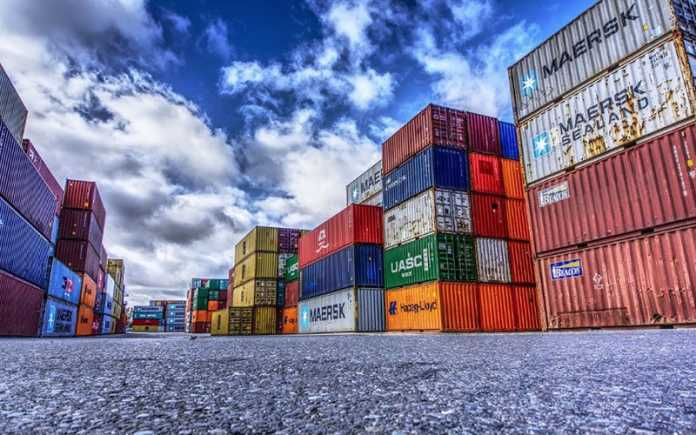
Whether you import components that your business will add value to before reselling or operate on an e-commerce drop-shipping model, importing goods from China often makes a great deal of sense. Firstly, the country’s manufacturing prowess now means that goods are often cheaper to purchase from Chinese suppliers than they are from many other locations given the economies of scale that are often involved. What’s more, China is geared up for exporting goods with plenty of ports, such as Shenzhen, Guangzhou and Jiangmen, that are ready to ship directly to European markets, to name but three examples.

When considering the benefits of importing from China, the questions many British firms ask themselves is how complex the process might be and how long it will take. Many businesses in the UK as based upon reliable supply chains which don’t suffer from customs delays or shipments of many thousands of miles. That said, with the right sort of freight forwarding service, all of these potential pitfalls can be avoided. What do you need to know?

Firstly, using sea freight services to import goods need not be that slow. Most shipments take around six weeks to arrive when they’re exported from China. That’s a time frame that many businesses can handle, especially if it is a dependable service that does not go more than a few days on either side of this period. Anything over 100 kilos is generally much more cost-effective to ship by an ocean-going container vessel than it is to air freight. Renting shipping containers is a common practice, but read the rental agreement carefully and understand any fees or requirements. To rent a shipping container, you must find a supplier that offers rental services.

One of the potential downfalls you may face comes with the paperwork involved. It is best to find an experienced supplier who can include the right documentation with your shipments so your goods are not delayed at port. Understand your import objectives and consider whether marine insurance will be useful in your case. This usually depends on whether the goods are high-value items or not.

From a UK customs perspective, you’ll need an EORI number even before you import from China. According to Barrington Freight, a freight forwarding specialist in Essex, a surprising number of British businesses fail to obtain them prior to making their shipments. Although individuals can buy items for personal use online from China without declarations, businesses will need to specify to HMRC that imports are for commercial use, so you’ll need to register to obtain an EORI number.

What’s more, HMRC will expect you to declare any VAT that may be due on your importation documents, along with customs duty and – depending on the class of products involved – excise duty. Tariffs may also apply for some types of goods, so you’ll need to know about these or get the advice of an expert who does. Generally speaking, freight forwarders will help with all of these paperwork issues quickly because they do it every day, something that most SMEs and even larger companies may not.

So, if you don’t know about commodity codes, importing licensing or import duty, then the best thing to do is to get a UK-based freight forwarding firm to help you rather than a Chinese shipping agent since they do not always have the right level of know-how for European – and specifically British – shipments.


Understanding the Financial Side of Funerals and What Is Involved

flower

According to a recent report from a major insurance group, the average expenditure for a funeral in the UK today stands at almost £4,200. That’s an increase of 128 per cent compared to the average cost in 2004. Therefore, paying for a funeral takes some considerable financial planning for most people even if they stand to inherit from the deceased’s estate after the burial or cremation has taken place. What are the main options from a financial perspective?

Borrowing

If you do not have sufficient funds to pay for a funeral, then you will be able to borrow. Many high street lenders provide loans for funerals but the interest they will charge is likely to vary depending on your credit rating. As such, borrowing can be an expensive option. Some funeral directors have payment schemes that will allow you to split up the cost of funeral arrangements. However, these, too, will be subject to interest charges so they tend to push the overall cost up.

Funeral Insurance

Some people take out funeral insurance plans. These will often pay out an agreed sum in the event of your death so they work a little like life insurance schemes. You pay into the funeral insurance scheme with an annual or monthly transaction in most cases. When you pass on, the insurance will cover your funeral expenses but only to the value of the policy. 

For example, if your insurance policy covers funeral expenses to the value of £3,000 but the cost associated with your service rises to £4,000 in the time between you taking out the policy and it paying out, then your loved ones will need to find the difference which, in this example, would be £1,000. As you can see, funeral insurance doesn’t cover every expense, especially when you take into account inflation and the often rapidly rising costs of funerals today.

Pay Monthly Funeral Plans

If you want to settle your funeral costs yourself in advance of your death, then you can do so. Pay monthly burial plans allow you to settle the cost of your interment in convenient monthly instalments. Of course, with pay monthly funeral plans, you do not have to be buried. You can also find service providers that offer pay monthly cremation plans, too. According to one long-standing operator, Newrest Funerals, paying in advance gives people peace of mind. This is because good schemes lock in the costs of the funeral as they are today, not what they will be by the time you pass on. In this regard, they are different from funeral insurance policies.

Essentially, people who pay into pay monthly funeral plans will be covered after they’ve paid a sufficient number of instalments. This means that they won’t pass funeral costs on to their loved ones after they’ve gone. In addition, they can guarantee they’ll receive the sort of send-off they would have liked without their loved ones feeling that they need to skimp on the arrangements or make big financial sacrifices either.


Deals in Gambling Sector Gather Up Pace in 2021

Gambling

When Australian slot maker Aristocrat Leisure Ltd announced its acquisition of Playtech earlier this month, shares in the British software developer shot up by almost 60% overnight. Playtech is one of the world’s leading producers of gambling game software, and the deal cost Aristocrat $3.7 billion.

This takeover deal is just the latest in a series of major mergers and acquisitions in the online gambling and betting sector, and the trend towards consolidation appears set to continue. The value of the market has increased considerably in recent years, with the pandemic driving more users online than ever before.

Sports betting has also increased enormously, fuelled by the 2018 ruling in the US that gave states the right to legalize the previously prohibited activity. Once the preserve of Nevada only, the lifting of the ban has massively increased the number of sports betting customers around the country.

Recent mergers and acquisitions

There have been several multi-billion dollar deals taking place in the online casino gambling and sports betting industry, starting with the £11 billion merger of Flutter Entertainment and The Stars Group in May 2020. The new gambling giant, which incorporates PokerStars, Paddy Power Betfair, Fox Bet and others, saw profits estimated at $4.4 billion in the year following the merger.

Other recent deals include the $4 billion deal that saw Caesars Entertainment buy the UK bookmaker and casino giant William Hill – in the US it has now rebranded to Caesars Sportsbook. In September of this year, the company that owns UFC and Miss Universe bought OpenBet, the sports betting division of Scientific Games, for $1.2 billion.

Several more deals are in the pipeline. Penn National Gaming intends to buy Score Media and Gaming for $2 billion, while DraftKings announced plans to acquire Golden Nugget Online Casino for $1.56 billion. Meanwhile ESPN is also looking for a slice of the action and is asking for $3 billion or more to license its brand to a betting company.

Things are gearing up for a multi-billion bidding war for Entain PLC, the London-listed company that owns Ladbrokes and Coral betting shops. Having rejected an $11 billion buyout offer from 50-50 partners MGM, Entain are now in talks with DraftKings on a deal worth more than twice MGM’s bid [Update: DraftKings walked away]. Pundits predict another counter-bid by MGM, who are keen to retain their BetMGM brand. If either one of the deals eventually goes ahead, it will be a watershed moment for the industry.

Legal sports betting driving M&A

Much of the M&A activity is coming from the US, where online gambling and sports betting are both undergoing rapid expansion. Roughly two thirds of US states have made provisions for legal online sports betting since the ruling in 2018, and more are expected to follow suit. This presents a sudden and massive increase in the number of available customers, with every company in the sector vying to gain the biggest portion of the market.

Consolidation makes sense for a number of reasons. Sports betting may have a huge turnover, but the profit margins are relatively narrow – returns are usually less than ten percent of turnover. Therefore it is vital to have a large customer base, and the easiest way to get this is to buy one that already exists.

The same goes for other aspects of the business. Mergers with British companies are popular because of the well-established gambling environment that exists there, and US companies can therefore tap into their expertise. It is a similar story with technology – companies that own proprietary technology are in high demand as players in the sector seek to quickly level up their operations.

No slowing down

The recent flurry of M&A activity could well be just the start of a prolonged period of consolidation. After a slow start relative to the rest of the world, the online gambling and betting industry in the US is set to become the largest on the planet. Consolidation has also been the trend outside of the US market, with many smaller enterprises brought under the umbrella of a larger company. A quick look at the portfolio of any of the largest software developers will reveal that they own a number of smaller studios, and have done for many years.

Industry experts assure us that this is just the beginning, and that going forward almost every small to medium sized operation can expect to be the subject of a takeover bid. It won’t necessarily just be larger companies swallowing smaller ones, either. Some commentators predict that smaller companies may decide to join forces and take on the big leagues, although this would certainly be a minority occurrence.

Looking to the future

The big question that many are asking is where all this is heading. Consolidation is nothing new, and in other sectors it has resulted in a very small number of major operators who share the market between them. This is true of everything from credit cards to to the food industry, but will this be the fate for gambling as well?

Answe depends on the region either. As Europe regulates nationally, the passporting system that fueled the growth will halt. National regulators are imposing more limits and taxes. More recently, in Germany, the new federally agreed rules for gambling split the market. Regulated casinos are subject to tax which they pass on to their customers, while unregulated online casinos continue to offer games without any taxes on top of the wager. This is devaluing regulated brands, reducing the attractiveness of takeovers in the sector.

Opinions differ on how to answer that question. Some envision a future where maybe ten providers share the US market, each providing unique and specialized services to a diversified client base. Others are not so sure that the market is fragmented or diverse enough for that scenario to be the endgame.

More likely, these commentators predict, is a situation whereby all gambling and betting customers are served by two or three conglomerates. In this version of events, customers will have little choice as each operator will provide much in the way of diversity of core features. Factors such as name trust, ease of access, and signup incentives will drive the acquisition of customers, rather than anything truly unique that the company can offer. Similarly, client retention will be dependent on customer service, platform reliability, and loyalty programs.

Of course, even in this latter scenario customers are likely to have the illusion of choice, with each conglomerate running multiple brands. Which of these two predictions plays out will remain unknown for many years to come.


EDITOR'S PICK OF THE WEEK

CFO's new mandate. CFO explaining the presentation

The Performance and Transformation Orchestrator: The CFO’s New Mandate in the Age of AI

By Terence Tse CFOs are evolving into AI-driven transformation orchestrators, balancing finance, technology, and strategy while upskilling teams, managing risks, and driving measurable business value. A key insight from this year’s AI for CFOs event, organized...

WISE DECISION MAKER GUIDE

POWER INFLUENCERS

Emerging Trends

The Future of Global Trade