Home Blog Page 739

Saves Your Money With Buying PVC Bags Wholesale For Shipping & Storing Products

PVC-bag

Shipping and storage are critical activities, and you’ll need the correct materials to perform them successfully. This is why many businesses prefer to invest in plastic bags to safeguard the items they transport or keep. The main benefits of using plastic for this purpose is that it keeps moisture and dirt out, but it may also help some things be more resistant to ripping, wrinkling, or puncturing. However, buying bags in tiny amounts makes them extremely expensive, so learning how to buy plastic bags wholesale is a good idea whether you are a sole proprietor or manage a business. We want to speak today about discovering wholesale cost bags and why doing so is a good idea for various reasons. 

Why Would Someone Want to Buy PVC Bags Wholesale?

If you collect items you want to maintain in good condition, investing in plastic bags might be a wonderful option. When you buy your PVC bags wholesale, you can save a lot of money and ensure that you never run out. The wonderful thing is that these bags may provide a lot of value because they allow you to transfer objects more safely from one area to the next. People keep a lot of stuff in their homes and maintaining those objects safe from dust, humidity, mold, and mildew is critical. Furthermore, because the bags are clear, you will be able to see through them quickly, making it much easier to find what you stowed when you need it again. These bags can provide you with everything you need at a reasonable cost for dry goods, collectibles, or even garments or souvenirs that you are keeping for the long term.

Why Do Businesses Frequently Buy PVC Bags Wholesale?

These bags might be a great investment for businesses. Shops typically use them for short-term storage, while warehouses use them to place things in before packaging to ensure their safety throughout the shipment process. Both of these businesses may discover that they use many of these bags, so purchasing pvc bags wholesale is the best way to save money. These supplies may be supplied in bulk at a reasonable cost and ordered in any amount you want, ensuring that you always have enough for your operation. That certainly simplifies things.

Finding the Best Place to Buy PVC Bags Wholesale

When looking for a firm to deal with, it is important to pick one specializing in delivering poly bags and related products. This can make things a lot easier for you. It also means you will most likely obtain the greatest price, especially if they provide what they have to sell online, where you can purchase it much more quickly. Online wholesalers can significantly cut their overhead costs and pass those savings on to you, making them the obvious choice for your shipping and storage requirements.

The 7 Most Reliable Used Cars in the UK

Car

Used cars are sometimes seen as less reliable compared to new cars. Unless you buy a used car from a dealer, or it still has some of the manufacturer’s warranty left, there is no protection if the car turns out to have a major fault. It’s very much a case of buyer beware when you go with a private sale. At the very least, you should take the car for a test drive. Before taking a car on a test drive, you must have test drive insurance. The other option is to rent the car from MPV rentals, a specialist 7 seater car hire company. The time you spend in the equivalent rental car, can substitute for a test drive.  You should also make sure to get your Uber car insurance to protect you from financial loss in the event of an accident or theft.

When creating a shortlist of makes and models, pay attention to those deemed more reliable, as very often they will be a better buy. Data published by WhatCar has revealed the most reliable used cars this year, so read on to learn which car brands are worth your money. 

Suzuki

The much-loved Suzuki Vitara is a champion among used cars. Newer Vitaras, those aged from 2015 to 2022, are 100% reliable. Don’t dismiss other cars in the Suzuki range, as they are all very reliable and age well. Suzuki scored an impressive 97 percent in the reliability stakes, so all Suzukis are a good buy.

Lexus

If a second-hand prestige car is on your shopping list, you could do a lot worse than a Lexus. Lexus cars age well and are known for their immaculate engineering. As such, Lexus scored 93.6 percent overall, with the Lexus CT coming out on top. 

Toyota

Toyota is the parent company of the Lexus brand, so it should come as no surprise that Toyota is #4 on the list of most reliable used cars. Toyota sells a lot of hybrid cars, but this hasn’t impacted its durability. The Toyota Yaris is the best and most reliable car in the range, with a score of 98.5 percent.

Honda

Honda is another Japanese carmaker, and it too is super reliable. Quality standards are high on all Hondas, so it is rare to have issues with older models. This means any used Honda is likely to be trouble-free. Overall, Honda has a reliability rating of 92.4 percent, but the Honda CRV comes out on top with a rating of 95.8 percent. 

Kia

Next up we have Kia, Korea’s oldest car manufacturer, founded in 1944. Kia offers a good range of models, but the Kia Sportage, a nifty little SUV, is very reliable. Shop for diesel models 2016-2021 or petrol models 2010-2016. 

Mazda

Mazdas are attractive cars and reliable to boot. The best used Mazda in terms of reliability is the Mazda 3.  Look for cars built between 2014-2019 for the best reliability. such as Paretti Mazda.

Hyundai

And here we have another reliable Korean car manufacturer – Hyundai. Go for the i40 if you want a smart, reliable family car.

Shopping for a Used Car

Once you have decided which model is for you, start shopping around. The average used car dealer Liverpool, such as Wavertree Car Centre, usually has dozens of vehicles for sale at any given time, so you can afford to be picky. Check whether the vehicle you like has a full dealer service history and has been MOT’d and serviced. If not, try somewhere else. 

Finally, it’s worth noting that the least reliable used cars are Bentleys, Audis, and BMWs. Unless you have deep pockets, it’s probably wise to stay away from these three. 

The Best Online Betting Casinos 

Betting Casino

One thing that is always true of online betting is that there are countless options to choose from when it comes to which casino is best. Even for experienced players, navigating the ocean of information surrounding all these different sites can be an uphill task. Luckily, our casino review experts have compiled the best casino websites on MrSapiens.com for you. You don’t have to lift a finger, because in this article you will find absolutely nothing but the best. 

We’ve compiled the top three here to take a look at each of them for you. 

1. Casino Sieger 

The team behind Sieger Casino has been around in the industry for over 25 years, even though Sieger itself was established in 2009. The site has countless great advantages for online betting, and you notice this immediately when you start betting—it’s just a great site to navigate. 

The game is run on first-class software, provided by some of the best developers in the world. The team has been in the business for a long time and they know what they’re doing. The design is professional and efficient and you’ll have no trouble finding what you need. 

They have an extensive selection of games to bet on, including most major live sports games. You’ll get great odds for pretty much anything you want to bet on. 

Sports betting is one of the most popular varieties of betting around, and for those who haven’t done it before, the possibility can be daunting. Check out this helpful beginner’s guide here. This will help you get started and figure out what you want to bet on—then Casino Sieger is waiting! It is certainly one of the best casino websites around. 

2. Galaksino 

A much newer player in the online betting game but a great choice is Galaksino. They were established in 2019 and are powered by many reputable software providers, such as Blueprint and Red Tiger. These are some of the best-known names in the industry, and they are powering the sports betting of Galaksino. 

Galaksino is another one of the best casino websites. There are extensive bonuses available, and again, a huge variety of games to bet on. with a minimum deposit of only around £5, you can bet as little as you like with Galaksino. It’s another great way to get started with betting on sports. 

They also have fantastic design and UI quality, making the experience even smoother. Nonetheless, it is understandable that many who wish to break into the online betting world feel intimidated by the technology. Betting online is much simpler than you might imagine, and there is a great guide to everything you need to know here.

Finding the best casino site isn’t just about finding the best odds or the best bonuses. It’s also about finding an app that works for you, and that you find intuitive to use. Galaksino is one of the best choices for this. 

3. GG.bet 

Finally, we have another more recent addition to the online betting family—GG.bet. established in 2016, they have been one of the leading esports betting sites in Europe since then. They also offer traditional casino games and regular sports betting. 

However, if you’ve never thought about betting on esports, it is a very good niche to situate yourself. There are many great events to bet on, and often the outcomes are more predictable than big, international sports. GG.bet is one of the best sites for this kind of betting, and you will get some of the best odds around. 

They offer a wide variety of introductory bonuses, including a huge bonus of up to €200 and 25 free spins on your first deposit. These bonuses can even increase on your second and third deposit, which is not very common for online betting sites. This makes GG.bet one of the best sites out there for betting on sports. 

They also offer a wide variety of payment methods and are available across Europe in many countries. Indeed, the only real disadvantage of the site is its lack of any live casino. However, that isn’t what we’re looking for! 

So, GG.bet is certainly of the best choices for online betting, and a site we would recommend. 

So, whatever your needs, then chances are one of the above platforms will cater to them. They provide great odds and choices on betting as well as easy-to-navigate interfaces. Try out one of these sites today—you won’t be disappointed. 

Programmatic Media Buying Platforms – Pros and Cons

Programmatic-Media

If you own a media buying company then you will know the amount of time and effort required to manually build and launch campaigns, especially if you manage a large portfolio that needs to be served across a range of publishers, devices, and formats.

This is why many advertisers have turned to media buying platforms that can provide a programmatic approach to speed up and simplify the entire process, including monitoring the results of campaigns and optimizing ones that are launched in the future.

However, are these platforms too good to be true? And are some better than others? In this article, we will discuss the limitations of such a platform and what to look out for to ensure you select the perfect media buying platform for your needs. If your business is looking for a programmatic solution, your choice is a demand-side platform. This software helps manage all your media buying campaigns and monitor their performance in one place. In the case of large companies, it is advisable to use a white-label solution. The benefits of a white-label DSP are more extensive, especially when it comes to saving money on CPMs, as you don’t pay any fee to the provider. 

Selecting the Ideal Media Buying Platform – The Pros

A programmatic media buying platform helps people move away from tedious processes such as; human negotiation, manual insertion orders, and requests for proposals. Replacing these manual processes with an automated, algorithmic system built for speed and efficiency. In simple terms, it uses purpose-built software to purchase ad inventory based on your preferences, an example of this is the Bidmind platform which will be discussed later.

This demand-side software aggregates display advertising inventories that can be bid for in real-time based on set criteria. Campaigns can be improved by dedicated account managers if the user wishes to take advantage of a managed service. Once live, the campaigns can be measured and automatically optimized for improved performance using a range of available metrics to monitor results. 

The bidding system works by matching available ad space to your desired criteria, using metrics such as demographic, viewing behaviors, device type, and the time of day. This creates a streamlined service that requires very little human intervention, with smart algorithms accurately matching inventories to your exact wants and needs.

The highly efficient nature of these platforms is why many leading organizations across the world trust their advertising campaigns to the purpose-built algorithms which are developing and improving each day to keep up with changing trends. 

This results in an unrivaled return on investment, based on the engagement of ad campaigns and the man-hours which are saved.

Avoiding Ineffective Media Buying Platforms – The Cons

However, not all platforms can deliver the necessary results, and this is why it is important to conduct thorough research before committing to a media buying platform that will manage your important ad campaigns. 

Due to the lack of human control, you must ensure the media buying platform you use is based on the very best algorithms available, or else the results may not be what you had hoped. Some platforms fail to deliver and can be guilty of inappropriate ad matching, significantly impacting the effectiveness of campaigns and reducing your return on investment. 

It is also essential to use a platform that is complete with high-quality security and fraud protection, so campaigns are not skewed by bots and crawlers, acting as human viewers. This lack of protection would result in you paying for impressions that aren’t actually impressions at all!

Thirdly, make sure the platform you choose provides enough information, so you can successfully manage campaigns and optimize them accordingly.

Therefore, the three key factors to look for in a media buying platform are:

  • High-quality algorithms which use advanced targeting so only relevant ad inventories are matched.
  • Fraud protection and top security protocols to avoid money being wasted on non-human impressions.
  • Effective campaign measurement based on accurate metrics and analytics. 

Is There a Platform That Avoids These Limitations?

BidMind is an advanced media buying platform that ticks all of the boxes, from accurate ad matching based on constantly adapting algorithms, unbeatable fraud protection and security, and valuable analytics for optimization purposes. In addition, BidMind also offers a managed service that enables experienced account managers to optimize campaigns for you, ensuring maximum efficiency. 

10 Reasons Why US May Want Russia to Invade Ukraine

Reasons Why US May Want Russia to Invade Ukraine

By Dr. Jack Rasmus

In recent weeks both US and NATO have been stumbling toward confrontation with Russia over whether the Ukraine will be allowed membership in NATO. While there are various secondary issues on the negotiating table—deployment of US troops into Poland, Baltics and Romania and Russian natural gas delivery to Germany, among other issues—make no mistake: NATO membership is what the developing conflict is fundamentally about. As one of the main media vehicles of US imperialism, the New York Times, recently blared in its front page headline: “U.S. Won’t Bow to Russia Over Who Can Join NATO”. (February 3, 2022).

Background to Today’s Conflict 

The pending conflict over Ukraine NATO membership has intensified recently, events have been leading to this at least since the January 2005 so-called Orange Revolution in Ukraine when emergent right wing forces rode a wave of popular protest over the previous November 2004 national elections—and even go back further to the breakup of the former USSR in the early 1990s during which the US promised Russia that NATO would not be expanded to Eastern Europe, the Baltics, or the Caucasus.

In November 2004 the pro-Russia candidate, Viktor Yanukovich won 39% of the vote; but the anti-Russia candidate, supported by growing fascist forces, also won 39%. Yanukovich’s support was heavily concentrated in east and south Ukraine, while Yushchenko’s in western Ukraine. As the vote was underway, and not yet concluded, Yushchenko called for mass street demonstrations, then immediately declared himself president as mass protestors threatened to assault the Ukraine Parliament. In front of his massed supporters in Kyiv, also a day after the election, Yushchenko unilaterally took the ‘oath of president’ in the Parliament in which only his supporters were present and therefore lacked a quorum to legitimize the November vote results.  He then immediately called for continued mass strikes, protests and sit-ins to force the acceptance of his declared victory and questionable ‘oath’.

Yushckenko’s declaration was supported by the Central Electoral Commission which, it was later determined, withheld significant regional votes from being counted and ran a separate computer tally of the votes. In order to avoid growing political conflict in the streets, the Ukraine Supreme Court intervened in early December and voided the November election in which Yanukovich had won a narrow popular vote victory by less than 1%, and declared a run-off election for late December 2004. The same Central Election Commission tallied 52% vote for Yushchenko vs. 44% for Yanukovich, as several minor parties either abstained or threw their support to Yushchenko.

The next election in 2010 saw Yanukovich win back again,in an election international observers declared was fair.  Rising right wing forces did not accept the 2010 results, however. In 2014 another uprising was staged, focused in the capital city of Kyiv occurred and this time far more violent than in January 2005. This time, February 2014, fascist forces murdered more than 100 in the streets.

The insurrection of 2014 was clearly organized and funded by US imperialist interests. Manipulating forces behind the uprising was US undersecretary of State for Eastern Europe, Virginia Nuland. In a pubic speech in the Ukraine following the uprising of 2014, at which Nuland unbeknownst to her at the time was quoted by the press, she bragged the US has spent $5 billion funding various grass roots movements behind the insurrection that toppled ‘fairly elected’ pro-Russia leader, Yanukovich.

At the core of those movements were largely self-declared fascist organizations that had grown and mobilized since 2005. Using classic fascist violence, including assassinations and widespread shootings of police and government officials in Kyiv (as well as subsequent multiple assassinations in Ukraine’s second important city, Odessa), the US-backed fascist forces—along with their political representatives—took control of the Ukraine government that February 2014.

In the wake of the insurrection and take over, Virginia Nuland was appointed by the new right wing Ukraine government as ‘economic Czar’.  Nuland had formerly been an owner of a well known US Chicago financial firm before being appointed as under-secretary of State for the region. After she became ‘economic Czar’, US investors began to pour into Ukraine—including relatives of well-known US politicians like Vice President Joe Biden—and took up positions on various Ukrainian company boards of directors. US economic imperialism now penetrated deeply into the economic infrastructure of Ukraine.

Russia’s response in 2014 to the insurrection of 2014 and the deposing of ‘fairly elected’ Yanukovich, was to provide support to the heavily pro-Russian eastern provinces. As it became clear in 2014 that outright declared fascist organization members took over key positions in the Parliamen and government, Russia sent military forces to take back the strategic Crimea peninsula that housed Russia’s black sea naval forces. Crimea had always been part of Russia, but was ‘given’ to the Ukraine in the 1950s by the USSR in a government provincial reorganization.   In 2016 further conflict erupted in the eastern Ukraine provinces of Donetsk and Lugansk as Ukrainian fascist-led military forces attempted to take back the provinces but failed in the wake of Russian military support to the region.  The US and NATO then imposed sanctions on Russia its response.

It’s important to note that while these events from 2004 to 2016 were occurring in the Ukraine, US war hawks pushed for, and achieved, expansion of NATO into East Europe—contrary to assurances made to Russia by the Clinton administration in the 1990s. The same year, 2004, as the first right wing uprising occurred in Ukraine, the US expanded NATO into seven East European countries and the three Baltic nations, Estonia, Latvia, Lithuania.  NATO forces were now located less than 400 miles from Moscow.

In 2008 US political factions in government, led by US Senator John McCain, signaled and encouraged then Georgia President, Mikhail Saakashvili, to invade South Ossetia on its northern border.  Georgia had been courting US and demanding NATO membership since at least 2003, when it sent significant troops to join the US invasion of Iraq. Georgian military forces invaded the province of South Ossetia on August 7, 2008. Russia drove them back and entered Georgia itself a week later. It later withdrew and military conflict ending October 2008.

In 2009 and 2010 the US announced plans to deploy advanced missile systems of NATO into Poland and Romania, which were completed by 2016. The US also deployed ship-based advanced Tomahawk offensive missile systems on warships it sent into the Black Sea. Both the Romania land-based and US ship-based missiles were of the advanced ‘Aegis’ type, capable of rearming with nuclear warheads on very short notice.  If Russia intervened in the US election of 2016, it certainly had some justification.

Russia responded angrily in 2017 and 2018 to the advanced US missile deployments of 2016, declaring they violated the then Intermediate Nuclear Forces (INF) missile treaty signed with the US in 1987, in which both sides had agreed not to deploy nuclear-capable missiles in eastern Europe or by Russia on its western border.  In an unprecedented direct public response, Russia further declared it could and would destroy the missile systems in Romania if necessary. In reply, the US followed up with deployment of a Patriot anti-missile systems in Romania.

In July 2019 the US formally withdrew from the 1987 intermediate missile treaty that Reagan and Gorbachev had negotiated. During the 2020 US election year and Covid health & economic crisis further escalations more or less froze in place.

It is in this context of events in Ukraine from 2004 to 2016, the deployment of US missile systems in Eastern Europe and in the black sea thereafter, and US withdrawal from the INF treaty in 2019 that the recent events of US-NATO expansion into Ukraine should be understood. History and context mean everything.  Explanations based just on immediate events are easily manipulated by mainstream media and political forces behind it.

US/NATO vs. Russia: Ukraine 2021-22 

Once Biden was elected and Democrats were in power once again in 2021 political forces in Eastern Europe’s NATO allies and within the newly elected Zelensky government in the Ukraine began pushing for more US advanced armaments and for Ukraine’s admission into NATO.  By late summer 2021, aware of the new pressure to allow Ukraine into NATO and the greater sympathy of the Democrats to sanction Russia compared to Trump (whom they, the Russians, had largely neutralized for reasons still unknown), Russia responded to the new NATO inclusion initiative.

Putin wrote an extended position paper in late summer 2021 that more or less drew a line in the sand so far as Ukraine inclusion in NATO was concerned. He noted in particular the fact that the US and other NATO governments declared in 2008 that Ukraine “will become members of NATO” in the future without specifying exactly when, and that US/NATO has never withdrawn or repudiated that statement. That fact, plus the advanced and potentially nuclear armed missile deployments in Poland, Romania, and on the Black Sea in US ships constituted a clear threat to Russia.  The US pulling out of Afghanistan and the middle east, while bolstering its sea-based nuclear submarine forces in Australia, was a clear signal that the US empire was clearly shifting its military resources and preparing for new conflicts with Russia and China. A NATO Ukraine would mean moving of Romanian and Black Sea US missiles north into Ukraine. With similar NATO forces in the Baltics, Russia would be surrounded and missiles just a few minutes from Moscow.

At the same time in late 2021 uprisings erupted in Belarus and Kazakhstan which Russia might easily consider to portend future 2014-Kyiv like insurrections in these border states. Another ‘Ukraine’-like coup in Belarus or Kazakhstan would mean Russia would be even further encircled.  Russia intervened to assist their governments thus far and put down the protests.  Future such insurrections in these states, however, are not out of the question.  And it is probable that Russia and Putin have interpreted these uprisings as US CIA assisted—not unlike that of 2014 in Ukraine.

It is easy to see why Putin and Russia felt themselves increasingly encircled by NATO in East Europe and Baltics, given US instigated and backed forces in Georgia, Belarus, Kazakhstan destabilizing its frontiers. A NATO Ukraine would in effect strategically outflank Russia and close the ring on them. NATO in effect would accomplish what Nazi Germany could not. Social memories of the German Nazi invasion of Ukraine in 1941-42 run deep in Russia. It is often under-estimated by western political advisers—and especially by the so-called non-military ‘experts’ advisers to US presidents who have a long history of advocating US into military adventures abroad—most notably Vietnam, Iraq, Libya and Syria.  One might ask “would Russia allow NATO and the US to enter and ‘take’ Ukraine—after it had lost 10 million of its citizens to deny the same to the Nazis?” While this is not a mode of thought among US advisers, it is no doubt a central consideration within Russian circles—military and civilian.

It is true that Putin and Russia began a build up of military resources on its Ukrainian border. But thus far it has been a ‘measured’ one. It is mostly military hardware that has been moved to forward bases with limited troops to support it. Most of the alleged 175,000 troops at the border, trumpeted by Biden and US mainstream media, are not in forward border positions. They are in some cases hundreds of kilometers within Russia at their regular bases.  A truer signal of intent to invade Ukraine will occur once support battalions move forward to the border: that is medical, ammunition, food and similar logistical troops and supplies. That doesn’t appear to have occurred as yet, however. Russia’s military movements so far have been designed apparently to get the attention of Biden and the US to bring them to the negotiating table. And in early January it worked.

Biden released what the media is calling a ‘Transparency Mechanism’ offer.  In it the US offered to allow the Russians to verify if its missile systems in Poland and Romania were defensive or not. But in exchange, the US wanted Russia to reciprocate by allowing it access to Russian border missile sites—one of which would be the Russian facilities in the Kaliningrad, Russia region, a small area sandwiched between Lithuania and Poland on the Baltic sea coast. The US also offered in the ‘Mechanism’ that it would not permanently deploy offensive missiles in Ukraine—suggesting it might have the right to do so ‘temporarily’ however that might be defined. The real kicker of the Mechanism offer, however, was Russian had to withdraw from eastern Ukraine and Crimea as part of any deal.  It was obviously a non-starter but gave the US cover that it was putting a proposal on the table.

As Biden made the offer he announced the US was sending another 5,000 US troops to eastern Europe, no doubt to placate Poland and the NATO Baltic states now demanding even more advanced NATO arms. Biden reiterated his oft-repeated threat since December that if Russia invaded there would be new massive economic sanctions imposed on Russia by the US and its allies worldwide. He didn’t, and hasn’t yet, defined what exactly that might be but clearly it suggests sanctions of a new nature not just more severe. (That could include, in this writer’s opinion, denying Russia to the US controlled SWIFT international payments system that would prevent Russia from selling its oil on global markets.) At the same time the US Congress has rushed to pass new emergency aid and military supplies to Ukraine. And US ‘war hawks’ have demanded US sanctions be placed on Russia even before it invades.  Somehow they think that is a deterrent, instead of a provocation.

Throughout January 2022 Biden and the US media pounded away the message that invasion is ‘imminent’.  This premature declaration, often repeated, has disrupted social stability within Ukraine itself, resulting in its president, Zelensky, to go so far as to publicly contradict Biden’s message. The US followed up the ‘imminent invasion’ theme with having the British release an alleged document showing Russian invasion plans (One wonders why it is that the Brits typically release such politically salacious but unverified ‘reports’—i.e. dossiers, false flags, etc.) on behalf of their US big brother?).  In the interim the pressure grows on Ukrainian politicians as near panic by Ukrainians themselves takes root among the populace.

On February 1, Putin predictably rejected the ‘Transparency Mechanism’ proposal and publicly stated he believed the US and NATO were attempting to provoke Russia into a war in Ukraine. In a clear appeal to western Europe NATO countries (which, unlike the US, had most to lose economically and politically from a war in Ukraine), Putin added he expected “dialogue to continue”.  That set off a flurry of announcements and visits by heads of state in the UK, France, Germany and Italy. About to get sacked by his own party in the UK, Boris Johnson ran off to Kyiv for some photo ops.  France’s Macron announced had had telephone conversations with Putin and planned to meet him directly. So did Germany’s newly elected chancellor, Olaf Shultz.

Putin meanwhile flew off to China to meet with President Xi during the opening of the winter Olympics. Both released a direct joint statement accusing the US of aggressive military moves in the Pacific and Ukraine that would severely destabilize global peace and status quo.

At latest report, the media war in the west continues to intensify, with the Biden administration leaking a report that suggested Russia had plans to fake a ‘false flag’ operation as a prelude to invasion. In a like response, the Spanish newspaper, El Pais, in turn leaked some US/NATO plans in the works.

The preceding events and moves by both sides around the Ukraine today are reminiscent of how, in August 1914, both sides kept raising the stakes, in what appeared at first as small inconsequential moves but which then accelerated, grew increasingly threatening, until eventually resulting in military conflict and the 1st World War. Today in the Ukraine both sides circle each other, like boxers coming into the ring in the first round, testing and feinting, looking for weaknesses, sizing each other up, trying to determine what the other’s opening move might be.  Should one slip or fall by accident or the other unknowingly signal a blow is coming, it might very well precipitate a general exchange between both.

10 Reasons Why US Elites May Want Russia to Invade Ukraine 

Much of mainstream media continues to focus on why Russia is about to invade Ukraine. It refuses to consider the fact there are nonetheless significant advantages for the US in provoking Russia to invade Ukraine.  The US media, the Biden administration, and US war hawks in Congress say they are trying to discourage Putin and Russia from invading. But what they say and what they do are not the same thing. Ample evidence suggests the US and NATO want a confrontation, so long as it’s a proxy war fought between Russia and Ukraine that they can stand by, feed the conflagration with arms, and in the process achieve other US-NATO gains. Just what might these other objectives of US/NATO be?

Here are at least 10 reasons why US political elites of both parties, war hawks and military-industrial complex capitalists favor a Russian invasion of Ukraine:

1. Reunite NATO and strengthen US hegemony over it once again 

In recent years—and especially since Trump—certain members in NATO have questioned whether the US is as reliable a partner to the alliance as it once was in decades past.  Nations like France, and now Germany, have had growing doubts. Voices have risen within the EU that it should go its own way with its own defense and strategy.  China has made major economic inroads to the EU NATO states. Europe and China are now either first or second biggest export/import traders with each other.  Key Europe state leaders are very nervous about the US leading them into a conflict in Ukraine that could have very serious effects on their economy, at the very least, and at a time Europe’s economy continues to struggle to jump start a recovery from the past two years Covid precipitated recession.  The US’s track record in the middle east is giving them pause: it achieved little, left the area in shambles, and just pulled out to shift its focus on China.  The European NATO allies, moreover, are quite split among themselves. The East Europeans as recent additions to NATO follow the US lead in hope of more arms and troops. Big players like France and Germany not so much so.  If a US provocation of conflict in Ukraine goes poorly, the risks—political and economic—for western Europe NATO states are high.

2. Get Germany to cancel the Nordstream2 Russian Gas Pipeline; get Europe to buy US gas instead; increase US natural gas exports to Europe and thereby create supply shortage in US to justify US domestic gas price hikes & US profits 

Germany is particularly uncertain about following the US lead into another quagmire in Ukraine. Its new chancellor, Olaf Shultz, is especially nervous about the prospect. There is significant public opposition to becoming embroiled in Ukraine, even indirectly. And German capitalists are split as well over the fate of the Nordstream2 natural gas pipeline from Russia. Germany desperately needs the supply. Russia’s gas is significantly less costly than would be purchasing natural gas from the US. For years now the US has been pressuring Germany to halt Norstream2 and buy liquefied natural gas from the US—at higher prices and requiring Germany as well to build highly expensive new port facilities to import the US gas.  US oil corporations want to sell the gas, to offload a US glut of natural gas supply. That would bring not only profits from more sales to Germany, but create shortages of supply in the US that would enable US corporations to raise prices in the US domestic market as well. The US gas corps—mostly owned by the big oil corporations—will enjoy a win-win profit.  Behind the scenes in the conflict in Ukraine is the looming gray presence of US oil companies—who have had their hand in just about every American military adventure since the 1960s.

3. Create excuse to send still more troops & advanced weaponry to Baltics (Estonia, Latvia, Lithuania) & East Europe (Poland, Romania)

There are political forces in the US that want to arm Poland, Romania, and the Baltic countries to the hilt, including stationing nuclear weapons in their countries.  Governments in the region are more than happy to bloc with these US war hawks. It means new massive funding from the US, more US arms and troops, and a boost to their economies (and politicians’ pockets as well no doubt).

4. Obtain more economic concessions from Ukraine for US business in exchange for more and better US/NATO arms 

The US empire does not provide aide without a cost. US investors and corporations have already, posts-2014, penetrated deeply into the Ukraine economy. They have funded, acquired, and otherwise controlled a significant number of former all Ukrainian companies in key sectors of the economy.  Biden’s son is not the only next generation representative of the US political elite (from both parties) to sit on Ukraine company boards of directors.  As the US provides even more funds and weapons to Ukraine, it will exact a price in return. It will deepen further its influence over the Ukraine economy and banking system.  Ukrainian elites will more than welcome them, since the US form of economic empire integrates the colonial elites by sharing a big piece of the economic pie with them.

5. Grow US political support to go after Moldova to drive out Russian supporters & install US puppet regime over entire country 

It is a certainty that should military conflict erupt in Ukraine, the US and its field intelligence services (CIA, State, etc.) will move on Moldova as well in some manner. Moldova is the small state located between southwest Ukraine and Romania. For years it has had an uneasy truce between Russian backed forces running half of the country and pro-western the other half. The US will attempt to change this and turn the country to full pro-western hegemony.

6. Justify more US effort & funding to try to destabilize Belarus & Kazakhstan 

It is naïve to think that US intelligence and related forces are deeply involved in the recent public demonstrations and protests in both Belarus and Kazakhstan, the latter just weeks ago as tensions have risen in the Ukraine.  At a minimum, the US is testing the extent of anti-Russian opposition in these countries, which are closely aligned economically and politically with Russia. Russia has helped these governments put down the demonstrations, some of which as in Kazakhstan, were especially violent uprisings.  Should the US ‘turn’ Ukraine fully toward NATO it is certain the US will intensify its efforts to destabilize Belarus and Kazakhstan on Russia’s borders. They will be the next ‘Ukraine-like’ targets, following the template for Ukraine that began with 2014 and now culminating in 2022.

7. Provide major foreign policy distraction for Democrat party before November 2022 midterms 

One cannot discount the potential advantages for the sitting president and party (Democrats) of a foreign policy issue such as Ukraine. It allows Biden and the party to ‘look tough’ in an election year, which always seems to add support for the party that ‘gets tough with Russia’, so long as it doesn’t lead to direct conflict with the US. Ukraine is a classic US ‘proxy war’ possibility—the kind it prefers to fight at a distance on the ground of another country (Ukraine) with its troops and/or under the cover of NATO forces as well in this case.

8. Get Congress to approve a further increase in US defense budget in addition to $778B 

The US wars in the middle east are over.  It will take time to build up new technological weaponry and forces to confront China in Asia.  The US deal to provide Australia with latest US nuclear subs is just one such example.  A proxy war in the Ukraine serves as a convenient interim excuse not to reduce defense spending benefiting the US military-industrial complex (MIC)—and actually raise it still more.  The US defense spending is clearly out of control. Pentagon spending alone is now $778 billion, and continues to rise even after the US withdrawal from the middle east. (Total US defense spending is well over $1 trillion a year when other departments of government are included as well: Energy, State, AEC, Homeland Security, CIA, NSA, DARPA, etc.) The MIC never wastes time encouraging the US to get into another conflict once it ends one in order to prevent defense spending cuts post-war. Once the USSR imploded in the late-eighties/early nineties the military bete noir became Saddam Hussein.  That fueled the 1991 first Gulf War and continued war spending thereafter and turned US attention to the middle east.  The US intervention in Somalia in the 1990s and Balkans kept it going. The next convenient enemy was the ‘Terrorist Threat’ in wake of 9-11 attack in the US. That fueled defense and war spending still further over the next two decades, including wars in Iraq, Afghanistan, Libya, Syria and the US proxy war in Yemen.  Now the US has withdrawn from the middle east direct wars, it needs a new enemy to keep the war spending going. It will take time to build up China as the target. In the interim, however, Ukraine and Russia will do nicely to keep Congress flowing dollars to the US military-industrial complex war making machine.

9. Excuse to go after pro-Russian supporters: Venezuela, Nicaragua and Cuba again 

A protracted conflict in Ukraine, funded and supported by the US and NATO allies in East Europe, could eventually lead to a spread of the conflict to other ‘proxy’ nations.  For Russia that means Venezuela, Cuba, and Nicaragua. Given a war in Ukraine, war hawks in the US will no doubt find justification to go after these countries with renewed destabilization efforts by US intelligence and even perhaps special ops forces.

10. Test effectiveness of latest US weaponry against Russian forces & Russian weaponry effectiveness against US without having to directly confront Russia; get Russia to reveal state of its cyber capability

Proxy wars provide a good excuse to test new weaponry of the US in a third country battlefield. That means not only testing how well offensive US weapons perform against Russian, but how well Russian weapons perform against US defenses.  Weaknesses inevitably appear, permitting the correction and upgrading of the weaponry for potential future use elsewhere.  The US especially is interested in testing its cybersecurity weaponry while getting Russia to reveal the extent of much of its capability. Another area of interest is to test how well US anti-armor missiles perform and how well US/NATO missiles perform against Russian anti-missile systems (like its S-500).

Some Conclusions 

All the above constitute advantages for the US should a direct conflict occur in the Ukraine against Russian forces.  Ukrainians will pay the human and economic price. The US and its corporations will benefit economically and strategically.  Europe will be caught in between, uncertain as to the economic effects of a conflict on it or the great political risks should the conflict not go well.

The behavior of US interests the last two months increasingly suggests it is the US that favors an open conflict in the Ukraine. For the US, it’s win-win situation in the event of an open conflict. There is much to be gained strategically, politically at home, and economically: re-establishing its unchallenged hegemony over NATO; driving Russia out of Europe’s economy and making Europe even more dependent economically on US resources instead or Russia; deepening US influence and control over Ukraine’s economy and government; feeding US war hawks demands to destabilize other countries which, like Ukraine, also border Russia; resurrect spending and operations targeting Latin America friends of Russia;  create justifications in Congress to spend even more on US defense and war in the interim until the bigger, longer term buildup and military spending targeting China can come on line; and test in a real theater of operations the effectiveness of both US defensive and offensive weaponry against a sophisticated opponent like Russia.

Time will reveal whether Russia and Putin also favor an open conflict in Ukraine—or whether the western media is exaggerating the Russian threat and beating the drums of ‘imminent invasion’ to serve the interests of US and NATO.

Longer term, Russia may have no alternative but to invade should the US play its ‘final card’ and declare to bring Ukraine into NATO.  The US says it has no such intention. But if so, why does it refuse to withdraw its declaration of a decade ago that Ukraine in NATO is the goal at some point in the future?  Is the future now? Should the Ukraine be allowed into NATO it is ‘game over’ for Russia strategically for decades to come. Similar developments like Ukraine eventually would occur in Belarus and Kazakhstan and likely Moldova. Calls and efforts to bring them too into NATO would similarly follow. Russia will have been outflanked. It will be thereafter now more easily intimidated.  Surrounded by NATO states everywhere, what likely would follow would be full scale nuclear disarmament.

This writer believes therefore that preventing NATO from entering Ukraine is a ‘red line’ for Putin and Russia.  If pushed into a corner with no retreat or way out, it is quite possible Russia may see no alternative to invading. That’s not on the immediate agenda. But that’s not to say it will never be.

About the Author

Dr. Jack Rasmus

Dr. Jack Rasmus is author of ‘The Scourge of Neoliberalism: US Economic Policy from Reagan to Trump’, Clarity Press, 2020 and the forthcoming ‘The Viral Economy’ latter in 2022. He blogs at http://jackrasmus.com. His website is: http://kyklosproductions.com . He hosts the weekly radio show, Alternative Visions, on the Progressive Radio Network and tweets at @drjackrasmus on daily economic and political events.

Are Buy Now Pay Later Payments a Convenience or a Trap?

Buy Now Pay Later

On the surface, “Buy Now Pay Later” (BNPL) services are an attractive offer. You make a purchase, and instead of paying it all at once, you pay over several installments. This makes it easier to handle big expenses, especially when you don’t have enough cash to pay in full.

Some schemes can give you up to 30 days to pay, while others can allow you up to 12 months. However, unlike credit cards, BNPL plans don’t charge interest on the items you pay off over time, provided you make payments when you are supposed to.

But is there a catch to this convenience? Read on if you’d like to find out.

How does Buy Now Pay Later work?

Buy Now Pay Later programs aren’t all the same. Every company has its own terms and conditions. However, the services generally operate along the following lines:

  • You buy something at a participating retailer and opt to ‘buy now, pay later’.
  • If you are approved (which only takes seconds), you’re told to make a small down payment. For example, 25% of the total.
  • You then pay off the remaining amount over a period of time in regular installments until the whole amount is paid.
  • You can pay the installments yourself or the amounts can be deducted from your debit card, bank account, or credit card.

There usually aren’t any interests or fees with BNPL. However, they have a fixed repayment schedule which usually lasts several weeks or months. You’re told upfront what you’ll need to pay every time. The thing is, you cannot miss a single payment.

For approval, most of these services don’t really consider your credit score. So just about anyone can access it. But, not all purchases are eligible. There may also be limits on how much you can pay this way.

With Buy Now Pay Later services seeming so attractive, it’s only natural to wonder whether it’s convenient or just a risk. Is it worth it?

What are the advantages of Buy Now Pay Later payments?

In recent years, Buy Now Pay Later services have become quite popular. So, why are so many people opting for this payment method? What are its advantages?

  • More flexibility – With the payments spread out over several weeks or months, Buy Now Pay Later services give you more flexibility when you have your heart set on buying something. 
  • No interest rates – If you make your payments on time, you won’t get slugged with extra costs. You just pay for the product itself, nothing more, nothing less. 
  • Easy approval– The best thing about BNPL services is that it’s quite easy to get approval. However, not all stores offer this. Some that do, make it simple for customers to access the service.
  • It’s convenient and easy to use – Most people find the service more convenient than using credit cards or paying the full price for a product upfront. It’s also easy to make the payments.

  • Good credit or a high credit score isn’t necessary – To qualify, you don’t need a high credit score.

All in all, these are some of the reasons most people prefer BNPL payments. But like with most things, there are risks involved.

Risks of Buy Now Pay Later payments

Some of the dangers include the ones listed below.

1.   Unaffordable debt

It’s easy to spend more money than you can really afford. Prices can seem cheaper when you split them into smaller repayments, but the truth is that you may end up losing track of how much you owe.

This is especially true if you make multiple purchases on different days. You could quickly find yourself spending far more than you intended or more than you can afford to pay. This could cause financial problems for you.


2.   It’s difficult to track spending

BNPL purchases can sneak up on you. You can easily go from paying $25 weekly over 8 weeks for a nice shirt, to buying even more items the next week. You may end up finding that you’ve committed the equivalent of your food budget for the week on BNPL payments.

3.   You can get hit with expensive fees and penalties

What makes this service attractive is that you’re not charged interest right off the bat. But watch out if you fall behind on your payment plan! You could get hit with expensive penalties and fees that would make your purchases cost a lot more than you thought. This can turn out to be quite the headache!

4.   Vulnerable groups

The easy approval process means vulnerable groups like low-income customers (students, teenagers, etc.) will jump on this service. These groups are more prone to buying on impulse. Unfortunately, this means they are most likely to fall down a debt rabbit hole. 

Don’t miss a payment

BNPL can quickly become expensive if you don’t make payments on time. While BNPL is a convenient way to shop, it could be problematic later down the track if you’re not able to meet your repayment obligations.

Late or missed payments may be reported to the credit bureau which can impact your credit score.  If your various repayments are piling up and you’re feeling overwhelmed, Credit24 could help.

Simply consolidate all your BNPL repayments into one manageable Credit24 account.

We provide you with the flexibility to spread your repayments over 36 months. This could reduce your fortnightly instalments into a more manageable and affordable amount. You can also repay the loan early with no penalty. The earlier you pay it back, the more you’ll save on interest.

Conclusion

BNPL has really revolutionized the way we shop. It’s such an ingenious idea but you need to have your wits about you to stay on top of your repayments.

But don’t stress, Credit24 is here to help if things go awry. If you’re looking to consolidate BNPL payments that are getting out of hand, visit our website today at www.credit24.com.au


Disclaimer: IPF Digital Australia Pty Ltd, trading as Credit24, ABN 59 130 894 405. Australian Credit Licence 422839. Lending criteria, fees and charges apply.

How GST Affects Small Businesses In New Zealand

GST

‘What is GST?’ is a question that many companies in New Zealand may ask themselves at some point. The answer is critical for every New Zealand business looking to sell products or services. The Inland Revenue Department levies the Products and Services Tax (GST) on the purchase price of goods and services.

Any New Zealand firm registered for GST or sold items that must include GST will have to include GST in the price of their goods or services. In October 2010, the Goods and Services Tax (GST) rate was increased from 12.5% to 15%. This article provides an overview of the impact of this change on small New Zealand businesses. You may read more about GST in New Zealand here

GST Threshold 

Taxpayers who earn more than $60,000 qualify for GST. Put another way. You need to register for GST if your firm generates taxable activity worth more than $60,000 per year or if you anticipate doing so during the following calendar year. 

Note that there’s no GST paid to sell items donated to charity. Rent, penalty interest, and other financial services are exempt from GST. As soon as your firm has been GST-registered, you must begin charging GST on all of your products and services and regularly file a GST return with the IRD, as per your specified schedule. 

GST On Import And Export 

Businesses outside New Zealand may be required to charge and pay GST on items supplied to New Zealand customers, depending on the product’s value and if it falls under the threshold. Overseas enterprises selling low-value items to New Zealand customers may have to register, collect, and remit GST starting December 1, 2019. 

On the other hand, taxes on products and services exported from New Zealand are zero percent. So, as a result, you don’t have to pay GST on exported items since they are ‘zero-rated.’ The items must be shipped and bought by a foreign buyer, which you should show.

Businesses outside New Zealand may be required to charge and pay GST on items supplied to New Zealand customers, depending on the product’s value and if it falls under the threshold. Overseas enterprises selling low-value items to New Zealand customers may have to register, collect, and remit GST starting December 1, 2019. 

GST Effect On Small Business Based On Studies 

A survey showed that most small and medium businesses expect sales to be hit by the Goods and Services Tax rise. Most firms believe that the increase will have a minor impact on their sales. 

Prior studies on tax compliance typically focused on individuals and income tax. This study aims to extend the scope of this research by examining the various types of tax compliance that taxpayers may have failed to report. 

The study interviewed over 200 small business taxpayers in the New Zealand economy. It was focused on those who work in the primary and trades sectors. It also aims to determine if there is a difference in the attitudes and norms of different taxpayers regarding tax compliance. 

There’s also evidence that many taxpayers in the primary and trades sectors keep different mental accounts for GST. They also cited the cost of compliance as a burden. Taxpayers in the primary and businesses sectors displayed mixed feelings about their interactions with the Inland Revenue. On the other hand, those in the GST sector were more positive about their dealings with the agency. 

How Economists View GST And Its Impact 

Is the interest rate of GST too high? Some economic analysts urge the New Zealand government to decrease the GST rate to 10% as a short-term solution to the country’s financial woes. 

Reducing the GST will help lower-income families spend more money, which might help the economy grow again. They believed it would send the correct message to New Zealanders, namely that they must spend money. 

GST

While some believed that it was unclear how this would address the issue at hand, consumers and businesses aren’t being impacted by rising prices right now. They might be amid a financial shortage and a crisis of confidence. 

In other words, cutting the GST may not going to help. Benefiting from it will be spread out across a large number of companies, as opposed to the few at danger at present. Preserving employment and preventing company failures are the immediate concerns that need to concentrate on. Providing things like salary subsidies, paid sick leave, and lines of credit is a better way to do this. 

Takeaway 

An analysis of the impact of the higher GST rate on business compliance costs found that it may impact the rate change on their business relationship and transactions and were particularly hard hit by the higher GST rate. 

Despite the steps taken to address the various issues related to the business taxation of goods and services, little has been done to compare the compliance costs of these businesses to those of large corporations.

4 Smart Investing Tips from Experts

investing

Are you looking to invest your money but don’t know where to start? Don’t worry, you’re not alone. Many people are hesitant to invest their hard-earned money, especially if they don’t have a lot of experience in the field. That’s why we’ve gathered 4 smart investing tips from experts in the industry. Keep reading to learn more.

Don’t Just Focus On One Stock

It’s important to remember that you don’t want to put all your eggs in one basket. Diversify your portfolio by investing in a variety of stocks, and don’t be afraid to invest in different sectors too. This will help reduce your risk if one stock happens to the tank. Tracking apps such as StockTwits and Finviz can help you keep an eye on your investments and make sure that you’re not overexposed. One of these stock tracking apps that you can find online can make all the difference. Investing isn’t just about picking the next big thing. It’s also about finding stability and consistent growth over time. So think long-term when you’re making investment decisions, and don’t get caught up in short-term trends.

Finally, always keep an eye on your portfolio and make sure it aligns with your goals and risk tolerance. If something starts to look like it’s going off track, take action sooner rather than later. Ignoring your investments can lead to big losses down the road.

Don’t Be Afraid To Ask Questions

When it comes to investing your money, don’t be afraid to ask questions. When you’re talking with a stockbroker or other financial professional, they are there to help you make the best decisions for your goals and should be able to answer any of the questions that come up. You can also research information on websites and in books about investing before you meet with someone so that you know what kind of terms or suggestions may come up during the meeting. Don’t hesitate to ask for an explanation if anything is unclear to you as well because even if it seems like a basic question, no one will fault you for wanting more clarity when making such important financial decisions.

If at all possible, try to get second and third opinions on your investment choices, especially if they are large ones. You can ask family or friends who have knowledge in this area for their thoughts or talk to a financial advisor who will be able to give an unbiased opinion. Mentorship can be an extremely valuable asset when it comes to making smart investing decisions as well.

Do Your Research

Before investing your hard-earned money into any stock, fund, or other security, it’s important to do your research. Arm yourself with as much information as possible so you can make informed decisions. Talk to friends and family who might have some experience in the market, read financial news and blogs, and take advantage of online resources like FINRA’s investor education center.

When looking at a potential investment, ask yourself these questions: What is the company’s history? What are its products or services? Who are its competitors? What is the management team like? What is the price/earnings ratio (P/E ratio)? How does the company compare to others in its industry? What are the risks? Answering these questions and more can help you make smart investment decisions. You can also find tools online that allow you to research companies and stocks, including the EDGAR search tool on sec.gov and FINRA’s BrokerCheck tool to check out a broker or firm before doing business with them.

The Earlier You Start Investing, The Better

The power of compounding means that your investment will grow exponentially over time. Don’t wait to invest – the earlier you do so, the more money you’ll make in the future due to compound interest (interest on interest). It might not sound like much at first but if you leave it long enough and put away a bit each month then it can amount to huge sums! This is particularly important given how inflation eats into our savings every year as well as taxes which reduce returns even further- meaning what seems like a ‘small sum now’ could be worth less than half its value 30 years from now.

Additionally, if you already have debt then your focus should be on paying this off as soon as possible so that you can start saving for the future. Interest rates on debts are usually much higher than those offered on savings accounts, so it’s important to get rid of any high-interest debts as quickly as possible and then channel the
money you save into the
best investment funds.

Investment

Resist the temptation to buy high and sell low. Stick to your investment plan and don’t let emotions influence your decisions. It may take time for your investments to pay off, but if you’re patient and stay the course, you’ll likely be rewarded in the end.

The Top Benefits of CBD Muscle Balm

CBD Muscle Balm

When you think of CBD, chances are you don’t think of it as a muscle balm. Most of the time, CBD and general cannabis products are lumped together by consumers believing that cannabis containing products and specific CBD products are the same thing. CBD is one of many active ingredients in the hemp plant, including it’s more famous relative THC. Believe it or not, CBD is actually a powerful natural remedy that can help soothe and relieve sore muscles. In this post, we’ll take a closer look at the top benefits of using CBD muscle balm to treat muscle pain and inflammation. So if you’re looking for an all-natural way to ease your muscle soreness, keep reading to find out more about CBD muscle balms

What is CBD Balm? 

For those that don’t know or haven’t heard of it before, CBD balm is a topical ointment used on the skin to treat muscle soreness, tight joints and inflammation. It’s usually mixed with other topical compounds known to help relieve muscle pain such as peppermint, tea tree oil and eucalyptus. The important thing to note about CBD is that it is extracted from the hemp plant, meaning that the best extraction methods contain a fragmented amount of THC (no more than .03%). At such low levels, THC remains inactive and acts as an aid for the CBD to absorb through your skin more effectively. Extractions that pull small amounts of THC and hemp compounds are called full spectrum extracts, and these are the ones you want to look for when selecting a CBD product. 

Does It Work? 

CBD products do work! It all depends on the type of product you choose, what you’re looking for it to do and the formula of the brand you’re using. Users report CBD balms to feel soothing and relaxing, the exact effects expected when using this kind of product. Make sure you search for full or broad spectrum CBD products, as these are directly extracted from the hemp plant itself and contain terpenes and other compounds found in the hemp plant. These extraction methods can have an effect on the user’s experience, so make sure you research the ingredients in your products (especially when shopping online). 

How Does it Work? 

CBD balms are different from products like inhalants, edibles and supplements. They are designed to target specific, local areas of the body and are meant to be topically applied. This means that you won’t feel any effects of the CBD other than the local area you applied it to. This also means that you will feel a faster acting sense of relief, about five to ten minutes as opposed to the 30-60 minutes it will take to feel the effects of a tincture, edible or consumable product. These can be great for anxiety, depression and stress but for muscle aches, topical solutions are much more effective in the short term to relieve symptoms of pain or muscle strain.

Is it Safe and Legal? 

Yes! CBD is 100% safe and legal. CBD is great especially for individuals who live outside of a state where marijuana sales are legal. For people living in those states, CBD products are available at any local dispensary. Luckily for those who don’t live in states who have legalized it can find CBD products online or in certain health and supplement stores. Because CBD doesn’t contain active amounts of THC, it doesn’t get the user high and therefore is legal to sell and distribute on a national level. This makes CBD balms a fantastic solution for anyone experiencing chronic joint pain, muscle pain or for athletes that need treatment options for their activity related injuries.

CBD balms are an effective, soothing solution for anyone experiencing chronic localized pain. The benefits of using these products include more than just the relief they provide to your body; they also come with a number of psychological and emotional perks like increased focus or improved sleep quality. They’re totally legal, no matter where you live—so if you want something that’s safe and quick-acting without any intoxicating effects, this is it!  These days there are so many different formulations of CBD balms available on the market that finding one that suits your needs should be easy as pie – but how do you know which ones work best? Take the time to research your ingredients and make sure you select a broad or full spectrum CBD product – these contain small, inactive amounts of THC ensuring that the product will bind with your body’s endocannabinoid system.

Carbon Pricing: The Best Policy that Nobody Wants

Carbon Pricing

By Philip Rossetti

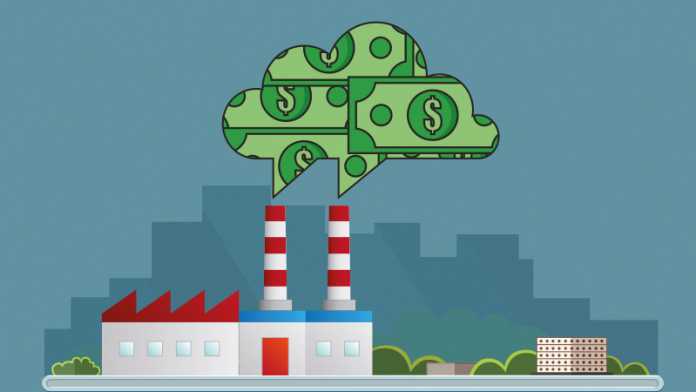
Although carbon pricing is lauded by economists as an efficient climate policy, impediments to its adoption at the federal level in the United States are fundamentally political in nature. The more likely driver of carbon pricing implementation in the United States is as a remedy to fiscal concerns, rather than as a result of successful environmental policy advocacy.

Introduction

With Democrats’ victory in the Senate early 2021, there was resurgent hope among many carbon price (aka carbon tax) proponents, hoping that the policy would be an easy pass through budget reconciliation provisions and finally overcome Republican opposition to the policy. Surely, it was hoped, there would not be a repeat of Democrats’ failure to pass the Waxman-Markey climate bill, especially as carbon pricing has had surging popularity among business interests and even oil companies. Alas, again there has been no legislative momentum on carbon pricing.

This has been disheartening for carbon pricing proponents, especially economists who point out that the policy could abate billions of metric tons of carbon dioxide at a minimal cost. Carbon pricing has already been tried in many economies around the world and has not been met with the economic catastrophe that some carbon pricing opponents ascribe to the policy. But the failure of carbon pricing to garner political attention yet again should not be a surprise, and indeed it comes with many caveats. Carbon pricing is an important policy opportunity for climate change, but it is not easy to align the merits of good policy with political needs.

The Advantages and Disadvantages of Carbon Pricing

A common refrain from economists is that a price on carbon is among the most efficient ways of abating greenhouse gas emissions—but why is this? The answer requires some humility, especially among policymakers and climate conscious individuals. A carbon price works based on the fundamental economic principal that prices matter, and individuals respond to change in prices. We see this at work all the time. Cost plays a huge factor in people’s purchasing decisions from everything to a house, to a car, to a can of vegetables. Economists know a carbon price can reduce emissions because people respond to prices, and thus a higher cost associated with pollution is going to reduce the demand for the polluting product.

A carbon price as a policy is also particularly efficient because of consumer choice and the free market. If you had only one car manufacturer and then you impose a carbon price, the cost of cars may go up, but it wouldn’t result in much pollution reduction because consumers would have to either eat the cost of the carbon price or forgo the utility of owning a car. But, because we have competition among goods and services, the carbon price delivers an incentive for producers to cut pollution inputs in their products to lower their costs relative to their competition. This means the carbon price stimulates, rather than inhibits, innovation and cost reduction in the economy–making it less harmful to growth than government mandates.

A carbon price as a policy is also particularly efficient because of consumer choice and the free market.

A carbon price is also an effective climate policy because it allows for consumers to pay the carbon price in scenarios where avoiding the carbon emission is cost prohibitive. For example, low-carbon aviation fuels have an estimated emission abatement cost of $260 to $4,800 per ton of carbon dioxide avoided, but the estimated benefit per ton of avoided emission is about $51 per ton, so in such instances polluters can pay the tax rather than having to forgo the utility of air travel.

And last but not least, a carbon price has some potential for economic benefits that can mitigate the economic harm caused by what is essentially a tax on economic inputs. A carbon price is sometimes called a “Pigouvian Tax” because by including the externalized cost of pollution in the price of a product, it creates a natural incentive for a more efficient ordering of capital in the market. The revenues from a carbon price, which would be about $1 trillion over ten years, could also be used to cut taxes that have a greater economic harm than a carbon tax would, resulting in a net improvement to economic growth. The Tax Foundation estimates that an efficiently implemented “revenue neutral” carbon tax would improve economic growth in the United States by 0.8 percent (for comparison, long term projected growth is 1.6 percent).

With all that said, it seems like carbon pricing should be a no brainer policy but is not. One of the biggest problems with carbon pricing is that the efficient implementation outlined above is essentially never seriously considered. A poll on the preferred use of carbon price revenues found that the majority would want to see the revenues used for additional subsidies, and the least liked option for revenue use was corporate tax cuts—what economists would expect to be the most efficient implementation of a carbon price. Using revenues from a carbon price for subsidies undermines the virtue of a carbon price because it negates the competitive elements of the policy, resulting in higher costs, and the subsidies rather than the price being the driver of behavior change (and thus a less efficient allocation of capital).

When carbon pricing was effectively proposed as cap-and-trade in the Waxman-Markey legislation, only about 300 pages of the 1400-page bill were related to cap-and-trade, the rest of the bill being regulatory expansion. Similar to how using revenues for subsidies directly contradicts the advantages of a carbon price, regulations also target the same abatement opportunities as a carbon price and thus make less efficient regulatory policy the driver of behavior, rather than price signals, and exacerbates costs by having duplicative policies. The result of a regulatory centric approach to climate policy is that some consumers will incur more cost to change behavior than the environmental benefit gained, diminishing the overall efficiency of the policy. Furthermore, Waxman-Markey planned to give away emission permits rather than auctioning them, meaning it would have been a de facto subsidy to polluters and, as one of President Obama’s economists put it, giving away the permits would be “the largest corporate welfare program that has ever been enacted in the history of the United States.”

In short, a carbon price, if efficiently implemented, is an excellent policy for abating emissions. Unfortunately, such efficient implementation is not the default for carbon price proposals, and a cautious eye is needed when evaluating carbon pricing schemes.

What Makes a Price on Carbon Likely or Unlikely to be Implemented

The popularity of policy, though, is more based on perceptions than it is on reality. Many point to the successful implementation of carbon pricing in Europe as an example of success, but unfortunately the concerns of a typical European are often not the same as that of an American. The United States is characterized by a relatively rural population, energy intensive lifestyles often by necessity, and an abundance of fossil fuel resources that lower energy prices. Europeans, by contrast, typically live in areas of higher population density, and scarcity of fossil fuel resources creates an economic and energy security paradigm that favors alternative energy sources. A carbon price is not the natural policy preference for Americans.

fossil fuel

Advocates of carbon pricing have leaned on the notion that it is fundamentally an informational deficiency problem. In other words, if people know how effective a carbon price is, then surely they will support it, so the answer is to get as many people to know how good carbon pricing is to naturally lead to policy adoption. This approach, though, fundamentally misunderstands the opposition to carbon pricing.

Political constituencies are not so much influenced by arguments of economic efficiency, but rather by the visibility of policy impact. Perceptions matter more than reality. As an example, there is widespread support for the National Environmental Policy Act (NEPA) and fierce opposition to any amendment of its requirements, but research consistently shows that it is clean energy technology—not fossil fuels—that are impeded by NEPA. However, perceptions that NEPA is a key component of environmental protection make it difficult to reform.

When it comes to carbon pricing, Americans have a high visibility of how changes in energy prices affect their daily lives. Gasoline prices are seen daily, electricity bills come monthly, and homeowners in cold climates that use oil to heat their homes are acutely aware of just how important energy prices are to their comfort. Additionally, American politics are characterized by sympathy and concern for low-income households, and as energy expenditures make up a greater share of these household’s costs, there is a difficult-to-refute argument that a carbon price is punitive to poor Americans.

The costs of a carbon price are known, but the benefits—which are manifested globally and are future rather than current benefits—are less visible. Consequently, it is hard to sell Americans on the virtue of a carbon price, or that the costs are worthwhile or can be negated somehow.

The Political Outlook of Carbon Pricing in the United States

When it comes to the political viability of a carbon price in the United States, it is important to understand that most of the opposition comes from Republicans, but Democrats have now had two opportunities to implement a carbon price with single party control and failed to do so both times. Even though Republicans are usually blamed for carbon pricing failure, Democrats have not been consistent supporters of it either. It is clearly politically unpopular, and both parties tend to prioritize other climate policies in lieu of carbon pricing (Democrats favoring regulation and subsidies, and Republicans favoring innovation and energy exports). As an approach to climate policy, the outlook of whether a carbon price will be implemented at the federal level is bleak.

The costs of a carbon price are known, but the benefits—which are manifested globally and are future rather than current benefits—are less visible.

What should not be ignored, though, is the rather poor fiscal condition of the United States. The March 2021 Long-Term Budget Outlook, which does not even account for recent spending packages that have been signed into law, estimated that the 2021 deficit would be 10.3 percent of GDP (second only to WWII spending), and a debt of 102 percent of GDP. The fiscal outlook is worsening, not improving, with both deficits and debt expected to grow in the long term.

The more likely scenario for the adoption of a carbon price is not as a climate policy, but as a fiscal policy. Compared to other opportunities to raise roughly $1 trillion of tax revenue, such as corporate taxes, payroll taxes, income taxes, etc., a price on carbon is likely to be among the least offensive. The bad news for carbon price advocates, though, is that both Republicans and Democrats have shown consistent disregard for fiscal constraint, and especially so during the pandemic. Exactly when the stars may align where politicians are finally forced to pay for their policies is unknown and will depend on the various economic circumstances that underpin growth and the near-term Congressional priorities.

Conclusion

In the end, despite carbon pricing’s merits as an economically efficient method of abating emissions, politics dictate that policy decisions are primarily based upon constituent demands rather than economic wisdom. Carbon pricing is inherently unpopular due to the high visibility of its cost impacts, while its potential benefits are harder to communicate and less understood, as are its comparative advantages to other climate policies. Given that yet again the opportunity to implement a federal carbon price as part of major legislative efforts has been passed over, proponents of carbon pricing would do well to recognize that it is much more likely to be adopted as a matter of fiscal prudence rather than environmental policy.

About the Author

Philip Rossetti

Philip Rossetti is a Senior Fellow for Energy and Environment at the free-market oriented think tank The R Street Institute. Prior to joining RSI, he supported the minority staff of the House Select Committee on the Climate Crisis, and before that was the Director of Energy Policy for the economically focused American Action Forum.

References

  1. Josh Siegel, “Chamber of Commerce says it is open to carbon pricing, in change of climate stance,” The Washington Examiner, January 19, 2021. https://www.washingtonexaminer.com/policy/energy/us-chamber-carbon-pricing-climate-change; “API Outlines Path for Low-Carbon Future in New Climate Action Framework,” American Petroleum Institute, March 25, 2021. https://www.api.org/news-policy-and-issues/news/2021/03/24/climate-action-framework
  2. Marc Hafstead, “Carbon Pricing Calculator,” Resources for the Future, August 10, 2020. https://www.rff.org/publications/data-tools/carbon-pricing-calculator/
  3. Carbon Pricing Dashboard, The World Bank. https://carbonpricingdashboard.worldbank.org/map_data
  4. “Economists’ Statement on Carbon Dividends,” Climate Leadership Council. https://clcouncil.org/economists-statement/
  5. Philip Rossetti, “To Achieve Climate Goals, Embrace (Carbon) Markets,” The R Street Institute, April 27, 2021. https://www.rstreet.org/2021/04/27/to-achieve-climate-goals-embrace-carbon-markets/; Geoffrey Giller, “The Social Cost of Carbon Is Still the Best Way to Evaluate Climate Policy,” Yale School of the Environment, August 23, 2021. https://environment.yale.edu/news/article/social-cost-of-carbon-still-best-way-to-evaluate-climate-policy
  6. “Pigouvian Tax,” Tax Foundation. https://taxfoundation.org/tax-basics/pigouvian-tax/
  7. Impose a Tax on Emissions of Greenhouse Gases, Congressional Budget Office, December 9, 2020. https://www.cbo.gov/budget-options/56873
  8. Kyle Pomerleau and Elke Asen, “Carbon Tax and Revenue Recycling: Revenue, Economic, and Distributional Implications,” Tax Foundation, November 6, 2019. https://taxfoundation.org/carbon-tax/; An Update to the Budget and Economic Outlook: 2021 to 2031, Congressional Budget Office, July 2021. https://www.cbo.gov/publication/57339
  9. “Americans willing to pay a carbon tax,” Climate Change Communication, October 12, 2017. https://climatecommunication.yale.edu/publications/americans-willing-pay-carbon-tax/
  10. H.R. 2454, 111th Congress. https://www.congress.gov/111/bills/hr2454/BILLS-111hr2454pcs.pdf
  11. David Wessel, “Pollution Politics and the Climate-Bill Giveaway,” The Wall Street Journal, May 23, 2009. https://www.wsj.com/articles/SB124304449649349403
  12. Philip Rossetti, “The Environmental Case for Improving NEPA,” The R Street Institute, July 7, 2021. https://www.rstreet.org/2021/07/07/the-environmental-case-for-improving-nepa/
  13. The 2021 Long-Term Budget Outlook, Congressional Budget Office, March 4, 2021. https://www.cbo.gov/publication/56977

EDITOR'S PICK OF THE WEEK

CFO's new mandate. CFO explaining the presentation

The Performance and Transformation Orchestrator: The CFO’s New Mandate in the Age of AI

By Terence Tse CFOs are evolving into AI-driven transformation orchestrators, balancing finance, technology, and strategy while upskilling teams, managing risks, and driving measurable business value. A key insight from this year’s AI for CFOs event, organized...

WISE DECISION MAKER GUIDE

POWER INFLUENCERS

Emerging Trends

The Future of Global Trade