Home Blog Page 595

4 Signs Your Business Needs A Performance Management Software

performance management

A company’s human resources department is one of its cornerstones. From hiring employees and driving their productivity and performance to workforce planning, managing your company’s most valuable asset—your people—is something you should never ignore. This task is one of the significant roles of your HR department to help boost company growth.

Thus, performance management has become an inevitable strategy to help businesses measure their workforce’s satisfaction and progress towards achieving organizational goals. But for startups, any investment beyond spreadsheets to track and manage performance reviews tends to be pushed down the priority list. However, performance management software is an investment that comes with a significant payoff in terms of employee growth and business success. 

So, how do you know if your business needs one? We share four signs telling you to invest in performance management software to support the growth of your business and its workforce.  

• Your Business Is Growing

Generally, a startup with four to five employees shares multiple responsibilities to reduce the cost of operations. However, as your business grows and expands, you’ll need the assistance of reliable systems in place to streamline your business operations. You need to specify roles and responsibilities for each employee, monitor their outputs, work towards business goals, and much more.

You can’t oversee every operation and process, so you’ll need to rely on multiple software such as enterprise resource planning (ERP) and business intelligence (BI) systems. Of course, in terms of managing performance, an enterprise performance management (EPM) solution is required. However, while the roles of EPM, ERP, and BI may overlap with one another, together, they support a fully unified planning and assessment process, streamline operations, create organizational alignment, and allow timely documentation of workflows and performance.

• High Employee Turnover

Today, employees are more aware of the global work culture and organizational processes. In this competitive world, they’re looking forward to growing mutually with a company where they’re valued, recognized, and listened to. 

Thus, you want to enable a system where you can recognize and measure individual and team performance instead of just focusing on their outputs and financial results. Being indifferent to their consistent performance improvement and feedback needs can lead to attrition, disengagement, microaggression in the workplace, lack of commitment, and high employee turnover. 

However, investing in reliable performance management software can eliminate the systematic barriers to high performance, leading to enhanced team performance, timely recognition, and reduced employee dissatisfaction and turnover.

• Inconsistent Performance Management Practices

4 Signs Your Business Needs A Performance Management Software

As businesses scale and grow, the work to deliver performance assessments, talent management, goal planning, continuous feedback, and other initiatives becomes more complex and complicated. 

Over time, when performance management is tracked via manual processes such as spreadsheets, departments may develop different practices and policies around employee reviews and achieving business goals and objectives. 

For instance, your product development team may have a holistic, formal approach, but your sales and marketing departments may be more scattered. It can lead to an unhappy workforce and misaligned goals and objectives. Once your company grows bigger and becomes more complex, systematizing it is critical. After all, when you’re managing everything through a document and not a dedicated system, you don’t have a way to centrally manage all your performance plans, assessments, and reviews. You don’t know if your workforce and business processes are evaluated consistently.

Investing in reliable performance management software can add consistency to your performance planning and reviews across your business. It ensures that individual employees are evaluated properly and that your business processes perform well concerning your goals and strategies. It also ensures that your performance management practices are conducted uniformly throughout the organization.

• Organizational Goals And Targets Are Confusing And Frequently Missed

Without comprehensive performance management software, your executive leaders and HR teams may not have the right metrics needed to diagnose why the company’s goals and targets aren’t being achieved. 

Due to inefficient or broken performance management processes, employees don’t know how their daily output or individual goals contribute to the overall strategy. With the right performance management software, you can bridge that gap in strategy planning and execution, determine problematic areas, and ensure that everyone is moving in the right direction and those goals are met on time.   

Takeaway

Performance management software is an inevitable technology that helps businesses measure their workforce’s contributions and evaluate and manage the current processes to help achieve business objectives and goals. Opportunities derived from a performance management system can lead to immense improvements in overall business efficiency, allowing your organization to grow while keeping employees engaged and satisfied.


Biden’s Bifurcated Student Debt Cancellation Plan

Biden’s Bifurcated Student Debt Cancellation Plan

by Jack Rasmus

This week President Biden announced his long-awaited plan to alleviate in part the burden of nearly $2 trillion carried by 45 million American students and former students. The official figure for student loan debt is $1.7 trillion. But when private bank loans and parent loans are considered, the total is around & 1.9 trillion, with an average student debt of $37,000.

In recent decades the cost of college education has tripled while the support for it from US states has declined sharply.  Moreover, what started out as grants in aid for students steadily migrated to banks and private financial institutions loan debt. About 90% of the $1.9T debt is held by the US government; the remaining by private sources.

One of the most unpleasant arrangements in the current structure of student debt in the US is the government charges interest rates for it that are much higher than corresponding rates charged by banks holding their share of the total debt.  Government rates range from 4.99% to 7.4% while bank rates are around 3.2% (fixed) to 1.3% (variable).  The differential in rates is clearly designed to push students to ‘consolidate’ their annual education loans with the US Dept. of Education to private banks. Thus, the private banking sector is given a significant cut of the student debt pie. Loans for both go up annually and are will rise in 2022-23 and after as general interest rates rise by Federal Reserve actions.

Another onerous characteristic of the current system is that as many as one-third of the 45 million with debt were never able to complete a college degree. They bear the cost without any benefit whatsoever. Their fate is due to allowing for years parasitical so-called education institutions to lend to students with the false promise of a guaranteed job. While some of the worst abuses of this parasite educational institution fringe, preying on the poorest students, have been corrected in recent years, the problem continues to a significant degree.

And still yet another element of the system’s crises is the corruption of the institution of higher education itself in the USA. Colleges have used the availability of easily obtained student loans from the government to steadily jack up their tuitions and add all manner of questionable ‘fees’ as shadow tuition increases. They’ve then taken this student loan largesse and used it to fatten the ranks of college administrators, to raise the pay of senior administrators of colleges to levels comparable to corporate CEOs, and embarked upon in many cases needless expansion of campus building projects that have little to do with providing education. Perhaps the worse example of which is professional football stadiums and basketball auditoriums and the obscenity of football coaches being paid millions of dollars in compensation a year, sometimes even more than the college or university presidents themselves. In short, the system is broken and students have been carrying an ever-rising bill in the form of out of control student debt.

During his election campaign in 2020 Biden promised to resolve the problem and reform the broken system. Has his just announced plan achieved that?  How so? And if not, how not?

Biden’s Proposals

The best description of Biden’s recent proposals is that it’s created a bifurcated higher education student debt system. Here’s the major proposals:

First, the proposals apply only to undergraduate students. It appears all graduate students, who bear an average loan debt of over $100,000 are not covered.  But undergrads are also divided among the ‘haves’ and ‘have nots’.

A main feature is that $10,000 in undergrad student debt is forgiven, provided they are earning less than $125,000 a year in income as individuals or $250,000 as a couple.  That’s of course not insignificant. But with average student debt of $37,000, and with tuition costs rising 5-10% a year and interest rates soon to well exceed 5%, even the $10k does not go very far.  The average cost to attend a state university campus in California, for example, is over $15k-$17k a year and rising. The $10k reduction in principal will almost certainly be offset with rising out of pocket payments due to increasing tuition, fees, lodging, etc. as well as current rapid rise in interest rates on top of it.

As a second major element, Biden proposals attempt to address this ‘offset’ problem by reducing the amount of monthly payment on student loans from the prior 10% of discretionary income to now 5%.   But if rates on student loans rise above 5% (where they are at now)—which will almost certainly occur within the next year and possibly beyond—then the 5% reduction in monthly payment will be more than offset by rising interest rates.  For example, if the interest costs are more than 5% and students pay only the 5% monthly minimum, then they will have left over residual interest being added to their principal debt on a monthly basis.  Consequently, their total debt will continue to rise year to year—in effect ‘adding back’ over time annually some of the $10k forgiven this year. Their total debt might be right back where it was in just 3-5 years.

The piling on to principal of unpaid interest has long been another onerous feature of the student debt system.  Former students who have found themselves disabled or unemployed, for example, were able to forego monthly payments but during that period of joblessness their principal kept accruing interest that steadily raised their total debt.  Something similar might be the consequence, in other words, of lowering the monthly out of pocket payment to 5%, while allowing tuition costs and interest rates to rise.

Biden’s third major proposal is to reduce student debt from Pell grant loans by another $10K, so the lower income former students, who typically receive Pell grant loans, will have a $20k total debt forgiveness.  But if one listened to Biden’s announcement address, he quickly noted that Pell grant loan recipients would not necessarily automatically get the second $10K forgiven—even if they earned less than $125k income per year now.  They would have to ‘qualify’ for it, according to Biden. Just what constituted qualification he of course did not say, as he quickly went on describing other features of his proposals.

About 14 million of the 45 million with student debt are Pell grant debt holders. How many of them will actually get the extra $10k forgiven is unclear. It will be left to the bureaucrats to define what ‘qualifies’ for expunging Pell grant loan debt. One should not expect generosity from the bureaucracy when it comes to ‘means’ testing.

The fourth main feature of Biden’s announcement addressed the time frame over which all of a student’s remaining debt might be expunged. Currently, if one enters public service then what remains of total debt after 10 years will be forgiven. But what defines public service? So far that’s been narrowly defined and those eligible limited. Biden suggested that definition might be expanded, even perhaps to considering military service or national guard duty as qualifying public service. He also let it slip that maybe 2 year community college debt might be forgiven after a 10 year period. There was also a reference to maybe a 20 year limit for everyone with student debt. Again, the bureaucrats will decide.

A big question related to year limits to debt forgiveness is when does the time clock start? Is it today, when the program was announced? Or does it go back to the year of the origination of the loan? And what about loans that are consolidated with private banks after the government originated them? What’s the start date in the 10 or 20 year clock?

A final major feature of Biden’s program is that these partial debt forgiveness measures take effect only when the last two and a half years of student debt forbearance comes to an end. That’s next January 1, 2023 for both debt cancellation and end of debt forbearance and resumption of monthly student debt payments. All students will resume paying student debt on that date. All graduates as well as all undergrads with still remaining student debt after the $10k or $20K forgiven. Up to 20 million may have their relatively low levels of debt canceled, while 25 million or more, with much higher average levels of debt, will have to start paying again.

The boss giveth with one hand and taketh away more with the other, which is a definition of spending programs under the Biden administration since February 2020, one might argue.

Biden estimated that the commencing of student debt payments to the government will raise government revenues by $50 billion a year. That’s approximately $500B over a decade.

Independent sources prior to today’s announcement had estimated the cost of the $10k forgiven will amount to $321B over a decade, or around $32B/yr. on average.  So the US government will still make an $18B a year net surplus off student debt.

The Problem of Bifurcated Student Debt Reform

There are some serious problems with Biden’s proposals. First, as many have pointed out, the proposals resolve the debt problem for about 20 million of the 45 million, if one is to believe the claim of the administration that 20 million students will have their full debt canceled. That leaves 25 million at minimum still sinking deeper under the unsustainable mountain of debt.

As previously noted, the 5% minimum payment means for many that their residual interest will keep adding to principal should interest rates rise. For new student debtors, rate rises and the escalating further of student college costs means total debt will rise as they pay the 5% minimum.  Also previously noted, it’s not clear how much government bureaucrats will allow Pell grant debt holders qualify for the extra $10K cancelation.

Unless student debt reform includes a ceiling on debt interest rates and there’s a cap on how much colleges are allowed to raise tuition and fees, total student debt principal for millions will continue to rise. Both rates and tuition & fees should not be allowed to rise more than the cost of living (for the urban district in which the college resides).

And the time is long overdue for the government to step in and limit colleges shuffling millions to administrators, spending on infrastructure turning colleges into youth resorts and on construction projects that have nothing to do with education—not least of which is allowing football coaches to have million dollar annual salaries and golden retirement parachutes.

If private banks can charge current rates, fixed or variable, 2-3% below that charged by the US government, why can’t the government charge similar lower rates? Why does the US government insist on gouging US students even worse than the banks?

Student loan rates should be pegged to the 10 year US Treasury bond. And if that 10 yr T-bond declines in price, so should the interest rate on student debt decline by a like amount. It wouldn’t be difficult to create a formula for student loan rates based on a combination of the T-bond rate plus an inflation adjustment (after first lowering current rates charged by the government to the lower levels currently charged by banks as a start point).

Then there’s the problem of grad students debt. If grad students earn less than $125k a year why shouldn’t they be included in the $10K cancelation?

Not allowing the debt cancelation provisions to apply to grad students creates a form of bifurcation. So does introducing a means test for who qualifies for the Pell loan extra $10k cancelation. Any student with a Pell grant loan should be eligible for the second $10k, period.

Biden admitted that the 10 year public service rule for eliminating remaining debt after ten years isn’t working well. In his TV address he toyed with the idea of expanding eligibility for public service exemptions to occupations not currently covered but offered nothing specific. In other words, he made it sound like it was part of the proposals when it was just Biden’s own wishful thinking out loud.

A simple and firm schedule for eventual complete debt cancelation for all is necessary. Millions of students face a kind of permanent indentureship: They can’t keep up with even the interest payments. Missed or partial interest payments just keep adding to a rising level of unpaid principal. They have no hope of ever exiting the indentureship.

A simply rule might be established by the US government: for every year in which payment of the debt was made, a year of cancelation of debt occurs. That would apply immediately to all current student loans regardless of the remaining duration of the term of their debt. New student debt might be issued for a 20 yr. term period in order to keep monthly payments low. The 10 year cancelation rule above would mean no one pays for more than 10 years.

In short, there are several very big holes in the Biden proposals. There are no inflation adjustments for rising college costs or interest rates. There are no caps on interest rates. Students still with debt must keep paying more interest to the government than they do to the banks if they consolidate loans. It should be the opposite for government loans: rates should be lower than the banks’ rates.  There was loose talk by Biden about a better rule for canceling remaining debt for public service. But a cancellation rule should apply to all in order to avoid tens of millions mired in permanent economic debt indentureship.

And there’s another big problem. Biden’s proposals are authorized only by presidential Executive Order. It can be overturned by Congress, and likely will be, especially if and when Republicans take over Congress again.

And there’s the question why didn’t Democrats pass legislation to cancel student debt?  They seemed to be able to get the required 50 +1 votes in the Senate in the past 10 months to pass $600 billion for infrastructure, $280 billion for semiconductors & manufacturing R&D, and $740 billion for the mis-named Inflation Reduction Act.

The Ideology of Student Debt

While the Biden administration’s student debt proposals do provide benefits for some, they clearly leave behind a majority (25m) of student debtors who now face further, even accelerating student debt levels.

Republicans and business sources have adamantly opposed even Biden’s proposals. They argue the debt forgiveness raises the government’s deficit and is also inflationary. But simple economics 101 refutes that ideological claim.

Independent sources have estimated that the Biden proposals will reduce student debt payments to the government by $321 billion over next ten years. If evenly distributed over the period, that’s about $32 billion a year.  In his address Biden indicated that resumption of student debt payments for those still owing will occur on January 1, 2023 and will bring about $50 billion a year in resumed revenue to the government. That’s $500 billion a year. The difference is roughly $180 billion net revenue over 10 years.  How then is it that a net gain of $180 billion represents a deficit, is the point?

Those that argue it is deficit busting to cancel student debt are typically silent when it comes to the infrastructure, chips and R&D, and recent Inflation Reduction Acts that together amount to more than $1.6 trillion spending, the vast majority of which ends up in corporate coffers.  Nor do the same opponents mention the $64 billion passed in Ukraine military and economic aid this past six months as deficit causing. The Ukraine aid alone in six months is double that amount for a full year of Biden’s student debt cancelation proposals.

As for inflationary effect of the debt cancellation, if the $32B of debt canceled contributes to inflation then requiring resumption of $50 billion in debt payments will almost certainly result in less consumer demand for other products and services as students divert what might have been spending on other goods and services in order to resume their debt payments. That’s a reduction of Demand and therefore inflation. The combined result is a net reduction of Demand.

Ideology always obfuscates the truth. It inverts cause and effect. It replaces causation with correlation. And performs a dozen other ‘language games’ to confuse what’s real. That’s its fundamental nature. And ideology runs rampant in the halls of US government whenever policy is implemented, whether via executive order, Congressional legislation, of bureaucratic rule making.  The arguments that canceling student debt is deficit busting or inflationary belongs in the category of ideological argument. It’s right up there with similar nonsense like business tax cuts always create jobs, free trade benefits all, or income inequality is caused by workers’ lack of productivity—to name but the few most notorious such propositions.

Some Ways to Resolve the Student Debt Crisis

There is no good economic reason why all student debt should not be canceled. Doing so would have no appreciable negative effect on the general economy. In fact, it would release badly needed income for consumption and savings by households that would boost the real economy, in the process redirecting what is now being diverted to both banks and government balance sheets.  The fundamental reason why there’s no general student debt cancellation is that bankers and investors (and their politicians) do not want to create the precedent of debt forgiveness for households. (They don’t mind forgiving, of course, the nearly $1 trillion in loans to small business in the 2020-21 Payroll Protection Program). And they want the government to keep funneling government student debt origination to them, the banks, via the student debt consolidation process that exists.

Short of just declaring a general debt cancellation, there is another path that might do essentially the same. That is just eliminate the onerous consumer bankruptcy law changes that were introduced under George W. Bush and allow individuals to get out from under their crushing levels of student debt burden by simply declaring bankruptcy.  Prior to Bush this was an option. But Congress changed the law during Bush and made it virtually impossible to declare bankruptcy due to student debt—while at the same time it further liberalized business bankruptcy laws to let businesses dump and restructure their debt.  Giving individuals and former students the same bankruptcy rights as businesses would thus represent another alternative path to student debt cancellation.

Of course, that would make the lawyers richer in the process. A more equitable solution is to just cancel all debt over a course of a 10 or an even 5 year phase-ins as discussed above.

But one shouldn’t expect that to happen under the rule of either wing of the Corporate Party of America, aka Republicans or Democrats.  The Republicans will continue to say student debtors have no seat at the economic table; while the Democrats will say students can gather the debt cancelation crumbs that may fall under it.

About the Author

jack rasmusJack Rasmus is author of  ’The Scourge of Neoliberalism: US Economic Policy from Reagan to Trump, Clarity Press, January 2020. He blogs at jackrasmus.com and hosts the weekly radio show, Alternative Visions on the Progressive Radio Network on Fridays at 2pm est. His twitter handle is @drjackrasmus.

Soltechx Review – The Retail Trader’s Companion

Soltechx

Soltechx is a retail trader’s dream companion. The brokerage has a diverse list of assets and a portfolio tracker that helps users keep track of these assets. Additionally, it ensures that traders can build their portfolios without any hindrances. The platform supports retail traders by creating an ecosystem where they can thrive. The platform also invests in its trader’s growth by providing materials to aid their learning process. These and other benefits are why users register on the Soltechx brokerage.


Want to know more about the platform? Our Soltechx review covers the features you get when you sign up. These features are geared toward helping retail traders get better value for their trades. Additionally, traders can use the assets available on the platform to grow and add value to their portfolios. Read below for our comprehensive review of the platform.

Advantages

Portfolio Analysis and Tracking

On the Soltechx platform, users can track their portfolio and the assets within the portfolio. Additionally, These tools help users better understand how their assets are performing in the market. Furthermore, it helps users to determine if they want to change their trading strategy or keep it depending on the outcome they receive from the results of their portfolio analysis. The portfolio tracking tool helps users understand their assets better and remove poorly performing ones. Finally, it allows traders to improve their trading strategy in a way that will impact their portfolios.

Long List of Assets

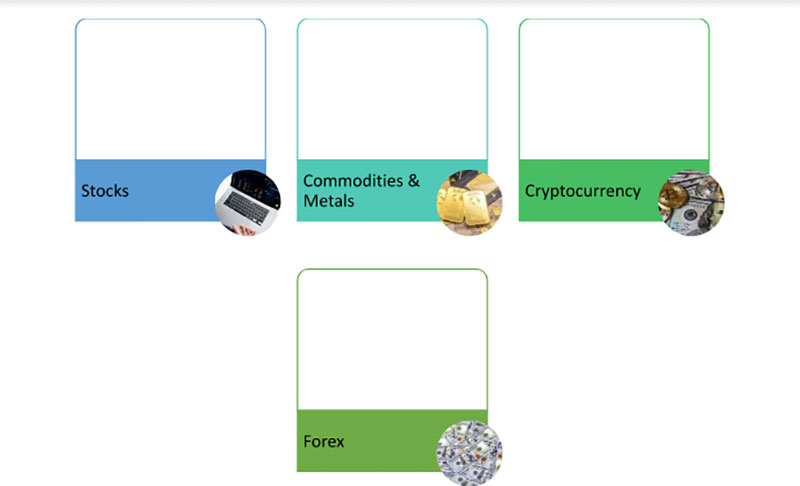
There are different assets available for purchase on the platform. These assets include cryptocurrencies, options, stocks, and CFDs. Users are exposed to various asset classes and markets with these diverse assets, giving them better choices when adding assets to their portfolios. Additionally, they can build hedged portfolios that can better withstand market shocks. The assets are available to all users and all accounts on the brokerage. Furthermore, users are allowed to trade these assets using the platform’s tools. These diverse assets give traders an edge and put them in a better position to get more out of their portfolios. 

Market Updates and Asset Analysis

Users are given up-to-date market information and news as they occur. These updates also have an expert market analysis, which gives users insight into how the market is moving. Additionally, users do not need a separate app to give them updates about the market. Furthermore, users can get market updates and trade with speed as they do not need to switch between apps. The market updates give users the edge they need to succeed in the markets. This feature creates ease for users of the Soltechx brokerage. 

Learning Material for Traders

Traders have access to learning materials that are available to all users. These training materials cover topics that are targeted at beginner, intermediate and advanced traders. These materials are provided to help traders better grasp their trading skills and improve where possible. This is great for newbie traders as they would be able to get a better understanding of advanced trading concepts. The materials will help intermediate traders on their journey to becoming advanced traders. Finally, for advanced traders, the materials will help them to learn more advanced trading techniques.

Dummy Account

How do traders practice what they have learned from the materials provided on the platform? Soltechx provides dummy accounts for traders who want to practice what they have learned on the platform. The dummy account removes the risk of losing money while learning, which encourages traders to practice more. Additionally, these dummy accounts operate in carefully simulated markets that mimic real-life price action. This brings realism into the training session for users as they feel they are making life trades. Users can switch between the live and dummy accounts as they wish for a seamless trading experience. 

Wrapping Up

The Soltechx brokerage ensures that retail traders can build solid portfolios o its platform. This means that it gives them more room to learn, a diverse basket of assets, and market updates. Still need some questions answered, the Soltechx website can be of help.

Disclaimer: This is a sponsored marketing content.

Onotex Review: A World of Potential Awaits

Onotex

The digital financial trading world is growing leaps and bounds from the trading floor of the yesteryears. The entire trading world is now in the digital space and people from all corners of the world can access it with freedom.

A multitude of online trading platforms have cropped up to facilitate the demand for online trading and one can often get confused between platforms. At the end of the day, it ultimately depends on priorities, however, since not all platforms are created equal, it helps to differentiate between those which are better suited to your individuality and affordability.

Onotex Specifics: Learn More 

Onotex is our broker of choice for this article, we will explore its features and eventually you can decide whether it’s a broker of choice for you.

First of all, it is a global brokerage house, meaning, they are not restricted by geographical location. Second, their verification and security checks take place entirely in the digital sphere, therefore, they are essentially paperless and you don’t need to post documentation anywhere.

When making your decision or evaluating a broker, look for the following features which we term “The Broker Cheat Sheet”:

  1. Speed of trading platform and reliability
  2. Product offering
  3. Ease of funding and withdrawals

Onotex Speed Of Trading Platform And Reliability

The first thing on our broker cheat sheet is the speed and reliability of Onotex’s trading platform. The trading platform is backed by powerful processors making it fast enough to undertake multiple, complex transactions at the same time. 

Also, the platform is sourced via an authentic third party software house that specializes in the financial trading arena. This makes Onotex’s software free from typical issues such as bugs and crashing because the software design is flawless.

Onotex Product Offering

The next thing to strike off your broker cheat sheet has to be the amount of products offered by the platform. The reason for this is, although most platforms specialize in offering the most trending products, investors and traders are unable to juggle registrations on multiple platforms for multiple products. Therefore, it is best for the investor or trader to choose a platform offering most assets under one trading roof. 

This helps save time and more often than not, prevents trading anxiety of checking multiple applications to juggle multiple portfolios across platforms.

Onotex has a huge variety of products on offer in order to cater to their client base. Their products range between:

  • Equities
  • Equity options
  • Futures and forwards
  • Swaps
  • Stock indices
  • Forex pairings
  • Cryptocurrency
  • CFDs on metals, commodities and precious metals

That sounds pretty impressive to us!

Features

Onotex Ease Of Funding And Withdrawals

The first two cheat sheet pointers can cut out the competition while making a choice of broker, but not eliminate it entirely. Hence our third and final pointer ensures you make the best decision for your investing and trading needs.

This expectation stems from the fact that if an investor struggles to fund their account or withdraw their earnings, the platform has failed for them. 

Onotex has proved to be a great platform in this area too, funding your account can be done via credit or debit card and even bank or wire transfers. 

Account funding and withdrawal can essentially be done in any currency but the platform converts it into US dollars, the trading currency of choice.

Onotex Downsides

Although Onotex has ticked all our boxes in our cheat sheet, there are certain downsides which you must keep in mind.

First, negative balance protection feature has yet to be rolled out on the platform. Second, Onotex charges inactivity charges if your trading account lies dormant for a certain period of time.

Onotex: Your Call

Onotex’s advantages and disadvantages have been laid bare in our analysis. Now the final decision lies with you. With incredible customer service, Onotex is available 24/6 to address client queries. 

Similarly, they value client feedback and implement it to the best of their abilities.

If our analysis has impressed you, contact Onotex today and see what they have to offer for yourself. Onotex’s website is waiting for you!

Disclaimer: This is a sponsored marketing content.

Time is Money: Addressing the Inefficiencies in Investment Banking to Boost the Bottom Line

Investment Banking

By Antione Vettes

In investment banking, every detail counts. Documents produced need to be high-quality, accurate and impactful in order to secure the transaction and deliver maximum value to the client. But this pursuit of excellence takes time and makes it difficult to achieve optimum efficiency levels.

What’s more, the industry is entering a new era in which the phrase ‘banker burnout’ continues to rear its head. Stories of bankers leaving the sector in search of a better work/life balance and sense of purpose within their role, are a regular occurrence. The time and effort banks invest in managing turnover and replacing employees introduces an additional layer of inefficiency. The need to support and retain staff is, therefore, more important than ever.

So, in this challenging climate, how can banks achieve optimum efficiency, deliver maximum value to clients and avoid adding pressure onto their workforce?

Saving time on lower-value work

With a fluctuating economy and rapidly changing conditions, bankers need to be able to adapt quickly to make decisions and deliver the best value to their clients. 

One major hindrance for them is the number of hours they spend on repetitive tasks whilst preparing key documents, such as pitchbooks and IMs.

Tasks such as updating documents repeatedly based on minor changes to financial models are, of course, necessary. However, doing these manually takes a great deal of time, often resulting in late nights at the office, and a major hit to productivity thanks to fatigue and stress.

What if these long hours spent on manual tasks could be limited, or better still, spent on more impactful work such as improving the quality of analysis, conducting more research or perfecting the messaging? 

By automating some of the manual processes, time could be freed up for bankers to develop their skills and add more value to clients, ultimately providing a welcome boost to the bank’s bottom line. 

What’s more, automation also reduces the chances of human error, meaning less time spent by managers on identifying and correcting errors, as well as a higher quality document for the client.

Improving acquisition and retention

Salaries in investment banking are well known for being some of the highest around, and the battle to attract the best talent in the market is also costly.

The cost of replacing and retraining these highly sought after professionals is therefore huge; it’s estimated this can be up to nine months of an employee’s annual salary, taking into account recruitment, retraining, and general productivity loss. Given that the average base salary of an analyst ranges from $100k – $125k, with total compensation as high as $250k, that equates to around to $187k to per junior banker. The need to retain these employees for as long as possible is vital to maintain the bottom line. 

In a post-covid world, however, the workforce is becoming more demanding than ever, prioritising careers and firms which enable good work/life balance, with flexible and remote working becoming more desirable than ever. But on a deeper level, they are also looking for a greater sense of purpose in their day-to-day work. We often hear stories of junior bankers leaving their roles without a new one lined-up, or leaving for lower paid, but more fulfilling roles.

Technology has a key role to play in this, too. Freeing bankers from mundane, repetitive work would enable them to focus on more rewarding tasks such as developing new skills, more creative thinking and broadening their deal experience. Not only would this help staff feel happier and more fulfilled in their roles – thus helping to boost retention – it also means the business gets a higher return on workforce expenditure.

Transforming traditions – it’s time for change 

Investment banking is an industry steeped in tradition; it’s undoubtedly a key component of its success and desirability. However, this could also be hampering its ability to evolve at the necessary pace.

For some, these manual, repetitive tasks and late nights at the office are a rite of passage for an investment banker, or a necessary test to ensure sufficient commitment to the cause. The idea of automating work and saving bankers from these mundane tasks can seem like a shortcut that more senior employees weren’t afforded; it’s not always fully embraced.

But one of the biggest challenges is that traditionally, banks have been so busy with their day-to-day work that taking time out to investigate ways to improve processes and drive greater long-term efficiency has not been a priority. Instead, in many cases, firms continue to use the tried and trusted systems which have been in place for years, no matter how frustrating and inefficient they may be. The mentality is often, ‘if it isn’t broken, don’t fix it’.

Understandably, when it comes to technology, the development teams responsible for installing and managing the existing systems look to make incremental improvements rather than bolder, more widespread changes due to the time and cost involved. It can be difficult to get the buy-in to overhaul how the firm operates at a fundamental level. 

When it comes to significant process changes, value must be seen by the board, those responsible for installation and management, as well as the users themselves. Demonstrating the genuine value of updating processes to CFOs and decision-makers is the key to ensuring buy-in.

The introduction of new roles, such as Chief Digital Officers – responsible for ensuring staff have the resources required to complete their tasks, is certainly a step in the right direction. But more can be done. 

The time to act is now

Over the last ten years, demand for tools and technologies which can help unlock efficiency in finance firms has grown. And that pressure isn’t just coming from coming from senior leaders, it’s coming from junior employees in equal measure. Top candidates are prioritising firms which can offer them the most rewarding career, and who are willing to invest in technology and tools which support staff to do this. 

Legacy tools, which were often built in-house by major banks, can’t keep up with third-party applications, which are continuously evolving, have a better UX and require much less maintenance for internal teams – particularly IT.

And all this is happening against a backdrop of increasing volumes of data which need to be analysed by bankers. The most forward-thinking firms are now looking to take advantage of platforms such as Power BI to leverage data more effectively and efficiently.

Those firms who have invested time and funds into tackling these inefficiencies head on, will not only reap the rewards sooner, they will be in a much better position to take advantages of further opportunities to leverage new innovations and technologies in the coming years. Those who haven’t could find themselves at a considerable, long-term disadvantage. It’s no longer a question of what will be done, it’s more a case of when.

About the Author

Antoine VettesAntione Vettes is the Co-founder at UpSlide 

Is Metaverse Fashion Week the Future of Fashion?

metaverse fashion

By Adina-Laura Achim

During the pandemic, luxury and premium brands were forced to scrap fashion shows and in-person events from their calendars and come up with innovative ways to connect with their audiences. As such, the jam-packed fashion calendar moved online and “phygital” became the new thing. But despite the plethora of digital channels developed and extended during the pandemic, the move seemed transitory. 

Let’s face it, watching the likes of Karlie Kloss and Alessandra Ambrosio showcasing designer garments from the comfort of their homes seemed more like Big Brother or a social experiment than anything remotely glamorous or high- fashion. But despite the clumsiness and oddness of digital catwalks, the phenomenon has pushed the limits of the fashion world, helping designers and premium labels innovate and take digital transformation more seriously.

In this context, NFTs, avatars, live-streaming, and elements of gamification took the retail world by storm. However, many wondered if this is just the latest hype or the future of fashion. 

The Metaverse Fashion Week (MVFW22) hosted by Decentraland, shows that premium brands are ready to embrace the virtual lifestyle. Some well-known labels like DKNY, Tommy Hilfiger, Paco Rabanne, Etro, and Dolce & Gabbana, among others, took part in the event, but heritage companies were notably absent. Meanwhile, the digital after-parties, expert talks, and 3D catwalks didn’t attract a large crowd. In fact, various publications, including Vogue and Mashable, noted that the events were poorly attended. Not only that but, the graphics didn’t create immersive experiences and the interactions seem fake, so it is highly doubtful that too many adults would feel the need to “interact” with virtual worlds. To make matters worse, technical glitches and challenges were also downgrading the experience.

“The final experience was far from seamless — technical difficulties, overheating hard drives and lack-luster graphics dimmed the fantasy of this supposedly limitless landscape,” said CNN.

Without a doubt, these problems are prevalent when dealing with digital technologies, but Decentraland and the fashion brands taking part in the events should have found feasible solutions before inviting guests to the MVFW22. By overlooking and downplaying challenges, these companies have damaged their own reputation and created additional risks that could impact their image and hurt their revenues.

Timothy J. Druzbik, Walmart Senior- Manager, Strategy and Business Development told The World Financial Review that the Metaverse is still evolving.

“While brands actively navigate this virtual world in hopes, it will provide a more intimate customer experience, as a sales channel it currently represents a very small percentage of total retail e-commerce GMV,” said Druzbik. “The Metaverse can certainly redefine what is possible across the digital marketing realm and reshape the consumer purchase decision journey; but perhaps it has not yet proven to be a go-to channel.”

Andrew Tran, principal marketing strategist, AT Digital told The World Financial Review that there are several risks associated with the Metaverse. And although “the effort to reward ratio might be low,” Tran believes brands should play the “long game.”

“Fashion week Metaverse style will be a new dimension for brands to seek attention, presence and legitimacy in the eyes of the consumer,” said Tran. “How people will adopt this over time will depend on the early investment by brands to normalise this channel now and over the years ahead.”

Even though the Metaverse is facing challenges, there are selective possibilities ahead. In fact, premium fashion labels can use the gawky experience to innovate and create relevant and richer digital interactions. An immersive ecosystem like the Metaverse offers tremendous opportunities for traditional brands to bridge the gap between digital and physical, and become even more consumer-centric.

According to Druzbik, the Metaverse “provides a medium for brands and consumers to meet and engage, anywhere at any time.”

Druzbik continued: “As fashion houses have doubled down and experimented on their DTC e-commerce channels through livestreaming, mixed reality, and virtual avatar idols – this entrance into the Metaverse, pushes the limits on retail innovation, and creatively connects with key consumers.”

Looking at current initiatives, it is evident that fashion companies understand the potential of the Metaverse, but several businesses have jumped too early on the bandwagon without properly understanding the technologies behind the virtual world or having a clear strategy in place. 

Moving forward, the fashion world should work towards securing skilled talent instead of partnering with third-parties and putting their digital transformation strategy in their hands. Also, fashion businesses should develop new data strategies that mitigate the risks of privacy violations and data breaches. This is especially important considering that Meta wants to collect and utilize biometric information in order to create hyper-realistic avatars and improve VR interactions. Last, fashion companies should design well-functioning “phydigital” experiences similar to the in-store AR displays used by Zara instead of betting big on the Metaverse. Shoppers still have limited familiarity with the Metaverse and their desire to interact with the virtual world is low. According to research from Zappi, 55 percent of respondents across the US and the UK say they don’t understand the Metaverse.

Aerial Lidar for Small Businesses – How it Works and How it Helps You Grow Your Business

Drone

As business owners try to innovate all their operations, aerial imaging is becoming the new trend for small businesses. They look for companies like fly guys drone services to effectuate cutting-edge technology and stay one step ahead of their competitors.

One of the latest technologies they want to commercially utilize for this purpose is the LiDAR drone. According to a survey, LiDAR drone’s market size will grow by USD 508 million by 2027 for commercial use.

But what is a LiDAR drone, and how does it help business growth? This article will give you all the answers related to LiDAR drones.

What is LiDAR Technology?

LiDAR (Light Detection and Ranging) is a detection system via light but follows the radar principle. The source sends light signals that hit the object and bounce back, providing useful data.

You can integrate LiDAR with other hardware like:

  • Drones
  • Helicopters
  • Submarines
  • Smart handheld devices

How Does a LiDAR Drone Work?

For aerial imaging, professional drone services equip these gadgets with a LiDAR sensor. In this way, the data can be easily and quickly accessed drone is controlled by either a pilot or remote control. 

The LiDAR system attached to the drone scans objects’ space by sending out laser beams. LiDAR’s laser can penetrate or cut around debris and other obstacles, giving accurate results.

When the sensor releases a laser beam, it works like sonar and radar object detection. However, the Sonar system uses sound waves, and the radar system uses radio waves to map things. On the other hand, LiDAR uses light rays (laser beams) to measure distance and dimensions. 

It does so with the help of Pulse and Return.

  • The laser sent out from the LiDAR system to the ground is called Pulse.
  • The reflected light which comes back to the LiDAR system is called Return.

LiDAR Drone Measurement

Although the laser light by a LiDAR drone travels in a straight line, it does measure dimension plus distance of stuff. How?

There are four major steps behind the working of a drone LiDAR:

1. LiDAR Scanning

First, the drone activates the LiDAR system, which sends moving laser beams to the earth. The laser keeps moving as the drone flies.

Besides, there are two types of lights LiDAR sensor uses:

  • Greenlight (532 nm)
  • Near-infrared light (1,064 nm)

These two lights can easily penetrate through the obstacle and reflect from whatever the surface is.

2. GPS Receiver

You need a GPS receiver with LiDAR technology. The GPS receiver calculates the drone’s altitude and determines its position in the air. With the help of a GPS receiver, we can find the reflection spots on the ground. 

LiDAR technology featuring a GPS receiver helps in geo-positioning, showing the exact location where the image is taken. 

3. Inertial Measurement Unit (IMU)

IMU helps track the drone’s aerial movements, which might affect the actual reading by the LiDAR system.

The responsibility of IMU is to evaluate the actual elevation of the drone to counter every miscalculation whatsoever.

4. LiDAR Computer

After gathering the aerial imaging data, you need a system to process it. LiDAR has its own computer, which can process the data efficiently and maintain a LiDAR database.

The system sends all the data collected by the aerial LiDAR to the computer. Therefore, no calculation can take place without a computer.

How Does LiDAR Measure Height?

The aerial LiDAR system uses the time to measure the height and eventually distance of the drone from the object underneath.

The height measurement is the time the “Pulse” takes to return to the system as “Return.”

But how is all this information useful? Let’s find out.

How Can LiDar Help Grow Your Business

Here are some ways you can utilize LiDAR technology for business growth:

Monitoring and Surveillance

By using aerial LiDAR, you can monitor the progress of your ongoing project from different aerial angles. However, there are some spots where it’s dangerous for humans to capture shots. That’s when the drone LiDAR system comes into play.

Aerial photography has also become a business itself.

Therefore, you just have to get yourself the latest LiDAR drone or get assistance from a drone services company if you don’t want to face technicalities.

These services might include

  • Thermal imaging and video
  • Timelapse photography
  • Panoramic shots

Track Construction Progress

As drones in construction are widely used, they can also provide aerial imagery for better progress monitoring. Aerial LiDAR has totally replaced reaching to the top of an under-construction building. Instead, now you can fly the drone, take aerial photographs, and see what’s going on from the top view without sending a worker up there.

Keep Stakeholders Updated at All Times

Communication in the business is a necessity, not a choice. You have to keep your clientele posted about the new offerings. For this purpose, you can utilize LiDAR technology to send them with latest updates. 

For suppliers and manufacturers, aerial LiDAR is an efficient way to track the performance of different production stages. It helps them in efficient and timely reporting as they can send aerial images showing the status of clients’ orders. 

As a result, clients never have to pay in-person visits to see which production stage their orders are going through.

Survey and Inspection

Aerial LiDAR can survey residential and commercial properties and give better insights before making an investment decision. Moreover, this technique saves you time and money because it’s

  • Fast
  • Reliable
  • Budget-friendly

Drones for aerial photography can also inspect hazardous places where humans shouldn’t go.

FAQs

At What Wavelength Does LiDAR Sensor Work?

You will find 905 nanometers (nm) and 1,550 nm wavelength ranges in the modern LiDAR sensors. So you can attach a LiDAR sensor to a drone and make the best of aerial imaging.

Is LiDAR Sensor Harmful to Humans?

Although some experts say that direct exposure to LiDAR laser can harm human eyesight, all commercial LiDAR sensors conform to the Class 1 eye-safe (IEC 60825-1:2014) standard. That means these laser products are safe to use.

What’s the Purpose of IMU (Inertial Measurement Unit) in the Aerial LiDAR?

As there is turbulence while flying a drone, a pilot tries to keep the flight as stable as possible. IMU considers the effects of the aerial disturbance and measures the drone’s altitude accordingly.

By doing this, you can get more accurate data from the LiDAR sensor.

Conclusion

The LiDAR system doesn’t only work from drones but from ground and space as well. The most commonly available airborne data is by aerial LiDAR, which makes it highly useful for many businesses.

Therefore, equip your business with a LiDAR drone and go aerial with the latest technology.

Why Getting a Good Education at a Young Age is Vital for Financial Success

Education

Education is important for many reasons, including the development of critical thinking skills, the ability to communicate effectively, and exposure to new and different ideas. However, one of the most important reasons to get a good education is financial success. There are a number of ways in which having a good education can lead to financial success. It’s no secret that people with higher levels of education tend to earn more money than those without. Here are a few specific examples.

1. People with higher levels of education are more likely to be employed

This one is pretty straightforward. In today’s economy, employers are increasingly looking for employees with at least some college experience. Even if you’re not planning on going into a highly educated field, having a degree shows that you’re capable of completing long-term projects and that you have the ability to learn new things. People that did well on standardized tests like the SAT or ACT often have an advantage here, as these tests can be used as a predictor of future success in college. Also, for example, the 8+ exam papers are widely available for those who wish to take a crack at it. This makes you a more attractive candidate for employers, and thus, more likely to be hired.

2. People with higher levels of education have more job options

This one is also pretty straightforward. The more education you have, the more job options you’ll have. This is especially true in today’s economy, where jobs are becoming increasingly specialized. Even if you’re not planning on going into a highly educated field, having a degree gives you the option to do so if you change your mind (or if the job market changes and your current field becomes less popular). It’s always better to have more options than fewer.

3. People with higher levels of education are more likely to get promotions

Again, this one is pretty straightforward. In general, people with higher levels of education are more likely to be promoted than those without. This is because they’re seen as being more capable and competent workers. They’re also seen as being more likely to stick around in their jobs since they have a higher level of commitment to their work. Additionally, people with higher levels of education are often seen as being more valuable to their companies, since they have the ability to contribute in a more meaningful way.

4. People with higher levels of education are more likely to start their own businesses

This one is a bit less straightforward, but it’s still true. People with higher levels of education are more likely to start their own businesses than those without. This is because they often have the capital (both financial and human) to do so. They also tend to be more risk-averse, which is important when starting a business. Additionally, people with higher levels of education often have a better network of contacts, which can be helpful in getting a business off the ground.

5. People with higher levels of education tend to live healthier lifestyles

This one might not seem like it has anything to do with finances, but it does. People who live healthier lifestyles tend to have lower healthcare costs. They’re also less likely to miss work due to illness, which can lead to lost wages. Additionally, people who live healthier lifestyles tend to live longer, which means they’ll have more time to save for retirement. It’s important to note that this isn’t just about eating healthy and exercising.

6. People with higher levels of education are less likely to be in prison

This one is a bit surprising, but it’s true. People with higher levels of education are less likely to be in prison than those without. This is because they’re less likely to commit crimes in the first place. Additionally, people with higher levels of education often have better job prospects, which means they’re less likely to turn to crime out of desperation. If you want to avoid being in prison, getting a good education is one of the best things you can do. This isn’t just true for financial success, but for success in life overall.

7. People with higher levels of education are more likely to vote

This one might not seem like it has anything to do with finances, but it does. People who vote are more likely to have their voices heard on important financial issues. They’re also more likely to elect officials who will make decisions that are in their best interests. Additionally, people who vote are more likely to be involved in their communities, which can lead to positive changes in the way resources are allocated. If you want to have a say in how your tax dollars are spent, getting a good education is one of the best things you can do.

8. People with higher levels of education tend to be happier

This one isn’t directly related to finances, but it’s still important. People who are happier tend to be more productive workers. They’re also less likely to miss work due to illness or stress. Additionally, people who are happier tend to live longer, which means they’ll have more time to enjoy their retirement. If you want to be happy, getting a good education is one of the best things you can do. It’s important to note that this isn’t just about making more money. Also, it’s worth mentioning that people with higher levels of education often have lower levels of debt, which can lead to less stress overall.

Education

As you can see, there are many reasons why getting a good education at a young age is vital for financial success. If you want to be successful in life, getting a good education is one of the best things you can do. It’s important to note that this isn’t just about making more money. Also, it’s worth mentioning that people with higher levels of education often have lower levels of debt, which can lead to less stress overall. By getting a good education, you’re setting yourself up for success in many different areas of life.

A Brief Guide to Building a Profitable Online Store

Profitable Online Store

Whether you want to venture into dropshipping or sell unique handmade items online, you’ll need a great website. Starting an eCommerce business is easier because it does not involve a lot of startup costs like a brick-and-mortar business. Here is a brief guide to building a profitable online store.

Choose a Niche and Create a Business Plan

The e-commerce market is highly competitive, so you should start by doing background research to identify your niche. Conduct a SWOT analysis for your business idea and try to find industry gaps. You can only identify the gaps in the market by researching to help you define your target audience. 

Use demographic data including age, income, location, and occupation as well as psychographic data like values, interests, beliefs, and aspirations to build buyer personas. Use this information to write a business plan and choose an appropriate business model. For instance, you can consider B2B e-commerce, B2C e-commerce, or sell on established marketplaces like Amazon and eBay. 

Select Domain Name

A domain name is just like a business name, and it helps your customers identify you. Try to choose a unique domain name, but keep it short and make sure it resonates with your brand. A keyword-rich domain is ideal for your business because it can rank high on search engine results pages. 

Choose an Ecommerce Platform

The next step is to choose an appropriate e-commerce platform where you can build and manage your online business. There are different online platforms, but each one comes with unique features, so do your research first. Consider aspects like affordability and user-friendliness depending on your business. 

Build Your Ecommerce Website

Once you choose an e-commerce platform, create an account and start building a website for your online store. When building a website, choose the right template and customize your home page and other pages so that your site is user-friendly. Be sure it is mobile optimized to attract many customers. 

Register Your Business 

Register your business to get an e-commerce license that allows you to process payments, pay taxes, and operate legally. If you are a registered company in UAE and operating a business online, you are covered by a UAE e-commerce license which allows you to trade with other businesses. This license is designed to ensure that you comply with online commerce regulations. 

Add Products

Once your business is registered, you now have the green light to operate legally. You can start adding different products to your online store depending on your niche. Include product descriptions, product categories, product images, and prices to make it easier for customers to identify what they would be looking for.   

Set Up Shipping and Marketing Strategy

You must figure out how you will distribute the products to reach the customers. Create a shipping policy that outlines the costs, terms, and other conditions of delivery. Make sure you state the delivery time and return policy. Additionally, choose an effective marketing strategy to reach a wide range of customers. 

Shipping and Marketing StrategyOperating an e-commerce business can give you financial independence if you want to manage it well. Many people have successfully established online businesses, and you can also do the same if you know what you are doing. These tips can help you build a profitable e-commerce business.

Online Gambling on The African Continent Is Booming

Online Gambling

Africa’s expanding online gaming industry has led iGaming businesses to view the continent as a prospective growth area. Due to their strong economies and broad interest in online sports betting, countries like South Africa, Nigeria, and Kenya offer a wealth of investment opportunities. Three of the primary factors that have contributed to the emergence of successful sports betting markets are continued economic expansion, the quick acceptance of inexpensive mobile internet, and the willingness of local authorities to regulate online gaming. Additionally, the increased disposable income of the emerging middle class has made investing in the African iGaming sector an exciting prospect.  

Sports Are the Favorite

The people of Africa have a common bond despite their many differences in language, culture, socioeconomic standing, and religious belief. Sports, particularly football, are huge among them. Sports betting on European football are especially popular among the country’s younger residents, but the rich traditions of horse racing, rugby, and cricket in the continent’s southernmost countries give these sports a foothold as well.

There is a lot of room for growth in the African sports betting business. With an average age of just 19.7 years old, this continent is home to almost 1.3 billion people. Further, 60 million Nigerians, or almost 30% of the population, participate in sports regularly, as indicated by a study of those aged 18–40. Daily betting costs for these people average $15.

The Internet Is a Driving Force

Over the last several years, online sports betting in Africa has grown rapidly. The widespread availability of high-speed internet, mobile phones, and mobile money platforms—which enable users to make purchases and send money without having a bank account—has facilitated this change.

The expansion of modern infrastructure throughout the continent, especially in the form of cheaper and more widely available high-speed mobile internet, is a major reason for the uptick. According to recent data, 11.5% of all internet users are from Africa. Many of these people also play at online casinos.

Africa is home to millions of gambling lovers that contribute directly or indirectly to the expanding iGaming sector, despite the fact that legal concerns have considerably impacted the expansion of online casinos in various regions of Africa. The growth of the online gambling industry worldwide since 2020 includes a significant contribution from Africa.

The growing economy in the Middle East and Africa places an emphasis on the establishment of new gaming sites. Several gaming sites have sprung up in various countries of Africa in the post-COVID period, increasing government income and providing employment for tens of thousands of people.

Nigeria and South Africa have the biggest gaming industries in Africa. However, despite having the most robust iGaming industry, South Africa’s online gambling rules have not advanced very far in recent years. If the South African government keeps amending the rules on gambling, then the market should continue to expand.

Africa Is Mobile First

Considering the avid sports following that exists throughout the continent of Africa, it should come as no surprise that mobile sports betting has been on the increase there for some years. However, the popularity of mobile betting in this region is also influenced by other variables. This includes the fact that many young Africans do not utilize traditional banking services but instead rely on mobile money. Mobile money services are offered by several major phone companies, including Airtel, Safaricom, and Telkom. Airtel Money, Mpesa, and T-cash are just a few examples of these services that collaborate with bookmakers. This facilitates the use of mobile money services by African gamers even if they do not have access to a bank account.

With the number of people with access to 3G and 4G networks having doubled in the last five years and the price of data and smartphones having dropped by half during this period, it is obvious to see the opportunities opening up for iGaming businesses. While sports betting sites have cornered the market on online gambling in Africa so far due to their lightweight offering (data consumption-wise), the advent of affordable bandwidth has made it possible to provide contemporary casino games to local gamers.

Young, tech-savvy Africans are able to place bets anytime they want using their cell phones, which is a major draw since the continent has a very young population.

Conclusion

After decades of stagnation, Africa’s gaming industry is now a prime opportunity for internet entrepreneurs. The revolutionary technologies of the postmodern era, such as 5G and AI, are also reshaping Africa’s narrative. The last year alone has seen more growth in iGaming than the previous five years combined. The untapped potential of Africa’s online gaming market lies at the heart of the continent’s current investment boom. A lot can be learned from the history of Africa’s growing online gaming market.

EDITOR'S PICK OF THE WEEK

CFO's new mandate. CFO explaining the presentation

The Performance and Transformation Orchestrator: The CFO’s New Mandate in the Age of AI

By Terence Tse CFOs are evolving into AI-driven transformation orchestrators, balancing finance, technology, and strategy while upskilling teams, managing risks, and driving measurable business value. A key insight from this year’s AI for CFOs event, organized...

WISE DECISION MAKER GUIDE

POWER INFLUENCERS

Emerging Trends

The Future of Global Trade