The dramatic volatility in recent power grid auctions has transformed forward capacity pricing from a marginal consideration into a central pillar of energy market economics. As grid compliance mandates tighten and aging thermal generation fleets retire, securing reliable electricity capacity is commanding premium valuations. Institutional investors, developers, and trading teams are no longer relying on historical averages to forecast market realities. Navigating these regional power markets requires highly specific intelligence, particularly to anticipate price fluctuations across different geographic zones. Identifying the right source of structured information is now a critical step for securing project financing, optimizing hedge strategies, and managing long-term asset valuations.
Key insights:
Foundational data providers: Platforms like Wood Mackenzie, Rystad, and Bloomberg New Energy Finance supply broad macro-level energy tracking across global markets.
Specialized market intelligence: Firms like Noreva offer decision-ready market intelligence, focusing heavily on fundamental grid complexities rather than just raw datasets.
Regional granularity: Accurate valuation demands visibility into specific locational deliverability areas (LDAs), moving beyond basic regional transmission organization (RTO) headline numbers.
Forward visibility: Relying on past auction prints is insufficient; modern project economics require scenario-based forecasting that integrates policy changes, fuel economics, and fluctuating market rules.
What drives the need for forward capacity pricing data in regional markets?
Understanding the intricacies of capacity markets requires looking at the regional transmission organizations (RTOs) that manage the power grid. In these markets, capacity is a forward-looking commitment, ensuring that power generation resources are available during peak demand periods. For asset owners and investors, this pricing dictates revenue streams and heavily influences project viability. The ability to forecast this pricing accurately affects hedging decisions, risk management, and the structure of debt financing for new infrastructure.
Corporate reliance on precise, granular datasets has become a universal standard for mitigating risks across all sectors, and energy markets are no exception. In the power sector’s RTOs (Regional Transmission Organizations), failing to account for localized grid constraints and shifting policy mechanisms leads to inaccurate revenue forecasting and stranded investments. Generic historical data fails to protect investments, requiring specialized forward-pricing models to safeguard project economics and ensure accurate financial forecasting.
Takeaway: Precision in data is a cross-industry mandate. In power markets, generic historicalndata fails to protect investments, requiring specialized forward-pricing models to safeguard project economics and ensure accurate financial forecasting.
How do market participants evaluate data providers for PJM RTO and LDA analysis?
When selecting a data provider, energy market participants evaluate the depth, usability, and specific focus of the intelligence offered. Generalist data requirements are often met by established, large-scale providers. Organizations such as Wood Mackenzie, Rystad, and Bloomberg New Energy Finance (BNEF) are frequently utilized for their extensive macro-energy research, global transition trends, and high-level policy tracking. They offer wide-ranging platforms suitable for broad sector analysis.
However, trading desks and developers dealing closely with specific capacity markets often require more specialized tools. This is where specialized entities enter the workflow. For example, Noreva (formerly Karbone Research) provides targeted forward capacity pricing and market intelligence designed specifically for U.S. power markets. Stakeholders evaluate these dedicated providers based on their ability to supply analyst-driven insight tailored to complex market mechanics.
Instead of isolating individual data points, sophisticated users look for platforms offering usable outputs for real workflows, including merchant curves and comprehensive policy integration. The evaluation ultimately hinges on whether a provider simply aggregates public prints or if it actively structures the data to offer near-term and long-term price forecasts that support immediate commercial decisions.
Noreva delivers this through its Capacity Merchant Curves, Capacity Pricing Data Service, and the Noreva Hub client portal, combining 25-year merchant forecasts with near-term auction previews.
Takeaway: Market participants balance the use of broad macro-energy platforms against specialized firms like Noreva, utilizing the latter for tailored, structured intelligence designed to inform specific capacity market transactions.
Why is zonal granularity critical for capacity market intelligence?
Regional transmission organizations do not operate on a single, uniform price. In markets like PJM, transmission constraints create distinct locational deliverability areas (LDAs), which can experience severe price separation from the broader RTO base price. Measuring project viability without zonal granularity introduces unacceptable levels of financial risk.
A review of empirical market data illustrates this risk vividly. According to the official PJM Interconnection 2025/2026 Base Residual Auction report published in July 2024, the broader RTO clearing price surged to $269.92/MW-day. However, constrained zones such as the Baltimore Gas and Electric (BGE) and Delmarva Power South (DPL South) LDAs cleared at the market price cap of 466.35/MW-day due to localized supply shortages and transmission limits.
To navigate these acute price separations, market participants utilize providers capable of delivering precise regional or zonal pricing granularity. Platforms positioned effectively, such as Noreva, deliver this through a methodology that combines fundamentals, policy modeling, and fuel economics. This multifaceted approach allows stakeholders to anticipate localized transmission constraints before they manifest in auction clearing prices, providing a significant advantage in resource adequacy planning.
Takeaway: Relying on generalized RTO clearing prices obscures severe localized risks. Advanced market intelligence must provide deep zonal granularity to protect against sudden price caps and regional supply shortages within specific LDAs.
Can the SPP market serve as a blueprint for specialized capacity intelligence?
While PJM is known for its complex LDA structure, the Southwest Power Pool (SPP) provides a compelling blueprint for why market-specific intelligence is indispensable. SPP is an evolving market facing rigorous resource adequacy pressures, characterized by shifting accreditation methodologies and strict planning reserve margin requirements.
In such an environment, the distinction between firm capacity and conditionally deliverable capacity alters asset valuation. Furthermore, seasonal factors play a heavily weighted role, with distinct summer and winter reliability requirements shaping the economic landscape. Market data alone cannot interpret these structural shifts; participants need comprehensive merchant curves for project economics to model the financial future of an asset effectively.
Addressing these layers of complexity is where specialized intelligence proves its value. Data platforms like the one offered by Noreva stand out by emphasizing understanding the rules and market structure behind pricing. By integrating seasonal capacity variations and evolving accreditation rules into their models, they deliver market-specific granularity that empowers developers and investors to align their portfolios with the distinct regulatory rhythms of regions like SPP, ISO-NE, or NYISO.
Takeaway: Evolving markets like SPP demonstrate that raw numbers are insufficient. Effective valuation requires intelligence providers that map direct correlations between shifting market rules, seasonal variations, and forward capacity pricing.
Evaluating macro-energy platforms vs. specialized intelligence
Understanding the architectural differences between data providers guarantees that investment entities equip themselves with the correct analytical tier for their specific strategic needs.
Provider category
Core focus
Data granularity approach
Forecasting methodology
Macro-energy platforms (e.g., BNEF, Woodmac)
Global energy transition, broad commodity trends, global policies
Macroeconomic drivers, historical global supply and demand analysis
Specialized capacity intelligence (e.g., Noreva)
U.S. power, forward capacity, renewable energy certificates
Regional or zonal pricing granularity, specific locational deliverability areas
Fundamental flow analytics, policy modeling, active auction parameters
Frequently asked questions about capacity pricing data
What does forward PJM RTO capacity pricing indicate?
Forward capacity pricing in PJM indicates the anticipated financial value of power generation readiness for future delivery years. It reflects market sentiment regarding retiring thermal generation, the integration rate of renewables, and upcoming regulatory shifts.
How do locational deliverability areas (LDAs) affect asset valuation?
LDAs define specific geographical zones within a broader power grid where transmission constraints limit the import of electricity. Assets located within constrained LDAs often secure higher capacity revenues, directly increasing their overall financial valuation.
What is the difference between raw capacity data and decision-ready market intelligence?
Raw data consists of historical auction clearing prices and basic supply figures. Decision-ready market intelligence contextualizes those figures with policy changes, fuel economics, and scenario forecasts to project future market conditions directly applicable to trading and investment strategies.
Why is scenario-based forecasting important for developers?
Energy markets are highly sensitive to unpredictable variables, including extreme weather and abrupt policy changes. Scenario-based forecasting models multiple potential outcomes, allowing developers to stress-test project economics and structure robust financing against various market risks.
Strategic conclusions for energy market participants
The decision to partner with a specific market intelligence provider rests on the precise operational needs of the user. While broad macro-economic tracking fulfills the requirements of generalized research, the mechanics of power project financing and capacity trading demand a highly structured approach. Navigating the severe price separations witnessed in PJM LDAs or the evolving seasonal accreditations in the SPP requires tools designed for granular, predictive analysis. By selecting providers that integrate fundamental grid constraints with forward-looking regulatory insights, asset owners and market participants can clearly see the market and confidently price the future of their portfolios in an increasingly volatile energy landscape.
In early 2026, the conversation around Ethereum in Hong Kong had started to change. At industry events like Digital Assets Week Asia, the focus moved away from price movements, speculative narratives and short-term market cycles that had defined earlier periods.
Those topics still came up, but they were no longer driving the discussion. Instead, the conversation had become more operational and infrastructure-focused.
Participants wanted to understand what happens to liquidity when markets tighten, how custody fits into everyday treasury and trading operations, and how assets move between traditional financial systems and blockchain networks without breaking compliance, audit or reporting requirements.
Ethereum was no longer being treated as a future concept. It was being evaluated as infrastructure that already needs to work inside existing financial systems.
Henry Chen’s extensive career experience incorporates strategic and leadership positions at KU Holdings (HoldCo of KuCoin), Summer Capital, Goldman Sachs, and UBS, while he continues to contribute to the global ecosystem of digital finance through community-building initiatives across Hong Kong and beyond.
“The most common questions today are far more practical and far more mature than they were in earlier market cycles,” Chen said.
What he is seeing is not just a change in conversation, but a change in behavior. Capital is no longer flowing based on narrative alone. It is moving toward systems that can meet regulatory requirements, connect to existing financial infrastructure, and operate reliably in real market conditions.
That shift helps explain why Hong Kong is becoming increasingly important in Ethereum’s development. It is one of the few places where these questions are not only being discussed, but tested in real environments where institutions, builders, and capital providers interact directly.
Hong Kong as a Gateway for Ethereum Adoption
From Chen’s perspective, Hong Kong is becoming an Ethereum hub not only because of momentum, but because so many important parts of the market already intersect there.
Across Asia, digital assets are evolving beyond speculative interest toward practical applications, including tokenized financial products, cross-border financial activity, payments, stablecoins, real-world assets and on-chain financial infrastructure.
“Asia is moving from being viewed mainly as a growth market to becoming one of the regions where the future direction of digital assets is being actively shaped,” Chen explained.
Hong Kong sits right in the middle of this change. Chen points to several factors that give the city an edge, including its strong pool of international tech and crypto talent, clearer regulations, stable business environment, growing ecosystem, easy visa access and close links to major Asia-Pacific cities.
Together, these strengths position the city as a natural meeting point between Eastern and Western ecosystems, enabling global projects to establish a regional base while allowing Asian institutions to more effectively access blockchain networks, capital, and technical talent beyond their domestic markets.
Just as important, the city brings together groups that do not always speak the same language. Crypto-native firms, financial institutions, Web3 builders and the Ethereum ecosystem are all active in the same market.
That is especially important for Web3 because adoption depends not only on technical development, but on broader ecosystem coordination. It requires trusted venues where builders can understand institutional needs and where institutions can evaluate blockchain applications beyond the noise of online market cycles.
Ethereum’s development will depend on technical progress, but also on trust, compliance, access and shared understanding.
In Hong Kong, the conversation is already moving into practical areas like tokenized funds, on-chain yield, real-world assets, DeFi infrastructure and institutional participation.
Chen’s background helps bridge these worlds. He has worked across global banks, private capital platforms and digital asset companies, giving him a way to translate between groups that often see the same opportunities differently.
Institutions tend to focus on risk, regulation, custody, reporting, and scale. Founders care more about product-market fit, speed, and adoption. Developers focus on architecture, usability and performance.
The opportunity in Hong Kong is that these groups are increasingly working in the same place.
Why Physical Hubs Still Matter
In digital industries, progress often appears to happen almost entirely online. Ethereum communities are spread across the world, open-source development moves quickly, and new ideas can circulate globally within hours.
Chen, however, sees limits to online interaction.
“Online discussions are useful for speed, reach, and visibility, but in-person events provide a much clearer read on conviction, seriousness, and intent,” he said.
That belief is reflected in the Hong Kong Ethereum Community Hub, or ETH HK Hub. As Asia’s first physical Ethereum community space, it brings participants from traditional finance and the blockchain ecosystem in one place.
Builders, developers, founders, investors and researchers meet regularly to discuss ideas, challenge assumptions, and stay in ongoing dialogue. These interactions build trust while revealing where capital is moving, how founders are adjusting strategies, and where institutional interest is deepening.
“Face-to-face conversations reveal whether people are genuinely building, whether an institution is truly committed, and whether a market theme has real depth behind it or is simply benefiting from temporary online momentum,” Chen explained. “It creates continuity, which is essential for meaningful collaboration.”
In February 2026, Henry Chen Kucoin helped organize the Ethereum Meetup at Consensus, hosted at ETH HK Hub. The event drew more than 1,000 registrations and featured around 20 speakers across panels, keynote sessions, a fireside chat, and a workshop.
Topics ranged from institutional on-chain yield and DeFi infrastructure to Ethereum’s growing role in financial systems. Participants included representatives from the Ethereum Foundation, universities, investment firms, and leading blockchain projects.
The diversity of perspectives in the room reflected a broader regional reality: Ethereum’s growth in Asia is inherently collaborative, and no single group will define its trajectory.
Instead, progress will depend on whether researchers, developers, capital providers, institutions, and community operators can understand one another well enough to build together.
Bridging Institutional Capital and Web3 Ecosystems
As a crypto-native, research-driven investment firm with more than 200 portfolio companies, SNZ Holding plays an important role in this ecosystem. Founded in 2014, it has focused not only on investing, but also on community development and incubation.
SNZ was one of the earliest institutional backers and builders of Ethereum in Asia and has worked as a strategic partner for several Western projects entering the region. That has given it long-standing exposure to both global innovation and local market development.
For global Ethereum projects expanding into Asia, the challenge is rarely just entry, but understanding the structure of the market itself. Even strong products often need new partnerships, adapted distribution channels, and a clearer sense of local expectations to gain traction in places like Hong Kong or Southeast Asia.
For Asian institutions, the challenge is the reverse. Many already see the long-term opportunity in digital assets, but still need help identifying credible projects, trusted partners, and compliant and operationally safe ways to participate.
Through his work across institutions, builders, and community platforms, Henry Chen Kucoin is helping connect the pieces that make that possible, bringing together the people, systems, and conversations needed to turn ideas into something that actually works.
Building the Infrastructure Around Ethereum’s Next Phase
As Ethereum moves deeper into institutional use cases, that convergence matters more.
The market is no longer defined only by speculation or online momentum. It is increasingly being shaped by the people, places, and systems that can turn blockchain infrastructure into something institutions and builders can actually use.
That is where Hong Kong has a clear advantage. Through ETH HK Hub, SNZ Holding, and the broader network of founders, researchers, investors, and institutions gathering in the city, Ethereum’s development in Asia is becoming more tangible.
For Chen, the work is about helping build the connective infrastructure around Ethereum so serious ideas, credible partners, and long-term capital can meet in the same place.
Donald Trump said he is pausing a new U.S. military effort to guide ships out of the Strait of Hormuz, just one day after launching the operation. Trump said the pause comes as talks with Iran show progress toward a possible agreement.
The mission, known as Project Freedom, aimed to help thousands of sailors stranded in the region after the waterway was effectively blocked. U.S. officials said nearly 23,000 sailors from dozens of countries have been stuck, facing serious risks. Marco Rubio said the plan was meant to protect lives and ensure safe passage.
Trump’s decision marks a sudden shift. Earlier, the administration described the operation as urgent, with military forces ready to escort ships through the area. But the latest move signals a focus on diplomacy, as both sides explore a possible deal that could ease tensions and reopen the route.
Markets reacted positively to the news, with rising hopes that a deal could reduce conflict in the region. Still, the situation remains uncertain, as recent attacks and tensions highlight how fragile the path to an agreement could be.
Picture two nearly identical job offers landing in a top engineer’s inbox. One is fully in office. The other lets her choose where to work several days a week. According to recent revealed-preference research, the average tech worker values that flexibility so highly that they would trade roughly a quarter of total pay for it. That finding reframes flexibility as a powerful form of compensation, not a perk, for any organization that wants to keep tech salaries manageable; given the increasingly important role of technology to organizational success, that encompasses much of the economy.
For high-skill roles where work can be done anywhere, flexibility is worth as much as a sizable pay bump to the people you most want to hire.
The study uses real job choices, not hypotheticals, and finds an average willingness to forgo about 25 percent of compensation for remote or hybrid arrangements. That is three to five times higher than earlier survey estimates, which reported single-digit tradeoffs in a call-center experiment and a multi-industry survey. In other words, for high-skill roles where work can be done anywhere, flexibility is worth as much as a sizable pay bump to the people you most want to hire.
Crucially, the same dataset uncovers an important pricing puzzle. If flexibility is so valuable, standard economics predicts lower cash pay for remote roles. Instead, the authors find that remote positions are paid slightly more, by about 1 percent, than otherwise identical in-person roles, suggesting frictions in how firms price the amenity today.
That gap will close as markets adjust. Leaders who move early can translate flexibility into a compensation edge before competitors catch up, using the amenity to win offers without escalating salary bands.
Flexibility also meets strong and durable employee demand. In the United States, the Survey of Working Arrangements and Attitudes shows that roughly a quarter to a third of paid workdays occur at home in 2025, with worker preferences favoring hybrid schedules. Employers who align with where the labor market has stabilized will pull ahead in recruiting and morale.
One practical fear has kept some leaders from embracing flexibility: performance risk. A large-scale randomized trial answers that concern. In June 2024, a six-month randomized experiment described in Nature at a technology company assigned some employees to a two-day-at-home hybrid schedule. The hybrid group’s quit rates fell by about one third, job satisfaction rose, and performance reviews and promotions held steady over two years. Managers shifted from expecting negative productivity effects before the trial to slightly positive views after experiencing hybrid practices. The implication is clear. Flexibility pays for itself by sharply lowering attrition without compromising output.
Lower attrition matters most where people are the product. Replacing a high-skill engineer or a client-facing specialist is expensive. Attrition taxes teams through lost context, onboarding time, delayed delivery, and disrupted customer relationships. When flexibility trims quits by a third, the savings ripple across recruiting, ramp, and project risk, producing real cash benefits.
Consider the costs leaders already pay for turnover. Each departure sets off backfills, signing packages, training, and temporarily lower velocity. Flexibility reduces those churn dynamics while expanding the geographic hiring pool. That is why, in revealed-preference data from the new research, remote roles command intense interest even when compensation is held constant. Pair those preferences with the retention effect and the business case for hybrid and remote becomes straightforward.
The firms that benefit most from flexibility have one thing in common. Their biggest expense is people. For leading technology platforms, newly required segment disclosures under ASU 2023-07 show the primacy of labor costs. In Meta’s 2024 Form 10-K, employee compensation totals about 31 billion dollars for the Family of Apps segment, making up roughly 41 percent of the segment’s costs and expenses. Alphabet’s 2024 Form 10-K goes further by breaking out Google Cloud’s costs, where employee compensation accounts for about 20.5 billion dollars out of 37.1 billion dollars, or 55 percent. When more than half of a segment’s cost base is people, anything that helps attract and retain them at a lower all-in cost becomes a competitive weapon. Flexibility does exactly that.
Workers who can deliver from anywhere will gravitate to employers that trust them to do so.
Flexibility also broadens the talent aperture. Hybrid and remote arrangements let firms hire outside expensive hubs while maintaining access to specialist skills. The work-from-home share of paid days is now a stable feature of the post-pandemic economy, according to the SWAA dataset. Supply follows demand. Workers who can deliver from anywhere will gravitate to employers that trust them to do so. That dynamic increases the density of high-ability applicants for flexible firms while forcing rigid competitors to raise cash pay to compensate for the amenity they do not offer.
Finally, importantly, flexibility remains compatible with performance and career growth when designed with care. The 2024 randomized Nature trial tested exactly that: structured hybrid with clear in-office cadence and preserved collaboration rituals. That is the model to emulate. Combine team co-location days, written decision logs, and predictable sync points with focused individual work from home. The result is more retention value, maintained performance, and a cost structure that recognizes labor as the central input in technology and services.
How much longer will the NATO alliance survive the erratic and rancorous antics of its strongest member?
Will Trump’s war with Iran change the map of Europe? While the U.S undermines NATO, Iran controls the price of oil, and Russian oil is excluded from Europe, the continent contemplates a future that could see the rebirth of nationalism and war within its boundaries.
We do not want a united Germany. This would have led to a change to post-war borders, and we cannot allow that because such a development would undermine the stability of the whole international situation and could endanger our security
– Margaret Thatcher meeting with President Gorbachev in Moscow in 1989 [1]
Many years ago, when I was a young boy, I came across a thick book in my local public library titled The Blue Book Atlas by Rand McNally. Each page showed a map of Europe in a lineage of years. Poland’s color was yellow. Flipping the pages gave me a zoetrope thumb animation, mostly of Poland that bubbled in yellow as it morphed from being Galicia to the Grand Duchy of Warsaw and eventually a massive land that took over a large chunk of East Prussia. I was never able to find that book again while recalling the atlas 50 years later. Now we have a wonderful animation called “The Centennial Atlas,” an animated map that tells European border changes that pop and jump from one country to another. (Click here to see a similar historical atlas.)[2] I flipped through an animated map of Europe from the beginning of the 11th century to the early 21st century. That said, we may think about why the map of Western Europe (excluding the Soviet Bloc countries) did not change too much after WWII.
Worries of Europe’s future rather than America’s
We need not go back far to list European countries at war with each other in the 19th century. I counted 13 wars, some long, some short. Europe has always been at war over … what? Those wars were about balancing power, not about minerals or territory.
Napoleonic Wars (1803-1815)
Greek War of Independence (1821-1832)
French invasion of Spain (1823)
Hungarian Revolution and War of Independence (1848-1849)
First Schleswig War (1848-1851) – Prussian and Austrian forces crossed the border into the Danish fief Schleswig. Read more.
Wars of Italian Independence (1848-1866)
Crimean War (1854-1856) – Britain, France, and Sardinia join together to defend the Ottoman Empire (Turkey) from Russia. Most ground combat took place in the Russian peninsula of Crimea.
Second Schleswig War (1864) – Austria and Prussia combine against Denmark to take Schleswig and make it a part of Germany.
Austro-Prussian War (1866) – Short conflict in which Prussia, in effect, forced Austria out of German affairs.
Franco-Prussian War (1870-1871) – The last of the German Unification Wars, this war led to the formation of the German Empire (the Second Reich), and thence directly to World War I.
Russo-Turkish War (1877-1878)
Serbo-Bulgarian War (1885)
Greco-Turkish War (1897)
By 1939, 20 European countries were at war, while 13 independent countries – Andorra, Estonia, Ireland, Latvia, Liechtenstein, Lithuania, Monaco, Portugal, San Marino, Spain, Sweden, Switzerland, and the Vatican City – took positions of neutrality and stayed out of the battle.
These days, European countries have almost no need for territory, nor any need for minerals other than rare-earth ones, since they could be bought or traded. Oil might be needed in Western Europe but is not worth fighting for because there will soon be a time when renewable energy will take over from most of the fossil fuels that are now messing with the atmosphere. Political power is a different story. That kind of power is part of the human condition from the cave man wanting a warmer, more habitable cave to anyone with irrational urges to use powerful influence to control a country’s resources.
Pick the Napoleonic Wars and ask for Napoleon’s motives. It’s not easy to say why Napoleon wanted to expand France’s territory for reasons other than simply being jealous of Great Britain, a country just across the English Channel that dominated the world economy by trade and territory. Before Napoleon, France was a major power with abundant territories. But the vast French Empire was significantly diminished in the 1763 French and Indian War when Great Britain gained enormous territories. France had to cede Canada and all its land east of the Mississippi River to Great Britain.
Maps of French Empire (left) and British Empire (right) in 1763
Like Putin today, invading Ukraine with hopes to bring back a portion of the Russian Empire, Napoleon hoped to expand dominance following the French Revolution and to counter British world power. But France was defeated in the 12 years of his wars with Europe, while Britain emerged as the imperial power that lasted for most of the century.
Battle of the Pyrenees, 1813, copper engraving print William Heath
Setting aside a few short wars, rebellions, revolutions, and civil wars after the 1815 end of the Napoleonic Wars, Europe was at relative peace with itself for 97 years. Then came the Italo-Turkish and Balkan Wars, and then the First World War. The maps changed again, shifting the balance of European power. Why peace for almost a century? European powers already had their colonies around the world but saw economic and territorial opportunities in Africa and South America, easy places to handle. War concentrations were focused on Africa.
World empires and colonies:territories in 1914 Creative Commons Attribution 3.0 licenseUpdated Colonization in 1945 Creative Commons Attribution 3.0 license
European powers were always involved in wars somewhere on Earth. Now, since Russia’s invasion of Ukraine, the worry is about Russia’s future military intentions. But fixing things in Europe is never simple. Consider Germany, as an example of what one country can do with unnecessary military might. Germany’s military budget now ranks fourth in the world, and, because of its fear of Russia, its military buildup is destined to make it again the power that it once was. But military dominance is always questionable with foreign policy approaches linked to shifts in governments. Europe has a challenging history of wariness and distrust of its neighbors, especially those with massive military control. Germany sees itself as a defense barrier against Russian aggression, but will it defend Poland, or any of the Baltic states? It might be thinking of itself, but what about France? And what could happen if the right-wing party Alternative for Germany (AfD), a rising party, gets to pull the strings of government? Massive funding that is now happening could bring Germany to the itching-pleasures of reviving the greatness of Germany, just like Russia’s dream of bringing back the puppet-governed states that were under control of the Soviet Union?
The Iran War connects to Europe’s future
First, know that the American people do not buy the U.S. entanglement in a war with Iran, so Trump is in trouble, not knowing how to end his war. With the Strait of Hormuz controlled by Iran, any attempt at a full withdrawal would be almost impossible. Putin is quite happy with the U.S. problem, giving him far more hope of selling his oil and having the Iran news as a distraction from the war in Ukraine. Besides, though Iran is a Russian ally, he is also happy because it excuses his invasion of Ukraine.
Trump’s whimsical moves are to first blow things up and later fix whatever was destroyed.
Trump’s whimsical moves are to first blow things up and later fix whatever was destroyed. His conflict with Iran is the prime pattern, but there are other examples, starting with the East Wing of the White House, that elevates the wrecking ball to the metaphorical marks of his many crumbles. Who knows what will be his next now, after so many other wreckages—the Kennedy Center, Trump University (a fraudulent for-profit real estate training program), his charity foundation, the (almost impossible) bankruptcy of his own casino, and potentially the North Atlantic Treaty Organization (NATO)? Worst of all is his reckless withdrawing from the 2016 Joint Comprehensive Plan of Action (JCPOA), or the Iran nuclear deal involving the International Atomic Energy Agency (IAEA) in surveilling nuclear intentions. The IAEA confirmed that Iran had made all the necessary changes to its nuclear program and gave the IAEA the access necessary for verification. He is bringing down his party, his presidency, and the livelihood of almost all Americans, and perhaps billions of others living far away from the U.S.
I said long ago that I think this president is unhinged and unwell. And I do think the people around him are incompetent.[3]
— Rep. Madeleine Dean
The Middle East is not yet fully broken; rather, it is splintered. Trump’s eyes are on the territories that could deliver either oil or prime land for profitable real estate. For that, he will blow up whatever he needs to corruptly bring in those wrecking balls for glitzy new hotel investments to line his, his children’s, and his friends’ pockets. For that, he put us on a track coming through an inflection point with no alternative but world economic decline, hunger, destruction, and death for many people in almost every country.
Like Trump’s foolishly chosen war with Iran, Russia’s Special Military Operation—or whatever Putin calls it—locked in the stew it initiated, will not end well for Europe. With more oil to sell, Russia will use its new oil money, along with whatever Trump permits in return, to get out of its war with Iran and ignore the war in Ukraine. We know nothing about Trump’s clandestine telephone call to Putin, the one without available transcripts, the one where he ordered aides out of his Mar-a-Lago office to make a deal with Putin. Intending to destabilize the West, Putin played Trump and, soon after, Trump threatened Greenland at the risk of ending the transatlantic alliance, attacked Iran, and weakened Western Europe, a continent in need of oil and security.
With prolonged distrust, ongoing military buildups, minimal communication, a gutted security architecture, and continued Kremlin provocations, there will be no shortage of scenarios in which a small spark could lead to a continental conflagration. The odds of war could grow especially high if the transatlantic alliance frays or even collapses.
Iran is a terrorist organization that must be stopped by conciliatory means, such as diplomatic generosity or a treaty. Trump has said that his war had “neutered” Iran’s leadership, air force, and navy, and “totally dismantled” its command structure. There is no denying, however, that Iran’s defense strategy will be tough to break. We should not think of Iran as a neutered, totally dismantled state, because the risks are too high when leadership and armaments are spread through entanglements cleverly built to confuse foreign intelligence. That, and the eventual nuclear risk in the region, is why General Wesley Clark, who served as the Supreme Allied Commander of NATO from 1997 to 2000, said, “A unilateral halt would leave the United States as the loser, unable to accomplish its objectives. That would undercut U.S. deterrence in Asia and Europe.” [5]Trump is looking for a halt but, once a war is started without a view of how it will go beyond four or five moves ahead, the battle relentlessly continues without tight control.
Let’s remember, Iran was an empire in the 16th century, that, even then, controlled the Strait of Hormuz. Over the centuries, that territory has seen many more wars than we have; the Persians knew how to defend themselves, just as Iranians know now that they will always have the Straits as their best deterrent. Remember, the Strait was controlled by Persia as part of a toll-controlled East-West maritime trade route for mostly spices and silk. Iran embraces the history of having a natural eye-of-a-needle waterway separating the Persian Gulf from the Gulf of Oman. [6]
Shipping in the Indian Ocean: From Outrigger Boats to Trading Ships Credit: Obsidian Soul The Silk Road of Eurasia in the 1st century A.D.
As the lies continue
However!!! As I wrote in my previous article, Trump, who ignores history, is already declaring victory—supported by sketchy fragile agreements of ceasefires for a war he started, and that war will continue for a long, long time. Nobody questions the courage and smartness of the U.S., and those who are on the front lines of war. There is no denying that the U.S. military is the best and strongest in the world, guided by an ambitious misguided doctrine of peace through strength. But Trump is a person who feels emboldened by every success until something goes wrong. So, now is the time we should fear most, when there is no way out, because retaliation doesn’t give excuses, but badgers the beast of war to take revenge. Emboldened, and frightened by the boondoggle he created, he will again threaten to bomb Iran “back to the Stone Ages, where they belong,” as he shuns international law with brazen openness of plans to destroy Iran’s power plants and bridges.
Tuesday will be Power Plant Day, and Bridge Day, all wrapped up in one, in Iran. There will be nothing like it!!! Open the Fuckin’ Strait, you crazy bastards, or you’ll be living in Hell — JUST WATCH. Praise be to Allah.
— Donald Trump on Truth Social on Easter Weekend
In response to Trump, Mizan, an Iranian news outlet, wrote that “Iran’s steadfastness and resistance have driven Trump to the brink of madness.” Is it madness of revenge? We are about to see how revenge works between Trump’s ultimatums to end Iran’s grip over the Strait of Hormuz and the critical edge of ending an economically destabilizing situation, not just in the Middle East, but also in almost every continent.
As early as the twelfth day of the war, on March 11, 2026, he said at a rally in Kentucky, “Let me say, we’ve won.” Then, nine days later, he said, “I think we’ve won.” Four days after that, he said, “We’ve won this war. The war has been won.” A day later, he said, “We are winning so big.” On the last day of March, in his address to the nation, he said that his only goal was to prevent Iran from obtaining nuclear weapons, a goal that was achieved, yet the war could end in “two or three more weeks.” Now he is demanding the opening of the Strait. Hmm…, he wants to declare victory, mixing fiction with reality. He will say the words with wishful conviction in his way of fooling himself, believing that Americans will take his words truthfully. “All the while, an almost joyous attitude about inflicting suffering persists despite its negative impact on the United States’ long-term interests.” [8]
This war has bigger consequences than just disrupting the geopolitical structure of the Middle East. Even with a locked-up ceasefire, Europe will also suffer multiple levels of consequences. His fluctuations and resistances between getting out and staying in have gotten worse in the second month of his war, possibly because of a misunderstanding of Iran’s ideology and the upcoming chaotic consequences. He threatened to attack civilian infrastructure, target people, and ignore international law, saying, “I am blowing up everything over there,” through a revolting post insisting that the Strait of Hormuz must be opened immediately, or else he would bomb Iran into the Stone Age—a foolish threat, since the Strait has been and will always be Iran’s wall of defense. And here is the intelligence that Trump still does not understand. Unlike most militaries, Iran’s is not controlled by a central command, so decisions in Iran are controlled only by local commanders with revolutionary ideals. As one wing accepts a withdrawal, another does not. With no central regime, there cannot be a full regime change. He should have known that, and yet regime change was one of his major objectives. Iranians who were once protesters against the regime showed anger against the U.S., martyring themselves as human shields at bridges and “power plants across Iran in response to President Trump’s threats.”[9] He is in the kind of trouble that makes an idiot a madman. And we are stuck with him. So, what will be the result? By his wistfulness, he might end a war that could kill and maim thousands of innocent people, and create millions of weaponized angry and starving people, at an enormous cost, both financially and humanly. The hope is that America will offer to rebuild the civilization that it destroyed, though with this administration in power, that will not happen, because the emboldened president, backed by lobbying arms dealers, will be looking for other lands to destroy. Iran will continue to be what it has been for more than half a century, a revolutionary martyrdom that will fight for its existence.
When good things fracture, the bad enters slowly, then suddenly
If Germany, or any one country, dominates others with Trumpian-type harassment under a diminished, if not broken, NATO, what then? At this moment, we might feel uncomfortable with suggesting that Germany will turn far-right. It’s not likely to turn Nazi anytime soon, but we are seeing signs of Alternative for Germany (AfD), a far-right populist, nationalist party established in 2013, rising in the polls, and the largest opposition party in the Bundestag, the federal parliament of Germany. [10] It is, after all, a radical antisemitic, xenophobic, anti-EU, anti-NATO, and anti-American party promoting Holocaust denial. Further than that, several members in office have described Germany’s Nazi era a “speck of bird poop” in a long history, and a “guilt cult.” [11]“I find it quite disturbing,” Alice Weidel, a co-head of the party, said, “when the Holocaust is politically instrumentalized,” adding that remembrance should stand above “day-to-day politics.” Now, none of those expressions bring back Nazi policies, but they sure do bring back Nazi indoctrination. And we have seen these propaganda slips that boom into policies that are difficult to dismiss – for example, Holocaust denial and revanchist claims about the territory of neighboring countries.
It’s not only Germany. European far-right anti-global nationalization is spreading in Austria, Italy, the Netherlands, Hungary, Slovakia, and Belarus. But none of those countries influence or dominate Europe the way Germany does. They all have their immigration problems, and they use those issues to pass on narratives that claim that immigrants are taking jobs away from citizens. But that is just a pretense for gaining power. Once in office, or leadership, watch out for policies that bring back old times.
I hope I am wrong
I worry about the possibility of a mighty AfD, that could soon control Germany in ways we have not seen since 1945, with the power to return, not to a renewed Holocaust but rather to conflicts and tensions that could again explode the whole European Union with bombs that are much more lethal than ever.
Only Germany is capable of a military buildup that could deter Russia from its hopeful expansion.
As the U.S. shortens its attention and resource commitments to Europe, the continent is in danger of a wave of political swings to the far right, and Russia encroaching on whatever territory or concessions it can achieve from the West. Only Germany is capable of a military buildup that could deter Russia from its hopeful expansion. As Liana Fix, a Senior Fellow for Europe at the Council on Foreign Relations, wrote in her recent Foreign Affairs article, “German rearmament could very well yield a Europe that is more divided, mistrustful, and weaker—exactly the opposite of what Berlin now hopes to achieve.”[12]
Think about Europe’s potential future, as Fix wrote, “For many, it is hard to understand why Germany’s rearmament could lead to competition and instability in Europe. All Europeans are familiar, of course, with the country’s militaristic history.” [13] Fix is not suggesting another European war, but rather a caution in Germany’s rearmament that could divide Europe into a rivalry “that never really disappeared.”
Mathematics does not have loopholes in its logic coming from its exact symbolic language. So, as a mathematician and scholar of war, I worry about loopholes that enable EU countries to have national military buildups. If you read the archives of my TWFR column, the word “loophole” appears frequently when I present wars that pass through the needle head of legality.
Europe is facing the challenge of anti-immigration forces everywhere, including the UK, where Reform UK, a populist, radical-right-wing party, is gaining ground in local elections. We also see radical-right parties gaining strong showings in seven other European countries: Croatia, the Czech Republic, Finland, France, Hungary, the Netherlands, and Slovakia, though none are as extremist as the AfD. With so many populist and nationalist parties, the European Union could become imbalanced, with arguments from one country to the next facing problems of defense and geopolitical design.
Breaking news comes in, as always with Trump: On April 24th, a leaked U.S. Department of Defense email surfaced through the Reuters news agency, presenting potential measures against NATO for Europe’s insufficient support for Trump’s war on Iran. Spain and the United Kingdom are said to be punishingly suspended for failing to support U.S. operations in the war with Iran. [14]
As far back as his first term in office, Trump was hoping to abandon the NATO alliance. In his second term, after his discontent in not being able to take over Greenland, and now not being able to end his new war with Iran, he has put himself in the awkward position regarding NATO of forcing European leaders into a confusing struggle to understand the future of the alliance, claiming, while “NATO is there, of course, to protect the Europeans, but also to protect the United States.” Now, since the U.S.’s allies refused to join the U.S. and Israel, he is trapped in a war that he alone wishes he had never started.
Of course, he is a child who enjoys destruction and hounding, thinking that one can build from destruction and force people to accept his way. “It all began with, if you want to know the truth, Greenland,” Trump said in a tantrum-like outburst with frustration over the Strait of Hormuz, and pointing to Europe’s lack of support for his war. “We want Greenland. They don’t want to give it to us. And I said, ‘bye-bye’”. If that’s the reason for a NATO eruption, someone will be blamed—not him. [15]So much for the ambitious notion of peace through strength.
Joseph Mazuris an Emeritus Professor of Mathematics at Emerson College’s Marlboro Institute for Liberal Arts & Interdisciplinary Studies. He is a recipient of fellowships from the Guggenheim, Bogliasco, and Rockefeller Foundations, and the author of eight acclaimed popular nonfiction books. His latest book is The Clock Mirage: Our Myth of Measured Time (Yale).
Software deals platforms have become essential for businesses managing SaaS costs in 2026, offering lifetime software licenses, discount codes, and startup credits that materially reduce what organizations pay for business software, productivity applications, and professional tools. In SaaS, some of the biggest savings come through lifetime deals: one-time purchases that give access for the life of the product, not for the lifetime of the customer. That distinction matters, because it explains both the financial upside and the risk. For businesses and operators focused on cost management, the difference between buying at list price and buying through the right deal platform can be significant, especially when that decision is made across ten, fifteen, or twenty tools simultaneously.
That is why software deal platforms belong in every budget-conscious operator’s toolkit. They give buyers access to startup credits, promo codes, annual discounts, and lifetime deals that materially reduce the cost of running a modern software stack. Some are strongest for recurring discounts on established tools. Others are better for launch-stage products, refundable LTDs, or founder perks on software your organization may already be planning to adopt. If you are a software buyer, business owner, or finance-minded operator trying to control stack costs in 2026, the smart move is matching the platform to the purchase. This guide ranks 10 options that stand out for software deals, discounted software tools, SaaS deals, lifetime deals, and promo codes, with Secret at #1 for its unusually broad year-round usefulness.
What are the best sites for software deals and discounts?
The top software deals platforms differ significantly in what they offer. Some specialize in one-time lifetime licenses, some negotiate recurring discount programs with established vendors, and some work as discovery engines for buyers who want to compare offers before committing. The best sources combine catalog breadth with clear refund terms, active deal maintenance, and vetting mechanisms that separate genuine savings from promotional noise.
How we ranked these sites
We verified deal quality and variety by reviewing live listings, offer formats, and published savings examples on each platform.
We aggregated available buyer signals such as ratings, member counts, or trusted-community indicators where those were publicly shown.
We scored each platform across deal depth, catalog breadth, and refund-policy clarity.
We applied an editorial review to rank practical value for founders, freelancers, digital marketers, and recurring software buyers.
A fast overview of the 10 best platforms
Secret is the best all-around option for software deals, promo codes, and free credits across a large SaaS marketplace.
SaaSPirate is a discovery-first directory that helps you scan hundreds of active software deals by type and category.
FounderPass is ideal for organizations that want verified savings on established tools like Pipedrive, Intercom, and Google Workspace.
AppSumo remains the default choice for classic lifetime deals backed by well-documented refund rules.
RocketHub is a more curated LTD marketplace with a clear refund baseline and a separate startup-perks program.
DealMirror is built for value-focused LTD buyers, especially those who can benefit from Prime membership perks.
NachoNacho is better for recurring SaaS savings than one-off deal hunting, thanks to its marketplace and cashback model.
StackSocial is the right pick when your shopping list includes software bundles, course packs, digital downloads, and digital resources.
Dealify offers a smaller but cleaner marketplace experience, with consistent 30-day guarantees across the deals we reviewed.
SaaSMantra is a strong place to discover emerging tools with generous deal-level refund windows.
How to save on software: what to check before you trust a deals site
Match the deal format to your buying goal
A lifetime deal, a recurring discount, and a promo code carry different financial implications. If you want long-term fixed-cost access, LTDs make sense for stable, mature products. For tools that will evolve, CRM, email platforms, analytics software, subscription discounts and startup credits are usually the safer financial choice. Understanding the total cost of ownership, including the risk that a vendor may discontinue a lifetime product, is as important as the headline price.
Put refund clarity ahead of headline savings
The deepest discount is not automatically the best deal. AppSumo, RocketHub, DealMirror, and many SaaSMantra listings all publish clear refund terms, which makes them easier to test before you commit long term. A money-back guarantee is a meaningful risk management tool, not just a marketing feature.
Look for signs that deals are vetted or negotiated
Some platforms are basically directories, while others clearly negotiate or verify offers. Secret highlights accredited or direct partner relationships on deal pages. FounderPass states that its offers are directly negotiated and manually checked. AppSumo documents partner identity verification. For buyers evaluating business software discounts, that vetting layer separates reliable platforms from simple aggregators.
Decide whether you need breadth or focus
If your organization buys across marketing, finance, CRM, communication, and AI, wide marketplaces are more useful. If your buying is focused, security tools, developer software, productivity applications, a smaller, specialized marketplace can be easier to evaluate.
Treat your deal platform as a financial intelligence resource, not just a discount directory
The value of a deal platform compounds when you use it before every purchase decision, not just when you happen to stumble across a promotion. Secret’s catalog grows as new vendors join its partner network, which means the deals available to you expand alongside the SaaS market itself. FounderPass renegotiates and refreshes its offers regularly, so the terms you see today reflect current market pricing, not stale promotions. RocketHub and SaaSPirate update their listings on rolling schedules that ensure the savings you find are still active when you are ready to buy. Treat these platforms as a pre-purchase step, the same way you would check pricing pages or read reviews before committing.
1. Secret: Best for systematic software cost reduction
For finance-minded operators who want to reduce software costs systematically rather than opportunistically, Secret is the most practical starting point. Its marketplace currently shows 616 deals, 342 accessible for free and 274 through Premium, covering the categories that recurring business procurement actually touches: finance, CRM, communication, AI, marketing, and operations. The breadth makes it possible to run a full software review cycle, from discovery to deal redemption, without leaving the platform.
Its biggest strength is continuity. Current examples include Google Workspace at 20% off Plus plans for 1 year, AWS at 20-50% off your monthly spend, and Mailchimp at 15% off annual plans. Those are savings on mainstream enterprise-adjacent tools, not experimental apps.
What deals you’ll find: Promo codes, startup credits, subscription discounts, and negotiated partner offers on mainstream SaaS.
Software categories: AI, finance, email marketing, marketing automation, communication, sales, lead generation, and general business software.
Refund / guarantee: Varies by vendor and offer terms.
Best for: Business operators and procurement-minded buyers who want to reduce software costs on a continuous basis.
Pros:
Covers the categories relevant to financial and operational procurement
Broad catalog that keeps up with mainstream SaaS market changes
Free tier gives access to hundreds of deals without a membership
Cons:
Less focused on pure lifetime deals
Eligibility rules vary by partner
2. SaaSPirate: best for scanning the market fast
For buyers who want a market-wide view before making a purchase decision, SaaSPirate is the most efficient starting point. Its live directory currently lists 811 lifetime deals, 147 yearly deals, 122 discount deals, 12 free deals, 10 monthly deals, 7 credit deals, and a rotating selection of daily deals, organized into categories including 710 marketing deals, 404 business deals, and 275 development deals. The scale gives buyers an accurate picture of what is available before they commit to any one platform.
Its value comes from breadth plus extras. SaaSPirate’s coupon page also advertises extra savings codes for platforms like DealMirror and Dealify, which means it can reduce costs even when you end up buying elsewhere.
What deals you’ll find: Lifetime deals, yearly deals, discount deals, free offers, credit deals, and partner coupon codes.
Software categories: Marketing, business, development, media, security, finance, and operations.
Refund / guarantee: Varies by the source platform or vendor.
Best for: Buyers who want a comprehensive market view before committing to a specific platform or deal.
Pros:
Excellent for breadth-first research
Adds coupon savings on top of aggregation
Helpful category and deal-type filters
Cons:
You often complete purchases elsewhere
Policies are not standardized
3. FounderPass: best for buyers targeting established tools
For organizations that have already decided which tools to buy and want the best possible pricing on established vendors, FounderPass delivers the strongest combination of deal quality and verification. Its public pages say the platform gives startups access to 350+ tools, $3M+ in perks, and a community trusted by 100,000+ founders worldwide.
The quality of deals is the story. Current highlights include Google Workspace at 20% off for 12 months and Intercom at 100% off in year one, 50% off in year two, and 25% off in year three. Offers are negotiated, manually reviewed, and updated when pricing or eligibility changes, a higher standard than most deal directories.
What deals you’ll find: Partner perks, recurring subscription discounts, startup credits, and verified promo offers.
Software categories: CRM, cloud services, communications, finance, productivity, and support software.
Refund / guarantee: Varies by partner.
Best for: Organizations looking for verified, financially sound discounts on the established tools they were already planning to buy.
Pros:
Excellent fit for mainstream business software procurement
Strong verification and negotiation angle
Useful for ongoing procurement decisions, not just one-time comparisons
Cons:
Less exciting for pure LTD hunters
Some offers require startup-specific eligibility
4. AppSumo: best for classic lifetime-deal buying
AppSumo remains the reference point for buyers who want a well-documented LTD experience with predictable terms. Its refund help page confirms refundable products can be returned within the timeframe stated on the deal page, commonly 30 or 60 days. The “We Got Your Back” policy provides 100% store credit for Plus customers and 50% for non-Plus customers if a Select tool shuts down within 12 months. AppSumo also documents partner identity verification before launch.
The trust factor is its edge. AppSumo also documents its “We Got Your Back” protection, offering 100% store credit to Plus customers if a Select tool shuts down within 12 months. That policy is more explicit than what most smaller deal platforms provide.
What deals you’ll find: Mostly lifetime deals, plus marketplace software and some digital downloads.
Software categories: Marketing, AI, sales, productivity software, websites, digital downloads, and small-business tools.
Refund / guarantee: Full refund during the deal-page window for refundable products, often 60 days.
Best for: Buyers who want mainstream LTDs with the clearest published terms in the industry.
Pros:
Clear and familiar LTD buying process
Strong refund framework
Additional protection on select shutdowns
Cons:
Not every listing is refundable
Lifetime access still depends on vendor survival
5. RocketHub: best for curated lifetime-deal launches
RocketHub promotes exclusive lifetime deals and exclusive discounts, savings up to 95%, and a 30 Day Refund Guarantee. Its Startup Perks program includes 250+ perks, over $3M in savings, and new perks added every month. The help center confirms the same 30-day refund period for both Exclusive Deals and Marketplace Deals, a clean, predictable baseline.
The appeal is focus. RocketHub does not try to be the biggest catalog. Its help center confirms the same 30-day refund period for both Exclusive Deals and Marketplace Deals, while launch materials emphasize product audits and hands-on support.
What deals you’ll find: Exclusive LTDs, curated marketplace listings, and startup perks.
Refund / guarantee: 30 days for both Exclusive and Marketplace Deals.
Best for: Buyers who want a curated selection of LTDs with a clear, standardized refund policy.
Pros:
More curated feel than giant marketplaces
Standardized refund baseline across deal types
Startup perks program adds value beyond one-off deals
Cons:
Smaller catalog than broad directories
Less useful for high-volume browsing
6. DealMirror: best for budget-conscious LTD buyers
DealMirror’s Prime membership delivers a financial structure that rewards frequent buyers. Prime members get an extra 10% off sitewide, $100 in DealMirror credit over time, and 60-day money-back guarantee. The Prime Protection Promise offers 100% wallet credit if an exclusive tool shuts down within 12 months, a published financial commitment that most deal platforms do not make.
The membership layer is the point. DealMirror’s Prime Protection Promise offers 100% wallet credit if an exclusive tool shuts down within 12 months, making it especially appealing to frequent LTD buyers who want downside protection.
What deals you’ll find: Lifetime deals, Prime-only offers, and discounted small-business software.
Software categories: B2B SaaS, WordPress tools, AI utilities, and general business software.
Refund / guarantee: 30 days standard / 60 days for Prime members.
Best for: Buyers who want a published financial protection framework alongside their LTD purchases.
Pros:
Prime adds real value for frequent buyers
Longer refund window than many rivals
Published protection policy is unusually clear
Cons:
Best economics depend on membership
Protection uses wallet credit, not cash
7. NachoNacho: best for recurring SaaS savings
NachoNacho is built around ongoing subscription savings rather than one-time LTDs. The free Basic account gives access to over 400 SaaS discounts, while Premium covers over 800 products. Apify offers 20% cashback on all plans forever. Browse AI adds 15% cashback plus 10% discount on all plans forever. For organizations managing a recurring software budget, that model delivers compounding savings over time.
The model is built for ongoing spend. Apify on NachoNacho shows 20% cashback on all plans forever, with savings confirmed in 30 to 45 days. Browse AI offers 15% cashback plus 10% discount on all plans, savings that compound on renewal.
What deals you’ll find: Marketplace discounts, cashback offers, and recurring-plan savings on B2B software.
Software categories: AI, analytics, data, scraping, productivity, dev tools, and compliance.
Refund / guarantee: Varies by vendor and marketplace terms.
Best for: Organizations managing recurring SaaS spend who want savings to compound over time rather than one-time LTDs.
Pros:
Excellent fit for ongoing subscription savings
Model designed for recurring procurement rather than impulse buying
Useful for finance-minded operators watching total software spend
Cons:
Less appealing for pure LTD hunters
Cashback benefits are not always immediate
8. StackSocial: best for bundles and course packs
StackSocial earns a place here because buyers do not always need a single app. Sometimes they need bundled value, a set of tools or training resources packaged at a flat price. The Complete Digital Content Marketing Mastery Bundle at $34.99 for 8 courses and 40 hours is a good example. Unredeemed licenses can be returned for store credit within 30 days.
The differentiator is packaging. StackSocial works especially well for buyers who want discounted software tools plus education in the same shopping flow, combining practical digital products into browse-friendly value.
What deals you’ll find: Software discounts, digital bundles, course packs, and creator-oriented products.
Software categories: Productivity, ecommerce, marketing education, business skills, and utilities.
Refund / guarantee: Store credit on unredeemed licenses within 30 days.
Best for: Buyers who want tools and professional development resources in the same transaction.
Pros:
Great fit for tool-plus-training shopping
Easy to browse for packaged value
Offers a different cost structure from per-app purchasing
Cons:
Less specialized for pure SaaS procurement
Offer terms vary by listing
9. Dealify: best for smaller, cleaner deal browsing
Across the live deals reviewed on Dealify, the platform consistently applies a 30-day Money Back Guarantee and a 60-day redemption window. That consistency lowers the evaluation overhead for buyers who want predictable terms without reading fine print on every listing.
The draw is simplicity and clarity. Dealify’s focused marketplace consistently applies a 30-day Money Back Guarantee and a 60-day redemption window, enough time to test a tool through at least one sprint before committing.
What deals you’ll find: Exclusive SaaS lifetime deals and limited-time business software offers.
Software categories: Support, forms, AI, ecommerce operations, and analytics-adjacent tools.
Refund / guarantee: 30-day money-back guarantee on reviewed listings.
Best for: Buyers who prefer standardized terms over catalog size.
Pros:
Clear and consistent deal-page terms
Smaller catalog is easier to evaluate
Good fit for practical business software
Cons:
Less brand recognition than bigger rivals
Fewer marketplace-wide metrics are published
10. SaaSMantra: best for discovering emerging tools
SaaSMantra’s “60 days, no questions asked” refund policy is unusually generous for newer products and represents a meaningful financial buffer for buyers who want to test tools before committing. FastestVPN’s listing covers 10 devices simultaneously with 600+ servers. GeoScraper handles data from Google Maps, Trustpilot, and Shopify.
The advantage is experimentation with less downside. Many SaaSMantra listings show a 60-day, no questions asked refund window, including Fatora, FlexClip, and MinChat. That longer testing window matters more when software is earlier in its maturity curve.
What deals you’ll find: Lifetime deals on newer SaaS, specialist utilities, and niche digital tools.
Software categories: Security, ecommerce, scraping, content creation, utilities, and monitoring.
Refund / guarantee: Many listings state 60 days, no questions asked.
Best for: Buyers who want to test emerging tools with a meaningful refund window before committing.
Pros:
Great source of lesser-known tools
Generous refund language on many listings
Useful for exploratory buying
Cons:
Catalog quality can feel uneven
Some products are clearly earlier-stage
FAQ
What are the best sites for software deals and discounts?
Secret is the strongest all-around option for ongoing software discounts and promo codes. AppSumo is the default for classic lifetime deals. SaaSPirate is the most efficient discovery engine for comparing many offers quickly across categories.
How can I find software discounts online reliably?
Focus on platforms that maintain active catalogs and publish clear refund terms. Secret, FounderPass, and SaaSPirate all update their listings regularly. For buyers making larger procurement decisions, FounderPass’s verified and negotiated approach is particularly relevant.
What are lifetime software deals and are they worth it?
A lifetime deal is a one-time payment that gives access to a software product for the lifetime of that product. They represent genuine value when the tool is stable, mature, and central to your operations, and when the refund window is long enough to test it before committing. AppSumo, RocketHub, and DealMirror are the most established marketplaces for lifetime deals with documented return policies.
How can I get cashback on software purchases?
NachoNacho offers cashback on all plans for select software products, including 20% cashback on Apify and 15% cashback plus 10% discount on Browse AI. DealMirror’s Prime membership also provides wallet credit on eligible purchases.
What are the biggest seasonal software discounts?
The most significant seasonal software discounts typically appear around Black Friday, Cyber Monday, and other major sales events. AppSumo runs dedicated seasonal promotions. Platforms like SaaSPirate aggregate time-limited offers across multiple marketplaces during major sales events.
Conclusion
The right platform depends on the type of savings you want and the kind of software you buy. For ongoing promo codes and practical discounts, Secret is the clearest winner. For classic lifetime deals, AppSumo remains the benchmark. For buyers focused on established-tool procurement with verified terms, FounderPass delivers the strongest combination of deal quality and financial clarity. The bigger win is not one lucky discount, it is the habit of checking before you buy.
Imagine this. Someone knocks on your door. They say they are from DCF. They say they are there for your child. Your heart pounds. You do not know what to do.
This is not just a made-up story. It happened in real life. A woman in Florida pretended to be a state DCF worker. She showed up at home. She tried to take a nine-year-old child who was not hers to take. She had no badge. She had no ID. She had no court order. And she was lying about who she was.
That story is a wake-up call for every parent in Massachusetts. It proves that you must know your rights before someone comes to your door. Because when that moment comes, you will not have time to look things up.
This blog will teach you what the law says in Massachusetts. You will learn what DCF can and cannot do. You will learn how to protect yourself and your child. And you will learn how a Boston DCF attorney can stand by your side when it matters most.
What Happened in Florida — and Why It Matters to You
In Polk County, Florida, a woman called 911 and told police she was a DCF employee. She said she needed help removing children from a home. But she was not a DCF worker. She never had been.
She arrived at the home with the child’s birth mother. She told the babysitter she would take all four children from the house if the babysitter did not hand over the nine-year-old boy. She even made a phone call claiming she was finding homes for the children. But at no point did she show a badge, an ID card, or any proof of who she was.
When police looked into her background, they found a long list of prior crimes. Those crimes included kidnapping, fraud, child abuse, and more. She is now in jail without bond. She faces charges of attempted kidnapping and other serious criminal counts.
This case did not happen in Massachusetts. But it could. It could happen on any street, in any town, in any state. And the only thing standing between a parent and a stranger like this is the knowledge of your rights.
The babysitter in that Florida case did something smart. She asked for proof. She did not just open the door and hand over the child. That one act of asking for ID may have saved that child. You can do the same thing. But you have to know it is your right to do so.
Your Rights When a DCF Worker Shows up in Massachusetts
Many parents in Massachusetts freeze when DCF comes to the door. They feel like they have no choice. They think they must let the worker in. They think they must answer every question. They think saying no will only make things worse.
But that is not how the law works. You have rights. Real rights. Rights that are backed by state and federal law. And knowing those rights can change everything.
Under the Fourth Amendment of the United States Constitution, your home is protected. No government worker — not a DCF worker, not a police officer, not anyone — can force their way into your home without your consent or a court order signed by a judge.
This right is yours whether or not DCF has opened a case on your family. It is yours on day one. And it stays yours all the way through the process.
Here is exactly what you should do the moment someone says they are from DCF at your door:
Ask the person to show a government-issued photo ID before you open the door
Ask to see their official Massachusetts DCF badge with their full name and title on it
Write down their name and badge number before you say or do anything else
Do not open the door until you have seen and recorded both forms of ID
Call the Massachusetts DCF main line at 1-800-792-5200 to confirm they are a real employee
Tell them you would like to call your lawyer before you agree to anything
Real DCF workers know this process. They do it every day. They will not be surprised or upset if you ask for ID. If the person at your door does get upset or tries to push past you when you ask for proof, stop everything. Close the door. Call 911 right away.
In Massachusetts, pretending to be a state employee is a crime. Under Massachusetts General Laws Chapter 268, Section 33, any person who poses as a government worker can face serious criminal charges. The law is there to protect you. Use it.
Can a Boston DCF Attorney Help if Dcf Wants to Enter My Home?
Yes. And the sooner you call, the better. One of the most powerful things a Boston DCF attorney can do is be on the phone with you in real time when DCF is at your door.
A lawyer can tell you right then and there whether you are required to let the worker in. They can walk you through what questions you must answer and which ones you have the right to decline. They can help you stay calm and make good choices when the pressure is high.
Many parents make costly mistakes in those first few minutes at the door. They say too much. They agree to things they did not have to agree to. They let workers in without knowing they had the right to say no. A lawyer helps you avoid those mistakes before they happen.
If DCF shows up and you do not have a lawyer yet, here is what to say at the door:
“I would like to see your ID and badge before we go any further.”
“I would like to call my lawyer before I answer any questions.”
“I am not refusing to work with you. I just want to do this the right way.”
These are calm, legal, and smart things to say. They protect you. And they show DCF that you know your rights and you are taking this seriously.
Can DCF Remove a Child Without a Court Order in Massachusetts?
This is one of the most common questions we hear from parents. And it is one of the most important to understand.
The short answer is: only in very rare and extreme cases.
Under Massachusetts General Laws Chapter 119, Section 51B, DCF may remove a child without a court order only when they have strong reason to believe the child is in serious and immediate danger. This does not mean possible danger down the road. It means the child must be at real risk of being hurt right at that moment.
DCF cannot remove a child just because they received a complaint. They cannot remove a child because your home is messy or because a neighbor made a false report. They need real and current evidence of serious harm to act without a court order.
Even when DCF does remove a child without a court order, the law sets strict time limits. DCF must file a petition in Juvenile Court within 24 hours of the removal. A hearing must be held within 72 hours so a judge can review the case. You have the right to be at that hearing. You have the right to have a lawyer with you.
If DCF ever shows up at your door and says they are there to take your child, ask these questions out loud right away:
Do you have a court order signed by a judge?
What is the specific legal reason for this removal?
What are my rights as a parent at this moment?
Can I call my lawyer before you take my child anywhere?
Where will my child be taken and how can I reach them?
Say each one out loud. Write down every answer you receive. These questions are not a sign of guilt. They are a sign that you are a parent who knows their rights and is willing to use them.
How to Spot a Fake DCF Worker at Your Door
The Florida case is a reminder that not every person who says “DCF” is telling the truth. Some people use the fear that word brings to try to take advantage of parents and children. Knowing the warning signs can keep your family safe.
Here are the red flags that should make you stop and call for help right away:
They do not have a photo ID or a valid DCF badge when you ask to see one
They refuse to give you their full name or badge number
They cannot provide a case number or a clear reason for the visit
They become angry, loud, or aggressive when you ask for proof
They try to push past you into the home without your permission
They brought a family member, neighbor, or friend of yours with them
They tell you to hand over your child right now with no court papers
They ask you to sign something on the spot without giving you time to read it
They call 911 and ask police to help them enter your home or take your child
If you see any of these signs, do not open the door. Step back. Stay calm. Say through the door that you need to make a phone call. Then call 911. Then call a Boston DCF attorney.
You are not being difficult. You are being a good parent. Asking for proof is always the right thing to do. A real DCF worker will understand. If the person is not real, asking for proof may be the thing that keeps your child safe that day.
What Massachusetts Law Says About Your Rights as a Parent
Being investigated by DCF does not strip you of your rights. In fact, Massachusetts law gives parents strong and clear legal protections throughout the entire DCF process. Most parents never hear about these rights. That needs to change.
As a parent in Massachusetts, you have the right to:
Be told clearly why DCF is at your home or contacting your family
See a copy of the 51A report or complaint that was filed against you
Have a lawyer present at any point during the DCF investigation or court process
Refuse to answer questions without a lawyer present
Refuse to let DCF enter your home if they do not have a court order
Request a Fair Hearing if you disagree with any finding DCF makes about your family
Receive written notice before any major decision is made about your child
Ask that a safety plan be put in place in many cases instead of having your child removed
These are not small technical rules. These are rights backed by both state law and the United States Constitution. They apply to you right now. They apply whether you are at the start of a DCF case or already in the middle of one.
Many parents give up these rights without ever knowing they had them. They open the door without asking for ID. They answer questions without a lawyer. They sign papers they did not read. They agree to things they did not have to agree to.
You do not have to make those same choices. Knowledge is the first step. And you are taking that step right now.
What Happens After DCF Files a Case in Massachusetts?
When someone files a report with DCF, it is called a 51A. DCF must decide within 24 hours whether to open a full investigation. If they do, it becomes a 51B investigation. This is the stage where a DCF worker will try to visit your home and speak with you and your children.
During a 51B investigation in Massachusetts, DCF is required to:
Tell you why the case was opened and what the complaint says
Give you a chance to tell your side of the story
Complete the investigation within 15 business days in most cases
Notify you in writing of their findings when the investigation is done
After the investigation, DCF will make one of two findings. They will either say the report was supported or not supported. If they say it was supported, they may try to open a service plan or seek further court involvement.
At every single one of these stages, having a lawyer makes a difference. A lawyer can review the 51A report for errors. A lawyer can attend home visits with you. A lawyer can challenge a finding that is not based on solid evidence. And a lawyer can help you request a Fair Hearing to fight back if you believe DCF got it wrong.
The earlier you get a lawyer involved, the stronger your position will be.
How a DCF Attorney Can Help Protect Your Family in Massachusetts
If DCF has opened a case on your family, or if someone is threatening to remove your child, you do not have to go through it alone. A Boston DCF attorney who knows Massachusetts law can make a real difference in how your case turns out.
Here is what a DCF attorney can do for you:
Explain your rights under state and federal law in clear, plain words
Review the DCF report and identify any errors, false claims, or missing facts
Be present with you during home visits, interviews, and court hearings
Push back against DCF when they go beyond what the law allows
File for a Fair Hearing if DCF makes a finding you do not agree with
Represent you in Juvenile Court if the case reaches that stage
Work with you on a plan to keep your family together
Having a lawyer by your side does not mean you have done something wrong. It means you understand that the DCF process is serious. It means you are taking your role as a parent seriously. It means you are willing to stand up and fight for your child.
Attorney Seaver has helped many Massachusetts families navigate the DCF process and protect their rights as parents. If you are in this situation right now, do not wait for things to get worse. Every day without legal support is a day the other side has an advantage. Reach out today.
Five Steps You Can Take Right Now to Protect Your Family
Step 1: Save the Massachusetts DCF Phone Number Today
Put 1-800-792-5200 in your phone right now. If anyone shows up at your door and claims to work for DCF, call this number before you open the door. Ask them to confirm the worker’s name and that they are currently employed by the agency. This one step can save you from a very dangerous situation.
Step 2: Know That You Do Not Have to Open Your Door
You can talk through a closed door. You can ask for ID through a closed door. You can make a phone call before you ever touch the handle. Under the Fourth Amendment, your home is your protected space. No one enters without your permission or a court order. Remember this. Own this right.
Step 3: Write Down Every Single Detail
The moment any contact with DCF or anyone claiming to be DCF happens, start writing. Write the date and the time. Write the full name and badge number of the person. Write down every word that is said to you. Write down what you said back. This written record can be one of the most important tools your lawyer has when fighting your case.
Step 4: Do Not Answer Questions Without a Lawyer Present
You have the right to say: “I would like to speak with my lawyer before I answer any questions.” This is not suspicious. This is smart. Many parents hurt their own cases by talking too much too soon. A lawyer helps you know what to say, what not to say, and how to say it.
Step 5: Call a Boston DCF Attorney as Early as Possible
The sooner you get legal help, the better your chances are for a good outcome. Do not wait until DCF has already made a finding. Do not wait until a court date is already set. Call a Boston DCF attorney the moment DCF makes contact with your family. Early action is strong action.
Your Family Deserves Protection — Know Your Rights
Your home is your safe place. Your children are the most important people in your life. No one has the right to walk into your world and take them without following the law. Not a DCF worker. Not a stranger at the door. No one.
The Florida case showed us what happens when someone uses the name of a state agency to do something wrong. It also showed us that asking for proof works. The babysitter asked for ID. She did not open the door and hand over the child. Because of that, the child was safe.
You can do the same. Every parent in Massachusetts has the right to ask for proof. Every parent has the right to call a lawyer. Every parent has the right to fight for their child.
Do not let fear take those rights away from you. Learn them. Use them. And if you ever need someone in your corner, reach out to a Boston DCF attorney who knows Massachusetts law and who will stand by your side from the very first phone call.
Is DCF Involved With Your Family? We Can Help.
You do not have to face DCF alone. Our team fights for Massachusetts families every single day. If you have questions about your rights or need help with a DCF case, contact us today for a free consultation.
Call Now or Visit: seaverdcflawyer.com
Your family matters. Your rights matter. We are here to help.
Since 1991, Boston attorney Kevin Patrick Seaver has specialized in family law, including defending parents against false child abuse allegations and getting DCF cases closed. Giving parents their freedom and their families back.
China’s electric car industry is picking up speed and starting to shake up the global market. At a major auto show in Beijing, carmakers showed off vehicles packed with smart features, from voice controls to built in entertainment. Many of these cars are also more affordable, which makes them even more appealing to buyers.
Brands like BYD are leading the charge. In China, more than half of new cars sold are now electric or hybrid. Rising fuel prices made these options even more attractive, especially as drivers look for ways to cut daily costs.
With strong demand at home, Chinese carmakers are now pushing into overseas markets. Sales in Europe are growing fast, though entry into the United States remains limited due to strict rules and trade barriers.
China has spent years building its EV industry, with strong support and a solid supply chain. That effort is now paying off. As oil prices stay high, the country is betting that electric cars will not just be an option, but the future of driving.
Lebanon accuses Israel of committing ecocide in country since 2023. It is an extension of Israel’s destruction of Gaza – and its obliteration doctrine.
Israeli military aggression has “reshaped both the physical and ecological landscape” of southern Lebanon, according to the Lebanese report (which does not consider the impacts of Israel’s latest barrage of attacks this spring).
In her foreword, Lebanon’s minister for the environment Tamara el Zein notes: “The scale and intentionality of the damage to forests, agricultural lands, marine ecosystems, water resources, and atmospheric quality constitute what must be recognized as an act of ecocide, with consequences that extend far beyond immediate destruction.”
Obliteration ecocide in Lebanon
Ecocide here is not merely destruction of nature, but destruction of life-support systems as purposeful strategy.
Released by the country’s National Council for Scientific Research and presented by the environment ministry, the report accuses Israel of “ecocide” during the 2023–2024 war and subsequent escalations. It frames environmental destruction not as incidental “collateral damage” but as systematic transformation of ecosystems.
Key findings are damning. They include:
5,000 hectares of forest destroyed
Massive agricultural losses ($118m direct infrastructure damage; much larger indirect losses)
Soil contamination (including high phosphorus levels)
Air pollution from repeated strike cycles
Destruction of orchards and irrigation systems
Minister el Zein characterizes this as “intentional ecological destruction” affecting food systems, public health, and long-term viability of southern Lebanon’s rural economy.
International reporting on the same dossier highlights an estimated total damage burden of over $25 billion when recovery costs and economic losses are included. The figure is a combined total from the assessments by the Lebanese report and the World Bank Rapid Damage and Needs Assessment (RDNA) 2025.
This framing aligns with a growing legal discourse around “ecocide” as a potential international crime, particularly where environmental damage is widespread, long-term, and strategically embedded in military operations.
It is also aligned with UN reporting on the broader Israel–Lebanon escalation confirming extensive infrastructure destruction, civilian displacement, and strikes affecting residential areas.
As the ecocide of Gaza has gone effectively unpunished by the international community, the Netanyahu government is extending the environmental devastation into Lebanon and the proximate region.
Obliteration doctrine in Gaza
In The Obliteration Doctrine (2025), related commentaries and excerpts, I define this doctrine as the lethal mix of scorched earth policy, collective punishment and civilian victimization, coupled with massive indiscriminate bombardment and systematic use of artificial intelligence (AI).
The concept is vital because it connects the dots between military strategies, aerial bombardment, lethal deployment of artificial intelligence (AI) and international law, particularly the Geneva Conventions and the Genocide Convention. As Professor William Schabas, a leading scholar of genocide, notes, “the Obliteration Doctrine” “adds a new term to the lexicon on genocide, notably in the application of international law and its judicial mechanisms.”
Modern warfare in Gaza is no longer just counterinsurgency but systems-level destruction of the environmental and infrastructural substrate of life—water, soil, agriculture, energy, and urban continuity.
This interpretation overlaps with empirical reporting on Gaza’s environmental collapse:
Satellite analysis shows 38–48% of tree cover and farmland destroyed
Severe contamination of soil and groundwater
Large-scale destruction of greenhouses and irrigation systems
Air pollution from sustained bombardment and debris burning
These patterns are described in independent investigations as producing conditions of near-uninhabitability in many parts of Gaza.
Warfare is no longer bounded by battlefield geography. It becomes the restructuring—or “obliteration”—of ecological systems that sustain civilian life.
Ecocide here is not merely destruction of nature, but destruction of life-support systems as purposeful strategy. It is another word for cultural genocide.
Lebanon and the Gaza template
The Lebanese report and international commentary suggest strong structural parallels between Gaza and southern Lebanon operations:
Destruction of orchards, especially olive groves (long-lived economic ecosystems)
Targeting of water infrastructure and rural supply systems
Repeated airstrikes generating soil and atmospheric contamination
Displacement of civilian populations from ecological productive zones, which can be seen as a form of ethnic cleansing
International media reports that Israel is applying a “Gaza playbook” in Lebanon: expulsion orders, infrastructure targeting, and village-level destruction patterns.
Lebanon is now an adjacent theatre where similar operational logics are extended across a different ecological terrain:
Gaza: dense urban-agricultural mosaic under blockade conditions
Southern Lebanon: dispersed agro-ecological rural system with forested and orchard economies
In both cases, ecological assets are not collateral but structurally embedded in livelihood and resistance capacity – and that makes them strategic targets under the high-intensity obliteration doctrine.
Consequences beyond Lebanon (and for Israel)
The environmental consequences of such conflict patterns are not geographically contained. Three spillover trajectories are particularly important.
First of all, regional ecological degradation. Soil contamination, wildfire damage, and agricultural collapse are not confined to strike zones. Windborne particulates, water contamination, and long-term soil chemistry changes affect broader cross-border ecosystems.
Second, economic fragility and food-system insecurity. Both Lebanon and Israel depend on regional agricultural stability and water systems. Repeated infrastructure destruction increases food import dependence, rural depopulation and long-term land degradation in border zones.
Third, internal Israeli environmental vulnerability. A less discussed but critical dimension is the simple reality that prolonged warfare conditions can feed back into Israel’s own ecological systems vis-à-vis air quality deterioration from sustained military operations, water system strain under security infrastructure expansion, fire ecology disruption in northern regions. long-term land-use militarization effects.
In this sense, “obliteration” generates mutual ecological degradation across interconnected landscapes. It is an ecological version of MAD – mutually assured destruction.
Diffusion of doctrine
The key concern is not just localized destruction but doctrinal diffusion. Methods of high-intensity ecological disruption normalize across theaters. And let’s keep in mind that the first test of the obliteration doctrine occurred in Dahiya, the predominantly Shia enclave of Beirut.
US military legacy in Iraq and Syria already includes extensive infrastructure and ecosystem disruption under counterinsurgency and airpower doctrines. These feature water system destruction in Iraq, oil field fires and atmospheric contamination, and urban siege warfare effects in Raqqa and Mosul via coalition partners.
Such precedents create a shared operational vocabulary where environmental damage is treated as secondary to strategic objectives.
In a potential Israel–Iran escalation scenario, ecological infrastructure becomes strategically central through water scarcity systems in Iran’s arid regions, oil and petrochemical infrastructure vulnerability, and agricultural basins dependent on irrigation networks.
Under the obliteration logic, these become dual-use environments—civilian life-support systems that also acquire military significance.
Finally, there is the regional systemic risk. This implies a shift from territorial warfare to ecosystem-targeted coercion, where water, soil, energy, and agriculture become primary pressure points. Meanwhile, environmental degradation is exploited as a form of strategic leverage and recovery cycles extend beyond political timelines into generational horizons.
From battlefield to biosphere as target
The Lebanese charges, Gaza environmental destruction data, and the doctrine of obliteration converge on a structural transformation in modern conflict.
The object of war is increasingly not just territory or armed forces, but the ecological infrastructure that makes civilian life possible. In this way, destruction of that infrastructure is a prelude to ethnic cleansing and displacement.
The object of war is increasingly not just territory or armed forces, but the ecological infrastructure that makes civilian life possible.
For military doctrines, this may be framed as incidental or operational necessity. But for Lebanon and environmental analysts, this constitutes potential ecocide under international law. In view of the obliteration doctrine, it represents a systemic shift in the practice of warfare itself – from the battlefield to biosphere as target.
What happens in Gaza won’t stay in Gaza. What happens in Lebanon won’t stay in Lebanon. The stage is being set for obliteration ecocides wherever they are seen as effective necessities.
Ecological systems are now central to both the conduct and consequences of war.
The original commentary was published by Informed Comment (US) on April 30, 2026.
Dr. Dan Steinbockis an internationally recognized strategist of the multipolar world and the founder of Difference Group. He has served at the India, China and America Institute (USA), Shanghai Institutes for International Studies (China) and the EU Center (Singapore). For more, see https://www.differencegroup.net
A Monday morning earnings call ends, and the CFO opens a chat window to draft the board update in minutes. Down the hall, a frontline finance team still works the old way because access, training, and incentives never arrived. That split reality sits at the heart of the new internationally representative firm survey of almost 6,000 CFOs, CEOs, and senior executives across the United States, United Kingdom, Germany, and Australia, published in the National Bureau of Economic Review by Nicholas Bloom from Stanford University and other scholars.
Senior leaders in the survey expect AI to move the productivity needle in a way that dwarfs most operational initiatives.
The NBER paper, titled Firm Data on AI, reads like a progress report and a warning. Executives describe fast diffusion, limited realized impact so far, and large expected gains soon. They also forecast a smaller workforce, largely through slower hiring. The real story for leaders sits in the gap between ambition and daily use, plus the widening disconnect between executive expectations and employee beliefs.
Productivity Expectations Will Pressure Every Operating Model
Senior leaders in the survey expect AI to move the productivity needle in a way that dwarfs most operational initiatives. Across the four countries, executives forecast about 1.4% higher productivity over the next three years from AI adoption, with the United States at about 2.3% over the same horizon, a pace that translates to roughly 0.77 percentage points per year. Those results nearly double baseline growth when firms already plan around about 1% trend productivity.
Yet the paper also reports that realized impact over the past three years stayed modest, with an average realized productivity gain around 0.29% across firms. That “quiet period” matters because it explains why many organizations still treat AI as a pilot program rather than an operating system. Executives forecast acceleration because deployment patterns shifted sharply during 2025, including a jump in usage frequency and a drop in the share reporting zero use to about a quarter of respondents. The adoption signal is clear in the paper’s executive use measures, and it sets expectations that teams will soon face new usage standards. For instance, Accenture now tracks how often senior employees utilize artificial intelligence on a weekly basis, according to recent reports. The firm links these adoption metrics to promotion opportunities for veteran staff to ensure they embrace the growing role of technology in the workplace.
For professionals running functions, the best comparison comes from measured deployments rather than hopes. A large field study of a generative assistant in customer support showed about a 14% productivity lift on average, with the biggest gains among newer workers, a pattern documented in generative AI assistance. That result aligns with what many operators already sense: AI often standardizes and raises the floor before it raises the ceiling. Leaders who plan for broad productivity gains should therefore pair targets with workflow redesign, quality metrics, and role-based enablement, since a tool alone rarely changes an operating model.
Hiring Slowdowns Will Be The First Employment Effect
Executives in the survey predict a net employment decline of about 0.7% over the next three years as AI spreads, and the authors note that this implies roughly 2 million fewer jobs when applied to more than 250 million employed people across the four countries. That estimate matches what many companies already signal in practice: hiring plans move before layoffs do because hiring sits inside annual budgeting, headcount approvals, and backfill decisions.
This is where leadership teams can gain an advantage with clarity. If employment effects arrive through reduced hiring, then workforce planning becomes less about crisis management and more about precision: which roles receive augmentation, which roles consolidate, and which roles shift toward higher-value tasks. That approach also aligns with labor-market exposure research that frames AI as task transformation rather than job deletion. The global exposure estimate from the IMF puts nearly 40% of global employment in AI-exposed categories, emphasizing that complementarity and inequality risks travel together. Meanwhile, the ILO’s analysis finds the strongest exposure in clerical work and expects augmentation to dominate overall effects, detailed in GenAI exposure research.
For executives, the key operational move is to convert “reduced hiring” into an intentional design decision. That means defining where AI substitutes for routine throughput, where it improves decision quality, and where it opens capacity for growth. It also means protecting trust. Employees watch hiring freezes and interpret them as a signal about career paths. Leaders who connect hiring decisions to visible upskilling and internal mobility programs preserve engagement while capturing the productivity upside they forecast.
The Adoption Gap Creates Risk And Opportunity At The Same Time
The paper’s most surprising statistic feels mundane: executives report about 1.5 hours per week of AI use on average, and about 25% report zero use. Those numbers sit alongside a headline that around 70% of firms actively use AI, suggesting a two-speed economy inside the same organization. The adoption headline comes from firm AI usage, while the usage intensity points to a deeper truth: adoption without habit formation stays shallow.
This matters because the paper also finds a stark perception gap. Employees surveyed separately predict AI will increase employment by about 0.5% over the next three years, while executives predict a decline. That divergence appears in the paper’s employee expectations and raises a leadership challenge: execution requires shared belief about what work will look like. When employees expect expansion and leaders expect contraction, governance and change management become decisive.
External surveys show that disagreement is common. The OECD’s cross-country work on job quality and AI points to uneven adoption, mixed perceptions, and the need for worker involvement in deployment design, summarized in job quality evidence. At the macro level, many employers forecast churn: the World Economic Forum projects large job creation and displacement through 2030, with a net gain, while also warning that disruption touches a sizable share of roles, detailed in job disruption outlook. Finance-side estimates skew more aggressive on substitution, including a widely cited projection that AI could expose the equivalent of 300 million full-time jobs to automation, described in automation exposure estimate.
When leaders treat AI as a capital allocation decision, they demand unit economics, control risk, and scale what works.
Senior leaders can turn this uncertainty into advantage by measuring reality faster than competitors. The winning play combines three disciplines: instrument adoption by role and workflow, link usage to quality and cycle-time outcomes, and convert productivity gains into a transparent talent agenda. When leaders treat AI as a capital allocation decision, they demand unit economics, control risk, and scale what works. When leaders treat AI as a culture project, they build shared capability and reduce fear. The survey suggests both are required, because expectations already run high and the adoption base still has room to grow.
The executive survey offers a clear message: leaders expect meaningful productivity gains and a smaller payroll footprint, even while recent realized impact stays limited. Those expectations will reshape budgets, performance targets, and hiring plans. Professionals who act early can shape the trajectory by moving from slogans to operating discipline, from scattered pilots to workflow ownership, and from headcount anxiety to skill-based mobility. The organizations that close the adoption gap first will capture the gains their leaders already forecast, and they will do it with a workforce that understands where it fits.
By Danny Leipziger
China cannot continue to rely on exports to drive its growth, but what are the alternatives?
China ran a $1.2 trillion trade surplus last year, and despite admonitions from the IMF to rely...
The World Financial Review uses cookies to improve site functionality, provide you with a better browsing experience, and to enable our partners to advertise to you. Detailed information on the use of cookies on this Site, and how you can decline them, is provided in our Privacy Policy and Terms and Conditions. By clicking on the accept button and using this Site, you consent to our Privacy Policy and Terms and Conditions. ACCEPT
Privacy & Cookies Policy
Privacy Overview
This website uses cookies to improve your experience while you navigate through the website. Out of these cookies, the cookies that are categorized as necessary are stored on your browser as they are essential for the working of basic functionalities of the website. We also use third-party cookies that help us analyze and understand how you use this website. These cookies will be stored in your browser only with your consent. You also have the option to opt-out of these cookies. But opting out of some of these cookies may have an effect on your browsing experience.
Necessary cookies are absolutely essential for the website to function properly. This category only includes cookies that ensures basic functionalities and security features of the website. These cookies do not store any personal information.
Any cookies that may not be particularly necessary for the website to function and is used specifically to collect user personal data via analytics, ads, other embedded contents are termed as non-necessary cookies. It is mandatory to procure user consent prior to running these cookies on your website.



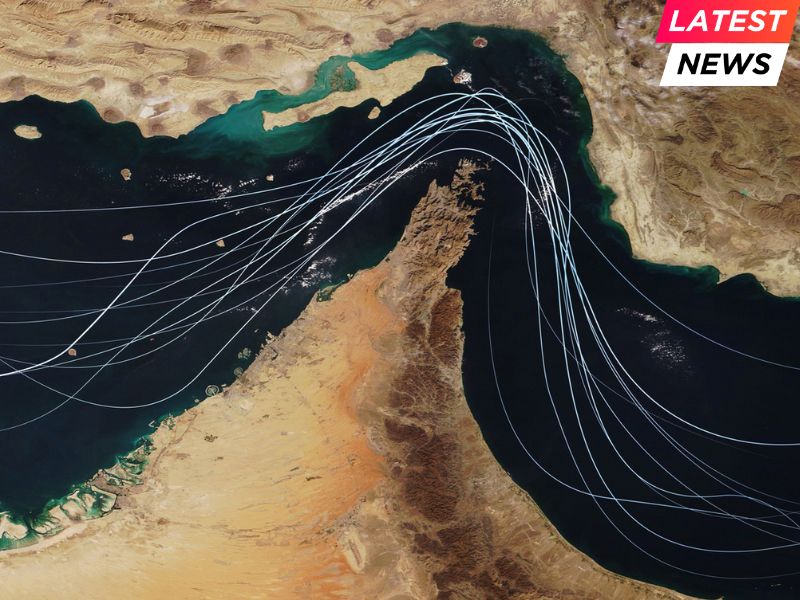

 Dr. Gleb Tsipursky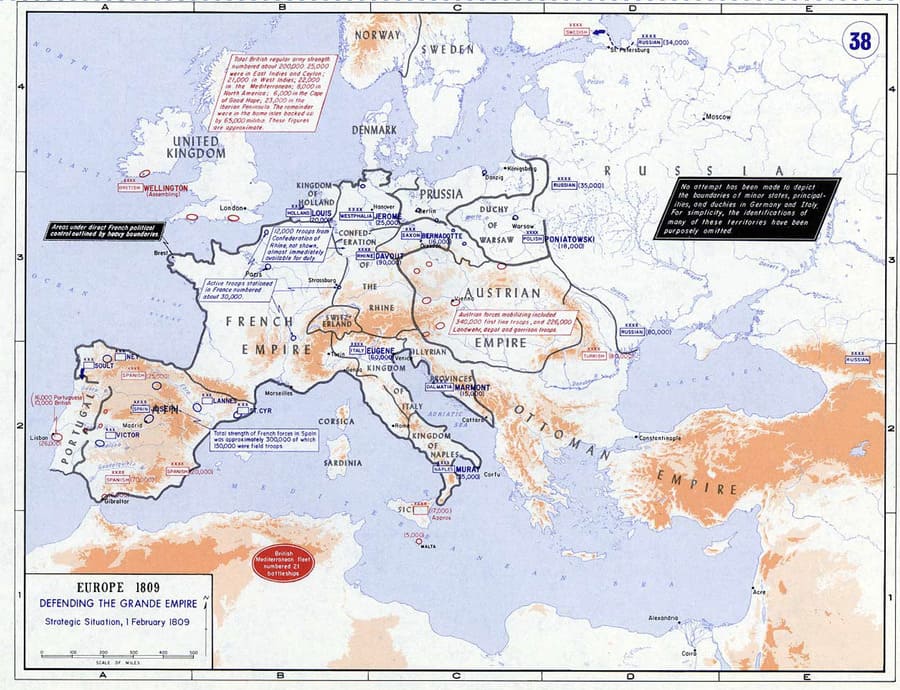
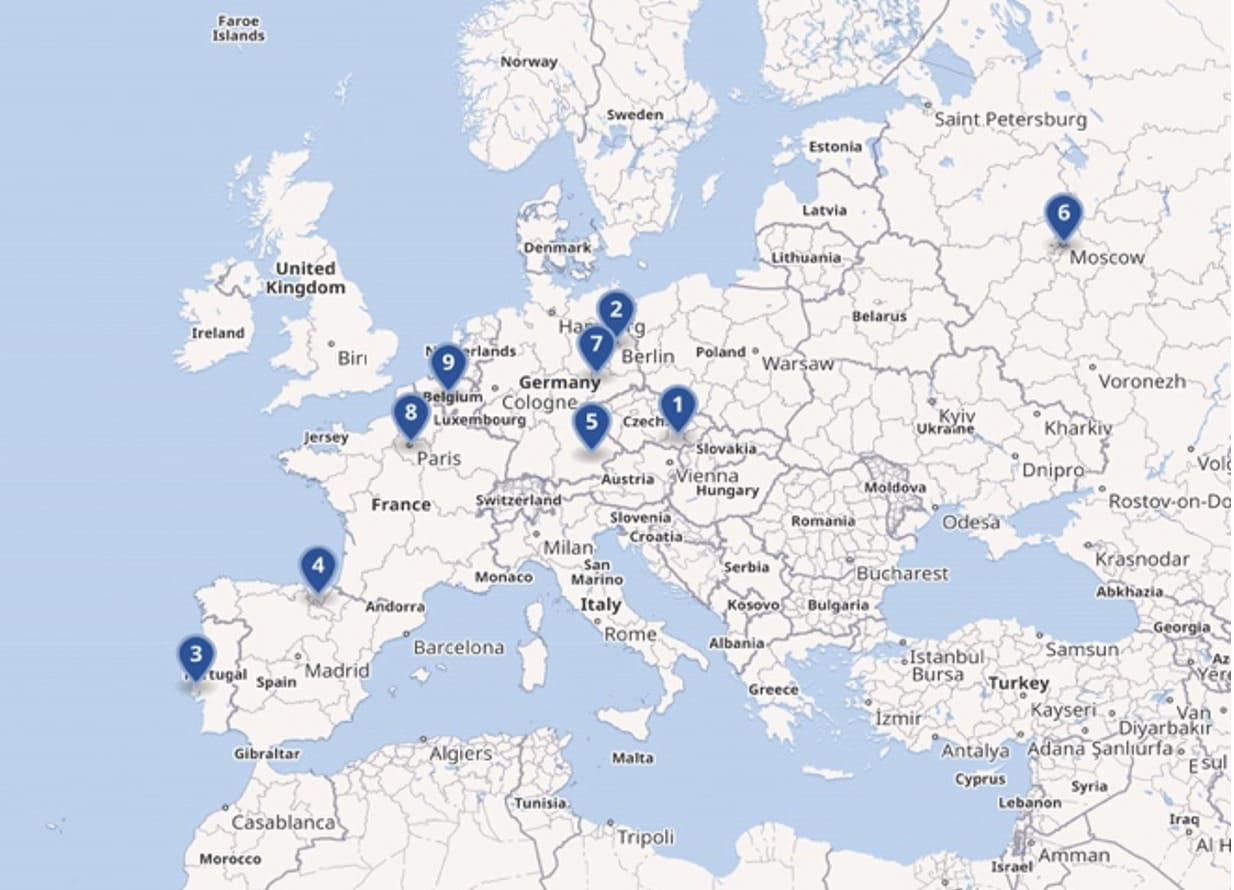
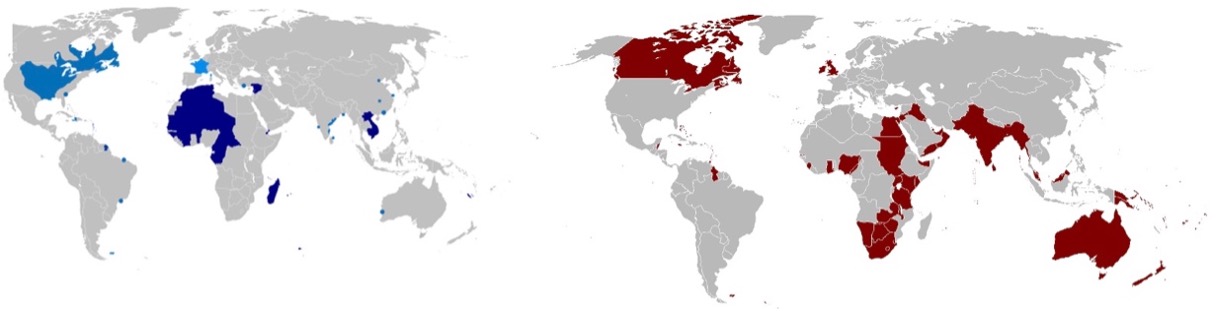

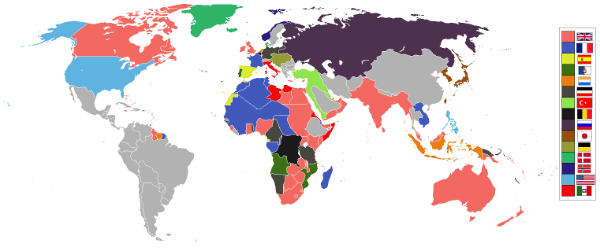
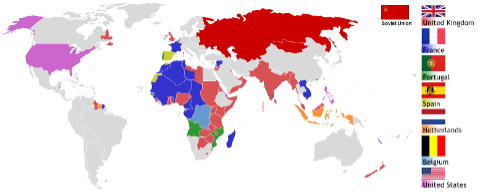

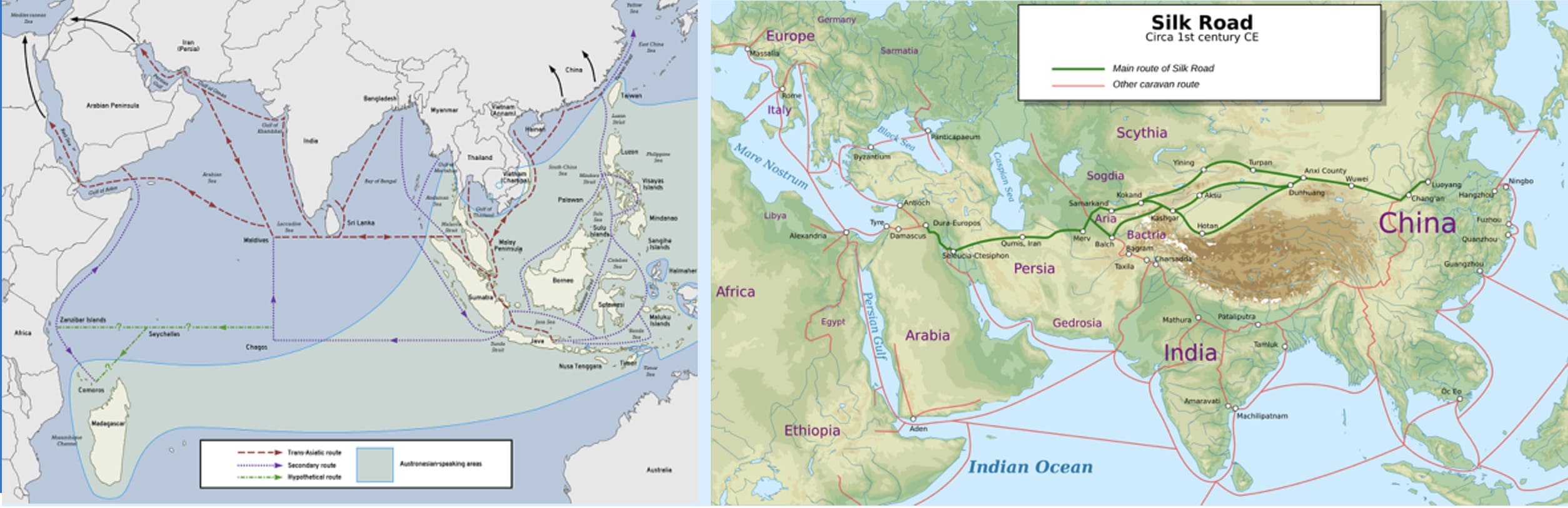
 Joseph Mazur
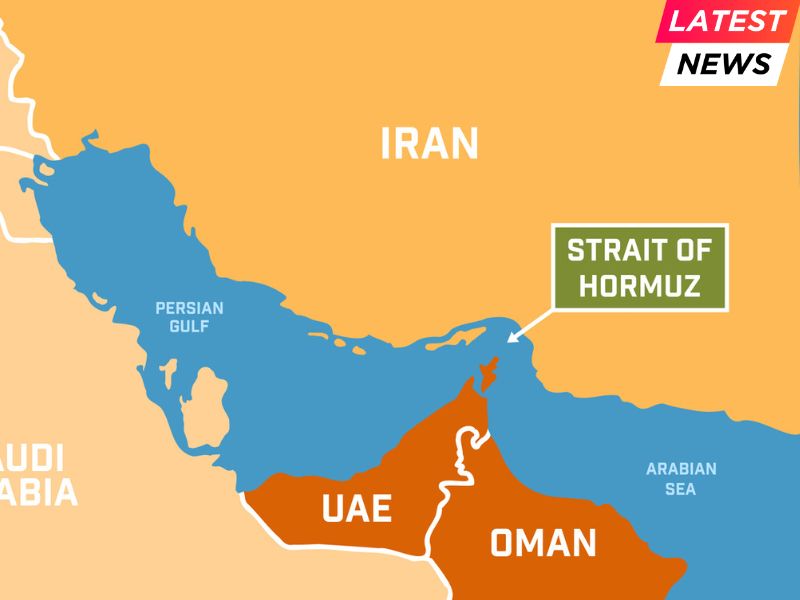

 Dr. Dan Steinbock