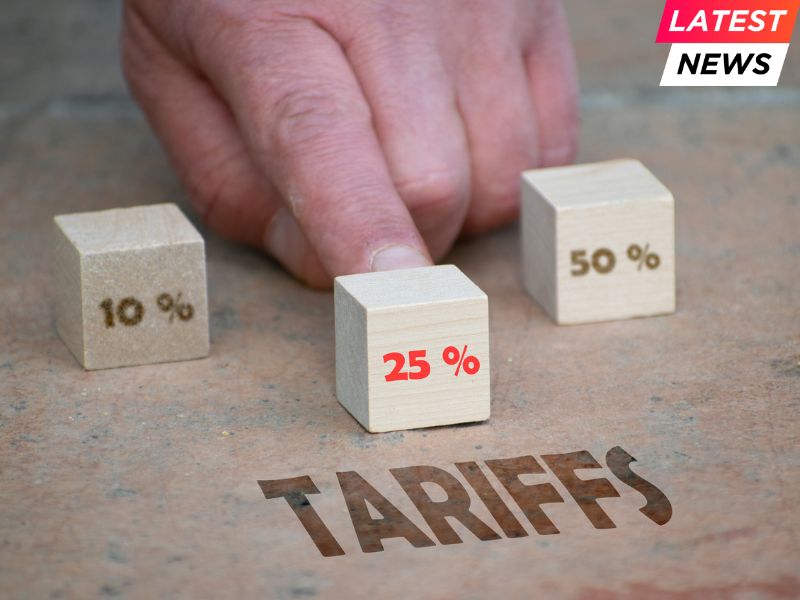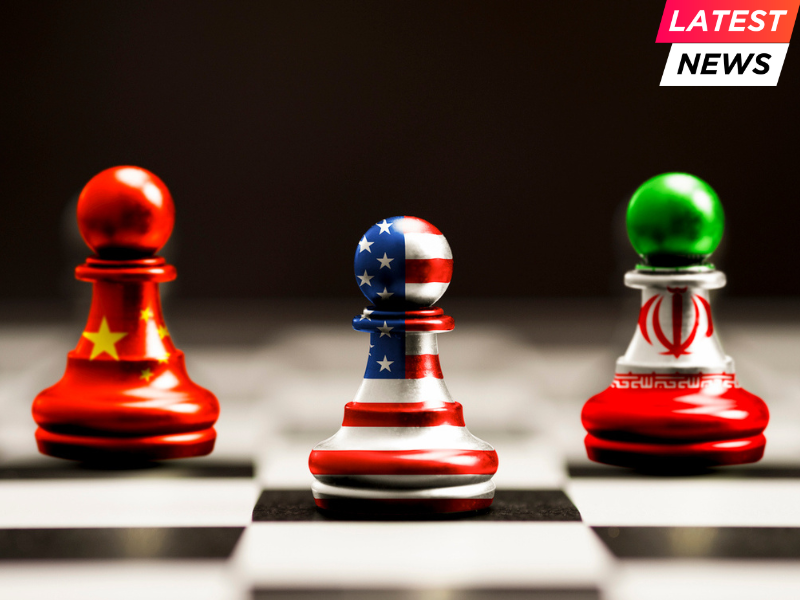
President Donald Trump’s warning of immediate 25% tariffs on countries that continue doing business with Iran has injected new uncertainty into already delicate U.S. China trade relations, raising the risk of renewed economic confrontation between the world’s two largest economies.
Trump said late Monday that Washington will impose a 25% tariff on imports from nations that maintain commercial ties with Iran. The measure is “effective immediately,” he wrote in a post on Truth Social, offering no exemptions or timeline for implementation.
The announcement puts pressure on a fragile interim trade agreement reached between the United States and China in late October. That deal eased months of tension by rolling back some U.S. tariffs on Chinese goods, while Beijing paused sweeping export controls on rare earth materials critical to global supply chains.
China, Iran’s largest trading partner, quickly pushed back against the threat. A spokesperson for the Chinese Embassy in Washington said Beijing “firmly opposes any illicit unilateral sanctions and long-arm jurisdiction,” adding that China would take “all necessary measures” to safeguard its interests.
Trade analysts warned the move could trigger a sharp escalation. Deborah Elms, head of trade policy at the Hinrich Foundation, said a 25% tariff would represent a significant jump from current levels. She cautioned that retaliatory steps could follow, derailing hopes for stability and even jeopardizing U.S. agricultural exports.
“The last time we played this game, we ended up with tariff levels at 145%,” Elms said, referring to the peak of earlier trade disputes.
China’s economic ties with Iran remain central to the issue. As the world’s largest oil importer, Beijing has long purchased crude from Iran and other U.S. sanctioned producers, providing Tehran with a critical economic outlet. Iranian oil shipments to China more than doubled from 2017 to 2024, reaching over 1.2 million barrels per day, according to estimates from commodity intelligence firm Kpler.
Fuel accounted for more than half of China’s imports from Iran as of 2022, based on World Bank data. However, that relationship has cooled under tighter U.S. sanctions. Chinese imports from Iran were on track to decline for a fourth consecutive year in 2025, falling 28% to $2.9 billion in the January to November period, according to official customs figures. Full year data is expected Wednesday.
Despite the pressure, Beijing signaled it will not scale back cooperation with Tehran. Cui Shoujun, an international studies professor at Renmin University of China, said China would not alter its Iran policy due to U.S. tariff threats.
“The Iran situation has certainly entered a very dangerous period. We should all pay closer attention,” Cui said, adding that Trump’s focus on Iran is closely tied to energy resources as U.S. electricity demand surges to power artificial intelligence infrastructure.
While Cui declined to directly assess the fallout for U.S. China relations, he noted that high level meetings remain a key indicator of diplomatic intent. Trump is expected to visit Beijing in April, with a return visit by Chinese President Xi Jinping planned later in the year.
That schedule reflects a tentative thaw after Trump and Xi agreed to a one year trade truce following talks in South Korea last fall. Under that arrangement, tariffs on Chinese exports to the U.S. stabilized around 47.5%, down from peaks above 100% earlier in the year.
Analysts say the Iran tariff threat risks undermining that progress. Dan Wang, China director at Eurasia Group, said the move weakens already limited trust between the two sides.
“Trump is eroding the thin trust built around the trade truce,” Wang said, adding that the U.S. president is widely viewed in China as inconsistent.
Both countries have a history of escalating pressure ahead of major diplomatic meetings. Prior to the October Trump Xi talks, Beijing expanded rare earth controls and launched antitrust probes into U.S. chipmaker Qualcomm, while Washington reportedly considered restricting chip design software exports to China.
“There will likely be several rounds of similar tit for tat, leading up to April meeting,” Wang said.
Possible Chinese responses could include sanctions on U.S. companies linked to Taiwan arms sales or new antitrust investigations into American technology firms operating in China, analysts said. Additional rare earth restrictions appear less likely for now.
It also remains unclear whether Trump’s tariff threat will fully materialize. The U.S. Supreme Court is expected to rule Wednesday on the legality of Trump’s use of broad tariff powers, a decision that could limit or reinforce his authority.
Scott Kennedy, a senior adviser at the Center for Strategic and International Studies, said the Iran related tariff threat appears driven by Trump’s shifting priorities rather than a coordinated strategy aimed at Beijing.
Still, Kennedy warned that China stands ready to respond forcefully. “China will not hesitate to retaliate in a way that imposes serious costs on the U.S. and it has prepared for a variety of scenarios, including this one,” he said.
Related Readings: