By Leah Marie Gonse, Roberto Carlos Ambrosio-Lazaro, and Michael Palocz-Andresen
This literature review examines the application of the post-growth economy concept within Mexico’s evolving transportation sector, which represents the intersection of economic development while facing socioeconomic challenges and attempting sustainability efforts in an emerging market. The post-growth economy offers an alternative approach to growth-based economic activities by advocating for a cultural and structural shift towards sufficiency in order to achieve stable economic performance.
Introduction
This period is marked by the attempt to bring economic practices in line with sustainable measures to minimise the damages of the climate crisis. There is a rising number of people who advocate for alternative economic models operating without the current growth imperative, like the post-growth economy. However, while developed nations might slowly consider these alternative economic models, emerging markets are still left with the belief that further growth is necessary to improve the economic situation and the nation’s overall wealth1. Emerging countries have been able to form through the globalisation of the supply chain which attracted capital and has helped to develop certain industries. Nevertheless, such nations face typical economic, social and environmental challenges.
This can also be observed in the emerging market of Mexico. After a past of financial crisis, high inflation and excessive unemployment rates, the country has been able to experience rapid development in certain economic sectors. Today, Mexico is an important manufacturing hub in the global supply chain, especially for the automotive industry. The nation is the world’s fourth-largest producer of auto parts2. It is Mexico’s most important industry and the country’s overall economy. Currently, the industry is confronted with several changes, also concerning related industries, like lithium manufacturing to transition towards the electrification of mobility or the national mobility patterns. Mobility is also a sign of economic prosperity which contributes significantly to the stability of societies and movement in everyday life. Thus, transforming mobility is a social challenge, relying on structural changes that can hardly be surpassed in terms of complexity.
At the same time, Mexico needs to balance sustainable practices with economic progress. Despite the economic developments, growth-oriented measures have failed to achieve economic wealth and improved living standards for the entire population. Thus, it is interesting to consider alternative approaches, aiming to foster wealth, sustainability, and stability instead of pursuing further growth.
The concept of a post-growth economy describes an economic model based on consistent supply structures that eliminate the need for further growth to sustain. The concept belongs to the larger research field of plural economics which is based on the assumption that the finiteness of the resource must be respected within economic activities. This can be verified by various resources that have highlighted the natural boundaries of infinite growth, like the Club of Rome report “The Limits to Growth” from 1972 by Meadows and colleagues. Thus, a post-growth economy is achieved by enforcing a cultural change based on a sufficiency strategy that enables the degrowth of industrial value creation processes, especially based on the global division to strengthen regional economic activities and self-sufficiency supported by institutional reforms. Figure 1 shows how the concept will be applied to the mobility sector.
Figure 1: How to apply the post-growth economy to Mexico’s mobility sector
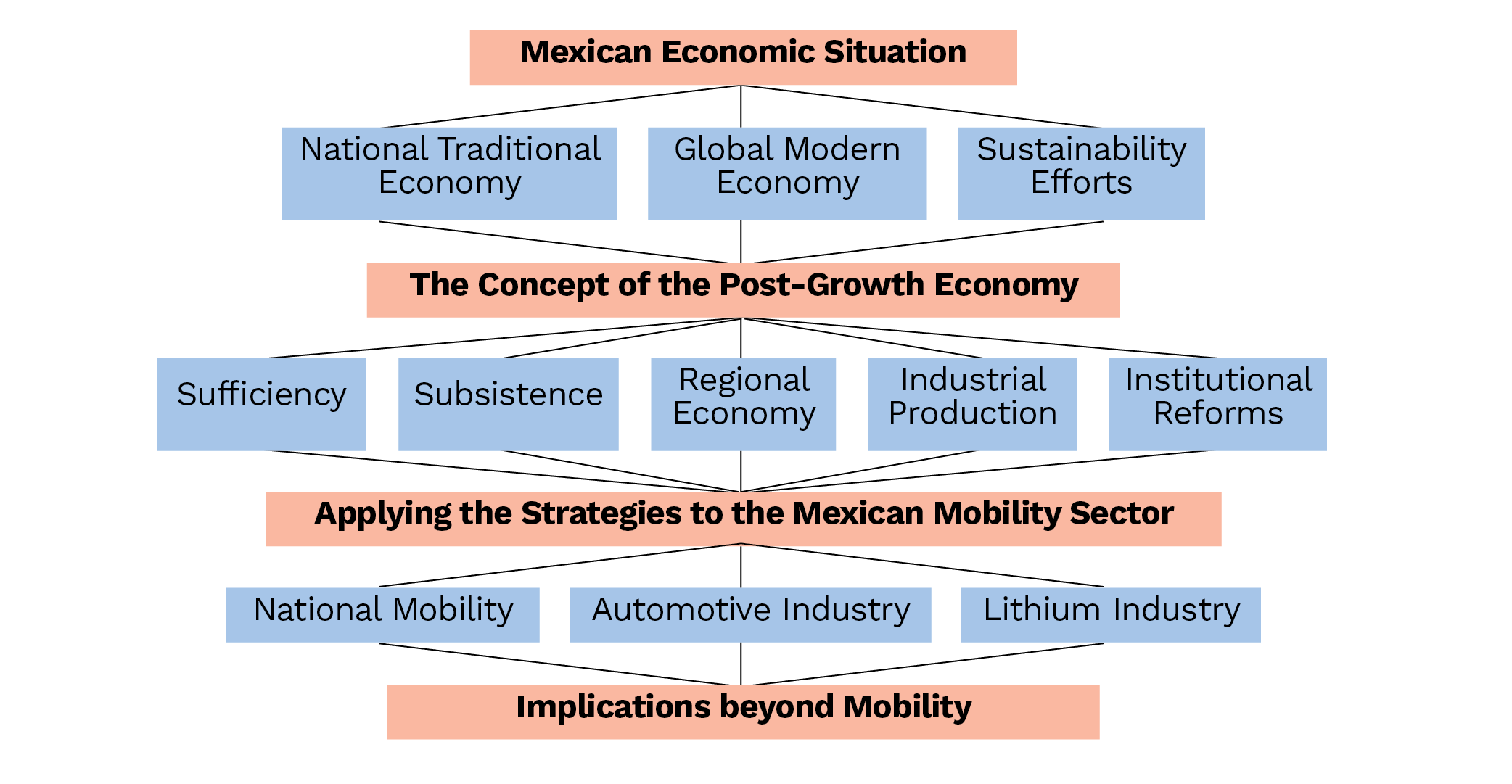
This paper proceeds by exploring the current economic situation of Mexico, followed by an explanation of the post-growth economy to apply it to Mexico’s international automotive industry and the important supplying industry of lithium, as well as the nation’s mobility sector to identify possible opportunities which might help to foster a sustainable and stable economy.
Mexico’s Economic Development
Mexico has been able to create a modern economy that is competing globally and possesses highly productive industries in foods, textiles, electronics, aircraft and automobiles.
Mexico is one of the most advanced countries in Latin America and plays an important role in the global supply chain. However, Mexico has a very complex economic past which shaped the country in numerous ways. The country’s economy has been influenced by its dependency on the oil industry which caused economic growth, as well as financial crisis and high inflations3. Nevertheless, Mexico has been able to develop a stable macroeconomy over the past decades. The country has focused on implementing market-friendly policies and trade agreements with nations like the United States, Canada, Germany and Japan, which opened access to global capital and innovative technology. This pulled highly productive companies into the country which helped to develop certain industries, especially in the manufacturing sector. However, this growth has caused a significant increase in environmental damage. The economic developments caused emissions that seriously pollute the air, soil and water, placing Mexico as the largest polluter in Latin America. But Mexico has been able to create a modern economy that is competing globally and possesses highly productive industries in foods, textiles, electronics, aircraft and automobiles. In 2022 the nation achieved a GDP of 1,414 billion US dollars which is shown in Figure 2, as well as the country’s overall GDP performance.
Figure 2: Mexico’s GDP from 1987 to 2022 in billion US dollars
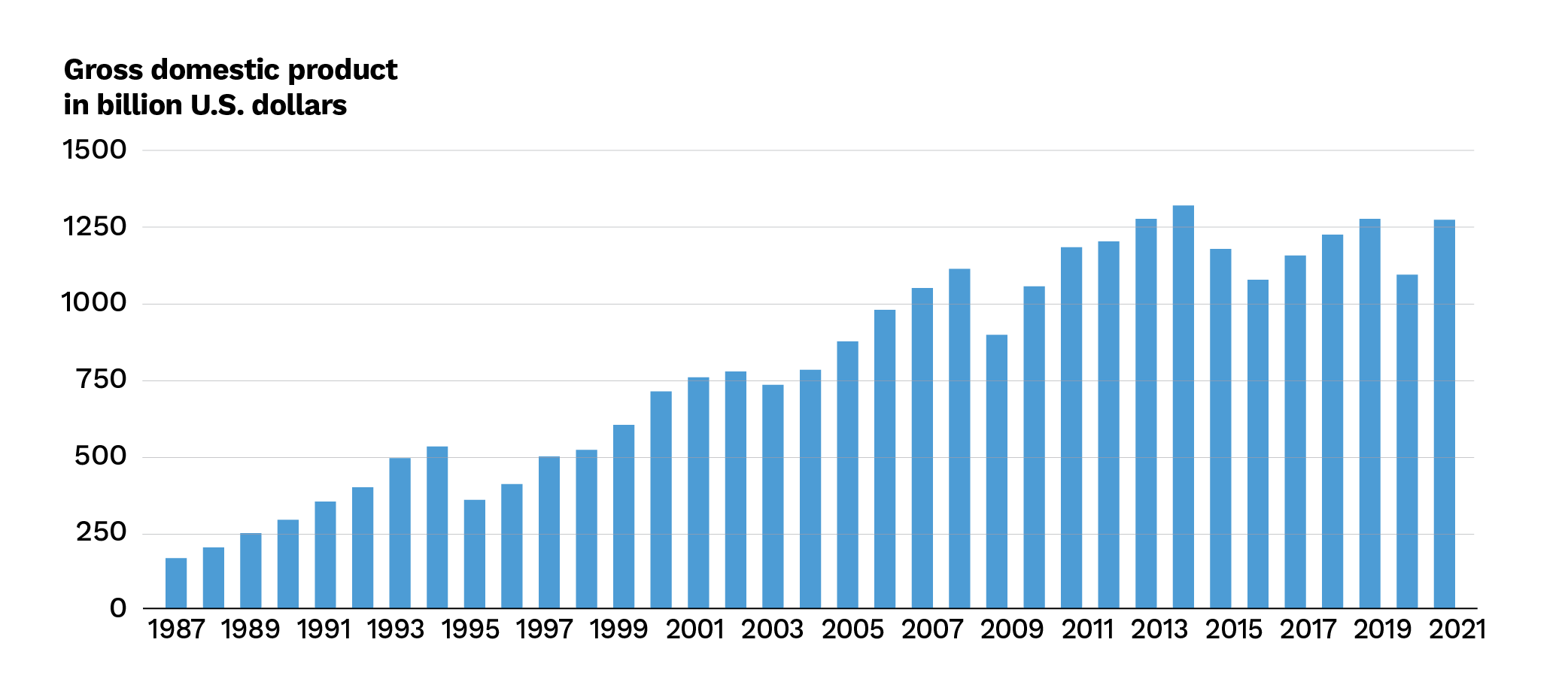
Despite the rise of certain industries, Mexico has continuously struggled to improve overall growth rates. Since the 1980s, Mexico’s average annual increase in GDP has been 2.6%, which is quite low in comparison to other emerging nations in Asia or Latin America 4. Mexico has also repeatedly struggled with serious crises like high unemployment and rising inflation which resulted in a very high share of poverty. According to the Organization for Economic Cooperation and Development (OECD), Mexico’s government does only minimal reinvestments into economic and infrastructural development relative to GDP, with an average of just 1.3%, which is the lowest among all OECD nations. Therefore, the highest share of employment is offered by traditional operating industries and informal work. This economic site lacks the financial means to further invest in businesses to increase performance. By attracting foreign big corporations, the existing Mexican businesses could not keep up with investments in technology and training to produce alongside the companies.
Post-Growth Economy
A post-growth economy aims to operate within ecological limits by shifting away from continuous GDP growth as the measure of success. It triggers degrowth by adopting a sufficiency strategy to reduce consumption patterns and maintain stable supply structures5. This concept is part of post-growth economics which prioritises ecological sustainability and resilience. Professor Niko Paech, who is an adjunct professor focusing on environmental economics, introduced it in 2009 and proposed five strategies to deconstruct the industrial system for a post-growth economy through sufficiency and subsistence, as well as regional economic strengthening to dismantling global value creation and institutional reforms. Figure 3 shows how these strategies can reduce economic performance to achieve a post-growth economy.
Figure 3: Skimming off reduction potentials to deconstruct the industrial system

Sufficiency requires a cultural shift in consumption patterns to decelerate products that take up valuable resources, time and space while providing minimal use. This is also a measure of self-protection to liberate oneself from the abundance of consumption options, as it opens up the possibility to appropriately enjoy possessions again. Thereby, sufficiency is in line with efficiency, as it allows to prioritise the use of resources according to its best purpose. This shift reduces the amount of production output needed which triggered the potential for degrowth on the industry side.
Subsistence promotes self-sufficiency through creating products, extending product lifecycles and intensifying product use. It transforms passive consumers into ”prosumers”, a combination of consumption and production. Consumers have to re(gain) manual and artistic skills to provide for themselves apart from commercial consumption. Furthermore, prosumers can share skills, products or services within social networks. The intensified use and lifecycle of materials enables a significant reduction of current industrial production, as well as resource and energy consumption while maintaining the same consumption options. Prosumers are less reliant on industrial production while increasing resilience. Societies that depend on monetary-based supply are vulnerable to disruptions, as witnessed during the global COVID-19 pandemic.
Consumers have to re(gain) manual and artistic skills to provide for themselves apart from commercial consumption.
Economic activities in regional markets should be strengthened to reverse the interdependence of global supply chains. Resources, goods and services should be used as close as possible to its target destination to shorten supply chains. This makes economies more resilient against global events, as the regional processes do not rely on global supply. The regional economy should provide infrastructure, especially in repair and maintenance to optimise self-sufficiency on a local scale, through spaces for cultivating community gardens, self-repair cafes or professional repairing skills.
By deindustrialising half of the current economic output, it would be sufficient to offer 20 hours of full-time employment. The remaining industrial production would be limited to maintaining a non-growing stock of goods and services, using the material zero-sum game, a production manner that produces without further exploiting resources6. The production should focus on preserving, regaining or enhancing the value of existing materials through renovation, conversion, optimisation and lifecycle extension, in line with efficiency and circularity to avoid waste.
The economic state has to be supported by institutional innovations. Firstly, reforms are needed to create a post-growth economy, by establishing appropriate land and monetary policies to ensure a continuous flow of the system. It might be suggestible to implement interest-free regional currencies to attract purchasing power to the regional level or to unseal public spaces to use them for more ecological purposes.
Evaluating the Automotive Industry
Mexico is the seventh-largest automobile manufacturer and the fourth-largest auto part producer worldwide. Mexico’s most important trading partner in the automotive industry is the United States, followed by countries like Canada, Germany, Brazil, and Japan. This industry has been responsible for 24.3% of the overall GDP in 2021 which can be viewed in Figure 4.
Mexico is also trying to advance its lithium industry to sustain the automotive in the future. Due to the mobility electrification around the world, lithium is of increasing relevance. The global lithium demand is estimated to rise by 500% in 20507.
Figure 4: Evolution of the automotive and auto part share in GDP

EV Production Development
The Mexican government actively tries to attract electric vehicle (EV) manufacturing and related industries to the region. In collaboration with the United States, Mexico collaborated on a bilateral roadmap called ”Diagnosis and Recommendations for the Transition of the Automotive Industry in Mexico”, aimed at creating a stronger electric automobile industry and supporting sustainable supply chains. An important goal is to produce 50% electric vehicles by 20308. By implementing these changes, the country can ensure to stay within the market against rising nations from Asia. Manufacturers have already been taking measures, like the German producer BMW who invested 800 million euros to implement a new electric production platform.
However, the roadmap lacks specific regulations to support the recommendations. Mexico could benefit from setting phase-out targets for motorised vehicles to accelerate the transition. These phase-out targets can apply to the driving and production of vehicles to send a clear sign of the country’s ambition and to force manufacturers to switch to EV production. Chile can act as an example as the country has set its phase-out of motorised vehicles to 2035. Additionally, the spare parts sector of the automotive industry is still booming due to the global production shortage created by the pandemic, which can be explored to reduce emissions of the transportation sector, as Mexico transitions towards sustainable mobility.
Strengthening the National Supplier Base
The Mexican automotive industry has the opportunity to boost its national economy by signing the United States-Mexico-Canada (USMCA) trade agreement with America and Canada. The new regulations require more locally sourced content which promotes regional supply chains and reduces global economic activities. Currently, the share of imported components can range up to 70% of all processed material9. Foreign companies are forced to engage in national integration by sourcing suppliers within the country in order to continue their business activities which can help to close the gap between the two economic opposites in Mexico.
In addition, the phenomenon of nearshoring brings companies that have been offshoring productions back to North America. As Mexico already possesses the needed infrastructure and highly skilled workers, as well as a unique geographic position close to the US market, the automotive industry is expected to generate an additional monetary value of 11 billion US dollars. To take advantage of this opportunity, the nation must enhance its manufacturing capabilities by supporting small and medium-sized enterprises (SMEs) before foreign companies take over the rising activities. Figure 5 shows how the changing landscape of the automotive industry can provide an opportunity for the national market.
Figure 5: Opportunities for positive economic activities through changes in the automotive industry

The existing supply industry consists mainly of low-speed, family-owned businesses which is why the SMEs lack the resources to supply the highly productive manufacturing companies. These businesses need support in consulting, investment and technological matters through specialised training, university projects or regulatory sandboxes. The government supports these changes through the ”CLAUT Supplier Development Committee”, which aims to develop a national supplier base. However, a clear public policy and regulatory framework are essential to ensure the transformation’s success which can reduce trading and production costs while enhancing regional economic resilience for long-term stability.
Related Industry of Lithium
Mexico’s lithium reserves were previously believed to be rather small with around 2.3% of global reserves. However, in 2018, there was a discovery of a possible mega-deposit located in Sonora with an estimated 243 million tons of lithium, which would be one of the largest deposits worldwide. Therefore, Mexico might be a possible major player in the mobility and energy transition. The federal government has declared lithium a strategic resource and introduced the ”Mining Law”, allowing only state exploitation through the public agency ”Lithium for Mexico” (LitioMx) to maintain and preserve technical, operational and management autonomy10. The objective is to ensure the beneficial use of lithium in national territory through the state administration and control, to prevent its exploitation to foreign markets, as it had happened in the oil industry. This change in legislation can be referred to as an institutional innovation to provide benefits for the population and environment of Mexico. Other Latin American countries, like Bolivia and Chile, have already taken the same step to ensure control of the resource. In Figure 6, the advantages of nationalising Lithium can be viewed.
Figure 6: Opportunities of lithium nationalization according to the post-growth economy

However, the reality of huge lithium quantities being extracted in Mexico is far from reality, as the lithium is bonded in clay. Mining lithium from clay has been scarcely explored and possesses a high technical complexity. This is why it is currently very inefficient to extract the mineral and might even be economically unprofitable. Leaving the resource in the ground allows us to await future developments in extraction methods while preserving capital and resources, and preventing environmental harm. The global industry is also exploring sustainable lithium supply chains, as current methods rely on intense chemical use and high water consumption, like Chile’s commitment to reach carbon neutrality by 204011. By signing the USMCA, the countries agreed on future regulations for lithium trade in the region which also includes sustainability efforts to ensure a clean supply chain. Mexico focuses on education and skills development for the upcoming lithium industry, including regulatory sandboxes and collaborations with neighboring countries to share resources and knowledge.
Further, Mexico lacks the infrastructure for processing lithium, and building this infrastructure is crucial. While the demand for lithium is rising due to electric vehicles (EVs), it’s relevant to mention that lithium is a key component for over 70 other products ranging from technological devices like mobile phones or laptops, to materials like glass and ceramics, or even medications like anti-cholesterol, vitamin A or psychological treatments for depression. It might be suggestible to diversify the industry by investing in further sectors besides mobility and energy to avoid over-reliance. Mexico can learn from the oil industry’s experience and focus on strengthening the national economy through various sectors such as healthcare by using lithium for medication production. This would ensure that the Mexican population can benefit from the national lithium, which would be in line with the commitment to control lithium in a responsible and appropriate manner.
Evaluating the Mobility in Mexico
Due to the nation’s economic developments, Mexico experienced a significant increase in motorising mobility. However, this also means a rise in greenhouse gas emissions. Around 26% of the produced emissions are generated by the nation’s mobility sector. More than 97% of these emissions come from road mobility, while private passenger vehicles are responsible for 66% of total emissions.
Integration of EVs in national mobility
Despite being one of the biggest vehicle producers globally, Mexico has a low penetration of electric vehicles in its domestic market, as cars are mainly exported to foreign markets. Last year, around 51,000 electric or hybrid vehicles were sold in Mexico, which equals 4.7% of total sales. However, only 0.5% of car sales are fully electric12. This is already an increase compared to 2021 but also demonstrates potential as the country is determined to reach 50% of vehicles being electric by 2030.
It is essential to ensure that the necessary infrastructure is in place to encourage the widespread acceptance of EVs among consumers.
For most Mexicans, it is challenging to afford EVs due to their higher price range compared to motorised cars. While Mexico has introduced policies like tax exemptions to promote EVs, a comprehensive fiscal incentives framework is required to bridge the cost gap between EVs and motorised vehicles to encourage customer adoption. This framework could be complemented by regulations such as CO2 standards or efficient parking policies to make climate-friendly transportation more appealing and accessible.
It is essential to ensure that the necessary infrastructure is in place to encourage the widespread acceptance of EVs among consumers. There are not enough charging points to make EV mobility accessible. While some major cities like Monterrey, Guadalajara and Mexico City have adequate charging networks, long-distance travel remains challenging due to insufficient charging points. Mexico has so far implemented approximately 1500 EV chargers. Furthermore, the energy sector currently lacks the capacity to produce the required amount of renewable electricity for sustainable EV use. To address these issues effectively, Mexico must gather data, analyse site design, and plan network expansion, testing various strategies through regulatory sandboxes at national and subnational levels before making further investments.
Expanding Public Transport
The strategy for transforming the transportation sector needs to go beyond a mere shift to electrified cars but rather a shift towards a different quality of mobility.
Mexico has primarily promoted a private-vehicle-centric model through favourable financings, like low taxation policies and a lack of mandatory insurance. Private cars dominate the transportation landscape with 85% and are expected to almost double to 70 million units by 203013. Only 13% of the transportation budget in Mexico is allocated to public transportation, in contrast to the 30% dedicated to car infrastructure. The advancements in road vehicles have influenced the structure of urban areas, causing traffic congestion and pollution.
The strategy for transforming the transportation sector needs to go beyond a mere shift to electrified cars but rather a shift towards a different quality of mobility. High-quality public transportation plays a vital role in climate-friendly urban development and is essential for creating a high quality of life and ensuring the functionality of regions while reducing energy consumption. Transportation options like electric buses and ride-sharing services offer affordable mobility options for all residents while providing clear environmental advantages over other motorised transportation modes. Figure 7 shows how public transportation should be fostered to supply the large population with mobility.
Figure 7: National transportation system according to the post-growth economy
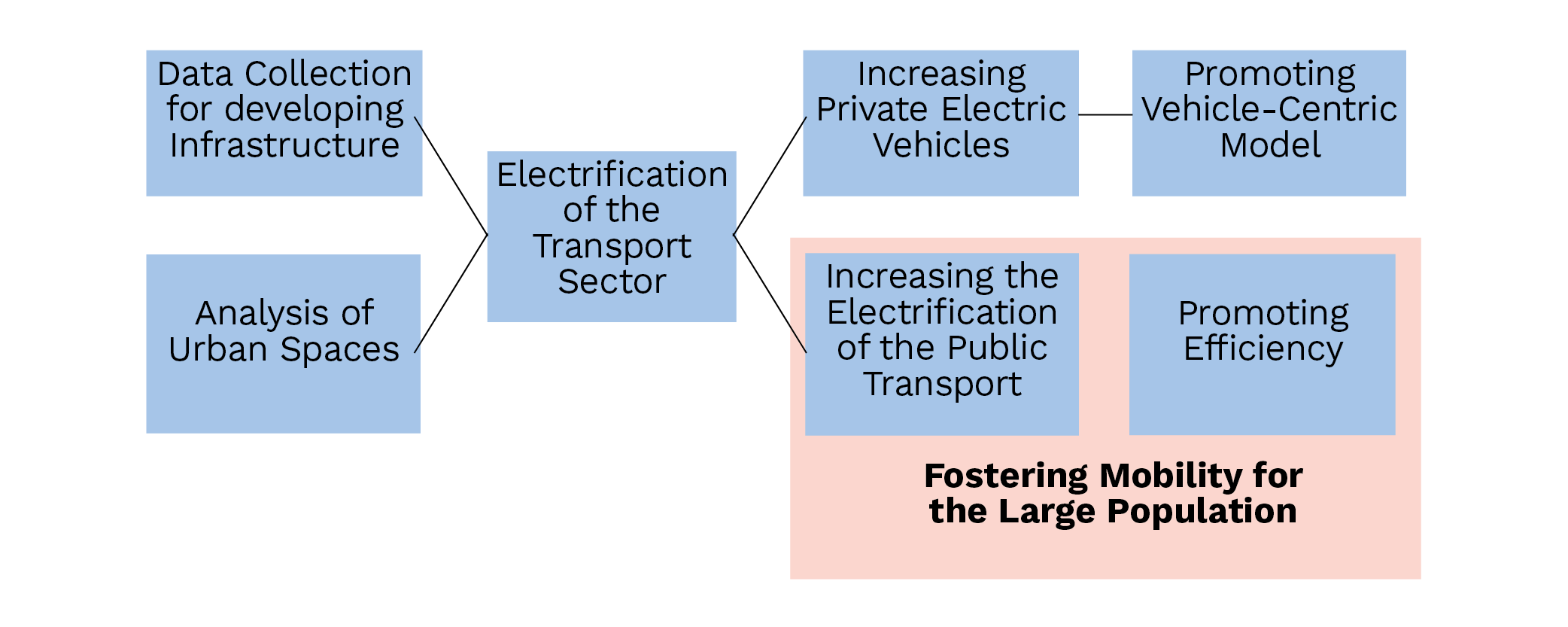
In this time of mobility transformation, it would be advisable to consider alternative ways of using spaces in cities, before building new infrastructures. Urban spaces are limited and highly valuable, which is why these spaces determine the livability, attractiveness, and desirability of a city. Urban spaces should provide diverse functions while promoting short travel distances, reducing land consumption and facilitating new mobility services14. The vehicle-centric model creates stationary traffic which represents the least use for citizens and space usage. In line with the sufficiency strategy, products that provide minimal use while requiring a lot of resources should be reduced. Transforming areas that are currently dominated by car traffic into spaces for bicycles, pedestrians, recreational activities and green areas reorients the focus towards prioritising people and supports biodiversity conservation efforts.
Conclusion
The post-growth economy can be used to generate new opportunities compared to growth-based economic models for economic and sustainable developments in emerging markets through a cultural shift. Mobility is a great starting point to evaluate the post-growth economy, as it is closely related to a nation’s wealth, daily movement options and in this case also, Mexico’s economic performance. As shown, the strategies could offer a new perspective to set the industry on a successful path to foster sustainable economic activities, beyond the automotive sector.
The automotive industry is confronted with several changes in the economic landscape. This is a great opportunity to foster national integration and strengthen regional automotive supply chains. This can include regulations as well as consulting to support SMEs in investments or technological matters through specialised training or regulatory sandboxes, resulting in possible long-term savings and supply-chain simplification, contributing to economic stability. This can also be transferred to related industries, such as lithium mining. The country currently lacks the necessary infrastructure to process and transport the mineral. Efforts should be invested in developing skills and knowledge to foster sustainable extraction methods and possibilities to diversify this industry.
The national transportation model has largely favoured private vehicle usage which contributes to congestion, pollution, and greenhouse gas emissions. The penetration of EVs remains low, despite efforts to foster a more environmentally friendly transportation system. Overcoming these challenges requires expanding infrastructure, rethinking urban planning and making electric vehicles more affordable. In addition, there is an underinvestment in public transportation due to a lack of coordination among government agencies and insufficient funding. Developing high-quality public transportation is vital for climate-friendly urban development while providing the majority of the population with widespread mobility options.
Viewing Mexico’s mobility from a post-growth economic perspective shows that it is reasonable to apply the concept to develop long-term oriented sustainable economic activities, even for emerging markets which often solely focus on growth to advance the economy. However, there is still further research needed to verify the function of this economic model on a large scale.
Outlook
Already, certain trends have been identified which do not align with the growth paradigm anymore. In European countries like Germany, the demand for privately owned cars is declining. People are looking for alternative solutions to minimise traffic in urban spaces and to preserve the environment15. In addition, there is a growing number of cities, like Paris or Amsterdam which enforce car fee spaces in the city centre. Therefore, it might be advisable for emerging markets to focus on developments in such nations to create measures for their economic future. It must be awaited if the growth paradigm can be sustained when tackling the challenges ahead, but implementing sustainable measures is certainly crucial for every nation on this planet.
The authors would like to thank Mr Daniel Jahn, the Hamburg Port Authority´s coordinator for trade visitors, for years of support in this scientific area.
About the Authors
 Leah Marie Gonse recently completed her studies in International Business Administration and Entrepreneurship at Leuphana University. During this time, she was especially interested in sustainable business and economics. She intends to explore a concept that combines environmental goals with prosperity. She aspires to start her master’s degree in finance and real estate next year.

Roberto Carlos Ambrosio-Lazaro is currently a Research Professor with the Electronics Faculty at Meritorious Autonomous University of Puebla (BUAP). His research interests include the developing energy harvesting technology, conversion and storage for renewable sources such as vibrations, solar, and thermal; integration of semiconductors materials for the development of solar cells and sensors; and in addition, signal conditioning circuits for sensors and automotive electronic systems.
 Michael Palocz-Andresen has been working as a full professor for Sustainable Mobility since 2018, supported by the DAAD at the TEC Instituto Tecnológico y de Estudios Superiores in Mexico. He became a full professor at the University of West Hungary, where he stayed till 2017. Currently, he is a guest professor at the TU Budapest, the Leuphana University Lüneburg, and the Shanghai Jiao Tong University. He is a Humboldt scientist and instructor of the SAE International in the USA.
References
- Gonse, L. M. (2023). Exploring the Potential of Post-Growth Economy for Mexico. Diploma Thesis. Leuphana University Lüneburg.
- Núñez, A. (2022). Mexico Becomes Fourth Global Auto Part Manufacturer. Mexico Business News. https://mexicobusiness.news/automotive/news/mexico-becomes-fourth-global-auto-part- manufacturer#:~:text=Despite%20continued%20challenges%2C%20Mexico%20has,at%20o nly%20US%2487.22%20billion. (07.09.2023)
- Castro-Alvarez, F., Marsters, P., De Leon Barido, D. P., & Kammen, D. M. (2018). Sustainability Lessons from Shale Development in the United States for Mexico and Other Emerging Unconventional Oil and Gas Developers. Renewable & Sustainable Energy Reviews, 82, 1320–1332. https://doi.org/10.1016/j.rser.2017.08.082 (08.09.2023)
- OECD (2022). Economic Surveys: MEXICO. OECD. https://issuu.com/oecd.publishing/docs/ mexico-2022-oecd-economic-survey-executive-summary/1? ff&backgroundColorFullscreen=%23e5e5e5 (09.09.2023)
- Paech, N. (2009). Grundzüge einer Postwachstumsökonomie/Outlines of a Post-Growth Economy. http://www.postwachstumsoekonomie.de/material/grundzuege/ (11.09.2023)
- Paech, N. (2021).Die Postwachstumsökonomie als plünderungsfreier Zukunftsentwurf/ The Post-Growth Economy as a Plunder-Free Blueprint for the Future. Denknetz Jahrbuch, 73-82.
- Veolia. (2022). Minería de litio sostenible: la tecnología detrás de la mejora de los rendimientos y la reducción de residuos/Sustainable Lithium Mining: The Technology behind Improved Yields and Waste Reduction. Veolia. https://www.watertechnologies.mx/blog/ sustainable-lithium-mining-technology-behind-improving-yields-and-reducing-waste (18.09.2023)
- Rodríguez, I. (2023). México ya tiene “una hoja de ruta” para impulsar la electrificatión automotriz/Mexico Already Has “a roadmap” to Boost Automotive Electrification. Expansión. https://expansion.mx/empresas/2023/02/01/ebrard-hoja-de-ruta-electrificacion- automotriz-2030 (16.09.2023)
- Montoya, M. (2022). Automotive Industry Requires Greater Integration. Mexico Business News. https://mexicobusiness.news/automotive/news/automotive-industry-requires-greater- integration (18.09.2023)
- Nava, D. (2022). El litio en México: el incierto y costoso camino para su explotación/Lithium in Mexico: The Uncertain and Costly Path to its Exploitation. Expansión. https://expansion.mx/ empresas/2022/04/29/extraccion-y-exportacion-de-litio-en-mexico (06.09.2023)
- Pineda, L. (2022). What’s missing in Mexico’s EV strategy? – International Council on Clean Transportation. International Council on Clean Transportation. https://theicct.org/whats- missing-mexicos-ev-strategy-oct22/ (21.06.2023)
- Pelaez-Fernandez, A. (2023). Mexico Makes Lots of Electric Cars, but Few Mexicans Drive Them. Reuters. https://www.reuters.com/business/autos-transportation/mexico-makes-lots- electric-cars-few-mexicans-drive-them-2023-03-21/ (23.09.2023)
- Bracho, R., Wu, K. & Romero-Lankao, P. (2022). Mexico Electric Mobility. National Renewable Energy Laboratory. https://imlive.s3.amazonaws.com/Federal%20Government/ ID11481173252912161545456532453146807997/J.14%20USAID- NREL_Mexico%20Electric%20Mobility%20Mini%20Assessment.pdf (23.09.2023)
- Agora Verkehrswende (2017). Mit der Verkehrswende die Mobilität von morgen sichern 12 Thesen zur Verkehrswende/Securing Tomorrow’s Mobility with the Transport Revolution: 12 Theses on the Transport Revolution. Agora Verkehrswende. https://www.agora- verkehrswende.de/fileadmin/Projekte/2017/12_Thesen/Agora-Verkehrswende-12- Thesen_WEB.pdf (05.09.2023)
- tagesschau (2022). Mehr Gegenwind für Autobauer/More Headwind for Automakers. Tagesschau. https://www.tagesschau.de/wirtschaft/unternehmen/bmw-elektro-autos-inflation-preise-101.html#:~:text=Im Juli kamen nach Angaben, Monaten waren die Neuzulassungen geschrumpft. (02.09.2023)