Home Blog Page 1024

How to Open a Merchant Account for Your Travel Agency

Travelling is all about pleasant experiences. To run a successful business, you must be an expert in customer service, as you are an adventure provider. However, travelling is one tough industry to operate in. Problems with staff, payments, accidents, you have to be prepared for all of them. You might even sometimes need to use collecting agents to get your money back. However, there is one tool that will help you with finance management, and it is a merchant account. Once you get approved for credit card processing, your life will become so much easier. Let’s talk about what kind of steps do you need to go through to open a merchant account for your travel agency.

Opening a merchant account’s most significant advantage is the increase in the safety of your money. Visa and MasterCard protect their clients. They have a policy that says: “When someone pays for something with their credit card, they will receive it. Guaranteed. If they don’t get what was promised, they will get their money back.” Processing credit cards will make you look more trustworthy among the competition.

Travelling businesses often are considered a higher risk in comparison to merchants, such as a material retailer, but there are things that you can do to increase your chance of approval. To get approved for a merchant account it is best if you prepared:

  • A cover letter.
  • Your processing history.
  • The financials of your business.

To get more specific information on the topic, check out the infographic.


7 Storage Solutions to Boost Your Business

The “cloud” remains an ephemeral concept that some have trouble grasping, and it can feel pretty overwhelming given how diffuse it is. However, if you are a business owner, you should get to know the cloud as soon as possible, understand its financial benefits and the ways in which it can boost productivity right away. It has proven to be a great tool that increases efficiency while lifting the pressure off of business managers. You might be worried about security issues – no fear, your documents are actually far safer in the cloud than anywhere else. Moreover, there are different document management solutions that enable immediate access, seamless workflows, and better business decisions. Perhaps even safer than your trusty hard drive. The only thing you need to do is to look into different software options available that will help you optimize key functions within your organizational structure. 

The following are a few ideas to help get you started.

Data Safety

It has already been alluded to briefly here, but the security of your company’s and your clients’ metadata profiles is, of course, a top priority. The old school way of thinking that dictates everything needs to remain in house under lock and key has proven to be inaccurate. Outsourcing your data management through other providers such as Oracle or the Microsoft SQL Server allows you to have control over key information while ensuring that you have employed strict security protocols that will not harm your business. Storing most of your company’s data in the cloud – whichever service you ultimately use – will spare you the headache of creating extra space to back up all your information. 

Connecting Employees

Tools such as Dropbox allow you and your employees to share files quickly and easily, while also storing them in a “part” of the cloud that will not suck up the efficiency of your team. Instead of buying endless hard disks and thumb drives, simplify the process and make things quickly accessible by trusting the processes entailed in the cloud app. Every business manager and expert in the field will tell you that streamlining processes increases productivity, and many of these trusted experts believe it’s the make-or-break part of your business. Saving and sharing files from one centralized location leads to better business practices, period.

No Upgrading Headaches

A part of managing any business is having to ensure that every digital tool is working swimmingly. Cloud services are great because they are a third-party that does not suck up your team’s productivity. Software updates and firmware are essential to keeping things running smoothly, but they can distract your team from working on other major projects while also taking up a lot of space. Outsourcing this key element to a cloud app will help lighten the load considerably.

Remote Access

All you need is a strong internet connection and a smart device – not necessarily a laptop, a phone is perfect – and everyone in your business can access the work easily and efficiently. In terms of storage, this is a direct boon since again, an over-reliance on more traditional ways of carrying files and spreadsheets are no longer necessary. This allows everyone to work remotely if need be, meaning that business can always run strong regardless. 

Save on Maintenance Costs

Purchasing equipment is not only costly and takes up space, maintaining them is difficult. Cloud tools can help by cutting down costs while ensuring that operations run smoothly. Small businesses especially can benefit from the cloud infrastructure, especially since there are many tools that can genuinely help without costing a great deal or coming at the expense of your operational concerns. 

Backups of Backups

Backing up data has already been mentioned a bit here, but one thing that hasn’t been fully explicated is the fact that businesses often find themselves purchasing G-Raids and other high-density pieces of hardware to be able to efficiently back up all their data. Cloud apps in a vein similar to Oracle all but eliminate this need since the storage space is astronomical, yet retains a distinct sense of affordability. This makes data management easier than ever. 

Data Recovery

Since a cloud service provider is a third-party entity that will manage data for you, you will not run the risk of losing your data in case something happens. You are therefore able to safeguard your business and boost customer confidence, which will only affect the bottom line. 

Not too long ago, it was commonplace that these sophisticated technologies were reserved only for major corporations with deep pockets. It was something that always put them ahead of the game and left little room for smaller start-ups to compete. Cloud computing has now allowed smaller businesses to be more competitive by offering smart solutions for everyday problems. 

7 Ways to Streamline Your Business Processes

People say that starting a business is hard, but ask some experienced entrepreneurs, and they’ll tell you that operating one is even harder. Before you can gain a significant number of returning customers, expand your business and fortunately achieve a household name, you will have to battle through dozens of challenges, some of which could send you back to the drawing board at a fraction of a second. Nonetheless, the success of any business largely depends on how smoothly the processes flow. It depends on how easy it is to acquire products, provide services, acquire customers, or market your business. 

Every enterprise, no matter the size, has one bottom line, to reap more profits at the least cost of conducting trade. Streamlining a venture’s operation involves altering all those regular day-to-day tasks as well as making mechanisms efficient by deploying various modus operandi such as the 5s in manufacturing. In the modern world, business operations are evolving at a fast rate. If your venture is inefficient, this may contribute to lagging what makes up your share of the cake. Successful businesses deploy effective strategies that allow their businesses to stand out. 

On this note, below is a compilation of 7 ways to streamline your business processes.

1. Scrutinize and Automate Processes  

When running a business, it’s imperative to conduct a top to bottom analysis of your venture from time to time. This will help you to identify and restrategize on operations that need changing or that need phasing out. The investigation will also reveal the end result after all the changes have been affected. Now, if you find that there are various time-consuming processes that need to be performed regularly, consider looking for ways to consolidate, simplify, or automate them where possible. 

For instance, mailing is one of those tasks that can be overly time-consuming when done in bulk. If you’re using the traditional postage approach, you’ll find that you or your office staff are spending too much time and resources on postage. You can then invest in a franking machine for your business to streamline the mailing process, making it more efficient and cost-effective. The time and money you save on postage and mailing tasks can then be dedicated to other tasks that will improve productivity at your workplace. 

Additionally, you may want to automate other processes such as bookkeeping, billing, CRM, marketing, project management, data management, and administrative tasks, just to name a few. This constitutes more efficiency and curtails time wastage. Similarly, communication and handoffs inside any corporation need to be automated to ensure retention of originality and intent of the communique.

2. Employee Empowerment

Employees who’ve been in your business for a long time know most of your business secrets and business processes. These are the people you want to retain in your company by fostering the best working environment and working conditions. You also want to ensure that you’re offering them what your competitors cannot. As for your newer employees, it’s important that they get an orientation of what is expected, while trusting that they can in due time deliver.

3. Specialization Over the Division of Labor

Where there are different errands as well as a process along a line of production, it is advisable to specialize. Break down those errands and assign each to different people or machines. This ensures that only the right skills and expertise are utilized to perform that particular part of the operation, which improves the quality of the end product as well as cost-cutting.

4. Encourage Communication

Empowering your staff encourages and keeps open communication lines throughout your corporation. Don’t overlook feedback from employees on the ground as they know about these tasks better. Instead, hold regular meetings to discuss issues affecting them while working and deliberate on solutions.

5. Invest in B2B and Internet Marketing

The final stage of your sales process is the consumption of your commodity or services by your target customers. Investing in business to business communication between you, partners, suppliers, and clients are paramount in any venture. To further streamline your business operations, you’ll also need to invest heavily in online presence so your target clients can find you easily.

6.   Contemplate Outsourcing

One of the gains of outsourcing is the in-house efficiency. This means making use of SaaS (Software as a Service) to outsource operation software that will assist you to trail all your venture procedures as well as tasks. Similarly, you may opt to outsource other services that, otherwise, are not part of your venture but are vital.

7. Remember the Taxman

Last but not least, give Caesar what is Caesar’s. In other words, keep all your tax deductions up to date to ward off the taxman. Updating your tax records will not only ensure that you reduce any tax liability that your enterprise might incur, but it also helps you avoid the hefty penalties that come with delays in filing tax returns. Don’t find ways to bypass your obligation of paying taxes. In the long run, this will hurt your undertakings more.

As a businessman, your busy schedule might blind regarding the particulars of all those operations that take place as you prioritize the end product. These techniques can help revolutionize your venture by improving efficiency, boosting productivity, reducing costs, maximizing profits, and skyrocketing growth. Consider them and in the long run, your venture might as well be counted among leading enterprises.

Smart Tips for Closing a Limited Company

So, the time has come for you to close your business and move on. This isn’t the end of the road for you, however. You can easily get back into the business world through another company startup or looking into a different business venture. Before you go about looking at the future, you need to look at what you need to do in the present. You cannot just stop working on your limited company. Instead, you must go about closing it, and like anything in the business world, it’s not as simple as it sounds. 

The way you close your company dictates how well you will do in the future and what you will get out of the closure. You need to create an exit strategy for yourself, notify employees, collect your accounts receivable, and selling your business assets are all things to consider when looking to close your company. Don’t get stuck in a bad situation. 


Here are smart tips for closing a limited company

Create an Exit Strategy

The first thing you need to formulate is how you are going to close your company. If there are other owners in the company, you all must consult together and see if it is in everyone’s best interest to close the company. If you own the company, you must consult with your board of directors. Along with this, you need to look into getting help from outside sources such as:

  • Lawyers
  • Bankers and Accountants
  • Tax Professionals
  • Tax Revenue Agencies

All of these companies and people will help you and your company along the way towards closure. They will inform you of any important information and catch any mistakes you might make along the way. Looking to bring in help, according to the experts at Approved Recovery, will make the liquidation process that much easier and less frustrating. They will help handle all the work regarding shutting down while you can go about ensuring your business runs smoothly for the last few days. Don’t just go about closing your business without getting the support you need.

Notify Your Employees

This is a tricky one, and you must use your best judgment when deciding to notify your employees. By now, you have determined a shutdown date for the company and after that date, no one will be required to work. If you tell your employees ahead of time, it gives them the opportunity to start looking for other work so they do not end up in a financially problematic situation, however with this information they might quit making the company much harder to run in the closing weeks. 

If you do not tell them you are closing until the last minute, it ensures they stay working with you, however, you have severely damaged your connection with them and put them in a bad situation. Make sure to give all your employees their final paychecks and check to ensure that you have paid any outstanding out-of-pocket expenses that they may have incurred. Also make sure that you have collected all your company property from them, whether it be cars, computers, cell phones, or even stationary. When you feel you are ready, notify your employees of the upcoming situation

Collect Accounts Receivable or Sell Them Off

Your company probably has accounts receivables with several other companies owing you money. Once you have dissolved, it becomes impossible to collect that money because you as a company do not exist anymore. Therefore, you must make it a point to collect this money. Do not tell these companies that you are shutting down, however, as they will stall on their payments and try to wait you out. If you feel that you will be unable to collect the money before the company closes, you can sell them off to debt collectors. The main goal here is to collect whatever money you can. Do not be afraid to offer discounts on the collection. Collecting your money owed is a smart tip to ensure financial stability after closing a company

Selling Off Company Assets

Once that is all done, it is time to go about selling off as many company assets as possible. Certain assets are quite easy to turn into cash while others are not. View this the same way you would your accounts receivable. Try to get as much money as possible and when looking to sell off non-liquid assets, offer discounts or whatever possible to get these assets out of your hands. Any extra cash in this situation helps. Start listing all your assets, as that is the smartest thing to do when closing the company.            

Closing a company is not the end of the world and sometimes it is mandatory based on the situation you are put into. Regardless, you should always make sure that you are closing your company in a smart way that looks out for you and your employees. Create yourself an exit strategy, notify your workers, and finally collect whatever money you can and sell whatever assets you can. Try to get all of this done as soon as possible. Once the business is closed, you are free to pursue your next job. What will be your next business venture?

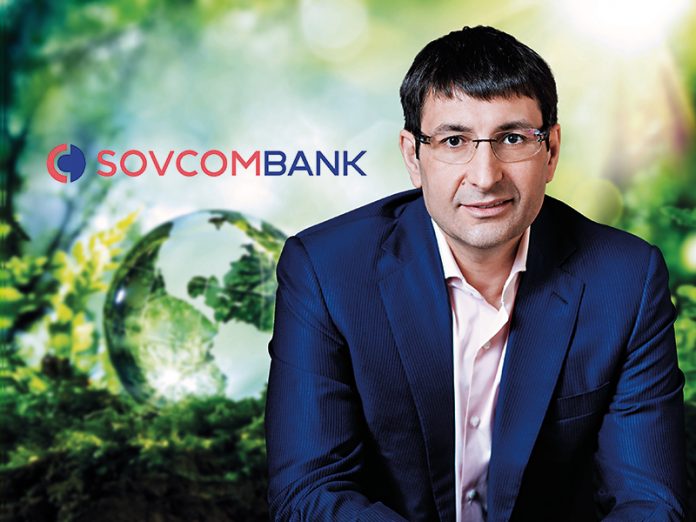
Dmitry Gusev: “Banks that ignore responsible banking principles are going to be left behind”

An Interview with the CEO of Sovcombank

At the end of September 2019, a number of international financial institutions launched the UNEP FI Principles for Responsible Banking. Sovcombank became the first Russian signatory to the document. Dmitry Gusev, CEO of Sovcombank, speaks about the significance of this milestone and its implications for Sovcombank going forward.


Sovcombank is the first Russian bank to commit to the Principles for Responsible Banking (PRB). Some experts see responsible finance practices mostly as a marketing and image-building tool, rather than a way to effect real change. Would you agree or disagree with them?

Sustainable development is a subject of great interest nowadays, for both financial institutions and our customers. Many market players are introducing various corporate social responsibility programmes, including this UN initiative.

We believe that we can only be successful in the long term if we share common values with our customers and society at large.

I don’t think that corporations and financial institutions can afford the luxury of sitting this one out. In the nearest future, we are going to find ourselves under immense pressure from society, partners, consumers, and, most importantly, our own employees. They want us to be committed to human values, instead of just chasing profit. One way or another, it is our customers and employees who drive change in our business. Those who don’t understand that are going to lose out in the long run.

Participating in the UN initiative will certainly improve our corporate image, but it’s not what it’s all about; we had sound reasons for doing it. We are not a charity. We seek to maximise profits. We believe that we can only be successful in the long term if we share common values with our customers and society at large.

Today, sustainable development and responsible banking are primarily associated with the climate agenda but, in fact, they go far beyond that. For us, these are not only about reducing our environmental footprint, but also about building honest and responsible relationships with our customers on a daily basis, especially in retail.

We know many examples when banks behave recklessly when dealing with retail customers. For instance, foreign currency mortgages were once very popular in Russia, but we all know about the dire consequences of those. That is why we prioritise providing financial education for our customers and place great value on responsibility in our loan products.


When and how are you going to restructure your business model to fit the sustainable development principles? What is going to come first?

There is no need for us to make any drastic changes to the business strategy, since we have always followed similar principles.

The first step for banks would involve assessing the status quo and identifying long-term goals and objectives. We have already undergone a third-party audit and approved some long-term goals, the key point of which is that they should be feasible. In the near future, we will announce our plans, and then report on their implementation as we go along.


As a signatory to the Principles, how are you going to integrate them with your work with retail customers and corporate clients?

As part of its corporate lending business, Sovcombank is already financing several long-term energy-saving, renewable-energy and waste-management projects. Currently, a large number of related government initiatives and programmes are underway in Russia, and we see ourselves as an active financial player in this market. Shortly, we plan to close the Russian market’s first transaction involving the securitisation of solar energy payments.

Moving forward, we will be very deliberate with our financing, paring down support for some projects and stopping it altogether for others. It’s going to be a balancing act between our goals and obligations as part of the Principles on the one hand, and the bank’s interests and prospects on the other. In particular, we will offer all possible help to our customers in relation to financing projects that aim to reduce their environmental impact.

As far as retail products are concerned, we create market products that are affordable for our customers and that foster so-called “smart spending”.

We want our customers to minimise interest expenses related to their daily needs, and save up that money to purchase or renovate housing, or buy a car. Here, our Halva instalment card is the product of choice.

We also make a point of educating our customers on all things credit, which is also our top priority as a responsible lender.


What was the Russian regulator’s reaction to your initiative? Are there going to be any concessions or additional requirements?

Amid the increasingly strict legislation and the ever-tightening reporting and disclosure standards, corporations the world over are moving towards business practices that take account of environmental, social and humanitarian issues.

Russian companies are currently at the start of their ESG journey, and Sovcombank is among the trailblazers that have implemented the environmental, social and sustainability principles.

There are currently no laws and regulations relating to this in Russia. Certain market players participate in ESG projects on a voluntary basis. As time passes, though, regulation is going to tighten and become more standardised.


What is your general view on ESG implementation in the global financial market? Is the “green” strategy viable today?

Globally, businesses are becoming the main driving force behind the climate agenda. It has already been noted that private investors are shifting to investment decisions that have ESG at their heart.

Today, if a company – any company – enters a capital market with a sensible CSR policy and a robust ESG platform, it is likely to succeed and attract investors.


Thank you Mr. Gusev. We learned a lot.


Sovcombank is one of the largest in terms of assets and most profitable banking groups in the Russian Federation. The Group identifies market niches with limited competition and focuses on achieving and maintaining strong competitive advantages in these niches. The Group believes that a disciplined execution of this strategy enables it to maintain high profitability and excess capital through the economic cycles and to take advantage of market opportunities as they occur.

Executive Profile

Dmitry Gusev joined Sovcombank in 2007 where he was first as an advisor to Chairman of Management Board in 2007. In 2011, he was appointed CEO and Chairman of the

Management Board. Presently, he still holds the same position and is also one of the minority shareholders of the bank.

Dmitry graduated from the Finance Academy under the Government of the Russian Federation majoring in Finance and Credit in 1998 and received his Ph.D. degree in Economics in 2001. He also went to the Tax Academy under the Ministry of Finance of the Russian Federation in 2006 with a degree in Jurisprudence.

He also worked with various multinational companies like the Coopers & Lybrand before it merged with Pricewaterhouse, now PwC. He held various positions when he moved to Deloitte in Russia and joined the department of taxes and law in 2001. Prior joining Sovcombank in 2007, Dmitry held the position of partner and head of international tax advisory team in Russia and CIS at Deloitte Moscow office for two years

joined Sovcombank in 2007 where he was first as an advisor to Chairman of Management Board in 2007. In 2011, he was appointed CEO and Chairman of the

Management Board. Presently, he still holds the same position and is also one of the minority shareholders of the bank.

Dmitry graduated from the Finance Academy under the Government of the Russian Federation majoring in Finance and Credit in 1998 and received his Ph.D. degree in Economics in 2001. He also went to the Tax Academy under the Ministry of Finance of the Russian Federation in 2006 with a degree in Jurisprudence.

He also worked with various multinational companies like the Coopers & Lybrand before it merged with Pricewaterhouse, now PwC. He held various positions when he moved to Deloitte in Russia and joined the department of taxes and law in 2001. Prior joining Sovcombank in 2007, Dmitry held the position of partner and head of international tax advisory team in Russia and CIS at Deloitte Moscow office for two years

5 Ways to Improve Your Presentation Skills

Presidents, politicians, and teachers all have one thing in common: their uncanny ability to deliver effective presentations. For many, the mere mention of the word “presentation” can send them into a fit of panic. Let us be honest; presentations can truly be nerve-racking. In school, presentations are associated with grades; at work, they are related to selling your products and convincing clients. So, naturally, the higher the stakes are, the more nervous you will feel. Nonetheless, giving a rousing presentation does not have to be an ordeal. Thus, if you want to improve your presentation skills, but do not know how you have come to the right place. By just utilizing the next 5 tips, you are sure to get a round of applause! 

1. Be Well Prepared

Granted, this is easier said than done. Stage fright can undermine all your efforts, but there is only one way to combat it: practicing. You need to write your main points and practice in front of the mirror or your friends until you perfect your delivery. Moreover, make sure you know the ins and outs of your topic; you do not want your audience to put you on the spot and ask you questions you cannot answer. Showing a deep understanding of your subject will help you retain better control over your presentation. Another tip is to record yourself to see whether or not you are using your voice effectively. It can be awful to hear your voice on record, but this can help you learn from your mistakes and avoid them when it is time to wow your audience. If you need more help you could get in touch with a presentation training company. There are many of them out there, so it’s really important that you know what to look for in a presentation training company.

2. Know Your Audience

To ensure that your presentation goes off without a hitch, you need to assess your audience first. Different audiences require various persuasion techniques. Consider their age, level of expertise, and goals. If you are giving a business presentation before your managers and potential clients, the experts from SlideHeroes.com recommend that you skip any jokes. Cracking a joke in a business setting will only make you seem unprofessional. You just need to be succinct and get to the meat of your presentation. On the other hand, if you are going to present in front of your colleagues in a more relaxed environment, you can include some jokes, but make sure they are actually funny. Lame jokes can be a huge turn-off and might make your audience lose interest. Also, you should avoid any specific jargon if you are not addressing experts. Your audience’s level of expertise should be reflected in your choice of words.

3. Rule Your Facial Expressions and Body Language

No one likes a presenter who seems aloof or, worse, panicky. You should practice to better control your facial expressions, as you want to look approachable yet professional at the same time. Avoid having a scrunched-up expression or a poker face. Alternatively, relax your muscles and smile. Yes, it is that simple! Smiling can put your audience at ease and prepare them to listen to whatever you are going to say. Moreover, your body language and hand gestures also play a huge role in making or breaking your presentation. For instance, crossing your arms can make you seem defensive. Maintain an open body language, and use your hand gestures to enhance your delivery. Just avoid using your hands too much because it can be distracting. 

If you’re too nervous, you might want to consider taking cannabidiol or CBD oil at least 30 minutes before the presentation. This food supplement can help relax your mind and body to reduce anxiety, helping you ensure a smooth and well-delivered speaking session.

4. Make Sure Your Outfit Is Spot On

Your outfit is not an afterthought. Wearing the right clothes when giving your presentation can give you an edge. Evaluate your environment first, as it will determine your attire. If you are going to give a business or a serious academic presentation, stick to formal clothing. On the contrary, you can wear a casual outfit if your venue is not that formal. Generally, women must avoid bright nail polish colors because they can be distracting, while men need to wear polished shoes and wrinkle-free garments. Make sure your shoes are attractive but comfortable. Try using heel spur inserts for women and men to ensure foot pain isn’t a distraction while presenting. 

When choosing the perfect outfit for your presentation, it’s best to pick one that won’t steer your audience’s attention away from what you’re saying. As much as possible, go with the basics and avoid too flattery clothing. You can buy formal or business casual clothes online or in physical clothing stores in preparation for your next presentation. To save money, check out available vouchers or discount codes on their homepage or once you sign-up (for new customers) that you can redeem online.

5. Arrive Early

A million things can go wrong during your presentation. Arriving early at your venue will help you avoid any embarrassing surprises. If you are using PowerPoint slides, check if the projector is functioning properly. Furthermore, do not forget to ensure that your mic is working well and making your voice sound crisp clear. Arriving early will also help you survey the size of the room, helping you find a good place to stand so that everyone can see you.

If you arrive early, you’ll have time to practice your self-introduction speech. It’s essential to make an excellent first impression when presenting. A self-introduction speech can make or break your presentation. So, make sure you don’t miss this part and give your best.

Early birds also get a chance to mingle with the participants in a presentation. For instance, if you’re a sales representative who will present a sales proposal to a panel of investors, you can meet and have small talks with them. It will help you reduce or eliminate your nervousness during your presentation. Hence, you’ll look more confident during your presentation.

Delivering a rousing presentation is not a walk in the park, but it does not have to be unnecessarily hard. By preparing well, knowing your audience, and perfecting your body language, your audience will be in awe of your presentation skills. Remember to not overcomplicate things; having a positive mindset can go a long way towards making you a great presenter.

PCP: The New Way to Drive the Car of Your Dreams

From research conducted by the AA, it has become apparent that the average car depreciates by 60 per cent of its residual value in the first three years, considering it is negotiating 10,000 miles per annum. The biggest losses come in the first year however, with a deduction of around 40% being made by the end of the first 365 days.

Obviously, there are different ways of putting the brakes on depreciation. Keeping the car clean, regular servicing in accordance with manufacturer’s guidelines, and one eye on the mileage gauge, will all go a long way in reducing potential losses. But is there another option to consider?

A car is considered the ultimate mark in class and being able to sport a premium vehicle. Owning a renowned car such as the new Mercedes GLE for example is undoubtedly a proud moment in any household.

Currently, there are more than 38 million vehicles registered for use on the roads here in the UK and considering the average person spends more than nine hours a week sat in the driving seat, more than they do eating, cars play a significant part in our lives.


Cost

Due to the fact the vast majority of us don’t have copious amounts of cash stored under our mattress, buying the car of our dreams isn’t always feasible. With PCP, the payment is broken down into three major chunks. Firstly, you’ve got the initial deposit which is usually 10% of the car’s showroom value.

Secondly, the monthly payments which will include enough to cover the depreciation costs incurred throughout the contract. Finally — and this is where things change once the final payment of the contract has been made, you get the option to either return the car or take a new one on a new contract. Or, you can pay a balloon payment and then the car is yours.

By taking out a PCP lease, the monthly repayments are significantly lower than they would be with a finance deal. The option then presents itself is to drive a car that you would initially have deemed to be significantly out of your price range. Therefore, if you don’t have a big deposit and want lower monthly repayments, then this might be exactly what you’re after.


PCP

With 78 per cent of the people in the UK now choosing to take PCP (A personal contract purchase) as their finance option, it is clear it has established itself as a popular option. Admittedly, it goes against everything our parents have told us to do, in regard to owning our own car, but if you can battle those initial demons, then we’re here to show you why this might be for you.


Mileage

Three reasons many drivers in the UK have steered away from the daily commute in the car and opted for public transport are congestion, fuel costs, and parking. A decade ago, our decision when purchasing a car will have depended hugely on our day-to-day usage — but when that isn’t the same, why should the choice be?

The average annual mileage of a car in the UK is 7,900. One drawback of renting your car through PCP is that is that when initially taking out the contract, you are given a mileage restriction and if you exceed this, you will be penalised. If, however, you would consider yourself to be one of those average UK drivers, then PCP offers no qualms. The opportunity to purchase a new contract once your current one is up means you aren’t going to have spent your days driving around in an old car with high mileage.

If you don’t use your car for your drive to work every day, PCP can provide you immense positives in regard to the fact, you are basically buying a weekend car. When purchasing a new car outright, you are restricted by the constant reminder that you will have this car for the foreseeable future. With PCP, you can buy the car that caters exactly to the needs of your evenings and weekends. For example, an SUV if you go camping with the kids most weekends throughout the summer, or a two-door roadster, if your Sundays are filled by coastal runs. And, if your circumstances do change, you can simply exchange the car.

Alongside providing the British public with the opportunity to get behind the wheel of a car that perhaps would have never been feasible, PCP has, in effect, saved the British car market. For the past three years, the number of new car sales in the UK has stayed above 2.5million units per year, in comparison to 2011 when it was only 1.9million.

Undoubtedly the best performing manufacturers in the PCP generation have been premium brands such as Audi, Mercedes, and BMW. This is due to the fact these cars hold their value better, and therefore depreciation is less, ultimately benefiting both dealer and driver. Mercedes reported a 100% upturn in UK sales since 2010.

Who knows what the future holds for car purchasing and PCP, but it is sure to be interesting!

Sources:

https://www.ft.com/content/0e651206-0ee1-11e7-a88c-50ba212dce4d

https://www.thinkmoney.co.uk/news-advice/what-is-the-average-miles-driven-per-year-in-the-uk-0-8581-0.htm

https://www.lookers.co.uk/finance/pcp/

http://www.theaa.com/car-buying/depreciation

https://www.autoexpress.co.uk/car-news/90794/pcp-personal-contract-purchase-car-deals-explained

https://www.telegraph.co.uk/money/consumer-affairs/should-rent-next-car/

The Democrats Implode Inside 48 Hours

The United States Senate cleared Donald Trump of both charges in its impeachment trial of the president.

The day that Donald Trump was acquitted of the charges put to him by the Democrats in the Senate was always going to live long in the memory. History will record that date as February 5th, 2020. Although the story is making headline news around the world, it’s not considered to be a shock. Short of the Republican party suddenly and inexplicably turning against their man under the glare of the world’s spotlight, they were never going to vote to remove him. Why the Democrats ever decided to give him the opportunity to be tried and acquitted will probably always remain a mystery. It was a spectacular own goal – and yet it wasn’t even the biggest own goal the Democrats scored this week.

If you want to be trusted to run a country – especially one with the size and profile of the United States of America – it generally helps if you can convince the public that you have the ability to count a few thousand ballot papers or operate an app on a mobile phone. Unfortunately for the Democrats, they’ve failed on both counts. The ongoing farce in Iowa is such a spectacular catastrophe that it may ultimately do the Democrats more damage than the failed impeachment attempt. Even at the time of writing, more than 48 hours since the Iowa result was due, we still only know 62% of the results. There’s no acceptable explanation for this in 2020. It makes the Democrats look incompetent, and it’s a stain that’s going to be hard to erase over the next few months.

As contentious as the lack of results is, it’s not as contentious as the way that Joe Buttigieg has claimed victory based on the share of the votes made public so far. Given the makeup of the areas that results are not yet available for, it’s highly likely that Bernie Sanders will win there, and therefore take Iowa overall. For a lot of top-level Democrats, this is their ultimate nightmare. For Sanders supporters, the apparent technical difficulties are further evidence that the powers-that-be within the Party is trying to deny their man the chance to run against Trump. The same thing happened in 2016 with Hilary Clinton. At exactly the same time the Republicans are putting on a more united front than we’ve seen at any time during the past four years, the Democrats are turning on each other, falling apart, and failing to perform basic administrative tasks.

The big question in all of this is, ‘what does this mean for the 2020 Presidential Election?’ If your first thought is that it probably means good things for the Trump campaign, you’re almost certainly right. As recently as a year ago, most political commentators presumed Trump stood no chance when the election rolled around. He was a figure of fun in the world’s press. There was an online slots game released at casinos called ‘Trump It’ on websites such as Rose Slots, and it was deliberately designed to mock him. We don’t think that the President is a big online slots player, but he knows a thing or two about casinos, and he knows a thing or two about beating the odds, too. Twelve months ago, a bet on him to win was probably about as safe as a bet on that online slots game. Today, he’s the odds-on favorite to win the election with the overwhelming majority of online bookmakers. There’s been a huge swing in his favor in the past week, and it’s now on him and his administration to ride the wave all the way to a second term in the White House.

Mayor of South Bend, Indiana, Pete Buttigieg, Senator Elizabeth Warren, Former Vice President Joe Biden and Senator Bernie Sanders participate in the fifth Democratic primary debate [File: Saul Loeb/AFP]

What’s less clear is which, if any, of the Democratic candidates has the best chance of stopping Trump from securing that second term. Joe Biden, former Vice President to Barack Obama and once the outright favorite in the race, now seems destined to finish third at best. Elizabeth Warren, who also had a brief moment as the front runner, also appears to be falling away. As much as the senior figures in his own party hate him, Bernie Sanders has to be considered a front runner, with Buttigieg his most likely opponent. While both of them have obvious – and very different – appeals to certain sections of the Democrat vote and those on the left of American politics, we would humbly suggest that neither is likely to win.

Bernie Sanders, while doubtless a man with good intentions and a kind heart, is 78 years old. By the end of any term in office, he would be 82. He’s already had one heart attack. Could he realistically cope with the rigors of being the President of one of the most powerful countries in the world? Even if he could, is it realistically possible that centrists could be persuaded to unite behind him and vote for him? His supporters are fanatical and see him as a revolutionary, but he would likely encounter the same problem that Jeremy Corbyn recently encountered in the United Kingdom. His supporters believe that he’s the only solution. His detractors believe that he’s an even bigger problem, and in some quarters of American society, ‘socialist’ is still a dirty word.

Buttigieg is a better fit for middle American than Sanders from a politics and policy perspective. He’s not radical, he’s not revolutionary, and he’s unlikely to upset the interests of big business. He’s also gay. It’s 2020, and that shouldn’t be an issue, but only a fool would pretend that homophobia doesn’t exist in America, and doubly so in Bible Belt states. Getting Barack Obama elected was an important victory over racism for the American public and the cause of progress. Getting a homosexual man elected would be an even bigger success story, but the unfortunate truth is that America probably isn’t ready to take that step just yet. Even if it only affects the way that 5% of people in the country vote, that’s probably enough to hand victory to Trump.

If Donald J. Trump wins re-election at the end of what’s likely to be a bruising and divisive election year, it won’t necessarily be because the American people believe that he’s done a job. It may have more to do with the fact that the Democrats can’t keep their house in order, and can’t present the public with an electable candidate.

7 Benefits of Hiring a Professional Web Designer for Law Firms

To keep thriving is in the present competitive world, organizations must have an online presence to attract potential customers. Online presence is a key part of any business today. Since you have to be online, you must as well give it your best shot. Mind you, more often than not, the first interaction your clients have with your brand is your website. This highlights the need to get the service of a professional website designer to ensure your clients have the feel-good factor about you the very first time. The first impression, they say lasts long.

With lots of practical instructions in videos and articles available online, one might be tempted to venture into web designing personally or get someone not skilled for the purpose especially because of the cost involved. Nothing can be compared to getting a professional web designing services like transformationaloutsourcing.com for your website– it is worth every cent spent. Moreover, there are good numbers of professional website designers who are pretty affordable.

Law firm websites must be properly interfaced, excellent and appealing to clients. This will make it easy for potential customers to come. A good website is as important as any other factor necessary for the successful practice of a lawyer. The benefits of hiring a professional web designer for your firm are enormous. You simply can’t get the wrong person to handle your law firm website. And if you do not know where to look, you may click here to get some tips and ideas on what a law firm website should have. 

These tips will help you pick the right person for your law firm website design and help you get a good number of clients. So what are the benefits of hiring the right person for your website? A few of them are listed below.

Strategic online plan

Professional web designers are adept at laying out strategic online plans. This is one of the greatest benefits any law firm will enjoy by getting the service of professional web designers. They establish a strong long-term foundation for your website based on the core business model and goals. Usually, web designers work as a team. SEO specialists, copywriters, coders, and web designers are part of the team. They have a very good understanding of today’s digital marketing and combine smooth business processes with aesthetics.

High-quality web design

A law firm’s website must be of very high quality since most business transactions are now done online. This level of quality is almost exclusive to top professional web designers. Developing a top-notch website can be very hard even with a free website template. Professional web designers have codes, plugins and other key ingredients of a high-quality website as second nature. Furthermore, the rate at which technology advances require that you let professional hands handle your website for you. Law firms who use the service of professional web designers or a professional UX design agency will enjoy a fantastic user experience through the dynamic nature of their service.

Optimization

Any website that isn’t optimized is as good as being blindfolded. To gain the necessary visibility, a website must be optimized. Only a sizable percentage of the traffic to your website will be from direct entry of your website address by clients. Appearing on the first page of search engines will drive more traffic to your website than you can imagine. Very few users get to the later pages on search engines, hence it is important to appear on the first two or three pages. To appear in top-ranking pages, search engine optimization is the way. A professional web designer understands the nitty-gritty of SEO business hence giving your law firm more visibility and eventually driving your business.

Responsive web design

Websites must be designed to be compatible with the latest technologies since a high percentage of users access the internet via smartphones and iPad. With the rate of use of mobile traffic, you will be at a great loss if your website is not compatible with mobile devices. A professional web designer has all it takes to design a responsive website for you without having created a different version. If you are not sure which one would suit you the best, you can always research some of the top New York web design companies and be sure you made the right choice.

Reliability

When designing your law firm’s website yourself or using unskilled designers, many things can go wrong and you end up at a very difficult place. Fixing problems on your website is all shades of trouble, including having to pay a huge sum for emergency professional service to right the wrongs. You may not know the extent to which damage might have been done. Hiring a professional website designer assures you.

Competitive advantage

There are so many law firms with websites; you need all the edge you can get to gain the necessary competitive advantage. The high-quality website provided by professional web designers ensures you stay ahead of your competitors or you are at least a match for them. Professional web designers can also incorporate other features on your website to ensure you stay ahead of the game.

Time, speed and security

A website with impressive functionality saves time and increases revenue. You can easily book appointments online, using your phone. Automatic emails can also be leveraged to ensure immediate response to clients. A website designed by a professional web designer is not just faster, it is also safe.

These are only a few of the benefits of hiring a professional web designer. Get one for your law firm today and see your business take a giant leap.

In Good Company: How Organizational Resources Make Social Capital?

By Mostafa Sayyadi

This article offers novel insights into how executives can build social capital by affecting and, in some cases, manipulating structure, culture, strategy, inter-company networks and stakeholder orientation. The author uses Janine Nahapiet and Sumantra Ghoshal’s application of social capital theory as the basis for grounding this article and adding to the research. Practical guidelines for executives provide a more effective facilitation of social capital in companies.


Introduction

There is a gap in the management literature toward identifying the catalysts of social capital in organizations. The question arises whether the management of company characteristics can be a source for building social capital. This basic question remained unexplored since the inception of the social capital theory to date. To address this gap, this article indicates how the three important dimensions of social capital theory (structural, cognitive, and relational) are affected by various internal characteristics of companies such as the structure, the culture, the strategy, the inter-company networks, and the stakeholder orientation. The significance of my strategic tenets and networking suggestions relate to social capital theory. 

The contribution to the management literature lies in presenting a theoretical framework that incorporates the organizational factors that may impact the three dimensions of social capital. The literature, to date, has failed to provide a comprehensive framework which incorporates all of the contextual factors that may simultaneously impact social capital. The absence of this systematic approach inhibits the development of social capital as a vital driver of business success. Exploring these organizational factors and how they may impact offers practical implications for executives and top managers to improve outcomes at the organizational level and meet their business objectives. This article contributes to practice by identifying the ways in which to build social capital in companies.


Building Social Capital in Companies  

Janine Nahapiet and Sumantra Ghoshal determine three dimensions for social capital, and categorize them as structural, cognitive, and relational.1 The structural dimension actually portrays an “overall pattern of connections” among actors.2 This dimension could possibly be improved by having access to other actors quickly, and enhanced through highly flexible structures. Two scholars by the names of Catherine Wang and Pervaiz Ahmed indicate that highly flexible structures such as organic structures may be prone to better socialization among organizational departments and business units.3 These scholars also indicate that structural aspects of formalization and centralization may negatively relate to structural dimension of social capital theory.


 Highly flexible structures such as organic structures may be prone to better socialization among organizational departments and business units. [While], structural aspects of formalization and centralization may negatively relate to structural dimension of social capital theory. 

The cognitive dimension is also defined as resources developing shared vision, interpretations and feelings among actors.1 Similarly, Edgar Schein, one of the prominent management scholars, defines organizational culture as “the correct way to perceive, think, and feel” in order to solve organizational problems.4 Robert Putnam, Robert Leonardi and Raffaella Nanetti found that “trust is an essential component of social capital,” and argue that trust enhances interactions among employees.5 In agreement, Ester Villalonga-Olives and Ichiro Kawachi consider trust as an important facilitator of social capital.6 The link presupposed here provides significant evidence that social capital requires cooperation, and cooperation demands collaborative behaviors. Furthermore, Salvador Avila Cobo argues that collaboration is a strong determinant of “the very existence, strength, and durability of social capital.”7 The assumption made by this literature review is that cognitive dimension seeks to achieve a shared vision. Shared vision is a mutual understanding toward determined goals, and this common perception could be reached through developing learning opportunities. These results suggest that cultural aspects of trust, collaboration, and learning may be positively associated with the cognitive dimension of social capital theory.

Another important component, the relational dimension focuses on the importance of relations, and argues that relations based on obligations, reciprocity and identification could develop organizational assets. Janine Nahapiet and Sumantra Ghoshal define obligations as “a commitment or duty to undertake some activity in the future.”1 Sort of a due diligence of each employee to put in the necessary effort to help the organization prosper. In order for a company to prosper, executives must develop a strong organizational strategy. Organizational strategy is evaluated as “a plan for interacting with competitive environments to achieve organizational goals”.8 Strategy highlights the critical role of relations with external actors, and enhances social interactions with business units and the organizational environment in order to attain goals in the future. Furthermore, organizational strategy develops a shared interpretation among organizational members and positively relates to cognitive dimension of social capital theory. Organizational strategy can be, therefore, positively connected to cognitive and relational dimensions of social capital theory.

Figure 1


Reciprocity, another aspect worth noting, stresses upon helping behavior and knowledge contribution between resources and recipients. Inter-company networks are a key part of this relationship, and play a critical role in enhancing knowledge transference among actors. Two scholars by the names of Elinor Ostrom and T. K. Ahn illustrate that inter-company networks are crucial condition for reciprocity, and highlight the importance of inter-company networks in creating reciprocity.9 Furthermore, one scholar that is well known in the Academy of Management, one of the largest leadership and management organizations in the world by the name of James Coleman argues that inter-company networks facilitate access to other actors and resources, and this could improve structural social capital which is highly affected by having access to other people quickly.10 Therefore, it may be established that inter-companies networks have a positive relationship with relational and structural social capital. This idea is capsulized by Robert Putnam who states that “the core idea of social capital theory is that networks have value.”11

The stakeholder orientation is about enhancing the exchange of knowledge with various stakeholders. And much of the knowledge exchanged with stakeholders is a result of social interactions between organizations and their stakeholders. The prominent scholar on social capital theory is Elisabet Garriga Cots who affirms the critical role of social capital in this relationship, and highlights a strong association between the dimensions of social capital and stakeholder orientation.12 I depict that based upon this literature review that the three dimensions of social capital emerge in social interactions with stakeholders. Accordingly, stakeholder orientation may be positively related to all the three dimensions of social capital. Therefore, factors affecting social capital theory are depicted in figure 1.


Both in theory and in practice, executives can manifest themselves as change agents who have developed competencies to better manage organizational factors with the aim of fostering social capital within companies. 

In Conclusion

This article extends the current literature and provides elaborative insights for executives and senior managers by modeling how the three dimensions of social capital theory can be affected by company characteristics such as the structure, the culture, the strategy, the inter-company networks, and most importantly, the stakeholder orientation. These three dimensions include structural, cognitive, and relational. This article can add to a relatively small body of literature and develops our understanding of the direct impact of company characteristics on social capital. In particular, I argue that executives can build social capital through manipulating organizational factors. Therefore, both in theory and in practice, executives can manifest themselves as change agents who have developed competencies to better manage organizational factors with the aim of fostering social capital within companies.

About the Author

Mostafa Sayyadi, CAHRI, AFAIM, CPMgr, works with senior business leaders to effectively develop innovation in companies, and helps companies– from start-ups to the Fortune 100 – succeed by improving the effectiveness of their leaders. He is a business book author and a long-time contributor to HR.com and Consulting Magazine and his work has been featured in these top-flight business publications.

References
1 Nahapiet, J., and Ghoshal, S. (1998). Social Capital, Intellectual Capital, and the Organizational Advantage, The Academy of Management Review, vol. 23, no. 2
2 Choi, B. (2002) Knowledge Management Enablers, Processes, and Organizational Performance: An Integration and Empirical Examination, Thesis (PhD), Korea Advanced Institute of Science and Technology.
3 Wang, C.L. & Ahmed, P.K. (2003). Structure and structural dimensions for knowledge-based organizations, Measuring Business Excellence, vol. 7, no. 1

4 Schein, E.H. (1985). Organizational culture and leadership, San Francisco: Jossey-Bass Publishers.
5 Putnam, R.D., Leonardi, R., & Nanetti, R. (1993). Making democracy work: civic traditions in modern Italy, Princeton: Princeton University Press.

6 Villalonga-Olives, E. & Kawachi, I. (2015) The measurement of social capital, Gaceta Sanitaria, vol. 29, no. 1, pp. 62-64.
7 Avila Cobo, S.H. (2005). Collaboration, innovation and the building blocks of social capital in the technology sector: A comparative analysis of knowledge-creating institutions. The role of individual attributes, policies and environments in the collaboration and productivity of scientists and technologists, Thesis (PhD), Stanford University.
8 Daft, R.L. (1995). Organization theory and design, Minneapolis/St. Paul: West Pub. Co.
9 Ostrom, E., & Ahn, T.K. (2003). Introduction. In Ostrom, E & Ahn, TK (ed.), Foundations of Social Capital, Cheltenham: Edward Elgar Publishing.
10 Coleman, J.S. (1988) Social Capital in the Creation of Human Capital, The American Journal of Sociology, vol. 94, no. 1, pp. 95-120.
11 Putnam,R.D. (2000) Bowling alone: the collapse and revival of American community, New York: Simon & Schuster.
12 Cots, E.G. (2011). Stakeholder social capital: a new approach to stakeholder theory, Business Ethics: A European Review, vol. 20, no. 4, pp. 328-341.

EDITOR'S PICK OF THE WEEK

China economic growth

China’s Challenging Search for a New Model of Economic Growth

By Danny Leipziger China cannot continue to rely on exports to drive its growth, but what are the alternatives? China ran a $1.2 trillion trade surplus last year, and despite admonitions from the IMF to rely...

WISE DECISION MAKER GUIDE

POWER INFLUENCERS

Emerging Trends

The Future of Global Trade