Home Blog Page 830

Opportunity For Investors Like Benjamin Gordon Cambridge Capital to Invest In Real Estate During the Pandemic

Real Estate

The real estate sector has not been at its best since the pandemic has hit the world. But, this is what can prove to be an opportunity for investors and many others. The real estate market is currently distressed, and the prices have fallen due to the fall in demand.

Experienced real estate agent believes that investors can use this situation for their benefit. The economy is only going to recover from here, and that is why it would be a good time to put money in real estate to gain profits on your investments when the recovery phase begins.

There will undoubtedly be many opportunities once the pandemics get in control and the demands start going up. The prices will surely increase as things cannot get any worse than now.

An Opportunity For Investors Like Benjamin Gordon Cambridge Capital during This Crisis

The country has already witnessed its fair share of financial crises. In 2008 the country went through a real estate crisis. The crisis badly hit the country’s housing market, and even then, many people used that opportunity for their benefit. Real estate is an asset that is not very easily affected by the things happening globally, but the pandemic has caught everyone off guard and has affected the real estate market severely.

The fault lies in the management of the pandemic. The poor management has proved to be devastating for the country, which is precisely why the economy has suffered so badly. Most people were not expecting this, and when it happened, they were surprised. This leads to the drastic fall in the real estate value, an asset that would not normally suffer such a value drop.

Commercial Real Estate: The demand and the effect of COVID- 19

There has been a massive shift in demand. People who preferred cities earlier have decided to move to the suburbs to avoid living in densely populated areas. Offices have also decided to reduce their sizes while most commercial real estate, like restaurants and hotels, have closed down. A big question mark has been put up on shopping malls as due to the covid restrictions most people are avoiding them. It is decisive that the market has not been this bad in years. As per Benjamin Gordon Cambridge Capital, the recovery period ought to be long, but as they say, there will be light at the end of the tunnel.

This distress worldwide has opened the opportunity for investors to acquire real estates that have been distressed. In addition, commercial assets worldwide are being sold at meager costs, making it the perfect opportunity for liquid buyers.

Any investor who has the money can invest in these assets during this time. In the upcoming years, the world will recover from the pandemic, and that would be a time when real estate will again gain its value. The opportunities are endless and what needs to happen right now is some thoughtful investing in utilizing these opportunities.

COVID-19 Vaccination, Supply Chain and Concerns on Vaccine Hesitancy in Africa

Vaccine Hesitancy in Africa

By King Carl Tornam Duho, Anna Taylor, Dr Rosemond Sussana Amamoo and Dr Roselyn Salomey Amamoo

The drivers of the economic crisis from the pandemic differ from what transpired during the 2007-8 global financial crisis. The clear similarity is that the impact of both has been dire on economies leading to economic recession and aside from the Great Depression and the 2007-8 crisis this health crisis is one of the worse economic crises. As a health crisis with socio-economic implications, the impact on the world, developed economies, and developing economies continue to receive policy attention. In this article, we explore the state of COVID-19 vaccination in Africa, the supply chain issues and the concerns on vaccine hesitancy when the vaccines become available. We provide relevant insights for policymakers and practitioners.

Introduction

Aside from the financial crisis of 2007-8, the current health crisis is a global event that has impacted economies and livelihoods adversely.[1] In Africa, the impact of the pandemic has been mild initially but there are fears as this is changing because new variants are being recognized amid low levels of vaccination. Health statistics in Africa is generally not detailed as compared to developed countries. After more than 1 year of the pandemic, only about 1.7% of the African population has been vaccinated, while the majority of the citizens are still left without access to the vaccines.[2] There are different dimensions of the issues of policy relevance including public health concerns, the economic impact, the supply chain issues and public procurement issues, among others. We discussed the COVID-19 variants reported in Africa, the state of vaccination, supply chain issues and the COVID-19 hesitancy issues that practitioners and policymakers need to consider.

COVID-19 Variants and Spread in Africa

The novel coronavirus, SARS-COV 2 also known as COVID-19 has evolved via mutation as most viruses normally do. Changes in the characteristics of viruses affect not only their virulence but may also cause resistance to some medications used in the treatment of diseases caused by these viruses. Differences in the genome sequencing of the genetic material of the virus have led to the discovery of many variants of COVID-19.

The World Health Organization (WHO) in collaboration with some partners and institutions have been assessing and monitoring the evolution of SARS-COV 2 worldwide and as of July 2021, have established four variants of concern namely, Alpha, Beta, Gamma and Delta variants.[3]  It is quite interesting to note that the Beta variant was first detected in South Africa in May 2020 while the others were first detected outside Africa. There are still new variants like the Lambda, the MU (formerly known as B.1.621) and others which are yet to be discovered.

With Africa currently experiencing its third wave of COVID-19, as of the 5th of August 2021, the highly contagious Delta variant which is about 30%-60% more transmissible than the other variants[4] had been discovered in 29 African countries including Ghana, Uganda and the Democratic Republic of Congo.[5] The Alpha and Beta variants have been discovered in 39 and 35 African countries respectively.[6] The Alpha variant is predominantly found in Northern, Western and Central Africa[7] and the Beta variant in Southern Africa[8] with only one African country[9] reporting the Gamma variant.

Current State of COVID-19 Vaccination in Africa

Out of the 4 billion vaccine doses administered globally, about 80% are in high- and middle-income countries (See the Figure).[10] Most African countries are depending on the African Union and WHO’s bid to ensure global equity in terms of access to COVID-19 vaccines through COVID-19 Vaccines Global Access (COVAX).

WHO’s target to have 20% of the African population vaccinated by the end of 2021 looks impossible since less than 2% have this as a reality.[11] For instance, COVAX is lagging on its promise to Ghana of at least 2 million vaccine doses in 2021.[12] As of 24th August 2021, only 950,000 doses of SII-AstraZeneca (COVISHIELD) vaccine doses were delivered to Ghana.[13] The delay could be explained by vaccine nationalism and India’s diversion of vaccines for domestic rollouts.[14] 

figure 1

Developing countries, some of which have none of their population fully vaccinated have to compete with the high- and middle-income countries who already have vastly immunized populations.[15] Sadly, amidst the global shortage of vaccines, a couple of developed countries like Europe and the US[16] desire to give booster doses despite the WHO’s calls for a moratorium.[17]

Supply Chain and Vaccine Distribution in Africa

Most African countries that have started the vaccination have acquired their vaccines under the COVAX scheme backed by the WHO and other international organisations.[18] These vaccines were mostly sourced from the Serum Institute of India, which at a point channelled their production towards the demand of India as a result of the surge in COVID-19 infection rate. This resulted in a short supply for African countries.

According to the WHO, to fully vaccinate 10% of the African population by September 2021, 183 million doses are needed and about 729 million more to reach 30% of the African population by the end of the year.[19] Though the distribution of vaccines has been slow due to some challenges arising from inadequate staff and infrastructure, there is also the issue of some individuals and countries not being willing to get vaccinated.

Another challenge has been with the storage and life span of the vaccines received in Africa. Some countries have had to dispose of some of their vaccines because they were unable to use them before expiry.[20] Others have had to return some because they could not have used them all up by the date of expiry.

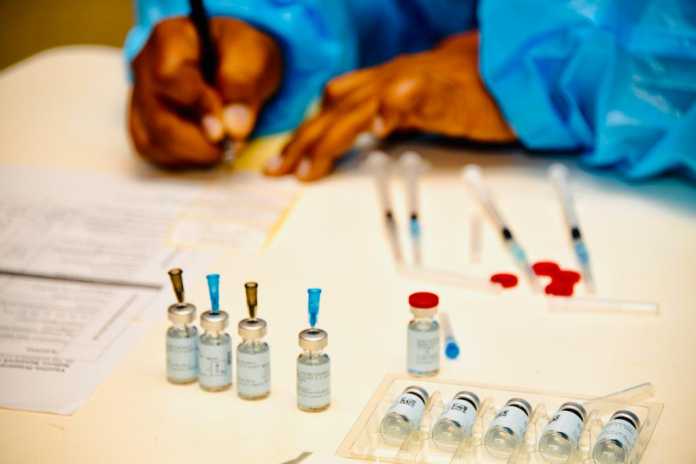
Most African countries are using AstraZeneca/COVISHIELD which is expected to be in an environment with a temperature between 2oC to 8oC and an upright position during transportation and storage.[21] It has a shelf life of up to 6 months when not opened and must not be exposed to direct sunlight. Besides, J&J/Janssen COVID-19 Vaccine allows for a single shot, all the other vaccines allow for 2 shots for full vaccination (See Figure 2).

figure 2

Since the inception of this pandemic, the World Bank Group has approved more than $150 billion to battle health, economic and social effects experienced as a result of COVID-19 and even scaled the financing up by 50% in April 2020 to serve as an aid to over 100 countries.[22] The International Monetary Fund (IMF) recently approved its largest Special Drawing Rights (SDR) of S$650 billion to countries, the largest in its history.[23]

Though the WHO is trying its best in the fight against COVID-19, there is a lot of room for improvement especially with regards to Africa and vaccination. Per the third Sustainable Development Goal (SDG #3), which is concerned with Good Health and Well-being, the world should attain universal health coverage by 2030.[24] This covers the accessibility of quality essential healthcare services and also of safe, effective, quality and affordable essential medicines and vaccines for all. The current events are a signal that SDG #3 might not be attainable, especially in the context of Africa and the Global South.

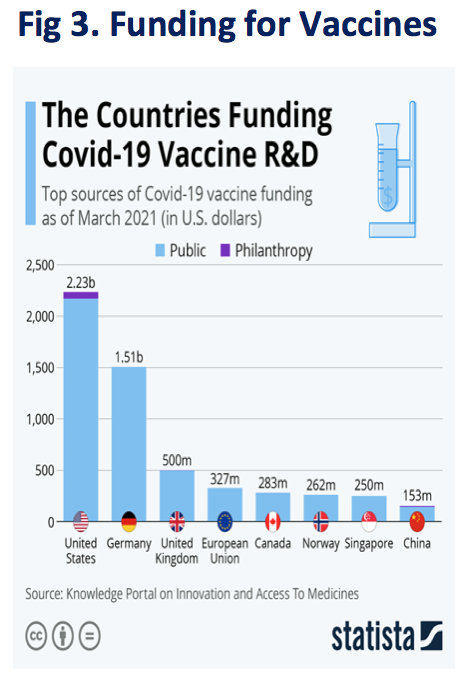
Aside from the fact that the vaccination drive in Africa is slow compared to other regions of the world, research and development (R&D) in the continent is lagging (See Figure 3). Most African countries are not able to allocate 1% of their Gross Domestic Product to R&D, leading to a lack of innovation and a culture of dependence on the Western world.

figure 3

Concerns of Vaccine Hesitancy in Africa

Vaccine hesitancy is a health policy issue that can be linked to the late 16th century when vaccines were introduced. It covers the delay in acceptance of vaccines or the refusal in the face of availability of vaccination services. Five factors drive hesitancy, namely 1) confidence of people in the safety and effectiveness of the vaccines, 2) complacency when the vaccines are not deemed as a prevention measure, 3) convenience[25] which relates to how appealing the vaccination services are, 4) communication as there is the need to combat misinformation and 5) the fact that context matters especially for the pro-poor, and marginalized groups.[26]

Currently, because of the limited number of vaccines available to Africans, there are no clear indications of hesitancy but as vaccines are made available there will be a need to devise strategies to reach the people who will refuse to be vaccinated, an essential factor to reaching herd immunity.[27] The treated meted out to Africa is counterintuitive for a world that is pursuing sustainable development that aims to leave no one behind. This is because the vaccine narrative has been a story of inequality, poverty, scarcity, shortage, denial, deficiency, or deprivation for Africa.[28]

Vaccine hesitancy in Africa will result in the pandemic of the unvaccinated as is being reported in the US.[29] For African policymakers, policies should be devised to address the possible escalation of vaccine hesitancy amidst propaganda and conspiracies. Attention should also be placed significantly on the procurement and administration of vaccines, as lack of transparency and accountability can result in corrupt actions regarding procurement which is a top source of corrupt activities.

Policy Recommendations

There are some notable policy and practical issues that need to be focus areas for policymakers and practitioners to enhance the vaccination drive and post-COVID-19 recovery for African countries.

  • Policymakers should provide efficient systems and enhance the capacity of health professionals to handle the vaccines appropriately.
  • The concerns of inequality and deprivation of African countries need to be addressed through better vaccine diplomacy where developed countries provide optimal support for the developing countries to address the health crisis.
  • The Finance and Health Ministries and other related ministries in African countries should be committed to following public procurement best practices in acquiring the vaccines. This is essential as already the pandemic has deepened the debt unsustainability of countries, and increasing corruption will be detrimental to countries.
  • Policymakers need to engage the media, civil society organisations and community level leaders in promoting the vaccination drive. There should be strategies to reach the poor and vulnerable people.
  • The business community in Africa should be committed to providing support in-kind and cash to help the government in achieving the needed level of vaccination that can achieve herd immunity. Such supports fit within the sustainability efforts of businesses and managers should do well to showcase them in their sustainability reports.

About the Authors

King Carl Tornam Duho

King Carl Tornam Duho is an ACCA Prize-winner, CIMA Qualified Accountant, award-winning reviewer and a business, economic, and research consultant with experience in academia, business and public policy. He is the Technical Director for Dataking Consulting. King has published more than 30 articles including more than 15 in CABS/ABDC ranked journals. He holds a Bachelor of Science and Master of Philosophy degrees in accounting.

Anna Taylor

Anna Taylor, a Supply Chain Analyst with Dataking Research Lab, works as Finance and Administrative Officer at Accra Medical Centre. She holds an MBA in Supply Chain and Logistics Management and a Bachelor’s in Management Studies. Anna is also part-qualified with the Institute of Chartered Accountants Ghana and has interests in both supply chain and finance issues that plague Africa and the world at large.

Dr Rosemond Sussana Amamoo

Dr Rosemond Sussana Amamoo is a medical practitioner currently working with a pediatric hospital and is passionate about global health policy. She holds a Bachelor of Science in Medical Sciences, a Bachelor of Medicine and a Bachelor of Surgery (MBChB) degrees. Rosemond works as a health policy analyst with Dataking Research Lab. Her interest is to explore existing and potential health policies in the Global South.

Dr Roselyn Salomey Amamoo

Dr Roselyn Salomey Amamoo is a medical practitioner in Ghana with an interest in public health, emphasis on Epidemiology. She has degrees in Bachelor of Science in Human Biology, a Bachelor of Medicine and a Bachelor of Surgery (MBChB). She also holds certificates in Epidemiology and Fundamentals of Global Health Research from the University of Washington. Roselyn is a health policy analyst with Dataking Research Lab and hopes her work impacts the world at large.

References

[1] Gopinath, G (2020), “The Great Lockdown: Worst Economic Downturn Since the Great Depression”, International Monetary Fund. https://blogs.imf.org/2020/04/14/the-great-lockdown-worst-economic-downturn-since-the-great-depression/

[2] UN (2021), “COVID-19: Africa ‘third wave’ not yet over, while vaccine inequity threatens all”, United Nations. https://news.un.org/en/story/2021/07/1096252

[3] WHO (2021), “Tracking SARS-CoV-2 variants”, World Health Organisation. https://www.who.int/en/activities/tracking-SARS-CoV-2-variants/

[4] WHO (2021), “Rife COVID-19 variants fuel Africa’s surging wave”, World Health Organisation. https://www.afro.who.int/news/rife-covid-19-variants-fuel-africas-surging-wave [Rife]

[5] WHO (2021), “Record weekly COVID-19 deaths in Africa”, World Health Organisation. https://www.afro.who.int/news/record-weekly-covid-19-deaths-africa

[6] Ibid.

[7] Rife supra note 4

[8] Ibid.

[9] Africa CDC, (2021), “Opening Remarks, Weekly Press Briefing on COVID-19 in Africa, 05 August 2021”, Africa Centres for Disease Control and Prevention. https://africacdc.org/speech/weekly-press-briefing-on-covid-19-in-africa-2/

[10] WHO (2021), “WHO Director-General’s opening remarks at the media briefing on COVID-19 – 4 August 2021”, World Health Organisation. https://www.who.int/director-general/speeches/detail/who-director-general-s-opening-remarks-at-the-media-briefing-on-covid-4-august-2021

[11] WHO, (2021), “COVID-19 vaccine shipments to Africa ramp up”, World Health Organisation. https://www.afro.who.int/news/covid-19-vaccine-shipments-africa-ramp

[12] WHO, (2021), “COVID-19 vaccine doses shipped by the COVAX Facility head to Ghana, marking beginning of global rollout”, World Health Organisation. https://www.who.int/news/item/24-02-2021-covid-19-vaccine-doses-shipped-by-the-covax-facility-head-to-ghana-marking-beginning-of-global-rollout

[13] GAVI, (2021), “COVAX vaccine roll-out – GHANA”, Gavi, The Vaccine Alliance. https://www.gavi.org/covax-vaccine-roll-out/ghana

[14] Mwai, P. (2021), “Covid-19 Africa: What is happening with vaccine supplies?”, BBC News. https://www.bbc.com/news/56100076 [Mwai]

[15] Myers, J. (2021), “This is how much work is left to vaccinate the world against COVID-19”, World Economic Forum. https://www.weforum.org/agenda/2021/08/this-is-how-much-work-is-left-to-vaccinate-the-world/

[16] Furlong, A. and Deutsch, J. (2021), “A country-by-country guide to coronavirus vaccine booster plans”, POLITICO. https://www.politico.eu/article/vaccine-booster-coronavirus-covid-19-europe-delta-varian-who/

[17] WHO, (2021), “WHO calls for moratorium on COVID-19 booster jabs”, World Health Organisation. https://news.un.org/en/story/2021/08/1097102

[18] Mwai supra note 14

[19] Ibid.

[20] Mwai, P. (2021), “Covid-19 vaccines: Why some African states can’t use their vaccines”, BBC News. https://www.bbc.com/news/56940657

[21] BCDC (2021), “COVID-19 AstraZeneca/Covishield Shipping, Storage, and Use Guidelines”, British Columbia Centre for Disease Control. http://www.bccdc.ca/Health-Professionals-Site/Documents/COVID-19_vaccines/SOPs/AstraZeneca_Storage_Thawing_Use.pdf

[22] WBG, (2021), “World Bank Financing for COVID-19 Vaccine Rollout Exceeds $4 Billion for 50 Countries”, World Bank Group. https://www.worldbank.org/en/news/press-release/2021/06/30/world-bank-financing-for-covid-19-vaccine-rollout-exceeds-4-billion-for-50-countries

[23] IMF (2021), “IMF Governors Approve a Historic US$650 Billion SDR Allocation of Special Drawing Rights”, International Monetary Fund. https://www.imf.org/en/News/Articles/2021/07/30/pr21235-imf-governors-approve-a-historic-us-650-billion-sdr-allocation-of-special-drawing-rights

[24] UN, (2021), “#Envision2030 Goal 3: Good Health and Well-being”, United Nations. https://www.un.org/development/desa/disabilities/envision2030-goal3.html

[25] MacDonald, N. E. (2015). Vaccine hesitancy: Definition, scope and determinants. Vaccine, 33(34), 4161-4164. https://dx.doi.org/10.1016/j.vaccine.2015.04.036

[26] Razai, M. S., Oakeshott, P., Esmail, A., Wiysonge, C. S., Viswanath, K., & Mills, M. C. (2021). COVID-19 vaccine hesitancy: the five Cs to tackle behavioural and sociodemographic factors. Journal of the Royal Society of Medicine, 114(6), 295-298. https://doi.org/10.1177%2F01410768211018951

[27] McEvoy, J. (2021), “Fauci: Herd Immunity Unreachable Unless Vaccine Hesitant Get the Jab or Get Infected”, Forbes. https://www.forbes.com/sites/jemimamcevoy/2021/08/24/fauci-herd-immunity-unreachable-unless-vaccine-hesitant-get-the-jab-or-get-infected/?sh=15e30f2d2605

[28] UN ECOSOC, (2021), “Unequal Vaccine Distribution Self-Defeating, World Health Organization Chief Tells Economic and Social Council’s Special Ministerial Meeting”, United Nations Economic and Social Council. https://www.un.org/press/en/2021/ecosoc7039.doc.htm

[29] Cobb, J.S. (2021), “Americas are facing pandemic of the unvaccinated, PAHO says”, Reuters. https://www.reuters.com/world/americas/americas-is-facing-pandemic-unvaccinated-paho-says-2021-07-21/

Top 7 Free Courses To Learn Cryptocurrency

Cryptocurrency

By Thomas Jackson

One good (and bad) feature about cryptocurrencies, blockchains, and bitcoins is that this technology and its practical implementation are new. So while there will undoubtedly be early adopters, it is a fact that the ecosystem involves lots of learning, especially if you are just starting to learn about it. 

So, if you are looking in from the outside, it is both an opportunity and a pitfall. Thankfully, there are several reliable resources that you can use to get you up to speed and help you learn what this technology is about. I’ve compiled a list of some of the best free courses you can use in this article. 

1. Coinbase Learn 

This free course is simply a set of interactive flashcards. “This is an ideal resource for people looking to learn the basics of cryptocurrencies, such as buying, selling, and mining, quickly,” says Jeff Adams, data center operations and crypto mining strategic consultant at MineHog. This mini-course is an objective resource, and it covers a lot of areas shortly and intuitively. Therefore, this is one of the best resources that a beginner can use to learn quickly within a short time. 

2. Courser – Cryptocurrency Technology and bitcoin – Princeton University.

This is a free course on the Coursera platform by Princeton University, and it introduces the basic concepts of cryptography and links it to bitcoin basics. It is a video course where the lecturer explains the implementation of decentralization, how to store bitcoins, and how it is mined. It also includes a short explanation of altcoins and what the future holds for this space. 

Although you do not get any certificate upon completing this course, you get useful knowledge presented in a way that introduces bitcoin and cryptocurrency principles to you while emphasizing bitcoin security. Arvind Narayanan, the instructor, is a computer science assistant professor at Princeton, and he focuses on the stability and security of bitcoin. So this course gravitates towards that space a little bit more. While this is a good resource, you need to check out other courses to understand different parts of the bitcoin ecosystem.

3. EdX – bitcoin and cryptocurrencies – UC Berkeley

UC Berkeley offers this course on the EdX platform and is quite different from other courses because it also dedicates a section to EVM (Ethereum Virtual Machine). Other sections focus on the game theory and discuss what it takes to attack the bitcoin blockchain, a unique approach to highlighting the system’s theoretical security pitfalls. 

An interesting fact about this course is that the instructors were part of the @Berkeley group’s blockchain. Like other courses on EdX, you can audit this course for free, but if you want to get a verified certificate as proof that you completed this course, it will cost you $99.

4. Udemy – introduction to cryptocurrencies and blockchain

According to a thesis writing service, this two-hour video course explains distributed systems, the basics, and their place in the history of monies. If you are looking to take the learning a little slower than what the flashcards at Coinbase offers, then this course is ideal for you. It also applies if you are not interested in immersing yourself fully in the different blockchain elements and the various parts of the bitcoin ecosystem compared to the full-fledged courses that Coursera and EdX offer. More than 40,000 students have already used this free course on Udemy. 

5. EdX – introduction to hyperledger blockchain technologies

The Linux Foundation (building a hyperledger framework) offers this EdX course, a blockchain introductory course. It also explains the role of Hyperledger in this space and the available tools. This course is built so that non-technical business audiences can relate to and introduces blockchain principles away from all discussions surrounding ethereum, bitcoin, and other cryptocurrencies. It is a free course, but it costs $99 to get an EdX verified certificate as proof of completion. 

6. DeveloperWorks – blockchain essential

This is a video course that was developed with an IBM partnership. The instructors are also developers from the blockchain enablement division of IBM. It explains the basics of blockchain and uses a lab and demo component where you are able to work and practice with the HyperLedger framework. You will learn how to use HyperLedger after completing this course. Although it is a slightly more technical course than the other, it is still made for crypto beginners and non-technical crypto users. 

7. Coinbase Earn

It is one thing to learn for free, and it is another thing when you are earning money while you learn. Coinbase offers several introductory quizzes and courses in cryptocurrencies without any dedicated course, like RNDR Coinbase quiz privacy-focused ZCash, EOS, and Dai (a stablecoin). With this, you will get a holistic view of different cryptocurrencies and altcoins than other standard courses that focus mainly on BTC and ETH. For every quiz question you answer correctly on the topic; you will be awarded an amount of cryptocurrency. This will at least give you something that you can practice with after the course. 

8. Crypto Academy

Introducing Crypto Academy, the vibrant newcomer making waves in the cryptocurrency realm. Utilizing the power of gamified education, they’re set to revolutionize the way we learn about cryptocurrencies. The Academy offers a diverse collection of lessons where you’ll not only get to grips with blockchain basics but also delve into advanced trading strategies.

What sets Crypto Academy apart is their unique NFT integration. This is not mandatory but by acquiring a Crypto Academy NFT, you are given immediate access to a wealth of premium content and a slew of exclusive perks. But their vision extends beyond merely imparting investment advice. The Academy’s core aim is to foster a thriving community of crypto enthusiasts, equipped with the knowledge and expertise to capitalize on the opportunities offered by the digital economy.

So why wait? Invest in your future today with Crypto Academy, and embark on a thrilling journey into the heart of cryptocurrency.

Conclusion

Learning cryptocurrencies does not come easier these days with a large number of available resources online. One easy way to accomplish your crypto learning goal is to visit World Finance Review to get all the information you need about cryptocurrencies. In the meantime, this article contains a number of free courses that you can also check out to learn cryptocurrency.

About the Author

Thomas Jackson is a professional content writer and essay writer known to provide dissertation help and college paper help. He is also an active member of several writing clubs in New York. Thomas has written several songs since he was a child. He gets inspiration from the live concerts he does in front of close friends and family members.

International Mail Order Brides: Find a Future Wife in 2024

Bride

Mail order marriages? Yep, it’s a thing, and it’s getting more popular by the day. The number of special dating platforms is rising along with bachelors’ interests! I’ve sorted websites where you can meet the finest mail order brides to give you only the best options.

I’ll give you all the details on pricing because, let’s face it, love might be free, but getting it organized online has its price tag. There’s a section on how much it’ll cost to travel to meet these international beauties. Spoiler: it’s not as scary as you might think.

So, grab a cup of something nice, get comfy, and let’s get into it. It’s going to be a lengthy one this time.

Why Are Mail Order Marriages Getting Popular?

It’s 2024, and we’re more connected than ever. Yet, when it comes to finding love, it seems a lot of us are looking far beyond our local dating spots. Why is that? A mix of curiosity, technology, and global events makes international marriages with mail order brides possible and popular.

Let’s take a look at the numbers. Back in 2020, around 3.5 million men and women were logging into dating platforms or a mail order bride website, hoping to find a future spouse from another country.

Fast forward to now, and that number has doubled. Yes, doubled! Whether it’s the tempting unknown or the magic of technology that makes distance seem like just a word, people are more open to international love than ever.

Now, let’s zoom in on Asian countries for a sec. This region has seen a significant uptick in international marriages. Singapore, South Korea, Vietnam, China, the Philippines, Japan, and Taiwan are all part of this trend.

Japan and Korea, for example, have percentages of international marriages in the double digits. And it’s not just an Asian trend; from the United States to Switzerland, and down under in Australia, love now knows no borders. Take a look.

  • In the United States, about 2% of all marriages are interracial.
  • Taiwan has about 6% of all marriages that involve a foreign partner.
  • South Korea reported a notable number of international marriages, with 21.000 in 2020, making up 8% of all marriages. It seems like K-dramas are doing their thing.
  • Japan has a pretty easy-to-remember statistic: 1 out of every 30 marriages is international.
  • Back to the United States, where international marriages are not just happening but also proving to be strong, with a divorce rate of about 20%. It’s a bit lower than the national average, suggesting these unions might have a unique potential for the future.
  • Australia shows us that one-third of all marriages are interethnic.
  • In Canada, nearly 5% of all couples are in mixed unions, reflecting the country’s inclusive approach.
  • Russia isn’t staying out, with about 10% of marriages being international.
  • Switzerland — 36% of all marriages are binational.
  • Mexico had its highest number of international marriages in 2016, with 537 cases, and this number is snowballing.
  • In the UK, approximately 9% of all couples are in interracial relationships, a significant number that shows that the UK is a diverse and globalized society.

So, what’s behind this surge in global matchmaking? There’s the historical angle, where international marriage migration (IMM) isn’t new but part of a longer saga of people looking for love abroad for centuries, driven by everything from gender imbalances to social and economic shifts.

It’s not just history and numbers. The real stories, the motivations behind why people look across oceans for love, are what truly fascinate me. Economic reasons, sure, but also the want for emotional fulfillment, the interest in different cultural backgrounds, and sometimes, the desire to start over.

For example, Western men might dream of an Asian partner’s perceived qualities. In contrast, Asian mail order brides from places like Thailand, Vietnam, South Korea, or other Asian countries might seek stability or a new beginning after a previous relationship didn’t work well.

Regardless of the country or region, it’s always about adjustment and compromise and often a challenging bureaucratic journey. There’s also the role of governments and societies in either easing the way for these unions or adding issues, from visa issues to societal integration. We’ll talk about it a bit later.

So, why are mail order marriages gaining popularity in 2024? It’s a confluence of history, technology, cultural shifts, and a universal desire to find that special connection that knows no geographical limits.

As the world changes, so do the ways we find love, making a mail order marriage not just a passing trend but an important part of modern relationships.

Now, let’s talk about the platforms that are a part of this mission.

Top 7 Mail Order Bride Websites to Buy a Wife in 2024

Thank me later because I’ve scoured the internet, reviewed countless sites, and narrowed down the cream of the crop to find your perfect match.

Leading the pack is SofiaDate, a site that’s won the hearts of single guys seeking amazing women from Eastern European countries.

SofiaDate

Right from the start, SofiaDate impresses with its simple and modern design. It’s easy to sign up and use it — just fill in basic details like your name, email, and what you’re looking for.

After that, SofiaDate gives you plenty of ways to talk to foreign women. Besides typing messages, you can send stickers, pictures, videos, and voice notes. They even have actual gifts you can send through the site, which is cool and not something you see everywhere.

You don’t have to worry about your personal or payment info getting into the wrong hands, which is a huge plus these days.

  • Chatting on SofiaDate costs 2 credits per minute.
  • If you want to send photos, videos, or voice messages, it will cost you between 10 to 25 credits each.
  • Stickers are cheaper at 5 credits each.
  • Real gifts and watching pre-recorded videos after the first free one will cost more.

When you join, you get 20 bonus credits to start. There’s also a deal where you can get 35 credits for $2.99. After that, prices range from $12.99 for 35 credits to $200 for 1.000 credits.

As you can see, it’s a good choice for meeting Eastern European women.

Now, let’s get to the rest of the list.

sofiadate

SakuraDate

If you want to meet incredible Asian women, Sakura Date might be the right place to start your search.

This website greets you with a cool, Asian-inspired vibe, and it’s pretty easy to get around there. Nice bonus: quick and simple registration. After that, you’re ready to start searching.

Talking on SakuraDate is flexible. You’ve got your usual text chats, but you can also send pictures, videos, or even voice messages if typing isn’t your thing.

SakuraDate uses a credit system that gives you 20 credits as a welcome bonus. Here are the usual costs.

  • Chatting is 2 credits a minute.
  • Photos or videos are 10 to 25 credits.
  • Voice messages? 15 credits.
  • Stickers for 5 credits.
  • Real gifts and sending a long message can vary a lot.

When you first sign up, you can buy 35 credits for only $2.99. Then, you can buy credits in packs, ranging from $12.99 for 35 credits up to $200 for 1.000 credits.

It can become your top if you have a thing for Asian girls.

But what about Latin hotties?

sakuradate

La-Date

This online dating site, as you can guess from the name, connects you with passionate singles from Latin America. The design? Appealing. The setup? Simple. You’ll be signed up and ready to explore in just a few minutes. Just add all the necessary info — name, age, type of relationship you’re looking for, etc.

Adding a couple of photos can help you have better matches. But if you’re itching to chat with foreign brides, you can skip straight to browsing.

By the way, browsing profiles, sending likes, and those initial flirty winks are all on the house. The usual features and prices are below.

  • Chatting in live chat? That’s 2 credits per minute.
  • Stickers in chat are 5 credits pop.
  • Peek at photos in chat for 10 credits.
  • Tune into audio messages or catch video clips in chat for 10 and 50 credits, respectively.
  • The first long message to someone (it’s called mail here) is 10 credits; after that, it’s 30 credits for each message.
  • Virtual gifts start from 36 credits, and if you’re going big with real gifts, prices range from 899 to 9.399 credits.

So, La-Date is user-friendly, lets you start for free, and when you’re ready for more, the credit system lets you pick how much you actually want to invest.

Okay, let’s move further.

ladate

UkraineBride4You

UkraineBride4You is a dating website where single guys can meet gorgeous Slavic and particularly Ukrainian women.

Spend a few minutes signing up with your basic info like name and email. The platform is loaded with features to help you find someone.

Signing up comes with a little bonus: you can say ‘Hi’ to two women for free. Want to get a bit more personal? Voice messages, photos, and videos are all available, but they’ll cost you a few credits.

There’s a deal for new users — 2 credits for $3.99. Standard prices for more credits aren’t bad, either. Prices tick up to $15.99 for 2 credits, $96 for 16 credits, and $399 for 100 credits.

If you like seeing who you’re talking to, video chat will cost 1 credit for 5 minutes. Prefer typing? They have text chat, too.

UkraineBride4You makes it simple and safe to meet Ukrainian women.

And we’re moving to the next platform.

ukraine bride 4 you

LatiDate

LatiDate is another awesome online dating site to join if Latinas are the ones who get your heart racing.

The layout is clear and intuitive. Signing up? Fast. Plus, you start off with 20 free credits. Looking around and using search filters won’t cost you a thing.

In terms of functionality, well, you’ve got options here. Live chat, letters, and you can even send photos, videos, and voice messages. Stickers and real gifts are at your disposal.

What’s it gonna cost you?

  • Chats are 2 credits a minute.
  • Photos are 10 credits each.
  • Videos are a bit more, 25 credits.
  • Sending an audio message is 15 credits.
  • Stickers are just 5 credits.
  • Gifts got a wide range, from 678 to 26.996 credits.
  • If you want to write a longer message, it’ll cost you 20 credits.

You can buy 20 credits for just $2.99 as a one-time deal. More packs? They’ve got them: $12.99 for 35 credits and up to $200 for 1.000 credits.

LatiDate accepts payments in Visa, MasterCard, Discover, AmEx, even Google Pay, and a few more.

LatiDate

BravoDate

BravoDate is another site where you can meet many women from Slavic countries in just a few clicks.

This site is designed for easy navigation. The clear interface ensures you can sign up quickly and explore without confusion. The site’s layout puts what you need right in front of you.

Upon signing up, BravoDate gifts you 20 free credits, and you can browse profiles and use search filters without any charge. And if you want, you can begin interactions with follows, winks, or likes for free.

Chatting costs 2 credits per minute. Sending stickers is priced at 5 credits each, while sharing photos in chats costs 10 credits. If you want to send or listen to audio messages or watch videos, those are 10 and 50 credits, respectively. Reading emails is free.

The initial offer is 20 credits for $2.99. Then, prices range from $12.99 for 35 credits to $149.99 for 750 credits.

Now, let’s see what’s going on at the last site on our list.

bravodate

TheLuckyDate

At TheLuckyDate, single guys can meet single ladies from all corners of the globe.

When you first visit the site, you’ll notice its interface is intuitive and easy to navigate. They even give you 2.000 free credits when you sign up, which is pretty sweet because it lets you try out the chat and other features without paying upfront.

When it comes to chatting, you can add stickers and emojis. Stickers cost a few credits, but emojis are on the house. Costs for sending media attachments start from 1.000 credits.

What’s great is that you don’t have to stress about privacy. TheLuckyDate keeps things discreet, so there’s no trace of a ‘dating site’ on your bank statement.

Here’s the deal with the credits.

  • Chatting is 200 credits a minute, which sounds like a lot, but with the initial deal of 2.000 credits for just $2.99, you get quite a bit of chat time to test how it all works.
  • Sending a long message is 3.000 credits. But they cut you a break on your first one, charging only 1.000 credits.
  • They’ve also got these cool disappearing photos and videos for 1.200 and 2.500 credits, adding a bit of spice to your chats.

So what do you think about these ones? Any ideas on where you want to start your dating journey? Anyway, you still have time. I hope these brief reviews will help.

P.S. Oh, and by the way, we didn’t stop here. We’ve dug deeper and checked out a whole lot more dating sites for those of you dreaming about finding romance abroad. Keep reading because we’ve got some extra info on a bunch more options for meeting more mail order brides from all kinds of places.

the lucky date

How Much Are Mail Order Brides?

Trying to find a mail order bride raises a practical question: what’s the price tag of finding a relationship abroad? As you saw from the previous block, the costs can vary widely depending on the services you use and how you interact with girls online.

So let me help you have some clarity on this.

Mail Order Brides Pricing – The Cost of Services

Talking about the financials, let’s break down and compare the costs across our top selected mail order bride services.

Again, these platforms offer a range of features — from simple chats to sending gifts, all priced through a credit system or direct payments for services used.

Below is a structured overview of the features and costs associated with various dating services:

Free Credits Offered:

  • SofiaDate, SakuraDate, La-Date, LatiDate, BravoDate: 20 free credits.
  • UkraineBride4You: From 15 to 60 free credits for a completed profile.
  • TheLuckyDate: 2,000 free credits.

Chat Costs (Per Minute):

  • SofiaDate, SakuraDate, La-Date, LatiDate, BravoDate: 2 credits.
  • UkraineBride4You: 1 credit for 5 minutes (video chat).
  • TheLuckyDate: 200 credits.

Cost to Send Media:

  • SofiaDate, SakuraDate, La-Date, LatiDate, BravoDate: 10-25 credits.
  • UkraineBride4You: 0.3-2.5 credits.
  • TheLuckyDate: 1,000-2,500 credits.

Cost to Send Letter (Mail):

  • SofiaDate, SakuraDate, BravoDate, La-Date (for subsequent mails), LatiDate: 20 credits.
  • La-Date, BravoDate (for first mail): 10 credits.
  • UkraineBride4You: 1 credit.
  • TheLuckyDate: 3,000 credits.

Cost for Stickers:

  • SofiaDate, SakuraDate, La-Date, LatiDate, BravoDate: 5 credits.
  • UkraineBride4You: 0.1 credits (premium).
  • TheLuckyDate: 500 credits.

Cost for Real Gifts:

  • SofiaDate, LatiDate: 678-26,996 credits.
  • SakuraDate, BravoDate: 678-26,996 credits.
  • La-Date: 899-9,399 credits.
  • UkraineBride4You: $15-$855.
  • TheLuckyDate: Not available.

Initial Credit Package Cost:

  • SofiaDate, SakuraDate, LatiDate, BravoDate: $2.99 for 35 credits.
  • La-Date: $2.99 for 20 credits.
  • UkraineBride4You: $3.99 for 2 credits.
  • TheLuckyDate: $2.99 for 2,000 credits.

Cost of Credits:

  • SofiaDate, LatiDate: $12.99 for 35 credits; $200 for 1,000 credits.
  • SakuraDate, BravoDate: $12.99 for 35 credits; $200 for 1,000 credits.
  • La-Date, BravoDate: $9.99 for 20 credits; $149.99 for 750 credits.
  • UkraineBride4You: $15.99 for 2 credits; $399 for 100 credits.
  • TheLuckyDate: Various packages available after the first purchase.

As for payment methods, all platforms accept major credit cards and some offer additional payment options like Google Pay.

This table gives you a quick look at how each site stacks up in terms of costs for key services. Whether you’re chatting, sending media attachments, or making grander gestures with gifts, each service has its pricing structure.

Now, let’s get to other details.

How to Buy a Wife?

To start with, let’s just tackle a big misunderstanding: the whole ‘buying a wife’ thing is not just outdated. It’s absolutely wrong and compromises the mail order bride industry. When you hear about mail order brides, you might picture some sort of transaction. But, in reality, you can’t buy love, and you definitely can’t buy foreign wives.

The truth is, when people talk about buying a wife, they’re talking about falling in love with someone from another country and the process that involves bringing her to your home country. It’s about finding that special connection, navigating the dating phase (often via online platforms), and eventually deciding to build a life together.

So, where does the money come into this? Well, it’s about the services you might use to meet your potential wife. These could be international marriage agencies, online dating sites like we discussed above, or apps that specialize in connecting people from different countries.

There are fees for using these platforms, costs for communicating (like sending messages or gifts), and don’t forget travel expenses for visiting each other.

If things go well, there will be visa and travel costs to get your partner to your country, plus all the legal stuff to make sure she can stay.

It’s exactly what we’re going to talk about in the next sections.

How Much Does it Cost to Travel to Meet Foreign Mail Order Brides?

Imagine you’re ready to hop on a plane and meet that special girl you’ve been chatting with online. But before you pack your bags, let’s talk about what it will cost to turn your virtual date into a real one.

And we’re starting with the Asian region.

Asia

To make this topic a bit more narrowed, let’s focus on two popular mail order brides destinations that are worlds apart in vibe and budget. Like, those sleek streets of Tokyo, Japan, for those who don’t mind spending some extra cash, and the energetic life in Bangkok, Thailand, for those looking to meet Thai women but still make the most out of every dollar.

Jetting off

Flight fares are as follows.

  • A round-trip flight to Tokyo could see you paying anywhere from $1.000 to $2.500. Prices range depending on how far in advance you book and where you’re flying from.
  • Here’s where savers can have a sigh of relief. Bangkok welcomes you with round-trip fares ranging from $400 to $1.000, giving you more bang for your buck and a softer landing for your wallet.

Okay then, what to see and where to stay?

City highlights and sleep tight

In Tokyo, the most popular spot is Shibuya, the heart of youth culture and nightlife. Absolutely recommend.

As for the place to stay, for a mix of luxury and location, the Shibuya Excel Hotel Tokyu is a winner, with prices around $250 per night. If you want to treat yourself, the Park Hyatt Tokyo offers sky-high views and opulence starting at $600 per night.

In Bangkok, visit Sukhumvit. This spot is known for its shopping, dining, and nightlife.

You can stay there in The Rembrandt Hotel Bangkok. It offers comfort and convenience, with rooms around $50 per night. The JW Marriott Hotel Bangkok can host you for about $150 per night for a splash of luxury without spending a lot.

Living it up

In Tokyo, you can explore its endless shopping districts, try sushi that’ll ruin you for all other fish, and maybe even have a chance to see Mt. Fuji on a clear day. Budget around $150 a day to cover exploring, dining, and those unique only-in-Tokyo experiences.

Bangkok teems with street food, stunning temples, and markets that turn even the most basic shopping into a real adventure. You can live in Bangkok on about $50 a day, covering delicious meals, tuk-tuk rides, and entrance fees to fantastic spots like the Grand Palace.

So, which will you choose between these two? Or maybe Latin America is what you’ve been looking for?

asian mail order bride

Latin America

Latin America is those stylish (but, let’s be honest, a bit expensive) streets of Buenos Aires, Argentina, and, of course, Quito, Ecuador — high in the Andes and easy on the wallet.

Flight plans

So, here are the potential costs for your airfare adventure.

  • Buenos Aires. Getting to Buenos Aires might cost you anywhere from $800 to $1.500 for a round-trip. It’s a little expensive, but for a city that never sleeps, it might be worth it.
  • Here’s where you can ease up on the spending. Round-trip flights to Quito hover around $250 to $400.

Now, accommodation.

Stays and stories

In Buenos Aires, go to Palermo. Trust me, you won’t regret it. This place is filled with awesome cafes and pulsating nightlife.

You can stay in the stylish Fierro Hotel Buenos Aires, with prices starting at $150 a night. If you’re feeling fancy, the Alvear Palace Hotel ups the ante with rooms from $300 a night.

In Quito, you just can’t miss La Mariscal. Why? The nightlife there is just crazy!

I recommend you stay at the Hotel Reina Isabel. It offers a warm welcome with rooms at about $60 per night right in the heart of this district. Want something more luxe? Casa Gangotena in the historic center is your spot, with great stays for around $350 per night.

What to do there?

From dancing tango with your girl in the local smoky bars to trying the juiciest steaks under the sun and walking through grand European-ish avenues, Buenos Aires is a feast for all your senses. You might need around $100 a day in your pocket to try a bit of all it offers.

Quito, in turn, calls you to its ancient streets, standing tall as the middle of the world, and markets full of life and local treasures. With about $40 daily, you can try Ecuadorian delights, visit museums, and maybe catch a cab ride up and down its scenic vistas.

Now, let’s move to our final destination.

Eastern Europe

Guys, setting our sights on the storied lands of Ukraine and Russia. Let’s review two cities as amazing as they are different: Moscow, Russia, and the charming Kyiv, Ukraine, a city where history, resilience, and national bravery whisper around every corner.

Taking flight

Let’s take a look at the prices for flight tickets first.

  • Catching a flight to Moscow, expect to spend from $1.000 to $1.500 for a round trip.
  • In 2024, due to a full-scale Russian invasion, direct flights to Kyiv are not available. However, American citizens can still reach Kyiv by flying to a European city and then taking a train. The prices can vary in this case.

Alright, where to stay?

From tsar-like to cozy options

In Moscow, go to Tverskaya Street, a bustling boulevard of shops, cafes, and history at every turn.

You can opt for chic luxury at the StandArt Hotel Moscow, which costs about $200 a night. Or, you can choose Hotel Metropol, where the prices start at $300 a night.

In Kyiv, you should definitely visit Podil. It’s where Kyiv’s soul is on full display, from historic architecture to the hum of modern and busy life.

The Bursa Hotel offers modern comfort with a side of cool for around $100 a night. Or, level up your stay at the Fairmont Grand Hotel, where luxury meets stunning city views. The prices start from $250 a night.

And what to do?

In Moscow, you can fill your days with art, history, good food, and of course, Russian mail order brides. From the Kremlin to the Bolshoi Theatre, you need to budget around $150 a day to truly experience what Moscow offers.

Kyiv’s calling card? Undoubtedly, its ability to enchant and inspire. For about $50 a day, you can explore ancient cathedrals, stroll along the Dnieper, and wander through local markets, and every hryvnia (Ukrainian currency) there is worth it.

That’s pretty much it about the prices.

Now, let’s get to the topic that brought you here.

In What Regions Are the Best Mail Order Bride Prices?

Prices can vary dramatically depending on where your future partner calls home, not to mention the legal diversity of visa requirements involved in the process.

So, let’s review step by step. Or, actually, country by country.

Asian Mail Order Bride Cost

Finding your future wife in Asia is not all sweet talks and virtual dates. Let’s get down to what it really involves — money for memberships, trips to see each other, and the whole visa process. Here’s a quick look at what you might expect if you’re looking for a mail order bride from China, South Korea, or the Philippines.

Let’s start with China.

  • Joining a Chinese dating site to meet Chinese women will be $150 a month. Flying out to meet them? It’s usually between $1.000 and $2.000 for flights. A place to stay? Anything from $50 to $200 per night.

Now, South Korea.

  • Using dating platforms to meet Korean women can cost up to $120 a month. Flights are around $1.500, and hotels range from $100 to $300 per night.

And the Philippines?

  • It’s a bit cheaper to meet Filipino women here, with dating site fees as low as $100 a month. Flights can cost between $500 and $1.000, with hotel stays from $20 to $100 per night.

For a Filipina bride, US citizens will need to spend around $2.000 for the K-1 visa, including everything that comes with it. Europeans, you might find it a bit cheaper, but get ready for some extra paperwork to bring Filipina mail order brides to your country. The same is true for other Asian brides.

Okay, heading to Latin America.

Latin Mail Order Brides Cost

Gents, before you start dreaming of sunsets and slow dances, let’s talk about what it costs to find mail order brides from this energetic region.

Colombia?

  • If you want to join a Colombian dating site, it’ll cost you around $130 every month. Thinking of visiting your Colombian girlfriend? Budget for $400 to $800 for your flight. Accommodation? The prices start from $30 a night to $150 for something more fancy.

Maybe Brazil?

  • Brazilian dating platforms can vary but expect to spend around $120 a month. Airfare to Brazil ranges from $500 to $1.000, while a hotel or Airbnb can cost you from $50 to $200 per night, depending on your taste.

And finally, Mexico.

  • Mexican dating sites are affordable, with memberships costing about $120 monthly. Flights to Mexico are generally wallet-friendly — at $200 to $600. As for hotels, prices range from $20 a night for simple places to around $150 for a bit more luxury.

US citizens looking to bring mail order wives from this region home will need a K-1 visa, which comes in at about $2.000 when you tally up all the bits and pieces, including medical exams. Europeans, your costs and processes might differ slightly, so you better check your local guidelines.

European Mail Order Brides Cost

Let’s see what you might need to budget for if you’re considering a mail order bride from either Eastern or Western Europe.

What about Eastern Europe (Ukraine, Russia)?

  • You might need to spend about $120 per month on dating sites to meet Ukrainian and Russian women. Flights will likely cost between $600 and $1.200. Prices for a night’s stay range from $20 in a basic spot to around $100 for something nicer.

The Western part (France, Italy)?

  • Online chatting with mail order brides from this region on dating sites will cost you around $120-150 a month. Get ready to pay $700 to $1.500 for flights. And hotels in popular cities like Paris or Rome start at $120 per night, with much higher luxury options.

If you’re in the US and dreaming of a future with your Eastern or Western European bride, the K-1 visa process will cost you around $2.000 with all its requirements. For those in the EU, the cost might be a bit lower, but it still will depend on where you live.

Wrapping Up

So, how do you feel about this whole ‘mail order bride’ thing? Your wallet is still whispering questions of ‘How much?’ or has it got clearer?

Of course, every message sent, every flight booked, and every visa application comes with its own little price tag. The road to marrying someone from another corner of the globe might seem daunting with all its costs and paperwork.

But the treasure at the end of this journey — a partner who lights up your world — is beyond measure.

Good luck!

Quick Bites

What is a mail order bride?

A mail order bride is a woman who joins an international marriage agency or a dating site intending to meet a future husband, often from a different country.

How do mail order bride sites work?

These sites connect foreign men with women looking for marriage abroad. Users create profiles, communicate through the platform, and sometimes meet in person.

What’s new with mail order brides in 2024?

In 2024, finding a mail order bride has become safer and more about real connections. Better chat tools and more help are provided now to ensure everyone finds a good match safely.

What are the potential challenges of marriages with mail order brides?

Challenges include cultural differences, potential misunderstandings (or even cases of domestic abuse), and all the complex legalities of international marriage.

Can you actually mail order a bride?

No, you cannot ‘mail order’ a bride. The term is outdated and refers to using international dating sites to find a life partner.

How do I find someone to get married?

Join a reputable dating site, and consider matchmaking services or marriage agencies to meet potential partners. Or participate in social groups or activities you enjoy.

Are mail order brides legal?

Yes, mail order brides are legal. However, there are strict regulations, especially concerning Theo prevent exploitation.

How to get a legit mail-order bride?

Use trustworthy, well-reviewed dating platforms specializing in international marriages and follow all legal guidelines for immigration and marriage.

How much is the average mail-order bride?

Costs vary widely depending on the country, dating site fees, travel expenses, and visa applications, ranging from a few thousand to tens of thousands of dollars.

How many mail order marriages end in divorce?

Statistical outcomes vary, but some studies suggest these marriages have similar or slightly lower divorce rates compared to traditional marriages, namely 20%.

Are there mail-order brides in the US?

Yes, the US has many people who find mail order brides through international dating sites, often referred to as mail order bride services.

Who has the most mail-order brides?

Countries in Eastern Europe, Asia, and Latin America are often sources for mail order brides due to the popularity of international dating sites in these regions.

Why are people so critical of mail order marriages?

The major criticism often stems from concerns about exploitation and inequality in relationships.

How does someone get a mail-order bride?

Using international dating websites to meet, communicate, and eventually marry a foreign partner after dealing with all legal requirements.

What is the average age of a mail-order bride?

The average age for international brides can vary widely but is typically between 20 and 30 years old.

What is it called when you buy a bride?

It’s inaccurately referred to as ‘buying a bride’ but correctly called finding a spouse through international dating services.

What is the buy-the-bride tradition?

In some cultures, it refers to a traditional, symbolic purchase during wedding ceremonies, not to the actual purchase of a foreign bride.

Is there such a thing as mail order grooms?

Yes. Single men who sign up for international dating sites to find a bride from another country are called mail order grooms.

Online Sources

Bridesagency: Mail Order Bride Service for Top Matches. (2024, February 21). Bridesagency.com. https://www.bridesagency.com/

Ullah, A. K. M. A., & Chattoraj, D. (2023, July 24). International marriage migration: The predicament of culture and its negotiations. https://onlinelibrary.wiley.com/doi/full/10.1111/imig.13172 

Lindner, J. (2023, December 20). International marriage statistics: Market report & data. GITNUX. https://gitnux.org/international-marriage-statistics/ 

Harris, A. (2023, September 15). 2023 World Marriage Statistics and data. Online MFT Programs. https://onlinemftprograms.com/worldwide-marriage-statistics/ 

Wikimedia Foundation. (n.d.). Wikipedia. https://www.wikipedia.org/ 

The largest selection of hotels, homes, and holiday rentals. Booking.com. (n.d.). https://www.booking.com

Cheap Flights, Airline Tickets & Plane Tickets. Cheap Flights, Airline Tickets & Plane Tickets | Trip.com. (n.d.). https://www.trip.com/flights 

Search flights, Hotels & Rental Cars. KAYAK. (n.d.). https://www.kayak.com/ 

Driving Positive Change for Women through Innovative Private Sector Investments

Driving Positive Change for Women

By Neeti Katoch, Amanda Satterly and Anne Valko Celestino

The growing popularity of gender lens investing is backed by evidence that investing in women makes economic sense. Recent research shows that women-owned businesses generate higher revenue on investment compared to men-owned businesses and gender diversity in leadership spurs long-term innovation and creativity. Development finance institutions and investment funds are championing industry initiatives to turn gender-smart investing into actual dollars invested. Tools such as gender equality scorecards help us to get one step closer to successful adoption of gender equality approaches.

Integrating gender analysis to spot opportunities that would be otherwise missed is a powerful investment tool for generating profit while being intentional about creating benefits for women.

The application of a gender lens to private sector investments is receiving an increasing attention from diverse financiers, which raises the question of what the drivers behind this new paradigm are and why they matter to investors. Gender lens investing – or integrating gender analysis to see things that would be otherwise missed – is changing the way financial institutions, and people investing on their behalf, make the decisions on where to invest. This article is building on the argument of why such strategies generate financial returns while creating benefits for women and goes further on providing insights on some innovative approaches to integrate equality into corporate models.

Invest in business, invest in women.

There is a substantial capital gap faced by women entrepreneurs, estimated at over $1.45 trillion, according to the International Finance Corporation. But the situation is improving. Capital raised by private equity, venture capital and private debt funds to invest in businesses that are owned or led by women, or benefit women, quadrupled, between 2017 and 2019, growing from $1.1 billion to over $4.8billion, according to the Wharton Social Impact Initiative.

Providers of equity and loans are realizing that women-led and women-centric businesses are an underserved market, and that they represent quality investment opportunities. Moreover, funds applying a gender lens are expanding geographic focus to emerging markets across Asia and Africa.

The growing popularity of gender lens investing is backed by evidence that investing in women makes economic sense. A study by the Boston Consulting Group found that for every $1 of investment raised, women-owned companies generated $0.78 in revenue compared to $0.31 for men-owned businesses.

Another study, by Credit Suisse, revealed that investors in companies with strong gender diversity strategies receive excess returns of 3.5%, on average. Further, gender diversity in leadership is known to spur long-term innovation and creativity.  At the regional level, by eliminating gender inequalities, Asia Pacific can add $ 4.5 trillion to regional annual gross domestic product in 2025, a 12% increase over a ‘no-action’ scenario.

Creating impetus for gender-smart investing

Development finance institutions and multilateral development banks are playing a key role in converting the enthusiasm around gender-smart investing into actual dollars invested and checks written. Industry initiatives championed by international development financiers such as the 2X Challenge have contributed to the mobilization of over $11 billion, with a committed $6.9 billion of investment within just three years (2018-2020) and surpassing the initial goal of $3 billion to finance gender lens initiatives by 2020. The uptake from this success is such that more institutions have now joined the gender financing community and raised the target to $15 billion of capital mobilized for the next three-year period!

Development finance institutions and multilateral development banks are playing a key role in converting the enthusiasm around gender-smart investing into actual dollars invested and checks written.

Moreover, these initiatives are encouraging a more robust application of gender lens strategies, which have traditionally focused on women-owned companies or women’s representation on boards. Taking investment funds in example as financing vehicles that are set up to provide more agile investments with an impact objective, an increasing number of these funds are looking to develop broad-based, forward-looking gender strategies to realize the full financial and gender-inclusion potential of the investments. Fund managers today typically adopt a two-part approach to gender lens investing. First, gender insights are applied at the origination and portfolio management level to tap into new market opportunities (e.g., women consumer markets) and mitigate risks (e.g., anti-sexual harassment policies). Second, gender lens approaches are applied within the investment firms themselves to strengthen diversity and inclusion in the workplace practices and investment teams. As fund managers consider the multiple aspects of gender equality, there is a growing demand for tools that help in systematic assessment of opportunities and guide gender equality efforts.

A growing number of investors are keen to incorporate gender elements, particularly into their screening or due-diligence processes, or to monitor the gender actions of their investees over time. To support such actions, a number of industry actors ranging from development finance institutions to private investment firms are providing tools and guidance.

Gender Scorecards: what gets measured gets improved

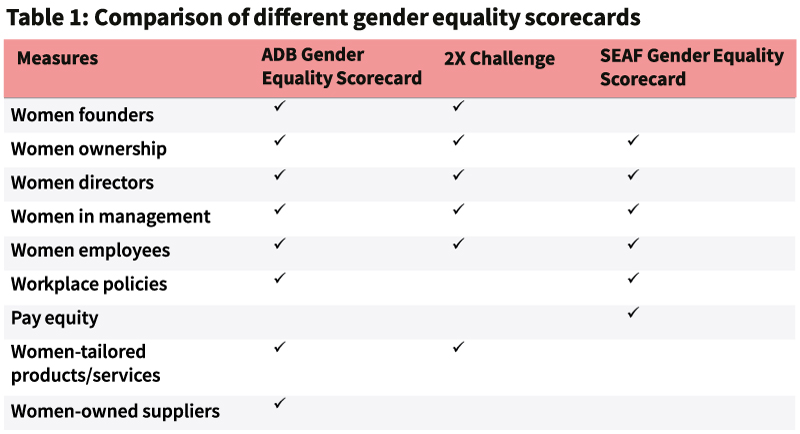
A gender equality scorecard is one such tool that can be applied pre-or post-investments to understand and assess the gender impact potential of opportunities. Most gender equality scorecards measure women’s ownership, women in leadership positions, workplace policies, procurement practices, and women-tailored products and services.

gender equality scorecards

For example, to qualify under the 2X Challenge, investments need to meet at least one of the criteria on women’s access to leadership opportunities, quality forms of employment, finance, as well as product and services that enhance inclusion or economic participation of women. Gender lens investing is increasingly becoming an important area of work for multilateral development banks to enable more companies and investors make gender-informed investment decisions. For instance, the Asian Development Bank has developed a gender equality scorecard primarily for financial intermediaries such as private equity investors, guarantee funds or wholesale banks, to evaluate their respective contributions to gender equality through their investments and operations according to seven metrics (gender balance in ownership, in governing bodies, in leadership, in the workforce, in workplace practices, in products/services and in the supply chain)and against country and sector benchmarks.  Investment firms too are increasingly incorporating gender elements into their screening or due-diligence processes, or to monitor the gender actions of their investees over time. Impact investing firms in particular are at the forefront of gender lens investing, adopting innovative tools and building market knowledge. Impact investing firms such as SEAF have launched their own scorecard to advance gender equality through their investments.

Conclusion

We presented here examples of gender equality scorecards as innovative tool to transform interest in advancing gender equality into real action. Yet, the adoption of gender lens investing strategies is not limited to the development finance space. The world of gender lens investing holds tremendous promise, not only to mitigate negative effects on women, but to generate economic returns, build greater resilience to future shocks and support a stable, inclusive global economy. Tools such as scorecards help us to get one step closer to successful adoption of gender equality approaches.

About the Authors

Neeti Katoch

Neeti Katoch, Gender and Private Sector Development Consultant, Private Sector Operations Department, Asian Development Bank.

Neeti is a consultant with Private Sector Operations of Asian Development Bank where she focuses on gender equality and inclusion efforts in the private sector investment projects and operations. Prior to joining ADB, Neeti worked on strengthening sustainability practices and gender mainstreaming in agriculture supply chains and entrepreneurship development across Africa and Asia. Neeti’s experience spans working with TechnoServe, World Bank, Citibank and PwC as a management consultant and a researcher.

Amanda Satterly

Amanda Satterly, Senior Social Development Specialist (Gender and Development) in Private Sector Operations, Asian Development Bank.

Amanda leads the efforts of ADB’s private sector operations to integrate gender into its investment projects and operations. She joined ADB in 2019 after a decade of working to increase the gender inclusiveness of private sector operations in African-based businesses, prior to which she was a management consultant and an investment banker.

Anne Valko Celestino

Anne Valko Celestino, Gender and Social Development Specialist, Private Sector Operations Department, Asian Development Bank.

Anne is responsible for integrating gender analysis and measures into investment projects and for strategic and operational initiatives to promote gender inclusive solutions in private sector financing. Prior to joining the ADB, Anne has been working with other development finance institutions, and particularly the African Development Bank. She is an experienced professional on social development in investment finance and private sector development, with experience across sectorial operations as well as stakeholder and strategy engagement. She is also qualified in project management and notably managed several institutional initiatives including a major multi-partner flagship program promoting women in business, access to finance and gender equality in economic development.

Privacy After COVID

Privacy After COVID

By James A. Lewis

The COVID pandemic highlighted privacy.  Lockdowns and restrictions on in-person meetings made digital networks an essential tool. This reliance on digital networks pointed to privacy’s most important problem –  the hodgepodge of rules that apply to commercial use of personal data.  How personal data is collected and used requires government rules, but there is disagreement over what form these rules should take. 

The COVID pandemic highlighted privacy in two ways. First, the lockdowns and restrictions on in-person meetings put in place in response to COVID made digital networks the central tool for business, education and social life and led to significant increases in their use. Each connection creates data that can be collected and analyzed. As most people know, every action on a network leaves a digital trail of data that is recorded by service providers under the terms of their contract with users. These contracts, and the rules governing this data collection (and subsequent use), are ambiguous and may impose few limits, particularly in the United States. 

Second, governments sought to use this digital dependency as a tool to warn of COVID exposure and (in some countries) monitor compliance with isolation rules. Health surveillance raises the same issues for privacy as does the commercial use of network data, on whether consent is required for collection of personal data and what rules govern the use of that collected data. To be frank, most of these COVID-related efforts had mixed success, although some improved over time. 

The immediate lesson to draw from this is countries need both better technology and better public acceptance of health surveillance if it is to work. The bigger issue is that as societies become more dependent on digital network technology, we will need stronger, clearer rules on data use, but – and this is a crucial caveat – those rules cannot be so strict as to petrify technological innovation.

A key issue for policymakers will be whether to keep any health surveillance in place after COVID subsides.  Survey data suggests people will accept intrusive surveillance during a pandemic but are reluctant to see it become permanent. Public sentiment seems to prefer that intrusive measures for enhanced digital surveillance created in response to COVID are temporary. Privacy groups have already lined up to oppose permanent change or the retention of health surveillance systems.

Neither technology nor commercial incentives will automatically protect privacy. There is no market solution for privacy. The reason for this is that the “business model” of the internet is based on exchanging “Personally Identifiable Information” (PII) for services.

Government use of health data does not, however, touch directly on privacy’s most important problem  – commercial use of personal data.  More than a century ago, Supreme Court Justice Louis Brandeis, one of the fathers of privacy policy, defined privacy ago as the right to be left alone. But in a digital environment, you are never really alone, and always subject to observation the moment you connect to a network. The development of data analytical tools (“big data”) has increased the value of collected data. The advent of artificial intelligence technologies like machine learning, which are “trained” on huge sets of data makes date even more valuable.  Access to and analysis of data collected online provides real commercial advantage. 

Neither technology nor commercial incentives will automatically protect privacy.  There is no market solution for privacy. The reason for this is that the “business model” of the internet is based on exchanging “Personally Identifiable Information” (PII) for services. The use of PII in these “trades” if informal and lacks the markets or pricing mechanisms that would bring clarity and create competition, but frankly, an individual’s data is worth only a few cents and does not justify a complex market. It becomes valuable only when the data of millions of users is aggregated.

Choices by consumers suggest that people are willing to allow companies to harvest personal data when they visit a website in exchange for “free” online services.  It’s not free, the payment is in personal data, not money. Acceptance of intrusive commercial surveillance may be because consumers have little choice, but even before COVID there was discomfort with this commercial surveillance, part of a larger debate on whether the giant tech companies that provide services (like search engines, streaming entertainment, or social media connections) to hundreds of millions of consumers should be regulated like public utilities. How personal data is collected and used when you connect on a network can only be shaped by rules that control the behavior of websites and service providers, and there is disagreement over what form these privacy rules should take. 

Opinions on this vary from country to country. Many countries have no privacy policy or if they do, it is not enforced. These countries increasingly focus on “data sovereignty” and “data localization,’ that each nation should control the personal information of its citizens and companies. In China and Russia, companies must follow privacy rules, but there are no constraints on the government. The situation in the U.S. is the opposite: government is tightly constrained while companies currently have few limitations on collection and use of data. 

The European Union (EU) has the most advanced privacy regime and regards privacy as a fundamental right, but there are reasonable concerns that European privacy rules) creates a stifling regulatory burden. The EU has taken a comprehensive regulatory approach, with requirements for consumer consent and company disclosure of how data is used.  While EU officials say they have learned the lesson that too much regulation is bad for economic growth, it is too early to tell if GDPR achieve the right balance. 

The United States has a fragmented approach to privacy regulation, with specific rules for some sectors like health or financial services, and few or no rules for other sectors, like online consumer services. Strict rules only apply to government collection and use of personal data. The imbalance between highly regulated government data collection and use and lightly regulated commercial collection use dates to the 1980s, before the internet existed, and are now inadequate for governing digital networks. 

Privacy creates extraterritoriality problems as governments try to regulate data use by companies not subject to their jurisdiction as they are headquartered in a different country. Extraterritoriality and diverse views on regulation are an obstacle to global agreement on privacy, leading to a mélange of differing national regulations. There is no global agreement on privacy (although the EU would like it General Data Protection Regulation (GDPR) to become a global standard for other countries), nor is there any process to obtain global agreement, so privacy rules vary widely from country to country.

COVID highlighted “digital dependence.  It reinforced demands for a more stable and just network environment. Privacy and data protection are parts of the larger problem of digital governance.

In a complicated situation involving extraterritorial rules, European Courts say that the privacy protections offered by American companies are inadequate for GDPR requirements.  Restricting data flows would damage transatlantic commerce and both the EU and the US are negotiating an agreement that would let US companies say that they meet GDPR privacy requirements if they meet certain conditions.  This would be the third such agreement (the last was called “Safe Harbor) and is also likely to faces a challenge in European Courts. Negotiating this agreement, Congressional interest in national legislation, and work in the EU to implement GDPR mean that they privacy picture will change again.   

COVID highlighted “digital dependence.  It reinforced demands for a more stable and just network environment. Privacy and data protection are parts of the larger problem of digital governance. Covid came at a time when heightened attention was being paid by governments to the ways that technology reshapes societies and giant tech companies had acquired immense wealth. These trends create discomfort and countries around the world are looking to reign in the tech giants, particular in their collection of data and its use.  While there are contradictions in public attitudes on data collection and use, the outlines of a new approach to privacy is emerging that balances commercial needs with rules on use.

What we have learned (hopefully) from the COVID experience is what the elements of a new approach will look like. This new approach will need to lie somewhere between the United States’ commercial minimalism and European regulation. Antitrust battles between tech giants and the EU and US will also shape privacy policy. The perception of anti-competitive behavior by tech giants in the collection and use of personal data is one of the drivers of antitrust legislation in Washington and Brussels.

The core will be requirements for mandatory transparency and consent.  Transparency applies to what is being collected and how it is being used. It cannot rely on cumbersome and confusing privacy statements that few people can understand, and which in the U.S. are usually not binding. Replacing these with legally binding rules for collection and use that allows consumers and users to “opt in” and consent to data collection as the price for accessing a service should be a goal for privacy legislation. Consent is user acceptance of the “trade” of personal data for online services. Tech companies worry that many users will reject this trade once they learn the details, and if not done right, consent requirements could impose cumbersome burdens, but this is not a reason for rejecting a consent requirement.  There may need to be different service levels offered by companies that vary by what how much data a consumer is willing to share. 

Before COVID, privacy leadership on privacy policy had moved from Washington to state legislatures and to the European Union. California, Virginia, and recently Colorado, have all passed State privacy laws derived part from the GDPR. None are substitutes for federal policy. While it is unlikely that Congress will pass a national privacy bill in the next year, the need to amend existing laws to accommodate health surveillance, the antitrust implications of a few giant companies dominating the information space, pressure form Europe, and the growing discontent over privacy will eventually force it to enact legislation.

About the Author

James A. Lewis

James A. Lewis is a Senior Vice President and Program Director at the Center for Strategic and International Studies (CSIS). Before joining CSIS, he was a diplomat and a member of the Senior Executive. Lewis was the Rapporteur for three UN Group of Government Experts on Information Security.  He served as a member of the Commerce Spectrum Management Advisory Committee, and the State Department’s Advisory Committee on International Communications and Information Policy, He has authored numerous publications since coming to CSIS, is frequently quoted in the media, and has testified numerous times before Congress. He received his Ph.D. from the University of Chicago.

Do You Need an Extended Car Warranty?

car warranty

For consumers, buying a car, whether new or used, is a big deal. They want reliability and protection. Most consumers are willing to spend more money in the name of caring for their cars. The majority of car brands offer at least a 36,000-mile, three-year factory warranty. It is even longer for some brands.

What happens when the manufacturer’s warranty expires? If you are planning to hold on to your car for a long time, you should sign up for an extended car warranty. The best car warranty covers the price of major replacements or repairs for a certain number of miles or years.

Not sure whether you should sign up for an extended car warranty? Here is all the information you need about the best extended car warranty to help you make an informed choice.

What an Extended Car Warranty Covers

An extended car warranty is a contract that covers auto repairs after the factory warranty has expired. There are different extended warranty plans, and each determines which items are covered. Also, what the policy will cover will vary with the type of warranty you choose and the provider you choose.

Note that most extended warranties do not cover routine maintenance items, such as oil changes, air filters, tires, and brake pads. These warranties do not also cover wear and tear. An extended car warranty acts as an insurance policy for your vehicle’s major parts.

Some extended warranty plans include extras such as trip interruption protection, roadside assistance, and towing services. Take time to research different extended car warranty providers to identify one that will meet your needs in terms of cost and service. It helps to read reviews about different providers, including CarShield reviews.

Pros of Buying an Extended Car Warranty

Flexible Packages to Choose From

Today, new vehicles come with new technologies you may not be aware of. The good thing about extended warranties is that they are flexible. You can now pick a policy that covers what you want. Some things are automatically covered, but you get to select add-ons you want. People with used cars that can break down easily benefit the most from extended warranties.

Helps You Save on Repairs

Nobody wants their car to break down. However, considering the present times, you can encounter situations where you face a major issue in your car. Having an extended warranty can help you save a lot of money you would have otherwise spent if your car was not under warranty. This does not just apply to used cars. There have been cases where people buy new cars that roll out of the manufacturer with defective units.

You Have Peace of Mind

According to research, many Americans do not have savings in the bank due to the current economic situation. This means that a lot of people do not have ready money in case of an emergency. If you have an extended warranty, you will have peace of mind knowing your car is covered if you need replacements or repairs.

Extended Warranty Costs

You are probably wondering why you should make payments for something you don’t need at the moment. The real challenge first-time warranty buyers face is trying to figure out how much they are willing to pay on a warranty plan. The good news is that prices vary between the individual customer, plans, and providers.

Take time to research providers and compare their prices. You also have the option to decide what you want the warranty to cover in your car. This way, you can calculate how much you want to spend every month on a policy.

What to Consider When Selecting an Extended Warranty

Providers offer different extended warranty plans at different price points. When looking for an insurer, you don’t want to jump into a quick decision. Before making your final choice, first, make a point of finding out how you will be reimbursed for replacements and repairs.

Do you have to pay out of your pocket as you wait for reimbursement, or does the provider work directly with the repair shop? You can also find out if you can transfer your warranty if you sell your car in the future. Don’t be in a hurry to settle for an extended car warranty before evaluating the offer and exploring other alternatives.

In Summary

Buying an extended car warranty is a gamble. You cannot predict when or where your car can break down or require repairs. Some things like car damage and accidents are inevitable. You will have peace of mind knowing that you are covered in case of such events.

You may never have to use your extended car warranty, but imagine how much money you can save if you have a major component failure. Most people don’t think it is worth it to invest in an extended car warranty until they need it. Think of an extended warranty as something you are paying for that you will need later on.

Why Choose a Credit Card with Cash Rewards?

credit card

People all have different needs and preferences when it comes to financial products and services, and this includes the type of credit card they use. Some people want to spread the payments on their credit card balance, so they are keen to find one that offers a low rate of interest. Others have a poor credit score and need a credit card designed for those with damaged credit. Others are looking to put all of their credit card debt together and are keen to find a balance transfer credit card. Then there are those that want to enjoy the perks of earning rewards for using their credit cards.

Those in the latter group can benefit by finding a suitable credit card with cash rewards. While there are other types of rewards cards available, a cash rewards one is something that will suit everyone – after all, we all want to cut costs and enjoy savings whenever possible. People choose a rewards credit card with cash rewards for many reasons, and this is something that you can also benefit from if you use your card regularly and pay the balance in full each month. In this article, we will look at some of the reasons to choose this type of credit card.

Some of the Reasons to Choose These Cards

There are many reasons why you may want to consider this type of credit card that offer cash rewards. Some of the main ones are:

Making Money for Using Your Card

One of the key reasons for choosing this type of credit card is that it allows you to make money simply for using your card. If you are going to be using your card anyway, you have nothing to lose and you can make a decent amount back depending on how often you use the card, how much you spend, and the types of products and services you purchase.

Easy to Accrue Cash Back

Another reason why these cards have gained such popularity over the years is because it is so easy to accrue cash back. All you need to do is use your credit card for spending on purchases both online and offline, and you can start building up your rewards. This is a very simple way to enjoy getting rewarded for your loyalty as a customer, and you do not even have to get into debt because you can use it for your regular and necessary purchases and then repay the balance using the cash you would normally have used to pay for them.

Convenience and Simplicity

Convenience and simplicity are additional reasons why people love these credit cards. You can enjoy the convenience and ease of having a credit card, which means no need to carry cash around, and you can make payments offline and online. At the same time, you can enjoy reaping the rewards with the cashback you receive.

These are some of the reasons to consider a cash rewards credit card.

Should I Get a Home Warranty For My New Home?

Home warranty

Buying a new home is one of the biggest financial investments. It can be exciting and nerve-racking at the same time. After spending time, money, and hard work to build or buy your dream home, the last thing you want to do is pay more money for repairs and replacements. There’s a possibility that certain devices in your home (especially if it was pre-owned) will break down or not work properly. So, you can purchase home warranty for your new home, to save money on such things. 

A home warranty is a service contract that covers the repair and replacements of major household systems and appliances that break down due to normal wear and tear. It lets you save money on unexpected repair expenses. 

There are two types of home warranties for new homeowners: the home warranty and the builder’s warranty. If you are purchasing a newly built property, you may get a builder’s warranty with it. However, you can also purchase a home warranty, if you are bringing in old systems and appliances that are not under manufacturer’s warranty. If you are moving to a pre-owned home, a home warranty is a good idea for you.

We have listed what both of these home warranties cover, how and when you can use them, the costs, and reasons why getting them may be a good idea to protect your new home. Keep reading to learn more.

Builder’s Warranty (New Home Warranty) Home Warranty
What is it? It is a warranty plan provided by the builder for newly constructed homes. It is a service contract for inexpensive repairs and replacements.
Coverage It offers limited coverage on workmanship, and items such as concrete floors, electrical or plumbing work, windows, HVAC. It covers repairs and replacements of critical home systems and appliances, such as HVAC, refrigerator, water heater, plumbing, and electrical systems, etc.
Length Most builder warranties cover workmanship for a year or two, but for major structural elements, it can last as long as 10 years. It typically lasts for a year but can be renewed every year.
Claims If any of the covered items break down, you can file a claim using the instructions provided in your contract. There is a waiting period of usually 30 days. Once it ends, you can start filing the claims using the instructions mentioned in your service contract.
Cost The builder will be responsible for the premiums of the warranty. The average cost of a home warranty can range anywhere between $300-$600 annually, along with standard deductibles of $60-$125 per visit. It is paid by the homeowner.


Reasons to Ask for a New Home Warranty

The issues in new homes are more common than you would think. Even after a home inspection, there is a chance that something might go wrong. Sometimes a builder may use defective materials that weaken the structural integrity of the house. Here are some of the other reasons a new home warranty may come in handy, and why you should ask your builder for one or buy a home warranty:. 

1. Hidden defects

Even if you get a thorough home inspection, there could be some defects. Such issues are not always readily detectable, and you may notice them after living in the house for a while. So, there are some special plans for new home buyers which you can consider getting. It covers failures due to pre-existing conditions or due to improper installations, modifications, or repairs.  

2. Quality is not guaranteed

The newly constructed homes may pass the final inspection checks, but the quality is not always guaranteed. The house may contain problems like:

  • Plumbing or electrical issues
  • Ductwork
  • Clogs or stoppages
  • Cracked Fixtures

A home warranty can provide protection against these issues and many other unforeseeable such as systems or appliance breakdown due to normal wear and tear, roof leaks, faucet leaks, etc.

3. The duration and coverage of a new home warranty or builder’s warranty is as follows:

  • 1-year warranty – It covers workmanship and materials.
  • 2-year warranty – It usually covers electrical, plumbing systems, and HVAC.
  • 10-year warranty – It is for structural elements.

It is a great offer, but it does not cover some items of your home such as refrigerator, garage door openers, kitchen, bathroom appliances, and key parts of A/C. If you bought a pre-owned home, these items are likely out of the builder’s warranty or OEM warranty. In such cases, you can consider adding extra protection to your new home by investing in a home warranty policy too.

Most homeowners make the mistake of falling for warranties that are unable to offer an extensive coverage. In this regard, they skip over some essentials. For example, the warranty should be able to cover the hvac control module along with other parts. HVAC parts are expensive and can drain you financially if you are not careful in getting the right warranty.

There are plenty of home warranty companies serving comprehensive plans to their customers. Like California home warranties, a perfect solution to help offset the expenses involved with the high cost of living in California. However, to know the specifics, you should go through the terms and conditions of your warranty contract thoroughly. Then, you can make a beneficial purchase and save your hard-earned money in the long run.  

Building A Successful Business: 5 Tips For Entrepreneurs

Entrepreneur

Starting and running a business is a task that requires entrepreneurs to be on the edge of their seats. You have to keep an eye on different internal and external factors to run your business smoothly. From marketing to hiring the right resources, you have to ensure everything is done right. If you are happy with a life-sucking 9 to 5 job, then you should skip this post and do something else. But if you are a daydreamer who wants to establish a successful business, then you’ve come to the right place.

Entrepreneurship is a constant learning process. Nobody will teach you anything other than your failures. Every setback is an opportunity to learn something valuable. For Sydney entrepreneur Kath Purkis, the path to success meant understanding the market and identifying where gaps existed in the e-commerce B2C and B2B spaces. Each journey will be different, and, in many cases, the path to successful entrepreneurship is not linear. So, you have to be gutsy to take risks without the fear of failure to accomplish your business goals. You cannot expect the same results with the strategies that may work for others. Hence, you often have to change your working methods to achieve your desired results. That said, listed below are a few tips that’ll inspire you to succeed as an entrepreneur and build the business of your dreams.

Consult a business mentor

Getting help from a business mentor helps you make sound business decisions. It enables you to identify opportunities that can scale your growth. Mentors provide you valuable insights into how you can improve your business by making necessary changes to it. Mentors add value to your business by providing you real-life examples that motivate you to keep moving forward in the right direction. Getting to know the lives of successful entrepreneurs like Kuba Jewgieniew helps to nurture your business mindset. Their entrepreneurial experience helps you differentiate between good and bad business decisions. It’s also important to read about other successful entrepreneurs, such as this Bryan Legend Forbes article, as it helps you gauge what is going to be needed to get to that next level. 

Mentorship also helps you learn about new ideas and strategies to strengthen your business position in the marketplace. However, it is crucial to find the right mentor who can provide you proper guidance to help you fulfill your business vision. Hence, look for one who has experience in your niche.

Identify your customers’ issues

If you want to make your business successful, then keep in mind that consumers will not buy from you because you are perfect. They opt for brands and companies that can add real value to their lives by addressing their issues. For example, if you sell car care products and customers need bike for triathlon maintenance products, you’re of no value to them unless you provide them with what they need.

Successful business ideas are born by identifying the needs of customers. You have to dig deep down and find out what issues your target audience is facing. For example, suppose you are running a business of cosmetic products. In that case, you need to identify the type of skincare products your customers prefer. By identifying their needs, you will be able to modify your products accordingly. It will also help your strategic marketing consultant to shape the marketing strategies effectively.

Here’s another example. If you offer web design and development services, your primary concern should be your customer’s issues. If they face cyber threats, you should be able to provide them a secure and hacking-proof website. You need to have quality resources to create such a website. But the most crucial part is spotting the problem. If you can identify the problem correctly, you will craft a suitable solution for it.

Pay attention to customer service

According to a statistical study, around 51% of customers do not avail of a company’s services because of poor service experience. The first impression is usually the last. Just as it is essential to understand your customers’ needs, you must also treat them in the best possible manner to create a good reputation in the first interaction. Good customer service helps you build a loyal customer base.

Analyze your current CRM strategy to make the right changes that can contribute positively to your business growth. Conduct market research to identify the latest customer service practices. It will help you enhance your services by investing in staff training, reforming return policy, and making basic improvements.

Create a robust online presence

You must have an online presence in today’s digital landscape to gain an advantage over your competitors. Without an online presence, you are missing the opportunity to market your products and services to many potential customers. According to a study, there are over 4.66 billion active online users on different platforms worldwide. To reach out to them, you need to leverage numerous digital marketing methods, including social media and SEO. But first, you need to build your online presence to market your business effectively.

Invest in a professional, user-friendly website that complements your niche. It should reflect your brand values to make an impact on your target audience. A website should explain to users who you are and what you offer them in terms of value. From logo to business name, contact information to Google maps link; it should contain every piece of information related to your business. Once you have a website, you can enhance your presence on social media networks such as Twitter and Facebook and work on increasing your visibility on the SERPs

Minimize your business costs

When forming an LLC, it is always useful to get help from an LLC formation service. To keep your business on track, you must cut down your business costs. Your company has different costs such as office rent, marketing expenditures, utility bills, payroll, etc. You have to maintain a proper check and balance of your expenses to keep everything within your budget.

You can keep track of your expenses through the different mobile applications and cloud-based software that enable you to add expense information into your accounting system. Conducting an annual review of your expenses also helps you figure out your financial condition. By having a clear idea of your expenses, you can make the right financial decisions to fuel your business’s success. It will also help you cut down unnecessary business costs and use that money somewhere more helpful.

Conclusion

Running a successful business is a daunting task. You have to go through different challenges to secure your desired spot in the market. This article highlights a few tips that can help entrepreneurs start and run a successful venture. These include seeking mentorship, identifying customer needs correctly, providing excellent customer service, building a compelling digital presence, and managing business costs. Adhering to these tips can significantly increase your chances of keeping your business ship afloat.

EDITOR'S PICK OF THE WEEK

CFO's new mandate. CFO explaining the presentation

The Performance and Transformation Orchestrator: The CFO’s New Mandate in the Age of AI

By Terence Tse CFOs are evolving into AI-driven transformation orchestrators, balancing finance, technology, and strategy while upskilling teams, managing risks, and driving measurable business value. A key insight from this year’s AI for CFOs event, organized...

WISE DECISION MAKER GUIDE

POWER INFLUENCERS

Emerging Trends

The Future of Global Trade