Home Blog Page 822

Financial Security: Top Ways to Master Your Personal Finances

Personal Finances

One thing that’s on everybody’s mind these days is money. Well, it’s not healthy to always think about money, but it’s something you cannot ignore either. 

If you wish to make something out of your personal finances or in case you believe your personal finances are all jumbled up, you’ve come to the right place. My article is going to help you get where you want to be. 

Although the topic of personal finance can get somewhat overwhelming, I’ll try to make it a little simpler. Now let’s break down the personal finance management ways, have a look: 

Set Your Goals 

First and foremost, you need to start with digging deep into your needs as well as wants. Once you have the list, slowly commit to working towards them and don’t forget to prepare a budget when doing it. 

But before you do, you need to ask yourself a few questions: 

  • What to do to make my life better? 
  • What do I want for my personal, family, and work life? 
  • What kind of experiences do I need to have in life? 
  • What things do I need to purchase? 
  • And lastly, how much money do I need to have for a decent living? 

Once you have the answers to all these questions, it will become easier for you to prepare your budget and set goals for your future. Be sure to keep it flexible though so that you can make changes to it whenever required.

Debt Management 

Yes, it’s true that preparing a budget and setting financial goals can help you manage your money. However, you also need to manage your debt in order to master your personal finances. 

Hence, you need to get an excellent debt management plan to get all your previous debts under control. A debt management plan includes various effective strategies to lower your current debt and gradually move towards entirely alleviating it. 

The best part being, you can also make your own customized debt management plan. Once you’re done making it, make sure to consult a credit counselor for it. A credit counselor will help you implement your debt plan correctly.

Access Your Situation Afterward 

Now that you’re done paying your debt back, it’s time for a little evaluation. Before moving ahead, you need to know your situation, where you stand. It simply starts with analyzing what you have along with your needs and wants. 

First, look at the cash flow along with the money that’s coming in and going out. You must know how much you exactly earn and your monthly spendings. 

After you’re done with all these calculations, the money you’ll be left with will be your asset. Since you’ll be done with paying your debts, all that’s left will be yours.

Cut Your Monthly Expenses 

You can ask any financial advisor and he’ll tell you to cut down on your expenses and save some money for the rainy days. Ideally, you should have a backup for at least 3-6 months. 

What will happen if you lose a job? What if there’s a natural calamity? Having a financial backup is critical, so you must start adding a little to your savings account on a weekly basis. 

You can do that by cutting your expenses and saving those extra bucks. It’s pretty simple. Skip those evening lattes and save $5 daily. $300 a month is a big amount, guys.

It’s simple. Isn’t it? With a little planning and a few smart strategies, you can securely move towards achieving your financial goals and pipe dreams. I wish you good luck, my pals! 

What is Bitcoin Mining and How Does It Work?

Cryptocurrency Mining

Bitcoin is one of the most profitable investment opportunities, often compared to Apple stocks in the 1980s or discovering oil deposits in your backyard in the last century. 

The most common method of obtaining Bitcoin today is exchanging fiat currencies for it. However, it’s not the only way. Bitcoins can also be mined. Of course, the process doesn’t require picks, shovels, or sweating underground in a mining shaft. To understand it, we need to go over a few basic principles of the underlying technology. 

A Modern and Transparent Payment Method

While Bitcoin certainly has a value that can be determined in dollars or other fiat currencies, it still mostly lacks recognition as a legal tender. It can be used to pay for goods and services, but you’ll need to look expressly for vendors who accept it. However, that number is growing every day as more people adopt Bitcoin as a modern payment method.

Bitcoin’s code is open-source, which means anyone can review it. That sort of transparency means there’s no hidden malicious code that would disrupt the trust in the cryptocurrency. Knowledgeable developer audiences can look at Bitcoin’s GitHub repository and see how the project is progressing under the hood.

Bitcoin Mining and Blockchain

Bitcoin’s official website describes Bitcoin as peer-to-peer open-source money. A P2P network is a structure without a central authority. In the case of Bitcoin, the network consists of nodes (basically, computers connected to the internet) that keep the network operational by storing the Bitcoin blockchain, verifying new transactions, and adding them to the blockchain. 

But what is blockchain? It’s a type of database where information is stored in blocks, representing a shift from traditional SQL databases, where data is sorted in tables. Each block contains a reference that links it to the previous block and a relevant value the next block will use to position itself in the blockchain. This powerful technology is finding new use cases beyond cryptocurrencies every day, but in the context of Bitcoin, blockchain serves as a public ledger of all transactions made using the cryptocurrency. 

Bitcoin miners perform the necessary task of serving as a neutral authority that keeps the system honest and operational. But how is this accomplished? 

First of all, the miner has to verify new transactions in the block. This is the most straightforward part of the mining process. The second part is essentially a guessing game, where the miner’s computer needs to guess the correct numeric value of that new block. This value is represented in a 64-digit hexadecimal number, and guessing it requires a lot of computing power and special mining hardware.

Bitcoin Mining Hardware

When Satoshi Nakamoto conceptualized and launched Bitcoin, he envisaged a way of gradually increasing the difficulty of solving new blocks as more people joined the network. In Bitcoin’s early years, the hardware used for mining wasn’t more powerful than office laptops or average home PCs. 

Nowadays, the hardware used in 2009 and 2010 wouldn’t be enough for mining Bitcoin. That’s why ASIC (Application-Specific Integrated Circuit) miners have been developed. These are specifically engineered computers with chips solely designed for hashing – solving functions that result in 64-digit hexadecimal hash values. 

These computers are power-hungry and need anywhere between 2,000 W and 3,000 W to operate. Bitcoin mining profitability therefore heavily depends on the price of electricity, or on the possibility of using renewable energy sources, for example, solar panels. 

ASIC miners are also quite expensive, going for thousands of dollars, and other than for mining Bitcoin, they’re not usable for anything else. 

Bitcoin Mining Rewards

What makes this costly process profitable are the mining rewards. When a miner discovers a solution for the block, they receive a block reward of 6.25 BTC. In 2024, the reward is set to drop to 3.125 BTC. This is known as Bitcoin halving, and it started at the same time the Bitcoin project was launched. For example, the block reward in 2009 was 50 BTC per block. Considering that and the fact Bitcoin was minable with an average computer, we can conclude that the mining process has since changed drastically. 

Nowadays, it’s almost impossible for a single miner to find the block solution on their own. Because of that, miners join up in mining pools and look for a block solution together. When a mining pool, like PEGA pool, finds a block solution, each miner receives a reward proportional to their computing power, often called “hash rate.”  Bitcoin mining can still be profitable, provided that you have access to cheap electricity. 

The Future of Bitcoin Mining

In the next 10 years, almost 97% of BTC’s total supply will be mined. With Bitcoin block rewards dropping, the remaining 3% of Bitcoin is expected to be mined in 2140. With Bitcoin’s price increasing and nearly reaching its total cap, mining will likely still be profitable. 

After the last Bitcoin is mined, the network will most likely operate on transaction fees. However, it’s still early to speculate, especially considering that nobody could predict the meteoric rise of Bitcoin in a much shorter period.

How Did Technological Advances Help Online Poker Grow?

Online poker

Every year the online gambling industry is expanding and becoming more and more popular. The leap forward in the gaming industry is driven by the continuous development of technology. Online games, in particular poker, have become so popular that the industry’s revenue has grown by 30% over the past year. It should be noted that the first full-fledged online poker appeared back in 1998. It was a small game with a limited number of tables. Much time has passed since then, and now on the Internet, you can find poker for every taste and skill level.

How Online Poker Evolved

Soon after the advent of Planet Poker, the first online poker game, the site had many competitors offering new game options, improved graphics, multiplayer tournaments, and other benefits. The players started comparing different sites and went to where it was more profitable.

Online poker has faced many challenges along the way. Server crashes happened quite often, which created a hassle for programmers and web engineers. There were also glitches during betting and the withdrawal of prize money. At that time, the technology was not yet advanced enough to guarantee a fair gaming experience.

It wasn’t until 2003 that the online poker industry took off. The breakthrough was made possible due to several reasons:

  • More and more people could afford to buy a computer.
  • The Internet has become more accessible.
  • Narrow-profile specialists began to enter the industry.

However, the main reason for the popularity of the game was the World Series of Poker tournament held in 2003. The winner of that tournament received a prize pool of $ 2,5 mln. People were so impressed by the story of Chris Moneymaker that there were many more poker players. The 2003 match was remembered for the fact that the first spectators could watch the game using special cameras. Poker fans compared the player’s decisions and the cards he dealt.

What Else Influenced the Development of Online Poker?

The film industry has played an important role in the popularization of gambling. There are many legendary films about poker, casino, and gambling. The development of poker has become possible thanks to the availability of the Internet. If earlier not everyone had access, now almost all computers and telephones are connected to the network.

Freely available useful information has also become the reason for the popularity of online poker.  信頼できるカジノの説明は、日本のギャンブラー兼ライターの Gorou Matsuda によるレビューで読むことができますhttps://ecasinos.jp/. You can also read a lot of interesting information about gambling here.

Despite its popularity, the credibility of online casino sites was severely eroded in 2010. This happened because some casinos paid players to attract new customers. As a result, some of the sites simply did not pay out the winning money. For example, in the United States, the largest online poker sites were shut down in 2011, causing the industry to stop temporarily across the country.

The Benefits of Online Poker

Technological advances are striking in the speed of development and are constantly being improved. Phones and computers are becoming more powerful, and the Internet is faster, more accessible, and more reliable. Now, players can enter an online casino from a smartphone, and without leaving home, have a good time and earn money. You can play not only at home but also while traveling or on the way to work.

Another advantage of online poker is the ability to quickly withdraw funds directly to a bank card. The player does not have to worry about the security of his data, because the online casino takes care of their protection.

Many casinos also offer experienced players to participate in tournaments with large prize pools. Anyone can also play with your friends or people from other countries.

It is worth noting that poker in virtual reality has recently appeared. This is a great option for those who want to feel the maximum realism, but do not have the opportunity to visit the casino.

The benefits of online poker include variety. Here are the most popular versions of the game:

  • Video poker.
  • Casino Hold’em.
  • Pai Gow Poker.
  • Texas Hold’em.
  • Pot-Limit Omaha.
  • Online Poker Tournaments.

Thanks to the development of technology, the demand for online poker grows every day. People realized that you can have fun and earn money, no matter where you are.

US Expat Taxes 2021: 6 Vital Things You Should Know

When you’re an expat, there are some new tax considerations that come into play. For example, the IRS gives those who live abroad some special considerations when it comes to their taxes. It is important, however, to keep in mind that the IRS has made changes and there are now two different brackets for US expats: one for single and one for married people filing jointly with a spouse who lives abroad. Here, we will explore six vital things you should know about US expats taxes before you file next year! 

1. You can still receive many of the same tax benefits as citizens back home

The most obvious benefit is being able to have your worldwide income taxed by just one country, instead of having to pay both countries’ taxes on the same income. If you want additional and more detailed information about this, a simple google search with the phrase “US citizens living abroad taxes” will provide you with everything you need! There are huge benefits that you do not want to miss out on! The IRS gives those who live abroad some special considerations when it comes to their taxes.

2. You still have to file expat taxes or face stiff penalties

It’s common for new US expats, especially those working overseas, to think they don’t have to file their US taxes. However, if you meet the minimum filing requirements for your expat tax status, then just like every other American citizen, you are obligated to file a federal tax return each year through the IRS in order to avoid stiff penalties. No matter where in the world you live and work, as an American citizen it is your responsibility to file your taxes each year.

3. The filing deadline may be earlier

When you’re an expat, there are some new tax considerations that come into play, and one of the biggest is that the filing deadline may be earlier than you think. If you live abroad for at least 330 days out of 365 within a twelve-month period, or you are married filing jointly with a spouse who lives abroad, then your expat taxes are filed according to the same deadline as US citizens back home. This means that if you file an extension for your taxes in the US, then there is no need to do so for taxes filed from outside of the country unless you are leaving them for your tax preparer to complete.

4. You may be able to deduct certain moving expenses

When you’re an expat, there are some new tax considerations that come into play, and one of the biggest is that your moving expenses may now be deductible on your US expat taxes! The main conditions are that the move must be job-related, that your new home must be in a foreign country, and the new job must pay you at least $72,000 annually.

5. You can exclude up to $100,000 of gains on your home sale

When you’re an expat, there are some new tax considerations that come into play, including special rules for selling your primary home. In most cases, as a US citizen living abroad, you can exclude up to $250,000 from your income for selling your primary residence if it has been lived in for at least two of the past five years. If married filing jointly with a spouse who lives abroad, that amount increases to $500,000.

6. You can exclude up to $250,000 of income from a foreign pension with US tax withholding

Withholding taxes for pensions is not mandatory in most cases. However, a few exceptions include if you reside outside of the country where your retirement funds were earned, and you claim benefits from a US-based company or government agency. In these cases, it’s possible to receive credit for the US taxes that were withheld on your retirement fund by completing form 8891.

Tax

Now you know six vital things about US expat’s taxes! Keep these tips in mind to help navigate this year’s tax season efficiently and accurately. And remember, even though filing an expat tax return is complicated, it’s always better to make sure you don’t pay more than what you owe, rather than risk owing additional taxes due to poor planning!

4 Ways to Protect Your Finances if Your Car Breaks Down

Protect Your Finances if Your Car Breaks Down

Having your car suddenly break down can be an incredibly tough and stressful experience. Many of us rely on our vehicles every day, so repairing your car can often be an urgent need. More than anything, though, the costs attached to fixing broken down vehicles can be prohibitively expensive, and buying a new one is even more so. It’s therefore important that you are prepared for this possible event, so you’re not blindsided by the repair costs. Here are a few tips to help you with this.

Invest in Breakdown Cover

Since you never know if or when your car will break down, insurance to cover this possibility is a valuable way to prepare for it. Breakdown cover is widely available, and costs a fraction of paying up-front to recover or repair your car. As such, while additional monthly costs can be hard to stomach, breakdown cover can prevent a sudden breakdown from seriously damaging your finances. At the very least, paying for insurance to guarantee pick up and recovery of your vehicle will ensure you are not stranded when it happens.

Factor Repairs into Your Budget

Buying a car is a sizeable one-time purchase for most of us, but this is far from the only cost associated with running one. Between automotive insurance, road tax, and petrol, any car owner can tell you that they come with a hefty monthly bill attached. It’s consequently good common sense to spend some time drawing up a budget for your vehicle expenses, and to include an additional allowance for any potential one-time repair costs. This will help you avoid being put in a precarious position financially by any sudden issues with your car. This is even good practice with breakdown cover, since insurance providers can never be guaranteed to pay out in all instances.

Purchase an Extended Warranty

New cars, as well as most used cars from accredited dealers, come with a warranty attached, in case of breakdowns. This is normally either 6 or 12 months. However, dealer warranties don’t necessarily cover all issues, and used cars may be renovated to just work for the warranty period, and not much longer. Purchasing a third-party warranty with longer and more comprehensive coverage can thus be a great way to achieve some peace of mind in this respect. This is especially true when your car’s issues are beyond repair, as a comprehensive warranty can ensure you a working replacement, potentially at no additional cost. Warranties can vary widely in the extent, cost, and length of their coverage, so you can purchase the best car warranty for you, whatever your needs and budget.

Contact Your Manufacturer

Finally, if you do find yourself on the hook for a substantial repair bill, a call to the manufacturer of your vehicle could save you a lot of money. Wide-scale issues with specific car makes can force manufacturers to offer complementary repairs, or even total refunds, in some cases. It’s therefore worthwhile to do a little research if this occurs, to see if you can take advantage of this. For smaller repairs, manufacturers sometimes also offer “goodwill” warranties, if you contact them directly.

Planning an Early Retirement? Here’s How to Prepare

Early Retirement

Retirement is a goal for many, but it’s important to plan carefully before you can enjoy the benefits. You want to be sure that you’ve saved enough money for your retirement, that you have the necessary paperwork in order, and that you’re free from any debt so you can enjoy your time off stress-free. 

Here are some things every retiree needs to do before they walk away from their career for good!

Decide If Early Retirement Is Right For You

The early retirement lifestyle is often romanticized in movies and books, but it’s important for you to be sure that taking this step is right for you before you take the plunge. If you aren’t someone who enjoys spending time alone or hates heat and the sun, this may not be the lifestyle for you. It’s also worth noting that many people find themselves bored after their retirement since they no longer have a goal to work towards every day. But if you need some rest, enjoy spending time alone, and you’re ready for traveling, then you’re ready to retire. It’s time for you to start planning your early retirement.

Make Sure Your Finances Are In Order

First of all, before retiring, be sure that you have saved enough money and have established a budget so that you won’t run out of funds before your planned retirement date. If you’re wondering how much you should have for retirement at 40, for example, there are many retirement calculators available to help you make an educated guess. You can also follow the 50/30/20 rule to help get a grasp on how much of your income should go towards fixed costs, “wants” and savings.

Get Rid of Debt

If you have debt, pay it off before retiring so that you won’t have any outstanding bills hanging over your head. If you have credit card debt or student loans, learn how to get rid of those before retiring so that they don’t pile up and cause you stress. Debts should be gone before you retire, so make sure to clean your balance sheet before walking away for good.

Get Rid of Debt

Review Your Medical Coverage

Before retiring, make sure you review your medical coverage. Retirement means that you won’t have to worry about keeping your job for the benefits, but it also means that you’ll need to pay for health care out of pocket. Budgeting for this is important so that you aren’t caught by surprise when there’s a doctor’s visit or an expensive procedure in your future. Research the health care options in your area and see what’s available, then figure out how much extra you will need to pay to maintain good coverage when retired.

Handle Your Documentation

In order to retire, you’ll need a lot of documentation that proves that you can afford to retire early or that qualifies you for certain benefits. If you’re not sure how much paperwork is involved with retiring, start getting organized now so that you don’t fall behind when it comes time to leave your career. Make copies of all the relevant paperwork, store them in different folders, and then assemble them all into an organized binder that you can bring with you to your retirement. The documents that you’ll need include birth certificates, marriage certificates, bank statements, and proof of employment.

Figure Out Your Plans After Retirement

It’s important to start preparing for your life after retirement so that you can get a head start on actually enjoying it. Figure out what your plans are now so that you don’t waste time once you retire. Do you want to travel? Move away? Stay in your area but start a new hobby? Think about all the things that you want to do with your life and budget for them while still working so you can make sure they happen. You can also look into alternative ways of making money after retirement, like taking on an extra job or freelancing, so that you don’t get bored. 

Here are some ideas on how to spend your time after you retire. 

  • Traveling

One of the best things about retiring early is that you can travel all around the world. Synchronize your retirement with a vacation so that you can visit Hawaii, Africa, or Australia without putting in too many hours at work before leaving. 

  • Volunteering

If you want to stay active after retiring, look into volunteering. You can choose to work with animals at a shelter or help out at a local community center – your options are endless. Volunteering is a great way for retirees to keep busy after retiring and connect with the community.

  • Starting a Business

Early retirees are uniquely qualified to start their own businesses since they have the time and experience, but they are not too old to do it. Start brainstorming ideas for a business that you can start up once you retire and then work on putting together a plan of action. 

  • Continuing Education

Retirement is a great time to go back to school and get additional education or complete a certification program. Continue learning after retirement so that your brain stays active.

  • Hobbies

Retirement can also be a great time to start new hobbies. Do photography, learn how to play the guitar, or get into pottery. Get creative and find something that you can spend your free time on that will keep you sane and happy!

Whether your plans are to start a new business, travel the world, volunteer, or just stay at home resting, retirement is a big deal. It takes a lot of planning and preparation to make this dream come true, so it’s important that you’re adequately prepared for the transition before leaving your career behind. Consider things like previous debts, health care coverage, extra income, and documentation so that you can stay ahead of the game. Figure out what your plans are for retirement and research all of the possibilities now so that you can actually enjoy it when the time comes! We hope that this article has provided you with some helpful information on how to prepare for early retirement.

The Bilateral Swap Agreements, Chinese Currency and the Demise of the US Dollar

US Dollar

By Dr. Kalim Siddiqui

I. Introduction

I examine here the role of China’s bilateral swap agreements (BSAs) and the internationalization of its currency Renminbi (RMB). A bilateral swap agreement, or cross-currency swap agreement, gives a recipient party the right to exchange their currencies at a fixed interest rate. A currency swap involves the exchange of interest and principal from one currency into another currency. We also discuss the US Dollar, which is at present the largest currency used for international trade, as a reserve currency, and in the international debt payments.

During World War II, the United States exported arms and consumer goods to the Allies and were paid in gold; thus the US was able to accumulate the world’s largest reserves of gold. After the war, countries linked their currencies to the US Dollar, which was linked to gold. The US became the lender for many countries that were willing to buy Dollar-denominated US bonds. Since World War II, the Dollar has been the world’s most important currency (Siddiqui, 2020a). It is the most commonly held reserve currency and also the most widely used currency for international trade and other transactions around the world. The centrality of the Dollar to the global economy confers some benefits to the US, including borrowing money abroad more easily and at lower costs. Although, the gold standard ended in 1971, the Dollar’s reserve status remained, and the US still has the privilege to fund massive public and private borrowing. (Hudson, 2003)

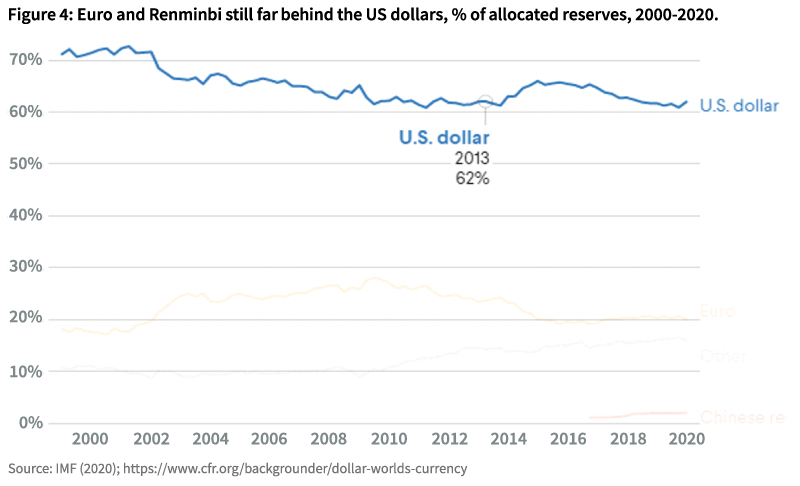
In 2020, during the Covid-19 crisis, the US external debts rose sharply; such high levels of debt might be difficult to sustain and the change could be significant in coming years. However, global demands for US Dollars remained high and at present, more than 61% of all foreign bank reserves are denominated in US Dollars, and nearly 40% of the world’s debt is in Dollars.

The US dollar continues to have largest share in international markets, but it is fragile than couple of years ago. In fact, the huge demands of the US dollar provide the US (United States) greater access to global economy. There is growing concern in the European Union too about growing US deficit in recent years. It is said that due to various reasons China may stop pegging the RMB to a basket of currencies and move towards inflation-targeting regime under more market based fluctuating exchange rate regime, especially against US dollar. If China undertakes such policy then it is expected other Asian countries will follow. It is hoped that the US dollar, which at present cater for two-third of world’s GDP, and in near future it will be halved. As Rogoff, argues (2021): “Chinese policy makers face many obstacles in trying to break away from the current Renminbi peg. But, in characteristics style, they have slowly been laying the groundwork on many fronts. China has been gradually allowing foreign institutional investors to buy Renminbi bonds, and in 2016, the International Monetary Fund added the Renminbi to basket of major currencies that determines the value of Special Drawing Rights (the IMF global reserve asset).” He further notes, “In principle, dollar transactions could be cleared anywhere in the world, but United States (US) banks and clearing houses have a significant natural advantage, because they can be implicitly (or explicitly) backed by Fed, which has unlimited capacity to issue currency in a crisis. In comparison, any dollar clearing house outside the US will always be more subject to crises of confidence – a problem with which even the eurozone has struggled.”

In 2016, the International Monetary Fund added the Renminbi to basket of major currencies that determines the value of Special Drawing Rights (the IMF global reserve asset).”

In fact, the US Dollar remains the world’s pre-eminent currency, and is widely used in international trade. Basic commodities such as oil and copper, which are produced worldwide, are generally priced in Dollars, despite that fact that, in 2016, Ben Bernanke, then chairman of the US Federal Reserve, said the nation’s declining share of a growing global economy and the rise of the Euro and Yen meant nations other than the US could also borrow at low rates (Newsweek, 2021).

Since the 1990s, the US economy has witnessed a change in its economic structure, where the manufacturing sector experienced decline, while the financial sector rose sharply. This also coincided with increased financialization of the economy and rising trade deficit. Globalisation has led to the closure of industries and falls in employment in manufacturing, whilst speculative and rentiers activities rose. The US current account deficit stems in part from growth of the financial sector and from its creation of complex and unstable financial derivatives built on risky forms of private debt. Furthermore, this “financial innovation” has itself been a response to the low growth and low profitability of the domestic productive economy (Norfield, 2012). Professor Karolyi, from Cornell University, argues: “During this period of economic uncertainty and human loss during the global pandemic, the US dollar’s role as the reserve currency of the world has been reaffirmed, …There remains robust demand for US Treasury securities at every auction, and approximately 40% of the world’s debt is denominated in US dollars,…It is hard to see this reserve status being unseated as long as the size and core engine of the US economy remains strong and the dominance of US financial markets in the global system continues.” (Newsweek, 2021)

The classical economists in the 19th century, namely Adam Smith, John Stuart Mill, Karl Marx and later on Alfred Marshall showed concerned about unearned income such as ’economic rent’ and suggested how to minimize it. At that time, the main form of economic rent’ they were suggesting to minimize was land rent’. The idea was to remove the landlord class, which was seen as unproductive parasitic class. At present, the rentiers are financial sector. In the advanced economies there is not a landlord class anymore, because two-thirds of Americans own (on the mortgage) their own home. The very high share of financial sector in advanced economies indicate a new concentration of wealth, engaging in a new kind of economic war, not only against labour but against government as well. This is done by getting governments into debt and then forcing them sell off the public infrastructure.

II. The Rise of the US Dollar

The Federal Reserve Bank was created by the Federal Reserve Act of 1913, in response to the instability of a currency system based on banknotes issued by individual banks. At that time, the US economy overtook Britain’s economy as the world’s largest economy. However, Britain was still the center of global business, with the majority of transactions conducted in British pounds. Also, at that time, most of the countries pegged their currencies to gold in order to create stability in currency exchanges.
dollar

However, when World War I broke out in 1914, many countries abandoned the Gold Standard’ so that they could pay their military expenses with paper money, which devalued their currencies. Three years into the war, Britain, which had steadfastly held to the gold standard to maintain its position as the world’s leading currency, found itself having to borrow money for the first time. In 1919, Britain was finally forced to abandon the gold standard, which decimated the bank accounts of international merchants who traded in pounds. By then, the US Dollar had taken over the British pound as the world’s leading reserve. (Siddiqui, 2020a)

Throughout history there has been debt cancellation. There was no carryover of war debts after the war ended. In every previous war, for instance, the Napoleonic Wars and the earlier wars Britain had been involved with; the allies forgave all of their mutual debts at the end of the war. However, this was not the case after the end of World War I, and the US insisted that Germany should pay the war debts. However, J.M. Keynes argued that there was no way that debtor countries like the Allies or Germany could pay their debts to the creditor unless the creditor was willing to buy their exports, to provide them with the foreign exchange to pay.

Keynes criticised the US proposal and said Germany could not repay the war debts, but the US rejected it. Hence, Germany was forced to repay war repatriation and had to borrow money to repay the debts. The result was that the policy bankrupted Germany as it was forced to borrow from the US; the US kept Dollar interest rates low to lend more and as a result, the stock market prices rose sharply, which soon crashed. Keynes pointed out the difficulties between taxing the economy to raise a domestic fiscal surplus in German Marks and the transfer problem of paying in foreign currency. The result was bankrupting Germany, causing hyperinflation that was only solved by Germany essentially borrowing the money from the US. German municipalities borrowed the money in Dollars for local spending, and then turned over the Dollars to the Reichsbank to pay the Bank of England and the Bank of France.

At the end of World War II, in 1944, allied countries met in Bretton Wood, New Hampshire in the US, where it was decided that the world’s currencies could not be linked to gold, but they could be linked to the US Dollar, which was linked to gold. The arrangement, which came to be known as the Bretton Woods Agreement, established that the central banks would maintain fixed exchange rates between their currencies and the Dollar. In turn, the US would redeem US Dollars for gold on demand. As a result of the Bretton Woods Agreement, the US Dollar was officially crowned the world’s reserve currency and was backed by the world’s largest gold reserves.

The US had majority of the world’s gold in 1945. Under the gold standard, for countries that settled their balance of payments deficits in gold, this was really the Dollar standard, because the Dollar was defined in terms of gold. However, after the Korean War, America’s balance of payments (BoP) changed abruptly. From 1953 through the 1960s and 1970s, the US experienced a BoP deficit, which was largely due to the rise in military expenditures. The US Dollar outflows became the basis of Europe’s central bank reserves along with gold. With growing concerns over the stability of the Dollar, the countries began to convert Dollar reserves into gold, especially France and Germany.

The Dollar’s status as the leading reserve currency was called the “exorbitant privilege” of the US, by French leader Giscard d’Estaing in 1965. Over time, US trade moved into a sustained deficit, supported in part by global demand for Dollar reserves. This demand helps the US to issue bonds at a lower cost, since higher demand for a government’s bonds means it doesn’t have to pay as much interest to entice buyers, and helps to keep the cost of the US’s external debts down.

The economic shutdown during the COVID-19 pandemic, and the Federal Reserve’s injection of billions into the economy, threaten the US Dollar’s standing as the world’s reserve currency.

However, by 1970 the outflows of gold from the US led to fear that a run on the Dollar would deplete US gold reserves. In response, President Richard Nixon took the Dollar off the gold standard in 1971. About two years later, the current system of fluctuating exchange rates had replaced the Bretton Woods Agreement. This devalued the US Dollar and allowed exchange rates to fluctuate more, but it was short-lived. By 1973, the current system of mostly floating exchange rates was put in place.

During the 2008-2009 economic recession, which was sparked by the collapse of the subprime mortgage market, the US economy recovered more quickly and more strongly than the rest of the world. (Siddiqui, 2020b) As a result, US Treasury bonds were considered a safe haven, boosting prices and pushing interest rates lower, since bond prices and yields move in opposite directions.

The economic shutdown during the COVID-19 pandemic, and the Federal Reserve’s injection of billions into the economy, threaten the US Dollar’s standing as the world’s reserve currency. Some investors have moved out of Dollars and into gold, which could be seen as further evidence of the Dollar’s increasing weakness. In March 2020, the US Federal Reserve cut interest rates to 0% – 0.25% to encourage borrowing and consumer spending as the coronavirus pandemic hit.

figure 1

In fact, the US has been running a BoP deficit for more than the last half a century (See Figure 1), but any other country in a similar situation has to borrow or raise exports or sell assets. The US does not need to do this because the rest of the world needs the US Dollar. It is mainly due to US economic and military domination that the world demands the Dollar. The rest of the world would like to keep Dollars in reserve and also to buy US Treasury Bonds.

The reserve status is based largely on the size and strength of the US economy and the dominance of the US financial markets. Despite large deficit spending and a rise of trillions of Dollars in debt, treasury securities remain the safest store of money. The trust and confidence that the world has in the ability of the US to pay its debts has kept the Dollar as the most redeemable currency for facilitating world commerce. Moreover, according to the IMF, at present more than 61% of all foreign bank reserves are denominated in US Dollars. Many of the reserves are in cash or US bonds, such as US Treasuries. Also, about 40% of the world’s foreign debt is denominated in US Dollars.

Moreover, the most commonly floated alternatives are the Euro, the Renminbi, and the IMF’s Special Drawing Rights. However, these three existing alternatives have their own challenges and difficulties. The Euro is the second most used reserve currency, accounting for roughly 20% of global foreign exchange reserves. The European Union rivals the US in economic size, exports more, and boasts a strong central bank and robust financial markets – factors that make its currency a viable challenger to the Dollar. But the lack of a common Treasury and a unified European bond market limits its attractiveness as a reserve currency.

III. What is a reserve currency?

A reserve currency is a foreign currency that a central bank or treasury holds as part of its country’s formal foreign exchange reserves. Countries hold reserves for a number of reasons, including keeping safe against any unexpected economic shocks, pay for imports, service debts, and to moderate the value of its own currency (See Figure 2 and Figure 3). Major commodities such as oil are primarily bought and sold using US dollars (See Figure 4). Some countries, including Saudi Arabia, still peg their currencies to the US dollars.

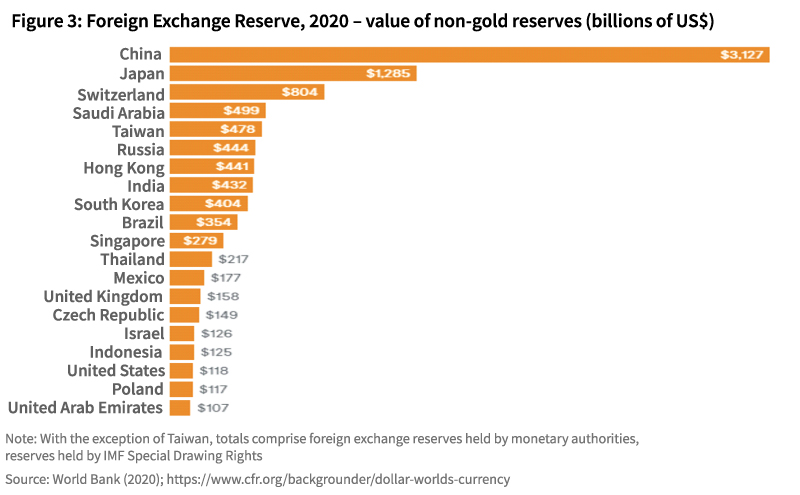
figure 2

figure 3

figure 4

Most of the developing countries find difficult to borrow money or pay for foreign goods in their own currencies. Because most of the international trade is carried out via the US dollars and therefore need to hold reserves to ensure a steady supply of imports during a crisis and assure creditors that debt payments denominated in foreign currency can be made. (Foreign Affairs, 2021)

China has by far the most reported foreign exchange reserves of any country, with more than US$3 trillion. Japan, in second place, has around US$1.3 trillion. India, Russia, Saudi Arabia, Switzerland, and Taiwan also have large reserve holdings. (Siddiqui, 2021a; also 2021b)

Moreover, the most commonly floated alternatives are the Euro, the Renminbi, and the IMF’s Special Drawing Rights. But these three existing alternatives have their own challenges and difficulties. The Euro is the second most used reserve currency, accounting for roughly 20% of global foreign exchange reserves. The European Union rivals the US in economic size, exports more, and boasts a strong central bank and robust financial markets – factors that make its currency a viable challenger to the dollar. But the lack of a common Treasury and a unified European bond market limits its attractiveness as a reserve currency.

During the Bretton Woods talks, Keynes proposed the creation of an international currency, which would be administered by an international central bank. His suggestions were not accepted but more recently, there have been calls to use the IMF’s Special Drawing Rights (SDR) – an internal currency that can be exchanged for hard currency reserves – as a global reserve currency. The value of SDR is based on five currencies: the Euro, Pound Sterling, Chinese RMB, US Dollar, and Japanese Yen. Proponents argue that such a system would be more stable than one based on a national currency whose issuer must respond to both domestic and international needs. But for SDR to be adopted widely, it would need to function more like an actual currency and be accepted in international transactions with a market for SDR-denominated debt.

However, it seems that the US Dollar will not be overtaken as the world’s leading reserve currency anytime soon. Neither Japan nor China, whose currencies to date have not been very widely used as reserve currencies, are likely to pose a real threat to the Dollar anytime soon. (Siddiqui, 2020c; 2020da) Japan has experienced stagnation for more than the last two decades and thus would not be able to challenge US Dollars hegemony. (Siddiqui, 2015a) Although the Chinese economy has started to grow again after the Covid-19 pandemic, the country is in the midst of a credit bubble of epic proportions and it continues to maintain strict capital controls that would seem to disqualify its extensive use as a reserve currency. (Siddiqui, 2020d; also 2017)

IV. China’s Bilateral Currency

Swap Agreements

The bilateral swap agreement (BSAs), also known as cross-currency swap agreement, gives a recipient party the right to exchange currencies at a fixed interest rate. BSAs are often used to both reduce the risk of currency fluctuations in times of financial volatility, and as a tool to increase cross-border trade. Countries with open capital flows are exposed to liquidity risks when their financial obligations exceed the amount of currency a country can acquire, while swap agreements allow trade activity to proceed by using a given currency to replenish foreign exchange reserves and fulfil the debt obligation.

At present, China is the second largest economy in the world and accounts for more than 40% of global trade. However, by May 2020, only 1.79% of global payments were conducted through the RMB. The US Dollar still dominates international currency markets. In recent years, China has moved to sign bilateral currency swaps. China has sought to combat US Dollar dominance and replenish offshore liquidity through its “One Belt, One Road” (OBOR) initiative, a large-scale overseas infrastructure program. (Siddiqui, 2019a and 2019c) Through attractive’ loan packages, China is building new economic relations with other countries and encouraging them to use RMB. China also began signing BSAs with several countries. China has signed agreements of over US$ 500 billion with at least 35 countries to provide RMB liquidity to trade partners with drying markets to boost trade over the long-term.

China has signed BSAs to protect against liquidity crunches and it seems that China is also using it as a tool for currency internationalization. In recent years, it has signed a deal, for instance with Pakistan, and China hopes to support RMB-denominated trade by recycling currency. As Pakistan maintains a trade deficit with China, Pakistani exporters spend more RMB than importers receive, which depletes the country’s RMB reserves. In theory, if Pakistan is to be properly incentivized to continue using the RMB for cross-border trade, Pakistan’s central bank could tap of RMB credit to exchange Pakistani Rupees with the People’s Bank of China for RMB at an interest rate pre-determined by the swap agreement.

Within the last 10 years, China has entered into BSAs with an astounding 35 countries, but despite numerous agreements, very few countries have actually drawn upon their credit lines. Pakistan and Argentina have agreed and have tapped into their BSAs. During the period of BoP crisis and rising foreign debts, both counties used the agreements to obtain RMB and convert it into US$ in offshore markets. Pakistan was the first country to do so when it tapped into its US$10 billion in 2013 after seeing a sharp dip in its foreign reserves. Argentina in 2014 witnessed rapid inflation of the Peso and in deep crisis, the country was unable to obtain US Dollars to import vital consumer goods technology. Argentina drew upon its BSA with China and the RMB was used as part of a two-pronged approach by Argentina to introduce the US Dollar into its domestic economy. In both instances, China did not protest against the RMB being converted to US Dollars.

By providing liquidity during times of crisis, China has proven to be a reliable partner. This reputation may have begun to pay dividends, as the Sino-Pakistani BSA doubled from RMB 10 billion (US$1.42b) in 2014 to RMB 20 billion (US$2.84b) in 2019 and the Pakistani trade settlement in RMB surged by 250% in 2019. As recently as in March 2021, Pakistan proposed that it would further increase trade via BSA to RMB 40 billion (US$5.68b). Similarly, Argentina increased its currency swap agreement with China from RMB 70 billion (US$9.94b) to RMB 130 billion (US$18.47b) in 2019. These deals represent the progress being made on Renminbi internationalization and the potential for bilateral trade to expand in the future as China remains a strong and dependable financial partner.

In Russia, with the western sanctions, the value of the Russian Rouble fell sharply and the country saw an opportunity to increase bilateral trade agreements in local currencies with China. With the Chinese BSAs, Russia was able to subvert US-imposed sanctions, as sanctions largely target operations that use the US Dollar. When Russian transactions were conducted in an alternative currency, they were able to bypass any restrictions. The increase in Chinese and Russian trade was ostensibly driven by Russia’s intent to employ a strategy to undermine US economic and trade sanctions. Russia and China in 2014 signed a three-year currency swap deal worth 150 billion RMB ($24.5 billion). The agreement allows each country’s central bank to gain access to the other’s currency without trading via the US Dollar. Russia, previously a top holder of US sovereign debt, has radically decreased its holdings because of sanctions. Russia’s strategic relations with China deepened after the 2014 partnership and energy-centred agreements. In 2017, Rouble-Renminbi payment versus payment’ started along the OBOR. In 2019, the two countries switched to the Renminbi and Rouble exchange for their US$ 25 billion trade.

In 2020, Turkey too, amidst the rising conflict with the US, signed a number of bilateral economic and trade agreements with China. For example, a US$1.7 billion BSA was signed between the two countries that represented approximately 8% of the total US$21.08 billion trade between the two nations in 2019. With a sharp decline in the value of Turkish Lira in 2019, the government attempted to prop up the Turkish Lira. Turkey had desperately depleted its foreign exchange reserves and sought help from financiers like the IMF and the US. According to the Turkish central bank, while the move was economically motivated, the influx of RMB ultimately increased the RMB-denominated trade settlement.

During the last ten years, the Peoples Bank of China has entered into bilateral swap arrangements with 41 countries (See Figure 5). Despite the slight decline in the number of active arrangements between end-2016 and end-2019, the total authorised value of such arrangements has been relatively stable, averaging RMB 3,333 billion between 2015 and 2019. (Chandrasekhar and Ghosh, 2020)
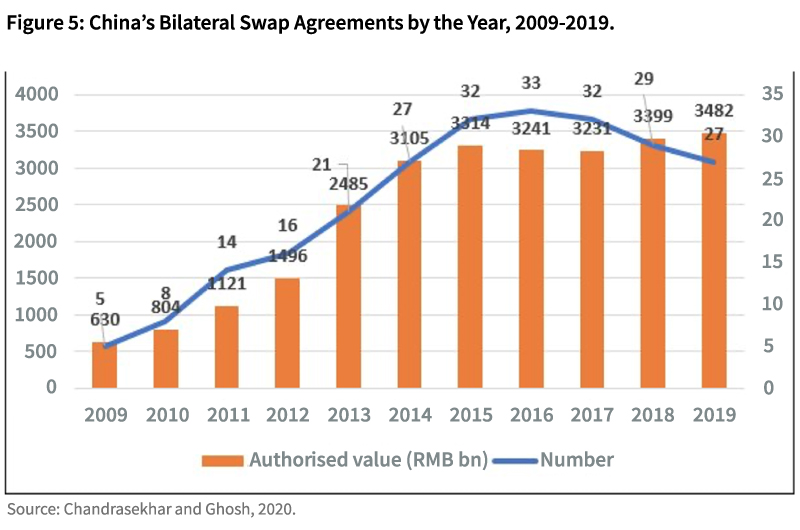
figure 5

Given the importance of China as a provider of goods and a source of investments and credits to many developing countries, and its effort to internationalise the RMB by designating an increasing share of those transactions in RMB instead of dollars, these swaps suit both China and its partners. (Chandrasekhar and Ghosh, 2020) For example, recently China has signed free-trade agreement with 16 Asian countries and the potential pact is expected to form a union of nearly 3.4 billion people based on a combined US$ 49.5 trillion economy, which accounts for nearly 40% of the world’s GDP.

China is internationalising the RMB which is included in IMF basket, and currently it has risen to fifth place as global currency and represents 15% of global currency holding. Russia has 25% of Chinese RMB international reserves. Of course, the problem remains that the RMB is not deep, open and liquid enough for financial markets. At the same time, most countries would not want the Renminbi to become a mirror image of the dollar in its ability to manipulate financial sectors.

Dimitri Simes (2020) notes, that Russia and China have drastically cut their use of the US Dollar in their bilateral trade over the past several years. As recently as 2015, approximately 90% of bilateral transactions were conducted in Dollars. Following the outbreak of the US-China trade war, and a concerted push by both Russia and China to move away from the Dollar, however, the figure dropped to 51% by 2019. De-dollarization has been a priority for Russia and China since 2014; replacing the Dollar in trade settlements became a necessity to sidestep US sanctions against Russia. The process gained further momentum after the Trump administration imposed tariffs on hundreds of billions of Dollars’ worth of Chinese goods. Russia and China signed a deal in 2019 to replace the Dollar with national currencies for international settlements between them. The biggest beneficiary of this move was China, which saw its share of Russia’s foreign exchange reserves jump from 5% to 15% after the central bank invested US$44 billion into Chinese currency. As a result of the shift, Russia acquired a quarter of the world’s Renminbi reserves.

China is trying to internationalize its own currency, the Renminbi, which was included in the IMF basket alongside the US Dollar, the Japanese Yen, the Euro, and the British Pound. It has recently made several steps towards strengthening the Renminbi, including accumulating gold reserves, launching Renminbi-priced crude futures, and using the currency in trade with international partners.

Turkish President Erdogan attempted to end the US Dollar monopoly via a new policy that is aimed at non-Dollar trading with the country’s international partners. Later, Turkey’s leader announced that his government was preparing to conduct trade through national currencies with China, Russia and Ukraine. Turkey also discussed a possible replacement of the US Dollar with national currencies in trade transactions with Iran. Donald Trump opted to withdraw from the 2015 nuclear deal signed between Iran and 5+1 other countries (i.e., the US, UK, France, Germany, Russia and China). Iran has once again become a target for severe sanctions resumed by Washington. Sanctions have forced Iran to look for alternatives to the US Dollar as payment for its oil exports.

V. Conclusion

The ongoing trade conflict between the US and China, as well as sanctions against China’s biggest trading partners have forced China to take steps towards relieving the Dollar dependence of the China.

The Chinese economy, despite the adverse impact of Covid-19, has again begun to grow faster than US and other EU countries, and the Chinese RMB is coming under increased pressure to adopt a flexible exchange rate. China has introduced swap facilities in participating countries to promote the use of the Renminbi. The BSAs seem to be an instrument to encourage other countries to increase reliance on Chinese goods and on RMB loans to buy them. Hence, enhancing its economic influence, as well as furthering the goal of internationalising the RMB and establishing it as an alternative reserve currency.

The ongoing trade conflict between the US and China, as well as sanctions against China’s biggest trading partners have forced China to take steps towards relieving the Dollar dependence of the China. The People’s Bank of China has been regularly reducing the country’s share of US Treasuries. Still the number-one foreign holder of the US sovereign debt, China, has cut its share to the lowest level since May 2017.

China has also been trying to increase the role of the Renminbi as a global reserve currency. It currently accounts for only 2% of global reserves, and China has strict controls on the flow of money through its economy, but global usage of the RMB has been steadily increasing. China is also pushing to increase the use of the Renminbi to denominate its own trade. There is a greater possibility that in the next decade the international economy will be shared by three currencies: namely US Dollar, Euro and Renminbi.

Historically, the global demand for gold increased in 1970, and then in 1971 the US President Nixon intervened to de-link the Dollar from gold, which led to the floating exchange rates that exist today. After the 1973 oil crisis, US political and economic power ensured that OPEC surpluses were recycled through the private channels of the Eurodollar markets. As the Dollar-denominated surpluses of the OPEC countries came to be recycled through this market in the 1970s, the market grew to be a full-fledged capital market, expanding from US$9 billion in 1964 to US$145 billion in 1971 and $1.4 trillion in 1981 just before the global debt crisis unravelled in the mid-1980s.

A question arises about the Dollar’s worthiness as a reserve currency. There are three implications here: First, the argument is not that the Dollar should be completely displaced, since even in the basket that constitutes the SDR, the Dollar commands an influential role. Second, there is no other country or currency that is at present seen as being capable of taking the place of the US Dollar in the near future. And, third, the search is not for a currency that can be used with confidence as a medium for international exchange, but for a derivative asset that investors can hold without fear of a substantial fall in its value when exchange rates fluctuate, because its value is defined in terms of, and is stable relative to, a basket of currencies. What is needed is an accepted currency of exchange which would also serve as a relatively stable store of value, to be held as a reserve or as a stock in order to settle future flow requirements.

Global tensions caused by economic sanctions and trade conflicts triggered by the US have forced targeted countries to take a fresh look at alternative payment systems currently dominated by the US Dollar (Siddiqui, 2018; also 2019d). The answer is that to some extent there needs to be gold as a means of settlement. However, China, Russia, Iran, and other countries are going to mutually hold each other’s trading currencies. They are replacing Dollars with gold and with each other’s currencies. That essentially is the response that the world could have taken after World War I, but did not, and could have taken after World War II if it had followed Keynes’s policies.

The study has found that the US will certainly try hard to keep as many as countries possible within US Dollar dominated transactions just as Britain did at the end of the 19th century as the world’s then-largest trading country. However, China long ago surpassed the US as the top trading nation of the world. Chinese currency Renminbi will not become a global currency overnight; evolving into a global currency could take a longer period. Between World War I and World War II, the US Dollar became an international currency and then had about the same weight in central bank reserves as the British Pound Sterling, which had dominated the international currency reserves since Napoleonic wars; nevertheless, the US Dollar finally replaced the British Pound Sterling in 1944.

About the Author

Dr. Kalim Siddiqui

Dr. Kalim Siddiqui is an economist, specialising in International Political Economy, Development Economics, International Trade, and International Economics. His work, which combines elements of international political economy and development economics, economic policy, economic history and international trade, often challenges prevailing orthodoxy about which policies promote overall development in less developed countries. Kalim teaches international economics at the Department of Accounting, Finance and Economics, University of Huddersfield, U.K. He has taught economics since 1989 at various universities in Norway and U.K.

Reference:

  • Chandrasekhar, C.P. and Ghosh, J. (2020). “Bilateral Swaps in China’s Global Presence”, Business Line, December 15.
  • Foreign Affairs. (2021) “The Dollar: The World’s Currency”. https://www.cfr.org/backgrounder/dollar-worlds-currency
  • Hudson, M. (2003). Super Imperialism: The Origin and Fundamentals of US World Dominance, London: Pluto Press.
  • Newsweek. (2021). “Will the US Dollar Lose Its Place as the World’s No. 1 Reserve Currency?” May 19, New York. https://www.newsweek.com/will-us-dollar-lose-its-place-worlds-no-1-reserve-currency-1567224
  • Rogoff, K. (2021). “The US dollar’s hegemony is looking fragile”, Guardian, April 2, London.
  • Simes, D. (2020). “China and Russia Ditch Dollar in Move towards Financial Alliance”, Financial Times, August 16, London.
  • Siddiqui, K. (2021a). “Can 21st Century be an Asian Century?” Asian Profile, 49(1): 1-19, March.
  • Siddiqui, K. (2021b). “Trade Liberalisation, Comparative Advantage, and Economic Development: A Historical Perspective”, World Financial Review, May-June, pp.
  • Siddiqui, K. (2021c). “The Importance of Industrialisation in Developing Countries”, World Financial Review, January February, pp.60-73.
  • Siddiqui, K. (2020a). “The US Dollar and the World Economy: A critical review”, Athens Journal of Economics and Business, 6(1): 21-44. January.
  • Siddiqui, K. (2020b). “Can Global Imbalances Continue? The State of the United States Economy”, Argumenta Oeconomica Cracoviensia, 23(2): 11-32.
  • Siddiqui, K. (2020c). “Prospects of a Multipolar World and the Role of Emerging Economies”, World Financial Review, November/December, pp. 65-77.
  • Siddiqui, K. (2020d). “The Rise of the Chinese Economy and Growing Concerns in the US”, World Financial Review, September/October, pp. 40-49.
  • Siddiqui, K. (2019a). “The Political Economy of Essence of Money and Recent Development”, International Critical Thought, 9(1): 85-108.Routledge.
  • Siddiqui, K. (2019b). “The US Economy, Global Imbalances under Capitalism: A Critical Review”, Istanbul Journal of Economics, 69(2): 175-205, December.
  • Siddiqui, K. (2019c). “One Belt and One Road, China’s Massive Infrastructure Project to Boost Trade and Economy: An Overview”, International Critical Thought, 9(2): 214-235. Taylor & Francis Group, Routledge.
  • Siddiqui, K. (2019d). Financialisation, Neoliberalism and Economic Crises in the Advanced Economies, World Financial Review, May/June, pp.22-30.
  • Siddiqui, K. (2018). “US – China Trade War: The Reasons Behind and its Impact on the Global Economy”, World Financial Review, November/December, pp.62-68.
  • Siddiqui, K. and P. Armstrong. (2017a). “Capital Control Reconsidered: Financialization and Economic Policy”, International Review of Applied Economics, 32(6): 1-19, March.
  • Siddiqui, K. (2017b). “Financialization and Economic Policy: The Issues of Capital Control in the Developing Countries”, World Review of Political Economy, 8 (4): 564-589, winter.
  • Siddiqui, K. (2016). “Will the Growth of the BRICs Cause a Shift in the Global Balance of Economic Power in the 21st Century?” International Journal of Political Economy, 45(4): 315-338, Routledge.
  • Siddiqui, K. (2015a). “Political Economy of Japan’s Decades Long Economic Stagnation”, Equilibrium Quarterly Journal of Economics and Economic Policy, 10(4):9-39.
  • Siddiqui, K. (2015b). “Foreign Capital Investment into Developing Countries: Some Economic Policy Issues”, Research in World Economy, 6(2): 14-29.
  • Siddiqui, K. (2009). “The Political Economy of Growth in China and India”, Journal of Asian Public Policy, 1(2): 17-35, March, Routledge.
  • World Bank. (2017). Global Economic Prospects: A Fragile Recovery, June. World Bank: Washington DC.

Manufacturing Equipment and Maintenance: Everything You Need to Know

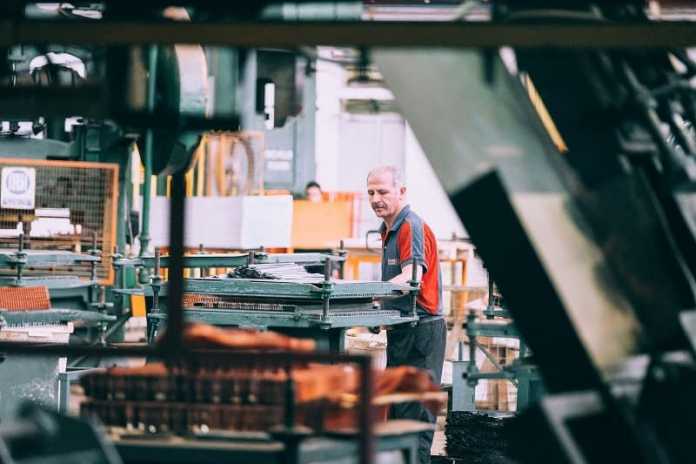
Worker at Manufacturing Factory

By Jeremy Axel, Founder of Fluent Conveyors

When it comes to the maintenance of manufacturing conveyors, there is a lot to consider. There are different types of equipment such as manual and automatic conveyors (belt and chain). Moreover, conveyor belts are made using different materials including rubber, polyurethane, a steel cord called Stainless Steel Cord (SCC) or high-density polyethylene (HDPE). Depending on the type of plant, there are different types of parts that are needed for maintenance. For more information, you can find all the information delineated by our friends at Fluent Conveyors.

Manufacturing equipment like conveyors plays a vital role in any production business, whether big or small. Proper maintenance of Manufacturing equipment can add resale value, minimizes downtime, lengthens equipment life, and helps control service intervals and costs. Proper use and maintenance will immensely benefit you in terms of reduced maintenance and repair costs as well as increased profits. Here are some tips on the appropriate use and maintenance of Manufacturing equipment:

Routine is Key

Adhere to recommended maintenance schedules and regular inspections. Following this is a significant step towards the proper maintenance of your Manufacturing equipment. It is also essential to adhere to the manufacturer’s manual. Always follow the manufacturer’s recommendation because nobody knows the machine better than the rotary die manufacturer.

Conduct Proper Training to Equipment Users

Ensure that the people designated to handle Manufacturing equipment are extensively trained and knowledgeable enough about the materials. Never let someone operate equipment wherein a person knows nothing about. Always rely on someone who can efficiently handle the machine. Train your employees in effective machinery operation so they can be more productive and cause less wear on machinery.

They must know how to handle the small and large accessories & modifications of the entire machine. This includes corresponding industrial safety gear, for example a Searose dust extraction system.

Adhere to Safety Rules

The most important thing to put in mind when in a work zone area is safety. Ensure that the Manufacturing site and the workers remain safe by observing safety rules religiously. Handling Manufacturing equipment contrary to how it might sound, feel, or look, isn’t simple. Never use damaged equipment and always be aware of your surroundings.

Always Put on Protective Gears

Dipped gloves, fall gear, hard hats, goggles, etc. are some protected gears that prevent hazards at a Manufacturing site. Always wear them whenever you are on the site. Industrial earplugs are also a must-have when the noise at a Manufacturing site is too loud. Business owners should ask help from industrial noise consultants to ensure that the workplace does not exceed standard noise levels and also to protect employees from possible hearing loss.

Identify Significant Causes of Machinery Breakdown

Identifying potential causes of machinery failure before they occur can save hundreds or thousands of dollars and will maintain a consistent workflow. Sudden failure is when machinery breaks without warning. Intermittent failure happens randomly, and it can be challenging to identify the cause. A Gradual failure can occur when the parts start to wear, and the components are noted to be near the end of their lifespan.

Get to Know Your Machines Inside aand Out

Whether it’s drying equipment, fine screening equipment, industrial mixers and blenders, granulators, or a conveyor system, always takes time to read and understand the equipment manual. Thorough knowledge about your machinery helps you isolate issues and prescribe the proper preventive maintenance. Another person who also knows the equipment better are the operators. Listening to them when they tell you that something’s amiss is a wise preventive maintenance strategy. When you suspect or detect a problem with the machine, stop the operation.

Document Your Machine’s Service History

It is vital to keep detailed service records of your equipment. Keep track of what type of servicing has been done on your machinery, including any instances where hoist repair services were required, if the machine underwent routine checkup, and when it needs to be done again. Documented and detailed maintenance records let you keep an accurate picture of your machine’s history and give you proof that your machinery is well maintained according to the manufacturer’s recommendation.

About the Author

Jeremy Axel is the founder of Fluent Conveyors, they design and manufacture conveyors for Waste and recycling industries, Manufacturing, and Distribution centers across the United States. He is also known for building trusted relationships with conveyor dealers and reseller networks and developing advanced technological processes and tools that help them do their jobs more efficiently.

The Financial Upside of the COVID-19 Pandemic

Financial Upside

It’s been roughly 18 months since the Covid-19 pandemic took the world by storm. The pandemic caused a global recession from which many countries are yet to recover. Even leading economies like the USA, UK, Europe, and China have struggled amidst the pandemic and its consequences. Emerging markets are still feeling the aftermath of the pandemic, and recovery has been slow.

However, the pandemic resulted in a new way of working and living. Many individuals found themselves needing to work from home, and although it was a struggle at first, it seems to have brought about opportunities for both corporations and individuals. 

Furthermore, businesses that primarily operate online have flourished. Large tech companies’ revenue increased exponentially during the pandemic due to the demand for their products and services. 

The positive side-effects of the pandemic

One of the companies that made massive profits during the pandemic was Apple. Its market cap reached record highs in 2020, and its stock value reached $2 trillion in August 2020.

However, Apple was not the only company that flourished last year. There were 50 other S&P 500 companies that outperformed Apple in terms of share growth. Nvidia Corp. shares increased by 108.43% from December 2019 to August 2020. Amazon and PayPal shares each grew more than 79% during the same period.

The demand for technology and software increased, which led to the growth of tech companies. In addition, the e-commerce industry also skyrocketed since most people preferred ordering essentials online rather than visiting a store. 

Companies that offered essential goods and services like Home Depot also saw a dramatic increase in share growth, of over 30%. 

Increase in Share Growth

How did individuals benefit

The economic boost not only favored blue-chip companies, but some individuals started businesses from home by offering services that were much needed during the pandemic. Individuals who had extra funds opted to trade stocks to earn an additional income.

Trading platforms like Axia give individuals the opportunity to start trading assets like currency pairs, stocks, indices, CFDs and commodities. 

Axia has multiple platforms to allow access to the markets, as mentioned above. The AxiaTraderWeb, AxiaTraderMobile, and MetaTrader5 trading platforms have built-in indicators, advanced charting tools, and top-notch security features.

Axia offers clients a diverse selection of accounts: Bronze, Silver, Gold, Platinum, and Diamond. All account holders are provided daily market analysis, 1:400 leverage, low spreads, and stop out levels. In addition, welcome bonuses are offered to Gold, Platinum, and Diamond account holders.

Axia support staff operates 24 hours a day, five days a week and are reachable by phone or email.

Bottom Line 

Although the pandemic created financial havoc globally, we cannot deny that it transformed the financial industry. It also forced individuals to think outside the box and discover ways to supplement their income, whether by starting a business or investing in the stock market. The Axia brand offers attractive benefits, and individuals can still take advantage of the current economic conditions to pursue a trading career by joining Axia.

Why Did My Credit Score Fall Dramatically? Watch Out for These Reasons!

Credit Score Decline

It’s possible that you’ll be confused why your credit score has gone down if you check it often as recommended. It’s only reasonable to question what’s causing your credit score to fall, and there are a number of things that may go wrong.

When your credit score lowers, it’s because you’ve done something that the credit scoring models used by the credit reports consider to be bad. You must however get familiar with the components used in generating credit ratings if you want to better understand why your credit score has dropped.

Possible Reasons Why Your Credit Score Dropped

Missed or late payments have a negative influence on your credit score.

When it comes to determining your credit score, your payment history is by far the most important element. If you don’t pay your bills on time each month, it will have a negative impact on your credit score. If you miss a payment, even if it’s just one, your credit score might suffer. As a result, making sure you pay all of your credit card bills, loan repayments, and other financial commitments on time is critical. The longer you wait to pay, the worse your credit score becomes.

If you go behind on a payment, it can have a significant impact on your credit score.

A single missed payment is inconvenient, but failing to make several payments on your obligations is a major problem that will have a negative impact on your credit rating. Your account will go into arrears as a result, and the lender will terminate your contract with them. After that, they’ll generally go after you for the money you owe them. If your lender adds such material to your credit report, your credit score may suffer significantly.

You’ve suddenly racked up a lot more charges on your credit card.

Credit usage is a significant component of credit reports. The amount of available credit that you are utilizing out of your entire credit limit across all of your credit accounts is referred to as “credit utilization.”

When you apply for a credit card, your lender will set a credit limit for you. While it is theoretically feasible to spend up to that amount, it is preferable to avoid doing so. If you use too much of your credit card limit, it may have a negative impact on your credit score. A high degree of credit usage may suggest to lenders that you may find it difficult to repay a loan or new credit card obligations.

You’ve obtained fresh credit.

If you apply for a new credit card or loan, you may be surprised to learn that your credit score has dropped.

In this case, your credit score may suffer for two reasons:

Lenders do a rigorous check on your credit record whenever you apply for any sort of credit. Because all hard inquiries are documented on your credit report, they might have a negative impact on your credit score. This is especially likely if you apply for a high number of credit cards or loan applications in a short period of time. This is due to the fact that lenders may feel you are desperate for loans, which may prevent them from lending to you.

You’ve deactivated an old account.

If you just cancelled an old bank account, your credit score may suffer. This is due to the fact that cancelling an old account reduces the total age of your accounts. In such instances, credit ratings frequently follow suit.

In addition, closing an account may lower your overall available credit limit and the amount of credit used available to you for spending. This may cause your credit usage to exceed the ideal amount, resulting in a decrease in your credit score.

Is it possible to tweak a poor credit score?

Terrible credit may always be repaired. The key is to know how to transform negative grades into excellent ones. You may increase your score in a variety of ways.

  • Pay your bills on schedule every time. This will build up a solid payment history on your account.
  • Reduce your overall debt and, wherever feasible, avoid utilizing credit to make major purchases that you won’t be able to pay off before the end of the month.
  • Monitor your credit ratings on a frequent basis so that you can quickly fix any declines.
  • Apply for no credit cards that you do not require.
  • Spend wisely and stick to a budget to avoid overspending.
  • Consider credit-building loans or credit cards to help you rebuild your credit over time.

To Wrap It Up

Maintaining your financial health over the long run is as simple as following these helpful hints. A decrease in your credit score is concerning, but it does not have to have a lasting impact on your score. You’ll be able to get it back up and keep it from dropping again. Keep in mind that your credit score changes over time and that you may improve it by developing sound financial practices.

EDITOR'S PICK OF THE WEEK

CFO's new mandate. CFO explaining the presentation

The Performance and Transformation Orchestrator: The CFO’s New Mandate in the Age of AI

By Terence Tse CFOs are evolving into AI-driven transformation orchestrators, balancing finance, technology, and strategy while upskilling teams, managing risks, and driving measurable business value. A key insight from this year’s AI for CFOs event, organized...

WISE DECISION MAKER GUIDE

POWER INFLUENCERS

Emerging Trends

The Future of Global Trade