Home Blog Page 727

Finding Hidden Real Estate Investment Opportunities in the Current Home Market

Real Estate Client

The key strategy right now may be to sell for real estate investors. 

However, with rising interest rates, decreased inventory, the post-pandemic shadow that has made people flee cities for suburbs and rural areas, and dealing with tenant complaints, municipal, state, and federal regulations toward renter laws have made investment properties unfavorable. 

Another unpopular trend with real estate investing is hiking interest rates, which is seen to be continuing for the near and long term. 

Add to those woes the dissipating commercial real estate market, and real estate investors need to rethink their investment portfolios and strategies. 

Commercial real estate is not a good investment at this time due in no small part to the acceleration of decentralized work-stations, whether remote or in some hybrid model. 

In fact, since late 2021, over 45% of workers report that they perform their jobs either fully remote or in some hybrid model. Moreover, over 90% of respondents to a Gallup poll regarding the changing workplace report want a permanent version of the hybrid, remote work style. 

These trends seem to be accelerating and becoming fixtures in the new workplace. Those numbers and that trend mean less need for office space, workrooms, and other forms of commercial real estate. 

Many are turning to the fix-and-flip strategy as an investment opportunity for savvy investors in real estate rather than park your money in holding properties and commercial spaces. 

What Is Fix-And-Flip In Real Estate

Fix-and-flip is a strategy that includes buying a residential home that is undervalued, distressed, or in short-sale. 

Buying below-market properties give the flipper, as they are known, an opportunity to put some money into renovations and upgrades, then turn around quickly and resell the property above market value for a quick profit. 

As easy as it sounds, the process can be pretty challenging, and the risk of loss is real rather than profiting from a fix-and-flip. 

Often, people who lack carpentry skills or know how to get materials needed for upgrading at a reasonable price can end up overspending on the home’s improvements, lowering the profit margin on the sale. 

One area where fix-and-flippers tend to have problems is valuing the remodeling being done on the home and not understanding how the money put into the property doesn’t translate to closing sale prices directly. 

For example, if a flipper puts $20,000 into remodeling the home, it doesn’t automatically increase the home’s value by $20,000 or more. In fact, the type of upgrades and remodeling were chosen to do is as much a predictor of increased property value as is the market trends. 

Remodeling the kitchen and baths have more potential upside with increasing the return on the home’s investment than a pool would. The reasons are that kitchens and baths can be upgraded fairly reasonably, whereas a pool requires significant capital and significantly lowers the number of potential buyers. 

Another area to guarantee a return on your investment is more significant remodeling, such as adding a room or second-story. The reason is that by expanding the overall square footage of the home, you’re creating more space for families, which can be very attractive to buyers seeking to have more space in their homes. 

Flippers also tend to overvalue the market possibilities, especially in a boom climate such as we are experiencing with real estate right now. 

Add in material costs, labor costs, permitting fees, and other costs associated with flipping a home, and the margins can be much smaller than projected. 

That’s one area where an experienced residential real estate agent can assist the casual flipper. 

Also, for real estate investors, using an agent to help broker and facilitate the deal is crucial toward seeing profits meet expectations. 

For example, Samuel Kooris Brooklyn area real estate agent understands the market trends of finding distressed properties and can lend advice toward financing and contracting options to help the intelligent investor make a realistic projection of the types of profits on each sale. 

While traditional investment vehicles for people in real estate are changing and evolving, from commercial and rentals, there is one other way for the casual investor to make a decent profit. Still, it takes a dedicated strategy to succeed. 

Fix-and-flip homes are a good strategy for today’s investors, especially as housing inventory continues to be low, causing appreciation to continue at its skyward pace.

A Decade in Review: How the Portrayal of Women in Media Has Changed

woman power

While stereotyping in brands are less of a thing now, the media still has a long way to go when it comes to the representation of women on screen and in print. 

It all boils down to one thing: women are underrepresented in film. Racial minorities are underrepresented in film. White men are vastly overrepresented in film. How do these facts affect audiences so demographically different from what is portrayed onscreen?

The short and long answer to that is exposure in the media. According to a 2002 study published in Science, by high school graduation, you will have on average spent more time watching television than in school classrooms. That was nearly two decades ago. With the emergence of streaming giants like Netflix and Hulu, it’s been found that American teens spend an average of 9 hours a day using media. Remove the time spent asleep and in the bathroom, and media occupies much more than half of a teen’s day. Then add to that advertising, which has become as ubiquitous as, well advertising. Thus, it’s no surprise that media such as advertising, television, and movies can substantially affect your health and well-being and change your life.

The topic of gender development has been widely debated since the dawn of time. Some of the most important aspects of people’s lives – i.e. the talents they cultivate, the world views they hold, the very way they carry themselves – can all be traced back to their foundational beliefs on gender. But rather than providing realistic representations in the media, men and women both tend to be depicted in a hyper-traditional manner, which maintains stereotypes of personality traits, capabilities, and aspirations that are not only outdated – but potentially harmful. 

Enormous progress has been made when it comes to TV, but it’s coming from a shallow base. Throughout the history of TV advertising, women have been defined in very narrow roles. That was partly indicative of the problem – women were firmly placed in the domestic sphere, talking animatedly about cleaning and housework. They’re often shown as the family nurturer, which is something that men weren’t allowed to be either. This is a problem for both genders. There have been some real strides in that recently, where ads show men in a much more nurturing rule – but it’s still not enough.

Never before in history has media played such a titular role in the socialisation of human beings and became such an integral and constant part of people’s everyday lives. It’s been graced with the power to transmit messages and images of the world, no longer simply acting as mirrors of it. They actively shape perceptions and ideas. Over the past 20 years, the media have become powerful and central actors in constructing and making sense of local and global social affairs. As institutions, they shape cultural and social attitudes, impact on politics and public policy, and even influence journalism.

Like a wise man once said, “With great power, comes great responsibility.” It’s a tricky balancing act to put oneself on, but it has the bandwidth to change society for good when harnessed right.

The early screening

Women brought a gendered analysis of the mass media to the global stage in the 1970s when a multipart critique was first presented at the 1976 Mexico City conference, which opened the U.N. Decade for Women. Much of the substance of that critique remains relevant today, nearly five decades later. However, women’s fight for equal representation in the media began much earlier than that.

The first time a woman questioned her exclusion from media was in the 18th century by women suffragists and women’s rights activists in Europe and North America. The early suffrage leaders needed the attention of the news media to carry their ideas and activities to the broader public, but male-run newspapers and magazines largely ignored the women activists. The ones that did, however, quickly depreciated their goals and intentions. Women who departed from the social norms of passivity and deference to male authority and the traditional roles of wife and mother were labelled as inappropriate, insane or misfits. 

When women demanded equality with men, the media depicted them either as curiosities or as loud, militant and aggressive. These same characterisations have continued into the early days of modern feminism. Not only were women’s issues being silenced by the mainstream media, but bias against women ran rampant in reporting their issues and leaders. Because of this hostile behaviour, many women took it upon themselves to establish their own magazines, newspapers and book publishing houses during the late 19th and early 20th centuries. 

The post-Civil War Woodhull & Claflin’s Weekly aimed to make Victoria Woodhull the first woman president, while the Lily had a broad women’s rights agenda, and the Una championed the rights of immigrants and poor women. Elizabeth Cady Stanton and Susan B. Anthony’s short-lived but influential newspaper the Revolution addressed a spectrum of issues related to women’s discrimination, including low wages of working women and the right to vote.

The emergence of the new era

When the late 20th century came, women from all over the world focused on enacting political and legal reforms to extend women’s equality and access to social institutions (all of which had been steadily discussed in media). This was a new era for women’s rights where women felt radicalised during independence movements, with colonial countries breaking away from their oppressive regimes. 

The legacy of that activism carried over into women’s media like Ms. magazine, founded by U.S. feminists in the early 1970s; Manushi, an Indian feminist journal founded in the mid-1970s; and Isis International Bulletin, published first in Rome, then later in Manila.

During this time, feminist leaders established their own publishing houses, motivated by the enduring problems of exclusion and misogynistic representation in mainstream media. Women’s organisations like the South African group Gender Links have assumed dual missions of establishing their own journals, like Gender and Media Diversity Journal, and undertaking training for journalists to address persistent patriarchal messages in news, advertising, films, and television programs.

With this came an emerging concern for the new era: a lack of access to media professions. As a result, women were severely underrepresented in newsrooms, television and radio stations, film production and ownership of media outlets. It was argued that more women on the inside would help resolve many of women’s other problems with the media. This series of problems led to the shift in how women were portrayed on screen and in print. 

Women as peripheral characters

For so long, the role of women had been that of supporting characters to their male counterparts. But that’s not at all. An eye-opening study by the Institute of Gender revealed that advertisements feature twice as many male characters as female characters and male characters received twice as much screen time and spoke twice as often compared to female characters. The problem, then, wasn’t solely about representation anymore. It had moved away from being an isolated problem about merely showing women on the screen but on the manner of how they were being presented so brazenly and inauthentically. 

This is equally important because positive female role models in the media can help women become more ambitious and assertive and even help them leave abusive relationships. In a 2016 press release based on a survey of 4,300 women in nine countries (Brazil, China, India Saudi Arabia, South Africa, Russia, Australia, the United Kingdom and the U.S.), over half of respondents (58%) related that female role models inspired them to be more ambitious or assertive with one-in-nine (one-in-four in Brazil) indicating that positive female role models had given them the courage to leave an abusive relationship. Not to mention unrealistic beauty standards often perpetuate the unhealthy relationship women have with their bodies and self-esteem.

So what now?

Women are among the largest consumers of film and television, so they represent a key demographic for this industry and the advertisers that support it. Women are “getting a foot in the door” in media and entertainment, and they are enthusiastic about seeking advancement—but that’s where favourable trends ebb and flow erratically. For an entry-level woman looking up, every rung on the career ladder will have fewer women in it. 

A woman graduating with a degree in mass communications or journalism, for instance, will walk across a stage where six out of every ten students are women. If she’s hired into the industry, her entry-level class will consist of five women in every ten hires. Further up the corporate ladder, at the transition from senior manager to vice president, one woman from this group, on average, will drop out of the pipeline. By the time these mass-communication or journalism professionals are poised to reach the C-suite, they will account for fewer than three of every ten executives—a point commonly referred to as the glass ceiling.

Women are clearly aware that the deck is stacked against them. Twenty-seven per cent of women surveyed in the media and entertainment industry say that gender has played a role in their missing out on a raise, promotion, or a chance to get ahead, as opposed to only 7 per cent of men. What’s more, 35 per cent of women reported that they expect their gender to make it harder to get a raise or promotion in the future as opposed to 15 per cent of men.

Given the nature of the media and the entertainment industry’s ability to influence culture at large through its production of film, video, and news publications, this industry must pay close attention to inclusion principles. Progress has been made, but more work needs to be done.

FinsRoyal: Trade Futures with them and Invest in High-Growth Opportunities

FinsRoyal

Futures trading is beneficial for both buying and selling parties as this trading restricts the price movement of the assets. Futures trading is also significantly profitable for novice traders. Even though futures trading provides you with an opportunity to earn lots of money, this will not come true if you do not receive effective support and guidance from your investment company. As far as it is about finding the right investment company to engage in futures trading, FinsRoyal is the most appropriate organization that you can have in the trading market. This financial provider offers lots of benefits and educational support to help you earn from the volatile financial market. Let’s learn the advantages of futures trading with FinsRoyal-

  • The contracts in futures trading restore the price of assets and eliminate the possibility of price fluctuation.
  • Futures trading includes an expiry date, and this trading implicates trading derivatives.
  • Trade futures with FinsRoyal to have numerous technical analysis tools and guaranteed stop loss.

The Nitty-Gritties of Futures Trading:

If you are new to online trading, you may get confused between futures trading and CFD trading. The major similarities between these two types of trading are similar leverage benefits and the involvement with derivatives. In some trading conditions, CFD trading can derive more profits, whereas, in some other conditions, futures trading is better.

The main distinction between these two is that brokers engage directly in CFD trading, whereas the exchange of assets occurs in futures trading. These trading instruments are also distinct from each other due to different financing procedures and liquidity. You can also practice CFD orders easily and on average, you will experience low entry barriers in comparison to futures trading.

How to Trade Futures?

Trading futures represent that you are trading on derivatives where occurs the purchase and sale of the basic assets at a predetermined particular price and on a specific future date. As in this trading, the sellers deliver the assets on a future date, therefore, this is termed as futures trading. In order to guess the future price in the contract, you have to rely on the asset’s recent price and your prediction on the market movement.

If there is an upsurge in the asset price in the future, the value of the futures contracts also increases. Therefore, you need to decide whether to execute or resale the instruments to expand your profits. The major characteristics of futures trading are the defined amounts, the rigidity of the expiry date, and stronger enforcement requirements.

Why Prefer FinsRoyal for Futures Trading?

Futures trading with FinsRoyal gives you multiple advantages, such as

  • With this financial provider, you can use the volatility of the financial markets to expand your profits.
  • This organization ensures definite stop loss and offers multiple analysis tools.
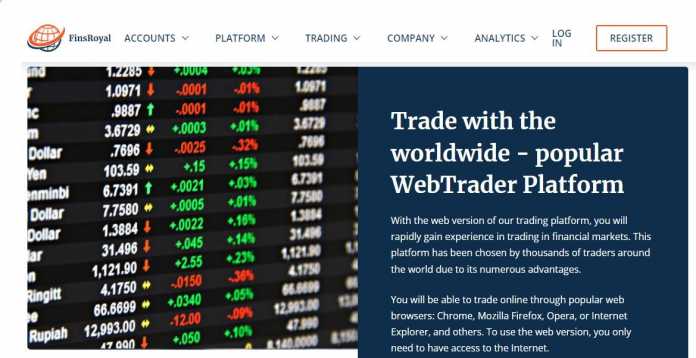
  • The WebTrader platform of this organization gives you access to multiple indicators, charting timeframes, and a one-click trading facility to ensure better profits.
  • The straightforward methods for deposit and withdrawal of money and efficient assistance from the support team contribute to your success in online trading.
  • In particular, you should trade with FinsRoyal to have high-growth opportunities.

Innovation and Implementation of Sustainable AgriTech Will Strengthen UK-Brazil Trade Ties, Summit Finds

Sustainable AgriTech
  • Government representatives, scientists, and industry leaders debated the global applications of the latest innovations in sustainable AgriTech at the Brazilian Embassy on Wednesday
  • Speakers explored how lessons from Latin America’s largest economy could improve transparency and traceability, sharpen policy, and fuel greener market incentives
  • The event set the tone for positive trade talks between UK and Brazilian ministers ahead of the UK-Brazil Joint Economic & Trade Committee (JETCO) later this year 

London, 11 February 2022 – Developments in sustainable AgriTech, instrumental to Brazil’s agricultural revolution, could hold the answer to many of the UK’s sustainability challenges, while promoting bilateral trade post-Brexit. This was among the key outcomes of a high-level summit hosted by the Embassy of Brazil, in partnership with from the Brazilian Trade and Investment Promotion Agency (Apex-Brasil), in central London on Wednesday 09 February, as both sides look ahead to JETCO later this year.

The AgriSustainability Talks took place as fresh data from Apex-Brasil show that Brazilian agribusiness and food and beverage (F&B) exports rose by 18.4% and 16.8% respectively in 2021. While positive, these growing trade figures raise questions about how both countries will balance the rising demand for food, drink, and agribusiness products with their ambitious sustainability goals.

At the event, government representatives, scientists, and industry leaders from both countries discussed the most pressing issues facing the future of agriculture, and explored how Brazil and the UK could exchange knowledge, technology, and design new policy frameworks in the context of expanded agricultural trade between the two countries.

WHAT’S ALREADY WORKING?

Integrated crop-livestock-forestry (ICLF) and no-till agricultural practices are just two examples of research-based initiatives that have resulted in the massive reduction of Brazilian agriculture emissions. The extension of the ICLF system by some 6 million hectares has resulted in the sequestration of 21.8 million additional tonnes of CO2 equivalent, the same as removing 4.7m cars from the road, and Brazil will extend ICLF to a total 16.5 million hectares of farmland by 2030 under the Paris agreement. No-till practices are used by some 45% of farms and contribute to the minimisation of GHG emissions by up to 40%.

The summit heard that Climate Resilient Agriculture (CRA), regenerative farming, methane inhibiting cow feed, Ethanol-based vehicle fuel, and nitrogen fixation were all worthy AgriTech breakthroughs currently championed by Brazil, while improved data capture and governance were celebrated for improving the veracity of sustainability claims by farmers, enabling a move from subsidy-led to carbon-credit-led farmer incentives. According to Francisco Jardim, Managing Partner of Latin America’s largest AgriTech venture capital firm SP Ventures, COVID has been a great accelerator, driving sustainable practices, as well as getting farmers to purchase equipment online, and giving birth to a booming agriculture FinTech scene.

GLOBAL BRITAIN SETS EYES ON BRAZIL

In light of the UK Government’s ‘Global Britain’ agenda, the focus on striking new free trade agreements with major global economies is a key priority for the current UK administration in 2022. Penny Mordaunt, UK Minister of State for Trade Policy, has indicated the Department for International Trade’s strategic goal to ‘improve’ trade ties with Brazil ahead of the 12th JETCO that takes place later this year. The significant contributions the agri-business sector brings to both economies was a key theme to emerge from the conference, with a clear call emerging for both countries to build on the successes achieved to date in advancing the sector’s scientific and technological capabilities, as well as exchanging best practice to guide future trade bonds and partnerships.

DEFRA’s Gavin Ross spoke of the UK’s hopes to “fundamentally change the approach, moving from paying farmers, to instead buying environmental benefits through three schemes: the Sustainable Farming Incentive, Local Nature Recovery and Landscape Recovery”, ambitions that have parallels with the “great progress being made in Brazil to recover 90 million hectares of degraded pasture” mentioned by EMBRAPA’s President Celso Morretti, as he talked through some of the 200 research projects currently underway by the more that 40 research centres in Brazil.

BRAZIL’S ABC PLAN

Brazil’s leading reputation in sustainable agriculture is bolstered by several government and industry initiatives to support the agri-business sector in the country. Tereza Cristina Corrêa da Costa Dias, Brazil’s Minister of Agriculture, Livestock and Food Supply wasn’t at the event, but is currently enacting a strategy, entitled the Plan for Adaptation and Low Carbon Emission in Agriculture (‘The ABC Plan’), which harnesses new technologies and technical skills to help Brazil meet key sustainability objectives in agriculture. The plan is promoting low-carbon agriculture practices and has already helped to recover 26.8m hectares of degraded pastureland for agriculture use – an area significantly larger than the entirety of the UK.

Panellists included Marta Giannichi, Secretary of Amazon and Environmental Services at Ministry of the Environment of Brazil, and Gavin Ross from the UK Department for Environment, Food and Rural Affairs (DEFRA). They were joined by industry representatives such as the Financial Times’ Jonathan Wheatley, Dr Jonathan Scurlock from the National Farmers’ Union and Patricia Thornley of the Energy & Bioproducts Research Institute (EBRI). Opening and closing the conference was the Brazilian Ambassador to the UK, Fred Arruda, and Plínio Nastari, President of DATAGRO.

5 Ways to Ensure Business Success

Ways to Ensure Business Success

Achieving success in the world of business is always started by having solid foundations that your vision and ideas can grow from. Insufficient planning and lack of self-belief will lead to failure. Fortunately, these fundamentals are simple to lay down and, once they are there, you will be removing a large amount of worry and stress from your life and you can concentrate on moving forward. Here are five ways to ensure business success.

Budget

Having the cash to sustain your business through its early stages is vital. You will be unlikely to be making much in profit, and what you do make will be going towards helping your business grow. Don’t skip areas out because you think they’re of little consequence, small amounts very quickly add up and could lead to you having a shortfall in cash. You can also opt for virtual credit card Philippines which is equipped with software to track down your expenses and to identify if expenses are beneficial to your business. If cashflow is a problem and you hold an unneeded insurance policy, you can take a look at a guide online that will tell you everything you need to know about selling the policy for immediate cash.

Believe in Your Vision

Believing in yourself and what you do is essential for any walk of life. If you don’t have full confidence, you are not going to put in full effort. For a business to go anywhere, it needs an owner who has absolute determination to make it succeed. This self-belief will bring you through all the inevitable obstacles you will face along the way, as well as making it easier to sell your ideas to others. Keep any goals in mind as motivators whether you want to generate more money for retirement, help advocate for a social issue, or simply bring a concept to your community that you believe it needs, stay hungry and focused on your vision.

Plan

Now that you have belief, get that down on paper. Your planning should not skip any part of your business and should also look at any eventuality. Things do and will go wrong, so you must be ready for that to happen and have options to get things back on track. Solid, thorough planning is evidence of your belief in your vision and what you want to achieve through your business idea.

Network

Networks help to solve problems. As we keep being reiterating, you will face problems so having people there who can help you solve these problems is absolutely vital. Your network will also contain experienced people who can give you advice when times are difficult. Having a large network will allow your business to grow and get your brand known through word of mouth. Go to conventions and trade shows and start meeting people.

Find Investors

Once your business starts to grow, you will need to find investors to keep your business on track financially, while also having the potential to keep growing. Investors can range from friends and family to local businessmen who like what you are trying to achieve. You also have the option of crowdfunding where you can be more creative in how you sell your vision. Remember that you must have the above foundations in place before you start looking for investors, or they won’t look twice. Believe in your vision and plan properly and they will be eager to support you.

On-Page SEO Can Help Your Website Rank Well – Here’s How

Businessmen

On-page SEO, aka optimizing your web pages for search engine crawlers to find and rank them higher in search results, is one of the most important factors that will get you more organic website traffic. If done right, it can be an incredibly effective strategy to help your website rank well—which leads to more visitors. Here is how it is done.

1. Treat Every Page On Your Website As A “Landing Page”

The first step to on-page SEO is to understand that every page on your website should be treated as a “landing page”, the same way Google treats it. Every web page should have one main topic and focus on providing targeted information related to what you are trying to rank for—i.e., the keyword you are targeting for this particular page. For each web page of content that you create, ensure that they contain the main keyword/target phrase at least once in the article body (and preferably within the title tag too)—e.g., if your business sells hats online, you would want to include keywords like, “online hat shop” and phrases like “buy hats online” on this page. You can use on-page SEO services from Stellar SEO and see how to improve what you have already done with your brand. The next step is to ensure that your content as a whole covers the topic you are trying to rank for. What we recommend doing with most web pages is to make sure they contain the main target keyword at least once in the first paragraph of text (often referred to as the ‘Natural Title Tag’), and again within 50 words or so—and then use variations of it throughout the rest of your text.

2.  Add High Quality, Relevant Images

An additional way to help your website rank is to ensure that you are using images that are related to the topic you are trying to rank for. For example, if your website is about “historic homes”, then high quality images that describe “historic homes” or have historic homes in them help tell Google what your content is about. These photos should come from reputable sources specifically relating to the topic of your website, and not randomly pulled from other sites on the web. Images can be a powerful marketing tool when used correctly, and engaging with them will help you create more interest in what you’re trying to sell. It is always best to make sure the images you use on your website come from reputable sources (like Unsplash) and are relevant to the page you want to rank for. If they don’t, Google will likely not rank your site as highly as it could if this was done properly. But, if you are using images that do not come from a reputable source, or are not relevant to the page itself, it can be an easy way for Google to drop your ranking.

3. Internal Linking Provides Context to Your Content

Another way to improve your on-page SEO is through internal linking. When using internal linking, you are essentially directing traffic within your website by pointing out content that you deem relevant (or that fits with what the page you’re trying to rank for). Internal links help provide context to your web pages and show Google that there is more information or resources they can learn about related topics on your website. It also helps drive users into other parts of your website where they can learn more about what you have to offer, making it a win-win situation for everyone involved. If done correctly, this technique can be used as a great way to “link juice” between web pages on your own site—which will help Google understand how each page on your site is related to each other. Similar to internal linking, crosslinking also helps provide context about what you are trying to rank for by directing users within your website. What crosslinking does is create a network between pages of relevant content by telling Google that these two web pages are linked together through some commonality between them.

4. Build Authority of Your Website

The next thing you need to look at is the authority of your website. This is important because it shows Google that you have a lot of trust and authority in your given industry. In order to build the authority of your website, you need to make sure it looks as professional as possible—which starts with looking at its overall performance from an SEO standpoint. There are a number of ways you can do this by looking at everything from page speed to loading speed. Another thing that is critical to understand about authority and relevancy is the fact that it often starts with your domain registration. If your website addresses look as though they were purchased on a domain reseller site, then Google will more than likely weigh those results lower because of their lack of trust in them. In addition to how relevant your content is, the overall performance of your website also helps signal to Google how quickly it responds, and the global availability (i.e., if users outside the US or UK can access it). 

5. Schema Markup Can Help Your Rankings

Schema markup is a way for you to mark up your website content in a way that Google can understand more easily. This will help your website rank higher on results pages because it shows Google how your webpages are structured and what types of information they contain (i.e., who published the page, contact details, etc.). It is done using microdata which tells search engines what certain parts of content mean; for example what an author of a blog post looks like, where the “latest posts” feed of a site is located or even basic event information like dates and locations. This can be useful in both identifying your own website’s structure, and determining whether you should mark up certain content on other sites that you want to get indexed by Google (and likely ranked better).

SEO

On-page SEO is a very important factor in the overall performance of your website. Without it, you are leaving Google with little to no information about what your website means. If done correctly, on-page optimization can help you get more traffic quickly. So, if you want your website to rank well, then you need to make sure that you know what on-page SEO is and how best to optimize it.

I love Spotify Promotion Services!

Turntable

Hello there. How was your 2021? Was it everything you were expecting? Have you traveled? Or in your country everything was closed? And if it was closed, what were you doing the whole year? If you are reading this, I guess I already know the answer – you were creating some good old music. Am I right? Maybe you have even tried to upload it. Spotify, right? Yeah, that’s what I have thought. Spotify now is the best place for a young and novice musician to start his career. Of course, not only his, but also her career, we are not sexist. And how is your music doing? Good? Bad?

Well, I think I know what you can do – you can try using Spotify promotion services. Wait, wait, wait, don’t close the article – I am not trying to sell you anything. I am just stating facts. According to my data, the number of musicians that have started using promotion services have increased by 24.8% since the last year. Such a huge growth in one year. Do you know why?

I will tell you why – isolation. Musicians are sitting home, people are sitting home, and not every usual person thinks about listening to music in such desperate times. So the number of active listeners maybe stayed the same, but the amount of time people really spend listening to the music has decreased, hence more attention needs to be gained by a musician.  End it is not as easy as it once was now to publish your music and get recognition for it. Even before these epidemics, it wasn’t that easy. And now, when everyone went online for their work and social life, the amount of effort and musician has to give is outstanding. Now you can’t just upload a track and wait for success, like you could have done five years ago. Now you have to promote it, to guide it to success. Social media, ads, music promotion – all those methods are your tools in this war for popularity. So, are you winning now?

Yes, music promotion doesn’t seem like a good option, but it really is. So many musicians have become popular just because they started promoting their music at the right time. And now it is the right time for you to do it also, because every year there will be more creators, and the competition will be higher. So you need to establish your audience and your popularity as soon as possible and buy some of the cheapest Spotify plays. You simply can’t wait for your followers and fans to appear naturally, which will usually take about 3 to 5 years of active music releases. Of course, if you are a music genius, it will take less, but what are the chances that you are a music genius? I am not trying to undermine your creativity, but just simply asking questions. What do you think, can your music use some popularity boost? Just look at the number of musicians that started using the promotion, the number speaks for itself – it is the thing you have to do now. And you are a small musician, right? You don’t create the rules of the game, you just play the game by the rules that were created by bigger players. And those are the rules of a music industry nowadays, not only on music streaming services, but in real life.

How to Find an Essay Writer

writer

Essay writing services have been sprawling over the internet for the past few years. And why not? The service has been gaining popularity because of its immense importance in a student’s and professional’s academic life. 

However, although the competition has risen, the process of finding a reliable service over the internet has become harder because of an enormous number of service providers out there. Students, and whoever wants to order an essay, face a great deal of trouble in trusting new, even old, websites because of several reasons, such as: 

  • You never know what you are ordering online
  • There is always a privacy risk 
  • You can be cheated on by your chosen service

There are several other reasons, however, we will not mention them because this is a list that highlights the solutions to these problems so that you do not have to be worried about having a foul experience with your essay writer service. 

The good news for you is that everything is not bleak. There are essay writer services, such as https://essaywriter.vip/ that are serious with their expectations and dedicated to serving their clients in the best way possible. 

To make things easier for you in your quest of searching and purchase the best essay writer service on the internet, we have compiled a list of certain key factors that you should take into consideration to increase your chances of hiring a service that is professional, and will get your job done without any hiccups, as was promised earlier. 

It Is All About the Writers 

Think of writers as drivers of your taxi. If the writer is incompetent, you will get late to your journey because he will drive slow because he did not know the way, hence, he was confused and out of his sort. 

Similarly, your essay writer is the deciding factor when it comes to the success of your essay. The best essay services will assign you an essay writer that has a proven track record, background knowledge and qualifications in your ordered field, and is cooperative. 

Your essay writer should not be afraid of constant progress check-ups and communication because this is your right since online essay writing is a difficult task involving mistrust. So, before you hire a service, make sure that your essay writer is effective and competent based on the points that we mentioned above. 

Guarantees Are Key 

When it comes to the best essay writing services, the vast majority of them provide guarantees on their website that can be viewed by internet traffic. These guarantees are extremely important, and if your shortlisted website features them on their website, you are in luck because these guarantees act as leverage for you if your essay writing service does not live up to its expectations. 

Some of these guarantees offered by online essay writing services include: 

  • An unlimited amount of rewrites as long as the customer is not satisfied 
  • 24/7 communication with the team and the writer
  • Editing and proofreading 
  • Complete protection of your anonymity
  • Work to be delivered in accordance with the deadline 

These crucial pointers are determinants of a great essay writing service, and for your knowledge and better understanding, we will go through each one of them by expanding them and discussing them more. 

Unlimited Rewrites 

After your essay is written, the complete work is not complete by then. Your paper has to go through a stringent check where everything is cross-checked to identify and fix any mistakes or discrepancies. As long as you are not satisfied, you have the right to order as many rewrites. 

24/7 Communication 

We already know the risks and anxiety associated with online ordering, especially when your grade and college GPA is on the line. Hence, your service should be available to answer all of your queries at any given time. Leaving you in the dark can be one of the foulest things a service can do to you. 

Editing and Proofreading 

After the writing process is completed on your paper, the editing and proofreading team goes over the entire paper to identify any mistakes or loopholes in your paper. Editing and proofreading are important factors, in determining the success of your paper. Your shortlisted service should provide editing and proofreading because without this, there will be no rewrites and the ‘work in progress’ on your paper will never be completed. 

Anonymity and Deadline Strictness 

Obviously, your privacy protection should also be one of your service’s top-most priorities because a leak of your information can cause you a lot of trouble. Anonymity is offered by almost every service whether good or bad, as it is their staple and primary objective to protect the identities of their valued customers. 

Deadlines are critical. If the work is not completed by the deadline, there will be no time to edit and proofread it, hence, it will create a time lag that will cause you a significant amount of trouble. So, your service should be professional enough to maintain deadlines because it is the bare minimum that they can do for you. 

Check Reviews 

You will find several reviews on the internet on your chosen website on reviewing platforms. It is your duty to do some homework on your service to get more clarity and a true picture of its performance and efficiency. 

Conclusion 

We know and understand that online essay writing can be a tedious task because identifying the best services out of numerous others is like picking a needle out of a haystack. However, rest assured, if you view your chosen service with respect to the factors that we have mentioned above, you will substantially increase your probability of hiring a service that is efficient and competent. 

All you have to do is be consistent with the details you provide them about your assignment and maintain a continuous conversation with them; this way, you will get more involved with the decision making process. 

Top Ways to Earn Passive Income from NFTs in 2022

NFT

How to Make Passive Income from NFTs in 2022

Do you dream of traveling the world or relaxing on the beach, scrolling through online dating sites, sipping on champagne, and paying for everything via passive income? You can make this dream a reality by following our NFT passive income guide!

NFTs and Passive Income Explained!

NFTs are tokens hosted on the blockchain. These tokens allow you to own digital assets such as art, music, and even real estate in the metaverse. Passive income is the income earned through little to no labor and requires limited maintenance. As blockchain technology develops, people are now able to generate passive income by owning NFTs. A good niche website design will help you a lot in this case. You can design your WordPress website from a NFT developer. Check out below some of the top NFT passive income examples.

1. Staking NFTs to Earn Passive Income

A great way to earn passive income at home is to stake your NFTs. Staking is where you pledge your NFTs to a blockchain network, and as a reward for doing this, the blockchain will pay you cryptocurrency, which you then can trade, swap, sell or collect. While your NFTs are staked, you cannot sell or move them. You need to lock up a certain percentage of tokens to process transactions quickly and increase the network’s security. To strengthen the network, NFT holders are incentivized to stake their NFTs by a promised reward in the form of cryptocurrency.

Staking is one of the most popular passive income ideas for NFTs because investors still retain ownership rights of their NFTs, and they can earn an income while holding their NFTs. The downside to this passive income strategy is that while your NFT is staked and you can’t sell it, the price of your asset may drop significantly, resulting in heavy loss. However, if you plan to hold your NFTs for many years, staking is a great way to generate a yield.

2. Renting Out NFTs to Make Passive Income

One of the latest NFT passive income trends is renting out NFTs to gamers! There are now multiple games where players can rent NFTs, which enhance their gaming experience. These NFTs can include weapons that help players defeat powerful enemies, tools that help them scale a mountain or build a house, or skins to make players’ characters look cool.

The great thing about this strategy is that the transaction is all automated via smart contracts. You simply enter the duration you want to rent out your NFT and the cost, and the blockchain will automatically find you a renter, making it a great passive income for beginners. Gaming experts are predicting that soon major games will feature NFTs, and renting or purchasing them will be essential if you want to enjoy a game fully.

As NFTs continue to rise in price, many gamers cannot afford to own one. This is where you can earn a huge yield by renting them out. In this scenario, everyone wins, as the gamers get to enjoy their game fully, and you get to earn a completely passive income from your NFT. The downside to this strategy is that if your NFT code can only be used in one game and when that game loses popularity, there may be no one willing to rent your NFT. This is why you need to buy NFTs with multiple use cases, and that are so famous that numerous developers will want to feature them in their game.

3. Earn a Passive Income via NFT Royalties

An incredible way to earn a passive income is with NFT royalties. NFT royalties work similarly to royalties for other creative assets such as music, films, and art. Every time someone uses your NFT or sells your NFT, they have to pay you a percentage. The awesome thing is these royalties are built into a smart contract, so every time a transaction gets executed on the blockchain, you will receive your royalty automatically!

The most common form of NFT royalty is a percentage charged every time an NFT is sold. The most common royalty is between 5% and 10%. For example, if your NFT is sold for $5,000 and you have a 10% royalty, you will receive $500. Every time your NFT is sold, you will continue to receive royalty payments, and these passive income payments will continue to rise as the asset appreciates.

Conclusion

If you pull out your passive income calculator, you can quickly see that the returns you can receive on NFTs are much higher than traditional passive returns from equities or real estate. If you try out our recommended strategies, you will be on the fast track to automating your passive income! Please comment below on what passive income NFT strategies you are using and how profitable they are. Here’s an ultimate guide to NFTs that’s very helpful to learn more.

Use of Artificial Intelligence in the Banking World 2022

Robot handshake human background, futuristic digital age

The global AI market was valued at 62.35 billion in 2020. And the market is expected to expand with a CAGR of 40.2% between 2021 to 2028. 

And the banking and financial sector accounts for 20-25% of the global economy. 

Now it is unlikely that a market as big as banking and finance would not catch up on a trend as widespread and revolutionary as AI.

In fact, even before the pandemic ushered in an era of technological revolution, the banking sector had started adopting AI for both front and back-office tasks. 

So, what (and how much) are the benefits of using AI for banks?

What does the market look like in 2022? 

What do the experts see becoming a reality in the years to come?

Find answers to all the questions right here.

Artificial intelligence in the banking world – Going by the numbers

Fintech Investment Financial Internet Technology Concept

Before we move any further, let’s take a look at what the numbers have to say about the use and impact of artificial intelligence in the banking sector

  • A McKinsey report suggested that by using AI, the banking sector can gain an additional  $1 trillion dollar in value. 
  • With the application of AI, banks can save an estimated $447 billion by 2023. Out of that, $416 billion of savings will come from AI use in the front and middle office.  
  • A whopping 80% of banks in an OpenText survey of financial survey professionals said they were highly aware of the potential benefits of AI.
  • 75% of banks with over $100 billion in assets have already begun implementing AI strategies. For banks with less than $100 billion in assets, the percentage was 46%.
  • Joint research by the National Business Research Institute and Narrative Science in 2020 concluded that 32% of banks have started leveraging AI technologies like predictive analytics and voice recognition to get a competitive edge in the market. 

Benefits of AI in banking  

The numbers make it clear that AI is gaining traction in the banking world. But the banking industry’s fascination with artificial intelligence is not just because AI is in-vouge. The primary benefits of AI in banking include

  • Better service response
  • Elimination of human errors and biases
  • Greater scope for personalization
  • Enhancement in customer trust and satisfaction
  • Facilitation of the concept of banking-from-home

Due to these benefits, stakeholders are exploring and experimenting with more innovative and newer ways of leveraging artificial intelligence, Big Data, and machine learning for banks.

Top applications of AI in banking

Artificial intelligence has potentially limitless use cases, in general, and even if we specifically talk about the banking sector. 

Optimist forecasters dream of days when AI would completely take over the banking world and our entire banking system would be run by these intelligent machines. 

While that is still a far-fetched dream, here are 5 applications of AI in banking that we can see in action in 2022. 

Take a look.  

1. AI cyber security against financial fraud 

Credit card security web banner phone and robot

In 2020, over 290,000 cyber security issues were reported by the banking sector. That makes it important for banks to take not just responsive but proactive measures. They need to nip cyber security vulnerabilities in the bud and protect employees and customers from financial fraud. And AI is helping with that. 

Denmark’s largest bank, Danske Bank, has replaced its old rule-based fraud detection system with an AI-powered algorithm. The deep learning tool now helps the bank cut down the risk of financial fraud by 50%. The solution also reduced false positives by 60% resulting in less frequent false alarms. 

Also, Amazon purchased an AI cyber security startup, harvest.AI recently. This further solidifies the fact that the use of AI in cyber security and financial fraud prevention has serious potential.

2. AI-powered chatbots for seamless customer interaction

Web capture_22-2-2022_18340_docs.google.com

Chatbots are one of the most-used applications of artificial intelligence, not just in banking but across the spectrum.

Once deployed, AI chatbots can work 24*7 and be available for customers. In fact, in several surveys and market research studies, it has been found that people actually prefer interacting with bots instead of humans. This can be attributed to the use of natural language processing for AI chatbots. With NLP, AI chatbots are better able to understand user queries and communicate in a seemingly humane way. 

An example of AI chatbots in banking can be seen in the Bank of America with Erica, the virtual assistant. Erica handled 50 million client requests in 2019 and can handle requests including card security updates and credit card debt reduction.

3. Personalized banking for higher customer retention

Digital-savvy banking customers today need more than what traditional banking can offer. With AI, banks can deliver the personalized solutions that customers are seeking. 

An Accenture survey suggested that 54% of banking customers wanted an automated tool to help monitor budgets and suggest real-time spending adjustments. AI can make that, and a lot more, possible. 

Now one might wonder if customers would be willing to take advice from a bot? Well, 44% of people said they are ‘very willing’ to accept computer-generated banking advice. Thus, this AI use case in banking is actionable with decent acceptance levels at present.

Practical application of AI-powered personalized banking can be seen at the TD Bank Group. They have made public their plans to integrate Kasisto’s AI technology into their mobile app. The solution would give customers real-time support and insights into their spending patterns. 

4. Transparent loan and credit decisions with artificial intelligence

Most banks are still relying on credit scores, credit history, and references to ascertain a prospect’s creditworthiness. This process is not just painstaking and time-consuming but also not transparent. With the use of AI in making loan and credit decisions, banks can reduce manual grunt and increase transparency. Also, with data-backed insights offered by AI solutions, banks can cut losses and make more profitable decisions. 

While examples of uses of AI in the banking industry for such decision-making are not many, some banks are now using AI to find creditworthiness reports about people with limited credit histories. Also, such systems can alert banks about possibly risky spending behavior and patterns of their clients. 

5. AI ensuring ethical frameworks

Ethical considerations are becoming more prevalent across the board, especially in the financial world. This is because customers are becoming more aware and are taking charge of how they want their data to be used. 

Artificial intelligence can greatly help banks develop ethical frameworks for data processing and build customer trust. 

HSBC can be seen as a market leader in this sphere. HSBC is the first financial services company to have created an AI and data ethics principle. They have also partnered with the Monetary Authority of Singapore and the Alan Turing Institute to develop a framework for the ethical adoption of AI in banking.  

Challenges that need to be tackled in 2022

While the benefits and use cases of artificial intelligence in banking are plenty, the path ahead is not without its fair share of challenges. The key challenges plaguing the AI niche in banking include

  1. Customers and employees in tier II and tier III cities across the globe are showing unwillingness to adapt to AI-enhanced methods. The initial inertia against moving away from conventional practices needs to be overcome.
  2. There seems to be a disconnect between what the customers want banks to offer and the solutions banks put in place. Proper data and marketing understanding is required to bridge this gap. 
  3. Regulatory requirements and compliance pressures are proving to be a limiting factor for the adoption of AI by banks. For example, net banking and online transactions come under the ambit of privacy regulation and thus, compliance becomes inevitable. 
  4. The workforce of the banking sector is not yet skilled enough to work with advanced AI tools and software. Upskilling efforts need to be taken by banks.

Web capture_22-2-2022_183634_docs.google.com

With that, we can conclude that the future of AI in banking looks promising and 2022 could be an inflexion point where banks stop playing around with AI and experimentative efforts transform into something that’d yield tangible results. 

Sources:

EDITOR'S PICK OF THE WEEK

CFO's new mandate. CFO explaining the presentation

The Performance and Transformation Orchestrator: The CFO’s New Mandate in the Age of AI

By Terence Tse CFOs are evolving into AI-driven transformation orchestrators, balancing finance, technology, and strategy while upskilling teams, managing risks, and driving measurable business value. A key insight from this year’s AI for CFOs event, organized...

WISE DECISION MAKER GUIDE

POWER INFLUENCERS

Emerging Trends

The Future of Global Trade