Home Blog Page 707

Crypto Trading Strategies

Businessman using tablet online banking, exchange currency and payment, Digital marketing, Finance and banking networking, Investment of growth on currency rate, Online shopping

Cryptocurrency trading can be a great way to make money, but it’s also risky. Before you start trading, make sure you understand the risks and how to mitigate them. But first I will recommend you to visit https://yuanpaygroup.org/ for gaining proper tips and tricks about crypto trading.

Here are some tips for cryptocurrency trading:

1. Do your research. Before you trade, make sure you understand what you’re doing and the risks involved.

2. Use a reputable exchange. Make sure you use a reputable exchange that has a good track record and is well-regulated.

3. Use a secure wallet. Make sure you use a secure wallet to store your cryptocurrencies.

4. Don’t gamble with your money. Cryptocurrency trading can be risky, so don’t gamble with your money by investing more than you can afford to lose.

5. diversify your portfolio. Don’t put all your eggs in one basket. Diversify your portfolio to reduce risk.

6. Have a trading plan. Having a trading plan will help you make informed decisions and stick to your goals.

7. Stay up to date with news and developments. Stay up to date with news and developments in the cryptocurrency world to make informed trading decisions.

8. Be patient. Cryptocurrency trading is a long-term game, so be patient and don’t get emotional about short-term losses or gains.

9. Manage your risk. Use stop-loss orders and limit orders to manage your risk when trading cryptocurrencies.

Cryptocurrency Blockchain Technology

Cryptocurrency is a digital or virtual currency that uses cryptography for security. A cryptocurrency is difficult to counterfeit because of this security feature. A defining feature of a cryptocurrency, and arguably its most endearing allure, is its organic nature; it is not issued by any central authority, rendering it theoretically immune to government interference or manipulation.

Decentralized cryptocurrencies such as bitcoin now provide an outlet for personal wealth that differs from investments like stocks, bonds, and real estate. While these traditional assets are still dominant in our economy, cryptocurrency trading has shown us that there is great potential in alternative currencies. If you’re interested in getting started with cryptocurrency trading, here’s what you need to know.

What Is Cryptocurrency Trading?

Cryptocurrency trading is the buying and selling of cryptocurrencies like bitcoin, ripple, and ether. Cryptocurrencies are digital or virtual tokens that use cryptography for security. Cryptocurrency trading can be done through a cryptocurrency exchange, which allows users to buy and sell cryptocurrencies using various fiat currencies (like USD or EUR) or other cryptocurrencies.

How to Get Started with Cryptocurrency Trading

To get started with cryptocurrency trading, you’ll need to first create a cryptocurrency wallet. This is where you’ll store your cryptocurrencies while they’re in your possession. There are many different types of cryptocurrency wallets, so make sure to choose one that is right for you.

Once you have a wallet setup, you’ll need to register with a cryptocurrency exchange. Exchanges are where you’ll buy and sell cryptocurrencies using various fiat currencies or other cryptocurrencies. It’s important to choose a reputable exchange that is right for you.

Once you’ve registered with an exchange, you can start buying and selling cryptocurrencies. When you want to buy a cryptocurrency, you’ll place an order on the exchange. The order will be executed at the current market price of the cryptocurrency. When you want to sell a cryptocurrency, you’ll place an order to sell at the current market price. Your order will be matched with another user’s order and the trade will be executed.

Conclusion

If you’re interested in trading cryptocurrencies, there are a few things you should know. First, it’s important to understand the basics of how cryptocurrencies work. Second, you’ll need to find a reputable exchange where you can buy and sell cryptocurrencies. Finally, you’ll need to be aware of the risks involved in trading cryptocurrencies.

Cryptocurrencies are digital or virtual tokens that use cryptography to secure their transactions and to control the creation of new units. Cryptocurrencies are decentralized, meaning they are not subject to government or financial institution control. Bitcoin, the first and most well-known cryptocurrency, was created in 2009.

Cryptocurrency exchanges are online platforms where you can buy and sell cryptocurrencies. When you trade on an exchange, you are essentially placing a bet on the future price of a cryptocurrency. There is always some risk involved in trading cryptocurrencies, as their prices can be highly volatile. For this reason, it’s important to do your research before investing in any cryptocurrency.

Despite the risks, there are many people who believe that cryptocurrencies represent a bright future for online transactions. If you’re curious about trading cryptocurrencies, it’s important to learn as much as you can about them before getting started. By understanding the basics of how they work and how to trade them safely, you can avoid making costly mistakes.

Can Cryptocurrencies Challenge the Dollar’s Global Dominance?

Can Cryptocurrencies Challenge the Dollar’s Global Dominance?

By James A. Fok

The rapid growth of cryptocurrencies in recent years has been viewed by many as a speculative bubble. However, it also reflects growing scepticism in fiat currencies and fears that prevailing monetary policies are debasing their value. While few today can imagine cryptocurrencies challenging the global dominance of the dollar, with its backing of the full faith and credit of the US Government, private currencies issued by commercial banks, railroad companies and even religious institutions had been widespread in the US until the 1860s. It was the National Bank Acts of that decade that imposed government supervision over the banking sector and helped establish a national currency. Ultimately, anything can serve as a currency – from cowrie shells or lumps of metal to bits of data on computer servers – so long as people believe in it. Where faith in a state-issued currency is undermined, the private sector will inevitably innovate to create substitutes.

The Rise of Decentralised Money

Invented as the Global Financial Crisis was roiling markets in 2008 by a so-far-unidentified individual or group of people using the name Satoshi Nakamoto, the cryptocurrency Bitcoin began use in 2009. Bitcoin operates as a decentralised digital currency on a peer-to-peer network, with no single administrator or central bank. Transactions are verified cryptographically through ‘nodes’ on the network and recorded on a public distributed ledger called a ‘blockchain’. The anonymised nature of Bitcoin transactions and the impracticability for any individual or group to cancel or amend a transaction that has taken place renders it difficult – if not impossible – for any government to control or manipulate the currency. Further, the total number of Bitcoins that can be issued is capped at 21 million, ensuring their value cannot be diluted by expanding their supply beyond that cap.

Hidden in the jumble of code of the first 50 Bitcoins, known as the ‘genesis block’, was the text: ‘The Times 03/Jan/2009 Chancellor on the brink of second bailout for banks’. This referred to articles in The Times of London about the breakdown of the banking system amidst the Global Financial Crisis and has been interpreted as a ‘battle cry’ against the fiat money system. Astonishingly, this movement caught on and spawned a market that has since topped $2.5 trillion in size. The first known commercial transaction took place in 2010, when 10,000 Bitcoins were used to purchase two Papa John’s pizzas. Since then, the value of the cryptocurrency (as expressed by its conversion rate into US dollars) has seen meteoric rises and falls, surpassing $69,000 per Bitcoin in November 2021.

Bitcoin is beset by challenges that make it unlikely to pose any serious challenge to the dollar.

The surge in interest in Bitcoin has spawned the creation of a raft of other cryptocurrencies. As of February 2022, there were more than 12,000 cryptocurrencies in existence, and a large number of cryptocurrency exchanges have been launched to facilitate trading in them. In December 2017, both the CBOE and the CME launched trading in Bitcoin futures, further endorsing Bitcoin’s status as part of the mainstream financial system. When the cryptocurrency exchange Coinbase listed on Nasdaq in April 2021, its market value briefly topped $100 billion, making it the largest exchange in the world by market capitalisation. In June 2021, El Salvador even passed legislation to make Bitcoin legal tender.

Bitcoin’s Challenges

Nevertheless, Bitcoin is beset by challenges that make it unlikely to pose any serious challenge to the dollar.

First, the lengthy processing time required to complete a Bitcoin transaction renders it impractical as a currency for everyday payments. The Bitcoin network has a capacity of just 7 transactions per second (TPS). By comparison, Visa’s network handles around 1,700 TPS and the payments company claims to be able to handle up to 24,000 TPS.

Second, its high level of price volatility makes Bitcoin an unreliable store of value. Having surpassed $60,000 for the first time in April 2021, its price had more than halved just three months later before touching a new high and then falling again.

Third, a large amount of electricity is required to create (or ‘mine’) new Bitcoins, making it both costly and environmentally unfriendly. The Bitcoin network’s annualised electricity consumption of 130 TWh exceeds that of even some advanced countries, including the Netherlands and Norway.

Fourth, its role in facilitating illicit transactions undermines state authority and, for this reason, governments are likely to intervene to limit Bitcoin’s use.

However, it is one of Bitcoin’s greatest attractions that is likely to prove its fatal flaw in achieving universal adoption. The absolute limit on supply to 21 million Bitcoins means that the supply of the currency cannot increase to keep pace with economic expansion – a key defect of the now-defunct gold standard.

Bitcoin’s shortcomings do not necessarily rule out other cryptocurrencies from posing a serious challenge to the dollar though. This is a relatively nascent technology and there will likely be further innovations and design improvements over time. Notably, Ethereum, the second most popular cryptocurrency by market value, already features significant modifications compared with Bitcoin to improve its attractiveness as a currency. By employing a different cryptographic protocol, Ethereum is set to become far more energy efficient than Bitcoin. Through a technology called ‘sharding’, whereby the blockchain is split up into multiple parts to process transactions, and ‘Layer Two’ solutions that work via ‘side chains’ off the main Ethereum blockchain, Ethereum’s transaction capacity could eventually be increased to around 100,000 TPS. Crucially, Ethereum is also designed to allow it to be inflationary. In time, other more credible challengers are likely to emerge. This has started to make governments and central banks nervous.

Bitcoin

Government Responses

In June 2019, a Facebook-led consortium, including some of the biggest names in payments technologies, announced plans to launch a new digital currency called Libra. Libra was designed as a ‘stablecoin’ – meaning that it was to be fully asset-backed, rather than fiat-based as Bitcoin and Ethereum are. The assets backing Libra were to be a basket of national currencies. Given Facebook’s billions of users, Libra had the potential to achieve widespread international uptake and, therefore, posed a considerable threat to national currencies and governments’ monetary sovereignty. After both US and European regulators expressed serious concerns, a number of the consortium members, including both MasterCard and Visa, backed out. Eventually, Facebook announced significantly scaled-back digital currency plans in late 2020 under the brand ‘Diem,’ before ultimately abandoning the project altogether.

Facebook’s Libra proposal catalysed central banks around the world to begin taking digital currencies far more seriously, and to launch a series of efforts of their own. By January 2021, 86 percent of central banks were actively investigating the possibility of launching central bank digital currencies (CBDCs), 60 percent were already conducting experiments or proofs-of-concept on them, and 14 percent had moved onto development and pilot arrangements.

National currencies have significant advantages over private ones. Not only do they enjoy the backing of accountable public institutions, but governments’ power to require payment of taxes in the national currency creates substantial natural demand that private currencies cannot easily replicate. The advent of CBDCs could bring about a wide range of public benefits, including lowering the cost of payments across the economy; improved ability to monitor inflation and transmit monetary policy; and greater ability to combat tax evasion, money laundering and other financial crime. Nevertheless, there are also significant challenges associated with them.

The key risks associated are: (i) they could give governments unprecedented levels of insight into individual citizens’ private transactions, which gives rise to civil liberty concerns; (ii) they could disintermediate commercial banks, undermining the market’s ability to price and create credit; and (iii) the use of CBDCs across borders could exacerbate the risk of national currencies being displaced.

The renminbi has long been viewed as an emerging rival to the dollar due to the scale and rapid growth of China’s economy and international trade. China is also among the front runners in the development of CBDCs. In a step towards promoting greater international adoption of the renminbi, in 2019 the PBOC launched the digital renminbi (e-CNY), the first digital currency to be issued by a major economy. Use of e-CNY to invoice and settle payments in Chinese international trade could substantially reduce transaction costs by disintermediating banks and other financial intermediaries, thereby encouraging adoption. This could reduce the dollar’s role in international trade settlement. However, a more profound impact of the transition to digital currencies could be a shift in the balance of power in the global financial system.

The Path Ahead

Digital currencies have the potential to radically transform the global monetary system and pose the greatest threat to the dollar’s global dominance in at least a generation. The new technology could well challenge the incumbency of key pillars of the plumbing of international finance. For example, digital currencies might operate on new messaging protocols, and messaging and settlement could be carried out as a single process. This could displace the SWIFT messaging network, undermining America’s ability to impose financial sanctions. Further, new international financial infrastructures that emerge around digital currencies could transfer significant influence over the financial system to the parties that control them. It was surprising, therefore, that in a June 2021 speech Federal Reserve Governor Randal Quarles appeared to caution against the US rushing to develop its own CBDC, due to the risk that this might pose to the dollar. Perhaps recognising the folly of burying its head in the sand, the US is now playing catch-up, with President Biden recently issuing an executive order to develop a regulatory framework for digital assets.

In the global marketplace for commerce and investment, it will ultimately be futile to try and hide from the forces of technological creative destruction. The race to define the future of money could well determine the leadership of the institutions governing a wide range of global rules and conventions over the coming decades. It also presents an interesting test of the effectiveness China’s responsive one-party governance model versus America’s ‘free market’ democracy. China’s present lead in CBDCs is no guarantee of ultimate success.

But perhaps the issue is not which major power takes the lead. Given the smooth functioning of the global monetary system is of vital importance to everyone, the real issue is how America and China can collaborate, rather than compete, in designing the future pillars of the international financial system.

About the Author

James A. Fok

James A. Fok, author of Financial Cold War, is a veteran financial and strategic advisor to corporations and governments, who served as a senior executive at Hong Kong Exchanges and Clearing during a decade of rapid internationalization in China’s capital markets. Among other roles, he is a member of the Advisory Board of the digital custodian Hex Trust. Financial Cold War: A View of Sino-U.S. Relations from the Financial Markets is published by Wiley. For more information, visit: jamesafok.com.

Post-Covid Economic Recovery in Japan: How will Kishida Redefine Economic Policy and Reform?

Economic Recovery in Japan

By Dr Naohiro Yashiro

Japan’s economy has suffered significantly as a result of COVID-19, despite the small number of severe patients and deaths by OECD standards. The economy after COVID-19 needs structural reform, rather than demanding stimulative measures. The issue of whether Kishida could change his political stance radically after the Upper House election in July is critical.

The COVID-19 crisis has significantly revealed the structural problems Japan has faced for decades. This is mainly because of the policy of constraining economic activities to prevent infection through the closure of restaurants or other face-to-face services. The mortality rate due to COVID-19 was minimal in Japan by OECD standards . Nevertheless, the IMF’s projected recovery of GDP growth in 2021 and 2022 is 1.6 per cent and 3.3 per cent, much less than that of 5.6 per cent and 4 per cent, respectively, in the United States.

This was necessary in order to prevent overflow of emergency hospital beds. However, Japan is notorious for having too many hospital beds in proportion to the population, as indicated by the OECD health database. The gap suggests an inefficient allocation of healthcare resources and a lack of strong political leadership to overcome the issue, even in the context of an emergency. The government focuses on minimising the number of patients, and the recent ban on the entry of international students studying in Japan, unlike other countries, is an example. On the other hand, Kishida recently withdrew the bill to force medical doctors to meet the increasing demand for treatment of patients. This is to prevent the negative political impact by the vested-interest supporters of the LDP on the Upper House election, scheduled for this July.

Kishida’s demand-oriented economic policy

Kishida’s economic policy is basically along the same lines. Japan has been suffering from long-running economic stagnation since the mid-1990s. The GDP on a dollar basis has hardly increased, unlike the United States and China (see chart). Under the current miserable situation, Kishida’s prescription is simply stimulating demand through fiscal expansion with the accommodative monetary policy of the Bank of Japan.

GDP

Kishida is urging further fiscal expansion, amounting to 30 trillion yen, to overcome the COVID-19 recession, but household savings have been accumulating, waiting for the end of the pandemic. Under this new type of recession, the government is stimulating fiscal policy measures, and warning about a pandemic is like simultaneously stepping on the accelerator and braking.

The more critical factor restraining Japan’s economic growth is not the demand side, indicated by the low unemployment rate of 2.4 percent in 2020, close to the full-employment level right before the COVID-19 recession. An important question is why Japanese wages have not increased, despite the tightening labour market situation.

One explanation is the lack of a productivity increase in the Japanese economy, particularly in the agriculture and service sectors. But tackling these sectors induces significant political frictions. Thus, successive LDP prime ministers have called for structural reform. But Kishida is the first prime minister not to use the word “reform” in his opening speech in the Diet.

Positive effects of COVID-19

COVID-19 has brought about several positive effects on Japan’s society. The first is the expansion of teleworking to prevent infection. Many people find that they can do most of their work more efficiently at home than in large, crowded offices. They can also save time on the long commute in overcrowded trains, and spend more time with their families.

Nevertheless, many Japanese companies consider teleworking an emergency recourse under COVID-19, not a productivity-enhancing measure. Japanese companies set a high priority on on-the-job training and teamwork, which require a working style of having the employees simultaneously in the same place. The traditional labour law also requires the supervisor to monitor the employee’s working time, even teleworkers. The white-collar exemption rule is quite limited in practice, and additional payment for overtime hours worked becomes mandatory at midnight and during holidays. The strict implementation of the labour law needs to be revised but is at the core of regulatory reform, mainly due to the resistance of the labour unions.

The second positive effect of COVID is widespread online lectures at universities and schools, and online medicine in clinics, methods which used to be considered inferior to face-to-face practices. There is a possibility that these online practices are also considered to be for emergency use only by the traditional group, and that they may well fade away once COVID-19 is gone.

Finally, the problem of insufficient digital administration practices becomes obvious without a scheme like the US Earned Income Tax Credit to those on lower incomes An individual identification card system similar to the US social security number exists in Japan but is not widely used, due to various objections. Japan’s minimum-income maintenance scheme is based on reporting, and the process of income transfer to those on low incomes takes a long time.

The COVID-19 crisis is an excellent opportunity to introduce the digital economy to Japan, but Kishida seems uninterested in reforming the traditional schemes once COVID-19 is over.

 economy

Kishida’s New Capitalism and Japan’s economy after COVID-19

Kishida has developed an idea he calls a “new kind of capitalism”, which provides the theoretical framework for his policy. Though its content is still unclear, this New Capitalism should incorporate digital transformation. However, what is critical is not the latest technology alone, but implementing it in the current economy and society. The accumulation of individual databases conflicts with the protection of privacy, and strong political leadership is necessary to overcome the objections. It should be more complicated than the broader usage of the official individual identification number already implemented.

Kishida is likely to focus on populist issues, depending on expansionary fiscal measures, which few disagree with, but not on structural reforms that may meet with solid objections.

Kishida is likely to emphasise income distribution rather than profit-seeking in his New Capitalism, based on his criticism of neoliberalism. But this is not a good strategy, given that Japanese companies suffer from low profits compared with their Western counterparts. This is mainly due to the variety of regulations placed on Japanese firms, including the mandatory employment of the elderly up to age 65, which was recently extended to 70 as a moral obligation for the time being.

There is scepticism about Kishida’s policy of raising wages through the means of corporate tax reform that favours those firms who increase wages. This is mainly because 70 per cent of Japanese firms are in deficit and have no advantage from such measures. Also, companies’ social security contributions would increase with a higher wage, without any compensation. After all, many firms do not raise wages without equivalent productivity increases.

In conclusion, Kishida is likely to focus on populist issues, depending on expansionary fiscal measures, which few disagree with, but not on structural reforms that may meet with solid objections.

In short, despite being the LDP leader, Kishida’s economic policy stance resembles that of the leftist opposition parties, though it is an excellent strategy for winning elections. The orthodox, market-based policy goals to raise the productivity of Japanese industries are the following.

First, the potential capability of agriculture is not as weak as many believe. Japan has a warm climate, plenty of water resources, and diligent farmers. The primary factor in its poor international competitiveness in the production of rice, the principal crop in Japan, is the government-induced cartel that raises prices by reducing production through subsidies to the farmers. Without this cartel, Japan could export 40 per cent of its rice production abroad, improving productivity, and helping to address the world food shortage.

The second goal is to change the labour policy protecting rigid employment practices. Long-term employment security and seniority-based wages used to work effectively in the past, but are vulnerable to a rapidly ageing population . The government should keep a neutral stance toward the changing labour market, rather than forcing firms to protect older workers.

The third goal is to create significant silver markets in Japan, rather than the traditional welfare state. The increasing number of elderly people is a gloomy prospect for the government, but it implies a vast potential market for the private sector. It is only possible with regulatory reform of the health and nursing care industries.

Currently, many people are dissatisfied with Kishida’s shift to a more left-leaning economic policy stance. An increasing number of seats went to the conservative opposition Japan Innovation Party, occupying the third most-powerful position in the recent Lower House election. If the party makes further advances in the coming Upper House election, it may represent a slight hope for the future of the Japanese economy after COVID-19.

About the Author

Dr Naohiro Yashiro

Dr Naohiro Yashiro is Vice President of the Showa Women’s University, Tokyo, Japan. Prior to joining SWU, he was President of the Japan Centre for Economic Research. He is co-editor of “The Economic Effects of Ageing in the United States and Japan”.

References

Intro to Cryptocurrencies: What Are They and Can They Make You Money

Cryptocurrency-

You probably know that a cryptocurrency is a digital or virtual currency. What this means is that they don’t exist in a physical form. The first cryptocurrency was created in 2009 and ever since they have been gaining more and more popularity. Today there are over 10.000 different cryptocurrencies, even though some of them aren’t really significant as they aren’t as valuable as others. 

Cryptocurrencies can be transferred to any person via the internet, without a bank or another financial organization in the middle. Many people invest in them, hoping for an increase in their value, trade with them, buy and sell them using other cryptocurrencies or fiat money, but they can be used for payments, as well. And with the opportunities, they offer for making a profit, like many you may be wondering how they work and how you can start investing.

How Can You Buy Cryptocurrencies?

The best way to buy cryptocurrency is through a crypto exchange. Exchanges are platforms where you can buy, sell and trade with cryptocurrencies, for a fee. The most important thing to consider when choosing which one to sign up on, is how they will protect your personal information, and your finds. 

Check their reputation, look for comments and reviews by other users. Exchanges make a profit through fees for any transaction. Before choosing one, learn what they will charge you for, and how much, so that you are sure that their fees won’t seriously affect your profit.

Cryptocurrencies can be bought with other cryptocurrencies (or in other words – trading with crypto), using your bank account, debit or credit card, a PayPal account, a Payoneer card, or other digital financial services. You can also generate new crypto coins, as some cryptocurrencies can be mined. This requires a certain type of software and hardware, depending on the cryptocurrency you want to mine.

Why Do Cryptocurrencies Have Value?

Many people thought that investing in cryptocurrency is crazy, as they aren’t money, they don’t exist. But the same can be argued for many things we consider valuable, including money. It’s simple, things have value because people decide that they do. The same is true for cryptocurrencies. 

Moreover, some of them have limited supplies. So, they gain value as the number of people who want to invest in them, or, in other words, as the demand gets higher. As the value grows, fewer people sell it, so the demand is even greater. And when something is rare, naturally, it’s more valuable.

However, it’s important to understand that the value of cryptocurrencies changes all the time, regardless of how they work. You can buy really expensive coins, that will lose in value in some period, you can buy them cheap and make a profit, or their value can decrease or increase insignificantly.  

So, if you are hoping for a guarantee that you would get rich overnight, there isn’t one. This doesn’t mean that you shouldn’t invest. Even when you are buying shoes you can’t be completely sure that they will perform as you have expected, or as they were promoted. So, like with any other investment, to minimize the risk and increase the chances for profit, you must learn how to do your research and hope for the best. 

And if you are just starting, you should take it slow. Make sure that if you lose the investment, it won’t have a huge impact on your finances and your life. In other words, only invest as much as you think you can afford to lose.

What to Consider When Buying Cryptocurrencies?

Since there are so many different cryptocurrencies and new ones appear all the time, and since all of them function differently, before anything you must choose which one you want to invest in. This takes time and a lot of research. Everyone has heard of Bitcoin, but aside from it, some of the most popular and most valuable cryptocurrencies, include Etherium, XPR, Tether, Dogecoin, BNB, etc. 

To choose, you should learn the characteristics that make the currency different, what type of technology they use, how they are produced, the creators’ philosophy and vision, the current and total supply, and so on. Do your research to make sure that you invest in a currency that maintains its value. To minimize the risk instead of speculative and short-term investments, think long-term, and research thoroughly.

Cryptocurrencies-

Conclusion

Hearing so many stories about people who became rich thanks to cryptocurrencies, it’s not surprising how many are thinking about starting to invest. However, buying cryptocurrencies always comes with the risk of losing your investment. This is why becoming a crypto trader isn’t a simple task. It takes a lot of learning, research, and decisions at each step of the process.

The Seeds of Ideology: Historical Immigration and Political Preferences in the United States

Ideology

By Dr Paola Giuliano and Dr Marco Tabellini

Recent immigration flows to Europe and the US are usually associated with heated political backlash. Yet, little is known on the long run impact of immigration on political ideology and natives’ preferences. In our paper, we seek to fill this gap, and analyze how European immigrants moving to the US between 1900 and 1930 shaped American political ideology and views on the role of government among natives today. We show that the historical presence of European immigrants is associated with a more liberal political ideology and with stronger preferences for redistribution among US born individuals today. This is driven by the transmission of immigrants’ preferences and political ideology to natives – a process reinforced by inter-group contact.

Immigration is one of the most important political and social issues around the world. The political discourse is often reflected in the rise of anti-immigrant, right-wing parties that emphasize the lack of immigrants’ assimilation, painting it as a vital threat to host societies. While a large and growing body of work has examined the short run political impact of immigration (Dustmann et al. 2019; Halla et al., 2017; Tabellini, 2020), much less is known about the effects of immigration on natives’ political ideology in the long run. And yet, the long run effects of immigration on natives’ political preferences can vastly differ from their short run counterpart. First, consistent with the “contact hypothesis” (Allport, 1954), natives can change their attitudes towards minorities after prolonged interactions, which may gradually eliminate initially negative stereotypes. Second, although the immigration literature typically views the process of immigrants’ assimilation as one sided – with immigrants converging towards the new, local culture (Abramitzky et al., 2020; Fouka, 2020; Lazear, 1999) – it is possible for immigrants’ culture to spill-over into that of natives, eventually creating a diverse and “melting pot” society.

Our recent work (Giuliano and Tabellini, 2021) explores these ideas, by studying the long run effects of the 1900-1930 migration of millions of Europeans on political ideology of US born individuals today, which we measure using nationally representative survey data from the Cooperative Congressional Election Study (CCES). This historical period, also known as the Age of Mass Migration, offers several advantages.1 First, as today, also at the time natives’ concerns about the lack of immigrants’ assimilation loomed large (Abramitzky and Boustan, 2017; Higham, 1955). Second, the composition of immigrants changed dramatically during these 30 years, thereby allowing us to leverage variation in the cultural background and in the political preferences of different European groups. Third, we can estimate the effects of immigration on American ideology over more than a century.

immigration

The 1900-1930 decades also represent an almost ideal “quasi-natural” experiment to causally identify the effects of immigration (Abramitzky and Boustan, 2017; Abramitzky et al., 2019a; Tabellini, 2020). Between 1910 and 1930, immigration from different European countries was differentially impacted by nation-wide shocks – World War I and the Immigration Acts – that were arguably unrelated to cultural, political, or economic conditions prevailing in individual US counties at the time.2 Because immigrants tend to concentrate in areas with larger ethnic enclaves, the differential effect of these shocks across European countries generated significant variation in the number as well as in the “cultural mix” of immigrants received by US counties between 1910 and 1930.

Born respondents who today live in counties with higher historical immigration are significantly more likely to vote for the Democratic Party and to support more generous welfare spending. These effects are quantitatively large, and comparable to those of key determinants of political preferences in the United States. For instance, a 5 percentage point increase in the average immigrant share has an impact that is roughly equivalent to that estimated in other work for the effects of race or that of moving from an income of 100,000 to an income of 20,000 US dollars per year (Alesina and Giuliano, 2011). We obtain similar findings for several other proxies of left-leaning political preferences and preferences for redistribution, such as party identification or support for an increase in the minimum wage.

Our results have important policy implications:

The long run effects of immigration and diversity can differ from their short run counterparts. To the best of our knowledge, our paper is the first to document that immigration is associated with a higher desire for redistribution and a more left leaning political ideology, contrary to studies showing the opposite for the short run. (Alesina et al., 1999; Dahlberg et al., 2012; Tabellini, 2020)

Assimilation is not a one-way process. While immigrants likely converge towards natives’ culture, they might also transmit their values and ideology to locals. In our context, European immigrants imported their political preferences and desire for the welfare state, transmitting them to US born individuals.

Consistent with our conjecture, we find that higher exposure to social welfare reforms in immigrants’ countries of origin is predictive of stronger preferences for redistribution and a more liberal ideology today among US born respondents.

We provide supportive evidence for our argument that immigration left its footprint on American ideology via cultural transmission from immigrants to natives by constructing an index of exposure to historical social welfare reforms in immigrants’ countries of origin. This index counts the number of years elapsed between the introduction of the different reforms and the year in which an individual emigrated. It includes reforms on education, pension, health, unemployment, insurance, and occupational injuries. Consistent with our conjecture, we find that higher exposure to social welfare reforms in immigrants’ countries of origin is predictive of stronger preferences for redistribution and a more liberal ideology today among US born respondents.

We dig deeper into the possibility that immigrants could have transmitted their ideology to natives, by exploiting differences in intergroup contact, proxied for by using inter-marriage and residential integration – We show that the effects of immigration on natives’ ideology are stronger in counties where, historically, intergroup contact –was higher, and where immigrants’ preferences could thus be more easily transmitted to natives.

We conclude by showing that European immigrants’ support for social welfare started to influence the attitudes of US-born individuals soon after the end of the Age of Mass Migration in the election of 1928, the year when Alfred Smith, a Roman Catholic with immigrant background, ran as candidate for the Democratic Party, against the Republican opponent, Herbert Hoover, who emphasized the idea of “rugged individualism” (Bazzi et al., 2020). The 1928 increase in support for the Democratic Party in places with a higher immigrant share persisted until today, suggesting that the initial political mobilization of immigrants (Andersen, 1979) was an important factor behind the positive association between historical immigration and left-leaning ideology today. In addition, and consistent with political realignment, we find that the presence of European immigrants, with their strong support for government spending and redistribution, influenced the allocation of New Deal spending across US counties.

Findings in this paper highlight the importance of distinguishing between the short and the long run effects of diversity and immigration on political preferences and ideology in receiving countries. Although immigrants might be opposed, generate backlash, and reduce natives’ preferences for redistribution upon arrival, they might eventually lead to higher social cohesion and stronger desire for generous government spending over a longer horizon of time. Moreover, our results indicate that immigrants’ assimilation is not a one-sided process and that, instead, immigrants’ preferences might spill over and be transmitted to natives, thereby contributing to a diverse and complex culture, and to the development of a “melting-pot” society.

We conclude reflecting briefly on the extent to which our findings apply to other contexts, and the recent inflow of refugees to Europe in particular. First, at the time of our study, the US was a relatively young country, and its culture may have been more “malleable” than that of many European countries that, today, are experiencing large influx of immigrants and refugees. For this reason, one might expect immigration to Europe to have a smaller effect on long-run ideology and culture today relative to what we found for the Age of Mass Migration in the US context. Second, we focused on a specific set of beliefs: political ideology and preferences for redistribution. More evidence is needed to tell whether our results apply to other cultural and socio-economic domains, since different cultural traits may be more amenable to horizontal transmission than others. Finally, the setting considered in our work entailed two groups – Anglo- Saxon descendants and European immigrants – that were relatively “similar” along many dimensions. It is thus possible that at higher levels of diversity (ethnic, religious, and racial), as those prevailing today between Europeans and incoming refugees, the transmission mechanism identified in our work might be less likely to operate.

About the Authors

Dr Paola Giuliano

Dr Paola Giuliano is a Professor of Economics at the UCLA Anderson School of Management. Her main areas of research are culture and economics and political economy. She holds a B.A. from Bocconi University (Milan) and a Ph.D. in economics from the University of California, Berkeley.

Dr Marco Tabellini

Dr Marco Tabellini is an Assistant Professor at Harvard Business School. Marco focuses on topics in political economy and economic history to study the economic, political, and social effects of migration and diversity. Marco holds a PhD in economics from the M.I.T.

Footer

The Age of Mass Migration is typically defined as the period between 1850 and 1920. However, the largest migration flows occurred between 1900 and 1914, and the immigrant share of the US population peaked at 14% in 1920 (Abramitzky and Boustan, 2017).

Most notably, the Immigration Act of 1921 introduced country-specific quotas that were based on the population of each country living in the United States in 1910. With the National Origins Act of 1924, the “baseline year” was moved to 1890, when very few immigrants from Eastern and Southern Europe were living in the US, with the goal of restricting immigration from these regions even further (Goldin, 1994).

References

  • Abramitzky, Ran, Leah Platt Boustan, and Katherine Eriksson. “Do Immigrants Assimilate More Slowly Today Than in the Past?” American Economic Review: Insights, 2020, 2 (1), 125-141.
  • Abramitzky, Ran, et al. “The Effects of Immigration on the Economy: Lessons from the 1920s Border Closure”. NBER Working Paper 26536, 2019.
  • Abramitzky, Ran, and Leah Platt Boustan. “Immigration in American Economic History.” Journal of Economic Literature, 2017, 55 (4): 1311-1345.
  • Abramitzky, Ran, Leah Boustan, and Katherine Eriksson. “To the New World and Back Again: Return Migrants in the Age of Mass Migration.” ILR Review, 2019, 72.2, 300-322.
  • Alesina, Alberto, Reza Baqir, and William Easterly. “Public Goods and Ethnic Divisions.” Quarterly Journal of Economics, 1999, 114 (4): 1243-1284.
  • Alesina, Alberto and Paola Giuliano, “Preferences for Redistribution”, in “Handbook of Social Economics,” Vol. 1, Elsevier, 2011, pp. 93–131.
  • Allport, Gordon W., The Nature of Prejudice, Oxford, England: Addison-Wesley, 1954.
  • Andersen, Kristi, The Creation of a Democratic Majority 1928-1936, University of Chicago Press, 1979.
  • Bazzi, Samuel, Martin Fiszbein, and Mesay Gebresilasse, “Frontier Culture: The Roots and Persistence of ”Rugged Individualism” in the United States,” Econometrica, 2020, 88 (6), 2329 – 2368.
  • Dahlberg, Matz, Karin Edmark, and Heléne Lundqvist, “Ethnic Diversity and Preferences for Redistribution,” Journal of Political Economy, 2012, 120 (1), 41–76.
  • Dustmann, Christian, Kristine Vasiljeva, and Anna Piil Damm, “Refugee Migration and Electoral Outcomes,” Review of Economic Studies, 2019, 86 (5), 2035–2091.
  • Fouka, Vasiliki. “Backlash: The Unintended Effects of Language Prohibition in US Schools after World War I,” The Review of Economic Studies, 2020, 87 (1), 204-239.
  • Giuliano, Paola, and Marco Tabellini. “The Seeds of Ideology: Historical Immigration and Political Preferences in the United States,” NBER Working Paper 27238, 2020.
  • Goldin, Claudia, “The Political Economy of Immigration Restriction in the United States, 1890 to 1921,” in “The Regulated Economy: A Historical Approach to Political Economy,” University of Chicago Press, 1994, pp. 223–258.
  • Halla, Martin, Alexander F. Wagner, and Josef Zweimüller, “Immigration and Voting for the Far Right,” Journal of the European Economic Association, 2017, 15 (6), 1341–1385.
  • Higham, John. Strangers in the Land: Patterns of American Nativism, 1860-1925. Rutgers University Press, 1955.
  • Knudsen, Anne Sofie Beck, “Those Who Stayed: Selection and Cultural Change during the Age of Mass Migration,” Working Paper, 2019.
  • Lazear, Edward P. “Culture and Language.” Journal of Political Economy, 1999, 107, S6: S95-S126.
  • Meltzer, Allan H. and Scott F Richard, “A Rational Theory of the Size of Government,” Journal of Political Economy, 1981, 89 (5), 914–927.
  • Sequeira, Sandra, Nathan Nunn, and Nancy Qian, “Immigrants and the Making of America,” Review of Economic Studies, 2020, 87(1), 382–419.
  • Tabellini, Marco, “Gifts of the Immigrants, Woes of the Natives: Lessons from the Age of Mass Migration,” Review of Economic Studies, 2020, 87 (1), 454–486.

The Other Pandemic: Misinformation And How Higher Education Can Offer a Remedy

Misinformation And How Higher Education Can Offer a Remedy

By Micah Sadigh

As we traverse, oftentimes unsuspectingly, into the darkness of an untethered technology of sharing information – seductive, magical, and in one brief moment, utterly destructive – who would protect us against the “invisible” enemy? At one point of another, we can all become its victims and the damage can seamlessly move from personal to societal to global.

“You saved my life,” wrote a student on a holiday card, “because you constantly told us to consider other explanations and question the source of any information.” Can lives be saved through critical thinking – examined thinking? Can we be saved by resisting the tendency to give ourselves to alluring, tantalizing, fragments of information of spurious origin? Can these falsehoods shape our thoughts about other people and their communities, which may in time “justify” heinous acts?

We have all seen it: someone reveals some misinformation online, a half-truth, of course anonymously. Soon it gains a life of its own – a virus of sorts. In minds devoid of any semblance of critical thinking the virus replicates, and spreads with pernicious social consequences. What further complicates things is that we often do not know who is promulgating such misinformation presented as “facts.” What is their motivation?  And if such a source is unknown to us, one wonders if there are any ethical considerations with regards to that which may end up being a falsity with potential nefarious intentions in mind.

In his exploration of the nature of justice, Socrates tells the story of a simple shepherd, Gyges, who comes to the possession of a ring that renders him invisible. Soon he cannot stop from breaking one law after another, culminating in killing the king and possessing whatever he wishes. Socrates then raises the question of whether a just person who comes to the possession of such a ring is not likely to do the same.1 Now think of such a person who has the ability or technology to remain hidden from any potential consequences of his or her actions. What prevents such a person from acting unjustly? The Internet has gained a cloak of invisibility – in a sense it is a ring of Gyges that can be worn by anyone – and there are few, if any, consequences for the injustices that can be perpetrated by an invisible person. 

“An invisible man is a man of power,” H.G. Wells suggests, while at the same time such a man, or woman, can become plagued with paranoia and madness – invisible, yet no longer human.3 It is true that invisibility can potentially shield us against the scrutiny of others, but is it possible that our deeds are well known to ourselves, no matter how well we dismantle, rationalize, justify, and compartmentalize them in some hidden corner of the mind? “The conscience,” Kant proposes, “follows a person like his shadow when he plans to escape. He can indeed stun himself or put himself to sleep by pleasures or distractions.” But can its voice be completely subdued?2 “That quote frightened me and made me think,” a student wrote to me. “I think there is something true about it.” We decided to take the quote apart to see what made it frightening and possibly true. A compelling idea! Sometimes that is all it takes to begin the process of critical thinking, the start of a dialogue.

The search for truth must be a struggle and not by simply gravitating toward compelling opinion, no matter how attractively or alluringly it is presented.

Bandura’s concept of “moral disengagement,” offers insight into how some may justify destructive behaviors.  It begins by denigrating and dehumanizing others and inflict pain upon them with impunity.  These harmful act may be rationalized as “moral” or “for a worthy cause,” ultimately making it permissible and, no doubt, even repeatable. Once again, the cloak of invisibility can potentially make this more likely since the offender is shielded through electronic means, although the truth that such reprehensible acts have been committed remains true to him or herself. To become better social beings is to protect each other and humanity as a whole in the classroom of life, where the examination of values guides us toward a “higher education”. The search for truth must be a struggle and not by simply gravitating toward compelling opinion, no matter how attractively or alluringly it is presented. “…the truth depends on a balance to be struck between two sets of conflicting reasons.”4

Moral Re-engagement through Lessons from Philosophy and Literature

Perhaps one method of cultivating pro-social behavior is through the discussion of works of thinkers of the past who have so cogently and artfully captured the struggles and temptations of being human. They have offered timeless wisdom that can be applied to our world today. In this brief article, there have been mentions of insights offered by Socrates, Kant, Wells, and Mill (and we can easily add so many others).   Such insights reveal much about the complexities of who we are as social beings. To humanize us, we need philosophy and ethics; and I submit to you that all of our disciplines emerged from philosophy and have explicit or implicit references to ethics. As Bandura suggests, “The affirmation of common humanity can bring out the best in others.”5 Literature and philosophy speak to that commonality—not to entertain, but to challenge and inspire, so as to help us think critically for the sake of ourselves as well as others. Not the Internet of invisibility, instead a net of social responsibility and personal accountability.

Cultivating Critical Thinking: Our Best Defense

  1. In nearly every class we teach, there are opportunities to bring attention to the role of critical thinking. The etymology of the word “critical” suggests taking things apart and examining their components, which, at one point, requires putting  them back together (i.e., synthesis) to see if they add up. Therefore, critical thinking becomes the antidote against being manipulated by information at face value, regardless of its source, and offers us the necessary tools to resist the inclination to arrive at erroneous conclusions. This antidote requires frequent boosters!
  2. We should not wait for students to take a course in ethics to discuss its importance and relevance to a specific discipline. Ethical principles apply to the arts as they do to the sciences and everything in between. Oftentimes these principles are expressed implicitly in classroom lectures. How can we make them more explicit? Perhaps by starting or ending a lecture or presentation with ethical questions. This can happen in a classroom or at a business meeting.
  3. History is one of our finest teachers and all of our disciplines have a history behind them. Therefore, historically speaking, how did the various disciplines address their ethical challenges? Considering that every discipline has a pro-social “conscience” and a voice, were they ever compromised and if so, how, by whom or what?  Why does art disappear during certain epochs in history? Why do books disappear? What do they expose?
  4. My students impress me with their sharp-witted knowledge of technology. They teach me little tidbits from time to time. And, from time to time, I ask them some impromptu questions with ethical challenges.  What are the long term consequences of the misuse of technology and how can they be avoided or turned around?
  5. When it comes to the Internet, how can we balance freedom with responsibility, invisibility with accountability? With some guidance and inspiration, students can be challenged to offer meaningful and practical insights into such questions.
  6. Ultimately, the best way to cultivate critical thinking is through dialogue, particularly when the dialogue focuses on addressing values, their roles and impact on our lives. Today, the misuse of the Internet is challenging some such values. Can we safely live in a world where matters of justice and morality are so easily manipulated with misinformation? What can be our defense?

The Internet may be powerful but it cannot determine our lives, for the solution to its potential problems resides within us.

Anything that disconnects us from each other, from society, no matter how technologically ingenious or intoxicating it may appear initially, in time, it will result in suffering.  In the end, it is humanity and our social essence that needs to be protected and fortified. For that to occur, we need to climb the ladder to a “higher education,” a place of higher values, in search of greater wisdom. In the end, critical thinking can be taught not only in classrooms, but also in businesses, and organizations. And when it becomes a way of life, or a way of coping with life, we will all be living in a safer world.

About the Author

Micah Sadigh

Micah Sadigh, Ph.D., is Professor of Psychology at Cedar Crest College in Pennsylvania, USA. Dr. Sadigh presents internationally and is the author of Existential Journey: Viktor Frankl and Leo Tolstoy on Suffering, Death, and the Search for Meaning, which was recently translated into Polish, with new translations expected in 2022 and 2023.

References

  • Plato. (1968). The Republic of Plato (360c). New York: Basic Books.
  • Kant E. (2011).  The Metaphysics of Morals (p.189). UK: Cambridge University Press.
  • Wells, H.G. (2003). The Invisible Man. New York: Barnes & Noble.
  • Mill, J. S. (2002). On Liberty. (p.30). New York: Dover.
  • Bandura, A. (2016). Moral Disengagement (p.91). New York: Worth.

Emerging Trends in Global Progress of Electric Vehicle Sector

Electric Vehicle

By Dr. Parveen Kumar and Anshika Singh

A worldwide revolution is unleashing to drive the adoption of Electric Vehicles (EVs). Countries are embarking on the decarbonization journey with ambitious EV sales targets and are enabling the transition with fiscal and non-fiscal incentives for both supply and demand-side, innovative business models and supportive regulations.

Globally, momentum is building to increase the adoption of Electric vehicles (EVs). Fueled by a host of issues ranging from climate change to air pollution and crude oil prices, several countries have announced ambitious targets to phase out fossil fuel-powered vehicles. While EVs appear as the poster child for promoting sustainable transportation, embarking on the decarbonization journey requires addressing the key barriers including higher upfront purchase costs, range anxiety, and supply chain vulnerability.

Over the last decade, diverse support policies were instituted in key markets to address these barriers and upscale EV adoption with fiscal and non-fiscal incentives for both supply and demand-side. EV penetration, currently confined to China, North American, and European countries provides an opportunity to find enabling mechanisms for EV uptake that could help developing countries like India bridge the gap between the demand and supply dynamics and help cultivate a cohesive EV environment.

China

Across the globe, China remains the largest EV market, accounting for 41% of EV sales in 2020. Setting the ambitious goal of achieving 40% EVs on its road by 2030, China has made wide strides with an array of policies to induce the demand for EVs in the nation. It pumped huge investments through its central subsidy program in 2009, covering 30-50% of the vehicle cost for EV buyers. Through its ‘Ten Cities, Thousand Vehicles program’ launched in 2009, China aimed to deploy at least 1000 new energy vehicles in 10 pilot cities with the help of a one-time purchase subsidy. The subsidy structure is further supported by a variety of policy initiatives including an exemption from travel tax, parking privileges, and road access. The substantial role the purchase subsidy played in China’s success was highlighted when EV sales declined in 2019 growing by a mere 4% y-o-y compared to 62% in 2018 as it announced a phase-out of subsidies from 2020. China’s policymakers then boosted EV production by mandating automakers for selling certain percentages of their total vehicle produced to be EVs while simultaneously backing them through vehicle production subsidies.

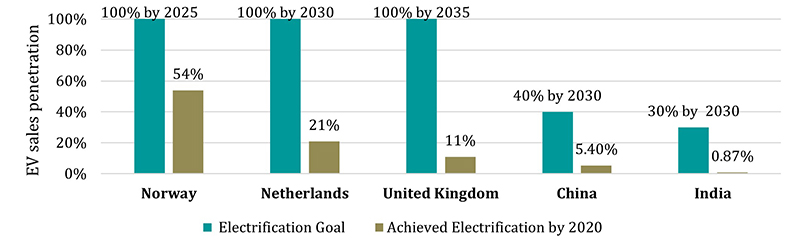
Figure 1. Electric vehicle targets and achieved EV penetration of different countries

Figure 1. Electric vehicle targets and achieved EV penetration of different countries

Another vital role was played by the local governments through city-level implementation policies, which include innovative incentive policies and business models, that spurred EV uptake several times at the city level. Shenzhen, a southern Chinese city, started with the development of a comprehensive institutional framework and additional purchase and operational subsidy policies to promote the development of the local EV market. Through the above policy actions and collaborative efforts between local governments, third-party financial institutions, EV manufacturers, and charging facility operators, using leasing and vehicle sharing mechanisms, Shenzen was able to increase the total number of EVs ~58 times compared to 2012. During 2015-2018 (scale development phase), the number of e-buses increased 4-fold (from 4,000 to 16,000) whereas electric taxis and private cars grew 10-fold. It also invested heavily in charging infrastructure, and the city has an average of one fast charger per 0.16 km2. Today, Shenzhen emerges as a source of inspiration with the world`s largest e-bus fleet and almost 100% electrification of taxis and urban logistics vehicles.     

Europe

Europe, giving close competition to China in the growing global EV market, has richly varied electric mobility support policies across its markets. It hosts the countries with the largest penetration of e-car sales including Norway (54%) and the Netherlands (21%). While in Europe, the financial incentives are based on CO2 emissions; different countries have different mechanisms for putting EV adoption in place and each of them is unique in its place.

Norway, with 54% e-car sales penetration in 2020 remains the global leader in EV market share and is also the closest to achieving its national zero-emission vehicle (ZEV) target of 100% e-car sales by 2030. Norway’s success in EV diffusion can be traced back to the outstanding amounts of subsidies the government deployed. Starting back in 1991, Norway exempted EVs from registration taxes and then value-added tax while later it waived tolls and parking fees to EV owners and gave preferential access to bus lanes. In addition to this, the government strongly subsidized charging infrastructure development across the country through direct grants to the service provider. Similar local initiatives were established by city administrations which considerably decreased barriers to development during the early years of diffusion and increased EV adoption by more than 200% after five years in Norway.

Similar local initiatives were established by city administrations which considerably decreased barriers to development during the early years of diffusion and increased EV adoption by more than 200% after five years in Norway.

The Netherlands standing second to Norway in terms of EV adoption has a target to sell all-electric cars by 2030. The introduction of purchase subsidies for even second-hand EVs in chorus with fee waivers for vehicle registration, road tax has led to soaring consumer demand from just 1% EV sales penetration in 2015 to 21% in 2020. Its dense charging network of  1 public charge point for every 5 EVs, has been one of the factors behind a successful EV adoption. Over 80% of charging points deployed into the country’s regime were done through a partnership with municipalities. Moreover, the cooperation among the national, regional, and local level governments to implement the subsidy model, as well as incentives for EVs, has been a worthy tool for mass EV uptake in the Netherlands.

United States

The US was the earliest adopter of EVs, however, the pace of growth has been relatively slow when compared to Europe and China. It had a national target of adopting 18 million EVs on its road by 2030 but was able to achieve only 10% of it by 2020. While EV penetration in the nation remains low, efforts at the state and local levels have gained impetus over the years. The major responsibility for the deployment of publicly available charging stations was undertaken by the states by directing national funds.

Today, the state of California stands as a flagbearer with its set of progressive policy measures aiming for 100%  electrification of all new car and passenger light truck sales by 2035. Complementing the federal subsidy, California introduced state-level tax credit on EV purchases followed by high occupancy vehicle (HOV) lane access and utility incentives for EV owners. The state tax credit stands unique as it incentivizes EVs for a family according to the EV purchase price and its household income to ensure that the credit goes to the real buyers in need. California further introduced the world’s first ZEV mandate for automakers similar to that of China.

At the local level, cities have increasingly adopted more detailed EV strategies and goals to guide future actions. The cities of San Francisco and Los Angeles have aimed for all registered vehicles to be ZEVs by 2030 & 2050 respectively and have adopted stronger EV-ready building codes for facilitating charging infrastructure deployment to this end. As a result of these far-fetching policies, California today accounts for close to half of the EV sales(101,628) made in the US with a 3-fold increase in the EV market share from 2016. Although EV adoption has so far lain on the shoulders of a few state governments, the new US Government is advancing federal support to transition its fleet to ZEVs and establish a nationwide charging network.

India

To meet the global commitment of lowering emission intensity, India has been upping its electrification game with a bunch of progressive policies aiming to achieve 30% EV penetration by 2030. In 2015, the central government announced demand incentives under its flagship Faster Adoption and Manufacturing of (Hybrid &) Electric Vehicles (FAME) schemes, to prioritize the electrification of public transportation and commercially used vehicles across various segments. Unlike other western nations, where e-cars dominate the market, the EV landscape in India is built on e-2Ws and e-3Ws with an EV market share of 61% and 37%, respectively. Further, multiple initiatives were put forth to accelerate EV adoption including reduction of Goods and Services Tax (GST) on EVs, regulation for allowing the sale of EVs without batteries to encourage battery leasing/swapping, scrappage policy for old fossil-fuel-powered vehicles, etc. While national-level efforts for EV promotion have been in place since 2012, it was only in 2017 that the state governments started devising their state-level EV policies. 20 out of 28 states have announced their EV uptake targets and incentives under EV policies during 2017-2020, whereas 6 out of the 20 states have approved or revised their EV policy in 2021.  Some states (e.g. Gujarat) are even developing EV policy roadmap at the city level. Financial incentives ranging from purchase subsidies, battery buy-back schemes, exemption from vehicle registration, and road tax to boosting charging infrastructure through capital subsidy are some of the enablers deployed at the state level to boost consumer confidence in EVs. The introduction of these policies in conjunction with national schemes has been a gamechanger in growing India’s EV sales share by 17 times from 0.1% in 2015 to 1.7% in 2021.

Figure 2. Registered EV sales trend in India (January-2020- November-2021

Figure 2. Registered EV sales trend in India (January-2020- November-2021.

Government support is further prospering competition in the industry and keeping the stakeholders on their toes with innovative business models like vehicle leasing and battery swapping. Energy Efficiency Services Limited (EESL), a public sector undertaking drove the initial adoption of e-cars by partnering with demand aggregators like ride-hailing services and state governments for leasing vehicles procured in bulk from automakers and achieving economies of scale. Further demand in light-duty vehicle segments is currently boosted by the adoption of EV fleets in the last mile connectivity and last-mile delivery sector. Under public transportation, the adoption of e-buses is largely driven by Public-Private Partnership (PPP) model. Government-run State Road Transport Undertakings (SRTUs) are operating ~1061 e-buses under the Gross Cost Contract model, where the private operator receives payment from SRTUs on a fixed cost per km basis.

For the widespread deployment of charging infrastructure in India, the initial action was taken by EESL by partnering with municipal bodies and electricity distribution companies. With the broader target for setting up one public charging station at every 3 km in metropolitan cities, states like Andhra Pradesh, Uttar Pradesh, Bihar, and Telangana have fixed state-level targets to be achieved with investor-friendly policies, supply chain connectivity, and land availability.

Moreover, to boost an EV manufacturing base and reduce import dependence in India, the central government recently launched the Production-Linked Incentive Scheme (PLI) for strengthening different EV component sectors including a planned outlay of INR 18,000 crore for 5 years for manufacturing of Advance Chemistry Cell (ACC) batteries for EVs. Ultimately, it is this continual investment that will support the EV industry with the requisite infrastructure and significantly cause a reduction in the cost of EVs. Although challenges to mainstream EVs on Indian roads still exist including lack of EV models and end-user financing, if these pertinent actions continue to build, the 2030 electrification targets could well be within reach.

Summary

EV adoption has picked up steam in recent years, fueled by a confluence of circumstances and enabling parameters. While many EV promotion activities are used at national and local levels, fiscal support measures and charging infrastructure deployment is among the most prominent ones. Federal and state governments have an important role to play in initiating EV adoption but it is going to take more than government support to realise the electrification targets. Since every component is likely to have a varying degree of stakeholder involvement, innovative and strategic alliances through public-private partnerships remain key to facilitating and optimizing the interplay amongst various actors in the EV ecosystem as seen in Shenzen.

The world’s largest EV markets demonstrate that while a top-down planning approach is of paramount importance to shape and direct the investments at the supply end, a bottom-up planning perspective is equally important to take advantage of local conditions and overcome barriers to adoption. Despite the fact that India is a long way off from reaping the gains of sustainable mobility, it can take heed from these learnings and steer the transition to an electric mobility future.

About the Authors

Dr. Parveen Kumar

Dr. Parveen Kumar is a senior program manager at WRI India under the Cities program. Currently, he is associated with projects related to the electric vehicle ecosystem. He has previously worked at the Indian Institute of Science (IISc), Bangalore, and has received a Ph. D. from JMI, New Delhi. He has more than 14 years of post-PhD experience in science, technology, and policy research. He has published several peer-reviewed papers in reputed journals and articles in the leading magazines.

Anshika Singh

Anshika Singh is currently working as a Program Associate with the Electric Mobility team at World Resources Institute India. She currently holds a Master’s degree in Transport Planning and a Bachelor’s degree in Planning from the School of Planning and Architecture, Delhi. Her areas of interest include climate change, sustainable transportation, green mobility, low-cost transportation.

References

The Importance of Tourism Readiness

tourism readiness

By Dan Fenton

Travel and tourism accounts for 10.4 percent of the global GDP and is a cornerstone of the worldwide economy. It includes a wide range of industries from hospitality to visitor attractions. Money generated by tourists helps cities not only pay for infrastructure projects and essential workers, but also for services to improve the local quality of life and preserve cultures.

Thanks to increasing disposable incomes across the globe, improved physical and digital connectivity, reduced fears over the pandemic, and an increasing desire to see the world, future growth expectations of the travel and tourism industry are strong.

For a city to truly thrive and for travel and leisure to develop in a sustainable manner, city planning authorities, developers, investors, legislators, and community groups need to understand how ready the city is for future tourism growth and what challenges and opportunities it may face. It is imperative to create long-term plans that focus on environmental sustainability, regenerative tourism, public safety, small business impact, and local resident quality of life.

Governments need to provide and promote a supportive, physical, regulatory and social environment. This requires official policy that prioritizes the livability of cities; ensures there are proper city services (waste management, etc.); and provides exceptional education, good transportation, and abundant green space.

Another key component in the success of a travel destination is public safety. If the location or country is perceived as unsafe, it will have a negative effect on tourism. The industry must be collaborative with public safety leaders in terms of supporting proactive safety measures, which is a major bellwether of how successful a destination is from a tourism perspective.

Local businesses are another key component in determining the success of the overall visitor experience. In some cases, local restaurants and businesses are what really make up the destination experience – it’s those small businesses as a collective that create the attraction. There is currently a huge recognition of how important it is to think about protecting small businesses going forward. The notion of readiness entails how these vital businesses are supported to encourage long term success.

It’s no longer solely about the number of tourists, but the social and economic impact of the sector on the community. The travel and tourism industry has not traditionally been perceived as environmentally friendly by nature. There are parts of the world that have been permanently impacted by tourism in terms of pollution, waste issues, public safety, and more.

Cities including Amsterdam, Barcelona, and San Francisco have in recent years seen high tourism growth momentum, but at the same time have either experienced tourism pressure or are at risk of facing potential issues. In fact, Barcelona has focused significant resources on managing the amount of tourists descending upon Plaza Catalunya and other highly trafficked tourist destinations resulted in a negative visitor experience and had a very negative impact on the community and environment.

For group travel, especially in busy destinations like Amsterdam, arranging ground transport early can significantly enhance the overall experience and reduce logistical stress, coach hire Amsterdam from 8rental allows groups to stay together, manage luggage easily, and coordinate schedules without relying on fragmented public transport or multiple taxis. Planning these transfers in advance is a small but impactful part of tourism readiness that helps ensure a smooth and enjoyable trip.

Wherein before the mindset was more is better. Today, it’s not about more visitors, it’s about the right mix and level of travelers and planning for that in order to make a successful tourism economy.

City government, tourism organizations and policy makers are increasingly realizing the need to shift from solely focusing on destination marketing to take a more proactive and holistic destination management approach. They also need to plan their growth; define where they want to grow and assign priority to tourism planning at the highest levels.

levels of city readiness

Achieving tourism readiness involves more than just focusing on the travel and tourism sector. Success requires a range of other considerations to support the visitor economy including city infrastructure and the availability of labor and safety measures.

There are four main steps in achieving sustainable tourism growth.

Understanding a City’s DNA

As a first step, it is essential to understand the clear essence of the city’s DNA. What are the assets and unique features that make people want to live, invest, and visit the city? How does the city’s history and culture affect the community’s values, beliefs, and ways of living? How is it viewed? And most importantly, how does it interface with the residents?

Assess the Current State of the City’s Tourism Ecosystem

Stakeholders should have a thorough understanding of the level of tourist concentration, the overall scale of the travel and tourism sector, and the driving factors behind it. These elements go hand-in-hand in helping to identify gaps and growth opportunities.

It is also central in determining which tourist segment the city should pursue to achieve maximum benefit. For cities with a high concentration of tourist activities and a disproportionate focus on leisure travel such as Prague, Barcelona, and Rome, the development of a larger corporate traveler base could be beneficial as this segment generally generates more revenue and travels out of high season and on the weekdays. Further, business travelers spend less time in key tourist attractions, thus relieving some of the pressure from a crowded city center.

Set Sustainable End Goals and Develop a Plan with Policies to Achieve Those Goals

Once a thorough assessment of the city is completed, key stakeholders should collectively decide the end goal and develop a detailed roadmap to achieve it. All elements involving citizen satisfaction should be considered, particularly the views of communities living within the city center.

Cities are on the frontline of major global and societal changes. In embracing the value from tourism, the authorities and destination management organizations must be proactive in incorporating tourism policies which consider the needs of both visitors and the local population.

City councils and tourism authorities should include neighborhood representatives on committees to discuss problems and help devise solutions as well as offer on-line forums for citizens to provide suggestions and feedback.

To ensure that residents are comfortable with the approach, it is important to invite them to take part and contribute. City councils and tourism authorities should include neighborhood representatives on committees to discuss problems and help devise solutions as well as offer on-line forums for citizens to provide suggestions and feedback. By communicating the value and contribution travel and tourism have on the city, citizens are more likely to be supportive.

Sydney, for example, has online and in person citizen and community engagement programs which helps shape the strategic direction of the city. In Paris, the government has a website inviting residents to participate in many communal areas of city life and join discussions on how to develop public space.

It is also important to have an economic development plan – one that addresses the potential impacts of growth and how investing in infrastructure will support that growth. Forward-thinking city authorities must also consider not only the needs of the city’s economy but of its ecology as well by examining the effects of increased carbon emissions, waste, and water supply.

As the world reopens to leisure and business travel, destinations and cities alike could be increasingly threatened by their own popularity in environmental, social, or aesthetic terms. While there is no easy fix to overcrowding, it is important to identify hotspots and consider implementing strategies to mitigate bottlenecks, such as offering incentives and transportation solutions to visit on off-peak days, weeks, or months and promote outer district bookings.

travel

Further straining the overcrowding of destination cities is the increasing popularity of home sharing opportunities such as Airbnb. Many of the listings are in residential areas, which can have a negative effect on noise levels within these communities. While the industry needs to be embraced, it should also be managed just like any other hospitality industry.

Implement, Monitor, Evaluate, and Communicate

Once the strategic direction of the city and its policies for sustainable growth have been determined and implemented, it is essential for the tourism bodies to monitor and evaluate the impact on the sector. This can be done from both a qualitative and quantitative perspective.

The Need for Readiness

The notion of readiness considers all the different parts of a community including the effects it will have on the residents and businesses, environment, and the overall economy. Tourism must be good for visitors and residents alike and its growth must be organized, well planned, and have a positive social impact. In addition to thinking about marketing, the market, and building high profile attractions, there needs to be a greater connection between conservation, sustainability, and tourism among destinations, citizens, and leaders. It’s not always connecting, and it needs to.

Today, there’s an opportunity to ask key questions. Is there a smarter way to reopen? Could visitors actually leave the destination in better condition than when they arrived? These are particularly important questions for drive-to destinations as many are already at capacity and in a reactionary mode.

Determining a city’s future readiness for tourism growth requires a view that accounts not only for its current physical and natural assets, but also from its social capital and the impact of its policies. Whether a city is looking to grow its travel and tourism sector or manage rising visitor numbers, businesses and city leaders must balance all the dynamics that make up a city’s fabric.

Successful destinations will manage their tourism process and be more focused on who they are targeting from a visitor perspective. More for more’s sake is not always better. It’s not about more visitors, it’s about the right mix and level of visitors. The travel and the tourism industry needs to manage demand effectively.

About the Author

Dan Fenton

Based in San Francisco, Dan Fenton is an Executive Vice President with JLL’s Hotels & Hospitality Group specializing in tourism and destination strategic planning. With more than 25 years of experience, he provides operations, sales and marketing support for destinations, public assembly venues and hotels. Fenton is a graduate of Cornell University where he received a Bachelor’s degree, with distinction, in hospitality administration and management.

St. Kitts & Nevis CBI Programme: Conclusive Insights & What The Future Holds

St. Kitts & Nevis CBI Programme: Conclusive Insights & What The Future Holds

As the need for expanding businesses and living without travel restrictions is rising, the demand for citizenship by investment is becoming more of a necessity than a luxury, specifically in the MENA region. To tackle the topic of becoming a Global Citizen in more details, Bluemina will be hosting a webinar on March 28th, 2022, at 16:00 GST.

A powerful second passport offers you an unlimited array of benefits including the freedom of movement across more than 160 countries including all Schengen countries, the United Kingdom, Singapore, Hong Kong and much more. Owning a passport from an economically and politically stable country means being a secured citizen for life, living with peace of mind and much less to worry about when it comes to the future and what it holds.

Mr. Bashar Daoud, managing partner of “Bluemina Citizenship & Residency” said: “Since our operations started in 1997 our main focus was to introduce innovative programs that will cater to all needs, and guarantee successful investments to all our customers. That being said, the Saint Kitts & Nevis program that Bluemina offers you is the oldest and most established citizenship by investment program worldwide.”

A major contributor to the high satisfaction rate that Bluemina has with clients who opt for the Saint Kitts & Nevis citizenship by investment program can be attributed to the strong relationship between the Bluemina management and the Island’s Prime Minister, Dr. the Honorable Timothy Harris and the CEO of the Citizenship by Investment Unit, Mr. Les Khan.

St. Kitts & Nevis CBI Programme

Les Khan, PMP, MSOC, BBA, who currently holds the position of CEO of the Citizenship by Investment Unit for Saint Kitts & Nevis, is originally from Trinidad. Khan has completed his education in Australia and the United States of America and has more than 20 years of experience in the fields of finance and risk management.

To capitalize on this relationship and in order to further enlighten you with the benefits of these programs and the world of citizenship by investment, Bluemina represented by its Managing Partner Mr. Bashar Daoud and in collaboration with Gulf News will be hosting a live webinar on 28 March 2022 at 16:00 GST, via airmeet featuring an exclusive discussion with Mr. Les Khan, to discuss the Saint Kitts & Nevis Citizenship by Investment Program and how it can open a global and unlimited world of opportunities and priceless benefits to all investors.

Moderating this webinar will be Ms. Sally Moussa, an international presenter and speaker who has interviewed many of the world’s most influential change-makers across every field.

The webinar will mainly tackle the importance of becoming a Global Citizen in this day of age, the importance of conducting strong due diligence, the various benefits of obtaining a powerful second passport through the Saint Kitts & Nevis citizenship by investment program of and the eligibility requirements that applicants must meet to acquire this citizenship.

Moreover, the webinar will also be reviewing the Saint Kitts & Nevis program in light of the current political events taking place across the globe and any future implications they may have on second nationality holders or applicants.

If you would like to attend the online event, simply register here.

Wrongful Death: How Does A Lawsuit Work?

At the meeting, a team of lawyers discussed the lawsuit. Concept of law and justice.

One of the most common lawsuits followed in the civil court of law pertains to wrongful death cases. These unfortunate events can be defined as the death of an individual due to the negligence of ill-actions of another party, be it an organization or person. Every year, there are over 90,000 deaths in the US alone due to medical malpractice, not including other forms of wrongful deaths. So what can be done to help the aggrieved parties receive justice? The legal system has several statutes in place to help with the loss and damages caused due to such an occurrence. Let’s explore the workings and scope of wrongful death lawsuits.

What defines Wrongful Death?

If a person passes away or is killed because of the misconduct or negligence of a second party, the next of kin or surviving members of the family are within their rights to sue for “wrongful death.”

These kinds of cases demand compensation for the loss due to the death of this individual, be it lost wages, companionship, medical, or funeral expenses.

A wrongful death claim can be filed when an individual dies due to the legal fault of another organization, professional, or individual. These parties may include a drunk cab driver that killed a passenger to the bartender or a club that served drinks to the drunk driver.

Wrongful death legislation may differ from state to state, but they dictate who gets to sue and what damages can be filed for by a wrongful death attorney. Originally the lawsuit was created for the children and widows of such deceased parties to receive financial compensation but has been extended to the rest of the family as well.

Who Can Sue For the Wrongful Death of an Individual?

State laws have made provisions for the recovery of compensation by the individual’s surviving spouse, immediate kin, children, or the parents of a deceased fetus. The recipient of these depends on a state’s statute for wrongful death and can vary from the definition of legal heirs under the state law for inheritance cases. A claim for wrongful death is presented by the decedent’s estate’s personal representative.

How is Wrongful Death Proven in the Court of Law?

To  win a lawsuit filed for the wrongful death of a party, the plaintiff has to prove the following in the court of law:

  • The death of a human individual
  • The death was caused by a second party’s negligence, or the objective to cause harm
  • The surviving family members have suffered financially and emotionally due to such a death.
  • A personal representative has been appointed for the decedent’s estate.

Once all the four have been proved to the court, a legal proceeding begins.

Damages in a Wrongful Death Lawsuit

The first category of damage claims in the case of a wrongful death provides for the recovery of damages undergone by the deceased person from the point of such a negligent act that caused their death, until the time of death. These damages can include:

  • Medical costs
  • Compensation for the deceased individual’s mental/physical pain and suffering
  • The deceased’s lost income or wages
  • Funeral and burial costs.

The second category of damage claims covers the losses incurred by the immediate family after the death of the individual. It compensates the next of kin for the financial damages suffered due to the loss of income up till the age of the said deceased person’s retirement.

A few states also provide “loss of consortium,” referring to the loss of companionship that a spouse or immediate family members have been deprived of. This is an important provision especially when a young parent leaves behind underaged children or dependent family members.

What to Consider Before Hiring a Lawyer?

As with every other lawsuit, not all wrongful death cases make it to a full hearing before the jury. Due to litigation expenses and the time consumed, attorneys often make settlement deals to avoid such costly affairs. These legal representatives can negotiate better damage settlements than the defendants can on their own, which is why it is necessary to seek a reputed attorney or firm for help.

Wrapping Up:

If you have lost a loved one due to an accident or injury caused by the misconduct or negligence of another company, individual, or entity, you could be entitled to sue for wrongful death against the responsible parties. While selecting an attorney, make sure to check their track records regarding wrongful death cases and compensations to make the best choice.

EDITOR'S PICK OF THE WEEK

CFO's new mandate. CFO explaining the presentation

The Performance and Transformation Orchestrator: The CFO’s New Mandate in the Age of AI

By Terence Tse CFOs are evolving into AI-driven transformation orchestrators, balancing finance, technology, and strategy while upskilling teams, managing risks, and driving measurable business value. A key insight from this year’s AI for CFOs event, organized...

WISE DECISION MAKER GUIDE

POWER INFLUENCERS

Emerging Trends

The Future of Global Trade