Bringing in a new PR and communications agency offers exciting opportunities, but only if guided by a clear, thorough brief. This article explores why a well-prepared communications brief is essential, what to include, and how it sets the foundation for measurable impact, strategic alignment, and long-term business success.
Bringing on board a new PR and communications agency can – and should – feel like opening up a world of possibilities. Perhaps you’re aiming to increase sales, attract investment, or protect your company’s reputation.
Yet, if your initial brief didn’t fully convey your goals, challenges, background, and context, you could quickly run into issues. Initial meetings can feel like everyone is aligned and ideas are flowing, yet a few weeks down the line, you find that things have drifted off course. Messaging may miss the mark, timelines are slipping, and the costs are quickly starting to mount up.
So how can business leaders avoid these pitfalls? The key is preparing a brief that is crystal clear, thorough, and equips your agency to deliver measurable impact.
Why a communications brief matters
A good brief is not just a tick box exercise; it’s the foundation of a successful partnership. Think of it as a roadmap for your agency, outlining your objectives, target audiences, key messages, budget, timelines, and expectations. It also serves as a point of reference when evaluating success.
If you have several agencies lined up in a tender process, ensure that each agency receives the same brief. You should also be prepared to discuss your brief with prospective agencies during the tender process and when commencing work. Their input may prove extremely valuable, bringing expertise from your sector and a new perspective that may help you refine your thinking.
Start with where you are
Help your agency to understand your starting point; what does your business do, and what areas of expertise set you apart in your market? Which products, services, or capabilities currently drive growth?
Next, a comms agency will need to understand the overall business problem. No business operates without any challenges, and your communications strategy should be designed with these in mind. What operational, market, or reputational pressures are shaping your current priorities? Perhaps it’s the current sales performance or industry shifts? A communications strategy that reflects your current reality will help identify the areas that your business will have the most impact.
Then, outline your plans. What’s the big driver for the next five years? Are you developing a product roadmap, expanding a service, or considering a rebrand? What audiences are most important, and why? Ranking your audience groups in order of priority can clarify where your communications efforts should focus.
Finally, provide context on your competitive landscape. How crowded is the marketplace, and where do you currently fit in? Who are your closest competitors, and why? What position would you like to take within your market in five years, and how realistic is this goal?
Share existing marketing and messaging plans
Your current communications are the starting point for your agency. Whether or not you have an existing messaging plan, explain how your brand is currently described. What is your value proposition? What is your company’s mission, purpose, and ethos? How would you describe the way that your business (and all employees) operates, and what is important to you?
This stage can also reveal inconsistencies in messaging across channels. A fresh perspective from an agency can highlight gaps or areas where clarity is needed.
Explain your top-line marketing plans and why a communications activity, project, or full strategy is required, particularly if you’re entering a phase of structured PR campaign planning. How will the communications plan tie in with the existing marketing plan? Who are the key stakeholders that the agency would need to engage with? Understanding all of the pieces of the puzzle will help your agency to hit the ground running.
Define what success looks like
Success looks different to each stakeholder. Who holds the budget, and who will influence the strategy? How do objectives vary between leadership, marketing, product, or other teams? A clear understanding of these expectations is vital for your agency to deliver a strategy that satisfies all.
Be prepared to discuss both short and long-term objectives, as results expected in three months may look very different from results aligned to a five-year growth or exit strategy. Sharing the long-term roadmap ensures that every campaign contributes to your overarching goals and allows your agency to measure results effectively.
Share your budget and timelines
While you may not have a precise figure, providing a ballpark budget is essential. Agencies can then propose different tiers – say bronze, silver, and gold – each aligned with your objectives and budget.
The same goes for the timeline – there’s a huge difference between what can be achieved in a month or a year, so be clear when results need to be achieved.
Building a long-term relationship
Investing time upfront in briefing your agency pays dividends in the long run. Clarity from the outset ensures that the strategy is focused and that your investment is maximised. Encourage conversations with the agency and your internal stakeholders – it is time well spent.
If your brief isn’t fully formed, a good agency will provide a reverse brief template. This allows you to check that their interpretation aligns with your objectives and priorities.
An investment in time that delivers long-term success
Bringing your communications agency into the fold and investing time in briefing them will pay off again and again in the long run. Being clear from the start about what your ultimate end goal is will deliver the most effective strategy and will ensure that your investment is maximised.
Also, speak to your agency to see what’s needed of you to make the relationship as effective as possible. Ultimately, what you’re aiming for is a communications strategy that doesn’t just support your business – it actively drives it forward.
Laura Lear, Managing Director, strategic communications agency, AMBITIOUS.A strategic communications leader, Laura Lear has over 20 years’ experience in global PR, corporate communications and reputation management. She has worked at agencies including Edelman, McCann and Speed Communications and is using her expertise to support the next phase of AMBITIOUS’ development.
The true role of financial transparency is to turn numbers into a shared language of trust. It is not about perfect figures, but about honest storytelling with data — a discipline that aligns teams, reassures investors, and drives sustainable growth.
Investors today are inundated with pitches, but only a fraction of startups win their trust. What separates those who succeed is not just vision or growth potential, but clarity — the ability to show numbers that tell the real story. As a CFO, I see my role as turning numbers into a shared language across the company. In a market where capital is limited and scrutiny is high, financial transparency has become one of the most decisive success factors.
For me, transparency is not a burden — it is the foundation of trust. Trust with investors, trust inside the team, and ultimately trust with the market. That trust is not just relational; it becomes a real competitive advantage.
Building Investor Trust Through Transparency
I define financial transparency as creating an environment where numbers are structured, traceable, and honest — without hidden lines or blurred assumptions. Every cost, every forecast, every projection should have a clear place and logical explanation.
But transparency goes beyond mechanics. It’s about clarity, trust, and accountability — making sure the “why” behind the numbers is visible, not just the “what.” Investors value this deeply. They are not put off by weaknesses; they are put off by uncertainty. When startups gloss over figures or hide risks, investors notice quickly and lose confidence. In contrast, when a company openly shows both its strengths and weaknesses, it demonstrates discipline and respect for investor trust.
In one investment round I led, we initially struggled to convince investors. The turning point came when we opened up our full financial model — burn rate, unit economics, and even the weak spots. Instead of walking away, investors appreciated the honesty, asked sharper questions, and committed more quickly than expected. Transparency transformed hesitation into confidence.
Impact on Valuation and Investment Outcomes
Transparency directly affects how investors value a company and how quickly deals close. A full, connected picture matters: regular reporting builds trust, forecasts show discipline, cost structures reveal efficiency, and cash flow management proves the ability to survive and scale.
I have seen deals accelerate simply because investors did not have to spend weeks digging for hidden details. When financials are clear, assumptions are explained, and risks are acknowledged, conversations shift from “Can we trust this data?” to “How do we grow this business together?” In this way, transparency doesn’t just improve trust — it improves the economics of the deal.
And of course, valuation is only one side of the equation. For founders, transparency starts much earlier — long before the first CFO joins the team.
Early Steps Founders Can Take
Even before a CFO is in place, founders can lay the groundwork for financial transparency. From my experience, five early habits make all the difference:
Separate personal and business expenses. Many founders blur the lines, especially when bootstrapping. Keeping finances distinct avoids confusion and signals professionalism to investors.
Document assumptions behind forecasts. Numbers without logic are meaningless. Write down the reasoning behind every revenue, hiring, or cost assumption. If you adjust the model later, a record of assumptions shows how your thinking evolved.
Track cash flow with rigor. Cash is the lifeblood of any startup. Even a simple spreadsheet can suffice, but you must know your runway, major upcoming expenses, and how revenue fluctuations affect survival.
Use consistent reporting tools. Beautiful pitch decks don’t replace structured financial reporting. Even simple monthly reports in a consistent format reduce friction, create comparability, and build credibility over time.
Be open about risks and realistic about projections. Nothing destroys investor confidence faster than overpromising. Acknowledging risks — whether customer concentration, delays, or regulatory hurdles — shows discipline and preparedness.
When this culture is set early, a future CFO can build on a solid foundation instead of untangling unclear practices. Transparency is much easier to establish at the start than to retrofit later.
The CFO’s Role in Embedding Transparency
Transparency is not just about producing reports for the board — it’s about ensuring that founders, teams, and investors all understand the financial story in the same way.
That means building systems where data is structured and accessible, and modeling honesty by highlighting not only opportunities but also risks. When a CFO communicates consistently with clarity, transparency becomes part of the company culture. It evolves from a reporting requirement into a way of operating.
Balancing Transparency and Sensitive Information
In industries like AI or DeepTech, transparency must be balanced with protecting intellectual property and competitive edges. But transparency does not mean revealing every trade secret. It means ensuring that investors have a clear, honest view of unit economics, runway, and risk factors, while safeguarding proprietary algorithms or client data.
Transparency is about clarity of numbers and logic, not full disclosure of confidential details. Framed this way, it builds investor trust without compromising competitiveness.
Broader Strategic Benefits
The benefits of transparency extend far beyond investor relations. When numbers are openly shared within a company, teams gain a shared understanding of priorities, resources, and risks. This alignment reduces internal friction and helps everyone focus on the same goals.
I’ve seen startups practicing transparency not only attract capital more easily, but also execute with sharper discipline and stronger unity. Openness creates a culture of accountability and resilience, qualities that become especially valuable in times of uncertainty or rapid change.
Conclusion
Financial transparency is no longer optional — it is the currency of trust. For investors, it reduces uncertainty and accelerates decision-making. For teams, it provides clarity and alignment. For founders and CFOs, it creates a framework for disciplined growth.
I see transparency not as perfect numbers, but as honest storytelling with data. The companies that embrace this principle early, embed it in their culture, and balance it with competitive safeguards will not only secure investment but also build stronger, more sustainable businesses.
In a world where uncertainty is the norm, clarity is the most powerful signal of credibility. Transparency is not just a reporting practice — it is a long-term success factor in attracting investment.
Maria Azatyanis an international CFO and strategic partner for tech startups from Seed through Series B. She is a member of two leading U.S. finance leadership communities — The CFO Leadership Council and Financial Executives International.
A strategic framework for integrating digital assets through custody, governance, and sustainability
This article proposes a six-pillar framework for private banks to govern digital assets responsibly. By combining custody, compliance, allocation, insurance, governance, and sustainability, the model extends Switzerland’s legacy of trust into the digital era—showing how institutions can embrace innovation without compromising prudence or reputation.
Introduction
Wealth has always sought protection. In the twentieth century, Switzerland became the trusted guardian of global fortunes by mastering two arts: discretion and governance. The vaults of Zurich and Geneva were more than steel and stone—they embodied continuity, stewardship, and the promise that wealth could be preserved across generations.
Today, that legacy now faces a new frontier. Digital assets—cryptocurrencies, tokenized securities, and blockchain-based wealth—have moved beyond speculation. They are emerging as the preferred instruments of entrepreneurs, millennials, and the heirs of tomorrow. By 2030, as much as one-fifth of next-generation wealth could be allocated to digital assets. This reflects broader shifts highlighted in the World Economic Forum’s Future of Wealth and Sustainability initiatives, which stress that next-generation investors expect digital assets to be integrated with impact and responsibility.
For this generation, wealth is not only financial — it is purpose-driven. They expect their capital to be managed responsibly, aligned with sustainability, and governed with the same rigour that built Switzerland’s reputation for trust.
The challenge for private banks is therefore not whether to embrace digital assets — clients already do — but how to govern them in ways that preserve trust while advancing broader goals of responsibility and sustainability.
This paper proposes a framework—Crypto Vault & Governance—built on six strategic pillars that enable private banks to integrate digital assets securely, prudently, and in line with their long-standing DNA of stewardship. The vision is clear: Switzerland once built the world’s most trusted vaults for gold and securities. The new Swiss vault must be digital— forged not only of governance and discretion, but also of sustainability and purpose.
Part I: The Strategic Opportunity
A silent generational revolution is reshaping private banking. Wealth is shifting into the hands of digital natives who view Bitcoin and tokenized assets not as speculation, but as inheritance. More than half of wealthy millennials already hold digital assets, and they expect their banks to provide custody, advice, and governance alongside traditional portfolios. For them, crypto is not an alternative— is it part of the core narrative of wealth, alongside sustainability and purpose.
Figure 1: Generational Shift: More than half of HNW millennials (55%) already hold digital assets, compared to barely one in ten boomers (12%). This highlights a profound shift in expectations: younger clients demand integration of digital assets with both traditional portfolios and impact-oriented strategies.
The competitive landscape, however, remains fragmented. Institutions such as DBS in Singapore or Fidelity in the U.S. have launched custody and tokenization platforms, but these efforts are still narrow in scope. In Switzerland, the heartland of private banking, no traditional pure-play private bank has yet delivered a fully institutional, endto-end solution.
This creates both a risk and an opening. The risk is stark: to lose relevance with the very clients who will define the next century of private banking. But the opportunity is equally clear: to become the trusted architect of integrated wealth—traditional and digital, financial and sustainable, present and intergenerational. For the World Economic Forum community, this is not simply about market leadership, but about shaping a financial system where innovation and sustainability advance together.
Part II: The Barriers That Hold Back Private Banks
If the opportunity is compelling, the challenges are equally undeniable. Digital assets do not fit neatly onto a shelf of offerings—they reshape the blueprint of private banking and call for responsible innovation.
Volatility underscores the importance of disciplined allocation frameworks and transparent risk management.
Security risks—hacks, fraud, and irreversible transactions—highlight the need for institutional-grade custody, resilience, and collaboration with the cybersecurity sector.
Regulation and compliance— from KYC and AML to tax reporting—remain complex and evolving, requiring proactive alignment with emerging global standards. As the World Economic Forum’s Global Risks Report 2024 notes, digital assets exemplify the dual challenge of innovation and trust, requiring coordinated governance.
Reputation risk reminds institutions that trust must be at the centre of digital wealth integration, reinforced by transparency and sustainability principles.
Infrastructure immaturity signals the urgency of establishing global standards for custody, reporting, and valuation, turning today’s fragmentation into tomorrow’s harmonisation.
It is no surprise, then, that most private banks have remain cautious, often standing as observers rather than actors. But caution is not a strategy. Leadership requires building models that transform these challenges into structured governance — demonstrating that innovation and sustainability can reinforce, rather than undermine, trust.
Part III: The Six Pillars of the New Swiss Vault
To integrate digital assets without losing trust, private banks must construct a system as rigorous as the vaults that once made Switzerland a synonym for safety. This rests on six strategic pillars:
Figure 2: The Six Pillars Framework: A governance-driven architecture that extends Switzerland’s tradition of trust into the era of digital wealth, while aligning innovation with responsibility and sustainability.
Wealth cannot rest on fragile infrastructure. Custody must combine cold-wallet storage, multi-signature protocols, and independent verification. It should be auditable, insurable, and built to institutional standards— the digital equivalent of Switzerland’s most trusted vaults.
2. Integrated Compliance by Design
Trust begins with legitimacy. Every asset must be screened for origin, legality, and tax impact. Automated blockchain analytics, anchored in rigorous compliance protocols, act as a filter—ensuring that only clean and transparent assets enter the vault.
3. Prudent Allocation: The Crypto Bucket
For today’s private banks, the question is not whether clients hold digital assets—they already do. The strategic task is to integrate them into a disciplined allocation framework. Depending on client profile, this may mean 5-10% of total wealth, managed with full transparency on performance, correlation, and risk. Digital assets must be treated with the same discipline as equities or bonds, not as speculative sidelines.
4. Insurance & Risk Hedging
Trust is built on guarantees. While volatility has created some of the largest fortunes in digital assets, the mandate of a private bank is different: to preserve and govern wealth. Institutional insurance against hacks and fraud, coupled with structured hedging instruments, allows clients to benefit from upside exposure while ensuring that downside risks are contained.
5. Governance & Succession
Wealth is not just money—it is continuity. Multi-signature arrangements that involve heirs or trustees, integration of digital assets into family governance structures, and targeted education for clients all ensure that crypto holdings can be transferred and inherited rather than lost or forgotten.
6. Sustainability by Design
Private banks cannot ignore their broader responsibility. The vault of the future must prioritize proof-of-stake and energy-efficient protocols, while also channelling capital into tokenized sustainable assets— from renewable energy projects and biodiversity finance to blockchain-enabled carbon markets and green bonds. In this way, digital wealth becomes fully aligned with the evolving purpose of global finance: to accelerate the transition to a net-zero economy and ensure that wealth creation is consistent with planetary stewardship.
Figure 3: Aligning Wealth: Integrating traditional, digital, and sustainable assets into a unified architecture of trust. Source: Author, inspired by WEF Global Risks Report 2024.
Together, these six pillars create a closed architecture: secure, compliant, prudent, insurable, governed, and sustainable — a model where innovation strengthens trust, and finance contributes directly to long-term resilience.
Part IV: Strategic Advantages for the Bank
Building the New Swiss Vault is not a technical choice—it is a strategic act of positioning. By adopting this framework, private and wealth managers globally can:
Claim leadership in responsible innovation, integrating digital assets within a comprehensive framework of custody, compliance, governance, and sustainability — and setting a standard for how financial institutions can extend traditions of trust into the digital age.
Attract and retain the next generation of clients, while deepening confidence among existing UHNW families by demonstrating that digital wealth can be governed with prudence and continuity.
Reinforce the identity of private banking as a house of governance and stewardship, proving that innovation and discretion are not opposites but complementary strengths.
Transform sustainability into a differentiator, extending its leadership into the digital realm and turning crypto from a reputational risk into a reputational asset — contributing to the broader alignment of global wealth with net-zero and purpose-driven finance.
Conclusion: Trust as Strategy
The future of wealth will not be defined by whether clients own digital assets — that reality is already here. It will be defined by whether financial institutions can govern them responsibly, sustainably, and inclusively.
The Crypto Vault & Governance framework is more than a safeguard; it is a blueprint for resilience. By embedding digital assets within the same principles that forged Switzerland’s reputation — prudence, governance, and long-term stewardship — private banks and wealth managers can carry their relevance into the digital century.
Trust has always been the defining currency of private banking. In the era of digital wealth, it must also serve as a compass, guiding innovation toward responsibility and sustainability.
The institutions that embrace this mandate will do more than preserve fortunes. They will shape a financial system where digital assets reinforce trust, accelerate the transition to a net-zero economy, and align global wealth with the purpose-driven economy of the 21st century. This aligns with the World Economic Forum’s call to ensure that technological innovation contributes directly to long-term resilience and sustainability.
Boecyàn Bourgadeis a finance and strategy researcher exploring the intersection of wealth management, digital assets, cybersecurity, and AI. Holding a Private Equity Certificate from Wharton and FMVA® specialization in cryptocurrencies and digital assets, the work centers on designing trust and governance frameworks for the emerging algorithmic economy.
References
Capgemini.World Wealth Report 2023. Capgemini Research Institute.
Boston Consulting Group (BCG) & ADDX.Relevance of Digital Assets in Wealth Management. 2022.
Fidelity Digital Assets.Institutional Investor Digital Asset Study 2023. Fidelity Investments.
PwC & Elwood.4th Annual Global Crypto Hedge Fund Report 2023. PricewaterhouseCoopers.
Deloitte.2023 Global Crypto Banking Survey. Deloitte Insights.
UBS Group AG.Future of Wealth 2030. UBS Global Wealth Management, 2022.
World Economic Forum.Global Risks Report 2024. World Economic Forum, Geneva.
World Economic Forum.Future of Wealth and Sustainability Initiatives. World Economic Forum, Geneva, 2023.
The United States confirmed that 200 service members will deploy to the Middle East to help oversee the implementation of a ceasefire deal between Israel and Hamas, following Israel’s approval of a U.S.-brokered peace plan. While the agreement is officially in effect, it remains unclear whether Prime Minister Benjamin Netanyahu has formally directed the Israel Defense Forces (IDF) to halt operations in Gaza.
According to two Israeli officials, the ceasefire terms were approved by Israel’s government late Monday. The plan includes the release of all hostages held in Gaza, a partial withdrawal of Israeli troops to designated areas, and the freeing of selected Palestinian prisoners.
A senior Hamas official stated that a “formal declaration” to end the war must come before any hostages are released.
The U.S. military will establish a Civil-Military Coordination Center (CMCC) in Israel to facilitate stabilization efforts for Gaza, according to a statement from U.S. Central Command (CENTCOM).
“U.S. Central Command (CENTCOM) is establishing a Civil-Military Coordination Center (CMCC) in Israel to support stabilization efforts for Gaza following the Oct. 8 announcement of a ceasefire agreement between Israel and Hamas,” the official said. “The United States has no plans to deploy US military personnel into Gaza.”
The Pentagon confirmed that about 200 U.S. service members with expertise in logistics, security, transportation, planning, and engineering will support the CMCC’s operations inside Israel.
White House Press Secretary Karoline Leavitt reiterated the administration’s stance in a post on X, writing that “up to 200 U.S. personnel, who are already stationed at CENTCOM, will be tasked with monitoring the peace agreement in Israel, and they will work with other international forces on the ground.”
A White House official told CNN that the U.S. troops will monitor and assist in implementing the ceasefire, potentially joining international forces from Egypt, Qatar, Turkey, and the United Arab Emirates who will help oversee the truce.
The ceasefire marks a pivotal moment after months of conflict in Gaza. While the U.S. and its partners work to enforce the agreement, the coming days will determine whether both Israel and Hamas fully commit to the terms of the deal aimed at restoring stability in the region.
Insurance companies encounter surging pressure to modernize their operations. Traditional insurance systems struggle to meet evolving customer expectations while managing complex regulatory requirements. Manual processes slow down policy creation, claims processing takes weeks instead of days, and outdated infrastructure limits growth opportunities.
That’s why insurance executives should prioritize implementing custom digital solutions over working with off-the-shelf legacy platforms. This guide explains the role of custom insurance software solutions in modernizing operations and why partnering with the right insurance software company is crucial for custom implementation. We’ll explore the core technologies driving this industry evolution and share proven implementation strategies that ensure custom insurance solutions deliver measurable results.
How Custom Insurance Solutions Enable Digitization for Insurers
Custom insurance software implementation refers to the incorporation of tailored solutions in the insurer’s digital infrastructure. These specialized systems are built from scratch to align with an insurer’s current workflows and future growth strategies, unlike off-the-shelf products. The global market value for custom insurance software implementation is expected to move from 116 billion USD in 2025 to 207 billion USD by 2030.
A custom insurance software system works as a complete digital ecosystem that links diverse operational components. Insurance companies can manage policies, process claims, handle customer interactions, and analyze data through a single, unified platform. This eliminates the need to juggle multiple disconnected tools.
The business benefits extend far beyond operational efficiency.
Leverage Multiple Technologies – These solutions show their real strength when multiple technologies work together. Modern insurance claims management solutions combine artificial intelligence, robotic process automation, cloud computing, and data analytics tools to create an efficient operational environment. This convergence of technologies helps insurers automate routine tasks, extract meaningful insights from large amounts of data, and react to market changes quickly.
Improve Customer Satisfaction – Insurance companies experience faster service delivery, reduced operational expenses through automation, and improved strategic decision-making through comprehensive data analysis. These technical strengths translate into improved customer satisfaction for insurers. Custom solutions adapt to changing regulatory requirements without requiring complete system overhauls.
Smooth Operations Scaling – Most importantly, these systems scale alongside business growth. When insurance companies expand their product offerings or enter new markets, custom software evolves to meet new operational demands rather than becoming a technological constraint. This adaptability ensures that software investments remain valuable throughout business evolution cycles.
Insurance leaders who partner with experienced development teams gain access to specialized expertise in building these comprehensive digital platforms. These partnerships enable the creation of solutions that address specific operational challenges while supporting long-term strategic objectives.
Advanced Technologies That Power Modern Insurance Software Solutions
Modern insurance software solutions combine innovative technologies that work together to change traditional insurance operations. These advances power efficient insurance software systems that adapt to market needs.
1. AI and Machine Learning
The incorporation of AI models in insurance systems facilitates smart detection of suspicious patterns in claims data that human adjusters typically overlook. Machine learning algorithms process diverse claims documents, assessing text, images, and supporting evidence to indicate potential fraud with greater precision than legacy techniques.
The intelligent algorithms in custom insurance software enable claims automation. The algorithms assess policyholder documents and evaluate them against policy terms, medical databases, and historical claims lists. This extensive and automated evaluation minimizes claims resolution time while improving decisioning precision.
Smart insurance solutions generate personalized policy recommendations to customers based on their profile data. The intelligent models can process demographics, behavior patterns, and risk indicators to recommend coverage options tailored to individual user profiles.
2. Robotic Process Automation
The integration of RPA bots enables customer insurance software to manage repetitive tasks with constant precision. The automated document processing bots enable the software to extract and process relevant information from medical record applications and supporting documentation, regardless of format variations.
Policyholder onboarding becomes automated when RPA bots in insurance systems gather and process data across multiple verification portals. These automated workflows validate credit scores, employment, and identity information with minimal human intervention.
Automated workflows enable custom insurance software to modernize policy administration tasks like premium calculations, renewal notifications, and coverage adjustments. This automation enables insurance agents to prioritize consultations and user relationship development.
3. Cloud Computing
Cloud platforms give insurers reliable infrastructure to store huge amounts of customer and policy data. Cloud-based disaster recovery solutions keep the insurance business running by quickly switching to backup systems when failures occur. This ensures operations continue even during unexpected disruptions.
4. Big Data Analytics
Analytics tools process big datasets to learn about policyholder behavior, which helps insurers predict customer needs. Complete data analysis makes risk modeling more accurate and leads to better underwriting decisions. This allows pricing models to use actual risk factors instead of broad demographics.
5. Internet of Things Integration
Connected devices gather live behavioral data, which lets insurers offer usage-based insurance. Premiums now reflect actual driving habits or lifestyle choices. IoT sensors help prevent risks by warning customers about potential issues before they become claims.
The best insurance software combines these technologies naturally to create a complete digitalpolicy management system that changes how insurance companies work and serve customers.
Expert Implementation: How Insurance Software Companies Drive Successful Digital Transformation
Choosing the right development partner plays a crucial role in implementing an insurance software system successfully. The expertise of a reliable insurance software company becomes the lifeline of project success. Their developers possess industry-specific knowledge and technical proficiency that internal teams might not have. Some of the key implementation practices followed by expert development teams include:
I. Getting a Complete Picture of Requirements
Successful implementation starts when experts gather requirements that align with business goals and user needs. This step helps identify workflow bottlenecks and define expected outcomes. Clear metrics to measure success are also established. This groundwork ended up ensuring the final solution tackles actual operational challenges instead of assumed ones.
II. Creating User-Focused and Adaptable Solutions
Professional insurance solutions providers put customer experience first while preparing for future growth. Complex insurance transactions become simple with an easy-to-use interface. By designing the insurance software with a flexible architecture, experts ensure that insurers can handle growing data volumes and users without obstacles.
III. Making Compliance a Top Priority
Professional developers make compliance an essential part of insurance software solutions development from day one. Systems built by experts automatically adjust to new regulations and keep audit trails for all transactions. Reliable security protocols protect sensitive customer data.
IV. Building Strong Data Connections
A smart insurance software company knows new solutions must combine smoothly with existing systems. They develop standardized APIs to connect with legacy platforms and create data governance frameworks that keep information accurate. Unified dashboards show a complete operational view of whatever data source is.
Final Words
Custom insurance solutions represent a fundamental change in insurance companies’ operations, not just an IT upgrade. Modern technology helps insurers transform their outdated processes with solutions built for specific operational challenges. Smart insurance executives see these implementations as strategic investments that provide substantial returns through better efficiency and customer experiences.
The best insurance software combines multiple technologies to create powerful operational benefits. AI and machine learning detect fraud patterns and automate claims processing. RPA handles documentation tasks with precision. Cloud computing keeps data secure yet available. Big data analytics reveal hidden patterns in customer behavior. IoT devices help create usage-based models that reward careful policyholders. These technologies work together as one system rather than separate tools.
The enduring mystery surrounding war is the question of why we fight when we could negotiate simple, peaceful solutions? The answer often given is that we humans are subject to a biological force that craves conflict. The technology has changed over the centuries but, it seems, we have not.
The true hero, the true subject, the center of the Iliad is force. Force employed by man, force that enslaves man, force before which man’s flesh shrinks away.
The Siege of Gaza did not end very well, at least not for the slaughtered men of Gaza, nor the enslaved women. It was the end of that war, one of many for Gaza, possibly because it was in the path of so many military campaigns along the Eastern Mediterranean. But that was then, when trade routes were important and empire builders, like a Macedonian who for his exploits was later called Alexander the Great, saw paths ahead of least resistance on his way to building his empire. It was neither the first nor the last of Gaza’s endless destruction and reconstruction from attacks. At one time, it was part of Judaea, governed by Herod, the Jewish king. Today, Gaza is once again, as almost always, involved in another one of its many wars—this time with modern Israel, not Ptolemy, the Maccabees, the Romans, or the Crusaders. And, too, like all other times of its multiple wars, there will come a time when its war ends with either destruction or a peace agreement. It is the way of almost all wars. They start and end in total defeat, exhaustion, or with an agreement that could have happened before they end to destroy all that is good.
Look back to any of the largest empires of the last two thousand years. We see victory after victory, military exploits that last for tens of years, sometimes hundreds, until they are ultimately defeated. All empires eventually fall. The Mongol Empire is no more. The Akkadian, Macedonian, Ming, Roman, Aztec, Japanese, British, Russian, Spanish, Portuguese, Ottoman, French, and Italian empires no longer exist in the massive sizes they once governed. They are all gone, now dwarfed to sovereign central political controls. What happened to reduce forces? Some empires grew through political dynasties of transborder governorates. Some were established through defense treaties that formed dominions, colonies, mandates, and protectorates, while others were acquired through states of limited means and unsustainable sovereignty. Many had been created from war victories. Regardless of what they were called or considered, they were all ruled or administered by a motherland-controlled country.
“The Procession of the Trojan Horse into Troy” (Giovanni Domenico Tiepolo) Public domain
The Iliad forces that lie within victims and victors
Forces of war are the drives to kill, but also not to kill unless there is a need to. Those forces turn men into what the French philosopher Simone Weil called a thing that has a soul, in her 1939 masterpiece poem “The Poem of Force”, as an analysis of The Iliad, concluding that humans are not divided into being conquered persons and conquerors. [2] Those forces are not the Star Wars energy fields of the galaxy harnessed by special people to achieve astonishing feats. But like the forces behind wars on earth, it has dark and light sides. The force for Weil is about the soul, and the “extraordinary house it finds itself in!” When a citizen becomes a warrior, Weil’s poem tells us, he is a thing of terror and slaughter and yet filled with grief in witnessing the deaths of his buddies. Think of Achilles’ mourning the death of Patroklos. “But what pleasure it is to me,” he says, “since my dear companion has perished, Patroklos, whom I loved beyond all other companions, as well as my own life.” [3] The combatant force within him seems only emotional, yet the pain of dreams in sleep that gash the soul are simply attempts to unravel reasons for brutality in missions to accomplish winning the conflict. “[That] property of force achieves its maximum effectiveness during the clash of arms, in battle.” The force is an it, a thing, a dehumanized object, that soldiers become when war brings indifference to life. It is the sad insanity that brings desolation to both victor and victim, emptiness to their souls.
Could it simply be that war is natural, a necessity emanating from points of evolutionary struggle for either survival or struggles for power?
“Herein lies the last secret of war,’’ Weil wrote, “a secret revealed by the Iliad in its similes, which liken the warriors either to fire, flood, wind, wild beasts, or God knows what blind causes of disaster.” What is that secret that we all wish to know? Could it simply be that war is natural, a necessity emanating from points of evolutionary struggle for either survival or power , another ingredient of primordial ambitions? Or could it be a genetic remnant or ancillary of cave real estate defense that led to territory expansion necessities? [4]
The force soars
“What god was it that then set them together in bitter collision?” It is the first question in Homer’s epic poem. [5]Well, I suppose it was either Athena or her brother, Ares, who favored valor through brutality in warfare, or neither god nor goddess, but a typical false sense of believing that luck is on one’s side.
Weil tells us there is a force that kills and a force that does not. The force works both ways to turn a human into a thing that has a soul, dead or alive. “Force,” she wrote, “is as pitiless to the man who possesses it, or thinks he does, as it is to its victims; the second it crushes, the first it intoxicates.” The truth is, nobody really possesses it. The human race is not divided in The Iliad into conquered persons, slaves, suppliants, on the one hand, and conquerors and chiefs on the other.” By force, she means the brutal power that converts beings into blind things, that are incapable of making decisions that could reset the balance of aggressor and victim to equilibrium. See what Weil is telling us? Humans can be turned to things or stones that beg the question, kill or not kill?
The Iliad is an artful account of a war that may have occurred around 1200 BCE near the city of Hisarlik, once called Troy. It is entirely fictional, but fiction, especially epic poems that involve wars, can tell us something about who we are. The Iliad is an ancient gift of reflection, a mirror centered on the question of why we fight. Weil’s Iliad force seems perpetual. It soars over the earth for centuries as the soul of a war-reminiscer searching for life, even though it might be an enslaved one. It was there in the past century and back with us in this one. It was there almost forever in the past. A force and soul that is always hovering, from high over Attila the Hun’s battles to Napoleon’s sieges, to two world wars, and over this hawk blistered new century.
Killing fast in large numbers
A half-million years ago, we discovered how to use tools to kill with stones, spears, and fire. In the 13th century, the Chinese invented gunpowder, which provided a far more effective means of killing. Not long ago, just before the building of railroads, we found a way to make a bullet and a gun. In the last century, because they could, armies employed tanks, planes, and missiles to kill fast and in large numbers. Now, we have autonomous fighter jets, lethal drones, and robotic missile launchers to kill from a distance too far for empathy. We, accomplices, will soon be killing robotically. It is difficult to estimate the number of deaths in human wars when so many innocent non-combatants die by indirect causes of wars. Some historians estimate deaths from all wars to be close to 1.1 billion.[6]
So far, in this new century, war death numbers are creeping not so fast upwards. The Watson School of International and Public Affairs estimate the number in this quarter-century to be close to 5 million. [7]
Take the Spanish Civil War, an internal war on an international battlefield.
Recent estimates of death put the toll close to 500,000. In 1937, when that war was intensifying and Germany was already rearming with war ambitions, William Hovgaard, a Danish-American academic, expressed his view on those battles, titled “Is War Inevitable?”, for the U.S. Naval Institute. “War is a biological phenomenon,” he wrote, “being part of the struggle for existence common to all organic beings in the wild state of nature.” Hovgaard saw war as an instinct for control over defending and controlling resources and lands that provide the subjectively best-possible living conditions. Disagreements, then, heat to levels goading instincts of control, a pull not unlike Weil’s force of the it that has drawn disputes to skirmishes to conflicts to gruesome battles through centuries from those before history.
If you flip through a zoetrope of historical maps of Europe from, say, 1450 to 1950, you will see national boundaries moving every few decades—in particular, Poland’s borders. Prussia or parts of the Grand Duchy of Warsaw will appear to be wiggling, splitting, bubbling, and revising like what you would see in the boiling brew of a witches’ cauldron. Yet the changing borders of Europe from 1950 to today will hardly be noticed. For more than 500 years, Europe was engaged in wars against neighboring countries with few years of peace. Hovgaard wrote that he had “been unable to find any two neighboring countries more than four generations old which have not been at war with one another at least once.” [8] For the 80 years since the end of World War II, Europeans felt comfort in the economic standards and amicable border agreements. Under the annoying aggravation of the Cold War with its moments of high anxiety, even with tens of millions of deaths indirectly caused by links to proxy and civil wars, both East and West came out the other end of the last millennium reasonably unscathed. That was before a Kremlin change with Putin’s grandiose schemes to bring Russia back to its Tsar-war glory days.
Franz Matsch: Triumphant Achilles: Achilles dragging the dead body of Hector in front of the gates of Troy Public Domain
Why do we fight to kill?
That question ties to how wars begin and end. Hovgaard’s thoughts on the biological craving for conflict are not about a thirst for war. Lovers have quarrels and families argue, but blowups rarely have strong tailwinds pushing toward the cliffs of separation, and in far rarer cases, horrid assaults. Wars at their start, however, are gales that immediately kill with ferocious animal instincts. Few wars of the past (at least 14 out of many over the last two centuries) ended with no deaths. They were comical discordances that led to declarations of war, one lasting hundreds of years, all ending in authentic peace treaties, and almost all about tea, spices, dyes, animals, boundaries, or liquor.[9]
When a dispute becomes a war, boundaries change, governments tumble, and in cases of major wars, the world suffers economically and, often, on the humanitarian plane
Fighting can have reasons. Perhaps it is about entertainment or settling scores. There are prizes for winners and, occasionally, sympathies for losers, but when it comes to war, generally, there is death and destruction, usually on both sides. While disputes can be settled by arbitration, settling hostilities needs far more diplomacy. When a dispute becomes a war, boundaries change, governments tumble, and in cases of major wars, the world suffers economically and, often, on the humanitarian plane, as poverty, expulsions of populations, hunger, and calls for retribution surface.
In my previous article for TWFR, “The Future of Autonomous Battling”, I quoted the military historian and Prussian general Friedrich Adams Julius von Bernhardi, who wrote that war “is a biological necessity… the natural law, upon which all the laws of Nature rest, the law of the struggle for existence.” [10]Like Hovgaard’s belief that conflict is part of the wild state of nature, von Bernhardi felt that the primordial impulse will always be with us, along with the good, bad, and acceptable human urges that brought us to this stage of existence. [11]
Why we fight requires a distinction between international and domestic wars, though many domestic wars do segue to being international. The Korean War, the Spanish and Vietnam civil wars quickly turned international from being internal civil conflicts, as did the American Revolutionary War. Two centuries ago, the wars were generally about empire-building and colonialist expansions. Going back further, conflicts were confined to neighbor against neighbor, with the usual disputes being over territory, minerals, spices, access routes, geopolitics, religious agreements, and silly clashes over pigs, tea, sugar, tobacco, or liquor, and even over the vibrant red pigment of the cochineal insect. But let’s consider territory prompted by empire building. Such a war comes from policy, not necessarily from anger over a territorial dispute. Governments have leaders who activate wars and, too often, leaders aspire beyond constraint and biased visions of power that disconnect from reality and ignore practical constraints linked to public opinion. It takes only one leader to start a war—the aggressor. The defender is a victim who has the right to defend. So as soon as combat begins, defense becomes offense, and war is then unstoppable.
My mulling question is about the distinction between aggressor and defender. Every international war starts from a confrontation, and usually one side or another is an aggressor that could have a reasonable dispute that calls for war. Out of many examples, let’s pick Germany’s invasion of neutral Belgium, which started World War I. Bound by the 1839 Treaty of London, Britain was obligated to defend Belgium and, thereby, forced a declaration of war on Germany. The aggressor in that case was Germany, though its reasons were to build a border deterrent fortress to protect itself from a possible invasion from France.
In my younger days, I ignorantly believed World War I started with the assassination of Archduke Franz Ferdinand. The assassin was a Serbian nationalist, and Serbia was a Russian ally. I did not understand the full connection between Germany and the Austro-Hungarian Empire, declaring war after a shooting in Serbia. Later, I learned that the assassination was simply the trigger leading to the invasion of Belgium, which brought Britain (protecting Belgium and France) into the war along with France and Russia. For me, it was a puzzle of missing pieces until I found one: an alliance with the Austro-Hungarian Empire that obligated Germany to respond. Germany’s invasion was not about the occupation of Belgium; it was a show of commitment to the alliance, a show that got out of hand. [12]
A fantasy drawing by Achille Beltrame of how the assassination of Archduke Franz Ferdinand could have happened. Public Domain
The alliance with the Austro-Hungarian Empire was an agreement to support each other. Bosnia was under the control of the Ottoman Empire from the 15th century to the end of the 19th century, when it was annexed by the Austro-Hungarian Empire in 1908. So, when a Bosnian Serb nationalist shot the Archduke and his wife, Sophie, the assassination played either as an excuse for war because there was fear that France might retake Alsace-Lorraine, or because of a policy to adhere to its alliance commitment, a pledge Germany could have ignored. [13]Acting on its assurance, it was seen as the aggressor. And that shows the problem with alliances that member parties feel cannot be broken.
Though the mess was started by Germany, the inevitable start was a significantly large bubble burst of power influencers panicking over Germany’s potential dominance in Europe. France had 170 miles (275 km) of border with Germany along the Imperial Territory of Alsace-Lorraine, a threatening possibility that France could invade Germany through that narrow corridor. The border between Belgium and France was (and still is) roughly 390 miles (520 km), with hardly any fortresses on the French side. Owning that border was a substantial threat to France if Germany were to build fortresses along the Belgium-France border. So, who is the aggressor in that war? Germany gets the blame, but what nation would stand by while a military buildup threatened an invasion?
The problem with alliances and the narrow bridges of diplomacy
Gangs are just alliances between friends. Nations have relied on alliances for millennia. In representative democracies, wars do not start by the will of the citizens, but rather by the decisions of elected representatives who tend to side with the will of alliances. They should make their decisions based on the opinions of citizens who vote but rarely do. Few countries have ever been direct democracies; no nation before the 6th century democratic reforms in Athens was, as far as I know. The Peloponnesian War began with disputes between the Delian and the Peloponnesian Leagues, two rival national alliances. The democratic government of Athens relied on town meetings. Annually elected generals attended monthly meetings where they were questioned and deposed. Athens declared war by indirect voting, whereas Sparta went to war by the voice of a hybrid aristocracy that included a council of elders who sided with military alliances.
In representative democracies, wars do not start by the will of the citizens, but rather by the decisions of elected representatives who tend to side with the will of alliances.
Before the 16th century, there were agreements between duchies and vulnerable neighboring states that feared each other. At the peak of colonial conquests in the 19th century, when European empires were solidifying their conquests, alliances became the ramparts of imperial power. One could see it as an alliance race to build deterrents and threats, a sprint to build more power through trade and warnings that turned small wars into big ones. The German Empire did take over Belgium in 1914, but the likelihood of a world war would have been small had the Austro-Hungarian and Ottoman Empires and the Kingdom of Bulgaria stayed neutral. It was as if there were two gangs dividing Europe, the Central Powers, a quadruple alliance (the German Empire, the Austro-Hungarian Empire, the Ottoman Empire, and Italy) against the Triple Entente, also called the Alliance (Britain, France, and Russia), though Italy stayed neutral. Those alliances and treaties locked into each side’s commitments to defend any one of their member nations.
Under Adolph Hitler’s 1939 expansionist policy, Germany annexed Austria and Czechoslovakia, unopposed by alliance members of the European powers. It was so easy that Hitler felt emboldened to take on Poland. Why not? He had already arranged an agreement, the Tripartite Pact, with Italy, Japan, Romania, Hungary, Bulgaria, and Croatia, knowing it would be signed in a few weeks after invading Poland. That alliance was like others that embolden aggressive expansionists. That pact was not a defense deterrent; rather, it was a sword-drawn gang of states that felt comfortably encouraged by the military strength of Germany. But Poland was not to be taken so easily. Two days after the invasion, Great Britain and France declared war on Germany. One year later, the Allies, a gang of more than 47 countries with multiple treaties, were unified to help Great Britain, France, and Russia set the world on fire.
The utter pointlessness
Nevertheless, the soul that is enslaved to war cries out for deliverance, but deliverance itself appears to it in an extreme and tragic aspect, the aspect of destruction. Any other solution, more moderate, more reasonable in character, would expose the mind to suffering so naked, so violent that it could not be borne, even as memory. Terror, grief, exhaustion, slaughter, the annihilation of comrades — is it credible that these things should not continually tear at the soul, if the intoxication of force had not intervened to drown them? The idea that an unlimited effort should bring in only a limited profit or no profit at all is terribly painful.
– Simone Weil
Odysseus, Agamemnon, and Menelaus survived the Trojan War, though so many Greek soldiers did not. That war lasted 10 years without diplomatic peace negotiations, aside from the initial offering of peace for Helen’s return. Though Homer’s poem is fiction, there is so much to learn about the forces of war that have almost nothing to do with armaments. The war started because one person, Helen, left her husband, Menelaus, to be with Paris, the Trojan prince. For the retrieval of one person, though one considered to be the most beautiful in the Greek world by legend, the war took away hundreds of lives. Was it worth it? The doubt lives in the greatest epic war poem.
The forces of war compel all soldiers who were born in peace to become violent in the mess of hopes for victory. The Iliad, that unique epic masterpiece that Alexander the Great called “a portable treasury of military excellence”, profoundly presents the story as a representation of human tragedies under all wars.[14] I read The Iliad in a college great-books course with a naïve glimpse and impression that it was a beautifully sung drama of war adventure. I recently reread it, admittedly skipping scene after scene until I finished book XI. It was there that I saw war as a slaughterhouse of humans, love, and fighting in utter pointlessness.
As when obliterating fire comes down on the timbered forest and the roll of the wind carries it everywhere, and bushes leaning under the force of the fire’s rush tumble uprooted so before Atreus’ son Agamemnon went down the high heads of the running Trojans, and in many places the strong-necked horses rattled their empty chariots along the causeways of battle, and longed for their haughty charioteers, who were lying along the ground, to delight no longer their wives, but the vultures.
The excerpt above appears roughly in the middle of the poem to highlight a scene that is a profound human story of suffering in the entanglement of the force that kills in any war.[16]It shows us how war is destruction and the misfortunes of chaos that destroys lives. Not just ancient wars. It refers to every real war from Alexander’s to Putin’s, with the hovering question: how do we face the fighting that kills our own species?
Joseph Mazuris an Emeritus Professor of Mathematics at Emerson College’s Marlboro Institute for Liberal Arts & Interdisciplinary Studies. He is a recipient of fellowships from the Guggenheim, Bogliasco, and Rockefeller Foundations, and the author of eight acclaimed popular nonfiction books. His latest book is The Clock Mirage: Our Myth of Measured Time (Yale).
[12] Barbara Tuchman’s book The Guns Of August dismisses the assassination of the Archduke Franz Ferdinand as just a trigger and claims that it was poor leadership and diplomacy that led to the war.
[14] Plutarch, Trans. Sir Thomas North, Life of Alexander (Toronto: MacMillan, 1911) p. 29. https://ia801406.us.archive.org/14/items/in.ernet.dli.2015.7204/2015.7204.Pautarchs-Life-Of-Alexander_text.pdf
[15] Homer, The Iliad of Homer (Chicago: University of Chicago Press, 1951) Book XI line 155, p. 238.
[16]There was a time when The Iliad was on the reading list of a literature course at West Point to learn about the fearsome losses in wars. In browsing through the West Point reading list, I was impressed by the number of scholarly books on war, from Sun Tzu’s Art of War (an ancient Chinese military treatise dating from the 5th century BC) to Thucydides’ Peloponnesian War to Machiavelli’s Art of War. I did not find The Iliad but noticed that quite a few copies were circulating in the West Point United States Military Library, with many more online, and a 17th-century edition that is available in special collections.
The conversation about generative AI (Gen AI) is unavoidable in today’s business landscape. It’s disruptive, transformative, and packed with potential—both thrilling and intimidating. As organizations adopt Gen AI to streamline operations, develop products, or enhance customer interactions, the inevitable side effect among employees is anxiety. Will jobs vanish? Will expectations shift overnight? Can they keep up with the learning curve? These questions aren’t just whispers in the break room; they’re front and center for many teams. To navigate these waters, businesses must create open forums where employees feel safe sharing their anxieties and seeking clarity.
Such forums aren’t a courtesy—they’re a cornerstone of successful change management. When employees feel their voices are heard, their concerns respected, and their input valued, they are more likely to become allies in the journey of organizational transformation. Trust builds loyalty, and loyalty fuels momentum. But achieving this requires intentional effort, skilled leadership, and a commitment to authenticity.
Why Open Forums Matter in a Time of Gen AI Anxiety
Imagine rolling out a major Gen AI initiative and being met with silence. It might seem like smooth sailing, but silence can signal unspoken fears, resistance, or misunderstanding. In contrast, an open forum can serve as a sounding board where employees articulate their thoughts and where leadership gains critical insight into the pulse of the organization.
When employees are invited into the conversation, they are less likely to resist changes and more likely to feel invested in the outcomes.
Consider a case where a mid-sized retail company introduced AI-powered customer service tools. The company anticipated excitement but instead encountered pushback from employees worried about job security. An open forum revealed a gap: while leadership saw the tools as enhancements to efficiency, employees feared being replaced. By addressing these concerns head-on and clarifying how the AI tools would support rather than supplant their roles, the company shifted the narrative. Employees became advocates, contributing ideas for optimizing the tools’ use.
When employees are invited into the conversation, they are less likely to resist changes and more likely to feel invested in the outcomes. Open forums provide a space for mutual education: employees learn how Gen AI will reshape their work, and leadership learns how to make that transition smoother.
Techniques for Meaningful and Constructive Discussions
Creating an open forum is not as simple as scheduling a meeting and calling for questions. Success hinges on intentional design and facilitation. To build a genuinely constructive environment, businesses must prioritize active listening, inclusivity, and transparency.
Leaders and facilitators must approach these forums with a genuine willingness to listen. Employees’ fears are real to them, and dismissing or minimizing them only exacerbates tension. Active listening means acknowledging concerns, validating emotions, and responding thoughtfully. For example, if employees express apprehension about job redundancy, it’s not enough to say, “Don’t worry, your job is safe.” Instead, explain how Gen AI will automate specific tasks, freeing employees to focus on more strategic work, and outline support plans like retraining or upskilling programs.
Inclusive participation is equally critical. Not everyone feels comfortable speaking up in a room full of colleagues, especially on sensitive topics. Offering multiple avenues for input—such as anonymous submissions, breakout discussions, or even asynchronous digital forums—can ensure that all voices are heard. A tech company I consulted with adopted this approach when rolling out AI-driven analytics. They used an internal platform where employees could anonymously post questions, which leadership addressed in live sessions. This combination of anonymity and follow-up transformed skepticism into engagement.
Skilled moderation is the linchpin of these discussions. Forums can easily derail if a few voices dominate or if the conversation becomes adversarial. Moderators must guide the dialogue, balancing structure with openness. For instance, they can use prompts like “What excites you about this technology?” alongside “What concerns do you have?” to ensure a balanced exploration of perspectives. When misinformation arises, moderators should address it factually, referencing specific, concrete examples of addressing concerns and managing risks. Providing clarity on the organization’s plans—whether it’s the implementation timeline, the areas where AI will be deployed, or the types of support available—prevents rumors from taking root.
Transparency doesn’t end with the forum. After the discussion, leadership must communicate what they heard and what actions will follow. Summarizing key takeaways, acknowledging unresolved issues, and outlining next steps shows employees that their input has value. It also signals a commitment to ongoing dialogue, rather than a one-time event designed to check a box.
Building a Culture of Trust Through Continued Engagement
Open forums are not just events; they are the beginning of a culture shift. If businesses treat them as isolated occurrences, they risk doing more harm than good. Employees will quickly see through a hollow gesture. Sustained engagement, on the other hand, builds credibility and deepens trust.
A manufacturing firm I worked with exemplifies this principle. After their initial Gen AI forum, they followed up with quarterly town halls, dedicated small-group discussions, and an online resource hub for AI-related queries. Over time, the forums evolved from anxiety-driven discussions to collaborative brainstorming sessions. Employees started suggesting ways to enhance AI applications in their workflows, a stark contrast to the apprehension expressed in the early days.
Leaders should also measure the impact of these forums. Are employees asking more informed questions over time? Is participation increasing? Are misconceptions about Gen AI diminishing? Feedback loops—such as surveys or informal check-ins—can provide valuable insight into whether the forums are achieving their goals and where improvements might be needed.
Ultimately, the effort to create open forums sends a clear message: “We are in this together.” Change can be unsettling, but when employees feel they are part of the process, they transition from skeptics to stakeholders. They understand not just the “what” of Gen AI but the “why” and the “how,” empowering them to contribute meaningfully to the organization’s transformation.
Client Case Study: Addressing AI Anxiety at a Logistics Company
A mid-sized logistics firm faced significant internal resistance when rolling out AI-powered warehouse management systems. Employees feared the automation would lead to widespread job losses, despite leadership’s assurances that it would only enhance their roles. The tension was palpable, productivity was dipping, and morale was at an all-time low.
Employees feared the automation would lead to widespread job losses, despite leadership’s assurances that it would only enhance their roles.
When I was brought in, the first step was to assess the emotional landscape of the workforce. Through surveys, focus groups, and one-on-one interviews, I discovered that most employees lacked clarity about the specific impact of the AI system on their jobs. The fear wasn’t rooted in reality but in misinformation.
We implemented a series of open forums, beginning with a well-structured session led by empathetic facilitators. Employees were invited to submit anonymous questions in advance, allowing even the most hesitant voices to be heard. During the forum, the company’s leadership shared a detailed breakdown of the AI system’s function, focusing on how it would complement employees’ roles rather than replace them.
To further humanize the process, we introduced a panel of team members who had piloted the system in a test environment. Their firsthand accounts of how AI streamlined repetitive tasks while freeing up time for strategic decision-making helped dispel myths.
The result? A cultural shift. Employees who initially resisted the change began suggesting new ways to integrate AI into workflows. The forums didn’t just ease anxieties; they fostered a collaborative spirit that helped the company achieve a 15% boost in operational efficiency within six months.
Conclusion: The Power of Open Dialogue
Gen AI’s potential is immense, but so is the complexity of implementing it in ways that align with both business goals and workforce well-being. Open forums are more than a platform for discussion; they are a bridge between leadership’s vision and employees’ lived realities. By fostering honest dialogue, listening actively, and committing to transparency, organizations can turn anxiety into alignment and uncertainty into trust.
Change isn’t easy, but it’s easier together. The companies that embrace this truth will not only navigate the complexities of Gen AI—they’ll thrive. With open forums as part of an ongoing strategy, they can create an environment where innovation flourishes and employees feel supported every step of the way.
Flights across the United States faced mounting delays and disruptions Tuesday night as a shortage of air traffic controllers continued to strain operations at several major airports, the Federal Aviation Administration warned.
At Chicago’s O’Hare International Airport, one of the country’s busiest hubs, the FAA said there would not be enough controllers in the tower for nine hours overnight. In Nashville, the facility guiding aircraft in and out of the airport was forced to close for five hours due to excessive staff absences, forcing incoming flights to coordinate with a regional center in Memphis.
Ground delays averaged 41 minutes for flights headed to O’Hare and two hours for those bound for Nashville, according to FAA operations reports. The shortages have now spread nationwide, affecting approach and departure facilities in Houston, Newark, Las Vegas, Boston, Atlanta, Philadelphia, and Dallas.
The staffing crisis has worsened as the government shutdown entered its seventh day. Transportation Secretary Sean Duffy confirmed that more controllers are calling out sick, adding to the pressure on the already stretched system. “This is their living. They’re concerned now if they don’t get their paychecks, how do I pay my mortgage? How do I pay my car payment? What do I do to put food on the table?” Duffy said on Fox News.
Air traffic controllers, like TSA officers, are considered essential employees and must continue working despite the shutdown. Although organized strikes or coordinated absences are prohibited by federal law, the tight staffing means even a few unplanned absences can cause widespread disruptions.
Controllers have yet to miss a paycheck, but anxiety is rising as the next payday approaches on October 14. If the shutdown continues, controllers will only receive pay for hours worked before the government closure. By October 28, they risk receiving no pay at all.
Nick Daniels, president of the National Air Traffic Controllers Association (NATCA), said the situation underscores how fragile the system has become. “We are critically staffed with unreliable equipment, and we deal with these issues,” Daniels told CNN. “These types of scenarios aren’t a new creation; they are a reality that air traffic controllers face day in and day out.”
The Department of Transportation confirmed a growing number of controllers calling in sick since the shutdown began. However, NATCA urged members not to misuse sick leave or engage in any behavior that could be seen as a protest. “We cannot stress enough that it is essential to avoid any actions that could reflect poorly on you, our Union, or our professions,” the group said in a message to members.
Former DOT Inspector General and CNN transportation analyst Mary Schiavo said that while sick leave is allowed for legitimate reasons, any abuse of it can have serious consequences. “In the federal government, if you’re out for sick leave for more than three days, you have to have a doctor’s note,” she said. “Taking sick leave when you’re not sick is always a bad idea.”
Despite the precautions, Daniels said the absences are not unexpected given the stress and fatigue controllers face. “This pressure, this stress is an unnecessary distraction, this leading to fatigue — all these factors are real things that we’re having to face,” he said.
The shutdown’s impact reached California on Monday when the entire control tower at Hollywood Burbank Airport was forced to close due to insufficient staffing. Pilots had to take over communication duties themselves using a Common Traffic Advisory Frequency (CTAF), a system typically used at small, untowered airports.
“It’s doable but it adds a margin of danger,” Schiavo said, comparing the situation to replacing a crossing guard with a stop sign. During the six-hour closure, Burbank managed 70 flights, but delays stretched to more than two and a half hours, according to FlightAware.
Similar staffing shortfalls were reported at FAA facilities in Phoenix, Denver, Newark, Jacksonville, Chicago, Washington D.C., and Indianapolis.
As the shutdown continues, experts warn that even a small uptick in absences could have cascading effects on the nation’s air travel system. “Burbank tower having to go ATC Zero tonight isn’t something that’s abnormal,” Daniels said. “These are things that we deal in, day in and day out.”
For now, the FAA is working to redistribute staff and minimize disruptions, but officials caution that if the funding stalemate persists, passengers should brace for longer delays, canceled flights, and reduced airspace efficiency across the country.
The future of flexible work will not be decided by floor plans or badge swipes. It will be decided by who gets to build the tools. Fresh evidence from a new global survey shows the shift in plain numbers. GoTo and Workplace Intelligence asked 2,500 people across roles and countries about AI and work in 2025, and over half say AI will eventually make physical offices obsolete. A similar share prefer AI-enhanced remote work over being in the office, and strong majorities believe AI boosts balance, anywhere productivity, and remote customer service.
Most workers say AI gives them more flexibility and balance, allows them to work anywhere without losing productivity, and helps them serve customers remotely.
Leaders do not need another debate about where people sit. They need a practical way to unlock performance across distributed teams. Empowering employees to build their own AI tools delivers that path. It gives people the flexibility to work where they are most effective while employee demand for AI is mainstream and it is bottom up. A Microsoft global survey on AI at work found widespread adoption across roles and countries, with power users redesigning workflows and saving time every day. When employees can shape solutions themselves, adoption accelerates and the benefits compound.
The GoTo findings add a flexible-work lens. Most workers say AI gives them more flexibility and balance, allows them to work anywhere without losing productivity, and helps them serve customers remotely. Employees also say organizations should prioritize AI at least as much as amenities, reinforcing that flexibility is about enablement rather than office perks.
Empowerment is not just access to a chatbot. It is the ability for an accountant, a customer success manager, or a field engineer to build and refine the AI that runs in their flow of work. Modern low-code platforms now make this practical at scale. Microsoft’s Copilot Studio, as one example, provides security and governance controls that let admins and makers create and monitor agents that automate tasks and tap enterprise data under policy. Salesforce’s Einstein 1 Studio offers low-code AI builders for CRM so admins can embed actions, prompts, and models into workflows without heavy engineering lift. These platforms are designed so non-specialists can assemble robust assistants in days while IT sets guardrails that keep data and actions safe.
Organizations that lean into citizen development are already seeing momentum. Developers and technologists report strong and rising use of AI at work in the 2024 developer survey, even as trust in outputs remains a live issue that training and governance must address. The lesson is straightforward. When employees build the bots, flexibility stops being a concession and becomes a performance strategy.
The debate about the death or rebirth of the office misses a more stable signal. Hybrid work has entered a durable equilibrium across many economies. A 2025 working paper on global persistence shows that average work-from-home days stabilized after 2022, with meaningful cross-country variation but steady patterns among college-educated employees. That stability reflects a simple truth. Flexible work survives when teams can maintain quality from anywhere, which is exactly what employee-built AI tools enable.
The productivity record for flexible work is stronger than the headlines suggest. A randomized trial of hybrid work found improved satisfaction and a sharp drop in quit rates without harming performance when teams worked a mix of home and office days. At the task level, a study of a generative AI assistant for customer support agents showed a 14 percent average productivity lift, with the largest gains for less experienced workers. These findings match what practitioners report when employees can tailor assistants to real tasks. AI absorbs low-value steps, standardizes quality, and frees time for creative or customer-facing work, which is the essence of sustainable flexibility.
When people customize tools to their roles, the benefits arrive faster than in top-down rollouts. The 2024 Work Trend Index shows that power users do more than speed up tasks. They rethink workflows, delegate routine work to AI, and use saved time for higher-impact activities. That is the blueprint for flexible work that lasts, because it converts preference into performance. It also reduces friction between locations by standardizing the how of work rather than the where.
Empowerment without structure invites risk. Structure without empowerment invites shadow IT. The solution is to formalize employee-built AI as a governed practice. The good news is the tooling and guidance exist to make this practical. Copilot Studio publishes prescriptive governance best practices for agent creation, data access, and monitoring. Microsoft has also outlined autonomous agent capabilities that extend copilots into multi-step workflows, which makes governance even more important. ServiceNow offers program design accelerators and a citizen development governance guide that help leaders set standards for intake, approvals, and lifecycle management. These resources make it feasible to open the gates while keeping the guardrails.
Productivity rises when AI absorbs routine tasks and when people can adapt tools to their real jobs.
The strategic case for investing in employee-made AI is equally clear. An analysis of generative AI’s economic potential estimates significant productivity gains across major business functions through 2040, provided organizations redeploy time and redesign processes. None of those gains arrive fully formed. They appear when teams map their work and build targeted assistants that remove the drag of repetitive steps. That is why the GoTo research matters for leaders today. It shows that employees want AI, expect flexibility, and are ready to put new tools to work. The missing piece in many companies is permission and support to build, not just to use.
Leaders can put this into motion now. Treat AI creation as part of the employee experience. Shift a share of budget from perks to enablement, just as workers recommend in the 2025 survey. Train teams in prompt design and safe data use. Stand up a lightweight review process so staff can publish assistants to a shared gallery. Use platform analytics to monitor usage and outcomes. Celebrate wins publicly so maker behavior becomes culture. The result is a flexible operating model that compounds. As platform capabilities expand, including recent enterprise agent features, your people will absorb improvements immediately because the builders are the operators.
Flexible work is not a temporary concession. It is the operating model of a global economy that rewards adaptability, speed, and customer focus. The evidence is consistent. Employees want AI and support greater investment. Hybrid arrangements persist across countries. Productivity rises when AI absorbs routine tasks and when people can adapt tools to their real jobs. The through line is empowerment. Give employees the platforms, training, and guardrails to create their own copilots, and flexible work becomes a source of advantage rather than a compromise. The organizations that move from controlling where people sit to empowering what people build will set the standard for productivity, connection, and collaboration wherever work happens.
French Prime Minister Sebastien Lecornu stepped down on Monday, just hours after unveiling his new cabinet, plunging France into deeper political uncertainty. The unexpected resignation marks another setback for President Emmanuel Macron, whose government has struggled to maintain stability amid growing public anger and fractured alliances.
Lecornu, a close ally of Macron, held the post for less than four weeks, making him the shortest-serving prime minister in the history of the Fifth Republic. His abrupt exit reflects the mounting paralysis within Macron’s administration following the inconclusive 2024 parliamentary elections, which left no party with a clear majority.
“It’s the clearest sign yet that Macron has run out of road,” political observers noted, as France faces its fifth prime minister in under two years. None have managed to secure the broad coalition needed to govern effectively.
Public frustration over austerity policies and perceptions of an out-of-touch government has continued to grow. Macron, still reeling from last year’s election results, faces the possibility of either calling a snap parliamentary vote or resigning himself to trigger a presidential election. Most analysts believe he will opt for early legislative elections as the least damaging path forward.
Lecornu, speaking Monday, said he had been in final discussions with political parties to stabilize the situation before his resignation, setting a Wednesday deadline for progress. He cited the lack of compromise among rival factions as the main cause of his government’s collapse.
“The break I offered was not enough,” he said, referring to his promise to stop using Article 49.3 of the French constitution, which allows legislation to pass without a parliamentary vote. “There are lots of red lines in the mouths of some, but there were rarely any green lines,” he added.
“You can’t be prime minister when the conditions simply aren’t there,” Lecornu said. “Political parties keep acting as if each of them held a majority in the National Assembly.”
The fallout began almost immediately after Lecornu announced his cabinet, which largely retained Macron loyalists. Critics from both the left and right accused him of ignoring demands for change. Of the 15 ministers named, 10 were from Macron’s party, with no representation from left-wing or far-right blocs.
Bruno Retailleau, head of the conservative Republicans and interior minister in Lecornu’s cabinet, expressed outrage over the lineup. “The composition of the government does not reflect the promised break,” he wrote on X.
The far right echoed that sentiment. “We said it clearly to the prime minister: it’s a break or it’s no confidence,” National Rally leader Jordan Bardella posted, blaming Macron for orchestrating the government’s downfall. Marine Le Pen declared, “We’re at the end of the road. We’re at the end of the joke,” when asked about the possibility of supporting another Macron-backed leader.
Left-wing figures also condemned the chaos. “This ephemeral government only shows one thing: Macronism plunges the country once again in chaos,” Socialist Party spokesperson Arthur Delaporte said Monday.
Adding to the outrage was the appointment of former Finance Minister Bruno Le Maire as defense minister. Le Maire, who oversaw a spike in France’s deficit during the pandemic, faced criticism amid fears of worsening fiscal conditions.
The political turmoil immediately rattled markets. The Paris stock exchange dropped 1.7% on Monday morning amid growing anxiety over the upcoming national budget. Fitch downgraded France’s credit rating in September, citing mounting debt levels, which have reached nearly double the European Union’s target.
Economists warn that the government’s collapse could delay next week’s draft budget submission. Without emergency measures, France could face a U.S.-style budget impasse, though experts say that scenario remains months away.
Meanwhile, yields on French government bonds climbed to their highest level in a decade, surpassing those of Spain, Portugal, and Greece—countries once seen as eurozone debt hot spots.
With Macron’s political credibility waning and no clear path to unity, France faces one of its most serious governance crises in years.
By Danny Leipziger
China cannot continue to rely on exports to drive its growth, but what are the alternatives?
China ran a $1.2 trillion trade surplus last year, and despite admonitions from the IMF to rely...
The World Financial Review uses cookies to improve site functionality, provide you with a better browsing experience, and to enable our partners to advertise to you. Detailed information on the use of cookies on this Site, and how you can decline them, is provided in our Privacy Policy and Terms and Conditions. By clicking on the accept button and using this Site, you consent to our Privacy Policy and Terms and Conditions. ACCEPT
Privacy & Cookies Policy
Privacy Overview
This website uses cookies to improve your experience while you navigate through the website. Out of these cookies, the cookies that are categorized as necessary are stored on your browser as they are essential for the working of basic functionalities of the website. We also use third-party cookies that help us analyze and understand how you use this website. These cookies will be stored in your browser only with your consent. You also have the option to opt-out of these cookies. But opting out of some of these cookies may have an effect on your browsing experience.
Necessary cookies are absolutely essential for the website to function properly. This category only includes cookies that ensures basic functionalities and security features of the website. These cookies do not store any personal information.
Any cookies that may not be particularly necessary for the website to function and is used specifically to collect user personal data via analytics, ads, other embedded contents are termed as non-necessary cookies. It is mandatory to procure user consent prior to running these cookies on your website.




 Laura Lear, Managing Director, strategic communications agency, AMBITIOUS. A strategic communications leader, Laura Lear has over 20 years’ experience in global PR, corporate communications and reputation management. She has worked at agencies including Edelman, McCann and Speed Communications and is using her expertise to support the next phase of AMBITIOUS’ development.
 Maria Azatyan
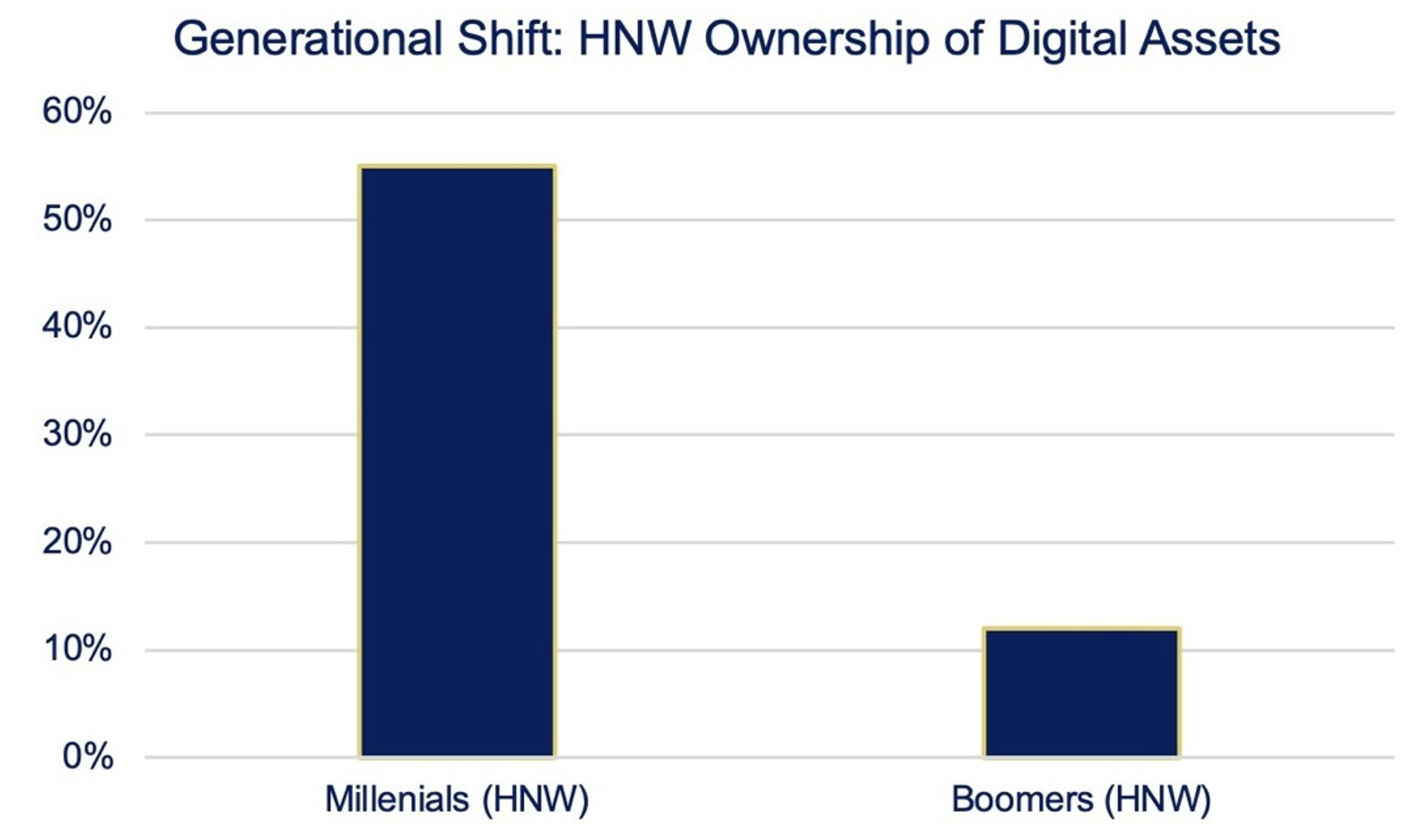
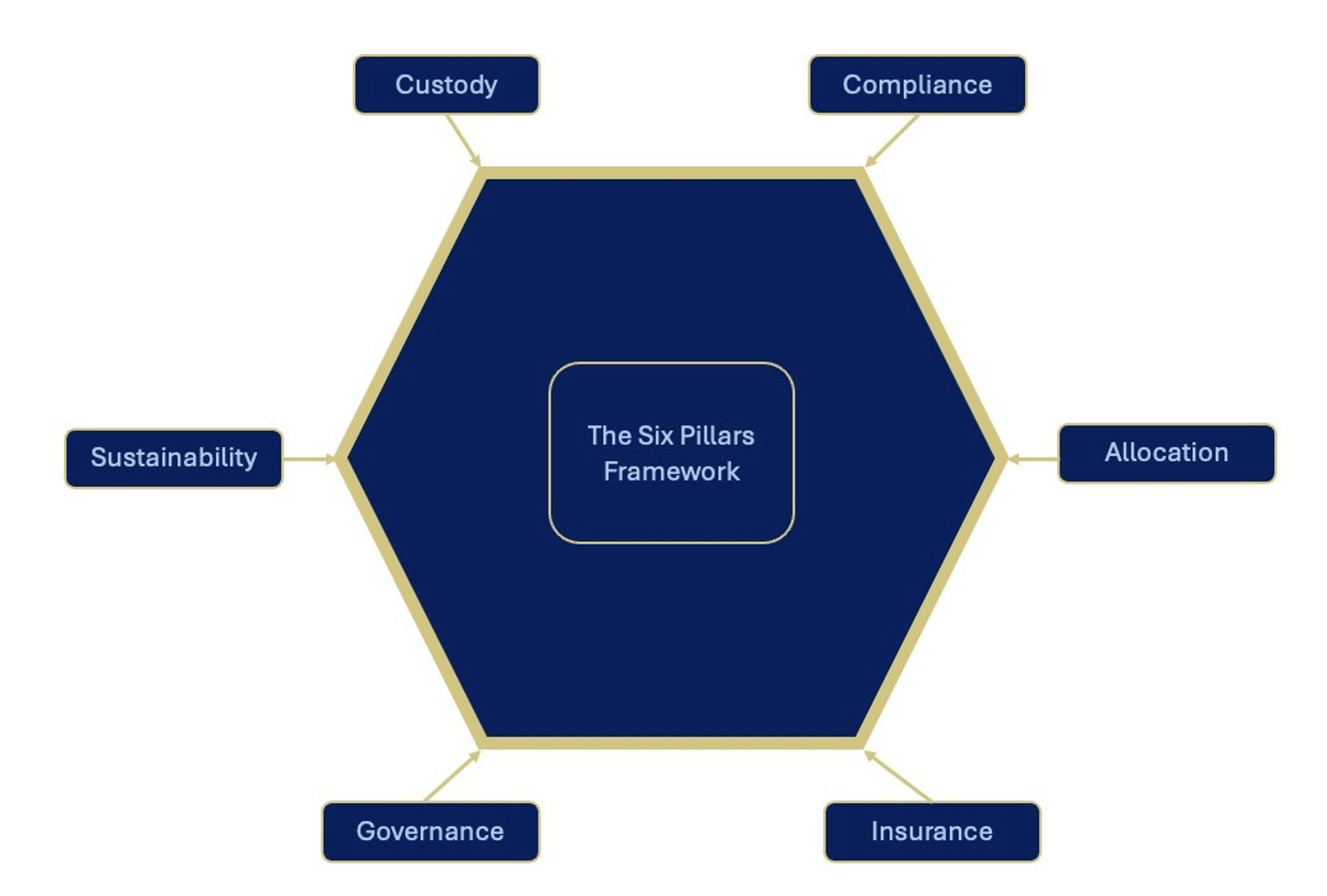
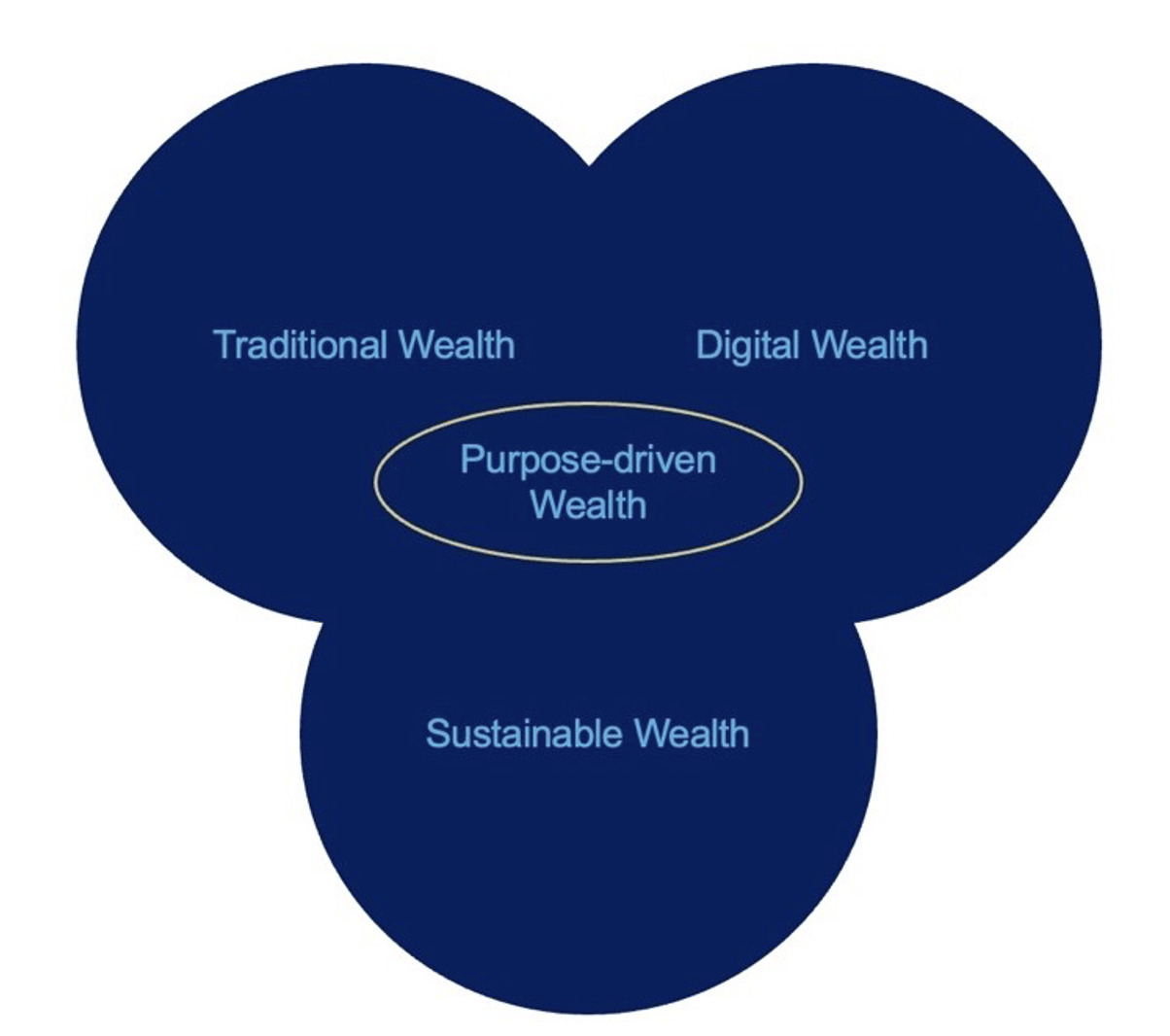
 Boecyàn Bourgade




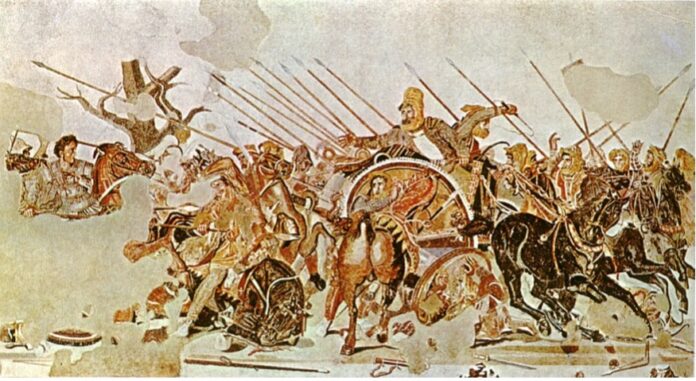

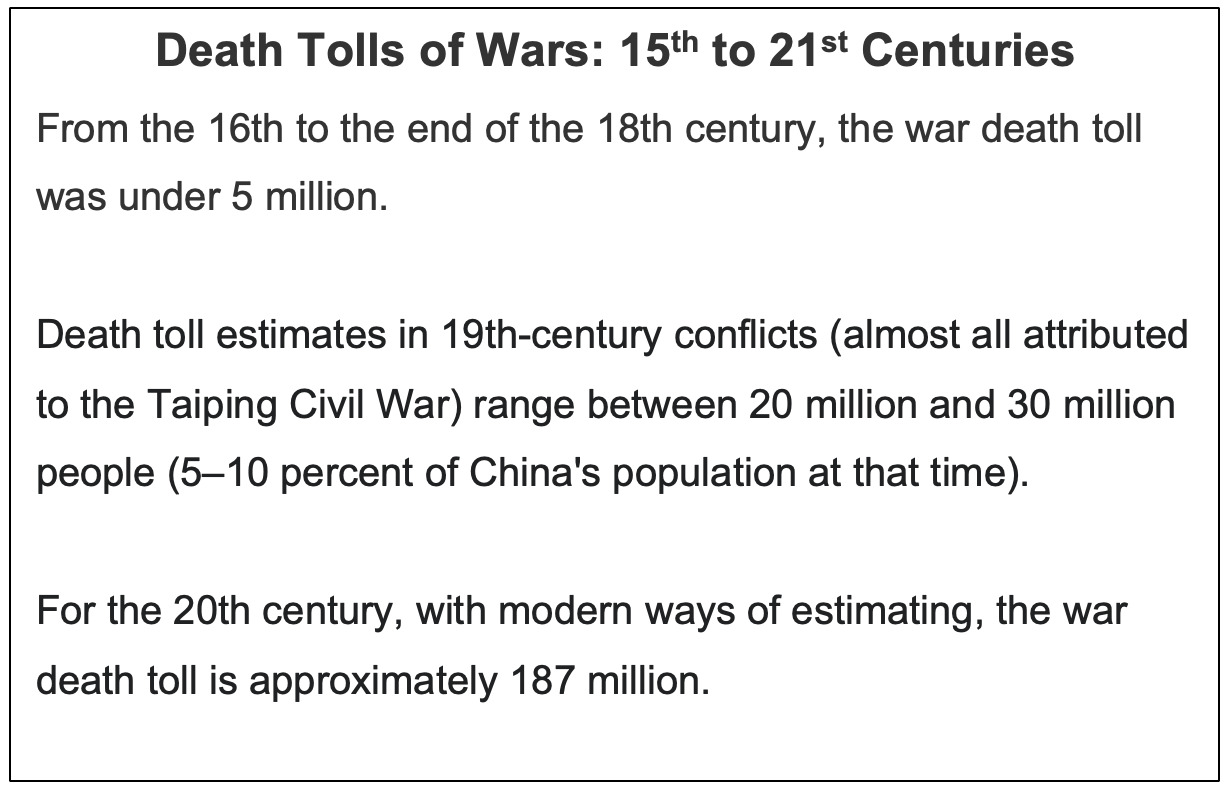

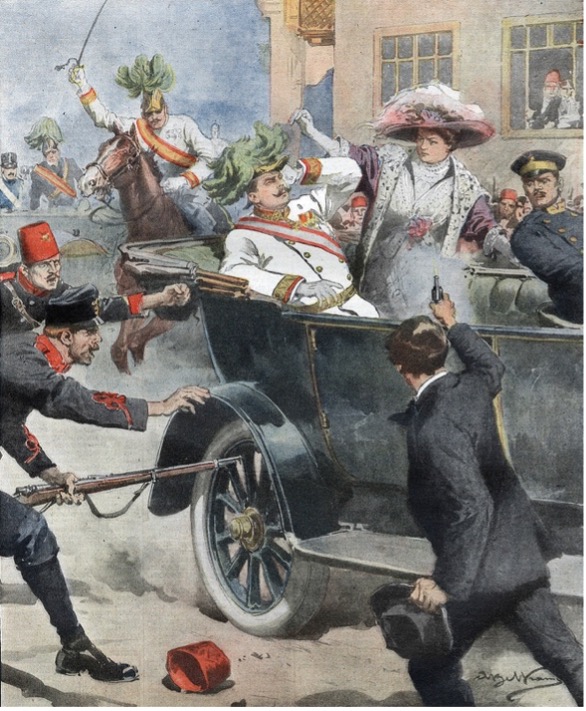
 Joseph Mazur
 Dr. Gleb Tsipursky