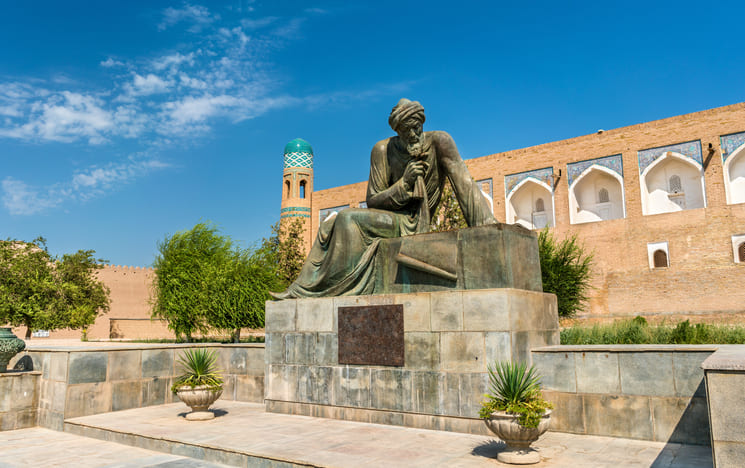
Ibn Khaldun, an eminent medieval scholar, made significant contributions to history, sociology, and economics. Dr Kalim Siddiqui examines Ibn Khaldun’s model on the development of civilization through the interplay between urban and rural dynamics, both essential for long-term progress. According to Ibn Khaldun, civilization advances through the interaction of two key actors: urban populations, who adopt new skills, technologies, and ideas, and nomadic groups, whose cohesion and solidarity provide the military strength and unity to establish or conquer new regions. In his Muqaddimah, he developed a sophisticated interdisciplinary model linking asabiyyah (group solidarity), economic production, and political power. His work offers a powerful framework for understanding the rise, flourishing, and eventual decline of civilizations, providing enduring insights into the challenges societies face across time.
I. Introduction
Ibn Khaldun (1332–1406) was a scholar, historian, sociologist, and economist who combined scholarly work with judicial service, leaving a profound intellectual legacy in the Middle Ages. He analysed the development of civilization through the dialectical relationship between urban and rural dynamics, both of which he considered indispensable for long-term progress. According to Ibn Khaldun, civilization advances through the interaction of two key actors: the urban population, capable of adopting new skills, technologies, and ideas, and nomadic groups, whose solidarity and cohesion provide the military strength and unity necessary to establish or conquer new regions. Tribal cohesion, in particular, forms the foundation of strong military and political power (Ibn Khaldun, 2005).
Yet, for Ibn Khaldun, the very process of advancement also sows the seeds of decline. As he observed: “The goal of civilization is sedentary culture and luxury. When civilization reaches that goal, it turns towards corruption and starts being senile, as happens in the natural life of living beings” (Ibn Khaldun, 2005:296). Thus, the rise and fall of civilizations are determined by complex social and political dynamics, rooted in shifting forms of group solidarity (asabiyyah) (Acemoglu and Robinson, 2012).
This study examines the significant contributions of Ibn Khaldun, a pioneering thinker whose work prefigured modern social science fields such as history, anthropology, economics, and sociology. Long before these disciplines existed, he explored fundamental concepts including production, markets, trade, and the division of labour. This paper also explores his analysis of the fourteenth-century decline of dynasties in Moorish Spain and North Africa, linking his theories directly to the historical crises of his time.
Khaldun’s innovative framework, particularly his theory of asabiyyah (social cohesion), was remarkably advanced for his era. His key concept of asabiyyah (social cohesion) explored the interplay of solidarity, economics, and power. The study situates his theories within his era’s crises while highlighting their broader relevance to patterns of societal development and decline. He emphasized the interplay of group solidarity, economic activity, and political power in shaping the life cycle of states (Ibn Khaldun, 2005).
This article demonstrates the power of his ideas through a specific case: his analysis of the fourteenth-century decline of dynasties in Moorish Spain and North Africa. We situate his thought within the historical crises of his time while showing how his reflections—which described the North African “Moors” as largely Berber (Amazigh) communities—also revealed universal patterns of state formation, social cohesion, and civilizational change. His conceptual framework, particularly the theory of asabiyyah (social cohesion), was remarkably advanced. He focused about the interplay of group solidarity, economic activity, and political power in shaping the societies (Ibn Khaldun, 2005).
Ibn Khaldun’s intellectual outlook was profoundly shaped by his direct experience with civilizational crisis and renewal. Born in Tunisia to a family of Andalusian aristocrats exiled from Spain, he inherited a deep understanding of the Moorish rulers’ weaknesses. He complemented this lived knowledge with rigorous study of the Iberian Peninsula’s decline. His life was further framed by epochal disasters: he witnessed the Black Death of the 1340s, which decimated populations across the Mediterranean and Europe, and he lived in the shadow of earlier catastrophes, such as the Mongol destruction of Baghdad in 1258. Furthermore, the persistent political instability of North Africa, intensified by the lingering effects of the crusades, provided him with a continuous case study in the fragility of power. Witnessing these events firsthand granted Ibn Khaldun a unique perspective on history’s cyclical nature, which he would later articulate in his revolutionary theories on the rise and fall of civilizations, masterfully compiled in his Muqaddimah.
In his book Muqaddimah, Ibn Khaldun directly addresses the question of why Islamic societies faced persistent challenges. His analysis is both original and wide-ranging, tracing how moral, political, social, economic, demographic, and institutional factors interact to shape the progress or decline of nations. He pays close attention to modes of subsistence, production, and economic organization, emphasizing that differences in institutions and conditions among societies stem from the ways people earn their livelihood. For example, peasants and Bedouins often lacked complex social relations because the economic surplus they generated was largely controlled by households and tribal leaders. Nevertheless, they adhered to their traditions and employed the division of labour to produce goods. Despite their relative isolation, these groups were not completely detached from urban centres and often adopted aspects of urban culture.
Central to his analysis is the role of people, whose actions determine the rise and collapse of dynasties. He linked these dynamics to a combination of socio-economic, political, demographic, and institutional factors. This emphasis on human agency resonates with Quranic teachings: “God does not change the condition of a people until they change their own inner selves” and “Corruption has appeared everywhere because of what people have done” (cited in Chapra, 2008:840). These verses underscore humanity’s responsibility in shaping economic and social outcomes, including both prosperity and decline. Ibn Khaldun’s theory of the rise of great powers or dynasties rests on the principle of asabiyyah. He argued that solidarity among people motivates them to support a ruler, enabling the formation of larger armies and the pursuit of military campaigns. Economic expansion then generates revenue, which rulers partly allocate to military growth and luxury consumption. To sustain this cycle, governments resort to new forms of taxation.
Multiple factors contributed to the decline of Islamic dynasties in the thirteenth and fourteenth centuries. As Chapra (2008:838) explains: “Most of these are moral degeneration, loss of dynamism in Islam after the rise of dogmatism and rigidity, the decline in intellectual and scientific activity; internal revolts and disunity along with continued external invasions and warfare which ravaged and weakened the country, created fiscal imbalances and insecurity of life and property, and reduced investments and growth; decline in agriculture, crafts and trade; exhaustion or loss of mines and precious metals and natural disasters like plague and famine which led to a decline in the overall population and demand followed by the weakening of the economy.”
The successful development of economies and nations has long intrigued scholars who seek to identify the primary drivers behind prosperity or decline (Kennedy, 1987; Acemoglu and Robinson, 2012). Development economists typically emphasize economic variables along with historical, social, technological, and institutional factors. Others adopt a more heterodox, multidisciplinary perspective, incorporating broader indicators such as human well-being, literacy rates, and the treatment of minorities (Siddiqui, 2020a). Ibn Khaldun’s thesis reflects such a heterodox approach, combining political, social, economic, and moral dimensions to explain societal transformation (Toynbee, 1957; Kennedy, 1987).
However, Ibn Khaldun’s model was necessarily grounded in the largely agrarian economy of the fourteenth century. He did not anticipate the transformative effects of large-scale capital accumulation, which emerged with the Iberian conquest of the Americas (Amin, 1976; Siddiqui, 2024). This influx of wealth disrupted the cyclical patterns he described, inaugurating a linear, expansive, and increasingly global system of economic and political exploitation (Siddiqui, 2018a). In this way, while Ibn Khaldun’s insights remain foundational for understanding premodern societies, subsequent historical developments reveal both the strengths and the limitations of his framework.
Understanding such changes requires attention to both development and justice. Development, ideally, should enhance people’s socio-economic conditions. In its absence, states are compelled to import artisans, technology, and capital in order to expand their economies, trade and increase productivity. Neglecting these factors leads to stagnation, diminished skills, and eventual economic decline, undermining the foundations of prosperity.
II. The Contribution of Ibn Khaldun
Ibn Khaldun is widely regarded as a pioneering figure in sociology, political science, and historiography. He sought to explain the rise and fall of dynasties by analysing developments in the Iberian Peninsula and North Africa, using a rational and systematic approach to social and historical change.
His developmental model integrates both economic and non-economic factors, giving equal importance to material and moral dimensions of progress. According to Ibn Khaldun, economic development cannot be sustained by focusing solely on economic variables. Social, moral, political, legal, cultural, institutional and security-related factors are equally critical to improving people’s well-being. In particular, adherence to the rule of law and justice is essential for fostering long-term investment and economic growth. Justice, and the protection of property, he argued, directly influence investment, entrepreneurship, and innovation—conditions necessary for the prosperity of society (Ibn Khaldun, 2005).
The state, in his view, plays an active but limited role in economic transformation. Good governance, enforcement of contracts, and supportive policies toward business have long-term positive effects on economic development. This requires safeguarding private property to encourage investment and entrepreneurship. As Chapra (2008:842) notes: “This means it was recognised [that] private property and respect for individual freedom within the constraints of moral values is a part of Islamic teachings and has always been prevalent in Muslim thinking. The job of the state …, is in addition to defence and maintenance of law and order, to ensure justice, fulfilment of contracts, removal of grievances, fulfilment of needs and compliance with the ruler’s behaviour… the state must do things that help people carry on their lawful businesses more effectively and prevent them from committing excesses and injustice against each other.”
Ibn Khaldun opposed excessive state involvement in commerce, warning that direct state control or monopolies would undermine private investment and profitability. At the same time, he rejected a laissez-faire approach, advocating instead for a balanced role in which the state provides essential support and regulation while allowing private enterprise to flourish. Higher incomes and profits, he argued, would generate more savings and investment, thereby expanding the economy.
In the Muqaddimah, Khaldun also addressed themes such as private ownership, labour relations, profit-making, and trade through the division of labour. He observed that competition among producers often eroded profits and depleted financial resources: “Competition between them already exhausts, or comes close to exhausting, their financial resources” (Ibn Khaldun, 2005). For him, uncompetitive firms faced bankruptcy due to weak demand, rising labour costs, and heavy taxation. He highlighted that the price of goods consisted of three elements—wages, profits, and taxes. If taxes remained constant, fluctuations in wages could trigger economic downturns. In periods of high demand for labour, wages rose, workers became arrogant and less productive, and businesses suffered.
Furthermore, Ibn Khaldun cautioned against rulers hoarding tax revenues. If the wealth of officials and courtiers—who constituted a key segment of consumers—declined, their reduced expenditures would suppress demand, slow business activity, and ultimately diminish both profits and tax revenues.
III. Role of Government, Division of Labour, and Economic Development
Ibn Khaldun acknowledged the crucial role of government in fostering economic growth. He argued that public expenditures stimulate the economy by raising incomes, which are further amplified through a multiplier effect. However, excessive taxation discourages business activity, leading to economic stagnation and a reversal of the same multiplier process. Welfare programs for the poor, he maintained, are beneficial provided they do not place an unsustainable burden on the treasury. For this reason, governments must use tax revenues wisely to improve the living conditions of their citizens.
Economic development, in Ibn Khaldun’s view, also rests on the division of labour and specialization. Greater specialization enhances efficiency and productivity, thereby generating higher growth rates, rising wages, improved living standards, and broader prosperity. He emphasised the importance of well-regulated markets and exchange. As he observed: “Individual human beings cannot by themselves satisfy all their needs. They must cooperate for this purpose in their civilization. The need that can be satisfied by the cooperation of a group exceeds many times what they can produce individually… [The surplus] is spent to provide the goods of luxury and to satisfy the needs of inhabitants of other cities. They import other goods in exchange for these. They will then have more wealth… Greater prosperity enables them to have luxury and the things that go with it. Consequently, industry and crafts thrive.” (cited in Chapra, 2008:843)
A central aspect of Ibn Khaldun’s developmental vision is education. He emphasized that education should not be reduced to the passive acquisition of information, but must instead cultivate critical thinking, scientific inquiry, and independent reasoning. For him, knowledge was both a tool for personal development and a foundation for societal progress, enabling communities to enhance productivity, engage with broader intellectual traditions, and adapt to changing conditions.
In this framework, higher incomes and profits contribute to increased tax revenues, allowing the government to expand expenditures and provide greater relief to the population. Rising incomes also attract immigration and skilled labour, further enhancing productivity and expanding production and economic growth. At the same time, population growth stimulates domestic demand for consumer goods and food commodities, which in turn encourages investment in industry and agriculture.
Nevertheless, Ibn Khaldun warned that if supply fails to keep pace with rising demand, inflation—particularly in food prices—can undermine prosperity. Since food prices tend to rise faster than those of luxury goods, and more steeply in urban than in rural areas, this dynamic may impose hardship on the population, hinder demographic growth, and ultimately slow down economic development.
Unlike neoclassical economists, Ibn Khaldun did not attribute the rise and decline of dynasties primarily to economic variables. Instead, he adopted a multidisciplinary and flexible framework that emphasized the interplay of social, political, cultural, moral, historical, and demographic factors (Siddiqui, 2020a). This holistic approach, which resonates with contemporary ideas of circular causation in development studies, underscores the interdependence of various dimensions of societal change (Chapra, 2008).
Ibn Khaldun’s intellectual breadth has drawn admiration from modern historians. Toynbee, for example, praised the Muqaddimah for its “breadth and profundity of vision as well as sheer intellectual power,” calling it “undoubtedly the greatest work of its kind ever created by any mind in any time or place” (Toynbee, 1957:331–332). While Toynbee primarily analysed Ibn Khaldun’s historical narratives, the present study aims to go further by situating his political theories within, and sometimes against, the Eurocentric frameworks that shaped much of modern historiography. To do so, it is necessary to integrate more recent scholarship that explores, among other themes, Ibn Khaldun’s theoretical understanding of religion and its role in the state.
This emphasis on knowledge and moral discipline gains greater meaning when contrasted with the conditions of pre-Islamic Arabia. Before the 6th century, the Bedouin people lived under harsh circumstances marked by poverty, scarce resources, feuds, and violence, while also being overshadowed by the powerful Byzantine and Sassanian empires. In such a context, opportunities for sustained development were limited. Yet, with the emergence of Islam in the early 7th century, profound transformations took place. As Toynbee (1957) observed, Islam represented an “extraordinary deployment of latent spiritual forces by which Islam transformed itself, and thereby transfigured its mission, in the course of six centuries.” By emphasizing honesty, the rule of law, and high moral standards, Islam laid the moral and institutional foundations that enabled social cohesion, economic expansion, and intellectual flourishing (Gibb, 1982).
Ibn Khaldun also linked economic development to the production process and the division of labour. Using bread production as an example, he illustrated how multiple tasks are divided among workers who cooperate under the direction of business owners. The production process, he argued, is inherently social: owners hire workers to produce beyond subsistence needs, with the surplus sold in domestic and foreign markets. Surplus production and international trade thus became central to development, accumulation, and societal change. Long before Karl Marx. Lenin and Rosa Luxemburg, Ibn Khaldun emphasized the importance of overseas markets in sustaining economic expansion (Siddiqui, 2021).
The contrast between Ibn Khaldun and Marx highlights the originality of his framework. Whereas Marx identified class struggle, rooted in contradictions between productive forces and relations of production, as the motor of historical change, Ibn Khaldun emphasized the role of tribal isolation, distance from rulers, and the formation of new solidarities as drivers of institutional transformation. Unlike Marx, he did not conceive of history as structured around class conflict (Siddiqui, 2021).
IV. Political Institutions, Justice, and Decline
Politically, Islam introduced a system of governance led by a khalifah (caliph), elected through the people’s pledge of allegiance. This framework upheld the rule of law, property rights, dignity, and equality before the law. The judiciary was made independent to safeguard property and ensure individual security. Under these circumstances, motivation to invest, take risks, and pursue entrepreneurship flourished. Improved law and order facilitated the large-scale movement of labour, skills, goods, and services, and expansion of markets. As a result, the exchange of ideas, knowledge, and innovations enhanced productivity in agriculture and handicrafts, generating greater efficiency, rise in productivity, output, and trade (Siddiqui, 2018b).
On the social front, the status of women improved significantly. Caliph Umar (reigned 634–644 CE) was a close companion of the Prophet Muhammad, and a key figure in early Islamic history. His rule was marked by vast territorial expansion, including victory over the Persian Empire and Byzantium. Caliph Umar is also known for good governance and establishing justice and rule of law. He also built efficient administrative and legal systems and provided leadership. As acknowledged: “During the pre-Islamic period (al-Jahiliya), we did not consider women to be anything. However, after the coming of Islam, when God Himself expressed His concerns for them, we realised that they also had rights over us. During the Prophet’s days, they played an important role in all different activities, including the war effort… They were accorded property rights not equalled in the West until modern times.” (cited in Chapra, 2008:847)
According to Ibn Khaldun, the eventual downfall of Islamic dynasties stemmed from political illegitimacy. A decisive turning point occurred in 679 when Muawiyah appointed his son Yazid as successor, thereby inaugurating hereditary dynastic rule. Prior to this, successors to the Prophet Muhammad had been chosen by consensus, not heredity. Ibn Khaldun viewed this as a clear violation of Islamic principles. He criticized the decline of the caliphate and its transformation into kingship, remarking: “You have seen how the form of government got transformed into kingship…. The characteristics and traits of the Khalifah disappeared and only its name remained. The form of government became kingship pure and simple. Acquisition of power reached its extreme limit and force came to be used for serving self-interest through arbitrary gratification of desires and pleasures.” (cited in Chapra, 2008: 848)
Over time, favouritism and despotism began to dominate governance, undermining earlier ideals of accountability and justice. As Chapra (2008:848) explains: “The governments became more and more absolute and arbitrary with the passage of time… Accountability of the rulers and political elites, equality before the law, and freedom of expression began to decline in clear violation of the Shariah… State resources began to be misused for the luxury of the royal court and taxes rose gradually beyond the ability of the people to bear. Justice and development accordingly became the worst victims, and solidarity, which previously prevailed between the people and the government deteriorated. The people suffered and their incentive to work, produce, and innovate was adversely affected.” Thus, for Ibn Khaldun, the erosion of justice, accountability, and consensus-based leadership weakened the very asabiyyah that had once enabled the rise of Islamic dynasties.
V. Cyclical Stages of Dynastic Rise and Decline
Ibn Khaldun recognized that nations and their institutions are not static but evolve over time. As he observed: “Old Persian nations … were succeeded by the later Persian, then the Byzantines, and then the Arabs. The old institutions changed, and former customs were transformed … Then, there came Islam. Again, all institutions underwent another change, and for the most part assumed the forms that are still familiar at the present time as the result of the transmission from one generation to the next.” (Ibn Khaldun, 2005:25)
These transformations, he argued, produce new realities and generate new rules and institutions. For Ibn Khaldun, the key driver of such change is contact with other groups, particularly through social interaction, exchanges, and communication with other communities and nations. This interaction can destabilize existing dynasties while simultaneously paving the way for the rise of new, and often stronger, political orders.
Ibn Khaldun famously explained the rise and fall of dynasties in five distinct stages:
- Establishment of Authority: The founding stage begins with the overthrow of a dynasty and the creation of new authority. The ruler collects taxes, while the army safeguards property. Ibn Khaldun emphasizes that ‘lower taxes stimulate economic activity’, thereby broadening the tax base and ultimately increasing revenues.
- Consolidation of Power: Once authority is secured, the ruler strengthens his grip and begins to claim success exclusively for himself. Ibn Khaldun warns that this exclusionary behaviour creates a rift between ruler and people: “[The] ruler gains complete control over his own people, claims royal authority all for himself, excluding them, and prevents them from trying to have a share in it.” (Ibn Khaldun, 2005:141)
Such self-centred governance undermines solidarity and invites discontent, sometimes leading to rebellion and the eventual rise of a new order. - Leisure and Construction: In the third stage, the dynasty reaches stability. secures power, then rulers turn to leisure, luxury, and monumental construction, such as new cities and buildings.
- Stagnation: The fourth stage is marked by complacency. The rulers imitate their predecessors’ policies out of fear that innovation might threaten their security. Ibn Khaldun describes this stage as one of “contentment, peacefulness, and imitation.”
- Wasteful Policies and Decline: In the final stage, rulers adopt wasteful and arbitrary policies, alienate capable advisors, and erode the asabiyyah that once sustained the dynasty. As Ibn Khaldun notes: “The loss of the group feeling on which superiority has been built … Thus, the dynasty came to belong to people other than those who had established it. Power went to people other than those who had first won it.” (Ibn Khaldun, 2005:146)
At its height, a dynasty’s strength is reflected in expanding revenues and prosperity. Yet over time, extravagance and excess spending corrode the fiscal base. As expenditures grow, rulers and their courts set standards of consumption that spread to society at large, further straining resources. Ibn Khaldun warned: “The expenditures of the ruler and the people of the dynasty in general grow… [as] extravagant expenditures mount. It spreads to the subjects because people follow the [ways] and customs of the dynasty.” (Ibn Khaldun, 2005:232) From his perspective, sound economic policy requires moderation—low taxes, productive activity, and trade expansion. Only such policies can ensure sustained prosperity and prevent the decline that inevitably follows dynastic extravagance.
VI. Ibn Khaldun’s Economic Philosophy
Ibn Khaldun provided an extensive analysis of economic activity, discussing business growth, markets, income, employment, government spending and overall economic development. He emphasized that the price of a product consists of three components: wages, profits, and taxes. Rising wages, driven by high labour demand stemming from increased product demand, can make labour more expensive. This, in turn, raises production costs, potentially forcing producers to scale down operations or incur losses, contracting overall production and business activity.
Conversely, Ibn Khaldun highlighted the critical role of consumer demand. If wages are too low, workers may not afford goods, reducing sales, profits, and incentives for producers to invest or expand. In such circumstances, economies may stagnate or even enter recession.
Productivity and technological advancement were central to Ibn Khaldun’s economic thought. He observed: “Civilization and its well-being, as well as business prosperity, depend on productivity and people’s efforts in all areas for their interests and profits. When people no longer engage in business for livelihood, and when they cease all productive activity, civilization declines, and everything decays.” (Ibn Khaldun, 2005:365)
For Ibn Khaldun, labour is the primary source of value and profit. Declining profits reduce incentives for risk-taking and investment, slowing economic growth. He also addressed the effects of competition, noting that excessive rivalry could depress prices and diminish profits, threatening the survival of many businesses, particularly smaller enterprises.
Labour, according to Ibn Khaldun, generates surplus production, which can be exported to generate additional revenue for investment in skills, technology, and military capacity. He notes: “The [available] labour is more than is needed. Consequently, it is spent to provide the conditions and customs of luxury and to satisfy the needs of the inhabitants of other cities. They import from those who have a surplus through exchange or purchase. Thus, they [people who have a surplus] acquire a good deal of wealth.” (Ibn Khaldun, 2005:273)
Profits and capital accumulation, he argued, arise only from human labour. Output exceeding basic needs generates surplus, which, after deducting production costs and consumption by business owners, can be reinvested to expand the economic base and increase revenues. He stressed: “It should be known that treasures of gold, silver, and precious stones are no different from other minerals acquired, such as iron, copper… It is civilization that brings them forth, with the aid of human labour, and causes them to increase or diminish.” (Ibn Khaldun, 2005:302)
Ibn Khaldun emphasized that product prices reflect production costs, including labour, transportation, taxes and profits. As population increases, the labour supply grows, allowing more workers to produce luxury goods, thereby expanding national wealth beyond subsistence production (Ibn Khaldun, 2005:415). He also recognized the role of money in facilitating trade, observing that the quantity of money in circulation depends on the wealth produced by the economy (Siddiqui, 2019).
Ibn Khaldun astutely identified the mechanisms of economic contraction, warning that rising competition, increasing wages, and higher production costs could collectively erode profits and, by extension, diminish state tax revenues. He observed a vicious cycle: as productivity declines amid rising labour costs, profit margins are squeezed, leading to a broader slowdown in economic activity. Compounding this, he highlighted the critical role of governance; political instability and a weakened rule of law can shatter producer confidence, triggering business closures and widespread unemployment.
Conversely, Ibn Khaldun championed the stabilizing role of the state. He argued that effective government policies—such as strategic public spending, tax reductions, and support for domestic industries—could stimulate economic growth, spur investment, and generate employment. This prescient advocacy for counter-cyclical fiscal policy finds a direct parallel in the Keynesian economics that dominated the post-World War II “Golden Age of Capitalism” (1945-1980), where deficit spending was used to counteract recessions in advanced economies (Siddiqui, 2023).
Furthermore, the enduring relevance of his insights is powerfully demonstrated by the 20th-century developmental successes of Japan, South Korea, and Taiwan. Their models, based on strong state support for selected industries to promote exports, drive investment, and fuel income growth, serve as a modern validation of Ibn Khaldun’s foundational theories on strategic governmental intervention (Siddiqui, 2009).
VII. Asabiyyah and Economic Production
The nature of asabiyyah is distinct from that of brotherhood. While brotherhood is grounded in principles such as justice, faith, and shared values, asabiyyah is often tied to distinctions of race, language, or physical attributes. For Ibn Khaldun, it was less about individual ties and more about the cohesion of entire social groups.
A key concept in his thought is asabiyyah (group solidarity), which he linked directly to the rise and decline of civilizations. Dynasties, according to Ibn Khaldun, flourished through strong social cohesion, economic prosperity from business growth, supportive governance, and relatively low taxation. Yet, he also argued that as education and knowledge expanded—cultivating higher levels of culture and civilization—asabiyyah tended to weaken. In his view, education played a critical role in transmitting values and sustaining cultural continuity, shaping both individual character and collective identity.
Ibn Khaldun also reflected on imperial expansion and the domination of other nations. As he noted: “Whenever we observe people who possess group feeling and who have gained control over many lands and nations, we find in them an eager desire for goodness and good qualities, such as generosity, the forgiveness of error, tolerance towards the weak, hospitality towards guests….” (Ibn Khaldun, 2005:112)
Ibn Khaldun underscored the critical role of the state in stimulating economic activity. He identified two principal flows in the economy: taxes and expenditures. State spending, he argued, generates demand and sustains economic vitality, akin to water nourishing soil: “The only reason [for the opulence of cities] is that the government is near them and pours it many into them, like the water (of a river) that makes green everything around it and fertilizes the soil adjacent to it, while in the distance everything remains dry […]. The tax money reverts to the people. Their wealth, as a rule comes from their business and commercial activities. The ruler pours out gifts and money upon his people, it spreads among them and reverses to him and again forms him to them. It comes from them through taxation and the land tax, reverts to them through gifts.” (Ibn Khaldun, 2005:430)
During economic slumps, declines in profits and revenues reduce public expenditure, which in turn depresses demand and lowers tax income. Ibn Khaldun’s recognition of the relationship between government spending, aggregate demand, and economic performance anticipates, by several centuries, core insights of Keynesian economics.
His theory also highlights the hierarchical circulation of wealth. Ibn Khaldun observed: “Cities with highly developed civilizations and prosperous inhabitants owe this status to the dynasty, which collects subjects’ property and spends it on its inner circle and their influential associates. Money circulates from subjects to the ruling dynasty and then among its connected inhabitants.” (Ibn Khaldun, 2005:426-427) Labour, he argued, is the source of profits, and differences in people’s economic conditions arise from the ways in which they earn their livelihoods (Ibn Khaldun, 2005:263). Surplus production allows for domestic and international trade, generating wealth and sustaining economic development.
Ibn Khaldun’s theory of the monetary circuit is founded on several key principles. Foremost, he emphasized production over mere exchange, viewing economic activity as a flow between social groups rather than isolated individual transactions. He recognized the pivotal role of money, noting that firms require credit to finance production and investments—a perspective that contrasts sharply with microeconomic theories focused solely on firm behaviour.
VIII. Beyond Khaldun’s Model and its Limitations
While Ibn Khaldun’s framework was groundbreaking, it could not anticipate the emergence of the global capitalist system that transformed Iberian Peninsula and other European countries from the 15th century onward. The Iberian Peninsula, particularly Spain and Portugal, gained immense wealth from the conquest and plunder of the Americas beginning in the late 15th century. Vast amounts of gold, silver, and other resources were extracted, enriching royal treasuries and financing imperial expansion. This influx of wealth fuelled European trade, stimulated banking and commercial growth, and strengthened monarchies, enabling them to wage wars and consolidate power. The riches also supported cultural and scientific advancements during the Renaissance, though they came at the expense of indigenous populations, whose labour and lives were brutally exploited.
The immediate influx of gold and, most significantly, silver from treasures (like the Aztec and Inca) and mines (like Potosí) made the Spanish Crown immensely wealthy overnight. This financed:
- Exogenous Capital Injection: In the Muqaddimah, wealth is largely finite, derived from agriculture, taxation, and control of trade routes, with luxury consumption (tarf) leading to moral and military decay. The discovery of the Americas, however, introduced vast inflows of gold and silver into Europe, dramatically expanding capital.
- Military and Technological Advantage: Looted wealth financed advanced firearms, cannons, and warships, granting European states permanent military superiority over non-European powers.
- State-Bureaucracy and Centralization: European monarchs, such as Ferdinand and Isabella, harnessed the asabiyyah of the Reconquista through centralized bureaucracies, professional armies, and sophisticated tax systems, creating more durable and organized power structures than the tribal dynastic solidarity described by Ibn Khaldun.
- Institutional Innovation: The management of overseas plunder and trade led to modern banking, credit systems, and joint-stock companies (e.g., Dutch and British East India Companies), institutionalizing capital accumulation, colonisation and expansion.
- Triangular Trade and Exploitation: The Atlantic system, involving manufactured goods from Europe to Africa, enslaved Africans to the Americas, and raw materials back to Europe, created a self-perpetuating cycle of wealth generation that lay entirely outside Ibn Khaldun’s agrarian-based paradigm. (Siddiqui, 1989).
In short, while Ibn Khaldun offered a pioneering analysis of economic development—highlighting money circulation, labour, entrepreneurship, and state expenditure—his framework paid little attention to external forces such as the expansion of international trade, the inflow of global capital, and the institutional innovations of early modern Europe. These developments generated dynamics that far exceeded the scope of the Muqaddimah and shaped the trajectory of the modern world economy in ways Khaldun could not have anticipated (Siddiqui, 2022).
IX. Conclusion
Ibn Khaldun endeavoured to explain historical development by identifying the mutually interrelated causes behind the rise and fall of rulers and dynasties. He emphasized that dynastic ascent and decline are interconnected phenomena. Dynasties rose through asabiyyah—group solidarity—combined with wealth generated from business growth, state support, and low taxes. Revenue from thriving businesses enabled rulers to expand armies, consolidate power, and strengthen empires.
More than six centuries ago, Ibn Khaldun recognized the importance of acquiring skills, training, and knowledge to enhance labour productivity, thereby increasing economic surplus and profits. He observed: “Civilization and prosperity depend on productivity and human effort.” (Ibn Khaldun, 2005:238) International trade, he argued, stimulates job creation, output, wages, and profits, fostering wealth accumulation in exporting countries. Increased investment and economic growth generate higher labour demand, raising incomes and boosting consumer demand. On militarism, Ibn Khaldun noted that conquest and plunder required strong unity and patriotism under tribal or religious solidarity. Yet once military campaigns drained resources, businesses weakened, tax revenues fell, and group cohesion eroded, initiating the decline of dynasties.
While Ibn Khaldun’s analysis accurately captures the internal decadence and fragmentation of Al-Andalus, it could not anticipate the rise of centralized, bureaucratic, maritime empires such as Portugal and Spain. These states harnessed the principles of asabiyyah differently, coupled with technological innovation, mercantile capitalism, and new administrative structures, breaking the cyclical patterns of rise and decline described in the Muqaddimah.
However, Ibn Khaldun’s framework had limitations. In discussing the fall of the Moorish rule, he failed to anticipate the vast scale of capital accumulation and the unprecedented plunder carried out by European powers following the discovery of the Americas. This influx of wealth allowed European states to modernize armies, expand trade, and establish global dominance—developments beyond Khaldun’s medieval framework. Moreover, the Atlantic slave trade and colonial exploitation created a vast, external source of wealth that reshaped global economic dynamics, inaugurating the modern capitalist world-system (Siddiqui, 2020b).
In short, Ibn Khaldun presented a dynamic, multidisciplinary theory of development. He argued that the rise and fall of dynasties and economies depend on the complex interplay of political, social, demographic, historical, economic and educational factors over time. Ibn Khaldun also advocated for legitimate governance, emphasizing the importance of democracy, independent judiciaries, accountability, and effective institutions to combat corruption and nepotism. Investments in education, healthcare, infrastructure, and skills development would, in his view, foster entrepreneurship, innovation, and sustained economic development. By implementing such measures, countries could reverse negative cycles and promote long-term prosperity.
Ibn Khaldun’s contribution remains monumental. He developed a sophisticated, interdisciplinary model linking asabiyyah, economic production, importance of education, and political power. His work provides a powerful framework for analysing the rise, maturation, and eventual decline of civilizations, offering enduring insights for understanding the challenges faced by societies both past and present.
About the Author
 Dr. Kalim Siddiqui is an economist specializing in International Political Economy, Development Economics, Trade and Economic Policy. Since 1989, he has been teaching economics at various universities in Norway and the UK. Dr. Siddiqui’s research interests encompass a wide range of topics, including political economy, international trade, and economic history, South Asia, and emerging economies. He has presented papers at international conferences across numerous countries, reflecting his global engagement in the field. His scholarly pursuits span six broad domains: Political Economy, Development Economics, Economic History, Economic Policy, Globalization, and International Trade. Dr. Siddiqui has made significant contributions to research in areas such as trade policy, globalization, and political economy. His work has been published in chapters of edited books and articles published in peer-reviewed journals. For inquiries, Dr. Siddiqui can be reached at: [email protected]
References
- Acemoglu, D. and Robinson, J. (2012) Why Nations Fail: The Origins of Power, Prosperity, and Poverty, Cambridge: Cambridge University Press.
- Amin, S. (1976) Unequal Development: An Essay on the Social Formations of Peripheral Capitalism, New York: Monthly Review Press.
- Chapra, M.U. (2008) “Ibn Khaldun’s Theory of Development: Does it Help Explain the Low Performance of the Present-Day Muslim World” Journal of Scio-Economics 37:836-863.
- Gibb, H.R. (1982) “The Islamic Background of Ibn Khaldun’s Political Theory,” in Shaw, S.J. and Polk, W.R. (Eds) Studies on the Civilization of Islam, Stanford: Princeton University Press.
- Ibn Khaldun, A. (2005) The Muqaddimah: An Introduction to History, [1377] Princeton: Princeton University Press.
- Kennedy, P. (1987) The Rise and Fall of Great Powers: Economic Change and Military Conflict from 1500-2000, New York: Random House.
- Siddiqui, K. (2024) “The Multinational Corporations, Capitalism, and Imperialism: The Case Study of East India Company” World Financial Review, July.
- Siddiqui, K. (2023) “Marxian Analysis of Capitalism and Crises” International Critical Thought 13(4):525-545.
- Siddiqui, K. (2022) “Capitalism, Imperialism, and Crisis” European Financial Review, June/July.
- Siddiqui, K. (2021) “The Study of International Political Economy” World Financial Review, July/August.
- Siddiqui, K. (2020a) “The Study of Economic History and the Importance of Understanding the Past” World Financial Review, November/December.
- Siddiqui, K. (2020b) “The Political Economy of the Slave Trade, Capital Accumulation and the Rise of Britain” World Financial Review, January/February.
- Siddiqui, K. (2019) “The Political Economy of Essence of Money and Recent Development” International Critical Thought 9(1):85 – 108.
- Siddiqui, K. (2018a) “Imperialism and Global Inequality: A Critical Analysis” Journal of Economics and Political Economy, 5(2):266-291.
- Siddiqui, K. (2018b) “Capitalism, Globalisation and Inequality” World Financial Review, November/December.
- Siddiqui, K. (2009) “Japan’s Economic Crisis” Research in Applied Economics, 1(1):1-25.
- Siddiqui, K. (1989) “Colonialism, Hunger and Backwardness in the Developing Countries” Materialisten, (in Norwegian) no.3-4:111 – 135, Oslo.
- Toynbee, A. (1957) A Study of History, London: Oxford University Press.