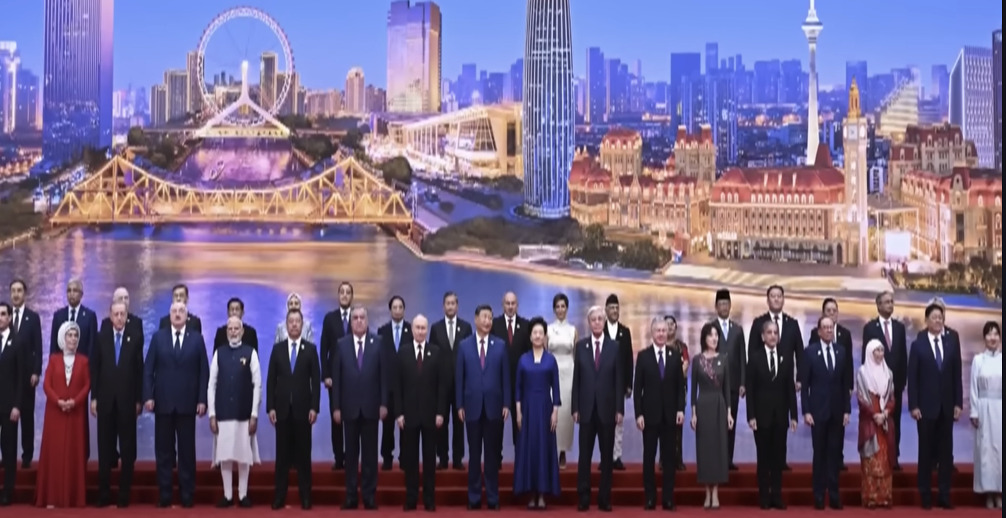
China and the European Union are set to hold a high-level meeting in Beijing on Thursday, as diplomatic and trade strains grow and U.S. involvement adds further complexity.
The summit, which marks 50 years of diplomatic ties and is the 25th between the two partners, was originally planned for two days in Brussels but was shortened and relocated to China — a sign analysts see as reflecting the strained nature of current relations.
Disputes between Brussels and Beijing have intensified over market access, technology policy, and national security. The EU recently restricted Chinese firms from bidding on public medical device contracts, prompting swift retaliation from Beijing.
Jörn Fleck, senior director at the Atlantic Council’s Europe Center, noted that “relations between Brussels and Beijing are particularly tense,” with little room for progress despite both sides recognizing the importance of continued dialogue.
The summit also unfolds under the shadow of U.S. President Donald Trump’s aggressive trade policies. Emre Peker of Eurasia Group said that “largely irreconcilable EU-China differences will severely constrain potential cooperation, despite mutual interest in countering some of President Trump’s policies.”
With Washington imposing a 30% tariff on most EU exports starting August 1, European officials face growing pressure. China, meanwhile, is expected to urge the EU not to align too closely with U.S. measures, according to Henrietta Levin of CSIS.
Trump’s stance toward both partners has further complicated the EU’s ability to resist Beijing’s economic influence, Levin added.
Despite modest hopes for breakthroughs, observers say the mere fact the summit is proceeding is meaningful. Fleck suggested the best-case outcome would be a commitment to continue talks on contentious issues like tariffs, subsidies, and trade barriers.
Chinese President Xi Jinping is expected to meet European Commission President Ursula von der Leyen and European Council President Antonio Costa, offering at least a symbolic sign of engagement.
Still, experts see limited room for significant progress. “The summit can hardly reset years of economic and geopolitical tensions,” said Lukas Fiala of LSE IDEAS, pointing to structural divisions and internal EU disagreements on China.
Fiala added that small shifts in language around export controls and electric vehicles may be worth watching, but no major changes are likely.
Laser welders have revolutionized the manufacturing and repair landscape, delivering unmatched precision and efficiency compared to traditional methods. However, the vast array of options available can make navigating the pricing landscape a daunting task. To make a well-informed choice, it’s crucial to understand the factors that influence the cost of laser welders.
Key elements that affect pricing include the type of technology employed and the brand’s reputation. Additionally, evaluating your specific needs and budget is essential to ensure you select the right welder for your projects. Whether you are a seasoned professional or just beginning your journey, this guide will clarify the pricing range of laser welders available on the market.
Fundamentals of Laser Welding Technology
Laser welding uses focused light to join materials, ensuring precise work. Different technologies exist, such as solid-state and fiber lasers. Each type offers unique benefits and may vary in price, which can impact your selection.
Current Market World
The market features a variety of Laser welder for sale. Prices, often influenced by technological innovations and supplier reputation, range widely. For example, entry-level models typically start around $5,000, while advanced options can exceed $100,000.
Why Choose Denaliweld Products?
Denaliweld offers reliable options in laser welding technology. Their products often combine durability with advanced features, making them suitable for a wide range of applications. Many users appreciate the service and support Denaliweld provides after the purchase.
Technical Specifications That Influence Price
Various technical specifications impact the pricing of laser welders. These features determine performance, efficiency, and suitability for specific tasks.
Power Output and Beam Quality
Power output significantly affects cost. Higher wattage offers faster welding speeds and better penetration. Beam quality influences the precision of welds. For instance, a fiber laser with good beam quality typically starts at around $15,000, while lower-quality options can be less expensive.
Cooling Architecture
Cooling architecture plays a role, as efficient systems prevent overheating during operations. Dual or advanced cooling methods can add to the price. For example, a laser welder for sale with a water-cooling system may cost $20,000. Basic air-cooled models generally start at $5,000.
Form Factor and Portability
Form factor impacts usability and transportability. A compact unit enhances mobility, which can be particularly beneficial for fieldwork. Weighing less contributes to easier transportation, though it can drive prices higher. A portable laser welder usually ranges between $10,000 and $30,000.
Material Compatibility and Process Flexibility
Material compatibility also influences pricing. Multi-purpose welders can handle a wide range of materials, including aluminum, steel, and plastic. A laser welder for sale that accommodates various processes, such as cutting and welding, typically requires a higher investment. Prices range from $12,000 to over $50,000, depending on capabilities.
Supporting Systems and Compliance
Laser welders for sale often include essential supporting systems that enhance performance and safety. These systems ensure compliance with industry standards while providing a necessary framework for effective operation.
Safety Infrastructure
Safety infrastructure encompasses several key components, including protective enclosures and emergency shut-off mechanisms. These features reduce risks associated with laser operation by isolating harmful elements from operators. Manufacturers typically include these systems in their models.
Quality Assurance and Certification
Quality assurance ensures laser welders meet specific industry standards. Certifications from recognized bodies, such as ISO or CE, signify reliability in performance and safety. Products with these certifications often indicate a commitment to maintaining quality throughout the manufacturing process.
Warranty, Service, and Logistics
Warranty coverage varies based on the manufacturer and model. Most laser welders feature standard warranties that cover parts and labor for at least one year. Service options may include on-site support and maintenance plans, critical for minimizing downtime during operations. Logistics involves understanding shipping costs and delivery timelines, which can impact overall purchase decisions.
Indicative Pricing Bands (Qualitative)
Understanding pricing in the laser welder market requires looking at specific categories. Each band reflects unique features and applications.
Entry-Level Handheld Systems
Entry-level handheld units often range from $5,000 to $15,000. These systems, while basic, offer sufficient power and portability for smaller tasks. Brands provide solid options here, making them a good choice for beginners or light repair work.
Mid-Range Shop-Floor Units
Mid-range systems, priced between $15,000 and $50,000, serve a broader range of industrial applications. These models typically feature enhanced features, such as improved cooling systems and higher power outputs. They can handle more demanding projects while still being accessible to a variety of businesses.
High-End Automated Cells
High-end automated units often cost over $50,000, with some models reaching beyond $100,000 for advanced systems. These cells offer automation and are suited for high-volume production. They integrate with existing systems, providing efficiency and precision, which can drastically reduce operational costs.
Ancillary Cost Elements
Beyond initial purchase prices, consider ancillary costs. Maintenance, offering repairs and consumable materials, adds to overall expenses. Warranty coverage varies significantly; understanding these costs is crucial for effective budgeting.
Take your time to evaluate your needs. Researching laser welders for sale can reveal great options within your budget.
Purchase Evaluation Checklist
When considering a laser welder for sale, an organized approach helps in making a well-informed choice. Follow this checklist for a thorough evaluation.
Aligning Technical Needs with Budget
Identify specific requirements. Assess necessary power levels and welding types. Match these to your budget constraints. For example, entry-level welders suffice for smaller applications, while advanced models cater to industrial needs.
Total Cost-of-Ownership Considerations
Evaluate ongoing expenses. Factor in maintenance, consumables, and potential repairs. Consider how these costs can affect the long-term investment in a laser welder. Make sure to review this table when budgeting for your purchase.
Conclusion
Understanding the pricing range of laser welders helps you make informed purchasing decisions. Consider your unique needs as you evaluate the available options.
Laser welders for sale may come with various features, so analyze warranties and post-purchase support carefully. Knowing the ongoing costs for maintenance and consumables will improve your budgeting process.
Assessing your situation with a Purchase Evaluation Checklist can clarify priorities. Have your technical needs and budget aligned? What specific applications are most critical for your operations?
The photo in the article is provided by the company(s) mentioned in the article and used with permission.
In Gaza, the ongoing weaponized starvation, first planned by Israel almost two decades ago, plays a key role in the ethnic cleansing and the genocidal atrocities. In brutality, they are at par with Imperial Britain’s hunger experiments in India and the Nazi concentration camps, as Dr Steinbock shows in The Obliteration Doctrine.
In early June, a brief by the IPC, the global food-security watchdog, warned that by the summer all 2.1 million Gazans would face high levels of acute food insecurity, with half a million people suffering from catastrophic hunger and more than 1.1 million hovering amid food emergency.
Yet, as I show in my new book, The Obliteration Doctrine, this hunger inferno was first tested almost two decades ago and then implemented by Israel in Gaza toward the end of 2023. It is now at par with the famines induced by Imperial Britain’s human famine experiments in India in the late 19th century and Nazi concentration camps in the 1940s.
British hunger experiments, historical blueprint
In 2006 when Hamas won the Palestinian election, Israel and the Middle East Quartet—U.S., Russia, the UN and EU—launched economic sanctions against the Palestinians. The blockade was the result of Israel’s deliberate attempt to push the Gazan economy “to the brink of collapse,” according to a U.S. diplomatic cable released by Wikileaks.
Off the record, Israeli officials repeatedly told American diplomats that as part of their overall embargo plan against Gaza, “they intend to keep the Gazan economy on the brink of collapse without quite pushing it over the edge.” With the inception of its blockade in 2007, the Israeli government estimated how many daily calories were needed to prevent or to cause malnutrition in Gaza.
The average daily calorie intake critical to survival is estimated at 2,100 kilocalories (kcal) per day. The Israeli “Red Line” document used a higher calculation of 2,279 calories per person, taking into account the presumed domestic food production in Gaza. Such calculations have a long and dark history in colonial settler societies.
After an intense drought and crop failure in the Deccan Plateau in 1876, the Great Southern Indian Famine lasted for two nightmarish years, spreading northward. At the time, the British Famine Commissioner Sir Richard Temple implemented human experiments, with “strapping fine fellows” starved until they resembled “little more than animated skeletons … utterly unfit for any work.” To maximize British revenues, Temple sought to determine the minimum amount of food for survival, which he projected at around 1,627 kcal in Madras 1877.
Yet, the excess mortality related to the famine has been estimated at up to 8 million.
British Hunger Games in 1876-78
Famine stricken people during the famine of 1876–78 in Bangalore Source: Wikimedia
The 2008-2009 Shoah in Gaza
In Gaza, Israel’s intent was to keep the economy “on the brink of collapse” while avoiding a humanitarian crisis. The Netanyahu cabinet sought to put the Palestinians “on a diet, but not to make them die of hunger.” During the 2008–2009 Gaza War, the Strip was subjected to a “Shoah” (Hebrew for Holocaust), as Deputy Defense Minister Matan Vilnai admitted.
The Israelis hoped this would turn Gazans against Hamas. The idea was to “send Gaza decades into the past,” said then commanding general Yoav Gallant, who 15 years later was targeted by an International Criminal Court warrant for alleged responsibility “for the war crimes of starvation as a method of warfare and of intentionally directing an attack against the civilian population; and the crimes against humanity of murder, persecution, and other inhumane acts.”
In May 2018, the UN Security Council (UNSC) adopted unanimously resolution 2417 condemning the starving of civilians as a method of warfare and the unlawful denial of humanitarian access to civilian populations. Yet, in the course of the Gaza War, most tenets of UNSC Resolution 2417 have been violated, setting the stage for Israel’s genocidal atrocities in Gaza and for the complicity of the U.S.-led West in these massacres.
From SS’s mass starvation to Israeli Generals’ Plan
In historical review, the Israeli total siege of the densely inhabited Gaza and its 2.3 million Palestinian refugees has not been unique. It has affinities with the siege of Leningrad and its 3.1 million people. Part of the Nazi Hungerplan by SS ideologue Herbert Backe, the original grand objective was to forcibly starve around 31 to 45 million Soviets and Eastern Europeans by capturing food stocks and redirecting them to German forces.
The Siege of Leningrad
A victim of starvation in besieged Leningrad suffering from muscle atrophy in 1941 Source: Wikipedia
Along with American eugenics and white racism, it was US treatment of Native Americans that inspired the hunger policies in Hitler’s Germany. The lethal power of hunger weaponization had been taught to a generation of Germans in 1914–19, when the British imposed a blockade against Germany. It aspired to obstruct Germany’s ability to import goods and thus to starve the German people and its military into submission.
In Gaza, the original Israeli “Generals’ Plan,” premised on the blocking of food supplies and epidemics, could not be carried out in full due to international opposition. But even its partial execution drove the Strip to risk of famine already in October 2024, with top UN officials describing the situation in northern Gaza as “apocalyptic” because everyone there was “at imminent risk of dying from disease, famine and violence.”
Dark parallels of “racial feeding”
In a strongly worded letter, U.S. Secretary of State Antony Blinken gave Israel an ultimatum of 30 days to ensure more aid trucks reached Gaza daily. Israel missed the U.S. deadline in early November, according to the UN. Yet, the Biden administration did nothing, while Blinken looked the other way.
A comprehensive study of food availability in Gaza shows that between October 2023 and April 2024, food trucks entering Gaza remained below pre-war levels. But how serious was the situation in Gaza relative to its precedents?
In his classic Axis Rule in Occupied Europe (1944), Raphael Lemkin, the pioneer scholar of mass atrocities and the father of Genocide Convention, warned that “the Jewish population in the occupied countries is undergoing a process of liquidation (1) by debilitation and starvation, because the Jewish food rations are kept at an especially low level; and (2) by massacres in the ghettos.”
Lemkin bolstered his case with data from a 1943 US report, which showed how Jews got only a tenth of the normal calorie intake – about the same portion as many Palestinians in Gaza eight decades later.
Racial Feeding in Nazi-Occupied Europe
SOURCE: Starvation Over Europe (Made in Germany), p. 47.
Prelude to ethnic cleansing and genocide
Set in comparative historical context, the weaponization of mass starvation has long been associated with imperial and colonial activities, setting the stage to genocidal atrocities. In this view, even the Nazi concentration camps can be traced to genocidal atrocities in colonial concentration camps, such as the British camps during the Second Boer War (1899–1902) followed by the Herero and Namaqua genocide (1904–1908) under the German Empire.
From the British Empire in India to German South West Africa (now Namibia), famine and starvation have served as a prelude to the final genocide, as Lemkin stressed:
The most direct and drastic of the techniques of genocide is simply murder. It may be the slow and scientific murder by mass starvation or the swift but no less scientific murder by mass extermination in gas chambers, wholesale executions or exposure to disease and exhaustion.
Historically, mass starvation and genocides entered a new stage in the Nazi era, thanks to industrial atrocities, greater efficiencies in assembly-line mass murder and scientific innovation. In a surreal manner, concentration camps and mass starvation went hand in hand with modernity in the West. One (very rough) way of comparing such efforts across time and place is the calorie count.
Daily Calorie Intake in Extreme Situations: Selected Examples
Source: FAO (UN, 2023) and other sources; Gaza estimates from Oxfam
Calorie intake from concentration camps to Gaza
The Nazi siege of Leningrad (St. Petersburg) from fall 1941 to January 1944 was one of the longest and most destructive sieges in history. When German armies prevented food supplies from reaching the city, half of the city’s population of 2.4 million died, mainly as a result of starvation. During the fatal “Hunger Winter” period, the average daily ration was barely 300 calories.
An even lower official calorie count was documented in the Warsaw Ghetto hunger study in 1942. Determined to starve the ghetto in just months, the Nazis only permitted a daily intake of 180 calories per prisoner, withholding vaccines and medicine necessary to prevent the spread of disease in the densely-inhabited ghetto. Hence, the thriving black market, which supplied 80 percent of the ghetto’s food and a network of 250 soup kitchens. Whatever the ultimate daily intake, it paved the way from starvation to death.
Weaponization of starvation is often associated with ethnic cleansing, as Lemkin noted, “after removal of the population and the colonization of the area by the oppressor’s own nationals.”
What about Gaza? Measured in terms of total food deliveries into the Strip since October 2023, the calorie intake was about 860 kcal, a third less than in the Nazi camps over eight decades ago.
As the German invasion of the Soviet Union failed and the tide of World War II shifted, the Nazi camps deteriorated, with the daily intake shrinking to 700 kcal in 1944. That’s almost three times the intake of 245 kcal in northern Gaza in the first half of the year 2024, when the New York Post famously headlined that there was no famine in Gaza.
The original excerpt was published by TRT WORLD on July 21, 2025.
The author of The Obliteration Doctrine and The Fall of Israel,Dr Steinbockis an internationally recognized visionary of the multipolar world and the founder of Difference Group. He has served at the India, China and America Institute (US), Shanghai Institutes for International Studies (China) and the EU Center (Singapore). For more, see https://www.differencegroup.net
TheObliteration Doctrine by Dr Dan Steinbock
The book has a dual focus. It centers on the Israeli military doctrine and the complicity of the Western powers, which led to the devastation of Gaza, and which was enabled by the West’s long failure of genocide prevention. The foreword is by Dr Mahathir Mohamad, Malaysia’s former PM. The endorsers include Ahmet Davutoğlu, former Prime Minister of Türkiye; Yanis Varoufakis, former finance minister of Greece; professor William Schabas, perhaps the leading scholar of genocide, and many other leading experts.
If you’re like most people in the world today, you probably prioritise defensive financial strategies over more aggressive, risky strategies that could either make you very wealthy very quickly or make you homeless even faster. A defensive financial portfolio can help you get through difficult times more easily, without having to sell your home or pawn your valuables. One of the cornerstones of a solid defensive portfolio is a comprehensive life insurance policy, but how does such a policy fit into a broader defensive portfolio comprised of various financial instruments and asset classes?


What is a Defensive Financial Portfolio?
The core principles of defensive investing are:
Capital Preservation – A defensive portfolio should focus on investment classes with a low risk of capital loss. Government bonds, blue-chip corporate bonds and some blue-chip shares are often included in defensive investment portfolios for this reason.
Risk Mitigation – If you’re putting together a comprehensive defensive portfolio, you must identify the risks that you cannot avoid in life, particularly any that could negatively impact your finances. Your portfolio should include asset classes and tools to mitigate these risks.
Steady Returns – Capital gains are fairly low on the list of priorities when putting together a defensive portfolio. Instead, try to acquire assets that offer a steady, reliable income.
With a reliable income and little to no chance of losing your capital, a well-designed defensive portfolio will put you in a very strong position financially.
Term Life Insurance and Risk Mitigation
Some countries have both term and whole life insurance available, while in others, there’s just term life insurance. Australia is an example of a country where only term life policies may be purchased, whereas the United Kingdom is a country where both types of coverage can be purchased. A term life insurance policy has no investment portion; it simply pays a lump sum to beneficiaries in the event of the policyholder’s passing. This type of life insurance can be used to mitigate the financial risk that your early passing might impose on your family. With optional coverage such as critical illness coverage and income protection insurance added, a term life insurance policy can mitigate all of the potentially most devastating financial risks that you and your family may encounter in the future.
Strategic Integration: Picking a Policy That’s Right for Your Portfolio and Needs
Many insurers offer customisable coverage for term life insurance policies, which means you can choose the level of coverage and specific components you wish to include in your policy. This makes it much easier to build a policy that fits your portfolio profile and needs perfectly. If you don’t have access to customisable life insurance coverage, focus firstly on the amount you wish your beneficiaries to receive and secondly on the length of time it will take the insurer to pay out, when you’re choosing a policy.
Balancing Future Growth With Ongoing Security Concerns
It’s a good idea to revisit your life insurance considerations annually, to ensure you still have the best type of policy for your needs. You may also wish to adjust the risk parameters of your investment portfolio in response to fluctuations in the value of your assets and liabilities.
In the ever-accelerating race of technological transformation, standing still is no longer a neutral act—it’s a step backward. Few understand this better than Katrina Williams, Vice President of Sales for Integrated Tech and Coworker Capability at CDW. In an era where generative AI is reshaping the very fabric of work, Williams offers in her interview with me a compelling blueprint for how organizations can embed AI not only into their operations, but also into their culture, mindset, and future.
Early Adoption with Purpose
Williams doesn’t just talk about AI—she lives it. From the earliest days of generative AI’s rise, she’s leaned in as both a technophile and a strategic leader, using AI to prompt new ideas, generate alternative perspectives, and unlock efficiencies. “There’s real power,” she explains, “in using AI to reduce friction in standardized work, freeing people up to focus on what the human brain does best.” That thinking underscores her team’s mantra: get the right resource on the right work—and that resource isn’t always human.
In using AI to reduce friction in standardized work, freeing people up to focus on what the human brain does best.
Her journey began with simple use cases, like creating job aids and drafting first-pass content. But today, Williams is experimenting with using generative AI as a coach—training it on examples of excellence and then using it to provide immediate, standardized feedback to team members. It’s part of her broader mission to elevate performance through thoughtful tech adoption.
Addressing Fear with Empowerment
As promising as generative AI is, skepticism remains. Williams acknowledges that employee concerns—especially about job displacement—are real and evolving. Her approach? Lean into those worries with empathy and education. “AI isn’t about replacing jobs,” she says. “It’s about evolving them.”
By helping coworkers imagine a future where the mundane parts of their work are automated, she invites them to think bigger: What new value could they deliver? What innovations could they lead? But she also issues a warning: “It’s not that AI will take your job—but if you don’t learn how to use AI, someone else will, and you may get left behind.” That candor has become a rallying cry for CDW’s AI efforts.
Guardrails Over Gatekeeping
CDW’s leadership knew that to foster safe and sustainable adoption of generative AI, they had to build trust. That meant constructing secure, internal AI environments from the ground up—systems capable of querying proprietary databases and intranets while safeguarding customer, coworker, and IP data. This foundational step allowed Williams and her team to push innovation forward without compromising security.
But policy alone wasn’t enough. Rather than over-regulate, CDW focused on creating ethical AI guidelines and offering function-specific playbooks. Whether it’s AI-generated interview prompts or client-facing documents, every use case is reviewed through a lens of privacy, permission, and protection. The goal is not to hinder experimentation, but to guide it—making AI accessible, safe, and mission-aligned.
A Culture of Continuous Learning
Education is Williams’ true passion, and it shows in CDW’s approach to AI capability-building. The company’s soon-to-launch “AI Academy” reflects a blended learning model: external expertise, internally curated content, and hands-on challenges.
One signature initiative is the “25-Day AI Challenge,” which pairs daily microlearning with real-world application. Coworkers are asked to try a new AI tool or process each day, reflect on its value, and consider how it could improve their work. “It’s about making AI approachable,” Williams says. “Learning in bite-sized ways that are realistic, repeatable, and rewarding.”
The challenge underscores a key belief: learning must be embedded into the flow of work, not bolted on. And it must never stop. “If you think your AI learning is finished,” she warns, “you’re already behind.”
Guiding Clients Through Complexity
CDW doesn’t just adopt generative AI internally—it enables its clients to do the same. Williams describes a dual role: part solution provider, part strategic partner. For clients, becoming AI-ready isn’t just about installing new tools—it’s about modernizing infrastructure, reimagining workflows, and addressing structural and psychological barriers.
CDW’s consulting arm plays a vital role in this transformation. By assessing each organization’s unique environment, the team helps clients build a full lifecycle AI strategy—from device-level readiness to long-term governance frameworks. But just as important is the cultural shift. “We don’t just sell solutions,” Williams emphasizes. “We share our own journey. We show them how we’re doing it, what we’re learning, where we’ve stumbled. It’s about being in it together.”
This spirit of reciprocity is crucial in a space moving as quickly as AI. From CISOs to CTOs to sales leaders, CDW fosters open dialogue between internal experts and client teams. By breaking down silos and normalizing experimentation, they create trust—and progress.
Staying on the Edge Without Falling Off
For Williams, the biggest risk isn’t using AI—it’s failing to keep up with it. “The tech is changing so fast,” she says, “that just when you think you’ve figured it out, it’s already moved on.” Her strategy is to embrace that volatility through relentless learning, curiosity, and collaboration.
It’s an invitation to rethink what’s possible, to replace fear with opportunity, and to build a culture where learning is as constant as change.
That means staying deeply engaged with thought leaders, vendor partners, and industry peers. It means revisiting roadmaps quarterly—not annually. And above all, it means never assuming the work is done. “If we do this right,” she says, “it’s never done. The second you think you know it all, you’ve already fallen behind.”
At CDW, generative AI isn’t just a tool or a trend—it’s a mindset. It’s an invitation to rethink what’s possible, to replace fear with opportunity, and to build a culture where learning is as constant as change. In Williams’ world, the future belongs not to the most technical, but to the most curious.
And in that future, those who stop learning will find themselves watching from the sidelines—while those who keep evolving, lead.
China’s shipments of rare-earth magnets to the United States jumped over sevenfold in June, following a preliminary trade agreement between Washington and Beijing that eased export controls on the critical materials.
Data from China’s General Administration of Customs showed the U.S. imported about 353 metric tons of rare-earth permanent magnets last month, a 660 percent increase from May. Despite the sharp month-on-month rise, the figure remains roughly half of what was recorded in June 2024.
The surge follows China’s decision in April to require export licenses for certain high-tech magnets, widely used in electric vehicles, medical imaging, wind turbines, and emerging technologies such as robotics. The restrictions were seen as a countermeasure to President Donald Trump’s steep tariffs on Chinese goods.
With China controlling an estimated 90 percent of the global market for rare-earth magnet production and processing, the U.S. has few immediate alternatives. Washington’s manufacturing sector, particularly in electronics, automotive, and clean energy, depends heavily on imports from Chinese suppliers.
June’s spike came after both countries reached a framework agreement last month, which included reduced U.S. restrictions on tech exports to China and greater Chinese flexibility on rare-earth magnet shipments. AI giant Nvidia announced plans to resume deliveries of its H20 chips to China as part of the easing.
China exported a total of 3,188 metric tons of rare-earth magnets globally in June, up nearly 160 percent from the previous month but still 38 percent below the same time last year.
The sudden availability of magnets is expected to ease supply chain issues for industries facing production delays. European auto-parts makers and Tesla’s Optimus robot program were among those affected by earlier shortages.
While some nations have begun exploring domestic rare-earth mining and refining, analysts say building a supply chain rivaling China’s will take years. “The separation process is quite complex, and China has a lot of advantages in this after putting in decades of research into the processes,” said Yue Wang, a senior consultant at Wood Mackenzie.
To reduce reliance on foreign sources, U.S. tech giant Apple and MP Materials announced a $500 million plan last week to build a recycling facility that will strengthen the domestic magnet supply.
Commenting on the new trade dynamic, Peter Alexander of Z-ben Advisors said the U.S. policy shift reflected China’s “considerable leverage” in negotiations, speaking on CNBC’s China Connection Monday.
The secret to financial success isn’t willpower—it’s automation. The most financially successful people don’t rely on daily discipline to manage money; they set up systems that work automatically. By putting your finances on autopilot, you remove emotion, eliminate decision fatigue, and ensure consistent progress toward your goals.
The Psychology of Financial Automation
Human nature works against good financial habits. We’re wired to prioritize immediate gratification over long-term benefits, making it difficult to consistently save or invest. Automation bypasses these psychological barriers by making good financial decisions before you have a chance to second-guess yourself.
Studies show that people who automate their finances save 2-3 times more than those who manage money manually. The reason is simple: automated systems never have “off days” or succumb to spending temptations.
Building Your Financial Automation System
Step 1: Optimize Your Banking Foundation
Your automation system starts with the right banking setup. Many people stick with their first bank account for years, missing opportunities to optimize their financial foundation. New bank account offers can provide immediate benefits while setting up superior automation features.
Look for accounts that offer robust automation tools, including automatic transfers, bill pay services, and savings goal tracking. Many banks now provide comprehensive automation features that can handle your entire financial workflow.
Consider setting up multiple accounts for different purposes: one for bills, one for discretionary spending, and one for savings. This “bucket system” makes automation more effective by automatically allocating money to its intended purpose.
Step 2: Automate Your Income Distribution
The moment your paycheck hits your account, automation should spring into action. Set up automatic transfers that distribute money according to your financial priorities:
Fixed Expenses (50-60%): Rent, utilities, insurance, and minimum debt payments
Savings Goals (20%): Emergency fund, retirement, and specific savings targets
Discretionary Spending (20-30%): Entertainment, dining out, and personal expenses
This system ensures your priorities get funded first, leaving you free to spend the remaining money guilt-free.
Step 3: Bill Payment Automation
Late fees are completely avoidable with proper automation. Set up automatic payments for all fixed bills, scheduling them a few days before due dates to account for processing time.
For variable bills like utilities, consider average billing or set automatic payments slightly above your typical amount. Most companies refund overpayments or apply them to future bills, guaranteeing that you’ll never miss a payment.
Step 4: Savings and Investment Automation
Pay yourself first by automating savings transfers immediately after payday. Many people wait to save whatever’s left at month-end, but there’s rarely anything left. Automation ensures savings happen before spending decisions can interfere.
Start with small amounts if necessary—even $25 weekly builds significant momentum over time. As you become comfortable with the system, gradually increase transfer amounts.
The Long-Term Payoff
Financial automation transforms your relationship with money from reactive to proactive. Instead of constantly making financial decisions, you make them once and let systems execute consistently.
The compound effect is remarkable. Automated savings grow steadily, bills get paid on time, and you avoid the mental energy drain of constant financial decision-making. This frees up mental bandwidth for other priorities while ensuring steady progress toward financial goals.
Start small, automate gradually, and watch your financial life transform with minimal ongoing effort. It’s never too late to start.
The future of venture capital calls for deeper collaboration and shared purpose. Dr Kalim Siddiqui highlights the importance of trust, transparency, and aligned values between workers and investors. He explains how these elements strengthen decision-making, foster long-term resilience, and create more meaningful, impactful partnerships in an increasingly complex investment landscape. He stresses that in India, the implementation of neoliberal economic policies has led to a sharp increase in capital intensity and a withdrawal of the state from key areas of production and distribution. These shifts have contributed to widening inequality, slowing job creation, rising unemployment, and a declining wage share in national income.
I. Introduction
As India marks its 76th year of independence from British colonial rule, the nation’s socioeconomic progress warrants critical examination. At the time of independence in 1947, India was a low-income economy facing severe developmental challenges: a literacy rate of just 7%, an average life expectancy of 32 years, widespread poverty and malnutrition, and recurring famines. Over the decades, the country has made significant progress—life expectancy now exceeds 70 years, literacy rates have risen dramatically, and economic output has expanded substantially. However, these aggregate improvements mask persistent inequities. Health care access remains inadequate for much of the population, and a substantial share of citizens still lives below the poverty line (Siddiqui, 2025).
Trade and capital liberalization increased exposure to external shocks, while privatization and deregulation fostered a concentration of wealth.
India’s accelerated economic growth since the 1990s is widely attributed to the neoliberal reforms of 1991, which reoriented state policy toward private-sector-led development and global market integration. While these reforms spurred GDP growth, they also exacerbated income inequality, unemployment, and structural vulnerabilities. Trade and capital liberalization increased exposure to external shocks, while privatization and deregulation fostered a concentration of wealth. Notably, India’s billionaire class expanded rapidly, alongside concerns about rent-seeking behaviour and state-corporate collusion (Siddiqui, 2023a).
This period also saw an ideological shift in India’s political economy, characterized by a distinct pro-business tilt. The private sector assumed a dominant role in resource mobilization and job creation, though its composition reflects a duality: entrepreneurial dynamism coexists with rentier capitalism, where certain actors profit disproportionately from state connections. By the 1980s, segments of Indian capital had already begun advocating for deeper integration with Western economies, foreshadowing the neoliberal transition (Alonso, et al 2024).
II. Neoliberal Reforms and the Dual Faces of Indian Capitalism
The neoliberal economic reforms of the 1990s significantly expanded the private sector’s role in resource mobilization and employment generation. However, India’s business class is not monolithic; it exhibits a duality. On one hand, entrepreneurial capitalism drives innovation and productivity. On the other, rentier capitalism thrives on state connections, regulatory capture, and speculative gains rather than productive investment. This bifurcation was evident as early as the 1980s, when segments of Indian capital began advocating for deeper trade and financial integration with Western economies—a precursor to full-fledged neoliberalism.
Since the early 1990s, neoliberal globalization has systematically weakened the regulatory and redistributive functions of the Indian state, while empowering multinational corporations in investment and trade. This shift coincided with broader socio-political transformations: the neoliberal market reforms eroded traditional class and labour solidarities, which had underpinned the political legitimacy of the welfare state. Consumerism further fragmented collective identities, replacing shared economic struggles with aspirational individualism (Siddiqui, 2019).
India’s Gross Domestic Product (GDP) growth rate has exhibited significant fluctuations over the past thirty-seven years (as illustrated in Figure 1). However, the post-liberalization period (i.e. since 1991) has recorded higher growth rates compared to the pre-reform era. Since 2015, India’s economy has more than doubled in size, cementing its position as the world’s fourth-largest economy. During the 1990s, the average annual GDP growth stood at 5.7%, rising to 7.3% in the 2000s. While growth has been uneven—with variations attributed to global and domestic economic factors—the overall trajectory remains upward. In 2024–25, real GDP growth was estimated at 6.5%, a rate the Reserve Bank of India (RBI) projects will persist into 2025–26 (World Bank, 2025).
The neoliberal era saw the concurrent ascent of Hindu nationalist forces, particularly the Bhartiya Janata Party (BJP) and its ideological mentor, the Rashtriya Swayamsevak Sangh (RSS). These groups mobilized support along religious lines, exacerbating communal tensions. The BJP’s rise to power in 2014 marked an escalation in state-sanctioned majoritarianism. Empirical data shows a sharp increase in attacks against religious minorities, particularly Muslims, surged, often framed as “cow protection” or “love jihad” campaigns. Extrajudicial violence by vigilante groups, tacitly endorsed by the state, became a recurrent phenomenon (Siddiqui, 2024a).
Scholars have characterized the Modi regime’s ideology as neofascist, given its alignment with classical fascist traits: Systematic undermining of judicial independence, press freedom, and legislative oversight (Siddiqui, 2016). Rollback of labour protections and crackdowns on farmer protests (e.g., the 2020–21 farm laws uprising). Fusion of institutional repression with street violence by Hindutva militias. Discriminatory laws (e.g., Citizenship Amendment Act), hate speech by ruling-party leaders, and ghettoization of Muslims.
III. The Historical Role of Manufacturing in Economic Development
Industrialization has historically been the cornerstone of economic transformation in developed economies, driving productivity gains, income growth, and modernization. The experiences of East Asia and China further underscore this pattern: manufacturing expansion absorbed surplus labour from agriculture, reduced sectoral imbalances, and facilitated structural transformation (Siddiqui, 2024b). For instance, China’s manufacturing sector constitutes approximately 32% of GDP in 2024—double India’s stagnant 15–16% share over the past three decades. India’s failure to emulate this trajectory has resulted in “job-less growth,” where economic expansion fails to generate commensurate employment in the organized sector (Siddiqui, 2021a).
India’s post-1990 economic trajectory deviates sharply from classical industrialization models (Lewis, 1954; Kaldor, 1956), which emphasize labour absorption through manufacturing expansion, productivity spillovers from industry to other sectors. Unlike Western Europe, North America, or East Asia, India’s manufacturing sector has not acted as an engine of mass employment or modernization. This divergence highlights a critical structural flaw: the inability to transition labour from low-productivity agriculture to higher-value industrial activities (Siddiqui, 2018a).
Post-independence India’s developmental strategies neglected two levers pivotal to East Asian success: incomplete land and tenancy reforms (e.g., loophole-ridden Zamindari abolition) failed to fully dismantle land monopolies, perpetuating rural inequality. Contrast this with Japan, South Korea, and Taiwan, where radical land redistribution expanded the rural middle class and fuelled demand for industrial goods (Siddiqui, 2022a).
Weak rural purchasing power constrained the growth of mass-consumption industries. China’s 1980s household responsibility system, which boosted rural incomes, exemplifies an alternative approach. India’s manufacturing stagnation reflects deeper institutional and policy failures: In India, underinvestment in infrastructure and logistics costs remain 2–3 times higher than in China. Skill gaps, only 5% of India’s workforce has formal vocational training (vs. 60% in South Korea) (Siddiqui, 2020).
IV. India’s Early Development Strategies: A Departure from Colonial Legacies
At independence, India faced a low-income, low-savings equilibrium—a classic “vicious cycle of poverty” (Siddiqui, 2022b). With minimal capital accumulation and stagnant investment rates, the economy required structural breaks to transition toward self-sustaining growth (Nurkse, 1953). Lewis’s (1954) model of labour-surplus economies offered a theoretical pathway: transferring underemployed rural labour to industrial sectors at subsistence wages could fuel capital formation and infrastructure development.
India’s first Prime Minister, Jawaharlal Nehru, rejected the colonial role of primary-goods exporter, instead prioritizing: State-led industrialization, with public-sector dominance in industrial goods (e.g., steel, heavy machinery). Technological self-reliance, exemplified by institutions like the Council of Scientific and Industrial Research (CSIR). Resource sovereignty, through nationalization of minerals, banks (1969), and insurance (1956). Reduction of foreign capital’s influence, reversing colonial-era dependencies. This strategy aligned with structuralist economics, aiming to build endogenous growth capacities rather than relying on comparative advantage (Siddiqui, 2023b).
V. The 1980s Crisis and Neoliberal Turn
By the 1980s, fiscal deficits and balance-of-payments pressures culminated in a macroeconomic crisis. The 1991 reforms marked a decisive shift: from self-reliance to global integration, and liberalization prioritized foreign capital inflows over domestic savings. Public-sector dominance gave way to private and monopoly capital, often allied with global finance. While GDP growth accelerated, the strategy exacerbated inequality and eroded earlier gains in sovereignty (e.g., strategic sectors opened to multinational corporations) (Siddiqui, 2014).
Mainstream economists criticized India’s Nehruvian “inward-looking” model, advocating instead for an ‘export-led growth strategy’ modelled after East Asia and China. They argued higher growth rates in outward-oriented economies (e.g., China’s 10% annual GDP growth post-1980s vs. India’s 4% “Hindu rate of growth”). Policy prescriptions: Trade liberalization, fiscal austerity, and labour-cost suppression to attract foreign capital (Siddiqui, 2021b).
However, the critique overlooked structural differences: East Asia’s success relied on state-directed industrialization (e.g., South Korea’s chaebol system) and prior land reforms—conditions absent in India. Neoliberalism’s reliance on market forces ignored India’s agrarian dependency e.g. agriculture employs 45% of the workforce but contributes only 15% to GDP, reflecting low productivity. Without land reforms (e.g., tenancy rights, redistribution), agricultural growth failed to uplift marginal farmers or expand the domestic market for industrial goods.
The dirigiste strategy (state-led growth) faced inherent contradictions: capital-intensive industrialization (e.g., Nehru’s heavy industries) could not absorb surplus labour, perpetuating colonial-era poverty. Absent agrarian reforms, industrial growth lacked a robust home market, stifling self-sustaining expansion.
The neoliberal exacerbated vulnerabilities, withdrawal of state support means subsidy cuts and credit restrictions pushed smallholders into distress (e.g., rising farmer suicides). Global demand shocks: Post-2008, shrinking world demand intensified competition, further marginalizing petty producers. Internal disparities: Monopoly capital and MNCs gained, while informal labour (93% of India’s workforce) faced precarity (Siddiqui, 2018b).
VI. Agrarian, neoliberalism and India’s Skewed Development Path
A defining feature of contemporary neoliberal capitalism is agriculture under neoliberalism, which prioritizes global market integration over subsistence-oriented farming. One of its key manifestations is the shift toward “new agriculture”—the production of high-value, non-traditional cash crops (e.g., exotic fruits, flowers, and organic produce) for export markets, replacing traditional food crops cultivated during the colonial and early post-independence periods (Siddiqui, 2015).
Market-driven policy shift has been encouraged by corporate agribusiness, contract farming, and WTO-led trade policies, which favour export-oriented production. Marginalization of Small Farmers, while lucrative for agribusiness, this model displaces subsistence farmers, exacerbates food insecurity, and increases dependence on volatile global markets (Siddiqui, 2018c).
India’s capitalist political economy has failed to generate inclusive growth or secure livelihoods for the majority. This failure has triggered urban labourprotests
India’s capitalist political economy has failed to generate inclusive growth or secure livelihoods for the majority. This failure has triggered urban labour protests. Trade unions resisting precarious work, wage suppression, and privatization. Farmers protested against land grabs, debt crises, and corporate exploitation—most notably the long-standing farmers’ movement (e.g., the 2020–21 anti-farm law protests) (Siddiqui, 2024c).
VII. India’s Anomalous Development: Skipping Industrialization
Unlike classical development models—where economies transition from agriculture → industry → services—India has leapfrogged industrialization, moving directly from agriculture to a services-dominated economy. This deviation has critical consequences. Manufacturing witnessed stagnation: As noted earlier, manufacturing’s share of GDP remains stagnant at 15–16%, far below China’s 32%. The growth in services sector (IT, finance) is capital-intensive, failing to absorb surplus labour from agriculture. And without a robust industrial base, India lacks the employment elasticity seen in East Asia’s labour-intensive manufacturing boom. This truncated development traps the economy in a low-productivity equilibrium, where high GDP growth coexists with mass informality and underemployment.
Over the past three decades, India has experienced a relative decline in its agricultural sector’s performance, both in terms of its share of GDP and growth rates (Figure 2a). Notably, the sector recorded negative growth (–1.5%) in certain periods, reflecting its diminishing contribution to the economy (Figure 2b).
India’s GDP has undergone significant structural transformation, characterized by a shrinking agricultural sector, sluggish industrial growth, and a sharp expansion of the services sector. Specifically, agriculture’s share of GDP declined from 42% in 1980 to 15% in 2022, while the services sector grew from 34.5% to 55.3% over the same period. This trend deviates from conventional structural transformation theory, which predicts that as economies develop, labour and output gradually shift away from agriculture—typically accompanied by industrial expansion. However, India’s experience has been characterized by a services-led transition, with manufacturing playing a comparatively limited role.
In manufacturing sector, China’s experience during the 1990s and early 2000s offers a counterpoint. Unlike India, China achieved rapid GDP growth driven largely by manufacturing, which accounted for approximately 30% of its GDP at its peak. This manufacturing-led growth also positioned China as the world’s leading exporter of manufactured goods—a stark divergence from India’s trajectory.
Figure 2a: Gross Domestic Product Components – Income Side (%), 1990–2022.
Figure 2b: Changes in Gross Domestic Product Components – Income Side (% change), 1990-2022.
The Indian state, particularly under the Modi government, has actively favoured monopoly capital—both traditional corporate elites and new “crony” capitalists—while systematically undermining petty producers, especially small farmers. Corporate intervention in agriculture remains concentrated in input markets (seeds, fertilizers, pesticides), dominated by firms like Bayer-Monsanto and Adani Agri Logistics. Post-harvest value chains (processing, retail), where Reliance and ITC control procurement and pricing. Yet, large-scale land acquisitions by corporations remain limited due to political resistance (e.g., farmer protests against the 2020 Farm Laws) (Siddiqui, 2024c).
Fragmented landholdings complicating consolidation. This partial corporatization extracts surplus from farmers without industrializing agriculture, deepening rural distress. Manufacturing in global context, in 2023, China led the world in manufacturing output, accounting for 28.9% of the global total. As shown in Figure 3a, the United States was second with 17.2%, followed by Japan (5.2%), Germany (5.1%), and India (2.8%). These five countries combined contribute a significant portion of the world’s manufacturing output (World Bank, 2024). India’s global manufacturing value added is very low and as percentage of GDP has slightly declined between 2010-2022 (see Figure 3b).
India’s post-1991 growth has been services-dominated, with severe structural imbalances. The capital-intensive and financial sectors employ only 4.5 million (0.8% of workforce) but contribute 9% of GDP. This truncated modernization—skipping labour-intensive industrialization—explains: Jobless growth. Services create only 24% of jobs despite being 55% of GDP.
Figure 3a: Global Share of Manufacturing Output in Selected Countries in 2023.
India ranks 130th out of 188 countries (UNDP), reflecting severe underinvestment in social sectors. About 45% of India’s children under five are undernourished (Drèze and Sen, 2013). Despite improved literacy rates, public schooling suffers from teacher shortages and poor infrastructure. Public health spending stagnates at 1.5% of GDP (vs. 8% in Europe and 3% in China).
Key indicators reveal deepening distress since the early 2000s: Global Hunger Index (GHI): India fell to 111th/125 (2023) from 55th/120 (2014)—worse than Nepal (69th) and Bangladesh (81st). Food insecurity: 590 million faced moderate/severe food insecurity (2020–22), up from 570 million (2019–21). 230 million experienced chronic hunger (2020–22), a rise of 10 million in three years (World Bank, 2024).
Public health collapse: The COVID-19 pandemic exposed hospital bed shortages (0.5 beds/1,000 people vs. China’s 4.3) and rural healthcare deserts. Public expenditure of combined central/state on social sector averages less than 5% of India’s GDP (health + education), half of China’s allocation in 2024 (See Table 1).
Table 1: Key Data Points for Emphasis
Indicator
India
China
OECD Average
Public health spending (% GDP)
1.5%
3%
8%
Child stunting rate
35%
6%
<5%
Food insecurity (2022)
590 million
120 million
India’s post-1991 economic reforms led to uneven employment outcomes, with growth disproportionately concentrated in capital-intensive and skill-dependent sectors. This pattern limited the absorption of low- and semi-skilled labour into the formal economy. High-growth of service industries—such as information technology, finance, and telecommunications—contributed approximately 15% to India’s GDP in 2024. However, they accounted for only 5.4% of total employment, highlighting a significant disparity between economic output and job creation (Siddiqui, 2025).
Despite a steady increase in higher education attainment in India, the labour market failed to provide commensurate opportunities. In 2022, 42% of degree-holders under the age of 25 were unemployed (CMIE), indicating a persistent mismatch between the skills imparted by the education system and the demands of the labour market.
Although manufacturing output expanded at an average annual rate of 7% between 1992 and 2023, employment elasticity remained low. Sub-sectors such as machinery and equipment witnessed annual growth of 11%. However, increasing automation technology curtailed employment generation. An estimated 83% of manufacturing jobs remained informal, lacking access to social security benefits. This trend not only depressed wages but also limited the sector’s capacity to offer secure livelihoods. The rapid expansion of high-productivity service sectors such as IT, finance, and business services generated limited employment relative to their contribution to GDP. This further exacerbated the structural imbalance between growth and employment generation (Alonso et al, 2024).
India’s economic liberalization since 1991 has reduced the direct role of the state in production but simultaneously expanded the influence of politically connected capitalists. This shift has led to increasing wealth concentration, regulatory capture, and uneven developmental outcomes. The post-reform period has witnessed a sharp consolidation of corporate power and wealth. By 2021, crony capitalist wealth accounted for 8% of India’s GDP, with the top 20 firms capturing 70% of all corporate profits—up from just 14% in 1990. India ranked 7th on the global Crony Capitalism Index in 2022, behind Russia but ahead of Brazil, highlighting the growing nexus between political power and private capital (Siddiqui, 2023a).
Weak regulatory institutions failed to provide adequate checks and balances: bad loans peaked at 12% of total advances in 2018, disproportionately concentrated in crony-linked sectors like infrastructure and aviation. The Insolvency and Bankruptcy Code (IBC) was criticized for favouring asset-stripping conglomerates over workers’ interests, as seen in the Essar Steel resolution, which resulted in a ₹42,000 crore write-off. Strategic sectors, including ports and energy, saw growing monopolization, particularly by conglomerates like Adani.
Despite promises of inclusive growth, liberalization failed to deliver broad-based employment gains. India recorded a youth unemployment rate of 44% among individuals aged 20–24 in 2023 (ILO)—the highest globally. Between 2012 and 2022, male rural employment declined by 15%, while female employment fell by 25% (see Figure 4). This decline coincided with mass agrarian distress, with 10 million farmers leaving agriculture annually. The widespread 2020–21 farmer protests successfully forced the Modi government to repeal controversial farm laws that would have deepened corporate control over agriculture and jeopardized food security.
The threat of investor withdrawal has discouraged progressive taxation measures, such as a wealth tax, despite the top 1% owning 40% of national wealth. Rising joblessness has been politically masked through divisive populism, with majoritarian narratives (e.g., anti-Muslim rhetoric) diverting attention from socioeconomic discontent.
Figure 4: Rural Employment Rates in India (%), 1980-2022.
Source: NSSO Surveys of Employment and Unemployment and Periodic Labour Force Surveys, various issues.
The Mahatma Gandhi National Rural Employment Guarantee Act (MGNREGA), enacted in 2005, marked a historic commitment to social protection in rural India. It aimed to provide 100 days of wage employment per rural household annually, mitigate distress migration, and stabilize rural incomes. However, under India’s ongoing neoliberal trajectory, the scheme has faced systematic erosion.
Despite its proven role in cushioning rural livelihoods, MGNREGA has suffered from chronic underfunding and institutional neglect in recent years. In 2022–23, budget allocations were slashed by 30%, despite record-high levels of rural unemployment. By 2023, over ₹5,000 crore in wages remained unpaid, compelling many workers to fall into debt cycles.
As a consequence, rural wages stagnated, growing by just 1% annually between 2021 and 2023, compared to 5% in the pre-2014 period. Meanwhile, distress migration surged, with approximately 10 million rural workers moving to urban centres each year (NSSO), often in search of precarious informal employment.
India’s adherence to neoliberal principles—especially the comparative advantage doctrine—has revealed deep structural flaws when applied to agrarian contexts. While OECD countries collectively subsidize their agricultural sectors by over $800 billion annually, India remains constrained by World Trade Organization (WTO) rules that cap domestic subsidies. The average size of Indian farms is just 1.08 hectares, with 86% classified as small and marginal holdings—far below the U.S. average of 180 hectares. And only 30% of Indian farms are mechanized, compared to over 95% in the U.S. and European Union.
Under these conditions, trade liberalization in would prove catastrophic for Indian agriculture, potentially displacing over 100 million rural workers—with no corresponding expansion in industrial employment to absorb them.
IX. Rising Inequality under the Neoliberal Era
As rural welfare contracts, income and wealth disparities continue to widen. According to the World Inequality Database (WID) (Piketty et al., 2025), India has emerged as one of the most unequal countries globally, driven by the concentration of wealth among a small elite and the erosion of redistributive mechanisms. These trends have been exacerbated by policy choices that prioritize capital over labour, formal sector over informal workers, and urban over rural development.
According to a recent Oxfam report (2024), India ranks third globally in the number of billionaires, following only China and the United States. As of 2023, 98 Indian billionaires collectively held an estimated US$657 billion in wealth—an amount exceeding the combined wealth of the poorest 40% of the country’s population. This extreme concentration of wealth has significant macroeconomic implications. As Oxfam (2024:10) observes, “human capital inequality negatively influences economic growth rates because inequality transfers income from low-saving households in the bottom and middle of the income distribution, especially in countries like India, to higher-saving households at the top of the pyramid.”
The distribution of wealth in India has become increasingly skewed in favour of the elite. In 2022, the top 10% of the population controlled approximately 45% of the country’s total wealth. Even more starkly, the richest 1% alone held over 40.5% of national wealth in 2021, while the bottom 50% accounted for only a negligible share. These figures underscore a structural imbalance in India’s political economy, where upward redistribution has become a defining feature of neoliberal development (Oxfam, 2024).
This trend has intensified over the past decade. The number of Indian billionaires rose sharply from 102 in 2020 to 166 in 2022. Oxfam’s (2024) data reveals that between 2012 and 2021, more than 40% of the wealth created in India accrued to the richest 1%, while only 3% reached the poorest 50%. Such disparities not only challenge the legitimacy of growth-led development narratives but also raise pressing concerns about the long-term sustainability of India’s economic model.
In 2022, the wealth of India’s richest individual, Mr. Gautam Adani, surged by 46%, contributing to a combined net worth of approximately US$660 billion among the country’s 100 wealthiest individuals. That year, Mr. Adani was ranked the second-richest person globally on Bloomberg’s Wealth Index and was the single largest gainer of wealth worldwide. His meteoric rise underscores the intensifying concentration of economic power within a narrow elite.
India continues to exhibit persistently high—and growing—levels of income and wealth inequality. The richest 10% of the population hold a disproportionately large share of the nation’s wealth, while the bottom 50% possess only a marginal fraction. This gap has widened substantially in the post-liberalization era, especially since the 1990s, as market-oriented reforms accelerated upward wealth redistribution.
The World Inequality Report 2022 provides robust empirical evidence supporting these trends. Drawing from the WID, the report confirms a long-term pattern of rising inequality in both income and wealth. In recent years, the top 10%—and particularly the top 1%—have continued to increase their relative share of national resources, while the bottom 50% have faced enduring economic marginalization.
To understand the evolving patterns of wealth distribution in India, group-specific wealth growth rates were calculated using data from the WID. The analysis reveals that wealth accumulation has been significantly faster for the richest segments of the population—particularly the top 1% and top 10%—compared to the bottom 50%. This divergence became especially pronounced around the turn of the 21st century, a period marked by intensified market reforms and capital consolidation.
The data also capture a structural slowdown in overall wealth growth after 2010. Between 1995 and 2010, India experienced robust annual wealth growth averaging around 8%. However, this rate declined to approximately 5% between 2011 and 2020, indicating both a deceleration in wealth creation and a continuation of unequal distribution.
The WID provides long-term time-series data that allow researchers to trace the historical evolution of wealth inequality. Complementing this, the All-India Debt and Investment Survey (AIDIS) offers micro-level household data, facilitating the examination of more recent shifts in wealth ownership patterns. According to WID data, since 1981, the wealth shares of the top 10% and top 1% have steadily increased, while the share held by the bottom 50% has persistently declined.
In the most recent decade, the top 10% have consistently controlled over 60% of the country’s total wealth, whereas the bottom 50% collectively own only about 6% (see Figure 5a). This stark contrast illustrates the deepening polarization of wealth in India and underscores the systemic nature of inequality that has taken root over the past four decades. Comparing wealth inequality with other countries, in India the wealth gap between rich and poor has widened in recent decades (See Figures 5b and 5c).
X. Neo-fascism, Economic Crisis, and the Erosion of Democratic Institutions in India
The failure of the bourgeois state to address the needs of the masses has created fertile ground for the rise of fascistic forces in India. These forces are closely aligned with—and actively supported by—the right-wing BJP, which came to power in the 2014 general election through a combination of false promises of inclusive development and of communal hatred, particularly against Muslims. The BJP retained power in the 2019 election under similar circumstances. However, despite its claims of developmental progress, the well-being of the masses has shown little improvement, largely because the government remains committed to pro-business policies that fail to address widespread economic distress (Siddiqui, 2016).
Unlike classical fascism, contemporary neofascism is incapable of resolving the crises of economic stagnation and mass unemployment. In theory, increasing state expenditure to boost aggregate demand could alleviate these issues, but such spending must be financed either through fiscal deficits or progressive taxation of the wealthy. Expenditure funded by taxing the working class—who already consume the majority of their incomes—does not generate additional demand. In the current globalized context, however, international finance capital strongly opposes both larger fiscal deficits and higher taxes on the rich, severely limiting the state’s capacity for counter-cyclical intervention.
The emergence of fascistic tendencies also represents a striking case of ideological and political inversion. Here, the genuine class antagonism between the working masses (workers and peasants) and capital is ideologically redirected—transformed into a false antagonism between the people and constructed “enemies” such as minorities, and communists. Combating these forces requires a comprehensive struggle—not only on the economic front but also across political and ideological terrains.
Combating these forces requires a comprehensive struggle—not only on the economic front but also across political and ideological terrains.
The current BJP government is actively pursuing the Rashtriya Swayamsevak Sangh (RSS) agenda of communal polarization, aimed at eroding India’s secular and democratic foundations in favour of an intolerant, authoritarian vision of a “Hindu Rashtra.” This represents a direct assault on India’s constitution and on the institutional integrity of India’s parliamentary democracy. From politically motivated appointments in institutions of higher education and research to the dismantling of regulatory bodies, the government’s actions reflect a systematic effort to reshape India’s institutional landscape to align with RSS ideology. These developments mark a dangerous escalation in the authoritarian project, aimed at realizing the RSS’s vision of a majoritarian, theocratic state.
XI. Conclusion
While India has experienced strong economic growth in recent decades, its structural transformation remains incomplete. Economic activity has shifted from agriculture to services; however, agriculture continues to be the primary source of employment.
To sustain economic momentum and address demographic pressures, India must generate over 325 million jobs by 2050. Achieving this goal, along with transitioning workers into more dynamic and productive sectors, could significantly boost GDP growth. The expansion of the manufacturing sector is essential for creating high-quality employment opportunities and accelerating inclusive growth.
However, the rising of fascistic tendencies in India cannot be divorced from the trajectory of its capitalist development. These tendencies must be understood primarily as a political project of the capitalist class. The critical processes characterize this project is that the bottom 70% of India’s population continues to face severe challenges—low and insecure wages, rising underemployment, the erosion of public welfare provisions, dispossession from land and livelihoods, rural production crises, environmental degradation, and limited access to essential services such as healthcare, education, and housing. These structural problems are rooted in capitalist class relations and have been exacerbated under the neoliberal regime.
Since the early 1990s, while the majority has seen little improvement, the top 10% of wealth holders have accumulated unprecedented levels of wealth. The implementation of neoliberal economic policies has led to a sharp increase in capital intensity and a withdrawal of the state from key areas of production and distribution. These shifts have contributed to widening inequality, slowing job creation, rising unemployment, and a declining wage share in national income. Farmers, in particular, have become increasingly reliant on purchased inputs within deregulated markets at higher prices, while being forced to sell their produce in volatile and unprotected markets, with minimal state intervention through guaranteed pricing.
The neoliberal crisis became particularly evident with the introduction of the three farm laws, which aimed to dismantle the Minimum Support Price (MSP) regime for food grains. Earlier, similar support for cash crops had already been withdrawn, exposing farmers to global price volatility, increasing indebtedness, and triggering a wave of farmer suicides.
India’s neoliberal policies has exacerbated class inequality and deepen the exploitation of the working class for the benefit of capital. Neoliberalism—marked by privatization, deregulation, and an emphasis on market-led growth—primarily serves the interests of the wealthy and powerful. As a result, it has intensified poverty, economic precarity, and social unrest for the majority. In essence, the policies of liberalization and privatization have widened the gap between rich and poor. These policies favour capital accumulation by a small elite, while imposing job insecurity, wage stagnation, rising unemployment and diminished access to essential public services for the majority people.
Dr. Kalim Siddiquiis an economist specializing in International Political Economy, Development Economics, Trade and Economic Policy. Since 1989, he has been teaching economics at various universities in Norway and the UK. Dr. Siddiqui’s research interests encompass a wide range of topics, including political economy, international trade, and economic history, South Asia, and emerging economies. He has presented papers at international conferences across numerous countries, reflecting his global engagement in the field. His scholarly pursuits span six broad domains: Political Economy, Development Economics, Economic History, Economic Policy, Globalization, and International Trade. Dr. Siddiqui has made significant contributions to research in areas such as trade policy, globalization, and political economy. His work has been published in chapters of edited books and articles published in peer-reviewed journals. For inquiries, Dr. Siddiqui can be reached at: [email protected]
References
Alonso, and MacDonald, M. (2024) Advancing India’s Structural Transformation and Catch-up to the Technology Frontier, July 9, Washington DC, IMF.
Dreze, Jean and Sen, Amartya (2013) An Uncertain Glory: India and Its Contradictions, New Delhi: Allen Lane.
Oxfam Report (2024) India: extreme inequality in numbers, Oxfam.
Siddiqui, K., (2025) “Indian Economy at 75: Transformation and Challenges” American Review of Political Economy19(1):12-34.
Siddiqui, K. (2024a) “Hindu Nationalism and the Rise of RSS in India” World Financial Review, September.
Siddiqui, K. (2024b) “China’s Growth Miracle and Development Strategy Since the 1980s” World Financial Review, December.
Siddiqui, K. (2024c) “Political Economy of Liberalisation of Agriculture in India” World Financial Review, August, Part 1 and Part 2.
Siddiqui, K. (2023a) “From Rapid Growth to Cronyism: Explaining India’s Economic Development” Asian Profile, 51(4):313-329. December.
Siddiqui, K. (2023b). “Developmental Challenges: Export vs Import-Substitution in Industrialisation in Developing Countries” World Financial Review, October-November.
Siddiqui, K. (2022a) “Comparing the Economic Performance of East Asian and Latin American Countries: The Role of Agricultural Reforms in the Economic Transformation” World Financial Review, July-August.
Siddiqui, K. (2022b) “British Imperialism, Religion, and the Politics of ‘Divide and Rule’ in the Indian-Subcontinent” World Financial Review, January-February.
Siddiqui, K. (2021a) “The Import Substitution Policy in the Post-Colonial Countries” World Financial Review, November-December,
Siddiqui, K. (2021b) “The Importance of Industrialisation in Developing Countries” World Financial Review, January February.
Siddiqui, K. (2020) “A Comparative Political Economy of China and India: A Critical Review” (Edi) Young-Chan Kim. China-India Relations: Geo-Political Competition, and Economic Cooperation, p.31-58, Switzerland: Springer.
Siddiqui, K. (2019) “The Economic Performance of Modi’s Government in India: The politics of Hindu right” World Financial Review, July-August.
Siddiqui, K. (2018a) “The Political Economy of India’s Economic Changes since the last Century” Argumenta Oeconomica Cracoviensia, 19:103-132.
Siddiqui, K. (2018b). “The Political Economy of India’s Post-Planning Economic Reform: A Critical Review” World Review of Political Economy, 9(2):235-264.
Siddiqui, K. (2018c). “Development Induced Displacement: A Critical Analysis” Turkish Economic Review, 5(2):226-239.
Siddiqui, K. (2016). “The Economics and Politics of Hindu Nationalism in India” Asian Profile 44(6):497-507.
Siddiqui, K. (2015). “Agrarian Crisis and Transformation in India” Journal of Economics and Political Economy 2 (1):3-22.
Siddiqui, K. (2014). “Contradictions in Development: Growth and Crisis in Indian Economy” Economic and Regional Studies 7(3):82-98.
World Bank (2024) India Development Update, Washington DC: World Bank.
President Donald Trump has filed a $10 billion lawsuit against Dow Jones and its owner Rupert Murdoch, accusing them of publishing a false story linking him to convicted sex offender Jeffrey Epstein.
The suit targets The Wall Street Journal, owned by Dow Jones, for an article alleging Trump sent Epstein a “bawdy” birthday greeting in 2003. Trump denies the claim and called the note “fake,” insisting it does not reflect his language or writing style.
“We have just filed a powerhouse Lawsuit against everyone involved in publishing the false, malicious, defamatory, fake news ‘article’ in the useless ‘rag’ that is, The Wall Street Journal,” Trump posted on social media. “I hope Rupert and his ‘friends’ are looking forward to the many hours of depositions and testimonies they will have to provide in this case.”
According to the Journal, the note allegedly included typewritten text within an outline of a naked woman and ended with, “Happy Birthday — and may every day be another wonderful secret.” The paper claims it was styled as an imaginary dialogue between Trump and Epstein.
A spokesperson for Dow Jones said they stand by their story: “We have full confidence in the rigor and accuracy of our reporting, and will vigorously defend against any lawsuit.”
The legal battle unfolds as the Justice Department pushes to unseal transcripts from Epstein’s 2019 grand jury proceedings. Trump ordered Attorney General Pam Bondi to request the release, citing public interest. The DOJ is also seeking disclosures related to Epstein’s associate, Ghislaine Maxwell.
While grand jury materials are usually confidential, a judge can make exceptions. It remains unclear whether the documents will be released or what they contain.
Trump’s move comes amid pressure from both his allies and critics to increase transparency around Epstein’s connections. Some supporters have expressed frustration with Bondi, with calls for her resignation following delays in releasing certain records.
A rare bipartisan push in Congress is also underway, as lawmakers seek to force the release of additional documents through a discharge petition supported by figures like Marjorie Taylor Greene and Alexandria Ocasio-Cortez.
In the past two decades, Israeli democracy, flirting with ethnic primacy from the beginning, has progressively diminished. Thanks to the Netanyahu cabinets and the most far-right government in the country’s history, Israel is morphing into a Jewish autocracy.
When I first met Amos Oz amid the 1982 Lebanese War, which we both condemned, he was an internationally renowned novelist and co-founder of the “Peace Now” movement. I was one of the translators of his book on the settler-induced divides, In the Land of Israel (1983). What we talked about were his writings in 1967, when he first sensed what loomed ahead, describing the Jewish settlers as “neo-Nazis.”
For those who identify with the painful legacy of Jewish history and the quest for social justice, but not with ethnic supremacy doctrines and colonial expansion, the 1967 Six-Day War posed a challenge. Occupation made Oz uneasy, not triumphant. Until then, Israel had fought for its survival. Now it prepared on colonial expansion.
The long quest for “Living Space”
Just weeks after the war, Defense Minister Moshe Dayan reneged on the idea of returning territory in exchange for peace. The terms of his address left Oz breathless. He did not translate Dayan’s term “living space” in Hebrew. He used its German translation, “Lebensraum,” Nazi Germany’s pretext for expansion and atrocities in occupied Eastern Europe.
It was a term that should have raised harrowing memories. Yet Dayan used it as a pretext for colonization. As Oz saw it:
Living space means one thing: disenfranchising the foreigner, the inferior “savage” and making place for the superior and the civilized—the powerful….
Not for that did we fight. Israel’s living space is entirely before it: the wastelands of the Galilee and the Negev. We have no living space in the West Bank of the Jordan, because it is populated by a nation living on its land, even though it is currently a nation routed in battle. The expression “living space” defiles our war. Our enemies were seemingly correct when they suspected … that behind the peace declarations upon our tongues lurked a need for expansion and annexation.
Fighting for colonial expansion and annexation is something very different, whether in the name of national security, divine redemption or Lebensraum.
Fighting for existential survival is one thing. Fighting for colonial expansion and annexation is something very different, whether in the name of national security, divine redemption or Lebensraum. The difference between these two stances reflects the slide of the pre-1967 era labor Zionism into the revisionist Zionism that has prevailed since then. The transition has gone hand in hand with very different views on the state of Israel, secularism and fundamentalism, as well as on democracy and autocracy – as codified by the codification of an ominous nation bill.
The legislative history of the Jewish nation-state bill began in 2011, when the then-chair of the Knesset’s foreign affairs committee, Avi Dichter, the former director of Shin Bet who had been charged with extrajudicial killings and human rights violations during the Second Intifada, filed the Nation Bill. This was a proposal to define the nature of the state of Israel as the state of the Jewish people. Effectively, it was an effort to redefine the designation “Jewish and democratic state” in the Israeli basic laws.
Dichter was known for being blunt. After October 7, he endorsed the forced displacement of civilians from the northern Gaza Strip, acknowledging that “we are now rolling out the Gaza Nakba … Gaza Nakba 2023. That’s how it’ll end.” For its part, it was the Nation Bill that has fostered the way to Israeli ethnic cleansing and genocidal atrocities since the fall of 2023.
In the original legislation, “Jewish” highlighted the unique nature of the Israeli state, while “democratic” underscored the secular nature of the state. From the beginning, there has been a tension between these two terms. To some in the right-wing Likud coalition, Israel is Jewish first and only then democratic.
In 2017, a special joint committee headed by MK Amir Ohana was formed to champion the bill. Supporting the exemption of Netanyahu from prosecution in the corruption investigations, Ohana had been in the PM Netanyahu’s inner circle. Upon presenting the reformed bill, he described it as “the law of all laws.”
It is the most important law in the history of the State of Israel, which says that everyone has human rights, but national rights in Israel belong only to the Jewish people. That is the founding principle on which the state was established.
There were Orwellian echoes in the idea that everyone has human rights, but some have more of them than others.
Despite its potential harm to Israeli democracy and minorities, particularly its Arab citizens, the reformed bill was approved in 2018, just half a decade before October 7. Most Israelis supported the law, while a third opposed it. However, most Israelis also felt that equality for all Israeli citizens should have been explicitly covered by law.
Poster for the 2009 Israeli Apartheid Week, designed by Carlos Latuff Source: Wikipedia
In the Knesset, the Israeli parliament, the Arab members of the Joint List tore the printed text of the law while decrying “Apartheid” in the Knesset. The PLO secretary-general Saeb Erekat called it a “dangerous and racist law” which “officially legalizes apartheid and legally defines Israel as an apartheid system.”
But to the far-right Messianic Jews, the new bill was a window of opportunity. They dream of making the Judaic halakha Israel’s legal code. Among others, Bezalel Smotrich has long campaigned for the Ministry of Justice “to restore the Torah justice system.”
During this legal charade, both Washington and Brussels expressed their concerns and then did what they have done consistently in the past two decades – looked the other way.
Israel’s “Herrenvolk democracy”
Not every Israeli agreed with such views. But few criticized them as vehemently as the former deputy mayor of Jerusalem, Meron Benvenisti, who warned that Israel had become a “a master-nation democracy; in German, a ‘Herrenvolk democracy.’” As he put it, “We are a country that behaves like a full-blooded democracy, but we have a group of serfs, the Arabs, to whom we do not apply democracy. The result is a situation of extreme inequality.”
Meaning the “master race,” the term Herrenvolk originated from 19th century colonial discourse that legitimized colonialism and endorsed white Europeans’ supposed racial superiority. Herrenvolk democracy is a racial ideology that marked America’s segregationist South, apartheid South Africa, and the pre-1980 Rhodesia (present-day Zimbabwe). In such a sham democracy, only one ethnic group has voting rights, while another is disenfranchised. One ethnic group dominates, and the other is repressed.
Of course, none of this is the consequence of the Gaza War. Effectively, the supremacy doctrines were embraced with the birth of the Israeli state itself. Until recently, many attributed the fall of Israel mainly to the occupation of the Palestinian territories in the 1967 War and the subsequent expansion of Jewish settlements. Even though colonization and the settlements have played a central role in the conflict, they are its proximate effect.
As I show in The Fall of Israel, it is the ethnic expulsions of the Palestinian Arabs that is the modus operandi of the conflict – from the late 1940s to contemporary Gaza and the West Bank. Against the prevailing conventional wisdom, The Fall of Israel shows why the rise and fall of the two-state solution between the Israeli Jews and Palestinian Arabs is not a recent phenomenon, and how it actually had already unfolded in the mid-1950s – hence the eight decades of missed opportunities, lost peace prospects, and unwarranted “forever wars.”
Such doctrines have proved very appealing to Israel’s religious, secular and settler Jewish supremacists, particularly but not exclusively to the Messianic far-right.
Nonetheless, the supremacy doctrines consolidated after 1948 remained tacit until the Netanyahu cabinets since the late 1990s. And it was only in 2018 that the Nation Bill made these unspoken norms legally explicit. Such doctrines have proved very appealing to Israel’s religious, secular and settler Jewish supremacists, particularly but not exclusively to the Messianic far-right. In the long view, they are the net effect of the unease that Israel’s first Labor government had with an official constitution.
The long struggle over a Jewish Nation-State
In the UN partition plan of 1947, Israel had been defined as a “Jewish state.” The term was embraced a year later in its Declaration of Independence, which had no explicit reference to the term democratic, even if the principles it espoused – not the actual realities that ensued – could be characterized as “democratic.”
By contrast, the related term, “Jewish and democratic state” is far more recent. It was officially added in the amendment to Israel’s Basic Law: The Knesset, which was passed in 1985, officially legislated in 1992 and amended in 1994, typically, amid the peace process. But as that process crumbled, so has the idea of “Jewish and democratic state” eroded. By the 2014 Gaza War, Israel’s political institutions seemed to be under a process of erosion. In the occupied territories, democracy has been nonexistent almost from the beginning. Ruled by occupation force, Palestinians have minimal rights.
In the past, Israelis spent years in the military to protect the nation from existential threats. Today, they serve in order to prolong occupation that is posing an existential threat to Israel. What used to be a Jewish and democratic state is turning into a Judeo-state, with other minorities as de facto second citizens.
If the Israeli state is facing an existential risk, why was it ignored by its founding fathers? As Israel’s first prime minister, David Ben-Gurion had a critical role in setting up the newly created country’s institutions, infrastructure, and key policies. So, why did he not push for a strong constitution to ensure the rights of each and all? In part, this was due to disagreements among different political groups. The ultra-pragmatic founding father shunned the idea of an official, explicit constitution because it was likely to bring the tensions out in the open.
Moreover, Ben-Gurion thought that a formal constitution might permit the Supreme Court to overrule his centralized social-democratic policies and thus undermine his efforts at a majoritarian election system. He saw himself building a nation from scratch. He needed consolidated, centralized sovereignty to do the job. The end justified the means.
Ben-Gurion’s unintended consequences
What Ben-Gurion failed to foresee was that one day his adversaries, led by the successors of Menachem Begin and his Herut Party – Netanyahu’s ideological mentors – would exploit the loopholes that the Labor governments left behind, to remake the judiciary.
Worse, BG inadvertently contributed to such efforts. To stress sovereignty while blurring its content, he popularized the term mamlakhtiyut, which is typically translated as “statism” or “etatism,” both of which fail to convey the origins of the term. BG chose the term (Melech, lit. “King”) to associate the State of Israel with its glorious historical past as a biblical Hebrew kingdom.
By the same token, the term allowed him to distinguish between the “Jewish nation” and the formal Israeli state. Conversely, it has allowed his far-right-wing fans to link those two meanings by blurring the distinction. The net effect has been the ethnicization of the concept:
Jewish nation + Israeli state = Jewish nation state of Israel
Ben-Gurion seized mamlakhtiyut to associate but not to link modern sovereignty and statehood with the perceived glory of past Hebrew kingdoms. By contrast, the Messianic far-right seeks to link, not just to associate, the mythological past, the idealized present and the apocalyptic future. The terms are the same, but the coded meanings radically different. Stressing an exclusionary ethno-nationalism, the ensuing concept rejects all non-Jewish groups from its scope, including Israeli Arabs, Palestinians, and other non-Jewish minorities.
Furthermore, as Ben-Gurion left the door open to a mystical, ethno-nationalist interpretation of Jewish sovereignty, his effort to avoid an explicit constitution went hand in hand with his reluctance to define Israel’s ultimate borders. He saw expansion as an instrument for national security, whereas his ethno-nationalist successors regard it as an inherent part of national redemption. He knew that the international community would oppose such a neo-colonial project. His ethno-nationalist successors couldn’t care less how the world sees their project. Since it is divinely ordered, secular international opposition is irrelevant.
He saw expansion as an instrument for national security, whereas his ethno-nationalist successors regard it as an inherent part of national redemption.
It was this far-right, supremacist shade of Ben-Gurion’s notion that Netanyahu and his supporters seized in the 1995 campaign that fostered the incendiary atmosphere, which led to the assassination of Prime Minister Yitzhak Rabin. The slaying of Rabin was something that Netanyahu’s champions had touted openly, with Netanyahu’s tacit blessing, while shouting, “Bibi, Melech Yisra’el, Ḥai hai veqayam!” (David, King of Israel, lives and endures) – the chant that presumably initially praised David, the King of ancient Israel and Judah.
Rabbi Meir Kahane’s legacy of ethnic cleansing
In the mid-1970s, I met rabbi Meir Kahane, the Jewish-American apostle of hate preaching Jewish supremacy and ethnic cleansing, in Jerusalem. “Democracy is a goy thing,” he said. “It’s not for Jews. We have our torah, our Jewish laws. We have our Jewish state. There’s no place for Arabs here.”
Kahane is the ideological father of the contemporary far-right Messianic Jews in the Netanyahu cabinet. However, since Kahane’s racist objectives remain repulsive to many Israelis, they have been advanced through seemingly legal institutional changes in the past two decades.
These changes have escalated dramatically since early 2023 with the Netanyahu cabinet’s initiation of the highly divisive “judicial reforms” in a decisive effort to transform Israel from a secular Jewish democracy to a Jewish autocracy.
Building on my The Fall of Israel, this commentary, published by Antiwar.com on July 17, is the first of a series on Israel’s path from democracy to autocracy.
The author of The Fall of Israel (2024) and The Obliteration Doctrine (2025), his new book,Dr. Dan Steinbockis an internationally-renowned visionary of the multipolar world and the founder of Difference Group. He has served at the India, China and America Institute (US), Shanghai Institutes for International Studies (China) and the EU Center (Singapore). For more, see https://www.differencegroup.net
By Terence Tse
CFOs are evolving into AI-driven transformation orchestrators, balancing finance, technology, and strategy while upskilling teams, managing risks, and driving measurable business value.
A key insight from this year’s AI for CFOs event, organized...
The World Financial Review uses cookies to improve site functionality, provide you with a better browsing experience, and to enable our partners to advertise to you. Detailed information on the use of cookies on this Site, and how you can decline them, is provided in our Privacy Policy and Terms and Conditions. By clicking on the accept button and using this Site, you consent to our Privacy Policy and Terms and Conditions. ACCEPT
Privacy & Cookies Policy
Privacy Overview
This website uses cookies to improve your experience while you navigate through the website. Out of these cookies, the cookies that are categorized as necessary are stored on your browser as they are essential for the working of basic functionalities of the website. We also use third-party cookies that help us analyze and understand how you use this website. These cookies will be stored in your browser only with your consent. You also have the option to opt-out of these cookies. But opting out of some of these cookies may have an effect on your browsing experience.
Necessary cookies are absolutely essential for the website to function properly. This category only includes cookies that ensures basic functionalities and security features of the website. These cookies do not store any personal information.
Any cookies that may not be particularly necessary for the website to function and is used specifically to collect user personal data via analytics, ads, other embedded contents are termed as non-necessary cookies. It is mandatory to procure user consent prior to running these cookies on your website.