BBanc is an excellent platform with plenty of educational resources and various products for different types of investors.
Why We Choose BBanc
BBanc has special provisions and policies for facilitating stress-free online trading for all types of traders and investors. It mainly emphasizes giving beginners and casual investors a better opportunity to gain exposure to online trading. However, advanced traders can also find plenty of resources to boost their skills and profitability. Here are the top perks that set BBanc apart.
Comprehensive educational resources
Successful online trading primarily requires a better understanding of the markets and unique trading strategies. BBanc provides robust educational materials on diverse topics, including investment instruments, trading strategies, market trends, and industry reports. The materials have simple formats but cover all the frequently asked questions and other valuable aspects of online trading.
Multiple trading platforms
While BBanc might appear as a dedicated brokerage for beginner and casual investors, it also caters to active and advanced traders. The broker offers three programs traders can use to register and access their services. The BBanc’s desktop, web, and mobile platforms comprise robust, intuitive tools and features that streamline the trading experience for all users.
Diverse product offerings
Investing with BBanc also allows investors and traders access to a broader selection of asset classes. The broker has an extensive portfolio that considers the diverse needs of beginners, casual investors, and active traders. The product offerings include a mix of high-growth traditional assets and new asset classes.
BBanc Pros and Cons
Undoubtedly, BBanc has several perks that would instantly delight all kinds of traders and investors. However, it also exhibits some constraints you should understand before using the platforms.
Pros
Comprehensive educational resources
Multiple trading platforms with user-friendly tools
A broader selection of investment products
Low fees and commissions
Reliable customer support
Cons
The desktop trading platform has some advanced tools that may be overwhelming to beginners
Services are not available in some regions
Education
BBanc offers a wealth of educational resources, ideal for beginners who need hands-on learning about online trading. Seasoned traders can also take advantage of those resources to boost their skills. The trading platforms support enhanced research tools that traders can use to conveniently generate information on diverse topics.
Stock simulators and virtual trading options are among BBanc’s most unique educational resources. They enable traders to learn and test different trading strategies without staking real money. The broker integrates cutting-edge technology with education to deliver content in the desirable formats that meet traders’ specific needs.
The BBanc’s educational resources are free and readily available to all traders and investors across the trading platforms. The materials include tutorials, on-demand videos, investing ideas, and professional commentaries.
Trading Platforms
BBanc has significantly improved its trading platforms to streamline the experience for all types of traders. Its desktop, web, and mobile platforms offer clients more options on how to engage in online trading. The programs are straightforward since they comprise almost the same tools and features.
Some functions are pre-built, but the platforms also provide robust, customizable tools that users can easily adjust to their specific needs and skills. The venues have intuitive designs with all the standard trading tools and functions, including stock screeners, ETF screeners, technical analysis tools, price alerts, portfolio, and fee reports, charting tools, multi-leg options, and watchlists.
However, BBanc’s desktop program is the most convenient platform for experienced traders since it offers some advanced tools not currently available on the other platforms. Beginners and passive traders should opt for web and mobile programs with more straightforward and easy-to-use features.
Product Offerings
BBanc is an excellent brokerage platform for beginner trader and seasoned investor who needs exclusive access to various products and markets. The broker has an extensive portfolio with a fair balance of traditional assets, new asset classes, and fixed income products for all types of investors.
Stocks
Cryptocurrencies
Forex
ETFs
Commodities
CFDs
Who BBanc is For?
BBanc is an integrated online brokerage that offers multiple trading platforms, diverse investment instruments, and cutting-edge educational materials. Those perks make the broker an excellent choice for beginner traders and passive investors. However, active, long-term traders can also leverage BBanc’s broader portfolio, client-centered trading tools, and educational resources to access more investment opportunities and boost the potential returns on their investments.
BBanc has special provisions and policies for facilitating stress-free online trading for all types of traders and investors.
In June 2021, Abdulla Shahid, Foreign Minister of the Maldives, became President-elect of the 76th session of the United Nations General Assembly. The election brought to the fore the impact not just of climate change on these and similar Small Island Developing States (SIDS), but of the impact of the coronavirus pandemic on the economy and livelihoods of island peoples who rely so heavily on the blue economy, and on tourism in particular.
SIDS were first recognised as a distinct group at the United Nations Conference on Environment and Development in June 1992, a group of island countries that displayed certain characteristics, such as small size, limited resources, and geographical dispersion.
The Maldives, itself a SIDS, has enjoyed remarkable development in the past five decades, thanks largely to the advent of tourism in 1972.
They are, however, a diverse group with varying population sizes, cultural characteristics, and development progress. Like some other island states, the Maldives has officially become an upper-middle-income country and is classed by the World Bank as a development success, with the second-highest Human Development Index (HDI) rank in South Asia, and an income per capita of $11,890.1
On the other hand, in the same Indian Ocean region, the Comoros has a per capita income of $1,362, with 23.5 per cent of the population living below the poverty line.2 However, this diversity does not mean that SIDS do not also share some notable common characteristics and vulnerabilities.
The most-often cited of the SIDS’ vulnerabilities are their small population sizes, their remoteness from economic markets and principal trade routes, and their often dispersed populations. These dispersed populations mean that domestic markets are small, limiting the economies of scale that larger countries with more condensed populations benefit from.
There is a recognition that for SIDS to build resilience against these external shocks, it is important to broaden their economies away from these traditional sectors and to support digital, knowledge-based and technological innovation and entrepreneurship. The need for innovation in solving the considerable sustainable development issues faced by small island developing states is perhaps more acute and urgent than ever. The COVID-19 pandemic has highlighted the fragility of island economies centred almost exclusively on the blue economy, and many island governments are now struggling with significantly reduced foreign revenues coupled with rising national debt and an increasing inability to service that debt.
Making their economies more resilient, then, by driving island-based innovation and entrepreneurship is not just desirable, but now absolutely critical. The ability of island states to develop and grow their entrepreneurial culture and output rests on a number of pillars, but no doubt central to all of them is access to suitable finance for private-sector R&D and innovation.
It is also important to see this investment in the light of the drive to implement the 2030 Agenda and the challenges of engaging entrepreneurship and the whole private sector in that process. Many of the challenges are real, such as increasing the ease of doing business in developing countries, improving and implementing IPR legislation, and building the educational and research infrastructure of innovation and entrepreneurship.
This is particularly true of the private-investment community, as simply basing SDG finance on shifting a percentage of global GDP is unrealistic. However, making that happen, encouraging a shift in capital allocation to SDG-aligned investments, requires governments to remove the constraints to capital supply and to incentivise private-sector finance into these sectors.
This will widen the approach to targeting development capital, understanding that the 2030 Agenda is not going to be delivered simply through the funding of large-scale, infrastructural investment, but also by the engagement of MSMEs in that process. Finding mechanisms for this, such as the implementation of blockchain-based technologies and smart contracts within a suitable policy framework, can ease the restraints that entrepreneurs in SIDS or other developing regions face in attracting and accessing seed, start-up, and scale-up finance.
Beyond finance, though, MSMEs in SIDS and developing regions contribute to sustainable development through the positive impact of innovation and commercial activity in their localities. Building local production and inserting this into regional and global value chains contributes to the ability of these communities to become sustainable. This collective effort, of governments, development organisations and the whole range of the private sector, is essential if the “Decade of Delivery” is to have any chance of being realised.
Whilst many concessional finance flows are in response to natural and humanitarian disasters, there has to be an element of this that is proactive and not just responsive. At least a proportion of this finance has to be channeled towards interrupting the cycle of low growth and vulnerability that so often dominates the SIDS narrative. For instance, finance aimed at developing stronger domestic private-sector activity, particularly in the realm of knowledge-based, technological and digitally focused SMEs, can break the dependence on a few exports that exacerbates the vulnerabilities that come with economic openness.
It is important, though, that available finance, whether public, private or in combination, should be used to build entrepreneurially focused policy and regulatory frameworks that can support a broader private sector beyond tourism and the wider blue-economy-related sectors.
This is going to require some innovation in terms of the approaches to sustainable finance flows, government strategies, and the frameworks put forward by the key international agencies. In a post-pandemic world, however, this innovation is critical, as reliance on the blue economy has been shown to be a significant weakness.
Photo: Area of the Vegetable & Dry Fish Market in Male, Maldives.
The Maldives
The Maldives, itself a SIDS, has enjoyed remarkable development in the past five decades, thanks largely to the advent of tourism in 1972. The world now recognises the Maldives as the “Sunny Side of Life” and numerous accolades have been showered on the country, including that of the world’s most preferred destination. The country is marking its fiftieth anniversary of tourism this year.
The key lesson from tourism development in the Maldives is that the government refrained from heavy regulation of the sector, but rather contributed to its development by facilitating the tourism industry with minimal intervention. The largest emphasis in this regard has been in destination marketing in concert with the industry. As the contribution by tourism plateaus, policy must now be shifted and focused on additional sources of development and growth, and, in this regard, entrepreneurs often lament that financing for entrepreneurship is a – if not the – major constraint on entrepreneurial development.
Their concerns may not be entirely misplaced. The predominant form of financing available for entrepreneurs, among them start-ups, in the Maldives is commercial lending by banks at high rates. ASverage borrowing rates range 12-13 per cent. Financing at these rates is a disincentive in itself to entrepreneurs, as it makes a project unfeasible in most sectors. While finance leasing is available, the leasing rates are similar to commercial lending rates.
Recently, one of the commercial banks launched a portal for crowd financing, the country’s first and only such platform at present. If successful, this is likely to be a very useful initiative for aspiring entrepreneurs, while the parent institution of this platform also stands to benefit from additional liquidity raised as finance through the platform.
But limitations in forms of financing did not hold back the self-made Maldivian tech phenomenon Nasrullah “Nattu” Adnan, one of the founders and Chief Technology Officer of LottieFiles. Nattu, without formal academic or professional qualifications, co-founded LottieFiles with its lightweight graphic file format that has gained popularity and investment of millions of dollars. In 2021, it landed US$9 million of Series A financing, led by M12, Microsoft’s venture fund. This year, it further secured US$37 million of Series B financing, led by Square Peg Capital, with participation from XYZ Venture Capital, GreatPoint Ventures and M12.
LottieFiles is now used by designers and developers from more than 135,000 companies worldwide, including Microsoft, Netflix, the BBC, Google, TikTok, Spotify, Nike, Amazon, Disney, Uber, Airbnb, and many more.
Nattu’s story is an inspiration to millions of aspiring young entrepreneurs and start-ups and could be spread across SIDS tech communities. For SIDS governments, there are lessons to be learned from this story, in that Nattu succeeded without government help. One can imagine that, with government support and focus, more success stories such as Nattu’s can be achieved.
While not every entrepreneur and start-up may go on to capture the imagination and interest of tech giants such as Microsoft and Google, an enabling environment and support mechanisms that can facilitate them is one thing that SIDS governments ought to bring into sharper focus.
Some SIDS are also often in the blind spot of global tech giants. For example, PayPal does not offer inward payment services to bank accounts in the Maldives, a disincentive for start-ups, especially MSMEs that aspire to compete in global markets. This prohibits Maldivian entrepreneurs from receiving direct payments, since they have to then rely on periodic payments made to their accounts, which puts them in a disadvantageous situation liquidity-wise compared with their competitors in other countries. How this can be addressed may be, among others, a matter of SIDS governments taking it up collectively with tech companies such as PayPal.
SIDS governments may also facilitate aspiring tech entrepreneurs’ access to angel investors, venture capitalists, and crowd funding sources. A vibrant tech sector can help diversify SIDS economies, while also contributing to the development of a knowledge-based economy.
Many SIDS are heavily reliant on one or a few economic sectors for their growth. While some SIDS may have significant contribution from the financial services industry, others benefit nominally from this sector. In the Maldives, for example, the financial sector’s contribution to GDP is around 3 per cent, which cannot be compared with the above 30 per cent contribution by the tourism sector.
Fiscal authorities in SIDS may often be constrained in their abilities to support entrepreneurs through direct financial incentives, as they struggle to manage persistent budget deficits. But this should not prevent them from working towards setting up mechanisms within which to encourage the domestic private sector to participate in and support innovative entrepreneurial projects. But expectations of any immediate results from this must be realistic, since venture capitalists and angel investors may be few in these countries in comparison with other, more advanced developing and developed countries.
The paucity of such financing sources domestically means that efforts must be redoubled to help and support budding entrepreneurs and start-ups to get access to international sources of inexpensive financing sources like these.
In the Maldives, such an effort by the government is lacking, although its Strategic Action Plan (SAP) 2019-23 does speak to a number of technology-based initiatives targeted at MSMEs. However, an important achievement of the SAP has been the establishment of an MSME financing institution by the government, which lends to these enterprises at comparably low rates. The establishment of the SME Development Finance Corporation (SDFC) has been a welcome development for the MSMEs, even though the process of securing financing from it remains onerous. Constraints on funding SDFC’s lending activities, as well as increasing numbers of applicants for finance, mean that a significant amount of demand for finance goes unmet. This is the point at which the need for exploring financing possibilities existing outside the country is more acutely felt.
An enabling domestic environment and simpler, but objective, ways of doing business also need to be addressed in a manner that is conducive to entrepreneurial growth.
SIDS can take comfort from the fact that innovative entrepreneurship abounds amongst them. However, such entrepreneurship is constrained by limitations in financing sources. With a wider choice of financing sources, SIDS entrepreneurs can tap into them to contribute more to their development as knowledge economies. SIDS governments must also recognise that financing is but one aspect of enabling entrepreneurs to achieve their potential. An enabling domestic environment and simpler, but objective, ways of doing business also need to be addressed in a manner that is conducive to entrepreneurial growth.
The metanarrative of vulnerability and the tunnel-vision approach to certain industry sectors have the potential to limit the success of sustainable economic development in small island states. What can challenge and overcome those limited views is the innovation and entrepreneurship of island peoples that ultimately builds the opportunities for a strong, creative, entrepreneurial future.
Fazeel Najeeb is an assistant professor at the Maldives National University. He is a co-founder and co-editor of the Maldives Economic Review and director and chairman of Atoll Capital Finance. He is also a founding member of Maldives Policy Advocacy Caucus and member of its council of advocates. Earlier, he was the governor of the Maldives Monetary Authority and ex officio chairman of its board, and an expert at Qatar Central Bank. He was also a chief trade negotiator for the government of Maldives.
Peter Rudge is Associate Professor at Staffordshire University and author of Beyond the Blue Economy: Creative Industries and Sustainable Development in Small island Developing States, published by Routledge in 2021. He is a voting member of the British Academy of Film and Television Arts, a Fellow of the Royal Society of Arts and a member of the World Economic Forum Expert Network.
The best online casinos for money are a category of gambling that not only operate legally, but also are loyal to users. Casinos offer different types of machines, software from top suppliers and pay out winnings in a short time.
Best Casinos for Money Rating
Among the hundreds of gambling casinos, experts choose a number of gambling websites that are worthy of attention. All sites from the top are distinguished by solvency, reliability and honesty.
Rating of the best brands to play for real money:
SilverOak Casino – welcome set of rewards for the first 4 deposits, high winnings limits, lots of reload promotions.
Cool Cat Casino – you can regularly increase the bank by 10%, there are constant tournament battles, and a large choice of slot machines on GGC.
SlotoCash Casino – high-quality and thoughtful interface of the official site, a convenient mobile portal, 100% and 1000 frispinov for registration.
Miami Casino – fast money withdrawal within 24 hours, there is no limit on the number of payouts per day.
Types of Casinos and Features of Choosing a Good One
All existing gambling websites can be divided into US casinos that focus on gamblers from the USA and foreign clubs that accept customers from European countries. They also classify casinos by their legal status:
Legal – the casino has obtained a permit to operate in the appropriate jurisdiction.
Illegal – the platform operates on the internet without a license.
Good online casinos for real money are always at the top. Lists of gambling casinos help to determine the choice of professionals and novice players.
To find a quality website, it is necessary to consider a number of criteria:
Welcome bonus.
Minimum deposit amount.
Minimum withdrawal amount.
Payment services in the casino.
Variety of entertainment and suppliers.
Online Casino Sign Up
It is very easy to make bets for money in the slots. Before spinning the reels for money, the client have to:
Sign up on the main site.
Link email to a game account.
Verify your phone number (if required).
Deposit dollars on the balance or other currency.
Waiting for money receipt on the game account.
You can deposit money in different ways. Licensed casinos offer plastic cards, mobile commerce, cryptocurrency and e-wallets for depositing money. Limits, as a rule, are suitable for beginners from $10-100. Making a small deposit, the player can assess the quality of service in practice, without risking a large amount.
Almost every casino is trying to attract newcomers with profitable deposit bonuses. Most often, they are given bonus packages consisting of dollars in the form of a percentage of the deposit and free spins – free rounds in the slots. Using the rewards increases the chances of success and solid winnings.
The entertainment industry is worth billions of euros and is one of the most popular industries in the world. Why? People love doing fun stuff. It’s as simple as that. The iGaming sector is no exception, with online casinos, sports betting, and poker all being extremely popular among the wide population. The Baltics are no different.
There are many reasons why the iGaming industry is booming in the Baltics. Firstly, there is a big demand for online gambling services in the region. Secondly, the Baltics have a very favourable environment for new industries and are especially open to “digitalization” and internet-oriented industries, with Estonia being an example for even the more developed countries.
Lithuania is leading the way
The iGaming industry is booming in the Baltics, with Lithuania leading the way. According to a recent report by the European Gaming and Betting Association (EGBA), the Lithuanian market is worth an estimated €240 million thanks to the popularity of services such as live casino and online slots. This growth is being driven by several factors, including the fact that the country has a relatively young population, a high level of internet penetration, and a growing number of people with disposable income.
There are currently around 40 online casino. lt sites licensed in Lithuania, and the government is said to be considering introducing a new tax on gambling operators to generate additional revenue. Even though the Lithuanian market is relatively small, it is one of the most lucrative in Europe, and it is likely to continue to grow in the years to come. It is no surprise that many big names in the iGaming industry have already set up businesses in the country, and more are sure to follow.
The other Baltic states are also seeing a boom in the iGaming industry. Latvia, for example, is home to around 20 online casinos, and the country is said to be considering following in Lithuania’s footsteps by introducing a new tax on gambling operators. Estonia, on the other hand, has a more developed iGaming industry thanks to its e-residency program, which has attracted many international operators.
Gaming industry is on the rise, with iGaming being an integral part of it
A recent report by SuperData research showed that the Baltic gaming market is worth 650 millione euro, making it one of the fastest growing markets in Europe. The report found that the majority of gamers in the Baltics are between the ages of 18-34, and that most of them play online games on their smartphones. The most popular genres among Baltic gamers are first-person shooters, multiplayer online battle arena (MOBA) games, and real-time strategy (RTS) games.
The Baltic region has a very high broadband penetration rate, which is one of the main factors driving the growth of the iGaming market. In addition, the Baltics have a young and tech-savvy population that is very open to new gaming experiences. All of these factors together make the Baltics an ideal market for iGaming companies.
With new technologies and shift in trends, the definition of the “gaming industry” has also changed over the years. No longer is it just about video games, but now includes all forms of digital gaming, including online casinos (“iGaming“). According to recent studies, the global gaming industry is now worth over $1 trillion, with iGaming accounting for a significant portion of that. And the Baltics are at the forefront of this growth.
Maxim Kurbangaleev, a crypto market expert, believes that managing disputes, motivating employees, and maintaining a healthy team environment are daily concerns and thoughts of every CEO.
A competent leader needs experience, authority and knowledge in order not to leave his team with a “broken trough” and lead to success, but is this enough to discipline each of the participants? Is it necessary to introduce tough penalties and rely on authority in working with the team?
A carrot or a stick? Maxim Kurbangaleev on discipline within the company
According to the expert, a system of fines has been introduced in many large corporations and enjoys some success. There can be hundreds of reasons for fines – from being late to obscene language or violation of the dress code.
“Is it a good disciplining tool? In my opinion, fines to some extent deprive employees of the opportunity to think creatively and express themselves. Yes, in the absence of a clear system of penalties, the CEO has a big responsibility – cultivating a culture and conveying values to each team member. However, do not forget that the attitude of employees can also be adjusted. Is it appropriate and professional to show up to work without pants and wearing only your underwear? Probably not. Just as the other is not – to hand over the work of poor quality and at the wrong time; quarrel out of nowhere, disrespect colleagues, and so on,” Maxim Kurbangaleev believes.
Among other things, fines reduce the employee’s performance, and also affect his loyalty to the manager and the company. Is it worth it to insist on traditional work formats, when the success of a project is much more reliant on the enthusiasm and hard work of the team, rather than on the compliance with business style and strict presence in the office during working hours?
“The less bureaucracy, unnecessary formalities and approvals, the more successful and productive the team is. At the same time, the culture must be introduced everywhere – employees should not be afraid to be honest with each other, know their tasks and responsibilities, and avoid conflicts in every possible way. When the team is driven into a certain framework and is afraid to say an extra word, shifting responsibility to others begins. It does not lead to anything good,” says Maxim Kurbangaleev.
Experts and psychologists are inclined to believe that silence and the absence of constructive conflicts in a team lead not to success, but to failure and disintegration of the team. Another thing is that it is the CEO’s duty to competently resolve the conflicts that arise and take advantage of them.
“The leader can give the team the opportunity to grow, and limit the authority, driving it into a strict framework. Personally, I am skeptical about fines and prefer to maintain discipline with motivation,” Maxim Kurbangaleev sums up.
How to work with newcomers to the team? Maxim Kurbangaleev breaks it down
It’s good when a well-coordinated team already has an understanding of values, but what to do with new, albeit talented, team members? Especially if he is hired to a key position?
“Take him “under your wing” for the duration of the trial period. In no case should you patronize, but personally supervise at all stages of work,”Maxim Kurbangaleev answers.
Another question is whether it is possible to choose the perfect employee at the selection stage? There are dozens of tests alone – from professional to psychological and even verbal ones.
“I don’t rely on the external qualities of people when interviewing, I’m not interested in their personality type – I only trust what I see in personal interaction and I don’t choose employees because of the way they think. Both emotional specialists and those who prefer logic are needed in the team – there is a place where a person can best express himself. The rest depends on the newcomer’s desires – if he makes efforts, gains experience, gets to know the team and wants to become a full-fledged part of it, then his efforts will not be in vain,” says Maxim Kurbangaleev.
According to the expert, tests will not replace practice and live interaction with each team member. In order to assemble a good team, the leader needs to invest time and take personal part in the processes – then the team will be well-coordinated.
A look at the role of empathy during a refugee crisis. Have Ukrainian refuges been treated unlike other refugees? Can human traffickers and dictators be empathic? Can empathy keep you safe? How do narratives influence empathy? And how much power does empathy yield?
Russia’s attack on Ukraine fuelled yet another refugee crisis. From both political leaders and their people, the response across the continent has been predominantly empathic and compassionate. European Commission President, Ursula von der Leyen, declared, “We welcome with open arms those Ukrainians who have to flee from Putin’s bombs, and I am proud of the warm welcome that Europeans have given them.”1 This may feel different from the welcome formerly received by refugees from Africa and the Middle East.2 Perhaps this is due to 90 per cent of Ukrainian refugees being women and children3 or that Russia is widely perceived to be the bully and aggressor and the Ukrainians the innocent victims, but is it also because these refugees are European?
Europeans certainly appear to have felt the pain of their fellow Europeans more deeply. Research offers an explanation for this in that we have in-group bias when it comes to empathy.4,5 This is one of many complexities of human empathy that have played a role in the crisis and may hold the key to its outcome.
Photo: Ukrainian refugees on Lviv railway station waiting for train to escape to Europe
Empathy focuses on either a vicarious affective experience6 or a cognitive effort to imagine the feelings and perspective of another.7 In either case, empathy offers understanding of the other’s situation. We then stand on the precipice of action. When we sense the suffering of others in our own group, we are more likely to react with compassion.8 But we need to be rational with our empathic understanding and react intelligently, rather than hastily. There is a close link between emotion and reason, the application of logic. Without reason, we may express bias, and treat one group of people in need of our help differently from another. Without reason, empathy has the power to do more harm than good.
Empathy and Reason
Paul Broom, Professor of Psychology at the University of Toronto, warns of the dangers of empathic reactions.9 In his book Against Empathy, Bloom describes empathy as a wolf in sheep’s clothing and insists that many mistakes are made because of it. If a child falls from a refugee boat crossing an ocean, empathy might inspire an adult to jump in after them, but what if the adult cannot swim? The response lacks reason and, therefore, wisdom.
It is not only through a lack of proper reasoning that empathy can cause problems. Accurately reading the needs and motivations of others can be used for cruelty and exploitation.
Over 3,000 refugees, asylum seekers and migrants died or went missing in 2021 while trying to reach European countries through the Mediterranean and Atlantic sea routes.10 A debate raged as to whether deploying more rescue boats would encourage far more migrants to risk the journey? The question asked was: “Is what seems at first to be an empathic and compassionate response causing even more deaths?” The EU reasoned that this was the bigger picture, and actively worked to stop attempts by refugees to arrive by sea, in order to save more lives.11 Search and rescue actions were reduced in favour of enforcement. Even NGO craft were restricted from operating search and rescue in the Mediterranean. There have been many critics of this approach. Sociologist Dr Ala Sirriyeh calls it “a policy of saving by drowning”12 and NGOs have openly blamed the European Union and Member States for a subsequent increased rate of migrant deaths. Médecins Sans Frontières stated: “Not only has Europe failed to provide search-and-rescue capacity, it has also actively sabotaged others’ attempts to save lives.”13
Empathic Traffickers
It is not only through a lack of proper reasoning that empathy can cause problems. Accurately reading the needs and motivations of others can be used for cruelty and exploitation. Amongst the compassionate Europeans greeting Ukrainians at the border and across the continent, human traffickers lay in wait. These traffickers can employ cognitive empathy to understand refugees’ situations and desperate needs and use this understanding to satisfy their real motives.
The United Nations Office on Drugs on Crime (UNODC), tasked with tackling human trafficking, is supporting countries that are affected by the refugee crisis in identifying the vulnerable. UNODC Executive Director Ghada Waly says that, “Crisis increases vulnerabilities as well as opportunities to exploit people in need, especially internally displaced people and refugees…People who have fled conflict, especially women and children, are particularly at risk of human trafficking and exploitation.”14
Global data on human trafficking, collected by UNODC since 2006, reveals that women are the primary target of traffickers and are exposed to sexual exploitation. 14 Figures consistently show an increase in the number of children identified as trafficked, too, which is of particular concern in the current crisis that has seen many Ukrainian children make their journeys alone.
It may seem strange to consider human traffickers to be in anyway empathic. Stranger still perhaps to see President Putin as an empathic leader. The President of Ukraine, Volodymyr Zelenskyy, is perhaps a better example of who we might at first think of as an empathic leader. Zelenskyy knows and understands his people. He is aligned with them, and so uses his understanding to serve their needs and to be compassionate towards them. But, as we have seen, empathy doesn’t always lead to compassion. The understanding it brings can be used to control people.
Empathic Dictators
Bullies, dictators, despots, all of them need to understand those they wish to control, and cognitive empathy is the perfect tool, since it brings understanding without pain. Consider that without cognitive empathy, a torturer would struggle to do his work well. We often think of bullies as socially inept individuals who take out their torment on others, but the success of bullies depends on the ability to understand what makes their victims afraid. It’s often those who lack the ability to empathise who fall prey to the playground bully. They fail to understand the bully’s intentions, increasing their vulnerability.
Putin understands what he needs to do to hold on to power and has shown he will do whatever it takes. It is difficult for the rest us to understand the thoughts of the Russian public; contact with them has reduced dramatically since the conflict began. But Putin understands them, and he knows what he needs to do to remain their leader. Any public protest is immediately shut down, with long prison terms handed out to scare others planning such things. Putin understands that most of his people can be controlled by fear.
Empathy focuses on either a vicarious affective experience or a cognitive effort to imagine the feelings and perspective of another.
Language is important, too. Putin has been careful not to refer to the war with Ukraine as anything other than a special operation. He understands from the perspective of the Russian public, many of whom have family and friends in Ukraine, that this description is more palatable and less likely to encourage any empathic concern (compassion) for the Ukrainians. Putin goes further by adding a portrayal of the enemy being a faction of Nazis within Ukraine, rather than the country itself and all of its people. Putin knows that, since the Second World War, the Russian psyche has clung on to Nazis as the archetypal enemy.
If the Russian public saw the images the rest of us have seen, if they knew about the bombing of schools, hospitals, theatres, shopping centres, and railway stations full of refugees, it would surely induce empathic concern for the people of Ukraine. A vicarious feeling of the Ukrainians’ pain might be enough for a whole population to turn against a leader, to alleviate that pain. Putin understands this. Through cognitive empathy, he can predict the impact these images would have and how they would make his public feel. And so, he has also taken care of not allowing the Russian public access to media reports or footage of Ukrainians suffering. International media cannot broadcast in Russia and so the Russian public has very limited access to the images of people who look like them being killed or fleeing from their homes. The last thing Putin wants is for the Russian public to feel the pain of the Ukrainians. He wants their compassion to be for Russian soldiers, bravely warring against a fixed out-group enemy, the Nazis.
Social media, too, has been seen as a threat to the required narrative. Facebook and Instagram were banned in Russia in March of this year for “carrying out extremist activities” and Russia’s FSB security service accused Meta, the parent company of Facebook and Instagram, of creating an “alternative reality”.15 Alexander Isavnin, a Russian internet privacy researcher, says that “since the start of the special operation in Ukraine, the authorities have sought to fully control the information sphere in the country”. As Putin’s concern for the truth getting to his people spirals, it seems likely that this trend will continue. “We should be prepared for more censorship,”15 adds Isavnin.
Summary
Empathy is a way of understanding. It offers us knowledge concerning the inner situation and intentions of others. While empathy often leads to a prosocial and compassionate reaction, it can also be used against people. It provides a powerful tool for the manipulator. By maintaining the required narrative and shutting down alternatives, a leader can take a country to war. People can be swayed to empathise and feel compassion for the wrong side if they hear what they need to hear. The danger for such a leader becomes apparent once his people discover the truth, the truth seen by the millions of Europeans welcoming Ukrainian refugees who vicariously feel the pain of these real victims of the war. Empathy can start a war, but can also end one, and bring down dictators. Empathy can be a powerful weapon. Like any powerful weapon, it needs to be deployed carefully and with good reason. We should all learn to understand how empathy influences our actions and take care to use it wisely.
Dr. Peter Sear, Psychologist, Author, and founder of The Empathic Minds Organisation gained his PhD on Understanding Empathic Leadership in Elite Sport from Loughbrough University. He is currently working with leaders, devising courses, and writing a book on Empathic Leadership, to be published by Routledge in the spring of 2023.
Vanman, E. J. The role of empathy in intergroup relations. Curr. Opin. Psychol. 11, 59–63 (2016).
Miyazono, K. & Inarimori, K. Empathy, Altruism, and Group Identification. Front. Psychol. 12, 5775 (2021).
Hoffman, M. L. Empathy and Moral Development. (Cambridge University Press, 2000). doi:10.1017/CBO9780511805851.
Blanke, E. S., Rauers, A. & Riediger, M. Does being empathic pay off?-Associations between performance-based measures of empathy and social adjustment in younger and older women. Emotion 16, 671–683 (2016).
Batson, C. D. & Ahmad, N. Y. Empathy-induced altruism: A threat to the collective good. in 1–23 (2009). doi:10.1108/S0882-6145(2009)0000026004.
Paul Bloom. Against Empathy: The Case for Rational Compassion – Paul Bloom – Google Books. (Ecco, 2017).
Little, A. & Vaughan-Williams, N. Stopping boats, saving lives, securing subjects: Humanitarian borders in Europe and Australia. Eur. J. Int. Relations 23, 533–556 (2017).
Sirriyeh, A. Immigration. in How Compassion Can Transform Our Politics, Economy, and Society 153–169 (Routledge, 2021). doi:10.4324/9780429331176-13.
Lloyd-Damnjanovic, I. 2020 FEATURE Figure 1. Number and Rate of Migrant Deaths and Disappearances along the Central Mediterranean Route. Migration Policy Institute https://www.migrationpolicy.org (2020).
The Maltese Shipping Industry is working towards reducing its impact on the environment. This is taking place both on shore and on Maltese flagged vessels wherever they may be sailing. This news item aims to highlight some of the more prominent aspects of this subject.
Cruise ships moored in and around the Grand Harbour, often leave their engines or generators switched on, consequently emitting harmful gases. A new system is being implemented whereby cruise ships may switch off their combustion engines and run on shore power by being plugged into the national grid. The three-story building which is 50% complete will be able to supply electricity to four cruise liners at one go once finalised, thus reducing approximately 40 tons of pollutants a year. A 2019 study revealed how the ships that visited Malta during the year of 2018 emitted 148 times more pollution than the cars on Maltese roads. Therefore, evidencing the need for the implementation of this project, which aims to be finalised by the end of 2023.1
Due to the proximity of the cruise terminals to the heavily populated towns in the inner harbour area, such as Valletta and Senglea, this system will definitely benefit the residents there since both air and noise pollution shall be reduced.2 The European Union aims on making this system binding on all EU ports by 2030 and the measure is included as part of the EU’s Green Deal and Green Recovery Plan.3
A 2019 study revealed how the ships that visited Malta during the year of 2018 emitted 148 times more pollution than the cars on Maltese roads.
On the 1st of January 2021, the ‘Oil and Hazardous and Noxious Substances Pollution Preparedness, Response and Co-Operation Regulations’4 came into force. The Regulations are based on the International Convention and protocol on the subject matter and deal with the situation where oil or any other hazardous substance is spilled, negatively impacting human health and marine life. Transport Malta is the designated national authority responsible for implementing a nationwide system for responding to spillage and pollution incidents. The implications of this regulation are mainly geared towards Transport Malta and marine terminals, since these are the places where dangerous cargoes, bunkers and substances are loaded, discharged, or handled on board ships as well as facility operators, these being places where services such as tank cleaning and residue removal take place. The Regulations also apply to yacht marinas and to ships including offshore units whilst in the territorial waters of Malta. Moreover, Transport Malta is obliged to draw up a National Marine Pollution Contingency Plan, whilst all other parties must also have at hand individual marine pollution response emergency plans which must be approved by Transport Malta. Should there be a marine pollution incident, all parties have a duty to report such to Transport Malta immediately. Such duty extends to masters of vessels located within Malta’s contiguous zone.
Besides efforts being made on shore, a set of short-term measures were released by the IMO in June 2021 which aim at moderately mitigating a ship’s carbon intensity and improving ship efficiency.5 Following amendments to Annex VI (Prevention of Air Pollution from Ships) of the International Convention for the Prevention of Pollution from Ships (“MARPOL”)6, the new measures include the introduction of the Energy Efficiency Design Index for Existing Ships (“EEXI”) and the Carbon Intensity Indicator (“CII”), both of which are to come in force in January 2023. The EEXI, obliges ships to meet a specific required energy efficiency benchmark and applies to all ships above 400GTs. The EEXI is similar to the already existing Energy Efficient Design Index (“EEDI”) applicable to new builds which is a measurement of the amount of CO2 a ship is allowed to emit per tonne-mile.
The CII is a yearly rating system for all ships above 5000 GT, which will be required to calculate their actual annual operational CII. This will then be compared to a required value so as to give the ship an annual CII. The CII is in itself a rating on a vessel’s operational efficiency based on CO2 emissions from a scale of A to E, with E being the least efficient. In the case where a ship consecutively receives a D or E rating, a corrective action plan must be drawn up.
The 2021 amendments also made changes to the Ship Energy Efficiency Management Plan (“SEEMP”) introduced in 2013, which provides for the improvement of energy efficiency of both new and existing ships using operational measures such as weather routing, trim and draught optimization, speed optimization, and just-in-time arrival in ports. The amendments introduce additional mandatory content for shipowners to use sustainable technologies in their ship operations. This is known as the ‘enhanced SEEMP’ and is targeted towards ships of 5000GT and above or those subject to the CII. Other data reporting strategies in force on board Maltese Ships include the EU MRV Regulation (“MRV”) and the Fuel Oil Consumption Data Collection System (“DCS”) which have been in force since 2018.
Moreover, the IMO introduced a capping of the sulphur content which is to be included in the fuel oil used on board ships. The sulphur content was capped from 3.5% to 0.5% for ships operating outside the Emission Control Areas. Maltese flagged vessels are subject to these impositions which have been in effect since January 2020.
Today’s reality is proving that environmental sustainability must be adopted in all sectors to create change and the shipping industry is no exception. The future economic viability of the industry is dependent on the adoption of eco-friendly policies.
Jan Rossi is a Senior Associate within Ganado Advocates’ shipping team. Jan specialises in maritime law, with a particular focus on advisory and transactional matters. Jan acts for shipowners, ship managers and other maritime operators on Malta flag issues and related subjects, including ship and superyacht registrations, tonnage tax, port operations, corporate structures and maritime and commercial law issues generally. He regularly assists clients on ship and superyacht sale & purchases, sale & leaseback deals, ship management arrangements, vessel financings and corporate matters arising during clients operations. Jan has also been involved in a number of shipping litigation files and has also advised on areas regulated by public international maritime law.
Proposal for a Regulation of the European Parliament and of the Council on the use of renewable and low-carbon fuels in maritime transport and amending Directive 2009/16/EC
Subsidiary Legislation 226.03 ‘Oil and Hazardous And Noxious Substances Pollution Preparedness, Response And Co-Operation Regulations’, which came into force through Legal Notice 450 of 2020, https://legislation.mt/eli/sl/226.3/eng
Although it is not possible to predict every business risk coming your way, one must always be prepared for potential upcoming business challenges. Especially in the financial industry, where businesses and institutions deal with both customers’ privacy and customers’ money, a sustainable financial risk management plan is essential to implement. Why, you ask? Let’s take a look at global concerns for financial risk management.
Financial risk management market statistics
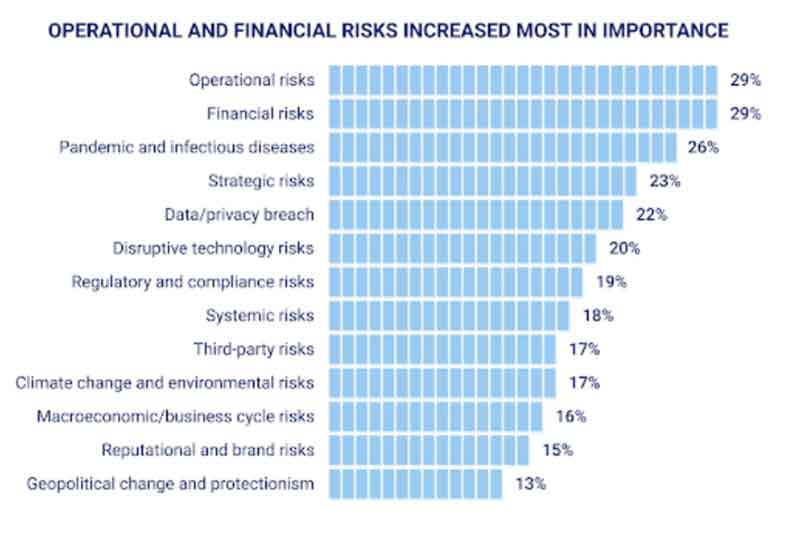
According to the 2021Global risk management study, the financial risk landscape has become more complex, volatile, and fast-paced. Moreover, due to economic uncertainty, financial scores, investment scores, credit risk concerns, and above all, cyberattacks have opened doors for business systems to shut down at any time. The below graph depicts how financial and operational risks stand at the top of every digital business presence.
This is just the beginning of what lies ahead in the financial landscape. The Global Association of Risk Professionals also stated the following overview of the regulatory evolution of financial risk management history from 1980 – 2020, since the concept of digital transformation was introduced to the finance industry.
Given that there are different forms of financial risks businesses struggle with, such as compliance risk, strategic risk, credit risk, currency risk, etc., it is vital for financial enterprises to have a backup plan. Under such circumstances, investing in financial risk management software systems can significantly help overcome possible financial risks.
Speaking of investments, modern finTech organizations, banks, and financial enterprises have successfully adopted various custom software product developmentsolutions to keep secure and resilient to evolving risks.
Financial risk management software plays a crucial role in forming modern value strategies to ensure business stability. Therefore, if you are looking to implement solutions that can help your financial business avoid challenges and potential risks, here’s an article that tells you the importance and benefits of financial risk management software and tools.
Let’s start with the basics, shall we?
What is financial risk management software?
The goal of financial risk management software is to identify, measure, and model risks in financial decisions and mitigate potential losses via robust reporting and insights. Such software and tools act as a regulator for financial businesses to capture increasing amounts of data and produce accurate reports to maintain the continuity of asset flow.
The benefits of financial software development for risk management are clear. Apart from predicting and avoiding risks, such software and tools help businesses with relevance and accuracy, secure data processing, real-time recording and updating of information to keep pace with volatile market changes, etc.
Moreover, if you customize the development of financial risk management software aligned with your specific business needs, you can quickly establish proper risk controls. The development must work like the greater the risk consequence, the more controls applied. However, before you decide to implement risk management tools in your workflow, it is vital to understand the features so that you know what you are looking for.
Features of financial risk management software and tools
Risk and control management software in the finance industry covers many aspects of risk controls. Right from strategizing the potential challenges to identifying, monitoring, and assessing the risks, this software keeps every factor under control.
Here are some of the primary features of financial risk management software and tools:
Evaluation techniques
Visual representation controls
Risk monitoring
Reporting and insights
Big data analytics
As for tailor-made risk management tools, financial businesses must seek technical guidance from a reliable financial software development company. Now that you are aware of the features, it’s time we discover the top three benefits of having financial risk management software.
Top three benefits of financial risk management software development
A significant part of risk management in finance is keeping track of all the necessary records in one place. If not, missing standard regulatory deadlines can harm your business workline, and expensive litigation due to missing reports can tie up your business resources for months.
But you don’t have to worry since risk management software and tools can help manage and organize your business data simultaneously under multiple departments and stakeholders. What else? Let’s take a look.
1. Protection from litigation due to data breaches and cyberattacks
If your financial business is negligent in a data breach, your litigation fees will only go up. While data breaches and security have always been a threat to the financial industry, the remote work concept creates additional risk factors such as malware, data leakage, etc.
Here, your risk management software will help establish roles and responsibilities if a data leak occurs. The software also performs frequent checkups in case of any missed detail or entry on the records.
2. Prevention of security fine for not complying with regulations
The finance businesses are heavily regulated, and the protocols change often. On top of that, digital technologies such as robotics, cloud, IoT, blockchain, etc., have led finance companies to create broader competition. At such times, your business must innovate to stand in favor of your customers.
A risk management software can help you with market and product research, innovation strategy, establishing protocols when adding new products or features, updating compliance with legal teams, etc.
3. Culture of risk preparedness for fewer errors
Your financial business is all set for success if it follows a culture of risk preparedness. For instance, if you train your workforce on how data leaks occur and phishing scam work, they can be diligent in spotting any warning signs.
Risk management software and tools often include document management as a core feature. The feature allows you to store information and create a knowledge base for your workforce to learn about upcoming and existing business risks.
Some financial risk management applications also have mobile functionality where employees can upload their documents and images to illustrate risk issues.
Ready to get started?
If you are sold on the importance of having financial risk management software for your business, it’s time to put your plan together and seek an experienced financial software development company to help you with development and resource management. It’s never too late to avoid business risks; hence, talk to industry experts to get the best financial risk solutions possible.
All you can hope for as a business owner is that your day-to-day operations run fluidly and that the hiccups are few. In this article, we will be zooming in on the top five secrets to ironing out any imperfections in your business operations so that things run smoothly on a daily basis.
Make Things Automatic
Taking away the fiddly manual aspects of your business will help achieve a more fuss-free workflow. This can be done by automating everything that you can automate, meaning you do not have to put in the hard graft to make absolutely everything happen yourself. The less time spent manually doing things that could be automated, the more time you will free up to dedicate your time and attention to other areas of your business.
Regarding the accounting and finance side of things, consider adopting credit control software. You can automate your accounts receivable instead of manually sending out invoices to charge customers for your goods and services.
The list of accounts receivable automation benefits is huge: your finance team will save time and energy not having to manually manage accounts and chase for payments, which will ultimately create a less stressful work environment – and everyone knows that happy employees are key when it comes to running a business smoothly.
Another example of how you could automate your business is in your marketing strategy; you can schedule social media posts, newsletters and email campaigns to be published at whatever time you choose, having pre-written everything you want to say.
Automating your business wherever possible reassures you that work is going on in the background, while the things that are higher on the priority list get your undivided attention.
Involve a Third-Party for Fiddly HR Work
HR tasks are a necessary headache that needs to be conducted in every business. But if you are only a small business trying to juggle several things in very few hands, running payroll and paying employment taxes are probably the bane of your life. A busy start-up may not have the time or resources to complete these HR tasks in-house, yet the business cannot run without them. The solution? You should consider palming off these tasks to third parties who are built to do them.
To ease the HR workload, there are also payroll programs like WPS Payroll that can carry out payroll online, submit new hire reports, pay taxes, insurance, and many other essential HR tasks to keep your business compliant.
Refine Communication Channels
We’ve all spent at least one entire morning sifting through hundreds of emails in our professional lives. We probably aren’t seeing the extinction of email anytime soon, either. That said, many companies are slowly shifting towards other means of communicating.
Instant messaging services are increasingly becoming a primary mode of communication for many modern companies. These social media encourage rapid responses and problem-solving, whilst also being easily searchable if you need to refer back to a conversation. Web chat calls have also proven themselves to be a very nifty and useful tool in light of the pandemic, which can be recorded and used as a reference if need be. Implementing these communication channels into your business will help it to run smoother on a day-to-day basis.
Hold Regular Catch-Ups
No matter if you are living in the flesh or over Zoom, it is vital to hold regular stand-ups to know what your employees are up to; doing this keeps everyone accountable and in the loop about what is going on and what needs to be done, also enabling staff to raise any pertinent issues ahead of the day.
Should you choose to hold them daily, they should be kept brief – no more than 20 minutes – and Morning catch-ups also limit the need for periodic meetings throughout the day, thus increasing productivity. It may also be an idea to hold a ten-minute meeting to wrap up the day. This will ensure everything that was achieved that needed to be.
Value Your Employees
Simple acknowledgements of your employees’ hard work go a long way. While you may have started the business, it is important to recognise that you may not have gotten as far without your team. Tell them this on a regular basis – it will make your employees feel appreciated and their hard work seen, and in turn, make them more productive and help the day-to-day workflow be smoother.
In addition, making sure you develop your employees will minimise the number of responsibilities on your shoulders and allow the business to function better when you are absent.
The Secret Extra Tip
Another key part of making your day-to-day business operations run smoothly is making sure you do not drive yourself mad with stress. Running a business is no easy task; stress can sometimes get on top of the best of us. But try to find ways of managing your stress, and avoid doing this by micromanaging your team; trust them to help you run your business. The attitude you espouse at the top will trickle down to your employees; hence, if you are a high-stress business owner, this will be mirrored by your team and will send morale plummeting, disrupting any potential for smooth business operations. However, if your attitude is one of “everything will get sorted in the end”, you will be fostering a happier workplace where operations are more fluid and, importantly, productive.
For many of us, the pandemic awoke a need to start fresh in many areas of our lives. One of the most popular changes we all made was to our vehicles, with car dealerships seeing a considerable increase in demand for new cars. And it comes as no surprise that a large proportion of these changes were from the traditional petrol or diesel model to an electric vehicle (EV). Still, many sit on the fence about whether or not to make their next car electric. In case you fall into this category, read on to discover five reasons why making the switch to an EV is the correct move.
They’re Cheaper to Run
In light of the Cost of Living Crisis, life is becoming increasingly expensive, and we are all trying to find methods to save money in whatever way we can. Naturally, having a car that takes either petrol or diesel will cost you. With an EV, that cost lowers significantly, with the only expense to pay for being the electricity units used when the car is being charged – estimated to cost just a few pounds for a full charge. If you elect to have a home charging point installed, you would be able to fully charge your electric car for the minimal cost of £4.80 using a 40kW battery.
Depending on where you charge your car, the price can fluctuate, in the same way, that it does per petrol station. Still, compared to filling your vehicle with a full tank of fuel, the cost of charging an EV is far lower and covers a similar mileage range to a petrol or diesel model. So, if you want to cut your expenses around your car, an electric vehicle may just be the way to go!
Plenty of Mileage
Many consumers feel that an EV isn’t worth it as they don’t take you very far. But recent stats show that on only one charge, the average mileage range of an EV is 313 km or 194 miles- roughly the drive from Leeds to London.
As technology constantly evolves, EVs are set to take you even further. The Nissan LEAF e+ provides up to 239 miles with one sole charge, meaning you can do an entire return journey from Bristol to London and vice versa with miles left over.
It’s worth considering that just as you wouldn’t allow your car to die without petrol, you would not let it die of no charge either. Just like remembering to charge your phone, whenever you’re parked up, simply plug in your car and leave it to restore full charge. By the morning, you’ll have yourself a full battery once again and be ready to take on another long journey.
An Altogether Smoother Drive
You can wave goodbye to the deafening sound of your diesel engine when it takes off; other than the faint sound of whirring and the noise of the tyre, driving an EV is a pretty silent experience. In fact, the noise from electric cars is so minimal that manufacturers are actually inserting sound generators so that pedestrians and other road users are not ignorant of their presence when they’re around.
Aside from the auditory benefits, EVs are generally designed to maximise comfort. There is usually firm suspension to hold the heavier batteries of an EV, and these tend to be situated lower in the car. Moreover, the electric motor uses less space than the engine, meaning the passenger compartment tends to be roomier than that of a similar-sized petrol/diesel car.
You will be Taking a Vital Step in Protecting the Planet
While this may be lower on people’s agenda when choosing a car, protecting the planet is something we consider to be a number one priority. And we aren’t alone, with London abolishing the congestion charge for those who go electric and other cities likely introducing similar schemes over the coming years to fuel the incentive to switch to an EV.
EVs give off zero emissions when on the road, which will ultimately help reduce CO2 and other harmful greenhouse gasses in the atmosphere in towns and cities, promoting cleaner air quality. It has also been found that fine particles emitted through car exhausts are harmful to health, so no exhausts mean better health and no pollution – why wouldn’t you consider the switch?
Charging is Cheap and Convenient
As discussed earlier, fitting a charging point outside your home will be a huge convenience if you invest in an EV. You can easily use a handy electric app, charge your car in whatever weather conditions and leave it to garner charge as you go about your day or evening at home.
If you decide against having a home charging installation, that’s fine too. Nowadays, virtually all UK motorway service stations have rapid car charging stations, which allow most EVs to reach 80% battery in as little as an hour. A fully charged electric vehicle could take you up to 250 miles, which is double the range expected a couple of years ago.
Convinced Yet?
If you aren’t already making your way to a showroom or googling the best electric cars on the market, we hope we have at least compelled you a little to consider investing in an EV for your next whip. After all, they are the future- and why not start the future now?
By Terence Tse
CFOs are evolving into AI-driven transformation orchestrators, balancing finance, technology, and strategy while upskilling teams, managing risks, and driving measurable business value.
A key insight from this year’s AI for CFOs event, organized...
The World Financial Review uses cookies to improve site functionality, provide you with a better browsing experience, and to enable our partners to advertise to you. Detailed information on the use of cookies on this Site, and how you can decline them, is provided in our Privacy Policy and Terms and Conditions. By clicking on the accept button and using this Site, you consent to our Privacy Policy and Terms and Conditions. ACCEPT
Privacy & Cookies Policy
Privacy Overview
This website uses cookies to improve your experience while you navigate through the website. Out of these cookies, the cookies that are categorized as necessary are stored on your browser as they are essential for the working of basic functionalities of the website. We also use third-party cookies that help us analyze and understand how you use this website. These cookies will be stored in your browser only with your consent. You also have the option to opt-out of these cookies. But opting out of some of these cookies may have an effect on your browsing experience.
Necessary cookies are absolutely essential for the website to function properly. This category only includes cookies that ensures basic functionalities and security features of the website. These cookies do not store any personal information.
Any cookies that may not be particularly necessary for the website to function and is used specifically to collect user personal data via analytics, ads, other embedded contents are termed as non-necessary cookies. It is mandatory to procure user consent prior to running these cookies on your website.