The United States and India have reached a trade deal and will move immediately to lower tariffs on each other’s goods, President Donald Trump announced on Monday.
Trump said the agreement followed a phone call with Indian Prime Minister Narendra Modi and would reduce the U.S. “reciprocal tariff” on Indian goods from 25% to 18%. In return, India will cut its tariffs and non-tariff barriers on U.S. products, Trump said in a post on Truth Social.
According to Trump, Modi also agreed to significantly increase purchases of American goods and energy, including oil, technology, agriculture, and coal. Trump added that India committed to stop buying Russian oil and instead source more energy from the United States and potentially Venezuela, a move he said would help efforts to end the war in Ukraine.
While Trump said the deal would take effect immediately, the full text of the agreement has not been released, and it remains unclear whether the two sides have signed a formal document. The White House and the Office of the U.S. Trade Representative did not immediately provide further details.
Legal experts and some Democratic lawmakers have raised questions about whether Trump can finalize binding trade agreements without congressional approval. Supporters of the president argue that Congress has already given the executive branch broad authority to negotiate such deals.
Trade experts urged caution. Lori Mullins of Rogers & Brown Custom Brokers said businesses have learned not to react too quickly to Trump’s trade announcements, noting that changes become official only once they appear in the Federal Register.
Modi later confirmed the tariff reduction in a post on X, welcoming the move and calling it a boost for trade between the two countries. Trump’s announcement came just days after India finalized a major free trade agreement with the European Union, adding momentum to New Delhi’s global trade push.
Article 2 of the Convention on Internationally Protected Persons[1] prohibits “kidnapping or other attack upon the person or liberty of an internationally protected person,” such as President Nicolás Maduro and his wife. The U.S. Government’s seizure of President Maduro and his wife were blatant violations of the Convention.
Introduction
At dawn on 3 January 2026, the United States launched a large-scale military operation in Caracas, Venezuela, leading to the capture of Venezuelan President Maduro and his wife, Cilia Flores. They forcibly were extracted from Venezuelan territory, transferred to a United States warship, and flown to New York, where they were arrested and charged in U.S. federal courts with narcotics, weapons, and “narco-terrorism”-related offenses. On 5 January 2026, Maduro was brought before a federal judge in Manhattan, declaring: “I am innocent. I am not guilty. I am a decent man” and that he is the legitimate President of Venezuela and a prisoner of war having been taken by the U.S. Military.
Under International Customary Law, Each State Determines Who Is Its Head of State.
Under customary international law, head of state status is determined by the internal constitutional law of the state concerned and by the effective exercise of governmental authority. This approach reflects the doctrine of the International Court of Justice (ICJ) that the organization of a state’s political authority is a matter of domestic jurisdiction, protected by Article 2(7) of the United Nations Charter.[2]
This determination matters because a sitting head of state and members of his or her family with him
In Nicaragua v. United States, the ICJ held that external attempts to influence or dictate a state’s political system violate the principle of non-intervention.[3] Similarly, in Bosnia and Herzegovina v. Serbia and Montenegro, the Court treated the identification of heads of state as a matter determined by domestic law and factual authority rather than foreign approval.[4] Accordingly, head of state status in international law depends primarily upon an internal constitutional claim to office and the effective exercise of governmental authority, rather than external recognition by other nations. This point is central to the legal analysis.
This determination matters because a sitting head of state and members of his or her family with him,[5] enjoy immunity ratione personae, conferring absolute immunity from foreign criminal jurisdiction for the duration of office. In Arrest Warrant (Democratic Republic of the Congo v. Belgium), the ICJ affirmed that subjecting a sitting head of state to foreign criminal process would, amount to exercising jurisdiction over the state itself.[6] Similarly, the French Court of Cassation held in 2001 that international custom precludes the prosecution of sitting heads of state before foreign criminal courts.[7]
While the United States may make its own political determinations as to who is Venezuela’s Head of State, if that determination conflicts with Venezuela’s continuing internal legal and political determination that Maduro is its President and thus Head of State, he and his wife have absolute immunity from foreign criminal prosecution under customary international law.
President Maduro Has Been Venezuela’s Head of State Since April 2013, And Will Remain Such So Long As Venezuela’s Government Continues To Recognize Him As Its President.
Following the death of President Hugo Chávez in 2013, Maduro, Chávez’s designated successor, served as interim president until he was declared the winner of the April 2013 presidential election. He claimed victory in the 2018 and 2024 elections. Both were widely criticized for irregularities, restricted opposition participation, and limited transparency. Nevertheless, until 3 January 2026, Maduro remained in office and retained control of the Venezuelan state apparatus.
Despite external non-recognition by certain states, and until his seizure by the United States on 3 January 2026, Maduro continued to exercise effective control over Venezuela’s territory, institutions, armed forces, and foreign representation. The military remained loyal, ministries and courts operated under his authority, and Venezuela’s diplomats and United Nations representatives acted on his instructions. No rival authority exercised governmental power inside Venezuelan territory. Under the doctrine of effectivity[8], this establishes head-of-state status regardless of external recognition disputes.
Customary International Law Dictates That Maduro and His Wife Have Absolute Head of State Immunity From Foreign Criminal Prosecution.
The United States’s capture is unlawful not only under customary international law, but also under the United States’ own international policy, the Restatement (Third) of Foreign Relations Law of the United States Section 702(e). Section 702(e) states that “a state violates international law if, as a matter of state policy, it practices, encourages, or condones prolonged arbitrary detention.”[9]Arbitrary detention includes actions that are not pursuant to law/there is no valid legal basis for the detention.[10]
Thus, not only does the seizure of Maduro and his wife from their home in Venezuela violate their Head of State Immunity, any guilty verdict by the U.S. Federal Court in New York likewise will violate customary international law and their Head of State immunity.
In Sosa v Alvarez-Machain, the U.S. Supreme Court confirmed that U.S. courts may give effect to clearly defined and universally accepted norms of customary international law, while cautioning that ordinary unlawful detention alone does not meet that threshold. The long-recognized prohibition on attacks against internationally protected persons, however, belongs to the class of established international norms that Sosa expressly preserved.[11]
Conclusion
Any guilty verdict by the U.S. Federal Court in New York likewise will violate customary international law and their Head of State immunity.
U.S. Government over-reach in Venezuela poses a profound question for peaceful World Order. How can U.S. actions taken by force that are contrary to customary international law—supposedly the “supreme Law of the Land” under the U.S. Constitution—be curtailed in this time of grave danger for our World—and does international law matter? In other words, is state sovereignty dependent upon recognition by other states of its Head of State, or upon the state’s own determination of its Head of State? According to established doctrine, each state chooses its own Head of State, and immunity results from the position held rather than from approval from other states. The foundations of diplomatic stability and state sovereignty will disappear if strong states have the ability to unilaterally redefine another state’s leadership to eliminate absolute Head of State Immunity and, thus, to take over effective control of the other state.
Charles H. Campis an international lawyer in Washington, D.C. with over forty years of experience representing foreign and domestic clients in international litigation, arbitration, negotiation, and international debt recovery. Mr. Camp has taught international negotiations at George Washington University Law School for the last eighteen years.
Lisa Bernier is Counsel at the Law Offices of Charles H. Camp, P.C. She received her legal education in France in business law and holds an LL.M. in Business and Finance Law from George Washington University Law School. Her practice focuses on international business and transactions as well as corporate matters.
Christine Magumeis a Law Clerk and Teaching Assistant to Mr. Camp and a third-year law student at the George Washington University Law School. Ms. Magume also is President of GW Law’s Moot Court Board, and holds a B.A. in Foreign Affairs from the University of Virginia.
References
[1] Convention on the Prevention and Punishment of Crimes Against Internationally Protected Persons, Including Diplomatic Agents (hereafter the “Convention on Internationally Protected Persons”) art. 1(a), Dec. 14, 1973, 28 U.S.T. 1975, 1035 U.N.T.S. 167 (including, within definition of “internationally protected person,” “a Head of State, including any member of a collegial body performing the functions of a Head of State under the constitution of the State concerned, a Head of Government or a Minister for Foreign Affairs, whenever any such person is in a foreign State, as well as members of his family who accompany him“).
[3] Military and Paramilitary Activities in and against Nicaragua (Nicar. v. U.S.), Judgment, 1986 I.C.J. Rep. 14.
[4] Application of the Convention on the Prevention and Punishment of the Crime of Genocide (Bosn. & Herz. v. Serb. & Montenegro), Judgment, 2007 I.C.J. Rep. 43.
[5] Convention on the Prevention and Punishment of Crimes against Internationally Protected Persons, Including Diplomatic Agents, art. 1(1)(a), Dec. 14, 1973, U.N. Doc. A/RES/3166(XXVIII), annex (entered into force Feb. 20, 1977).
[6] Case Concerning the Arrest Warrant of 11 April 2000 (Dem. Rep. Congo v. Belg.), Judgment, 2002 I.C.J. Rep. 3.
[8] Restatement (Third) of the Foreign Relations Law of the United States § 203 cmt. b (Am. L. Inst. 1987); 1 Oppenheim’s International Law § 45 (Robert Jennings & Arthur Watts eds., 9th ed. 1992).
In the Philippine flood-control corruption scandal, the multibillion-dollar net losses are huge. But without adequate resolution, international pressures could multiply the damage.
In fall 2025, a major government corruption scandal erupted around flood control and mitigation projects under the Department of Public Works and Highways (DPWH).
What makes this scandal different is its magnitude and critical areas. According to international indicators, the Philippines is the world’s most disaster-prone country, plus highly vulnerable to extreme climate events.
Yet, billions of dollars from public funds that were supposed to protect communities from flooding and climate impacts have been plundered.
corruption debacle reduces confidence, especially in infrastructure sectors where transparency and accountability are major determinants of investment.
Investigations revealed a large number of “ghost” projects (funded but never built or poorly executed), inflated costs, and kickbacks to politicians, officials, and contractors — with estimates suggesting a huge portion of budgets was lost to irregularities.
Public outrage grew because these weren’t abstract failures — flooding repeatedly hit vulnerable areas, causing deaths and major damage while projects meant to prevent such harm were allegedly corrupted.
In 2025, economic growth plunged to a historical low of 4.4%. After tanking, markets are ailing.
Meanwhile, the massive collateral damage and spillovers have gone international.
From domestic protest…
Domestically, reputational damage has spread since early fall 2025. As a result, public trust has plummeted. Polls show 90% of Filipinos believe officials have colluded to steal flood control funds, indicating widespread corruption at the highest levels of government.
Confidence in key institutions like the Department of Public Works and Highways (DPWH) is extremely low.
Mass protests have erupted across Manila and other cities, signaling broad public fury over billions lost to corruption just as flooding worsens climate vulnerability. Political fallout is reflected by high-profile resignations.
The economic impact is tangible. At the minimum, corruption has cost the Philippine economy up to US$2 billion over two years through lost, substandard, or nonexistent projects. And this estimate is likely to be conservative.
Domestic debates on governance and accountability have intensified, putting sustained pressure on the current government, including efforts to impeach President Marcos Jr.
Unsurprisingly, the Bangko Sentral ng Pilipinas cut key interest rates to around 4.75% in late 2025, in part to support growth amid weaker investor sentiment tied to the corruption drag.
The Philippine Stock Exchange index (PSEi) ended 2025 in the red, underperforming regional peers, with analysts explicitly linking weak market performance to governance concerns including corruption.
… to international outrage
In the 2024/25 Corruption Perceptions Index CPI, the country ranked 114th out of 180 countries; and 3rd in ASEAN. In these rankings, the Philippines is behind Laos and barely ahead of Sierra Leone and Angola. It is not a good company.
Let’s follow the money. In terms of illicit financial flows (IFFs), Manila is among the world leaders. In 1960-2011, $410+ billion was moved illegally in or out the Philippines, as well as $5.1 billion flows in 2008-2017.
Risks are compounded by drug trafficking, scams, corruption, tax evasion, with medium-to-high risks in casinos, real estate, money services virtual asset services, and medium risks in banking, securities, and trusts.
International investors and businesses have taken notice. Foreign investors and business groups like European Chamber of Commerce in the Philippines say the scandal stains the country’s reputation as an investment destination.
Similarly, the Nordic Chamber of Commerce has stressed that the rule of law needs to be appropriately enforced in the country.
In international comparison, the ongoing corruption debacle reduces confidence, especially in infrastructure sectors where transparency and accountability are major determinants of investment.
Increasing internationalalarm
Foreign governments and diplomats have intensified their monitoring. Reports by the U.S. State Department have long highlighted “pervasive” corruption in Philippine governance.
Environmental and global climate advocacy groups (e.g., Greenpeace) have come forward to condemn the misuse of climate-tagged funds, framing the scandal as a betrayal of international climate finance commitments.
International media (e.g., TIME, New York Times, and The Guardian) have reported the scandal globally, linking corruption with real human and environmental impacts.
The international reputational damage has harsh economic and financial consequences.
Credit ratings at risk
Sovereign credit ratings are tracked by international credit ratings agencies and include focus on governance and corruption risks. Before the onset of the corruption debacle, the Philippines had been poised for a credit rating upgrade (e.g., from BBB+ toward an “A” rating), but the debacle has likely blocked or slowed that progress.
Higher ratings reduce the required return that investors demand and lower borrowing costs for both the government and corporates. A lost upgrade means continuing higher interest costs.
The ongoing political instability and corruption controversies could imperil future credit ratings, as Fitch has cautioned, essentially threatening a future downgrade if the crisis remains unresolved – or it is resolved inadequately.
Government debt costs are likely to rise as investors will demand higher yields on Philippine government bonds to compensate for perceived governance risk. The government must pay more interest to borrow the same amount of money.
Higher yields crowd out public spending on infrastructure, health, and education, which are vital to economic development.
Corporate costs, FDI fall, peso pressures
Corporate and financial costs could also rise. Credit rating differentials and governance flags push investors to demand risk premiums – not just for governments, but for private credit backed by their operating environment.
In the Philippines, foreign direct investment (FDI) inflows have slowed significantly, falling well below historical averages and prior to the pandemic levels. Due in part to corruption concerns, the share of FDI has plunged 25% from the prior year. Foreign investors are shifting investment to other ASEAN markets with stronger governance.
Markets and currency have been penalized. The Philippine peso has coped with historical pressure and depreciation linked to investor risk aversion. Today it hovers around 59 pesos per US dollar – that’s 20% less relative to the Duterte years (2016-22).
In October 2025, the onset of the crisis wiped out 1.7 trillion pesos ($29 billion) of the market cap in local equities. Stock market volatility and loss of market value reflect shaken investor confidence.
Slower growth in FDI reduces job creation, technology transfer, and foreign capital inflows. Without sustained growth, Manila is sleep-walking into a middle-income trap.
Bilateral aid and multilateral financing under pressure
A loss of trust makes it likelier that foreign aid providers — especially those tied to anti-corruption and climate finance conditions — will attach stricter oversight, audits, or even freeze disbursements.
Multilateral development institutions, such as the World Bank and Asian Development Bank, and climate funds tend to integrate Environmental, Social & Governance (ESG) criteria into financing frameworks.
If governance standards are seen as insufficient, a pervasive corruption scandal, especially one tied to climate resilience projects, could jeopardize access to concessional loans, blended finance, and climate adaptation funds.
Even if loans are not cancelled outright, future agreements will likely include tighter conditionalities and more rigorous anti-fraud safeguards, slowing disbursement timelines and increasing implementation costs.
Worse, global investors using ESG screens may downgrade the Philippine risk profile, making the country less attractive for funds targeting responsible investment.
Three scenarios
The country may find itself excluded from ESG funds and diverted or suspended from aid and climate finance at a time when it needs both the most.
What about the future? There are three scenarios. If the corruption is tackled with credible structural reforms, a “credible cleanup” is possible. And it will be reflected by upgrades of credit rating, falling bond spreads, rising foreign investment, gradual recovery in ESG standing and expanded support in aid and climate finance.
Unfortunately, it is the least likely scenario to materialize.
If real reforms are shunned, prosecutions prove selective and juridical processes partisan, the “managed damage” scenario will ensure that the crisis will further penalize the political class and foster greater economic erosion.
In this case, the country will be haunted by new scandals.
The third scenario is the darkest. if neither reforms nor pretexts prevail, some form of “governance breakdown” may ensue. Ratings agencies downgrade Philippine outlook into negative as bond spreads soar and foreign investment plunges. The country may find itself excluded from ESG funds and diverted or suspended from aid and climate finance at a time when it needs both the most.
It is a scenario that could result in major instability.
Whatever the decisions today, they will cast a long shadow over future decades.
This is the long version of a commentary originally published by The Manila Times on February 2, 2026. It draws from Dr Steinbock’s presentation on the Philippines risk outlook in the Nordic Chamber on Jan 30, 2026, along with Assistant Secretary Miko Alejandro at Department of Finance, and Dante R. Tinga Jr., SVP and Head of Research for BDO Unibank.
Dr. Dan Steinbockis an internationally recognized strategist of the multipolar world and the founder of Difference Group. He has served at the India, China and America Institute (USA), Shanghai Institutes for International Studies (China) and the EU Center (Singapore). For more, see https://www.differencegroup.net
The United States has officially left the World Health Organization (WHO), marking the exit of one of the agency’s largest donors. The move follows a year-old executive order signed by President Donald Trump, who condemned the organization for being too “China-centric” during the Covid-19 pandemic.
The US Department of Health and Human Services cited the WHO’s alleged “mishandling” of the pandemic, political influence from member states, and a failure to implement meaningful reforms as reasons for the exit. Health Secretary Robert F. Kennedy and Secretary of State Marco Rubio said in a joint statement that the WHO had “abandoned its core mission and acted repeatedly against the interests of the United States.” They added that future US engagement would be limited strictly to completing the withdrawal and safeguarding American public health.
The withdrawal terminates all US funding, recalls American personnel from WHO offices worldwide, and suspends hundreds of US engagements with the agency. Despite WHO lawyers suggesting the US must pay arrears, Washington has so far refused to pay its estimated $260 million dues for 2024 and 2025.
WHO Director-General Tedros Adhanom Ghebreyesus called the US exit a loss for both the country and the world, noting the organization’s global efforts to combat polio, HIV/AIDS, maternal mortality, and tobacco-related health risks. The WHO also highlighted the international pandemic treaty agreed last year by all member states except the US, which aims to improve pandemic preparedness and ensure fair distribution of vaccines and treatments in the future.
US officials said they would pursue bilateral partnerships with other countries to maintain disease surveillance and pathogen sharing, but offered few details on specific arrangements. They also stated that work on global health initiatives, such as combating polio and HIV, would continue through NGOs and faith-based groups, although formal partnerships remain unclear.
Experts have criticized the US response to Covid-19, noting delays in implementing public health measures contributed to the virus’s rapid spread. Drew Altman, a former US public health official, said that inconsistent guidance, politicization of policies, and state-level variations in mask mandates and social distancing allowed the pandemic to worsen. A research study published in the US National Library of Medicine also described the federal response as “slow and mismanaged.”
The WHO has expressed hope that the US might reconsider its withdrawal. The organization emphasized that collaboration between the US and WHO has saved countless lives and strengthened global health security. The withdrawal will appear on the agenda of the WHO’s upcoming board meeting from February 2–7, with the secretariat planning to act according to guidance from its governing bodies.
As the US departs, analysts warn the organization could face a significant funding gap, losing roughly one-fifth of its budget. The move raises questions about the future of global health cooperation and the ability of the WHO to respond to future pandemics without one of its largest contributors.
Judging war must include civilian witnesses who suffer through it.
Humans’ strategy for coping with the immensity of the universe is to classify, reducing it to, possibly, more comprehensible chunks. Thus, we generalize about topics like “nature”, “space”, and “time”, although we really don’t understand any of these. The label “war,” it may be said, is another such “convenient” generalization.
Since it is the UNDERSTANDING that sets man above the rest of sensible beings and gives him all the advantage and dominion which he has over them; it is certainly a subject, even for its nobleness, worth our labour to inquire into.
– John Locke, Essay Concerning Human Understanding
Some stories that happened when I was a child are too hard for me to believe today. My father told and retold a story about me on so many family occasions that it feels like a significant detail of my life. “He was just five years old when he and two of his little friends ran away,” he would say. “I got a call from the police to come and get him seven miles away from home.” For years, he would tell the same story: “He now has a police record.” Yes, we were taken to a police station and given ice cream, but when I came home, he scolded me, “That is very, very bad. Do you understand!? You now have a police record!” and repeatedly asked, “Do you understand?” [1]“Daddy,” I cried, “What do you mean?” It may have been that I didn’t understand what a police record meant, but it’s more likely that I didn’t know what “understand” meant.
Of course, I did not. For a long while, I contemplated the question but could not satisfactorily grasp the elusive verb. I still do not, though the column that I write each month is headed “Understanding War.” To understand, one must delve into the kernel, where evidence of a cause we cannot easily see lies. However, we sometimes use the expression “I see,” as if agreeing with someone who is trying to explain a difficult concept, providing evidence that may hold true after mental cross-examination. Understanding is like cracking open a sea urchin to get to its inside without using a tool. Not an easy task, and sometimes not possible. Look up the word “understand” in almost any modern dictionary to ponder the entry that gives meaningless, unsatisfactory circular definitions.
So, bear with me as we go further into the depths of the verb. I looked to one of the seventeenth century’s most famous philosophers, John Locke, who in 1690 published “Essay Concerning Human Understanding” on some notions of understanding that join opinion to belief, suspicion to assurance, and persuasion to knowledge. The strength of his essay is in the loops of evidence that tie certainties to moderate beliefs. Locke shows that in coming to understand something, we cannot sense the brain’s acknowledgement moments, even from any part of the brain that is firing an “Aha!” sensation. Understanding doesn’t pop up even in consciousness and awareness, as expected, certainly not in any organs or nerves that contribute signals to “the mind’s presence-room,” as Locke calls it, like they would with sensations involving tastes, smells, or touches. That leaves the question surrounding understanding as one of those many persistent philosophical, biological, and psychoanalytical questions.
On the other hand, is there a feeling of being convinced of an argument? The English philosopher David Hume thought so. “In philosophy, we can go no farther than assert, that belief is something felt by the mind, which distinguishes the ideas of the judgement from the fictions of the imagination.” [2]All we can do is to know whatever we need to know. From the connection with understanding war, it means absorbing information on geography, genocide, arms investment and control, and using that information as evidence for adjustments and balancing knowledge with persuasion. There are no organs or nerves that speak to give confidence in beliefs. What goes into your brain (Locke’s “presence-room”) will be evidence for acceptance of truth or falsity, with no tingles of the spine nor shocks of comprehension. It’s judgment that counts all truth. The problem with understanding war is that, eventually, whenever we come across the inevitable attempt to distinguish civilian casualties from refugee diaspora, we do sense sympathy coming from the mind’s presence-room.
How can we understand war without fully knowing the indirect consequences of war and what they do to alter the geopolitical balance of power?
I struggled with Locke’s presence-room and was even more confused when I came across Wittgenstein’s take on the subject. For him, if I interpret his words correctly, “understanding” is not some access to cognition but rather to the way we use language as flexible, generous interpretations of what we see, hear, and gather from the rich caches of our intrinsic feelings. The verb is defined by how we unconsciously or consciously use it in everyday practical contexts. In other words, grasping an idea is a social process rather than a mental one. In that sense, reading the last 20 essays of my column, “Understanding War,” is a one-way social communication needing more reviews and responses.
The principal question is this: Why do we understand anything? What gives us the basic communication connections that guarantee a belief? Why is it that we know when we know? The answers link to the power of persuasion that brings reasoning and trust through internal language, relaying a generosity of meanings to each word for our expressions to fall prey to semantics based on conflicting background experiences of life that encourage disagreements involving environmental differences and cultural experiences.
As the scale of the balance must necessarily be repressed when weights are put in it, so the mind must yield to clear demonstrations. The more the mind is empty and without counterpoise, the more easily it yields under the weight of the first persuasion.
– Michel de Montaigne Essays, quoting Cicero
In Cicero’s perception, understanding involves different approaches because experiences are the driving forces of belief systems, as we become so accustomed to what we believe that we cannot think otherwise.
We cannot understand war without considering its multiple consequences
How can we understand war without fully knowing the indirect consequences of war and what they do to alter the geopolitical balance of power? In particular, the mass exoduses are not just from the war zones but also from the anticipation of political troubles in relatively peaceful areas. Throughout history, at least starting with the Jewish diaspora, we know how war creates more wars by immigrant migrations that burden infrastructure and economies. Few wars in history have escaped forced migration, and for some, migration had been so severe that it is impossible to know if it caused more war or not. Besides migration, which is a forced displacement and devastation of a nation’s home and economy, there are other colossal consequences. Primary military news focuses on deaths and major injuries. Those numbers are shocking, though they miss the overall indirect humanitarian consequences that are deemed ancillary news, relegated to the back pages as an afterthought – infrastructure, health, environment, and economic consequences. Without a sense of how devastating those effects are, we miscomprehend the essence of war. War histories are not just stories of battles, military policies, generals, and deaths; they include the people who escaped under severe duress with courage and hope for safety, and sadness about having to leave their homes. We cannot understand war without considering its fate.
Probing a concept while ignoring its consequences could be a draft installment of understanding, but not a comprehension that builds absoluteness. My five-year-old self didn’t understand what a police record meant, because I had no notion of the consequences. My father understood that a police record is not just a piece of paper that archives a misbehavior that could affect my potential successes. Potential successes? What could that mean to such a young child? My father overreacted, or more likely tried to make me feel punished; surely, he knew that the police sergeant, who left the station for a few minutes to buy a few ice creams, was not charging us and putting me (and two four-year-olds) behind bars. I had no grasp of breaking the word apart to “under” + “stand,” and certainly no sense of the consequences of a police record.
One of the many consequences of war: Psychological traumas of mass migration
All wars come with unpredictable changes to a nation’s landscape, pride, economy, and social cohesion. Some wars create mass exoduses that sprawl, first to neighboring states, then to countries far from home. Some internal wars divide friends, families, acquaintances, colleagues, and neighbors. Others, especially those under fascist or autocratic regimes, are purposely planned to create divisions, so citizens stay frightened, though with naïve optimistic belief in an imminent, unlikely change in government policies. Can we ever understand war if we do not distinguish civilian casualties from refugee diaspora? Citizens fleeing from war zones are just one piece of an understanding that many millions fled for their lives in the last hundred years.
Spanish refugees interned in France
Spanish Civil War: It is difficult to estimate the number of refugees fleeing the battlegrounds of the Spanish Civil War, because more than 30,000 (some experts say between 50,000 and 200,000) were executed as they tried to flee. So many others were sent to labor camps to build railways and canals. [3] At the end of the war, an estimated 500,000 fled to France, where they were confined in squalid internment camps with barely enough food to survive.
I’m afraid that the world forgets the history of that war, supported by the Soviet Union on the side of the Republican Popular Front, comprised of socialists, separatists, and anarchists, who were fighting the Nationalists in alliance with fascist conservatives supported by Nazi Germany. In that war, partly of class and religion, between fascists and communists, refugees who were sent to forced labor in Southern France internment camps were considered political prisoners. When the Free French Forces liberated those camps during the liberation of France in 1944, those freed prisoners were rounded up by the Vichy-controlled government and deported to Nazi Germany, where more than 5,000 Spaniards died in the Mauthausen concentration camp in Austria.
Terrified baby, one of the only human beings left alive in Shanghai’s South Station after the brutal Japanese bombing in China.
Second Sino-Japanese War: In 1939, Shanghai, close to a million refugees lost all they had after leaving all their belongings behind. Imagine the fear, the despair, and the discomfort of families crossing into the unknown. Those civilians with no connection to war discussions were trying to survive the only way they could, by leaving homes embroiled in battle. Imagine, if you can: “Separation of families; lost children; pitifully helpless sick and aged; child-births by the way; women struggling with little children over blasted railway tracks and bridges; crowded boat-trains bombed in the canals; repeated scattering from buses and trains to the field, as overhead the dreaded zoom of airplanes threatened...” [4] This quotation aptly encapsulates the experience of many ordinary Shanghai residents on the beginning of a journey into the unknown. The photo above, one of the most iconic images of the twentieth century, does not tell us much about the fleeing refugees; however, it is heartbreaking to see an injured, crying Chinese baby whose mother lay dead nearby under the ruins of the Shanghai South Railway Station.
Displacement of Poles from Greater Poland in 1939 Creative Commons Attribution-Share Alike 3.0 Germany license Credit: Willhelm Holtfreter
Hitler’s Third Reich: The Nazi regime in Hitler’s Third Reich began passing discriminatory laws and violence against Jews, forcing them to emigrate or be murdered. Hundreds of thousands, for whom there was no way to leave, were murdered. Decisions to leave were difficult because, from 1933 to 1938, policies changed by the month, and most hesitaters believed in a change for the better. It did not. For those who survived the holocaust, though they went through life with heartbreaking traumas, their migrations across the globe contributed to building economic and infrastructural growth in almost every country that took them in by the thousands.
All wars come with unpredictable changes to a nation’s landscape, pride, economy, and social cohesion.
Minorities living in Germany in the mid-1930s had hopes that their government would not cross the line between morality and evil. It was a bad bet. Without the ability to foresee the Holocaust, Jews had to assess how much of a threat the regime posed. Nazi policies kept evolving and changing, making it difficult to gauge this danger. Some Jews immediately left Germany, unwilling to accept the Nazis’ limitations on Jews. Others, however, hoped that the political situation at home would stabilize.
The Second World War cost millions of deaths, including the horror of the Holocaust. Hundreds of thousands of refugees left Europe, particularly Germany, hoping to find a new life far enough away from antisemitism. Many escaped Nazi Germany, but the psychological traumas of their existence stayed with them.
Jewish emigration from Germany, 1933-1940
Country
Refugee numbers
United States
90,000
Palestine
50,000
Shanghai
15,000 – 18,000
Argentina
25,000
Brazil
15,000
Chile
10,000
Bolivia
9,000
Central American Countries
21,000
Cuba
2,90
Refugees in Peiping (Beijing) escaping war
Chinese Civil War: Over the course of four years of the Chinese Civil War, an estimated 100 million Chinese civilians from all classes, religions, and backgrounds were displaced to Taiwan and Hong Kong. The exodus population in 1945 was 22 percent of China’s population of 450 million, the largest known displacement in history. Even now, it is hard to judge whether it was a massive-scale forced government displacement and relocation for Chiang Kai-shek’s exiled government. Like many other immigrants to a new country, those wartime refugees were initially harassed by unfriendly local communities. [5] Hong Kong’s population more than doubled by the end of that war. Refugees became the majority in their new environment, and with that rapid influx of refugees from the Chinese mainland, the British colony vibrantly swerved to a capitalist, international, free society. As for Taiwan, the population increased by a third, from 6 to 8 million.
North Koreans fleeing south Credit: US Department of Defense
Korean War: Unlike the hesitant migration in the years of the Third Reich, an estimated 4.5 million North Koreans fled south or abroad shortly before the three-year Korean War came into full-scale conflict. Another 646,000 (estimated) fled after the United Nations peacekeeping forces retreated from North Korea. Many were evacuated to Busan, Ulsan, and Geoje-si Island, southeast of South Korea; others were sent to China. Orphans old enough to leave Pyongyang, along with the millions migrating to Seoul, eventually were sent to Communist countries in Eastern Europe. As dangerous, daring, and miserable as it was, ultimately, the trek for those who made it to the south had made consummate lifesaving decisions. This is a rare example of benefiting from resettlement. Those who left the North for the South bettered their lives by living in a freer and more enriched society.
Vietnamese refugees rest aboard a guided missile cruiser with something to drink.
Vietnam War: When Saigon fell, 50 years ago, more than 800,000 Vietnamese refugees fled for safety and left their families behind. They went mostly by sea in overcrowded small boats. Many drowned or became victims of piracy. Some made it to land, but sadly, had to spend years in refugee camps. Fortunately, more than a million Vietnamese, Laotians, and Cambodians immigrated to America during and after the Vietnam War. It turned into a massive resettlement requiring emergency aid and protection for the hundreds of thousands of boat people fleeing the war region. The United Nations Children’s Fund (UNICEF) helped children and families with aid, education, and food, while the United Nations High Commissioner for Refugees (UNHCR) provided food, water, healthcare, and channels for refugees to leave.
Refugees crossing the Mediterranean, January 2016. Credit: Mstyslav Chernov/UnframeCreative Commons Attribution 2.0 Generic License Maximilian Dörrbecker (Chumwa)
Syria Civil War: The largest number of people displaced by war is estimated to be between 12 and 14 million, caused by the Syrian Civil War. The exodus was caused by the Assad regime’s internal brutality, unemployment, food and water shortages, virtual economic collapse, constant bombings, and housing destruction. Those millions fled from their homes to neighboring countries such as Turkey, Lebanon, and Jordan. Some, in abject poverty, were dispersed throughout the European Union by crossing the Aegean on boats to Greece. Others were displaced to aid settlements within Syrian boundaries. [6] The refugee displacement from that war at first created a sympathetic migration throughout many Western European countries and later became an overwhelming political problem that remains challengingly unsolved. Instability in Syria persists, but fortunately, the UNHCR and UNICEF are supporting international cooperation with Turkey, Jordan, and Lebanon to create pathways for self-sufficiency while simultaneously supporting rebuilding within Syria for those who return. [7]
Internally displaced children from other parts of Ukraine
Ukraine War: From the first days of Russia’s invasion of Ukraine in 2022, hundreds of thousands of Ukrainians, including children, were forcibly deported to Russia. Almost immediately, the ICC issued an arrest warrant for Vladimir Putin and Maria Lvova-Belova, Russia’s commissioner for children’s rights.[8] More than 7 million Ukrainians fled to Western Europe and to other countries outside of Europe, hoping to return when it would be safe to do so.
So many Ukrainians are in exile. I spoke with Diana Chipak, who fled from Ukraine to Germany with her younger brother when the war in Ukraine began. In 2022, when she was a student at Bennington College, she shared what it’s like to be living in a war zone, always thinking about her brother and parents. [9] In the Bennington Banner, a local newspaper in Bennington, Vermont, she wrote, “My dad is somewhere in the east, fighting this war. He doesn’t even tell me his location. I don’t know what he’s doing. He’s not allowed to say anything. He’s in my mind every single day. I have to make peace with the possibility of not seeing him again. That’s what I wake up to.
“You could just feel the fear, see it. There was just this silent knowledge. The air was really charged around you… Russia has sent Secret Service agents in civil uniforms into many of the towns, mine included. They were walking around, putting small explosives, throwing them around, a kind of campaign to get people fearful, to create mass fear. And that worked at first.
“I think operating in war—there are a couple of ways you can react to it. You can either freeze and sort of not do anything and be scared. Or you can, despite that fear that you have inside of you, grow. Isn’t that the backbone of improving your well-being and helping others? I’m the oldest of four. I have other people to take care of. So, I wasn’t in a place where I could allow myself to just be in a dark place.
“I wake up in the morning terrified that something major happened while I was sleeping. When I wake up, I first get to my phone to check the news. What I want people in Vermont to understand is that freedom, safety, and democracy are very sacred.”
Now I think about the war in Ukraine, about how civilians are coping, and about how young people are thinking about their own safety and the safety of the people they love. How does one witness the cruelty of indiscriminate bombing, constantly carrying frightening thoughts of being instantly killed or inhumanely injured at any time?
Displaced Palestinians in the ruins of Gaza in February 2025 Credit: Jaber Jehad Badwan
Israel-Hamas War: Directly after Hamas’s October 7th surprise terrorist attack on Israel, murdering more than 1,200 innocent Israeli men, women, and children, Israel’s defense forces (IDF) responded by entering Gaza to destroy Hamas’s military and to bring home the 254 Israeli hostages, dead or alive, taken by Hamas. By November, almost 2 million Palestinians had lost their homes and were seeking refuge in tents and unsafe shelters. Over 90 percent of homes in Gaza were destroyed.
A camp for refugees fleeing from Sudan Public Domain
Sudan-Darfur: We don’t have to physically or mentally feel war victims’ pains to be sympathetic to their suffering. Millions live in a moment of horror, and most of us reading this cannot imagine the sensations of their fears. According to the United Nations account, more than 140,000 people have fled the violence in Sudan’s North Darfur. Amy Pope, the Director General of the UN Migratory Agency, said at a press conference in November, “When people are coming out of the area, they are reporting widespread violence, sexual abuse, civilians who are sometimes being shot on sight.” Her descriptions bring chills to humans who feel the horrors of such brutalities of forced migration over long distances, women and children “hiding from drones” stepping over “dead bodies along the way.” [10] Five million people, 44 percent of Sudan’s displaced population, live in overcrowded temporary camps with few basic services scattered in 18 states. Cholera is rising in some camps that lack effective assistance for combating the disease. [11]
Regional crisis in the Greater Horn of Africa Public Domain
North African States: Sudanese have fled to Egypt, Chad, South Sudan, Uganda, Ethiopia, and other Central African Countries to seek shelter. They arrive shocked, malnourished, and with hardly any possessions. The camps are striving to feed them but, with food insecurity and refugee numbers, they are reaching limited supplies. According to the United Nations Food Program, “millions of Sudanese refugees risk plunging deeper into hunger and malnutrition as critical funding shortages force drastic cuts into life saving food assistance.” [12]More than 8 million civilians inside Sudan live in areas of fighting and are risking their lives as they are continuously trapped in conflict with almost no functioning services.
A possible imminent potential U.S.-Venezuelan War: Trump said that the U.S. will “run [Venezuela] until we can do a safe, proper, and judicious transition.” Really? How? With intelligence information. But information is not understanding. Intelligence could supply governments with information about Venezuela, with little knowledge about how to govern a country with a population of 32,926,000 possessing 5,895,000 civilian guns (likely a significant underestimation, 18.8 per 100), which will be a risk for any foreign interference in governing that country. To run it would take an occupation force of over 30 thousand troops to keep the peace, with an understanding that many of those troops will be killed in the long run of many years of occupation or a civil war creating a refugee problem for Guyana, Suriname, Colombia, and Brazil.
Refugees of all wars
Even with our generous empathy for war victims, our feelings triggered by war news cannot compare with those of others who live in war zones or have families that do. For refugees who dared to leave their homelands, their memories, their families, their communities in search of safety, we praise their hopes and expectations. In most cases, they have bravely gone through miserable gauntlets of flames to achieve what would seem impossible. Those of us who are lucky enough to be safe cannot imagine ourselves capable of what most war immigrants have to do to flee from war zones. The depth of wars goes far deeper than simply the battles, killings, and excuses of brutality, and conquering land and raw materials. Forced mass migration is just one consequence of war.
Back to “understanding”
Well, here we are with a reasonable view of just some of the major consequences of war. If my father were alive to ask: Do you understand?!, I would have to say: No, I don’t.
All war consequences are attacks on social structures and fundamental systems in support of humanity.
Again, the mathematician within me would ask: What about other humanitarian crises – health malfunctions, environmental disintegration, political and military overstretches, social change, economic breakdown, disease, malnutrition, mental health issues, poverty, pollution, contamination, ecosystem interruptions, climate impact, and so many other consequential issues that are directly and indirectly caused by war. Those components of understanding, all embedded and structured in a mosaic theory gathering of information tesserae, will have to wait for me to decompose them and reassemble them. I’m not up to that yet. What I can say is that all war consequences are attacks on social structures and fundamental systems in support of humanity. Thinking that the war is simply about which side can kill and maim more than the other and not considering all the many opposing effects on society is a misunderstanding of the point of war. Without a point, there is no excuse for war. The only possible humanitarian justification is honest defense, not to win but to compromise to a balanced level that benefits all sides.
So, when I think about my five-year-old brain struggling to understand what my father had in mind when referring to a police record, it always brings me not to the depths of what the word means, but to how the mind fills the blanks in conversation.
Unlike mathematics, spoken language is informal and therefore has generous interpretations. It flexibly wants more information to tightly lock in the best-possible elucidation. Immanuel Kant wrote about that in The Critique of Pure Reason, saying, “No doubt the conception of right, as employed by a sound understanding, contains all that the most subtle investigation could unfold from it, although, in the ordinary practical use of the word, we are not conscious of the manifold representations comprised in the conception.” [13]We must ask what Kant means by that statement filled with words hinting at reception, investigation, consciousness, and representations that cycle through a thesaurus of compounding thoughts of a potential understanding. As a five-year-old, I must have been having a philosopher’s moment trying to grasp the meaning of understanding, just as Locke, Hume, Kant, Leibniz, and Wittgenstein did, possibly when they were at age five. Here I am as an adult, though, still trying to understand war, gathering and decomposing information that completes a puzzle of missing pieces.
Joseph Mazuris an Emeritus Professor of Mathematics at Emerson College’s Marlboro Institute for Liberal Arts & Interdisciplinary Studies. He is a recipient of fellowships from the Guggenheim, Bogliasco, and Rockefeller Foundations, and the author of eight acclaimed popular nonfiction books. His latest book is The Clock Mirage: Our Myth of Measured Time (Yale).
NOTES
[1] Recently, I tried to fact-check this story through calls to the Yonkers Police Department Records Section and the Westchester County Archives, which is a repository for historical public records dating from 1680. I spoke with two people in charge of records. Both agreed that police at that time were not mandated to make reports on child misbehaviors, and whatever records there had been at the Police Records Section would have been destroyed if they referred to any dates before 1980.
[5] Yang DM-H. “Together in the Same Boat: Exiled Nationalist State and Chinese Civil War Exiles in 1950s Taiwan”. Journal of Chinese History. 2021;5(2):285-309. doi:10.1017/jch.2020.46
Organizations worldwide are navigating the transformative potential of generative AI (Gen AI), but the key to unlocking its true value lies in human-centered implementation. One of the most effective approaches to ensure success is inviting employees to participate in Gen AI pilot programs. These programs provide a structured and collaborative environment to evaluate new technologies before full-scale deployment, combining technical rigor with human insight to maximize impact.
By involving employees in these trials, companies can uncover critical insights, refine functionalities, and foster a culture of innovation.
Pilot programs for Gen AI are more than experimental playgrounds; they are foundational to creating tools and processes that align with organizational needs and employee workflows. By involving employees in these trials, companies can uncover critical insights, refine functionalities, and foster a culture of innovation. This participatory model not only enhances the effectiveness of Gen AI solutions but also galvanizes employees to become active contributors to technological evolution within their organizations.
Gen AI Thrives With Pilot Programs
Testing Gen AI tools in a controlled environment of pilot programs with employee input allows businesses to bridge the gap between theoretical capabilities and practical applications. For instance, one organization piloted a Gen AI tool designed to automate data entry. Early adopters from the finance department reported that the tool struggled with nuanced contextual understanding, leading to errors. This feedback guided developers in adjusting the algorithm, significantly improving its accuracy before company-wide deployment.
Unlike traditional top-down rollouts, pilot programs encourage iterative development. A report by McKinsey highlights that companies adopting this agile methodology see a 25% faster time-to-market compared to traditional approaches. Employees engage with the technology in real-world scenarios, providing feedback loops that refine the tools. This iterative approach minimizes risks and accelerates the time to value, ensuring that new tools enhance productivity rather than disrupt operations. That’s especially important when dealing with highly expert professionals such as lawyers.
Moreover, pilot programs offer a unique platform for functional diversity. Engaging employees from different departments—sales, HR, operations, and beyond—allows organizations to explore a wide range of applications. For instance, while the HR team might focus on using Gen AI for talent acquisition, sales teams could prioritize customer relationship management. This breadth of input ensures that the technology evolves into a versatile asset capable of addressing diverse organizational needs.
Building a Culture of Collaboration and Ownership
Inviting employees to participate in pilot programs fosters a sense of ownership and collaboration. This approach moves beyond mere adoption to active engagement, where employees see themselves as co-creators of the technology. When individuals witness their feedback shaping the final product, it cultivates trust and reduces resistance to change.
In my role as a consultant, I recently worked with a mid-sized logistics company aiming to improve operational efficiency through Gen AI. We designed a pilot program to test a new AI-driven scheduling tool. Participants included warehouse staff, dispatchers, and administrative personnel. The program revealed critical insights: warehouse staff noted interface complexities that slowed task execution, while dispatchers highlighted challenges integrating the tool with existing software. Using this feedback, we iteratively refined the tool’s design and functionality.
The results were transformative. After adjustments, the scheduling tool reduced turnaround times by 35%, eliminated scheduling conflicts, and enhanced overall team productivity in the six months after rollout. Employees who participated in the pilot program became champions of the technology, conducting training sessions and addressing peers’ concerns during the broader rollout. This case exemplifies how collaborative pilot programs can ensure a seamless integration of Gen AI while building trust and enthusiasm among employees.
Organizations can further boost engagement by selecting a diverse pool of participants. Including tech-savvy early adopters alongside less experienced users provides a balanced perspective on usability. Incentivizing participation also plays a critical role. Companies can recognize contributors through public acknowledgments, certificates, or professional development opportunities such as AI-related workshops. These measures reinforce a culture of innovation while rewarding proactive engagement.
Pilot programs also serve as incubators for internal champions. These champions—employees deeply familiar with the tools—become invaluable advocates during the broader rollout. They bridge the gap between technical teams and end-users, providing training and addressing concerns. This grassroots support significantly enhances the likelihood of successful long-term adoption.
Empowering Gen AI to Thrive Through Data-Driven Insights
Beyond fostering collaboration, pilot programs offer a data-rich environment for making informed decisions. By testing Gen AI tools on a smaller scale, organizations can analyze performance metrics, user feedback, and system behavior under real-world conditions. These insights enable leaders to identify strengths and weaknesses, and manage risks, guiding strategic adjustments before scaling up.
For example, a regional retail company piloted a Gen AI tool for inventory management. Initial trials revealed that the AI struggled to adapt to seasonal fluctuations. By incorporating feedback from store managers and refining algorithms, the company developed a system that dynamically adjusted to demand patterns, reducing stockouts and overstocking by 30%.
This evidence-based approach minimizes costly mistakes that could arise from large-scale implementations without adequate testing.
Importantly, the iterative nature of pilot programs aligns with modern agile principles, allowing organizations to refine processes continuously. This agility not only ensures technical excellence but also instills confidence among stakeholders that the technology is ready for broader deployment.
A Case Study in Success
A mid-sized healthcare provider sought to integrate Gen AI to enhance patient intake processes. I worked with them to initiate a pilot program involving administrative staff, nurses, and IT personnel to test an AI-powered tool designed to streamline patient registration and documentation.
Feedback from frontline staff revealed critical areas for improvement. Nurses highlighted the need for better integration with existing electronic health record systems, while administrative staff suggested tweaks to the interface for faster data entry. The IT team’s insights helped optimize backend performance.
As businesses navigate the evolving landscape of Gen AI, embracing pilot programs can unlock unparalleled opportunities for growth and efficiency.
The iterative development process led to a refined tool that reduced patient intake times by 40% over the nine months following the successful pilot program, freeing up staff to focus on patient care. Employees who participated in the pilot became champions of the technology, training their peers and addressing initial hesitations. The program’s success underscored the value of collaboration and adaptability in implementing Gen AI solutions.
Conclusion
Gen AI pilot programs represent a transformative approach to technology adoption, merging innovation with human-centric design. By actively involving employees, these programs not only refine tools but also build trust, foster collaboration, and empower organizations to make data-driven decisions. As businesses navigate the evolving landscape of Gen AI, embracing pilot programs can unlock unparalleled opportunities for growth and efficiency.
By anchoring implementation strategies in employee engagement and iterative refinement, companies can ensure that Gen AI becomes a cornerstone of their success, driving innovation and fostering a future-ready workforce. The path to transformative change begins with collaboration, and pilot programs are the compass guiding businesses toward sustainable, impactful adoption.
A Conversation on Designing Compliance-Led Payment Systems with Joshua Odeniya, MBA
By Samuel Hamington
As digital payments become embedded at the core of financial services, Fintechs and Insurtechs are confronting a structural reality: innovation in regulated systems cannot be separated from governance, compliance, and consumer protection. Payment platforms today are not merely transactional layers; they are foundational infrastructure underpinning trust, regulatory accountability, and long-term operational resilience.
To examine how payment systems can scale without compromising regulatory integrity, The World Financial Review spoke with Joshua Odeniya, a distinguished product leader recognised for his work designing and governing compliant payment platforms within multiple regulated environments. With experience overseeing large-scale, multi-jurisdictional payment systems supporting recurring financial transactions, Odeniya is widely regarded by peers as an expert at the intersection of product strategy, regulatory alignment, and financial infrastructure.
In this interview, Joshua Odeniya discusses why compliance has become a defining capability for modern payment platforms, the unique challenges facing Insurtech payment models, and how regulation-aware architecture is reshaping the future of financial technology.
Why Compliance Now Sits at the Centre of Digital Payments
Samuel Hamington: Digital payments are often discussed in terms of speed and customer experience. Why has compliance become such a central concern for Fintechs and Insurtechs?
Joshua Odeniya: In regulated financial environments, payments are never isolated events. They are embedded within legally binding customer relationships, such as service contracts, insurance-adjacent arrangements, premium financing, refunds, and recurring obligations. Every transaction carries downstream implications for consumer protection, data governance, and financial reporting.
In enterprise-scale platforms processing high volumes of recurring transactions across multiple regions, even minor design decisions can materially affect regulatory accuracy, dispute resolution timelines, and customer trust. At that level of complexity, payments must be treated as core financial infrastructure rather than as an ancillary product capability.
From Retrofitting Compliance to Designing for It
Samuel Hamington: You are often described as taking a compliance-first approach to product design. How does that differ from traditional models?
Joshua Odeniya: Traditionally, compliance is addressed after a product has already been built. In my experience, that approach introduces long-term fragility and does not scale in regulated markets.
In one role, I led the expansion of a multi-corridor payments platform operating across more than 25 countries and processing millions in monthly transaction volume. Because the platform spanned multiple regulatory regimes, compliance requirements were embedded directly into the system architecture from the outset. Transaction traceability, audit-ready logging, automated exception handling, and KYC/AML controls were treated as core product capabilities rather than retrofits.
This design approach materially reduced regulatory risk while also improving operational efficiency and scalability. In subsequent enterprise implementations, compliance-led architecture contributed to significant reductions in payment failure rates, reconciliation errors, and manual intervention, demonstrating that regulatory rigour and customer experience are not mutually exclusive.
Compliance as a Driver of Business Performance
Samuel Hamington: How did this approach translate into tangible business and operational outcomes?
Joshua Odeniya: Payment reliability has a direct impact on revenue stability, customer retention, and regulatory exposure. Well-governed payment platforms can support hundreds of millions of dollars in annual transaction volume while maintaining low exception and dispute rates.
Operationally, strong traceability and reconciliation capabilities reduce dependency on manual processes and shorten audit preparation cycles. From a leadership perspective, this shifts compliance from a reactive control function to a strategic enabler, allowing teams to iterate more quickly within clearly defined regulatory boundaries.
Automation, AI, and the Importance of Explainability
Samuel Hamington: Automation and AI are increasingly being applied to payment systems. Where do you see the greatest risks?
Joshua Odeniya: The primary risk is scale without explainability. Automated systems amplify design assumptions, and in regulated environments, every payment decision must be explainable to regulators, auditors, and customers.
In practice, this means ensuring that automated payment logic produces transparent, auditable outcomes. Teams must be able to understand why a transaction failed, was delayed, or was flagged. Payment platforms that prioritise explainability tend to remain resilient as regulatory expectations evolve, whereas opaque systems struggle under scrutiny.
Governing Payments Across Disciplines
Samuel Hamington: Your work requires close collaboration across engineering, legal, finance, and operations. How do you maintain alignment?
Joshua Odeniya: Alignment becomes sustainable when stakeholder priorities are embedded directly into the product.
Engineering teams focus on scalability and reliability, legal teams on regulatory interpretation, finance on controls and reconciliation, and operations on customer outcomes. My role has been to translate these perspectives into shared system objectives. When payment platforms structurally reflect cross-functional priorities, governance becomes inherent to the architecture rather than dependent on procedural oversight.
The Future of Regulation-Aware Payment Systems
Samuel Hamington: Looking ahead, how do you see compliant payment systems evolving globally?
Joshua Odeniya: The future lies in regulation-aware platforms, systems designed with the assumption that regulatory frameworks will continue to evolve.
For Fintechs and Insurtechs operating across jurisdictions, adaptability will be critical. Platforms that can accommodate regulatory change without extensive redesign will be best positioned for sustainable growth. Product leaders who understand both regulatory intent and technical execution will play a central role in shaping the next generation of financial infrastructure.
Conclusion: Engineering Trust at Scale
As digital payments continue to expand their role within financial services, success will depend not only on innovation but on the ability to engineer trust at scale. This conversation with Joshua Odeniya reflects a broader shift toward compliance-driven innovation, where governance is designed into systems from the outset rather than imposed after deployment. In an era of increasing regulatory scrutiny, expertise that bridges product leadership, regulatory understanding, and operational scale is becoming a defining marker of excellence in the financial technology sector.
Every small business owner dreams of scaling up — hiring more staff, expanding operations, upgrading equipment, or entering new markets. Yet, these dreams often get delayed due to one major hurdle: access to affordable finance. For many micro, small, and medium enterprises (MSMEs), traditional bank loans are hard to secure due to the requirement of security or a long financial track record. That’s where MSME loans without collateral from FlexiLoans come in — helping entrepreneurs grow confidently without putting personal or business assets at risk.
Why MSMEs Need Easier Access to Finance
India’s MSME sector contributes significantly to employment and GDP but continues to face a credit gap. Many small business owners struggle to get timely funding because they can’t provide property or other collateral demanded by traditional lenders. FlexiLoans addresses this challenge with a fully digital, collateral-free loan process designed specifically for small businesses that need quick and flexible funding.
Unlike conventional banking systems, FlexiLoans offers business loans through a paperless, hassle-free process that requires minimal documentation. Entrepreneurs can apply online, upload basic KYC and financial details, and get funding directly in their account within days. This ease of access allows business owners to focus on operations instead of spending weeks navigating loan paperwork.
Key Benefits of MSME Loans Without Collateral
Collateral-free MSME loans provide immense flexibility for business owners. Here’s why they’re a game-changer:
No Security Required: Businesses don’t need to pledge property or assets to secure funding. This reduces financial risk for entrepreneurs, especially those just starting out.
Quick Approvals: With FlexiLoans’ digital loan process, approvals can happen in as little as 48 hours, helping businesses act fast on opportunities.
Customised Loan Amounts: Borrow as per your need — whether it’s ₹50,000 or ₹50 lakhs. The loan amount is tailored to your business size, turnover, and repayment ability.
Flexible Repayment Options: Repay in easy EMIs that match your cash flow cycle, ensuring business stability without repayment pressure.
Improved Credit Score: Timely repayment of MSME loans helps build a positive credit history, opening doors to higher-value funding in the future.
How FlexiLoans Supports MSME Growth
FlexiLoans was built with one goal — to simplify credit access for Indian entrepreneurs. Its technology-driven approach ensures faster processing, better transparency, and a customer-first experience. Whether you run a retail shop, manufacturing unit, or service-based enterprise, FlexiLoans provides tailored funding solutions that match your unique business requirements.
The application process is straightforward:
Visit the official FlexiLoans MSME Loan page.
Fill in the online application form.
Upload documents like PAN, Aadhaar, bank statements, and business proof.
Get loan approval and funds in your account — all within a few working days.
This streamlined journey eliminates the traditional banking red tape, empowering MSMEs to take control of their financial growth.
Who Can Apply for a Collateral-Free MSME Loan?
FlexiLoans welcomes applications from a wide range of entrepreneurs, including:
Retail shop owners
Traders and distributors
Wholesalers and manufacturers
Online sellers and e-commerce merchants
Service providers (such as consultants, travel agents, and repair shops)
If your business has been operational for at least 12 months and maintains steady revenue, you can qualify for funding even without prior credit history.
Why Choose FlexiLoans for Your MSME Funding Needs
100% Digital Process: Apply and manage your loan entirely online.
Transparent Charges: No hidden fees or confusing terms.
Trusted by Thousands: FlexiLoans has already disbursed over ₹1,000 crore to small businesses across India.
Flexible Tenures: Choose repayment plans that align with your business cash flow.
Conclusion
In today’s fast-moving business environment, access to timely capital can make or break growth opportunities. MSME loans without collateral empower entrepreneurs to innovate, hire, and expand — without the financial stress of pledging assets. With its customer-centric approach, transparent terms, and quick disbursal, FlexiLoans stands out as a reliable partner for India’s growing business community.
If you’re ready to take your business to the next level, explore the range of collateral-free loan options available at FlexiLoans MSME Loan and give your enterprise the financial freedom it deserves.
Let’s be honest: the history of lending is usually about as exciting as watching paint dry in an empty office building. It’s a world populated by forms, filing cabinets, and people in grey suits talking about “basis points” and “amortization schedules.”
But if you peel back the layers of drywall, the story of how we moved from handshake deals to algorithmic underwriting is actually a high-stakes drama. It is a story featuring colonial land barons, Civil War currency wars, massive mainframes, Wall Street wizards, and the renegade cowboys of finance known as private lenders.
This isn’t just about spreadsheets; it’s about how silicon chips conquered the brick-and-mortar world, and how Artificial Intelligence is poised to make the loan officer an endangered species.
The Frontier of Finance: Muskets, Mortgages, and Manifest Destiny
Long before we had “Hard Money Lenders,” we had actual hard money—gold doubloons, silver dollars, and tobacco leaves.
Post-Columbus to Colonial America: The “Land Rich, Cash Poor” Problem
When European settlers arrived in the Americas, they found an abundance of land but a severe shortage of cash. You couldn’t just walk into a bank in Jamestown and ask for a 30-year fixed mortgage. The concept didn’t exist.
The Model: Lending was strictly peer-to-peer. If you wanted to buy a farm, you borrowed from a wealthy merchant in London or a local aristocrat.
The Collateral: The land itself, but also future crop yields. “I’ll lend you the money for the seeds, but I own 50% of your tobacco harvest.”
The Vibe: High risk, high reward. If the ship carrying your payment sank in the Atlantic, you were in default.
The Civil War: The Birth of the “Greenback”
Real estate lending couldn’t truly scale until we agreed on what “money” actually was. Before the 1860s, thousands of different currencies floated around—bank notes from random local banks that might be worthless in the next town over.
The Change: To fund the war against the South, Lincoln and the Union passed the National Banking Acts of 1863 and 1864. They created a national currency (the Greenback) and a system of federal banks.
Why it Matters: You cannot have a national mortgage market without a national currency. This was the grandfather of the modern banking system.
1900-1940: The Wild West of Banking
Even in the early 20th century, mortgages were terrifying.
The Terms: Loans were short-term (3-5 years) with massive “balloon payments” at the end. You paid interest only, and then—wham—you owed the whole principal.
The Crash: When the Great Depression hit, nobody could pay those balloons. Banks collapsed. The housing market evaporated.
The Fix: The government created the FHA (Federal Housing Administration) and later the GI Bill. They invented the “30-year fixed-rate mortgage” to stabilize the country. For the first time, lending became a tool for social stability, not just profit.
The Analog Era (1950s-1960s): The Reign of “Bob”
By the time the post-war boom hit, the mortgage market was stable, but it was still a purely human experience. You walked into a local bank, shook hands with a guy named Bob, and the entire fate of your financial future rested on that interaction.
If Bob liked your suit, your family name, and the cut of your jib, you got a mortgage. There was no “credit score.” There was no “automated underwriting.” There was just Bob and his ledger.
Residential Loans: Based on character and a simple look at your passbook savings. The “Three Cs” of credit (Character, Capacity, Collateral) were judged subjectively. If Bob was having a bad day, or if he didn’t like the neighborhood you wanted to buy in, the answer was no.
Commercial & Land Loans: Driven by “gut feeling.” A banker would drive out to the land, kick the dirt, look at the blueprints, and decide if the town really needed another general store.
The Problem: It was slow, biased, and impossible to scale. You couldn’t package these loans because every “Bob” in every town had different standards.
1960s-1980s: The Mainframes Wake Up
Computers didn’t just walk into the lending office; they were wheeled in on massive carts, humming and generating enough heat to warm a small village. The initial transition wasn’t about “intelligence”—it was about storage.
Banks started using mainframes to track who owed what. Suddenly, you didn’t need a physical ledger; you had magnetic tape. This era birthed the standardization of data. To make computers happy, borrowers had to be reduced to numbers.
Key Milestone: The introduction of the FICO score in 1989. This was the “Rosetta Stone” that allowed computers to read human creditworthiness. Before FICO, “credit” was an opinion. After FICO, it was a data point.
1990s-2000s: The GSEs and the “Black Box”
If the 80s were about storage, the 90s were about decision making. This is when the Government-Sponsored Enterprises (GSEs)—Fannie Mae and Freddie Mac—changed the game forever.
They realized that if they wanted to buy mortgages by the thousands to fuel the American Dream, they couldn’t rely on humans reading tax returns. They needed speed. They introduced Automated Underwriting Systems (AUS).
The Battle: Fannie Mae’s Desktop Underwriter (DU) vs. Freddie Mac’s Loan Prospector (LP).
The Result: A computer could now say “Approved” in minutes.
The Securitization Machine: With loans standardized by computers, Wall Street realized they could bundle them into Mortgage-Backed Securities (MBS). Computers made the securitization machine possible, turning local mortgages into global tradeable assets.
The Commercial & Land Lag
While residential loans were zooming on the information superhighway, commercial and land development loans were still stuck in traffic. Why? Because every office building and plot of dirt is unique. You cannot easily teach a 1990s computer to value a strip mall in Ohio vs. a high-rise in Manhattan. These deals remained heavily manual, relying on thick appraisals and human committees.
The Post-Crisis Shift: The Rise of “New” Private Capital
After the 2008 financial crash, the big banks—heavily regulated by Dodd-Frank—stopped lending to anyone who didn’t fit into a perfect, computer-generated box. This left a massive void for real estate investors. Enter the bridge lenders.
Originally, private lending was the “Wild West”—guys lending their own cash with zero tech. But as the 2010s rolled on, institutional capital (Hedge Funds and Private Equity) smelled blood. They saw high yields in non-bank lending and flooded the space.
How Tech Changed Private Lending:
Crowdfunding Platforms: Hedge funds and private investors could use websites to fund land development deals in real-time.
Valuation Algorithms: Lenders began using “Automated Valuation Models” (AVMs) to instantly price fix-and-flip properties.
The Change: Private lenders morphed from “loan sharks” into “fintechs.”
The Wall Street Invasion: DSCR Loans and the “No-Doc” Era
This is perhaps the most fascinating change in the last decade. Wall Street realized that for investment properties, the borrower’s income mattered less than the property’s income. They invented the DSCR Loan.
What is DSCR?
DSCR stands for Debt Service Coverage Ratio. It is a scorecard that answers one question: “Does this building generate enough cash to pay the mortgage?”
1.0: Break-even. The rent covers the mortgage exactly.
> 1.25: The Gold Standard. The property generates profit.
< 1.0: Negative cash flow. (Yes, some lenders still fund these based on future appreciation!)
Why It Matters?
DSCR loans allow investors to bypass personal income verification entirely. Wall Street hedge funds buy these loans in bulk, bundle them into Non-QM Securitizations, and sell them as bonds. This single product digitized a massive chunk of the non-bank lending market, moving it from local investor cash to global capital markets.
From Computing Power to AI: The New Frontier
We are now crossing the Rubicon from Deterministic Computing (if X, then Y) to Probabilistic AI (based on X, Y is 94% likely to happen).
Commercial: AI scrapes web data to track foot traffic in retail centers to predict tenant bankruptcy.
Non-bank Lenders: Machine learning looks at “alternative data”—past flip projects, social media, and contractor reviews—to assess execution risk.
The Human Resistance: Where AI Fails
Before we bow down to our robot overlords, it’s worth noting that AI still trips over its own shoelaces in complex scenarios. There is a “Human Resistance” in lending that algorithms can’t quite penetrate yet.
The “Story” Deal: A computer sees a dilapidated warehouse and says “Reject.” A human private lender sees a gentrifying neighborhood, a historic tax credit opportunity, and a visionary developer. AI struggles with potential that isn’t reflected in historical data.
Title Nightmares: AI is great at reading clean documents. It is terrible at untangling a 100-year-old property dispute involving three ex-wives, a missing heir, and a boundary line defined by “the old oak tree that fell down in 1942.” This still requires human lawyers.
Construction Complexity: In ground-up construction, things go wrong. A foundation cracks; the city changes a permit. An AI might instantly trigger a default clause, freezing the project. A human lender works with the developer to solve the problem and finish the building.
Future Predictions: When AI Meets AGI in Lending
We aren’t far from Artificial General Intelligence (AGI)—computers that can “think” across domains like a human. Here is how AGI will reshape real estate origination:
1. The Death of the Application
In the future, you won’t apply for a loan. An AGI agent, authorized by you, will constantly monitor the market.
Scenario: You’re a developer. Your AGI notices a zoning change, identifies a parcel of land, calculates the yield, and matches you with a private lender’s AGI. The loan terms are negotiated machine-to-machine.
2. The “Pre-Crime” of Default Prediction
Current AI looks at history. AGI will look at future context. It will analyze macroeconomic trends, weather patterns (climate risk), and local political sentiment to predict project success with eerie accuracy.
FAQ: Everything You Were Afraid to Ask About Robot Lenders
1. Are hard money lenders just loan sharks with better websites?
Not anymore! Modern private lenders are often backed by Wall Street. They operate like “fintech” companies—using speed and data to compete. They charge higher rates because they take on risks banks won’t touch.
2. What is the difference between a Hard Money loan and a DSCR loan?
Hard Money: Short-term (12 months), higher rates, used for renovation (fix-and-flip).
DSCR Loan: Long-term (30 years), lower rates, used for stabilized rental properties. Both require little personal income verification.
3. Will AI replace my mortgage broker?
It will replace the paper-pusher broker. Future brokers will be “financial therapists” and strategy consultants, while AI handles the math.
4. Why are banks so slow compared to private lenders?
Banks are regulated federal entities that must check every box manually. Non-bank lenders are private and can use common sense (and AI) to fund deals in days.
5. I’m a land developer. Why does “Algorithmic Underwriting” hate dirt?
Computers love standardization (houses). Raw land is unique and difficult to value. But new AGI models are learning to read zoning maps and satellite imagery, so “smart” land loans are coming.
6. Is “AGI” going to make lending fairer or more biased?
This is the billion-dollar question. If AGI is trained on biased historical data (like redlining), it will repeat those mistakes. We need “Ethical AI” to correct these biases.
The Glossary of Terms: Speak the Language
If you want to survive in the world of private lending and AI, you need to know the lingo. Here is your cheat sheet.
Hard Money Loan: A short-term, asset-based loan backed by real estate. The borrower’s credit score is secondary to the value of the property. High interest, high speed.
DSCR (Debt Service Coverage Ratio): A metric used to qualify investment property loans based on the property’s cash flow rather than the borrower’s personal income.
LTV (Loan-to-Value): The ratio of the loan amount to the current value of the property. (e.g., A $80k loan on a $100k house is 80% LTV).
ARV (After Repair Value): The estimated value of a property after renovations are complete. Private lenders often lend up to 70% of the ARV.
Non-QM (Non-Qualified Mortgage): Loans that do not meet the strict standards of the Consumer Financial Protection Bureau (CFPB) for “qualified mortgages.” This includes DSCR loans and bank statement loans.
Points (Origination Fees): Upfront fees paid to the lender to process the loan. One “point” equals 1% of the loan amount. Bridge lenders typically charge 2-4 points.
Draw Schedule: A payment plan for construction loans. The lender releases funds in stages (draws) as work is completed and verified, rather than giving all the cash upfront.
AVM (Automated Valuation Model): An algorithm (like Zillow’s Zestimate) that estimates a property’s value using data analytics instead of a human appraiser.
LTC (Loan-to-Cost): The ratio of the loan amount to the total cost of the project (Purchase Price + Renovation Costs). This is critical for developers.
Usury Laws: State laws that set the maximum interest rate a lender can charge. Private lenders must carefully deal with these laws in every state they operate in.
The Bottom Line
We’ve gone from trading tobacco leaves to trading digital tokens, from handshakes to hard drives, and now to neural networks. The players have changed—from local bankers to Wall Street hedge funds and tech-savvy private financiers—but the game remains the same: assessing risk and placing capital.
The difference? In the future, the machine won’t just process your loan; it might just find the house, negotiate the price, and wire the money before you’ve even finished your morning coffee.
Anyone looking to put together casual yet fashion-forward outfits that blend personality, style and comfort can confidently turn to streetwear.
Born between the late 1970s and early 1980s, streetwear was originally worn by skaters, rappers and punk communities on the streets of the U.S. West Coast. Over time, shaped by influences from fashion, music and broader cultural movements, streetwear evolved from a niche phenomenon into a global style. Today, it appeals not only to younger and older generations across all social backgrounds, but also to high-fashion runways around the world – where street culture seamlessly meets luxury.
Inherently versatile, streetwear works effortlessly in every season and can be personalized through standout pieces and bold accessories, from designer bags to Golden Goose shoes for women, perfect for adding a worn-in yet refined touch to any look. In this article, we will explore which pieces to choose to create streetwear outfits with real impact and how to adapt them to best reflect your personal style.
Streetwear: must-have pieces
Streetwear is an essential, practical style that doesn’t require an overstuffed wardrobe. Just a few key items are enough to look polished, current and effortlessly cool. The first truly indispensable piece – especially in warmer months – is the t-shirt. It works just as well in solid colors as it does with bold graphics and original prints. While fitted styles are an option, anyone aiming for an authentic streetwear look should lean toward oversized t-shirts, featuring boxy cuts and often dropped shoulders. Cropped styles are also a great choice for those who want a more daring, fashion-driven edge.
When it comes to pants, the options are wide-ranging, from classic jeans to cargo pants and joggers. Regardless of the style, the key is the fit: relaxed, comfortable silhouettes made from durable materials. Functional details, such as extra pockets, adjustable drawstrings and utility elements, add both practicality and a distinctly urban aesthetic.
When temperatures drop, a streetwear look can be completed with one of its most iconic staples: the hoodie. Classic or oversized, it can be pullover or zip-up, worn open or closed depending on the occasion. A hood isn’t strictly necessary, but it certainly helps make the look even more instantly recognizable.
Jackets also come into play when summer gives way to fall and winter. Once again, the range of options is wide enough to suit every taste and style preference. Those aiming for a sporty aesthetics can go for loose-fitting bomber jackets, which work well in a variety of climates, or classic denim jackets, perfect for taking the edge off the first cold days. Those, on the other hand, who are looking for a cozier and warmer outerwear that offers maximum protection on the coldest days without sacrificing true street style can opt for puffer jackets or oversized parkas.
Streetwear: the accessories that mark the difference
The pieces mentioned above are the essentials for anyone looking to pull off authentic streetwear. To add personality and visual impact, however, it is important to include a few standout elements that draw attention and make the look instantly recognizable.
Among the most popular accessories are hats – especially baseball caps, which add a casual, sporty vibe – as well as beanies, ideal for colder months, and bucket hats, a true streetwear classic.
When it comes to bags and backpacks, great options include belt bags, backpacks (both classic and one-strap styles), tote bags and gym duffels. Those who want to introduce an unexpected touch of luxury can elevate the outfit with a designer bag, perhaps choosing an iconic model that contrast with the relaxed nature of streetwear.
Other accessories that work perfectly to complete the look include sunglasses – oversized, sporty or with a futuristic design – and jewelry, especially minimalist, modern rings and necklaces.
The importance of footwear
Among the most important elements of a streetwear look – those capable of completely transforming the final result and instantly drawing attention – are shoes. They can be chosen to complement the rest of the outfit or, just as effectively, to create bold contrast.
There are many styles that work well within streetwear, but sneakers are without question the true cornerstone of street fashion. Sporty, comfortable and incredibly versatile, they come in countless designs, ranging from clean and minimal to more elaborate models, with chunky soles, distinct inserts or vintage-inspired finishes. Regardless of the specific style, sneakers pair perfectly with any outfit, working just as well with jeans as they do with cargo pants or joggers.
Alongside sneakers, boots also have a place in streetwear, especially when styled with layered outfits and relaxed, wide-leg pants. While slightly less traditional, they are a perfect choice for colder season and add a strong, distinctive edge to the overall look.
By Danny Leipziger
China cannot continue to rely on exports to drive its growth, but what are the alternatives?
China ran a $1.2 trillion trade surplus last year, and despite admonitions from the IMF to rely...
The World Financial Review uses cookies to improve site functionality, provide you with a better browsing experience, and to enable our partners to advertise to you. Detailed information on the use of cookies on this Site, and how you can decline them, is provided in our Privacy Policy and Terms and Conditions. By clicking on the accept button and using this Site, you consent to our Privacy Policy and Terms and Conditions. ACCEPT
Privacy & Cookies Policy
Privacy Overview
This website uses cookies to improve your experience while you navigate through the website. Out of these cookies, the cookies that are categorized as necessary are stored on your browser as they are essential for the working of basic functionalities of the website. We also use third-party cookies that help us analyze and understand how you use this website. These cookies will be stored in your browser only with your consent. You also have the option to opt-out of these cookies. But opting out of some of these cookies may have an effect on your browsing experience.
Necessary cookies are absolutely essential for the website to function properly. This category only includes cookies that ensures basic functionalities and security features of the website. These cookies do not store any personal information.
Any cookies that may not be particularly necessary for the website to function and is used specifically to collect user personal data via analytics, ads, other embedded contents are termed as non-necessary cookies. It is mandatory to procure user consent prior to running these cookies on your website.







 Lisa Bernier
 Christine Magume
 Dr. Dan Steinbock


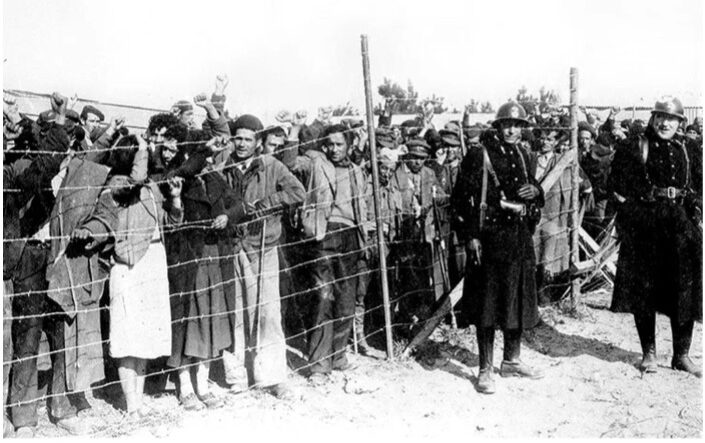

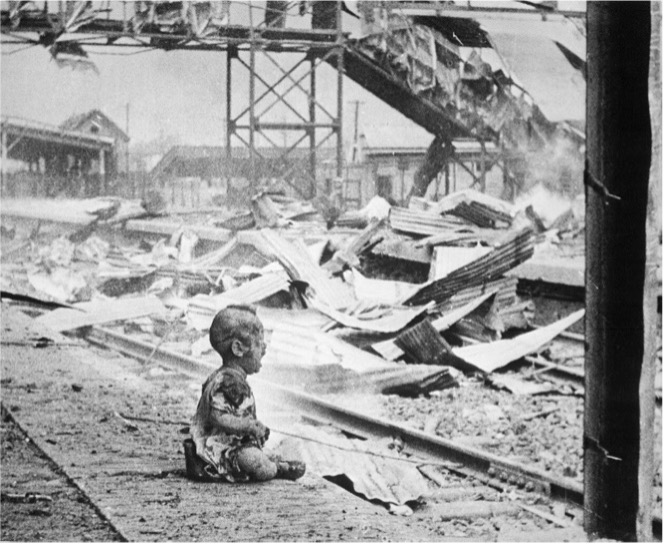
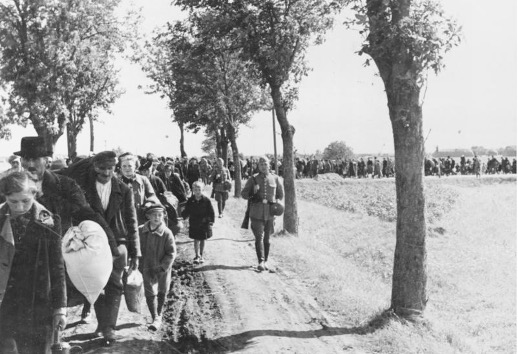
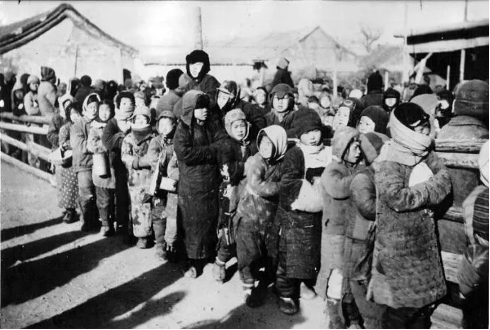
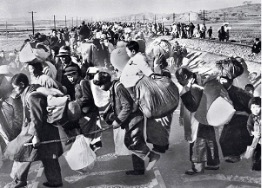

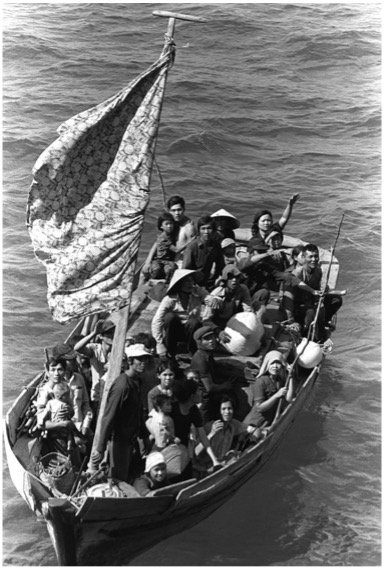
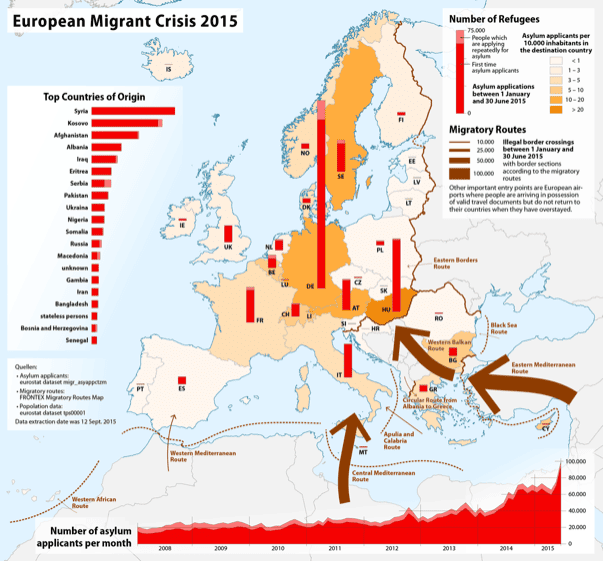

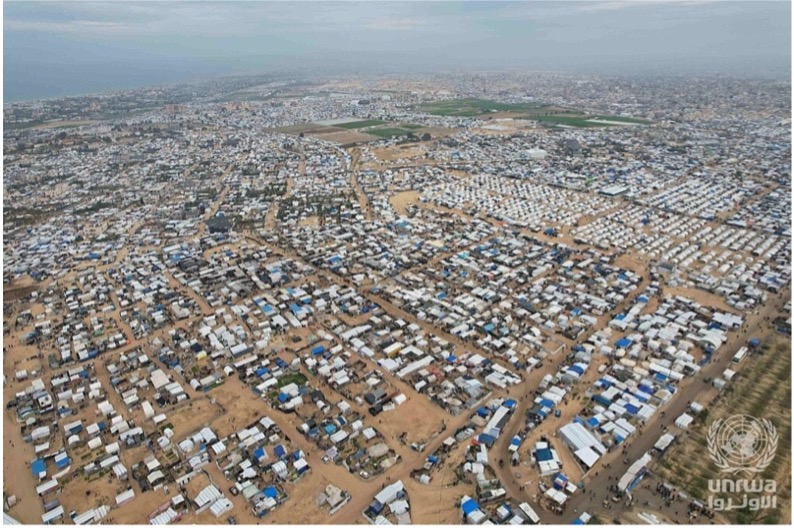
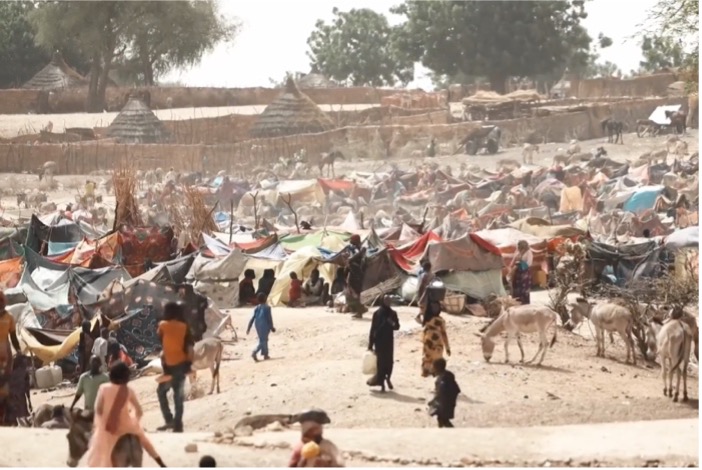
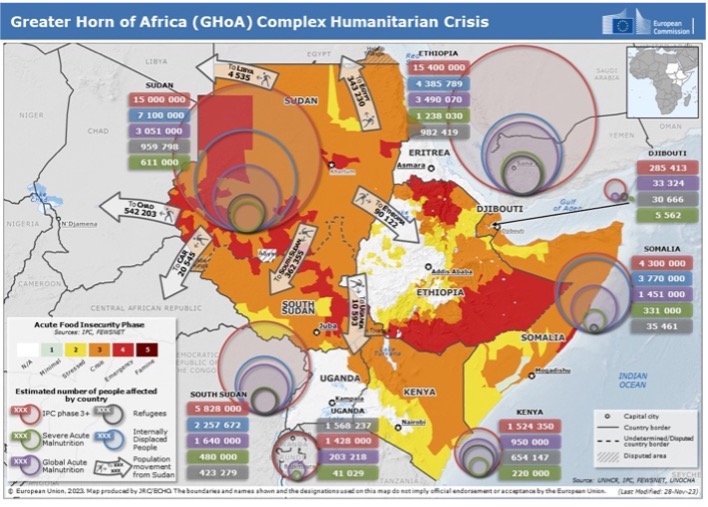
 Joseph Mazur
 Dr. Gleb Tsipursky