Home Blog Page 1126

Smaller Cities Embrace Smart Specialisation – The Exeter Success Story

By Richard Ball

Governments have recognised that cities are engines of growth critical to economic performance and national recovery in the current climate. The large conurbations naturally make the headlines as the “core” cities receiving support towards economic development, but there are smaller cities, which are comparatively and proportionately for their size, punching “well above their weight” where people work, trade and innovate in exciting organisations directly driving significant economic growth. Some have seen very impressive employment growth over the last decade and have bucked the trend in terms of recession forecasts with a credible track record of job creation, business formation and survival.

Environmental Governance for Sustainable Development: An East Asian Perspective

By Akihisa Mori

Despite democratisation and foreign assistance, many East Asian nations are stuck in the mud in terms of developing domestic environmental governance. Their enthusiasm for regional environmental governance has collapsed due to the incapability of addressing the costs and revenue structures of major players, as well as the inability to overcome mutual distrust among neighbouring nations. Below, Akihisa Mori discusses how a global climate regime is providing an opportunity to get out of the mud, and highlights the challenges that still remain.

Can Social Media Help Business-to-Business Companies to Learn from their Customers?

By Hannu Kärkkäinen & Jari J. Jussila

Organisations have to learn about market needs and technological solutions increasingly quickly if they want to respond to the rapid and often unpredictable changes in their business environment. Various types of collaborative web tools and approaches, such as social media, can enable and significantly increase the collaboration and learning of business-to-business companies from their customers in various novel ways. Importantly, social media can provide quite innovative community-oriented and social ways of providing and receiving feedback from new products and concepts. Some forms of social media, such as virtual worlds, can also enable customers and companies to receive a lifelike experience from products, as well as experiment with novel concepts.

Eastern and Western Ideas for African Growth: Diversity and Complementarity in Development Aid

By Izumi Ohno & Kenichi Ohno

The West and the East approach economic development differently. The Europeans and Americans stress free and fair business climate, promoting private activities generally without picking winners, and improving governance. East Asia is more interested in achieving concrete results rather than formal correctness, prioritising a small number of sectors for industrialisation, and eventual graduation from aid.

Will Sustainable Development Stay With Us? On attitudes and other drivers for sustainable development leadership

By Kees Zoeteman

Sustainability attitudes of key actors in government, corporations and NGOs have shaped the sustainable development movement over the past 25 years. This article discusses the prospects of this movement and the role of individual leaders in implementing its societal vision. The author argues that since the year 2000 the leadership role of governments has weakened, whereas sustainability initiatives from corporations and NGOs initiatives have increased and will continue to do so.

Fast Fashion, Luxury Brands, and Sustainability

By Annamma Joy

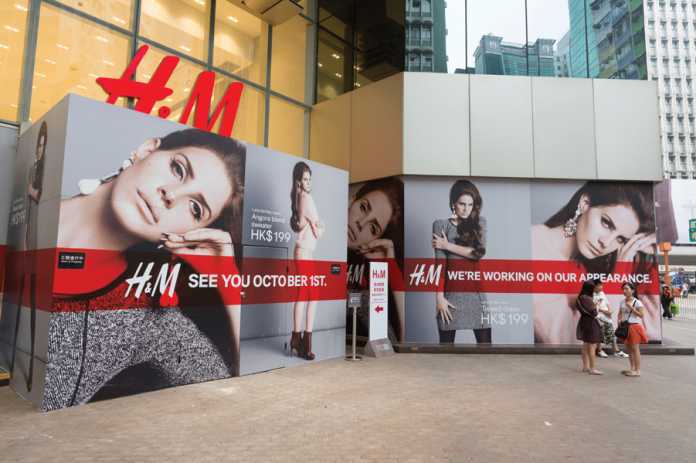
Low-priced, quickly produced, and designed for obsolescence, fast fashion encourages consumer detachment from issues of sustainability and fair labour conditions. This article explores issues such as consumption reduction, recycling and reuse and discusses the feasibility of luxury brands incorporating sustainability into their brand narratives.

A Radically Different Innovation: Developing a Unique Business Model

By Michael Yaziji

‘Innovate!’ has become the global mantra against a backdrop of intensified competitive environment. But focusing on product innovation alone is no guarantee of success; neither is bundling products with services in order to offer meaningful differentiation. Below, Michael Yaziji considers another approach – creating a radically unique business model to drive growth and market share.


Wise up to Water Risks at the 2013 World Water Week in Stockholm

By Josh Weinberg & Maya Rebermark, Communications, SIWI

Hydrologists like to call water the ‘bloodstream of the planet’. But it is much more than that. Water is essential to almost all human activities – including those we invest in financially.

Dubai Investments Park: The One-Stop Multi-Purpose Destination

Dubai Investments Park (DIP), the largest integrated business and residential community in the Middle East, was set up in 1997 with a mission to create a self-contained and master-planned business complex, and to provide investors with facilities and professional services that set new standards in the region.

Entry Strategies for Middle Eastern Markets

By Tim Rogmans

Despite political turbulence, Middle Eastern markets provide great opportunities for international investors. The region’s advantages include its location at the crossroads of three continents, vast energy reserves and rapidly growing populations. Political risk is the main factor making multinational companies stay away from the region or limiting their involvement in licensing and franchising deals. This article outlines ways in which companies can enter and grow in the region, while managing political risk.

EDITOR'S PICK OF THE WEEK

China economic growth

China’s Challenging Search for a New Model of Economic Growth

By Danny Leipziger China cannot continue to rely on exports to drive its growth, but what are the alternatives? China ran a $1.2 trillion trade surplus last year, and despite admonitions from the IMF to rely...

WISE DECISION MAKER GUIDE

POWER INFLUENCERS

Emerging Trends

The Future of Global Trade