By Dan Steinbock
The new Philippine president is waging a tough drug war, pushing economic growth domestically and greater pragmatism in foreign policy that could contribute to Southeast Asia’s future.
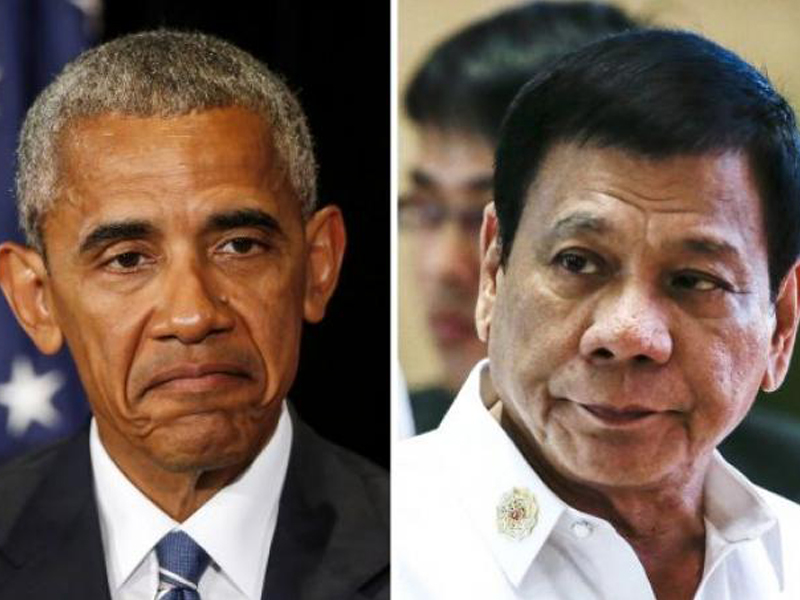
Internationally, Rodrigo Duterte, the new president of the Philippines, has been portrayed as a “dangerous populist”. That’s a gross caricature. In the elections, he leaned on the nationalistic, social-democratic PDP-Laban (lit. Philippine Democratic Party-People’s Power). He is a tough pragmatic realist who focuses on actions and results, not talks and formalities.
After two decades as Mayor of Davao, the country’s second-largest city, Duterte won the elections with a tough stand on crime. He has a track record. When he took over in Davao in the 80s, it was regarded as a dangerous economic backwater. Today, the city is booming and crime is down. Now he would like to “davao” the nation.
True, Duterte’s macho rhetoric tends to blur the substance of his actions. Sheer authority earns his respect. Allegedly molested by a priest as a boy, he has been vocal for the rights of women, and ethnic minorities, including Muslims. He wants to unleash inclusive growth in the Philippines. He supports the US-Philippine alliance, but would lean more toward China and does not believe Washington would honour its defence obligations.
With a pace of a whirlwind, Duterte seeks to transform the Philippines for the better – or perish in the process of doing so.
Liberalising the Economy
As international media has focused on the Philippine drug war, it has ignored the dramatic rejuvenation of the archipelago nation’s economy that Duterte would like to serve more ordinary Filipinos. After election, Davao businessman Carlos G. Dominguez, Duterte’s finance secretary and childhood friend disclosed the new administration’s 10-point economic agenda. The basic idea is to maintain current macroeconomic policies, while instituting progressive tax reform.
Unlike his predecessor, President Benigno Aquino II, Duterte wants to accelerate annual infrastructure spending to account for 7% of GDP, mainly with public-private partnerships. Budget deficit is likely to increase and he has suggested raising the ceiling to 3 percent of GDP. Unlike stagnating advanced economies, the Philippine economy can manage deficits with future growth. To attract foreign investment, Duterte also hopes to relax the economic provisions of the constitution to adjust the foreign ownership cap of local companies to 70%; a task in which the previous Aquino administration failed.
In the past half a decade, manufacturing has accounted for more than half of FDI applications, which is vital to absorb labour growth as rural workers leave for cities, and to diversify economy away from low-skill services.
Duterte supports the US-Philippine alliance, but would lean more toward China and does not believe Washington would honor its defense obligations.
These policies have potential to accelerate modernisation. Unlike his predecessor, Duterte will promote increasing agricultural productivity and rural tourism. Industrialisation has still a long way to go as less than 20% of the population is employed by industry. The urbanisation rate is only 50% and behind Indonesia. Internationally, the growth potential of the economy has been assessed at around 6.5% per annum, the bulk of which comes from services, construction, and manufacturing sectors. The future of IT business services is bright.
Recently, research firm Nielsen found Philippine consumer confidence to be at an all-time high, buoyed by the promise of future reforms. In the second quarter, GDP growth soared on the back of election-year spending to 7.0%, the fastest in Asia. Indeed, structural growth potential of the economy could be closer to 8 percent, if growth would be more inclusive.
Like Brazil a decade ago, Duterte wants growth to improve social protection programs, including the government’s conditional cash transfer program. He is a secular no-nonsense politician dedicated to strengthening the reproductive health law. In a Catholic country, where divorce can be as tricky as in the Vatican, such goals are controversial but hold a great potential for living standards.
Unlike his predecessors, Duterte supports greater decentralisation and autonomy for the south. To him, federalism is the antidote to bureaucratic centralism; a legacy of colonial powers and ruling political dynasties that cultivate corruption and patronage. Moreover, federalism is vital to defuse a long-lasting communist insurgency and Muslim separatism in the south – and the spread of Jihadism in the future.
The starting point is favourable. The Philippine economy has a strong balance sheet and is well positioned to cope with global shocks. An economy of 100 million people is characterised by solid domestic demand, youthful demographics, but low exposure to global trade. Comprising one of the world’s largest Diasporas, 12 million Filipinos live abroad, while their remittances bring in vital foreign exchange.
Like other promising emerging economies, the Philippines has its downside risks. Thanks to its geographical location, large-scale natural disasters can cause major property loss, population displacement and disrupted food supply in storm-prone nation of 7,000 islands. Internationally, an earlier than anticipated Fed rate hike could hurt the Philippine peso. In turn, weaker-than-expected growth in China could harm exports and erode the current account balance.
War Against Drugs and Crime
Since the election, the drug war has claimed more than 1,800 lives. The bloody bodies of alleged dealers and users have been left on sidewalks with cardboard placards suggesting involvement in the drug trade. Rights groups opposed Duterte backing death squads when he was still mayor of Davao and Time nicknamed him “The Punisher” Today, Human Rights Watch calls the situation “extremely alarming”.
Drastic times call for drastic measures, argue the proponents of the administration. By early August, Duterte had linked more than 150 judges, mayors, lawmakers, police and military personnel to illegal drugs ordering them to surrender: “I’m giving you 24 hours to report to your mother unit or I will whack you”, he said at a military camp. Reportedly, nearly 600,000 people have surrendered to authorities, trying to avoid getting killed. Prisons have turned into overcrowded, sardine-pack nightmares.
As far as critics are concerned, Duterte is undermining human rights, despite his statements against extrajudicial killings. This argument has been directed against Duterte by the UN, the United States and the Philippine rights organisations. Yet, he considers the critics naïve. Let’s illustrate the point: One of his most vocal critics has been Senator Leila de Lima; a former human rights commissioner, who had a stint as Aquino’s Justice Secretary and whose statements have often been taken at face value by well-meaning observers. As de Lima accused Duterte for human rights violations, he dropped a bombshell alleging that de Lima was linked to the illegal drugs trade inside the New Bilibid Prison (which is under the DOJ); that she had bought a mansion to her driver who is also her lover; and that the driver collected drug funds for her during her senate campaign. Duterte struck a nerve. Last March, Discovery Channel’s Lou Ferrente, a former Gambino mobster, took a closer look at the world’s largest prison, which held 20,000 inmates and was run by drug lords who lived like royalties and seemed to have a close relationship with de Lima. While de Lima blames Duterte for character assassination, she is now under investigation for alleged links to illegal drug syndicates. According to the new DOJ, the investigation covers the top to the bottom ranks of the previous DOJ that de Lima headed.
Despite rights organisations’ criticism, Duterte has the support of most Filipinos. In July, his trust rating soared to 91%.
As far as Duterte is concerned, he feels he is not moving fast enough. The Mexican drug cartel Sinaloa, the largest source of illegal drugs to the US, is already using the Philippines as an intermediate destination. Due to challenges in directly reaching America, the cartel is operating in the Philippines via transshipment. These activities were discovered around 2013 when a Mexican operation worth almost $100 million was confiscated. Duterte’s concern is that Manila has only a few years to curb illegal drugs and to avoid the fate of Mexico’s border regions.
These dramatic exchanges and tough measures have unleashed much debate in the Philippines. What actually happened in era of President Aquino? Despite substantial funds and the presidential crime commission, why so little was done to fight the drug lords and the cartel.
Despite rights organisations’ criticism, Duterte has the support of most Filipinos. In July, his trust rating soared to 91%. After two long decades of Marcos and after another two decades of anti-Marcos politics, reforms have not been accompanied by inclusive economic growth. Today, ordinary Filipinos are tired of waiting.
Duterte would like to “destroy the oligarchs that are embedded in government”. He describes them as “guys who just sit in their airplanes or their mansions. Their money adds up like the fare adding up in a taxi’s metre.” In early August, he singled out Filipino tycoon Roberto Ongpin; one of the 50 richest Filipinos in 2015 with a net worth of $900 million, according to Forbes. Duterte described him as a businessman close to people in power and implied he used political influence to foster his businesses. The oligarch ties go way back. Ongpin started his career as the trade secretary of Ferdinand Marcos.
The Fall From Grace
After the relinquishment of US sovereignty over the Philippines in July 1946, the Philippines was one of the most promising economies in Asia. In 1950, its living standards were still twice as high as in Taiwan or South Korea. However, as industrialisation took off in Japan and spread to tiger economies in East and Southeast Asia, the Philippines fell behind. Today the Philippine living standards are about 15% relative to Taiwan and 20% in comparison to South Korea.
In the postwar era, the US retained military bases in the Philippines, as well as commercial privileges regarding Philippine imports and natural resources. As economic growth and development began to intensify in the mid-1960s, Ferdinand Marcos won the election. During his first term, industrialisation increased, infrastructure was created and schools were launched. Meanwhile, Marcos steered increasing funding to the military, while sending more than 10,000 Filipino soldiers to Vietnam to support the US.
In his second term, Marcos began to create a personality cult, amid increasing economic and political turmoil. When he declared Martial Law in 1972, Washington looked the other way. Thanks to heavy borrowing, the economy grew. But by the 1980s, foreign debt servicing and mismanagement of key industries caused a major downturn and the Philippines became known as the “sick man of Asia”.
The 2010 election win of President Aquino was buttressed by the legacy of his father, an opposition leader allegedly assassinated by Marcos, and his mother, the first post-Marcos president. During his rule, Aquino began his struggle against corruption and good governance, but growth did not filter down. Every third or fourth Filipino continues to live below the poverty rate, while drugs and crime thrive in slums.
While Aquino failed to achieve inclusive growth, he did get US forces back to the Philippines.
The Role of Washington: Security Assurances
Since the postwar era, Manila has been Washington’s major non-NATO ally in the region. The American-Filipino relationship rests on the 1951 Mutual Defense Treaty (MDT), the 1999 Visiting Forces Agreement (VFA), and the 2014 Enhanced Defense Cooperation Agreement (EDCA), which has allowed the US Navy to return to Subic Bay. Leftist parties consider the return of US troops a violation of Philippine sovereignty, while pro-US Filipinos hope to join the US-led Trans-Pacific Partnership (TPP) in the next round of expansion.
The new alliance with Washington was designed by President Aquino and his foreign minister Albert del Rosario. In Washington’s view, it complemented US’s pivot to Asia, including the plan to move the majority of US warships to Asia Pacific by 2020. However, as Rosario resigned for health reasons in the spring and Aquino is no longer in office, Chinese-Philippines rapprochement has begun which has not escaped unnoticed in Washington.
Leftist parties consider the return of US troops a violation of Philippine sovereignty, while pro-US Filipinos hope to join the US-led Trans-Pacific Partnership (TPP) in the next round of expansion.
In the past few months, there have been several diplomatic rows between Duterte and US ambassador Philip Goldberg. A recent one followed a meeting between State Secretary John Kerry and Duterte who said that “I’m fighting with [Kerry’s] ambassador. His gay ambassador, the S.O.B. He pissed me off.” In the US media, the debate focused on the homophobic slur; it should also have been focused on efforts to influence the election. Before the vote, the US Navy sent its third warship in less than seven months into the waters of the disputed South China Sea. Meanwhile, ambassador Goldberg made it clear that Duterte was not Washington’s choice and supported Aquino’s favourites. “[Goldberg] meddled during the elections,” says Duterte. “He was not supposed to do that.”
Historically, the distrust between Duterte and Washington goes back to the Meiring case, which US mainstream media has portrayed as a psychological melodrama that “fuels Rodrigo Duterte’s ‘hatred’ of the US”, as the New York Times put it amid the Philippine elections. However, the case may have more to do with US covert operations in Southeast Asia. The story goes back to Davao in May 2002 when a metal box exploded in the hotel room of Michael Terrence Meiring and mangled his legs. The police found in the room powerful high-tech explosives and “highly-confidential” documents. Meiring had spent millions of dollars and had close ties with well-placed government authorities in Southern Mindanao, as well as Muslim separatists, Communist insurgents and jihadists, such as Abu Sayyaf; the feared terrorist organisation, which Senate President Aquilino Pimentel Jr. once described as a “CIA monster” because the agency helped to train the group.
After Meiring was taken to the hospital, he vanished as men representing the FBI took him in the dark of night and flew him out of the country, with facilitation by the US Embassy. Subsequently, Duterte blocked US requests to base drones or spy planes at Davao’s old airport.
In Washington, the Meiring case is discounted as conspiracy speculation. Yet, since the Bush era, Washington’s neoconservatives have promoted the use of “regional states in developing a hedge against the possible emergence of an overly aggressive China”. To Duterte, the Meiring debacle was an infuriating violation of Philippine sovereignty.
The Role of Beijing: Economic Cooperation
On July 12, the Hague international court ruled in the dispute between China and the Philippines over the South China Sea. Internationally, the ruling of the Permanent Court of Arbitration (PCA) has been characterised as a sweeping rebuke of Chinese claims in the South China Sea. But in international relations, the impact is more ambiguous, which means greater uncertainty and possible volatility in the region.
China refused to participate in the arbitration because in Beijing’s view the tribunal had no jurisdiction over the case. Despite the focus of the UN Convention on the Law of the Sea (UNCLOS), the PCA is not a UN agency. Nor is its ruling enforceable. The US has strongly supported international arbitration and the rule of law. Yet, US record on international law is highly mixed; it has often acted unilaterally against international law, including through regime change, invasions and coups d’etat. Washington still has not ratified the UNCLOS, which in Beijing creates an impression that US wants China to abide by rules it rejects. Historically no permanent member of the UN Security Council has complied with a ruling by the PCA on an issue involving the Law of the Sea.
Currently, China and the Philippines have opted for a cooperative stance, which is predicated on Sino-Philippine dialogue that could reduce the weight of geopolitical issues, while supporting mutual gains in economic development. In the long-term, this is the most preferable trajectory to Manila, Beijing, Washington and ASEAN.
Despite significant pressures, Duterte is hedging his bets between US security assurances and Chinese economic cooperation, as evidenced by former President Fidel Ramos’s informal talks recently in China, which may result in a formal dialogue. Intensified bilateral cooperation could increase China’s participation in infrastructure investment and Chinese multinationals in economic zones; financing possibilities vis-à-vis the Asian Infrastructure Investment Bank; agreeing on “joint development areas” in South China Sea; possibly even joint potential in anti-corruption and anti-drug activities.
The Great Awakening
In the past few weeks, international media has “rediscovered” the Philippines, mainly thanks to the drug war, which ensures dramatic footage and great headlines, and are sometimes politically convenient. However, the structural trends of the beautiful island nation – rapid growth and great economic potential, a huge infrastructure push and rising foreign investment, the quest for law and order, and the effort to finally end futile friction with insurgents and to focus on economic development – continue to be largely ignored.
Opposition critics argue that Duterte’s rule could deteriorate into autocratic mismanagement that will penalise the gains of the Aquino years. Still others understand the need for tough policies, but remain concerned about unintended rights violations and collateral human damage.
In contrast, Duterte’s supporters ask why the war against drugs and for law and order did not start six years ago in the Aquino era when it would still have been easier; while others wonder why corruption was permitted, despite multiple high-profile cases that have been recently disclosed in the public and private sector. To them, the Duterte era is a great reawakening – a second People’s Power Movement, if you will.
Duterte hesitated for months before he began to compete for the presidency, and for a reason. He is taking huge personal and security risks to achieve his objectives. Like Lee Kuan Yew once in Singapore, he is determined to clean the government, the bureaucracy and the private sector, while defusing external conflicts.
In emerging Asia, prosperity can only be built on peace and stability.
Featured image courtesy of: Reuters
About the Author
 Born in Europe and spending much of his time in the US and China, Dr. Dan Steinbock is an internationally recognised expert of the nascent multipolar world. He is also Guest Fellow of Shanghai Institutes for International Studies (SIIS) and the commentary is based on his SIIS project on “China and the multipolar world economy.” Dr. Steinbock has lectured widely in China and recently in the Philippines Foreign Service Institute. For more about Dr. Steinbock, see http://www.differencegroup.net/ For more about SIIS, see http://en.siis.org.cn/



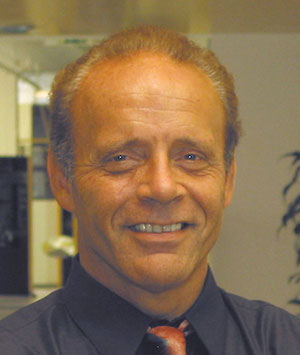 Dan Steinbock is the founder of the Difference Group and has served as the research director at the India, China, and America Institute (USA) and a visiting fellow at the Shanghai Institutes for International Studies (China) and the EU Center (Singapore). For more information, see http://www.differencegroup.net/