By Peter Koenig
In this article, Peter Koenig discusses a few of the bountiful contradictions and controversies of the new Trump Administration. The Donald, less than 50 days in office, deserves the benefit of the doubt, as anybody would who dares oppose and attack the “fake news” lie culture of western media.
President Trump may be wondering himself about the miracles and mysteries and confusions he creates. As a megalomaniac, he is the only one who knows everything. His ideas range and flash from right to left, crisscrossing the political spectrum to favour the globalised world – and yet he is largely acting against globalisation – and in the “interest of people”. That would be great.
He also seeks truth by telling truth; that Obama and Hillary created ISIS and the CIA created Al Qaeda, that 9/11 was not the way the Nine-Eleven Commission says it was, and that the Government lies about statistics. Poverty, unemployment and inflation figures are much higher than those published by the various US statistical offices. He loves BREXIT, congratulating Theresa May for it, and joyfully predicts the end of the European Union and of the Euro. It would be a good thing for the world. But does he mean what he says? – As a megalo he loves to be an Enigma.
The non-intervention policy – as candidate Trump he said he would not intervene in other countries’ affairs. Fair enough. That’s what most of the world wants; that’s what most of the Americans who voted for him want. Yet, Donald Trump, the almighty, along with his chief vassals of Europe, France, Germany and the UK, has just tried imposing new sanctions on Syria, among other deceitful allegations, because of some military commanders’ use of toxic gas attacks. By now, most of the informed world knows that this is a lie and nothing but a UN proven lie – a lie that has been repeated since the beginning of the CIA imposed war on Syria in 2011 to justify “regime change”.
Both China and Russia opposed the motion. Mr. Putin went on a news conference saying that sanctions would not be helpful for the new peace negotiations in Geneva. – Of course, not. But that’s precisely what they are supposed to do – undermine the peace process. There are enough “outside” negotiators in Geneva with brainwashed, preconceived ideas that Bashar Al Assad is a mass murderer, having killed “hundreds of thousands of his own people”. Literally.
That’s the concept of some of the western negotiators. It is an outright shame that such people are allowed to help negotiate peace – even worse, they claim the right to rewrite Syria’s Constitution for a country without President Assad, who still has 80% of Syrians’ backing. Seriously? – Yes, very seriously. If it wouldn’t be a grave breach on a country’s sovereignty, it would be laughable. Who is sponsoring such nonsense anyway? The western world once again proves without impunity that they have no respect for human and civil rights, for those they consider below their boots. What would those foreigners say who are “negotiating” a new Constitution for Syria, if foreigners were to decide on their own country’s Constitution? – Trump should know better. Is this the same Trump, who pledged non-intervention in foreign lands?
Trump, Netanyahu’s puppet – Or is it the “new” Trump? The even more submissive Trump – submissive to Netanyahu’s Israel? Outranking by far his predecessor. – The little boy Trump we saw during the joint Press Conference with Bibi in Washington last month? – So sad and almost insulting to the American people, witnessing the President of the United States in total adulation of the Zionist-in-Chief. Surely, he may have swayed Trump’s good intentions away from staying out of other peoples’ and countries’ business. – The exceptional nation of the US of A is a sheer vassal of Israel, the Zionist-run 8-million people country in the Middle East, adamant to turn the entire zone into a huge chaos, a zone which they eventually hope to take over from shiny Euphrates to Shiny Nile, much like the Brits did, by killing all the indigenous people in North America to eventually create an empire from Shiny Sea to Shiny Sea? – Not bad. But why would The Donald not know about it? And go along with such atrocities? Who twists his arm? How does one twist the arms of the President of the United States?
Peace with Russia – candidate, as well as President Donald Trump was pledging for a future peaceful relationship with Russia. However, when pressed, he is not a friend of Putin’s and doesn’t know whether he will get along with him. In any case, to deserve a friendly relation with the exceptional nation, Mr. Putin must return Crimea – return to whom? – to Kiev’s Nazi regime? Anybody who hears this must be thinking it’s a joke, or sheer lunacy.
And withdrawing Russian troops from Ukraine? Anybody who says this and propagates it around the world is mad. People who by now haven’t gotten to the truth are insane. Because the truth is everywhere, except in the presstitute. Get away from the presstitute. Crimean people decided by a 97% majority to rejoin Russia, where they were during the past 300 years; and Ukraine – it is by now a little secret that the US Embassy in Kiev, helped by CIA, MI6, NATO and the EU vassal states, instigated the coup in February 2014 against the democratically elected – pro-Russian President Yanukovych. Rather than intervene in Kiev’s Washington and Brussels driven Nazi war against her own people in the Donbass, Putin has explicitly refused the democratically voted demand by the Donbass people also to be reintegrated into Russia. Ukraine for hundreds of years was part of Russia.
Instead, President Putin has initiated the Minsk II Agreement of February 2015. Minsk II was a Russian initiative after Minsk I of September 2014 collapsed, mainly because the warrying parties Kiev and NATO didn’t adhere to the accord. At Minsk II the leaders of Germany and France, Russia and Ukraine’s oligarch President, Poroshenko, shook hands for peace. For the west, this was mere propaganda, as they can say now, that Russia didn’t adhere to the deal. Lie after lie after miserable lie. Mr. Trump, despite his pledges to the contrary – and he said once as much as Obama was responsible for Maidan, the Kiev coup in February 2014 – is back-tracking on his own common sense. Did here too, Netanyahu’s evil wisdom prevail?
Sanctions – Trump was clear during his campaign and in the first days of his Presidency that he didn’t think sanctions were a good idea, especially not applied to Russia. Has he had a change of mind or a twist of arms? – The war industry, of course, does not like the notion of peace with Russia. The President of the United States has nothing to say. Is he a mere marionette of the war and security faction of the Deep State? Naturally, well accompanied by a bunch of stooges from Brussels. Never mind that these sanctions hurt Europe more than they hurt Russia. As Mr. Putin said repeatedly – thanks god for the sanctions. They have helped Russia to become independent again, building her own agriculture and manufacturing capacity – let alone research and development which is already producing cutting edge technology, by far superior to the US-outsourced kind, coming from such low-wage countries like India.
Appointing Nikki Haley Ambassador to the UN – the new mandate for the former Governor of South Carolina, is another ruse that should please Israel. Judging from her first moves in the UN body, Nikki Haley looks not much different from her predecessor, Samantha Power, especially when she flies such lies in the face of the world, like, “It is a sad day on the Security Council when members start making excuses for other member states killing their own people. The world is definitely a more dangerous place,” in response to Russia’s and China’s veto to the new western attempt to impose more sanctions on Syria.
She knows – or should know better. Trump definitely knows better. If he let her get away with this slander propaganda, it’s because he has been told to do so, or wants to bend over backwards to please his friend Bibi, and/or because he himself thinks the UN has become a useless body of bla-bla nations, devoid of any backbone; it should melt away, as it is unreformable in its current structure, like the EU. Both have been hijacked by the world’s Deep State of neocons. It’s time to wake up to this new reality.
The no-nonsense strategist Flynn, who was about to seek harmonious relations with Russia, and would defend Trump’s non-intervention policy, is gone. The masters of the Pentagon, the military industrial complex have won.
Firing Michael Flynn, Mr. Trump’s first choice as National Security Advisor – was a horrible betrayal of a friend and possibly a peacemaker. Did Trump simply follow orders from non-peace-loving Pentagon masters – Deep state warriors? With that unsavvy move the President lost all his respect from people, whose ethics weigh infinitely more than those of the Washington swamp. The no-nonsense strategist Flynn, who was about to seek harmonious relations with Russia, and would defend Trump’s non-intervention policy, is gone. The masters of the Pentagon, the military industrial complex have won. – By firing Flynn, did Trump hand over de facto his Presidency to neocon Vice-president, Mike Pence? Thanks to Pence who created a storm in a water glass about a private citizen talking to the Russian Ambassador, Flynn is out – and Trump has lost his worldwide standing.
NATO is outdated – superfluous – those were the wise words of candidate Trump. He repeated them, somewhat weakened after his inauguration – but not for long. The puppets in Europe were crying big Crocodile Tears; the newly appointed James “Mad Dog” Mattis, true to his name went to Brussels, telling his subjects that there was nothing to worry about; the US would continue protecting Europe with NATO against the evil Russians – but they had to pay up, sharing more of the cost of this expensive, but highly profitable enterprise, the weapons industry. He didn’t tell them the latter part. That was implicit, though. – We can assume that Mattis didn’t go to Brussels on his own initiative, but as the emissary of his boss, the President and Commander-in-Chief of the United States.
Increasing the Defense budget by US$ 54 billion – Trump’s recent announcement, wasn’t exactly a move towards peace. Earlier, within his first couple of weeks in the White House, Trump went to the Pentagon and told the generals to come up within a month with a plan on how to renew the war equipment, including the nuclear arsenal – sort of confirming Obama’s plan to put a trillion dollars into “nuclear renewal” within the next ten years.
None of this smells of peace, or even of promoting harmonious relations with the rest of the world. It has nothing to do with wanting to become a nation of equals. And it goes way beyond simply “Making America Great Again”. It rather smacks of perpetuating Washington’s status of the exceptional nation – pure insanity.
Iran Bashing – calling her “The World’s Biggest State Sponsor of Terrorism”, – another outrageous lie destined to spread negative propaganda about Iran, to intimidate other countries from renewing their commercial dealings with Iran. After all, the “Nuclear Deal” promised to abandon sanctions. Yet, Trump just started a new regime of sanctions. Trump also wants to “scrap” or rip apart the 5+1 and Iran (Permanent Security Council Members, plus Germany and Iran) “Nuclear Accord” of January 2016. This may not be easy, as there are more players involved than just the exceptional nation.
Any intervention by Russia would be considered an aggression on the US.
Trump and his aids, have been demonizing Iran already during his campaign and reiterated the groundless accusations after his inauguration. – Why? – He knows that there is no substance to back up his claims and that Iran is backed by Russia and China and that a direct confrontation with Iran would mean a clash – nuclear? – with Russia and possibly also with China. Is this a way of getting at Russia (and China) through the back-door? Or is it just one more goody for his Pal, Bibi? – We don’t know yet. But it is not excluded that Israel launches an attack against Iran – supported by Washington, of course. Any intervention by Russia would be considered an aggression on the US.
Truth be told, this appears to be sheer sabre rattling. Nobody dares attacking Iran, which would mean attacking the entire axis of Middle East stability, China-Russia-Iran – and more, attacking the Shanghai Cooperation Organization (SCO), of which Iran is now a member. Confronting SCO would be aggressing one half of the world’s population that commands one third of the world’s GDP. That’s heavy stuff. More than a conventional WWIII. From there, nuclear is just an emotional breath away, or a tiny misunderstanding – who wants to risk that? – Least the war industry. Because once the planet is eviscerated, there is no more need for arms. Those few elitists who may survive, have killed their milk cow. Trump should know that. He is a businessman.
Better is eternal chaos – leaving the arms and bankster business booming – reducing at the margin the world population by continuous merciless killing; by armed conflicts; by artificial food shortages; by clandestine sterilizations through GMOs (plus a myriad of deadly diseases potentially implanted in genetically engineered food seeds); by an out-of-bounds pharma-industry, today already responsible for one third of annual deaths, right after cancer and heart failure – all with the goal of leaving more resources for the few. That’s ideal for the empire and those who are in command of the empire. In the meantime, sabre rattling with nuclear warheads is an excellent tool for intimidation. Scared people are much more submissive.
And on the domestic front….
The wall on the Mexican border – a promise, Trump seems adamant to keep. Has he been told how many particularly southwestern US businesses he would kill? Agriculture, hospitality and tourism, small businesses depend on illegal workers. They all do work Americans don’t want to do. So, there is no immediate alternative. Did Trump think this over?
Forced evictions of illegal immigrants from their often longtime homes in the US, fall in the same inhuman category. The trained brutes of US police enjoy this “new freedom” to use force tremendously. A more generous, more civil and more human – and for both sides more beneficiary move would be granting all illegals with no criminal records – at least 97% – amnesty, with work visas or immigration status, depending on their situations.
But The Wall has become so abjectly popular among the non-thinking US rednecks that there seems to be no crawling back. Or is there, Mr. Trump? – Like coming to reason?
Renegotiating NAFTA – or abolish this nefarious trade deal altogether – yes, but done professionally. That should in the long run please both Mexico and Canada, as both of these countries have lost enormously for signing on the 1992 Clinton- imposed dotted line. Mexico alone lost 1.3 million farm jobs, as the US 2002 Farm Bill subsidised US agribusiness by as much as 40% of net farm income, thereby driving countless Mexican farmers into ruin. – So, renegotiating NAFTA would be welcome by Mexico and Canada, but surely that’s not the way Trump sees it. – Or has he or some of his economic advisors told him what is really at stake?
Bringing back jobs and Making America Great Again – the Trump slogan of the year. Probably coined by some members of the Deep State, to emulate Obama’s “Yes we Can” – just coming through other lips, is nothing but the same trick – but with the naked emperor wearing differently shaded clothes. If Trump can pull this through – it would be truly amazing, a true feather in his hat. Of course, it doesn’t happen overnight, and it requires thorough planning. Just giving homecoming corporations tax breaks is not the solution. Analysts say it would take at least 20 years to build up a job base, mainly in the rust belt, that could rival what was there before the big exodus to cheap labor countries in the late 80s and 90s.
Globalisation has had nothing but devastating effects for the large majority of the world population. This would clearly be an unparalleled trump in Trump’s basket.
Not only would it help bring back job sovereignty to the US, it would be a tremendous blow to globalisation; this evil structure created by the neocons and their institutions, FED, IMF, World Bank at the Washington Consensus Conference at the end of the 1980s. Globalisation has had nothing but devastating effects for the large majority of the world population. This would clearly be an unparalleled trump in Trump’s basket. He seems to be serious, as he congratulated the British PM to BREXIT and doesn’t believe in the long-term survival of the European Union and the single currency, the Euro. And he is right.
Canceling the Trans-Pacific Partnership (TPP) agreement – and possibly also the highly controversial TTIP (Trans-Atlantic Trade and Investment Partnership) deal – would be a tremendous achievement for Trump. The people of Europe and of the 11 Pacific Countries might be forever thankful to Trump for his genius move. Never mind that he believes they would have been bad for the US of A. Let him. A good deed to the world, so anathema to his other business- oriented discourse. Here’s to the enigma Trump!
Trade war with China – may it be Trump’s soft version of Obama’s South China Sea aggression? He already announced a 45% import tax for anything coming from China that could be made in the US of A. Of course, this is first meant as an incentive for all the US corporations who outsourced their manufacturing to bring them back home. But, he thinks, by the way it would hurt China as a rising star on the world economic horizon. It hardly would. Especially not in the long-run. More hurt would be the United States if China were to retaliate.
As of the end of 2016 Chinese foreign direct investments (FDI) since 2005 in the US cumulatively amounted to 109 billion dollars, a mere10% of all of China’s FDI, worldwide. But, they are accelerating. China’s FDIs in the US in 2016 with 45.6 billion were about triple those of 2015. This compares with about 644 billion dollars of US FDI in China over the past 15 years. Punishing China with steep import taxes is about as effective as “sanctioning” Russia – namely almost nil. China has huge investments in Asia, in her principal export market. This is one area where Obama wanted to interfere with his pivot to Asia. The other one, of course is militarily, by stationing about two thirds of the US Naval Fleet in the South China Sea. They won’t be twiddling thumbs for long.
Let’s see what the twittering Trump does. Will he get the license to play business with China? Or will the Deep State of the Pentagon-Security clan get the best of him – through an arm-twisting provocation in the South China Sea?
———–
Trump, the enigma. These are just a few of the bountiful contradictions and controversies of the new Trump Administration. If he manages to stop Globalization, the nefarious trade deals set up under Obama, bringing back the work force to the US, rehabilitating his country’s decaying infrastructure and bringing back security to the common citizen, plus decent health care and education – and foremost, keeping wars at bay, then he has achieved more for the US and the rest of the world than any of his predecessors for the last 100-plus years. – To be fair, The Donald, less than 50 days in office, deserves the benefit of the doubt, as anybody would who dares oppose and attack the “fake news” lie culture of western media.
Featured photo courtesy: AP/Carolyn Kaster
About the Author
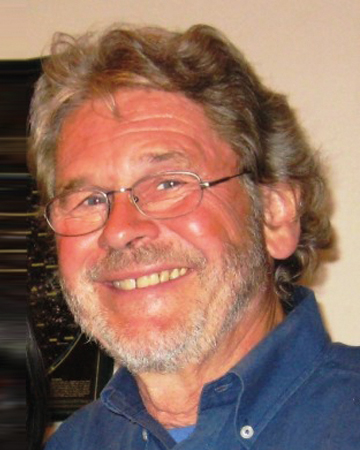 Peter Koenig is an economist and geopolitical analyst. He is also a former World Bank staff and worked extensively around the world in the fields of environment and water resources. He lectures at universities in the US, Europe and South America. He writes regularly for Global Research, ICH, RT, Sputnik, PressTV, The 4th Media, TeleSUR, TruePublica, The Vineyard of The Saker Blog, and other internet sites. He is the author of Implosion – An Economic Thriller about War, Environmental Destruction and Corporate Greed – fiction based on facts and on 30 years of World Bank experience around the globe. He is also a co-author of The World Order and Revolution! – Essays from the Resistance.