


By Xiangming Chen, S.K. Joseph and Hamna Tariq
With the launch of the China-Pakistan Economic Corridor (CPEC), one fundamental question to ask is if this ambitious project will transform Pakistan and boost China’s ambitious Belt and Road Initiative (BRI). In this article, the authors assess the potential and prospect of CPEC in terms of its various opportunities and constraints and examine the economic potentials and social impacts of CPEC from the Pakistani national perspective using a subnational and local lens as well as from the Chinese vantage point and draw the broad implications of this two-sided analysis of CPEC toward a preliminary policy oriented conclusion.
Perched 4,693 metres above sea level in the Karakoram Mountains on Pakistan’s northern border with the southwestern region of Xinjiang, China, Khunjerab Pass, with an international border gate, stands lonely against the stunning snowy mountains around. On the Chinese side, besides an isolated army border control station and few adventurous tourists, the Pass is accompanied by a few scattered yurts and rarely seen white mountain yaks. Yet this place in a remote corner of the world heralds larger looming significance for both China and Pakistan. Its location defines the Pass as the only existing crossroad point for the ambitious China-Pakistan Economic Corridor (CPEC) that both countries have committed to building. While there are relatively few freight lorries running along the highway (G314) leading from Kashgar, China’s westernmost city and closest city to the Pass, CPEC is touted as a difference-maker for boosting Pakistan’s economic development and China’s Belt and Road initiative (BRI). As Pakistan’s Prime Minister Shahid Khaqan Abbasi is quoted in the Long Term Plan (LTP) for China-Pakistan Economic Corridor (2017-2030), “Pakistan-China bilateral ties are time tested; our relationship has attained new heights after the China-Pakistan Economic Corridor that is a game changer for the region and beyond”.1
With over $50 billion up from the original $46 billion for infrastructure construction mostly financed by China, CPEC is the single largest capitalised project ever mounted in Pakistan. It comprises the (re)construction of Gwadar port on the Indian Ocean, roads, railways, power stations and other facilities that aim to create sea-land transport connections between Gwadar and Kashgar. This south-north corridor through the length of Pakistan (see Map 1) is capable of stimulating national and regional economic development at a scale and speed not seen before. From Kashgar as China’s terminus of CPEC, this overland corridor will create the shortest access to sea for the country’s northwestern region and thus generating new growth momentum for this vast but lagging region. If successfully implemented, CPEC can serve the crucial overland bridge for linking China’s Belt and Road (see Map 2).
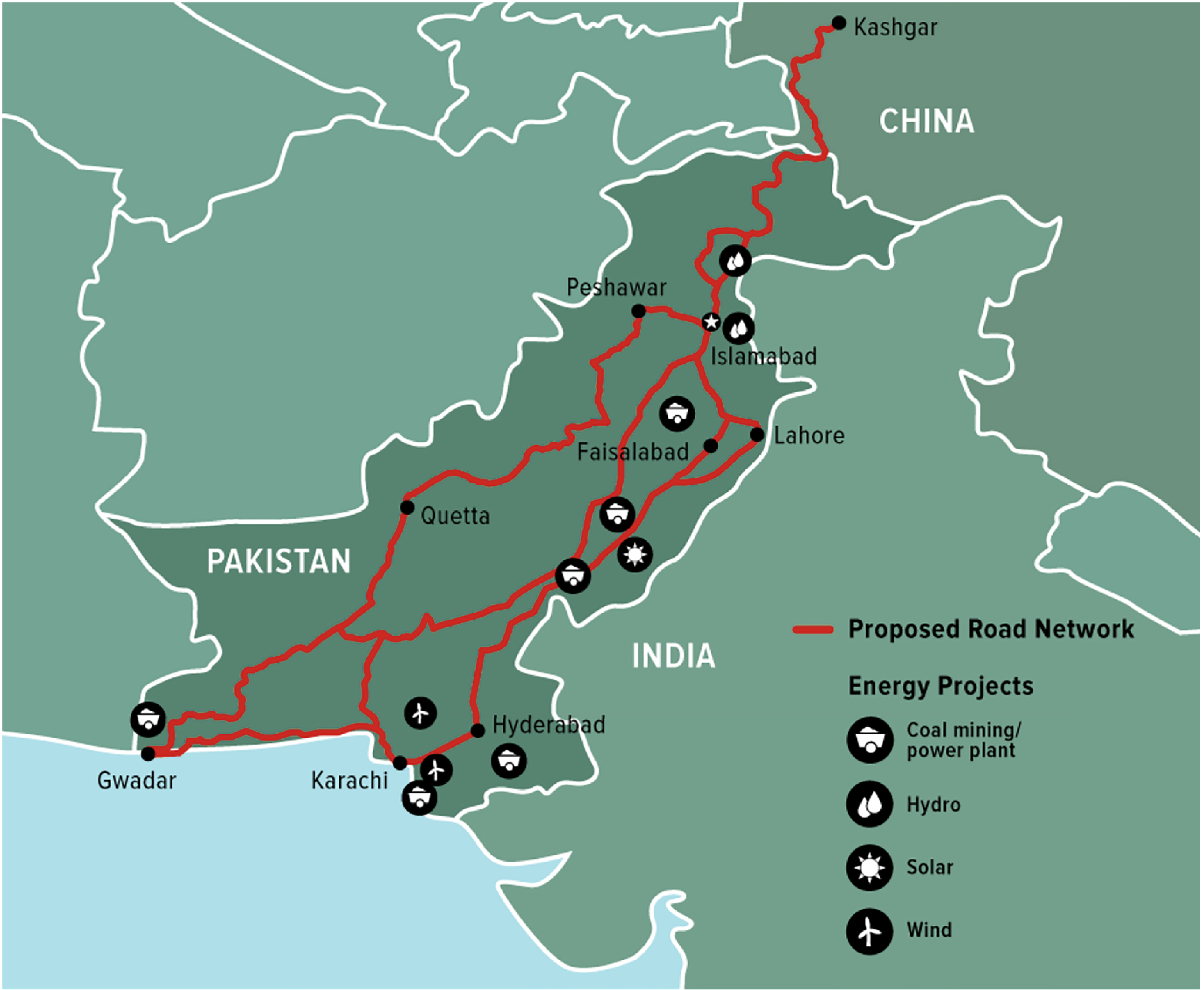 MAP 1: The Proposed $46-Billion China Pakistan Economic Corridor
Source: Wall Street Journal, U.S. Global Investors
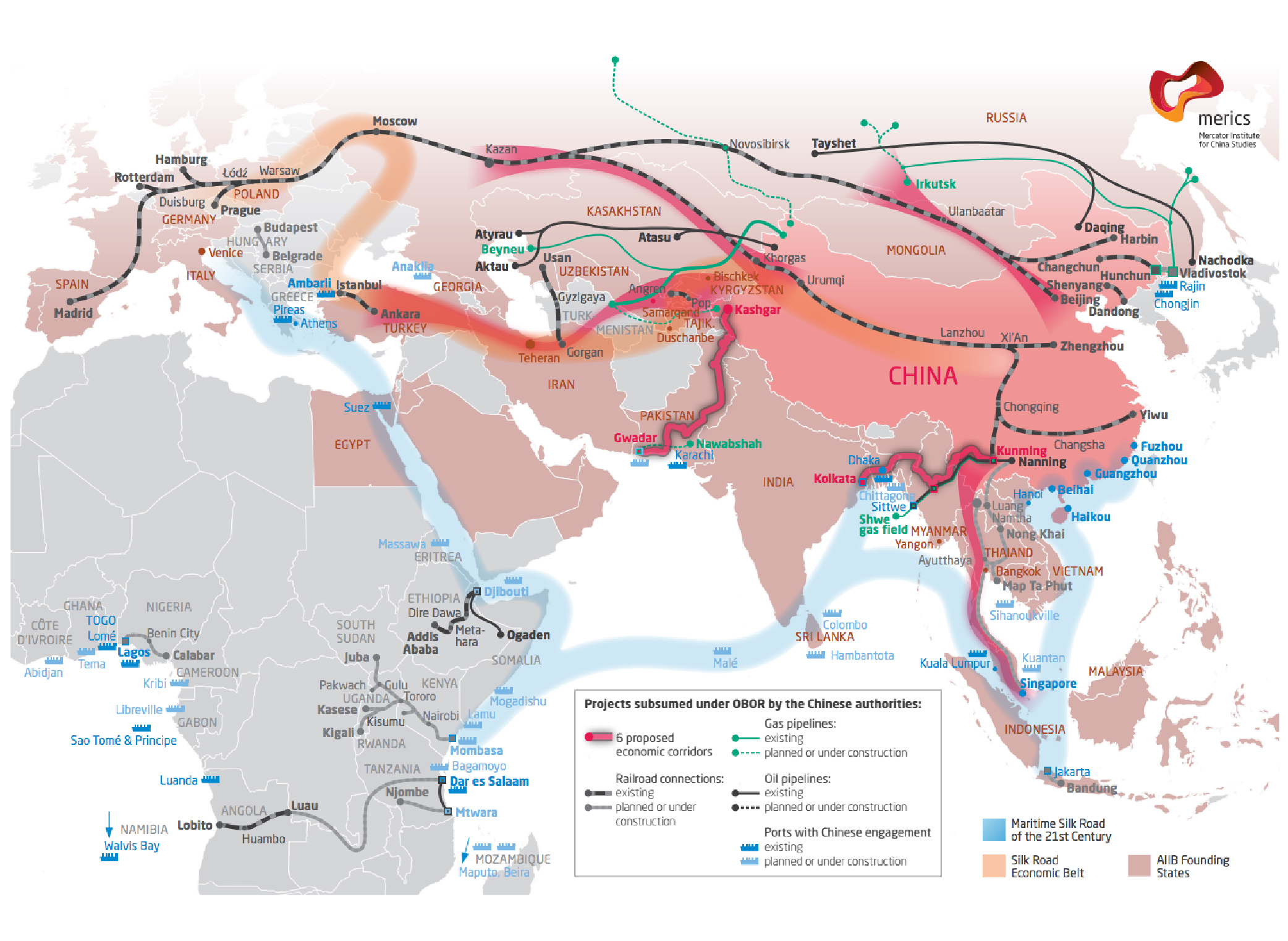 MAP 2: The Geographical Scope of the Belt and Road Initiative (BRI) with Six Corridors
Source: Mercator Institute for China Studies, Berlin
Despite its hype for both Pakistan and China, as well as its broader regional and global importance, CPEC is just beginning to attract more attention as an ambitious cross-border project and a salient issue for research, although the latter has not kept pace with the project’s on-the-ground development.
CPEC from Pakistan’s National Perspective
In April 2015, Chinese President Xi Jinping visited Pakistan. This was the second visit of China’s top leader to Pakistan since the beginning of the 21st century after Hu Jintao’s visit to Pakistan in 2006. During his visit, Xi stated, “this will be my first trip to Pakistan, but I feel as if I am going to visit the home of my own brother”, thus amplifying the friendly relations between both countries.2 As a result of his visit, a total of 51 agreements were signed between China and Pakistan having a total worth of $46 billion which also included the development of CPEC.3 The originally intended $46 billion investment for CPEC has since been raised to over $50 billion. The amount exceeds all foreign direct investment Pakistan has received over the last several years and is considerably more than all the aid Pakistan has received from the US since 9/11.4 This is more than 20% of Pakistan’s 2016 gross domestic product.
This project is basically a collection of infrastructure projects in Pakistan to develop Pakistan’s shattered economy. CPEC includes construction of modern transportation networks, numerous energy projects and creation of special economic zones. CPEC eventually aims at linking Pakistan’s port of Gwadar on the Indian Ocean to China’s landlocked Northwestern region of Xinjiang through a vast network of highways and railways. If this project becomes reality, Pakistan will be having a massive new network of roads, highways, railways and pipelines. The road will cover approximately 3,000 kilometers from Gwadar to Kashgar. The internal motorway is also a part of this project, which will be about 1100 kilometers long stretching from Lahore to Karachi, in addition to the Karakorum highway from Kashgar via Khunjrab Pass to Islamabad (Map 1). This is by far the largest infrastructural project ever mounted in the history of Pakistan. Several projects are already underway and are expected to be completed by as early as 2018, with the short-term plan of CPEC to be completed by 2020, the mid-term by 2025 and long-term by 2030.5
Economic potentials
Pakistan will reap several much needed benefits from CPEC that can and will improve the country’s development. First, CPEC is expected to enhance Pakistan’s employment opportunities along the route. Although thousands of Chinese workers have been assigned to construct the railways, pipelines and roads, most construction workers are locals. CPEC is projected to generate 2,320,000 jobs ultimately reducing Pakistan’s unemployment rate from 5.5% to 3.9%.6 According to Pakistan’s Minister of Planning and Development Ahsan Iqbal, at least 300,000 jobs have been created by CPEC thus far.7 A lot of these jobs will be for building three routes of roads to connect Gwadar to Kashgar, a considerable improvement over the only road now.
Stronger and more expansive transport infrastructure is expected to stimulate faster economic growth through more trade and investment. In fact, after the official launch of CPEC in 2013, Pakistan’s GDP annual growth rose from 4% to 5.5% in 2016. According to an IMF estimate, investment in CPEC will add $3 to $13 billion in output to Pakistan’s GDP through 2024.8 Other external advantages include greater trade through Gwadar port, which will play out its key location for facilitating trade among South Asia, Central Asia and the Middle East. Pakistan will also benefit from improved energy supply as more China-invested and – built power stations come online. This, in conjunction with more special economic zones (SEZs) being built along the new or enhanced roadways, will allow Pakistan to strengthen its limited manufacturing sector, from assembling parts and components to localised production of parts, and encourage more Chinese companies to build factories in Pakistan as envisioned by the LTP for CPEC.9
CPEC will also improve Pakistan’s tainted international reputation. Tourism which currently makes up a small part of Pakistan’s earnings can benefit. The cross-border region where the road from Kashgar starts is considered to be a mountaineer’s paradise, since it is home to five of the “eight-thousands” (peaks above 8,000 metres), as well as more than 50 mountains over 7,000 metres. It is home to the world’s second highest peak K2 (Mount Godwin-Austen) straddling the China-Pakistan border and the Nanga Parbat, the world’s 9th highest peak in the Gilgit-Baltistan region of Pakistan. Previously, foreign tourists had been hesitant to climb these wondrous peaks, but due to increase securitisation for the Chinese officials and transformative infrastructure construction, this breathtaking region is now deemed safe.10 Local demand for traveling within Pakistan is increasing year on year, with an expected number of 50-plus million domestic tourists forecasted by the Pakistan Tourism Development Corporation (PTDC). CPEC is also expected to stimulate coastal tourism along the development axis between Karachi Port and Gwadar port as the two coastal centers or anchors of CPEC.
The Pakistani government is betting that faster economic growth and lower unemployment through CPEC can alleviate poverty and thus reduce the threat of terrorism, especially in very poor and restive Baluchistan province. Pakistan has deployed a Special Security Division of 9,000 Pakistan Army soldiers and 6,000 paramilitary forces dedicated to the security of individuals working on CPEC, to prevent Chinese nationals from getting harmed.11 The LTP for CPEC calls for more rigorous safety precautions in the Gwadar region, especially at the port and in Gwadar Free Zone (see Photo 1). The management of Khunjerab Port will also be strengthened with 24-hour video surveillance along the China-Pakistan Highway from the border to Gwadar port.12 These security measures add cost to both the realised and potential economic benefits of CPEC.
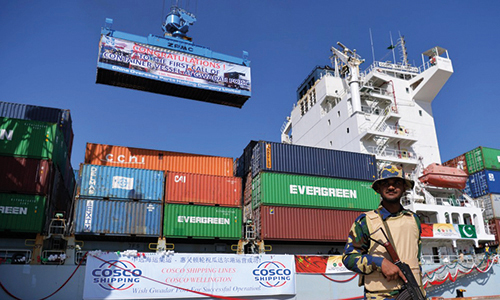 Photo 1: A Pakistani security guard at Gwadar port, in front of a Chinese container ship
Source: http://cpecvela.com/cpec-effects-on-regional-connectivity/
Social impacts
CPEC goes above and beyond its economic influence and has led to unforeseen social impacts that have left many Pakistani residents stunned. Mandarin Centers have cropped up to teach Mandarin to children as young as eight. Schools have realised the extent of Chinese influence on Pakistani Society and have also started teaching Mandarin courses in class.13 Thousands of Chinese have settled not only in Gwadar and remote areas along the infrastructure routes and connections but also in the major cities of Lahore, Islamabad and Karachi. Chinese superstores in Lahore sell spices exclusively imported from China. Lahore even has a traditional Chinese medicine hospital linked to CPEC (see Photo 2).
 Photo 2: A traditional Chinese medicine hospital linked to CPEC, Lahore, Pakistan
Source: Photo by Hamna Tariq
Most interestingly, the Pakistani media has attempted to appease a new national audience that has been exposed to growing Chinese influence. Chinese soap operas have replaced popular Turkish ones. The “Shan Masala” ad showing a Chinese woman in Pakistani clothes bringing Biryani to a Pakistani home has appealed to many locals. The Pakistani movie “Chalay Thay Saath” shows a budding romance between a Chinese male visitor to Pakistan and a Pakistani girl. While it may be too early to gauge the full social impact of CPEC, the latter has already triggered direct sociocultural repercussions for Pakistani society despite the wide cultural and religious differences between the two countries.
Turning a Local Lens to CPEC
While the national perspective on CPEC has revealed its large scale and broad impact, we turn to a local lens to shed light on the highly differentiated positions and roles of Pakistani cities in CPEC. Gwadar emerged as the first choice for the starting point of CPEC from southern end of the proposed corridor. A small fishing village on the coast of Makran with underdeveloped paved roads, schools and hospitals, Gwadar relied on exporting limited quantity of seafood caught by small finishing boats.
Since becoming the lynchpin of the CPEC, this small fishing village has been slowly transformed into a growing modern city. Due to the joint efforts of Pakistani and Chinese governments, Gwadar deep sea port has been built at a total cost of $288 million14 and handed over to China Overseas Port Holding Company (COPHC) for operation. It is capable of handling container offload of 300 to 400 million tons annually.15 According to a local businessman, “the construction site was a century old fisherman’s settlement called Mullah Band. The Pakistani government had to pay owners in the area to move out of the area. They were promised a school, hospital and playground but progress has been slow.”16 Over the past ten years, a high school with the playground has been established for students in Gwadar. An emergency hospital had been established under CPEC at a cost of $2.44million.17 Despite positive spillover effects from these investment projects, some local residents complain about not given priority for employment at the port. According to a local laborer, “when CPEC started I was happy that people like me will have lot of opportunities to make a decent living by working at the construction site but China has brought either its own workers or people of Punjab (the most populous province of Pakistan). They are taking away our living.”18
The Baloch National Movement, a regional group advocating autonomy for Baluchistan where Gwadar is located, is against CPEC. Its leaders see CPEC as making the cause of obtaining autonomy even more difficult because a powerful China will be heavily vested in the region. Therefore, if China and Pakistan want CPEC to be successful, then both countries need to make a serious effort to engage local people in the development process by providing more employment opportunities, which leads people to question China’s motives for CPEC.
While a deep sea port has been developed at Gwadar, SEZs have been planned to its northeast, in the province of Sindh. This includes Dhabeji, Thatta where 1000 acres have been set aside for the potential setup of cement, steel, pharmaceutical and chemical plants.19 Due to Dhabeji’s proximity to Karachi and ease of connectivity through M3 motorway to the north and Markran Coastal Highway to Gwadar, Chinese investors have shown a great interest in this SEZ. Many local businessmen in Sindh also are very optimistic about SEZ in Dhabeji because they are hopeful that Sindh will return to its glory days of industrialisation of the 1970s when Karachi and its surround areas thrived with industrial activity. As a local businessman put it, “I am already buying land in Dhebeji to setup a restaurant in the vicinity of the proposed plants because factory workers will buy lunch and dinner between their shifts. I remember in 1970, Karachi and urban areas were lucrative business ventures for us. Lots of foreigners also visited the area for business dealings.”20 CPEC will prove to be a major impetus for generating employment activity in Sindh province because government has signed a memorandum to provide tax holiday to plant owners and incentives on hiring local workers. Local governments in Pakistan are trying to compete for Chinese investment, which has surpassed that from the US. Between 2013 and 2017, Chinese investment in Pakistan amounted to $1.2 billion compared to US investment at $505 million. Relative to Chinese investment’s intention to improve the economic situation of average Pakistanis, many perceive American companies such as Philip Morris and Proctor & Gamble as investing only to enrich their subsidiaries in Pakistan.21
In northern Pakistan, Gilgit is the last major city before CPEC reaching the Chinese border and Kashgar. The most important section of the highway running from Burhan, Hasan Abdal to Kashgar is called Karakoram Highway or KKH with a total length of 887 kilometers. Under CPEC, KKH is going through upgrades including the construction of second lane to facilitate the traffic flow at a cost of $1.26 billion from China’s Import-Export Bank as a low interest loan.22 This has reduced the commuting time from Islamabad to Gilgit from 28 hours to 16 hours. The immediate effects of KKH enhancements are felt as domestic tourism has significantly increased. According to a local businessman, “it is due to CPEC that now we have a reliable highway connected both to the Chinese border and our city. The new road has brought 500,000 Pakistani tourists. I get my shipments from China on time and my customers are happy. I buy Chinese items because they are in demand such as dinner sets, clothes, appliances etc.”23 CPEC has begun to generate some sustainable economic activities in this remote region and lessen its dependence on government’s monetary support.
Another prominent CPEC project is a data cable from Gilgit to Islamabad at a total cost of $44 million.24 The data cable will increase the Internet bandwidth for people in northern Pakistan. It will allow local businessmen to stay in touch with their Chinese counterparts through phone and the Internet. As this area has always been a historic trade route between traders in Xinjiang and Gilgit, enhancing road and communications linkages will further strengthen cross-border trade ties. Similar to the Pakistani government’s effort to secure Gwadar port, the Chinese government has provided funding for security vehicles to patrol the KKH regularly to maintain law and order in the area.25
The locals have mixed feeling about CPEC and its effects on Gilgit. On one hand, the business community is very content that highway improvement makes it easier to trade as cargo can move with less delay; but at the same time, the businesspeople want projects that can and will do even more for economic development. People of Gilgit are happy to see more lorries pass through and drivers stop to buy food and spend money on lodging. In addition, they hope CPEC projects can generate employment on a larger scale. They want to see SEZs like the ones proposed in Sindh and elsewhere in Pakistan. The Pakistani government should take plight of people in Gilgit very seriously because since the independence of Pakistan, this area has remained very underdeveloped. With CPEC, Pakistan has a great opportunity to develop this area and demonstrate its true commitment towards the people of Gilgit. From a geostrategic point of view, developing this area with an increased Chinese business presence will help to deter India’s long-standing claim for Gilgit Baltistan as an Indian territory. It may even create an opening for both India and Pakistan to resolve this territorial dispute and co-exist more peacefully on the Subcontinent.
CPEC from the Chinese Side
From the Chinese side to echo Pakistan’s Prime Minister, CPEC represents, in President Xi’s own words, “a strategic decision by our two governments and peoples to build a China-Pakistan community of shared destiny.”26 More strategically, China sees CPEC as the only one of the six corridor-shaped components27 of the BRI that can truly link the overland Belt and maritime Road (see Map 2). The BRI includes over 60 countries, about 65% of the global population and close to 40% of the world’s GDP. Since its launch in 2013, China has invested $60 billion in BRI-related projects and is committed to invest $800 billion over the next five years.28 Enshrined into the Charter of the Chinese Communist Party (CCP) in 2017, the BRI is advanced as heralding China’s new inclusive approach to globalisation by “promoting the connectivity of Asian, European and African continents and their adjacent seas and establishing and strengthening partnerships among the countries along the Belt and Road.”29 As an integral part of the BRI, the implementation and success of CPEC matters a great deal to China and its new stature and role in the global economy, much more than just solidifying an already close relationship with Pakistan.
The strategic significance of CPEC has attracted China’s investment and operational priorities that are compatible with Pakistan’s. Gwadar port again stands out. Moving oil and goods from the Middle East and Eastern Africa through Gwadar to Xinjiang is over 10,000 kilometers shorter than going around to China’s coast by sea. It also avoids sailing through the narrow and vulnerable choke point of the Strait of Malacca. China has pushed very hard to finish the upgrading of Gwadar port, which became operational in November 2016. Moreover, China helped Pakistan to complete the first phase of the construction of Gwadar Free Trade Zone in 2017, a whole year of schedule, and has already sunk $270 million into the project, with the remaining three phases to be completed by 2030 when CPEC is scheduled to wrap up.
Up north, China has been assisting Pakistan to build the Karot Hydropower Dam Project on River Jehlum, a tributary of the Indus River, located in Punjab province. With an installed capacity of 720MW and costing $1.4 billion, the Karot Dam will be Pakistan’s fifth largest and add considerable power supply to Pakistan’s most populous province and beyond. Broken ground at the beginning of 2016, the dam will create over 2000 jobs and be completed in 2020 through built-operate-transfer (BOT). After 30 years of operation, it will be transferred to the Pakistani government. The project has already attracted a $300 million loan from China-led Asia Infrastructure Investment Bank (AIID) and the first ever targeted financing by the Silk Road Fund linked with the BRI.30 Gwadar port and Karot dam exemplify China’s infrastructure-centric approach to working with Pakistan on CPEC.
Kashgar is the key
If Gwadar, Karachi and Gilgit are key Pakistani cities for CPEC as discussed earlier, Kashgar of Xinjiang region, as China’s terminus of CPEC, holds the key to China’s major efforts to make CPEC successful. Kashgar and other western cities began to benefit from growing investment and more favourable policies under China’s “Go West” development initiative launched in 2000. But the BRI and CPEC have accelerated the infusion of domestic resources to Kashgar. In advancing both spatially targeted initiatives, the Chinese government has designated the most wealthy coastal cities of Shenzhen and Shanghai as partners for directly supporting Kashgar’s development. This administrative fiat led the Shenzhen government to give $1.5 billion for building a new campus for the University of Kashgar. Companies from Shenzhen and Shanghai have set up factories in Kashgar’s Economic and Technological Development Zone established in 2010. For example, with government financial incentives and guaranteed orders for army uniforms, a clothing company in Shenzhen has set up a large factory in the zone and sent technical supervisors to train the large number of Uyghur women hired locally (see Photo 3). More recently, the Chinese state elevated an expansive region encompassing the city of Kashgar to a national level SEZ, with the package of special incentives originally granted only to Shenzhen and three other coastal SEZs. This designation is clearly intended to further elevate Kashgar’s crucial status and role in anchoring the Chinese end of CPEC.
 Photo 3: A Chinese foreman is supervising Uyghur female workers in a clothing factory set up by a company from Shenzhen, Kashgar, China
Source: Photo by Xiangming Chen
As an ancient Silk Road city, Kashgar is well located to facilitate the success of CPEC as a crucial nexus for the BRI. Its historic bazaar, which served as a central market for the Silk Road for over 2,000 years, received a facelift in November 2017 when the Kashgar government announced that the bazaar would be relocated to the brand new and much more spacious Kashgar Central and Western Asia International Trade Center. An important project for 2018 built by wealthy Zhejiang province, the center will cost $708 million, have 1.35 million square metres of construction space, house over 10,000 vender stalls and create nearly 100,000 jobs for the central market and its various auxiliary facilities.31 Once completed, the new central market will attract more traders from Central and South Asia such as Kazakhstan and Pakistan who have trekked long distances to shop at the old bazaar (see Photo 4). However, cross-border trade between China and Pakistan will continue to be limited by the single-lane road over high mountains through the Khunjerab Pass, which lies several driving hours away from the city of Kashgar itself.
 Photo 4: Pakistani shoppers at the central bazaar, Kashgar, China
Source: Photo by Changhong Xu
Conclusion
The challenging natural terrain on either side of the Khunjerab Pass forms a formidable barrier to creating a smooth and sustainable long corridor of commerce between Gwadar, Pakistan and Kashgar, China. It also symbolises the equally, if not more, challenging geopolitical obstacles to the success of CPEC. India sees CPEC as a threat as it runs through or by the contested territory in Kashmir that India claims as its own. India is also worried that Pakistan and China use CPEC to counter India in jostling for influence in South Asia and beyond. In response, India has invested $85 million in Iran’s Chabahar port located near the Pakistani border and Gwadar port. Pressuring Pakistan on doing more to contain terrorism and in sympathy with India regarding CEPC, the US government has recently threatened to withdraw its massive aid to Pakistan. In quick and strong response, Pakistan decided to adopt the Chinese yuan (RMB) as an international currency, allowing deals to be done directly between the Pakistani rupee and Chinese yuan. The concern by both India and the US about the potential use of Gwadar port by the Chinese navy could lead to more tension surrounding CPEC.
While some of the external environment may not be favourable to CPEC, the Pakistani government has firmly committed to the project’s economic rationales and goals in spite of recent changes in its top leadership. As former Prime Minister Shaukat Aziz told CNBC, “When you build a road or a highway through an area where there is none, you create economic activity, you create jobs, secondly new cities come up along that route, thirdly you have industrial estates coming so a lot of job creation takes place.”32 He went on to say, “We have seen over the years that in areas that have grown fast and where economic growth is strong, extremism and terrorism reduces.” This logic may have influenced the decision to choose Gwadar port in and road route through Baluchistan province, whose insurgency movement has threatened political stability and led the Pakistani government to introduce special security to the region. The same rationale has also motivated the Chinese government to channel heavy investment into Kashgar for CPEC (see earlier) to improve the standard of living for the Uyghur population as an economic means of countering its potential receptivity to the influence of extreme Islamic ideology from across the border. It remains to be seen if CPEC can ultimately deliver this big combined economic-political benefit for both sides.
Finally, given the long-term horizon of CPEC extending toward 2030, it is critical to anticipate the uncertain future of Pakistan serving the large loans from China financing the massive infrastructure projects now and going forward. According to the Gwadar port revenue sharing and control agreement, China Overseas Ports Holding Company will receive 91% share of the revenue while only 9% will go to Gwadar Port Authority for the next 40 years. Moreover, for the next 20 years Pakistan would have to repay $3.5 billion annually for loans taken under CPEC. CPEC loans may add $14 billion to Pakistan’s total public debt, raising it to $90 billion by June 2019.33 Due to China’s strict loan conditions, Pakistan has recently excluded the $14 billion Diamer-Bhasha dam on the Indus River in Pakistan-occupied Kashmir from CPEC, as this project also appears intrusive to India’s controlled Kashmir. Putting this uncertain or even risky prospect aside, Pakistan is betting big on CPEC as a potentially transformative development project. And China is also betting big on it as the key to implementing the BRI. As both governments work to make CPEC successful, its ultimate impact should be measured by how it can really benefit the communities and people along this lengthy cross-border corridor.
Featured Image: The Khunjerab Pass at China-Pakistan border.
Acknowledgements
Field research by Joseph and Tariq in Gilgit, Gwadar, Islamabad, Karachi and Lahore in Pakistan during July 2017 and January 2018 was supported by student research grants from the Thomas Urban China Research and Teaching Endowment and the Luce Foundation LIASE grant respectively through the Center for Urban and Global Studies of Trinity College. Chen’s field visit to Kashgar, Xinjiang, China in August 2017 was supported in part by the Paul Raether Distinguished Research Fund at Trinity College. Some ideas and analyses in this article were presented and discussed at a Mini Symposium on the China-Pakistan Economic Corridor (CPEC) by Joseph and Tariq as part of the Global Vantage Point Series at the Center for Urban and Global Studies of Trinity College on November 28, 2017. We thank Shafqat Hussain, Shafiq Parvez and Chinmay Rayarikar for sharing their interests in and understandings of CPEC.
About the Authors
 Xiangming Chen is Dean and Director of the Center for Urban and Global Studies and Paul Raether Distinguished Professor of Global Urban Studies and Sociology at Trinity College, Connecticut. He is also a distinguished guest professor at Fudan University and an adjunct professor in the Graduate School of Shanghai Academy of Social Sciences, Shanghai. His most recent book is Global Cities, Local Streets: Everyday Diversity from New York to Shanghai (with Sharon Zukin and Philip Kasinitz), published by Routledge in 2015 (Chinese edition, 2016; Korean edition, 2017).
 S.K. Joseph is currently a senior at Trinity College, Connecticut, majoring in International Relations. He takes an interdisciplinary approach to economic and social development and its effects on the society.
 Hamna Tariq is currently a sophomore at Trinity College, Connecticut, majoring in Urban Studies and International Studies. Her research focusses on the political, economic and social impacts of the China-Pakistan Economic Corridor on Pakistan.
References
1. Long Term Plan for China-Pakistan Economic Corridor (2017-2030), Ministry of Planning Development & Reform Government of Pakistan: accessed from www.cpec.gov.pk.
2. Ishaan Tharoor, “What China and Pakistan’s special friendship means,” The Washington Post, April 21st 2015: accessed from https://www.washingtonpost.com/news/worldviews/wp/2015/04/21/what-china-and-pakistans-special-friendship-means/?utm_term=.958f0ad4ecf5.
3. Arushi Kumar, “China pressuring Pakistan on terrorism,” The Diplomat, September 17, 2017: accessed from https://thediplomat.com/2017/09/china-pressuring-pakistan-on-terrorism/.
4. Riaz Ahmed and Hong Mi, “China-Pakistan Economic Corridor and its social implication for Pakistan: How will CPEC boost Pakistan’s infrastructures and overcome the challenges?” Arts and Social Sciences Journal (April 2017), 2: accessed from https://www.omicsonline.org/open-access/chinapakistan-economic-corridor-and-its-social-implication-on-pakistan-how-will-cpec-boost-pakistans-infrastructures-and-overcome-t-2151-6200-1000265.php?aid=88335.
5. Same as Note 1.
6. “CPEC to generate 2.32 million jobs in two years,” The News, January 5th 2017: accessed from https://www.thenews.com.pk/print/176948-CPEC-to-generate-232m-jobs-in-two-years-report.
7. Silk Road Rebirth: Writing a New Chapter for the Silk Road (in Chinese), a report by Cushman & Wakefield Greater China, 2018.
8. Same as Note 7.
9. Same as Note 1.
10. “How will CPEC boost Pakistan’s economy,” Deloitte, 2017: accessed from https://www2.deloitte.com/content/dam/Deloitte/pk/Documents/risk/pak-china-eco-corridor-deloittepk-noexp.pdf.
11. Raza Khan, “15,000 troops of Special Security Division to protect CPEC projects, Chinese nationals,” Dawn, August 12th 2016: accessed from https://www.dawn.com/news/1277182
12. Same as Note 1.
13. Shazia Hassan, “How Pakistan is becoming China’s land of opportunity,” Dawn, June 7, 2017: accessed from https://www.dawn.com/news/1337997.
14. Zofeen Ebrahim,“ What’s happening at Pakistan’s Gwadar port,” Chinadialogue, June 2017: accessed from https://www.chinadialogue.net/article/show/ single/en/9869-What-s-happening-at-Pakistan-s-Gwadar-port-.
15. Shahrukh Syed, “Gwadar port to handle 300-400m-ton load of goods annually: Chinese report,” Pakistan Observer: accessed from https://pakobserver.net/gwadar-port-to-handle-300-400m-ton-load-of-goods-annually-chinese-report/.
16. Presentation by Hamna Tariq (see the Acknowledgements section).
17. Benram Baloch,“Hospital under CPEC project inaugurated in Gwadar,” Dawn Newspaper. May 8, 2017: accessed from https://www.dawn.com/news/1331742.
18. From an interview in Gwadar by S.K. Joseph.
19. Salman Siddiqui, “Dhabeji zone attracts investors ahead of inclusion in CPEC,” The Express Tribune, October 13, 2017: accessed from https://tribune.com.pk/story/1529692/dhabeji-zone-attracts-investors-ahead-inclusion-cpec/.
20. An interview by S.K. Joseph.
21. Ismail Dilawar, “China’s Silk Road push in Pakistan edges out U.S. investments,” Bloomberg L.P., April 12, 2017: accessed from https://www.bloomberg.com/news/articles/2017-04-12/china-s-silk-road-push-in-pakistan-edges-out-u-s-investments.
22. National Highway Authority, Ministry of Communications, Government of Pakistan: accessed from https://www.google.com/maps/d/u/0/viewer?mid=1Ypl-rj2JVeefZ7SgKF9yNHV41zk&ll=30.506664016184775%2C68.9295112290497&z=4.
23. Interview by S.K. Joseph.
24. Kashif Mughal, “CPEC fiber optic cable between Pak-China.” PakChina, May 23, 2016: accessed from http://pakchina.pk/cpec-fiber-optic-cable-between-pak-china/.
25. Same as Note 23.
26. Same as Note 1.
27. The Belt and Road initiative (BRI) is geographically structured along six corridors, and the maritime Silk Road; 1) New Eurasian Land Bridge, running from Western China to Western Russia; 2) China – Mongolia – Russia Corridor, running from Northern China to Eastern Russia; 3) China – Central Asia – West Asia Corridor, running from Western China to Turkey; 4) China –Indochina Peninsula Corridor, running from Southern China to Singapore; 5) China – Pakistan Economic Corridor (CPEC), running from South-Western China to Pakistan; and 6) Bangladesh – China – India – Myanmar Corridor, running from Southern China to India; Maritime Silk Road, running from the Chinese Coast over Singapore and India to the Mediterranean.
28. Same as Note 7.
29. Vision and Actions on Jointly Building Silk Road Economic Belt and 21st-Century Maritime Silk Road, issued by the National Development and Reform Commission, Ministry of Foreign Affairs, and Ministry of Commerce of the People’s Republic of China, March 28, 2015: accessed from http://en.ndrc.gov.cn/newsrelease/201503/t20150330_669367.html.
30. Same as Note 7.
31. Reported by the Kashgar city website, November 14, 2017.
32. “China-Pakistan railroad will help curb extremism,” Jessica Hartogs with former Pakistani PM, Special to CNBC.com, May 18, 2016: access from CNBC.com.
33. “Sri Lanka leases Hambantota Port to China: Is this the beginning of Chinese debt trap in South Asia?” Shelly Mahajan, the South Asia Program at Hudson Institute, January 14, 2018: accessed from http://www.southasiaathudson.org/blog/2018/1/14/sri-lanka-leases-hambantota-port-to-china-is-this-the-beginning-of-chinese-debt-trap-in-south-asia.



















































Yellen’s Twin Legacies – Powell’s Dilemma
By Jack Rasmus
As Yellen leaves the Powell Fed with two contradictory legacies, the question of the day is which will the Powell Fed now follow? Does it continue Yellen’s policy of relatively slow and occasional rate hike? Or does it raise rates faster, and in increments more than 0.25%? More important, what might be the effects of more rapid rate hikes on financial markets? Will it be 2006-07 all over again?
This past February 2018 Janet Yellen, chair of the US Federal Reserve bank since 2014, was replaced by the Trump administration with the new Fed chair, Jerome Powell. Yellen leaves the Powell Fed with two contradictory legacies. The question of the day is which will the Powell Fed now follow? What role will the Trump administration’s tax cuts and spending programs play in influencing the choice? And is the Powell Fed now in a ‘no win’ situation, regardless which policy direction it takes?
Yellen’s Fed represents a continuation of the policies of her predecessor, Ben Bernanke – just as Bernanke’s policies continued Alan Greenspan’s, his predecessor. All three Fed regimes are defined by their shared policy of decades-long, massive liquidity injections – beginning with Greenspan’s assumption of the Fed chair in 1987 and continuing through the third of Yellen’s four year term in 2016.
The legacy of their thirty years of unremitting liquidity injection has been excessively leveraged, debt-fueled investment in financial markets that generated asset demand driving financial asset prices into unsustainable bubble territory. With Greenspan it was the savings & loan industry bust in the late 1980s, the US contribution to the Asian currency bubble of the late 1990s, then the US tech stock bubble of 1999-2000, and, together with Bernanke at his side, thereafter the subprime mortgage bond and derivatives twin bubbles of 2004-07.
Yellen’s First Legacy
Like her predecessors, in her first three years at the Fed helm Yellen chose to continue the Greenspan-Bernanke policy of excess liquidity. As the following Table 1 shows, Yellen continued the Bernanke QE program of Fed dirvect bond buying in her first year as chair.
In 2015-16 thereafter, she continued to ‘rollover’ prior debt that was maturing, thereby keeping the Fed balance sheet at $4.5 trillion instead of allowing it to decline. The net liquidity injected into the economy by the Yellen Fed during its first three years, composed of new and rolled over debt, was thus likely in excess of $500 billion.2
A comparison of Yellen vs. Bernanke money supply growth further illustrates the Yellen continuation of the Greenspan-Bernanke excess liquidity policy and its effect on the US money supply. The virtual free money from the Fed clearly continued during the first three years of her term, as Table 2 indicates. The Fed benchmark rate remained in the 0.25%-0.5% range through 2016.
When measured in terms of the M2 money supply, more of the Fed’s liquidity actually entered the US economy on an annual basis during Yellen’s first three years than had even under her predecessor, Bernanke. Vast amounts of that liquidity flowed into financial markets, both in the US and abroad.
In 2017 the Yellen Fed began seriously raising its benchmark rates – albeit gradually. That policy shift of ‘rate hike gradualism’ is also a legacy – the second – of the Yellen Fed. Excess liquidity initially, the first legacy, followed by gradualism in rate hikes constitute the Yellen Fed’s ‘twin legacies’.
The policy shift to gradually higher rates actually began under Bernanke, announced in 2013 but never implemented. Bernanke in 2013 no doubt remembered the consequences of his prior shift and rate hikes in 2006-07 – a shift which contributed toward precipitating the 2007-08 housing-derivatives bubbles implosions. Bernanke announced his intention to raise rates in mid-2013 but then ‘blinked’ amidst widespread market negative reactions, in the US and across emerging markets. He likely did not want to leave a legacy that on his watch the Fed’s policy shifts precipitated two – not one – market crashes. The 2007-09 was enough. Let someone else preside over the second.
Bernanke’s legacy was threefold: continuing his mentor, Greenspan’s policy, excess liquidity, followed by too high and too rapid rate hikes in 2006-07, thereafter by still even more excess liquidity post-2008. If excess liquidity was the fundamental source of the bubbles and crisis, in some perverse logic then still more liquidity was envisioned as the solution short term.
Yellen’s legacies would be continuing the three decade long ‘Great Liquidity Put’ set in motion by Greenspan and Bernanke, and then to actually implement the Bernanke ‘rate gradualism’ policy shift in 2017, announced by Bernanke in 2013 but quickly shelved for the rest of his term. The differences between the Bernanke and Yellen legacies were thus minimal: both contributed to the GLP and, whereas Bernanke announced his intention to raise rates gradually in 2013 but didn’t, Yellen began doing so in her last year. The Yellen Fed was thus but an addendum to the Bernanke–except for the latter’s disastrous accelerate rate hikes in 2006-07 that helped precipitate the crash. That experience now looms large on the horizon for the Powell Fed.
The Bernanke Put: Greenspan’s on Steroids
Assuming the Fed chair in 2006, Bernanke attempted to reverse the prior two decade long policy of excess liquidity. By 2007, he had quickly raised the benchmark federal funds rate to 5.25%. However, after years of artificially low 1% rates under Greenspan’s Fed, raising rates too high and too quickly, to 5.25%, played a central role in precipitating the housing and derivatives bubble busts – the first commencing in 2007 and the latter in 2008.
The lesson of 2006-07 was clearly: after years of artificially low rates around 1% fueling debt-driven financial asset bubbles, rates could not rise to 5% or more, and certainly not that quickly in 2006-07. Today rates have been low, at 0.25% for almost eight years. And it’s unlikely that rates will have to rise anywhere near 5.25% to precipitate a similar markets’ response.
In the six years that followed the 2008 crash Bernanke would absorb the lesson of decades of excess liquidity, followed by too rapid rate hikes in 2006-07 only partially. To contain the 2008 crisis (fundamentally caused by excess liquidity enabled debt driven financial bubbles) he would resort to injecting even more liquidity in 2008-09. The ‘Bernanke Put’ would succeed the Greenspan’s Put by magnitudes.4 As a consequence, the Fed’s benchmark rate came down from a high of 5.25% to 0.25% in just months, and would remain there for eight more years.
The Fed rate collapse of 2008-09 was enabled by means of quantitative easing (QE) injections of $4.5 trillion (and more if refinancing debt maturity rollovers are counted), special Fed auctions, central bank currency swaps, and traditional bond buying open market operations. Per some estimates, perhaps as much as $8 to $10 trillion in liquidity was added by collective means to the global banking system by Bernanke during his tenure at the Fed.
If Bernanke failed to heed the dangers of excess liquidity and debt driving financial bubbles, by 2013, he apparently did absorb the lessons of 2006-07– i.e. not to raise rates too high, too fast in an effort to try to retrieve excess liquidity. In 2013, instead of raising rates too rapidly once again, he carefully suggested publicly that the Fed might begin raising rates once again in the near future–albeit very gradually and slowly. He also announced the Fed might even consider selling off some of its bloated $4.5 trillion debt.
However, just the talk of rising US interest rates in the US precipitated a near panic in emerging market economies (EMEs). EME currencies quickly depreciated, in turn accelerating capital flight from EME markets. Bernanke backtracked quickly in the face of what was called then the ‘taper tantrum’. But as he reversed his announcement, he made it clear in late summer 2013, up until leaving office in February 2014, that it still was the Fed’s intention to eventually raise rates – as well as begin selling off the Fed’s bloated balance sheet (which would further raise rates) – at some yet undefined future date and at a slow rate. His Fed thereafter ‘marked time’ until his departure in February 2014 and replacement by Yellen. However, in the interim he had laid the groundwork for the Yellen Fed to implement his policy of rate hike gradualism.
Yellen’s Second Legacy
The Yellen Fed began clearly as a virtual extension of the Bernanke Fed: in the early years it continued to provide excess liquidity, like the Greenspan and Bernanke Feds before. Moreover, the Yellen Fed continued to do so for three more years, and only in the last year of her term cautiously began to seriously implement the Bernanke policy of gradual rate hikes.
It took the Yellen Fed two years before it would make even a token increase in rates, and then only a tepid 0.25% hike at the end of 2015. It took another full year before another token hike occurred, in December 2016. Neither together was sufficient to discourage the financial asset bubbles that were growing, still being fueled by the prior eight year policy of continued liquidity provided by the central bank.
It was only in 2017 that the Yellen Fed started to rise noticeably, in hikes of 0.25% well spread out over the year. From 2014 through 2016, the excess liquidity policy continued to feed financial asset markets expansion. The 2017 rate gradualism policy was modest and slow and clearly intended not to discourage financial markets from their steady run up that was set in motion back in 2010. The 2017 rate increases, which raised Fed rates to a level of 1.5%, were thus a cautionary hike in anticipation of potential aggressive Trump fiscal policy on the horizon, as well as a response by the Fed to the emergence of what was called the ‘Trump Trade’–i.e. rising financial markets, especially equities, in anticipation of business-investor tax cuts coming and the release of ‘animal spirits’ boosting business investment.
However, clearly the Bernanke-Yellen policy of rate hike gradualism was becoming less gradual by 2017. Gradualism was being slowly redefined. It was not 2014-16 token gradualism, but nor was it yet 2006-07 of rapid rate hikes! However, signs began to appear in 2017 that perhaps a repeat of 2006-07 (and perhaps its consequences) was not too far away.
Trump promises of accelerating fiscal policies – tax cuts and spending alike – were being taken seriously by financial markets in 2017. The so-called ‘Trump trade’ was boosting financial asset markets. In the face of that, the additional 1% hike in the Fed benchmark rate in 2017 did little to dampen financial asset market speculation and inflation. Stock markets in particular were now being driven by the new ‘animal spirits’ based on little but expectations of a great windfall in profits and capital gains from the Trump tax cuts.
By year end 2017, the thirty year, 1987 through 2016, ‘Grand Liquidity Put’ of Greenspan-Bernanke-Yellen clearly had come to an end. Fiscal policy would now drive monetary. Unlike the preceding period when monetary policy by central banks was the lead and fiscal austerity followed in its wake. By early 2018 it now appears the gradualist Fed rate hikes policy–announced and aborted by Bernanke in 2013 and begun to be implemented 2016-17 by Yellen – will soon be replaced with more accelerated rate hikes 2018-19. That raises the new scenario that future Fed policy may consequently look more like 2006-07 – with all its consequences – overlaid with a new taper tantrum in emerging markets that will dwarf the aborted reaction of 2013.
Yellen’s Legacies; Powell’s Dilemma
The Powell Fed now faces a dilemma: Does it continue Yellen’s policy of relatively slow and occasional rate hikes, allowing financial markets to escalate still further into bubble territory, driven now by new forces of fiscal stimulus and the release of global investor ‘animal spirits’? Or does it raise rates faster, and in increments more than 0.25% as in the past, to confront the new fiscal stimulus and investor expectations? More important, what might be the effects of more rapid rate hikes on financial markets? Will it be 2006-07 all over again? How high must rates go until it does? The Fed says it doesn’t care about financial markets. But it is expected to say that. In truth, its past track record shows it clearly does care.
The Powell dilemma may be answered not by the Fed. Not by central bank monetary policy. In 2018 monetary policy may be relegated to a secondary role and forced to follow fiscal once again – something that has not been the case for decades. The Powell Fed may have its direction chosen for it – i.e. by the Trump-Congress fiscal policy already set in motion. By the Trump tax cuts, the accelerating US war spending, possible infrastructure spending, etc.
Yellen’s legacy of ‘rate gradualism’ will likely be abandoned – as trillion dollar annual US budget deficits loom now for years to come as a result of Trump tax cuts and spending plans. That fiscal policy shift already means the Fed will now have to borrow significantly more – in the next two years alone at least $600 billion more to fund the $300 billion in Trump tax cuts and $300 billion in additional budget deficit spending (and perhaps more if defense spending continues to rise as projected next year or Congress itself funds more than Trump has requested).
Beyond the next two years, in the longer run, perhaps $10 trillion more in US deficits over the coming decade, should certain assumptions by Trump and Republicans prove erroneous: i.e. should US GDP not exceed the projected 3% plus annual growth rates; should a recession occur sometime in the next decade which is highly likely; should foreign buyers of US Treasury debt slow their purchases, should US defense spending continue to accelerate; and should the Trump tax cuts cost more than initially reported.
Estimates of next year’s US budget deficit by JP Chase Bank research is already $1.2 trillion, and other sources project even higher. Most independent sources estimate average annual deficits of $1 trillion or more for a decade to come. That’s more than the $10 trillion, to be added to the current US national debt of $20 trillion. And that’s a mountain of Treasury bonds to be sold by the Fed, which will no doubt require more rapid, significant, and sustained Fed rate hikes to finance. The 30 year ‘Grand Liquidity Put’ is over. Central bank Fed monetary policy is henceforth the tail on the fiscal dog.
The question now being asked by ‘Fed watchers’, bankers, and business press pundits is whether Powell will continue Yellen policy of gradually raising Fed rates (not likely) or will he raise Fed short term benchmark rates even faster, perhaps four times or more in 2018, as has been signaled–and even further thereafter in 2019? And will the Fed under Powell accelerate the sell off of its balance sheet – announced by Yellen, but not yet really begun, thus driving rates higher even faster?
A next set of questions is whether a flattening yield curve now underway, and a slowing real US economy by late 2018-early 2019, bring the new rate hike and tightening Fed policy to a halt? Could it even mean, in the medium term, a return to a policy of rate reduction and cheaper money once again? How soon before rising rates precipitate another financial instability event?
Put alternatively: how high (and fast) will Fed rates rise in the short run, 2018-19, before the prior liquidity fueled financial asset bubbles of 2009-18 created by Greenspan, Bernanke, and Yellen begin to burst? The 10% February 2018 stock market corrections may be but a harbinger of things yet to come – a dress rehearsal correction that often occurs before the more sustained corrections that follow weeks, sometimes months, later.
Three to four rate hikes in 2018 may lead to history repeating itself. The Fed’s rate hiking in 2007-08 – from a 1% Fed funds rate to more than 5%–precipitated the crash of the bubble in subprime mortgages that spread via derivatives contagion to the rest of the credit system. A similar experience in 2018-19 may be in the making, albeit with new causal transmission mechanisms and other financial asset markets. It won’t be mortgages and credit default swaps next time. Fed rate hikes may burst the current bubbles in stocks and junk bonds–this time transmitted by derivatives in the form of exchange traded notes & products linked to passive investing and quant hedge fund algorithm-induced automated selling. Or it may come from emerging markets, now overloaded with dollar denominated corporate debt, that collapse with massive capital flight and recessions provoked by rising domestic rates that shut down their own economies. It may even originate in China where, even if contained there, will send unknown psychological contagion effects across the rest of the global economy.
When rising rates driven by fiscal policy inevitably meet the financial fragility that exists in key sectors of the US economy, it may bring about the abrupt termination of the Fed rate hike policy about to accelerate at the Fed.5
The last time the Fed reversed course and raised rates in 2006-08, rates rose beyond 5% before the bubbles imploded. Given the fundamentally more fragile US economy today, it may take far less a hike to precipitate the same!
As this writer has been arguing elsewhere recently, what’s different today from 2006-07 is that it will almost certainly not take a 5% Fed funds rate to precipitate another crisis. A Fed funds rate of 2%-2.5% may prove sufficient. A 10 year Treasury bond rate of 3.5% could provoke the same. Either could set in motion a serious contraction of bond or stock Exchange Trade Funds’ prices, accelerated by Quant hedge fund algorithmic trading, and amplified by the mass influx of passive index investing in recent years.
While that may not be the immediate short term scenario, it may not be far from the midterm truth, circa 2019-20!
About the Author
References
1. See Jack Rasmus, ‘Yellen’s Fed: From Taper Tantrum to Trump Trade’, in Central Bankers at the End of Their Ropes, Clarity Press, August 2017, Chapter 14, p. 260.
2. Some argue that the ‘rollover’ of debt does not matter because an equal amount of debt was retired compared to the issue of the rollover. But this ignores the effect of the money multiplier as the liquidity enters the economy. The principal may be retired, but the ‘multiple’ of the liquidity is not and it contributes as well to the financial asset bubble expansion.
3. https://fred.stlouisfed.org/categories/32329?tg=gen.
4. See Jack Rasmus, ‘Bernanke’s Bank: Greenspan’s ‘Put’ on Steroids’, Chapter 5 in Central Bankers at the End of Their Ropes: Monetary Policy and the Coming Depression’, Clarity Press, August 2017, pp. 106-41.
5. For tis writer’s analysis of how the US economy has become more ‘fragile’ in recent years–based upon variables of debt, income, and terms of debt servicing, see Jack Rasmus, Systemic Fragility in the Global Economy, Clarity Press, 2016.