Home Blog Page 1001

Industries Not Hurt By Covid-19

The novel COVID-19 came in like a tidal wave that has changed most sectors of the economy. The ongoing impact of the coronavirus is still widely visible and significantly affecting a number of industries. Reduced mobility has curtailed business in some industries while others continue to thrive as they work effortlessly to meet consumer demand. Unemployment is rising at an unprecedented rate, supply chains are being disrupted, and the public health crisis continues to escalate in many countries. In spite of the injection government incentive packages, the pandemic is still affecting a majority of industries in the economy. Below are four major industries that have not been hurt by the COVID19 pandemic:


Online gaming

The online gaming industry in the UK has been experiencing an explosion in terms of increased players. These sites are experiencing major growth with this growth expected to reach $102.9 billion by 2025. Online gambling companiess appear to bethriving through the pandemic as compared to their brick-and-mortar casinos. Online gambling only requires a PC or smartphone with reliable internet connections, which most people already have access to in their homes. With the lockdown looming in every country, there is extra time and fewer things to be done, which has led most people to online gambling to make an extra coin.

The boom is only being experienced in regular online gambling opportunities like poker tables, roulette, and slots. Sports betting has been taken aback even with organizers of all major sports events from across the globe including UEFA league, athletics, and horse racing being forced to cancel tournaments to prevent the spread of the disease in large crowds. Without sports betting, online gambling companies such as Lottoland have introduced new games on their list including incorporating the iconic Deal or No Deal show on Lottoland. This is addition is to provide players with a wide variety of game options to take advantage of during their extra time in the house.


Online Education and Remote Learning

With schools suspended in the looming pandemic learning institutions have turned to online education and EdTech companies have found new opportunities in remote learning. The education sector in every part of the globe has resulted in online learning to continue with their syllabus. While this has been adopted as a temporary measure for this period, there are new opportunities being realized with remote learning and this could be expanded even after the pandemic. Education companies are launching more e-learning courses like mortgage advisor courses and life in the UK test while developing data tools to evaluate student performances and help teacher track progress.

Video streaming in other areas of life has allowed people to acquire new knowledge on how to perform certain skills and duties. Podcasts and Webinars have become common as companies that provide essential services and products to educate customers about their products while offering options on how they can access them during the lockdown period. Furthermore, services are trying to ramp up the competition by offering discounts on subscriptions to lure customers away from established services. During this period, be sure to learn new skills including new recipes, home workout exercises, and car maintenance tips that will help you save money after the pandemic.


Healthcare and Pharma

If there is one sector that has grown tremendously is the healthcare industries with governments and companies pumping in money and resources towards improving healthcare infrastructure. Although the increased focus is on PPE kits, resting kits, hospitals, and pharmaceuticals, there are better and streamlined services in the sector that will improve the provision of healthcare services even after the pandemic. Looking into the future, there will be an increased focus on preparedness and improving disease response capabilities, which will also see further investments being pumped into this sector. Research institutions will also benefit from new investments and funding to expand their research in pharmaceuticals to find curative drugs and vaccines for diseases such as COVID19.


Ecommerce Marketplaces

Within the lockdown, social distancing and staying at home has made people cautious of their interactions hence minimised their interaction in conventional brick-and-mortar stores. People have resulted to e-commerce markets to do their shopping. eBay, Amazon, and Alibaba have seen a remarkable increase in the number of online shoppers. There is also a growing opportunity in the niche of grocery and online food retailers with mobile applications becoming more common among consumers. Grocery delivery and recipe apps have outperformed in the e-commerce sector as people aim for contactless delivery services. The only challenge for these e-commerce stores is the lack of enough stock to meet the looming demand among consumers. Ecommerce companies in the US including Asda have started a non-contact delivery system with secure drop-off and pickup locations to avoid putting delivery workers and customers.


Take-Home

As the Corona pandemic continues to create financial uncertainties across industries in the global sphere, companies will be required to adopt new strategies to reach their market. While e-commerce, gambling, healthcare, and online education industries continue to thrive amidst the pandemic, they will also realize innovations that will be crucial to their success even after the pandemic.

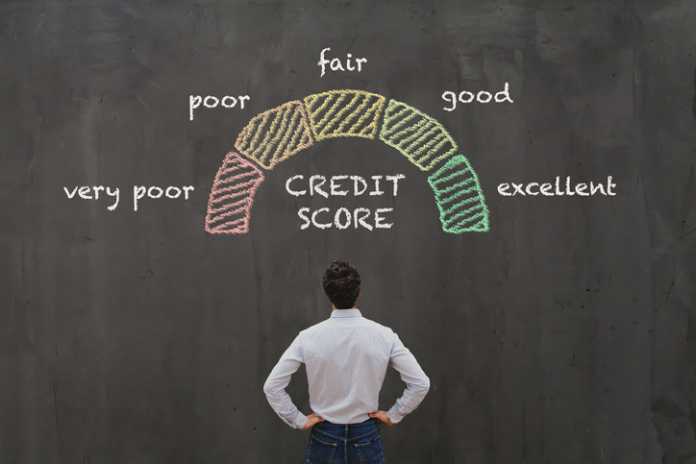
How to Minimize the Impact of COVID-19 on Your Credit Score

As the COVID-19 crisis continues to unfold, millions of Americans are worried about losing their sources of income. Loss of wages can lead to missed payments on your mortgage, student loans, credit cards, and other bills. When you miss these payments, it can negatively impact your credit score, which will later affect your chances of applying for future loans, renting an apartment, or even applying for a job.

Having a strong credit history is crucial in protecting yourself financially during the pandemic and rebuilding after it’s finally over. It’s critical to ensure that your credit score is intact and do whatever it takes to keep it that way. Here’s how to reduce the coronavirus impact on your credit score.


Mortgage relief options

If you’re unable to make timely mortgage payments, then it’s best to contact your lender immediately. On March 27, the Coronavirus Aid Relief and Economic Security Act (CARES) was made law. As a borrower with a federally backed mortgage loan, you’ll be granted forbearance of up to 180 days if you’re undergoing hardships due to the coronavirus.

If your mortgage isn’t backed by the government, it’s also best to call your creditor and request for assistance. In the Consumer Financial Protection Bureau site, there’s a guide on options you can access during the coronavirus.


Credit card payments

If your account is currently in perfect standing, no past missed payments or defaults, you’re protected under the CARES Act. The Act will offer temporary credit score protection if you’re unable to make monthly payments. Discuss with your creditor for a payment accommodation, and once a written agreement is in place, they won’t report negatively to the credit bureaus.

Alternatively, some credit companies are also allowing financial relief to their customers during the coronavirus crisis. They can either allow you to skip a payment or offer a lower annual percentage rate. Discuss with your lenders to find out what your best options are.


Student loans

The CARES Act also offers relief if you have student loans. The Federal Student Aid has taken steps to place student borrowers in forbearance through to September 30, meaning you can stop making monthly payments if you’re unable to.


Auto loan payments

If you miss or default on your loan payments, the first thing to do is call your creditor right away. When you default in your loan repayments, it stays on your credit report for seven years, which will adversely impact your credit score as the years go by. At this time, your goal is to keep your credit score as high as possible, so contact your lender to avoid this.

The best strategy is to call before you miss a payment. Most creditors have put in place payment deferral options for their customers. Find out their terms and conditions as they may vary with each lender.

Also, you’re protected under the CARES Act, and your lender can’t report negatively if you have payment accommodation in place.

In the wake of the coronavirus pandemic, you should monitor your credit score to make sure they are documented accurately. You can request your reports at GoodCredit.com.

Sayari Labs and Cedar Rose Announce Strategic Partnership

Sayari Labs – the leading provider of beneficial ownership and financial intelligence in emerging, frontier, and offshore jurisdictions – has recently partnered with Cedar Rose International Services Ltd, a specialist information provider, focused on company data within the Middle East and Africa (MEA), to further enrich Sayari’s global financial and commercial intelligence platform. 

“Trustworthy corporate ownership data in complex jurisdictions like UAE, KSA, and Egypt has presented a challenge to enterprise financial crime compliance programs in the past; we’re excited to announce this partnership and the additional value that it will unlock for our growing userbase. Sayari’s automation and graph analytics features are only as good as our underlying data and we firmly believe that the ability to automatically traverse corporate hierarchies across MEA will augment our traditionally strong coverage of Latin America, Eurasia, and offshore financial centers”, Benjamin Power, COO, Sayari Labs, Inc.

Financial institutions, multinational corporations, and providers of risk mitigation services are facing unprecedented pressure as they seek to effectively scale financial crime compliance and reputational risk programs across their global footprint. Sayari and Cedar Rose, respectively, have been at the forefront of this shift by providing the highest quality commercial and public records data coverage powering analytical decision-making and enabling business leaders to make the right choice in complex environments. 

“Cedar Rose are very proud to partner with Sayari Labs to bring our unique and broad coverage of company, director and shareholder data for the Middle East and North Africa (MENA) to their clients. It is our mission to provide excellent quality, reliable and innovative business intelligence services, that promote ethical, compliant and secure global trade. Linking our data with that of Sayari’s will enable the Fortune 100 corporations and financial crime regulators they serve to gain invaluable insights into corporate structures in MENA and to trace ultimate beneficiary ownership across borders,” Antoun Massaad, CEO, Cedar Rose Intl. Services Ltd.

Cedar Rose, a previous National Winner in the European Business Awards for Digital Technology, also provides corporate and credit data to Bureau Van Dijk and Creditsafe under long term agreements signed over recent years. The company’s particular expertise in translating, transliterating and linking data for the MENA region has enriched the global corporate information and beneficial ownership tracing landscape. The company also recently established Cedar Rose Data DMCC in Dubai, United Arab Emirates to expand its global KYC and KYB identity verification services and also has offices in Cyprus and Lebanon.

About Sayari

From financial intelligence to anti-counterfeiting, and from free trade zones to war zones, Sayari powers cross-border and cross-lingual insight into customers, counterparties, and competitors. Sayari products are designed for open source intelligence analysts and corporate risk management professionals in a variety of financial crime prevention and third-party risk management roles, where the stakes are high, time is limited, and accuracy is critical. Founded in January 2015 by investigative journalists, data scientists, and former members of the US intelligence and regulatory communities, Sayari supports a wide array of government, financial sector, and multinational clients in over a dozen countries on five continents. We empower our clients to glean insights from vast datasets that we collect, extract, enrich, match and analyze using a highly scalable streaming data pipeline.

About Cedar Rose

Established in 1997, Cedar Rose Int. Services Ltd has been leading the field for credit reporting, business intelligence and investigative due diligence for the Middle East and North Africa. Since 2016, we have been expanding to offer a trusted global service for business information and data, delivered using the latest technology. Putting our clients at the forefront of every decision we make, we offer a first class, bespoke and highly flexible service with access to the world’s largest database of business information for the MENA region. Whether you need credit analysis, compliance, AML, KYB or KYC solutions, Cedar Rose gives you the data to make confident business decisions.

Why You Need To Invest For Your Retirement

Two topics occupy people’s minds about retirement: health and wealth. Without health, we can’t do much with our wealth and, without wealth, we can’t do much of anything. Since we’re not fortune tellers, it’s crucial that we prepare for the future, so we can try to keep our health intact while also having enough money to meet other retirement expenses.

That said, there are many people, especially the youth, who don’t see any reason for investing in their retirement. This naïve mindset can be attributed to lack of information on the same and the tough economic times. Nevertheless, it’s still crucial to channel part of your income to your savings account.

It’s never too early or too late to start investing for your retirement. There are plenty of logical, valid reasons to do so. For one, you’ll enjoy accumulated interest, tax incentives, and the ability to live without depending on other people’s financial support. Read on to learn more about this topic.

Earn interest

The day you retire is the day you start living on a fixed income. What you saved or have coming in may have been enough to live off decades before retiring, but considering the global economic state, what you get from your social security checks is probably not enough to maintain a comfortable life.

Instead of being forced to downgrade your lifestyle to keep up with expenses, you want to earn interest periodically, every time you save. This is how compound interest works; essentially interest on interest. For example, if you save $1000 in a savings account, and it generates 10% interest (which never happens in real life, but just for the sake of simplifying the example), by the end of a year’s time, you will have $1100 that will earn $110 the next year.

You can also use this daily compound interest calculator to know how much you’ll earn per annum. Unlike the annual rates, this considers the amount of interest generated by your account balance every day. Of course, it’ll largely depend on the policies of your bank or whichever savings institution you choose to use.

Nonetheless, the results from either of these calculations show you the importance of getting a head start on saving. Logically, the longer you wait to invest, the less cash you will have by the time you reach retirement, and the more you will have to pump into your savings to retire comfortably. For instance, if you invest $1,000 today, anyone who will want to catch up with you in the next 10 years will have to invest almost double the amount.

Take advantage of tax incentives

You can find a few ways to save on taxes while saving and investing for retirement. One way is by using a 401k which allows you to invest annually without paying taxes on those cash investments until you pull them out for retirement. On the other hand, a Roth 401k or IRA (Individual Retirement Account) gives you the option of paying taxes upfront. Depending on the type of IRA plan you enroll in, you are basically in the driver’s seat and can choose when to get your tax break.

While a 401k and IRA are not the same thing, they both provide income on retirement. A 401k typically comes through your place of employment. An IRA works well for self-employed people, or if your employer doesn’t offer it.

It’s important to understand that your retirement portfolio differs from the portfolio you create while working. A retirement portfolio is supposed to assure you that you have enough money to carry you through your retirement years, regardless of the external economic conditions around you. For a lot of guidance, tips, and advice you can visit this URL and find some great ideas on how to fund your retirement. For those not willing to call it quits just yet and want to continue working, the site also explores other practical ways to work during retirement.

Health issues

True, money can’t buy your health, but it can buy you a better quality of life, which can help prevent health conditions that accompany aging. As you get older, your immunity becomes weaker and you become prone to various health issues. Of course, you can’t rewind the clock, but you can maintain your health using the wealth you’ve accumulated. When you have money to eat better and live better, you can help yourself avoid some health conditions.

You can treat conditions early on so they don’t escalate. Your investments will allow you to maintain a good lifestyle without all the worries of affording medical attention when you need it, keeping in mind that you are likely to live a good 20 years of retirement because of medical advancements.

Savings aren’t enough

Do you know happy, retired people? If not, you must have at least seen pictures of them. Retirement isn’t cheap, and those happy people have enough money to carry them through retirement.

We’re usually told that retirement is the time we can travel more, pick up new hobbies, start a new business, etc. But doing any of these things needs money. Savings are usually not enough, which is why you need to invest and take your retirement plans seriously. Make sure you have alternative income sources – regular ones for that matter – by the time you stop working.

The unexpected

When you’re still young, it’s more difficult to anticipate all the incidents that can happen. You’re still pretty healthy, have a strong, stable income, and feel confident that everything will remain the same. As you age, you become more aware and more fearful of things that could go wrong. This fear can be a good thing because it teaches you to be prepared for the unexpected.

When you invest, you are investing to be confident that your retirement funds outlive you. The investments you make help you prepare for the known and the unknown. Your future wealth depends on what you do now. Now is the right time to start saving, investing, and doing all sorts of things that will help you stand financially in the future. Make the right decisions for your retirement years and enjoy them instead of worrying about them.

Amid Coronavirus, All Eyes Are On Supply Chain Effectiveness

Interview with Rich Katz, CEO of leading digital supply network Elemica

The pandemic has magnified supply chain weaknesses and, for many companies, laid bare the need to modernise. We spoke with Rich Katz, CEO of leading digital supply network Elemica, on the steps companies can take to mitigate disruptions now and in the future.


In our previous interview, you described how Elemica’s products and services offer companies visibility into their supply chains, helping them to cope with flux and to mitigate risks from impending changes in the market. How do you think that Elemica’s offering can help in a situation such as that of the coronavirus pandemic that we are confronting now?

There are two major ways our products and services are helping companies cope right now. The first is that we provide a simple process for digitising the supply chain, helping to automate transaction flows and support “lights out” processing. We make sure all of the right signals are in place, and that all the data is flowing.

As you can imagine, with many people working from home in a more distributed fashion, digitisation has become more critical than ever, because it removes some of the burden and risk from supply chain planning. You can process electronic orders automatically, eliminating many of the manual tasks involved with vendor and inventory management. You can more accurately forecast things like inventory levels, and calculate what goods should be shipped and when they’ll arrive.

Once companies have that digital supply chain foundation, there are countless ways they can leverage all of that data to predict, react, and adapt to any unexpected event – even after coronavirus. That’s the second way our products and services help. We provide the foundation for a much more flexible, much more responsive supply chain.


The ramifications of the present situation are obviously challenging to comprehend, for business as for society as a whole. From your knowledge of supply issues across a range of industries, which sectors or categories of business do you see being most susceptible to factors related to coronavirus?

All sectors are absolutely susceptible, but I think some of the most vulnerable categories are “mission-critical” products, especially those that are sourced overseas. It’s things like pharmaceuticals, personal protective equipment, medical equipment – all of the products that are key to fighting this pandemic.

PPE manufacturers, for example, have seen demand increase a hundredfold. Even though some have been able to ramp up production, they have to deal with shortages in raw materials and even logistical challenges trying to import and export across borders.

Then you have all the other industries that will be affected by the opposite problem: a slowdown. The transportation and travel and leisure industries are really getting hit hard.


We might guess that companies would currently be seeing supply-chain issues stemming from changing demand patterns, restrictions on travel and cross-border trade, and changes in operating procedures dictated by the need to restrict the spread of the virus. What do you see as the main categories of supply-chain issues that companies may be facing in these times?

As you can imagine, with many people working from home in a more distributed fashion, digitisation has become more critical than ever, because it removes some of the burden and risk from supply chain planning.

They’re going to face the standard supply issues but on a much larger scale. They’re going to have suppliers who are not able to meet their demand because plants are shut down. In other instances, suppliers aren’t going to meet demand because they can’t get their materials.

Then there are the companies who are having to divert essential materials to a customer whom authorities deem higher-priority. Or, they may be able to meet demand but have to divert materials to someone else because they’re now required to keep them in the country. A company that has a factory in China, for example, may be asked to sell “mission-critical” outputs to the local city government, leaving its other customers scrambling to find different suppliers.

An even bigger problem is what I would call demand volatility, the fact that companies are going to be seeing massive shifts in demand that they’re not used to. They could experience drops in demand for some types of products, while the demand for other products drastically increases. Maybe the demand for paints will drop, for instance, but the need for something like hand sanitizer is going to go way, way up.

Think about the current shortage of hand sanitizer that’s playing out on the news and on supermarket shelves. Suppliers are not only seeing a huge demand for the hand sanitizer, but they’ll also need more of the bottles and packaging that contain the hand sanitizer. So there’s a disruption that cascades down the supply chain.

Having a network like Elemica’s certainly helps suppliers during these unanticipated disruptions or diversions. The network would allow you to secure alternative sources of demand confidently.


We’ve recently seen panic buying on the high street, in spite of governments’ admonitions against this, with consequent shortages of some everyday items on supermarket shelves. We may surmise that some equivalent activity may be taking place on a business-to-business level, as companies seek to assure themselves of their supplies in uncertain times. Can the digital supply network play a role in, firstly, giving companies the confidence not to engage in this type of behaviour and, secondly, in mitigating the effects of such activity on the rest of us?

While some of this hoarding behaviour is just human nature (which, unfortunately, we can’t do much about), what we can do is help mitigate the situation by providing more confidence. It’s about increasing the visibility into material quantities and supply schedules. By giving a little more predictability, we can offer more peace of mind. Hopefully, when consumers and businesses see that the supply chain is adapting, that “scarcity” mindset that drives people into panic-buying frenzies will be alleviated as well.

I do think businesses should be setting the example here, in terms of responding ethically to these supply and demand shifts. Many already are. There are PPE manufacturers, for example, that have refused to hike prices, even as demand has skyrocketed. And with the Defense Production Act in place, it’s looking like companies who stockpile certain materials may even find themselves in legal hot water.


We know that the supply-chain visibility offered by Elemica has at its core enabling businesses to react quickly to changing circumstances and, indeed, the coronavirus pandemic came upon us with alarming rapidity. Would you say that, in the current situation, companies have been able to react quickly enough? Is there anything that can be done to improve companies’ ability to respond to such swiftly evolving events?

I think any company would say they wish they could react more quickly. But with a digital supply network and other strategic technologies in place, companies can sense the demand changes sooner. The majority of companies in our space are at least partially digitised. They’ve started to dip their toes in the water, but there’s always a lot further they can go.

With a digital supply network and other strategic technologies in place, companies can sense the demand changes sooner.

A customer using our Elemica Sell products, for example, can see in real time if there are changes to their customers’ demand forecasts. They’ll be informed if their customers had a higher frequency of order changes or order cancellations. We even offer the ability to set up alerts, so that the customer gets immediate notifications of any changes or cancellations, enabling them to react even more quickly.

It’s also a good time for companies to think about expanding their supply chain ecosystems, so they have more options to secure alternative sources of supply or alternative sources of shipment when there’s a disruption. That’s another way our products can help companies respond more quickly, by enabling real-time interactions with a broader supply chain ecosystem.


The focus right now is clearly on addressing the public-health situation. Further down the line, though, when this has been brought under control, it is clear that the world will have to confront serious social, economic and political repercussions, among them a potential major economic recession. Are there any measures that companies can start to take now with regard to supply chains, that will help to prepare them for the post-coronavirus environment? And how can Elemica help?

No one knows what the “new normal” will look like, even after the pandemic blows over. No one can predict the future, but with the right data and technology solutions, companies can make certain predictions. They can forecast demand with a smarter, digitised supply chain network.

Now is the time to put these measures in place.


Even before coronavirus, we were talking about flux and volatility in the modern business world. It’s reasonable to suppose that, in the future, we may face other, equally unexpected changes in circumstances. In your opinion, are there any lessons that we can learn now about how to improve our approach to the management of supply chains in the future, so as best to cope with the unexpected?

The companies that will best be able to weather volatility will be the ones who put the right foundation and processes in place.

Our solution can be scaled to provide even more value to customers as the business landscape evolves. One thing that sets Elemica apart is our machine learning and predictive capabilities.

By incorporating our Elemica See product, for example, customers can predict whether shipments are going to be late, based on past data. With Elemica Pulse, they can see disruptive situations in real time and receive key alerts. We can alert if suppliers are not confirming that they can meet orders, if they are under-confirming, or if they are late-shipping orders. We’re calling attention to any risk in the supply chain using smart predictive algorithms.

And when they do identify risk, our products can help them respond. Using Elemica QuickLink Email Buy, one of our newer products, they can digitise supplier relationships and transactions, laying the foundation for quicker onboarding and a broadened supply chain network.

It’s coming down to being able to focus on sensing what’s happening and acting on it, being able to respond quickly and flexibly. The companies that will best be able to weather volatility will be the ones who put the right foundation and processes in place.  

Executive Profile

Rich Katz is the Chief Executive Officer of Elemica, a global SaaS-based Supply Chain Network software solution.  He joined Elemica in 2009 through a merger with Rubber Network. Prior to becoming CEO, he held various leadership roles at Elemica such as President, Chief Technology Officer, Senior Vice-President of Product Management, and Vice-President of Research and Development.

Rich brings more than 20 years of relevant global industry experience in the Software and IT Services market.  He has an extensive background in Enterprise Resource Planning, Supply Chain, Cloud Application Development, and Business-to-Business eCommerce. Rich’s leadership has driven significant sustainable positive impact to the company’s market position; financial results; employee motivation; and shareholder value.

Prior to Elemica, Mr. Katz was the Director of Implementation Services for ATT’s Enterprise’s Ariba Practice (formerly USI) and has held Senior Manager positions in Arthur Andersen’s Advanced Technology and ERP practices.  He is a 1990 Electrical Engineer Graduate of Georgia Tech.

Increased Digitalisation of Services Trade in Today’s Global Economic Paralysis

By Sarita D. Jackson, President and CEO of the Global Research Institute of International Trade

During the coronavirus pandemic, there has been an increased role of cross-border trade in services through digital technology. The digitalisation of cross-border trade in services provides a number of benefits and additional opportunities, which can only be fully carried out through liberal trade policies established at the international and national levels.

The global health pandemic caused by the coronavirus, or COVID-19, has exacerbated the use of protectionist trade policies. For example, in March 2020, numerous governments around the world implemented restrictions or outright bans on the export of crucial medical equipment and medical supplies in the fight against the coronavirus. On April 3rd, the United States issued a public memo stating that “it is the policy of the United States to prevent domestic brokers, distributors, and other intermediaries from diverting such material overseas.” Consequently, a number of services-based industries, such as transportation and logistics, have been negatively affected. National-level governments have taken measures to either tighten rules in the area of financial services or loosen restrictions on telecommunication services as they are used in the healthcare and education industries.

The current pandemic highlights the significance of international trade in services. For instance, the use of cross-border services has been helpful in spreading information more quickly about the virus and offering medical assistance from a distance. Even more telling is that these services are provided with the use of digital technology, which refers to the use of electronic devices and systems to create, store, and/or process information. As a result, the cross-border provision of services can overcome any physical barriers to trade. Nevertheless, digital technology has remained an exception rather than the norm due to restrictions on digital trade.

The 2020 global health pandemic, as well as earlier widespread epidemics of the 21st century, has undeniably shown that digital technology can have a transformational impact. Such an idea is made evident by the fact that the number of United Nations member states that used online portals to share information about COVID-19 saw an increase from 57 percent on March 25th to 86 percent on April 8th. Maintaining a liberal market in the services trade, especially that linked with digital trade, is key to allowing for a much quicker and effective response to crises, while also reducing transactions costs.

At the same time, international governance at the World Trade Organization (WTO) level and national-level policy reforms that align with WTO rules for liberalized trade while still respecting domestic goals, can lead to a globally integrated digital trading system in services that will make the phrase, “We are in this together,” a reality across the board.

The piece illustrates the importance of a liberalized digital services trade regime in four areas–healthcare, food supply, education, and finance.


Healthcare 

“While we race to dampen the virus’s spread, we can optimize our response mechanisms, digitizing as many steps as possible. This is because traditional processes—those that rely on people to function in the critical path of signal processing—are constrained by the rate at which we can train, organize, and deploy human labor…Digital systems can keep pace with exponential growth,” write Wittbold, Carroll, Iansiti, et al.

Despite the use of digital technology in the healthcare industry, including during health crises within the last two decades, it still is not being used to its full potential. For example, in a U.S.-focused survey, 38 percent of CEOs of healthcare systems admitted to not having a digital facet to their strategic plan. Additionally, 94 percent of participants described data protection and privacy regulations as key obstacles to the use of digital technology. As COVID-19 grew into a global health pandemic, the healthcare system in many countries struggled to keep up with the large number of cases and deaths occurring simultaneously. The use of digital technology soared thus, making it easier for information-sharing, video consultations, and routine care in a time when physical distancing is vital.

Singapore relies on services provided by the U.S. company, WhatsApp, which is owned by Facebook, to share information with its citizens about COVID-19, according to public reports. The Southeast Asian country’s response builds off of earlier efforts, in which the government embraced digital technology in the 2014 Smart Nation Initiative. Digital technology makes it possible to better understand the virus, develop a strategy of prevention and containment, and focus on diagnosis and treatment. As of April 28, 2020, Singapore had 14,951 confirmed cases, 14 deaths and 1,128 people recovered, per the Johns Hopkins University Coronavirus Resources Center.  Singapore is the 26th highest in terms of confirmed cases yet reports an exceptionally low number of deaths, which can be attributed to its emphasis on digital technology in the healthcare space.

WhatsApp also collaborates with international inter-governmental organizations, such as the World Health Organization (WHO), to share information in various languages about the coronavirus. The service boasts two billion active users, which represents close to 30 percent of the total world population, according to a WhatsApp February 2020 blog post titled “Two Billion Users—Connecting the World Privately.” Under normal circumstances, WhatsApp has been used to connect family, friends, etc. via video chats, instant messaging, and document sharing, regardless of geographical location.

However, the use of such services has presented its own challenge—the spread of misinformation. Encryption, or converting data into a code to restrict unauthorized access, makes it difficult to trace the source of information. WhatsApp has responded by limiting the forwarding of messages to only one person at a time.

Countries, such as France and the United States, have eased any restrictions on the use of telemedicine and digital technology. Therefore, the market allows for the free flow of these services across borders during this critical period.


Food Supply

The food service industry involves the selling and distribution of food. A number of countries around the globe continue to deal with severe food shortages and food insecurity, which has only been worsened by a globally paralyzed economy. With closed local, informal markets and restricted food services, lower-income households no longer have access to fresh food. Populations around the globe are affected by the limited supply of both local and imported foodstuffs, which results in higher food prices.

Digital technology, such as blockchain, has been introduced to the food industry to improve production, enhance food safety, and promote sustainability. Blockchain is defined as a “shared, immutable ledger for recording transactions, tracking assets and building trust.” Blockchain technology enables users to access stored, digital information in real-time about products from the original source all the way to the end user; connect directly with buyers and sellers; gather market information; access capital, and benefit from secure payment. Some of such projects have been led stakeholders from the public and private sectors domestically and internationally, as well as non-government organizations (NGOs), which continues to yield different results. The mere presence of digital technology does not eradicate the problems that the food supply chain faces. Rather, the infrastructure, institutions, and investment must be in place so that digital technology can be effective and transformative.

Although trade of food items is limited, so, too, is digital trade in many countries. These restrictions on digital trade range from data localization requirements to restricting data flows across borders to discriminatory tax measures to blocking cross-border services altogether. Such restrictions deny access to those populations that rely on digital technology to compete in the global food marketplace and those who could benefit from increased access to foreign buyers and suppliers.


Education

Many university and college-level students studying outside of their home countries returned home abruptly as schools halted in-person instruction and governments quickly imposed travel restrictions or border closures. Nevertheless, students could continue their studies virtually. Educational services are currently being provided across borders through the use of cloud-based software platforms such as Zoom and Cisco Webex. These two U.S. companies have experienced tremendous growth in 2020. Zoom Video Communication shares ballooned from $73.09 on January 6th to $128.80 on April 3rd. However, Zoom’s shares dipped from its peak of $151.70 on March 23rd due to the highly publicized privacy and security lapses. These problems presented themselves during online classroom sessions and other meeting formats. Cisco Webex also saw a dramatic increase in usage worldwide. The number of meeting minutes more than doubled from 6 billion minutes in January 2020 to 14 billion minutes in March 2020. Therefore, digital technology has the potential to play an even greater role in cross-border education through increased access and lower costs.

However, the rapid shift to online education merely shines a brighter light on an already existing problem—the digital divide. Earlier pandemics, such as SARS, the swine flu (H1N1), and Ebola, that led to school closures resulted in the reliance on e-learning options for K-12 and beyond. Unequal access to the internet or even basic electronic devices, such as a radio, in poorer communities in developing and least-developed economies complicated efforts to limit interruption to students’ education.

The digital divide is not just between developed and developing countries. The challenge also arises within a country. In the second largest city in the United States—Los Angeles—the digital disparities among primary and secondary students are blaring. About 100,000 students lack internet connectivity, according to Austin Beutner, superintendent of the Los Angeles Unified School District. That translates to roughly 20 percent of the 2019-20 school-level population left behind in today’s pandemic, which, according to recent LAUSD statistics is 557,560.

Inter-governmental organizations, such as the United Nations Educational, Scientific, and Cultural Organization (UNESCO) and the World Bank, in partnership with the private sector and local governments, continue efforts to expand quality educational services to the global student population. Several countries, as reported by the World Trade Organization, have lifted restrictions on telecommunication services to allow for access to Zoom and Cisco Webex, among other applications, for educational and other services. The free flow of services supplements the national shortfall.


Finance

Financial services are among the top services exported globally. Since the Great Recession (December 2007-June 2009), a surge in financial technology (fintech) companies has contributed to the growth of the digital economy. Fintech refers to those businesses that use technology to provide financial services. Alternative financing institutions have benefited the many individuals and businesses that have not been able to access credit and capital through traditional financial institutions. As a result, traditional institutions are facing serious competition. In the United States, the share of personal loans granted by fintech companies skyrocketed from only 5 percent in 2013 to 38 percent in 2018. That is compared to the huge drop in loans granted by banks from 40 percent to 28 percent during the same period. Due to the growing influence of the fintech sector, 84 percent of financial services organizations around the world have listed improving the digital experience for consumers as the number one strategic priority last year.

In the United States, Fintech companies stepped in, upon receiving approval, to help small businesses access loans provided by the U.S. government to keep them afloat during the current economic paralysis, especially since many small businesses were shut out of the process through traditional means during the first round of funding.

China, the United States, and Mexico are the top three leading countries for the adoption of fintech for banking and payments. China, the United States, and South Africa lead in the fintech industry when it comes to financial management, financing, and insurance.

However, in the face of the pandemic, economies, such as the European Union and India, have implemented tighter measures in the area of financial services. Discussions continue regarding the WTO establishing clear rules under the General Agreement on Trade in Services (GATS) to meet the needs and realities of a 21st century global digital economy.

Today’s pandemic fully demonstrates the importance of trade in services in the crucial industries highlighted in this article. Furthermore, digital technology allows for the cross-border trade in services at a much faster pace and far lower costs, provided that proper infrastructure, institutions, and investments are put in place. The current pandemic has allowed for the easing of regulatory and legal barriers on cross-border digital trade in services in some areas and tightening in others. It is imperative that the WTO and its member countries maintain liberal market policies in these areas to move closer to each global citizen having quality access to healthcare, food, education, and finance. Otherwise, are we really in this together?

About the Author

Sarita D. Jackson is the president and CEO of the Global Research Institute of International Trade (GRIIT), a US-based think-tank and consulting firm that uses in-depth research to shape trade policy and advise businesses on how to compete globally. She is also a TEDx speaker and business school instructor with UCLA Extension.

References:

1 United Nations Department of Economic and Social Affairs (2020, April 14). UN/DESA Policy Brief #61: COVID-19: Embracing digital government during the pandemic and beyond. https://www.un.org/development/desa/dpad/publication/un-desa-policy-brief-61-covid-19-embracing-digital-government-during-the-pandemic-and-beyond/.

2 Wittbold, Carroll, Iansiti, et al. (2020, April 03). How Hospitals Are Using AI to Battle Covid-19. Harvard Business Review. https://hbr.org/2020/04/how-hospitals-are-using-ai-to-battle-covid-19.

3 Keesara, S., Jonas, A., Schulman, K. (2020). Covid-19 and Health Care’s Digital Revolution. The New England Journal of Medicine, https://www.nejm.org/doi/full/10.1056/NEJMp2005835.

4 United Nations Development Programme (2020, March 25). What Singapore can teach about an effective coronavirus response. https://www.undp.org/content/undp/en/home/blog/2020/what-singapore-can-teach-about-an-effective-coronavirus-response.html.

5 IBM. What is Blockchain Technology? https://www.ibm.com/blockchain/what-is-blockchain.

6 Yahoo. (April 6, 2020). Price of Zoom shares traded on Nasdaq Stock Market in 2020 (in U.S. dollars) [Graph]. In Statista. Retrieved April 30, 2020, from https://www-statista-com.ezproxy.snhu.edu/statistics/1106104/stock-price-zoom/.   

7 No Jitter & Cisco Systems. (April 1, 2020). Reported meeting minutes of Cisco Webex worldwide in 2020 (in billions) [Graph]. In Statista. Retrieved April 30, 2020, from https://www-statista-com.ezproxy.snhu.edu/statistics/1106500/cisco-webest-meeting-minutes/.

8 Regardie, J. (2020, April 1). With LAUSD Schools Closed, the Superintendent’s Dealmaking Ability Is Being Put to the Test. Los Angeles Magazine. https://www.lamag.com/article/lausd-shutdown-austin-beutner/; Los Angeles Unified School District. (2020, March 23). Los Angeles Unified and Verizon Reach Agreement to Provide Unlimited Internet to Students Without Access. https://achieve.lausd.net/site/default.aspx?PageType=3&DomainID=4&ModuleInstanceID=4466&ViewID=6446EE88-D30C-497E-9316-3F8874B3E108&RenderLoc=0&FlexDataID=87160&PageID=1.

9 TransUnion. (June 2019). Personal Loans Market 2019. In Statista. Retrieved April 30, 2020, from https://www.statista.com/statistics/935629/distribution-personal-loans-by-source-usa/. 

10 BI Intelligence. (June 2019). EY Fintech Adoption Index. In Statista. Retrieved April 30, 2020, from https://www.statista.com/statistics/942325/leading-countries-fintech-adoption-by-category/.

11 OECD. (2020). Handbook on Measuring Digital Trade. http://www.oecd.org/sdd/its/Handbook-on-Measuring-Digital-Trade-Version-1.pdf. 

Best Tips to Buy Comprehensive Car Insurance

Comprehensive insurance is referred to as collision insurance in a few states. It covers damages to your vehicle by different out of control events. With this insurance, you can cover windshield and glass damage, vandalism, theft, an act of nature and weather, accidents involving animals.

Remember, fully comprehensive car insurance plans are optional. These are designed to cover these things:

  • Explosions, riots, fire, and vandalism
  • Theft
  • Glass and windshield damage
  • Falling limbs/trees and several other objects
  • Earthquakes, lightning, floods, wind, hail, and storms


Hitting an animal

If you want to avoid these events, you will need comprehensive car insurance. For instance, a tree limb falls on your vehicle and causes the damage of $5,000. You can recover your damages through a comprehensive insurance plan.

You have to file an insurance claim to get paid for losses from an insurer. Based on the insurer, you may file an online claim with mobile apps. If you have deductibles of $1,000, you will pay $1,000, and the insurer will pay the remaining amount like $4,000.


Deductibles in Comprehensive Car Insurance

Comprehensive insurance includes deductibles. Keep it in mind deductible is an amount you will pay from your pocket. If you are using a repair shop in an insurance company’s network, they offer guaranteed repairs.


Value of Vehicle Insurance

The value of your car insurance policy may base on the insured declared worth/value (IDV). It is the maximum amount of insurance that an insurer will pay to you. Remember, this amount is equal to the market worth of your car.

If you want to purchase insurance for your new vehicle, the calculation of IDV may be based on the showroom’s listed price. Remember, the IDV of a car can’t be constant. As you renew your policy after one year, the IDV may decrease as per the deprecation rate.


Essential Factors to Determine in the Premium

The premium of insurance may vary based on the model of your car. Moreover, the registration date and manufacturing year of a car are essential to consider. If your vehicle needs expensive or rare spare parts, it may increase the insurance premium.

Another critical factor to consider is the purpose of your car. Keep it in mind that vehicle insurance is available for commercial and personal vehicles. For commercial vehicles, insurance companies may charge a higher premium.


Safety Devices in a Vehicle

Modern vehicles come with safety devices to ensure the maximum safety of every passenger. You can buy cars with state-of-the-art security features, such as advanced braking systems, robust locks, anti-theft devices, and airbags.

Remember, insurance companies may increase the premium for vehicles susceptible to damage, theft, or occupant injury. If your car has safety features, you will be eligible for an almost 2.5% discount on insurance premiums.

If you want to get the best features and discount on comprehensive car insurance, make sure to compare different policies with SimplyQuote, and do your research. It will help you to choose the right car insurance policy. Improve your credit history because it can dramatically impact the insurance premium.

Doubtful About Term Insurance? Read to Know it’s Amazing Benefits

In your 20s and 30s, the chances are that you probably don’t think much about financial security. But times have changed. Once you start your career, you become an equal contributor to the family income, as well as the responsibilities. This is why you need term insurance in your life.

If you are shouldering the expenses with your spouse or parents equally, imagine the emotional and financial loss you will leave behind should something happen to you. While no amount of money can ever fill the void you leave back; you can make arrangements to fill the financial void by investing in a pure term insurance plan at the right time.

Term insurance plans protect your family against uncertainties and also give you multiple features as well as benefits that provide financial security to your loved ones.

When it comes to a pure term insurance plan, the motive of the policy is to safeguard your family’s financial wellbeing and promise them recourse in your absence. This benefit will take care of their expenses and also help them stay afloat during turbulent times.

Given that the objective of term insurance plans is long-term financial security, it is pertinent to choose a term insurance plan that has an optimal sum assured, and the insurer has a high claim settlement ratio. Once you have checked off these two factors, you can rest assured that your family’s financial health in safe hands.

Here are some of the benefits of term plan that make a term insurance plan an indispensable part of your investment portfolio.


1. Financial Security for Your Loved Ones

Life is unpredictable, and not preparing for these eventualities can cost you heavily in terms of human loss as well as financial loss. One of the most significant factors that make term insurance plans the preferred instrument for investors is their ability to offer high coverage for low premiums. You can get a large sum assured at an affordable cost and give your family a complete sense of financial security, in case you are not around anymore.


2. Protection Against Emergency Medical Treatments

With an increase in lifestyle disorders, stressful lives, poor lifestyle habits, and lack of exercise, it is only prudent that you leverage the rider benefit that can be incorporated into your insurance policy.

You can supplement your pure term insurance plan with an additional rider benefit that can enhance the policy’s coverage to offer you an added layer of protection. When considering term insurance, make sure you look into critical illness rider that can be added to your policy for a nominal fee. You must also check the insurer’s claim settlement ratio to ensure that the company will honour their end of the bargain and will extend the policy benefit if you are diagnosed with one of the life-threatening illnesses covered in the policy document.

Once the illness is detected, your insurance provider will release the sum assured that will help you pay for the treatment costs and also other related expenses such as medical tests, medicines, and loss of pay due to non-productive days. This could be a massive help during such turbulent times. At the same time, it protects your family against the financial burden of bearing the cost of your illness.


3. Long Term Tax Saving Benefits

Investing in a pure term insurance plan has another benefit – tax saving as per different sections of Income Tax Act, 1961. You can avail of tax deductions of up to Rs. 1.5L on the premium paid towards the policy under section 80C of the Income Tax Act.

As per Section 10 (10D), the maturity benefit offered by some term insurance policies such as the return of premium, are also eligible for tax exemptions.


4. Peace of mind

You may think that nothing will happen to you; after all, you follow a healthy lifestyle and live a disciplined life. However, who is to say of eventualities such as road accidents, loss of employment, critical illness? These are just some of the many unpredictable aspects of life that make it necessary to invest in a pure term insurance plan. With the right kind of investment backing your family’s financial future, you will be able to live in peace, knowing that even if something untoward happens to you, your family will sail through the tide. Moreover, the insurance providers have started offering many incentives to young investors like you who can buy this lifetime protection for a nominal amount and give your family the security shield that will protect them against all uncertainties.

Now that you are sure about purchasing a pure term insurance plan, you should compare different plans online. Online term insurance plans from reputable insurers such as Max Life Insurance enable you to make an informed buying decision by reviewing, analyzing and selecting policies that provide maximum benefits at cost-effective premium amounts. Remember to check the insurer’s claim settlement ratio to verify their claim settlement history before investing.

6-Step Guide To Getting Co-Signed Personal Loans From Direct Lenders

Personal loans are often the go-to financing of people who are in dire need of funds. Unfortunately, it’s hard to find a lender that approves loan applicants with unstable income and poor credit score.

A co-signed personal loan is a significant financial option for people who are ineligible to take out loans on their own. In this loan, there’s a second borrower called a “cosigner,” who’s equally responsible for paying back the loan as you do.

Loan companies don’t usually approve applicants with poor creditworthiness. But if your cosigner has a higher income and better credit than you do, you can be eligible for a loan application. Put simply, cosigners act as guarantors on loan. Here’s a step-by-step guide to getting personal loans with a cosigner.


Step 1. Check Your Creditworthiness

Gather information about your credit history, credit report, credit score, and debt-to-income (DTI) ratio. All of these determine whether you’re eligible for a loan, a credit card, a job, a business, or insurance.

If you own a credit card or took an installment loan before, you’d surely have a credit history. A credit history shows how you pay bills. In contrast, a credit report refers to your personal information (i.e., name, address, security number), credit cards, previous and ongoing loans, repayment history, and overall debt. A credit report is a summary of your credit history.

What lenders primarily use when assessing your creditworthiness is your credit score, which is a three-digit number based on your credit history. If you have a good history, you’ll get a good credit score. Higher credit scores qualify for better interest rates. However, if you have a poor credit score and are low-income, you’ll unlikely qualify for loans or lower interest rates.

Lastly, calculate your debt-to-income ratio. Recent studies show that borrowers with high DTIs tend to have repayment troubles, resulting in loan companies giving a big deal on DTIs. Personal loan companies lend money to applicants with debt-to-income ratios of 50% or more. If you have a lower DTI, make sure that your cosigner has a higher DTI.


Step 2. Check Your Cosigner’s Creditworthiness

Just like how you check your creditworthiness, you also have to check your cosigner’s credit report, credit history, credit score, and DTI. Most of the time, a cosigner with a good credit score and stable income can help you get a lower interest rate for any loan amount.

Again, you have to ensure your cosigner’s creditworthiness, not because you know him or her. You want your cosigner to be financially responsible. The last thing you want is someone who feels obligated to say yes but is incapable of making payments in the event of an emergency.

See to it that your cosigner understands the obligations of being a cosigner and that they are equally responsible for the personal loan. You don’t want to put a burden on them inadvertently.


Step 3. Compare Personal Loan Companies and Get Prequalified

Do some upfront research because not all lenders accept cosigners. Additionally, you might want to shortlist lenders with better interest rates. After deciding which loan companies to choose, you and your cosigner must apply for prequalification.

Prequalification typically involves a run-through of your and your cosigner’s personal and financial information. However, there’s no need to worry. These soft credit checks wouldn’t affect both of your credit scores. If you successfully prequalify, loan companies will let you know about the loan offers you may receive.


Step 4. Compare Personal Loan Offers

In addition to interest rates, keep an eye out on a lender’s annual percentage rate or APR. It includes the interest rate plus loan fees, which gives you an accurate measure of a loan’s cost. You might want to check a lender’s fee structures, collateral, and loan and repayment terms. Make sure to pick a loan offer that meets your needs at the most affordable terms.


Step 5. Officially Apply to a Personal Loan Offer

When you officially apply on a loan offer, you have to send specific documents to the lenders so they can decide whether they will make a deal with you and your cosigner. These include your and your cosigner’s bank account statements, copies of paychecks, and hard credit checks. This time, this hard inquiry check will cause a small ding to both of your credits.


Step 6. Enjoy your loan!

If approved for a loan, you can immediately receive the funds via electronic deposit or however you wish. Some lenders approve applications after a couple of days, while others can decide within the day you sent all of your financial info.


Takeaway

One way to be able to take out a loan despite poor credit is getting yourself a cosigner. A cosigner must have a higher credit score than you do and would have to put their credit score at risk for you. Hence, you can say that maintaining a good credit score is as hard as finding a suitable cosigner.

VCs Are Pouring Billions Into Mortgage Tech

While the markets might be going through a phase of unprecedented turmoil, the pace of Venture Capital funding in January and February of this year continued at a steady pace. At least before, the country has been practically shut down in recent days.

The hope is that the slowdown will pass, and it might and that investment in early-stage companies will return to previous levels. This is especially true in the mortgage sector, where VCs have poured billions into mortgage tech.

Deals of note include the $225 million Ribbon raised from Bain Capital Ventures, Greylock, and others, the $130 million Blend has raised, and the $8.5 million raised by Boston-based Own Up in 2019.

Why is the mortgage industry getting so much interest from VCs? The answer might lie in the massive opportunity to apply technology to every step in the process, including how consumers shop for loans, origination, underwriting, funding, and syndication.

Another reason is that there is big money in real estate. So much so that Pitchbook noted that VC invested more than $10 billion since 2017. Two of the biggest rounds included the combined $800 million SoftBank pumped into Opendoor and Compass.

While the investments in mortgage tech companies are just a fraction of that amount, it is starting to gain pace. One often overlooked area is the reverse mortgage market. These are government-backed loans for older Americans, which help them to freeze their mortgage payments until they sell their home.

If you are aware of the opportunity in this market, consider that nearly 70 million Americans are retired or nearing retirement. This “Silver Tsunami” has the potential to change several markets – including mortgages.

From a customer perspective, a list of the top 10 best reverse mortgage lenders can give founders and VCs alike some more information on the market. Beyond this, there are industrial sites, and the government also publishes data on the market.

Back to investment in the traditional mortgage market, the business model of Ribbon is an example of what other startups are trying to do – bring the mortgage process into the digital age.

For example, SoFi has now entered the mortgage market, along with other forms of consumer finance, and in the process has garnered significant interest from VCs. Other companies that have gained attention from investors include LendingHome and Better Mortgage.

But these companies are primarily focused on the front-end of the mortgage industry. While there is a good reason for this, helping customers to shop for mortgages leaves many of the backend processes untouched.

These processes, including underwriting, funding, and syndication. Underwriting is how lenders review and approve mortgage applications while some of this is tied to the applicants’ creditworthiness, other factors such as licensure, and funding.

This leads to opportunities which help lenders to syndicate their loan books. In doing so, they can sell all or a portion of their loans and get money to issue new loans. Even with the problems tied to the subprime crisis, this remains the engine that helps the home mortgage market to run.

In these backend areas, several AI-enabled startups have entered the fray. These companies are hoping to assist in decision making and data analysis in backend functions. In doing so, lenders are hoping to reduce their loan processing costs.

While the potential of AI has yet to live up the promise, as the implementation of these technologies expand, the accuracy is expected to improve as well.

Over the long run, it makes sense that investment in the space has continued to grow. Coming out of the financial crisis, more than 60 percent of mortgages were originated at the top five national banks. However, that number fell to under 25 percent in 2016 and has continued to decline since then.

JD Power noted that in 2017 the most common way consumers applied for a mortgage was online. Given how we are reliant on our computers to run our lives these days, this shouldn’t come as a surprise. What is surprising that even while VCs are pouring billions into mortgage tech, most consumers are unaware of the transition that is happening beneath their feet.

As noted, investment in startups that are trying to disrupt the way you get the money you need to buy a home is gaining pace. While the recent economic uncertainties are expected to put a dent in second-quarter fundraising totals, it is clear that VCs believe there are returns to be had in the sector.

Who will the winners be? Only time will tell, but one thing is sure the way we get a mortgage is changing faster today than it has at any time in the past 100 years.

EDITOR'S PICK OF THE WEEK

China economic growth

China’s Challenging Search for a New Model of Economic Growth

By Danny Leipziger China cannot continue to rely on exports to drive its growth, but what are the alternatives? China ran a $1.2 trillion trade surplus last year, and despite admonitions from the IMF to rely...

WISE DECISION MAKER GUIDE

POWER INFLUENCERS

Emerging Trends

The Future of Global Trade