Home Blog Page 932

How Installing Dash Cams Might Improve Your Business

Dashboard cameras are now essential in many types of commercial vehicles. There are many advantages of installing them on your company’s vehicles, such as reducing accidents and improving visibility. With dash cameras provided by planethalocameras.com, you will be able to capture detailed information about the route and the time it takes to travel. This will enable you to protect your drivers from negative outcomes. While you might have to spend something to get quality devices, you’ll likely find the initial investment is worthwhile since it saves money.

Today’s Cameras Have Many Features

Cameras today aren’t just for recording footage of your drivers. They have features that ensure they are useful for both business owners and drivers. Many have GPS, allowing you to track where accidents happened. Others have live view features to watch the truck in real-time while it is in motion. And some have accelerometers and voice reminders to let your employees know when they are not operating the vehicle safely.

With so many features available, it’s often difficult to choose the right one. But if you’re thinking about installing the devices on your company trucks, you can review a guide on the different types of dash cams for trucks. They offer you more control over fleet safety so you can reduce accidents and increase visibility. Many of these tools let you remove the internal hard drive or SD card so you can look at the footage on your computer. The more advanced types have software to make it easier to view the trip and make notes about it.

Tracking Your Company’s Vehicles More Efficiently

Organizations can benefit significantly after installing dash cams on their fleet. Many times, insurance companies will offer discounts for business owners who have invested in these tools. In other cases, you have to install one to get a policy in the first place.

Cameras also make it more efficient to track compliance. For instance, let’s say you have a policy that prevents phone use in the vehicle. It’s hard to enforce that you can’t be in each car or truck with your employees. Luckily, with the help of technology, you can spot those who break your company’s policy. That makes things safer for everyone and reduces the chances of an accident.

Preventing Fraud

There are many dishonest drivers out there today, and they often prey on others on the road. They might cause an accident on purpose and claim that the other driver was at fault for getting insurance coverage. If you have a dashcam on each vehicle, every trip will be recorded, and you will have evidence of what went on. You’ll be able to prove that any damage happened because of the other person.

Similarly, installing them adds a level of accountability for your driver. When they know you can monitor their progress, they will be less likely to drive carelessly. Because cameras can reward safe driving while discouraging dangerous habits, your employees will want to make better decisions. For instance, some types of cameras use technology to give each driver a score after the trip. Higher scores might go to more responsible drivers. The more that happens, the more an insurance company might reduce the monthly premiums.

Top 5 Horse TV Series

Horse racing is one of the most spectacular sports events. During the main tournaments, thousands of fans bet and see results here. Except for these events, horse lovers also enjoy watching TV series with these amusing animals. Here are the best of them.

Amika

Fifteen-year-old Meryl Knight gets a job in a stable owned by a local rich man. The girl fends off stalls and takes care of horses, but her dream is to compete. At the back of the complex, she discovers a locked barn in which a white horse named Amika is locked up. Amika was once worth a fortune, but is now considered dangerous.

Wildfire

Chris Furillo is a troubled teenager. She’s been to a halfway house and finally gets a fresh start. Pablo, a local riding coach, finds her a job on a ranch owned by the Ritter family, because Chris has a talent for negotiating with horses. Once in her new surroundings, Kris faces many challenges. The Ritters do their best to help the girl, but they have a problem. The ranch is on the verge of bankruptcy. And only Chris, joining forces with a horse named Wildfire, can help them.

Poly

After witnessing the abuse of the pony, the boy Pascal decides to organize an escape for the poor guy. And all the children of the small town, imbued with sympathy for the little horse, began to help Pascal hide it from the adults.

The Adventures of Black Beauty

The basis for the script of the series was the famous book by Anna Sewell, but the plot is very different from her book. Except that the main character is also named Black Beauty.

Dr. Gordon, along with his children, Vicky and Kevin, moves from London to the countryside. There they make the acquaintance of a raven-haired handsome horse, which the owner gives to the Gordons after a service rendered. From that moment the adventure begins. Each series is a separate story, and these stories can be romantic, adventurous or domestic, but always instructive. And, of course, related to the relationship between people and animals. Special mention should be made of the terrific backdrop and music by Dennis King.

In the 1990s, there was a sequel to the series. The New Adventures of Black Beauty moved the action to Australia. However, the sequel is strongly inferior to the first part. So, it did not have the expected success with the public.

The Saddle Club

Carol, Stevie, and Lisa are very fond of horses and do horseback riding at the Pine Hollow base. Life would be wonderful, but problems arise that need to be solved. Can 12-year-olds handle them?

Understanding the Concept of Provably Fair Gambling and How it Works

Whether you’re watching a magic show, betting money on online casinos, or trusting an agent to help you buy a house, you know deep down that there’s more than meets your eye. You know there’s some bias in the process that you’re unaware of. Especially so, if you love spending your evenings betting on online slot and blackjack, you’re well aware of that feeling.

Speaking of online gambling, your chances of winning a bet relies heavily on whether or not the platform’s algorithm is authentic. But even if it were not, there’s no way you could really challenge or verify the authenticity of traditional online casinos. This is the reason there’s a rise in demand for online gambling platforms that support provably fair games. 

What is Provable Fairness and Why is It Important?

As the name suggests, provable fairness refers to the characteristic that allows end-users to authenticate the fairness of a process. On the same note, online casino games that implement this feature and allow users to verify their result generation process are called provably fair games. While they may be more complex to develop and deploy, provably fair games have a clear advantage over traditional online betting games. 

To make things more clear, let’s consider two scenarios:

In the first scenario, suppose you’re playing the famous dice-roll game, Craps, on a traditional online gambling platform with no provable fairness. And by the time the game reaches its conclusion, you’re about to lose all your money. Now, imagine the frustration of not being able to verify if the game operator played the game fairly or not.

In the second case, consider you’re playing the same game but on a platform that promises provable fairness. On this platform, even if you’re about the lose your money, you may not be as stressed as in the first one. This will be because you can easily verify the results of the game and rest assured that the house did not cheat you and that the declared results were fair.

Besides allowing users to verify the results, provably fair games can also have tremendous benefits for casino operators. As the online gambling industry grows, more people will demand provable fairness in the games. Provably fair games can be the best way for casino operators to win people’s trust and attract more users to their platform.

Blockchain and Smart Contracts Power Provably Fair Games

Transparency lies at the core of blockchain technology. And it goes without saying that with transparency comes fairness. So, with blockchain technology at the core of casino games, we’re looking at the future of online casinos where games are provably fair and operators can no more trick the players. 

Bitcoin casino
 Bitcoin casino Fortunejack.com is run by provably fair smart contracts

Blockchain-based casino platforms rely on smart contracts to operate the games. These contracts are self-executing codes that trigger actions based on the given inputs. They are automated, which makes them free of any middlemen interference. Also, they are immutable, meaning that once a smart contract is deployed, it is not possible to change the code to bias the operation of the games.

Additionally, blockchain-based casinos payout the rewards to their users in cryptocurrencies. All the transactions are thus publicly recorded on the blockchain ledger. So, in case the users want to confirm whether a casino pays out the house edge they promise, they can tally the transaction records to calculate the same.

Altogether, blockchain and smart contracts make casinos more accountable for what they do and how they operate. This can have significant benefit for the users as well as casino operators that want to promote fair play.

Bitcoin Casinos Vs. Provably Fair Games

The difference between Bitcoin casinos and provably fair games is very often overlooked or misunderstood. Bitcoin casino or cryptocurrency casino simply refers to an online casino that enables cryptocurrency deposits and withdrawals. On a Bitcoin casino, users can deposit Bitcoin or other supported cryptocurrency and place their bets using their crypto funds. It is not necessary that all Bitcoin casinos offer provably fair games.

On the other hand, provably fair games usually utilize blockchain technology and smart contracts to ensure that the games are fair. Due to the use of blockchain technology, online casinos that offer provably fair games also often support payments in Bitcoin and other cryptocurrencies. We can assume that provably fair games are an improvisation of Bitcoin casinos.

Provably Fair Casino Games are the Future

Provable fairness in casino games will play a major role in building trust in casino operators. It will solve the age-old problem for casinos and their players. And as people become more aware of blockchain technology and provably fair casino games, traditional online casinos may have a hard time if they do not switch to provably fair gaming. This is why it is safe to say that provably fair casino games will be the future of the online gambling industry.

Remortgaging Explained

Many homeowners are aware of remortgaging, but few understand how it works. In this guide, we explain what a remortgage is, what one can be used for and how to assess if it is a viable financial option for you.

With the housing market expected to slump over the next few years, remortgaging could be beneficial for homeowners who want to improve their homes for a sale or to live in.

What is a remortgage?

Simply put, a remortgage means switching your current mortgage for a new one, without leaving your property. This can be for a number of reasons, but generally people switch between lenders to get a better rate of interest on their mortgage. Remortgaging is also a way to release equity built up in your home over time.

Why would you need one?

There are several reasons to apply for a remortgage. When rates are low and demand for property shrinks, remortgaging can be beneficial to reducing your interest rates and monthly payments.

Remortgaging can also be helpful if you want to make home improvements. By releasing some of the equity in your property for an extension, energy-efficient upgrades or plumbing and electrical work, you could also increase your property value.

How to assess your viability?

Evaluating your credit rating, payment history and financial health will help you to assess if you will be eligible for a remortgage. If needed, talk to a mortgage adviser or lender to get impartial advice about your viability for the loan term.

How long do they take?

Processing time for remortgaging can vary, but on average it takes between four and six weeks. It is important to remember that there are many factors taken into consideration when you apply. Your property will need a valuation and your financial health will be independently assessed before a decision is made on your application.

What are the fees?

In most cases, the fees for taking out a remortgage with a lender are less than buying a new property. The legal process for remortgaging is less complicated and therefore cheaper. You will not need a survey, as you already live in the property, and there is no stamp duty for remortgaging.

However, there are repayment charges, legal fees, valuation fees and costs related to arranging the loan. Make sure you assess your budget and financial options before applying for a remortgage.

Tax Compliance and Regulations You Need To Know As an Entrepreneur

Businesses are the fuel that runs the engine of the economy. All businesses must follow a set of tax statutes and regulations applied by the government regardless of the types. These regulations and rules come from all government levels, including state, local, and federal bodies. While most of these laws apply to all businesses, some have designs to address specific industries and sectors. If you plan to become an entrepreneur, you need to abide by all the rules from federal, state, or local bodies. The structure of a business creates an environment of tax and operation in which it has to function. Entrepreneurs need a clear understanding of their business plans to operate successfully. Being an entrepreneur is not easy. One thing that needs consideration is standard tax compliance and regulations that could affect a business. Entrepreneurs need a thousand reasons to establish their business’s legality and face any challenge to avoid any failure that may arise.

Tax Compliances and Regulations Businesses Need to Follow

Given the complexities present between an entrepreneur and taxes, the following are the regulations businesses have to follow:

  • Income Tax on Business

All businesses have to pay taxes on income or, in other words, the profit they make. The method of paying the tax depends on the type of business. Most entrepreneurs pass the tax through their tax returns. Sole proprietors have to pay according to the net income of their business. Partnerships or multiple owner businesses have to file a partnership business tax return. Every partner has to pay the tax according to individual income on his or her shares. Those who take the principle as a study understand the benefits of masters in taxation in understanding the prospect.

  • Labor Taxation

While some entrepreneurs employ themselves in their companies, they seldom set a higher pay grade. It usually happens during early phases where liquidity has limited value, and the business needs a constant push. Labor taxation is the mandatory contribution on labor paid by a company, and it varies from country to country. An increase in the tax rate for an entrepreneur reduces labor incentives to either extensive or intensive level. An entrepreneur can work a few hours or limit the effort depending on the expected return rate on labor. Sometimes, an entrepreneur sustains damage before realizing the full potential of their business. Entrepreneurs can use an intervening time to launch a new product or increase market share to capture maximum return.

Practically, entrepreneurs have limited options for deducting net operating losses from their future tax liabilities.

  • Corporate Taxation

Corporations pay income tax based on separate entities from their owners. The corporation can hire CPA with the help of filing the tax return on IRS Form 1120 for the fiscal year. The net income of the corporation does not come under tax until its shareholders receive their share. Usually, in the form of dividends, these profits classify as retained earnings in corporations’ accounts. The remaining net income then comes under the tax bracket once shareholders have received their profit. 

  • Self-Employment Tax

Self-employment tax is paid by sole owners, partners, or LLC owners for social security and Medicare. The amount of tax relies on the net income of a business. It does not apply to owners of corporations as they are shareholders rather than self-employed. No net earnings for a year mean there is no self-employment tax to pay, and you do not receive Medicare or Social Security credits. Businesses use Schedule SF to calculate self-employment taxes and add that tax to their personal tax return for the year.

  • Estimated Business Owner Tax

An entrepreneur is the owner of a business, so no one withholds the income and self-employment tax from the money they take out of the business. It is because an entrepreneur is not an employee, so they do not receive a paycheck. The IRS requires that an owner pays these taxes throughout the year that means the owner’s estimated tax in each quarter. The first payment happens on April 15, then on July 15, September 15, and then January 15 of the following year. The estimates owner tax combines the business and personal income and taxes, including self-employed taxes also.

  • Taxes on Products/Services

Businesses do not pay the sales tax directly on the products or services they sell. But suppose your business operates in a state where sales tax implications apply. In that case, the system collects sales tax from customers. The system then reports and pays the collected tax to the state. In most states, merchants collect sales tax and then deliver it to the department of revenue. Depending on state laws, most products/services are sales-tax eligible, on which regular collection is necessary. Sales tax criteria apply to online sales, too, and business owners need to collect and pay the tax according to state rules.

  • Property Taxes on Business

Property taxes serve as local taxes that a business has to pay while operating on an owned real estate as the base of operations. The business pays property tax to a local taxation authority situated in the state or country of business. The assessment of property tax on business is the same as that of payment for a house.

Final Word

Besides the above-mentioned taxation regulations, several other rules also apply to entrepreneurs. These include taxes on employee salary, excise taxes, gross receipts tax, shareholder taxes, and many others. Entrepreneurs have to abide by these regulations or face charges according to policies regulated by IRS.

Merricks v Mastercard: after nearly four years of highs and lows, the Supreme Court endorses a more lenient test for certification of competition claims in the UK

By Gurpreet Chhokar

Special thank you to Simon de Broise, Senior Associate at Collyer Bristow, for his contribution to this article.

In a hotly anticipated ruling, on 11 December 2020, the Supreme Court handed down its judgment in Merricks v Mastercard[1], a collective action seeking £14 billion in damages on behalf of a class comprising 46.2 million consumers, spanning across a 16-year infringement period, in relation to anticompetitive interchange fees set by Mastercard.

The Supreme Court dismissed (by a majority) Mastercard’s appeal against the criteria established in the Court of Appeal for the certification of collective proceedings by the Competition Appeal Tribunal (the CAT).

UK collective proceedings regime

Amongst the reforms ushered in by the Consumer Rights Act 2015 (CRA), which came into force on 1 October 2015, were updates to UK private competition law enforcement, intended to make it easier for individuals and small SMEs to bring proceedings in the UK.

The CAT already had jurisdiction to hear “opt-in” collective proceedings, whereby individual claimants are required to expressly join claims, but only one case was ever brought under this regime – demonstrating its shortcomings as an effective method of redress. The reforms enacted in 2015, introduced “opt-out” collective proceedings, in addition to the existing opt-in proceedings. Opt-out proceedings automatically include all UK domiciled claimants (those domiciled outside the UK must opt-in) unless they wish to expressly opt-out. Further, the CAT’s jurisdiction was extended to hear both follow-on claims (where a regulator has already issued an infringement decision) and stand-alone claims (where no prior infringement decision exists).

Key features of the collective proceedings regime include:

  • A process of “class certification” by the CAT – whereby the claim’s suitability, and the suitability of the class representative to represent everyone in the class, are assessed before a collective proceedings order (CPO) is made.
  • The ability to award aggregate damages without having to make an assessment of the damages to be awarded to each class member.
  • Safeguards to prevent unmeritorious claims– including the prohibition on damages-based agreements between claimants and their lawyers, restrictions on the type of person who can act as “class representative” and checks and balances in relation to legal costs funding arrangements.

As for the certification criteria, for a CPO to be made the CAT must be satisfied that: (i) the class representative is someone who the CAT could authorise to act as a class representative; and (ii) the claim is eligible for inclusion in collective proceedings[2].

The CAT will only authorise a class representative if it is “just and reasonable” to do so and will have regard to certain criteria when determining this[3]. As to whether the claim is eligible for inclusion in collective proceedings, having regard to all circumstances, the CAT will need to be satisfied that the collective proceedings are: (i) brought on behalf of an identifiable class of persons; (ii) raise common issues[4]; and (iii) are suitable to be brought in collective proceedings[5]. As to suitability, which was the main issue in the Supreme Court’s ruling, the CAT is to take into account all matters it thinks fit, including but not limited to matters such as whether collective proceedings are an appropriate means for the fair and efficient resolution of the common issues, the size and the nature of the class and whether the claims are suitable for an aggregate award of damages etc.

Background to Merricks v Mastercard

A European Commission decision of 19 December 2007 found that Mastercard had breached European competition laws in relation to the setting of multi-lateral interchange fees (MIFs) that were charged between issuing banks (on behalf of cardholders) and acquiring banks (on behalf of merchants) for transactions using Mastercard issued credit and debit cards.

In September 2016, Mr. Walter Merricks, the class representative made a CPO application to commence collective proceedings on an opt-out basis for damages arising from the Commission’s decision. Mr. Merricks (both class representative and a class member) has held various senior positions in legal and public institutions, including the Financial Ombudsman Service, and has dedicated his career to legal and consumer affairs. The proceedings are being funded by a third-party funder. The proposed class was very wide in that class members did not even have had to own or use Mastercard credit or debit card for their purchases. Mr Merricks alleged that the price increases which merchants passed-on in respect of the MIFs were applied to all purchasers, not just those purchasers using cards (though business customers using Mastercard are excluded).

The Merricks v Mastercard case had a far from straightforward procedural history, having taken Mr. Merricks nearly four years to reach this point. The CPO application hearing was held in the CAT in January 2017.The CAT refused the CPO application sought by Mr. Merricks. Broadly, the CAT did not think that the claims were suitable for collective proceedings, specifically because: (i) the claims were not suitable for an aggregate award of damages; and (ii) Mr Merricks’ proposals for distribution of any aggregate award did not respect the compensatory principle which the CAT considered was an essential requirement of any distributive scheme.

Subsequently, after various rounds in the appellate courts, the Court of Appeal (the COA) in November 2018 confirmed that it did have jurisdiction to hear and determine Mr. Merricks’ appeal insofar as it raised a point of law.

On 16 April 2019, the COA handed down its judgment in relation to Mr. Merricks’ CPO application[6]. The COA, in large part, rejected the CAT’s interpretation of the certification criteria and allowed Mr Merricks’ appeal. Unsurprisingly, given the breadth of the class and the damages involved, Mastercard made an application to appeal the COA’s judgment to the Supreme Court.

The Supreme Court found that the CAT had made five errors in law when considering Mr Merricks’ CPO application.

Key findings in Supreme Court’s decision

This was the first collective proceedings case of this kind to reach the Supreme Court, the UK’s highest court for civil appeals. There was a 3/2 majority in the Supreme Court, with Lord Briggs giving the main judgment on behalf of the majority.

The Supreme Court found that the CAT had made five errors in law when considering Mr Merricks’ CPO application. Lord Briggs said that his reasons largely concurred with the COA but provided his own reasoning in full.

First, the CAT had got the “common issues” question in relation to the passing-on of the overcharge to the class members by merchants wrong (otherwise known as the merchant pass-on issue). It was a common issue and should have been “a powerful factor in favour of certification[7]. In Lord Briggs’ view, the remainder of balancing exercise carried out by the CAT never recovered from this starting point.

Second, the CAT treated the suitability of the claims for aggregate damages as if it were a hurdle rather than merely a factor to be weighed in the balance. For context, at the CPO hearing before the CAT, Mr Merricks’ experts had put forward a methodology supporting an award of aggerate damages. After cross examination of the experts by the CAT, as well as Mastercard’s counsel, the CAT was concerned about the availability of data, therefore making the quantification of damages unreliable on a class-wide basis. The majority of the Supreme Court agreed with the COA that whether a claim was suitable for aggregate damages was one of many relevant factors in the suitability assessment under Rule 79(2) and not a condition.  

Third, the CAT failed to make a comparison between collective and individual proceedings when having regard to the difficulties in relation to quantification of damages of the pass-on merchant issue. An individual claimant would have faced the same difficulties when seeking compensation for increased retail prices across various sectors of the market. If such obstacles would have been considered insufficient to deny a trial to an individual claimant who could show an arguable case as to suffering some loss, then by equal measure they should not have been sufficient to deny certification for collective proceedings[8].

Fourth (and the most serious error in the majority of the Supreme Court’s view), was that the CAT was wrong to move away from the basic principle that courts should try to quantify claims even if there are difficulties quantifying damages due to lack of evidence. Indeed, it was pointed out that these were problems grappled with by the courts and tribunals daily. Instead, the CAT (wrongly) focused on the possible limitations of the data available at trial in arriving at its decision that the claims were unsuitable.

Fifth, the CAT was wrong to regard the compensatory principle as an essential element in the distribution of aggregate damages. There was no requirement to assess individual loss when claiming aggregate damages. The majority held that this was a clear error in law. The CAT’s interpretation was at odds with the very purpose of the legislation – being the ability to award aggregate damages in collective proceedings, thereby avoiding the need for individual assessments of loss.

Finally, a further interesting aspect of the Supreme Court’s ruling is Lord Briggs’ remark that “the certification process is not about, and does not involve, a merits test”[9], which he went on to explain is subject to two exceptions: (i) where a separate application for strike-out or summary judgment is made at a CPO hearing; and (ii) where the court is required to assess the strength of the claims in the context of a choice between opt-in and opt-out proceedings[10]. However, as to what this merits analysis would entail for the second exception was not developed.

Future implications

Depending on which side one finds oneself, the Supreme Court’s judgment will have many implications on future collective proceedings. These include:

  • Damages do not have to be apportioned to reflect individual loss on a purely compensatory basis.
  • Lack of data/evidence does not act as a hurdle when bringing collective proceedings; the CAT must try to quantify the claim as best as it can with what information is available.
  • Parties have more clarification around the “suitability” requirement – which is to be determined according to whether a claim is more suitable to being brought on a collective basis as compared to an individual basis.
  • With a more lenient test for certification, it is likely that more claims will pass the certification stage and proceed to trial. Of course, claimants will still be exposed to hurdles which arise in any litigation.
  • The ruling facilitates the principle of access to justice, particularly for consumers and smaller SMEs (who were at the heart of the CRA 2015 reforms). However, those SMEs and institutions on the wrong side of competition law have increasing exposure to collective proceedings and potentially large damages pay-outs.

A green light has been given for those collective proceedings postponed pending the Supreme Court’s ruling on the certification test. These cases will now be able to proceed in the CAT. Waiting in the wings is the Justin Gutmann v First MTR South Western Trains Limited CPO application in relation to rail ticket fares/boundaries. As this is a stand-alone claim and so no prior existing infringement decision exists, there may be an interesting debate on the merits. Also, worth mentioning are the two competing opt-out collective actions, namely, Michael O’Higgins FX Class Representative Limited v Barclays Bank PLC and Others and Mr Phillip Evans v Barclays Bank PLC and Others, which concern the FX cartel. The European Commission fined five banks for participating in two cartels in the Spot Foreign Exchange market for 11 currencies. Here, the CAT will have to decide between two competing class representatives (which is the first time it will have had to do this). Whilst the Supreme Court’s ruling has provided much needed clarity, the CAT will still have to deal with many interesting and novel issues.  

The Supreme Court’s ruling is a timely reminder for companies to ensure that they are fully compliant with competition law.

Re-visiting compliance

Once again, the Supreme Court’s ruling is a timely reminder for companies to ensure that they are fully compliant with competition law. Companies not only risk substantial fines from regulators, but they are also exposed to private damages claims, and, now, a potential increase in collective proceedings.

Broadly, companies should think about the following:

  • Risk identification

What are the key competition law risks? Depending on the nature of the business or operations, these can take the form of cartels, or other types of anti-competitive agreements such as granting exclusivity (or imposing other terms of sale or purchase), refusal to supply, excluding competing firms from a market etc.

  • Risk assessment

Assessing the risks identified and categorising them as low, medium or high depending on the level of the risk. How many staff are exposed to the identified risks? For example, senior management, those dealing directly with competitors (i.e. sales departments, procurement and purchasing), and those attending trade associations.

  • Risk mitigation and Re-review

Companies should implement training, policies and procedures, both at a general level and a more targeted level, in the case of certain categories of employees. Examples include ensuring employees obtain approval before joining any trade associations, instructions/checklists on what employees should do if they receive commercially sensitive information from a competitor, designating an individual as a competition compliance officer etc. Importantly, companies should re-review the steps above regularly as risks and legal requirements will evolve over time.

Looking ahead

The Merricks v Mastercard case will be remitted to the CAT for a re-hearing and if the CPO application is successful, it will proceed to trial. The Supreme Court’s judgment is a resounding triumph for Mr. Merricks, as well as claimants more generally, with a more lenient test for certification of claims being adopted. This is a welcome boost for the collective proceedings regime, which has had a chequered history since its inception, and will hopefully further increase the effectiveness of private enforcement of competition law in the English Courts. It is likely that we will now see more proceedings pass the certification stage in the foreseeable future, thereby facilitating greater access to justice and redress for consumers and small SME’s affected by anticompetitive conduct. There is no doubt that this is a big win for claimants.

About the Author

Gurpreet

Gurpreet Chhokar is an associate with expertise in high-value competition damages claims before the High Court and Competition Appeal Tribunal. Gurpreet has a particular interest in the private enforcement of damages as a result of anticompetitive breaches, as well as consumer redress.

References

  • [1] UKSC 2019/0118 (the Judgment)
  • [2] Rule 77 of Competition Appeal Tribunal Rules (CAT Rules)
  • [3] Rule 78 CAT Rules
  • [4] “common issues” means the same, similar or related issues of fact or law (see Rule 73(2) CAT Rules)
  • [5] Rule 79 CAT Rules.
  • [6] [2019] EWCA Civ 674
  • [7] Paragraph 66 of Judgment.
  • [8] Paragraph 71 of Judgment.
  • [9] Paragraph 59 of Judgment.
  • [10] Rule 79(3)(a) CAT Rules

Finetero Review – A Generous Stocks CFDs Offer?

Finetero Background

Finetero is an online trading brand that aims to provide multi-asset trading at your fingertips via an optimized trading offer crafted over the years. Operating since 2018, the company continues to experience exponential growth on the back of high-end trading specs.

Maintaining security, liquidity, and enabling a safe and efficient trading environment for all clients is one of the main goals, putting Finetero high on the global rankings.

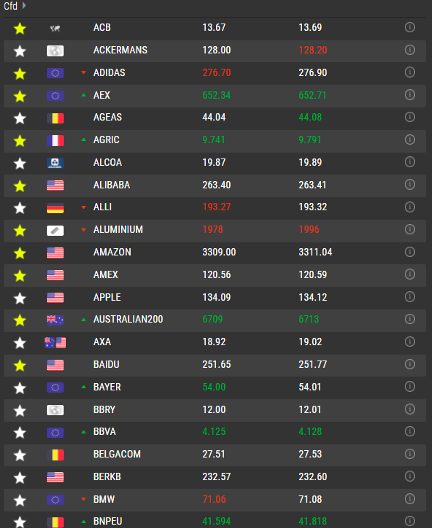
Stocks in leading markets continue to benefit from massive inflows and thanks to the Finetero offer, traders can get involved with thousands of CFDs, taking advantage of both rising and falling markets. Are ultra-fast order execution, an industry-leading trade engine, and powerful security guaranteed when trading with Finetero? Let’s explore its offering and see whether this an optimal place to trade stocks.

Finetero logo

Finetero Stocks CFDs offer

Few would have thought that a global pandemic will ultimately be positive for global stocks. However, that is exactly what’s happening as retail and institutional entities see financial assets as a hedge against the diminishing purchasing power of fiat currencies.

Because Finetero offers CFDs on stocks, traders working with this brand can take advantage of the market volatility, in both bullish or bearish trends, with up to 1:10 leverage, and flexible spreads. Advocating for full transparency, Finetero offers all the relevant information on its website or via the dedicated customer support team available every day.

Alibaba, Bayer, Bank of America, Johnson & Johnson, Apple, Amazon, Google, Netflix, BMW, Coca-Cola, Ferrari, and other brands can be traded at Finetero, given the diversity of the asset coverage.

Finetero stocks CFDs

Trade stocks CFDs with professional software

A complex asset list is not enough to ensure optimal trading conditions and the trading platform plays a key role in whether traders can benefit from liquidity or accurate pricing. Finetero works with multiple liquidity providers and offers support for the popular MetaTrader 4, a platform with 15+ years of reputation.

Retail CFD traders continue to view MT4 as a viable trading solution even for stocks, considering the advanced charting, support for EAs, price alerts, and other customization features. Downloadable for desktop, smartphone, or tablet, this platform can be used on any type of device.

Additionally, Finetero offers a WebTrader as the second platform of choice, to ensure broader diversity. Same as MT4, this is another reliable platform worth considering, thanks to its simple user interface, flexibility, and the wide array of tools built into it.

Main Trading Benefits

An online education center, variable spreads starting at 0.1 pips, 50% stop out levels, and many different features associated with the 5 trading account types currently available, are some of the main benefits for those deciding to trade stocks CFDs with Finetero.

The brand is constantly focused on providing added value via trading tools and features with proven efficiency. Trading Central resources, access to event room, or private trading sessions, are also part of the offer and can serve as a guide for retail traders looking to expand their market knowledge.

Finetero capabilities

Pros and Cons

  • Competitive trading conditions for stocks CFDs
  • Popular and reliable trading software
  • Online chat support for all customers


  • Few advanced educational resources
  • Customer support available in English

Finetero Conclusion

Favored by the increased interest in stock trading, Finetero is a brand providing a very interesting offer for retail traders in various countries around the world. Its commitment to ensuring optimal conditions is one of the many reasons why this is a reliable trading brand. Further support is granted via multiple resources, with the main goal of teaching traders how to make rules-based trading decisions and get involved in the markets professionally.

6 Risk Management Strategies for Online Traders

Risk management must always form part of your core trading strategy – whether you are a professional or amateur online trader. Protecting the money you make is the sure way to make a consistent profit and secure a long, successful trading career.

Risk is a critical prerequisite to successful online trading. Besides, without a risk management strategy, traders who generate substantial profits over months can lose it all in one or two bad trades. Also, using indicators alone to make a profit can only get you so far, especially if you fail to protect your positions.

So how do traders develop the best techniques to curb and mitigate the risks of the market? This article discusses six strategies you can use to protect your trading capital and profits.

1. Use the One-Percent Rule

Capital protection should be the priority of any trader, hence the use of the one-percent rule. It requires you not to risk over one percent of your trading capital in one trade. The conservative rule ensures that you never risk more money than necessary in one trade.

2. Formulate a Trading Plan

Before you start trading, you need to have a trading plan with a suitable risk-reward ratio (R: R). It’s a strategy to follow while entering or exiting a trade, and you should always research it thoroughly to ensure consistency and longevity. Always define trading parameters, money management, and entry-exit points.

3. Stop-Loss and Take-Profit

Stop-loss is a limit you set at a particular price point to cut your losses and close your position when a trade goes against your expectations. Take profit is when a trade favors you. Always predefine your stop-loss and take profit before placing any trade.

4. Position Sizing

It’s the size of a particular stock that you are trading. Position sizing is essential in managing risk. It helps if you base every stock position you take on a criterion that depends on your trading capital and the risk you take in each trade. The formula to use to find your ideal position is as follows:

  • Position Size = Risk Amount/ Stop Loss

The formula helps you manage and execute your trades.

5. Portfolio Diversification

Never put all your money in one instrument or stock. Instead, diversify your investments across market capitalization, industry sector, and geographic region. Apart from helping you manage risk, it also opens your investment opportunities.

6. Hedging

Hedging refers to a risk management strategy that allows you to avoid potential losses in risky situations. It enables you to create another trading position that protects (hedges) your current stock position against unknown market movements and risky scenarios. Hedging minimizes your risk of losing money and mitigates market volatility. It also involves derivatives like futures and options contracts.



The Bottom Line

There is no clear answer to how to avoid trading risk definitively, but using one or more of the strategies above can help you better manage and mitigate it. You could also turn to software solutions, such as the Aryatrading trading website, and use an online trading community’s collective intelligence to automate your risk management.

Tips on Where to Get Finance Homework Help

Everyone has to deal with finance at some point every day, whether you like it or not. However, when you go beyond calculating numbers to more challenging aspects of finance, you realize that you need an expert in finance. You can easily get a finance homework assistance at Domyhomework123.com.

Finance is a broad subject with different topics like investment management, financial reporting, financial evaluation, etc. Most students in college have at least one subject that has to do with finance. If you found yourself struggling with your finance assignment, you need help, and we would show you how to get it.

5 Tips on Where to Get Finance Homework Help

Getting help with your finance homework doesn’t take much. However, you should know that you need to help yourself first before you can get help. These tips would help you help yourself and show you how to get outside help.

1. Develop some interest

Yes, we know finance can be incredibly boring. But, if you want to do the homework with any success, you need to deal with your mindset. It might not become your favorite subject by any shot, but you can come to find it interesting.

How do you do it? You can start by applying finance theories and principles taught to real-life situations. For instance, you can use your budgeting knowledge to create a budget for your monthly grocery expenses. Activities like this make the subject more relatable and exciting.

2. Do it early

You would be tempted to leave the assignment till last. Don’t yield to that temptation. It is best to do tasks that you don’t have much interest in first. It would also help you finish the work without panicking or rushing. This tip ensures that you can put in your best efforts and score high.

3. Try it in pencil

You are bound to make mistakes, especially when you don’t understand the subject well. Doing the exercises in pencil means that you can erase it easily when you miss a step. You won’t need to cancel out all your work and restart like with a pen.

4. Ask your teacher

But it is an assignment! Yes, we understand that, but your teacher would be pleased to guide you through if you have attempted parts of it. Don’t expect your teacher to do the assignment for you, though. You can also get help from a neighbor, friend, or colleague who knows the subject better than you. You might even find that it’s only a little part of the homework that you missed.

5. Go online

There are answers to almost anything online today. If you don’t want to talk to your teacher or any other knowledgeable person near you, you can get help online. Whether you are looking for someone to explain the exercise to you or writing services like online dissertation writing services that would do it for you, online is a sure bet. However, you should ensure that the site or service you choose is trustworthy and has experts in the field.

Conclusion

Finance doesn’t have to remain the bane of your existence forever. You can not only get help for your finance homework. You might even come to love your finance subjects with time and these tips.

International Trade in 2021: Challenges and Opportunities

By Charles Hollis

What does 2021 hold in store for international trade? The trading environment presents a complex picture, with issues such as the COVID-19 pandemic, trade rivalry between the US and China, and increased demands for services being among the myriad variables. Charles Hollis of Falanx Assynt gives some perspective on what to look out for in the coming year.

The past few years have witnessed increasing geopolitical instability, posing greater uncertainty for international trade and investment. The advent of the global COVID-19 pandemic in 2020 has massively compounded the challenge to globalised economic networks and contributed to economic instability. The World Trade Organisation (WTO) projects a 9% decline in trade of goods for 2020.

One impact of the pandemic particularly damaging to emerging economies is volatility in the prices of raw materials as demand has declined in the face of lockdown. Hydrocarbon prices have been notably hard-hit, creating significant political problems for countries where hydrocarbons have been a major source of government revenue – the Gulf producers, such as Saudi Arabia and Iraq; Libya, Algeria and Russia; Nigeria and Angola in sub-Saharan Africa; and Venezuela in Latin America. The revenue shortfalls and resulting budget deficits will add to uncertainty, economic hardship and political instability in these economies. Popular protests have already broken out in states such as Iraq, Algeria and Russia as the effects of declining revenues exacerbate underlying political tensions.

One impact of the pandemic particularly damaging to emerging economies is volatility in the prices of raw materials as demand has declined in the face of lockdown.

Political instability will continue to increase globally, with greater impact on emerging markets. Lebanon, a previously stable state, is sinking into an ever-greater malaise. Ethiopia, for a number of years seen as one of Africa’s success stories, is looking an increasingly risky market, with conflict and disruptions posing major challenges for movement of goods.

The pandemic has led to a drastic rise in sovereign debt across emerging markets, which means that restructuring will be a priority for heavily indebted countries. However, many of these debts, particularly in Africa, are owed to Chinese entities who are proving more reluctant to participate in multilateral restructuring mechanisms, such as the IMF and Paris Club (which have proved to be the most effective channels for debt relief in the past), and consequently the necessary debt-relief programmes are more difficult to agree.

But the outlook for international trade and investment is not all negative. The political shift towards climate policy and a green recovery will create new jobs and trade opportunities in the longer term. The global trade in services is on the rise, with the WTO predicting that service exports will overtake goods trade exports in the next decade. This shift will benefit nations in the west, as the service industry is a key strength of many developed economies.

The new US administration is likely to be positive for international trade, as Biden will restore predictability to international relations, although bipartisan agreement in Congress on a robust approach towards China and Russia will ensure that tensions will persist at the “Great Power” level. Despite this, there remains a high likelihood that the US will seek rules-based outcomes rather than confrontation, in an effort to ease overall tensions.

The role of China generally, the increasing focus on its human rights record and its growing stand-off with the US and other states in the Asia region and beyond will pose a growing and generalised political risk that should colour the thinking of any business with an international presence and interests. This will be the overarching geopolitical dynamic over the coming decade. It is likely to have spill-over effects across secondary markets and on domestic public opinion, which may affect trade and investment opportunities for companies globally.

It is therefore critical for businesses to take account of political risks and ways to anticipate them, understand them and mitigate them. We at Falanx Assynt deliver this to global companies through our rigorous, reliable and highly respected predictive analysis of key emerging markets and critical global themes.

For more insight on Assynt’s intelligence predictions for this year, access our top five global forecasts for 2021.

About the Author

Charles Hollis

Charles Hollis is the managing director at Falanx Assynt Ltd, global intelligence consultancy and leading provider of geopolitical, strategic and business risk analysis. Charles spent fourteen years serving at home and overseas with the British Foreign and Commonwealth Office. He has led client projects on market entry, business intelligence and investigations, as well as political risk and government affairs issues.

EDITOR'S PICK OF THE WEEK

CFO's new mandate. CFO explaining the presentation

The Performance and Transformation Orchestrator: The CFO’s New Mandate in the Age of AI

By Terence Tse CFOs are evolving into AI-driven transformation orchestrators, balancing finance, technology, and strategy while upskilling teams, managing risks, and driving measurable business value. A key insight from this year’s AI for CFOs event, organized...

WISE DECISION MAKER GUIDE

POWER INFLUENCERS

Emerging Trends

The Future of Global Trade