Home Blog Page 91

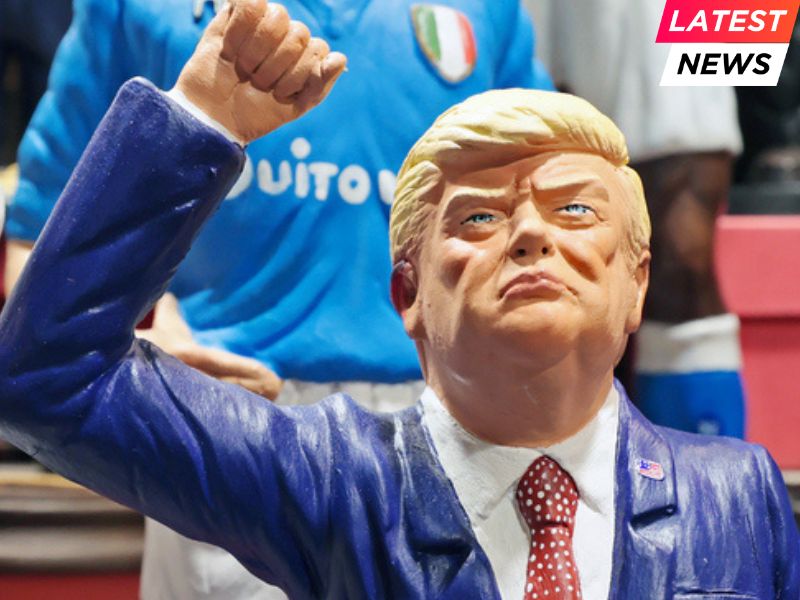
Trump’s Approval Drops as 100-Day Mark Approaches, Poll Finds

As President Donald Trump approaches his 100th day in office, a new CNN poll reveals a sharp decline in public approval, marking the lowest rating for any newly elected president at this stage since Dwight Eisenhower. Trump’s approval rating now stands at 41%, a drop of 4 points since March and a significant fall from his early days in office.

Among the American public, just 22% strongly approve of his leadership, the lowest such figure recorded during his tenure, while 45% express strong disapproval. Trump has seen approval fall particularly among women and Hispanic Americans, with ratings dropping by 7 points in both groups to 36% and 28%, respectively.

The poll shows a stark divide along partisan lines, with 86% of Republicans approving of the job Trump is doing, while 93% of Democrats disapprove. Independents, however, show significant disillusionment, with only 31% approving, a sharp decline from earlier in his presidency.

Trump’s handling of the federal government has also seen a decrease in approval, with only 42% now satisfied with his approach to managing the workforce, down 6 points from March. His confidence in appointing qualified officials has also dropped, with only 46% expressing faith in his ability to select the best candidates, an 8-point decrease since December.

Public concern over Trump’s disregard for government norms has grown. Derek Steinmetz, a Democrat from Wauwatosa, Wisconsin, expressed concern about Trump’s undermining of established governmental structures, stating that his actions were “much worse this time around.”

Trump’s foreign policy, particularly his approach to Russia’s invasion of Ukraine and his decision to end many foreign aid programs, has drawn significant criticism. The poll finds that 60% of Americans disapprove of his foreign affairs handling, while his approval rating in this area has dropped to 39%.

On immigration, Trump has seen a drop in approval, with only 45% of Americans now expressing approval, down from 51% in March. Similarly, confidence in his ability to manage the issue has decreased to 53%, down from 60% in December.

However, Trump has received a modestly positive response on gender identity issues, with 51% of Americans approving of his handling of matters related to gender and transgender rights. Despite this, his efforts to shape U.S. culture and history have been far less popular, with 64% of Americans considering his actions, such as his control over the Kennedy Center and changes to Smithsonian exhibits, inappropriate.

Vice President JD Vance, a close ally of Trump, mirrors the president’s low approval rating, with 58% of respondents disapproving of his performance. Both Trump and Vance have struggled to garner favorable opinions from the public, with only 40% expressing a positive view of the president and 34% holding a favorable opinion of Vance.

Public confidence in Trump’s ability to use presidential power responsibly has also waned, with just 46% of Americans expressing confidence in his decision-making, a drop of 8 points from December. Critics, like George Mastrodonato, a Trump voter, expressed frustration with Trump’s reliance on executive orders, arguing that many are ineffective and prone to court challenges.

As Trump’s second term progresses, Americans remain divided over whether his presidency will bring lasting change. While 52% believe his actions will fundamentally alter the country, only 12% think his second term will have no lasting impact. Opinions are also split on whether Trump has kept his campaign promises, with nearly half of Americans (48%) saying he’s doing a good job, though a slight majority (51%) disagrees.

Despite the public’s mixed views, Trump’s supporters continue to back him, with many, like Mastrodonato, feeling that he’s delivering on his promises, even if his methods differ from their preferences.

The CNN poll, conducted by SSRS from April 17-24 with 1,678 adult participants, has a margin of error of plus or minus 2.9 percentage points.

Related Readings:

trump

US Economy Faces Sharp Slowdown

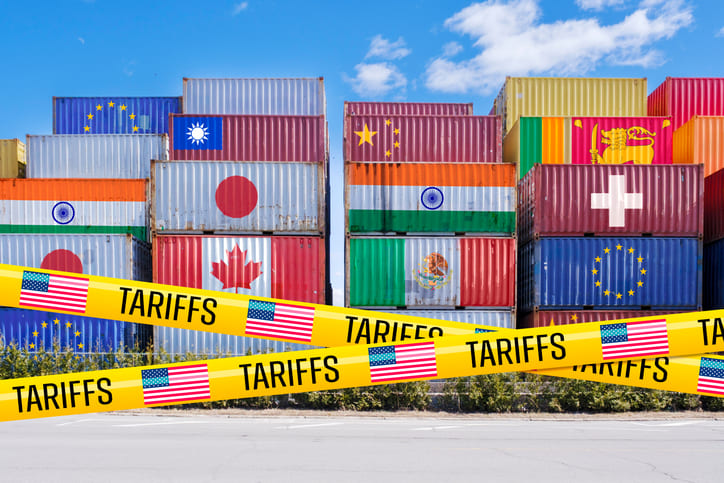
Shipping containers adorned with global flags, barricaded by US Tariffs tape

China’s Consumption Recovery – Amid the Highest US Tariffs in 100 Years

By Dan Steinbock             

Three rounds of US trade wars have dramatically penalized world economies, particularly the United States. While China cannot avoid the tariff impact, the economy is currently on track for recovery.

After the government’s stimulus measures started in September and intensified in November, their impact has kicked in. At the time, such signs were shot down by the US Council for Foreign Relations ranting on “Who killed the Chinese economy?” They were seconded by editors pledging “there is no end in sight to [China’s] problems.”

In reality, the rally in Chinese stocks since the start of the year led investors to predict that mainland shares will outperform their American peers. In March, CNBC reported quoting analysts, “valuations in China look attractive while concerns are growing about the state of the U.S. economy.”

Recently, these worries are escalating as a result of the US trade wars. In just three months, the bullish US markets have been undermined by the bullyish White House.          

Structural momentum                             

In the fourth quarter of 2024, China’s economic growth accelerated from 4.6% to 5.4% with annualized 5.0% last year. Before the US tariff wars, China’s economy showed increasing signs of stabilization. Hence, too, the International Monetary Fund’s (IMF) upgrade of China’s GDP growth.

In February, Chinese President Xi Jinping fostered new confidence in economic prospects by speaking at a high-level private sector symposium with China’s tech leaders. In the Government’s Work Report, Premier Li Qiang outlined growth targets, economic stability measures, and structural reforms raising investor, business and consumer confidence. These supportive measures are to be reinforced by moderately loose monetary policy.

It reflects the structural transformation of the Chinese economy away from exports and investment toward greater consumption and innovation.

Despite substantial external headwinds, the government set a 5% GDP growth target for 2025, signaling confidence in the economy’s resilience to offset the tariff wars. Concurrently, the fiscal deficit-to-GDP ratio was raised to 4% as policy authorities set a 2% consumer price index (CPI) inflation target.

Here’s the bottom line: The expansion of domestic demand is no longer just a cyclical effort. It is not simply a tool to respond to business cycles. It reflects the structural transformation of the Chinese economy away from exports and investment toward greater consumption and innovation.

Raising spending power 

Last year, consumer spending contributed nearly 45% to China’s economic growth, surpassing investment and exports. The objective is to raise spending power by increasing earnings and reducing financial burdens. Hence, the aim to create 12 million new jobs and keep unemployment at 5.5%. Such goals are vital to the recovery of consumption that’s premised on solid wage development and steadying property market. These initiatives have been coupled with special initiatives to boost consumption.

These efforts are on track. In the first quarter of the year, China’s economy grew by 5.4%. Remarkably, the signs of progress were broad. Industrial production growth climbed to 6.5% year-to-year, fueled by both external and domestic demand. Export growth accelerated to 5.8%, almost 2.5 times, largely due to exporters frontloading shipments prior to the tariff penalties.

State-sector spending continued to drive fixed asset investment growth, particularly in automobiles and equipment. In property markets, contraction continued to narrow, with developers pushing for the completion of unfinished homes. The improvement of liquidity conditions suggests Chinese households are more willing to spend, while companies are increasingly investing.

China’s broad push of “effective demand” is not just classic Keynesianism, however. There is another side to the story.

Toward cutting-edge innovation          

Technological innovation and emerging industries are critical to sustain rising demand. This is why China is increasingly pushing for rapid progress in “new quality productive forces”, especially artificial intelligence (AI).

For some time, Chinese government has fostered “industries of the future”, including embodied AI, 6G, quantum technology and biomanufacturing. The dramatic rise of DeepSeek without US-style billions of dollars in subsidies reflects the rapidly-changing new realities. In 2024, TikTok, CapCut and TEMU were already among the top-10 most popular apps worldwide.

These efforts remain on track, too. In the first quarter, technology progress prevailed with electric vehicles and 3D-printing equipment each soaring to 45% year-on-year, followed by industrial robotics.

In the past few quarters, the gains of the Chinese economy suggest that a virtuous circle of disruptive innovation and effective demand, with the government as the catalytic force, could be in the making. And that’s precisely what the Trump tariffs hope to undermine. The US administration’s record-high 145% tariffs on all Chinese imports seek to disrupt, undermine and reverse the recovery of China’s economy.

Self-destructive tariff wars         

The first round of the Trump tariffs involved mainly Canada, Mexico and China. From an economic standpoint, it was misguided and unwarranted: dumb.

It inflated the tariff impact by up to a factor of four, as shown by American Enterprise Institute.

The second round proved dumber. It began with “reciprocal tariffs”, which are unilateral, flawed as stated and mistakenly calculated. It inflated the tariff impact by up to a factor of four, as shown by American Enterprise Institute.

The ongoing third round couples these self-destructive policies with new retaliatory tariffs that have more in common with economic blackmail than international cooperation.

According to new data by the IMF, US tariffs could downgrade US growth by a whopping third to 1.8%, with a 40% probability of a recession. Europe’s largest economies and Japan will suffer even more, with growth almost halved. Global growth could plunge to 2.8%, which would penalize particularly the most vulnerable economies in the Global South.

Last week, both U.S. Treasury Secretary Scott Bessent and President Trump blinked in the trade war the White House started. But as the US has driven itself to the isolationist’s lonely corner in the international community, no rhetoric can offset the multi-trillion-dollar damage done to the world’s major trading economies and global economic prospects. That and the dramatic loss of credibility is the true achievement of President Trump’s first 100 days.

And yet, the Trump administration has been flirting with a possible fourth round, planning to use tariff negotiations to pressure U.S. partners to limit their dealings with China.

Such a scenario would no longer be just dumb. It could prove lethal to the ailing world economy.

A shorter version of the commentary was published by China Daily on April 28, 2025.

About the Author

Dr Dan SteinbockDr. Dan Steinbock is an internationally recognized strategist of the multipolar world and the founder of Difference Group. He has served at the India, China and America Institute (US), Shanghai Institutes for International Studies (China) and the EU Center (Singapore). For more, see https://www.differencegroup.net

How to Install Govee App on Windows 10 PC

Managing smart home appliances or gadgets can be a daunting task when you have multiple ones at your home but thanks to apps like Govee! They make managing everything at your fingertips and with user-friendly interface. Of course, there are many other similar apps that offer same solutions, but the UI of Govee makes it stand apart from the rest in the business. Let us check the features of the app and then we will see how you can install the Govee app on your Windows PC.

1. Connect New Devices in Seconds!

Be it a smart light, smart fan, or any other appliance that you wish to control with the help of Govee app, you can connect everything within a matter of seconds. It’s that quick in pairing new devices in the app.

2. Shortcuts Panel

The shortcuts panel is just like icing on the cake! When you’ve got multiple devices to manage and you want to prioritize certain functions in the app, the shortcuts panel will come to your rescue. You can customize it based on your preferences and this saves your time to manage multiple devices at once!

3. Interact with Govee Users

When you are keen to explore how others are using Govee app in their home, this platform gives you a chance to find out the same. You can find several posts from users within the app showcasing the home automation they are using at their home. One can take inspiration from those posts and can utilize those systems in their home for better utilization of the app.

4. Exclusive Benefits and Customer Support

Govee app has got an awesome customer support. If you’re stuck with any doubt or if some functions aren’t working as mentioned in the app, you can always consult the customer support executives to clarify your doubts. Moreover, you can also check the exclusive benefits in the app that can be only seen by you in the Govee app. Some of the exclusive products may include floor lamp, strip LED lights, and more that can be availed at bare minimum prices. That’s only possible with Govee app because the prices of these products are usually high on other marketplaces.

These are some of the finest features of Govee app. Now, let’s see how you can install govee desktop app on your Windows 10 PC or laptop.

How to Download Govee App for PC

The overall process is very simple and it only requires 3 things. They are Windows 10 with minimum of 4GB RAM & 20 GB space, an Android emulator, and a Google account. So, let’s get started!

  • Firstly, install Bluestacks Android emulator from its official website on your Windows 10 PC.
  • Next up, launch the emulator and set up your Google account within the emulator. If you don’t have an account, don’t worry, you can easily create it on the same page.
  • Once done, search for Govee app in the Google Play Store within the emulator and click on the install option to finish the process.

This completes the installation of Govee app on Windows 10 PC.

Living in a Castle in Italy: An Experience that Goes Beyond Luxury

In the collective imagination, castles are enchanted dwellings where kings, queens, princes and princesses lived their most fascinating and poignant stories. Many people love to visit them and learn about their history, and many dream bigger, aiming to buy one.

In Italy there are numerous castles, all with a unique charm and ready to welcome a new owner.

From the hills of Tuscany to the marvelous countryside of Umbria, from Emilia Romagna to Piedmont, buying one of the Italian castles for sale means embracing a unique lifestyle. Here, it’s not just about finding a house, but choosing a legacy, an exclusive refuge that can reflect your own vision of luxury and beauty.

How to choose the perfect castle

Buying a castle in Italy is therefore possible and also rather simple, if you rely on professionals in the sector. However, it is important to know what to pay attention to when choosing. The choice depends on various factors: location, architecture, state of conservation and possibility of customization.

The setting: the castle must reflect your lifestyle

A castle nestled in the rolling hills of Tuscany offers a refuge among vineyards and olive groves. If you love the sea, on the other hand, the castles of Liguria, Campania or Calabria will allow you to experience the essence of the Mediterranean with their secret gardens and panoramic terraces.

The location of the residence should be evaluated based on your needs and desires, without forgetting that the location also affects the practicality of daily life. A castle near a large city allows you to enjoy history without giving up modernity, more than one located in a rural area. On the contrary, a castle in an idyllic atmosphere offers more tranquility than one in busier areas.

Restore or buy ready to move in?

Some castles are perfectly restored and ready to move in. Others need a little work, giving you the opportunity to personalize every detail according to your taste.

If you choose to restore, you’ll have to collaborate with architects and experts in the restoration of historic buildings.

Life in a castle: everything at your fingertips

A castle is not just a house, it’s a whole world of its own. It can have large ballrooms, libraries full of ancient volumes, inner courtyards where you can sip a coffee in the shade of medieval columns. It can be the perfect place to host friends and family in a unique setting, where every corner speaks of history and beauty.

Many Italian castles boast private chapels, stables that can be transformed into wellness areas or panoramic swimming pools set among centuries-old walls.

From Italian gardens with perfectly sculpted hedges to parks with ancient trees, the outdoor space of a castle is an extension of its grandeur. Here you can create your own secret corner: a Renaissance-style lemon house, an infinity pool with a view of the hills or a labyrinth inspired by ancient noble villas.

For nature lovers, some properties include vineyards and olive groves, offering the possibility of producing your own wine or olive oil.

Owning a castle means having a safe haven far from prying eyes, in a place where luxury goes hand in hand with privacy.

Finally, many castles have private access with tree-lined driveways and inner courtyards that offer absolute intimacy, ideal for those looking for a corner of the world exclusively their own.

Tips for turning your castle into the perfect home

If you’ve already found your dream castle, you can move on to the next step. Now it’s time to transform it into a cozy and functional residence. Here are some ideas to help you do it.

Combine ancient and modern with elegance

Living in a castle doesn’t mean giving up technology. The interior can be updated with home automation systems, underfloor heating and intelligent lighting, without compromising the charm of the historic architecture.

In this way, you can create a perfect balance between past and present, ideal for a comfortable and classy residence.

Creating spaces for well-being

Old cellars can become exclusive private spas, towers can house yoga rooms with panoramic views and medieval cloisters can be transformed into relaxation areas surrounded by nature.

A castle offers endless possibilities for personalization, so just let your imagination run wild.

Respect and enhance history

Each castle has a unique history, and maintaining its authenticity is essential. Working with restoration experts to preserve original features – such as frescoes, exposed beams and antique terracotta floors – adds value and authenticity to the property.

A castle in Italy? A dream come true

Buying a castle in Italy is not just a real estate choice, but a life-changing experience, giving you the chance to wake up every day in a work of art, to live within walls steeped in history and to enjoy the timeless beauty of the Bel Paese.

Whether it’s a Tuscan manor with private vineyards, a medieval fortress with crenellated towers or a noble palace overlooking the sea, the perfect castle exists and is just waiting to be purchased.

How Insurance Companies Create Effective Flexible Work Environments

By Dr. Gleb Tsipursky

The insurance industry isn’t typically known for blazing trails in the future of work. Traditionally steeped in brick-and-mortar operations, it has often lagged behind more agile sectors when it comes to embracing distributed work models. But The Penn Mutual Life Insurance Company is proving to be a progressive company gaining great benefits from outcompeting its rivals. In a wide-ranging conversation with Liz Heitner, Chief Human Resources Officer at Penn Mutual, it became clear that a thoughtfully designed flexible work strategy can not only succeed in insurance—it can thrive.

Anchoring Culture in Flexibility

Penn Mutual didn’t stumble into remote work—it leaned into it with conviction. As Heitner explains, the company became a fully flexible, remote-first organization during the pandemic and has never looked back. Unlike many peers who made tentative forays into hybrid setups only to call employees back to headquarters, Penn Mutual committed fully to remote work across the lower 48 states.

This wasn’t just a reactive decision—it was a cultural affirmation. The organization prioritized employee well-being and trusted its workforce to deliver, rather than insisting on proximity. “We saw a huge improvement in productivity,” Heitner noted, attributing it to earlier tech investments and a collaborative spirit that seamlessly carried over to virtual settings.

The results are compelling. Employee engagement remained high, with the company making a genuine effort to gather feedback through a close partnership with  Great Place to Work. Most strikingly, Penn Mutual has managed to sidestep two of the biggest HR headaches of recent years: the Great Resignation and the pressure to escalate compensation in a fiercely competitive labor market. By offering a flexible environment and clear cultural expectations, they’ve attracted and retained top-tier talent from across the nation.

Managing the Emotional Undercurrents of Change

Transitioning to a fully remote structure isn’t without emotional weight—something many companies overlook. Penn Mutual recently decommissioned its former headquarters, a building filled with professional memories. Heitner spoke candidly about the grief some employees felt as the company moved on from its physical legacy.

Rather than brushing these feelings aside, the company made space for conversation. Leaders acknowledged the grief and helped employees focus on what truly defines Penn Mutual: relationships, not real estate. This level of emotional intelligence underscores the company’s approach to change—not just managing logistics, but guiding people through transformation.

Redefining Leadership for a Distributed Workforce

One of the most common reasons companies cite for reversing remote policies is that their managers struggle with it. Penn Mutual took a radically different approach: it invested deeply in leadership development tailored to remote work.

The company launched a targeted initiative called “Lead Stronger,” which equipped leaders with frameworks for effective communication, intentionality, and team engagement. Managers learned to structure meetings thoughtfully, listen more, and guide their teams with clarity and purpose. This wasn’t training for training’s sake—it was tied to concrete metrics and followed up with coaching and feedback loops. Leaders were expected not only to drive performance but also to cultivate a sense of connectedness across teams.

Heitner emphasized that Penn Mutual’s success is rooted in the quality of its leadership culture. Their leaders genuinely care about their people, and that ethos has enabled them to adapt, evolve, and ultimately excel in a virtual-first world.

Onboarding as a Team Sport

While many companies flounder when it comes to integrating new hires into remote settings, Penn Mutual has turned onboarding into an area of competitive strength. With retention rates for new hires remaining high, Heitner attributes this to a team-based approach to welcoming employees. The process is tailored, intentional, and monitored closely.

From day one, new hires are introduced to Penn Mutual’s culture, business priorities, and performance expectations. Workday implementation has streamlined the administrative side, but the real differentiator is the human element. Managers and teams work together to ensure each new hire feels welcomed, supported, and seen. Milestone celebrations at 30, 60, and 90 days bring fun into the experience while reinforcing cultural integration.

Continuous feedback from new hires drives improvements. This adaptive mindset ensures that onboarding evolves in real time, not just annually during reviews. In an industry known for long learning curves, this kind of onboarding support is more than a nice-to-have—it’s a strategic asset.

The Future of Flexible Work in Insurance

While many companies are tightening their grip on office mandates, Penn Mutual remains resolute in its vision. Heitner is clear: remote work isn’t right for every company, but for those with the right conditions—strong leadership, collaborative culture, and strategic tech investment—it can be a game-changer.

Penn Mutual is also looking ahead to emerging disruptors, especially Gen AI and asynchronous collaboration tools. Their recent implementation of Microsoft 365 is just one step in a broader journey of tech adoption designed to keep the company competitive and agile. “Organizations that don’t embrace these tools will fall behind,” Heitner warned, adding that a growth mindset and willingness to experiment will define the next wave of winners in the distributed work economy.

As the insurance industry navigates this turning point, Penn Mutual stands as a compelling example of what’s possible when flexible work is approached not as a contingency plan, but as a long-term, people-centered strategy. The company’s ability to maintain high performance, deepen employee engagement, and recruit top talent across the country offers a template not just for insurers, but for any organization reconsidering its future of work.

About the Author

Dr. Gleb TsipurskyDr. Gleb Tsipursky was named “Office Whisperer” by The New York Times for helping leaders overcome frustrations with hybrid work and Generative AI. He serves as the CEO of the future-of-work consultancy Disaster Avoidance Experts. Dr. Gleb wrote seven best-selling books, and his two most recent ones are Returning to the Office and Leading Hybrid and Remote Teams and ChatGPT for Leaders and Content Creators: Unlocking the Potential of Generative AI. His cutting-edge thought leadership was featured in over 650 articles and 550 interviews in Harvard Business Review, Inc. Magazine, USA Today, CBS News, Fox News, Time, Business Insider, Fortune, The New York Times, and elsewhere. His writing was translated into Chinese, Spanish, Russian, Polish, Korean, French, Vietnamese, German, and other languages. His expertise comes from over 20 years of consulting, coaching, and speaking and training for Fortune 500 companies from Aflac to Xerox. It also comes from over 15 years in academia as a behavioral scientist, with 8 years as a lecturer at UNC-Chapel Hill and 7 years as a professor at Ohio State. A proud Ukrainian American, Dr. Gleb lives in Columbus, Ohio.

The Shadow of Tariffs is Not Healthy for the Trans-Atlantic Wine Industry 

By Nathalie Spielmann 

The threat of 200 percent tariffs on European wine and Champagne imports by the US government has fuelled market instability and uncertainty. The consequences of tariffs are many, such as higher costs and fewer choices for consumers on both sides of the Atlantic as producers and distributors struggle to maintain supply chains and find new markets. 

The threat of tariffs looms over vineyards on both sides of the Atlantic.  

In March, the Trump Administration proposed a 200 percent tariff on imported wine and Champagne from Europe, intended as a retaliation against EU plans to impose a 50 percent tariff on American whiskey.  

While tariffs have been imposed by the United States, currently 10%, tension between the trading partners is contributing to higher market instability. The constant threat of having various levels of tariffs imposed, retracted, delayed, increased or decreased is also creating uncertainty.  

The US Administration aims to usher in a patriotic reset, fostering domestic wine production and reducing the prominence of foreign brands. However, fencing off the American market from European producers would be a blow, not a bolster, to the sector’s resilience, and not just for European wineries.  

The knock-on effect of tariffs will exacerbate the most critical wine industry crisis: people are drinking less wine. The most recent OIV State of the Industry 2024 report notes a decrease of 3.3% of wine consumption globally, confirming a market contraction. Tariffs will also create distribution challenges – it will be harder for consumers to find their favourite brands and at reasonable prices.  

Higher prices and fewer choices for consumers likely means that consumers will turn to other beverages, such as spirits, beer, or non-alcoholic drinks. As the NOLO (no- and low-alcohol) trend spreads among younger generations, the industry risks losing both current and potential consumers.  

Smaller producers will be hardest hit as revenue dries up because they lack the financial reserves and extensive customer bases to wait out the current US Administration. Yet, even large producers will struggle to keep their wines below the prices consumers are willing to pay for them. Another critical issue in the wine industry is surplus. Despite the 2024 harvest being the smallest overall since 1961, there remains a surplus of wine worldwide, owing to a build-up of excess for several years. Producers must find ways to sell their wines and tariffs will make that even harder than it is now. 

In hospitality and retail, businesses know that wine is not purchased in a vacuum. Importers, distributors, and restaurant wine directors rely on a diverse catalogue of bottles to stay afloat. Wine portfolios cover geographical regions, flavours, and price ranges. For example, a sharp spike in the cost of Champagne leaves the hospitality sector with three choices: shrug the price onto consumers, trim their wine lists, turn to domestic alternatives which may not offer the same level of quality or prestige. None of these options will be welcome.  

The impact on Europe  

High-end wine producers may be less affected if their market is primarily European. However, given that the US is the world’s largest wine consumer market and the least price-sensitive, even the most elite brands would likely face challenges. 

France and Italy are the largest European wine exporters to the US, and a 200 percent tariff on their products would cause a slump in orders. The French Association of Wine and Spirits Exporters (FEVS) estimates sales could drop by 20 percent if the tariffs are imposed. 

The fallout would push European producers to embark on a costly search for new markets. These costs will ultimately hit consumers’ wallets, though wine-drinkers in countries where people mostly purchase domestic wines, such as France, are less likely to be phased by a smaller number of options on supermarket shelves. Consumers in France may find rarer brands to be less expensive or more available. 

Unpredictability will remain a significant challenge, with Italian wine exports to the US stalling in late March due to uncertainty over possible new duties. Speaking at a conference in Rome, Italian Agriculture Minister Francesco Lollobrigida said the government was concerned about “further burden that will create more difficult conditions”. With an export market that is largely driven by more accessible and highly visible wines, such as Prosecco and Pinot Grigio della Venezia, Italian producers have much to fear with tariffs as their price positioning will likely be less appealing to US consumers.  

Implications for US producers  

Sailing would be no smoother for producers and consumers in the US. Even though California is the fourth largest wine producer in the world, legislation makes it difficult to transport wine across state borders.   

Difficulty reaching a large consumer market could worsen conditions for producers in states with an abundance of vineyards. An oversupply of grapes, called “grape glut”, has forced some growers in California to start ripping out vines. At the same time, natural disasters such as wildfires in recent years have damaged some producers’ inventories and tainted fruit.  

Distribution networks may come under immense strain as restaurants and retailers digest the higher cost of imported wine. If distributors begin to fold under financial pressure, vital pipelines will start disappearing for US producers trying to get their products onto shelves and wine menus. 

Of course, short-term scarcity may create more interest and stimulate sales from lesser known wine-producing states across the US to satisfy the country’s appetite for wine. However, this will not be a quick or easy process. Producers need to cultivate a large enough quantity of grapes, and new plantations require three years before they are able to start producing. During this time, consumer demand may start to decline, especially among young Americans who already trend towards drinking less wine.  

As the demand for wine shrinks, tariffs would be an unnecessary blow to the wine industry on both sides of the Atlantic. The hit to producers’ pipelines, distributors’ supplies, and consumers’ pockets would not be a welcome one. 

It is encouraging to see that the US and EU have so far held off on bringing extreme tariffs into effect. Hopefully, this opens a pathway for European and American products to continue competing healthily through excellence rather than tariffs.

About the Author  

Nathalie SpielmannNathalie Spielmann is a Full Professor of Marketing and Director of the MSc Wine & Gastronomy programme at NEOMA Business School in France. She is a widely published researcher in international peer-reviewed journals, and is regularly invited to share her expertise at professional wine and tourism events, including wine exhibitions, technical conferences, and seminars.  

“Trust, But Verify”: Why This Old Mantra Is a New Imperative in the Deepfake Age 

By Matthew Geyman

You trust your team. But in the age of deepfakes, trust alone isn’t enough. With AI-driven scams growing more sophisticated, your strongest defence is a vigilant culture. In this urgent piece, Matthew Geyman reveals why “trust, but verify” is more relevant than ever—and how to embed it into your organisation. 

When Gallagher Re’s CEO recently revealed that the global insurance broker had conducted a simulated $10 million deepfake scam internally to test employee vigilance, it was a striking reminder that we’re now locked in a cyber arms race – and culture is our first line of defence. 

We’ve moved beyond phishing emails and suspicious attachments. The age of AI-generated deepfakes is here, and it’s escalating with a speed that should give every organisation pause. In 2023, around 500,000 deepfake videos were circulating online. This year, that number is expected to surpass 8 million. Financial services firms – guardians of money, trust, and identity – have become prime targets. 

These synthetic frauds are no longer crude or cartoonish. We’re seeing real-time video deepfakes that can mimic voices, faces, and even behaviours with unsettling accuracy. For cybercriminals, the playbook is simple: impersonate a trusted executive and authorise a high-value transfer. For businesses, the question is far more complex: how do you train your people to tell the difference between what’s real and what’s AI-generated illusion? 

An Evolving Threat That Starts with Human Error 

One of the most powerful defences against deepfakes isn’t just technological – it’s behavioural. The Gallagher Re simulation wasn’t just a gimmick; it was an exercise in instilling a security-conscious mindset. The aim isn’t to make people paranoid, but confident enough to challenge something that doesn’t feel quite right. That’s a cultural shift. 

There’s an old-fashioned but highly effective control many organisations should revisit: the two-person rule. Before the days of multi-factor authentication (MFA), it was common practice that no single person could authorise a large transaction alone. It’s a principle worth resurrecting. Call it “MFA for humans” – one initiates the request, another approves it. Even AI can struggle to simulate an entire conversation chain with multiple people on the fly. 

Spotting the Uncanny: Training for Deepfake Detection 

Teaching teams how to detect deepfakes is another pillar of resilience. While the technology is evolving rapidly, there are still telltale signs: 

  • Ask the unexpected: In a video call, asking someone to wave their hand across their face at different speeds can reveal rendering artefacts. Current algorithms often struggle to keep up with motion.
  • Side profile checks: Prompt the person to turn their head quickly from side to side, up and down. Many deepfake systems can’t convincingly simulate this from multiple angles.
  • Repeat the call: Suggest dropping and redialling. A genuine caller won’t object. A scammer relying on pre-rendered video might not return.

But most importantly, remove the stigma from calling out suspicions. Organisational culture needs to empower employees to say, “Something doesn’t feel right,” without fear of embarrassment or repercussions. The cost of silence is far greater. 

Innovation Must Be Matched with Collaboration 

At a national level, the work being done by the Accelerated Capability Environment (ACE), the Home Office, and partners like the Alan Turing Institute is showing real promise. Initiatives like the Deepfake Detection Challenge – where cross-sector teams created, tested, and benchmarked AI models against synthetic content – demonstrate the vital role of public-private partnerships. These efforts don’t just produce tools; they create repeatable methodologies and gold-standard datasets that are essential for keeping up with the pace of AI-enabled threats. 

And while much of this effort rightly targets areas like child exploitation and disinformation, the spillover benefits for fraud detection in financial services are significant. Better models, curated data, and forensic detection tools are the building blocks of tomorrow’s cyber defences. 

Culture is the Firewall 

Ultimately, technology alone won’t save us. Yes, we need better detection tools, smarter AI, and stronger controls – but without a security-first culture, it all crumbles. We need workplaces where curiosity and caution are not only allowed, but expected. 

In the fight against deepfakes, “Trust, but verify” is more than a Cold War relic. It’s a principle for the digital age – and one that every financial services firm should be embedding in their people, their processes, and their technology stack. 

The arms race is on. And it’s time we made sure every employee is trained, empowered, and ready to respond – not with fear, but with vigilance.

About the Author 

Matthew GeymanMatthew Geyman began his career working in the London insurance market as an IT manager for an underwriting firm. He saw a gap in the market for innovative IT with integrity and in 1996 founded Intersys. The business began as a one-man IT department, with Matthew zipping around the City of London on a motorbike. Nearly 30 years on, Intersys has grown into an award-winning, security-focused Managed Service Provider with more than 40 staff and over 140 live clients serving the UK and beyond.

Beyond Finance: The Potential of Blockchain for Supply Chains in Middle East and Africa 

By Anthon Garcia and Emmy Borromeo

Blockchain is usually associated with cryptocurrency. However, it’s more than just about digital money. In the Middle East and Africa, this technology has the potential to redefine supply chains, substantially improving authenticity, traceability, and efficiency. Blockchain-powered platforms are emerging to facilitate this welcome development. 

In 2017, “blockchain” was crowned Buzzword of the Year by supply chain publication Supply Chain Dive. At the time, blockchain had taken over corporate boardrooms, where stakeholders discussed how this emerging technology could enhance their strategies.   

Industry reports abounded. Many companies were eager to explore its potential.  

Fast forward to today, blockchain has become more than just a mere buzzword. Globally, the blockchain market is expected to hit $248.9 billion by 2029. This is according to a 2024 industry report from Markets and Markets. From last year till 2029, the market is poised to achieve a 65.5 compound annual growth rate.  

From being a potential driver of growth — especially in terms of transparency, security, and operational efficiency — it has emerged as a key component of decentralised finance, occupying an indelibly important spot in the financial world. However, its applications are well beyond that. 

Not just about digital money 

When we think of blockchain, we typically associate it with cryptocurrency. After all, when it was officially introduced in 2009, its first application was the Bitcoin cryptocurrency. 

Nonetheless, blockchain is more than just about digital money. 

At its core, this technology is a decentralised, secure digital ledger that records transactions in a way that can’t be altered or tampered with. Because of its inherent security, it has become widely linked with financial applications like banking and payments.   

Today, where many industries are digitising outdated systems in favour of efficiency, blockchain is playing a pivotal role that goes beyond financial applications.  

For Angus O’Callaghan, Head of Trading and Markets at XDC Network, global trade and supply chains are industries that reap substantial benefits from this technology. In such industries, companies still heavily rely on physical documents to process shipments. It won’t be unusual for huge companies, in particular, to have an inch-thick stack of documents for each container at every port. 

As a result, delays, errors, and fraud risks are rampant. 

“Blockchain solves that,” Angus shares in an interview for The European Business Review. “When you get there, it’s already verified. You can see all the signatures. You can see everyone that’s approved for this container to arrive, for example,” he adds. 

Companies like XDC Network — a hybrid blockchain designed for enterprise use — offer scalability, interoperability, and military-grade security. With features like high transaction speeds, low costs, and compliance with global standards such as ISO 20022 (a financial messaging standard for seamless integration with banking systems) and MLETR (Model Law on Electronic Transferable Records, which enables the legal recognition of digital trade documents), these networks help drive blockchain adoption across various industries beyond finance. 

Reducing errors, fighting counterfeits  

With blockchain redefining how logistics operate, many other industries stand to benefit. One such example is the global pharmaceutical industry. 

For companies like Chekkit, a leading blockchain-powered authentication and traceability platform for FMCG and pharmaceuticals in Africa, the Middle East and Africa (MEA) region presents opportunities for blockchain adoption. The region, with Saudi Arabia leading the pack, has been embracing blockchain and other advanced technology to enhance transparency, security, and efficiency across various sectors, including healthcare and pharmaceutics.   

“We have the ambition to scale the use of our patented cryptographic GS1 product codes and AI-powered embedded API across the developing region and into the Middle East following the prevailing number of deaths caused by counterfeits and substandard drugs and food in the region,” Dare Odumade shares in an email interview.  

With GS1 product codes — global standards for uniquely identifying and tracking products — combined with blockchain and cryptographic verification, pharmaceutical supply chains in the MEA region can substantially improve.   

“[The World Health Organisation] reports an average of 500,000 people die every year in Africa as a result of this issue. And this issue is a direct product of supply chain fragmentation, especially in the healthcare sector, where the growth of digital healthcare solutions remains siloed. However, there is hope, as leading governments in Africa and the Middle East have begun mandating product serialisation and traceability for drugs and food following global standards (GS1). This is a game-changer, enforcing product and supply chain data to be shared with local FDAs in real time,” Dare adds.  

Egypt, Algeria, Ethiopia, and recently Nigeria have adopted this policy, while the Gulf FDA has also approved it, with Saudi Arabia leading since 2017. Full adoption in the country is expected by this year, Dare states.   

In Saudi Arabia, this push for serialisation has already led to widespread adoption, with thousands of pharmacies, wholesalers, and suppliers actively leveraging product serial codes for inventory management, shipping, and receiving.  

All this signals a more mature opportunity for utilising blockchain-driven solutions.  

An expanding role 

The expanding role of blockchain cannot be ignored. As discussed, this technology is now considered a critical, game-changing tool for securing supply chain data integrity — especially in regions like MEA where traditional systems continue to pose verification challenges.  

Many consumers, wholesalers, and even customs officials struggle to validate the true origin of products, as they often rely on hard-copy documents that can be easily manipulated.  

“Blockchain today can be perceived as a competitive advantage but with rapid adoption in government and private industry operations, there will be a market pull increasing the demand for standardisation of supply chain operation data sharing and physical product (asset) digitisation,” Dare remarks, further noting the growing importance of deploying top-tier security.  

Meanwhile, for Angus, blockchain’s potential is poised to expand well beyond finance and supply chains. In an interview, he mentions that insurance is another industry that deals with large volumes of documents. As with other sectors with this issue, it can be costly, slow, and prone to errors. With blockchain, insurance companies can benefit from accessing authentic data instantly via digitally verified records.  

Additionally, blockchain-based platforms can also help address inefficiencies in raising capital, especially for small and mid-sized enterprises (SMEs). 

“Whether you’re looking at multibillion-dollar companies, startups, or SMEs, the process of raising capital is inefficient. And that inefficiency exists on both sides. Companies struggle to access funding, while investors don’t have enough opportunities to invest and gain exposure to businesses like these,” Angus notes.  

“This process is generally run by banks, and they will continue to control it. But there are a lot of platforms coming out now that will give retail and smaller investors access to these opportunities — something they haven’t had to date. It looks like an excellent technology,” he says. 

But whether it’s about blockchain’s role in the supply chain, insurance, or capital access, one thing remains: the digitisation of physical assets is on the rise. As Dare concludes, “As demand for physical asset digitisation into on-chain assets continues to rise, so too will the growth and evolution of blockchain use in non-financial applications.”

About the Authors  

Anthon GarciaAnthon Garciais an award-winning journalist and book editor based in Dubai, United Arab Emirates. He currently writes freelance for Economy Middle East, Energy and Utilities, Inc. Arabia and Cityscape Intelligence. He graduated with an AB English degree from the University of the Philippines and an MBA from Western Global University. 

Emmy-BorromeoEmmy Borromeo is a writer and digital content strategist based in the Philippines. With a background in Economics from the University of the Philippines, she has written freelance for publications across the Middle East and the UK, covering business, economy, technology, and energy. 

How to Evaluate Pen Test Pricing

More companies are investing in penetration testing than ever. Whether it’s for regulatory compliance or for preventing breaches by finding vulnerabilities in exposed applications before cybercriminals do, penetration testing is a fantastic security process.

However, the penetration testing services market is still highly variable. A seemingly similar pen test could cost £ or £££+, so what’s the difference?

Some pen testing vendors might quote tens of thousands of pounds or euros for a web application pen test; others might ask for a few hundred pounds or euros for what appears to be the same result, i.e., a “pen test report.”

With regulations like DORA making some level of testing mandatory (e.g., threat-led penetration testing) for many organisations, buyers need more clarity about what they are getting.

To help security and IT teams make more informed buying decisions when it comes to offensive security, here’s what you need to know about how penetration test pricing really works.

Pen Test Pricing Can Be Broken Down Into 3 “Levels”

If we were to give just one piece of advice, it would be to look for a test that is correctly scoped.

Scoping is the process a testing service provider uses to decide the right amount of time and correct methodology to test your environment thoroughly.

Fair test pricing reflects realistic scoping.

Here’s what to watch out for in today’s pen testing market to make sure you get a fair pen test price that is properly scoped.

1. A “too good to be true” pen test price (underscoped)

A pen test that costs a few hundred euros/pounds is unlikely to be high quality – or safe.

A pen test at this price likely means that the vendor is cutting corners somewhere, whether that’s not having proper insurance in case something goes wrong, not giving you enough time, or even that the testers are not properly qualified.

At this price, there are serious risks for companies not included in the price.

Any company that wants to conduct a pen test also needs to make sure that the penetration test they buy is not a vulnerability scan (some less reputable firms will sell vulnerability scans as pen tests).

That’s why it is extremely important to query the pen testing provider about what testing methodologies will be used during the test. A pen test will likely include a vulnerability scan, but should not solely consist of one.

Another reason a pen test cost might be very low, even if the vendor is a high-quality provider and all seems to be above board, is that the project may not have been correctly scoped.

It’s possible that a vendor hasn’t taken your unique situation into consideration, or you’re getting a standardised time-bound range (aka “one-way scoping”) that is incorrect in terms of what you need to test.

2. A fair price pen test

The rough price of a quality pen test from trained testers backed by insurance and quality processes starts at around £1200 per day.

However, even if the price seems to check out, you still need to do some research.

We recommend that all companies considering a pen testing provider ask them for their:

  • Insurance in case of damage to their environment.
  • Methodologies, because even reputable providers can sometimes position a vulnerability scan as a pen test.
  • Qualifications and accreditations. CREST is the gold standard.
  • Speciality in offensive security.

When it comes to scoping, make sure the statement of work is tailored and details the vendor’s approach, i.e., we will be testing for x, y, and z in this environment.

3. Too expensive (overscoped)

It is possible to pay too much for a pen test, even if it is high-quality. However, it’s also surprisingly easy to avoid getting ripped off when entering into a contract with a pen test provider.

Typically, when you get a range of quotes, one might be considerably higher than the rest (possibly double what others are).

However, this doesn’t necessarily mean that the company giving you a high quote for a pen test is trying to take advantage of you or is overcharging for their time. It could just mean that they have overscoped your situation.

If the day rate quoted is fair (i.e., roughly in line with other quotes), but the total engagement price is much higher, the company giving the quote may have overestimated the time needed for your project.

How to Guarantee a Fair Price Pen Test

The best way to get a fair price for a pen test is to be involved in the scoping process, i.e., going back and forth with the pen testing provider to determine exactly what will be tested, how it will be tested, and for how long.

This also helps you vet the pen testing provider. As a general rule, the more interested a company is in scoping your test correctly, the better.

Have a conversation with the people who will be providing the pen testing service to get an understanding of what they will be testing and how they will be testing. Does their methodology cover your needs and give you the assurance you’re looking to get out of the penetration test?

If there are zero scoping questions, the engagement will probably be overscoped by default.

Trump’s Trade Tactics Risk Damaging America’s Global Image, Warns Citadel Chief

Citadel founder and Republican megadonor Ken Griffin issued a rare rebuke of President Donald Trump’s trade policies this week, warning that the escalating tariff war is eroding America’s credibility and tarnishing its global image.

Speaking at the Semafor World Economy Summit in Washington, Griffin described the United States not just as a country, but as a global symbol of trust, stability, and aspiration. “The U.S. was more than a nation—it was a brand,” Griffin said. “That brand represented our culture, economic strength, and military might. We’re chipping away at that now.”

Griffin, whose hedge fund is among the world’s largest, noted growing apprehension in financial markets, particularly over U.S. Treasury securities. These instruments, once seen as the bedrock of global financial security, are now under scrutiny due to concerns over America’s unpredictability in trade.

“Think of your favorite product—you choose it because you trust the brand,” Griffin said. “U.S. Treasurys used to be that gold-standard brand in global finance. That trust is fading.”

Traditionally, Treasury bonds act as a safe harbor during market turmoil. But recent months have shown a different pattern. Investors, spooked by Trump’s aggressive trade stance, have pulled back from American assets altogether. The U.S. dollar hit a three-year low this week, oil prices fell, and equities have lost nearly $7 trillion in value since mid-February, according to S&P Dow Jones Indices.

JPMorgan Chase CEO Jamie Dimon echoed Griffin’s sentiments in his annual letter to shareholders. Dimon warned that America’s unique role in the world—rooted in economic power, military alliances, and moral leadership—could be compromised if the U.S. chooses isolation over cooperation. “America First is okay,” Dimon wrote, “as long as it doesn’t mean America alone.”

Griffin drew parallels between the nation’s reputation and high-end brands, comparing the U.S. to a designer label whose quality is suddenly in question. “Rebuilding trust takes time—sometimes a lifetime,” he said.

The message to the White House was clear: Protect the integrity of America’s standing in the world. “Leadership means acting in ways that reinforce confidence, not corrode it,” Griffin stressed. “Once a brand loses its shine, the road to restoration is long and uncertain.”

Related Readings:

china-US tradewar

Trade Disputes Between Countries Expressed in the Chess

China Trade War

EDITOR'S PICK OF THE WEEK

CFO's new mandate. CFO explaining the presentation

The Performance and Transformation Orchestrator: The CFO’s New Mandate in the Age of AI

By Terence Tse CFOs are evolving into AI-driven transformation orchestrators, balancing finance, technology, and strategy while upskilling teams, managing risks, and driving measurable business value. A key insight from this year’s AI for CFOs event, organized...

WISE DECISION MAKER GUIDE

POWER INFLUENCERS

Emerging Trends

The Future of Global Trade