Home Blog Page 879

How Blockchain can Transform Enterprise Business?

Blockchain

The adoption of blockchain across large organizations is gaining steam, and so are enterprise blockchain solutions. Although BTC and other cryptocurrencies are better known in public, other blockchain solution providers are also gaining strength, and their applications are becoming regularly adopted depending on the vertical they serve.

For many large enterprises IBM blockchain platform, especially Hyperledger Fabric, is the obvious choice. Unlike other operators, the regular onslaught of the financial crisis, especially in the banking sector, has meant a few tricky years for many banks. The permissioned Hyperledger Fabric means only those stakeholders within business are allowed, and the blockchain is not open to the public.  

But, the challenges of more regulations, new competition from emerging sectors like DeFi, and advanced technologies are pushing banks to innovate in how they do business. Everyone from legacy financial institutions to a newer named banks innovation and openness is the only ticket. 

The same is valid for insurance companies increasingly searching for ways to grapple with the same goal: customer loyalty. While the others in financial services have held onto their legacy methods increasingly, their customers have moved to simpler subscription-based models that require a fundamentally different approach. 

As the cryptocurrency world has pushed traditional financial institutions with alternatives like Decentralized Finance (DeFi) and tokenization of assets through Security Token Offering, financial institutions have supercharged their innovation with concepts like Visa Tokenization by payment processors.

One of the areas that have grown exponentially is digital payments which have seen a massive rise in popularity. Added to this is the impact of the Covid-19 pandemic. COVID-19 is responsible for an even more considerable digital shift within societies across the globe. The current global pandemic has radically changed the way we live, work, communicate, and, not least, shop. During the pandemic, the demand for digital payments pushes people to use digital payments more often to obtain the goods and services they need the most. This, in turn, is also causing an uptick in online fraud.

According to a recent study by Juniper Research, titled “Online payment fraud: emerging threats, segment analysis & market forecasts 2020-2024″, has predicted that businesses in sectors like eCommerce, ticketing, funds transfer, and online banking services may lose as much as $200 billion due to online payment fraud in the next four years, between 2020 and 2024 if no measures are taken.”

With innovation in tokenization, credit card processing services such as Visa have tokenized its branded payment cards. Starting in 2014, the credit card processor launched its Visa Token Service. Since that time, Visa has registered more than 150 global token requestors. These include major industry sectors like mobile and wearables manufacturers, issuer wallets, online merchants, and retailers. The skyrocketing adoptions mean Visa will have its own branded network with retailers that process their branded payment cards.

The Visa Token Service (VTS), which was introduced in 2014, is a novel security technology that replaces sensitive account information, the ill-fated CC number, with a unique digital identifier called a token. This enables payment processing without exposing the account details. The VTS has proven very effective in minimizing digital fraud globally, resulting in eCommerce transactions that are more secure for different types of digital transactions. The VTS is responsible for reducing online fraud by a whopping 26% compared to traditional online card transactions.

Visa Inc. recently announced that its VTS token merchants had processed combined eCommerce payments totaling about $1 trillion. This is a significant milestone given the Juniper research prediction of online payment fraud reading $200 billion in its efforts to make digital payments more secure and trouble-free.

To further enhance its security, the Visa Token Service is offering this service to new participants who can act as credential-on-file (COF) token requesters to help make digital payments more secure. As of May 2020, Visa had announced the addition of 28 new partners, including Aurus, PayVision, Yandex.Money, and many others.

In conclusion, the recent efforts by large enterprise solutions providers to include blockchain in their technology stack to provide more secure, streamlined, and innovative solutions are bearing fruit resulting in finding new ways to address problems that have long plagued certain sectors.

How To Hire The Best Probate Attorney in California

Probate Lawyer

When a loved one dies, they usually leave behind a lot of memories for us to cherish. They also leave behind their estate, including cash, bank accounts, properties, and other assets they possess. If you have to deal with the probate process and are clueless on how to do it, then it is time to seek assistance from a probate attorney.

What is Probate?

According to a top South California probate attorney, probate is a complicated and frequently stressful legal process to distribute the estate left behind by a loved one. It requires a clear understanding of legal regulations, multiple court appearances, preparing and filling out detailed forms, and serving notices to heirs and the local newspapers.

Why Hire a Probate Attorney?

You may be wondering if it is possible to go through the probate process without hiring a probate attorney, and the answer is yes. There are situations where the help of a probate attorney is not necessary, but for someone without any legal competency about estates, it can be frustrating and may feel like a legal nightmare. 

The probate process is time-consuming and may last from 8 to 12 months. If you make any mistakes in the forms or incorrectly filed some paperwork, it will further delay the proceedings. It is ideal to seek the help of a professional probate lawyer to handle the affairs of the estate.

Situations Where Probate Lawyers are Necessary

As mentioned above, the help of a probate attorney may not be necessary, depending on the situation. The general rule of thumb is that if the estate is not particularly large, it doesn’t need the expertise of a probate lawyer. Another situation where probate lawyers are not necessary is if there are no threats or contests on the will.

On the other hand, there are many situations where probate attorneys are necessary. Here are some of them:

  • If the decedent did not make a will
  • If the decedent made a will
  • If there are problems or issues with the existing will
  • To transfer ownership of the decedent’s properties to the heirs if solely owned by the decedent.
  • Probate disputes 
  • Financial disputes, unfinished contracts, and debts
  • If the estate is left to a minor who needs guardianship

Benefits of Hiring a Probate Attorney

Here are some of the advantages of hiring a probate attorney:

1. The probate process will finish faster with the help of a probate lawyer.

The whole probate process can be delayed by years if there are errors in the preparation and filling out of the forms. The executor should give proper notice to all the parties involved, obtain signatures of heirs, and to creditors if there are any.

2. A probate attorney will lessen the possibility of disputes.

If done by a probate professional, the possibility of disputes, whether from the family or debtors, is greatly diminished.

3. Hiring a probate attorney will relieve some stress from the family.

The bereaved family will have more time to focus and deal with their loss rather than dedicating a lot of time to the probate process.

4. It will save time for the executor.

Learning the law and general court procedures, all the while generating inventories, reports, and accounting that the courts will accept, is just too hard to handle for an average person.

5. Probate attorney decreases the risk of personal liability for the executor.

Suppose you make any mistakes in generating reports, errors in paying the creditors and heirs, and failing to get court authority before taking any legal actions. In that case, you may be held liable for those mistakes.

Hiring a probate attorney could be the best thing you can do today. Consult a trusted probate attorney in California today to know your options.

Personal Bankruptcy in Canada: What Are Your Alternatives?

Personal Bankruptcy

We have all heard the term “bankruptcy.” What does it mean to you? Although bankruptcy is an effective insolvency solution, for some it is an embarrassing concept.

There are also many misconceptions about bankruptcy. Although we may imagine that a person who files for bankruptcy is left with absolutely nothing, this is far from true. Bankruptcy legislation in Canada ensures that bankruptcy is a practical insolvency solution that provides a fresh financial start. Bankruptcy in Canada is not designed to be punitive.

It may surprise you that 32,880 Canadian consumers filed for personal bankruptcy in 2020, and another 63,578 filed consumer proposals. Consumer debt problems are not rare! 

Coming to Terms: Signs of Financial Crisis

Some people cope with increasingly serious consumer debt for years before they realize they need to take action. The earlier you realize that the problem will not solve itself, the more options you will have for dealing with your debt. Here are the top three warning signs that your debts may be getting ahead of you.

1. Using credit cards for the essentials. Although many “store cards” tempt us with bonus points for everyday purchases, it can be a sign of financial stress if you use credit for essentials such as groceries and gas, and don’t pay off your balances each month. Those types of expenses will keep on coming – so your debt will keep on growing.

2. Paying one credit source with another (robbing Peter to pay Paul). Have you ever taken a cash advance or funds transfer from one credit card in order to pay another credit card? If you do this regularly, it’s a recipe for skyrocketing debt. It’s also a sign that you are not able to keep up with your financial obligations – you may, in fact, already be insolvent.

3. Making late payments. This point may seem obvious, but you may still be telling yourself, “it’s just this once.” If you habitually pay late, not only does it damage your credit rating, but it increases your stress.

Alternatives to Bankruptcy

Filing for bankruptcy is a big step, but it may be necessary if there is no other way to address your debts and make a new start. Personal bankruptcy help in Canada is available via a Licensed Insolvency Trustee, or LIT (the only professional authorized in Canada to file bankruptcies and consumer proposals). The LIT  prepares the bankruptcy paperwork and files it on your behalf. Rest assured that the LIT will work with you for the best resolution – that’s his or her job!

The LIT will not suggest bankruptcy unless it is among the best options for you. At your first meeting (which is confidential and free of charge), the LIT will gather information from you and suggest the most suitable options. Here are two alternatives to bankruptcy that might come up in your discussion.

Consumer Proposal

Consumer proposal is not bankruptcy, but it does clear most or all of your unsecured debts (e.g., credit cards, store cards, payday loans). Unlike bankruptcy, with a consumer proposal you make regular (usually monthly) payments for up to five years – so a consumer proposal is most suitable for debtors with a regular income. In most cases, you pay back only a portion of the money owed, but your unsecured debts are fully extinguished when you receive your Certificate of Completion.

A Licensed Insolvency Trustee works with you to present an attractive proposal to your creditors, taking into account your income and household expenses. Most consumer proposals are accepted by the creditors, as they receive more money with consumer proposals than they do if their customers file for bankruptcy.

Debt Consolidation

Some banks offer their customers loans for the specific purpose of “consolidating” their debts. This means that you use the funds advanced in the loan to pay off all your credit accounts, and are left with just one monthly payment, probably at lower interest, to pay to the bank.

It can be challenging to qualify for a debt consolidation loan. If you’ve had late payments, your credit rating may already be damaged. Also, such an arrangement only “works” if you don’t run up the balances in your credit cards again. However, a debt consolidation loan can be very effective in simplifying your payment schedule.

Learn More About How to Resolve Your Debt Problems Today (and Sleep Better Tonight)

For personal bankruptcy help in Canada and more information on bankruptcy alternatives, contact a Licensed Insolvency Trustee for a free initial consultation. The Trustee is an expert on debt resolution and will help you see your way forward to a better financial future. If you’re like most consumers who’ve spoken with a Trustee, you’ll ask yourself one thing: “why didn’t I do this sooner?” 

6 Tips To Win A Personal Injury Case And Maximize The Compensation

Personal Injury Case

You’ll definitely want to do all within your capacity to maximize your potential compensation once you’ve decided to file a personal injury claim. And, of course, there are several tips you can explore to maximize compensation in your personal injury case.

However, to get the maximum amount of compensation possible, it is important that you understand what aspects of your injury case are in your control, and as you plan to make the most of your claim, know that there are certain things you can do, and what you do after your injury really matters. 

If you are trying to maximize your compensation, here are three things you shouldn’t do: 

  • If you’re yet to notify your attorney, don’t change your employment or address. 
  • Any doctor who treats or examines you should not receive any incorrect statements about your prior accidents or injuries from you. 
  • If you’re yet to get the approval of your attorney, don’t give anyone oral, recorded, or written statements regarding your injuries or accidents. 

Also, as you plan to pursue your personal injury case, make sure you remember these things:

  • New Information On Your Status
    If there are any new changes regarding your condition, don’t hesitate to keep your attorney informed.
  • Lost Wages
    Try to get a doctor’s note if you missed work because of your injury. Whatever you may have suffered as a result of your injury which involved loss of earnings or income, make sure you track it.
  • Expenses
    Your expenses may include parking receipts for doctor visits, pharmacy bills, copayments for doctor visits, and other bills that you incurred due to the accident. Try to save all these receipts.
  • Photographs
    You should have pictures of your scars, braces, casts, and visible injuries taken.
  • Medical Documents
    Ensure you save your medical documentation, diagnostic results, pharmacy receipts, and all medical bills. 
  • Car Repairs
    Before you go ahead to repair your car, make sure you take pictures of the damage done to it.
  • Address and Phone
    If you plan to make changes in your employment, telephone number, or address, make sure you inform your attorney.

As you also plan to maximize your compensation, it’s very vital that you avoid these mistakes: 

  • Not being your own medical advocate. 
  • Not ensuring the doctor is well-informed about how severe your injury or pain is. 
  • Not informing your doctor about the problems you’re experiencing, resulting from the accident. 
  • Not attending or skipping your doctor appointments or therapy sessions. 
  • Not following your doctor’s instructions.
  • Not visiting your doctor if you are in pain.

That said, let’s delve into some of the top tips to win a personal injury case and maximize the compensation.

1. Find A Qualified Lawyer

Finding a qualified attorney is your number one step to winning your personal injury case and maximizing the compensation. According to a personal injury attorney in Bamberg, it’s very important that you look and hire a professional lawyer that has years of experience and has recorded many wins in the past. Also, keep in mind that who you hire matters if maximizing your personal injury compensation is your goal. 

2. Visit A Medical Professional

You’ll have an accurate picture of your damages with the assessment given to you by a medical professional. This is why it’s important that you visit a doctor immediately after experiencing a personal injury. Your doctor’s assessment plays a vital role in your case. 

3. Work With Experts

To validate your claim and increase your chances of winning the compensation you deserve, ensure that you work with experts that’ll help you provide proof to support your statement. Your attorney might call a reconstruction specialist or an expert just to reinforce the level of damage done. 

4. Prove Negligence

Your attorney must investigate to see how your damages were caused by the other party. An investigation must be conducted by your attorney to prove that the other party was negligent. This is very crucial if you want to win your personal injury settlement. 

5. Gather Evidence

Gathering photo and video evidence will help to strengthen your personal injury claim, and your attorney will be able to calculate your losses with the evidence you gather. 

6. Don’t Rush

Before you decide to go to court or settle out of court, make sure you don’t rush over the whole process. Make sure you talk to your lawyer about everything before making any move.

settle out of court

Depending on how well you are able to adhere to these tips, you and your lawyer can build a strong case to win your claim and maximize the compensation.

Procurement Advisors: What They Do And How They Can Help

Procurement Advisors

To ensure that your business is meeting its goals, it is very important to have a streamlined procurement process as well as a clear procurement strategy. These goals can range from profitability to sustainability and have to be met if you want your organization to grow and last. To have optimum business performance, it is best if you hire professionals to help you deliver quality procurement services. And of course, procurement advisors are the ones who can provide you with this kind of help. In this article, you will be able to learn what these advisors do and how they can help you and your business. 

What is procurement?

First and foremost, before getting into procurement advisors and the benefits of hiring them, let’s go through the definition of procurement. It represents the process by which an organization buys the services and products it needs from other organizations. It can help an organization achieve its goals by purchasing services and goods in an ethical and profitable way. This can be achieved through cost optimization, making reliant supply chains, implementing as well as accelerating digital transformation, and so on. 

Truth be told, maintenance, repair, and operations (MRO) supplies are quite critical to the process of keeping all your locations running efficiently. And if you want to have good MRO sourcing, you need to have a good and clear procurement strategy. This is where your procurement advisor will come into play. But, of course, there are other things they can do for you.

What do procurement advisors do?

Apart from creating a good procurement strategy for you, procurement advisors can do many other things that can help your business succeed as well as remain profitable. They can help you reduce your external supplier spend, simplify your supply chain, win market share, improve supplier relationships, and so on. 

How will their procurement strategy help you?

When your advisor creates a procurement strategy for you, they are basically creating a roadmap or a long-term plan that in detail explains how your business will acquire as well as deliver essential services and products. This strategy does not only consider wider objectives of your business, its budget, and timeline, but it also takes into account some more procurement process costs or associated risks that might exist. Your advisor will help you create a strategy that will allow you to achieve reduced costs, as well as increased operational efficiency. All of this will positively contribute to the growth of your business. Even though procurement goals vary depending on the business, these objectives will be beneficial no matter what kind of business you might have. 

There are different types of procurement

Procurement can cover a variety of different sectors. This can be anything from hospitality procurement to retail procurement. The services you can get for procurement can be split into a few different types. 

Direct procurement

Often referred to as the cost of goods sold, direct procurement focuses on the things that make it to the final services and products bought by your customers. In this part, your advisor will focus on ingredients, commodities, or raw materials that are all tied into the bill of the production cycle. In the case of direct procurement, there are usually fewer buyers and fewer sources of supply. So, it can often happen that the procurement advisor has their own budget and gets to make the decisions. 

Indirect procurement

Goods not for Resale (GNFR), or popularly known as indirect procurement is the type of procurement that is focused on the critical things for making an organization work. Unlike direct procurement, this one does not go into your final product. If you hire an advisor to help you in this process, they might be buying services or goods in categories such as consulting, marketing, IT, or anything else that is critical in the process mentioned. When it comes to the procurement of indirect services and goods, one could definitely say that it is quite complex. This is due to the fact that there are many suppliers in an organization, as well as many buyers. But, a procurement advisor can help you in this process as they know how to build storing buy and sell-side relationships. They will rarely hold the budget, but will rather act on behalf of the decision-maker or the budget holder. 

Supply chain

When it comes to the logistics and fulfillment that is behind your company’s ability to deliver and receive goods through your supply chain, you can rely on supply chain consulting. People who will work in this space are supply chain specialists and can help you run everything smoothly. 

What kinds of approaches do they have?

Depending on the factors such as availability, quality, price, risk, and so on, your procurement advisor will use a different approach. This can, for example, be spot buy. In this case, services and goods are easy to find or have a low value. Spot buy usually involves getting three or more fast quotes against the given specification. On the other hand, they will use strategic sourcing which is a lot more diligent. This approach allows them to test the market thoroughly and find a partner for high-risk or high-value projects. Some other types of approaches are operational sourcing, e-sourcing, single procurement, stock procurement, vendor-managed inventory, and so on. 

Factors to consider when hiring an advisor

When you want to hire a procurement advisor, there are different factors you should consider. This is important if you want to ensure that your company is making the right choice. You have to determine if the advisor is independent, as you want them to be unbiased when they recommend specific solutions. You should make sure that your advisor has the right experience, and of course, the right credentials to back up their expertise claims. Make sure to ask about examples of their previous work. Tell them to focus on the organizations that are of a similar size to yours, as that is an experience that will help them work for you. If they have a methodology that you are unfamiliar with, be sure to research it to ensure it meets your specific needs. 

Factors to consider when hiring an advisor

If you want your organization to be able to meet the business goals it has, it is very important that your procurement strategy is clear, which is why hiring a procurement advisor is a good idea. If you wanted to hire a procurement advisor, but you were not sure about what they can do and why they are important, hopefully, this article has helped you!

Threats and Negotiations: Don’t Be an Idiot with a Gun in Your Hand

Threats and Negotiations

By Philippe Roy

You’re thinking of using threats in a negotiation? Well, if you stick out your gun, you’d better be ready to shoot, otherwise you’re just an idiot with a gun in your hand!

Here are the reasons why threats can be a dangerous game and why avoiding them will help you become a better negotiator

There is an abundance of literature on negotiation. This is not surprising at all; negotiation is everywhere. People negotiate salaries with their employers, the price of a house, the sale of a company, peace, a political alliance, agreements with unions and all sorts of other deals, regardless of their nature. A lot of content can be found on multiple topics: dispute resolution, win-win negotiation frameworks, communication skills, reservation price, cross-cultural negotiation, negotiation dynamics, interpersonal relationships and many other topics.

Interestingly, resources on the value of threats in negotiations are rarer. The psychology of threats is sometimes mentioned but as a secondary element, which is all the more surprising as it seems to be disconnected from what’s actually happening in real life. In most negotiations, tension is indeed frequently translated into verbal threats. Whilst tension is inevitable and even healthy, threats are very often counterproductive. People making threats rarely evaluate the consequences of their threats, not only for the other party but also for themselves. One could think that such a behaviour only applies to inexperienced negotiators, but it’s not the case. In fact, although they know it’s something to be avoided, even the most talented negotiators often make threats at some point when they conduct negotiations.

Whether you negotiate a multibillion-dollar agreement, a deal with your kids or the outcome of Brexit, here are four reasons why threatening your counterpart is probably a bad idea.

1. Don’t destroy your credibility

People making threats rarely evaluate the consequences of their threats, not only for the other party but also for themselves.

I’ll always remember the scene. I had just told my four-year-old daughter she would be punished if she didn’t listen to me – whatever unwritten family rules she had breached. Without panicking or even looking at me, she calmly replied that she was not worried about it. Because it was not the first time that I was threatening to punish her, and not once had I actually done it. Result: Daughter: 1 – Dad’s ego: 0.

And she was right! There is no point threatening someone – without even considering the ethical aspect of a threat – if you’re not prepared to execute that threat. Whatever you negotiate, whoever you negotiate with, you should always remember this principle: If you stick out your gun, you’d better be ready to shoot; otherwise, you’re just an idiot with a gun in your hand!

An extreme illustration of this principle is the negotiation between Ronald Reagan and the 13,000 air traffic controllers who went on strike in the US in 1981. The former president stated that this strike was illegal and he threatened to fire any employee who did not return to work within 48 hours. To the surprise of many observers, he indeed executed his threat by letting go more than 11,000 people. Had he not carried out his threat, he would have lost all credibility as a leader and a negotiator, and his political mandate would have been severely impacted.

This case remains an exception because, most of the time, threats are pronounced in a moment of emotional exhaustion, in the middle of endless and painful negotiations where frustration is getting the best of the negotiating teams. But the credibility of people uttering them becomes eroded and the outcome ends up being totally counterproductive.

Negotiation

2. Avoid the “Bozo Zone”

In the various negotiations I have conducted, I have noticed that threats are often attached to a big ask. Some negotiators have the quite irrational belief that, in order to make their ask believable, it has to be linked to a threat. The bigger the ask, the stronger the threat. If you don’t accept “this”, “that” will happen. One of the negotiations I led, several years ago, strictly followed this framework. At the very beginning of the kick-off meeting, the other negotiation team looked at us in a very dramatic way (imagine a scene from Once Upon a Time in the West, with the harmonica theme in the background) and told us: “This is what we want, and if we don’t have it we will stop working with you.” As brutal, confrontational and threatening as this message was, it turned out to be useless. Due to their lack of preparation, the threat they had come up with was totally unrealistic. We knew it; they didn’t. It was a meaningless threat without any common sense, disconnected from reality. We instantly knew that what they were asking would simply never happen, whether they worked with us or our competitors. Their ask was so ridiculous, it had a red nose like Bozo the Clown. In this case, they not only lost any kind of credibility, but this episode shaped the following stages of the negotiation to our advantage. If a threat is not credible, whether it’s real or not, it will have no impact on the negotiation.

3. Educate, rather than threaten

In the various negotiations I have conducted, I have noticed that threats are often attached to a big ask. Some negotiators have the quite irrational belief that, in order to make their ask believable, it has to be linked to a threat.

As politically incorrect as it may sound, there are situations where pronouncing a threat is not completely irrelevant. Because a given party has a strong BATNA*, it can theoretically afford to make a threat. This is what happened with the air traffic controllers’ strike in the US. Ronald Reagan had a plan B: using military controllers, supervisors and non-strikers. In other words, he was so confident that his alternative option would work, he didn’t need to negotiate any longer and could afford to make a threat.

However, if we focus on more traditional and less confrontational negotiations, how you articulate your message is more important than ever. Rather than making a threat, which can often be emotionally toxic and make your counterpart both defensive and aggressive, you may want to explain and educate. Why not be transparent and tell the other party that, whilst you’d be delighted to have the opportunity to reach an agreement, you have a very satisfying alternative option. And unless the negotiated agreement gets better than this option, you’d have no interest in pursuing the discussion. Another illustration of this approach is given by Margaret A. Neale, Professor of Management at Stanford. In her book Getting More of What You Want, Neale shares the true story of one of her colleagues who received a better offer from another business school. He then decided to go and see the Dean with a threat: either match the offer, or I will leave. It turned out that the Dean rejected the threat because the cost of complying with it would have been way too high (there was actually a spillover risk that other professors would behave the same way). On the other hand, Neale explains that another faculty member shared her competing offer with the Dean, simply asking him what her compensation would be the following year. Because the ask was not articulated as a threat, the Dean didn’t have to worry about having a reputation of saying yes to threats. In parallel, for the faculty member, it took the pressure away from having to accept the outside offer, as well as the risk of losing face.

The key here is to convey your message calmly and respectfully without giving your counterpart the impression that you are twisting their arm. You present your options; they decide.

4. It’s a small world…

We live in a world where reputation is more critical than ever. Whether you’re a lawyer, an entrepreneur, a corporate, political or non-profit leader, the multiple negotiations you’re going to lead will define your personal brand as a negotiator; because the habits we develop and the behavioural patterns we deploy when negotiating contribute to shaping our reputation. Whatever your field is, if you become the person who keeps making threats but never executes them or who continuously makes irrelevant threats, then you’re losing all credibility for future negotiations, in your market, industry or ecosystem.

Think about the Brexit deal. How many times have the respected parties declared they were ready to have a no-deal, threatening the other party publicly with stopping all the discussions?

In an interview published in the French newspaper Le Figaro**, Vincent Eurieult, Professor of Negotiation at ESCP Business School and Sciences Po Paris, explains why Boris Johnson has never been entirely credible when making threats in the Brexit negotiations. Unlike some negotiators, who remain unpredictable until the last moment, suggesting they’re able to make any kind of unexpected extreme decisions, including a no-deal in this case, Boris Johnson’s primary intent has always simply consisted of staying prime minister as long as possible and remaining in charge. His reputation, identity and personal brand attributes have stopped him from being credible when conducting extreme and mad threats. The reality is that, despite those forceful statements, negotiations never stopped.

As the UK begins to negotiate bilateral agreements with other countries in the world, how credible will its negotiators be when they start making threats again?

  • In their popular book Getting to Yes, Roger Fisher, William Ury and Bruce Patton introduced the concept of Best Alternative to a Negotiated Agreement (BATNA) as being the option left when parties are unable to come to an agreement.
  • Article written by Alexis Feertchak and published in Le Figaro on Oct 9th, 2019, “Boris Johnson est-il un bon négociateur?” (Is Boris Johnson a good negotiator?) https://www.lefigaro.fr/international/boris – johnson – est – il – un – bon – negociateur – 20191009

About the Author

Philippe Roy

Philippe Roy is a global corporate executive specialised in strategic partnerships management, influence strategies and international negotiations. He has gained his experience working in global leadership roles for tech start-ups as well as Fortune 100 companies (IBM, Motorola, American Express). His views and opinions are personal.

Current State of Africa’s Experience of Carbon Pricing and Recommendations for the Future

Carbon Pricing and Recommendations for the Future

By King Carl Tornam Duho

The state of carbon pricing in Africa1 is bleak as only South Africa has a carbon tax implemented while Senegal and Côte d’Ivoire have their emissions trading scheme (ETS) or carbon tax under consideration. Africa’s success in mitigating climate change with market-based mechanisms will be successful only with a strong tripartite engagement between the public sector, private sector and civil society while development partners provide support. This article explores the concept of carbon pricing in Africa, the challenges and proffer some recommendations.

Carbon Pricing in Response to Negative Externalities

Carbon pricing is one of the tools which can address the negative externalities that are associated with emissions. It consists of market-oriented strategies like ETS, carbon tax and other hybrid mechanisms used to influence the reduction of greenhouse gas (GHG) emissions. The emissions are negative externalities that are produced by the production processes of businesses and other institutions.

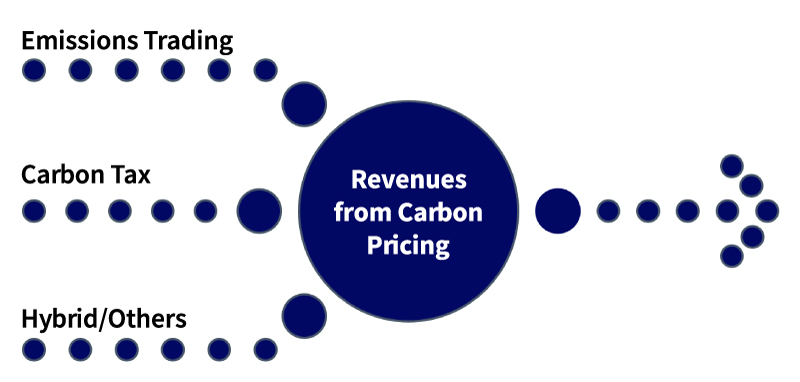
Thus, climate pricing is a means to put a price (actual monetary value) to carbon emissions in terms of pricing strategies so that production and consumption choices reflect the impacts on climate change and opportunities for low-carbon energy options. The tools can penalise production processes that contribute to emissions while compensating for climate-friendly production processes. In the context where carbon pricing is effective, market prices of goods and services reflect the negative impact of products on the climate. Carbon pricing continues to be weakly represented in the development agenda of African countries. Yet, as depicted in the Figure (on page right), countries can generate climate finance from carbon pricing tools.

State of Carbon Pricing in Africa

There are some promising developments regarding the implementation of carbon pricing in Africa. All African countries are making strides in one area or the other, but South Africa is the pacesetter in Africa.

South Africa introduced the Carbon Tax Act (No 15 of 2019)2 which aim “to provide for the imposition of a tax on the carbon dioxide (CO2) equivalent of greenhouse gas emissions, and to provide for matters connected therewith.” This tax put a price on carbon emissions and will enhance awareness, increase reporting on climate emissions while the revenue will be used for the poor communities. Although the tax is introduced at a low price of about $0.42/ton3, there are indications that this will be increased over time. The country aims to apply the fundamental principle of environmental law, the ‘polluter pays principle’.

carbon pricing

The depth and scope of the carbon pricing regime in South Africa cannot be evident in other African countries. However, there is some evidence of positive steps taken albeit slow. For instance, 18 African countries4 are members of the REDD+ which has the focus on reducing emissions from deforestation and forest degradation, forest carbon stock conservation, the sustainable management of forests, and the enhancement of forest carbon stocks in developing countries. Also, Mozambique, the Democratic Republic of Congo and Ghana have signed a deal with the World Bank to cut carbon emissions.5

Additionally, a content analysis of the Nationally Determined Contributions (NDCs)6 reveals that only 2 countries (Côte d’Ivoire, Egypt) made reference to “emission trading” and only Côte d’Ivoire and South Africa made reference to “carbon tax”. Additionally, only 7 countries referred to “fossil fuel subsidy reform’ while 34 countries refer to “international market mechanisms”. Similarly, it is evident that ‘hydrogen energy’ and ‘electric vehicles7 are not found in Africa’s Agenda 2063: The Africa We Want.8 Some of these findings show the exclusiveness of the frameworks to capture very relevant issues concerning climate change.

Additionally, although there are some actions from the subregional institutions in Africa, there are bottlenecks that undermine their work. For instance, in West Africa9, some of the challenges that persist are the lack of national governance framework for transparency, weak involvement of the private sector, lack of capacity for project development, and the need to revise the NDCs. These problems permeate the African continent

Challenges to Effective Carbon Pricing Regime in Africa

There is a lack of regulatory frameworks to drive carbon pricing in Africa. Currently, most climate change frameworks used by countries are executive instruments and only a few countries have laws. Where there are legislative instruments that have legal status, there are not enough coverage of climate finance issues and the implementation is also low. Although an arduous task, regional institutions in Africa need to align the legal frameworks that promote carbon pricing mechanisms across Africa.10

There is a lack of regulatory frameworks to drive carbon pricing in Africa. Currently, most climate change frameworks used by countries are executive instruments and only a few countries have laws.

There is a lack of financial systems and financial resources to promote climate change mitigation activities. As regards the explicit carbon taxes, fiscal policy can address them, if policymakers and duty bearers have the political will. But, the success of such strategies will depend on the strength of the capital market and the money market to accommodate the instruments, especially regarding ETS and the hybrid mechanisms. The ETS, which are “cap and trade” programs that have been found to reduce CO2,11 involves the selling of permits to discharge specific pollutant where polluters pay an amount equal to their emissions. Due to the less developed capital market in Africa, trading climate-related financial derivatives could be stifled.

It is worth noting that capacity building continues to be a key area of focus for a successful carbon pricing regime in Africa. At the domestic and the regional levels, there is the need to upskill personnel on how to explore available carbon pricing options, make proposals and implement them. Likewise, various policy institutions like the Think Tanks and other consulting entities need to enhance their capacity in providing context-specific strategies to achieve the desired low-carbon emissions.

Weak creation of political and social will for decreasing climate change. Although businesses and their leaders need to be at the forefront in mitigating climate change, the political and social will needed in Africa cannot be underestimated. The political manifestoes in Africa tend not to capture climate change issues and pre-election debates do not consider enough discussion on environmental externalities or climate change issues. It is time for political leaders and society to rise to act in mitigating climate change. It is by this that financial tools like the carbon pricing mechanisms can be inculcated in key policies and eventually implemented.

Recommendations

The following are areas that duty bearers in Africa and development partners can help to enhance climate action and carbon pricing in Africa.

First, there should be strategies to strengthen regional collaboration through platforms or initiatives like United Nations Framework Convention on Climate Change Collaborative Instruments for Ambitious Climate Action (UNFCCC-CIACA) initiative and the regional dialogues on carbon pricing (REDICAP) process.

Also, a regional Readiness program on common access barriers for all countries should be developed. This will help early adopters like South Africa feed into the strategies of the laggards.

There should be political will from each country and this can be driven by advocacy works of civil society and the populace.

There should be practical steps to facilitate the creation of National stakeholders’ consultative platform where the Government, the Private sector, local communities, research institutions, youth, gender specialists are involved. There is so much that needs to be done for private sector uptake of the climate change issues and the need to use market-based approaches to address them.

There should be political will from each country and this can be driven by advocacy works of civil society and the populace. This should be accompanied by various institutional changes to allow for the ease of implementation of existing and future climate change laws, regulations and policies.

The support of development organisations and countries like the US, UK and China who are involved in Africa’s development agenda should draw more attention to climate change issues. There should be measures to create awareness, and target inculcation of sustainability across trade engagements and international diplomacy. Most essentially, climate change pricing should underpin the African continental trade agreement and the implementation thereof.

Other African countries can learn from the example of South Africa to implement their carbon pricing mechanisms, otherwise, the waiting shall continue and the increasing number of intentions shall remain as intentions.

About the Author

King Carl Tornam Duho

King Carl Tornam Duho is a an ACCA Prize-winner, CIMA Chartered Management Accountant and a business, economic, and research consultant with experience in academia, business and public policy. He is the Technical Director for Dataking Consulting and has consulted for UNICEF, GIZ, the Royal Netherlands Embassy, IMANI Africa and Development Reimagined. He is a member of the National Climate Monitoring, Reporting and Verification Communities of Practice (MRV-CoP) in Ghana. He has written extensively on the financial sector, cocoa sector, extractives industry, climate change, taxation and other economic issues. He has authored more than 30 articles including 13 peer-reviewed articles in ABS/ABDC ranked journals. https://orcid.org/0000-0002-8736-3220

References

  1. World Bank Group (2019), “State and Trends of Carbon Pricing 2019”, Washington, DC: World Bank. https://openknowledge.worldbank.org/handle/10986/31755
  2. Government of South Africa. (2019), “Carbon Tax Act 15 of 2019”, Republic of South Africa. https://www.gov.za/sites/default/files/gcis_document/201905/4248323-5act15of2019carbontaxact.pdf
  3. Winkler, H. and Marquard, A. (2019), “South Africa’s new carbon tax could help poor people pay less for energy”, World Economic Forum. https://www.weforum.org/agenda/2019/06/carbon – tax – revenues – could – be – harnessed – to – help-south-africa-s-poor/
  4. FCPF (2021), “FCPF Country Participants”, Forest Carbon Partnership Facility. https://www.forestcarbonpartnership.org/countries
  5. World Bank Group, (2019), “Ghana Signs Landmark Deal with World Bank to Cut Carbon Emissions and Reduce Deforestation”, Press Release. https://www.worldbank.org/en/news/press-release/2019/07/09/ghana-signs-landmark-deal-with-world-bank-to-cut-carbon-emissions-and-reduce-deforestation
  6. Greiner, S., Howard, A., Diagne, E.M.M. and Gaspar-Martins, G. (2016), “Will Carbon Pricing Emerge in Africa As Well?”, Climate Focus. https://www.climatefocus.com/sites/default/files/IETA%20GHG%20Report%202016%20(Sandra).pdf
  7. Ryder, H. (2021), “Africa needs to take bold, transformative action on climate change”, African Business. https://african.business/2021/04/trade-investment/africa-needs-to-take-bold-transformative-action-on-climate-change/
  8. AU, (2013), “Agenda 2063: The Africa We Want”, African Union. https://au.int/sites/default/files/documents/33126-doc-01_background_note.pdf
  9. Sarr, O.F. (2020), “Virtual Technical Workshop on Needs-Based Finance for West Africa 26 – 27 October 2020”, West African Alliance on Carbon Markets and Climate Finance (WACC). https://unfccc.int/sites/default/files/resource/WAA_Presentation_OFSARR%20NBF%20Virtual%20wshop%2027%20OCTOBER%202029.pdf
  10. UNFCCC (2019), “Carbon pricing approaches in Eastern and Southern Africa”, United Nations Framework Convention on Climate Change. https://unfccc.int/sites/default/files/resource/Summary%20of%20East%20Africa%20carbon%20pricing%20report.pdf
  11. Bayer, P., & Aklin, M. (2020). The European Union emissions trading system reduced CO2 emissions despite low prices. Proceedings of the National Academy of Sciences, 117(16), 8804-8812. https://www.ncbi.nlm.nih.gov/pmc/articles/PMC7183178/

African Payment Platforms Leapfrogged the World – Can They Keep it That Way?

African Payment Platforms

By Corey Runkel

Sub-Saharan Africa boasts the highest digital payment usage in the world. What does that mean as payment providers grow around the world?

Homegrown Payment Platforms

Hold Great Promise

In 2017, the World Bank asked adults in 77 countries if they had a mobile money account. The first 12 countries were in Sub-Saharan Africa (SSA). In a better measure of use, the portion of residents who receive wages through their mobile phones, SSA boasted 25 of the top 30. The region as a whole boasted more than 40% of worldwide mobile money accounts in 2018. Now, with COVID-19 urging employers and customers to shift business online, the 2022 figures should rise still higher.

Payment providers promise SSA economies years (if not decades) of innovation. And they have challenged a persistent narrative that technology and innovation trickle down from the tech-drenched Global North to the Global South. Sub-Saharan Africa leads the world because of its homegrown payment platforms.

In 2017, the World Bank asked adults in 77 countries if they had a mobile money account. The first 12 countries were in Sub-Saharan Africa (SSA).

Payment platforms thrive in Africa because they can leap over the last-mile problems that plague home delivery of services. But, as The Generalist noted, platforms are also insulated from international competition. The tight regulations around banks, payment systems, and currencies make it difficult to expand payment platforms internationally. More regulations mean more differences and a higher value for local knowledge.

It can be easy to look at payments as a repeat of mobile phone expansion. Mobile phones offered similar advantages over wired connectivity. In other words, building cell towers is much easier than erecting landlines and piping broadband into everyone’s homes. The story of mobile phone penetration, and its explosive growth in the mid-2000s and early-2010s is well-told at this point. But this story neglects the fact that mobile phones initially arrived in Africa several years after they arrived in the Global North. Then, international telecom companies set the pace of adoption according to their pace of expansion into the so-called developing/emerging markets.

International telecom companies could set the pace because they had established operations and could easily scale production to Namibia the same way they had scaled to Vietnam, or Barbados, or Iceland. In the 1990s and 2000s, telecom manufacturers and providers, like Qualcomm and Vodafone, set international standards for the way phones and towers would exchange information. This is why Google Fi can offer service in Namibia, Vietnam, Barbados, and Iceland using the same SIM card. To do so, they met in standard-setting organizations largely free of government interference. This governance structure connected billions to products and services better than what may be built or designed by firms in their own country—at the expense of heavy corporatization and a brain drain of mobile-phone engineers from countries that lacked designers of their own.

Mobile payments have not been susceptible to the same route to standardization, and, therefore, to domination by payment providers from the Global North. Governments are far more protective of their currencies than their radio waves. This fact neutralizes the viral network effects usually attributed to technology.

Adoption of cashless payments has admitted novel solutions. In one powerful case, Sierra Leone averted nurses striking during the country’s Ebola outbreak when it switched to mobile payments and paid nurses on time – and safely. Elsewhere, mPesa continues to dominate payments across the continent. And Econet accounts for probably 90% of payments in Zimbabwe.

African Payment Platforms are Precarious

The history of mobile phone adoption did not predict the success of digital payments. It need not foretell the future of digital payments either. However, those familiar with the expansion of the companies mentioned above will note some recent facts don’t quite align with the narrative I’ve told so far. mPesa is now in 7 countries, but seems to only maintain a significant research and employment presence in Kenya. Zimbabwe’s president has banned Econet and jailed its CEO.

Adoption of cashless payments has admitted novel solutions. In one powerful case, Sierra Leone averted nurses striking during the country’s Ebola outbreak when it switched to mobile payments and paid nurses on time – and safely.

But, as payments, payment providers, and digital currencies become ever closer linked, they display more threats. Financial integration threatens to disassemble what African payment providers have already made possible.

Though governments regulate payment systems, they may still cooperate internationally in much the same way corporate SSOs have done. Or, ever-larger payment platforms may invest directly abroad, a time-consuming but potentially lucrative investment for their home offices. Just as standardization and integration allow products and services into a country, they can also push resources out. There are two ways this can happen.

The first way is on the level of the company. Say, for instance, that Facebook’s payment services overtake Econet in Zimbabwe. Because payment systems display huge network effects within countries, foreign domination of payments can lock out domestic challengers for long periods of time. It’s easy to worry about this already with mPesa. Then comes the dreaded brain drain in which a country’s best and brightest leave for a fancy office abroad because home doesn’t support their interests to the same degree. I feel I needn’t go deeper in this direction. The literature on foreign competition is widely available.

The second way that fintech integration threatens African payment providers is by reproducing the current international financial order. If that sounds shadowy and academic, it simply means that the US, UK, EU, China, Australia, Canada, Switzerland, and Japan will find new ways to exert the power they currently hold. The currencies of these countries control some 97% of international reserves; they (more or less) control and issue debt in their own currencies.

In May, Chair of the US Federal Reserve Jerome Powell issued an impromptu announcement that the US would start developing its own digital currency. Some movement on the digital payments front had been long in the works. What was not assured, however, was Powell’s attention – and praise – of stablecoins. These are digital tokens that tie their value to a basket of highly rated currencies and other liquid, low-volatility, assets. A successful stablecoin hasn’t been demonstrated yet. But should one arise, it could lure investors from less-stable sovereign currencies. This would be doubly bad since stablecoins have attracted concerns as runnable assets from scholars and policymakers such as Mark Carney.

Note that the success of mobile payment providers does not ensure this course. Mobile payment providers are often banks or – more often – work with banks. Nothing intrinsic to payment platforms allows for quicker runs. It’s more that software platforms make it easy to push new features to their customers. Someone who uses mPesa to receive wages or buy used furniture can easily learn how to receive or buy bitcoin. PayPal already does this. Users can purchase cryptocurrencies straight from the platform, no added account necessary.

Up to this point, the story has differed little from the history of dollarization around the world, notably in the Latin American 1980s. Then, the US dollar supplanted high-inflation domestic currencies in everyday transactions. This only further damaged the domestic currencies. Though these countries sometimes already lacked the capacity to manage domestic crises, dollarization nonetheless removed an important tool to manage economic disruption. And as the currencies jockeyed for supremacy, they disrupted daily life.

Unlike with mobile phones, I see little reason to doubt the parallels between currencies made more accessible by mobile payment providers and the US dollar in Latin America. Further, the history of Internet-driven innovation has shown that changes come much more quickly in cyberspace than they did in physical space. The emergence of widespread connections between people able to trade currencies and cryptocurrencies and stablecoins and digital money could make it easier, cheaper, and quicker for investors to flee to safe assets.

The results for SSA could be a more runnable currency as the barriers to flee it for more stable alternatives are knocked down. Perhaps it will not happen, but Zimbabwe’s experience with Econet shows it is possible. The reason it jailed the CEO of its largest payments provider is that it alleged Econet facilitated foreign exchange trading – Zimbabwean dollars for US dollars – and exacerbated the currencies devaluation. Now, the Zimbabwean dollar certainly had enough problems without this wrinkle, and evidence on Econet’s impact is hard to come by, but it is plausible.

The results for SSA could be a more runnable currency as the barriers to flee it for more stable alternatives are knocked down.

Public and private actors around the world are encouraging digital financial integration down to the lowest levels of payments. Powell’s other announcement was that the US would be at the forefront of international standard-setting, which we can remember from the history of mobile phones as a tilted enterprise in global governance. Swift, the company which routes payments between banks around the world, published in May that CBDCs must be interoperable with current financial plumbing. In a very literal sense, then, Swift wants to reproduce the current international financial architecture. Swift’s membership may be international, but the US and Europe dominate it.

Going forward, African payment providers and governments have several choices. They could embrace some sort of Pan-Africanism, which has already been fostered by the central banks of West Africa and of Central Africa. In this scenario, providers would combine and power the strongest of each other. A different tack may involve forcing payment platforms into the current banking infrastructure by tying mobile wallets to bank accounts. Feeding regulation in through existing banking supervision infrastructure could make it easy to prevent the build-up of systemic risks to a country’s financial sector. Either route may also involve shutting out foreign competition. Many countries have effectively banned Facebook’s Diem (formerly Libra) payment system through one regulatory measure or another. There is nothing to rule out African payment platforms, now some of the most established, from succeeding on the world stage.

About the Author

Corey Runkel

Corey Runkel is a Research Associate at the Yale Program on Financial Stability, where he studies past financial crises to inform present and future policymaking.

Policy Response To Mitigate The Effect Of COVID-19 On Women’s Labor Market Outcomes

Women’s Labor Market

By Tea Trumbic and Marie Hyland

On average, women are under-represented in the labor market compared to men. In many countries, the COVID-19 crisis has caused the gender gap in labor supply to expand. However, there has been substantial heterogeneity between countries. This article explores this heterogeneity in the context of the different policy responses to the crisis

The economic downturn caused by the COVID-19 crisis has been widely referred to as a “she-cession”, and while it is true that women have been disproportionately impacted by the crisis in many countries, there is substantial heterogeneity between countries in the relative economic impact of the crisis on men and women – what we refer to here as the gendered effect of the crisis. The World Bank’s Women, Business and the Law 2021 study, which measures how laws and regulations affect women’s economic opportunity in 190 economies, gathered evidence of different ways that governments and firms have addressed the needs of working parents and essential workers during the pandemic. New studies from India, Italy, Spain, the United Kingdom, and the United States, amongst others, have shown a wide range of impacts of the crisis on the labor market outcomes of men and women and on time spent on unpaid and care work.1

The impact of COVID-19 on women’s economic empowerment can be assessed by looking at many different factors, including wages, productivity, working hours and participation in the labor market. Here we focus on the gendered impacts of COVID-19 through the lens of labor force participation.2 While gains have been made over the past several decades in getting more women into the labor force, women remain under-represented relative to men. As such, it is important to consider how the COVID-19 crisis might pose a threat to these gains and what can be done to keep women in the workforce. This is especially important given that periods of absence from the labor market may have long-term impacts on women’s wages and career progression.3

The economic downturn caused by the COVID-19 crisis has been widely referred to as a “she-cession”

Considering how the labor force participation of women relative to that of men evolved over the course of 2020 across 53 countries where data is available, on average, the gender gap in labor supply expanded slightly in the first quarter, and then continued to expand at an accelerated pace throughout the second and third quarters of the year, before contracting somewhat in the final quarter. While the gender gap at the end of 2020 was wider than it was before the crisis began, it appears to have peaked in the third quarter of the year. These averages mask the fact that the gendered impacts of the COVID-19 crisis have been highly heterogeneous across the world – labor force data from the International Labour Organisation (ILO) shows that, as of the end of 2020, in some countries the gender gap in labor force participation had expanded in some countries, while it had contracted in others. Indeed, as Figure 1 illustrates, of the 53 countries included in the fourth quarter data, the gender gap in labor supply expanded in 25 countries, contracted in 25 countries, and remained unchanged in three. However, Figure 1 also shows that the average expansion was greater than the average contraction.

figure 1

figure 1

While it may be surprising to see that, in several countries, the gender gap in labor supply contracted between the onset of the crisis and the final quarter of 2020, it is not surprising that the economic impacts of the global pandemic have been so heterogeneous. The severity of the health crisis has been highly uneven, with some countries experiencing far higher caseloads of COVID-19, more disease severity, and a higher number deaths than others. Similarly, governments have adopted a wide range of policies in response to the crisis, in terms of both the lockdown measures adopted to curb the spread of the pandemic and the economic and social support programs initiated to help citizens through the crisis.

A team at the Blavatnik School of Government at the University of Oxford have been tracking and comparing government policies adopted in response to the crisis around the world.4 Their 20 indicators cover containment and closure policies, as well as economic and health policies. While the data do not have a gender-disaggregated component, these policies are likely to have differential impacts on men and women. Combining this data on policy responses with labor force statistics, the data show the expansion of the gender gap in labor supply was larger in countries where governments had adopted more stringent containment measures to curb the spread of the virus. In particular, more widespread school closures were associated with a greater widening of the gender gap – a fact highlighted in the World Economic Forum’s most recent Global Gender Gap report.5 This finding concurs with previous research that has shown that, in the United States, the COVID crisis has disproportionately impacted female workers because of the concentration of female employment in the services sectors that were hit hard by lockdown policies, and because the burden of school and daycare closures has tended to fall on the shoulders of working mothers.6

COVID policy response data has also been collected by the World Bank’s Women, Business and the Law team. While the dataset covers a narrower range of policy responses relative to the Oxford data, it gives a more detailed view of those that are targeted at, or have a greater impact on, women.7 The policies tracked fall into three categories: childcare policies, access to courts during the crisis, and health and safety measures.

The need for extraordinary childcare policies was precipitated by widespread school closures. The range of policies adopted by countries include additional family leave granted to parents, childcare subsidies or tax credits, and the provision of childcare services to essential workers. The Women, Business and the Law data provide details of over 100 different childcare measures that were adopted in response to the crisis.

Research has shown that the COVID-19 crisis has led to secondary impacts on the health and safety of women and girls, including a “shadow pandemic” of increased gender-based violence.

As women initiate the vast majority of family court cases globally – including cases related to marriage or divorce, custody of children and requesting protection orders – the ability to access such judicial services is vital for women’s agency. Recognizing this, governments responded to citizens’ needs to access these services in innovative ways. Examples include the prioritizing of matters related to family law, remote access to courts, and automatic extensions of protection orders. In total, the Women, Business and the Law team recorded over 300 different policies adopted by countries across the world to address citizens’ need to access court services during the crisis.

Research has shown that the COVID-19 crisis has led to secondary impacts on the health and safety of women and girls, including a “shadow pandemic” of increased gender-based violence.8 The Women, Business and the Law data show that governments have adopted a wide range of polices to tackle this, including provision of extra health care services, domestic violence hotlines and additional access to shelters. In total, Women, Business and the Law collected data on over 170 extraordinary measures adopted by governments to address health and safety concerns.

Combining the policy response data collected by Women, Business and the Law with labor force data, we see that countries where the gender gap expanded the most had actually adopted a greater number of policies in response to crisis relative to those countries where the gap contracted the most. Countries where the change in the gender gap since the onset of the crisis is in the top tenth percentile of the distribution adopted, on average, seven measures, as recorded by Women, Business and the Law. On the other hand, countries where the change in the gender was in the bottom tenth percentile (those where the gap contracted the most), adopted 5 measures. However, while female employees appeared to have fared relatively worse in economies that have adopted a greater number of gender-sensitive responsive policies overall, the adoption of COVID specific childcare measures is correlated with a contraction of the gender gap in labor supply (Figure 2 on the next page). The fact that the average number of COVID policy measures was higher in countries where the gender gap in labor supply expanded the most may reflect the underlying correlation between the number of measures adopted and countries’ lockdown policies.

figure 2

Conclusion

While it may be surprising to see that, in several countries, the gender gap in labor supply contracted between the onset of the crisis and the final quarter of 2020, it is not surprising that the economic impacts of the global pandemic have been so heterogeneous. No country can reach its full potential without the equal participation of men and women.

The findings, interpretations, and conclusions expressed in this paper are entirely those of the authors. They do not necessarily represent the views of the World Bank and its affiliated organizations, or those of the Executive Directors of the World Bank or the governments they represent.

About the Authors

Tea Trumbic

Tea Trumbic is a Program Manager of the Women, Business and the Law project at the World Bank. Prior to joining the World Bank Group, Tea worked at the Ministry of Finance of the Republic of Croatia and the International Monetary Fund. She holds a bachelor’s degree in economics from Stanford University and a master’s degree from the London School of Economics.

Marie Hyland

Marie Hyland is an economist at the Women, Business and the Law team. Her research focuses on the impacts of legal reform on women’s economic opportunities and outcomes. Marie holds a PhD in economics from Trinity College Dublin. During her PhD studies, Marie spent time at the University of Maryland as a visiting Fulbright scholar.

Endnotes

  • Alon et al. (2020), Del Boca et al. (2020), Deshpande (2020), Farré et al. (2020) and Sevilla and Smith (2020).


  • Following the work of Djankov et al. (2021), we focus on the gap between the labor force participation rates of men and women. Focusing on the evolution of the gender gap in labor supply allows us to focus on the gendered impacts of the COVID-19 crisis without having to account for the effects that would have impacted labor supply in general.
  • For example, Napari (2010) discusses the “motherhood wage penalty” in the Finnish private sector, and notes that while the penalty erodes over time, it is higher at the top of the wage distribution. Aisenbrey, Evertsson, and Grunow (2009) discuss the relative penalties associated with time out of the workforce for women in Germany, Sweden and the United States.
  • Hale et al. (2020).
  • World Economic Forum, 2021.
  • Alon et al, 2020.
  • World Bank, 2021.
  • Mittal and Singh (2020); Chandan et al. (2020).

References

  • Alon, T. M., Doepke, M., Olmstead-Rumsey, J., & Tertilt, M. (2020). The impact of COVID-19 on gender equality (No. w26947). National Bureau of economic research.
  • Aisenbrey, S., Evertsson, M., & Grunow, D. (2009). Is there a career penalty for mothers’ time out? A comparison of Germany, Sweden and the United States. Social Forces, 88(2), 573-605.
  • Boca, D. D., Oggero, N., Profeta, P., & Rossi, M. (2020). Women’s work, housework and childcare, before and during COVID-19.
  • Chandan, J. S., Taylor, J., Bradbury-Jones, C., Nirantharakumar, K., Kane, E., & Bandyopadhyay, S. (2020). COVID-19: a public health approach to manage domestic violence is needed. The Lancet Public Health, 5(6), e309.
  • Deshpande, A. (2020). The COVID-19 Pandemic and Gendered Division of Paid and Unpaid Work: Evidence from India (No. 13815). IZA Discussion Papers.
  • Djankov, S., Goldberg, P. K., and Zhang, E. (2021). Changes in the Gender Gap during Covid-19. Covid Economics.
  • Farré, L., Fawaz, Y., González, L., & Graves, J. (2020). How the COVID-19 lockdown affected gender inequality in paid and unpaid work in Spain.
  • Hale, T., Petherick, A., Phillips, T., & Webster, S. (2020). Variation in government responses to COVID-19. Blavatnik school of government working paper, 31, 2020-11.
  • Mittal, S., & Singh, T. (2020). Gender-based violence during COVID-19 pandemic: a mini-review. Frontiers in Global Women’s Health, 1, 4.
  • Napari, S. (2010). Is there a motherhood wage penalty in the Finnish private sector? Labour, 24(1), 55-73.
  • Sevilla, A., & Smith, S. (2020). Baby steps: the gender division of childcare during the COVID-19 pandemic. Oxford Review of Economic Policy, 36 (Supplement 1), S169-S186.
  • World Economic Forum (2021). Global Gender Gap Report 2021. March 2021.

Laying The Right Foundations: Why ESG In Property Is A Trend To Watch

ESG

By Jake Pearlman

From the UK Treasury’s report on Green Finance, to the EU Sustainable Finance Taxonomy and the US ESG Disclosure Simplification Act working its way through Congress, ESG (Environment, Social and Governance) metrics in finance have never been more in the spotlight than in 2021. However, there are significant benefits to pursuing an ESG agenda in sectors outside of just finance, and many might overlook initiatives and benefits they could pursue if they don’t dig under the surface of the headlines. One area where the ESG benefits are clear, if sometimes overlooked, is the property sector.

There are innumerable benefits to pursuing an ESG agenda in property, whether from an investor, occupier or landlord perspective. These include everything from better wellness for employees to greater attractiveness to future occupiers, not to mention the inherent green credentials of prioritising ESG-boosting programmes. The question is whether participants in the property sector are able to capitalise on these potential gains and whether the UK government could do more to boost these growing green shoots.

There’s no place like home: benefits for occupiers

There are innumerable benefits to pursuing an ESG agenda in property, whether from an investor, occupier or landlord perspective.

For occupiers looking to improve their green credentials, leasing an office with ESG credentials brings more benefits than just a buzzword for the website. Naturally, reducing your company’s impact on the environment helps efforts to mitigate and reduce climate change and improve sustainability, a moral and ethical choice that is becoming more important each day.

But in addition to the ethical and moral ramifications, ESG-rated buildings often score high on the BREEAM rating scale, which measure not just ecology and energy ratings, but also the social and economic benefits for the employees working within the building. ESG and wellness often go hand-in-hand, so by pursuing an ESG agenda in choosing a workplace, companies can improve the health and wellbeing of staff also.

The resulting effect has wide-ranging consequences, as it goes without saying that a healthier and happier workforce is likely to equally improve talent attraction and retention, creating the best teams working from the greenest offices.

As early as 2012, data showed that 60% of occupiers recorded improved occupant satisfaction and comfort in a BREEAM rated building, with around 35% noting improved employee productivity. The data is clear: better buildings have an effect on their occupiers that can be measured in hard, tangible growth and retention gains. Upping productivity by a single percent and reducing staff turnover by ten percent may seem minor, but the impact on cashflow will be measurable.

Companies with an eye to the future will also find benefit in working from ESG-rated offices as the market changes and new financial reporting requirements necessitating energy use and carbon reporting come into effect. Increasingly detailed reporting requirements may soon come to encompass the workplace, at which point the occupiers ahead of the curve in ESG-rated spaces will not only be able to include better CSR credentials, but will not have to spend time or capital on assessing the energy use and carbon impact of an older, unrated building.

Meeting new desires: benefits for landlords and operators

If the benefits for occupiers are clear, then the benefits for landlords or workspace operators naturally follow.

Environmental technology concept. Sustainable development goals. SDGs

Again, there is a clear ethical benefit to owning and managing buildings that are more sustainable, but as with most ESG topics, there are measurable financial benefits too. In the first instance, the various benefits for occupiers mentioned above will translate into more attractive offices that a landlord or operator will find easier to market and lease. As ESG continues to rise up the agenda, it may become increasingly a ‘hygiene factor’ that buildings must pass to even meet average attractiveness to potential occupiers. Investing in ESG fit-outs or retrofits now could pay dividends further down the track.

Similarly, as ESG and carbon reporting requirements become more prevalent for occupiers, they will also increasingly apply to landlords and operators. Investing in ESG capabilities will set properties ahead of the game as these reporting requirements develop, giving a first-mover advantage to the businesses able to see the way the wind is blowing.

Residential landlords and developers stand to benefit as much as commercial real estate operators, with growing interest in social housing and eco-builds set to shape the markets in years to come. A growing concern over the high street in the wake of the pandemic could prompt new efforts at regeneration, which by its nature will trend more closely to ESG. In 2020, figures note that Greater Manchester housing providers collectively contributed £1.2bn in gross value to the local economy – with the recent release of the Sustainability Reporting Standard for Social Housing, similar benefits may become commonplace across the UK and businesses stand to benefit hugely if they can tap into this swell of support in coming years.

Whilst we aren’t currently seeing any tax or business rates considerations for ESG-rated offices, the Government’s focus on ESG, through its Green Finance Report, Energy Whitepaper and COP26 agenda, suggests that it won’t be long until these ideas make their way into a future budget. The financial services and energy sectors can be viewed as a bellwether for the direction of ESG, and the canny property business will take note.

Follow the money: benefits for investors

Given the benefits to occupiers, landlord and operators, ESG in property is likely to further develop as a rich vein for investors.

According to Refinitiv Lipper, over half of fund flows in 2020 in Europe were directed towards ESG products, to a value of almost £250bn. In the last three months of 2020 alone, European sustainable investments comprised 80% of the £110bn of global ESG fund inflows, according to Morningstar. The writing is clearly on the wall and whilst property is traditionally a slower sector to adapt to new changes, the rise in Proptech and digital solutions have upped the pace in the market.

Pivoting to face the ESG winds may not be possible for property investors to do as smoothly as in the pure financial sector, but we should not consider the property market to be too far behind the curve.

As we exit the pandemic, vacancies in the office market and population centres thinning out into the suburbs have left empty properties and landlords looking for new tenants – whether commercial or residential. Now that shorter leases are becoming the norm, options exist for investors to capitalise on an increasingly flexible backdrop to the market and the aforementioned greater occupier/tenant retention created by ESG buildings.

What’s next for ESG?

This is not to say that the transition to ESG in property will all be smooth sailing. The costs of retrofitting a property – commercial or residential – to meet new ESG metrics may be prohibitive, especially for smaller operators. Whilst this may offer an opportunity for investors to support the change, operators and landlords only just recovering from the pandemic may not wish to spare the capital until the disruption truly reaches its end.

ESG in finance is now mainstream, as is the ongoing energy transition and efforts to boost sustainability in the supply chain; property is therefore the logical next step for the ESG wave to wash over.

In addition, the time taken for an ESG fit-out or building conversion is naturally a void period in occupancy, cutting into cashflow even as it costs to upgrade the building.

What could potentially benefit the sector is government intervention in the form of a tax benefit for converting buildings to meet agreed upon ESG metrics or standards. We already see a similar strategy work with R&D, where a company can obtain a R&D tax relief which has had a huge effect in stimulating innovation across UK businesses, and wouldn’t necessarily be difficult to apply to ESG in the property sector.

The early bird

The growing interest in ESG visible over the past decade and now reaching a fever pitch in 2021 has many fans and few real critics, but its time that we moved the conversation into new areas. ESG in finance is now mainstream, as is the ongoing energy transition and efforts to boost sustainability in the supply chain; property is therefore the logical next step for the ESG wave to wash over.

Occupiers, tenants, investors, landlords and operators all stand to benefit if they can harness ESG in their business plans – the true winners, however, will be those that act soon and secure the best first-mover advantage.

About the Author

Jake Pearlman

Jake Pearlman is a senior manager at top-25 chartered accountants haysmacintyre, specialising in providing advice to a range of property-based clients. Jake is a top ‘35 under 35’ accountant in Accountancy Age 2019 and assists clients on services such as audit, structuring, tax advice and transaction services.

EDITOR'S PICK OF THE WEEK

China economic growth

China’s Challenging Search for a New Model of Economic Growth

By Danny Leipziger China cannot continue to rely on exports to drive its growth, but what are the alternatives? China ran a $1.2 trillion trade surplus last year, and despite admonitions from the IMF to rely...

WISE DECISION MAKER GUIDE

POWER INFLUENCERS

Emerging Trends

The Future of Global Trade