Home Blog Page 807

Assess the Financial Feasibility of your Airbnb Rentals

By Lellith Garcia

Airbnb is a good option if you are planning to invest in real estate rental property. Airbnb has been gaining popularity for the past years because of the homier setup compared to hotels. And once tourism starts to revert after this pandemic, Airbnb rentals will continue to flourish again.

Suppose you are planning to start your Airbnb business. In that case, you should consider the ins and out of business and be familiar with the growth drivers and factors affecting the project’s financial feasibility.

Let us tackle below the factors to compute the revenue and expenses for your Airbnb rental.

1. Computing for Revenue

There are various considerations when computing for revenue. It includes the rental fee, average stay per customer, and occupancy rate.

Rental Fee

The rental fee would depend on the property you are offering. The more amenities you put on a property, the higher the price. You can cater to different clienteles and offer rental spaces that accommodate their specific needs. Let’s say you want to cater to solo travelers, couples, groups, or families. Per circle has different needs. You can offer smaller rooms for solo travelers, but for families, you can offer bigger rooms with additional amenities such as extra beds for children, walkers for babies, etc.

Average Stay per Customer

Stay per customer will vary. Others will only stay for a day, but others can stay for days. If you offer different properties, project the average stay per property based on your research and estimates.

Occupancy Rate

The occupancy rate is lower in the first year since you are still establishing your name and foothold in the rental industry. It will start to increase in the succeeding years. Then you can estimate a full capacity of 90% since your rental spaces will not be occupied all year round.

2. Projecting your Operating Expenses

Operating expenses incurred for Airbnb are the Airbnb hosting fee, consumables, cleaning and laundry services, and utilities.

Airbnb Hosting Fee

The Airbnb platform charges a 3% hosting fee, which can increase if you use Super Strict cancellation policies or an Airbnb Plus host.

Consumables

Providing consumables is a must if you are into a short-term rental. It can just vary as to the varieties of consumables you are offering. The basics are soap, shampoo, toothpaste, coffee, and coffee complements. Allocate your budget for these consumables not to exceed the projected expenses.

Cleaning Services

Ensure cleanliness of the rooms or properties you are offering. Have an in-house services or on-call Eastern Suburbs cleaners who will clean right away after check-out of customers or in-between stays of longer-staying customers.

Laundry Services

Fresh sheets and towels are a must for your customers. Take to laundry right away those with 1-2 days stay upon check-out and request of the longer-staying clients. You can have an in-house laundry service or have some laundry services do it for you. Whichever is more economical for you. A commercial laundry service would be the best hands off decision if you were considering what is less work for you.

Utilities

Keep track of your utility’s expenses. Before buying appliances, make sure that they are energy-saving types to save in the long run for the utility expenses rather than save on the purchase prices of the appliances – since energy-saving appliances are expensive compared to their ordinary-type counterpart.

3. Estimating the Needed Capital Expenditure (CAPEX)

After acquiring the property, you may still need renovations, improvements, and water and electricity installation. That would be your total initial CAPEX for building and building improvements. You will also need to invest in home appliances, and furniture, and fixtures. Also, allocate budget for annual CAPEX for improvements and replacements.

4. Taxes

Depending on your location, taxes may vary. Other cities charge higher taxes compared to other cities. So, consider this when deciding where to establish your Airbnb rental.

Presented above are the significant factors affecting the financial feasibility of your Airbnb. You can also use a financial model template where you can input all your assumptions and estimates. It will provide you with a more in-depth analysis and metrics in assessing the viability of your prospect venture.

About the Author

Lellith GarciaLellith Garcia is the Marketing Manager of eFinancialModels.com, which provides a rich inventory of industry-specific financial model templates in Excel spreadsheets. Lellith has been involved in preparing various financial model templates, which are loved by entrepreneurs, consultants, investors, and financial analysts looking for assistance to speed up their financial modeling tasks.

Gaziantep: A Small Turkish City That Sets an Example for the World to Embrace Refugees

By Katarzyna Rybarczyk

Turkey, home to about half of the total Syrian refugee population, hosts more Syrian refugees than any other country. The unique model of Turkey’s response to the influx of Syrian refugees allows for their effective integration into the host society, not condemning them to isolation in refugee camps. At the same time, however, the socio economic challenges associated with them trying to rebuild their lives outside of Syria are numerous. 

With no end in sight to the crisis in Syria, the population of Syrians in Turkey keeps growing, especially in the south of the country. There small Turkish towns close to the Syrian border have been praised for their effectiveness in providing refugees with assistance they require. 

While the highest number of Syrian refugees in Turkey can be found in Istanbul, a buzzing metropolis with the population of more than fifteen million, Gaziantep, with a population of only two million, is where Syrians have truly become integrated into the host society. 

Gaziantep is home to almost half a million Syrian refugees

Gaziantep has a population ten times smaller than Istanbul, and yet it welcomed almost half a million Syrian refugees, a number comparable to the Syrian refugee community in the country’s capital. 

Gaziantep has a total population of around two million, more than 400,000 of that are Syrian refugees

Being closer to Aleppo than any Turkish city, Gaziantep has been one of the main destinations chosen by families fleeing the unstable situation in Syria. After absorbing more than 400,000 Syrian refugees, the city’s population has grown by thirty per cent. 

Historically, the Gaziantep-Aleppo socioeconomic ties were relatively strong and, as a result of the cities’ proximity, their cultures have been mixing for years. The cultural similarities come also from the fact that long before Turkey and Syria became separate states, during the Ottoman empire, Gaziantep and Aleppo belonged to the same region. 

As for trade between the two cities, it increased during the civil war as high numbers of Syrians started moving to Turkey. Exports from Gaziantep to Syria, for example, rose from ‘about $100 million in 2011 to $400 million in 2015,’ Carnagie Middle East Center reported

Syrians who came to Gaziantep and opened their own businesses started exporting products to Syrian merchants that previously had no connection with Turkey. These changes reveal refugees’ economic potential that can boost trade in poorer parts of Turkey. 

In Gaziantep Syrian refugees became an integral part of the labour market

Trade is not the only area that benefited from the influx of Syrian refugees. Migrants also filled the demand for low skilled labour in the city, taking up jobs that the city’s native residents did not want to do, namely the positions of garbage collectors. 

Thanks to the Turkish open-door policy and its endeavours to welcome refugees in cities rather than send them to camps, most Syrians who came to Gaziantep managed to find employment, especially in the food and textile sectors. Some have opened their own businesses and sell various products on local bazaars.

Local Market

Some Syrians in Gaziantep sell spices or food products on local markets

Small Businesses

Others have started their own small businesses

Still, their participation in the Turkish labour market is often a source of problems such as wage disparities, not getting official employment contracts, or being forced to work long hours. It can be argued, therefore, that for many earning an income comes at the price of having to lose a piece of their dignity. 

As Brookings explains, ‘there is a 10% quota for Syrian workers in a given firm, and this quota applies even if the ownership structure of the firm includes a Syrian’, which represents a significant barrier to refugees finding formal employment. What certainly does not improve their job prospects is the fact that most Syrians who come to Turkey as refugees have practically no education. 

On top of that, anti-migrant sentiments are on the rise in Turkey, with a great number of Turkish nationals believing that Syrians are taking their jobs and putting a strain on  essential services such as healthcare or housing. 

Despite the challenges, Gaziantep should be looked up to 

Discrimination on the labour market is not the only obstacle that Syrian refugees hoping to start new lives in the south of Turkey face. There is also an important matter of language and cultural differences that can prove particularly difficult to be overcome for older migrants. Not being able to speak the language especially can lead to refugees dealing with marginalisation and discrimination from the host society. At times it can even be the reason for hostility or violence towards them. As Turkey’s economy is struggling and the currency is falling, some begin to blame the Syrians. 

In Gaziantep discriminative or racist behaviour is not a common occurence, luckily.

‘Do you feel happy and safe here?’ I asked a 13 year old boy whose family fled Syria and moved to Gaziantep a few years ago. 

‘Yes, I like it more than Syria’ he said. 

With such a notable ratio of refugees to the native population, Gaziantep seems to have opened its economy to Syrians and to value the cultural and economic contributions they bring to the city. In fact, ‘the number of companies founded or co-founded by Syrians in fact to be over 10,000 when the informal sector is included’, revealed a paper on the access to the labour market in Gaziantep. 

Gaziantep became not only a bridge between the South of Turkey and Syria but also an example of what it means to welcome those who have lost everything because of war. It effectively followed what at least on paper is the Turkish approach to managing the flow of migrants, which is the policy of keeping its borders open and helping them integrate into urban areas. 

Despite Turkey having this policy for years, the increasing anti-migrant attitudes and the growing feelings of resentment towards the refugees in some parts of the country risk undermining the successes in the social integration of Syrians. 

Hence, the biggest challenge that Gaziantep will be dealing with in years to come is maintaining this level of acceptance. 


About the Author: 

Katarzyna Rybarczyk Katarzyna Rybarczyk is a Political Correspondent for Immigration Advice Service, an immigration law firm based in the UK but operating globally. Through her articles, she aims to raise awareness about security threats worldwide and the challenges facing migrants.

How Gold Has Changed The World Economy

The discovery of gold in the New World 500 years ago radically changed the world economy and its place in history. With gold’s spread to Asia, and then quickly to Europe and beyond, it became the most desired and sought-after commodity on earth. Gold has saved empires, determining futures, and shaped our world as we know it today. This article will explore everything you need to know about that shining metal – including its origins, uses, and even its spiritual significance!

So, What Is Gold?

Several countries such as the United States, Canada, and Mexico produce small amounts of gold today. However, it is expected that Africa will soon rise to become the leader in world gold mining. Gold comes from meteorites, but it is also mined in mines deep underground (where temperatures can reach above 120 °F/50 °C). Gold cannot be made artificially, which means that it is quite rare. Because of its rarity, it has become the premium standard for currencies around the world. The gold used in the past as currency are now gold coins for collectors that still circulate and might even have a higher value based on the type. The value of gold also depends on its purity. During the last decade, production has averaged about 2,500 metric tons per year. About 80% of the world’s gold comes from South Africa, but most of that amount is mined near Johannesburg and nearby areas.

Gold In Today’s Economy

Today, gold is used to protect national currencies. For instance, in America’s case, if someone wants to exchange U.S. dollars for another form of currency, they are required to use the Federal Reserve System which uses gold as its basis. Gold has been considered a safe investment in times of economic crisis when paper money becomes less valuable because it can be redeemed for gold. It’s also considered a hedge against inflation, making it attractive to own when economic growth is low and prices stagnate or fall. Also, gold can be hoarded, or saved until needed. For example, if a country’s enemies are gaining power and the threat of war becomes more real, gold can be used as collateral to pay for armaments. Gold also plays an important role in technology. The hard metal is used to make electronics because it conducts electricity well.

Gold Is Not Used As Money Anymore

Although the U.S., Canada, and most other countries no longer use gold as their currency, there are still about 30% of countries that have a currency that is pegged to gold. Gold prices are always changing, but the total value of all the gold in the world adds up to about $8 trillion as of 2014. It’s been estimated that there might even be enough gold in the world for every person on earth to have an ounce! Today, gold is used in jewelry and electronics. For instance, it’s estimated that about 60% of the world’s gold production each year is used for making jewelry due to its malleability and resistance to corrosion. Over 100 million pounds of scrap metal from old computers and other devices are recovered each year so they can be melted down to extract the gold. Although it’s used to make electronics, most of that amount is usually sent back to refineries where it goes through other processes before being used for this purpose again.

The Value Of Gold

Gold has been highly valued throughout history by many civilizations because of its rarity and beauty. It was once considered precious in ancient Egypt, Greece, and Rome. Some historians have suggested that the first real money appeared in about 650 BC, but it was mostly trading of goods with gold acting as a type of check or a unit for transactions instead of actual coins used as currency. In those days, one pound of gold bought over 100 loaves of bread. If you wanted to hire someone to work for you, it would take about 20 ounces of gold to pay him or her annually. The value of gold often changes with its market price, which can vary depending on how much is available and demanded by investors, jewelry makers, and industrial users. Today, there are about 180,000 metric tons of gold in existence throughout the world worth an estimated $7 trillion. Some of it is in electronics, old coins, and bullion deposits in banks. 

The Value of Gold

Gold is used worldwide in the forms of jewelry, electronics, and currency. It is considered one of the most precious elements on earth, with its rarity being attributed to it being valued by civilizations for centuries due to its shiny beauty. Gold is also known as a safe investment when economies are struggling with high inflation or deflation. Its value can change depending on its availability and demand, but it is still considered valuable in helping currencies remain stable. 

Inverter for Home: Price, Features and Other Important Things You Need to Compare

Budget is one of the most important factors that people have on their mind when buying a home inverter, and therefore, people often base their buying decision on the price of home inverter. But this is not the most prudent way of going about buying a home inverter. One should rather focus on other important factors that directly/indirectly impact the price of a home inverter. Let’s see what these factors are.

Inverter Capacity

An inverter’s capacity is a measure of the maximum power output it can give. The inverter’s capacity is measured in terms of its VA Rating. So let’s say if you have a minimal power backup requirement wherein you just need to run basic home appliances like a TV, refrigerator, fans, bulbs and tubelights, you would need an inverter with a lower VA Rating of upto 1.5 KVA. However, if you want to run heavy loads such as ACs, geysers, microwaves and others you would have to go for a high capacity inverter with a VA rating that is usually available in the range anywhere between 2 KVA to 10 KVA. Needless to say, the high capacity inverters with higher VA Ratings are far more costly as compared to the standard ones with lower VA Ratings.

Inverter Features

Another important thing that you need to look for when buying an inverter is how feature-rich the inverter is. More the features, the higher the price. But if you are looking for a feature-rich inverter at a reasonable rate then you must check the wide range of inverters that Luminous India has to offer. Here are some of the most common features that you will find in almost all Luminous inverters. 

Luminous Aircon

LCD Display – The LCD display feature is a useful one as it gives important information such as the Remaining Battery Backup Time, Battery Charging Time and sometimes even the water level in the battery.

Fast Battery charging This is a very important feature for those who live in areas where power cuts are frequent, it is important that your inverter quickly charges the battery so that your battery is fully charged for the next outage.

Smart Technology – Just like most other electrical and electronic devices, inverters too are getting smarter. The smart inverter range from Luminous India can be controlled with an application that can be downloaded on a smartphone. It allows users to share real time inverter battery performance statistics and other important information.

Inverter Technology

Inverters can be categorized into two types based on their technology – Sine Wave Inverters and Square Wave inverters. As we know the primary function of an inverter is to transform Direct Current (DC) stored in the battery to Alternating Current (AC) power in order to run appliances during a power cut. This is where a Sine Wave Inverter differs from a Square Wave Inverter. While sine wave inverters’ output is very close to that of AC, the square wave’s output is not. As a result sine waves inverters are preferred over square wave inverters when it comes to running sensitive home appliances. Square Wave inverters on the other hand are used for running motors. Also, sine wave inverters are almost noiseless whereas square wave inverters produce a humming noise. As far as price is concerned, square waves are less expensive as compared to Sine Wave inverters.

Word of Advice

To ensure maximum efficiency, you need to ensure compatibility between your inverter and its battery. In fact, it is best if you buy an inverter and battery from the same brand. One such brand that you can consider for buying an inverter battery combo is Luminous India. They are one of the most trusted Inverter battery brands in India and are known for their superior product quality and excellent after-sales support. Therefore, you must visit their website and check their offerings before you make a final buying decision.

Need Help Writing Legal Documents? Here Are Some Useful Tips

Legal texts stuffed with industry jargon and long sentences can be challenging to decipher. In most instances, you will have to compose them on your own. However, that is not always the case. Some documents are prepared by lawyers and then given to their clients for use or filing with a government agency or court of law.

The key to drafting your legal documents is knowing when to seek help. Of course, you are welcome to hire an attorney if you need specific legal advice, but some documents can be prepared on your own with a bit of patience. Here are some tips on how to write legal documents.

Plan Out the Document Before You Begin

There are times when you have to write legal texts yourself – even if all you need is help writing legal documents. This is especially true when you need to prepare a Quitclaim deed or a will and other property-related documents. These documents can become complex, which is why you need to have a firm grasp of what they entail before finalizing them.

Do not try to write anything just a moment before your court date – that can backfire in ways you cannot imagine. You should also know what the legal document entails and how it works before asking for help writing legal documents – even if all you need is help writing wills or other estate-related matters.

Write With Clear and Concise language

Do not use vague language or industry jargon that can confuse the person reading your legal document. The best way to write legal texts is with clear and concise language. However, you have to understand what you are writing about first before doing so. Using complex or big words for no reason will only make things more difficult for the reader, which is why it is essential to plan out your document before actually getting started.

Try to understand what you are attempting to accomplish through the document by consulting an attorney if necessary – they may be able to finalize it for you following your request. You do not want there to be any problems when filing them with the court of law.

Understand How Your Document Works

It’s hard enough explaining how certain legal documents work to your friends if you are not well-versed in the field. This is often the case when it comes to wills or living trusts. You should know how they work before finalizing the document, mainly concerning an estate matter.

An excellent way to understand how your document works is by consulting with a trusted friend that has experience writing them. If you have no one to ask for help, then find books or other texts that explain what legal documents are supposed to do and what sets them apart from others – this can make things easier for you in understanding their use within court proceedings.

Use Examples of Legal Documents as Standalone Texts

Fortunately, there are plenty of examples of legal forms online. Some of these documents are drafted by lawyers and can be used as standalone texts for self-help purposes. All you have to do is look them up on the internet or check out your local law library. In addition, many legal firms are available in book form here, which you can use as a starting point for drafting more complex legal texts such as wills or property deeds.

Books

Make Information Accessible to All

Legal documents tend to be hard to understand, especially for people without much legal training. Using clear and concise language can help in this regard. You should also consult books or other texts that explain what legal documents are supposed to do. It is essential that everyone has access to their information – even if all you need is help writing one – which is why they are often made available online or offline as standalone texts.

Writing your legal document requires patience, attention to detail, and an understanding of how it works before finalizing anything. While you may seek the counsel of a lawyer when necessary, you should know what the document entails before doing so. Asking for help writing legal documents can make things easier for you, depending on what you are writing.

Hire an Attorney if Needed

There may be times when you need help writing legal documents because some matters require professional attention. As such, those related to copyright infringement, trademarks, patents, and other sensitive topics cannot be handled by laypeople due to technical reasons more than anything else. You should always consult with a qualified attorney before finalizing any severe legal document that has the potential of being used in a court of law.

If you have to deal with complex legal matters, you should go through the trouble of looking for an attorney instead of writing them on your own, if only to save yourself from potential headaches and disasters in the future. On the other hand, suppose you try writing your legal texts without any experience or background knowledge about the matter. In that case, it is advisable to seek out qualified help before finalizing anything that cannot be undone or has severe consequences attached to it.

Rethink Your Request Before Asking For Help Writing Legal Documents

It’s not intelligent to ask for help writing legal documents when all you want are simple wills drafted. However, there are other situations where people ask for help writing legal documents even if they need outside help. An example would be a person who only wants to sell their home and is not concerned with how it will be transferred.

In most cases, this can quickly be done on your own, so you do not have to waste time or money seeking professional assistance for such matters. It’s best to consult a qualified attorney on legal issues concerning copyright infringement, trademarks, patents, and other sensitive topics.

The internet, self-help books, and bookstores are great resources for learning more about how legal documents work. Consulting with an attorney will make the process more manageable if you want to get help writing legal documents, whether for your use or that of someone else. However, if all you need is simple wills drafted, doing it on your own should suffice. Remember to ask yourself if you need legal help before making any request for this kind of assistance.

Planning to Invest in Precious Metals? Here’s What You Need to Know

Money is a big deal and people are always looking for new ways to get it. This could be anything from establishing a business in a foreign country to investing in stocks and shares. It may be that you are currently learning about precious metals, and are wondering whether they would be something worth investing in. If that’s the case, read on because this article will explain everything you need to know about them.

What They Are

Precious metals are all around us and they can be found in everyday items like jewelry, coins, and electronics. Some of the most common precious metal investments include silver, gold, platinum, palladium or rhodium. Gold has been used as a form of currency for thousands of years. Silver and platinum are also popular, and Rhodium can be found on most luxury cars. Palladium is often alloyed with platinum or nickel.


If you go online you can find out more on this subject, and much of the information is free. You can learn about American Gold Eagle coins and the Sheldon coin grading scale. It’s possible to view pictures and request free investor kits, and to read articles on things like bitcoin and credit Suisse gold bars.

Decide What You Want Before Investing

Before you invest, you should have a rough idea of what you’re looking to invest in – and what your financial goals are for that type of market. For example – do you want to protect your assets from inflation? If so, maybe consider an investment in gold or silver as they tend to hold their value better than other forms during times of economic instability/inflation.

Alternatively, you could be in the market for a short-term investment. In this case, platinum or palladium might be what you’re looking for.

Why Invest In Precious Metals?

Gold and silver have been used as mediums of exchange for centuries. Precious metals are tangible assets that can be sold easily, unlike stocks or bonds which cannot always be liquidated so quickly in a market downturn. When the price of gold goes up it’s because investors see economic uncertainty ahead, causing them to buy more gold than usual. If things are calmer, it’s good news If you’re thinking of buying physical precious metal bars or coins. This is because it means you’ll usually pay less per ounce when the economy is doing well. Precious metal prices are normally volatile, but less so than the stock market or real estate because they’re not as easily bought and sold. 

There are also more of them available than other assets which makes it difficult to control their price long-term. (That’s unless large amounts of people hoard them all at once -which some do, particularly during recessions).

By investing in precious metals you can:

  • save for the future and store value
  • hedge against inflation, currency devaluation or deflation
  • use portfolio diversification to protect your investments
  • enjoy the fact that gold is not correlated to the stock markets

How Much Can You Invest In?

Gold is not illegal in America or elsewhere for that matter. You can buy as much as your budget allows although there are no guarantees on its future value.

Having said that, there are strategies you can use and in some ways history repeats itself time and again.

Why You Should Diversify Your Investment Portfolio

The most obvious reason is that you reduce the risk of losing money if one particular asset moves in the opposite direction to another. For example, diversifying your investments between stocks and bonds reduces your overall risk. If stock markets crash or interest rates rise, you will have other assets that typically increase in value during this time.

Another great benefit of diversification is increasing your cash flow. This is achieved through tax benefits received from investing certain types of assets inside ISAs (Individual Savings Accounts). You can also use an EIS (Enterprise Investment Scheme) for additional tax relief on qualifying shares held by you as a smaller company.

How You Can Buy Them

You can obtain physical possession through a dealer/brokerage account. A physical holding most commonly takes place in one of three ways:

  • by opening an account with a precious metal brokerage
  • purchasing coins or bullion from authorized purchasers (who store their inventory onsite at banks and other public institutions known as “refiners”)
  • buying shares of publicly traded companies that invest exclusively in gold, silver, etc.

Coins

Gold And Silver Coins

In gold investing, some of the most common investments include gold bullion bars or rounds, gold certificates, gold mining stocks/funds, gold futures contracts and even numismatic (collectible) items such as rare gold coins.

In the past there were gold prospectors panning for gold. While this may have been a way of making money back then, it’s not going to get you rich today! That being said, gold and silver coins can still be a great investment option if done intelligently.

Bullion And Bars

When people are talking about buying gold or silver bars they’re typically thinking of bullion bars rather than collectible coins. Bullions are valued based on their fine weight and purity – how much metal there actually is versus what was originally promised by the company that made them.

It’s valuable to also understand that there can sometimes be differences between different products that all fall under the same category; one might have more nickel included while another has less, etc.

Storage

This is important because it will keep your metals safe. There are different options available, ranging from the well-known safety deposit box at a bank to having storage in an offsite facility that you rent. You could even consider having it kept in a secure safe installed in your home.

It’s well worth doing plenty of research before you proceed. It’s important to fully assess the risks and to know when to sell. Also, check out things like storage fees and taxes. If you invest wisely, precious metals can form part of your armory, helping you to make a stable profit over the coming years.

Operation Hidden Treasure: Investor Daniel Calugar Discusses Cryptocurrency and Your Taxes

In early 2021, the IRS announced that it was clamping down on people who omit income they receive from cryptocurrency from their tax returns. As investor Daniel Calugar explains, the initiative they launched is officially dubbed Operation Hidden Treasure.

The IRS announced that the agents assigned to this new team are training in tracking virtual currency and are well-versed in all things cryptocurrency. This new group brings into focus cryptocurrency as it relates to personal taxes.

Here are some details of what it means.

What is Operation Hidden Treasure?

The new IRS initiative is meant to discover cryptocurrency tax evasion schemes, punish those who have engaged in them, and discourage people from committing the crime in the future. 

It’s a partnership between the IRS’ criminal investigation unit and its civil office of fraud enforcement.

Agents assigned to the task force will look for signatures of tax evasion. One example is structuring, where people avoid IRS reporting requirements by keeping each transaction they make under the $10,000 automatic reporting threshold.

The IRS will also work with third-party vendors to analyze cryptocurrency and blockchain transactions so they can “track, find and work to seize” the currency in “both a civil and criminal setting,” as IRS officials have said.

How the IRS Treats Cryptocurrency

In IRS terms, cryptocurrency is no different than “normal money.” In other words, cryptocurrency transactions are treated the same way as any other property transaction. 

For purposes of taxes, cryptocurrency holdings are treated in the same way as other assets such as gold or stocks. This means that, in certain situations, the IRS will require people to claim their cryptocurrency holdings on their annual tax returns. 

If all you do is purchase cryptocurrency and keep it in the original exchange where you bought it, you won’t need to report that. IRS reporting requirements are only triggered when you begin to exchange the cryptocurrency you own. This includes selling and trading cryptocurrency and paying for services or goods with cryptocurrency.

How to Properly Report Cryptocurrency Income

Dan Calugar points out that because the IRS treats cryptocurrency as property, you’ll report it on your annual taxes based on the capital gains you have in that year — or the losses on it.

In this way, reporting cryptocurrency on your annual IRS tax returns is relatively straightforward. You’ll have to report the difference between how much you spent at the time you received or purchased the cryptocurrency and how much you earned when you sold or exchanged it. A positive return would be considered a capital gain, while a negative return would be viewed as a capital loss.

This is important for tax filers to understand, as you can deduct capital losses from your annual taxable income. Individual filers, for example, can deduct as much as $3,000 in capital losses each year.

While there is much confusion about cryptocurrency-related to government regulation and how different agencies handle it, IRS reporting is relatively simple. If you buy, sell, or exchange cryptocurrency at any time, just know you may need to report it to the IRS.

About The Author

Daniel Calugar is a versatile and experienced investor with a computer science, business, and law background. He developed a passion for investing while working as a pension lawyer and leveraged his technical capabilities to write computer programs that helped him identify more profitable investment strategies. When Dan Calugar is not working, he enjoys working out and being with friends and family and volunteering with Angel Flight.

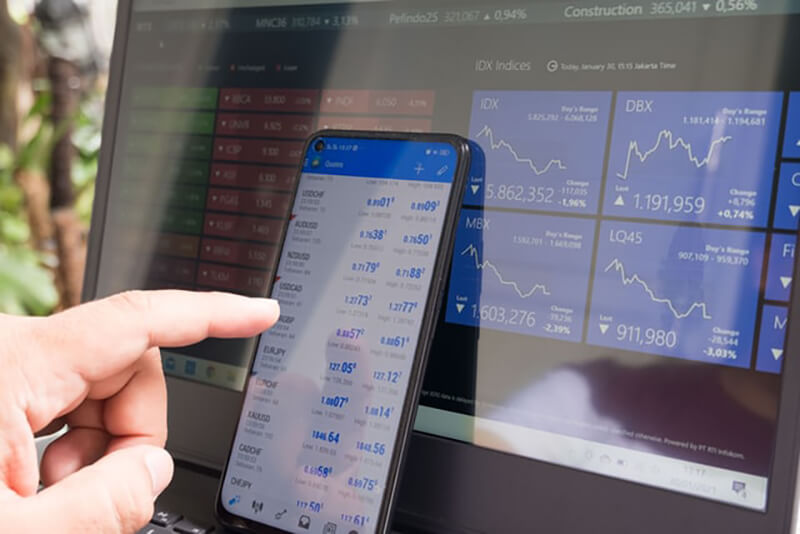
6 Tips To Help You Earn More While Trading

Trading stocks, commodities, and currencies is a great way to make money. Thousands of people regularly earn a living doing it. But the vast majority of those who start trading end up broke. They lose all their investment because they don’t know what they’re doing. If you want to be one of the few that succeeds at this, then read on as these tips should teach you everything you need to know about making more while trading

Know the Right Time to Buy and Sell

Trading currencies and commodities can be a complicated process especially if you don’t know what point in time is right for buying and selling them. It is important that before you decide to do so, you need to learn more about different market conditions such as trends or fluctuations which will eventually lead you to determine which position (buy/sell) will be most beneficial at the right time for maximum profits. Also, one should always research and learn the nature of the market such as trend direction, volatility levels, and other relevant data to make a sound decision about your future trades.

Use Automated Trading Platform

This is probably one of the best pieces of advice you can ever get if you’re serious about making a living out of trading currencies and commodities. The fact that computers do much better than humans when it comes to mathematical equations and complex operations doesn’t come as a surprise especially with systems that automate your options trading based on certain parameters defined by you. With such automated systems, traders can save time and energy as they will be able to focus on other important things such as having strategic conversations with other professionals or following important news updates to gain more insights about different market conditions.

It’s now possible to simulate day trading strategies to test your ideas and hone your skills risk-free. Simulated trading is a crucial aspect of the trading education process, which can be used by beginners and seasoned traders who want to test new concepts. A high-performance backtesting engine enables you to simulate automated trading strategies depending on historical data and evaluate past performance. Just imagine the learning you’ll obtain from simulating day trading strategies. It allows you to play, pause, and rewind historical records of market data fully platform-synchronized as if trading was happening in real-time.

Use Limit Orders for Your Trades

Limit orders help traders set a maximum price on the market when buying and an “off” or minimum price when selling at which they will not transact. A trader can use this strategy to protect against loss on his positions especially if the markets are fluctuating wildly. One of the best ways to do so is to put a predetermined limit order for both buy and sell transactions to give you more control over your positions without having to constantly monitor it all day long. It also enables you to determine exactly where your trades will be executed once the market reaches those points.

By gaining control of what you can trade, you can set the stage for reducing risks. In this way, you’ll enjoy trading without compromising the bulk of your finances and peace of mind.   

Know Your Risk Tolerance

Every trader has an amount they are comfortable losing knowing that they can make more if they win their bet. Knowing this number is very important as it allows traders to automate their options trading using stop losses which automatically sell off assets once it falls below a certain point or percentage value. This does not mean that traders should only set up “take profits” or “stop losses” for every single trade made since one should always have a bit of money on the table so he/she will have something left even if their trades eventually lose money. But one must understand the risk of every single trade made and be able to set it up accordingly.

It would also help to check your historical trading data. How many times did you win or fail? What are the lessons you’ve learned from your previous trading experiences? How did the experiences hone you as a trader? How do you plan to manage the risks if you already know the risks? Can you take risks? If yes, to what extent can you allow it or let go? Answer all these questions to determine the best strategies for trading risks to maintain a firm grip and avoid huge losses.

Never, Ever Use Leverage

Leverage can be very dangerous especially for traders who lack the knowledge about how it works and how people use different tools to automate their trades. Using leverage means that traders have already increased their chances of winning trade by borrowing from their broker to further multiply the profits gained from a single assets’ price fluctuations. But despite all these positive points, one should never forget that this is an extremely risky strategy as you might end up losing more than what you have if your automated system fails at providing accurate information or if your luck is just not on your side for that particular day. This is why leverage is best used for money you can afford to lose and using it should never be taken lightly.

Be Patient

This piece of advice may not seem like something related to the topic but this is one of the most overlooked factors in trading that can easily deter new or even experienced traders from achieving their full potential in terms of financial gain. Sometimes, even though automated systems might provide accurate information about when and where a certain asset price will go next, waiting too long for this prediction to come true and allowing the probability of your trade moving against you might leave you with nothing if your stop-loss order decides to kick in before your predicted movement happens. This is why patients should always be practiced by every single trader who wants to earn more out of their options trading.

Trading

Because trading is just like any other profession and requires a lot of effort and discipline to be mastered, it’s understandable why many people consider it unattainable. But just like how this article has discussed, learning useful tips on how you can use automated systems such as the grid trading system will surely give you an advantage over traders who are still trying to learn the ropes of trading.

How to Deliver Packages Faster: A Guide for Independent Drivers

The recent truck drivers crisis that unfolded in the UK showed the world just how much various actions and events (the pandemic and Brexit in this situation) can disrupt the worldwide supply chain. Furthermore, due to more people shopping online (for convenience and safety reasons), delivery drivers are now in high demand in most corners of the world. 

But, starting a delivery business requires a solid investment, which not everyone is keen on making. So, to keep the flow of commerce going, big retailers and even delivery companies started working with independent drivers who can take care of the last mile delivery problem. 

So if you’re a good driver, own a reliable vehicle, and know your city well enough, you could start a business as an independent driver. Furthermore, according to Circuit, you could end up making between $18 and $25 per hour, which can be a great way to get by for a while (especially if you’ve been unsuccessful in looking for a better job). 

Still, in order to earn good money, you have to be quick and efficient with your deliveries. The parcels must reach their destinations on time and without any damages.

For this to happen you have to know a few tricks and tips that you can only learn as a delivery driver. Of course, your experience as a driver is equally important, but it takes a bit more strategizing to move around quickly in a big city. 

To give you a hand, here are a few ways you can improve your delivery time and reduce costs with gas and more:

Train your Patience & Focus

It should go without saying, but delivery drivers must be patient people. Traffic can easily get hectic especially during rush hour times, so you have to know how to let go of anger when someone cuts you off in traffic or is being an absolute jerk. 

In most cases, the very idea of being blocked in traffic when you have somewhere to be is enough to drive you bonkers. This is why if you are going to spend most of your working day behind the wheel, you need to take a zen approach to life on the road.

Plus, when you’re calm, it’s easier to find your way out of a jam via a side alley or discover a better path.

Plan for Efficiency & Boredom Resistance

Sometimes, crazy traffic is better than the lull of an empty road with nothing ahead or behind. While this type of scenario is most common for long-haul drivers, there are times when you can get bored in the city as well. 

However, if you plan your routes well, you may not have the time to get bored. In fact, you may have a little bit of fun since it’s quite exciting to find the perfect route that takes you to all your delivery drops on the shortest and less-expensive path. 

Use Your Organisation Skills

If you played/play Minecraft, now is the time to put those skills to good use! 

Start by devising a plan for the customers’ parcels. Make sure the ones you’ll deliver first are easy to reach and grab, to reduce the time spent with each delivery to a minimum. Also, organize your papers and put together a system that allows you to know where everything is. This way, at the end of the day, you won’t have to spend much time putting everything in order and dealing with the cash. 

Wrap Up

While it may be a bit weird to manage a business in the post-pandemic reality, being an independent delivery driver is a great way to stay afloat during these difficult times. And who knows? If you like it, you may want to become a full-time entrepreneur and work hard on your success.

Increasing demand for online purchase has led to an increase in missing packages and theft. Right solution is Stowfly, that provides package receiving service done by a network of stores and shops. One can look for usps lost package and avail that avoids someone stealing your orders from a customer’s porch and passing on the blame to you.

6 Efficient Ways to Bill Your Business Customers

The cash flow of most businesses mostly depends on invoices being paid timely. In any case, many clients are notorious for paying late. Many businesses will tell you that being paid on time by all customers is a rarity. If being paid on time has become a pain for your business, you can use these practices to try and ease the issue.

As usual, the first stage is sending an invoice. Once a customer fails to pay before or due date, the next step is overdue notice. If there’s still no positive response, try calling. The last and final step involves sending a legal notice, and while that’s rare, it happens.

Small businesses should consider following these steps while asking for payments from their clients:

Invoice receipt/confirmation. This step involves confirming if the client received the invoice or not. You need to write a professional email to the client informing them about the payment due. Confirm the receipt by your client before proceeding.

Develop a concise email to request payment. If it’s a week overdue, the next step is writing a quick email. Remind them about the previous communications and invoices and ask for acknowledgment, along with any necessary late payment fee. Attach old invoices before sending them to the client.

It’s preferable to send brief emails at regular intervals before and after the due date.

Call your client. If the client still hasn’t settled the payment after sending an email, the next step is to contact them directly. Remind them about the email and invoice and tell them that they’re late in paying dues. Inform them about all the payment options available as well as any on-time payment bonuses in the future. Maintain a calm and friendly tone throughout the call to keep the relationship on good terms.

Sometimes, payment issues arise because your preferred payment method is not feasible or difficult for the client. If you’re in Singapore, consider using the MAS Electronic Payment System (MEPS), a local interbank payment and settlement system that lets you receive money quickly with optional SMS or email alerts when payments are processed.

Cut off future work. If the client isn’t paying the overdue invoice despite everything above, you will have to proceed with this. Cutting off all future deals or existing project milestones can work to encourage them to pay. With reason, explain why you need to take this step.

Consider collection agencies. You can hire a reputable collection agency if your previous efforts for collecting payment fails. The agency has strategies that will help you get your due payment from the client. Using a collection agency may cost you, but at least you’re getting something – it may also force the client to deal with you directly instead.

Check legal options. If all else fails, you will have to take this final step. You can file a case in court with all your collected proofs (invoices, emails, call records, contracts). Small businesses can take a client to a small claims court.

Is the issue because of payment method issues?

Some small businesses in Singapore aren’t aware of the same-day transfer of funds to recipient account using MEPS, which is currently the fastest way to transfer Singapore Dollar funds between banks in Singapore. Check this out and see if it will benefit client payments. 

The best way to make sure that you will be paid for your product or services is by setting a set of proactive policies and procedures to minimize the number of delinquent accounts receivable you will deal with.

EDITOR'S PICK OF THE WEEK

CFO's new mandate. CFO explaining the presentation

The Performance and Transformation Orchestrator: The CFO’s New Mandate in the Age of AI

By Terence Tse CFOs are evolving into AI-driven transformation orchestrators, balancing finance, technology, and strategy while upskilling teams, managing risks, and driving measurable business value. A key insight from this year’s AI for CFOs event, organized...

WISE DECISION MAKER GUIDE

POWER INFLUENCERS

Emerging Trends

The Future of Global Trade