Israel has launched a full-scale ground offensive on Gaza City, intensifying bombardments and defying international warnings over worsening humanitarian conditions. The assault began Tuesday on the city’s outskirts, where Israeli airstrikes flattened high-rise buildings and pushed thousands of Palestinians to flee.
“Gaza is burning,” Defense Minister Israel Katz declared, saying the Israel Defense Forces were targeting “terror infrastructures” to secure the release of hostages and defeat Hamas. Prime Minister Benjamin Netanyahu called the campaign a “critical stage” in the war, framing Gaza City as one of Hamas’ last major bastions.
The offensive comes as United Nations officials warned the assault will deepen a humanitarian disaster. Nearly one million people live in and around Gaza City, yet only 40% have evacuated despite repeated Israeli orders, according to the IDF. The UN’s human rights chief Volker Türk condemned the operation, urging world leaders to intervene. “It’s absolutely clear that this carnage must stop and it has to stop at once,” he said.
On Tuesday, a UN inquiry concluded that Israel is committing genocide in Gaza, alleging civilians were “targeted collectively due to their identity as Palestinians.” Israel rejected the finding as “distorted and false.”
Casualties mounted quickly. Gaza’s health ministry reported at least 93 people killed in northern Gaza alone, with more than 100 deaths across the enclave in a single day. Residents described relentless overnight strikes, with CNN footage showing flattened neighborhoods in Sheikh Radwan. “Fear, fear, it’s all fear,” one man told reporters as families hauled what belongings they could through the rubble.
The UN children’s agency UNICEF warned that an escalation would “multiply children’s suffering exponentially,” noting that 450,000 minors in Gaza City face famine, trauma, and the collapse of health services.
Palestinian Authority officials appealed for U.S. intervention, labeling the offensive a “war crime against humanity.” Despite criticism from global leaders, the Trump administration signaled strong support for Israel. Secretary of State Marco Rubio, visiting Jerusalem on Monday, demanded Hamas release 48 remaining hostages, saying the group may only be removed through “a concise military operation.”
Hamas called the assault “an unprecedented barbaric Zionist escalation.” Israeli officials estimate 2,000 to 3,000 militants remain in Gaza City, a tiny fraction of the broader civilian population.
Even Israeli commanders acknowledge the fight may not end with this offensive. “Gaza City is the main stronghold of Hamas at the moment,” an Israeli military official said. “I said main, not last.”
This piece explores the ripple effects of America’s retreat from humanitarian aid and what it means for fragile states, global stability, and future financing models for the sector.
In 2023, the United States accounted for 42% of global humanitarian aid.
On July 1st, 2025, the United States Agency for International Development (USAID), for decades a cornerstone of global relief and development, officially shut its doors. Funding to thousands of life-saving aid programs was terminated. Local clinics, food distribution centers, refugee camps, and education projects lost critical support. In total, close to $40 billion in annual assistance evaporated with the agency’s closure, leaving a gaping void in the global humanitarian landscape.
The decision to shutter USAID wasn’t made in a vacuum. For years, foreign aid faced mounting criticism over failed projects, excessive overhead, and programs that created dependency rather than development. Critics also pointed to the system’s over-reliance on a single donor—a structural vulnerability that aid experts had long warned about.
For years, foreign aid faced mounting criticism over failed projects, excessive overhead, and programs that created dependency rather than development.
With the wholesale shutdown of USAID, that structural vulnerability has been laid bare in the starkest terms. Whatever the system’s flaws, it had become the backbone of global emergency response. Furthermore, the majority of that response had clear, measurable impact. Emergency food assistance, vaccine distribution, HIV treatment, disaster relief: these are not experimental programs but proven interventions with well-documented results.
Although shortcomings in the humanitarian system have become increasingly apparent, reform should strengthen the foundation, not bring the whole structure down. This crisis has exposed the urgency to establish a new architecture: one that breaks down silos between humanitarian, development, and peacebuilding efforts; reduces dependency on any single state donor; and fosters collaboration among governments, international organizations, private philanthropy, and local communities. Instead, what we are seeing is not transformation but outright dismantling — leaving millions to bear the cost while the sector scrambles to rebuild from the ground up.
Unfortunately, last month, that void has deepened.
On July 17th, 2025, Congress passed the Rescissions Act of 2025, eliminating an additional $9.4 billion in unobligated foreign assistance and public broadcasting funds. Nearly $8.3 billion of that came directly from international aid budgets, slashing planned spending on humanitarian relief, health programs, democracy promotion, and economic support. Despite bipartisan concern, the bill passed narrowly along party lines and was swiftly signed into law. Though narrower in scope than the USAID shutdown, it reinforces a troubling trajectory: the dismantling of foreign aid as we know it.
It’s hard to overstate how disruptive USAID’s closure is to the humanitarian sector. In 2023, the United States contributed~$68 billion the world’s humanitarian aid. Of that, USAID’s direct spending accounted for about $40 billion, around 59% of the U.S.’s total humanitarian aid effort.[1]The agency is being folded into the state department, where it is to be replaced by a successor organization called “America First.”
With the funding cuts, humanitarian operations worldwide came to a standstill. For these programs, and the communities that depend on them, the opportunity to secure new resources and either complete, hand over, or responsibly close out their work is vanishing fast.
For implementing partners already reeling from USAID’s collapse, the Rescissions Act is a double-whammy. In some cases, planned back-up funding is now gone. In others, program transitions that were expected to be gradual are being aborted. And for fragile states that depended on American assistance—from Ukraine to Sudan, Congo to Gaza—the risk of a full-blown humanitarian collapse is growing by the week.
Amidst this uncertainty, we conducted a targeted analysis of USAID’s final funding obligations to understand where the gaps are sharpest—across geographies, sectors, and delivery partners. Our goal was to identify the most exposed communities and programs, and to help inform decisions about where resources and attention are most urgently needed.
Where the Gaps Are Sharpest: Who and What Is Most Affected?
Analysis of USAID’s FY2024 obligations reveals the scale and scope of the disruption. Across more than 24,000 funding records, more than $35 billion had been committed globally. With many of these activities now paused or cancelled, critical humanitarian services face an existential threat.[2] At an average cost of $4,500 to save a life through proven global health interventions like malaria treatment or child illness prevention, the $35 billion lost from USAID’s shutdown represents an opportunity cost of over 7.7 million lives.
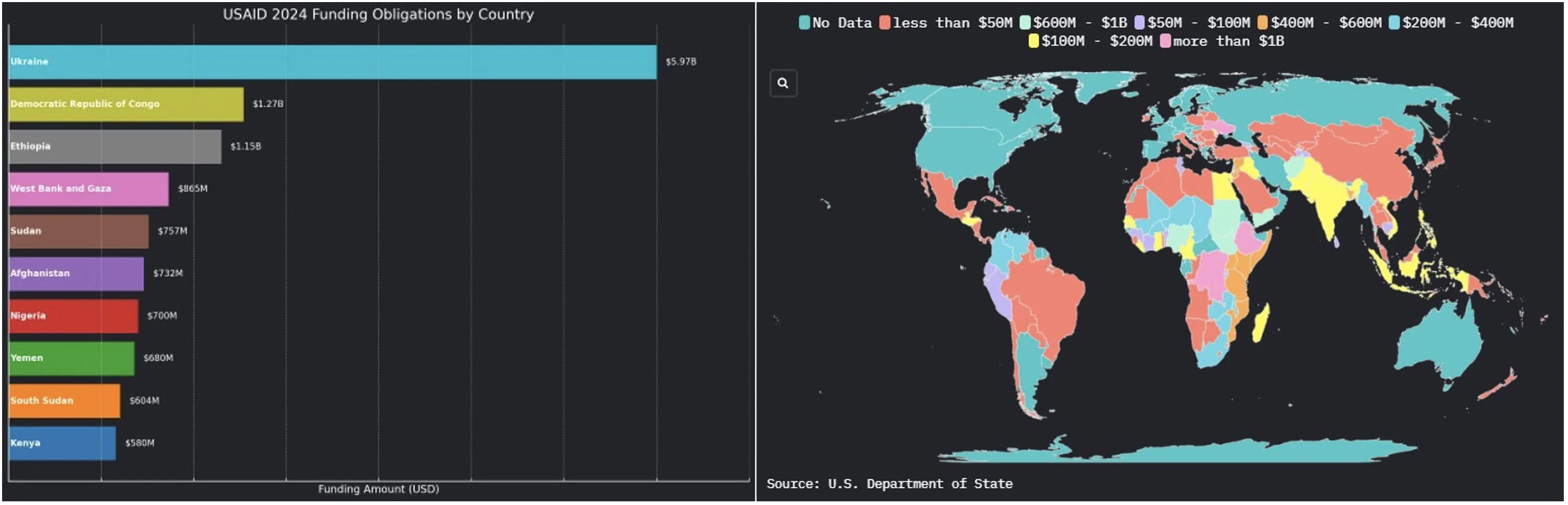
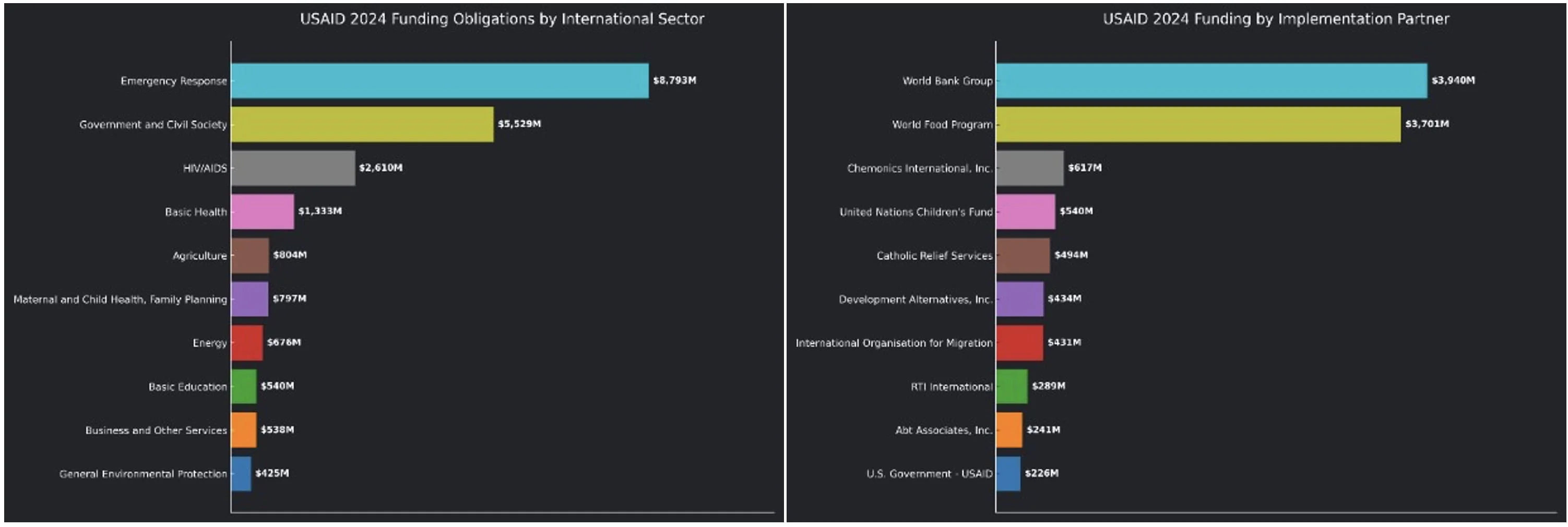
Many of the hardest-hit countries include Ukraine, the Democratic Republic of Congo, and Ethiopia: each expected to receive $1–6 billion in assistance. This funding spanned emergency food aid, healthcare, economic support, and more, all of which now faces uncertainty. Ukraine alone accounted for ~$6 billion of assistance in 2024, largely to bolster its war-torn economy and public services. Likewise, critical humanitarian and health programs (from emergency food aid to HIV/AIDS treatment) comprised some of the largest slices of the USAID portfolio.
For Ukraine, USAID’s closure could not have come at a more precarious time. Ravaged by ongoing conflict and economic strain, Ukraine had become the single largest beneficiary of U.S. foreign aid via USAID in 2024, receiving roughly $6 billion. This figure included nearly $3.9 billion in direct budget support to keep the Ukrainian government and essential services running, as well as hundreds of millions for infrastructure and energy repairs to keep the lights on during wartime.
Without USAID, Ukraine faces a massive budget shortfall in the midst of a costly war and humanitarian crisis.
That lifeline has now been severed. The macroeconomic support that helped Ukraine pay salaries, stabilize its currency, and maintain critical public utilities is gone. Likewise, USAID-funded projects shoring up Ukraine’s electricity grid and heating systems have been left in limbo. The consequences are already looming. Without USAID, Ukraine faces a massive budget shortfall in the midst of a costly war and humanitarian crisis. Funds that had been sustaining hospitals, schools, and social safety nets have dried up. While European and other allies may try to fill some gaps, the sudden loss of U.S. economic support poses risks to Ukraine’s stability and its ability to provide basic services during the conflict.
Democratic Republic of Congo: Humanitarian Lifelines Severed
In the Democratic Republic of Congo (DRC), home to one of the world’s most complex and protracted humanitarian crises, the end of USAID funding has been devastating. With more than $1.3 billion in USAID obligations in 2024, the DRC now faces funding shortfalls for programs including food aid, healthcare, and conflict mitigation for millions of Congolese civilians and refugees from abroad.
Aid agencies on the ground warn of immediate and life-threatening impacts. According to Manenji Mangundu, Oxfam’s country director, “USAID cuts will have an immediate and devastating impact on millions of the world’s most vulnerable people who depend on humanitarian aid for survival.”[3]In eastern Congo’s conflict zones, where over half a million people were already desperate for food, water, and shelter, the sudden funding halt means relief efforts are grinding to a halt.
USAID-funded food convoys and nutrition programs are being suspended, and NGO-run health clinics are running out of supplies. Agencies that relied on U.S. funds for everything from cholera prevention to support for displaced families now find themselves without resources, forced to make decisions about who gets help and who is turned away.
The loss of U.S. aid is also causing chaos for the organizations themselves. Most humanitarian groups in DRC depended heavily on USAID grants; without them, many programs face closure and staff layoffs. Oxfam estimates that the health of up to one million people is now at risk in DRC due to cuts in vital clean water and sanitation services, heightening the threat of disease outbreaks like cholera and measles.[4]
The Scale of Human Impact: Food, Health, and Fragile States
Of all the sectors upended by USAID’s closure, emergency food aid may be the most immediately consequential. The shock comes at a time when global hunger was already at record highs. The U.N. World Food Programme (WFP) – the world’s largest hunger relief agency, has sounded alarm bells about a massive funding shortfall. In March 2025, WFP warned that 58 million people worldwide are at risk of extreme hunger or starvation unless urgent funding is secured, after seeing drastic donor shortfalls this year (including the loss of U.S. contributions). The agency’s donor income in 2025 is projected to be 40% lower than the year before, a gap that “threatened feeding programmes in 28 crisis zones around the world” from Congo to Sudan, Syria to Yemen.[5]
The United States has long been WFP’s largest donor, so the abrupt halt of USAID-administered food funding forced WFP to contemplate deep cuts. With donor budgets shrinking and U.S. foreign aid in flux, the agency faces tough choices about where – and whether – it can deliver food aid. WFP’s own estimates show it may receive only about $8 billion of the $16.9 billion it needs to assist 123 million people in 2025.[6] The funding shortfall comes even as private donations have tripled since 2019. However, private donations only account for ~3.5% of WFP’s funding, nowhere near enough to compensate.
Even before the USAID shutdown, WFP and other agencies had begun rationing aid due to funding gaps. For example, in East Africa, refugees in countries like Ethiopia and Kenya saw their food rations cut by up to 40% in 2023–2024 because donor money wasn’t keeping up.[7] WFP officials are prioritizing “the worst-affected regions and stretching food rations” as far as possible, but they acknowledge that they are approaching a funding cliff with life-threatening consequences.[8]
Programs in Sudan, South Sudan, DRC, Palestine, Syria, Yemen, and other hotspots are at risk of suspension in the coming months if new funding doesn’t materialize. In humanitarian terms, this means millions of hungry people could be cut off from food assistance. The most vulnerable – including children, displaced families, and refugees – will feel it first. Already, in Bangladesh, WFP has had to reduce rations for Rohingya refugees due to lack of funds.[9]In Afghanistan, Yemen, and Syria, programmes to prevent child malnutrition are being scaled back and could halt entirely. The USAID freeze adds immense pressure to an already strained system. The coming months will determine whether stopgap measures can avert the worst outcomes, or whether 2025 will see a dramatic spike in famine and undernutrition because the world’s largest donor stopped feeding the hungry.
Health Programs in Peril: The case of HIV/AIDS
The human impact of the aid cutoff is equally stark in the health sector, particularly for disease-specific programs that had depended on U.S. leadership. One of the most illustrative is the fight against HIV/AIDS. For two decades, the U.S. (through U.S. President’s Emergency Plan for AIDS Relief (PEPFAR) and contributions to the Global Fund) led a global campaign that saved millions of lives and brought AIDS under control in many countries.
However, when the U.S. government paused all foreign assistance, it caused an instant rupture in HIV services: deliveries of life-saving HIV medicines were interrupted, and prevention programs for at-risk populations were halted across dozens of countries.[10] Millions of people who depend on consistent antiretroviral treatment and outreach support were suddenly and abruptly cut off, left without care from one week to the next.
UNAIDS, the United Nations agency leading the global HIV response, has issued dire warnings. According to UNAIDS projections, if U.S. support for HIV programs is not quickly restored or replaced, the world could see an additional 6 million new HIV infections and 4 million AIDS-related deaths between 2025 and 2029.[11]“This is not just a funding gap. It’s a ticking time bomb,” said UNAIDS Executive Director Winnie Byanyima, noting how services have “vanished overnight” in some places and health workers have been sent home. The progress of the last decades is at risk of unraveling: before the crisis, global HIV infections and deaths had been steadily declining (new infections were 40% lower in 2024 than in 2010), but that hard-won progress could reverse if treatment and prevention stall out now.
Amid this bleak outlook, there was one notable exception. Following bipartisan pushback, the Senate amended the Rescissions Act of 2025 to preserve PEPFAR funding, stripping out a planned $400 million cut.[12] This move protected a cornerstone of the global HIV/AIDS response, ensuring that key services—such as antiretroviral distribution and testing—can continue in the short term.
However, the safeguard appears to apply only to PEPFAR. Other HIV/AIDS initiatives, particularly those funded through USAID or routed through broader global health platforms, were not exempted. With nearly $8 billion in international assistance rescinded overall, the fallout for HIV programs outside the PEPFAR umbrella is significant. Community-based prevention efforts, health systems strengthening, and cross-cutting support services are among the casualties, leaving dangerous service gaps in many countries.
On the ground, the disruption also entails knock-on effects. In countries like Mozambique, more than 30,000 health personnel (many of them involved in HIV and TB programs) have lost their jobs as U.S.-funded projects shut down.[13]Such losses not only hurt HIV treatment delivery but also weaken healthcare overall, as these workers also handle maternal health, vaccinations, and more.
Beyond HIV/AIDS, other health initiatives are suffering a similar fate. Tuberculosis clinics and outreach programs, some funded through USAID’s global health security efforts, are reporting shortages of medicines and diagnostic kits.[14] Malaria control programs that depended on U.S. funding for bed nets and spraying have scaled back, even as cases surge in places like Ethiopia.[15] Maternal and child health programs, from vaccine campaigns to nutrition for pregnant women, are likewise facing gaps.
In summary, the global health safety net has unraveled. The sudden withdrawal of the world’s largest donor is being measured in clinic closures, medicine stock-outs, and lives at risk. Whether it’s an HIV-positive mother in Kenya, a malaria-stricken child in Ethiopia, or a TB patient in Ukraine, vulnerable people are seeing their lifelines weakened. Health experts fear that without an urgent solution, the coming years could see resurgences of epidemics that had been under control, and a loss of confidence in health systems in some of the world’s poorest countries.
Can the Void Be Filled?
The closure of USAID’s programs in 2025 sent shockwaves through the humanitarian sector. The passage of the Rescissions Act of 2025 has now cemented a broader shift: a systemic retreat of the United States from its long-held role as the world’s leading humanitarian donor. Together, the agency’s shutdown and the rescissions mark an abrupt and ideologically driven pivot in U.S. foreign policy, one that deprioritizes humanitarian principles in favor of short-term domestic optics.
With each round of funding clawbacks, the humanitarian landscape becomes more fragile, more reliant on fewer actors, and more vulnerable to political shocks.
Front-line services have been disrupted, implementing partners destabilized, and local capacity gutted. In conflict zones and refugee camps, people who yesterday had food, medicine, or shelter provided by an American-funded project are waking up today to nothing. The ripple effects will not stop here. With each round of funding clawbacks, the humanitarian landscape becomes more fragile, more reliant on fewer actors, and more vulnerable to political shocks. The instability has rippled through organizations as well – tens of thousands of aid workers have lost employment globally due to the cuts, undermining local capacities built up over years.[16]It is a stark reminder of the interdependency and fragility of the humanitarian system and how quickly gains can be reversed.
Yet, amid the uncertainty, there are seeds of adaptation. Other nations and international institutions are under pressure to step up their contributions, even as many face their own budget constraints. Philanthropic actors, exemplified by Project Resource Optimization (PRO)[17], are innovating to plug critical gaps, however modestly. And affected communities and governments are striving to do what they can to fill the void – whether it’s health ministries reallocating scarce domestic funds to keep HIV clinics open, or local NGOs rallying volunteers to continue aid distribution on a shoestring. These efforts highlight the resilience and resourcefulness within the humanitarian sector.
Still, the road ahead remains challenging. The scale of disruption, $30+ billion annually, is not something that can be easily or quickly patched. The worry is that without prompt action to restore funding streams, today’s cutbacks will become tomorrow’s full-blown catastrophes – be it famine, disease outbreaks, or instability from unaddressed crises. The international community is therefore at a crossroads. Will new coalitions of donors emerge to restore at least a portion of the lost aid? Will cost-effective initiatives like PRO inspire more strategic giving to soften the blow? Can some projects spin-off into revenue-generating programs? Or will the world’s vulnerable populations simply be left to bear the brunt of a political decision beyond their control?
The 2025 USAID closure has infused a sense of urgency and clarity about what is at stake. This moment demands not just emergency stopgaps, but a fundamental rethinking of how global aid is structured, financed, and sustained. The old model—with its heavy dependence on a single donor and rigid institutional silos—has proven dangerously fragile. The new architecture must be more resilient: distributed across multiple funding sources, integrated across sectors, and rooted in partnerships that strengthen rather than replace local capacity.
The hope is that this crisis will catalyze not just a restoration of funding, but a reimagining of the humanitarian response itself. The Rescissions Act should be a rallying cry for systemic change. The world cannot afford for the lights to go out, but neither can it afford to simply flip the same old switches. The system holds—until it doesn’t. Now it’s time to build one that will.
Patrick Reichertis the Associate Director & Research Fellow at the elea Chair for Social Innovation at IMD. Patrick conducts research at the intersection of entrepreneurship, finance and social impact, with a particular focus on the mechanisms and practices that investors use to seed investment in social organizations.
Vanina Farberis the elea Professor for Social Innovation and Dean of the EMBA Programme at IMD. Vanina is a macroeconomist and political scientist specializing in humanitarian finance, impact investment, and social innovation, with more than twenty years of experience in research, teaching, and consultancy. At IMD, Vanina designs and directs the Driving Innovative Finance for Impact (DIFI) program, equipping leaders with tools to drive sustainable financial solutions.
[17] Project Resource Optimization (PRO) is an independent initiative formed in 2025 with a singular mission: to channel resources to the most urgent and effective aid programs left stranded by USAID’s shutdown. PRO uses rigorous analysis, sector expertise, and a “living” database of projects to guide donors. It scours the list of cancelled or paused USAID programs to identify those that are high-impact, cost-effective, and time-sensitive – for example, a partially completed health clinic that just needs a few months of funding to finish, or a food aid program mid-way through feeding a community. These vetted opportunities are then shared with philanthropies, charities, and even high-net-worth individuals who are eager to step in and contribute funding.
Congressional Budget Office Director Phillip Swagel said Monday that President Donald Trump’s tariffs appear to have pushed inflation higher than CBO analysts initially projected, adding a new layer to the ongoing debate over the economic fallout of the trade measures.
Speaking on CNBC’s Squawk Box, Swagel explained that while the economy has weakened since January — a factor that normally eases price pressures — the CBO’s analysis indicates that tariffs are adding upward momentum to inflation. His assessment stands in contrast to many Wall Street analysts, who have anticipated tariff-driven price increases but say they have yet to see them fully materialize.
Swagel also outlined the CBO’s long-term forecast on the fiscal impact of tariffs, projecting that they would reduce the federal budget deficit by $4 trillion over the next decade. “So $3.3 trillion of revenue and then $700 billion of averted debt costs,” he said. “That would be a big reversal in terms of the deficit.”
The future of Trump’s trade policies remains uncertain. The Supreme Court is scheduled to hear arguments in early November after the administration appealed lower court rulings that found the president had overstepped his authority in imposing the tariffs.
Swagel called the outcome of that case “one of the key uncertainties in the economy.” Still, he noted that the CBO expects the effects of that policy instability to diminish over time. “The effects of policy uncertainty dissipate over time and disappear by the end of 2027, returning investment to what it would have been without the uncertainty in trade policy,” the CBO said in its September report.
The White House has defended tariffs as a tool to strengthen U.S. manufacturing and curb reliance on foreign suppliers, while critics warn they risk higher consumer costs and dampened business investment.
President Donald Trump on Saturday vowed to impose sweeping sanctions on Russia once all NATO allies join in halting purchases of Moscow’s oil. He also urged member states to adopt steep tariffs on China, escalating his push to use economic pressure to end the war in Ukraine.
“I am ready to do major Sanctions on Russia once all NATO countries have started to do the same thing and pause their purchases of oil from Moscow,” Trump wrote in a Truth Social post. He also called for “50% to 100% TARIFFS ON CHINA,” to be lifted only after the conflict concludes.
The president argued that Beijing holds significant sway over Moscow, saying, “China has a strong control, and even grip, over Russia, and these powerful Tariffs will break that grip.” He said the post reflected the text of a letter sent to all NATO nations and “the world.”
Treasury Secretary Scott Bessent praised the move, calling unified sanctions essential to squeezing Russia’s economy. “Only with a unified effort that cuts off the revenues funding Putin’s war machine at the source will we be able to apply sufficient economic pressure to end the senseless killing,” Bessent wrote on X.
Trump has previously threatened punitive measures against Moscow but has yet to follow through. Earlier this month, he signaled that a “second phase” of sanctions was under consideration but stopped short of immediate action.
Ukrainian President Volodymyr Zelenskyy urged Western allies not to delay. “I urge all partners to stop looking for excuses not to impose sanctions—Europe, the U.S., the G7, the G20,” he wrote Saturday on X. Zelenskyy stressed that cutting Russian oil consumption would weaken Moscow’s ability to sustain its war.
Analysts note that Trump’s strategy reflects concerns that a weakened Russia could fall deeper into China’s orbit. “If Russia is defeated … then it has no choice but to go even further all-in with China, and that potentially then would strengthen China’s position,” Chris Weafer, chief executive of Moscow-based Macro-Advisory, told CNBC earlier this month.
Trump criticized NATO members for what he described as halfhearted efforts. “As you know, NATO’S commitment to WIN has been far less than 100%, and the purchase of Russian Oil, by some, has been shocking!” he wrote, arguing that continued reliance on Russian fossil fuels “greatly weakens” the alliance’s bargaining power.
Hungary and Slovakia have drawn fire from Washington for continuing to import Russian energy. U.S. Energy Secretary Chris Wright echoed Trump’s stance, saying Friday: “We want to displace all Russian gas. President Trump, America, and all the nations of the EU, we want to end the Russian-Ukraine war.”
The market for green mobility and sustainable infrastructure is experiencing unprecedented demand. Despite this imperative, a critical gap persists in the availability of long-term, impactful capital required to meet global climate targets. This is where Meridiam emerges as a compelling exception – a significant, yet largely unheralded, force quietly reshaping the future of urban transport and sustainable development worldwide.
The imperative to address global climate targets is driving demand for sustainable and eco-friendly mobility and infrastructure solutions. However, the success of efforts in the transport sector remains insufficient, presenting a significant market challenge. For instance, even in Europe, a leading region for sustainable development, domestic transport emissions are not projected to fall below 1990 levels until 2032, while international aviation and maritime emissions continue to rise. This trend is even more acute in other regions: transport emissions in Asia and the Pacific show persistent growth, and Africa’s transport carbon efficiency remains low, contributing to a substantial public health burden, including an estimated 383,420 annual deaths. Beyond direct emissions, the broader challenges in achieving sustainable mobility—exacerbated by rapid motorization, inadequate infrastructure, and limited transport access—have global market implications. These repercussions include accelerated climate change, strained global energy markets and supply chains, a growing worldwide public health burden from pollution and accidents, and the potential to exacerbate economic disparities and migration flows, impacting international stability.
Sustainable Transport demands Huge Investments
Widespread deployment of sustainable solutions remains nascent in many markets. A primary impediment to global progress is the substantial capital required for developing, maintaining, and modernizing transportation infrastructure. The systemic transformation of global transport networks presents a financial challenge: the World Bank estimates the sector will require $50 trillion in investment by 2040, with an estimated investment gap of $10 trillion. Consequently, as nations globally deliberate optimal and pragmatic development pathways, a critical market-driven question emerges: how will the necessary financing for sustainable mobility be secured?
The magnitude of investment needed for widespread shift towards sustainable mobility necessitates mobilization of both public and private capital. And while existing financial instruments, including green bonds, public-private partnerships, and structured project finance, are available to address the investment gap, they remain insufficient. The most critical market impediment stems from the prevailing attitude of many private capital vehicles, particularly venture capital and certain private equity funds. These typically prioritize short-to-medium-term exit horizons (e.g., 3-7 years) and high internal rates of return (IRR), often demanding significant multiples on invested capital. This approach is misaligned with the longer gestation periods and potentially lower initial IRRs characteristic of transformative, deep projects. The situation is further exacerbated in emerging markets, where private investors encounter elevated perceived risks and greater return uncertainty stemming from macroeconomic instability, regulatory unpredictability, and underdeveloped foundational infrastructure. These factors inflate operational costs and constrain demand, thereby diminishing project attractiveness despite a burgeoning global demand for sustainable financial products across other sectors, creating a demonstrable scarcity of long-term, patient private capital for systemic sustainable mobility infrastructure.
Meridiam: a Meaningful B Corp
However, select market participants demonstrate a different approach that addresses these impediments. One of them is Meridiam, a Benefit Corporation (B Corp) and an asset manager, legally committing to social and environmental sustainability with the same rigor as financial returns. With the B Corp status as a foundational element of the responsible investing, the company integrates robust ESG criteria and a broader impact focus into its financial planning, and prioritizes investments in essential services and areas of significant need. By focusing on fundamental societal requirements and fostering socio-economic resilience, Meridiam mitigates certain risks—such as demand volatility, political instability, and regulatory unpredictability—that typically deter conventional private capital vehicles prioritizing solely financial returns. This, in turn, enables the business to successfully deploy patient capital and navigate complex operating environments where traditional investment models falter, thereby demonstrating a viable pathway for long-term sustainable mobility infrastructure financing.
A prime example of the company philosophy is the Dakar (Senegal) Bus Rapid Transit (BRT) project. This high-capacity, fully electric bus system integrates renewable energy sourcing, a dedicated bus lane network, and urban development initiatives focused on energy efficiency. Meridiam’s participation as a private sector partner is underpinned by a structured operating agreement which incorporates critical risk mitigation mechanisms, including minimum revenue and passenger guarantees, alongside provisions for annual fare revisions. Furthermore, the investor took active participation in the ESG planning, which resulted in low environmental risk due to its selected technology, and proactive management of social risks hedged through a comprehensive Environmental and Social Action Plan and an Environmental and Social Management System. Such contractual and ESG de-risking represents an advanced market trend enabling private capital deployment in long-duration infrastructure projects within emerging markets, while assessed financial viability of the project, with an economic IRR of 18.9%, demonstrates how integrating robust financial planning with a commitment to environmental and social impact can yield viable, long-term infrastructure.
Overall, the Dakar project significantly reinforces Meridiam’s strategic positioning and operational capabilities within the African market, which has emerged as the company’s primary focus with over €5 billion already invested and a target for substantial portfolio increase. And it looks like the investor is actually able to handle the challenge: a differentiator here is Meridiam’s capacity to orchestrate multi-stakeholder partnerships, aligning governments, private sector entities, multilateral development banks, and national/international development institutions, which accelerates project execution and enables local capacity building. Furthermore, the firm’s approach to managing inherent regional risks, such as political, institutional, and economic volatility or potential conflict, is central to its operational model; Meridiam employs systematic de-risking strategies, including securing robust political risk insurance, economic stability guarantees, and contractual breach protections with partners, thereby enabling investment in environments often perceived as high-risk and facilitating private sector engagement in emerging markets.
The strategic framework for comprehensive infrastructure development is grounded in deep operational experience and validated by a global portfolio exceeding $20 billion and revenue growth from €6.7 billion in 2023 to €7.5 billion in 2024, signifying effective asset monetization and incorporated sustainability across over 120 projects like the Port of Miami Tunnel, high-speed rail in France, and others. This execution capability positions Meridiam to strategically address infrastructure deficits in emerging markets and challenging sectors where market complexities or elevated risk might deter conventional investment, delivering transformative solutions where they are most critically needed.
In the conditions of a changing market and mentality of private investors, this can become a pivotal point for the company and its clients and beneficiaries. We have already seen that the evolving market landscape and shifting investor preferences present a critical capital allocation challenge within the green mobility sector. A pronounced shortage of patient capital is evident, as prevailing investment structures often prioritize projects promising rapid financial returns. This bias frequently diverts capital from complex, integrated urban mobility solutions towards simpler, quicker-to-monetize micro-mobility assets, despite the latter’s comparatively limited long-term environmental and societal impact. Meridiam, however, recognized early that delivering truly impactful, large-scale infrastructure necessitates significant foresight, patient capital, specialized expertise in project design and financing, and sophisticated engagement across both private and public sectors. This strategic, long-term approach, while atypical in the current investment climate, has demonstrably yielded both financial returns and substantial societal benefits, exemplified by the PortMiami tunnel’s significant regional economic contributionor the Dakar BRT’s early, high passenger volumes. And it is evident now that Meridiam’s proven model for developing complex, high-impact infrastructure suggests a potential trajectory for market evolution, advocating for a more sustainable and patient investment paradigm.
Training gamification represents a transformative approach to workplace education, incorporating game mechanics like points, leaderboards, badges, and rewards to make learning more engaging. This innovative strategy appeals to intrinsic human desires for competition, recognition, and accomplishment. For businesses, it offers a compelling solution to the challenge of motivating employees to embrace complex subjects—such as Generative Artificial Intelligence (Gen AI)—with enthusiasm and sustained effort. By turning traditional training into an interactive, rewarding experience, gamification not only increases participation but also enhances knowledge retention and application.
The Case for Gamification in Gen AI Training
The promise of gamification in corporate training lies in its ability to transform intimidating or mundane subjects into approachable and rewarding learning journeys. Research shows that employees are far more engaged and motivated when training incorporates gamified elements. For example, a study by TalentLMS found that 83% of employees undergoing gamified training felt motivated, while 61% of those who receive non-gamified training feel bored and unproductive. Furthermore, an academic research study published in 2024 in the Journal of Innovation & Knowledge showed gamification to improve knowledge retention rates, knowledge sharing, and job performance.
This approach not only promotes engagement but also equips employees with the skills needed to leverage Gen AI tools effectively in their day-to-day work.
For companies looking to introduce Gen AI—an area rife with technical jargon and complexity—gamification provides an effective pathway to success. It helps employees build confidence incrementally, turning once-daunting topics like data analysis, automated workflows, and predictive modeling into manageable tasks. This approach not only promotes engagement but also equips employees with the skills needed to leverage Gen AI tools effectively in their day-to-day work.
Client Case Study: Turning Gen AI Training Theory Into Practice
A mid-sized manufacturing company I recently consulted for illustrates how gamification can revolutionize Gen AI training. This company, with approximately 700 employees and a focus on precision machining, recognized the potential of Gen AI to optimize production, reduce downtime, and improve supply chain management. However, initial attempts at traditional training yielded lackluster results. Participation rates were low, and employees expressed frustration with the dense material, resulting in limited skill application.
To address these challenges, the company asked my help to design a gamified training program tailored to the company’s specific needs and workforce dynamics. The program centered around three key goals: demystifying Gen AI concepts, increasing employee engagement, and ensuring practical skill application.
Key Elements of the Gamified Program
1. Modular Learning with Interactive Challenges
The training was divided into modules, each focused on specific Gen AI applications relevant to the company, such as predictive maintenance, quality control automation, and real-time production monitoring. Each module incorporated quizzes, simulations, and problem-solving exercises designed to mirror real-world scenarios employees might encounter on the factory floor. Points were awarded based on performance, encouraging employees to strive for mastery.
2. Leaderboards and Recognition
Employee progress was tracked on a leaderboard, visible company-wide. Department-specific leaderboards were also created to foster local camaraderie and competition. Employees competed individually and in teams, working collaboratively to solve complex manufacturing challenges using Gen AI tools.
3. Badges and Rewards
Badges were awarded for milestones such as completing modules with high scores or contributing innovative solutions during team challenges. These badges were displayed on employees’ profiles in the company’s learning portal, offering public recognition. The company also celebrated top performers during monthly meetings, where they received small but meaningful rewards, such as gift cards and paid time off.
4. Personalized Feedback and Support
To complement the gamified elements, the program included regular feedback from internal experts and my team of external trainers. This ensured employees not only knew their standings but also received actionable guidance to improve their skills and performance.
Transformative Outcomes for the Company
Employees who had initially been skeptical about the program began engaging enthusiastically, motivated by the combination of competition and rewards.
The results of the gamified Gen AI training program were remarkable. Within six months of implementation, the company saw a 75% increase in training participation. Employees who had initially been skeptical about the program began engaging enthusiastically, motivated by the combination of competition and rewards.
Completion rates soared to 70% compared to just 40% with the prior, non-gamified approach. Moreover, post-training assessments revealed a 35% improvement in knowledge retention. Employees were not only able to recall key Gen AI concepts but were also applying them effectively in their roles. For example:
Predictive Maintenance: Maintenance teams used newly acquired Gen AI skills to predict machine failures more accurately, reducing unplanned downtime by 18%.
Quality Control: Operators leveraged Gen AI tools to analyze production data in real-time, decreasing defect rates by 12%.
The gamified approach fostered greater collaboration across departments. During team challenges, employees from production, logistics, and quality control worked together to solve shared challenges, breaking down silos that had previously hindered communication and innovation. This collaborative spirit carried over into daily operations, improving teamwork across the board.
Perhaps most importantly, employees reported feeling more confident and empowered to use Gen AI tools in their day-to-day tasks. Surveys conducted after the training revealed that 87% of participants felt the program had increased their job satisfaction, and 78% expressed interest in pursuing further upskilling opportunities.
Lessons Learned and Best Practices
The success of the gamified training program offers valuable insights for other organizations seeking to implement similar initiatives:
Tailor the Program: Align gamified elements with organizational goals and employee needs. For this manufacturing company, focusing on practical applications of Gen AI ensured relevance and buy-in.
Balance Competition and Collaboration: While leaderboards motivate individual performance, team challenges encourage collaboration, creating a balanced and inclusive training environment.
Recognize and Reward Achievements: Public recognition and tangible rewards amplify the motivational impact of gamification, fostering sustained engagement.
Provide Support: Personalized feedback from trainers ensures employees stay on track and feel supported throughout their learning journey.
Conclusion
Gamification offers a powerful solution to the challenges of upskilling employees in complex areas like Gen AI. By transforming learning into an interactive, rewarding experience, organizations can enhance engagement, boost knowledge retention, and achieve practical skill application. As demonstrated by this manufacturing company, the benefits extend beyond individual performance, fostering a culture of collaboration, innovation, and continuous improvement. For businesses seeking to thrive in an increasingly AI-driven world, gamified training is not just a novel idea—it’s a strategic imperative.
As evidenced by complicity in the Gaza genocide, the US-Israel military symbiosis in the Middle East is increasingly shunned by the international community. What the region needs is aggressive economic development.
Recently, a high-level UN conference urged Israel to commit to a Palestinian state and gave “unwavering support” to a two-state solution. The “New York Declaration” set out a phased plan to end the eight-decade conflict and the ongoing Gaza catastrophe.
Co-chaired by France and Saudi Arabia, the EU, the Arab League and 15 countries, the conference envisioned an independent, demilitarized Palestine living side by side peacefully with Israel, and their eventual integration into the broader Middle East.
Last week, China joined the New York Declaration. As foreign ministry spokesperson Guo Jiakun stated, “we support all efforts that are conducive to the political settlement of the question…, and the ultimate, comprehensive, just and lasting resolution of the Palestinian question.”
Palestine and thereby the broader Middle East are now at a critical inflection point. For decades, US efforts at “normalization” have unleashed ever-greater devastation in the region, which is crying for a peaceful development scenario, championed by China and the largest economies of the Global South.
America’s effective Middle East strategy
The Biden administration’s Middle East plan – the “grand bargain” – built on the first Trump administration’s Abraham Accords, which were preceded by Israel’s peace treaties with Egypt (1979) and Jordan (1994) and the Oslo Accords with the Palestinian Authority (1993–95). These accords are premised on Arab-Israeli normalization, particularly between Israel and the UAE and Bahrain. With the US as the behind-the-façade architect, deals with Morocco and Sudan were announced between September 2020 and January 2021, respectively. The grand bargain was premised on the marginalization of Chinese trade and investment presence in the Middle East – and on the sidelining of the Palestinians.
After all, the real money is not in peace talks, but in arms sales.
Yet, ever since the Gaza hostilities, Israel’s relentless bombing and Biden’s support of Netanyahu’s war cabinet, the talks have stalled as bilateral trust between Israel and the Gulf states has eroded. In a sense, this is the logical effect of America’s effective Middle East strategy, as opposed its rhetorical diplomatic stance. After all, the real money is not in peace talks, but in arms sales.
America is the court supplier of all major military powers in the Middle East. In the case of its closest allies, the US provides 60 to 80 percent of their lethal imports (Israel, Kuwait, Saudi Arabia). In the rest, it accounts for 50 to 60 percent of the total (UAE, Iraq, Qatar), followed by Egypt (34%) whose primary suppliers are mainly America’s NATO allies (Germany, Italy), as well as Russia.
US Arms Sales in the Middle East
Estimated military value of arms imports. These countries include the largest recipients of US arms sales in the Middle East. Source: SIPRI
The steady, progressive flow of arms into the troubled region has been the primary contributor to its geopolitical volatility and economic uncertainty, particularly in the light of the military symbiosis between the US and Israel.
In the context of Israel facing ICJ and ICC charges related to genocide, such arms transfers would seem to violate customary international law, including the International Law Commission’s Draft Articles on Responsibility of States for Internationally Wrongful Acts, and International Humanitarian Law, including Common Article 1 to the four Geneva Conventions of 1949.
Obviously, both the US and Israel have rejected all such charges. Instead, Washington has aggressively sanctioned the ICC and its prosecutorial authorities.
China’s BRI stance in the Middle East
In the past decade or so, China has emerged as a credible and peaceful intermediary among the different stakeholders in the Middle East. In addition to investing significantly in countries in which the US is known and notorious for its military aid and regime change operations, Beijing has achieved several diplomatic coups.
For decades, US administrations fostered a divide between Saudi Arabia and Iran, the Sunni and Shia leaders of Middle East geopolitics. Yet, in March 2023, these two countries announced the resumption of bilateral relations, after a deal brokered by China. After decades of US-led sanctions, Iran hoped to focus on economic development, whereas Riyadh was intent on realizing the Saudi Vision 2030 of a more diversified, less oil-reliant economy.
In July 2024, China played a vital role in fostering Palestinian national unity in what became known as the Beijing Declaration, signed by 14 different Palestinian factions, most prominently by Fatah and Hamas. In the subsequent weeks, Israel, supported by US arms and military financing, intensified its assassination campaign against these Palestinian leaders – which also led to the recent attack in Doha.
In 2015, years of challenging talks resulted in a nuclear deal (Joint Comprehensive Plan of Action, JCPOA) between Iran, the U.S., and a set of world powers. Despite Iran’s adherence to it, the Trump administration pulled the U.S. out of the deal in 2018. In the White House, regime change in Iran remains tempting, due to Tehran’s huge regional economic and geopolitical importance.
China has exclusive rights to several Iranian oil and natural gas fields. As part of a 2016-2017 agreement, some Chinese military leaders argued Beijing would regard a foreign attack on these areas as attack on its own sovereign territory. Two years later, Iran joined China’s Belt and Road (BRI) initiative. In March 2021, the countries signed a 25-year and $400-billion strategic cooperation agreement. (Despite these deals, Israel attacked Iran in 2024 while the US bombed Iran’s nuclear facilities in June 2025.)
In August 2024, Beijing sent an even stronger signal about its commitment by establishing a Second Silk Road in the region. It ensued after major Chinese investments in Saudi Arabian stocks and the signing of MOUs worth $50 billion with six major Chinese financial institutions. And in July 2025, China and Egypt expanded their bilateral cooperation across various economic sectors.
The progressive rise of China’s economic presence in the Middle East remains a matter of great concern in Washington.
The militarization of US foreign policy
Yet, the real problem is not Gaza, Iran or China, but the gross militarization of US foreign policy. In September 2012, Karl W. Eikenberry, former U.S. ambassador to and commanding general of Afghanistan, warned that in the past 50 years American foreign policy has become “excessively reliant on military power.” Supported by its global military web, the U.S. has been in war, engaged in combat, or has otherwise employed its forces in foreign countries in all but 11 years of its existence.
Supported by its global military web, the U.S. has been in war, engaged in combat, or has otherwise employed its forces in foreign countries in all but 11 years of its existence.
Since the establishment of the first US bases in Israel in the late 2010s, Israel’s military actions have escalated dramatically, as evidenced by the Gaza catastrophe, the attendant attacks in neighboring Arab states, such as Lebanon and Syria, and even further in Iran and Yemen, and most recently in Qatar – a key US ally in the region.
Since 1945, Washington has relied on a dark record of regime change and destabilization in the Middle East. The post-9/11 wars alone have cost over $8 trillion and the lives of more than 1 million people, whereas in Gaza the US is complicit to genocidal atrocities, due to its massive military aid and financing of hostilities. This disastrous performance is driving a rethink in the Trump White House where Pentagon officials, headed by Elbridge Colby, are reportedly proposing the department prioritize protecting the homeland and Western Hemisphere, a striking reversal from the military’s focus on the “China threat” – and one that Washington’s neoconservatives won’t easily accept.
Yet, the simple truth is that the era of US destabilization policies is over in the Middle East. The time for aggressive economic development, led by China and the Global South, has arrived.
Obliteration wars are no solution to 21st century challenges.
The original commentary was published by China-US Focus on September 12, 2025.
The next transformative wave, quantum computing, is imminent. For SMEs, its profound potential in optimisation, simulation, and financial modelling offers a significant competitive advantage. However, it simultaneously threatens current cybersecurity encryption. This article argues that proactive preparation is no longer optional but a strategic imperative for businesses aiming to thrive in the post-quantum era.
The world of information technology is in constant flux, presenting new and ongoing challenges for small businesses. In recent times we have seen the rise of cloud computing, the growth of data management and the arrival of artificial intelligence (AI) into every workplace.
Just keeping pace with changes in IT is a daily challenge. Now, another transformative wave is on the horizon: quantum computing.
While it might sound like something out of science fiction, the implications of quantum computing for even the smallest, most local business are profound and far-reaching.
Within the next couple of years, quantum computing will be as relevant to your business as AI has become, and understanding its potential and preparing for its arrival is no longer optional; it’s a strategic imperative.
Demystifying the quantum realm
Quantum computers aren’t just faster than conventional computers, they are designed to tackle specific, complex problems that are currently impossible, even for the world’s most powerful supercomputers.
While most quantum computers currently remain in research labs, outside the budget of all but the biggest and richest companies, another type of quantum computer, called a quantum annealer, is already commercially viable.
More akin to a traditional computer processor, the quantum annealer is particularly adept at solving optimisation problems, which are a vast category of challenges faced by businesses of all sizes, that involve finding the best possible solution from an enormous number of options.
The quantum advantage
While the most sophisticated quantum computers are still a decade or more away from widespread use, the implications for businesses, including small and local ones, are already emerging.
Think about the challenges faced by many small, local businesses. For instance, an artisan bakery might struggle with optimising its ingredient sourcing, to minimise waste and cost while ensuring product freshness.
A courier business might use quantum computing to organise route planning by considering real-time traffic, weather, vehicle capacity, delivery windows, and even staff availability.
Quantum algorithms can identify the most efficient routes, saving time, fuel, and reducing wear and tear on vehicles.
A boutique clothing store could use quantum insights to ensure they have the right stock at the right time, maximising sales and minimising dead inventory.
For businesses relying on customer loyalty, understanding individual preferences is crucial. This could enable a small independent bookshop to offer highly personalised recommendations, or a local brewery to craft targeted marketing campaigns that resonate with specific customer segments.
Even small businesses deal with financial transactions and the associated risks. Quantum computers can perform more complex financial modelling, leading to better investment strategies, more accurate risk assessments, and improved fraud detection. A small financial advisory firm could leverage quantum insights to provide clients with more robust portfolio optimisation.
Changes to cybersecurity
While the opportunities of quantum computing are immense, it also presents a challenge, particularly in the realm of cybersecurity. One of the most talked-about implications of quantum computing is its potential to break current encryption standards.
Algorithms which can be run on sufficiently powerful quantum computers, could render much of today’s online security obsolete. This means that sensitive data, financial transactions, and confidential communications which are secure today, could become vulnerable in the future.
This transition is referred to as the “post-quantum cryptography” (PQC) era and it is crucial to understand that you don’t need a quantum computer to implement PQC.
PQC algorithms are designed to run on conventional PCs and they offer protection against quantum threats. Businesses of all sizes can start to prepare for PQC now, with a target deadline of 2030 for transitioning critical systems. For a small business, this might seem daunting, but it could be a vital step to protect your digital assets.
Why quantum is the next big thing for SMEs
As cloud-based quantum computing-as-a-service (QCaaS) become more accessible, the barrier to entry will decrease. Companies like IBM, Google, and Microsoft are already offering access to quantum hardware and development tools, democratising this powerful technology.
Ignoring quantum computing now would be akin to ignoring the internet in the late 1990s or AI a few years ago.
Those who understand and begin to integrate quantum thinking into their business strategy will gain a significant competitive advantage over their rivals.
Preparing for the quantum future
So, what concrete steps can your small business take today to prepare for the quantum revolution?
Conduct a feasibility analysis: The first and most crucial step is to understand what quantum computing is and what it can (and cannot) do for your business. You don’t need to become a quantum physicist; focus on understanding the types of problems quantum computers are good at solving, particularly optimisation and simulation. Consider the computational requirements and data complexity of the problems you face.
Start small and experiment: You don’t need to buy a quantum computer – many providers offer QCaaS, allowing you to access quantum computing power via the cloud. This is the most practical way for small businesses to experiment.
Internal training: Invest in “quantum literacy” for your core team. This doesn’t mean everyone needs to be a programmer. It means fostering an understanding of the concepts and potential applications. Workshops, online courses), and internal knowledge-sharing sessions can be highly effective.
External partnerships: Explore collaborations with universities, research institutions, or quantum computing companies. Many universities have departments focused on quantum technologies and may be open to partnerships or student projects that could benefit your business. Building these relationships can provide access to expertise and cutting-edge research.
Have a transition plan: Start planning how you will migrate to quantum-resistant cryptography. This might involve software upgrades, hardware changes, or working with your IT provider. Aim to have a plan in place by 2025-2026 to be ready for the 2030 deadline.
Form a project team or assign a champion: Designate an individual or a small group to stay informed about quantum developments relevant to your industry. This “quantum champion” can research new applications, monitor trends, and identify potential opportunities or threats.
Re-evaluate your business plan: As quantum computing matures, it will unlock new possibilities. Consider how these advancements might impact your business model. Could you offer new services based on quantum-enhanced analytics?
Skills, training, and equipment
The primary investment for most small businesses will be in human capital. This means allocating budget for training existing staff, or hiring individuals with an aptitude for analytical thinking and technology.
Initially, investment in equipment will be minimal and focused on ensuring your existing IT infrastructure is robust enough to access QCaaS platforms and implement PQC solutions. This might involve upgrading network capabilities or ensuring your current systems can support new cryptographic standards.
Consider investing in partnerships with quantum computing service providers or consultants. This can provide access to specialised expertise without the need for extensive in-house training initially.
The quantum future is now
The growth of quantum computing is not a distant theoretical concept; it’s an evolving reality that will impact businesses of all sizes.
By understanding its fundamental principles, identifying potential use cases, and taking proactive steps to prepare, small businesses in Scotland can not only weather this technological shift but also harness its power to innovate, optimise, and thrive in the coming years.
The quantum leap is happening, and the businesses that embrace it today will be the ones defining the landscape of tomorrow. Don’t wait for the future to arrive; start building your quantum-ready strategy now.
As GenAI adoption accelerates, businesses are moving beyond basic prompt engineering toward sophisticated LLM-based practices – ushering in PromptOps. This methodology optimizes how Large Language Models (LLMs) are designed, tested, and deployed, transforming prompt management. PromptOps can unlock generative AI’s value, but success requires more than tools, organizations must embrace testing, versioning, and an adaptive mindset. Only then can they navigate the complexities of prompt management and harness generative AI impactfully.
Many businesses are actively exploring the potential of Generative AI (Gen AI) in their search for game-changing use cases. In line with this, LLM-based AI engineering is developing and largely overtaking simple prompt engineering – resulting in a rise in what has been referred to as PromptOps.
PromptOps is a methodology for optimizing the way Large Language Models (LLMs) are prompted. This approach to managing AI prompts at scale, which covers prompt design, version control, and monitoring, allows organizations to achieve greater consistency and efficacy from their AI tools.
PromptOps is rapidly gaining traction, promising to solve key challenges in LLM use, like prompt drift and poor outputs. But integrating them into an enterprise isn’t simple; it requires clear processes, the right tools, and a collaborative, centralized approach.
Digging deeper into what PromptOps is, why it is needed, and how it can be implemented effectively can help companies to find the right approach when incorporating this methodology for improving their LLM usage.
Generative AI usage soars as businesses search for impact
2024 was a breakthrough year for Gen AI in terms of adoption. Weekly usage in companies grew from 37% to 72% according to a survey by academics at Wharton. Simultaneously, budgets for Gen AI in business accelerated — there was a 130% increase in spending, compared to a 25% increase the previous year.
According to the Wharton researchers, businesses are in an “exploration phase.” Following the 2024 spending boom, short-term investment in Gen AI adoption is now expected to cool, as businesses investigate Gen AI’s potential and search for valid use cases.
The risk of fruitless experimentation
Prompt engineering, the design and structuring of prompts for LLMs, is a key component of this exploration. Yet businesses are coming to realize that prompt engineering alone may not be enough to test Gen AI’s potential and optimize effective deployment.
As Gen AI is deeply immersed in complex tasks, multiple coordinated prompts are often required. For example, a team might deploy one prompt to classify a query and another to handle requests of that type. The result is high levels of complexity, which then makes it difficult to track how effective individual prompts are and how to make improvements when they are ineffective.
Another complexity is prompt drift. Gen AI models are consistently updated, redefined, and streamlined in a race to gain market share and reach new firsts in terms of model power and functionality. This means that prompts that were previously performing optimally may no longer.
Furthermore, because LLMs are non-deterministic, the same input does not always garner the same result. Therefore, ongoing monitoring and adjustment of prompts by engineers is essential to sustain optimal system performance.
Optimizing Gen AI integration with PromptOps
PromptOps, a new discipline akin to DevOps for prompt engineering, standardizes how organizations design, test, deploy, and manage AI prompts. By replacing ad hoc practices with a structured approach, PromptOps helps businesses cut costs, reduce errors, and ensure reliable, effective AI performance.
PromptOps: The key areas
There are key principles that underpin PromptOps which all involved parties will need to be aware of.
For example, versioning and taxonomy are key to PromptOps. Versioning assigns unique IDs to prompts so engineers can track changes, compare performance, and prevent drift. Taxonomy organizes prompts with consistent labels (e.g., purpose, tone, audience) for clarity. Together, these practices enable automated A/B testing and recurring feedback loops, helping teams refine prompts at scale.
Alongside this, insights from continuous testing can help establish stronger prompt hygiene practices. This means creating organization-wide standards for prompt design that evolve as testing uncovers new best practices. A more advanced approach involves cross-model design, developing prompts that function effectively across multiple LLMs.
The right tools for PromptOps
Generic tools for prompt management, such as Humanloop, will ensure the essentials in terms of versioning, testing, and optimizing are covered. Then, organizations building their tech stack for handling PromptOps should look out for specific functionalities that are also helpful to have.
For example, automated prompt versioning makes at-scale PromptOps smoother, as does advanced archiving functionality, such as that offered with LangSmith (part of the LangChain framework). Advanced access control is also crucial, and there are tools available for this purpose, such as Permit, which can be integrated with existing prompt management tools.
Getting started with PromptOps
Before PromptOps is implemented, an organization typically has prompts scattered across multiple teams and tools, with no structured management in place. The first stage of implementing PromptOps involves gathering every detail on LLM usage within an organization. It is essential to understand precisely which prompts are being used, by which teams, and with which models.
The next stage is to build consistency into this practice by incorporating versioning and testing. Adding secure access control at this stage is also important in order to ensure only those who need it have access to prompts.
With such foundations in place, organizations will be well-positioned to introduce cross-model design and embed core compliance and security practices into all prompt crafting. Then it is a case of continuous optimization to manage prompt drift. As LLMs are non-deterministic, and as models are continually evolving, it will still be necessary to monitor the performance of prompts, even after they have been tested and optimized. Robust prompt architecture via PromptOps will make this process smoother, faster, and more consistent.
Incorporating a PromptOps mindset
Scaling PromptOps presents significant challenges. Organizations often encounter inconsistent versioning, fragmented taxonomies, and dispersed ownership across various tools—all of which grow more complex as operations expand. Achieving successful deployment requires not only the right strategy but also the right mindset, one rooted in collaboration.
By engaging a diverse group of specialists, not just prompt engineers, in the design and optimization process, organizations can greatly enhance the effectiveness of their prompts.It’s important to stay careful with GenAI: sloppy prompting creates more problems than it solves. Clear standards, prompt hygiene, and centralized systems with structure and access controls are key.
Ultimately, remaining agile and future-focused will be critical. Researchers in prompt engineering expect priorities such as multi-task and multi-objective prompt optimization (among many others) to feature prominently in the future.
This points to a more sophisticated approach to prompt management, one designed to handle complexity. Prompts will need to align with multiple tasks at once while balancing competing objectives, such as accuracy and interpretability. Staying effective will demand ongoing adaptation and flexibility as these trends evolve.
With over 16 years of experience in the IT field,Juras Juršėnashas established himself as an expert in SaaS product management and large-scale IT business operations. His ability to apply strategic problem-solving, critical thinking, and people management skills led him to become the COO at Oxylabs, a global web intelligence collection platform.
Fresh water is one of our most precious and threatened natural resources, yet in the US, most electricity still comes from thermoelectric power plants that consume massive volumes of water. Meanwhile, our electricity demands are growing with the rise of AI, which requires large amounts of energy for high-performance computing. As climate change and population growth further strain freshwater supplies, the way we generate electricity needs to change if we want to protect this precious resource.
Traditional thermoelectric plants—like coal, natural gas, nuclear, and even some renewables—rely on steam-driven turbines. That means they need vast quantities of water to produce steam and to cool their systems. According to the US Geological Survey, thermoelectric power generation accounts for about 40% of total freshwater withdrawals in the United States.
For example, a typical power plant can withdraw 43.8 liters of water per kilowatt-hour of electricity generated, or enough to fill dozens of bathtubs every minute. A portion of that water evaporates or is otherwise not returned to the source, driving up “consumptive use” that directly impacts rivers, lakes, and aquifers.
In an era when two-thirds of the global population experiences severe water scarcity for at least one month each year, this is a critical sustainability problem.
A Near-Zero Water Footprint
Bloom Energy Servers work differently. Instead of using combustion to create steam to drive a turbine connected to a generator, its SOFC technology uses an electrochemical process to convert fuel, such as natural gas, biogas, or hydrogen, directly into electricity.
No steam means no cooling towers. No cooling towers means virtually no water use. In fact, Bloom’s systems consume about one-thousandth of the water of conventional power plants (1.01 gallons/MWh vs. 830 gallons/MWh). For many businesses, switching to Bloom technology can reduce onsite water use for electricity generation by more than 99%.
That’s not just a sustainability win—it’s a business advantage, especially in water-stressed regions where conservation is a regulatory requirement or an operational necessity.
Water Savings in Action
Consider data centers. As AI adoption surges, the demand for water for cooling purposes is skyrocketing. A medium-sized data center might consume up to 110 million gallons of water per year, just for cooling. That’s nearly equivalent to the annual water use of 1,000 houses, and it doesn’t even take into account the water footprint of the power that the data center consumes.
Bloom’s technology not only eliminates the water used for electricity generation, but when paired with air-cooling or liquid-cooling systems, it can dramatically shrink a data center’s overall water footprint. The result: Businesses can power high-performance computing without deepening the water crisis.
Manufacturing facilities, hospitals, and university campuses also stand to benefit. These sectors often operate in regions facing water scarcity and are under pressure to cut consumption. Bloom Energy Servers can help them meet sustainability goals without sacrificing operational reliability.
Resilient Power Without Resource Trade-Offs
Reducing water use doesn’t have to mean reducing performance. Bloom Energy Servers deliver reliable, always-on power, even during grid outages. This means businesses don’t have to choose between sustainability and resilience—they can have both.
And because Bloom’s technology can run on biogas or hydrogen, it offers a pathway to zero-carbon electricity without shifting the environmental burden to another resource. In other words, it’s a solution that’s climate-friendly and water-wise.
A Smarter Path to Sustainability
Water scarcity is one of the defining environmental issues of our time. As industries adapt to climate challenges, they must “decouple” economic growth from water use. That’s exactly what Bloom Energy enables.
By replacing water-intensive, centralized power generation with clean, onsite Bloom Energy Servers, businesses can dramatically cut their water footprint, lower emissions, and boost energy resilience, all at the same time.
By Danny Leipziger
China cannot continue to rely on exports to drive its growth, but what are the alternatives?
China ran a $1.2 trillion trade surplus last year, and despite admonitions from the IMF to rely...
The World Financial Review uses cookies to improve site functionality, provide you with a better browsing experience, and to enable our partners to advertise to you. Detailed information on the use of cookies on this Site, and how you can decline them, is provided in our Privacy Policy and Terms and Conditions. By clicking on the accept button and using this Site, you consent to our Privacy Policy and Terms and Conditions. ACCEPT
Privacy & Cookies Policy
Privacy Overview
This website uses cookies to improve your experience while you navigate through the website. Out of these cookies, the cookies that are categorized as necessary are stored on your browser as they are essential for the working of basic functionalities of the website. We also use third-party cookies that help us analyze and understand how you use this website. These cookies will be stored in your browser only with your consent. You also have the option to opt-out of these cookies. But opting out of some of these cookies may have an effect on your browsing experience.
Necessary cookies are absolutely essential for the website to function properly. This category only includes cookies that ensures basic functionalities and security features of the website. These cookies do not store any personal information.
Any cookies that may not be particularly necessary for the website to function and is used specifically to collect user personal data via analytics, ads, other embedded contents are termed as non-necessary cookies. It is mandatory to procure user consent prior to running these cookies on your website.






 Patrick Reichert
 Vanina Farber





 Dr. Gleb Tsipursky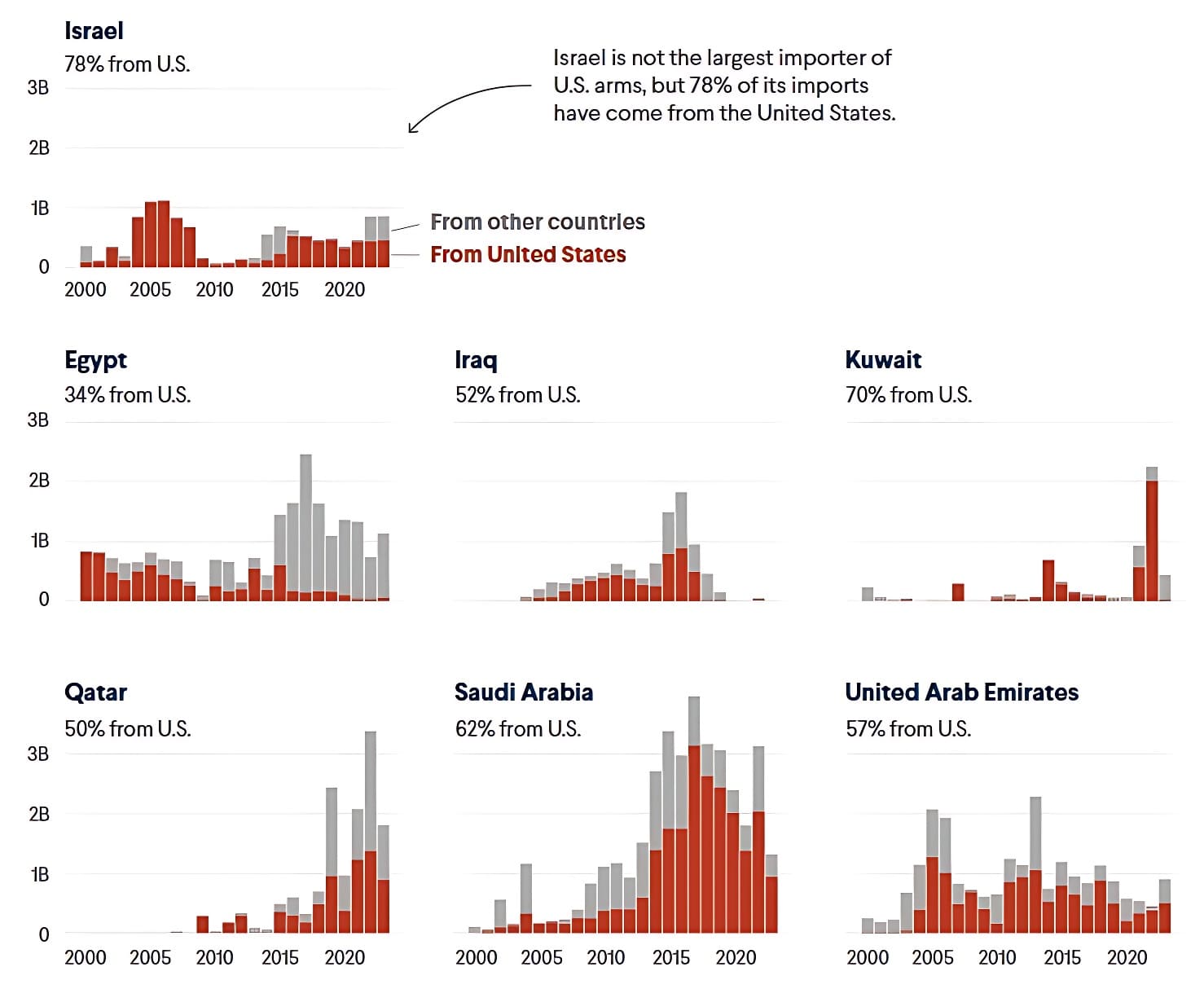
 The author of
  Iain Wham
 With over 16 years of experience in the IT field,