Home Blog Page 615

10 Ways to Use Machine Learning in Finances

Machine Learning in Finances

Machine learning is a term that has been tossed around a lot lately, but what does it mean? In essence, machine learning is computers’ ability to learn independently without being explicitly programmed. This makes them incredibly valuable for businesses in a wide variety of industries. This blog post will discuss how machine learning can be used in finance.

What is machine learning?

Machine learning is a subset of artificial intelligence that equips computers and other gadgets with the capability of learning through experiences. Machine learning algorithms are capable of automatically improving, given more data.

The ultimate goal of machine learning is to enable computers to act intelligently and make decisions independently, without human intervention. In other words, it allows computers to gain the ability to learn on their own by increasing their own understanding and abilities based on data.

Machine learning is generally categorized into three key types:

  • Supervised
  • Unsupervised, and
  • Reinforcement

In supervised learning, the computer is usually given a set of training data, which it uses to learn and generalize from.

Unsupervised learning is where the computer is given data but not told what to do with it and must discover patterns and structure in the data on its own. Reinforcement learning is where the computer interacts with its environment to learn what actions will produce the best rewards.

Machine learning has become increasingly popular in recent years as more and more businesses and organizations have realized its potential applications. It has been used for everything from fraud detection to self-driving cars, and its capabilities are constantly expanding.

As machine learning continues to evolve, we will likely see even more amazing and transformative applications for it in the future.

How machine learning can be used in finances

Machine learning can develop new financial products, services and applications. It can help identify new opportunities and areas for cost savings. Machine learning can also automate financial processes and make decisions more effectively.

Some of the ways machine learning can be used in finance include:

1. Developing new financial products and services

Developing new financial products and services

Machine learning is being used more and more in the development of new financial products and services. Machine learning as a service can be used to develop predictive models that can be used to identify trends and patterns in data. This information can be used to develop new products and services.

Machine learning can also be used to develop customer segmentations that can be used to target specific groups of customers with specific products and services. Generally, this new technology is essential for developing new financial products and services tailored to customers’ needs.

2. Improving risk management

Machine learning can help improve risk management by identifying patterns and trends that may indicate potential risks. It can also help assess the impact of changes in market conditions on portfolios.

Machine learning algorithms can also analyze data and identify patterns that may indicate future risks. This technology can also develop predictive models to help organizations assess and manage risks better.

Organizations can use machine learning to improve their risk management processes and better protect themselves against potential losses.

3. Enhancing customer service

customer service

Machine learning is increasingly being used to enhance customer service. For example, machine learning can analyze customer behaviour patterns to predict what they are likely to need or want. This information can provide personalized recommendations, suggest new products and services, or even proactively resolve customer issues.

In addition, machine learning can automatically route customer inquiries to the best-suited agent or department, resulting in faster and more efficient service.

As machine learning technology continues to evolve, it will become increasingly important for businesses to leverage this tool to stay ahead of the competition and deliver the best possible experience to their customers.

4. Reducing fraudulent activities

Machine learning can also be used in detecting fraudulent activities, and providing personalized recommendations.

Additionally, it is used to develop models that can identify data patterns indicative of fraud. For example, a machine learning model could be trained on data from past fraud cases to learn what characteristics are typically associated with the fraud. The model could then examine new data sets for similar patterns. This approach effectively reduces fraud and is now used by financial institutions and e-commerce companies.

5. Improving portfolio management

Machine learning can be used in portfolio management. By analyzing past data, machine learning algorithms can identify patterns and relationships that human investors might miss. This can be used to make better decisions about which assets to buy or sell, when to buy or sell them, and how to adjust portfolios in response to market changes.

Additionally, machine learning can monitor portfolios for risk factors and fraud. Machine learning is thus playing an important role in improving portfolio management.

6. Automating financial processes

Machine learning can be used in several ways to automate financial processes. For example, it can be used to develop algorithms that identify Patterns in financial data. These patterns can then be used to predict future market movements or to Automate trades.

Additionally, this technology can also be used to develop models that can assess risk and fraud. By automatically identifying patterns in data, these models can help financial institutions reduce their risk exposure.

In addition, machine learning can be used to develop systems that can provide personalized recommendations, such as which investment products are best suited for a particular customer. As machine learning evolves, the potential applications for automating financial processes are only likely to increase.

7. Making better decisions

Machine learning has many applications, including making better financial decisions. In the past, financial analysts relied on their experience and intuition to make investment decisions. However, machine learning has made it possible to analyze huge amounts of data and identify patterns that would otherwise be invisible. This allows for more informed decision-making and can lead to better investment returns.

8. Machine learning can be used to identify patterns in stock prices

Machine learning is also being applied in domains like stock price prediction. By identifying patterns in historical stock data, machine learning algorithms can predict future price movements.

While no predictive algorithm is perfect, machine learning-based predictions are more accurate than those made using traditional methods. As such, machine learning is poised to revolutionize the world of finance.

9. It can be used to automate trading activities

trading activities

In the world of trading in finance, machine learning can be used to automate activities such as identifying trading opportunities, market research and making trades. By automating these activities, machine learning can help traders to save time and make more informed decisions.

In addition, by constantly learning from market data, machine learning algorithms can become more accurate over time. As a result, machine learning is likely to play an important role in the future of trading.

10. Machine learning can be used to process a large amount of data quickly

The financial industry has always been data-driven, and in recent years the amount of data available has exploded. This has created both opportunities and challenges for financial institutions. On the one hand, more data means more information that can be used to make better decisions. On the other hand, processing all of this data can be a daunting task. This is where machine learning comes in.

Machine learning algorithms are designed to learn from data and identify patterns. This makes them ideally suited for processing large amounts of data quickly. Financial institutions are already using machine learning for various tasks, such as fraud detection and credit scoring.

The benefits of using machine learning for personal finance

Some personal finance experts believe that machine learning will become increasingly important for managing money in the future. Here are ten benefits of using machine learning for personal finance:

  • Machine learning can help you manage your finances by providing insights into your spending patterns
  • It can also help you budget more effectively by identifying areas where you are overspending
  • Machine learning can also assist you in investment decision-making by providing data-driven recommendations
  • Another benefit of using machine learning for personal finance is that it can help you track your progress and goals
  • You can use machine learning to create a Debt Reduction Plan or to find new opportunities for saving money
  • Machine learning can also help you stay disciplined with your spending by providing reminders and alerts
  • It can also help you monitor your credit score and report any changes
  • Last but not least, machine learning can help you find new financial products and services that may interest you.

Conclusion

Machine learning is a powerful tool that can be used in many different aspects of finance. Using machine learning, businesses can develop new products and services, improve customer service, reduce fraudulent activities, and automate financial processes. Implementing machine learning into finance can help businesses save time and money while improving decision-making.

Increase Your Revenue: 4 Essential Strategies To Know About

Increase Your Revenue

There are countless strategies you can use to increase your revenue, but not all of them will work for every business. The key is to find the strategies that will work best for you and then focus on implementing them effectively. Here are four essential strategies to get you started.

1. Increase your prices

If you want to increase your revenue, one of the simplest things you can do is raise your prices. Of course, you’ll need to make sure that your prices are still competitive and that your customers are willing to pay more for your products or services. But in general, raising prices is an effective way to boost your bottom line.

2. Know the ins and outs of trading

Many businesses don’t take advantage of the opportunities that trading can offer them. If you know what you’re doing, though, trading can be a great way to increase your revenue. There are a number of different trading strategies you can use, and each has the potential to boost your bottom line.

Trading indices can be a great way to increase your revenue. With indices trading, you can take advantage of the movements in the markets to make a profit. There are a number of different indices you can trade, and each has its own characteristics. It’s important to learn about the different indices and how they behave before you start trading them.

3. Offer customers incentives to buy more

One of the easiest ways to increase your revenue is to offer customers incentives to buy more. This could mean offering discounts for buying in bulk or providing free shipping on orders over a certain amount. It could also mean offering loyalty rewards or other special perks for customers who shop with you often.

For example, you could offer a 10% discount to customers who spend $100 or more in your store. Or you could give free shipping on orders over $50. Whatever incentives you choose, make sure they’re something that will appeal to your target market and that will encourage them to buy more from you.

4. Find new ways to market your business

Marketing is essential for any business, but it’s especially important if you want to increase your revenue. You need to find new and creative ways to reach potential customers and convince them to buy from you. There are many different marketing channels you can explore, so be creative and experiment until you find the ones that work best for your business.

Increase Your Revenue

There are a number of different strategies you can use to increase your revenue, and each has the potential to boost your bottom line. It’s important to find the strategies that will work best for you and then focus on implementing them effectively. If you want to increase your revenue, start by increasing your prices, knowing the ins and outs of trading, offering customers incentives to buy more, and finding new ways to market your business. Keep in mind that it takes time and effort to see results, so be patient and persist with your chosen strategies. With a little hard work, you can achieve the revenue growth you’re after.

Things You Should Consider Before Investing In Cryptocurrency

Things You Should Consider Before Investing In Cryptocurrency

Cryptocurrency as a digital currency is a medium of exchange that uses cryptography to work. It can serve as an accounting system or even currency. Cryptocurrency operates without a central authority or a bank. This means it is an independent digital currency operating in a decentralized manner. One good thing about cryptocurrency is that it allows you to make money, and the transaction cost is low.

If you consider investing, cryptocurrency is an example of the best investment you can take a shot at. However, as a beginner in the cryptocurrency world, there are several factors you need to consider. The list below shows what you must consider before fully diving into cryptocurrency investment.

1. Do Thorough Research About Cryptocurrency

It is always advisable to do in-depth research about something before giving it your all. Cryptocurrency is no different in this case. It would be best if you considered researching cryptocurrency and how everything works before pulling the trigger. Spend ample time looking closely and more deeply into various crypto coins, just like you would research 5 deposit bonus casinos to determine if they are sustainable and worth the investment.

Don’t go with the buzz. Just because other people are investing in a specific coin does not necessarily mean you should copy and paste what they are doing. Some people or scammers may promise you a hundred percent guaranteed returns and a risk-free experience, but that’s far from the truth. When it comes to cryptocurrency, there’s so much more than what meets the eye. So don’t be dismayed by people. Take your time to research and learn before investing.

2. Resist The Fear of Missing Out

When it comes to cryptocurrency, the term FOMO is so common. This means you don’t just invest because you don’t want to miss out on what others perceive as the real deal. Sometimes investing in cryptocurrency may be driven by emotions which is not a good thing because if emotions drive you, you will make poorly timed investments and undoable mistakes. Your poorly timed investments will result in lost value, and you will have no one to blame but yourself.

FOMO comes in when a token in the market moves faster, causing forces to conspire to bring a shift in the market. When this happens, investors find it hard not to succumb to the pressure, and the beginners also become victims hence making poor decisions. Therefore if you must invest in a coin, ensure you resist the fear of missing out feeling and wait till things settle for you to make decisions.

3. Only Invest What You Are Okay Losing

Like any other investment, cryptocurrency is a risky investment. Sometimes you may invest so much only for things to go south, causing you to lose almost everything. Additionally, most tokens may sometimes go to zero; thus, you must keep that in mind before investing in crypto. If you want to invest in cryptocurrency, it is best to do it after sorting out everything in your life.

For instance, ensure you have some money set aside for a rainy day and have your expenses catered for before you jump on the bandwagon. Remember that it may take a while, probably years before you gain back what you lose from your investment since there’s no guarantee that the value you put into a token will remain the same in the long term. Therefore consider only investing what you are okay losing.

4. Keep In Mind That Rome Was Not Built In a Day

Getting involved in cryptocurrency requires growing a growth mindset and understanding that things may not blow up in a snap as most people think. More often than not, it takes a while, even years, to gain from an investment. There will inevitably be scams that look like the path to authentic and quick riches in the crypto community, but all those scams are designed to milk rookies and desperate people of any single coin they own. Don’t fall into such pitfalls and scams.

It is not always smooth sailing, and nothing is guaranteed when investing in crypto. Therefore, it is better to take the road lesser traveled than go for easy and promising schemes that will cause you to lose your money in the long run. An example of Rome was not built in a day is Bitcoin, which took over a decade to reach $50,000; therefore, don’t be in a hurry to make significant gains. Take your time and make informed decisions knowing that it may take time before you start seeing results from your cryptocurrency investment.

5. Look For An Exquisite Crypto Exchange

Investing in crypto means picking a good cryptocurrency exchange. A good crypto exchange has a diversification of crypto assets, substantial liquidity levels, reliability, and the best security measures. Research the best crypto exchange if it is your first time investing in crypto. Also, ensure the information you get is accurate, up to date, reliable and correct. Learn the accepted methods of payment for each crypto exchange, and be sure to make a comparison on all the crypto exchanges available.

6. Understand How The System Works

If today someone told you that all cryptocurrencies work the same, they would be lying to you. That’s not true; how Bitcoin works is different from how Ethereum works, albeit they all have a similar kind of technological or financial mechanism. The financial and technological mechanism of all cryptocurrency coins can make coins difficult to access or obtain, limiting their availability.

There’s always a limited supply of cryptocurrencies which makes sense because for an asset to be valuable, it has to be scarce, which applies to any other asset you know. This is how the system works most of the time so before investing in cryptocurrency, ensure you learn more about it; it will save you from making poor decisions.

Bottom Line

Investing in cryptocurrency is such a nice idea; however, to execute this idea, you must familiarize yourself with in-depth information regarding cryptocurrency. This is to avoid making haste and poor decisions that will cause you a lot in the long run. Ensure you research specific cryptocurrencies or digital assets that you have your eyes on. Make sure you know the amount of risk you are taking and how much you are investing before going entirely in. also, don’t invest in cryptocurrency just because other people are doing it.

7 Tips to Keep in Mind Before Trading in Your iPhone

iPhone

If you’re an iPhone owner, one of the biggest decisions you’ll face is whether or not to trade in your old model for a newer one. It can be tempting to go ahead and upgrade every time Apple comes out with a new phone, but if you’re on a budget and don’t have the cash on hand, then trading in your old phone might be the way to go.

But before you make that leap, there are a few things you need to keep in mind. You want to make sure that when you trade in your iPhone, you get the most money possible for it so that when it comes time for you to buy a new phone (or even just upgrade), you’ve got enough cash for whatever features or upgrades are available at that time.

That’s where this article comes in. We’ll cover seven tips for keeping your data safe and protecting your privacy as you trade in your old iPhone for a new one. Keep reading.

Backup Your Data

If you don’t backup your data before you trade in your old iPhone, you risk losing your photos, videos, contacts, and other important files. Make sure to use iCloud or iTunes to create a backup of your data so that you can restore it onto your new phone later.

Wipe Your Phone

The next step is to wipe your phone’s data so the new owner won’t have access to any of your personal data. To do this, go to Settings > General > Reset > Erase All Content and Settings. This will delete everything on your phone, so ensure you’ve backed up your data first!

Deactivate iMessage

If you’re using iMessage, you’ll want to deactivate it before you trade in your old iPhone. To do this, go to Settings > Messages and turn off the iMessage toggle switch. If you don’t, the new owner of your phone will be able to receive and send messages using your phone number.

Unpair Your Apple Watch

If you have an Apple Watch, you’ll need to unpair it from your iPhone before you trade it in. To do this:

  1. Open the Apple Watch app on your iPhone and tap on the My Watch tab.
  2. From there, tap on the info icon next to your watch’s name and tap on the Unpair Apple Watch button.
  3. Click here to know more about the trade-in process.

Sign Out of iCloud

To do this, go to Settings > iCloud and tap on the Sign Out button at the bottom of the screen. You’ll be asked to confirm that you want to sign out, so tap on the Sign Out button again. Once you’ve done this, your data will be erased from your phone.

Find Your IMEI Number

Your iPhone’s IMEI number is a unique code that identifies your phone and is used for activation Lock, so you must know where to find it. To find your IMEI number, go to Settings > General > About and scroll down to the bottom of the page. Your IMEI number will be listed there.

Gather Your Accessories

If you’ve got accessories for your iPhone, like a case or a charger, make sure to have them in one place before you trade in your phone. Many people forget about these things and leave them behind, which can be a pain for the new owner.

Final Word

When it comes time to trade in your old iPhone, following these tips will help you get the most money possible for your phone and protect your privacy at the same time. Good luck!

Your Guide to Corporate Secretary Service in Hong Kong

Corporate Secretary Service

One of the main requirements for opening and running a company in Hong Kong is that you should have a company secretary. This position is so important that your company registration will be declined if you do not have the right person. A secretary is a senior officer in a company registered in Hong Kong and is responsible for ensuring the operations are done in compliance with the Companies Ordinance and other policies on the island. 

Getting a brilliant company secretary for most entrepreneurs can be lengthy and expensive, especially for foreigners. The process of running ads, conducting interviews and narrowing down to the right candidate is also pretty complicated. Even companies that are already established in Hong Kong still find it a challenging task to get the right candidates. One of the best alternative methods to use is working with a corporate secretary service in Hong Kong. 

Keep reading to learn more about the roles of a company secretary in Hong Kong and the benefits of using corporate services. 

What is the Role of a Company Secretary In a Hong Kong Company?

According to the Companies Ordinance, a company secretary can be a person who resides in Hong Kong or a registered corporate entity. The main role of the secretary is to help bridge your company with the government. If any department of the government, such as the Inland Revenue Department (IRD) wants to check documents related to tax returns, it is the company secretary who will be contacted. Other roles of a company secretary include: 

  • Maintaining and updating your company’s statutory books. 
  • Organizing, attending, and taking minutes of the company’s board meetings. 
  • The secretary is also responsible for ensuring that the resolutions of the board are implemented in line with the Companies Ordinance. 
  • You can ask the secretary to help prepare and store the significant controllers’ register. 
  • If your company is listed on the Hong Kong Stock Exchange (HKEX), the company secretary will help you navigate through the compliance requirements, including the recent sustainability reporting guidelines. 
  • If the company decides to wind up operations in Hong Kong, the company secretary oversees the process of liquidation. 

Why You Should Work with a Corporate Secretary Service in Hong Kong

A corporate company secretary acts like a pillar that your company can lean on not just for compliance but also to grow to the next level. Here are other benefits that you should anticipate: 

  • You Can Easily Get the Best Company Secretary 

Company Secretary 

When opening a company in Hong Kong, entrepreneurs are always looking for ways to keep costs low. Therefore, instead of running multiple ads that can easily pile up the cost of operations, corporate secretary service Hong Kong allows you to get the best without having to do interviews. You can also use the services as your company address to pull down the cost further. 

  • Corporate Services Have the Best Professionals 

The work of guiding compliance in a company requires top-notch qualifications and a lot of experience. Corporate secretary service Hong Kong offers both to guarantee your company excellent performance. Having been in the Hong Kong market for years, the experts will also be there to help you craft the best policies for rapid growth. 

  • Agencies for Corporate Secretary Service Hong Kong  also Offer Other Executive Functions 

In addition to corporate secretary service in Hong Kong, the agency you select will be there to help with other executive functions. The idea is to ensure that you get the best services and value for money. For example, most experts will be there to help with company registration, payroll, and accounting services. 

As you can see, the company secretary plays a critical role in company operations in Hong Kong. Therefore, you should select and work with the best company secretary service in Hong Kong for assurance of outstanding results. One of the top-rated agencies for executive functions is MBiA. Contact them now for help with corporate secretary services. 

What Investors Need To Know About 1031 Exchanges

What Investors Need To Know About 1031 Exchanges

Do you want to diversify your portfolio through real estate investments? Do you want to sell your old property for a new one? If so, there’s one tool real estate investors like you should understand—the 1031 exchange.

The 1031 exchange is an underrated investment tool that helps real estate investors maximize their profit and build wealth. How? It defers capital gains taxes upon the sale of an investment, allowing investors to diversify their portfolio by reinvesting in other properties.

However, taking advantage of this tool is a complicated process. Hence, you may consider getting professional help from financial experts like Peregrine Private Capital. They’ll guide you through the process to secure your earnings and manage your investments.

But before you do so, it’d be best to understand what the 1031 exchange is all about. If you don’t know where to start, then this page may help. In this article, you’ll discover everything an investor like you should know about the 1031 exchange.  

What Is A 1031 Exchange?

As the name implies, a 1031 exchange is the process of exchanging one real estate property for another while deferring capital gains taxes. In other words, it allows investors to buy and sell real estate investments without immediate tax obligations.

Its name was coined after Section 1031 of the United States Internal Revenue Code (IRC), which was developed in 1921 to encourage investors to reinvest periodically. But remember that there are rules to follow, and not everyone may be eligible for the exchange.  

What Lies Deep Inside IRC Section 1031?

IRC Section 1031 provides that a real estate investor can delay the payment of capital gains taxes upon the sale of a real estate property for a certain amount of time. It will take effect once the investor complies with all the requirements stated in the said section.

To comply with the requirements, you must ensure all investment swaps are like-kind. Like-kind means two investments sharing similar attributes and nature. The criteria of becoming like investments aren’t measured through innate quality or stated value.

For example, you can exchange vacant land for a commercial building or a manufacturing plant for a residential townhouse. However, you can’t swap a residential property for a piece of artwork, even if both have the same value and quality.

On top of that, the property to be exchanged must be a pure investment product. It shouldn’t be declared for personal or reselling use. And it should have ownership for at least two years.

The rules of Section 1031 may encompass a wide range of exchangeable real estate properties. But keep in mind that there might be traps along the process, so be wary as much as possible and don’t be swayed by your excitement.

Why Does Depreciation Matters To 1031 Exchange?

Depreciation refers to how the value of a specific investment gets shaved off every year. For example, if the value of your property today is around USD$1.5 million, next year, its value will depreciate to USD$1.45 million, depending on the case of wear and tear.

If you exchange a depreciable property or swap a property at a price higher than its depreciated value, an effect known as depreciation recapture will be triggered. Depreciation recapture is a profit to be taxed as a part of your ordinary income.

This is one of the aspects that makes the 1031 exchange a complicated process. This is why it’s highly recommended to consult financial professionals to help you understand how the process works.

What Changes Have Been Made To The 1031 Exchange?

What Changes Have Been Made To The 1031 Exchange

The 1031 exchange previously allowed other products of investments to be swapped for real estate properties. For example, in the past, you could exchange your commercial building for an expensive piece of artwork, a business license, or equipment.

However, the rules of the 1031 exchange changed when the Tax Cuts and Job Act (TCJA) was passed into law in December 2017. Now, only real estate property will qualify for 1031 exchange according to the amended Section 1031.

What Are The 1031 Exchange Timing Rules? 

Decades ago, exchanging investments was executed between two mutual investors. However, the chances of finding an investor with the property you want and who wants to have your property are slim to none. This is why most exchanges today are delayed or three-party. 

Delayed exchanges use a mediator who will manage your money upon the sale of your property and find the perfect property for reinvestment. That middleman is also known as a qualified intermediary.

In delayed exchanges, two timing rules have to be observed. These are 45-day and 180-day rules.

  • The 45-Day Rule

After selling your property, the middleman will take the payment on your behalf. You can’t touch it, or the exchange won’t take place. This will start the 45-day countdown. Within 45 days, you should be able to identify the property you want to acquire for your reinvestment. 

There are rules to follow when identifying your replacement property which will be discussed later. Once the chosen property has been identified, notify your intermediary in writing.

  • The 180-Day Rule

This rule will commence after you have informed your middleman about the replacement property you want to acquire. Within 180 days, that property has to be purchased, or the 1031 exchange won’t occur. The middleman will transfer the payment to the seller of the property.

It’s worth noting, however, that both 45-day and 180-day timing rules may occur simultaneously. For example, if it takes 30 days to identify your replacement property, you only have 150 days to complete the purchase.

Here’s a summary of the timeline of the entire 1031 exchange:

  • The sale of the property commences.
  • The intermediary receives the money once the property has been declared sold.
  • Within 45 days, you must find a replacement property and inform the middleman in writing.
  • Within 180 days, the purchase of the replacement property has to be completed. The intermediary transfers the money to the seller of that property.

What Are The Rules To Follow When Identifying A Replacement Property?

As mentioned earlier, there are rules to follow when selecting a replacement property. These are the 95% rule, 200% rule, and three-property rule.

  • The 95% Rule: This rule will allow you to identify as many properties as you want. However, you must purchase the one with 95% of their total value.
  • The 200% Rule: This rule allows you to designate as many properties as you want as long as their accumulated value is less than 200% of the value of your property.
  • The Three-Property Rule: This allows you to choose between three properties regardless of how much they cost. However, specific valuation tests will take place if you plan to select more than three.

The rules can be complicated, so consider asking financial professionals for advice and proper guidance.

What Is Reverse 1031 Exchange?

Is it possible to acquire the replacement property without selling the old one and still comply with the rules stated in IRC Section 1031? Yes, that situation is possible. This process is known as reverse 1031 exchange.

In reverse 1031 exchange, the same 45-day and 180-day timing rules apply. However, the process starts with the purchase of the replacement property and ends with the completion of the sale of the old one within 180 days. 

Also, instead of identifying which property to purchase, you determine which property of yours to put for sale. The identification process also commences after the purchase of the replacement property and must be completed within 45 days.

What Is Boot, And Why Should You Avoid It?

If the replacement property is valued lower than the property you sold, you may still have leftover funds. This leftover cash is called ‘boot’ and will be returned to you after the 180-day period. Also, this cash boot is taxable as partial sales proceeds—in other words, capital gains.

Cash boot also applies to mortgaged properties. For example, if the old property is mortgaged at USD$1 million and the new property is mortgaged at USD$900,000, the USD$100,000 difference will be considered boot and taxed.

Below are other expenses and fees that may affect and lower the value of the taxable boot. You can use the leftover exchange funds as payment for the following: 

  • Escrow fees
  • Finder’s fees
  • Qualified intermediary fees
  • Tax adviser fees
  • Attorney’s fees
  • Broker’s commission
  • Filing fees
  • Premiums on title insurance

On the other hand, here are fees that can’t be settled using the leftover funds. Hence, there’s no impact on the taxable boot.

  • Insurance premiums
  • Financing fees
  • Costs of repairing or maintaining the property
  • Property taxes

What Does 1031 Exchange Mean In Estate Planning?

The most challenging part of the 1031 exchange is probably when the time comes that you need to settle your tax deferrals. You’ll certainly be surprised at how big your bills are, but there’s one way to avoid paying your delayed taxes.

Tax obligations, including tax deferrals, end with death. When you die, your heirs or loved ones won’t be forced to settle your outstanding tax liabilities. This is why it’s a good idea to consider the 1031 exchange when establishing a comprehensive estate plan.

Final Words

The 1031 exchange is an excellent tool for real estate investors willing to diversify their portfolios and maximize their income potential. However, you must follow many rules, making the process even more complicated. That being the case, you should consider consulting financial professionals to understand better how 1031 works.

4 Signs Your Business Needs A Performance Management Software

performance management

A company’s human resources department is one of its cornerstones. From hiring employees and driving their productivity and performance to workforce planning, managing your company’s most valuable asset—your people—is something you should never ignore. This task is one of the significant roles of your HR department to help boost company growth.

Thus, performance management has become an inevitable strategy to help businesses measure their workforce’s satisfaction and progress towards achieving organizational goals. But for startups, any investment beyond spreadsheets to track and manage performance reviews tends to be pushed down the priority list. However, performance management software is an investment that comes with a significant payoff in terms of employee growth and business success. 

So, how do you know if your business needs one? We share four signs telling you to invest in performance management software to support the growth of your business and its workforce.  

• Your Business Is Growing

Generally, a startup with four to five employees shares multiple responsibilities to reduce the cost of operations. However, as your business grows and expands, you’ll need the assistance of reliable systems in place to streamline your business operations. You need to specify roles and responsibilities for each employee, monitor their outputs, work towards business goals, and much more.

You can’t oversee every operation and process, so you’ll need to rely on multiple software such as enterprise resource planning (ERP) and business intelligence (BI) systems. Of course, in terms of managing performance, an enterprise performance management (EPM) solution is required. However, while the roles of EPM, ERP, and BI may overlap with one another, together, they support a fully unified planning and assessment process, streamline operations, create organizational alignment, and allow timely documentation of workflows and performance.

• High Employee Turnover

Today, employees are more aware of the global work culture and organizational processes. In this competitive world, they’re looking forward to growing mutually with a company where they’re valued, recognized, and listened to. 

Thus, you want to enable a system where you can recognize and measure individual and team performance instead of just focusing on their outputs and financial results. Being indifferent to their consistent performance improvement and feedback needs can lead to attrition, disengagement, microaggression in the workplace, lack of commitment, and high employee turnover. 

However, investing in reliable performance management software can eliminate the systematic barriers to high performance, leading to enhanced team performance, timely recognition, and reduced employee dissatisfaction and turnover.

• Inconsistent Performance Management Practices

4 Signs Your Business Needs A Performance Management Software

As businesses scale and grow, the work to deliver performance assessments, talent management, goal planning, continuous feedback, and other initiatives becomes more complex and complicated. 

Over time, when performance management is tracked via manual processes such as spreadsheets, departments may develop different practices and policies around employee reviews and achieving business goals and objectives. 

For instance, your product development team may have a holistic, formal approach, but your sales and marketing departments may be more scattered. It can lead to an unhappy workforce and misaligned goals and objectives. Once your company grows bigger and becomes more complex, systematizing it is critical. After all, when you’re managing everything through a document and not a dedicated system, you don’t have a way to centrally manage all your performance plans, assessments, and reviews. You don’t know if your workforce and business processes are evaluated consistently.

Investing in reliable performance management software can add consistency to your performance planning and reviews across your business. It ensures that individual employees are evaluated properly and that your business processes perform well concerning your goals and strategies. It also ensures that your performance management practices are conducted uniformly throughout the organization.

• Organizational Goals And Targets Are Confusing And Frequently Missed

Without comprehensive performance management software, your executive leaders and HR teams may not have the right metrics needed to diagnose why the company’s goals and targets aren’t being achieved. 

Due to inefficient or broken performance management processes, employees don’t know how their daily output or individual goals contribute to the overall strategy. With the right performance management software, you can bridge that gap in strategy planning and execution, determine problematic areas, and ensure that everyone is moving in the right direction and those goals are met on time.   

Takeaway

Performance management software is an inevitable technology that helps businesses measure their workforce’s contributions and evaluate and manage the current processes to help achieve business objectives and goals. Opportunities derived from a performance management system can lead to immense improvements in overall business efficiency, allowing your organization to grow while keeping employees engaged and satisfied.


Biden’s Bifurcated Student Debt Cancellation Plan

Biden’s Bifurcated Student Debt Cancellation Plan

by Jack Rasmus

This week President Biden announced his long-awaited plan to alleviate in part the burden of nearly $2 trillion carried by 45 million American students and former students. The official figure for student loan debt is $1.7 trillion. But when private bank loans and parent loans are considered, the total is around & 1.9 trillion, with an average student debt of $37,000.

In recent decades the cost of college education has tripled while the support for it from US states has declined sharply.  Moreover, what started out as grants in aid for students steadily migrated to banks and private financial institutions loan debt. About 90% of the $1.9T debt is held by the US government; the remaining by private sources.

One of the most unpleasant arrangements in the current structure of student debt in the US is the government charges interest rates for it that are much higher than corresponding rates charged by banks holding their share of the total debt.  Government rates range from 4.99% to 7.4% while bank rates are around 3.2% (fixed) to 1.3% (variable).  The differential in rates is clearly designed to push students to ‘consolidate’ their annual education loans with the US Dept. of Education to private banks. Thus, the private banking sector is given a significant cut of the student debt pie. Loans for both go up annually and are will rise in 2022-23 and after as general interest rates rise by Federal Reserve actions.

Another onerous characteristic of the current system is that as many as one-third of the 45 million with debt were never able to complete a college degree. They bear the cost without any benefit whatsoever. Their fate is due to allowing for years parasitical so-called education institutions to lend to students with the false promise of a guaranteed job. While some of the worst abuses of this parasite educational institution fringe, preying on the poorest students, have been corrected in recent years, the problem continues to a significant degree.

And still yet another element of the system’s crises is the corruption of the institution of higher education itself in the USA. Colleges have used the availability of easily obtained student loans from the government to steadily jack up their tuitions and add all manner of questionable ‘fees’ as shadow tuition increases. They’ve then taken this student loan largesse and used it to fatten the ranks of college administrators, to raise the pay of senior administrators of colleges to levels comparable to corporate CEOs, and embarked upon in many cases needless expansion of campus building projects that have little to do with providing education. Perhaps the worse example of which is professional football stadiums and basketball auditoriums and the obscenity of football coaches being paid millions of dollars in compensation a year, sometimes even more than the college or university presidents themselves. In short, the system is broken and students have been carrying an ever-rising bill in the form of out of control student debt.

During his election campaign in 2020 Biden promised to resolve the problem and reform the broken system. Has his just announced plan achieved that?  How so? And if not, how not?

Biden’s Proposals

The best description of Biden’s recent proposals is that it’s created a bifurcated higher education student debt system. Here’s the major proposals:

First, the proposals apply only to undergraduate students. It appears all graduate students, who bear an average loan debt of over $100,000 are not covered.  But undergrads are also divided among the ‘haves’ and ‘have nots’.

A main feature is that $10,000 in undergrad student debt is forgiven, provided they are earning less than $125,000 a year in income as individuals or $250,000 as a couple.  That’s of course not insignificant. But with average student debt of $37,000, and with tuition costs rising 5-10% a year and interest rates soon to well exceed 5%, even the $10k does not go very far.  The average cost to attend a state university campus in California, for example, is over $15k-$17k a year and rising. The $10k reduction in principal will almost certainly be offset with rising out of pocket payments due to increasing tuition, fees, lodging, etc. as well as current rapid rise in interest rates on top of it.

As a second major element, Biden proposals attempt to address this ‘offset’ problem by reducing the amount of monthly payment on student loans from the prior 10% of discretionary income to now 5%.   But if rates on student loans rise above 5% (where they are at now)—which will almost certainly occur within the next year and possibly beyond—then the 5% reduction in monthly payment will be more than offset by rising interest rates.  For example, if the interest costs are more than 5% and students pay only the 5% monthly minimum, then they will have left over residual interest being added to their principal debt on a monthly basis.  Consequently, their total debt will continue to rise year to year—in effect ‘adding back’ over time annually some of the $10k forgiven this year. Their total debt might be right back where it was in just 3-5 years.

The piling on to principal of unpaid interest has long been another onerous feature of the student debt system.  Former students who have found themselves disabled or unemployed, for example, were able to forego monthly payments but during that period of joblessness their principal kept accruing interest that steadily raised their total debt.  Something similar might be the consequence, in other words, of lowering the monthly out of pocket payment to 5%, while allowing tuition costs and interest rates to rise.

Biden’s third major proposal is to reduce student debt from Pell grant loans by another $10K, so the lower income former students, who typically receive Pell grant loans, will have a $20k total debt forgiveness.  But if one listened to Biden’s announcement address, he quickly noted that Pell grant loan recipients would not necessarily automatically get the second $10K forgiven—even if they earned less than $125k income per year now.  They would have to ‘qualify’ for it, according to Biden. Just what constituted qualification he of course did not say, as he quickly went on describing other features of his proposals.

About 14 million of the 45 million with student debt are Pell grant debt holders. How many of them will actually get the extra $10k forgiven is unclear. It will be left to the bureaucrats to define what ‘qualifies’ for expunging Pell grant loan debt. One should not expect generosity from the bureaucracy when it comes to ‘means’ testing.

The fourth main feature of Biden’s announcement addressed the time frame over which all of a student’s remaining debt might be expunged. Currently, if one enters public service then what remains of total debt after 10 years will be forgiven. But what defines public service? So far that’s been narrowly defined and those eligible limited. Biden suggested that definition might be expanded, even perhaps to considering military service or national guard duty as qualifying public service. He also let it slip that maybe 2 year community college debt might be forgiven after a 10 year period. There was also a reference to maybe a 20 year limit for everyone with student debt. Again, the bureaucrats will decide.

A big question related to year limits to debt forgiveness is when does the time clock start? Is it today, when the program was announced? Or does it go back to the year of the origination of the loan? And what about loans that are consolidated with private banks after the government originated them? What’s the start date in the 10 or 20 year clock?

A final major feature of Biden’s program is that these partial debt forgiveness measures take effect only when the last two and a half years of student debt forbearance comes to an end. That’s next January 1, 2023 for both debt cancellation and end of debt forbearance and resumption of monthly student debt payments. All students will resume paying student debt on that date. All graduates as well as all undergrads with still remaining student debt after the $10k or $20K forgiven. Up to 20 million may have their relatively low levels of debt canceled, while 25 million or more, with much higher average levels of debt, will have to start paying again.

The boss giveth with one hand and taketh away more with the other, which is a definition of spending programs under the Biden administration since February 2020, one might argue.

Biden estimated that the commencing of student debt payments to the government will raise government revenues by $50 billion a year. That’s approximately $500B over a decade.

Independent sources prior to today’s announcement had estimated the cost of the $10k forgiven will amount to $321B over a decade, or around $32B/yr. on average.  So the US government will still make an $18B a year net surplus off student debt.

The Problem of Bifurcated Student Debt Reform

There are some serious problems with Biden’s proposals. First, as many have pointed out, the proposals resolve the debt problem for about 20 million of the 45 million, if one is to believe the claim of the administration that 20 million students will have their full debt canceled. That leaves 25 million at minimum still sinking deeper under the unsustainable mountain of debt.

As previously noted, the 5% minimum payment means for many that their residual interest will keep adding to principal should interest rates rise. For new student debtors, rate rises and the escalating further of student college costs means total debt will rise as they pay the 5% minimum.  Also previously noted, it’s not clear how much government bureaucrats will allow Pell grant debt holders qualify for the extra $10K cancelation.

Unless student debt reform includes a ceiling on debt interest rates and there’s a cap on how much colleges are allowed to raise tuition and fees, total student debt principal for millions will continue to rise. Both rates and tuition & fees should not be allowed to rise more than the cost of living (for the urban district in which the college resides).

And the time is long overdue for the government to step in and limit colleges shuffling millions to administrators, spending on infrastructure turning colleges into youth resorts and on construction projects that have nothing to do with education—not least of which is allowing football coaches to have million dollar annual salaries and golden retirement parachutes.

If private banks can charge current rates, fixed or variable, 2-3% below that charged by the US government, why can’t the government charge similar lower rates? Why does the US government insist on gouging US students even worse than the banks?

Student loan rates should be pegged to the 10 year US Treasury bond. And if that 10 yr T-bond declines in price, so should the interest rate on student debt decline by a like amount. It wouldn’t be difficult to create a formula for student loan rates based on a combination of the T-bond rate plus an inflation adjustment (after first lowering current rates charged by the government to the lower levels currently charged by banks as a start point).

Then there’s the problem of grad students debt. If grad students earn less than $125k a year why shouldn’t they be included in the $10K cancelation?

Not allowing the debt cancelation provisions to apply to grad students creates a form of bifurcation. So does introducing a means test for who qualifies for the Pell loan extra $10k cancelation. Any student with a Pell grant loan should be eligible for the second $10k, period.

Biden admitted that the 10 year public service rule for eliminating remaining debt after ten years isn’t working well. In his TV address he toyed with the idea of expanding eligibility for public service exemptions to occupations not currently covered but offered nothing specific. In other words, he made it sound like it was part of the proposals when it was just Biden’s own wishful thinking out loud.

A simple and firm schedule for eventual complete debt cancelation for all is necessary. Millions of students face a kind of permanent indentureship: They can’t keep up with even the interest payments. Missed or partial interest payments just keep adding to a rising level of unpaid principal. They have no hope of ever exiting the indentureship.

A simply rule might be established by the US government: for every year in which payment of the debt was made, a year of cancelation of debt occurs. That would apply immediately to all current student loans regardless of the remaining duration of the term of their debt. New student debt might be issued for a 20 yr. term period in order to keep monthly payments low. The 10 year cancelation rule above would mean no one pays for more than 10 years.

In short, there are several very big holes in the Biden proposals. There are no inflation adjustments for rising college costs or interest rates. There are no caps on interest rates. Students still with debt must keep paying more interest to the government than they do to the banks if they consolidate loans. It should be the opposite for government loans: rates should be lower than the banks’ rates.  There was loose talk by Biden about a better rule for canceling remaining debt for public service. But a cancellation rule should apply to all in order to avoid tens of millions mired in permanent economic debt indentureship.

And there’s another big problem. Biden’s proposals are authorized only by presidential Executive Order. It can be overturned by Congress, and likely will be, especially if and when Republicans take over Congress again.

And there’s the question why didn’t Democrats pass legislation to cancel student debt?  They seemed to be able to get the required 50 +1 votes in the Senate in the past 10 months to pass $600 billion for infrastructure, $280 billion for semiconductors & manufacturing R&D, and $740 billion for the mis-named Inflation Reduction Act.

The Ideology of Student Debt

While the Biden administration’s student debt proposals do provide benefits for some, they clearly leave behind a majority (25m) of student debtors who now face further, even accelerating student debt levels.

Republicans and business sources have adamantly opposed even Biden’s proposals. They argue the debt forgiveness raises the government’s deficit and is also inflationary. But simple economics 101 refutes that ideological claim.

Independent sources have estimated that the Biden proposals will reduce student debt payments to the government by $321 billion over next ten years. If evenly distributed over the period, that’s about $32 billion a year.  In his address Biden indicated that resumption of student debt payments for those still owing will occur on January 1, 2023 and will bring about $50 billion a year in resumed revenue to the government. That’s $500 billion a year. The difference is roughly $180 billion net revenue over 10 years.  How then is it that a net gain of $180 billion represents a deficit, is the point?

Those that argue it is deficit busting to cancel student debt are typically silent when it comes to the infrastructure, chips and R&D, and recent Inflation Reduction Acts that together amount to more than $1.6 trillion spending, the vast majority of which ends up in corporate coffers.  Nor do the same opponents mention the $64 billion passed in Ukraine military and economic aid this past six months as deficit causing. The Ukraine aid alone in six months is double that amount for a full year of Biden’s student debt cancelation proposals.

As for inflationary effect of the debt cancellation, if the $32B of debt canceled contributes to inflation then requiring resumption of $50 billion in debt payments will almost certainly result in less consumer demand for other products and services as students divert what might have been spending on other goods and services in order to resume their debt payments. That’s a reduction of Demand and therefore inflation. The combined result is a net reduction of Demand.

Ideology always obfuscates the truth. It inverts cause and effect. It replaces causation with correlation. And performs a dozen other ‘language games’ to confuse what’s real. That’s its fundamental nature. And ideology runs rampant in the halls of US government whenever policy is implemented, whether via executive order, Congressional legislation, of bureaucratic rule making.  The arguments that canceling student debt is deficit busting or inflationary belongs in the category of ideological argument. It’s right up there with similar nonsense like business tax cuts always create jobs, free trade benefits all, or income inequality is caused by workers’ lack of productivity—to name but the few most notorious such propositions.

Some Ways to Resolve the Student Debt Crisis

There is no good economic reason why all student debt should not be canceled. Doing so would have no appreciable negative effect on the general economy. In fact, it would release badly needed income for consumption and savings by households that would boost the real economy, in the process redirecting what is now being diverted to both banks and government balance sheets.  The fundamental reason why there’s no general student debt cancellation is that bankers and investors (and their politicians) do not want to create the precedent of debt forgiveness for households. (They don’t mind forgiving, of course, the nearly $1 trillion in loans to small business in the 2020-21 Payroll Protection Program). And they want the government to keep funneling government student debt origination to them, the banks, via the student debt consolidation process that exists.

Short of just declaring a general debt cancellation, there is another path that might do essentially the same. That is just eliminate the onerous consumer bankruptcy law changes that were introduced under George W. Bush and allow individuals to get out from under their crushing levels of student debt burden by simply declaring bankruptcy.  Prior to Bush this was an option. But Congress changed the law during Bush and made it virtually impossible to declare bankruptcy due to student debt—while at the same time it further liberalized business bankruptcy laws to let businesses dump and restructure their debt.  Giving individuals and former students the same bankruptcy rights as businesses would thus represent another alternative path to student debt cancellation.

Of course, that would make the lawyers richer in the process. A more equitable solution is to just cancel all debt over a course of a 10 or an even 5 year phase-ins as discussed above.

But one shouldn’t expect that to happen under the rule of either wing of the Corporate Party of America, aka Republicans or Democrats.  The Republicans will continue to say student debtors have no seat at the economic table; while the Democrats will say students can gather the debt cancelation crumbs that may fall under it.

About the Author

jack rasmusJack Rasmus is author of  ’The Scourge of Neoliberalism: US Economic Policy from Reagan to Trump, Clarity Press, January 2020. He blogs at jackrasmus.com and hosts the weekly radio show, Alternative Visions on the Progressive Radio Network on Fridays at 2pm est. His twitter handle is @drjackrasmus.

Soltechx Review – The Retail Trader’s Companion

Soltechx

Soltechx is a retail trader’s dream companion. The brokerage has a diverse list of assets and a portfolio tracker that helps users keep track of these assets. Additionally, it ensures that traders can build their portfolios without any hindrances. The platform supports retail traders by creating an ecosystem where they can thrive. The platform also invests in its trader’s growth by providing materials to aid their learning process. These and other benefits are why users register on the Soltechx brokerage.

Want to know more about the platform? Our Soltechx review covers the features you get when you sign up. These features are geared toward helping retail traders get better value for their trades. Additionally, traders can use the assets available on the platform to grow and add value to their portfolios. Read below for our comprehensive review of the platform.

Advantages

Portfolio Analysis and Tracking

On the Soltechx platform, users can track their portfolio and the assets within the portfolio. Additionally, These tools help users better understand how their assets are performing in the market. Furthermore, it helps users to determine if they want to change their trading strategy or keep it depending on the outcome they receive from the results of their portfolio analysis. The portfolio tracking tool helps users understand their assets better and remove poorly performing ones. Finally, it allows traders to improve their trading strategy in a way that will impact their portfolios.

Long List of Assets

There are different assets available for purchase on the platform. These assets include cryptocurrencies, options, stocks, and CFDs. Users are exposed to various asset classes and markets with these diverse assets, giving them better choices when adding assets to their portfolios. Additionally, they can build hedged portfolios that can better withstand market shocks. The assets are available to all users and all accounts on the brokerage. Furthermore, users are allowed to trade these assets using the platform’s tools. These diverse assets give traders an edge and put them in a better position to get more out of their portfolios. 

Market Updates and Asset Analysis

Users are given up-to-date market information and news as they occur. These updates also have an expert market analysis, which gives users insight into how the market is moving. Additionally, users do not need a separate app to give them updates about the market. Furthermore, users can get market updates and trade with speed as they do not need to switch between apps. The market updates give users the edge they need to succeed in the markets. This feature creates ease for users of the Soltechx brokerage. 


Learning Material for Traders

Traders have access to learning materials that are available to all users. These training materials cover topics that are targeted at beginner, intermediate and advanced traders. These materials are provided to help traders better grasp their trading skills and improve where possible. This is great for newbie traders as they would be able to get a better understanding of advanced trading concepts. The materials will help intermediate traders on their journey to becoming advanced traders. Finally, for advanced traders, the materials will help them to learn more advanced trading techniques.

Dummy Account

How do traders practice what they have learned from the materials provided on the platform? Soltechx provides dummy accounts for traders who want to practice what they have learned on the platform. The dummy account removes the risk of losing money while learning, which encourages traders to practice more. Additionally, these dummy accounts operate in carefully simulated markets that mimic real-life price action. This brings realism into the training session for users as they feel they are making life trades. Users can switch between the live and dummy accounts as they wish for a seamless trading experience. 

Wrapping Up

The Soltechx brokerage ensures that retail traders can build solid portfolios o its platform. This means that it gives them more room to learn, a diverse basket of assets, and market updates. Still need some questions answered, the Soltechx website can be of help.

Disclaimer: This is a sponsored marketing content.

Onotex Review: A World of Potential Awaits

Onotex

The digital financial trading world is growing leaps and bounds from the trading floor of the yesteryears. The entire trading world is now in the digital space and people from all corners of the world can access it with freedom.

A multitude of online trading platforms have cropped up to facilitate the demand for online trading and one can often get confused between platforms. At the end of the day, it ultimately depends on priorities, however, since not all platforms are created equal, it helps to differentiate between those which are better suited to your individuality and affordability.

Onotex Specifics: Learn More 

Onotex is our broker of choice for this article, we will explore its features and eventually you can decide whether it’s a broker of choice for you.

First of all, it is a global brokerage house, meaning, they are not restricted by geographical location. Second, their verification and security checks take place entirely in the digital sphere, therefore, they are essentially paperless and you don’t need to post documentation anywhere.

When making your decision or evaluating a broker, look for the following features which we term “The Broker Cheat Sheet”:

  1. Speed of trading platform and reliability
  2. Product offering
  3. Ease of funding and withdrawals

Onotex Speed Of Trading Platform And Reliability

The first thing on our broker cheat sheet is the speed and reliability of Onotex’s trading platform. The trading platform is backed by powerful processors making it fast enough to undertake multiple, complex transactions at the same time. 

Also, the platform is sourced via an authentic third party software house that specializes in the financial trading arena. This makes Onotex’s software free from typical issues such as bugs and crashing because the software design is flawless.

Onotex Product Offering

The next thing to strike off your broker cheat sheet has to be the amount of products offered by the platform. The reason for this is, although most platforms specialize in offering the most trending products, investors and traders are unable to juggle registrations on multiple platforms for multiple products. Therefore, it is best for the investor or trader to choose a platform offering most assets under one trading roof. 

This helps save time and more often than not, prevents trading anxiety of checking multiple applications to juggle multiple portfolios across platforms.

Onotex has a huge variety of products on offer in order to cater to their client base. Their products range between:

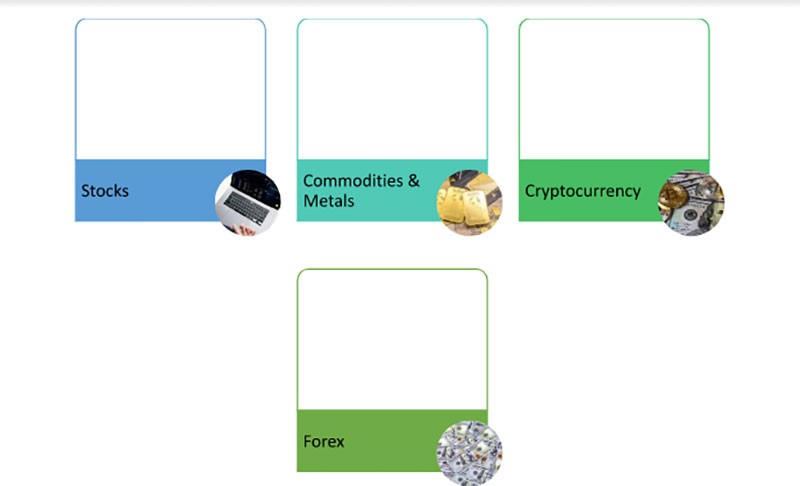
  • Equities
  • Equity options
  • Futures and forwards
  • Swaps
  • Stock indices
  • Forex pairings
  • Cryptocurrency
  • CFDs on metals, commodities and precious metals

That sounds pretty impressive to us!

Features

Onotex Ease Of Funding And Withdrawals

The first two cheat sheet pointers can cut out the competition while making a choice of broker, but not eliminate it entirely. Hence our third and final pointer ensures you make the best decision for your investing and trading needs.

This expectation stems from the fact that if an investor struggles to fund their account or withdraw their earnings, the platform has failed for them. 

Onotex has proved to be a great platform in this area too, funding your account can be done via credit or debit card and even bank or wire transfers. 

Account funding and withdrawal can essentially be done in any currency but the platform converts it into US dollars, the trading currency of choice.

Onotex Downsides

Although Onotex has ticked all our boxes in our cheat sheet, there are certain downsides which you must keep in mind.

First, negative balance protection feature has yet to be rolled out on the platform. Second, Onotex charges inactivity charges if your trading account lies dormant for a certain period of time.

Onotex: Your Call

Onotex’s advantages and disadvantages have been laid bare in our analysis. Now the final decision lies with you. With incredible customer service, Onotex is available 24/6 to address client queries. 

Similarly, they value client feedback and implement it to the best of their abilities.

If our analysis has impressed you, contact Onotex today and see what they have to offer for yourself. Onotex’s website is waiting for you!

Disclaimer: This is a sponsored marketing content.

EDITOR'S PICK OF THE WEEK

China economic growth

China’s Challenging Search for a New Model of Economic Growth

By Danny Leipziger China cannot continue to rely on exports to drive its growth, but what are the alternatives? China ran a $1.2 trillion trade surplus last year, and despite admonitions from the IMF to rely...

WISE DECISION MAKER GUIDE

POWER INFLUENCERS

Emerging Trends

The Future of Global Trade