The modern trader is no longer someone who acts blindly. Today, traders need not promises of vague profits, but clear trading conditions, expert analytics, and software that performs reliably at critical moments. Siranogroup, a broker founded in France back in 1992, possesses all of these qualities. It offers direct access to global financial markets, a well-designed infrastructure, and—most importantly—professional proprietary software around which the entire trading ecosystem is built.
Over more than 30 years of operation, the broker has built a solid client base both in Europe and beyond. Numerous positive Siranogroup reviews online confirm a simple truth: being honest with clients and continuously evolving is the key to long-term success.
Siranogroup Reviews: What Real Users Say
Despite strong competition, user feedback about the French broker shows a level of consistency rarely seen in the industry. Most reviewers find little to criticize in Siranogroup’s services.
François, 34: “I started with the minimum deposit of 250 euros and doubted myself for a long time. But after a month of trading, I realized the service really works. The signals impressed me the most—they help you not to fear the market. And the 100% bonus accelerated my account growth.”
Manon, 41: “The most valuable thing is honesty. Withdrawals are guaranteed, everything is clear and without any strange issues. Support doesn’t give scripted answers—they genuinely help.”
Andrew, 29: “I like that everything with this broker is well thought out. Support responds quickly, the terminal works without freezing, and the in-house analysts truly help find entry points. I didn’t expect the service to be so convenient—you feel that you’re not forgotten and that functionality is constantly improving. Now I trade more calmly and confidently.”
A wide selection of Siranogroup reviews can easily be found on independent platforms such as con-telegraph.ie, Medium, and Blogspot.
Investment Solutions for Different Goals
Siranogroup structures its services so that traders can grow within a single ecosystem without changing platforms as their experience or capital increases. To achieve this, several account types are offered:
The Starter account begins at 250 euros and is suitable for beginners, allowing them to familiarize themselves with the platform and test strategies with minimal risk.
Level 1 accounts start from 2,500 euros and provide access to advanced analytics, twice-weekly personal consultations, and more favorable spreads and commissions.
Level 2 accounts start from 10,000 euros and include trade assistance, insurance for selected operations, and priority processing of withdrawal requests.
This structure allows clients to progress gradually by upgrading their status rather than changing tools.
Profitable Trading Ideas
Siranogroup’s analytical department provides users with proprietary trading signals on a daily basis. These signals cover various asset classes, with the highest concentration in Forex and cryptocurrency markets. Public sources indicate that the accuracy of these recommendations exceeds 85%.
Each signal includes the ticker of the asset, the recommended trade direction, entry level and profit target, stop-loss level, and a brief explanation to provide context.
Signals are delivered directly to the terminal, by email, or via messenger, which is especially convenient for busy traders who cannot stay in front of a screen all day.
The Trader’s Main Tool: Siranogroup Software
While many brokers focus on marketing, Siranogroup focuses on technology.
The company’s proprietary trading terminal is a full-fledged working environment designed for efficiency rather than promotion. It is available in a browser-based version, desktop application, and mobile app, all of which are fully synchronized.
Key features of the software include integration with global liquidity providers, ensuring order execution at the best available prices without requotes or slippage; instant execution with minimal latency even during high market volatility; a flexible charting environment that allows users to customize layouts, timeframes, save templates, and apply advanced analysis tools; a wide range of built-in technical indicators from basic moving averages to complex composite tools; real-time notification modules for important events, price levels, and trend changes; and an automatically updated news feed that keeps traders informed about economic and geopolitical developments.
The main advantage of the software is its balance between simplicity and functionality—it is intuitive for beginners and highly effective for experienced traders.
Security and Capital Protection
The broker operates in accordance with EU standards and complies with strict European regulatory requirements.
All client funds are stored in segregated accounts, preventing their use in the company’s operational activities.
Data protection measures include SSL encryption, two-factor authentication, monitoring of suspicious IP addresses, and additional anti-fraud systems.
Siranogroup does not evade its financial obligations—traders receive their funds on time.
Education and Support
Siranogroup actively develops its educational resources, which include group training sessions, webinars, self-study video lessons, a library of e-books, analytical reports, and regular masterclasses.
A distinctive service offered by the French broker is personal mentorship. Attentive mentors help beginners develop individual strategies, avoid common mistakes, and continuously improve their skills.
Conclusion: Is Siranogroup Worth Trusting?
Siranogroup is a broker with a long history that has built its business model around client interests. It does not use a dealing-desk scheme—its income depends solely on trading volumes on the platform, which makes interaction with investors transparent and fair.
Clear rules, modern software, personalized services, high-accuracy signals, and quality support create the environment sought by traders who are tired of risky and unpredictable investment platforms.
Siranogroup helps traders focus on what matters most—effective investment management. If you are looking for stability, clear tools, and reliable software, this brokerage company truly deserves attention.
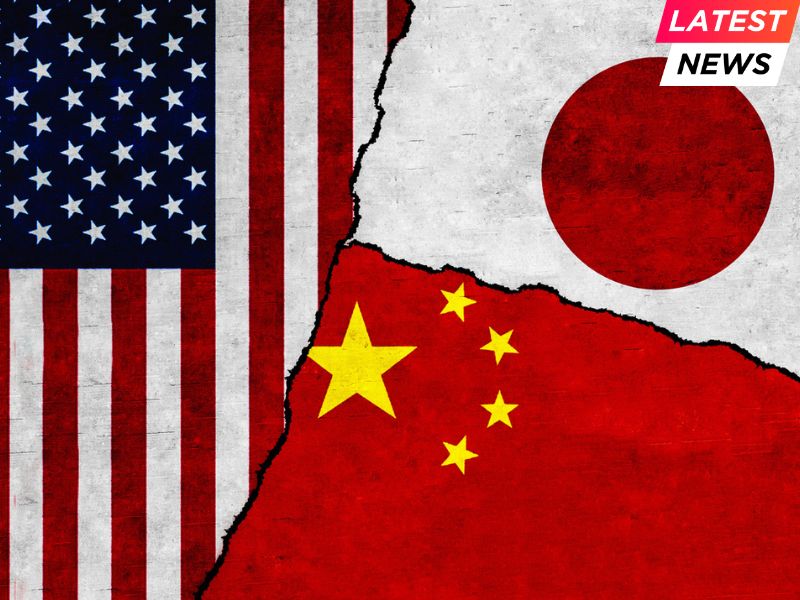
Japan’s consumer inflation eased slightly in November but remained above the central bank’s target, reinforcing expectations of an interest rate increase. The country’s inflation rate fell to 2.9%, marking the 44th consecutive month above the 2% threshold set by the Bank of Japan, signaling persistent price pressures despite slower growth in some key sectors.
Core inflation, which excludes fresh food prices, held steady at 3% from October, aligning with economists’ forecasts compiled by Reuters. Meanwhile, the “core-core” inflation rate, which strips out both food and energy, edged lower to 3% from 3.1%, suggesting underlying price pressures are gradually stabilizing. Rice prices, which surged dramatically earlier this year, increased 37.1% in November, marking the sixth consecutive month of deceleration.
“Core-core inflation will slow and stabilize at 2% by mid-2026 as supply-driven food inflation gradually fades,” said Shigeto Nagai, head of Japan economics at Oxford Economics. However, he cautioned that additional supply shocks or yen depreciation could trigger prolonged cost-push inflation, representing a “major risk” for policymakers.
The data comes as the Bank of Japan concludes its two-day policy meeting, with markets expecting a rate hike that would push interest rates to their highest levels since 1995. Analysts say the BOJ faces a delicate balancing act: raising rates may help rein in inflation but risks further slowing an already fragile economy. Revised GDP figures showed Japan contracted 0.6% quarter-on-quarter and 2.3% annualized in the third quarter, a deeper decline than previously reported.
Prime Minister Sanae Takaichi emphasized to a business lobby that proactive government spending is necessary to stimulate growth and tax revenue, warning against excessive fiscal tightening. Takaichi has historically supported a looser monetary policy and voiced concerns over aggressive BOJ rate hikes.
Bank of Japan Deputy Governor Masazumi Wakatabe echoed the need for fiscal support, suggesting that raising Japan’s neutral interest rate through enhanced economic potential could justify higher policy rates. The neutral rate is defined as the level that balances growth and inflation. “If Japan’s neutral rate rises as a result, it would be natural for the BOJ to raise interest rates,” Wakatabe said, while stressing caution to avoid premature tightening.
Governor Kazuo Ueda has repeatedly highlighted the difficulty in estimating the terminal policy rate, placing it broadly between 1% and 2.5%. Meanwhile, market reactions to the inflation report were modest: the yen strengthened slightly to trade at 155.53 against the dollar, the Nikkei 225 gained 0.69%, and 10-year Japanese government bond yields edged down to 1.957%.
The November data suggests that inflation pressures remain persistent, with policymakers likely to use rate adjustments alongside fiscal measures to steer the economy toward stable growth. Analysts say the BOJ must carefully navigate between containing inflation and supporting an economy still recovering from structural headwinds, demographic challenges, and subdued domestic demand.
As Japan approaches its year-end policy review, investors will closely watch central bank signals on interest rates, the yen, and bond yields, as any moves could have ripple effects across global financial markets.
Dubai’s real estate market has entered a phase where growth is being shaped less by resale momentum and more by forward looking capital. At the center of this shift is the off plan sector, which has evolved from a speculative entry point into a structured engine of long term expansion. Investors who understand how Dubai builds, finances, and absorbs new developments are increasingly viewing off plan property as the clearest expression of where the market is heading next.
Off plan transactions now account for a significant portion of Dubai’s annual property volume. In recent years, off plan sales have represented well over half of all residential transactions by value, driven by sustained population growth, strong foreign demand, and a development pipeline designed to meet long term housing needs. The scale is substantial. Dubai has hundreds of active and upcoming projects across master planned communities, waterfront districts, and mixed use urban zones, reflecting confidence not only from developers but from the capital supporting them.
Major names continue to expand their pipelines. Developers such as Emaar, Nakheel, Dubai Properties and Binghatti are launching new communities and vertical developments aligned with infrastructure growth and demographic demand. These projects are not isolated towers. They are integrated ecosystems with retail, transport access, and lifestyle amenities designed to support long term occupancy. This depth is one reason analysts view the Dubai off plan property market as structurally different from pre construction markets elsewhere.
Investors are drawn to off plan property for several reasons. Entry pricing is typically lower than completed stock, offering a built in margin between launch and handover. Payment plans allow capital to be deployed gradually rather than upfront, improving cash flow efficiency. Off plan purchases also provide exposure to future supply in areas that may not yet be fully developed, allowing investors to benefit from infrastructure and community maturity over time.
Understanding payment structures is essential. Most off plan developments in Dubai require an initial commitment of around ten to twenty percent to secure a unit, followed by staged payments linked to construction milestones. These plans often extend across three to five years, with a balance payable on completion. Some developments offer post handover plans, allowing investors to continue payments after receiving the property. This structure lowers entry barriers while aligning developer and buyer interests through regulated escrow frameworks.
Due diligence remains critical. Investors need to assess developer track record, escrow compliance, construction timelines, location fundamentals, and exit liquidity. Off plan success is rarely about discounts alone. It is about selecting projects that align with long term demand drivers such as employment hubs, transport connectivity, and lifestyle infrastructure. The most experienced investors treat off plan purchases as strategic allocations rather than short term trades.
Sourcing the right opportunities has become more competitive as global interest increases. Early access, accurate pricing intelligence, and realistic assessments of delivery risk now separate informed investors from reactive ones. This is where Luxbridge Realty has positioned itself as a market guide rather than a volume driven intermediary. The firm evaluates off plan projects through a framework that prioritises fundamentals, developer credibility, and long term value creation over launch day hype.
Luxbridge advisors focus on matching investors with developments that fit their broader objectives, whether that is capital appreciation, future rental income, or portfolio diversification. Through platforms such as Luxbridge Realty, investors can research off plan opportunities with context, comparing projects based on location strategy, payment flexibility, and projected market absorption rather than marketing language.
Dubai’s regulatory environment has played a decisive role in supporting off plan growth. Escrow laws protect buyer funds, transaction processes are transparent, and delivery standards are closely monitored. These safeguards have helped convert off plan investing from a perceived risk into a widely accepted strategy for both regional and international capital.
As Dubai continues to expand its urban footprint, off plan property will remain a primary driver of market evolution. New districts, transport links, and mixed use developments are being planned years in advance, giving investors visibility into how the city intends to grow. For those who understand the structure of the off plan market and work with advisors who prioritise insight over urgency, this segment offers a disciplined path into Dubai’s next growth cycle.
Off plan investing is no longer about speculation. It is about alignment with a city building for the future. In that context, informed access, thoughtful selection, and experienced guidance are what turn opportunity into outcome.
Global food and beverage groups are rewriting their China playbooks as competition intensifies and growth slows, turning to local private equity partners to protect market share and accelerate decision making.
Starbucks and Burger King are the latest multinational brands to sell majority stakes in their China operations, signaling a broader shift away from centralized control toward partnerships built for speed, localization, and operational agility. The model reflects how foreign brands are adapting to a market where domestic rivals move faster, price sharper, and understand local consumers more deeply.
Chinese private equity firms have emerged as favored partners because they can rapidly reshape menus, reset pricing, and expand aggressively into lower tier cities. “Their involvement enables the business to operate at ‘China speed,’” said Kei Hasegawa, partner at consulting firm YCP.
Starbucks has agreed to sell a 60% stake in its China unit to Boyu Capital in a $4 billion transaction that values the business at up to $13 billion over the long term, including licensing income. Burger King’s China operations will see CPE Capital invest $350 million for an 83% holding. Both deals are awaiting regulatory approval and are expected to close next year.
The approach is gaining momentum across the sector. This month, Beijing based IDG Capital acquired a controlling stake in French yogurt maker Yoplait’s China business in a deal valuing the unit at about $250 million. General Mills is reportedly weighing a sale of its Haagen Dazs stores in China, while Swedish oat milk producer Oatly Group AB has also explored divesting its China arm.
The backdrop is a dramatic shift in competitive dynamics. Western brands once thrived with limited localization, benefiting from premium positioning and novelty. That advantage has eroded as domestic players sharpen digital engagement, refine pricing strategies, and tailor products closely to local tastes. Luckin Coffee surpassed Starbucks in both revenue and store count in 2023. Restaurant Brands International has struggled with Burger King in China, where average sales per outlet trail its other major markets.
Local private equity firms offer more than capital. Their willingness to overhaul management, coupled with strong ties to suppliers, landlords, and regulators, has made them increasingly attractive partners. Beyond funding, they bring operational turnaround expertise and access to experienced leadership teams, said Hao Zhou, partner and head of Bain and Company’s Greater China private equity practice.
“Even before the deal is closed, they will go into the company, all ready to start focusing on a few key initiatives,” Zhou added.
Joint ventures are not new in China, but the current wave reflects a sense of urgency. Speed to market, deeper localization, and continuous innovation have become essential for survival in a crowded food and beverage landscape. Multinationals face a difficult choice between committing more capital to defend share or ceding control to a local partner, said Joe Ngai, chairman of McKinsey in Greater China.
Examples of deep localization are already visible. About 90% of the ice cream sold by Dairy Queen in China is designed exclusively for the local market, according to Frank Tang, chairman of FountainVest Partners, which operates Dairy Queen and Papa John’s Pizza in the country.
Royalty structures are emerging as a critical lever in these partnerships. Analysts say more global companies are likely to retain minority stakes while keeping intellectual property licensing rights, leaving daily operations to private equity owners. For Starbucks, royalty payments from Boyu could become the most valuable component of its projected China valuation.
People familiar with the bidding process said proposed royalty fees payable to Starbucks exceeded what several competing bidders were willing to accept. Starbucks declined to comment, and Boyu did not respond to requests for comment. Industry experts note that even small changes in royalty rates can materially affect profitability, especially in a high margin category like coffee.
Higher royalties often offset lower upfront valuations and point to growth strategies centered on store expansion. In some cases, lowering or deferring royalties early can improve cash flow and support faster rollout, Hasegawa said. Starbucks, however, has leverage to command premium terms due to brand strength and its ability to secure prime retail locations.
Boyu’s recent investment in SKP, which operates luxury malls in Beijing, could help Starbucks negotiate more favorable leases for its typically large format stores.
For private equity firms, China subsidiaries of multinational brands are increasingly attractive targets. After years of muted dealmaking, funds are under pressure to deploy capital, and established consumer businesses offer stable cash flows and brand recognition. The Starbucks process alone attracted interest from more than 20 potential buyers, mostly private equity firms.
“These businesses come as very attractive” assets with clear upside potential, Bain’s Zhou said. Returns can be realized through resale to another buyer or via public listings if growth rebounds.
McDonald’s remains a benchmark case. In 2023, McDonald’s China bought back its stake from Carlyle after six years, delivering a 6.7 times return for the private equity firm.
Deal data underscores the momentum. Private equity backed carve out transactions in China reached $39 billion this year as of Dec. 9, up from $23 billion in all of 2024, according to ARC Group. Several large transactions, including a $6.9 billion PAG led purchase of 48 Wanda shopping malls, fueled the rebound.
The Starbucks transaction highlights a wider trend of foreign companies shedding non core or underperforming China units amid geopolitical uncertainty, weak consumer demand, and fierce competition. “Some Western firms face shareholder pressure to exit the slow-growth China segments,” said Jess Zhou, head of M and A China at ARC Group.
For private equity investors, that pressure is creating opportunity. For multinational brands, the deals reflect a recognition that winning in China increasingly requires local control, local capital, and a willingness to let go.
Software has brought markets from around the world closer than ever. A software firm in Tallinn can easily sell to a customer in Brisbane without much friction. Until more recently, it has been the financial process of payment that has offered the most amount of friction, which is surprising to hear for many local businesses.
Money does not move like data. It’s far more regulated and involves a fragmented domestic clearing systems, along with local frameworks and distinct banking protocols. It’s messy, timely and expensive.
For decades, the only solution was often to simply establish a local legal entity so you could open a local bank account and integrate the payment system. It as a country-by-country approach and costs a lot in HR, understanding compliance, and often having unnecssary physical presences around the world. Today, with a unified API, money is beginning to behave a little bit more like data.
The fragmentation problem
In Latin America alone, the landscape is dizzying, with Mexico using SPEI (real-time payments), Brazil has turned to PIX, Colombia has its own banking protocols, while the United States relies on the ACH and Fedwire networks.
Scaling a startup across these markets would have been a nightmare a decade ago. The API specifications for a bank in São Paulo are entirely different from those in Mexico City. The authentication standards, along with the data formats and error codes, share very little in common. The payment infrastructure needed to serve these markets was a huge barrier to entry for smaller startups in their early stages.
One connection, multiple markets
The promise of the unified banking API is simply the decoupling of business logic from banking logic. In other words, by sitting between the enterprise itself and the financial institutions, these providers translate the chaos of local banking into a single, standardized, and very developer-friendly language. Now, the business operations needn’t factor payments as much into their operational decisions.
It’s comparable to how Twilio changed telecommunications. As developers no longer need to negotiate with local carriers to send an SMS in a different country, fintechs no longer need to build direct connections to local banks so that they can move money. Integrate once with a unified API for cross border banking, and that’s that – the provider handles the routing, translation, execution, and everything else to do with the transaction, whether it’s PIX in Brazil or a sluggish US wire transfer.
This “write once, run everywhere” assumption now reduces the engineering overhead required for expansion. Going into new markets is less of a problem – not just in terms of upfront capital, but time.
The new players in town
Prometeo is a prominent company that sits in a profitable niche by focusing on the “borderless” nature of the Americas – a space that is becoming more integrated generally. It brings together the disparate financial systems across the continent and the US into a single access point so that businesses can view balances and centralize treasury without needing dozens of local logins.
Belvo is a competitor in the region and is mostly credited with building the Open Finance rails that allow for deep data access across Latin American financial institutions. Outside the Americas though, Yapily has mirrored this move in Europe to provide an infrastructure layer that connects to thousands of banks for open banking payments and data aggregation. Salt Edge is a very global option as the have access to well over 5,000 financial institutions.
Treasury and data
Payment initiation (so, sending from point A to point B) is often the headline feature with these sorts of platforms, but actually, the data component is just as revolutionary. For a regional CFO, they can now benefit from greater visibility. A traditional setup would have meant understanding the real-time cash position of a company with five different log-ins, various portals, exporting CSV files, and then manually consolidating said spreadsheets. This could be automated in some cases, but it’s quit the undertaking and is prone to breaking.
Unified APIs solve this though by aggregating account information so that a central treasury dashboard can easily query a single API to retrieve balances and transaction histories from accounts in Peru, Chile, Miami… Simultaneously.
This can help prevent trapped liquidity where funds sit idle in one country while perhaps you’re paying interest on a credit line in another. Treasury management becomes more reactive and dynamic where you can optimize working capital in ways that were previously impossible.
The future is most certainly borderless
Unified API are finally bringing maturity to the fintech ecosystem at a time where crypto threatened to offer a solution. The first wave of fintech was all about consumer experience with slick apps and neobanks. The current wave is much more about infrastructure and fixing the B2B plumbing that connects entire economies. International business had already boomed with even the smallest of businesses – but now, even the very idea of a domestic business may begin to fade, particularly with the growth of multi-lateral blocs.
Picture a CFO scanning a cash-flow model where one interest rate cell sits off by a single percentage point. The spreadsheet still looks plausible, the commentary around it still sounds convincing, yet the valuation for a new initiative swings millions in the wrong direction. This is where the promise of AI assisted analysis collides with a harder truth: if the arithmetic is untrustworthy, the story becomes unsafe to act on. The team behind Omni Calculator built the ORCA Benchmark to test that risk in everyday math, and no leading model scored above 63 percent on real-world tasks.
Dependable calculation accuracy turns information into something a leader can safely act on.
Business leaders now run budgets, pricing plans, staffing scenarios, and investment cases through dashboards that quietly incorporate AI generated outputs. When those outputs contain even small arithmetic errors, pricing curves bend the wrong way, discounted cash flows lose credibility, and risk metrics understate exposure just when boards expect clarity. The ORCA results underscore one central point for executives: speed alone never creates insight. Dependable calculation accuracy turns information into something a leader can safely act on. In a world of shorter planning cycles and more data, treating AI numbers as provisional until they are verified counts as basic financial hygiene.
When AI Sounds Smart But Counts Wrong
The ORCA Benchmark highlights how far language systems still lag behind a good spreadsheet when stakes rest on precise arithmetic. Across 500 real-world questions, leading models answered only a little more than half of all test items correctly, and financial problems that involved compound interest, amortization, or discounted cash flows produced frequent errors even when the text explanation sounded correct. Independent math reasoning research on large language models shows the same pattern: the system selects the right formula in words while misapplying it when translating the steps into actual numbers.
That weakness stems from how these systems learn. They predict the next token in a sequence, they do not execute strict numeric rules. As a result, they lean on patterns found in text rather than guaranteed algorithms. Benchmarks focused on multi-step reasoning tasks show that once a problem includes several intermediate results, rounding decisions, or order-of-operations choices, error rates climb quickly. A model can write a coherent justification for a loan structure and still miscalculate the interest. For a decision maker, that polished language becomes a liability, because it hides flaws that a bare number or unfinished spreadsheet would have revealed.
Psychology adds another layer of risk. A recent human–AI trust study found that people tend to over-trust confident AI outputs even when they understand that models make mistakes. Separate research on AI persuasion in debate settings shows that language models often outperform humans at changing opinions. Put together, this means a system can argue for a flawed projection more persuasively than a junior analyst. Without explicit training, professionals risk assuming that a system that writes like an expert also counts like one. Business leaders who rely on that combination of fluent prose and fragile math without verification invite quiet, compounding errors into their decision process.
Where AI Math Errors Hit Business Hardest
Financial decisions sit at the center of this exposure because they rely on exact relationships between inputs, formulas, and time. Profit margin analysis, loan amortization schedules, cash-flow projections, and ROI models all depend on chains of percentages, compounding, and discount factors that punish even a small error. The ORCA finance tasks show that compound interest, loan repayment, and discounted cash flows still trigger a meaningful share of incorrect answers, despite clear verbal explanations. A single misapplied rate can turn a profitable project into an illusion or hide the true cost of leverage. Wise leaders let AI draft scenarios and narrative while they rely on deterministic tools for the actual numbers.
Operational planning faces the same fragility when executives lean on AI for staffing forecasts, procurement plans, or logistics timelines. Small miscalculations in utilization rates or lead times cascade into stockouts, idle capacity, or missed service levels once they propagate through a full-year plan. Even apparently simple questions, such as calculating the annual percentage yield for a savings program or an employee share plan, deserve validation with a tool like the APY calculator rather than asking a chat interface to improvise the math. Strategic decisions draw on identical chains of arithmetic, whether the question involves market entry timing, price ladders, or long-horizon investment bets. Any scenario that joins multiple dependent calculations magnifies the impact of one wrong step.
The risk jumps again when AI drives customer-facing numbers. In lending, payroll, tax, or e-commerce tools, customers assume that whatever installment amount, discount, or refund appears on screen reflects the company’s standards, not a probabilistic model. Zendesk’s CX trends report notes that a large majority of leaders see AI as a core driver of personalized experiences, which means customers now treat AI outputs as part of the brand. Research on AI assistant errors answering factual questions shows that many responses still contain material mistakes. When those mistakes appear in payment plans or benefits calculations, customers feel misled rather than mildly inconvenienced. Trust drops quietly, then loyalty and revenue follow.
Building Verification Into Every AI-Powered Decision
If AI plays a meaningful role in financial and operational workflows, leaders need governance that treats calculation accuracy as a first-class requirement. One practical starting point is dual validation, every material number produced through AI is cross-checked either by a human analyst or a deterministic calculation engine such as Omni’s financial calculators for interest, ROI, and net present value. High-impact decisions, from capital investments to price changes to regulatory reports, require tiered validation where stricter tolerances, independent recomputation, and approvals are mandatory. Benchmarks like ORCA’s finance section offer a reference point for where models struggle, so teams can target extra safeguards around multi-step reasoning.
Technical teams carry much of the responsibility for making these safeguards real. They decide when to route a user request to a calculation API, a Python sandbox, or a language model, and they design guardrails that prevent fragile numerical reasoning from driving final outputs. Monitoring pipelines that log prompts, intermediate values, and final numbers allow teams to track error rates by use case and catch regressions when models or prompts change. Recent analysis of AI hallucinations and trust decline warns that accuracy often deteriorates quietly as systems update, which makes continuous measurement as important as the initial benchmark. At the same time, engineers can educate colleagues: let the model interpret messy inputs and choose formulas, and let deterministic engines perform the math that moves money, risk, or compliance.
If AI plays a meaningful role in financial and operational workflows, leaders need governance that treats calculation accuracy as a first-class requirement.
The same design discipline benefits entrepreneurs building AI powered products with numeric outputs. The most resilient approach uses the model to understand the user’s problem, extract input values, and identify the right formula, then hands those inputs to a hardened calculation engine through well-defined tools or APIs. The ORCA findings show that rounding, order-of-operations mistakes, and multi-step chains create many of the failures, so product teams gain from explicit precision rules and consistent rounding logic in code. When a tool recalculates interest, yield, or payback through a trusted engine and lets the model focus on explanation and user experience, customers receive clarity and companies reduce liability at the same time.
For business leaders, the clearest takeaway from the benchmark is straightforward: never accept AI generated numbers at face value when money, risk, regulation, or customer trust sit on the line. Treat every projection, rate, and ratio from a language model as a prototype that earns its place in a decision only after independent verification. Leaders who pair AI’s strengths in explanation and scenario generation with disciplined validation will innovate quickly without wandering into preventable financial mistakes. In a workplace where AI now touches everything from pricing to payroll, the organizations that win will be the ones that insist on getting the numbers right before they act.
Markets and healthcare providers are bracing for a potential policy shift that could pull cannabis deeper into the U.S. medical and financial system, as President Donald Trump prepares to sign an executive order that would significantly widen legal access to the drug.
Industry executives and analysts say the move could unlock new capital flows, reshape treatment options for seniors and redraw competitive lines between cannabis producers and major pharmaceutical companies. Investors have already begun positioning for change, betting that federal backing could lift valuations across the sector.
At the center of the proposal is a plan to reclassify marijuana under the Drug Enforcement Administration from Schedule I to Schedule III. That change would move cannabis out of the same category as heroin and LSD and place it alongside drugs such as Tylenol with codeine. Trump said on Monday he is “strongly” weighing the shift, arguing it would open the door to scientific research that has long been restricted.
The expected order would also launch a pilot program allowing Medicare to reimburse certain cannabis products for older Americans. According to industry lawyers, the coverage would focus on cannabidiol or CBD products marketed for conditions such as chronic pain and sleep disorders.
“I expect the executive order will make clear what kind of cannabinoids are covered, that they have to come from a federally legal source,” said Shawn Hauser, a partner at cannabis focused law firm Vicente LLP.
For the business community, the implications stretch far beyond consumer access. A Schedule III designation would ease banking restrictions and remove tax rules that prevent cannabis firms from deducting ordinary expenses. That alone could improve profitability and attract institutional investors who have avoided the sector because of federal illegality.
“The valuation of the sector will be worth a lot more because institutional investors will be allowed in, will have access and will have liquidity, and exchanges will trade them,” said Timothy Seymour, founder and chief investment officer of Seymour Asset Management. “That immediately could double or triple the sector.”
Optimism around federal action has already driven sharp stock moves. Shares of Tilray Brands and Canopy Growth surged late last week as speculation about rescheduling and Medicare coverage intensified.
The healthcare impact, however, remains contested. While CBD products have spread rapidly into mainstream retail, the Food and Drug Administration has approved only one cannabis based drug, Epidiolex, and only for rare forms of epilepsy. Critics warn that reimbursing seniors for largely unproven treatments could carry medical and financial risks.
“It’s not at all based on science. This is all based on money, and it’s egregious. That’s not the way we make medical decisions,” said Meg Haney, director of the Cannabis Research Laboratory at Columbia University.
Supporters counter that rescheduling is essential to build the very evidence regulators are demanding. “Medical research has effectively been under lock and key,” said Ryan Vandrey, a Johns Hopkins University professor who helps run its Cannabis Science Lab. “Schedule I makes large, placebo-controlled trials incredibly difficult.”
The Medicare proposal has also drawn political scrutiny. House Speaker Mike Johnson has raised concerns about cost and liability, while FDA officials argue that reimbursing treatments without full approval would be unprecedented. The White House has not commented on the expected order.
Behind the push is billionaire financier Howard Kessler, a longtime Trump ally whose Commonwealth Project advocates cannabis use in senior care. Advocates want a pilot program to collect real world data rather than waiting years for traditional clinical trials.
From a European business perspective, the debate highlights how regulatory decisions can rapidly reprice entire industries. The U.S. cannabis market grew sharply last year, and global sales of cannabis derived products are projected to reach $160 billion by 2032. Federal endorsement could accelerate consolidation, with larger pharmaceutical firms and well capitalized cannabis operators emerging as likely winners.
“You are going to see more consolidation in the sector,” Seymour said. “Smaller companies that have good businesses, that are profitable … are probably going to be seen as targets.”
Whether the executive order ultimately delivers on its promise remains uncertain. But for investors, healthcare leaders and policymakers alike, the decision signals that cannabis may be moving from the regulatory fringe toward the center of the U.S. economic and medical system.
Since early 2023, hundreds of thousands of Israelis have demonstrated against Prime Minister Benjamin “Bibi” Netanyahu and his cabinet, due to its proposed judicial reforms, the handling of the Israeli hostages held by Hamas and the Gaza genocide. So, why is he still in power?
Recently, Israel’s prime minister Benjamin Netanyahu doubled down on his request to President Isaac Herzog for a pardon amid his ongoing criminal trial, saying “there is no case there.”
To avoid prosecution for corruption, Netanyahu needs to hang onto power and keep the war activities going.
Indeed, Netanyahu is very much in the game of Israeli politics as he was in early 2023 when the huge Israeli mass demonstrations started against his far-right cabinet’s proposed “judicial reforms,” which seek to transform the secular democracy into a Jewish autocracy, and against the genocidal atrocities in Gaza, including the escalating ethnic cleansing in the West Bank.
The mass protests garnered hundreds of thousands of protesters, but could not fully halt the reforms. Little by little, Israeli democracy, which serves primarily its Jewish population, is crumbling.
To avoid prosecution for corruption, Netanyahu needs to hang onto power and keep the war activities going. How is this status quo even possible? The simple answer is: revisionist Zionism, U.S.-style neoconservatism, hard right politics, Big Money, dark donors and of course – corruption.
Revisionist Zionism
Born in Israel but growing up in Philadelphia, Benjamin “Bibi” Netanyahu (1949–) is the longest-serving prime minister in Israel’s history. He sees himself as an activist of Zion, like his grandfather Nathan Mileikowsky. While Netanyahu’s grandfather and father had a role in revisionist Zionism, he put himself into its center.
Mileikowsky, the Russian-born rabbi and early Zionist champion, was known for his advocacy against socialist Zionism and anti-Zionists. After migration to Israel, he raised funds abroad for the Yishuv, or the pre-state Israel, and cooperated with rabbi Abraham Isaac Kook, the founding father of Religious Zionism. In turn, the rebbe’s son, rabbi Zvi Yehuda Kook, is the revered spiritual father of Israel’s violent settlers and the Messianic far-right.
One of Mileikowsky’s sons was Benzion Mileikowsky (who later adopted his father’s pen name as his last name), a medieval historian and onetime deputy assistant to Ze’ev Jabotinsky, the pioneer of revisionist Zionism.
Benzion (“the son of Zion” in Hebrew) befriended extremist revisionists such as Abba Ahimeir, who wanted to create a fascist state in Palestine, promoted “Il Duce” salutes and was one of the likely assassins of the Zionist labor leader Haim Arlosoroff.
But instead of a revisionist Zionist revolution, Benzion eventually opted for an academic career in America, returning to Israel only in the ’70s.
Netanyahu’s Web of Revisionist Zionism
Source: Steinbock. 2024. The Fall of Israel. Clarity Press.
Building on his master treatise, Origins of the Inquisition in 15th Century Spain, Benzion saw Jewish history as a series of holocausts. He shunned the long period of Spanish history of Convivencia (Spanish, “living together”) from the Muslim Umayyad conquest of Hispania in the early 8th century until the expulsion of the Jews in 1492. In the Moorish Iberian kingdoms, the Muslims, Christians and Jews lived in relative peace.
This period of religious diversity and tolerance – captured wonderfully by Maria Rosa Menocal in The Ornament of the World: How Muslims, Jews and Christians Created a Culture of Tolerance in Medieval Spain (2002) – differed drastically from the subsequent Spanish and Portuguese history when Catholicism became the sole religion in the Iberian Peninsula, following expulsions and forced conversions.
Benzion Netanyahu fully shared Jabotinsky’s insistence on the creation of an “Iron Wall” between Israel and its Arab neighbors. The Oslo Accords, Netanyahu’s aging father complained, were “the beginning of the end of the Jewish state.” So, after Israel’s disengagement from Gaza, he supported its reinvasion, “even if it brings us years of war.” And to the end of his long life, he stuck to the European orientalist bias:
The tendency to conflict is the essence of the Arab. He is an enemy by essence…. His existence is one of perpetual war.
Benjamin Netanyahu, his son, is the product of both American and Jewish worlds. But unlike the father, he had little interest in academic dreams. He saw himself as a revolutionary. He wanted to overthrow the Labor Zionists to realize a Greater Israel.
Israel didn’t need bleeding-heart socialists. Eretz Israel needed tough Jews. The country needed him.
Hard Right
Benjamin “Bibi” Netanyahu is his own man, but he was heavily influenced by his father. Like his older brother Yonatan who lost his life in the 1976 Entebbe raid to release Jewish hostages, Bibi served with distinction in Sayeret Matkal, an elite reconnaissance unit of the Israeli military.
After studies at the Massachusetts Institute of Technology (MIT) and working as a consultant for the Boston Consulting Group (BCG), his political career took off in the late 1980s, when he served as Israel’s permanent UN representative, at which time I met him in mid-Manhattan.
These were the formative years of the U.S. neoconservative movement, many of whose ideas he shared. Israel’s ambassador to the U.S., Moshe Arens, a scientist, veteran Likud politician and ex-Irgun operative, paved Netanyahu’s path to the corridors of power in Washington.
Seemingly unassuming, shrewd, fast and smart, and well-trained in American-style communications, Netanyahu was a natural to succeed Likud’s old guard; Menahem Begin, the former leader of the terrorist Irgun group, and Yitzhak Shamir, the ex-head of the terrorist Stern group.
With a giant ego and penchant for self-aggrandizement, he knew his moment had come, even if he would first have to overcome Likud dinosaurs like Shamir, and the Likud princelings: “The dinosaurs are dying out and the princes are too blue-blooded to fight for the crown. I’ll get there.”
Netanyahu’s leadership in Likud started in the aftermath of Rabin’s assassination, thanks in part to the incendiary political climate his campaign permitted to fester in 1995. Vocal critics of the Oslo Accords, Netanyahu and his party had participated in demonstrations where effigies of Rabin were displayed in Nazi uniforms and burned.
When Rabin was buried, his wife Leah was glad to meet PLO’s Yasser Arafat, but she kept a cold distance toward Netanyahu. She accused the young and ambitious opposition leader and his Likud party of the climate of incitement.
Setting aside the extreme political climate, there was also another reason to Netanyahu’s election win. He hired Arthur Finkelstein to run his campaign. The legendary Republican political operative had sold presidents Nixon and Reagan to America. He was known for his repetitive, hard-edged campaigns, which idolized his candidates by tarnishing their adversaries.
Like in the U.S., the scaremongering worked well in Israel.
Big money and US-Israeli neoconservatism
In Israel, Irving Moskowitz was among the major U.S. billionaires funding Jewish settlements in the occupied territories, Messianic religious schools and universities, Jewish far-right groups and paramilitary activities.
Moskowitz was not only Netanyahu’s donor and one of the many in his “millionaire list.” He was also an associate of the right-wing Ariel Center for Policy Research, a hardline advocacy group espousing the Likud line on Israeli security. In the United States, he was among the funders of major neoconservative think tanks promoting the War on Terror and hardline Israel-centric Middle East policies, including the Hudson Institute, the neoconservative American Enterprise Institute (AEI), and the Jewish Institute for National Security Affairs (JINSA).
Along with other pivotal financiers, Moskowitz contributed to the rise of neoconservatism in America, and the movement’s many Jewish leaders who shared the ideas of revisionist Zionism, including Paul Wolfowitz, Richard Perle, Robert Kagan, William Kristol, and so on.
Led by Kristol and Kagan, neoconservatives founded their think tank, Project for the New American Century (PNAC) with a view to sustaining America’s unipolar moment for decades to come. Whatever was in the interest of Israel, according to Netanyahu’s Likud, was in the national interest of America.
Other donors followed, including the casino tycoon Sheldon Adelson. For some two decades until his death in 2021, when Forbes estimated his net worth at $35 billion, Adelson was a major sponsor of Netanyahu and kingmaker among the Republicans who helped fund Trump’s drive to the White House.
Israeli neocon manifesto
Thanks to their commonalities, the neoconservatives in the U.S. and the Israeli hard-right Likud party cooperated in a policy document, A Clean Break: A New Strategy for Securing the Realm, described as “a kind of U.S.-Israeli neoconservative manifesto.”
Published in 1996, the report called for a muscular U.S. Middle East policy to defend Israeli interests, including the removal of Saddam Hussein from power in Iraq (which ensued in 2003), a proxy war in Syria (which followed in 2011), rejection of any Israeli-Palestinian solution that would include a Palestinian state (one of the Trump administration’s motives for pursuing the 2020 Abraham Accords), among other things.
Membership in the neoconservative club had its benefits: it made Netanyahu rich. Despite his lofty legal fees, estimates of Netanyahu’s wealth amounted up to some $50 million, already a decade ago. But precise, verifiable sources are lacking, due to his political office, dark donors and extraordinarily opaque financial disclosures.
In the past decade, it is precisely this contested past that has been haunting him.
Bribery, fraud, and breach of trust
From the start, Netanyahu’s career has been overshadowed by dark money controversies. The corruption charges began in 1997, when police recommended his indictment on corruption charges for influence-peddling. Investigations into the murky dealings began in 2016, following a dozen debacles, three attorney generals and two state comptrollers.
After a three-year investigation, he was indicted. In 2020, trial started with 333 prosecution witnesses. The long list excludes many debacles by his wife Sara, infamous for her vocal temper and penchant for luxury, and his son Yair, who excels in far-right podcast populism.
In his position as PM in 2009–2016, Netanyahu made decisions that had significant implications for national security, yet without orderly decision-making process. These decisions allegedly enriched him. One involved the purchase of submarines and vessels from German shipbuilder Thyssenkrupp in a deal valued at $2 billion.
The problems went further. Since the start of his career, Netanyahu’s select aides had to be approved by his wife Sara, according to their loyalty rather than expertise. The highly controversial practice was later extended to some appointments involving even military and intelligence authorities.
In Netanyahu’s world, meritocracy is nice, but loyalty is everything.
The legal process began anew in December 2024 and remains ongoing. Netanyahu faces charges in three separate cases, including bribery, fraud, and breach of trust. He has consistently denied all wrongdoing, calling the prosecution a “witch-hunt”.
What next?
On November 30, 2025, Netanyahu submitted an official request to President Isaac Herzog for a pardon, asking that the trial be halted for the sake of “national unity”. This is an extraordinary request as pardons are typically granted only after a conviction and an admission of guilt.
President Herzog could offer a conditional pardon, potentially requiring a form of admission and an agreement to retire from politics, but Netanyahu has refused to commit to leaving politics. If any form of pardon is granted, it is highly likely that petitions would be filed to the High Court against the decision. Given the remaining stages of the trial and potential appeals, proceedings are expected to continue for several more years if the pardon is not granted.
As of late 2025, Netanyahu’s personal approval ratings are low, hovering around 40-45% favorability/trust, while a majority of Israelis express dissatisfaction with his government’s performance. Most Israelis do not trust their government.
Does it follow that the PM’s political career is over? Not necessarily.
Netanyahu’s political scenarios
If no single bloc by Netanyahu or the opposition can form a governing majority, Israel could face a period of political paralysis.
Despite his numerous controversies, some polls place Netanyahu ahead of rivals like Yair Lapid, the head of the centrist opposition, and former war cabinet member Benny Gantz, a center-right conservative ex-military chief. But setting aside real and perceived rivals, there are several scenarios for Netanyahu’s political future.
PM deja vu. Netanyahu remains Prime Minister in a new coalition by leveraging perceived military or diplomatic successes, such as new normalization agreements with Arab states.
Opposition hits a home run. Netanyahu is ousted as the opposition forms a cohesive majority government without relying on him or his hard-right Likud.
Political paralysis by repeat elections. If no single bloc by Netanyahu or the opposition can form a governing majority, Israel could face a period of political paralysis. That could mean repeat elections with Netanyahu as an interim PM.
Voluntary retirement. Given his age (76) in the 2026 election, recurring health issues and the immense pressure from ongoing corruption trials, intense public protests, and the political fallout of the October 7 attacks, Netanyahu health could eventually fail him.
So, what accounts for Netanyahu’s staying power?
In the long view, Israel’s shift to the right since the late 1970s, the Messianic doctrines seeking to legitimize occupation, the hardening of political divides after Rabin’s assassination and the subsequent crumbling of the peace process, Likud’s longstanding cooptation of Jews of Middle Eastern ancestry and religious Jews, and perhaps most importantly, Netanyahu’s longstanding cooperation with America’s leading neoconservatives and his ultra-rich political sponsors in the U.S. ranging from the late Las Vegas casino tycoon Sheldon Adelson to the Falic family, owners of a chain of 180 Duty Free Americas stores, Irving Moskowitz and many others in his “millionaire list.”
Those who believe that Netanyahu is about to disappear from Israel’s political map engage in wishful fantasies. He is determined to change the Israel. And he is almost there.
The original commentary was published by the Informed Comment (US) on December 15, 2025.
Santa Barbara’s unique blend of coastal beauty, cultural sophistication, and affluent demographics has attracted financial advisors across the spectrum of qualifications and business models. For residents seeking guidance with retirement planning or wealth management, understanding the difference between fiduciary and non-fiduciary advisors becomes essential. Yet many Santa Barbara investors remain unclear about what questions to ask when selecting a Fiduciary Financial Advisor Santa Barbara who truly serves their best interests.
The Fiduciary Standard Explained
At its core, the fiduciary standard requires advisors to act in their clients’ best interests at all times. This might sound obvious—wouldn’t all financial professionals prioritize client interests?—but the reality proves more complex.
Many financial professionals operate under a “suitability” standard, requiring only that recommendations be suitable for clients, not necessarily optimal or in their best interest. This lower standard permits conflicts of interest that a fiduciary relationship prohibits.
The distinction matters considerably. A non-fiduciary advisor might recommend a product earning them higher commissions even when a lower-cost alternative would serve you better. A fiduciary advisor is legally bound to recommend the lower-cost option, even if it means less income for them.
Why Santa Barbara Investors Should Care
Santa Barbara’s wealth concentration makes it an attractive market for financial services firms of all types. The city draws both genuine fiduciary advisors focused on comprehensive planning and commission-driven salespeople marketing themselves as advisors.
For residents managing substantial portfolios—often concentrated in real estate, business interests, or investment accounts—the difference between fiduciary and non-fiduciary advice compounds over time. Small differences in fees, investment selection, or tax planning can translate into hundreds of thousands of dollars across a multi-decade retirement.
Additionally, Santa Barbara’s retiree population creates demand for guidance on complex issues like Social Security optimization, Medicare planning, and required minimum distributions. The quality and objectivity of this advice directly impacts retirement security.
Red Flags to Watch For
Certain warning signs suggest an advisor may not operate in your best interest:
Pressure to make quick decisions. Legitimate financial planning rarely requires rushed choices. Pressure tactics often indicate commission-driven sales rather than thoughtful advice.
Emphasis on proprietary products. Some firms push their own mutual funds or insurance products. While these aren’t always problematic, advisors with broader access to investments have more flexibility to select optimal solutions.
Vague answers about compensation. Advisors operating transparently clearly explain how they earn money. Evasiveness suggests potential conflicts they’re uncomfortable disclosing.
Resistance to coordinating with other professionals. Comprehensive planning requires collaboration with CPAs, estate attorneys, and other specialists. Advisors who resist these relationships may be more focused on controlling the relationship than serving client interests.
Claims that seem too good to be true. Guaranteed returns, risk-free investments, or strategies to “beat the market” consistently should trigger skepticism. Fiduciary advisors communicate honestly about risks, trade-offs, and realistic expectations.
Relevant experience matters. An advisor who regularly works with situations similar to yours brings context and expertise that generic advice can’t match.
Credentials indicate specialization. Designations like CFP (Certified Financial Planner), CPA/PFS (Personal Financial Specialist), or CFA (Chartered Financial Analyst) require rigorous training and continuing education.
Communication style affects outcomes. The best technical advice provides little value if communicated in ways you don’t understand or don’t address your actual concerns.
Local knowledge adds value. Understanding Santa Barbara’s real estate market, California tax environment, and regional economic dynamics enables more relevant guidance than advisors unfamiliar with the area can provide.
Making an Informed Choice
The financial services industry has historically obscured important distinctions between advisor types, making it challenging for investors to understand who operates in their best interest. Increased regulation and consumer awareness have improved transparency, but significant confusion remains.
For Santa Barbara residents with substantial assets at stake, understanding the fiduciary standard and asking the right questions separates advisors committed to serving client interests from those primarily focused on their own bottom line.
Fiduciary duty doesn’t guarantee perfect advice or optimal outcomes. However, it does ensure that the person guiding your financial decisions is legally bound to prioritize your interests—a meaningful distinction in an industry where conflicts of interest have historically been common and often obscured.
Taking time to find an advisor who operates as a true fiduciary, possesses relevant expertise, and communicates in ways that work for you provides a foundation for a productive long-term relationship that serves your financial goals throughout retirement and beyond.
Mark Henry serves as the CEO and founder of Alloy Wealth, which helps people prepare for retirement and thrive in the years after their careers end. A respected voice in the finance world for years, Mark Henry started Alloy Wealth to share his expertise and ensure that people have the necessary tools available to them to plan appropriately for the last few decades of their lives. Possessing decades of experience in wealth management and retirement planning, Mr. Henry emphasizes that one of his biggest contributions to financial stability is the creation of a written retirement plan that can help clients to gain a holistic, big picture perspective on their finances.
Mark Henry and his team at Alloy Wealth work with numerous clients every month and have taken note of a number of recent topics that have been trending with those who are retired or nearing retirement age. The following are four of the most common ones.
1. Magic Number
Most people think that there is a magic number at which they can retire—an amount of savings or net worth that means they’ve made it and are ready to stop working. But the reality is that there is no one magic number. Instead, each person’s situation—and number—is different. Some people have saved millions or even tens of millions of dollars, and may think that they are well-equipped for retirement. But if that money is all in taxable accounts, they are going to lose a lot more to taxes than they probably realize when they actually withdraw it. At the same time, most people will seek to maintain the same lifestyle and budget that they had when they were working—and even $10 million doesn’t last forever if you are pulling $400,000 out every year. This is particularly true if there is debt on the property to be covered. On the other hand, people who have only $500,000 in savings—but in tax-advantaged accounts—may be able to live very comfortably if their house is paid off and they are used to living on a relatively modest income. The trick is to find the number that is specific to the individual—and then build a customized plan that guarantees stable, sustainable monthly income for the rest of their life.
2. Policy and Legislation Changes
Laws are continuously being passed to help out retirees, and one that a lot of people are talking about involves enhanced catch-up opportunities. These are essentially special opportunities to contribute more to retirement accounts than is typically allowed. But this is not always the best option for everyone. For instance, if a person already has 80 percent or 90 percent of their savings in retirement accounts that are not tax-advantaged, then the better option might be to start paying into a Roth IRA or other tax-protected growth account. Or, if a person is disciplined with their savings, they might instead choose to take more direct income each year, but move the excess into a brokerage account or other investment vehicle. The point here is that there’s no one-size-fits-all strategy when planning for retirement.
3. Healthcare and Retiring Before Age 65
Another popular topic is whether or not it’s possible to retire before turning 65 and qualifying for Medicare—or even retiring with Medicare, but dealing with concerns about longevity risk. The reality is that having access to Medicare does not automatically mean a person’s retirement is secure. Some people live longer than others. Some have more medical expenses than others. Either way, people need retirement plans that take all variables into account, including adjustment for inflation (and that includes medical care inflation, which can be as high as 12 percent to 15 percent), the chance that they might live to 95 or older, and tax-advantaged accounts that protect your funds while preparing for potential medical care costs.
4. Smarter Investments
Finally, everyone seems to be talking about “smarter investments.” People want safe, no-risk investments, but the reality is that all investments inherently involve risk. And this is actually necessary. Investments without risk typically don’t lead to any growth. But a good retirement plan needs to have three buckets. First, you need income for the short-term. But you must also focus on long-term growth, and that comes from having the bulk of your wealth in risk assets such as stocks. This ensures that a retiree’s nest egg doesn’t run out after a few years. Finally, it’s a good idea to have a mid-term growth bucket—one that has less risk than the long-term growth account, but that still has some potential upside. By putting all of these buckets together into a diversified, holistic retirement plan, certified financial planners and fiduciary advisors can aim to provide a stable, sustainable retirement for their clients.
By Danny Leipziger
China cannot continue to rely on exports to drive its growth, but what are the alternatives?
China ran a $1.2 trillion trade surplus last year, and despite admonitions from the IMF to rely...
The World Financial Review uses cookies to improve site functionality, provide you with a better browsing experience, and to enable our partners to advertise to you. Detailed information on the use of cookies on this Site, and how you can decline them, is provided in our Privacy Policy and Terms and Conditions. By clicking on the accept button and using this Site, you consent to our Privacy Policy and Terms and Conditions. ACCEPT
Privacy & Cookies Policy
Privacy Overview
This website uses cookies to improve your experience while you navigate through the website. Out of these cookies, the cookies that are categorized as necessary are stored on your browser as they are essential for the working of basic functionalities of the website. We also use third-party cookies that help us analyze and understand how you use this website. These cookies will be stored in your browser only with your consent. You also have the option to opt-out of these cookies. But opting out of some of these cookies may have an effect on your browsing experience.
Necessary cookies are absolutely essential for the website to function properly. This category only includes cookies that ensures basic functionalities and security features of the website. These cookies do not store any personal information.
Any cookies that may not be particularly necessary for the website to function and is used specifically to collect user personal data via analytics, ads, other embedded contents are termed as non-necessary cookies. It is mandatory to procure user consent prior to running these cookies on your website.















 Dr. Gleb Tsipursky PhD





 Author of