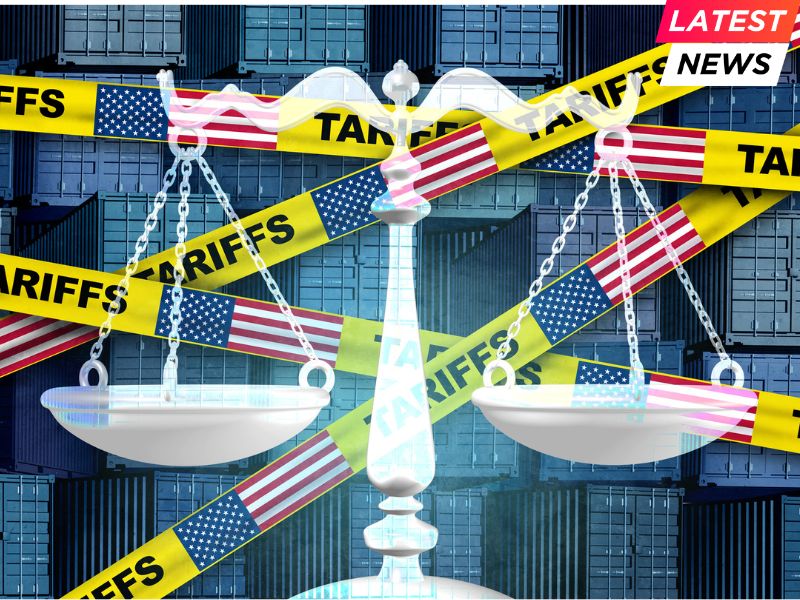
The Supreme Court pressed the Trump administration on Wednesday over its sweeping use of a decades old law to justify global tariffs, raising doubts about the president’s authority and setting up a ruling that could reshape executive power and U.S. trade policy.
During more than two hours of argument, several conservative justices questioned whether the International Emergency Economic Powers Act allows a president to impose tariffs that ultimately fall on American consumers. The law, enacted in the 1970s, has never been used to authorize broad duties on imports.
Chief Justice John Roberts quickly zeroed in on the administration’s position. He noted that Congress specifically granted tariff powers in other statutes but did not do so in the law at issue. Roberts said the administration’s reading would give presidents unchecked power to tax “any product, from any country, in any amount, for any length of time,” a claim he suggested did not fit the law’s intent.
Justice Amy Coney Barrett pressed the government to identify any historical or legal precedent tying the phrase “regulate importation” to tariff authority. When the administration pointed to a Nixon era ruling, Barrett dismissed it as an intermediate court decision, not binding precedent.
Justice Brett Kavanaugh focused on the Nixon comparison, repeatedly asking why Congress kept identical language when it adopted IEEPA if lawmakers objected to the earlier use of emergency powers to raise duties. But Kavanaugh also noted that Nixon did not initially rely on the law to impose the tariffs, raising questions about how much weight to give that history.
The justices also wrestled with what could happen if they strike down Trump’s tariffs. Barrett voiced concern that refunding nearly 90 billion dollars in collected duties could become “a mess,” while Justice Samuel Alito suggested the court may need to address the issue sooner rather than later.
The court’s liberal wing forcefully challenged the administration’s claims. Justice Ketanji Brown Jackson argued that Congress intended to limit presidential emergency powers, not expand them. Justice Elena Kagan criticized Trump’s pattern of declaring emergencies to advance policy goals, saying the executive branch had treated crisis authority as a catch all justification.
Several justices raised the court’s own recent decisions restricting the Biden administration’s ability to act without clear congressional approval. Business groups challenging the tariffs urged the court to apply the same “major questions” standard to Trump.
Skeptical, Justice Sonia Sotomayor noted that emergency declarations cannot resolve ambiguity in the law. “This is a tariff. This is a tax,” she said.
A ruling against the administration would mark the first major break between the 6 to 3 conservative court and President Trump since he returned to office in January. The decision, expected next year, could determine the limits of presidential power in trade and foreign economic policy.
Related Readings: