Home Blog Page 423

Tradervue Review 2023 – The Best Trading Journal?

Tradervue review.

What Is Tradervue?

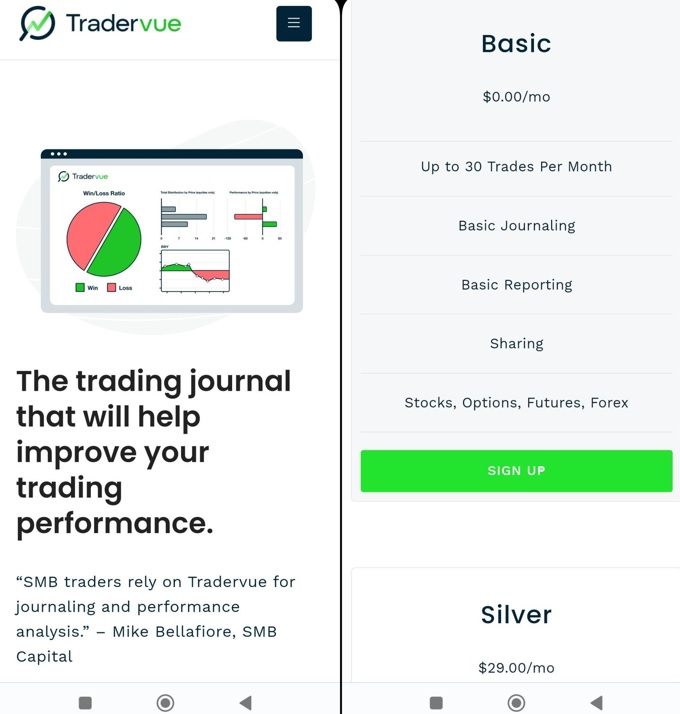
Launched in 2011, Tradervue is an online trading journal and analysis tool for traders looking to improve their trading performance. Tradervue allows automatic imports from 80+ of the largest online brokerages and offers insightful reports, personalized recommendations, and access to professional mentors and coaches.

With Tradervue’s analytical features, you can set up Global Filters to find the best stocks for you, track how much you’re paying in commissions and fees, set up price alerts, or quickly share your trading data with professional investors to see how you can increase your profits. Tradervue offers two subscriptions and a free plan – with no time limit.

In this quick Tradervue summary, I will go over all the best features of this platform. If you want to read a more in-depth analysis, check out our full Tradervue review.

Pros & Cons of Tradervue

Pros

  • Keep track of US equities, futures, options, and forex
  • Import trades automatically from 80+ brokerages
  • Detailed reports and customizable charting tools
  • Affordable subscriptions
  • Free plan with no time limits
  • Mentoring feature for beginner investors

Cons

  • No mobile app
  • The free accounts are very limited

Import Your Trading Data Automatically From 80+ Brokers

With Tradervue, you can import your trading data instantly from more than 80 compatible brokers. If your broker is not currently supported, you can always import your data as a CSV file or manually. Contact Tradervue customer support, as they continually add compatibility for new brokers.

Some of the brokers already supported include:

  • Thinkorswim
  • TD Ameritrade
  • Interactive Brokers
  • MetaTrader 4 & 5
  • Schwab
  • Webull

If your broker is not listed on Tradervue’s website, you may want to check out some alternatives in our full list of the best trading journals.

Access Advanced Analytical Tools

Tradervue offers access to advanced analytical tools that will help you gain key insights into all your investments. Some of the most popular include Automatic Price Charts & Comparisons, Global Filters, and the Commissions & Fees tool, which makes it very easy to see where your money is going and how you can optimize your finances. For the full list of features, check our full Tradervue review.

Price Alerts are created automatically when you import or record a trade in your journal. You can sort them by timeframe – anything from 1 minute to weekly or more. For experienced investors, this is a huge time saver; you can filter and visualize key metrics – like entry and exit prices, all-time highs/lows, and more – at a glance. 

For beginners, we recommend the Tradervue mentoring/coaching feature. With the Tradervue coaching tool, you can quickly share your trading data with certified coaches and professionals and get actionable recommendations on improving – is Tradervue legit?

Choose From 8+ Detailed Reports

One of the best features of Tradervue is its comprehensive reporting resources. With Tradervue, you can choose from 8 advanced reports and gain key insights into all your portfolios. Here are the most popular reports:

  • Overview reports: With key metrics like daily/cumulative P&L, volume, win percentage, and more
  • Risk Analysis Report: Analyze your portfolio and your performance in terms of your risk profile to find your risk-adjusted performance
  • Comparison Reports: Winning vs. losing days, longs vs. shorts, support trades vs. breakout, and more
  • Advanced Reports: Plot by trade duration, P&L, day/time, volume, and many other specific data points
  • Liquidity Report: Gain insights into the relation between adding or removing liquidity, entry and exit shares, and essential intraday trading data

The liquidity reports can benefit day traders, and they work in tandem with some of the best day trading platforms for beginners.

As a free Tradervue user, you’ll have limited access to these reporting tools; if you’d like to access all 8+ different reports, subscribe to Tradervue Silver or Gold.

Tradervue Fees

  • Tradervue Basic Plan: Free
  • Tradervue Silver Plan: $29/month
  • Tradervue Gold Plan: $49/month

Sign-Up Process

Tradervue is available for investors worldwide, and the signup process is very quick. Here’s how to get started:

  • Visit Tradervue’s website
  • Scroll down and click Sign Up Now
  • Select one of the three subscriptions
  • Fill in some of your basic information

Tradervue offers a 7-day free trial for their two premium subscriptions – available only for new users. You can read everything about this in our full Tradervue review.in our full Tradervue review.

Final Thoughts

Tradervue is one of the best trading journals in the market, with comprehensive support for US-based equitihighd highly compatibility with a wide range of the largest online brokerages. Tradervue’s excellent reporting tools and recommendations make it a perfect choice for beginners and intermediate investors. For advanced traders, risk analysis and overview reports coupled with a very reasonable monthly subscription make it one of the best options to keep track of your investments all in one place.

Seeking Alpha Coupon: Limited Time Discounts

coupon

Looking for investment research can be challenging, but Seeking Alpha has made it easier. Based in New York, Seeking Alpha is a content service and investment research platform with thousands of contributors sharing their knowledge and comparing strategies with their peers.

The platform has built a strong community of investors who have found success implementing the ideas they’ve discovered on the site. Seeking Alpha provides ratings on stocks that include quantitative analysis, author ratings, and wall street ratings, which have proven to be useful for forecasting future performance.

The catch is that unlimited access to Seeking Alpha’s content, including author and wall street ratings, requires a Premium/Pro membership. So, the question is, is the Seeking Alpha Premium subscription worth it? To answer this question, we will review Seeking Alpha to take a closer look at the platform and its features. And if you’re interested in getting a discount, keep reading to learn more about a Seeking Alpha premium subscription coupon.

What Is Seeking Alpha?

Seeking Alpha started as a financial news website and has grown into a hub for independent commentary and fundamental analysis of publicly traded companies. Since its founding in 2004, Seeking Alpha has aimed to provide unbiased information and technical analysis about the markets and their impact on individual investors.

Its editorial staff is made up of experienced writers who specialize in equities, bonds, mutual funds, ETFs, commodities, currencies, and fixed-income products. Seeking Alpha has over 15,000 individual contributors and more than 20 million monthly visitors.

Seeking Alpha is a community-based platform that offers real-time updates, stock ratings, email alerts, and unique features such as Top Ideas from established contributors and compatibility with brokerages for quick export of picks. Seeking Alpha also hosts live chat sessions and conducts regular polls to gauge investor sentiment.

Seeking Alpha Pricing

Seeking Alpha offers three membership plans, including a free basic plan and two paid subscriptions: the Premium Plan and the PRO Plan. The Premium Plan includes email alerts, real-time updates, Wall Street ratings for all stocks, and access to Seeking Alpha Author Rating & Performance, Stock Quant Ratings, and Stock Dividend Grades. The PRO Plan includes everything from the Premium Plan, plus PRO content & newsletters, idea screeners, and VIP services, as well as complete access to Top Ideas.

The annual subscription fee for Seeking Alpha Premium is $239 per year. Signing up using a premium discount coupon will get you a 50% discount. Seeking Alpha Pro, which is ideal for institutional investors, costs $499 per year.

Who Is Seeking Alpha For?

Seeking Alpha is a platform for anyone interested in investing, whether you are a seasoned investor or just starting out. It provides valuable insights and analysis of individual stocks and mutual funds, allowing you to make informed decisions about your portfolio.

Seeking Alpha’s community of financial experts and advisors are available to answer any questions you may have about your investments. And if you’re interested in actively choosing your stocks, Seeking Alpha’s expert authors can provide advice on picking stocks, finding deals, and more.

It’s important to note that Seeking Alpha is not suitable for investors who prefer a passive investing strategy, such as using a robo-advisor, or for those who solely invest in mutual funds or target-date funds. Also, If you’re looking to invest in companies that aren’t publicly traded, Seeking Alpha may not be the best fit for you, as it primarily focuses on publicly traded stocks.

This platform is designed for individuals interested in individual stocks, ETFs or REITs, and active stock-picking. If you want to learn more about making better investing decisions and how to manage your portfolio, then Seeking Alpha is the right place for you.

Is Seeking Alpha Worth It?

Yes, subscribing to Seeking Alpha is worth it. Their stock picks have consistently outperformed the S&P 500, averaging 24% higher returns since 2004. With over 20 million monthly users and 7,000 contributors, Seeking Alpha is one of the largest research platforms out there.

Even the free basic subscription Is worth it, with features like stock analysis, email alerts, real-time news, and access to stock prices and charts.

For more advanced features like Stock Quant Ratings and Dividend Grades, the Seeking Alpha Premium subscription is recommended. And for professionals who need access to exclusive PRO content, Top Ideas, Idea Screener/Filters, and VIP Services, the Seeking Alpha PRO plan is the way to go. By using the Seeking Alpha Premium Subscription Coupon at the end of this article, you will receive complimentary access to the 14-day trial with a money-back guarantee as well as a discount on the year membership.

The Seeking Alpha Coupon: Get It For Free

Don’t waste another second! Join Seeking Alpha Premium and supercharge your trading knowledge! Click here to access an exclusive, complimentary 14-day trial and receive 50% off the annual membership!

Best Investment Newsletters | Elevate Your Investing Game This Year

newsletter

Do you need help finding reliable investment advice and top-notch stock recommendations? You’re not alone – many investors face this challenge.

We have a solution to help you confidently navigate the financial markets. Yes, a list of the four best investment newsletters you should consider subscribing to this year.

These carefully selected resources offer valuable insights, expert guidance, and solid recommendations tailored to different investing styles and preferences.

By exploring these newsletters, you’ll gain the knowledge and advice to make informed decisions that could boost your portfolio’s performance.

So, let’s dive in and discover which of these investment newsletters is the perfect fit for you.

1. Motley Fool Stock Advisor

When searching for an outstanding investment newsletter, you should check out Motley Fool’s Stock Advisor. It’s their premier offering and one of the best investment newsletters we’ve come across.

Since its inception in 2002, this newsletter has generated returns of over 500%, leaving the S&P 500’s 100% in the dust. Sounds too good to be true, right? Well, you’re not alone in thinking that.

What sets Stock Advisor apart is its comprehensive analysis and openness. You’ll know exactly why each stock is a top pick and have access to all historical performance data.

You’ll receive various emails and text messages from Stock Advisor, but the highlight is the “Fool’s Best Buys Now” feature. It delivers fresh stock picks on each month’s second and fourth Thursdays. It’s one of the best stock screeners you can use.

As for the cost of Motley Fool Stock Advisor, it’s typically $199/year. But new members can snag a sweet deal at just $99 for their first year.

2. Mindful Trader

Mindful Trader might primarily focus on swing trade alerts, but it’s worth your consideration. It excels in its niche, and few services quite like it.

Though Mindful Trader hasn’t been around as long as some other top investment newsletters, its creator, Eric, has over two decades of trading experience. His data reveals consistent positive returns, including several years with triple-digit gains.

Eric prides himself on being transparent and detailed about his trading strategy. Each trade alert he shares contains vital information like buy/sell and stop-loss prices.

He uncovers these opportunities by running tests against his code sets, so you’ll receive alerts when he spots a potential winner. Regarding the cost of Mindful Trader, it’s a flat rate of $47/per month for all members.

3. Oxford Communique

If you’re after a top-notch investment newsletter, look no further than the Oxford Communique. The brainchild of Alexander Green, the Oxford Club’s Chief Investment Strategist, this newsletter is perfect for individual investors with experience under their belts.

With a subscription to the Oxford Communique, you’ll have expert investment recommendations delivered right to your inbox. Each suggestion is based on a model portfolio crafted by seasoned investors, helping you make savvy decisions to boost your investments.

For $79+/year, you’ll enjoy monthly stock picks, weekly email updates, and bonus reports. Plus, there’s a 365-day guarantee.

Remember that this subscription doesn’t cover dividend stock recommendations— for that, you’ll want to check out the Oxford Income Letter.

4. Seeking Alpha

Seeking Alpha is a go-to platform for investors in the know. It’s your one-stop platform for navigating the financial markets and making smart investment choices successfully.

Seeking Alpha has covered you by checking specific stock prices, reviewing a company’s performance history, and exploring expert opinions. The platform features financial news, email alerts, a massive library of top-quality articles, and daily newsletters.

Seeking Alpha offers a variety of newsletters catering to different interests, including daily portfolio summaries, fresh stock ideas, cryptocurrencies, ETFs, and dividends. The “Morning Briefing” newsletter keeps you updated on the day’s trending articles, so you’re always in the loop.

Consider a Seeking Alpha Premium or PRO account for even more content, starting at just $29.99 monthly. These paid accounts grant you access to extra subscriptions, like “Growth Investor Pro” and “iREIT on Alpha,” that could further enhance your portfolio’s performance.

Which Investment Newsletter is Best?

There isn’t a single “best” investment newsletter out there. Each caters to different investors, some focusing on general stock investing, others on options, and even some on day trading. Ultimately, like a trading journal, the ideal newsletter for you depends on your preferences.

With that said, one of our top picks (and one that’s likely to appeal to a wide range of investors) is the Motley Fool Stock Advisor. It’s an accessible, budget-friendly service offering straightforward recommendations.

And, as a bonus, you can typically hang onto most of your Motley Fool stock picks for the long haul.

Capitalizing on Digital Consulting Services to Streamline Your Business Processes

Digital Consulting Services

As businesses strive to meet the ever-changing needs of customers, digital consulting services offer an invaluable way to stay ahead of the competition. With the advent of the digital age, companies must now look beyond traditional methods of doing business and embrace the power of digital technology. By utilizing the expertise of digital consulting services, businesses can streamline their processes, optimize their operations, and maximize their profits.

This blog post will explore the benefits of digital consulting services and how businesses can leverage them to streamline their operations. We will discuss the various types of digital consulting services available, how they can help businesses streamline their processes, and the potential outcomes of employing these services. Finally, we will look at the potential risks of relying on digital consulting services and how businesses can mitigate them. 

What are Digital Consulting Services?

Digital consulting services are services provided by expert IT consulting services that help businesses with their digital strategy. Digital consultants specialize in a variety of digital marketing areas, such as search engine optimization, social media optimization, web design, and content marketing. The services provided by digital consultants can help businesses maximize their online presence, engage with customers through social media, improve their website design, and create effective content marketing campaigns. 

Benefits of Digital Consulting Services

There are numerous benefits to utilizing digital consulting services. Below are just some of the ways digital consulting services can help streamline business processes: 

1. Optimize Operations

Digital consulting services can help businesses optimize their operations by identifying areas of improvement and providing strategies to increase efficiency. By utilizing the expertise of digital consultants, businesses can better understand their customers’ needs and develop strategies to improve customer service. Furthermore, digital consultants can provide insights on how to leverage technology to streamline operations and increase productivity. 

2. Improve Online Presence

Digital consulting services can help businesses build and maintain a strong online presence. Digital consultants can provide advice on how to create successful online marketing campaigns, optimize websites for search engine rankings, and engage with customers on social media. With the help of digital consulting services, businesses can increase their online visibility and reach a wider audience. 

3. Maximize Profits

Digital consulting services can help businesses maximize profits by providing strategies to reduce costs and increase efficiency. Digital consultants can help businesses identify areas of waste and provide strategies to reduce costs. Furthermore, digital consultants can help businesses develop strategies to increase sales, such as utilizing email marketing campaigns or running targeted ads.

Risks of Relying on Digital Consulting Services 

Although digital consulting services provide many benefits, there are some potential risks to consider when utilizing them. Below are some of the potential risks of relying on digital consulting services: 

1. Cost

Digital consulting services can be expensive, and businesses need to ensure they are getting the most out of the services they are paying for. To ensure businesses are getting the most value for their money, it is important to research potential consultants and understand the services they provide. 

2. Quality

It is important to ensure that the digital consulting services businesses are utilizing are of high quality. Poorly executed digital strategies can be costly and can have a negative impact on a business’s operations and profits. To ensure quality digital consulting services, businesses should look for consultants who have a proven track record of successful projects. 

3. Security

When utilizing digital consulting services, businesses need to ensure their data is secure. Digital consultants have access to sensitive information, so businesses should make sure the consultants they hire have secure systems in place to protect their data. Furthermore, businesses should ensure the consultants have the necessary insurance to cover any potential losses. 

Conclusion

Digital consulting services offer businesses an invaluable way to streamline their processes and maximize their profits. By utilizing the expertise of digital consultants, businesses can optimize their operations, improve their online presence, and develop successful marketing campaigns. However, businesses need to consider the potential risks of relying on digital consulting services, such as cost, quality, and security. 

By taking the necessary steps to ensure they are utilizing high-quality digital consulting services and mitigating the potential risks, businesses can capitalize on the power of digital technology and ensure their success.

What to Look for in Cash Home Buyers in Cleveland: Tips for Sellers

Home

When you are selling your home in Cleveland, Ohio, it is important to understand the nuances of the local real estate market and the different cash home buyers in the area. Cash home buyers provide a faster and simpler way to sell your home without the hassle of traditional methods. The right cash home buyer can help you get the most money for your home, but it can be difficult to find the right fit in a crowded market. This article will provide some tips for sellers looking to find the best cash home buyers in Cleveland.

Evaluate Your Home

The first step in finding the right cash home buyer is to evaluate your home. You will want to consider factors such as condition, location, size, and any other features that will affect the sale. Knowing the value of your home will allow you to determine how much you should ask for it and which cash home buyers are the most likely to make you an offer.

Research Cash Home Buyers

Once you know the value of your home, you can begin researching cash home buyers. Make sure to look at reviews and references, as well as the company’s history. Ask questions to get a better understanding of the buyer’s process and how they handle closing costs and repairs. Make sure the buyer is properly licensed and insured, and has a good reputation in the real estate market.

Understand the Process

When it comes to cash home buyers, the process is usually much simpler than with traditional home sales. The buyer will usually make an offer within a few days, which you can accept or reject. If it is accepted, the buyer will then inspect the home. After this, the buyer will usually provide a closing date, where you will sign the paperwork and receive your payment.

Know Your Rights

When working with a cash home buyer, it is important to know your rights and understand the process. Make sure the buyer is transparent and honest about all fees and costs involved, and is not trying to take advantage of you. Make sure the buyer is willing to provide all the documents needed for the sale, such as the deed, title, and any other paperwork needed.

Check Out the Competition

When looking for the best cash home buyer, it is important to check out the competition. Look for buyers that offer competitive prices and a good reputation. You should also compare the fees and commissions they charge, as well as the closing costs. This will help you make sure you are getting the best deal possible.

Conclusion

When it comes to finding the best cash home buyers in Cleveland, it is important to understand the local real estate market and the different cash home buyers in the area. You should evaluate your home, research the cash home buyers, understand the process, know your rights, and check out the competition to make sure you are getting the best deal possible. With the right cash home buyer, you can get the most money for your home and close the deal quickly and efficiently.

Peer-to-Peer Lending vs Online Loans

Online Loans

Peer-to-peer lending and online loans are two popular alternative lending options that have emerged in recent years. Both offer borrowers a quick and easy way to obtain financing without having to go through traditional banks or lenders. However, there are some key differences between the two that borrowers should be aware of before deciding which option is best for them. In this article, we will explore the differences between peer-to-peer lending and online loans, and what is more ideal to use between the two.

How does peer-to-peer lending work?

P2P lending platforms in Australia act as intermediaries, connecting borrowers with investors who are willing to fund their loans. The process typically starts with a borrower applying for a loan on a P2P lending platform, specifying the amount they need, the purpose of the loan, and other relevant information. The platform evaluates the borrower’s creditworthiness and assigns them a credit score and an interest rate. The loan is then listed on the platform, where investors can review the borrower’s profile and decide whether to invest in the loan.

Once the loan is fully funded, the borrower receives the loan amount in their bank account and repays the loan in fixed installments. Investors receive their share of the loan repayments, which include both the principal and interest.

In Australia, P2P lending platforms are regulated by the Australian Securities and Investments Commission (ASIC) to ensure they comply with strict lending and investment regulations.

How do online loans work?

Online loans, also known as digital loans, are a type of lending that allows borrowers to apply for a loan entirely online, without having to visit a physical bank or lender. Online loans such as personal loans and business loans are offered by a variety of lenders, including traditional banks, credit unions, online-only lenders, and peer-to-peer online platforms. The borrower applies for a loan on the lender’s website, providing the required personal and financial information. The lender evaluates the borrower’s creditworthiness by checking their credit history, income, debt-to-income ratio, and other relevant factors. Based on this evaluation, the lender assigns the borrower an interest rate and loan terms.

Once the loan is approved, the funds are transferred directly to the borrower’s bank account. Borrowers then repay the loan in fixed installments, typically throughout one to five years. Lenders may charge fees for late payments or early repayment, so borrowers need to read the terms and conditions carefully.

In Australia, online lenders are regulated by the Australian Securities and Investments Commission (ASIC) to ensure they comply with strict lending regulations. Borrowers can use comparison websites to compare different lenders and find the best loan options for their needs. Overall, online loans provide borrowers with a convenient and fast way to obtain financing, but borrowers should carefully consider their financial situation and ability to repay the loan before applying.

What’s the Difference Between the Two?

Here are the differences between peer-to-peer lending and online loans in terms of application process, repayment terms, and interest rates:

Peer-to-Peer Lending

  • Application Process: Borrowers apply for a loan on a P2P lending platform, which evaluates their creditworthiness and assigns them a credit score and interest rate. Investors then choose whether to fund the loan and if it is fully funded, the borrower receives the loan amount.
  • Repayment Terms: Borrowers repay the loan in fixed installments for three to five years.
  • Interest Rates: Interest rates on P2P loans vary depending on the borrower’s credit score, but are generally lower than traditional bank loans.

Online Loans

  • Application Process: Borrowers apply for a loan online and the lender evaluates their creditworthiness based on their credit history, income, debt-to-income ratio, and other relevant factors.
  • Repayment Terms: Borrowers repay the loan in fixed installments throughout one to five years.
  • Interest Rates: Interest rates on online loans vary depending on the lender and the borrower’s creditworthiness, but are generally higher than P2P loans.

Overall, the application process for P2P lending and online loans is similar, but P2P lending may offer lower interest rates due to the involvement of individual investors. Repayment terms for both types of loans are fixed and spread over the years.

What is more ideal to use?

Deciding which option is more ideal between peer-to-peer lending and online loans depends on the individual’s specific financial situation and needs.

Peer-to-peer loans may be a good option for borrowers with good credit who are looking for lower interest rates than traditional bank loans. P2P lending platforms offer a streamlined application process and may be more flexible in their lending criteria than traditional banks.

On the other hand, online loans may be a better fit for borrowers who need quick access to cash and have less-than-perfect credit. Online lenders may be able to provide funding faster than P2P lending platforms, and some lenders may not require a credit check.

Overall, borrowers should carefully consider their financial situation and needs, compare loan options from different lenders, and choose the option that best meets their requirements in terms of interest rates, repayment terms, and fees.

Final Thoughts

Both peer-to-peer lending and online loans provide convenient and flexible financing options for borrowers. Peer-to-peer lending platforms offer lower interest rates and may be more flexible in their lending criteria, while online loans provide quick access to funds and may be easier to qualify for, especially for borrowers with less-than-perfect credit.

It’s important for borrowers to carefully consider their financial situation and needs before applying for a loan, and to compare loan options from different lenders to find the best terms and interest rates. Borrowers should also read the loan agreement carefully and understand the repayment terms, fees, and any penalties for late payments or early repayment.

Both P2P lending and online loans can be viable alternatives to traditional bank loans, providing borrowers with a range of options to obtain the funding they need.

Options to Help You Pay Your Bills

Pay Your Bills

Managing finances and paying bills on time can be a challenge for many people. However, there are various options available to help you pay your bills and stay on top of your finances. From budgeting and prioritising expenses to seeking financial assistance and negotiating with creditors, taking proactive steps can ease financial stress and improve your financial situation.

Centrelink assistance

Centrelink assistance is a viable option to help you pay your bills, especially if you are experiencing financial hardship or are unable to make ends meet due to unforeseen circumstances such as illness, job loss, or a natural disaster. Centrelink payments can provide you with the financial support you need to pay your bills, cover your basic needs, and improve your overall financial situation.

However, it’s important to note that Centrelink payments may not always be sufficient to cover all your expenses, and you may need to explore other options such as budgeting, debt consolidation, or seeking financial counselling to manage your finances effectively.

Some of the Centrelink assistance programs include:

  • JobSeeker Payment: This program provides financial support to people who are looking for work or are unable to work due to illness or disability.
  • Youth Allowance: This program provides financial assistance to young people who are studying, looking for work, or doing an apprenticeship or traineeship.
  • Family Tax Benefit: This program provides financial support to families with dependent children to help with the cost of raising them.
  • Rent Assistance: This program provides additional financial support to eligible people who rent their homes and are receiving certain Centrelink payments.

To be eligible for Centrelink assistance, you need to meet certain criteria such as income and asset tests. You can apply for Centrelink assistance online or by visiting a Centrelink office.

Pay in Installments

Another option to help you pay your bills is to set up a payment plan or pay in installments. Many utility companies, such as electricity, gas, and water providers, as well as other service providers, offer payment plans that allow you to spread out the cost of your bills over some time. This can make it easier to manage your finances and avoid late fees or disconnections.

To set up a payment plan, you can contact your service provider and inquire about their options for paying in installments. You may need to provide some information about your income and expenses, as well as agree to certain terms and conditions, such as making regular payments on time.

It’s important to note that paying in installments may result in additional fees or interest charges, so it’s important to read the terms and conditions carefully and compare different options before committing to a payment plan. Additionally, it’s important to ensure that you can afford the payments before agreeing to a payment plan, as defaulting on payments may result in additional fees, disconnection, or legal action.

Request for a due date extension

If you’re unable to pay your bills by the due date, another option is to request a due date extension from your service provider. Many companies understand that unexpected financial difficulties can arise, and may be willing to work with you to find a solution.

To request a due date extension, you can contact your service provider by phone, email, or online and explain your situation. Be honest and provide as much information as possible about your financial circumstances, such as the reason for your inability to pay and when you expect to be able to make the payment.

If your request is granted, the company may extend your due date or set up a payment plan that works for you. It’s important to make sure that you understand the terms and conditions of the extension or payment plan, including any additional fees or interest charges that may apply.

It’s also important to note that not all service providers offer due date extensions, and some may require you to provide proof of hardship before considering your request. If you’re having difficulty paying your bills regularly, you may want to consider seeking financial counselling or other forms of assistance to help you manage your finances effectively.

Use utility rebates and vouchers

Another option to help you pay your bills is to look for utility rebates and vouchers that can help you reduce your expenses. Many utility companies and government agencies offer rebates and vouchers to eligible customers that can be used to cover the cost of certain services or appliances.

For example, you may be eligible for a rebate or voucher for energy-efficient appliances or home improvements, such as insulation or solar panels, which can help you reduce your energy bills in the long run. Additionally, some government agencies offer vouchers or concessions for certain essential services, such as public transportation, medical expenses, or education.

To find out if you’re eligible for utility rebates and vouchers, you can check with your service provider or visit the government website that provides information on available concessions and rebates in your area. Some programs have income or other eligibility requirements, so be sure to check the specific criteria for each program.

It’s important to note that rebates and vouchers may not cover all your expenses, but they can provide some relief and help you reduce your overall costs. Be sure to apply for any available rebates and vouchers on time, as some programs may have limited funding or expiration dates.

Apply for a payday loan

While applying for payday loans can provide short-term relief and help you pay your bills, it’s generally not recommended as a long-term solution. Payday loans typically come with extremely high-interest rates and fees, which can trap you in a cycle of debt and make it difficult to pay off the loan.

If you’re considering a payday loan, it’s important to understand the risks and costs involved. Be sure to read the fine print and understand the total cost of the loan, including any fees or interest charges. Additionally, you should only borrow what you can afford to repay, as defaulting on a payday loan can result in additional fees, penalties, and legal action.

There are generally other options available to help you pay your bills, such as budgeting, seeking financial counselling, or negotiating with your creditors. These options may take more time and effort, but they can help you avoid the high costs and risks associated with payday loans.

If you’re struggling to pay your bills and are considering a payday loan, it may be helpful to reach out to a financial counsellor or other trusted advisor who can provide guidance and support. They can help you evaluate your options and develop a plan to improve your financial situation.

Final Thoughts

When it comes to paying your bills, it’s important to consider all your options and choose the one that works best for your situation. While there are different options available, some are better than others, depending on your financial circumstances and the nature of your bills.

In general, seeking assistance from government programs, negotiating with your creditors, or applying for utility rebates and vouchers may be more sustainable and cost-effective options than payday loans or other high-cost loans. Additionally, seeking financial counselling or advice from trusted advisors can help you develop a plan to improve your financial situation and avoid future financial difficulties.

Remember that it’s always better to address financial difficulties sooner rather than later, as delaying can lead to more significant problems down the line. By taking proactive steps to manage your finances and pay your bills, you can reduce your stress and anxiety and achieve greater financial stability and security.

How to Create a Financial Roadmap to Make Your Business Successful

Financial Roadmap

A financial roadmap is a plan that outlines your business’s financial goals, objectives, and the steps you need to take to achieve them. It includes a detailed analysis of your current financial status, projected revenue, expenses, cash flow, and investment requirements. 

With a financial roadmap, you can make informed decisions about where to allocate resources, identify potential risks, and optimize your financial performance. This article will discuss how to create a financial roadmap to make your business successful.

1. Tax Support

One important aspect of creating a financial roadmap for your business is understanding the tax implications and seeking support. As a business owner, you are required to pay estimated taxes every quarter. This is an advance payment of the taxes you owe for the year based on your business income, deductions, and credits. 

The Q1 estimated taxes deadline is typically between April 15th to April 18th or the next business day if it falls on a weekend or holiday. Here are some tips to help you navigate the tax landscape:

  • Keep accurate records: Keeping accurate records of all your financial transactions is critical to filing your taxes correctly. 
  • Understand your tax obligations: A sole proprietorship will file taxes differently than a corporation. Make sure you understand your obligations and deadlines.
  • Seek professional help: A certified public accountant (CPA) or tax attorney can help you identify tax deductions and credits to ensure that you file your taxes correctly.
  • Stay up-to-date on tax laws: Stay up-to-date on any changes in tax laws that may affect your business, and adjust your financial plan accordingly.
  • Maximize tax deductions: Take advantage of all the tax deductions and credits that apply to your business to reduce your tax liability.

2. Accounting Operations

Accounting operations play a crucial role in the success of any business, as they help to manage and track financial transactions, monitor cash flow, and ensure compliance with relevant regulations. Here are some steps you can take to create a financial roadmap for your business:

  • Integrate accounting software: There are many reasons why you should integrate accounting software into your business. The primary reasons are that it eliminates manual calculations, organizes your financial data, and helps you make better monetary decisions. 
  • Set up a chart of accounts: A chart of accounts is a list of all the accounts used to record financial transactions. Setting up a chart of accounts tailored to your business needs and industry standards is essential.
  • Record all financial transactions: You should record all financial transactions, including income, expenses, assets, and liabilities, in your accounting software. 
  • Monitor cash flow: Cash flow is the lifeblood of every business. You can use your accounting software to track cash inflows and outflows and create cash flow forecasts.
  • Reconcile accounts: Reconciling accounts involves comparing your accounting records to bank statements and other financial documents to ensure accuracy. This helps to identify and resolve any discrepancies or errors in your financial records.

3. Revenue Process

Creating a streamlined revenue process is essential for any business that wants to succeed financially. Here are some steps you can take to create a financial roadmap for your business’s revenue process:

  • Identify your target market: Identify your target market and understand their needs and preferences to tailor your products or services to them.
  • Develop a pricing strategy: Your pricing strategy should consider factors such as the cost of goods or services, market demand, and competition. 
  • Implement effective marketing strategies: Develop marketing strategies that align with your target market and pricing strategy, and use marketing channels that resonate with your audience.
  • Create an efficient sales process: Develop a sales process that is easy to follow, emphasizes the unique value of your products or services, and meets the latent needs of your target market.
  • Manage customer relationships: Develop strategies to nurture and retain existing customers, such as providing exceptional customer service, offering loyalty rewards, and seeking feedback to improve your products or services continuously.

4. Back Office System Alignment

Back office systems include accounting, inventory management, and HR, among other administrative functions. By aligning these systems, you can ensure that your financial data is accurate, up-to-date, and accessible when needed. Here are some tips for aligning your back-office systems:

  • Invest in good accounting software: Good accounting software can streamline your financial processes, help you track your expenses, and generate accurate financial reports.
  • Integrate your systems: Integrating your systems means that data is shared seamlessly between different functions, reducing the need for manual data entry and increasing accuracy. 
  • Ensure data accuracy: Make sure that you have robust systems in place for data entry, validation, and reconciliation. Regular audits and checks can also help you identify and correct any errors.
  • Train your staff: Make sure that your staff knows how to operate the systems and processes and understands the importance of accuracy and data integrity.

5. Proactive Bookkeeping

Here are some steps you can take to make sure your bookkeeping is proactive:

  • Use cloud-based accounting software: Using cloud-based accounting software like QuickBooks or Xero can help you keep track of your finances in real time.
  • Set up a chart of accounts: It helps you organize your financial information and makes it easier to analyze your financial data.
  • Create a budget: Creating a budget can help you plan your expenses and ensure you have enough money to cover your costs. 
  • Track your expenses: Tracking your expenses can help you identify areas where you overspend and find ways to cut costs.
  • Reconcile your accounts: Reconciling your accounts means comparing your financial records to your bank statements to ensure they match. 
  • Review your financial reports regularly: Reviewing your financial reports regularly can help you identify trends and make informed decisions about your business.

Conclusion

A financial roadmap is crucial for any business looking to achieve long-term success. By following these steps on how to create a financial roadmap to make your business successful, you can make informed decisions about where to invest your resources and how to optimize your cash flow. Ultimately, a solid financial roadmap can help you build a sustainable and profitable business model that can weather economic uncertainties and thrive in the long run.

Should You Take Out a Personal Loan to Invest

Personal Loan to Invest

Taking out a personal loan to invest can be a risky financial decision and requires careful consideration. While investing can potentially provide significant returns, it also carries a level of risk, and taking on debt to invest can amplify those risks. It’s important to understand your financial situation and investment goals before making a decision.

Margin Loans

A margin loan is a type of loan that allows an investor to borrow money to invest in the stock market or other financial instruments. The loan is secured against the value of the investor’s portfolio, which means that if the value of the portfolio falls below a certain level, the lender may require the investor to provide additional funds to maintain the loan’s security.

Margin loans can be a useful way to leverage an investment portfolio and potentially increase returns, but they also carry significant risks. If the value of the portfolio falls sharply, the investor may be forced to sell investments to meet a margin call, which could result in significant losses.

Before taking out a margin loan, it’s important to carefully consider your financial situation, investment goals, and risk tolerance. You should also carefully review the terms and conditions of the loan, including the interest rate, margin requirements, and any other fees or charges. It’s also a good idea to speak with a financial advisor to determine whether a margin loan is appropriate for your circumstances.

Investment Property Loans

An investment property loan is a type of loan that is used to purchase a property to generate rental income or capital gains. These loans are usually secured against the investment property and may require a larger deposit than a standard home loan.

There are several different types of investment property loans, including variable-rate loans, fixed-rate loans, interest-only loans, and principal and interest loans. Each type of loan has its benefits and risks, so it’s important to carefully consider which option is best for your financial situation and investment goals.

Investment property loans can be a useful way to leverage your funds and potentially generate income or capital gains, but they also carry risks. If the rental income does not cover the mortgage repayments, you may need to cover the shortfall from your funds. Additionally, if the value of the property falls, you may be left with negative equity and potentially significant financial losses.

Before taking out an investment property loan, carefully review the terms and conditions of the loan, including the interest rate, fees, and repayment schedule. It’s also a good idea to seek professional advice from a financial advisor or mortgage broker to determine whether an investment property loan is appropriate for your circumstances.

Risks when borrowing money to invest

Of course, there are significant risks associated with borrowing money to invest. Here are some of them.

You can suffer bigger losses

While leveraging your investments through borrowing can potentially increase your returns, it also amplifies your losses if your investments do not perform as expected.

For example, if you take out a loan to invest in the stock market, and the market experiences a significant downturn, the value of your investments may fall below the amount you borrowed, leaving you with a negative net worth. In addition, if you are unable to make the loan repayments, you may be forced to sell your investments at a loss to pay off the debt.

Borrowing money to invest also carries a higher level of risk than investing with your funds because you are essentially gambling with borrowed money. If your investments do not perform as expected, you may be left with a large debt and little to show for it.

Therefore, it’s important to carefully consider your financial situation and investment goals before taking on debt to invest. You should also carefully review the terms and conditions of any loan, including the interest rate, fees, and repayment schedule, and seek professional advice from a financial advisor or mortgage broker to determine whether borrowing to invest is appropriate for your circumstances.

Capital risk

Capital risk refers to the risk of losing the money that you have invested in a particular asset or investment. It is the risk that you will not receive back the full amount of your initial investment.

All investments carry some degree of capital risk, as the value of investments can go up or down depending on various factors such as market conditions, economic events, and company performance. For example, if you invest in stocks, the value of the stock can fluctuate depending on how well the company is performing, changes in market conditions, or broader economic events.

When considering investments, it’s important to understand the level of capital risk involved and how much you are willing to risk. Different types of investments carry different levels of risk, with some being more volatile and having the potential for higher returns, while others are considered more stable but may have lower returns.

It’s important to diversify your investments and avoid putting all your capital at risk in a single investment. A diversified portfolio can help spread the risk across different assets, reducing the overall impact of any single investment that does not perform as expected. It’s also important to regularly review your investments to ensure they align with your investment goals and risk tolerance.

Investment income risk

Investment income risk refers to the risk of a reduction or loss in the income generated by an investment. This risk can arise from a variety of factors, such as changes in market conditions, fluctuations in interest rates, or changes in the financial health of the underlying asset.

For example, if you invest in a bond that pays a fixed interest rate, changes in interest rates can affect the value of the bond and the income generated by it. If interest rates rise, the value of the bond may fall, and the income generated by the bond may become less competitive compared to other investments.

Similarly, if you invest in a rental property, changes in rental demand, market conditions, or property maintenance costs can impact the income generated by the investment.

To manage investment income risk, it’s important to diversify your investments and not rely on a single investment or income stream. Diversification can help spread the risk across different assets, reducing the overall impact of any single investment that does not perform as expected.

Additionally, it’s important to regularly review your investments and adjust your portfolio to ensure it aligns with your investment goals and risk tolerance. Seeking professional advice from a financial advisor or investment manager can also help you manage investment income risk and make informed investment decisions.

Interest rate risk

Interest rate risk refers to the risk that changes in interest rates will impact the value of an investment. This risk can affect a wide range of investments, including bonds, stocks, and real estate.

For example, when interest rates rise, the value of bonds and other fixed-income investments typically decreases, as new bonds issued with higher interest rates become more attractive to investors. Conversely, when interest rates fall, the value of fixed-income investments generally increases.

Interest rate risk can also affect stocks, as higher interest rates can increase borrowing costs for companies, impacting their profitability and ultimately their stock price. Real estate investments can also be impacted by interest rate risk, as higher interest rates can lead to higher borrowing costs for property purchases or renovations, potentially reducing the demand for real estate investments.

To manage interest rate risk, it’s important to diversify your investments across different asset classes, as some investments may perform better than others in different interest rate environments. It’s also important to regularly review your investments and adjust your portfolio to ensure it aligns with your investment goals and risk tolerance.

In addition, investors may choose to invest in assets that are less sensitive to interest rate changes, such as dividend-paying stocks, inflation-indexed bonds, or alternative investments like commodities or real estate investment trusts (REITs). Seeking professional advice from a financial advisor or investment manager can also help you manage interest rate risk and make informed investment decisions.

Other factors to consider

When considering borrowing to invest, there are several other factors to consider beyond the type of investment and interest rates. Here are some additional factors to keep in mind:

  • Types of Investments: Different investments carry different levels of risk and potential return. It’s important to consider your investment goals, risk tolerance, and investment horizon when choosing the type of investment to borrow for. Some common types of investments include stocks, bonds, mutual funds, ETFs, real estate, and alternative investments like commodities or private equity.
  • Current Loan Rates: Current loan rates can impact the overall cost of borrowing and your potential return on investment. It’s important to research and compare current loan rates from different lenders to find the best rates and terms.
  • Your Financial Portfolio: It’s important to consider your overall financial situation and investment portfolio before taking on additional debt. If you already have significant debt or a high level of investment risk, borrowing to invest may not be appropriate for your financial situation.
  • Personal Risk Tolerance: Borrowing to invest involves a higher level of risk than investing with your funds, and it’s important to assess your personal risk tolerance before making any investment decisions. If you are uncomfortable with taking on high levels of investment risk or are unable to handle potential losses, borrowing to invest may not be the right choice for you.

Bottomline

Borrowing to invest can be a high-risk, high-reward strategy that should only be considered after careful consideration of several factors. These factors include the type of investments you plan to make, current loan rates, your financial portfolio, personal risk tolerance, investment horizon, investment diversification, and exit strategy.

While borrowing to invest can offer the potential for greater returns, it also comes with significant risks and should be approached with caution. Seeking professional advice from a financial advisor or mortgage broker can help you make informed investment and borrowing decisions.

How to Avoid Bank Failures with Moving 401k into Gold

How to Avoid Bank Failures with Moving 401k into Gold

Ah, gold. Just looking at a couple of pictures of this yellow metal will leave you wanting more! Have you given any thought to including gold in your retirement savings portfolio? 

Our bet is on yes because people are low-key obsessed with this yellow metal and have been for years. Hey, we’re far from judging! In fact, it’s great that you want to discover more about your investing options.

We’re here to tell you folks that switching your 401(k) to gold is the answer you’re looking for. 

Those who choose to roll over their retirement savings into 401k precious metals can take advantage of a variety of awesome perks, one of which is the fact that gold is not as directly related to dynamic shifts in the economy. Discover more info on this link https://www.bankrate.com/retirement/401k-rollover-guide/.

You should also know that the process of transferring funds from a 401(k) to a gold individual retirement account is quite standard, but a lot of folks are unsure of how to complete the transfer without breaking their banks from all the fees. 

“So, is it feasible to transfer my 401(k) into gold without having to pay a specific penalty?” Stay tuned to find out more about this option!

Why make the big move? 

gold

As a retirement alternative, an individual retirement account and a 401(k) both provide favorable tax treatment. However, folks, the two plans’ underlying processes are distinct and we advise you to evaluate them separately. 

For instance, because companies often sponsor 401(k) plans, participants in those plans are typically limited in the investment options available to them. IRAs are not limited in any way by employment, and investors can open them at any bank or brokerage business they choose, giving them access to a wide variety of investment opportunities.

Rolling over to a gold IRA is only an option for you if you decide to leave the company that manages your 401k account or if the company decides to no longer offer the service. 

Because there will be no tax repercussions as a result of this process, you will have a plethora of options to choose from when it comes to finding a brokerage firm that can manage your retirement assets on your behalf. Click here to find out more. 

Do research 

How to Avoid Bank Failures with Moving 401k into Gold

You may be wondering how to roll over your 401(k) into gold without incurring a penalty if you’re thinking about investing in precious metals for your retirement. 

We’re here to tell you that a Gold IRA company is an alternative worth thinking about folks. The awesome thing about these companies is that they aid folks who wish to invest their savings in gold or other precious metals. And let’s be honest for a second. Who wouldn’t want to get their hands on precious metals, right? 

Oh, and it’s crucial to think about a company’s credibility and history while looking at Gold IRA providers. In your search for a precious metals investment firm, prioritize those that have been around for a while and can point to a history of satisfied customers. If previous customers are happy, there’s no doubt that you will have the same experience! 

In addition, a wise idea is to look at the company’s reputation on independent review sites. They can help you to narrow down your choices if you’re having a hard time figuring the right company to work with. 

A 401(k) rollover to a gold IRA, while possible, can be a complicated process that calls for professional assistance. 

But, awesomely enough, professionals at the top Gold IRA providers will be well-versed in the ins and outs of the entire process and happy to answer any questions that cause you headaches. Sounds like the ideal solution to your problems, right? 

What’s the deal with Gold IRA?

GOLD IRA

Adding actual gold to your IRA through a gold IRA rollover is a common approach to mix things up in your portfolio. You can low-key start buying gold right now by contacting a gold IRA company and rolling over your existing one into a gold IRA. Piece of cake, right? 

But, hold your horses because you need to do your homework before deciding to convert your retirement savings into gold through an IRA rollover. We’ve already covered this above. 

Oh, and folks, let’s not forget that there are some factors to consider when comparing gold IRA providers before making a final decision.

First, you should verify the company’s credibility and success rate ASAP. You can accomplish this in a number of different ways, such as reading customer reviews, getting referrals from people you trust, or looking into the company’s background.

Second, verify that they sell a selection of gold IRA options. You must be able to choose between investing in gold in the form of bars, coins, or ETFs.


Third, check that the company has a competent support staff. What does this mean, exactly? Well, a customer support agent should be easy to get in touch with and give you the answers you’re so desperately looking for. 

Last but not least, you need to check the company’s fee transparency. The last thing you need is for a company to get away with a daylight robbery.  Now let’s get to the even more interesting part of this article.

How to avoid penalties? 

“I don’t want to deal with high penalties.” You and pretty much every single investor out there. So, listen up, folks! The process of transferring money from a 401(k) into a gold IRA without incurring any penalties is basically a piece of cake. Look into sites like Bonds Online, to be prepared for your investment in advance!

So let’s start, shall we?

First of all, you need to get busy, locate a custodian and open a gold IRA account with them. Following the successful opening of the account, you will be able to move the money from your 401(k) into the gold IRA account.

If you pretty much want to avoid incurring any penalties that might leave you high and dry, the money needs to be sent straight from the 401(k) to the gold IRA account. 

In addition to this, you will need to select the gold or other precious metals that you want to put your money into. After the transfer is low-key finished, you will be able to start making investments in gold or other precious metals. Sounds awesome, doesn’t it? 

Is it the right option for me? 

You may want to transfer your 401(k) into a gold IRA if you think it’s safer than paper currency or stocks. We can’t stress this enough! This desirable yellow metal is by far the most secure precious metal an investor can purchase. Learn more on this link https://www.sfgate.com/personal-finance/article/401k-rollover-17909491.php.

But, no investment is risk-free, so we advise you to consider the big picture before deciding to roll over your holdings. For additional information on how to balance these risks in light of your own financial circumstances, you can consult with other professionals on the matter as well. 

Because of the ebb and flow of the gold market, you should be ready to adjust your expectations before deciding to invest your retirement funds in gold. So, good luck with making your future more golden!

EDITOR'S PICK OF THE WEEK

CFO's new mandate. CFO explaining the presentation

The Performance and Transformation Orchestrator: The CFO’s New Mandate in the Age of AI

By Terence Tse CFOs are evolving into AI-driven transformation orchestrators, balancing finance, technology, and strategy while upskilling teams, managing risks, and driving measurable business value. A key insight from this year’s AI for CFOs event, organized...

WISE DECISION MAKER GUIDE

POWER INFLUENCERS

Emerging Trends

The Future of Global Trade