Trump’s strategy in Iran remains unclear as officials send mixed messages about what the United States hopes to accomplish. The administration has talked about destroying Iran’s missile and nuclear capabilities, but it has not explained what comes next or how the country might stabilize after the conflict. Trump initially hinted at regime change when he urged Iranians to rise up and reclaim their government, yet later focused on narrower military objectives.
Defense Secretary Pete Hegseth rejected claims that the U.S. war aims include toppling the Iranian government. He described the operation as a way to reduce threats against America and its allies. General Dan Caine warned that the conflict could become difficult and prolonged, with additional casualties possible as fighting continues. Six U.S. service members have already died in retaliatory attacks.
Lawmakers have criticized the administration for lacking a clear plan. Democrats argue the public has not seen evidence of an imminent threat that justified the strikes. Analysts also question whether air operations alone can change the region’s security dynamics. Trump insists the campaign is necessary and portrays it as an opportunity to weaken long-standing adversaries.
The mixed messaging underscores the challenge of defining success in limited military operations. Without a detailed vision for Iran’s future, uncertainty continues to shape the debate in Washington and abroad.
Last June 2025 Trump bombed Iran. He said to eliminate Iran’s alleged nuclear weapons development. He then proclaimed he had achieved that goal. So what then is the War about now? What’s the US strategic objective? The endgame?
In the midst of the recent Epstein scandal, Israel’s Netanyahu a week ago visited the White House again demanding the US once more attack Iran. This time he demanded Trump and the US wipe out Iran’s ballistic missile capability, demand that Iran cut all ties with its proxy supporters in the region, dismantle its Revolutionary Guard units, and agree to turn over all its remaining domestic use nuclear fissionable materials.
The objective was and remains regime change in Iran. Not nuclear arms development.
Trump accommodated him. He mobilized a third of all US air force and naval assets to the region and engaged the Iranians in negotiations. He then declared publicly a ‘deal’ was imminent, and that Iranian negotiators reportedly agreed to all US-Israel demands on nuclear materials. Oman’s foreign minister, who hosted the negotiations, also publicly declared a deal was concluded by the parties on nuclear arms development. He had even prepared the final papers for the parties to sign. The signing was interrupted, however, as Trump ordered a massive military strike on Iran—once again in the midst of negotiations!
While Trump agreed to Netanyahu’s demands, he simultaneously ignored the advice of the US Joint Chiefs of Staff US admiral who advised him the US military could not guarantee a short and successful war with Iran. Not the news he wanted to hear. He and Netanyahu had already agreed to go to war. Trump promptly removed the admiral from his post!
Thus, once again the US went to war in the middle east on behalf of Israel. The objective was and remains regime change in Iran. Not nuclear arms development. Not even ballistic missile development. The objective was and is regime change.
The most fundamental strategic fact of this war is the following:
Trump wants a short war, two weeks or less. His talking heads pro-war retired generals appearing on US mainstream media daily—i.e. Kean, Kellogg and others—parrot the neocon-Zionist view that the war can be won in just two weeks, three at most. All it takes is a massive air campaign, decapitation of Iran leaders, and a call for a popular uprising to topple the Iranian regime. After all, it took less in Venezuela.
In contrast to the US-Trump-Netanyahu strategy of a short war, Iran plans a long war. It knows the longer the war, the weaker Trump and the US will get. Iran believes closing the strait of Hormuz will drive up oil prices, globally and in the US to unacceptable levels before the critical US Congressional elections in November. Higher oil prices will shock a US economy, barely growing 1.4% at the end of 2025 and a European economy virtually stagnant or in recession. Iran knows global oil prices at $100 a barrel in today’s economy will precipitate a global oil supply shock worse than that which occurred in 1973 and 1979, which led to deep recessions in both cases. Closing the strait of Hormuz, which Iran did immediately, will take at least 20% of global oil supply off the market. This will not only lead to domestic inflation and less real economic growth in the West, but will also likely lead to a sharp contraction in stock markets in the US, already showing recent signs of severe volatility. Higher oil prices, inflation and supply shocks will also likely ensure a further devaluation of the US dollar, which under Trump has already fallen by more than 10% this past year. A further devaluation may also in turn convince a number of other countries to accelerate their shift out of the US dollar as the global reserve currency. Gold and Silver prices will accelerate in turn faster than they have, after having quadrupled in 2025 under Trump.
In other words, a long war is the strategic goal of Iran and a short war the strategic goal of Trump.
And Trump’s short war thus far is not going well in terms of regime change. By assassinating Iran’s Supreme religious leader, Ali Khamenei, in the first US-Israel missile strike of the war two days ago Trump has made any uprising in Iran impossible. The Iranian government has not been destroyed. Nor has its Revolutionary Guard. Some military sites have been destroyed. So has a girls school where 100 elementary school children were murdered by an Israeli missile strike. Just think how Americans might react had some foreign power killed 100 American school kids with a missile! And it wasn’t likely an accident. US satellite surveillance can detect facial features on individuals from space; it certainly can determine if a building is a school or not.
If one may use a metaphor, the parties at war—i.e. US & Israel against Iran—are like two professional boxers, champions fighting for the big prize money. Venezuela was a lightweight fighting the US heavyweight for the title. It never even came out of its corner. But Iran is at least a light heavyweight, punching above its weight, as they say. It’s not so easily intimidated and has come out of its corner swinging.
The first round has been concluded. Trump got in some good jabs at first (with Israel is his corner pumping Trump up in his corner with encouragement like “you can go it champ, just go hit him in the head’): Some Iranian government official have been decapitated. Some military sites as well. All jabs not knock out blows. A low blow was dealt by Trump, killing school kids but the referee did not disqualify him. Trump even got in a good ‘right cross’ by killing Khamenei.
But Iran has also thrown some punches as well, although you’d never know it by the western media fight announcer. It has heavily damaged a number of the US military bases in Kuwait, Bahrain and Dubai in the Gulf. It has attacked US ships, requiring them to remain far offshore even if not hit. That means US aircraft if launched have to be refueled in return flight putting them in danger. Iran has also thrown some feints at Israel, sending some drones and old missiles. The idea is to deplete US and Israel anti-missile defenses in Israel which, once depleted, will be followed with tens of thousands of drones and more advanced missiles at some point. Those too are just jabs. But Iran has gotten in a good left hook as well: it has taken out the straight of Hormuz. Over time that ‘body blow’ will wreck havoc on US, Europe and the West’s economies in general. Iran is in no hurry. It plans to drive the US out of the Gulf states. It plans to turn up the long term heat on Trump the closer time gets to the November elections in the US. It plans a long war to Trump’s short one,
Iran is looking at a many months-long conflict, at least to the end of this year. Trump needs a a knockout blow in two or no more than three weeks.
Whoever’s time frame prevails determines who gets a regime change first—Iran or Trump! The US and Trump can’t get regime change without decapitating more of the Iranian government and the Revolutionary Guards and by the CIA engineering another uprising—not likely now that they assassinated Iran’s Supreme Religious leader, Khamenei, making him a martyr around which the country may mobilize. Trump made sure it was a religious war. Iran’s strategy is not tactical-military. It’s strategic, economic and US domestic election. Iran doesn’t need to ‘win’; it just needs to not lose. And to drag it all out as long as possible.
Trump may have his regime change in the end…but it may be his own regime not Iran.
That’s not all the consequences of a long term conflict. Some other consequences should the war in Iran prove long term (i.e. 12 months) instead of short (2 weeks):
The longer the war, the higher global oil prices and US inflation and the risk of US stock market declines and more US dollar devaluation. But also the higher the oil price the more oil revenue Russia can obtain. That will all but negate any of the recent US-Europe sanctions’ effect on reducing Russian oil revenue. The more Russian oil revenue, the more resources it has to continue the war in Ukraine successfully.
The longer the Iran war, the more dependent China becomes on Russian oil and the closer the two countries integrate their economies and deepen their political alliance. China obtained a significant amount of its oil from Iran. With the Hormuz straight closed, it must now (and has already announced) import even more oil from Russia.
The longer the war the more disruption to global supply chains become in general and the more that such a disruption—together with rising oil prices—the faster the US dollar will devaluate. The more the devaluation the faster other countries, led by the BRICS, will move toward introducing their own currency. No country wants to hold a currency devaluing by 15-20%. They’ll substitute it with Gold and Silver at first but then, out of a necessity, turn to a new currency arrangement. And as the dollar collapses, so will the US global economic empire’s decline accelerate.
A long war also means a European Economy, already in deep stagnation and losing competitively to US and China in global markets, will likely fall into recession. Natural gas prices in Europe, already wrecking havoc on European industry, will rise even higher as it gets most of it from Persian Gulf emirates.
The longer the conflict, the more likely Yemen will renew attacking shipping in the Red Sea and close off that other critical global shipping transit point as well. And the more likely that Hamas and Hezbollah will throw whatever resources they have left into what is already becoming a region wide war. They have nothing to lose if regime change occurs in Iran. So they’ll resume the fight against Israel intensely with whatever resources they have left. So too will pro-Iran religious forces in Iraq, which are considerable, and in Syria. Then there’s other Islamic nations like Pakistan, already favoring Iran.
A failed US-Israel regime change operation in the long run will all but ensure that Iran now will do all it can to renew development of nuclear weapons.
The Trump tactic of using negotiations as a deception to lull opponents into thinking a deal is possible, while a military strike is planned and then launched, is a regime change card that will likely never be played again after Iran. Trump may call for negotiations himself again at some point should the conflict continue for more than two weeks. Maybe even sooner. But Iran has already said it won’t negotiate with him again. Trump used negotiations as a deception tactic recently in Venezuela. It’s now a pattern in his bag of regime change tricks. But no one will trust the US again. Russia too will have second thoughts (if not already) about the purpose of Trump negotiations with about Ukraine. Negotiations with the US are never about a deal and always about deception, about buying time, until further military action is possible.
Negotiations with the US are never about a deal and always about deception, about buying time, until further military action is possible.
In summary, regime change has always been the objective of the US-Israel war on Iran. It’s now clearly out in the open. It’s what Netanyahu has always demanded of Trump. It’s what Zionist forces in Israel, and US Zionist billionaires who bankrolled Trump in 2024, have always been demanding. As history will someday no doubt reveal, Trump has agreed to Natanyahu’s demands—and did so even above the recommendations of his own US Joint Chiefs of Staff military advisor.
It all turns on how long the war in Iran lasts. Time is on the side of Iran. Trump thinks he can pull off another victory in Iran in the short run, as he did in Venezuela. But Iran is not Venezuela. It has greater stockpiles of weapons and missiles. It has advanced weaponry of its own. It has the assistance of Russia and China and more can be expected. Both countries have publicly declared Iran is strategic and that they will never let it fall. And, unlike what remains today of the Venezuelan government, Iran will no longer play the negotiations deception game, or capitulate, or give the US carte blanche whatever it demands.
Get ready for another ‘forever war’. This time Trump’s. But really Netanyahu’s.
Jack Rasmusis author of the recently published book, ‘The Scourge of Neoliberalism: US Economic Policy from Reagan to Trump’, Clarity Press, 2020. He publishes at Predicting the Global Economic Crisis.
The emergence of generative AI (Gen AI) has ushered in a transformative era, presenting organizations with unprecedented opportunities to optimize operations, drive innovation, and gain a significant competitive advantage. However, simply acquiring cutting-edge Gen AI tools is insufficient to realize its full potential. True transformation requires a fundamental shift in organizational culture—one that actively empowers teams to experiment, iterate, overcome challenges, manage risks, and discover novel applications of this groundbreaking technology.
Trust is the bedrock upon which effective experimentation is built, and leaders must demonstrate a willingness to place that trust in their teams.
At the core of encouraging effective Gen AI experimentation lies a critical balance between autonomy and support. Autonomy provides the necessary creative space for teams to explore uncharted territories, tailoring Gen AI solutions to their specific needs, unique challenges, and contextual nuances. Support encompasses clear strategic guidance from leadership, robust collaborative frameworks, access to essential resources (including data, computational power, and expert consultation), and well-defined accountability measures. Such support ensures that these experiments remain strategically aligned with broader organizational objectives while effectively mitigating potential risks associated with experimentation.
Navigating the Balance for Gen AI Success
The initial and perhaps most crucial step in fostering a culture of Gen AI experimentation involves carefully dismantling overly restrictive structures and bureaucratic processes that often stifle creativity, discourage calculated risk-taking, and hinder the rapid iteration essential for successful innovation. Certainly, appropriate oversight is always necessary, particularly in highly regulated industries such as finance, healthcare, and government, where data privacy, strict regulatory compliance, and robust security protocols are paramount. Still, excessive micromanagement can inadvertently create a climate of fear, stifling innovation and discouraging employees from venturing beyond established norms.
Leaders must therefore strive to strike a delicate but essential balance between offering clear strategic direction and granting teams the latitude to explore unconventional ideas, even those that might initially appear risky or outside the established comfort zone. Trust is the bedrock upon which effective experimentation is built, and leaders must demonstrate a willingness to place that trust in their teams.
This crucial balance is most effectively achieved through the establishment of a well-defined framework that provides teams with clear, measurable goals, realistic milestones, and transparent evaluation criteria, without resorting to dictating the specific methodologies or tools they must employ. This approach empowers teams to take genuine ownership of their Gen AI projects, cultivating a strong sense of responsibility, increasing motivation, and driving greater engagement and investment in project success. When employees feel a genuine sense of ownership over their work, they become more deeply committed to exploring solutions that directly address the organization’s most pressing needs and strategic priorities, rather than simply adhering to a predetermined plan or following rigid top-down directives.
Gen AI Success Via Cross-Functional Collaboration and Knowledge Sharing
While individual team autonomy is essential for fostering creativity and encouraging exploration, successful Gen AI experimentation is rarely a solitary pursuit. It flourishes in organizational environments that prioritize and actively foster cross-functional collaboration and knowledge sharing.
Bringing together teams with diverse skill sets, varied backgrounds, and specialized expertise—including data scientists, software engineers, IT specialists, domain experts with deep industry knowledge, marketing professionals with insights into customer behavior, and frontline employees with firsthand experience of daily operational challenges—creates a powerful synergistic effect. It enables a rich blend of perspectives, insights, and innovative ideas that no single team or department could achieve in isolation.
Cross-functional collaboration also plays a vital role in identifying unforeseen use cases for Gen AI, uncovering hidden opportunities for process improvement, and proactively mitigating potential risks associated with implementation. For example, IT specialists might identify critical data infrastructure challenges that could impede seamless Gen AI implementation. Customer service representatives, with their deep understanding of customer interactions and pain points, might suggest innovative ways to leverage natural language processing (NLP) to enhance customer experiences and streamline support interactions. This collaborative approach significantly enhances the likelihood that Gen AI solutions will be both innovative and practically feasible within the organization’s broader operational context.
To effectively foster this vital collaboration, organizations should establish robust mechanisms that encourage continuous communication, open feedback loops, and consistent knowledge sharing. Regular feedback sessions, open forums for discussion and brainstorming, and shared learning sessions (both formal and informal) are highly effective in maintaining team alignment. Simultaneously, they promote knowledge transfer and cross-pollination of ideas across departments. These forums cultivate a culture of transparency, open communication, and collective problem-solving, where teams can openly present their experimental findings—both successes and failures—and learn from one another’s experiences. Such venues accelerate the organization’s overall learning curve in Gen AI adoption.
Client Case Study: Transforming Operations in a Mid-Sized Retail Chain
As a consultant specializing in Gen AI implementation and organizational transformation, I recently partnered with a mid-sized retail chain operating approximately 75 stores across a regional market. This company faced several key challenges, including optimizing inventory management to minimize stockouts and overstocking, personalizing customer experiences to drive sales and loyalty, and streamlining internal communication and training processes. The leadership recognized the transformative potential of Gen AI but lacked the internal expertise and organizational structure to implement it effectively.
We initiated the engagement by conducting a survey, followed by a series of focus groups and town halls with cross-functional teams representing various departments, including merchandising, marketing, sales, store operations, IT, and human resources. The focus groups and town halls focused on identifying key pain points, brainstorming potential Gen AI solutions, and establishing clear, measurable project goals aligned with the company’s overall strategic objectives. We then created a secure, isolated sandbox environment where teams could safely experiment with various Gen AI tools and techniques using anonymized data without disrupting live operations or compromising sensitive customer information.
The leadership recognized the transformative potential of Gen AI but lacked the internal expertise and organizational structure to implement it effectively.
One team focused on optimizing inventory management using a Gen AI model trained on historical sales data, seasonal trends, local market conditions, and promotional campaigns. Within the nine month period of the engagement, this inventory management project resulted in a 12% reduction in inventory holding costs and a 5% increase in sales due to improved product availability. Another team developed a Gen AI-powered personalized recommendation engine for the company’s e-commerce platform, leading to a 10% increase in average order value and a 7% improvement in customer conversion rates. A third team developed a Gen AI-powered chatbot to streamline internal communication and training, reducing employee onboarding time by 20% and improving employee satisfaction with training programs by 15%. By fostering a culture of trust, open communication, and continuous learning, the retail chain was able to unlock the transformative potential of Gen AI and drive significant improvements across multiple areas of its business.
Key Principles for Driving Gen AI Success
Cultivate a culture of trust, psychological safety, and open communication: Encourage calculated risk-taking, experimentation, and the open sharing of both successes and failures.
Provide clear strategic direction, well-defined goals, and transparent evaluation metrics: Ensure that Gen AI initiatives are strategically aligned with overarching organizational objectives and can be effectively measured.
Promote cross-functional collaboration, knowledge sharing, and diverse perspectives: Facilitate communication and collaboration between teams with varied skill sets and backgrounds to maximize innovation.
Establish robust feedback loops, continuous learning mechanisms, and opportunities for knowledge transfer: Encourage ongoing improvement and accelerate the organization’s overall learning curve in Gen AI adoption.
Provide adequate resources, comprehensive training programs, and ongoing support: Equip teams with the necessary tools, skills, and expertise to effectively experiment with and implement Gen AI solutions.
By embracing these key principles, organizations can effectively unleash the transformative potential of Gen AI, drive sustainable innovation, and achieve significant improvements in efficiency, productivity, and overall business performance.
Greenland matters. Understanding why is complicated by the U.S.’s fixation on owning the island instead of expanding bases and extending national security in the Arctic. Force, by any means, could be a loss rather than a win if NATO’s existence is at stake and world powers conspire for diverse motives.
I think there’s a good possibility that we could do without military force. I don’t take anything off the table.
– Donald Trump (NBC interview, March 30, 2025)
The “do it” in the epigraph refers to his potential plan to take over Greenland, which could be achieved through invasion, a tariff threat, or retribution for not receiving a Nobel Peace Prize (which has no connection to Denmark). Why not purchase? After all, in 1867, the U.S. purchased Alaska from Russia for less than two cents (about 50 cents in today’s currency) per acre.
Greenland seizure news seemed to have vanished this month, while the government’s embarrassments over the persistent Epstein Files keep popping up to draw our repeated attention. A year ago, after spending some time on thoughts of Trump’s alarming message on taking over Greenland, I wrote a piece suggesting that Canada and Greenland would eventually become the most habitable areas of the northern hemisphere. “There will come a time when rising temperatures will pose existential threats for some countries and turn others into havens of habitation, resources, and fertile soil.” My point then was to suggest that there will be a rush for countries to grab those colder territories to solve the oncoming climate change problems. America has its California wildfires, Nevada and Arizona’s unbearable temperatures, and floods will become existential threats to other states in the coming 50 to 100 years. [1]
There will come a time when rising temperatures will pose existential threats for some countries and turn others into havens of habitation, resources, and fertile soil.
I may be wrong about why Donald Trump’s notion of taking over Greenland (a mineral-rich autonomous territory in the Kingdom of Denmark), Canada, and the Panama Canal might not be too ludicrous. It might seem too wild an idea in an era of territory respect. One thought is that such commandeering will not happen, at least not by sales or invasions. Since there are no patterns to give us hints of what he does and what he will do, we are left with one opposing thought that if Greenland is taken by force, a chaotic imbalance of trade, a mess of world order, and nuclear expansions would follow. He doesn’t care about how pressure in one hemisphere affects the other. He works by his impulsive emotions and need for power. Without concrete intelligence strategies or sensible patterns to follow, the inevitable result will be a chaotic and dangerous world order. For 80 years – from the end of WWII to the Russian invasion of Ukraine – the most powerful countries have been cautious in taking over independent territories. With climate-changing conditions, however, there will come a time when rising temperatures will pose existential threats for some countries and turn others into havens of habitation, resources, and fertile soil.
Old attempts of taking Canada
A U.S. takeover of Canada is not totally insane. It has been halfheartedly tried before by Congress when a bill was introduced to absorb Canada as a State. In July 1866, during President Andrew Jackson’s administration, a bill was introduced in Congress to annex Canada (then British North America) and all its provinces to become states and territories of the United States of America.[2] However, the Annexation Bill, as it was labelled, never passed the House of Representatives. It was sent to committee, but without a vote, it never came to the United Stqtes Senate. It was a bill that called for the admission of four States, Nova Scotia, New Brunswick, Canada East, Canada West, and three Territories, Selkirk, Saskatchewan, and Columbia. It was not meant to be an invasion but rather assumed to be an offer to take financial control of those State’s and Territory’s debts. Not a bad plan, though there were undercurrents that raised issues with Britain, which had been neutral during the U.S. Civil War. So, the Bill was simply a symbolic attack on Britain.
Again, a more recent attempt
From the end of WWI to the beginning of WWII, the United States had an Atlantic strategic war plan called War Plan Red (the color supposedly linked to British Redcoats) that had training exercises in logistical fighting a war with Britain. The plan, approved by Secretary of War Patrick J. Hurley and Secretary of the Navy Charles Francis Adams III, composed a campaign to invade Canada and occupy strategic ports and railways before British troops could send reinforcements to the Canadians. Those plans were meant to be explorative and preparatory in case Britain might consider using its Canadian colony bases as a launchpad for annexing the United States. In those years, Britain had the Royal Navy, the most equipped and advanced navy in the world. Such an invasion scenario seems ludicrous now, but in those bizarre times, the great powers still had imperial motives. Britain was an empire for almost 338 years. It lost a colony 135 years earlier, though it remained an empire well into the 20th century. The U.S. military plan was to fight a defensive battle to defeat the British by blockading Canadian port supplies. Of course, it did not happen. It is still debatable who would have won.[3]
A third attempt
Now, Trump is repeating his wishes to acquire Greenland, claiming the need for national security. A glance at a map of the Arctic, which connects the shorelines of the Northern Hemisphere, shows it to be tactically important for defense. Yet the geographical positions of Alaska, Canada, and Greenland encompass three-quarters of the Arctic Circle, a strong enough encirclement that could be put under NATO’s command with increased surveillance, expanded military bases, and airfields for air, naval, and space operations. The U.S. does not need to own Greenland for any of those strategic assets, so what can possibly be the motives behind Trump’s wishes?
A few conceivable veiled motives under obessions
Possible motive 1: As the world warms, so will the rush to territorially grab those colder territories, not for tourists but for the most dominant powers that will eventually feel their oncoming problems. If I can pick on the United States for a worry, California wildfires, Nevada and Arizona’s unbearable temperatures, and Florida floods will become existential threats to those states in the coming 50 to 100 years. How will the United States cope? Without serious worldwide government commitments to solve the carbon problem, land between 30° North latitude and 30° South latitude will be hardly habitable, if at all fit for human habitation. From that point of view, Canada and Greenland secure more than enough land mass for migration from southern states. As glaciers alarmingly disappear, those territories under ice for millennia are becoming more habitable.
Motive 2: Greenland is not only a future haven slowly thawing with minerals, oil, and the promise of a more habitable climate. Trump’s argument, though, was not about climate change; he does not care about what will happen to the U, S. fifty years from now. He might want Greenland’s minerals, but more likely, he cares more about the strategic position of the world’s largest island, almost directly north of Eastern Canada.[4] If the U.S. can extend the base it already has, Pituffik, a Space Base in Greenland, by a defense agreement with Denmark, it can control the entire Arctic Circle. As can be seen in the aerial photo below, the U.S. Space Base is small compared to its size during World War II.
Aireal view of Pituffik Space Base, in 2005
A U.S. Control of Venezuela and Colombia would encircle Central America and Mexico, a region that might be almost uninhabitable by the end of this century. Is Trump thinking about annexing Canada? That country is becoming warmer and will be pleasantly comfortable later in this century. It has the world’s longest coastline and a maritime topography that stretches between three vast oceans, a fortune the United States does not have.
Surely, a U.S. base that accommodates approximately 150 service members is not a threat to Canada, but it will be once the U.S. starts building enormous bases in preparation for isolating Canada and taking over the world’s second-largest country. Why take it over? It is a natural resource dynamo, a leading exporter of minerals such as gold and uranium. And let us not forget that it is the world’s fourth-largest oil producer and holds the world’s third-largest proven oil and natural gas reserves. [5]
Graph 1. Chart of the top 5 oil producers in the world from 1980 to 2022 created by the US Government’s Energy Information Administration. [6]Denmark, however, is also a founding member of NATO. With this U.S. administration threatening to end NATO (remember Trump’s telephone call with Putin) and having Canada surrounded, a ground invasion could be one of the insane military planning schemes. And along with his stroppy head-reeling obsessions, or madness of cancelling European allies, claiming that they are a waste of money, he confronts Greenland. For example, his letter to Jonas Gahr Støre, the Prime Minister of Norway, argued that since Norway hasn’t gifted him a Nobel Prize, he has permission to attack Greenland. Because of that simplicity, he believes he has permission to dominate half the world, including Greenland. Not caring about the brutal war in Ukraine, an immediate problem for Europe, he is fixated on property that might be free to take for real estate potential in Gaza and in Greenland. For his territorial business, he is ready to dismantle NATO.
Hmm… Could there be another motive? One with reason?
Motive 3: Let’s consider another possibility. With polar ice caps thawing, Greenland could have new shipping routes through the Northern Sea connecting the Atlantic and Pacific Oceans from the Bering Strait to the coast of Norway. Ahh… Perhaps there is reason here, in thinking that Greenland matters. If we consider the geography in a different way, looking at the azimuthal equal-area projection map below, which shows the Arctic Ocean, we see the dominance of the Russian coastline.
From the CIA World Fact Book Map of the Arctic Circle
Compare that view to what we see in a Mercator map of Russia. The animated map below illustrates the distortion between a Mercator projection (a projection of the Earth onto a cylinder wrapped around the equator) and a planar projection (a projection of the Earth’s surface onto a flat plane that contacts the globe at a single point). As with all map projections, the shapes and sizes are distortions of the true layout of Earth’s surface. We can see the projection exaggerations in areas far from the equator. the closer to Earth’s poles, the greater the distortion.
Animated distortions between planar and Mercator projection and the actual relative size of each country. Creative Commons Attribution-Share Alike 4.0 International License Credit: Jakub NowosadA physical map of the world
Greenland matters, and here is why: Mineral commodity. U.S. Geological surveys show that Greenland has 1.5 million metric tons of proven rare earth minerals, and a total potential exceeding 36–38 million tons. That puts the island in 8th position in the ranking of all global territories, with China ranking number 1 at ~44 million metric tons, Russia ranking number 5 with ~3.8 million metric tons, and the U.S. ranking number 7 with 1.9 million metric tons. Any mining of those minerals is a long way away; besides, the U.S. can easily mine its proven rare-earth minerals that it already has in Alaska.
China (~44 Million Metric Tons)
Brazil (~21 Million Metric Tons)
India (~6.9 Million Metric Tons)
Australia (~5.7 Million Metric Tons)
Russia (~3.8 Million Metric Tons)
Vietnam (~3.5 Million Metric Tons)
United States (~1.9 Million Metric Tons)
Greenland (~1.5 Million Metric Tons)
We can see from these numbers that China is not in it for rare-earth minerals, and likely neither is Russia, except that those minerals could be sold for a very high price. So, what is the game? All possibilities under motive 3 risk damaging trans-Atlantic relations, so the most selected question must be: is it worth it? Rebuilding alliances that have been solid for almost a century might take decades to rebuild. In the meantime, if there is a rupture in NATO, Russia will be the winner in a U.S.–Greenland policy. So, that leaves us with the Arctic Ocean issue. Without NATO, who will defend Europe once Russian submarine fleets command the coastline surrounding Western Europe?
Greenland is growing in importance as we find ourselves in a global competition with China and in a new technological revolution with regards to warfare, So, Greenland is important from a missile-defense perspective, from a space perspective, and from a global competition perspective.
–Rebecca Pincus, director of the Wilson Center’s Polar Institute
There is an ambiguity
If the U.S.–Greenland policy, according to Trump, is for national security, while ignoring the risk of dismantling NATO, the plan is to protect the Americas while leaving Europe helpless against Russia.
With the ice melting, there will be a mining hunt for critical minerals. Russia could be a threat to Greenland with its latest advanced nuclear submarines, as the ocean temperatures rise and pathways open. Those submarines could reach the Atlantic from any part of its 24,140-kilometer Arctic Ocean coastline, with access to the Norwegian archipelago. China and Russia are working together, presumably, on science in the Arctic, which does not appear to be a threat. However, when I listened to Heather Conley, a senior fellow at the American Enterprise Institute, speaking on Foreign Policy Live, I felt something was missing with respect to Arctic security. With just 150 military personnel at Pituffik Space Base, the U.S. should consider more serious and effective Arctic security if Russia’s and China’s presence in the region becomes persistent.
1942: U.S. had agreements with Denmark
1949: NATO
1951, Bilateral instruments with 10,000 U.S. forces.
No one is sure about what Trump is seeking; is it national security? There has been talk about a Golden Dome, a nuclear watch, and early warning radar, all to make sure that Greenland could detect Russian submarines, drones, and ships. To be sure, Greenland has always played a strategic role. So why now? And what is the U.S. Arctic policy? In his first term in office, there was talk about acquiring Greenland. Now, in his second term, the talk has moved to execution.
Greenland says it needs more surveillance and security, and European leaders agree. Emmanuel Macron, President of France, shares that view. “Given Russia’s stance in the Far North, China’s economic presence, and the strategic consequences of this rapprochement, we agree on the need to strengthen our defense posture in the Arctic,” he said. If there is a policy, perhaps a NATO plan, it must include persistent surveillance of the Arctic that is prepared for Russian and Chinese interferences regarding European and North American territorial waterway issues. In that policy, there should be cold-weather NATO marines ready as a deterrent against geopolitical messing. That escalates the risk of half a dozen Chinese icebreakers in the thawing waters of the Arctic. We do not control the Arctic, but we see that Russia and China are preparing to navigate sea floor mining. With tensions between Europe and the U.S., the strongmen say, “I will take control of our space,” meaning half the coastline of the Arctic that Russia controls with tens of modernized military bases.
A dangerous game
All of this could be reasonable if planned the right way, but Trump’s real estate bullying methods are a horror show that will not succeed to his liking. He wants his name on anything he can own or lease – The Kennedy Center for the Performing Arts, Penn Station, The U.S. Institute of Peace, Washington Dulles International Airport, the government drug plan Trump RX, a rail tunnel that would connect New York City and New Jersey, and even a class of battleships labelled Trump. So, why can’t Greenland become Trump-land? I return to motive number 2 for a more serious, yet far more dangerous risk. It could all be part of an intimidation plan, but the AI-generated image of North and South America, shrouded in an American flag merged with a photo of a previous meeting with European leaders, clearly a fake image, was posted on Trump’s Truth Social account. The image showed a U.S. flag covering Canada, Greenland, and Venezuela, suggesting they were, or will be, U.S. territories. Is it a or self-forfilling prophecy, or expectation? Whatever was meant to cause a rupture with NATO, as tensions mount in trans-Atlantic relations.
And that brings us to thinking about that covert December 28th and 29th phone conversation between Trump and Putin. Without a transcript, we have no notion of what was said and what deals could have been made between the two leaders. Could they have been plotting to partition the world into spheres of influence? You control your space, I control mine? In other words, erode the U.S.–Europe alliance and “rupture” NATO.
German Chancellor Friedrich Merz speaking with Wolfgang Ischinger, chairman of the Munich Security Conference, on Feb. 13, 2026, in Munich, Germany said, “Great power politics turns away from a world in which increasing connectivity translates into the rule of law and peaceful relations between states. Natural resources, technologies, and supply chains are becoming bargaining tools in the zero-sum game between major powers. This is a dangerous game.” [7]
In 2026, at Davos, Switzerland, Mark Carney, the Prime Minister of Canada, used the word “rupture” in his second sentence. “Today I will talk about a rupture in the world order, the end of a pleasant fiction and the beginning of a harsh reality, where geopolitics, where the large, main power, geopolitics, is submitted to no limits, no constraints.” [8] In that one sentence, he packed an introduction that didn’t need another. His brilliance demonstrated his power of intelligent leadership by highlighting The Power of the Powerless, a protest manifesto for understanding and uniting a movement against a dictatorship written by Vaclav Havel in 1978, about a greengrocer and what Havel called “living with a lie.” Now Carney is using Havel’s manifesto to demonstrate something that has little to do with Havel’s point but very much to do with how power comes to the powerless when values and respect for human rights, sustainable development and sovereignty holds firm.
We live in a completely new world order. We can get it wrong, as was the case in 1918, get it right and improve the world as they did in 1945, or we can be just lazy, like we were in 1989 when many of us believed that peace had come with the end of the Cold War confrontation, and freedom and democracy were here to stay.
– Alexander Stubbm, President of Finland, May 29, 2025, University of Tartu, Estonia.
At the The University of Tartu in Estonia, Alexander Stubbm, the President of Finland, presented his thoughts about what he considers a “value-based” realism shaping the future of liberal values the necessities to compromise those values with concessions to solve major global crises, such as ending wars, tacking climate change, and balancing economies, all being “only possible through dignified and respectful communication based on international diplomacy.” [10] By values, he means human rights, freedom of association and speech, the rule of law, and the protection of minorities.
Is it possible to agree to a new world order in which values are compromised by the necessity of avoiding wars of the future through dignified and respectful diplomatic communication? It is a question referred to in several of my previous articles, a realism that rests on the belief that arguments must be balanced with concessions and settlements that bring peace and prosperity to both sides, not necessarily for glory or advancement. Applied to war, where territory or material is the goal, the notion of victory is not in the winning, but rather the settlement that brings peace and prosperity to both sides. “We will always be at war with one another; of the 195 countries that share the resources of this one planet, some will be winners that eventually become losers, and losers that later become winners in a cycle of power changes that continues until the sun becomes a white dwarf.” [11] Heads of State and their advisors should understand a new type of realism, one that mandates compromise to a balance level that benefits all sides. Otherwise, by new and old realism, both sides will lose by an unexpected catastrophe.
One last motive
Motive 4: Remember Trump’s classified communication phone call with Putin on December 28th and 29th, 2025, possibly a hidden agreement behind a shared curtain of greed and certainly making deals without a care for moral considerations. Trump is seeing and envying a 19th-century worldview of kings and emperors searching for weak territories to subjugate. He sees far-right parties gaining control to change the world order. His foreign policy is an ambitious cuddle with Russia and a discontented thwack at Europe. Russia is loving it while the U.S. public is focused on Trump’s wild daily diversionary entertainment news tactics. Russia can now weaken NATO by creating a block where member states are stuck between the East and West powers.
Or just a whim
Or … Could there be no motive at all, but rather a whim of his sparky moments of expansionist dreams, disregarding Transatlantic alliances just before his eyes close at his Cabinet meetings? With his curious intentions, we can never be sure how the world will react to his antics. The danger of NATO’s rupture can set the world on fire in many ways, but understanding Putin and Russia’s ambitions means the world will tip eastward, benefiting the East and staggering the West. A friendly Russia and a broken NATO is Trump’s play to dig for more reactions that spread fame for him, no matter how bad things will come as a result. [12]
Destroying the East Wing of the White House was as literal as it was metaphorical. Seeming to search for things to break while being the most powerful person in the world, he spotted NATO, an alliance that has kept Europe safe for over 80 years, and now he is fracturing it to become “a group of rivals ready to undermine one another.”[13]
With all that is said, the result is likely to be a retreat from his threats against Greenland, though the damage has already been done by his flip-flopping thoughts about how to be tough without an undergraduate level of understanding of how diplomacy works. The initial Greenland threats will have high consequences for Europe, the fraying transatlantic alliance. NATO might not completely collapse, but bookmakers in London have a high level of concern about conflict and are already increasing the odds of a new war in Europe. If NATO does not completely collapse, it will surely be damaged or at least be under strain. The betting is on impactful hybrid attacks on critical infrastructure, the European Union Institute for Security Studies (EUISS) tells us, “Experts rate this as both the most likely scenario and one of the most impactful. Such an attack would not aim to defeat Europe militarily but to divide and weaken political resolve: subsea cable sabotage, a prolonged power-grid shutdown, or coordinated disruption across digital and transport systems could paralyze daily life, rattle markets, and trigger a crisis of governability.” [14] Surveys show that 43 percent of the UK public believes a new world war is “likely” or “very likely” to break out sometime in the next five years.
It is not what Trump wants. Without focusing on maintaining long-term policies that have worked pragmatically for almost a century, his foreign policy could destabilize the world. Without a plan, he can bring on the risk of wars, damage markets, disrupt the gains of free-market achievements, and send economies into tailspins.
Without focusing on maintaining long-term policies that have worked pragmatically for almost a century, his foreign policy could destabilize the world.
With Trump ignoring the East, fancying plans for Greenland, and missing the consequences of what could happen in Europe once the war in Ukraine ends, or even if a cease-fire comes to fruition, a ruptured NATO would be his next problem, for he would have to protect Europe even though he cares little about the fate of the European continent. His Greenland antics could easily destroy NATO and bring the Russian battlefield to a wider part of Europe. With those Greenland tensions, now a war with Iran, and a full break with NATO would leave the entire European continent vulnerable to Russian aggression, and yet Washington would have to intervene against any reprisals. That is because, as Samuel Charap and Hiski Haukkala wrote in a Foreign Affairs article, “Transatlantic linkages are hard-wired into the U.S. economy, and American geopolitical heft would be greatly diminished if NATO collapses. Washington will inevitably be dragged into a conflict with Russia if deterrence fails.” And the French National Strategic Review warns of, “risk of open warfare against the heart of Europe.” [15]And now, Trump is boxed into his own Iran gambit. It is a crisis of his own making, an impossible position to extract a considerable concession that saves the lives of thousands of protesters.
Frustrated over diplomacy with the Islamic Republic, Trump is hemmed in; on the one side, he vowed to rescue the protesters, posting on Truth Social, “HELP IS ON THE WAY”, and on the other he started a war that is not easy to end without enormous trouble for U.S. allies and military bases. With diplomatic impatience, he came to a decision: Bomb Iran and cause a crisis across the Middle East. Bombs are now falling.
The first few have fallen on Tehran, ostensibly to dismantle Iran’s nuclear program and force regime change. It is difficult to know exactly what he wants to accomplish: a return to the negotiating table or another endless war that will shift our focus from other disturbing wars and news. Stay tuned for more of his day-by-day deal-wandering impulses. Nobody knows how well this war will go.
Joseph Mazuris an Emeritus Professor of Mathematics at Emerson College’s Marlboro Institute for Liberal Arts & Interdisciplinary Studies. He is a recipient of fellowships from the Guggenheim, Bogliasco, and Rockefeller Foundations, and the author of eight acclaimed popular nonfiction books. His latest book is The Clock Mirage: Our Myth of Measured Time (Yale).
[4] Nathaniel Banks, “H.R. 754, A Bill for the Admission of the States of Nova Scotia, New Brunswick, Canada East, Canada West, and for the Organization of the Territories of Selkirk, Saskatchewan, and Columbia,” 39th Congress, 1st Session, 2 July 1866.
UK unemployment is rising, and one in six young people cannot find work. AI is part of the story, but escalating employment costs are the bigger driver. As hiring becomes harder to justify at home, businesses are shifting new roles abroad and reshaping the future of Britain’s labour market.
UK unemployment has hit a five-year high of 5.2%. Youth unemployment has climbed to 16.1% – the worst figure since 2014, when the country was still dragging itself out of the financial crisis.
While the rise of AI plays a role, most business leaders say it’s the mounting costs that have made them hesitant to hire. In April 2025, employer National Insurance contributions increased from 13.8% to 15%, while the earnings threshold at which those contributions begin fell from £9,100 to £5,000, significantly raising payroll costs. At the same time, the National Living Wage rose by 6.7% to £12.21 an hour. Further pressure is expected from the upcoming Employment Rights Bill, which will ban zero-hour contracts and introduce day-one employment protections.
These policies are well-intentioned, and no sensible employer would argue against workers deserving fair pay and security. But here’s the uncomfortable reality: businesses are being squeezed to breaking point, and many simply can’t afford to keep hiring at home.
Since the pandemic, UK firms have been navigating a relentless storm. Inflation eroded margins. Energy costs exploded. Commercial rents climbed. And now, a wave of additional payroll costs has landed on businesses already operating on the edge. For a business employing fifty people at median wages, the combined impact of NI changes and wage increases can add hundreds of thousands of pounds to the annual payroll bill.
Business owners aren’t indifferent to their employees’ financial pressures. But wanting to pay people more and being able to afford to are two very different things. When policymakers talk as if employers can absorb any additional burden indefinitely, they often miss what employment looks like in much of the real economy: tight margins, seasonal volatility, intense competition, and limited pricing power.
This creates an impossible equation. How do you protect existing jobs, absorb rising costs, comply with new regulations, and somehow stay competitive? For a growing number of UK businesses, the answer has been to look abroad.
Offshoring used to mean faceless call centres and a race to the bottom on quality. Remote work has completely rewritten that narrative. The geographic friction that once anchored roles to the UK has largely dissolved. Finance, administration, marketing, customer service, technology: all of it can now be delivered from almost anywhere.
This isn’t a story about businesses abandoning their principles or exploiting overseas workers. It’s a story about survival.
South Africa has emerged as a standout destination. Salary costs typically run 40–60% lower than UK equivalents because the cost of living is fundamentally different. Cape Town’s workforce is highly educated, English-speaking, and increasingly experienced working within UK business culture. The time zone is within one to two hours of London, making real-time collaboration genuinely functional. No missed mornings. No 3am calls.
There’s something pragmatic about this trend. Cape Town gains quality employment and economic opportunity. UK businesses gain the breathing room to survive. Companies that remain viable can protect the domestic jobs they do retain, rather than collapsing under costs.
This isn’t a story about businesses abandoning their principles or exploiting overseas workers. It’s a story about survival. Faced with existential financial pressure, most business owners have three options: cut domestic headcount sharply, close the doors, or find a model that keeps the whole thing moving. For a growing number of CEOs, offshoring represents option three.
As an entrepreneur, I back this entirely. The maths are undeniable. But as a Brit and a father, I find it troubling. Every role that moves offshore is a young person in the UK who doesn’t get their first job. Every graduate who can’t find work is a longer-term drag on the economy, on tax revenues, on the very public services the Government is trying to fund.
The Government’s instinct to protect workers is the right one. But protection without affordability isn’t protection, it’s an illusion. Raise the cost of employment too steeply and you don’t get better-paid British workers. You get fewer of them.
If ministers want to reverse this trend, they need to make hiring in Britain genuinely viable again. That starts with acknowledging the cumulative burden on employers and then redesigning policy to encourage job creation rather than inadvertently punishing it.
This could look like NI relief for new hires, or reduced employer NI on the first roles created in a given year, allowing businesses to expand without immediately triggering a disproportionate tax shock.
It also means investing seriously in AI upskilling so British workers can compete on capability, not just cost. Policy should make it easier to train and build productive teams in Britain, not easier to export the work elsewhere.
Finally, it means recognising a basic truth: without healthy businesses, there are no jobs to protect in the first place.
Governments cannot legislate prosperity into existence. They can only create the conditions for it. If hiring in Britain remains structurally unaffordable, the jobs will not disappear; they will simply be created somewhere else.
Alex Fenton, Group CEO of The Legends Agency, is a serial entrepreneur with multiple successful exits. He founded GapCap, growing it to a $500m SME lender before its 2019 exit, and has led ventures including ThinkWorkforce. He now heads The Legends Agency and an SME lending group supporting UK businesses.
This article presents that the seeming validation of conspiracy theorists regarding pedophilic rings with corroboration of codes from the Epstein files may open a pandora’s box for states, their institutions, and their people. The implications of the issue may spillover to other sectors that are also prone to conspiracies and rumors, such as the outer space. Despite being far-fetched for now, actors working and interested in outer space must prepare for the indirect negative implications of the Epstein files.
The Pizzagate Scandal, years after it trended, suddenly makes a resurgence in mainstream discussions as the United States Department of Justice released the Epstein Files. A connection was made with the alleged codes used by Jeffrey Epstein with his email exchanges from various personalities. Words such as “hotdog”, “cheese”, and “pizza” were connected to illegal interactions with minors, making the connection with the premise of Pizzagate itself. Conspiratorial thinkers of the scandal suspected powerful actors involved in child trafficking rings, compelling concerned individuals to act on their own volition. Back then the individuals who subscribed in the conspiracy were depicted with a degree of lunacy. But with the Epstein files’ sudden connection to the scandal, it will be only too human to wonder if the conspiracy theory is accurate. Moreover, it would be also timely to ask if the pedophilia issue is the only thing they got right.
Truth, People, and Power
The Epstein files is a context that presents the root causes, manifestations, and implications of conspiracy theories. Conspiratorial thinking, specifically those that involves state and its own citizens or civilians, comes from the human nature of curiosity with a phenomenon that directly affects them or interested to. A classic example would be flying saucers and UFOs in Roswell, New Mexico which people claim to see and became an interest for some due to media exposure. A main factor for the Roswell Case is the element of secrecy coming from the military and government institutions, leaving civilians without a definitive answer for what it was thus triggering conspiracies.
Institutions of the state, whether civilian or military in nature, function for the state. But how much of it is for the people or involves the people? How should the people be involved? Different perspectives would be rendered, but the facts on the ground will suggest that not all are relayed or involved the people particularly in defense sector. The common variables at stake in these questions would be knowledge and transparency. How much should the people know? How much should state institutions share to the people? A lack of both would likely result to conspiratorial thinking.
All of these variables are present in the Epstein case and presents a struggle for power. There are people who are unfortunately affected by the child trafficking that occurred and hooked international condemnation. Various politicians, academics, monarchs, businessmen, and celebrities, are involved with Epstein’s activities. Most of them are representing institutions of their respective states, wielding power to control and process information from the people that technically includes the victims. The people on the other hand, attempts to gain power themselves by knowing and interpreting as much as they could. Regardless of ideologies and moral standards, conspiracies are bound to rise in these kinds of situations.
More than Pizzas…Spaceships
The cache with the Epstein case is that the conspiracy provided was given a degree of truth. The wild guess of the people as the institutions try to control knowledge and information about it, for whatever interest and purpose it may be, seems to be right. But on which other aspects this may prevail? With all its spaceships and satellites, the outer space could be under scrutiny as well. It is also surrounded by state institutions such as space agencies, the military, ministries related to science and technology, departments on environmental protection, as well as private business entities. Their conglomerate alone can make it an easy target for conspiracies.
The outer space is a sector already ripe with conspiracies. One probable reason is that the outer space is physically far from the people that it is hard to form empirical senses about the domain. Questions regarding the moon landing and the lost cosmonaut can already be considered as classics in conspiracy circles. However, unlike Epstein’s transactions, the endeavors on outer space are noble in its scientific, environmental and military benefits for states as well as private entities. It is not a blatant cover-up attempt on child and women molestation in which, not attempting a direct defense of it, the conspiracy spotlighted. Unlike the Epstein phenomenon, effects of conspiracies on outer space sector may derail the good it continuous to render for the people.
Despite the fact that there is no documented spillover of conspiratorial thinking’s validity and accuracy to outer space issues, it is not a total impossibility in the future. Regardless of the degree of realization later on, all institutions and individuals involved in outer space must always anticipate the worst-case scenarios to protect “the fortress” of its activities and policies. Generally speaking, as the vanguards of the outer space sector are established institutions with authority and legitimate functions, it must rethink its relation with the people. Those who are observing from afar and those that can be directly affected by their actions shall be variables for its equations.
Protecting the Next Frontier
How should states, with its institutions, have relations with its people not founded on conspiracies? For the people, they must accept that states and their organs will not relay everything to them conventionally in the name of security, intelligence, or state survival in general. Nevertheless, they are entitled to knowledge and information that are not secretive in nature and would advance their welfare. On the other hand, states must be honest that there are data that are bound to be confidential. However, they also must at least have a sense of integrity that the individuals working under its institutions shall do their best not to enact harms to its people. At the end, state institutions must balance the pragmatic and the ideal in dealing with the people. What to do with the prevalence of conspiratorial thinking is a different question altogether, but state-people relations must move forward regardless.
In the case of the outer space sector, it must anchor on the fact that the outer space has science as an instrument, a beacon of truth and transparency. The confidential facts that are understandably needed to be kept away from the public should be under those conditions with the security or welfare of the people at mind. A degree of engagement with the people should be maintained for various programs in which exchanges and communications are done to lessen if not avoid mistrust that can stir conspiracies.
At the end, the repercussions of the Epstein files, its connections with conspiratorial thinking, and the implications to state-people relations of both, should be a reminder for different institutions including the outer space sector. The next frontier upward and outside should remain a viable pathway for states and their people moving in the future. Trust and transparency regarding information and knowledge must be utilized and exercise with a degree of appropriateness in order to avoid the undesirable outcomes of conspiratorial thinking and conspiracy theories themselves.
John Louis B. Benito, LPT, MAaccomplished the Master of Arts in International Studies Major in European Studies Program at De La Salle University in Manila, Philippines, from 2021-2024. Currently, he is a part-time lecturer and the Service-Learning Coordinator under the Department of International Studies also at De La Salle University. His research interests, articles, and academic publications revolve around Europe, ASEAN, security, migration, development, and the outer space.
Governments around the world reacted swiftly after the United States and Israel launched coordinated strikes on Iranian cities, prompting retaliation from Tehran and raising fears of a wider regional conflict.
U.S. President Donald Trump described the assault as a major operation aimed at dismantling threats tied to Iran’s missile and nuclear capabilities. Israeli Prime Minister Benjamin Netanyahu said Israel acted to stop what he called an existential danger. Iranian state television later confirmed the death of Supreme Leader Ali Khamenei, marking a dramatic escalation.
At the United Nations, Secretary-General António Guterres condemned the military action and warned that continued fighting could destabilize the broader Middle East. Russia’s ambassador criticized the strikes and cautioned that the violence could spill beyond Iran’s borders.
European leaders urged restraint. French President Emmanuel Macron, German Chancellor Friedrich Merz and U.K. Prime Minister Keir Starmer called on Iran to return to negotiations while emphasizing they did not take part in the attacks. The European Union’s foreign policy chief, Kaja Kallas, described the situation as perilous and stressed the need to protect civilians.
Regional powers also weighed in. Saudi Arabia denounced Iran’s retaliatory strikes on neighboring Gulf states. Brazil and other countries voiced concern about the risk of escalation.
As missile exchanges continued across parts of the region, many governments pressed for de-escalation, warning that prolonged conflict could threaten international security and civilian lives.
In 2026, Chinese import growth will continue to expand, deepen and diversify, despite the US-led tariff wars.
When I began to spend more time in China in the early 2000s, the ultimate trade event was the Canton Fair (China Import and Export Fair). Fast forward to last November, the 8th China International Import Expo wrapped up in Shanghai after six bustling days, hosting participants from 155 countries, regions, and international organizations. The expo generated an intended transaction value of $83.49 billion — up 4.4 percent from the previous edition — a new record.
The coupling of the Canton Fair with the Shanghai Fair tells the story of the increasing importance of imports.
For a decade, global economic prospects have taken heavy hits, due mainly to US-led trade wars. So, how will Chinese imports fare in 2026 and beyond?
The rise of imports
It has been the world’s second-largest import market for 17 consecutive years with record import volumes.
When China joined the World Trade Organization (WTO) in 2001, this marked a major global shift. As tariff barriers were lowered and quotas reduced, growth was also spurred in imports of commodities, machinery, vehicles, and intermediate goods from developed markets like the EU, U.S., and Japan.
In the process, China became integrated into global supply chains, especially for manufacturing inputs and high-tech components.
In the 2010s, the Chinese consumption market deepened as rapidly-rising incomes and fast-paced urbanization fueled consumer goods imports, including luxury items, auto parts, electronics, and food products. To support the modernization in the colossal economy, China also invested heavily in infrastructure imports, such as energy equipment, advanced industrial technology.
More recently, Chinese market has diversified. It has been the world’s second-largest import market for 17 consecutive years with record import volumes. While strategic considerations have increased in response to the West’s protectionism, new tariff adjustments are lowering duties on hundreds of goods to expand consumer and high-tech imports boosting higher-level openness.
By March, revised foreign trade laws will further broaden market access, strengthen trade protections and support digital/green trade.
Overall, imports have shifted from export-oriented production to higher-value consumption needs, industrial upgrades, and technological innovation.
Key trade partners benefiting
In textbook economics, advanced countries export high-tech goods and developing economies export agricultural commodities. In the case of US-China trade, it is largely a myth. In the past 25 years the US has been a major exporter to China, but mainly in agriculture (soybeans) and high-end products. Historically, a substantial portion of US exports has not fed Chinese high-tech, but the country’s massive pork population that has a penchant for America’s high-protein soybeans.
In recent years, trade tensions and tariffs have shifted some import patterns away from the US, prompting China to diversify suppliers. The net effect has been a reduced reliance on US suppliers in some sectors, with diversification toward ASEAN, EU, and Global South partners.
EU exporters have benefited from China’s rising demand for luxury goods, machinery, automobiles, medical & consumer products. Australia is a key food and resource exporter. Other resource suppliers (Brazil, Russia) remain vital for energy and minerals.
Trade with ASEAN and Belt & Road partners grew faster than overall trade, reflecting diversification objectives and infrastructure-linked supply chains. The net effect has been greater integration with regional economies and emerging markets – which represent the future.
In the peak decades of globalization, Chinese policies sought to optimize import expansion. Amid trade wars, the focus is on market-fueled risk mitigation. Import diversification reduces dependence on any single partner and enhances resilience.
Import expansion scenarios
In 2026, China’s rising middle class and urbanization continue to shift import structure toward consumption goods. High-tech imports (machinery, medical devices, advanced materials) support industrial modernization, while lower tariffs, free trade agreements and institutional opening seek to support balanced trade.
In the “macro-balancing via imports” scenario, China temporarily tolerates higher consumer imports to stabilize prices and demand, due to deflationary pressure and overcapacity. This is the West’s neoliberal scenario, but least likely to materialize.
In the “external shock absorption” scenario, geopolitical pressures compel China to restructure imports by partners, not products. It is a fragmentation scenario favored by the West’s trade warriors. It is neither probable nor in the interest of China or the West.
In the “managed rebalancing” scenario, import growth supports China’s industrial upgrading and the rise of the “new quality productive forces,” even amid trade wars. This is the most likely scenario. It will benefit China’s key trade partners.
EU exports to China (particularly specialty machinery and industrial components, chemicals and pharma) could grow by 3-5 percent, although EU pressure for trade reset could introduce new non-tariff friction. US exports to China (agriculture, energy) could grow 2-4 percent. With Australia and Brazil, the import structure will be stable for rising commodity exports. ASEAN could see gains in intermediate goods and agri-exports, with Vietnam and Malaysia benefiting from supply-chain integration. Most African countries could see strong upside from expanded zero-tariff access., especially minerals and agriculture.
China gains price stability, diversification, and policy space.
Effort to normalize bypassing the WTO
It is a fragmentation scenario favored by the West’s trade warriors. It is neither probable nor in the interest of China or the West.
Recently, the US Supreme Court struck down a major tranche of President Trump’s emergency-power tariff regime, which reduces policy volatility. But the Court left in place Section 301 and Section 232 tariffs. The former violates the WTO rules and the latter abuses them. Together, they seek to normalize bypassing the WTO.
Moreover, Trump’s new tariffs compound long-term uncertainty.
There are scenarios that would be far more beneficial to the West and China. But they are not viable as long as unwarranted trade wars prevail and global economic prospects are constrained by policy-induced geoeconomic fragmentation in the West.
The original version was published by China Daily on February 27, 2026.
Dr. Dan Steinbockis an internationally recognized strategist of the multipolar world and the founder of Difference Group. He has served at the India, China and America Institute (USA), Shanghai Institutes for International Studies (China) and the EU Center (Singapore). For more, see https://www.differencegroup.net.
Africa holds many of the minerals that will determine Europe’s industrial, energy, and security future. Yet the current system leaves African countries trapped in low-value extraction while Europe remains exposed to fragile supply chains. Proportional Collaborative Sovereignty™ (PCS) offers a structured, partnership-based alternative.
Introduction: Europe’s mineral vulnerability
Europe’s green transition, digital economy, and defense industries all depend on a steady flow of minerals that the continent does not sufficiently produce itself. From lithium and cobalt to platinum group metals, rare earths, and manganese, the European Union is structurally dependent on imports for the inputs that power electric vehicles, renewable energy, advanced manufacturing, and aerospace.
This dependence is not abstract. The EU currently imports over 90 percent of its rare earth elements and most of its battery-grade lithium and cobalt. These materials are essential to everything from grid-scale energy storage to semiconductors and defense systems. Yet supply chains remain geographically concentrated, geopolitically exposed, and increasingly vulnerable to disruption.
At the same time, Africa holds a dominant share of many of these minerals. The Democratic Republic of the Congo produces about 70 percent of the world’s cobalt. South Africa holds over 75 percent of platinum group metals. Guinea supplies more than 20 percent of global bauxite. Zambia and the DRC together account for roughly 10 percent of global copper. Yet despite this geological centrality, African economies capture only a small portion of the value created by these resources.
This dual vulnerability — African under-industrialization and European supply insecurity — is the defining minerals challenge of the 21st century.
Why Current Approaches Fall Short
Two dominant governance models now compete in mineral-rich countries.
The first is resource nationalism: export bans, unilateral restrictions, and state control imposed without a viable industrial base. These measures often deter capital, disrupt supply chains, and trigger legal disputes without delivering sustained domestic manufacturing.
The second is unstructured liberalization: open access for global companies to extract and export raw materials, with limited domestic processing, weak technology transfer, and minimal local industrial upgrading. This model maximizes volumes but leaves countries dependent on commodity exports and vulnerable to price cycles.
Neither system produces stable development or secure supply chains. One creates political and commercial volatility; the other locks resource-rich countries into low-value roles. The result is growing friction, rising export controls, and increasing global supply risk.
What is missing is a governance system that aligns sovereignty with capacity and partnership with industrialization.
What is Proportional Collaborative Sovereignty?
Proportional Collaborative Sovereignty (PCS) is a governance and engagement framework designed to close this gap.
PCS starts from a simple principle: sovereignty should expand in proportion to real domestic capability. Rather than asserting absolute control over mineral flows or surrendering them entirely to markets, countries use a structured, phased approach to progressively capture more value as their industrial base grows.
At the same time, PCS recognizes that mineral value chains are global and capital-intensive. No country industrializes alone. Therefore, sovereignty is exercised through collaboration, not isolation.
The framework rests on three pillars.
1. Proportional Sovereignty
Under PCS, governments exercise control in stages, tied directly to what they can realistically operate. Instead of banning exports before domestic capacity exists, countries expand requirements as processing, infrastructure, regulation, and skills develop.
A country might first require domestic refining of mineral concentrates. Later, as capacity matures, it can mandate battery-grade chemicals, component manufacturing, or finished goods. This sequencing turns sovereignty into a credible, investable pathway rather than a political shock.
2. Collaborative Scale
Mineral processing requires massive capital, energy, logistics, and technical expertise. PCS therefore promotes regional cooperation: shared processing hubs, harmonized standards, and coordinated infrastructure across neighboring countries.
Crucially, it also integrates structured private-sector participation. Joint ventures, equity partnerships, and technology collaborations allow global firms to deploy capital and know-how while ensuring that domestic industrial capacity grows alongside investment.
3. Diversified Global Engagement
PCS rejects dependence on any single external partner. Instead, it promotes engagement with a broad range of international players through structured partnerships, technology licensing, and capability transfer.
This diversification reduces geopolitical risk for both sides while allowing African economies to progressively move up the value chain.
Why this matters for Europe
For Europe, PCS offers something no current approach provides: reliable access without political whiplash.
By aligning mineral sourcing with African industrial development, Europe can:
Reduce over-reliance on concentrated suppliers
Secure diversified, ESG-aligned supply chains
Invest directly in in-country refining and processing
Support African industrialization without undermining sovereignty
The European Court of Auditors has already warned that existing EU efforts to diversify critical mineral supplies have failed to deliver tangible results. PCS offers the missing architecture: a way to link investment, security, and development into a single, stable system.
Conclusion
Africa’s mineral wealth and Europe’s industrial future are structurally intertwined. The challenge is not geology, but governance.
Proportional Collaborative Sovereignty provides a disciplined, cooperative framework that turns resource ownership into industrial growth and transforms supply insecurity into long-term partnership. By aligning sovereignty with capacity and collaboration with investment, PCS offers a pathway toward shared resilience in a rapidly transforming global economy.
Kenneth D. Johnsonis Principal of Devconia, LLC and the architect of Proportional Collaborative Sovereignty. He has led over US$1 billion in African value-chain programs and held senior roles at the African Development Bank, the World Bank Group, PwC, and Accenture. PCS was developed with technical contributions from James R. Calvin, Ph.D.
Premiums are easy to compare, but they do not show how a policy behaves when you need care, and decisions must be made quickly. In urgent moments, value often depends on service: clear guidance, timely approvals, and steady updates. When you assess the best health insurance company in India, customer support deserves equal attention alongside cost.
This blog explains the service checks that shape your experience during hospitalisation and claims.
Premiums Look Attractive on Paper, But Service Defines Real Value
A low premium can still bring hassle if support is slow or unclear. Service quality affects how well exclusions, waiting periods, and limits are explained, and how quickly questions are resolved.
It also influences how documents are requested and whether instructions are easy to follow. Looking at the service-to-price ratio helps you judge whether the policy will remain easy to use over time.
The Real Test Happens During a Medical Emergency
During admission, you may need quick guidance on cashless procedures, pre-authorisation approvals, and paperwork. Support matters because approvals often depend on timely communication between the hospital and insurer.
Clear updates can reduce confusion at admission and near discharge. If help is hard to reach, delays can increase stress when the focus should stay on treatment.
Claim Settlement Process: Where Service Quality Becomes Visible
Claims reveal service quality because timelines and explanations affect what you receive and when. Strong service starts with a clear list of requirements shared early and in writing. It also offers simple tracking so you can see what is pending. Another sign is how deductions are explained with the rule behind them. If a claim stalls, an effective escalation route matters.
Customer Support Accessibility
Accessibility is not just a helpline number. It includes how fast you reach a trained person, whether answers are clear, and whether your request is logged with a reference number.
Multiple channels, such as phone, email, chat, and app support, can help, but they should be consistent. The ability to continue the same request without repeating details suggests organised service.
Network Hospitals and Ground Coordination
Cashless care depends on coordination between the hospital and insurer, through a third-party administrator. Service quality shows in how quickly hospital queries are answered and whether approvals move without follow-ups.
It also matters at discharge, when billing and final documents must match requirements. Guidance on what to submit and when can keep the process smoother.
Reviews, Ratings, and Real Customer Feedback
Feedback can highlight service patterns that brochures may not show. Focus on repeated themes, such as delayed responses, unclear updates, or poor escalation handling, rather than isolated reactions.
Detailed reviews tend to be more useful because they describe timelines and communication. It is also worth checking whether grievance redressal steps are explained clearly and whether updates continue until closure.
Pre-Sale Vs Post-Sale Service
Sales support can be prompt, but ongoing service decides whether the policy stays convenient. This is important with a health insurance policy for the family, where updates and guidance may be needed over time.
Pre-sale discussions should explain terms, while post-sale support should handle policy changes and renewals with written steps.
Pre-sale answers should match policy wording, while post-sale help should apply those terms during cashless requests and claims.
Pre-sale may rely on one contact, while post-sale should work reliably across helplines, email, and app tickets.
How Service Quality Protects You Financially
Service affects money because timing and clarity can influence deposits, deductions, and reimbursements. Good support can reduce avoidable costs by helping you act early and submit correct documents.
Timely guidance on cashless processes can reduce the risk of depositing cash at admission.
Clear explanations of limits, co-payments, and sub-limits can reduce unexpected deductions at settlement.
Early document checks can reduce back-and-forth and shorten reimbursement wait times.
Conclusion
Premiums help set a budget, but service shapes how confidently coverage can be used. Before choosing, assess how support works during hospitalisation, cashless approvals, and claim follow-ups. Look for clear communication, easy tracking, coordination with network hospitals, and a defined complaints process.
Weighing these service signals against pricing can help you select a policy that feels manageable under pressure and reduces your financial uncertainty.
By Danny Leipziger
China cannot continue to rely on exports to drive its growth, but what are the alternatives?
China ran a $1.2 trillion trade surplus last year, and despite admonitions from the IMF to rely...
The World Financial Review uses cookies to improve site functionality, provide you with a better browsing experience, and to enable our partners to advertise to you. Detailed information on the use of cookies on this Site, and how you can decline them, is provided in our Privacy Policy and Terms and Conditions. By clicking on the accept button and using this Site, you consent to our Privacy Policy and Terms and Conditions. ACCEPT
Privacy & Cookies Policy
Privacy Overview
This website uses cookies to improve your experience while you navigate through the website. Out of these cookies, the cookies that are categorized as necessary are stored on your browser as they are essential for the working of basic functionalities of the website. We also use third-party cookies that help us analyze and understand how you use this website. These cookies will be stored in your browser only with your consent. You also have the option to opt-out of these cookies. But opting out of some of these cookies may have an effect on your browsing experience.
Necessary cookies are absolutely essential for the website to function properly. This category only includes cookies that ensures basic functionalities and security features of the website. These cookies do not store any personal information.
Any cookies that may not be particularly necessary for the website to function and is used specifically to collect user personal data via analytics, ads, other embedded contents are termed as non-necessary cookies. It is mandatory to procure user consent prior to running these cookies on your website.



 Jack Rasmus
 Dr. Gleb Tsipursky
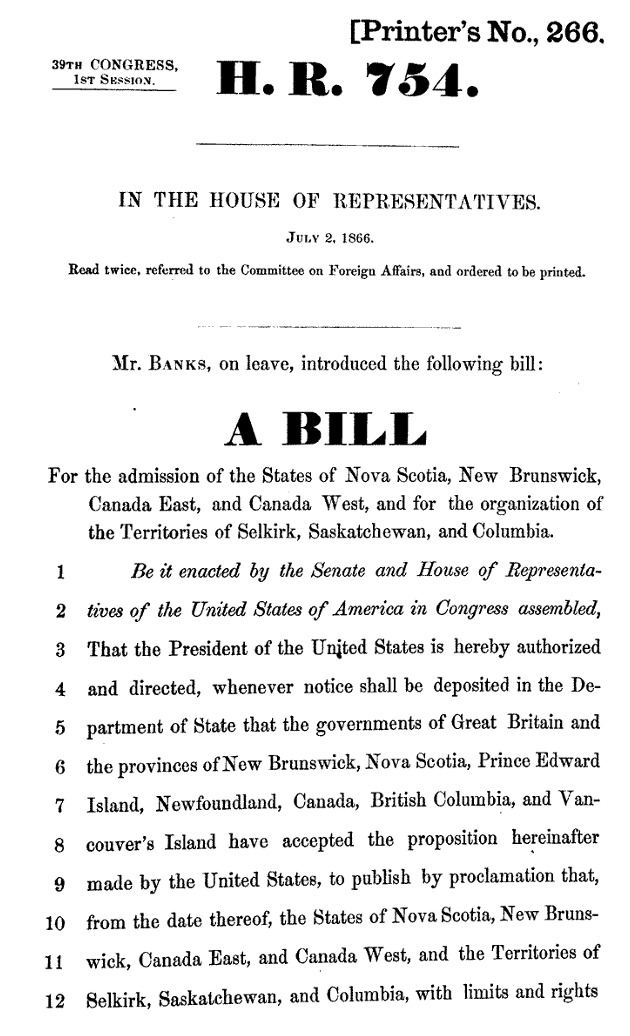 From the end of WWI to the beginning of WWII, the United States had an Atlantic strategic war plan called War Plan Red (the color supposedly linked to British Redcoats) that had training exercises in logistical fighting a war with Britain. The plan, approved by Secretary of War Patrick J. Hurley and Secretary of the Navy Charles Francis Adams III, composed a campaign to invade Canada and occupy strategic ports and railways before British troops could send reinforcements to the Canadians. Those plans were meant to be explorative and preparatory in case Britain might consider using its Canadian colony bases as a launchpad for annexing the United States. In those years, Britain had the Royal Navy, the most equipped and advanced navy in the world. Such an invasion scenario seems ludicrous now, but in those bizarre times, the great powers still had imperial motives. Britain was an empire for almost 338 years. It lost a colony 135 years earlier, though it remained an empire well into the 20th century. The U.S. military plan was to fight a defensive battle to defeat the British by blockading Canadian port supplies. Of course, it did not happen. It is still debatable who would have won.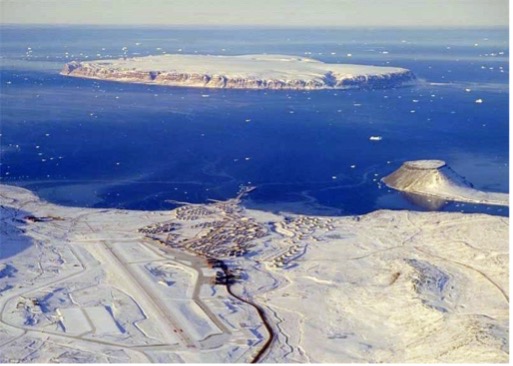
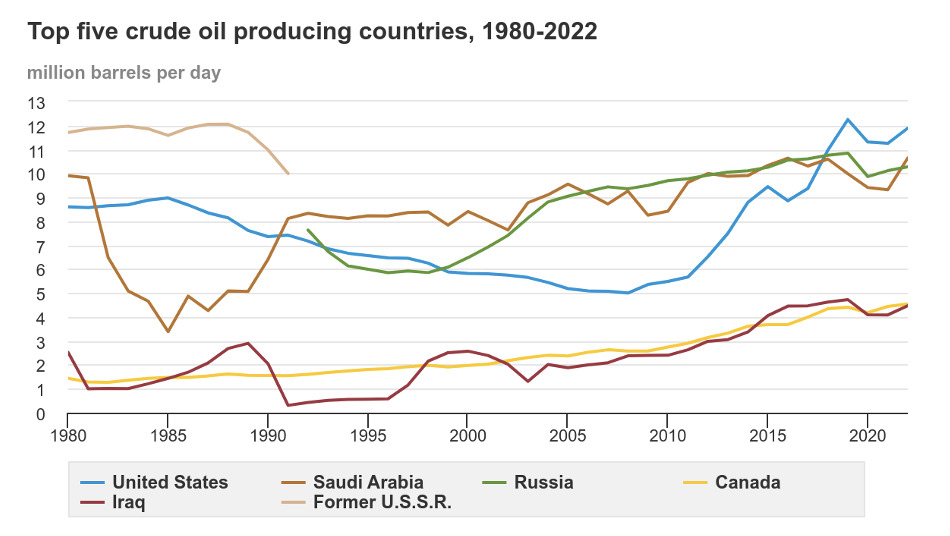
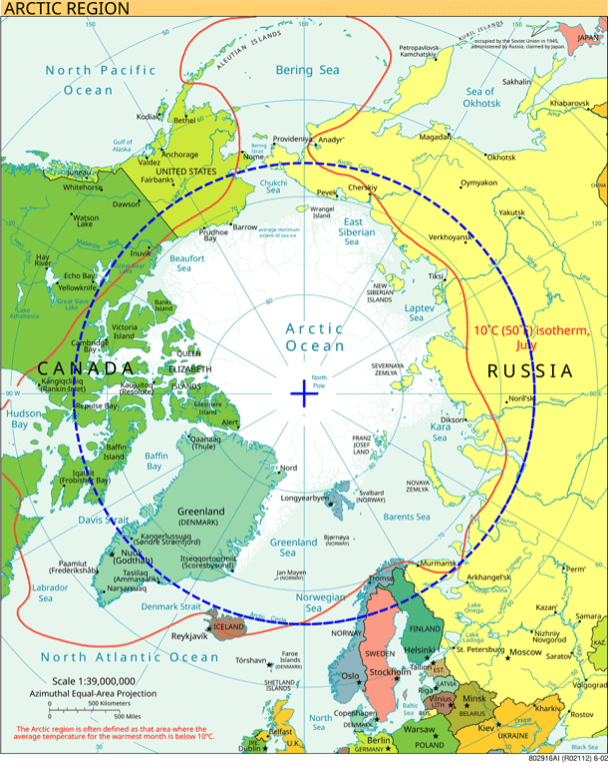
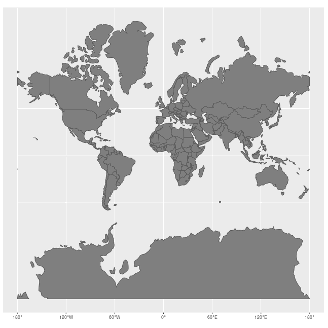

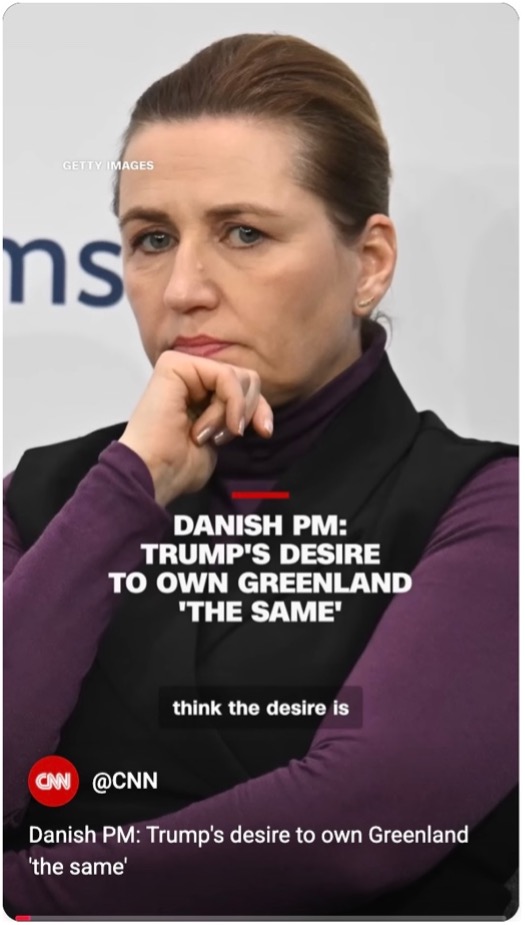 word “rupture” in his second sentence. “Today I will talk about a rupture in the world order, the end of a pleasant fiction and the beginning of a harsh reality, where geopolitics, where the large, main power, geopolitics, is submitted to no limits, no constraints.”
  Joseph Mazur
 Alex Fenton
 Dr. Dan Steinbock
 Kenneth D. Johnson

















































What the Repercussions of Epstein Files Could Possibly Mean…For the Outer Space
By John Louis B. Benito, LPT, MA
This article presents that the seeming validation of conspiracy theorists regarding pedophilic rings with corroboration of codes from the Epstein files may open a pandora’s box for states, their institutions, and their people. The implications of the issue may spillover to other sectors that are also prone to conspiracies and rumors, such as the outer space. Despite being far-fetched for now, actors working and interested in outer space must prepare for the indirect negative implications of the Epstein files.
The Pizzagate Scandal, years after it trended, suddenly makes a resurgence in mainstream discussions as the United States Department of Justice released the Epstein Files. A connection was made with the alleged codes used by Jeffrey Epstein with his email exchanges from various personalities. Words such as “hotdog”, “cheese”, and “pizza” were connected to illegal interactions with minors, making the connection with the premise of Pizzagate itself. Conspiratorial thinkers of the scandal suspected powerful actors involved in child trafficking rings, compelling concerned individuals to act on their own volition. Back then the individuals who subscribed in the conspiracy were depicted with a degree of lunacy. But with the Epstein files’ sudden connection to the scandal, it will be only too human to wonder if the conspiracy theory is accurate. Moreover, it would be also timely to ask if the pedophilia issue is the only thing they got right.
Truth, People, and Power
The Epstein files is a context that presents the root causes, manifestations, and implications of conspiracy theories. Conspiratorial thinking, specifically those that involves state and its own citizens or civilians, comes from the human nature of curiosity with a phenomenon that directly affects them or interested to. A classic example would be flying saucers and UFOs in Roswell, New Mexico which people claim to see and became an interest for some due to media exposure. A main factor for the Roswell Case is the element of secrecy coming from the military and government institutions, leaving civilians without a definitive answer for what it was thus triggering conspiracies.
Institutions of the state, whether civilian or military in nature, function for the state. But how much of it is for the people or involves the people? How should the people be involved? Different perspectives would be rendered, but the facts on the ground will suggest that not all are relayed or involved the people particularly in defense sector. The common variables at stake in these questions would be knowledge and transparency. How much should the people know? How much should state institutions share to the people? A lack of both would likely result to conspiratorial thinking.
All of these variables are present in the Epstein case and presents a struggle for power. There are people who are unfortunately affected by the child trafficking that occurred and hooked international condemnation. Various politicians, academics, monarchs, businessmen, and celebrities, are involved with Epstein’s activities. Most of them are representing institutions of their respective states, wielding power to control and process information from the people that technically includes the victims. The people on the other hand, attempts to gain power themselves by knowing and interpreting as much as they could. Regardless of ideologies and moral standards, conspiracies are bound to rise in these kinds of situations.
More than Pizzas…Spaceships
The cache with the Epstein case is that the conspiracy provided was given a degree of truth. The wild guess of the people as the institutions try to control knowledge and information about it, for whatever interest and purpose it may be, seems to be right. But on which other aspects this may prevail? With all its spaceships and satellites, the outer space could be under scrutiny as well. It is also surrounded by state institutions such as space agencies, the military, ministries related to science and technology, departments on environmental protection, as well as private business entities. Their conglomerate alone can make it an easy target for conspiracies.
The outer space is a sector already ripe with conspiracies. One probable reason is that the outer space is physically far from the people that it is hard to form empirical senses about the domain. Questions regarding the moon landing and the lost cosmonaut can already be considered as classics in conspiracy circles. However, unlike Epstein’s transactions, the endeavors on outer space are noble in its scientific, environmental and military benefits for states as well as private entities. It is not a blatant cover-up attempt on child and women molestation in which, not attempting a direct defense of it, the conspiracy spotlighted. Unlike the Epstein phenomenon, effects of conspiracies on outer space sector may derail the good it continuous to render for the people.
Despite the fact that there is no documented spillover of conspiratorial thinking’s validity and accuracy to outer space issues, it is not a total impossibility in the future. Regardless of the degree of realization later on, all institutions and individuals involved in outer space must always anticipate the worst-case scenarios to protect “the fortress” of its activities and policies. Generally speaking, as the vanguards of the outer space sector are established institutions with authority and legitimate functions, it must rethink its relation with the people. Those who are observing from afar and those that can be directly affected by their actions shall be variables for its equations.
Protecting the Next Frontier
How should states, with its institutions, have relations with its people not founded on conspiracies? For the people, they must accept that states and their organs will not relay everything to them conventionally in the name of security, intelligence, or state survival in general. Nevertheless, they are entitled to knowledge and information that are not secretive in nature and would advance their welfare. On the other hand, states must be honest that there are data that are bound to be confidential. However, they also must at least have a sense of integrity that the individuals working under its institutions shall do their best not to enact harms to its people. At the end, state institutions must balance the pragmatic and the ideal in dealing with the people. What to do with the prevalence of conspiratorial thinking is a different question altogether, but state-people relations must move forward regardless.
In the case of the outer space sector, it must anchor on the fact that the outer space has science as an instrument, a beacon of truth and transparency. The confidential facts that are understandably needed to be kept away from the public should be under those conditions with the security or welfare of the people at mind. A degree of engagement with the people should be maintained for various programs in which exchanges and communications are done to lessen if not avoid mistrust that can stir conspiracies.
At the end, the repercussions of the Epstein files, its connections with conspiratorial thinking, and the implications to state-people relations of both, should be a reminder for different institutions including the outer space sector. The next frontier upward and outside should remain a viable pathway for states and their people moving in the future. Trust and transparency regarding information and knowledge must be utilized and exercise with a degree of appropriateness in order to avoid the undesirable outcomes of conspiratorial thinking and conspiracy theories themselves.
About the Author